
Security teams log 54% of successful attacks and alert on just 14%. The rest move through your environment unseen.
The Picus whitepaper shows how breach and attack simulation tests your SIEM and EDR rules so threats stop slipping by detection.





Layoffs at a Starbucks support center in Seattle will impact 252 corporate jobs, including a number of vice presidents, directors and senior managers, according to a new state filing on Monday.
A Washington Worker Adjustment and Retraining Notification said that the cuts “will result in the relocation or contracting out of certain of the employer’s operations or the partners’ positions.”
Layoffs of 300 corporate employees at the coffee giant were first reported last week. They came on the heels of a previous WARN notice detailing the elimination of 61 tech roles in Seattle.
The cuts aim to “further sharpen focus, prioritize work, reduce complexity, and lower costs,” a spokesperson said by email on Friday.
The affected roles announced Monday skew toward mid-to-senior corporate positions, with nine vice presidents listed, directors across many functions, senior managers, and senior-level specialists and analysts throughout. Job functions span finance, legal, brand, tech, HR and operations.
Starbucks said in the filing that the expected date of the first separations will be July 17, with all separations completed by Feb. 1, 2027.
Starbucks did not announce any new store closures last week, but the company is shuttering select regional support offices in Atlanta, Burbank, Chicago and Dallas while maintaining its Seattle headquarters and offices in New York, Toronto and Coral Gables, Fla. The company is also opening a new office in Nashville.
The company cut nearly 2,000 corporate roles last year, according to past reports.


Microsoft latest release of the Edge browser adds a much-requested feature for users working within Google’s web ecosystem. Edge 150 finally provides a way to sign in with a Google account, usable alongside a Microsoft account. The feature is rolling out to all Edge users on both Windows and macOS….
Read Entire Article
Source link
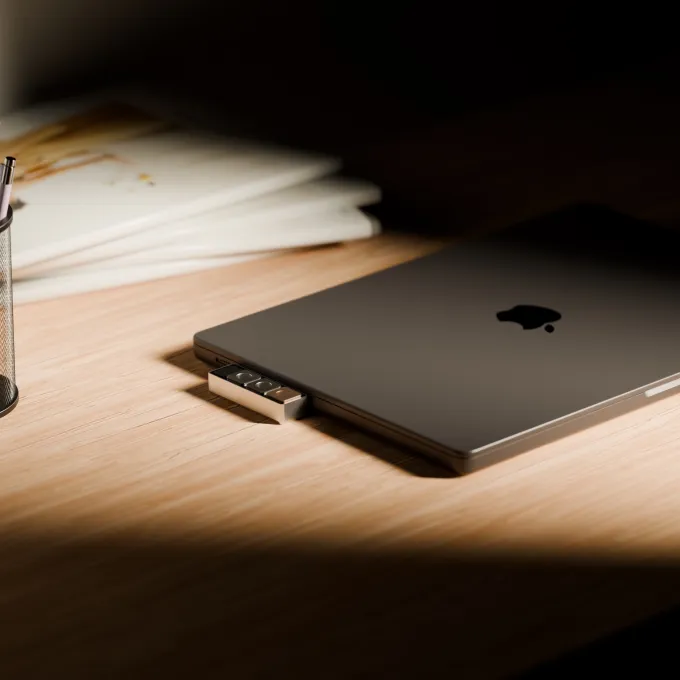
My biggest pet peeve with meeting apps is that each one has a different shortcut for muting your mic or turning off your webcam. It’s hard to remember which keys do what when you’re mid-meeting and trying to make a point or ask a question. I always wanted a physical, universal button for mute and camera control — something I could hit without thinking. Project Mirage’s Dune, a tiny, three-key aluminum keypad — about the size of a stick of gum — that plugs into your MacBook’s USB-C port, does just that.
The $119 gadget has three buttons, and it changes context based on what app you are looking at. For instance, in meeting apps and sites, it could be toggle mic, toggle video, and bring window to the front. For Excel or Sheets, it could be copy, paste, and undo. For Chrome, it could be refresh, jump to URL bar, and paste. You get the gist. Developers can also use it with apps like VS Code or GitHub to merge, approve, or close a pull request.
The startup builds each unit to match your specific Mac model, so it sits flush against the laptop with no gap underneath. If your ports are already in use, you can connect it through a dongle instead. Dune has no battery and needs no separate charger — it draws power straight from the MacBook.
Currently, the startup supports M2 Air or later and M1 Pro or later models of MacBook running macOS 15 Sequoia or a later version.
The device looks and feels nice, but I felt the keys had more resistance. Right now, it is easy to push a key by mistake. A few times, I mistakenly unmuted myself or killed my camera because my hand brushed the device while reaching for a water bottle or coffee mug. It shouldn’t be this easy to press a key.
Dune ships with a companion app for configuring shortcuts, either per-app or system-wide. Within a given app, you can assign a Dune key to a keyboard shortcut, a command, or a link that opens an app or URL.

Through the app, Dune also syncs with your calendar and surfaces your next meeting a few minutes before it starts, so you can join, dismiss, or send an “I’m running late” message with one tap.
If you want deeper customization, you can write and run your own Python script. If you don’t code, Dune has an easy integration with Claude Desktop: You describe the shortcut you want in plain language, and Claude writes it and assigns it to a key for that app — no manual setup required.
I built a shortcut that, whenever I’m on a startup’s website, pulls up a quick brief on the company: its competitors, investors, and questions I might ask if I booked a meeting with them. For anyone whose job involves sizing up companies quickly — investors, founders, operators — it’s a task tailor-made for Dune. I also built one that converts images to JPEG so I can upload them quickly to WordPress or social platforms. Both were easy to build and needed no manual configuration, though getting a shortcut fully working still takes some back-and-forth with Claude, including debugging once you actually run it.
The app also has a marketplace, from where you can explore skills made by other Dune owners. If the marketplace takes off, it could become core to Dune’s growth and retention strategy — hardware as a thin front end for a Claude-powered skills ecosystem, where each new skill gives owners one more reason to stick around.
However, at the moment, there are only limited skills. Plus, there is no way to test out a skill without assigning it to the hardware button — ideally, the app would let you preview a skill before committing it to hardware. The startup also needs to proactively add more of its own suggested skills for different apps to its users.
Project Mirage’s device retails for $149 after its introductory price expires, and it’s a solid pick for anyone productivity-minded. MuteMe covers just mute/unmute, and Stream Deck offers business-focused macros, but Dune is easier to customize on both hardware and software.
When you purchase through links in our articles, we may earn a small commission. This doesn’t affect our editorial independence.
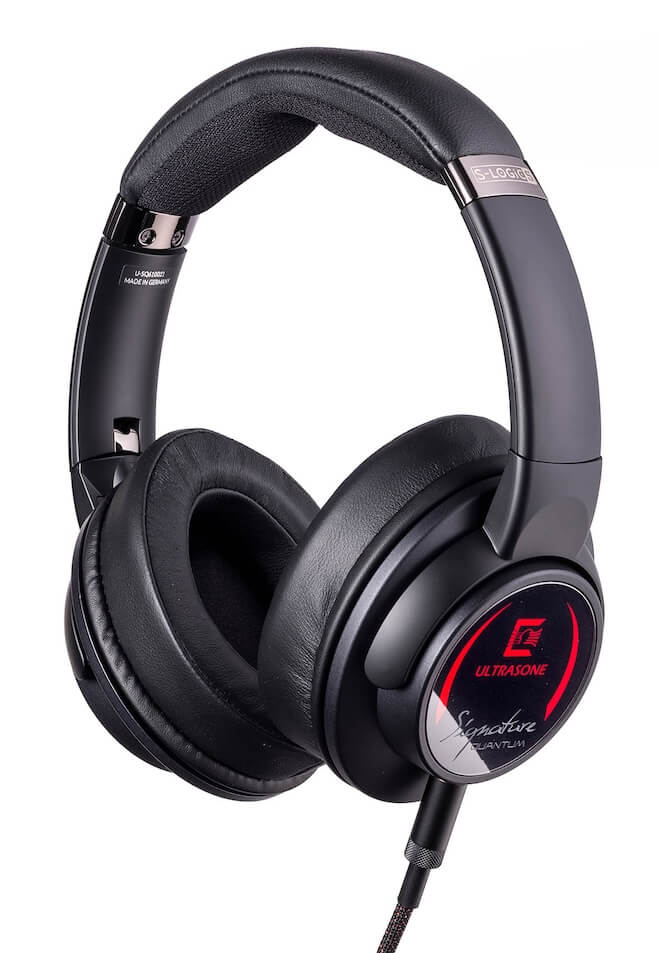
ULTRASONE has launched its largest product push to date, introducing four new wired headphones alongside the compact NAOS MICRO USB DAC. Rather than recycle one familiar platform with a new finish and some fresh adjectives, the German headphone maker is covering five distinct use cases: open-back listening, studio monitoring, compact audiophile listening, bass-heavy portable use, and better desktop or mobile source hardware.
The new lineup includes the Signature QUANTUM, Signature AERO, Signature MASTER PRO, Signature RAYVO, and NAOS MICRO. Preorders are open now, with deliveries expected to begin in September 2026. Wunderbar. The German national team probably wishes these had been available for the flight home after its rather early World Cup exit.
Founded in Bavaria in 1991, ULTRASONE has spent more than three decades building headphones for listeners who wanted something other than the familiar Sennheiser, Beyerdynamic, or AKG approach. The company established itself first in professional audio and DJ circles with its HFI and PRO ranges, before moving further into high-end consumer territory with its limited-edition Edition series.
The key to the brand’s identity has always been S-Logic. Rather than placing the driver directly in front of the ear canal, ULTRASONE positions it off-center so that sound reaches the outer ear first. The idea is to use the pinna, which helps people locate voices and instruments in real space, to create a broader and more speaker-like image inside a pair of headphones. It is not a subtle design choice, and neither are the results. Some listeners love the larger, more diffuse presentation; others find it unconventional. ULTRASONE has never seemed especially troubled by that.
The company’s reputation in high-end audio was cemented by models such as the Edition 9, Edition 8, Edition 10, and later Edition 15. These were not designed to disappear into the background. They combined premium materials, ambitious pricing, and a distinctly spatial sound that made them favorites among listeners looking for an alternative to the more conventional reference headphone hierarchy. The Edition 8, introduced in 2008, became one of the company’s best-known models by proving that a luxury closed-back headphone could work both at home and on the move without looking like studio equipment borrowed from 1987.
ULTRASONE also developed its ULE, or Ultra Low Emission, shielding system, which uses mu-metal protection around the drivers to reduce electromagnetic emissions. That feature has always been part engineering, part brand signature, but it underlined the company’s willingness to pursue headphone design from angles that other manufacturers generally ignored.
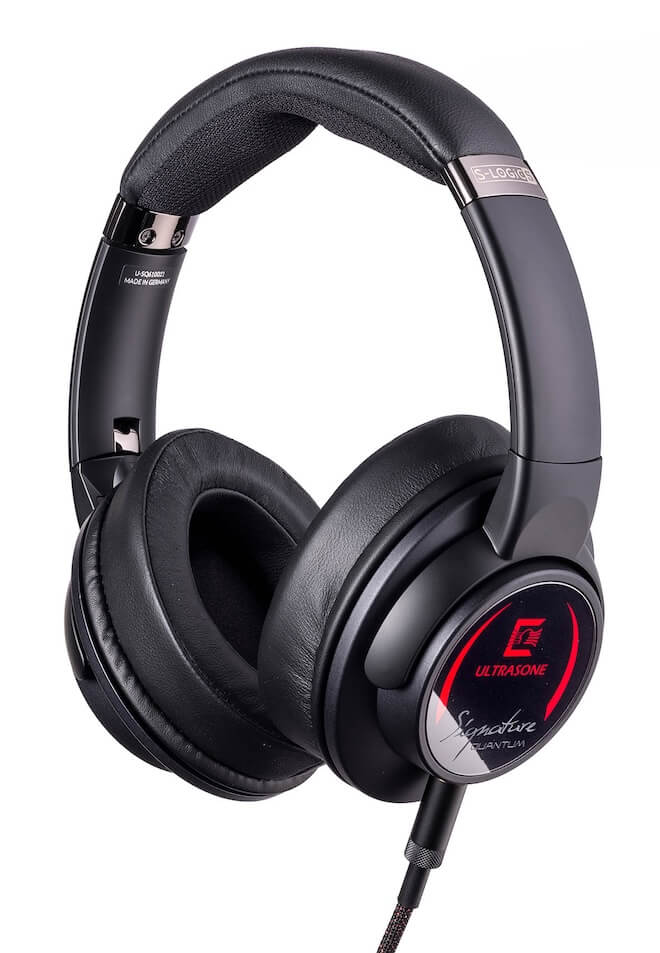
The Signature QUANTUM (€999) is the most clearly defined audiophile model in the group. It uses ULTRASONE’s 40mm GTC driver, previously found in the more expensive Edition 15 and Founders Series, with a gold and titanium-coated diaphragm, S-Logic5 spatial technology, and both single-ended and 4.4mm balanced LUMINOX cables in the box.
It is a closed-back, foldable design with 40-ohm impedance, 103dB sensitivity, and a claimed 6Hz–44kHz frequency response. At 364 grams without its cable, the QUANTUM is not pretending to be a featherweight travel headphone, but it is clearly intended to work beyond the listening room thanks to its passive isolation, aluminum hard case, and compact form factor.
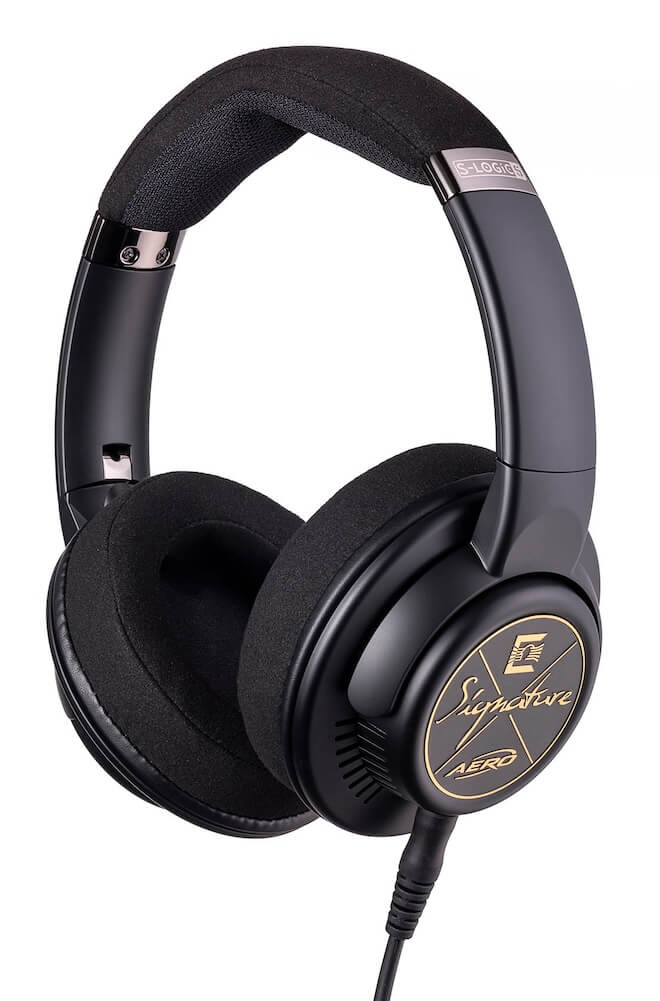
The Signature AERO (€399) is the open-back option, built around a 45mm graphene driver and positioned for listeners who prioritize space, air, and detail with acoustic music, jazz, classical, and more carefully recorded pop. It looks like the model most likely to appeal to existing open-back headphone listeners who want a more spacious presentation without wandering into four-figure flagship territory.
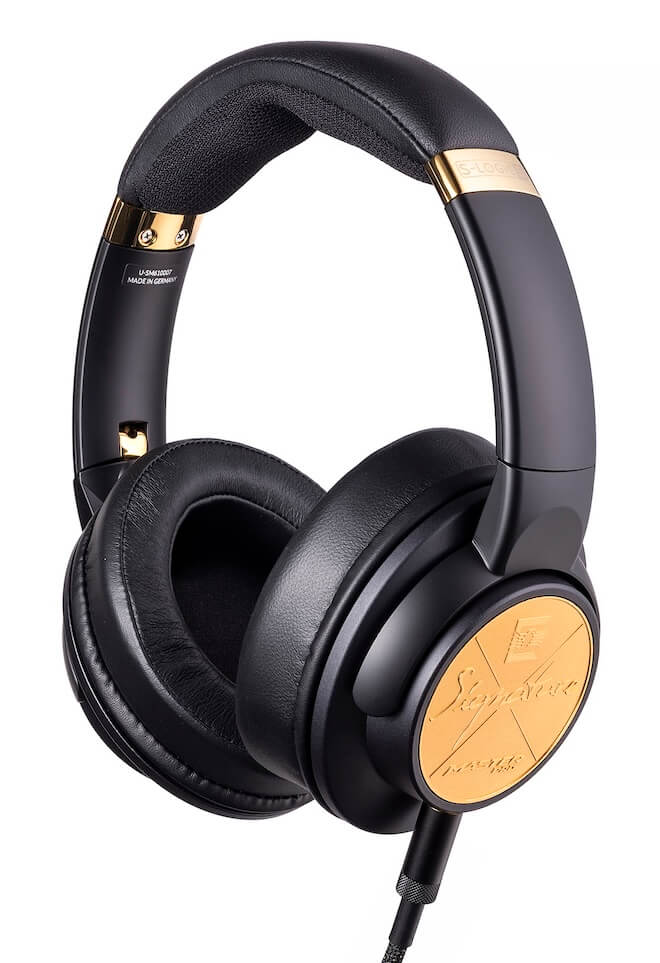
The Signature MASTER PRO (€799) takes the professional route. It features a newly developed 40mm titanium driver, LUMINOX internal wiring, and two high-end LUMINOX cables. ULTRASONE is pitching it toward engineers, producers, musicians, and studio owners who need a neutral and revealing tool for mixing, mastering, and critical listening. That is a crowded field, and it will have to earn its place against Beyerdynamic, Focal, Austrian Audio, Sennheiser, and the usual suspects who have been living in control rooms for decades.

The Signature RAYVO (€299) is the least subtle entry of the group, which is probably the point. It combines aluminum ear cups, a foldable DJ-ready chassis, S-Logic5, balanced connectivity, and a more energetic tuning intended for bass-heavy genres including electronic music, hip-hop, techno, rock, and pop. ULTRASONE is not trying to sell this one as a mastering tool. Thank heaven.

The NAOS MICRO (€169) is an ultra-compact USB DAC with dual Cirrus Logic CS43131 converters, 3.5mm and 4.4mm headphone outputs, PCM support up to 32-bit/384kHz, and native DSD256 compatibility. ULTRASONE also describes it as providing dedicated headphone amplification, making it more than a basic USB-C adapter for listeners using laptops, tablets, or smartphones with wired headphones.
That could make it a logical companion for the new Signature lineup, particularly for anyone who wants balanced connectivity without dragging a desktop stack into a hotel room. ULTRASONE has not yet published detailed output-power specifications or U.S. pricing, however, so the real-world driving capability remains a question worth saving for an actual test.
ULTRASONE’s five-product launch is unusual because it is not built around one headphone platform dressed up for different audiences. The Signature RAYVO targets bass-heavy and DJ use, the open-back AERO focuses on spacious listening, the MASTER PRO goes after studio users, and the QUANTUM is the premium compact audiophile model. Across the range, ULTRASONE is leaning into its long-standing S-Logic spatial approach, balanced connectivity, and more specialized driver materials rather than chasing the same broad “reference” tuning with every model.
There is still plenty we do not know. The QUANTUM has the most complete specification sheet, but ULTRASONE has not yet published full technical data, U.S. pricing, or confirmed American dealer availability for the entire range. The NAOS MICRO is also intriguing, but without output-power figures it is impossible to say how it will stack up against the iFi GO bar, Questyle M15i, FiiO KA17, or Cayin RU7.
The headphone competition is equally specific. The AERO will face open-back models from Sennheiser, Meze, Beyerdynamic, and Austrian Audio; the MASTER PRO will have to contend with studio standards from Beyerdynamic, Focal, Shure, and Austrian Audio; and the QUANTUM enters a premium closed-back market dominated by Dan Clark Audio, Denon, Focal, Meze, and Audeze.
The differentiator is not merely a graphene or titanium driver. It is ULTRASONE’s attempt to offer a clearly different spatial presentation across multiple categories. Whether that translates into a real competitive advantage will depend on the tuning, comfort, durability, and how it performs.
Preorders are available now directly from ULTRASONE, with global shipping and deliveries expected to begin in September 2026. U.S. pricing and retailer availability have not yet been announced.
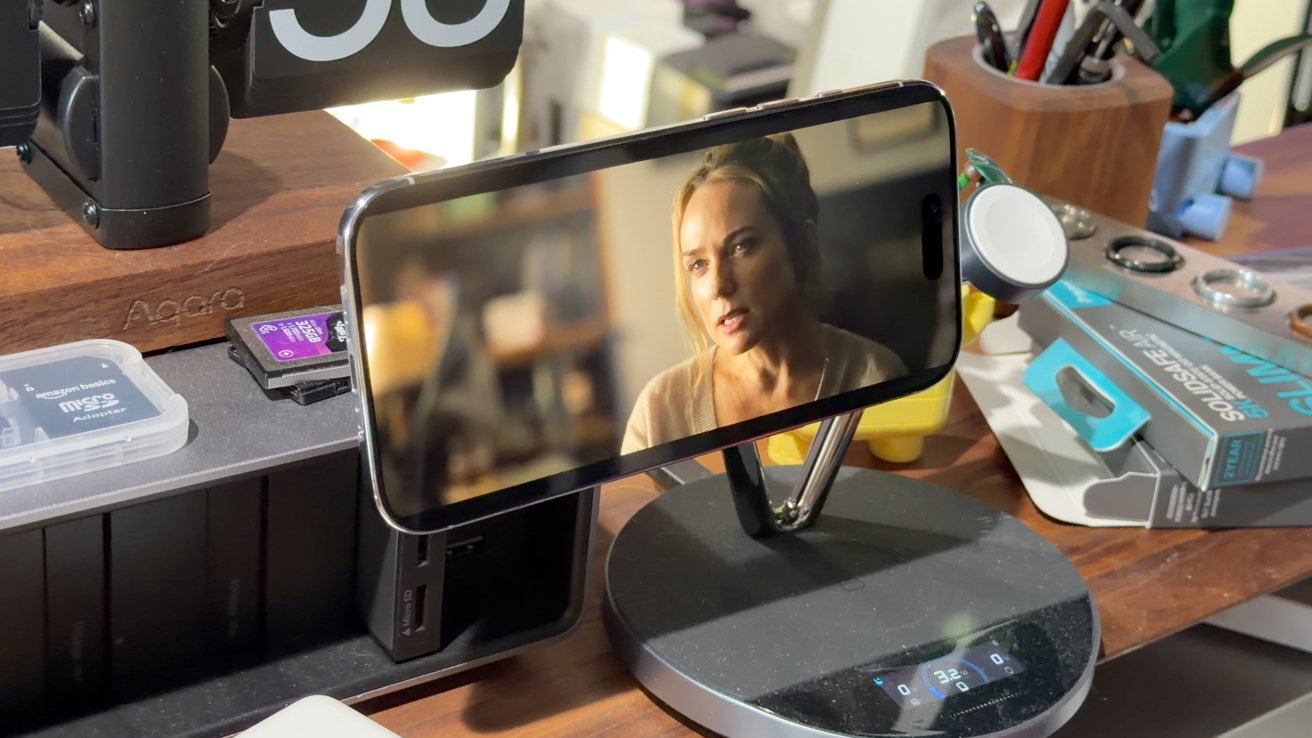
With iPhone Air 2 rumored to be less than a year away, Apple could turn to better cooling or more cameras to make the ultra-thin phone even more popular than the original. Here’s what’s been rumored, and some other possibilities.
Despite what some vocal online detractors say, iPhone Air has its fans. I’m certainly counted among them.
Early reports said Apple’s thinnest phone was a “failure” and that the second-generation was cancelled. Now that we’re three-quarters of the way through the iPhone Air first-year release cycle, it’s more evident that the phone isn’t a “failure” and a second-generation model is coming.
The iPhone Air is said to be twice as popular as the outgoing iPhone 16 Plus it replaced in the lineup. So it’s not all that shocking to see Apple doubling down on the model.
I think there are a few changes that Apple could implement to generate more fans, and based on the latest rumors, it seems Apple could be on the right track.
Here’s how my time with iPhone Air has been and what features version 2 should adopt.
With day-to-day use, there’s not much iPhone Air falls short on. It is fast, comfortable, and the battery gets me through the day.
What I do start to notice is when I’m taxing the processor for prolonged periods of time, the top (where the guts of the phone live) can get quite hot. I know I push the phone a bit more than most people, but it’s definitely noticeable.
I know the performance can be boosted with better thermals for tasks like video exports or gaming. To combat this, Apple should add vapor chamber cooling as found on the pro line.
This would not only improve the general performance of the phone, but could help with other features, too. It’s possible that the iPhone Air lacks Cinematic Mode because of the cooling situation on the device, but unless Apple says something, we may never know.
The second thing I’d love to see is a secondary speaker. Currently, iPhone Air has a mono speaker situated at the top of the phone.
At first, I didn’t mind this. In fact, it can be beneficial at times because depending on how you hold your phone, there’s no bottom speaker to be blocked by your finger.

Watching videos in landscape on iPhone Air can be annoying with the solo speaker
Most videos I watch on mobile are vertical, while actual landscape videos I save for my iPad or television. But after a lot of recent traveling, I’ve been watching more landscape videos on my iPhone Air and that mono speaker is very noticeable.
This is also one of the most common complaints I see in the comments regarding iPhone Air. To make the second go around better, a second speaker needs to be added.
My final request is for a second camera, but not for the same reason that most others want it. Most probably want an ultra-wide lens for capturing new perspectives with photos.
On the other hand, I want the secondary camera to capture spatial content. Two cameras are necessary to capture that stereoscopic spatial footage.
For the past couple of years, I’ve captured a lot of photos and videos to use with Vision Pro. The iPhone Air lacks this capability due to its solo primary camera.

iPhone Air is a great phone, but the second-generation could be even better
Obviously the Apple Vision Pro isn’t a major hit among consumers. Spatial is something Apple is still heavily invested in, one way or another.
I want to capture spatial content now, versus in the future. These are moments and memories I can’t get back, so if I have the opportunity to capture a few spatial scenes, I want to do that.
There are questions on how this would work on the iPhone Air 2, though. Apple could adopt square sensors, like it did on the front-facing camera with the iPhone 17, but I’m getting into speculation and guessing at that point.
It could be a cool addition though, unlocking portrait or landscape recording in either phone orientation.
There are a lot of rumors around the iPhone Air 2, but it seems some of my requests may come to fruition. What will be interesting is how Apple pulls them off, such as fitting that second camera module into the plateau, as has been rumored.
Don’t expect iPhone Air 2 to be imminent though. The most recent reporting says Apple is planning a split launch for the iPhone 18 cycle.

iPhone Air has been great, but the second generation may have better battery life, a second camera, and more.
We could see iPhone 18 Pro, iPhone 18 Pro Max, and the “iPhone Fold” in the fall of 2026, Expected in early 2027 are the iPhone 18e, iPhone 18, and iPhone Air 2 land in the first half of 2027. I think that timing makes sense and helps push earlier adopters towards the higher-tier phones.
Between improved battery, a second camera, and any other new features, the iPhone Air 2 may prove even more popular than the first time around. Sounds like we’ll find out in the spring.

Negotiations between Google DeepMind and its London-based employees over the possibility of unionization stumbled this week, after initial talks left union representatives feeling they had wasted their time, WIRED has learned.
In May, DeepMind employees asked Google to recognize the Communication Workers Union and Unite the Union as joint representatives. The company later denied that request, but agreed to participate in negotiations arbitrated by a third-party body.
An initial meeting on Wednesday was attended by union officers, DeepMind employees involved in the unionization push, the third-party arbitrator, and DeepMind HR representatives. Those advocating for unionization were left frustrated by the absence of DeepMind leadership figures.
“Recognition talks not being attended by senior management at the opening stage is a leading indicator that a company isn’t engaging in good faith. It’s just a time-wasting exercise,” claims John Chadfield, a CWU officer, who attended the meeting. “Negotiations have stalled at an early stage.”
DeepMind denies that negotiations have stalled. “The first step in the process is to define who the unions want to represent and the parties agreed on next steps to do this,” says Al Verney, a Google DeepMind spokesperson. “The appropriate representatives attended this initial meeting.”
During the meeting, a DeepMind employee read out a prepared letter on behalf of colleagues that support unionization, reviewed by WIRED. “Instead of having meaningful dialogue with its employees about our concerns, Google DeepMind workers have been treated as a problem handed off to HR,” the letter states. The employee reading the statement was interrupted on two occasions by DeepMind HR representatives, according to multiple sources with knowledge of the meeting.
The letter goes on to allege that Google has attempted to quash open dialogue between DeepMind employees and crack down on dissent, by shutting down or reconfiguring internal chat venues, and preventing staff from responding to company-wide communications about the unionization bid. Employees that sought to dance around restrictions were “reprimanded” by HR, the letter alleges.
“The intention was to intimidate,” claims a DeepMind employee involved in drafting the letter, who asked to remain anonymous because they are not authorized to speak to the media. “These are well-established union-busting techniques.”
“We’ll continue to engage constructively in the…process and have open dialogue with employees,” says Verney. “For topics outside of this, we continue to offer employees a variety of other channels and opportunities to discuss their views.”
The push to unionize at DeepMind began in February 2025, when Google’s parent company Alphabet removed a pledge not to use AI for purposes like weapons development and surveillance from its ethics guidelines, WIRED previously reported.
“Those principles were a big part of why I joined DeepMind,” says a second DeepMind employee, who asked to remain anonymous for the same reason. “We basically just got rid of them all.”

Ctrl-Alt-Speech is a weekly podcast about the latest news in online speech, from Mike Masnick and Everything in Moderation‘s Ben Whitelaw.
Subscribe now on Apple Podcasts, Overcast, Spotify, Pocket Casts, YouTube, or your podcast app of choice — or go straight to the RSS feed. To get extended episodes with additional coverage, support us on Patreon.
In this week’s roundup of the latest news in online speech, content moderation and internet regulation, Ben is joined by Cori Crider, executive director of the Future of Technology Institute, an independent non-profit focusing on technology that serves the public. She previously co-founded legal non-profit Foxglove and led national security litigation at human rights organisation, Reprieve. Together, Ben and Cori discuss:
And in the extended episode for Patreon supporters, they cover:
Our fun links this week are the rise of dopamine sites (Ben) and Polaroid’s billboard campaign (Cori).
If you’re already a Patreon supporter, you can get the extended episode on Patreon.
Filed Under: australia, child safety, content moderation, eu, germany, social media, trust and safety
Companies: eurosky, funk, meta, tiktok
The U.S. Cybersecurity and Infrastructure Security Agency (CISA) warned on Wednesday that attackers have begun exploiting a high-severity Microsoft SharePoint remote code execution vulnerability.
Tracked as CVE-2026-45659, this security flaw stems from a deserialization of untrusted data weakness, and it allows attackers with low privileges to execute arbitrary code on unpatched SharePoint servers in low-complexity attacks that don’t require user interaction.
“Any authenticated attacker could trigger this vulnerability. It does not require admin or other elevated privileges. In a network-based attack, an authenticated attacker, who has a minimum of Site Member permissions (PR:L), could execute code remotely on the SharePoint Server,” Microsoft explains.

“The attack vector is Network (AV:N) because this vulnerability is remotely exploitable and can be exploited from the internet. The attack complexity is Low (AC:L) because an attacker does not require significant prior knowledge of the system and can achieve repeatable success with the payload against the vulnerable component.”
Microsoft released security updates for SharePoint Enterprise Server 2016, SharePoint Server 2019, and SharePoint Server Subscription Edition to address this vulnerability on May 21, saying that the CVE had been accidentally omitted from the May 2026 Security Updates.
Internet security watchdog group Shadowserver is currently tracking over 10,000 SharePoint servers exposed online. However, there is no information regarding how many of these devices have already been secured against ongoing CVE-2026-45659 attacks.
With the April 2026 Patch Tuesday, Microsoft addressed another SharePoint vulnerability that was exploited in zero-day attacks.
On Wednesday, CISA added the vulnerability to its Known Exploited Vulnerabilities Catalog (KEV), ordering Federal Civilian Executive Branch (FCEB) agencies to secure their servers by Saturday, as required by Binding Operational Directive (BOD) 26-04.
BOD 26-04 was issued last month and requires U.S. federal agencies to prioritize patching based on whether the security flaw is included in CISA’s KEV catalog, whether exploitation can be automated for large-scale attacks, whether the asset is publicly exposed online, and whether successful exploitation grants attackers partial or total control of the targeted device.
“This type of vulnerability is a frequent attack vector for malicious cyber actors and poses significant risks to the federal enterprise,” the cybersecurity agency warned yesterday. “Follow applicable BOD 26-04 guidance for cloud services or discontinue use of the product if mitigations are unavailable. Stakeholders are responsible for evaluating each asset’s internet exposure and ensuring adherence to BOD 26-04 patching guidelines.”
Since 2021, CISA has tagged 11 Microsoft SharePoint vulnerabilities that have been abused in the wild, with seven of them also exploited in ransomware attacks.

Security teams log 54% of successful attacks and alert on just 14%. The rest move through your environment unseen.
The Picus whitepaper shows how breach and attack simulation tests your SIEM and EDR rules so threats stop slipping by detection.


PlayStation Underground captured the scene at Sony Disc Manufacturing in Springfield, Oregon, just after 7 a.m. The night shift had already run for hours, and stacks of fresh discs waited for the next steps. Everyone asked the same question back then. How did those distinctive black PlayStation CDs actually get made?
Security began at the mastering room door. To be safe, all workers donned safety gear, coveralls, and shower caps. Any of them leaving a stray hair or skin cell behind could be disastrous for the production line. However, that area had to remain sealed and locked down because the master discs within were gold, which was extremely precious.

Previously, game makers would transmit their finished products on a special gold master CD. It was nothing more than a jumbled mess of zeroes and ones, yet a laser would cut through it all, flashing on and off as it imprinted the same sequence onto a glass master disk. The disc was coated with some ultra-sensitive film, and after being exposed to that laser, as it was washed down, all of the empty film was rinsed away, leaving a microscopic spiral of tiny pits and lands so precise that you could stack a strand of hair on top of 40 of the little guys.

That glass master held the game, but it would never withstand the high-volume pressing procedure that followed. So, initially, a technician would meticulously make a metal stamper out of it, and that stamper would be responsible for all of the hard work of pressing the game onto thousands of discs. Then followed a batch of plastic pellets, which were dumped in handfuls on the floor. Machines heated them until they were the viscosity of thick syrup, then pressed them into a mold with the stamper, resulting in a flawlessly shaped disc with the stamper’s design imprinted on its surface. This time, black colorant was also thrown in, and it was this colorant that gave every PlayStation disc its signature dark appearance while also adding a small extra barrier against duplicating.
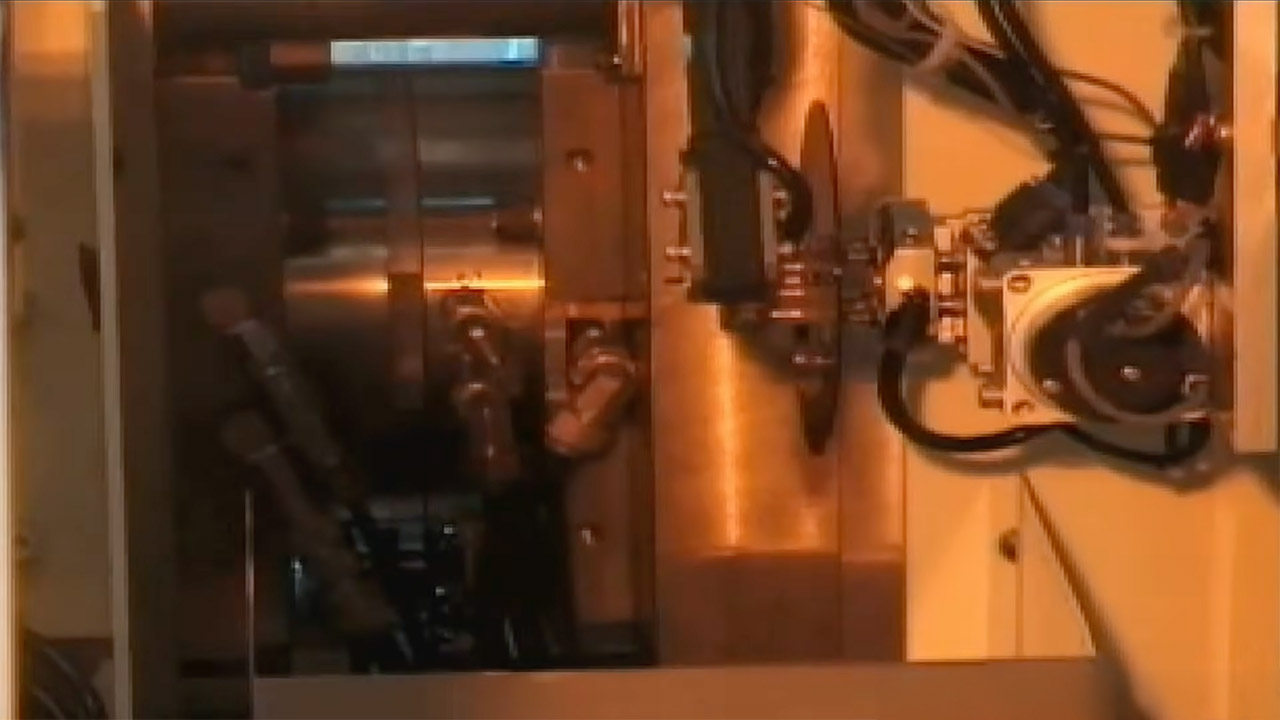
The next task on the list was to apply a thin layer of metal. Without it, the laser inside the console would have nothing to bounce against. That was what transformed the very tiny pits and lands into usable data that the console could later use to generate pictures, sound, and gameplay, and before long, the all-important quality control test arrived. A series of automated equipment inspected each disk for flaws. Any CDs that did not pass the test were immediately recycled. And no disc left the line unless it satisfied the stringent specifications required for smooth play.
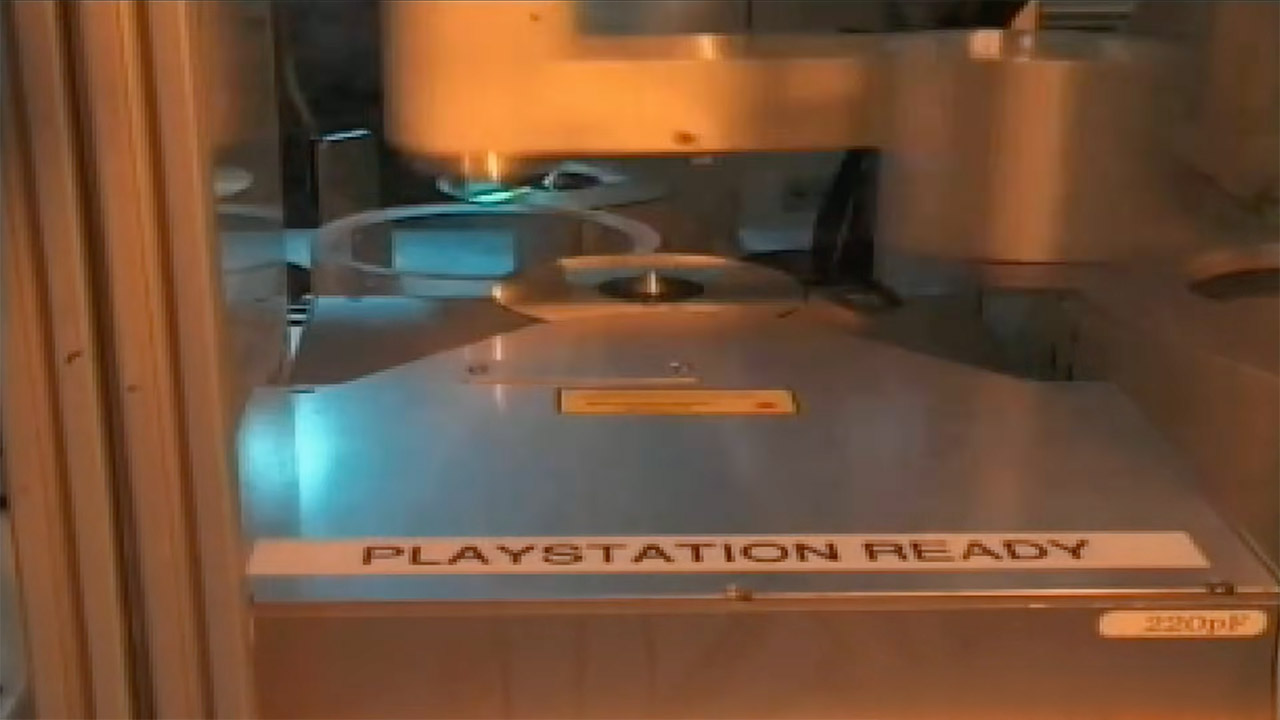
Up next was the all-important artwork, and this was where screens came into play, painting on one colour at a moment across the top surface. Then came the ultraviolet lamps to set the color in place. Then it was back to the painting station to repeat the same process. This was the component that gave each game its own cover image without smearing or fading. Special trucks were guided by a computer and just rolled along a predetermined path in the facility; no one had to push or pull a single disk. As a result, 375 people were able to move more than 6 million discs per month, primarily for games, music, and software items.

Robert Pollard and Guided By Voices (GBV) have again bestowed upon us another excellent new album: Crawlspace Of The Pantheon. A dandy rocker in grand GBV form, this is easily the band’s best since the last best one, which for me was 2025’s Thick Rich And Delicious. And I mean that with all the heart and soul of the deep fan that I am.

While no band likes to be pigeonholed, I sometimes think Guided By Voices deserves its own genre to describe what they do. Initially, I was thinking “Modern Classic Vintage British Rock,” but since GBV are from Dayton, Ohio, perhaps we should just call it “Modern Classic Vintage Rock.”
For me, GBV fills a musical void dating back to my childhood, when everyone anticipated a new Beatles album every six months or so. It was an event. In their own special way, a new GBV release is also an event, chock full of fresh earworms that feel familiar yet new.

Crawlspace Of The Pantheon is another solid sounding, well produced, full studio effort from the band, retaining just enough indie rock aesthetic to make clear that it is a GBV made, self-released, home brewed production. The current GBV is arguably the band’s most consistent lineup, achieving a super appealing balance between its glossier late 1990s and early 2000s first commercial peak, including Do The Collapse and Isolation Drills, and the early LoFi cassette multitrack basement wizardry that first put them on the map in the early 1990s, including Propeller and Bee Thousand.

“Lost In The Sun” kicks off Crawlspace Of The Pantheon echoing The Who and The Cars in the same breath, with Mellotron strings and tight harmonies. Saving its best hook for the very end, the song is one of those tunes I had to immediately play over and over.
“We Outlast Them All” could be a hit single for The Psychedelic Furs. Seriously, I cannot not hear Furs founder Richard Butler singing this song, even though it feels lyrically GBV autobiographical, a grand affirmation of the group’s staying power.

Another single candidate, “Advance Without Dropping,” packs a punch and is elevated by an incredible changeup in its ending bridge sequence: a mesmerizing, rising Doug Gillard guitar solo moment that sends quick chills down the spine.
If “Arthur Square” might be considered a lost cousin to 1969 pre Tommy Who, Mark Shue’s mad bass lines and Kevin March’s rolling drum fills appropriately channel the spirits of John Entwistle and Keith Moon, respectively. Gothic bells, more Mellotrons, and voiceover news reports turn this into a mad, brilliant psychedelic metal meltdown.

“(How Would You Like A) Chariot Ride” riffs on a chord sequence that cleverly echoes “The Punk And The Godfather” from The Who’s Quadrophenia. Try not humming Roger Daltrey’s stuttered “My Generation” melody over that moment.
“When You’re My Clown (Nothing Happens)” is an epic album closer, built around a tremendous chugging communal riff before launching into a beautiful acoustic driven coda. A classic GBV moment.
I think by now you get the idea Crawlspace Of The Pantheon is another shining crazy diamond in a long arc of winning musical gems from Guided By Voices. You can buy it at Amazon on vinyl for $26.39 or on CD for $17.98. Support independent music.
★★★★★★★★★★ Album
★★★★★★★★★★ Sound Quality
★★★★★★★★★★ Pressing Quality
Mark Smotroff is a deep music enthusiast / collector who has also worked in entertainment oriented marketing communications for decades supporting the likes of DTS, Sega and many others. He reviews vinyl for Analog Planet and has written for Audiophile Review, Sound+Vision, Mix, EQ, etc. You can learn more about him at LinkedIn.
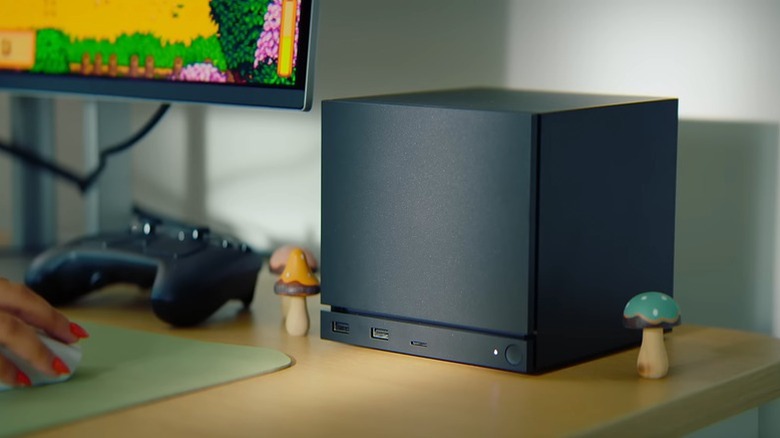
Plus, we dive into Sony dumping PlayStation discs.
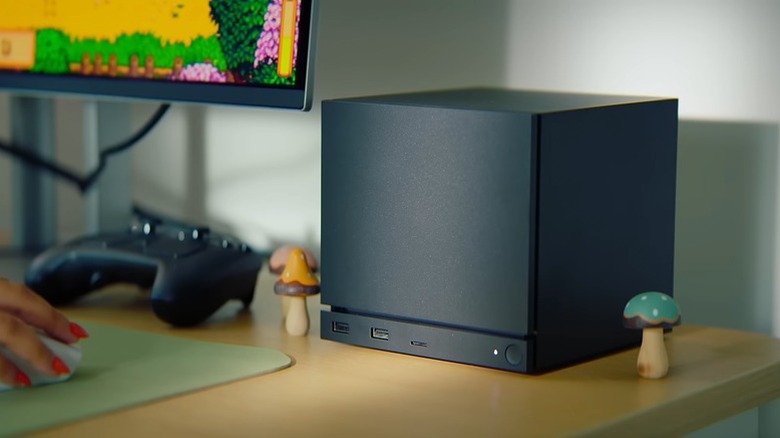
Valve’s Steam Machine is finally here! But while it lives up to much of the hype, its high price makes us wonder who it’s really for. In this episode, Senior Writer Jessica Conditt joins to talk about her experience with the Steam Machine and how it compares to consoles (which have also gotten very expensive). Also, we discuss Sony’s bombshell announcement about killing physical PlayStation discs in 2028 and Xbox’s confusing array of layoffs.
Hosts: Devindra Hardawar and Jessica Conditt
Producer: Ben Ellman
Music: Dale North and Terrence O’Brien




Claude Code turned every engineer into three. Now companies need more product thinkers


Bluekit phishing kit adopts browser-in-the-middle for login theft


Weekend Open Thread: High Hopes


Strategy authorizes up to $1.25B in Bitcoin sales under new capital plan


The House | “Reframing the debate from a binary discussion of winners and losers”: Yuan Yang reviews ‘We Are Not Machines’


MAJOR BITCOIN & MARKET UPDATE!!!! (MUST WATCH ASAP!!!)


Anonymous researcher drops 0-day ‘exploitarium’ repo


Coinbase, Circle Deepen Crypto Stock Losses Despite Resilient S&P 500


Australia treasurer says alleged access of prime minister’s bank data ’incredibly concerning’


Kraken's xStocks Opens Bending Spoons IPO Registration to EEA Retail


Russian hackers now target Signal backup recovery keys

The AI boom won’t burst all at once. It will pop in ‘rolling bubbles’: Macquarie


Broncos roster: OL Ben Powers (No. 74) entering final year of contract


Presenter Caroline Flack’s brother Paul Flack dies aged 55


Silicon Valley paid to kill AI regulation, now it wants the rules back


Binance stock trading tops $1B in first month after launch


OpenAI mulls delaying IPO over valuation concerns

New exhibition reflects five decades of movement between island of Ireland and GB


Alibaba-affiliate Ant Group enters the humanoid robot market with 12 deals


How to Build INSANE Live Financial Dashboards With Claude
You must be logged in to post a comment Login