
Connect with us

Tech

Student Authors Receive Visibility at IEEE Conference

Published

on

The IEEE–Eta Kappa Nu (IEEE-HKN) honor society is preparing to host the Innovating the Future event on 6 November.

The inaugural one-day, in-person event is designed to provide a forum for IEEE and IEEE-HKN undergraduate and graduate student authors to present their original research papers. A keynote address and thematic presentation sessions are planned as well. Student attendees can network with their peers and gain firsthand experience with the academic publishing process.

To present at the conference, students had to submit an abstract of their research before 1 May. Students whose work was accepted were assigned a volunteer IEEE member to mentor them and guide them through the research writing process, including presenting and publishing their original work.

Those whose paper was accepted by 1 August were invited to present at the conference. The conference proceedings will be submitted for publication in the IEEE Xplore Digital Library.

Advertisement

Upholding research integrity in a changing landscape

IEEE Life Fellow Manuel Castro, the conference’s technical program chair, oversees IEEE-HKN’s Innovating the Future program committee. It manages the review process, organizes logistics, and handles the mentoring component.

“This new conference is important to IEEE, as well as to IEEE-HKN,” Castro says, “because it allows student authors to grow in their skills and competencies, and be supported while turning their technical activities into publications.”

“The conference offers me a chance to learn how to communicate my research to a broader audience, gain feedback from other student researchers beyond my institution, and see how my work can be made more accessible.” —David Kwabi-Addo

IEEE Life Fellow Sorel Reisman, a California State University professor emeritus and an IEEE-HKN governor-at-large, says that because the academic research landscape is rapidly shifting, the conference is timely.

Advertisement

“As AI increasingly threatens the integrity of research papers being published in leading journals and conference proceedings, it is essential that future scholars—many of them current IEEE-HKN students—grasp the established standards of legitimate, peer-reviewed research publishing,” Reisman says.

Perspectives from mentors and students

A cornerstone of the conference is its rigorous mentorship initiative, which pairs each author of an accepted abstract with an experienced IEEE volunteer. The mentors provide personalized guidance on organizing the students’ technical content into the correct format for publishing. They also discuss navigating the peer review process, structuring presentations, and preparing the final manuscript for publication.

The impact of the guided process can be valuable for both the mentors and their mentees. IEEE Member Wafa Elmannai, associate professor and chair of the electrical and computer engineering department at Manhattan University, in Riverdale, N.Y., and faculty advisor to the IEEE-HKN Gamma Alpha chapter, serves as a mentor.

“Research is essential to advancing technology and driving innovation,” Elmannai says.

Advertisement

She volunteered to be a mentor, she says, because she has seen how conducting research can transform a student’s future by building their confidence, curiosity, and critical thinking skills.

“Mentoring encourages students to step outside their comfort zones and develop innovative solutions that contribute to society,” she says.

For the students, the conference can be a critical stepping stone. David Kwabi-Addo, an IEEE graduate student member who is researching computational biology at MIT, is president of the IEEE-HKN Beta Theta chapter. He says he views the program as an opportunity to gain experience in producing academic scholarship.

“I submitted an abstract of my research paper because I see the conference as a chance to produce what could become my first conference publication,” Kwabi-Addo says. “The conference offers me a chance to learn how to communicate my research to a broader audience, gain feedback from other student researchers beyond my institution, and see how my work can be made more accessible.”

Advertisement

He says he hopes his participation will highlight the diverse breadth of research that future conferences can showcase.

Workshops on the publishing process

Conference organizers are holding a series of workshops to guide students through every step of the academic publishing process. The workshops are open to anyone and available on the IEEE-HKN YouTube channel.

Topics previously covered are:

Registration is open to all for this upcoming workshop:

Advertisement

A launchpad for the next generation

The Innovating the Future program is designed not only to improve the quality of submissions but also to foster long-term professional development and research communication skills to develop the next generation of IEEE authors. The conference is more than a venue for presenting research; it is a launchpad for innovators committed to advancing technology for humanity.

From Your Site Articles

Related Articles Around the Web

Source link

Advertisement
Continue Reading
Click to comment

You must be logged in to post a comment Login

Leave a Reply

Tech

Analog Optical Feedback Generates 4K Fractals With No Computer

Published

on

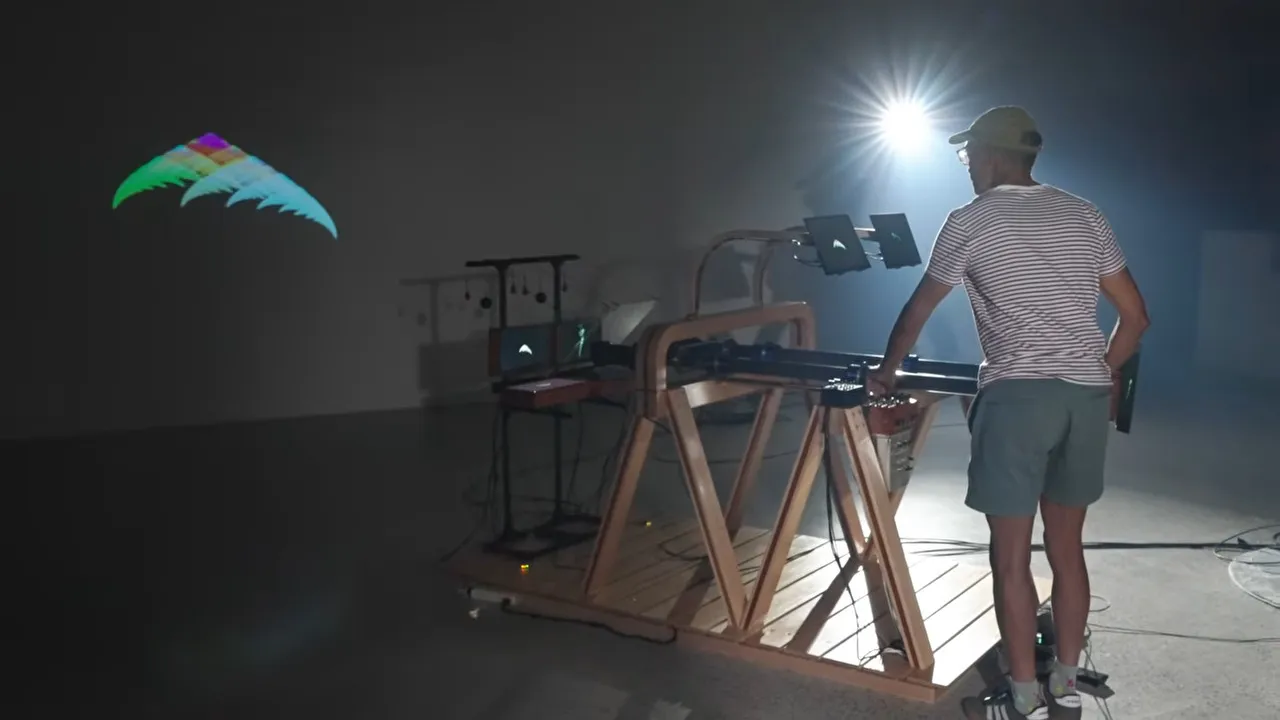
For users of a certain age, fractal patterns and computers are nearly synonymous. Typing in BASIC programs and seeing the Mandelbrot set or other fractals slowly render on screen is a key memory for some of us. Others will have generated recursive patterns mucking about: point an analog camera at the screen showing its video feed, and you’d better believe you get recursion. It’s called video feedback, and it looks a lot better than audio feedback sounds, especially in the hands of a master like [The Light Herder] who has now found a way to take this vintage art into the 4K resolution of the 21st century.

Physically this build is very similar to the “God Machine II” sculpture we covered previously, which in turn built on the first 720p version of his art piece. Getting analog video feedback in HD was hard enough — you need to be able to adjust the hue, saturation, brightness and contrast of the monitor as you go in order to have the full control of the resulting image. Most old TVs had those back in the SD era, but once HD came around it was rare; [The Light Herder] despaired of ever finding a screen that would to this in 4K.

As it turns out, the answer was to embrace digital — all the knobs on his analog control board feed into a Teensy, which is communicating via RS-232 with the LCD driver boards to alter the desired display properties. Obviously judicious selection of driver boards was required. If you watch the build video embedded below, you’ll find there’s an awful lot of tech in this analog, ‘no computer’ setup. If you want to skip the how-to and a master’s explanation of video feedback and just see pretty pictures he’s got a demo video as well. It really has to be seen to be believed.

Advertisement

If you want to create a colorful analog light show that isn’t quite so self-referential and a lot simpler to build, you could always try soap. Actually, we’d love to see him start the feedback with some soap-film colors. The result would likely be as was once said “totally far out, man”.

 

Advertisement

Source link

Advertisement
Continue Reading

Tech

ICE Tries, Fails To Illegally Raid An Immigration Law Office; Settles For Empty Threats Instead

Published

on

from the maybe-don’t-fuck-with-people-who-actually-know-the-law dept

The thing about raiding law offices is that they tend to be filled with people who actually know the law. A bunch of opportunistic ICE officers thought they might be able to talk their way into an illegal search, but that initiative (is that the word for this?) died out almost immediately when the interloping officers were greeted by a small group of immigration lawyers.

As is to be expected, this attempted illegal raid occurred in a “blue” state — the states that are still seeing large amounts of immigration officer activity just because their populations refused to throw a majority of their support behind Donald Trump during the last three elections.

The Sacramento Bee broke the news, covered here by Mathew Miranda:

Multiple U.S. Immigration Customs and Enforcement agents armed with guns attempted to inspect a Sacramento immigration law firm — and threatened to return later and break windows — on Friday morning, according to several employees of the building.

Employees of the North Natomas law firm and next door dentistry office said the agents, who arrived in at least four vehicles, claimed to have received a list from Washington, D.C., which listed the building’s address as the primary mailing address for many people. The ICE agents requested to tour the office for beds, but were ultimately turned away after failing to provide a warrant.

Advertisement

You can see the pretense. And you can see how everyone else would have recognized it was a pretense, even if the ICE officers hadn’t backed down immediately in the face of “get a warrant” demands from the occupants of the law office.

ICE pretended that a lot of migrants using the law office as a mailing address (something likely limited to court documents, etc.) was evidence that the law office was illegally housing dozens of migrants. But, as a migrant trying to work your way through the immigration system, it just makes sense to list a law office as the address of contact when engaging court proceedings, especially if your housing situation may be in a constant state of flux. Telling courts to send summons, notices, etc. to your legal reps is the smart way to handle things like naturalization proceedings, given that the rules seem to keep changing, and our current government is doing whatever it can to disrupt immigration proceedings to maximize arrests and detentions.

It would be immediately clear to anyone but an opportunistic ICE thug that the Morris Law Office was incapable of housing a large number of migrants. It’s a strip mall law office that shares a building with a dental implant clinic.

Having rushed directly into a stone wall composed of well-composed immigration lawyers (as well as the absolute stupidity of having to pretend a strip mall law office could be a second home for a large number of migrants), ICE officers retreated empty-handed, but not before issuing a threat that only later proved to be as empty as their fingerless gloved hands:

Raissa Morris, owner of the Morris Law Group, received a text at 9:16 a.m. which read “immigration is here.” The message came from one of her employees who told her an agent, who was armed and wearing an ICE badge, had entered the front lobby and asked to speak to an office manager.

She quickly told one of her employees to tell an agent that they could not inspect the building without a warrant. The agent responded by saying that they had received a list from Washington, D.C., which featured multiple clients using the law firm’s address. He asked to inspect the office for beds and said if they received follow-up orders that they could return at 3 a.m. to break windows and enter.

Advertisement

Thugs to the very end. “If you won’t let us abuse our power and ignore your rights, we’ll just ask someone back at the office to swear out some paperwork that will let us get what we want without your cooperation.” Obviously, this paraphrasing is far more coherent and polite than anything uttered by your average ICE officer (and, at this point, almost any ICE officer would be lucky to be considered “average”). But the ultimate point remains: if ICE doesn’t get what it wants immediately, it will find a way to get it eventually.

Additional coverage by local news station KCRA includes some on-site reporting, along with screenshots of several photos of ICE vehicles shared by law firm employees. It also includes a comment from the DHS, which apparently couldn’t be bothered to respond to questions from reporters at the publication that first broke the news.

In a statement to KCRA 3, DHS said, “On August 14, ICE officers approached an unmarked door during a targeted enforcement operation, thinking it was the target address as it was listed as the address of the illegal aliens they were planning to arrest. Upon finding out it was a law firm; they departed the address.”

This statement is only true if you ignore the officers’ attempt to engage in a warrantless search, as well as the parting threat they issued when they were ejected by Morris Law employees. ICE had to know it was a law firm because that would be the first result in any normal search of that address. And officers couldn’t pretend it was just some hostel for migrants when they rolled up in at least four separate unmarked vehicles. They were clearly in a quasi-strip mall parking lot facing a business with the business name clearly displayed above the address the DHS now claims was so inscrutable it took an accosting and a confrontation with people who actually know and respect the law to inform the officers of their “mistake.”

The DHS statement is idiotic, which just means it’s on-brand for this administration. So far, the threat to come back and break windows while no one’s in the office has yet to materialize. But this government is filled with sore losers and sore winners (that would be the big baby boy sitting behind the Resolute Desk), so I wouldn’t put any money on ICE just taking this L and moving on to other things.

Advertisement

Filed Under: 4th amendment, california, dhs, ice, masked thugs, mass deportation, raissa morris

Companies: morris law group

Source link

Advertisement
Continue Reading

Tech

Flipboard acquires Portland startup Graze in bid to ‘re-orient the attention economy’

Published

on

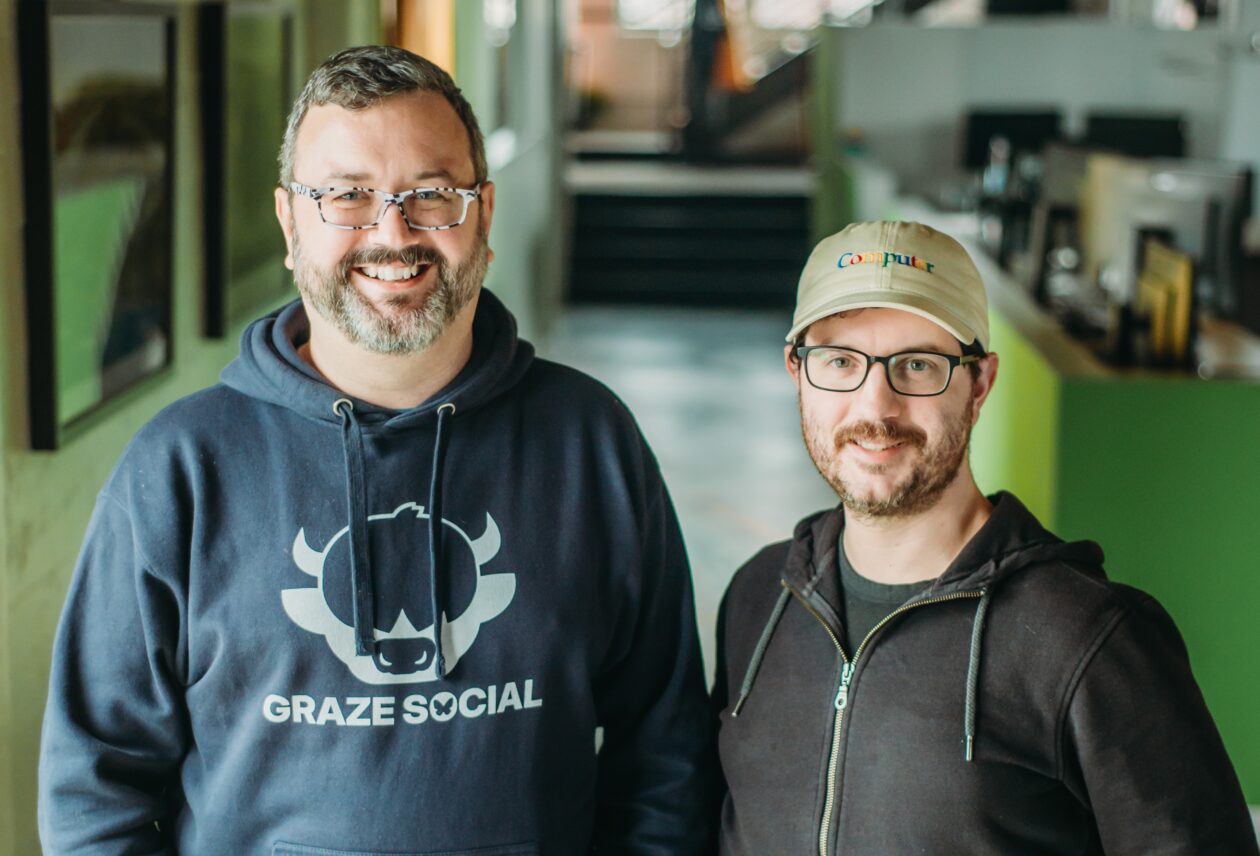
Graze co-founders Peat Bakke (left) and Devin Gaffney. (Graze Photo)

Portland-based social media startup Graze is joining Flipboard in a strategic acquisition aimed at expanding open social protocols and giving users control over their own content algorithms.

Founded by Devin Gaffney, Peat Bakke and Andrew Lisowski — starting from a blog concept and officially forming 21 months ago — Graze has grown into an engine for the open social web.

The Graze platform has delivered over 41 billion posts to 12 million users. It enables creators, publishers and everyday users to build, tune, and monetize custom social algorithms, particularly across platforms like Bluesky, without writing a single line of code.

In announcement announcing the deal, Gaffney said that Graze marks the most important work of his career, creating a new “playbook for how to re-orient the attention economy, and start pulling us back out of the widening gyre.”

Under the direction of Flipboard CEO Mike McCue, the Palo Alto, Calif.-based company has heavily invested in open social protocols like AT Protocol, ActivityPub and RSS through initiatives like its Surf browser and “Social Websites” product.

Advertisement

The acquisition combines Flipboard’s front-end discovery tools with Graze’s back-end algorithmic engine.

“Combined, we become two halves of one machine,” wrote Gaffney. “Surf will be the browser for the open social web — where people go to read and discover feeds across Bluesky, Mastodon, Threads, RSS, and more. Graze will be the engine under those feeds — how a curator builds, tunes, and monetizes one without writing a line of code.”

As a lean team, Graze faced a number of operational slowdowns with Gaffney writing that they ended up “wearing a half dozen hats we didn’t know we needed at the start.” Joining Flipboard allows the team to accelerate development by tapping into Flipboard’s established infrastructure rather than rebuilding existing systems from scratch.

“Mike (McCue) and I share a vision of creating an attention economy that works for everyone, and as the onslaught of generative AI starts to clog the pipes of legacy platforms, we both deeply believe that a curatorial role in shaping “the algorithm” is the only sustainable way to run that attention economy into the future,” Gaffney wrote.

Advertisement

For Graze’s existing user base, the team confirmed that the core product and service will remain online. The combined entities aim to offer a creator-first alternative to closed, legacy platforms like Facebook or Instagram, providing users with ownership over what they see and how they earn.

In April 2025, Graze raised $1 million in a pre-seed round led by Betaworks, Salesforce Ventures Factorial, Apertu Capital, Skyseed, and angel investors from Mozilla and Protocol Labs. Graze employed just two people — Gaffney and software engineer Nick Gerakines — and both will be transitioning to Flipboard. Bakke and Lisowski left the company last year.

In an email to GeekWire, Flipboard’s McCue said that the Graze team has built a special tool that has benefited many curators, community builders, creators and developers.

“I’m inspired by their vision and can’t wait to work closely with them to continue building out the open social web,” McCue said. “Devin and Nick will continue to advance Graze as the ultimate feed building and hosting platform while Surf and Flipboard will enable millions of additional users to discover and experience feeds in new ways we’re going to design together.” 

Advertisement

Financial terms of the transaction were not disclosed, though Gaffney tells GeekWire that they are “confident that this is a great outcome for the team, the company, and the investors.”

Source link

Continue Reading

Tech

Whoop’s $149 jewelry band costs more than Google’s entire Fitbit Air

Published

on

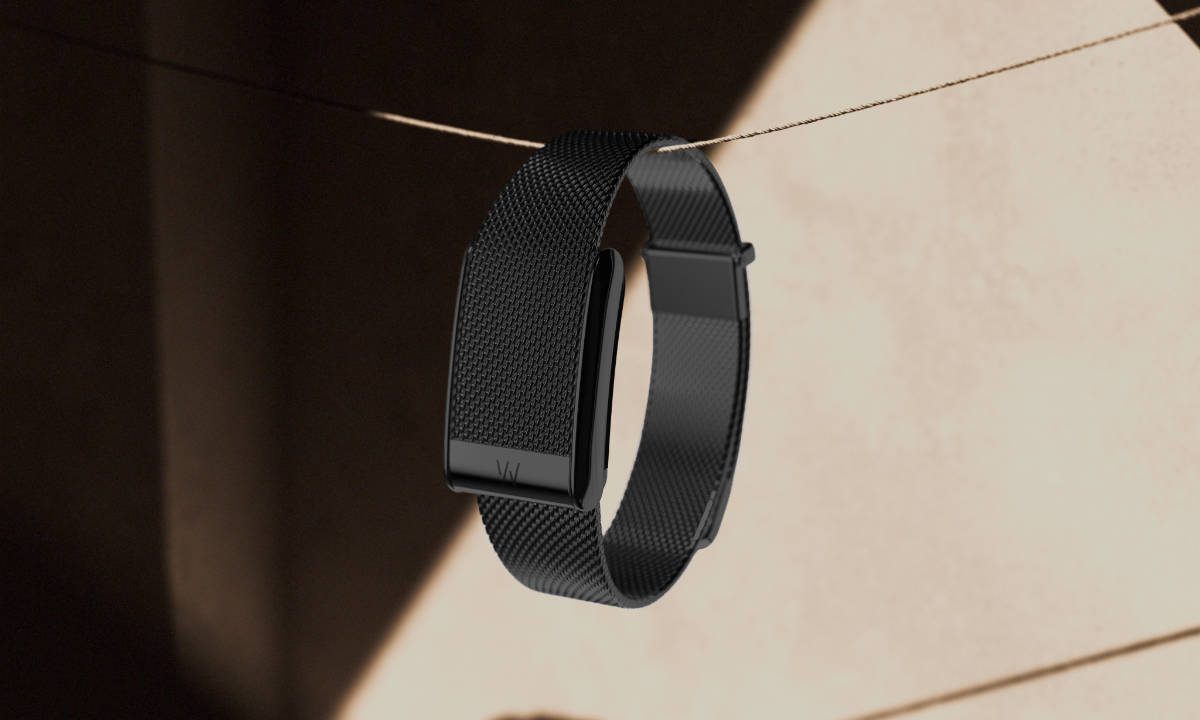
The Whoop Meridian takes a screenless fitness tracker that usually looks sporty and turns it into a luxury accessory. Rather than a silicone band, you’re looking at a tapered metal mesh band, magnetic clasp, and four finishes designed to look more at home alongside jewelry than running shoes. Whoop is selling Meridian in Gold, Rose Gold, Alloy, and Black for $149 starting today.

There’s just one small problem. One of Whoop’s biggest ideas is that you’re supposed to wear its tracker continuously, and higher-tier Whoop 5.0 memberships even include a wireless power pack that can charge the tracker while it remains on your wrist. But unfortunately, Meridian can’t do that.

Looking better means taking it off

Whoop’s wireless charger cannot send power through Meridian’s metal band, so the tracker has to come off before it can be charged. So you’re not getting that convenient feature on Whoop’s existing design, particularly for users obsessive enough about continuous health data to dislike gaps in their tracking.

The company addressed the new design in its official announcement, talking about how it now matches the occasions where people might normally remove a fitness tracker — dinners, events, travel, or simply situations where a fabric sports band doesn’t complement what they’re wearing.

The Milanese-style mesh, tapered silhouette, and continuously adjustable magnetic clasp are supposed to turn the Whoop into something closer to jewelry. I can see the appeal. During our review of the Whoop 5.0, we found the standard model comfortable and unobtrusive. Though its chunky fabric-band appearance was one of the hardware’s weaker points. Meridian addresses that complaint rather directly.

Advertisement

Google’s Fitbit Air makes this look expensive

Meridian costs $149 for the band alone. You still need compatible Whoop hardware and an active membership, with Whoop’s subscriptions starting at $199 per year. Meanwhile, Google will sell you an entire Fitbit Air for $99.99. That’s a complete screenless health tracker with 24/7 heart-rate monitoring, sleep tracking, workout detection, up to seven days of battery life, and compatibility with Android and iOS. More importantly, its fundamental health-tracking features continue working without paying for Google Health Premium.

The two products are targeting slightly different customers. Whoop leans much harder into detailed recovery, strain, and performance data, while Fitbit Air is deliberately aimed at making passive health tracking simpler and cheaper. For $50 less than Whoop’s new strap, Google gives you the tracker too. So it mostly makes sense for users already in Whoop’s ecosystem.

Source link

Advertisement
Continue Reading

Tech

Apple confirms its ‘Surprise and shine’ event for 9 September

Published

on

Apple has confirmed that its autumn event will take place on 9 September at 10am Pacific time at Apple Park, under the tagline “Surprise and shine” and an invitation showing a sun rising behind the company logo.

The expectation is that it will finally show a foldable iPhone, a device IDC thinks could ship 10 million units in its first year at around $2,500.

The more consequential detail is what is not on the list. The standard iPhone 18 is expected to slip to a spring launch, which means Apple has quietly split the annual iPhone cycle into two events for the first time.

That is a bigger change than a new hinge. The September keynote has been the fixed point of the consumer technology calendar for well over a decade, and moving the volume model out of it changes what the event is for.

Advertisement

The foldable itself, reported variously as the iPhone Fold or iPhone Ultra, is expected in a book-style design with an outer display of around 5.3 in and an inner display near 7.8 in.

Reports describe a titanium frame and a display Apple has worked hard to make close to crease-free, which has been the visible weakness of every rival for seven years.

One design decision stands out from the rest. Face ID is expected to be replaced by Touch ID in the power button, presumably because there is nowhere sensible to put the sensor array on a device that folds.

Pricing expectations run from about $2,000 to $2,500, which would make it the most expensive iPhone Apple has sold by a considerable margin. Samsung has had this category largely to itself since 2019 and has never made it a volume business, so Apple arriving late and expensive is not the disadvantage it sounds.

Advertisement

Apple’s stated position on foldables has always been that the category was not yet good enough, which is roughly the argument it made about large screens and about styluses before adopting both. The test will be whether the hinge and the crease hold up over a couple of years rather than whether they impress in a demo.

The Pro models are the more conventional part of the event. The iPhone 18 Pro and Pro Max are expected to keep their current designs while gaining an A20 Pro chip built on a 2nm process, Apple’s own C2 modem, a variable-aperture main camera, and a smaller Dynamic Island.

A 2nm part would put Apple a full node ahead of most of the Android field, where Xiaomi’s in-house silicon is still on 3nm. Whether buyers notice is a separate question from whether it matters competitively.

There is also a reported price rise of roughly $300 on the Pro line, which would be unusually steep for Apple and is worth treating as a rumour rather than a plan. Component costs have moved sharply this year, particularly memory, so the direction is at least plausible.

Advertisement

Around the phones sits the usual supporting cast. An Apple Watch Series 12 and Ultra 4 are expected with new sensors rather than redesigns, alongside the AirPods, OLED iPad mini, and Mac mini refreshes already in the pipeline.

Durability is where foldables have historically disappointed buyers, and it is also the hardest thing to judge from a keynote. A $2,000 phone with a moving part is a warranty proposition as much as a product one.

The home products may be the quiet story. Updated HomePod mini and Apple TV hardware with Siri’s newer AI stack are expected, along with a home hub carrying a seven-inch screen and a FaceTime camera, which would be Apple’s first real attempt at a category Amazon and Google have occupied for years.

None of this is confirmed beyond the date, the venue, and the tagline, and Apple’s invitations have never been dependable guides to their contents.

Advertisement

What the schedule does confirm is that the company is willing to hold a September keynote without its highest-volume product on the stage, which is not a decision it has taken before.

Source link

Advertisement
Continue Reading

Tech

Live Updates From The Launch Of The Next S26

Published

on

We’re expecting to see the Galaxy S26 FE.

Samsung is hosting another Unpacked today, and the company says the fanfare is for the “newest addition to the S26 family.” Given we’ve already seen a trio of Galaxy S26 flagships earlier this year, and being very familiar with Samsung’s device lineup, we can make a highly educated guess that this is likely going to be the launch of the S26 FE. 

The FE series is typically a lower priced version of the company’s premium handsets, usually with some compromises on cameras and processors. In its announcement for this event, Samsung said the next S26 family member was “purposefully designed to bring many Galaxy S26 experiences from camera to AI, along with the latest One UI, to those who look for what truly matters most to them.”

We don’t expect there to be many surprises, nor for the presentation to last very long. The show starts at 8AM ET, which is in just over an hour, which gives us some time to hang out with you all. Leave us a comment below with your thoughts and questions, we’d love to chat with you here! 

Advertisement

Source link

Advertisement
Continue Reading

Tech

T-Mobile to cut 77 jobs in Washington state, impacting corporate and retail positions

Published

on

(BigStock Photo)

T-Mobile is cutting 77 jobs across Washington state, trimming staff across its Bellevue headquarters, regional retail stores, and remote roles, according to a new state filing.

The layoffs are expected to occur between Sept. 21 and Nov. 18, according to the Worker Adjustment and Retraining Notification from the Washington Employment Security Department.

The workforce reductions span frontline, regional, and corporate roles, eliminating positions ranging from retail mobile experts and account care specialists to principal systems architects and senior directors at the wireless carrier.

In addition to 63 newly disclosed job cuts, the filing includes 14 workers whose previously announced departures were deferred to this fall.

Beyond corporate offices, the cuts will result in permanent store closures across Washington. Locations expected to close include retail sites in Seattle (45th & Stone Way), Bellingham, Bothell, Kennewick, Tacoma, Vancouver, and Yakima.

Advertisement

“Like all businesses, we’re constantly looking at where we allocate our resources so we can invest in the areas that matter the most to our customers,” a T-Mobile spokesperson said in an emailed statement. “That means making adjustments where needed while continuing to hire in areas that support our priorities, strengthen our momentum and help us keep changing the industry through innovation.”

The spokesperson pointed to a broader retail pivot aimed at concentrating its store footprint toward company-operated locations integrated with digital tools like its T-Life app, rather than third-party dealer operations.

“Changes to third-party dealer-operated locations do not affect T-Mobile employees,” the spokesperson added. “In most cases, T-Mobile retail employees can apply for positions in other locations or relocate if there is a change to their current store.”

A subset of the latest cuts stems from facility relocations, where some employees were offered transfer opportunities, according to the filing.

Advertisement

The company previously cut 393 workers in Washington in February.

Source link

Continue Reading

Tech

Stop Touching Your Keyboard. Use This AI-Powered Microphone Instead

Published

on

How much do you hate typing? The advent of large language models has rapidly advanced voice-to-text technology. Whether it’s Wispr Flow joining your meetings to summarize discussions or Google debuting smarter on-device dictation in its latest Pixel smartphone, these tools do far more than transcribe: They intelligently strip filler words, clean up unscripted thoughts on the fly, and seamlessly mediate multilingual conversations.

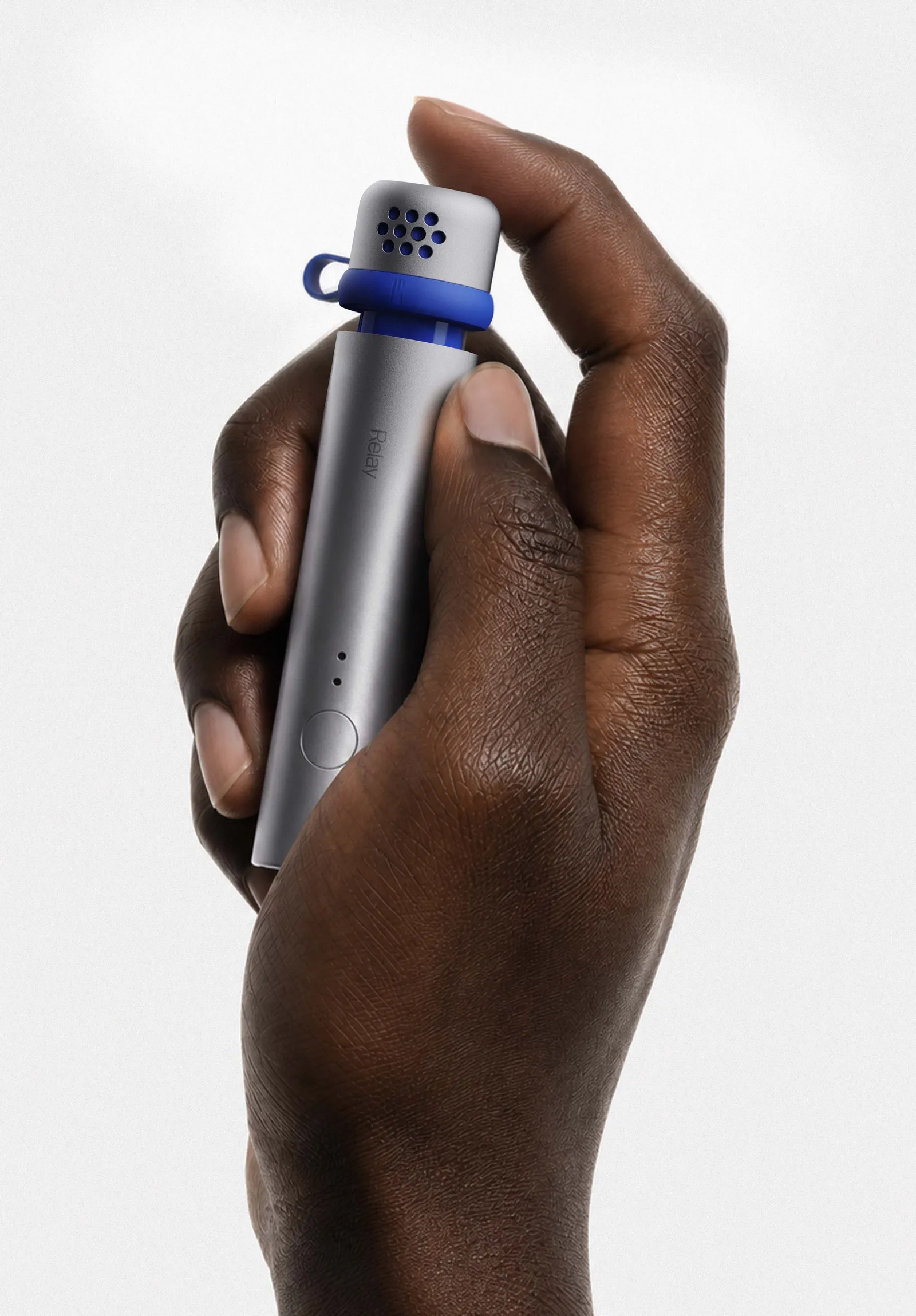
Now, a new startup is entering the fray. Unlike its software-focused peers, Relay is building a dedicated, portable microphone for high-fidelity voice-to-text anywhere. Based in London, Relay was founded by two former Nothing employees: Cookie Xu, who was Nothing’s head of AI and services, and Raymond Zhu, a hardware product manager. While the company is debuting its software today, the hardware—what it calls the Relay Q—won’t be available until early 2027.

Zhu says when he and Xu worked at Nothing, they used Wispr Flow’s transcription software to “type” most of their messages at work. He says it greatly helped with thinking out ideas, but they kept running into an issue: talking loudly in an office.

“In the office, we never really could get the right volume for input,” Zhu tells WIRED. “If I whisper too quietly, the Mac wouldn’t be able to pick it up; too loud and my coworker next to me can hear. Sometimes I would actually pull out my earbud and go like this,” he says over a video call, holding an earbud in front of his mouth to demonstrate. “It calls for dedicated hardware.”

Advertisement
Image may contain Bottle Blade Razor and Weapon

Courtesy of Relay

Relay is exclusive to macOS at launch, though the company has plans to bring it to Windows, iOS, and Android. It’s starting with the desktop because Zhu believes conversations are most complex there. Chats with friends and family are simple on phones, but at work in front of a computer, you’re sharing ideas, brainstorming, and using varied tone and formality.

Though the microphone is still months away from being ready, I’ve been using a beta version of Relay’s macOS app, which works with or without the dedicated mic.

During setup, you’ll need to choose a hotkey that will trigger Relay in any text field—the default is Fn. Press and hold the key while your cursor is in any text field, and Relay activates and handles the voice dictation. The voice-to-text engine is powered by Google’s Gemini models.

Source link

Advertisement
Continue Reading

Tech

Gigabyte AORUS RTX 50 INFINITY Series Debuts With RGB Halo & Advanced Cooling

Published

on

If you’re in the market for a new high-performance GPU, GIGABYTE has expanded its premium graphics card lineup with the launch of the AORUS GeForce RTX 5090, RTX 5080, RTX 5070 Ti, and RTX 5070 INFINITY series. The new GPUs focus on high-end performance while introducing a cleaner PC-building approach with hidden rear-facing power connectors, an upgraded Windforce cooling system, and customizable RGB Halo lighting. Here’s everything you need to know about them.

Windforce Hyperburst Cooling System

different infinity graphics cards

The headline feature across the INFINITY lineup is GIGABYTE’s new WINDFORCE HYPERBURST cooling system. It combines a double flow-through heatsink design with the company’s patented Hawk fans to improve airflow and thermal performance during demanding gaming and creative workloads.

According to GIGABYTE, the Hawk fans deliver up to 53.6% higher air pressure and 12.5% more airflow compared to previous designs. An intelligent Overdrive Fan, positioned at the center of the card, automatically activates under heavy loads to provide additional cooling while keeping noise levels in check.

One of the more interesting design changes is the relocation of the GPU’s power connector to the rear of the graphics card. Instead of cables protruding from the side, users can route them behind the motherboard tray for a much cleaner-looking build. GIGABYTE also includes a magnetic cover that fully hides the connector, giving the cards a minimalist appearance once installed. The design is compatible with STEALTH-style PC builds that prioritize hidden cable routing.

Alongside the standard models, GIGABYTE has unveiled the AORUS GeForce RTX 5080 INFINITY WOOD, which pairs wood-grain accents with premium materials to match the company’s WOOD-themed motherboards.

Advertisement

Source link

Continue Reading

Tech

US consulting firm Highspring plans 50 Irish jobs

Published

on

The new jobs, spanning engineering, operations, finance, consulting and technology, will be created over coming years.

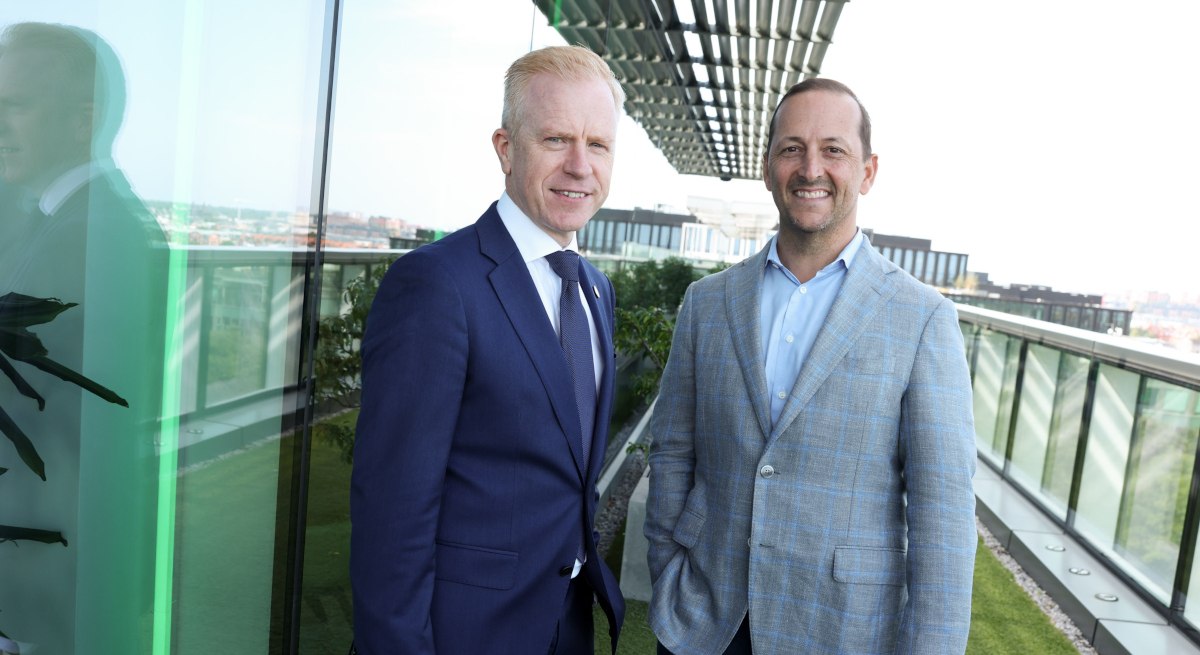
US professional services firm Highspring is creating 50 new jobs in its recently established Irish presence.

The new jobs, spanning engineering, operations, finance, consulting and technology, will be created over the course of the coming years, the company said in a statement today (27 August). Highspring did not provide a timeline.

The Tennessee-headquartered company said the fresh investment will support its managed services, consulting and talent solutions businesses and reinforce its ability to service its European clients. Ireland is expected to play a key role in supporting the company’s multinational client base, it said.

Advertisement

Highspring, formerly branded under Vaco Holdings, has a presence across more than 45 countries with more than 10,000 employees. Vaco continues as the talent solutions division of the business, providing services across accounting and finance, business and digital transformation, risk and compliance and IT.

Highspring officially launched its Dublin office last year as part of a major international push. The Irish launch was followed by an office is Lisbon this February.

“The new roles across engineering, operations, finance, consulting and technology will provide excellent opportunities for highly skilled professionals and further strengthen Ireland’s position as a hub for innovation, talent and business excellence,” said Minister for Enterprise, Tourism and Employment, Peter Burke TD.

Brian Waller, the CEO of Highspring said: “Our talented team in Ireland has become a critical part of how we deliver for clients around the world and has enabled Highspring’s accelerated growth.  These new roles build on the success we’ve already experienced here and reinforce our commitment to Ireland as an important part of our global strategy.”

Advertisement

This month alone, US tech company Vertiv announced plans to create 300 new jobs amid a planned expansion of its Letterkenny facility.

Meanwhile, Australian substitute teacher booking platform ClassCover is expanding into Ireland with a €3m investment that will create 20 jobs over three years.

And late last month, OpenAI announced plans to hire 250 workers at its new EU headquarters in Dublin’s Docklands to meet the growing demand for its services in Europe.

Don’t miss out on the knowledge you need to succeed. Sign up for the Daily Brief, Silicon Republic’s digest of need-to-know sci-tech news.

Advertisement

Source link

Continue Reading

Trending

Copyright © 2025