Tech
T.H.E. Show Vegas 2026: Best in Show Winners and Honorable Mentions

T.H.E. Show returned to the Alexis Park Hotel in Las Vegas from March 20 to 22, 2026, marking its 30th anniversary right where it started. As North America’s longest running hi-fi show, its survival is not luck. It is persistence. Credit goes to the late Richard Beers for building it, Maurice Jung for keeping it alive after 2016, and now Emiko Carlin, who is steering the brand into its next phase with expanded events in Austin and New York City. The show had moved from Las Vegas to Southern California with stops in Newport Beach, Irvine, Long Beach, and now Costa Mesa, but it is still standing. That alone says something in an industry that tends to burn through its own history.
Context matters, and 2026 is shaping up to be one of the busiest show calendars this industry has ever seen. Between eight CanJam events, AXPONA, CES, ISE, NAMM Show, CEDIA Expo, the relocated Vienna based HIGH END, and a growing list of shows in Toronto, Paris, Singapore, SWAF, and CAF, it is relentless. There is barely time to unpack before the next badge gets printed.
Which makes T.H.E. Show’s return to Las Vegas feel less like nostalgia and more like defiance. Thirty years in, it is still in the fight.

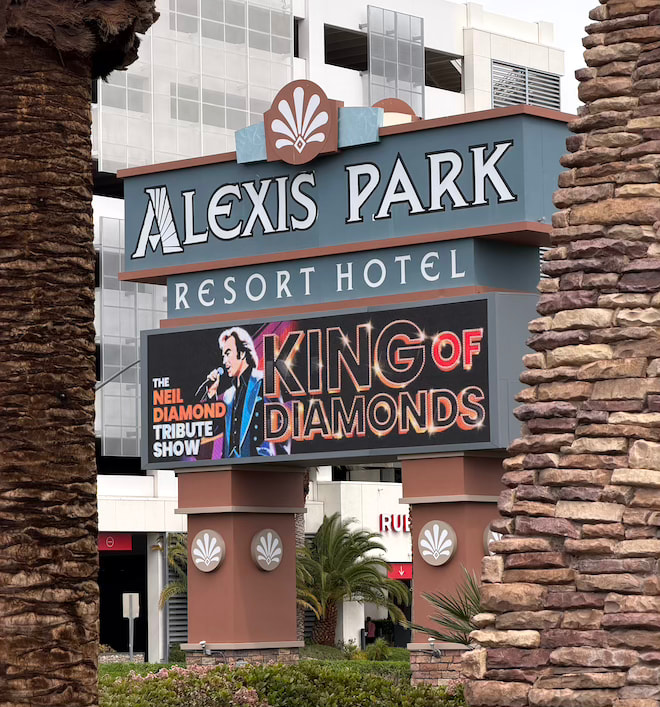
With four events on the T.H.E. calendar in 2026, the Vegas stop did not exactly start on solid footing. The show was originally scheduled for January 9 to 11 at the Tuscany Suites & Casino, but had to be postponed to March due to unforeseen issues with the venue. Credit where it’s due, the team managed to regroup and secure the Alexis Park Hotel in less than three months. That kind of turnaround is not easy in Las Vegas, where convention space gets locked up fast.
There were tradeoffs. The new dates could not accommodate every exhibitor, and the show ended up noticeably smaller than originally planned. In total, eight oversized ballrooms were filled with high-end audio systems, supported by a modest marketplace that included T10 Bespoke, Island Routers, a vinyl seller, and a portable audio accessories vendor. It felt more curated by necessity than design.
Timing did not help either. Running the same weekend as the Montreal Audiofest split both exhibitors and attendees across two countries that are not exactly a quick plane ride apart. Add AXPONA 2026 looming just weeks later, with the eCoustics team heading to Chicago that same week, and the reality sets in. There is only so much travel budget and bandwidth to go around, even in an industry that seems determined to test both in 2026.
Best in Show
Best Over $50K: YG Acoustics / Bergmann

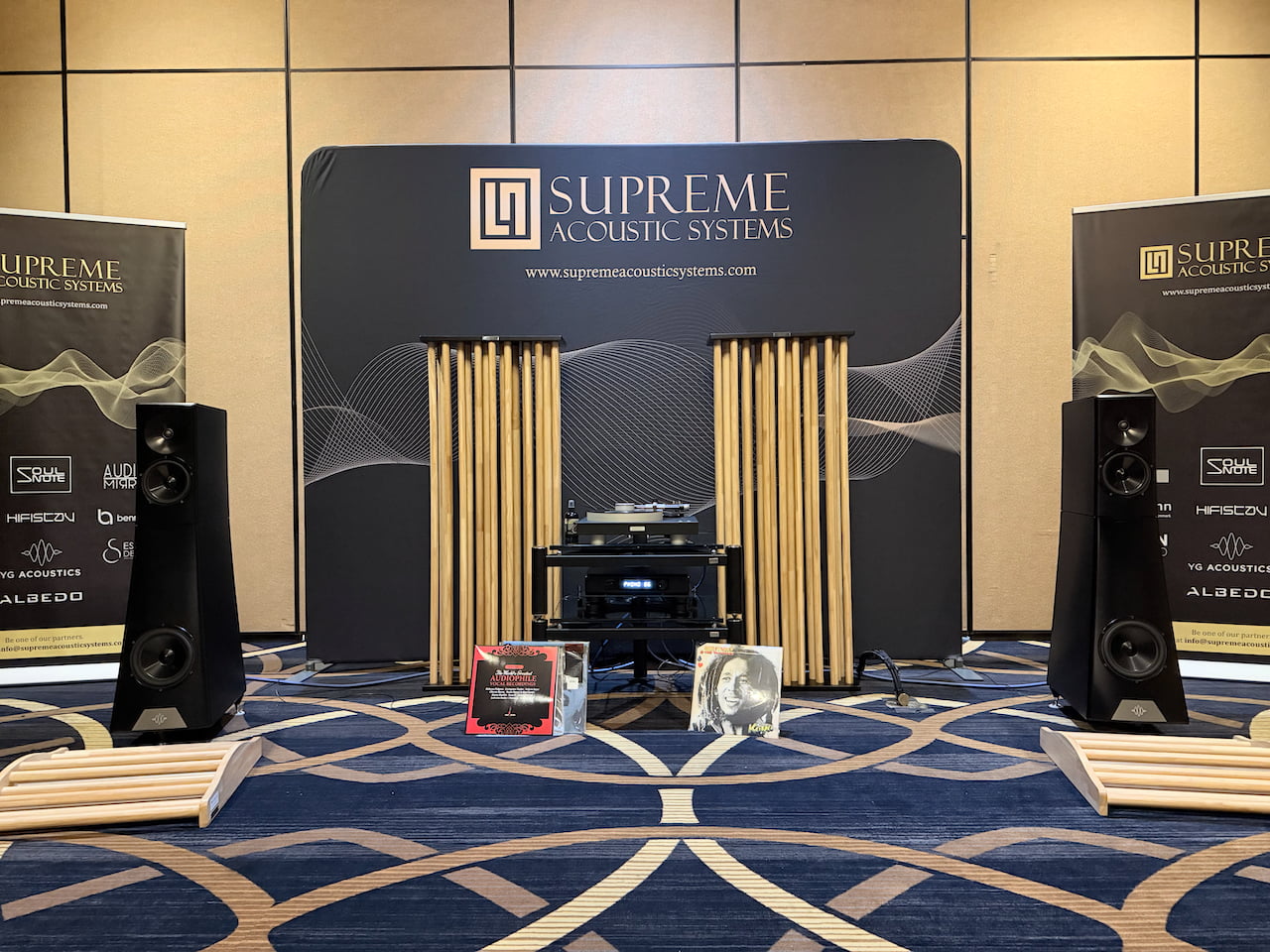
I’ve heard a number of YG Acoustics systems at shows over the years, and they rarely miss. This time, instead of rolling in with something that costs as much as a brownstone, they kept it almost reasonable. Almost. The Vegas system (presented by Supreme Acoustic Systems) came in around $100K and centered on the Vantage 3 Live active towers at $73K per pair, paired with a Bergmann Magne Airbearing Turntable at $12K, all sitting on a Music Tools ISOstatic rack at $1,495 per level.
The setup was refreshingly clean. No spaghetti pile of cables, no rack full of separates. Just two power cords and a pair of optical cables, one feeding each speaker. That alone tells you this is not your typical active speaker. The Vantage 3 Live uses a fully integrated DSP architecture with an external control unit that handles preamp duties and includes a phono stage. Everything is managed upstream, then sent digitally to the speakers.
The key here is that the signal stays in the digital domain all the way to the speakers, or is converted to digital before it gets there. That is why YG uses optical connections instead of traditional speaker cables. It is a different way of thinking about system design, and it cuts out a lot of variables.
There is no Bluetooth or Wi-Fi, but Ethernet based network streaming is built in, with support for TIDAL Connect and Qobuz Connect, and optional Roon integration. Use your phone or tablet, hit play, and let the system do the rest. No clutter, no guesswork, and very little standing between you and the music.

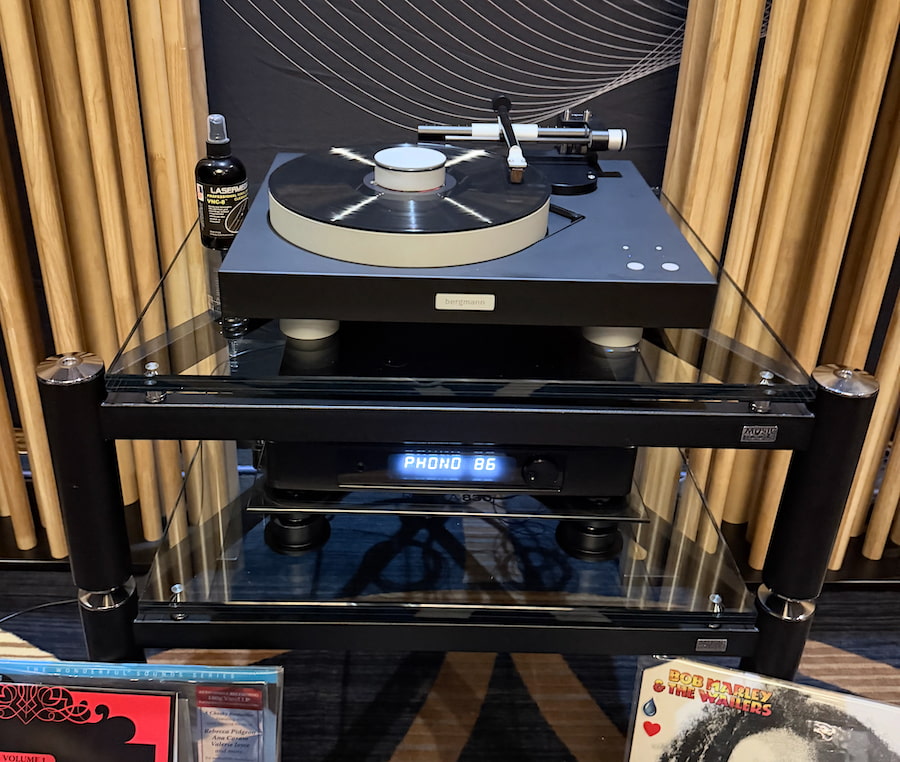
Additional elements rounded out the system, including AGS Diffusors (Acoustic Groove System) from Nihon Onkyo Engineering, which could easily add another $20K to the total. No, I didn’t A/B test them like a lab experiment, but patterns matter. Two of the best sounding rooms at the show used AGS, and that’s not a coincidence. In addition, power conditioning was handled by the AudioQuest Niagara 5000 at $6,900, delivering clean and stable current to the entire system.
The Vantage 3 Live is not shy about muscle. Each speaker packs 2,100 watts of amplification, with 700 watts dedicated to each driver. That kind of headroom is not just for bragging rights. It shows up immediately in control, dynamics, and composure, regardless of source.
“Is This Love” by Bob Marley and the Wailers on vinyl was captivating. The soundstage stretched wide without losing focus, and Marley’s voice stayed locked dead center. It had the kind of precision you expect from a mastering studio, pulling every last bit of information out of the grooves without sounding clinical.
Switching to digital via Roon and Anette Askvik’s “Liberty” didn’t feel like a compromise. Nothing collapsed, nothing softened. The presentation remained spacious, detailed, and controlled, with a level of consistency between analog and digital that most systems struggle to achieve. This is what YG does when everything lines up.
Learn more at supremeacousticsystems.com or listen to sound clips on Instagram.
Best Under $50K: Atlantis Lab / Neoson / Audiobyte

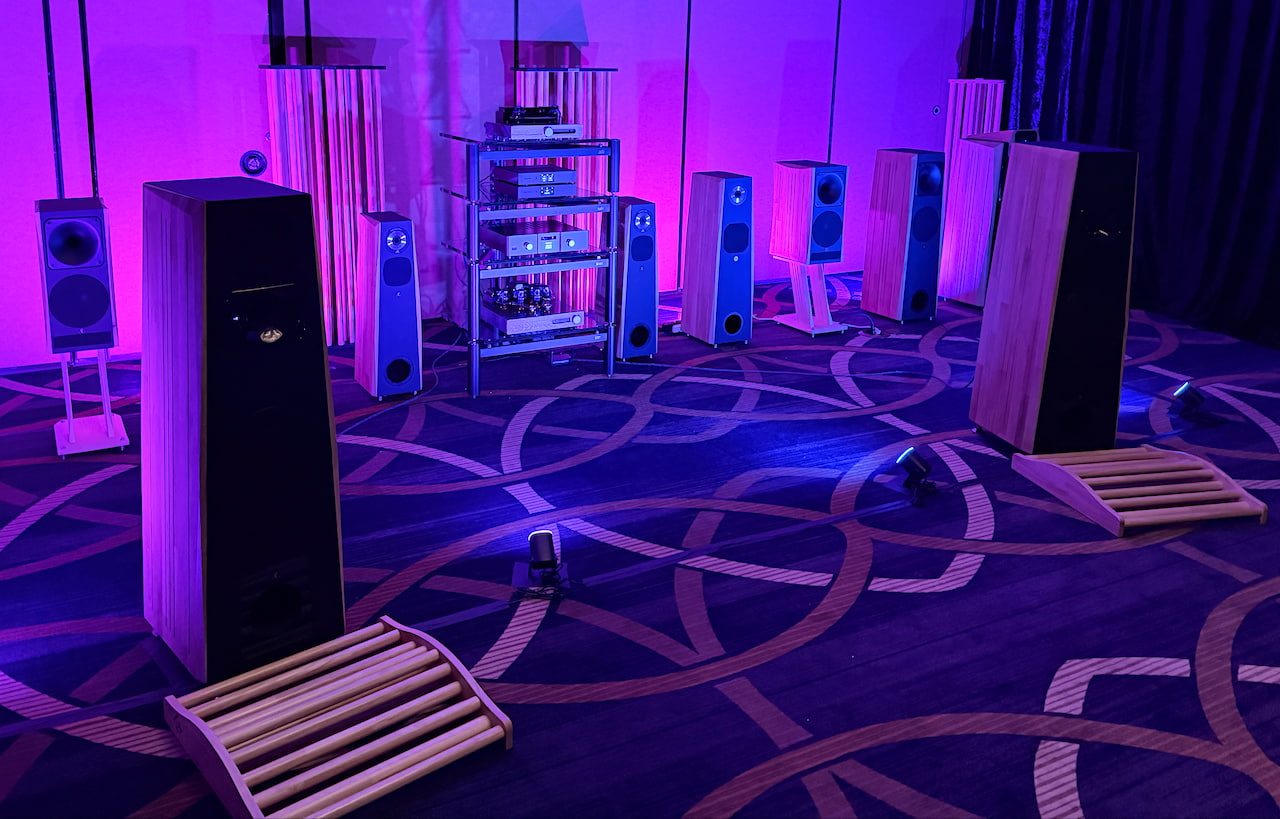
Interestingly, just a few rooms over, the Atlantis Lab speaker system (presented by U.S. distributor Decibel+) went in the exact opposite direction of the YG setup. Where YG leaned on brute force and digital control, this one stripped things down to something far more old school. We’re talking roughly 1/100th the power, less than half the price, and yet it delivered a wildly intoxicating tube driven presentation that pulled you in just as quickly, if not faster.
The system was built around three brands that, frankly, were not on my radar before this show. Atlantis Lab handled loudspeakers, Neoson provided amplification, and Audiobyte (new company out of Romania) rounded things out with a streamer and DAC.
It should not have worked as well as it did on paper, especially in a show environment. But sometimes the rooms that make the least sense end up being the ones you remember. This was one of them.


Atlantis Lab brought its high efficiency loudspeaker lineup, with models ranging from just over $3K to roughly $24K. The system was driven by the Neoson Evolution Tube Amplifier at $11,828, delivering 20 watts per channel of pure Class A power. Digital duties were handled by Audiobyte with the SuperHub streamer ($4K) and SuperVOX multibit DSD DAC ($4,500).
What made this setup more than just another good room was the backstory. We were told that each of the French brands was founded by two friends who intentionally designed their products with the other in mind. That kind of collaboration usually sounds like marketing copy. Here, it translated into real system synergy.
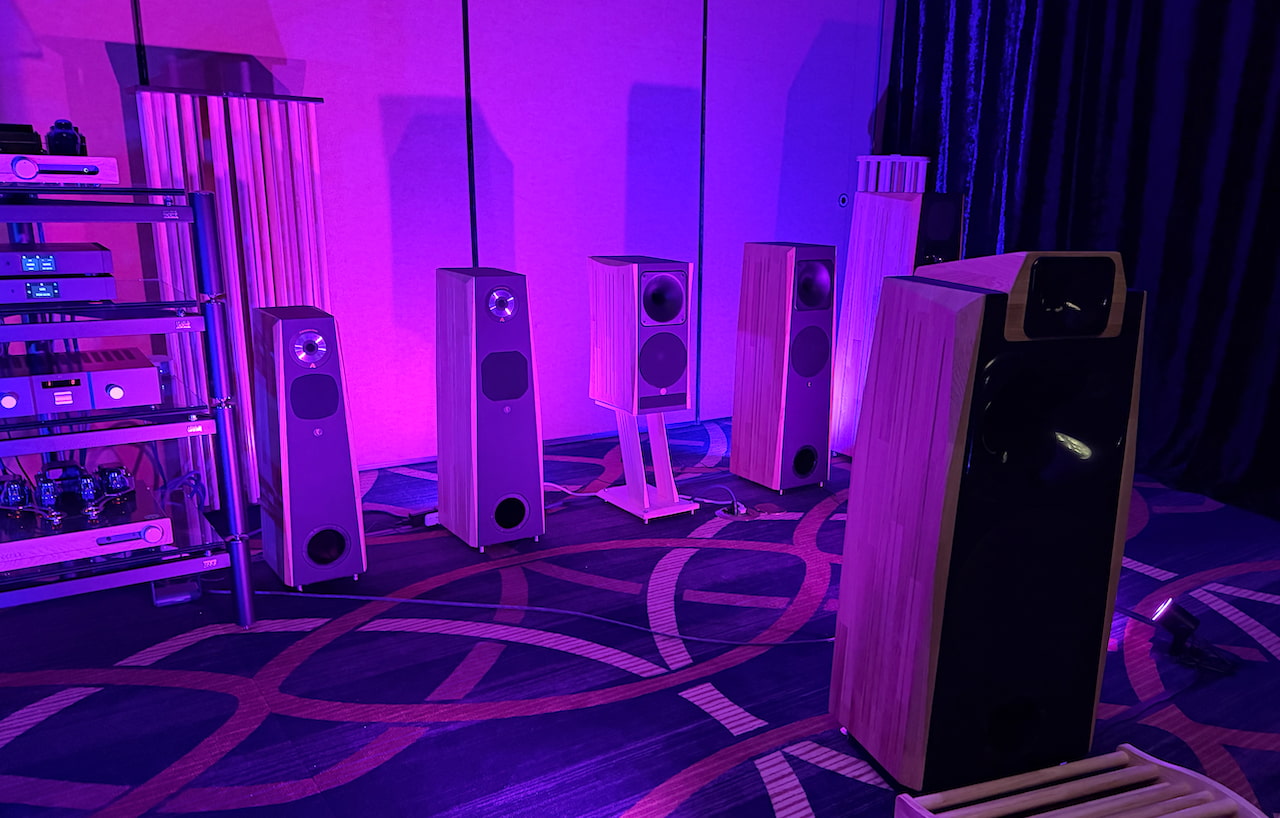
Atlantis Lab A16 Pro ($3,218)
Atlantis Lab A18 Pro ($4,960)
Atlantis Lab A21 Pro ($4,196)
Atlantis Lab A23 Pro ($6,466)
Atlantis Lab A31 Pro ($14,194)
Foreground:
Atlantis Lab A38 Pro ($23,939)

I spent time with the three largest Atlantis Lab floorstanding models, all paired with the same Neoson Evolution Tube Amplifier and Audiobyte front end. The A23 Pro ($6,466 per pair) did not quite deliver the same level of impact, but that felt more like a room mismatch than a flaw. Large hotel ballrooms are not forgiving, and if you are not sitting in the right spot, even good speakers can sound a bit restrained.
The two larger models stepped up in a meaningful way. They filled the room with more depth, width, and texture, the kind of presentation you usually do not hear until prices climb into far more uncomfortable territory. Comparing the A31 Pro and A38 Pro, which are separated by roughly $10K, was less straightforward. The flagship may have offered a bit more bass weight and scale, but the difference was not night and day. Some of that could have been expectation bias creeping in.
What stood out with both was their ability to throw a wide, stable soundstage while maintaining composure off axis. They did not collapse the moment you shifted in your seat. More importantly, they had a knack for uncovering layers of detail without sounding analytical, pulling you deeper into the performance rather than pushing it at you.
These are not brands most people walk into a show expecting to hear. That should change.
Learn more at Decibel+ or hear sound clips on Instagram.
Honorable Mentions
Oriaco G6 / Electocompanient

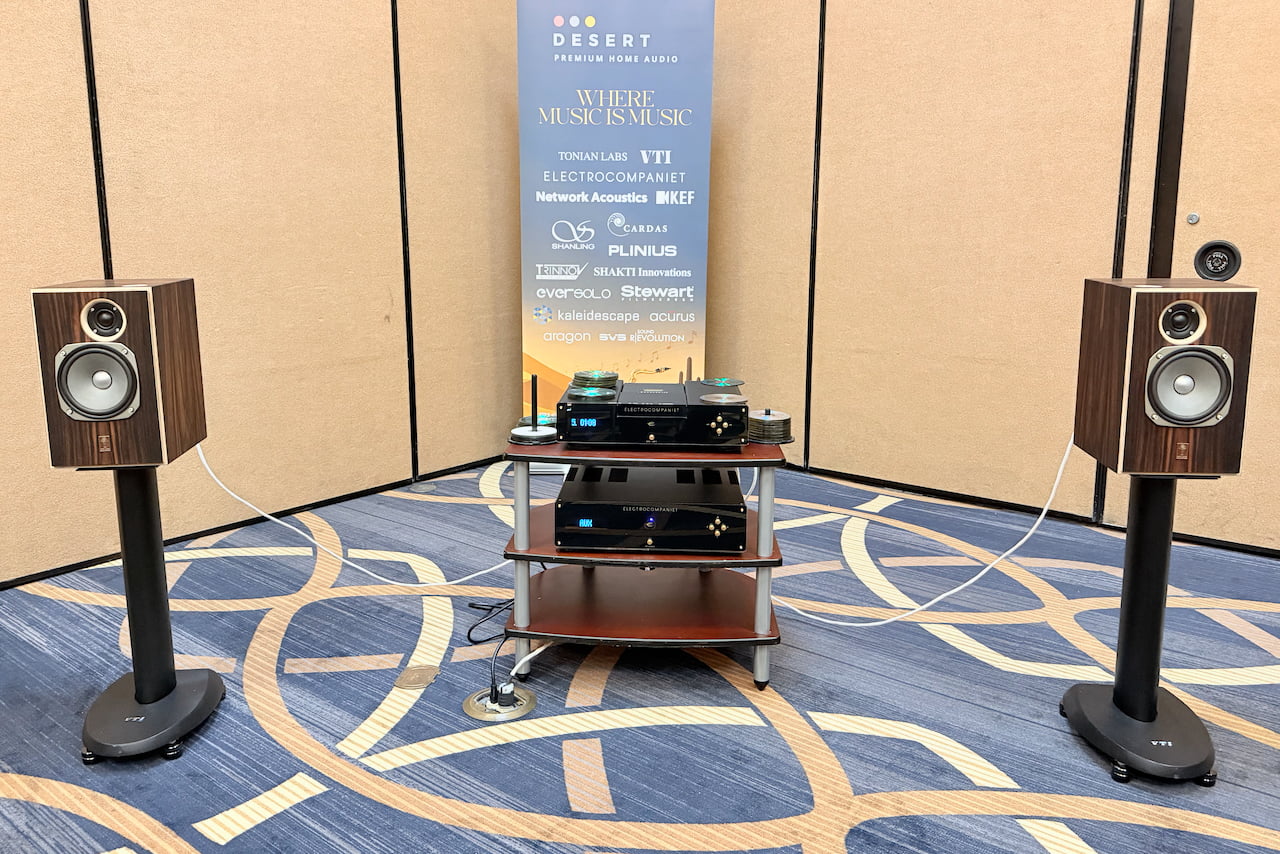
Tony Minasian’s custom built loudspeakers remain one of those under the radar discoveries you tend to only encounter at T.H.E. Show. He is not chasing mass market appeal. He builds each pair by hand using the best parts he can source, and prices them accordingly. At $4,500 per pair, his bookshelf models are not entry level, but they are clearly aimed at listeners who care more about nuance than brute force, especially those drawn to acoustic, unamplified music.
The Oriaco G6 is the standout. It has an uncanny ability to expose the small things that most speakers gloss over. The pluck of a guitar string, the decay of a piano note, the snap of a snare drum. Nothing feels exaggerated, just revealed with a level of clarity that pulls you in rather than pushing detail at you.
Tony usually keeps things grounded with a Denon integrated amp and a vintage Marantz CD player, but this year he stepped it up with Electrocompaniet electronics. The system included the ECI 6 MKII integrated amplifier ($6,500) and EMC 1 MKV CD player ($7,200), bringing the total system north of $20K. He even supplied a full loom of his own hand crafted cables, adding another $2,300 to the tally.
It is a complete system with very little left to chance, but the real story is the speaker which features an extra up-firing tweeter for spaciousness. If you are in the market for a high-end bookshelf and live anywhere near Southern California, it is worth reaching out for an audition. Or wait for T.H.E. Show SoCal, where there is a good chance you will find Tony set up again, quietly reminding people what a well voiced speaker can do.
Learn more at tonianlabs.com or hear sound clips on Instagram.
KEF R3 Meta / Eversolo

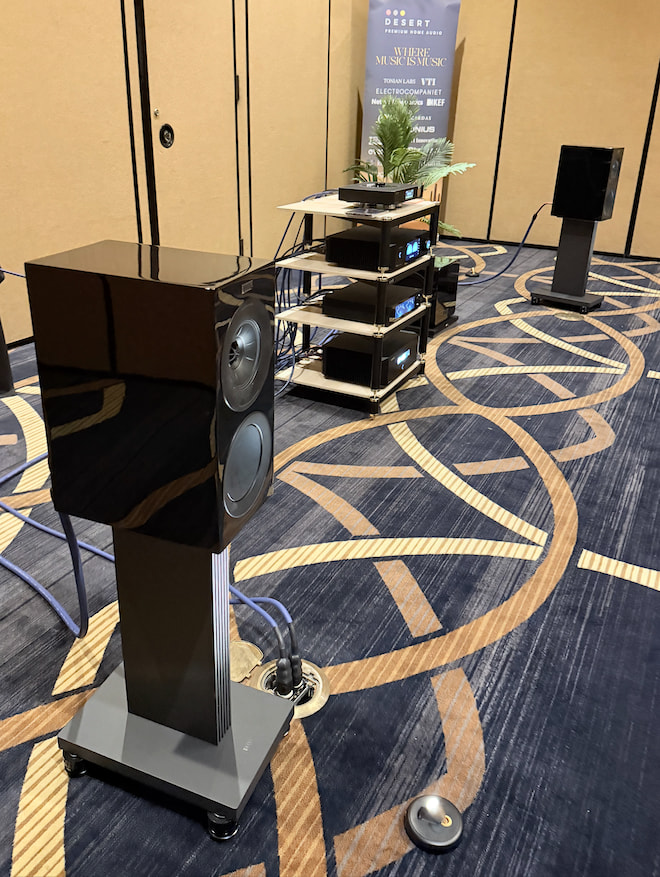
Stepping down to something far more attainable, Desert Premium Audio demonstrated a KEF and Eversolo system that landed just north of $16K and made a strong case for smart system building over brute force spending.
At the core were the R3 Meta bookshelf speakers ($2,500 per pair), supported by dual KEF KC92 subwoofers ($2,500 each), creating a full range foundation that punched well beyond what most would expect from standmounts. Amplification came from the Eversolo AMP-F10 ($2,480), while the DMP-A10 ($4,000) handled preamp duties and streaming. Rounding things out, the Onix XST20 SACD/CD transport ($2,399) added a physical media option for those not ready to abandon discs entirely.
It is a thoughtfully assembled system that balances modern streaming convenience with old school sources, and more importantly, shows how far careful matching can take you without chasing six figure territory.
German Physiks

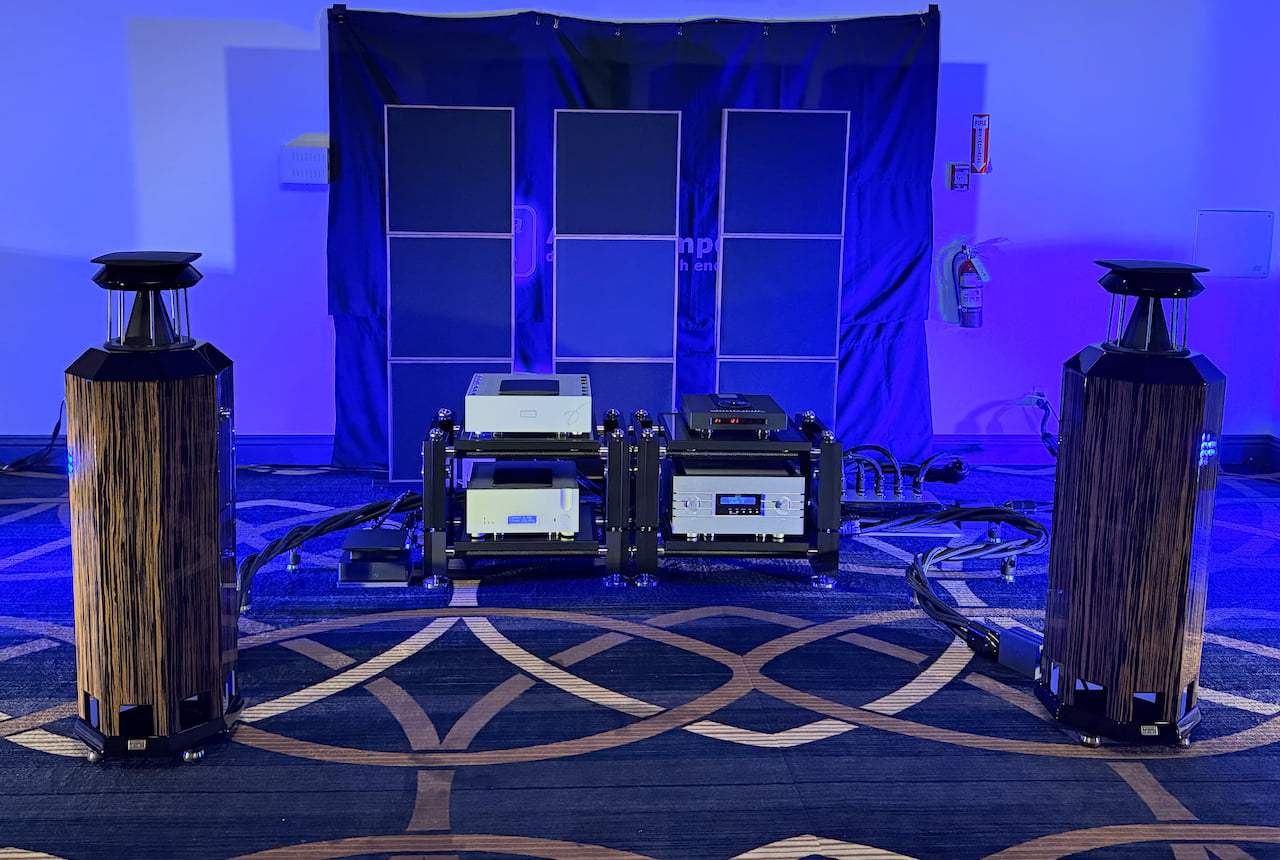
The most expensive system at T.H.E. Vegas came courtesy of Aaudio Imports, and it did not hold back. Priced just shy of $400K, the setup centered on the distinctive Borderland MK II omnidirectional loudspeakers from German Physiks ($54K per pair), driven by the Emperor Extreme solid state integrated amplifier ($60K). Cabling alone, from Stage III, accounted for well over $100K, which tells you exactly where this system was aimed.
The source chain was equally ambitious. A Pink Faun 2.16 Ultra music server and streamer ($43K) fed the system alongside the Ancient Audio Lector Joy CD player ($26K). Digital conversion was handled by the Ypsilon DAC 1000 SE ($50K), supported by a SIN PSD 10 power distributor ($25K), Reiki network switches ($10K), and ART electromagnetic treatment ($18K) to address every possible variable in the signal chain.
On paper, it is the kind of system that should stop you in your tracks. In practice, I wanted to be convinced. Here’s a sound clip on Instagram.
T10 Bespoke

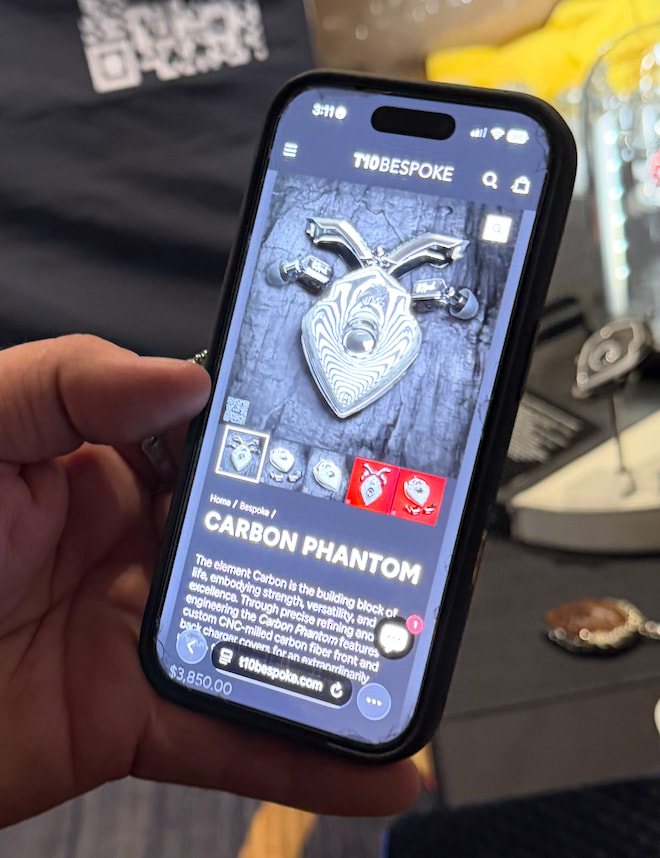
Bear Clark, better known as “Hi-Fi Bear,” was on hand showing the T10 Bespoke wireless earbuds that we named Best in Show at CES 2026 just a few months ago. Starting at $3,000, each pair is hand built and fully customizable, along with its matching pendant charging case. And when we say customizable, we mean it. Snakeskin, gemstones, even diamonds. If you can imagine it, he can probably make it.
Or you can skip the subtlety entirely and go straight for The BillionEAR Attaché Smoker’s Edition at $14,500, which bundles the earbuds in an attaché case with cigars, a smoking pipe, and a few other indulgences thrown in for good measure.
Learn more at t10bespoke.com.
Usher Grand Tower

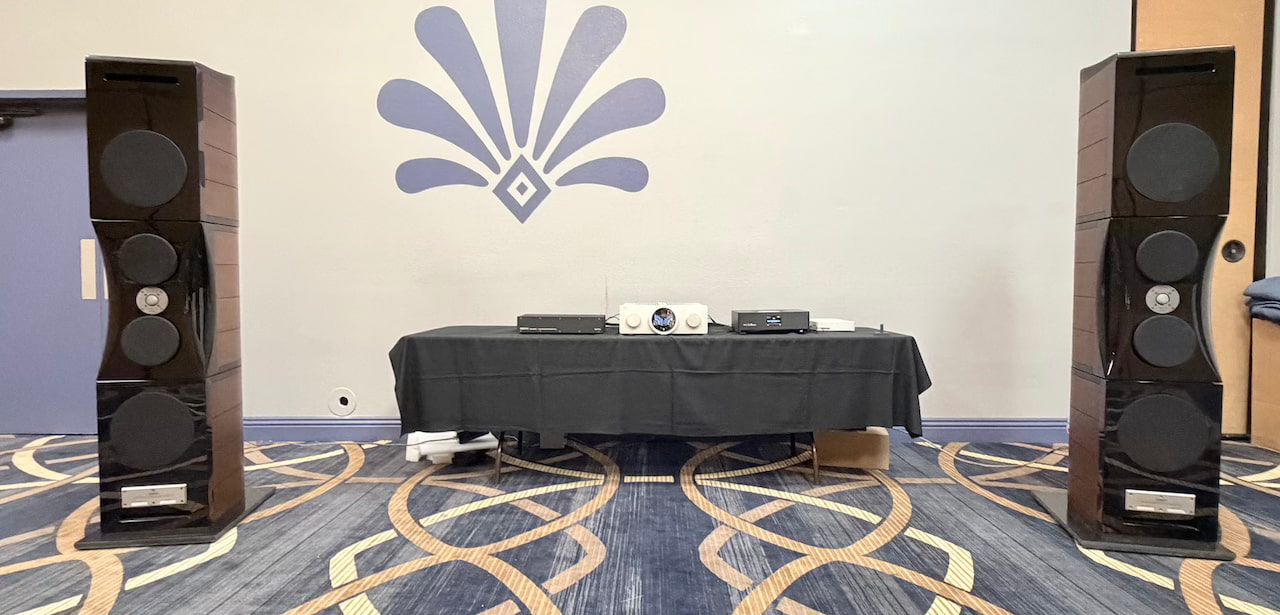
The largest loudspeakers at T.H.E. Vegas came from Usher Audio with the Grand Tower ($42,000 per pair), driven by the BMC Audio CS3 integrated amplifier (around $10K). On paper, 200 watts per channel should have been more than enough to get them moving.
In reality, the room won. Inside a massive untreated ballroom, the Grand Towers struggled to pressurize the space and never quite locked in. It was less about the speakers and more about the environment. Even big systems can feel small when the room refuses to cooperate.
Island Router

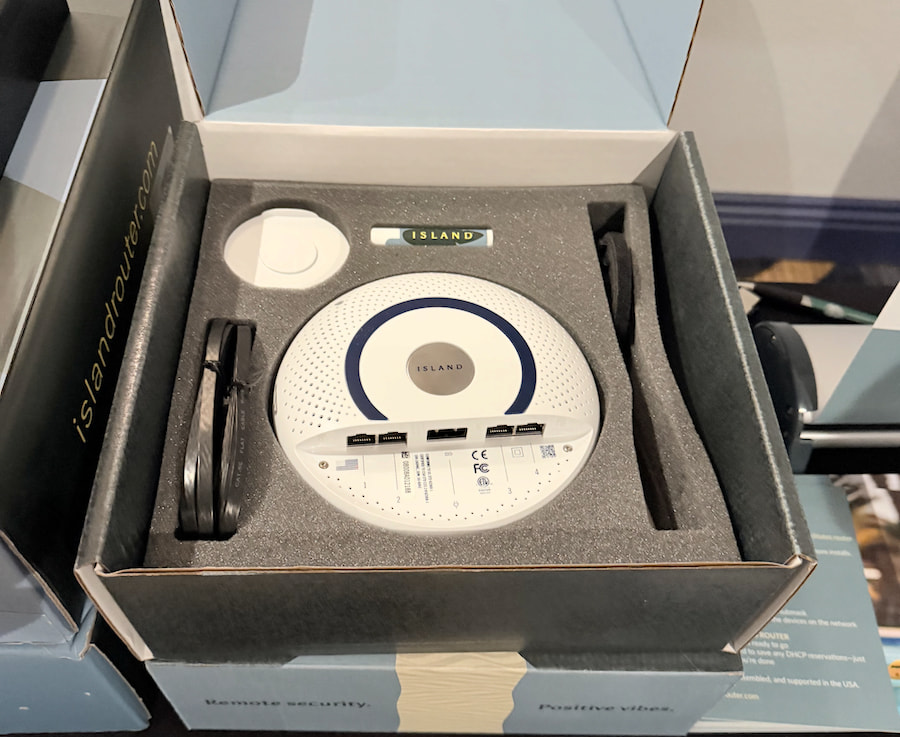
The Island Router is aimed at listeners who take their network as seriously as their system. Priced at $499, it brings enterprise grade routing and firewall capability into the home, with features like fault tolerant failover when two internet lines are connected, straightforward app based setup, and optimization designed to squeeze the most out of whatever bandwidth your ISP delivers.
There is a catch. No built in Wi-Fi. You will need to connect a separate wireless access point or hotspot if you want coverage throughout the house. It is not designed to be an all-in-one solution. It is designed to be stable, secure, and out of the way.
Ai Pro
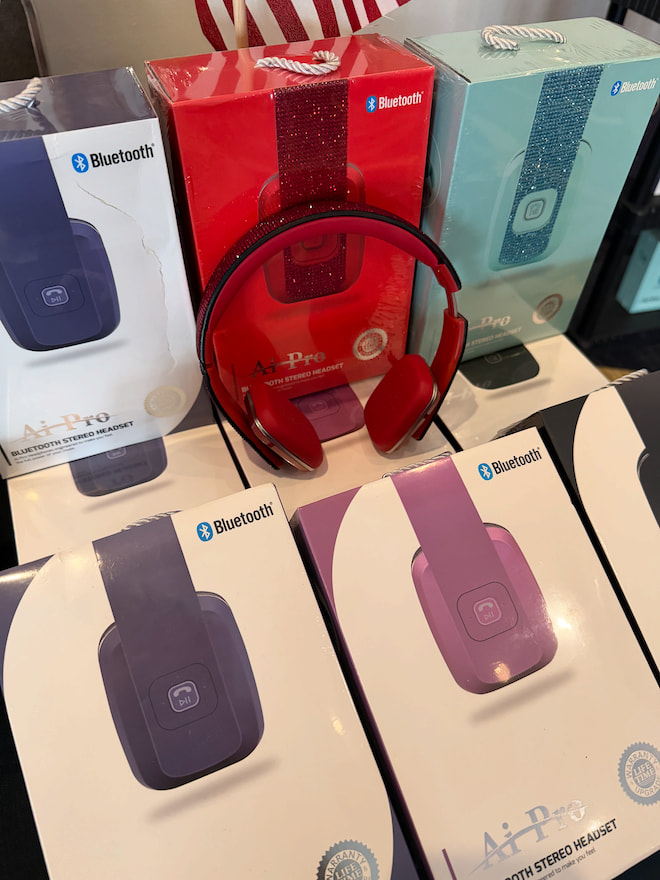
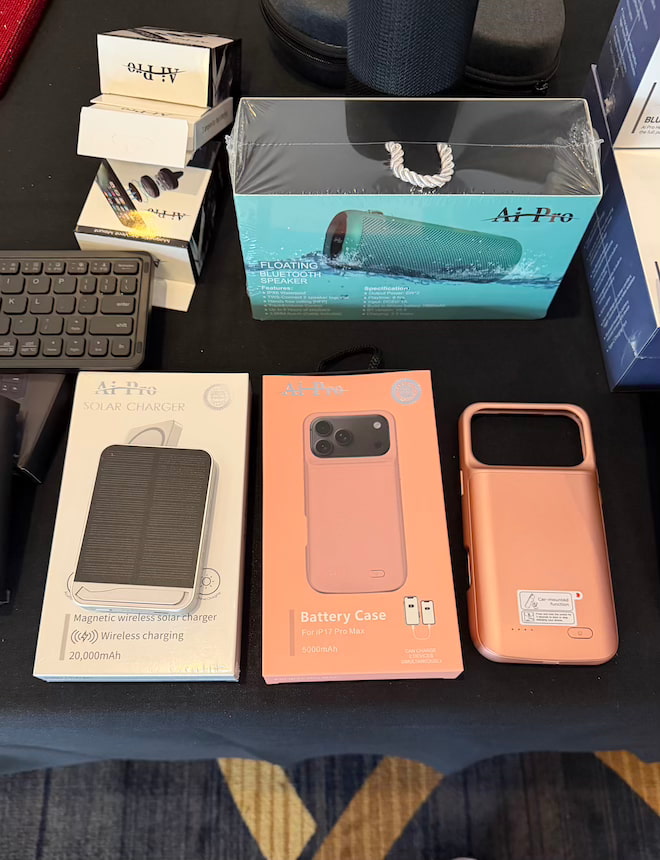
Ai Pro offered up a range of affordable fashion headphones, charging cases, and solar charger.
T.H.E. Vintage Lounge
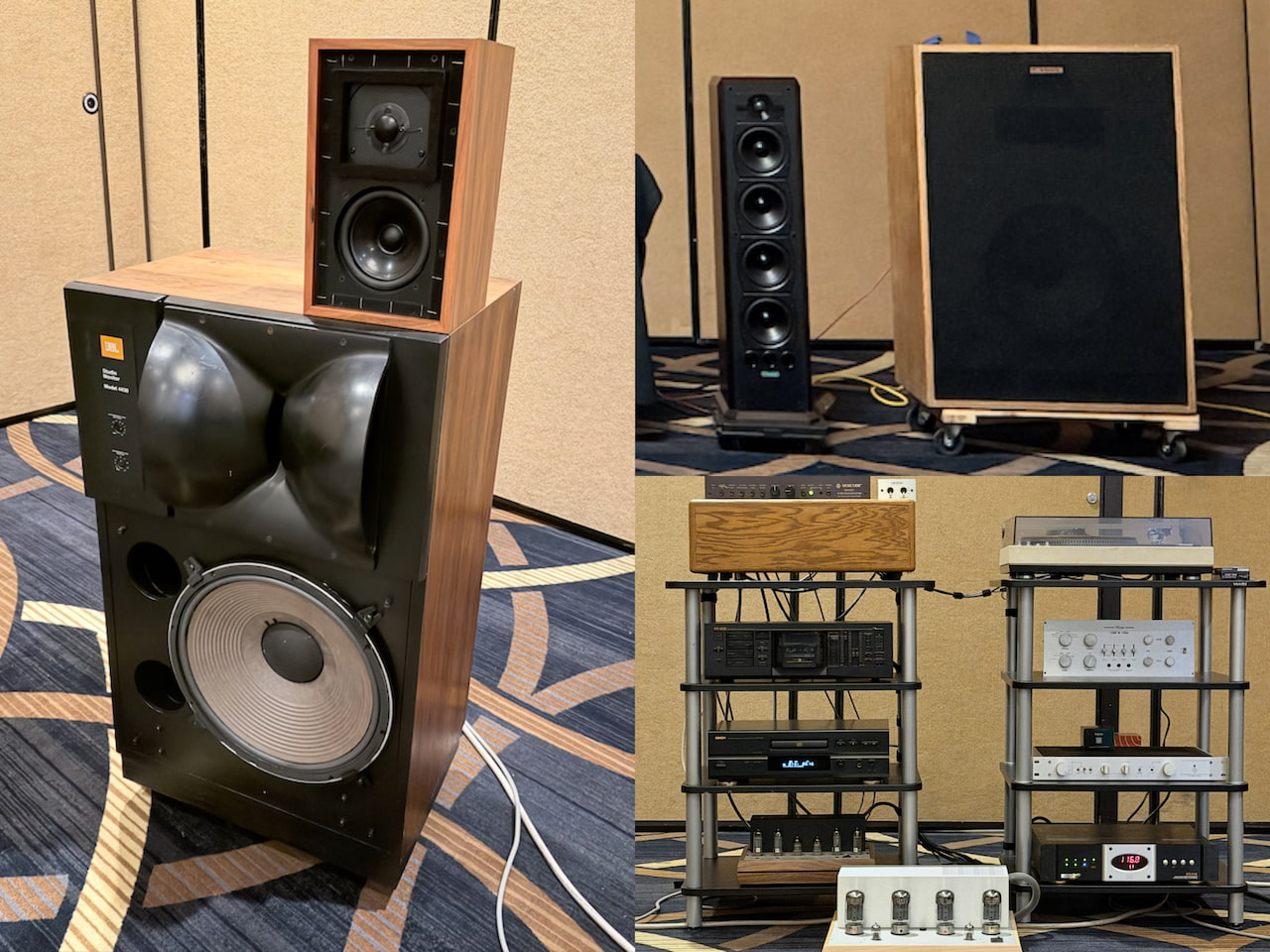
A solid selection of vintage gear was also in active rotation, not just sitting there for nostalgia points. Highlights included the original Klipsch Cornwall, JBL 4430, and Falcon Acoustics LS3/5a, alongside racks of classic amplification.
The Bottom Line
T.H.E. Vegas 2026 was not the biggest show, and it never really recovered from the last minute venue change or the unfortunate calendar clash with the Montreal Audiofest. The lighter exhibitor list and smaller footprint were noticeable. There is no point pretending otherwise.
But smaller is not always worse. The upside was real. Less crowd noise, more time in the rooms, and actual conversations with designers and distributors that did not feel rushed or transactional. It created space to hear systems more clearly, swap components, and discover brands that might have been lost in a larger, more chaotic show.
Credit to the T.H.E. team for getting this event back on its feet under difficult circumstances. That kind of recovery is not easy, especially in a year where the industry calendar is already stretched thin.
Next up, T.H.E. heads to Austin from May 22 to 24, 2026, while AXPONA 2026 is right around the corner. We will be in Chicago next week, where the scale, competition, and expectations all ramp up.
Related Reading:
You must be logged in to post a comment Login