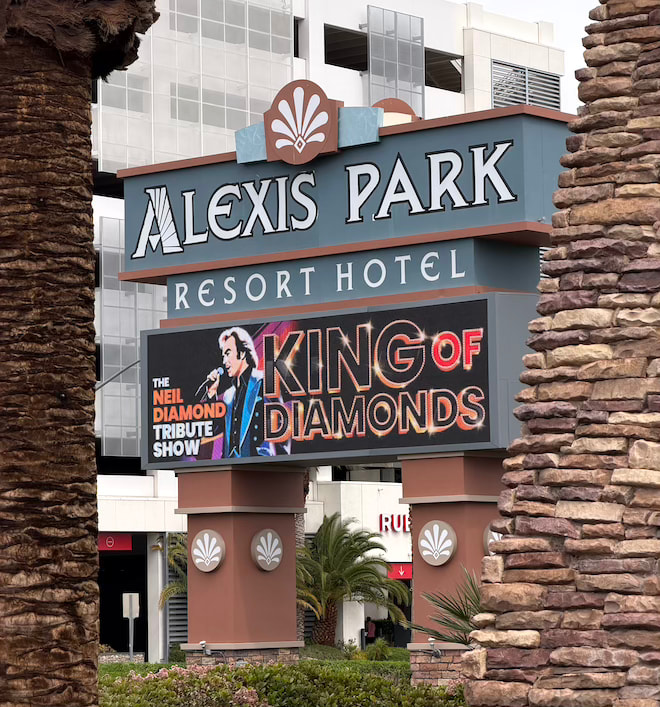
T.H.E. Show returned to the Alexis Park Hotel in Las Vegas from March 20 to 22, 2026, marking its 30th anniversary right where it started. As North America’s longest running hi-fi show, its survival is not luck. It is persistence. Credit goes to the late Richard Beers for building it, Maurice Jung for keeping it alive after 2016, and now Emiko Carlin, who is steering the brand into its next phase with expanded events in Austin and New York City. The show had moved from Las Vegas to Southern California with stops in Newport Beach, Irvine, Long Beach, and now Costa Mesa, but it is still standing. That alone says something in an industry that tends to burn through its own history.
Context matters, and 2026 is shaping up to be one of the busiest show calendars this industry has ever seen. Between eight CanJam events, AXPONA, CES, ISE, NAMM Show, CEDIA Expo, the relocated Vienna based HIGH END, and a growing list of shows in Toronto, Paris, Singapore, SWAF, and CAF, it is relentless. There is barely time to unpack before the next badge gets printed.
Which makes T.H.E. Show’s return to Las Vegas feel less like nostalgia and more like defiance. Thirty years in, it is still in the fight.
With four events on the T.H.E. calendar in 2026, the Vegas stop did not exactly start on solid footing. The show was originally scheduled for January 9 to 11 at the Tuscany Suites & Casino, but had to be postponed to March due to unforeseen issues with the venue. Credit where it’s due, the team managed to regroup and secure the Alexis Park Hotel in less than three months. That kind of turnaround is not easy in Las Vegas, where convention space gets locked up fast.
There were tradeoffs. The new dates could not accommodate every exhibitor, and the show ended up noticeably smaller than originally planned. In total, eight oversized ballrooms were filled with high-end audio systems, supported by a modest marketplace that included T10 Bespoke, Island Routers, a vinyl seller, and a portable audio accessories vendor. It felt more curated by necessity than design.
Advertisement
Timing did not help either. Running the same weekend as the Montreal Audiofest split both exhibitors and attendees across two countries that are not exactly a quick plane ride apart. Add AXPONA 2026 looming just weeks later, with the eCoustics team heading to Chicago that same week, and the reality sets in. There is only so much travel budget and bandwidth to go around, even in an industry that seems determined to test both in 2026.
Best in Show
Best Over $50K: YG Acoustics / Bergmann
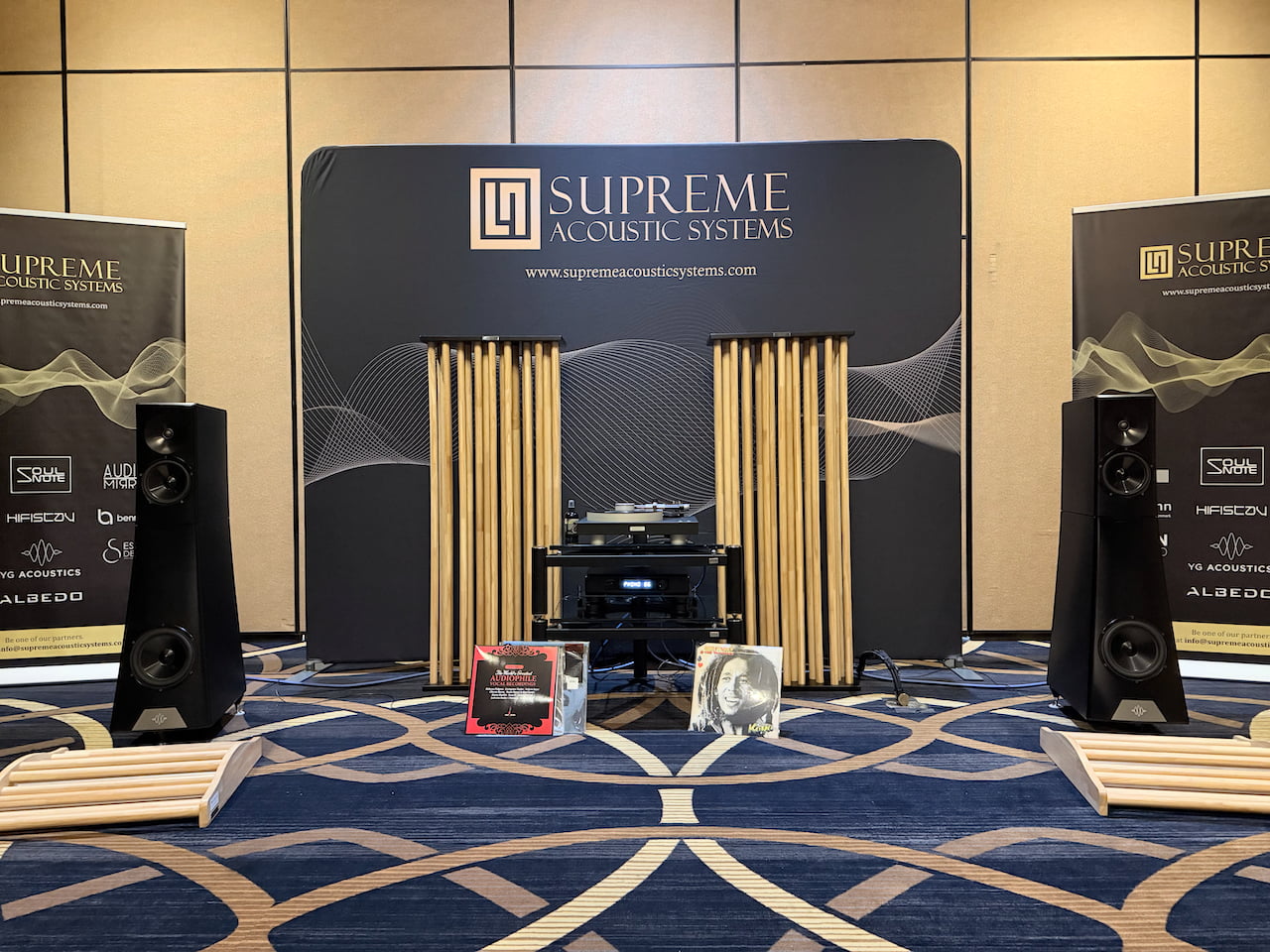
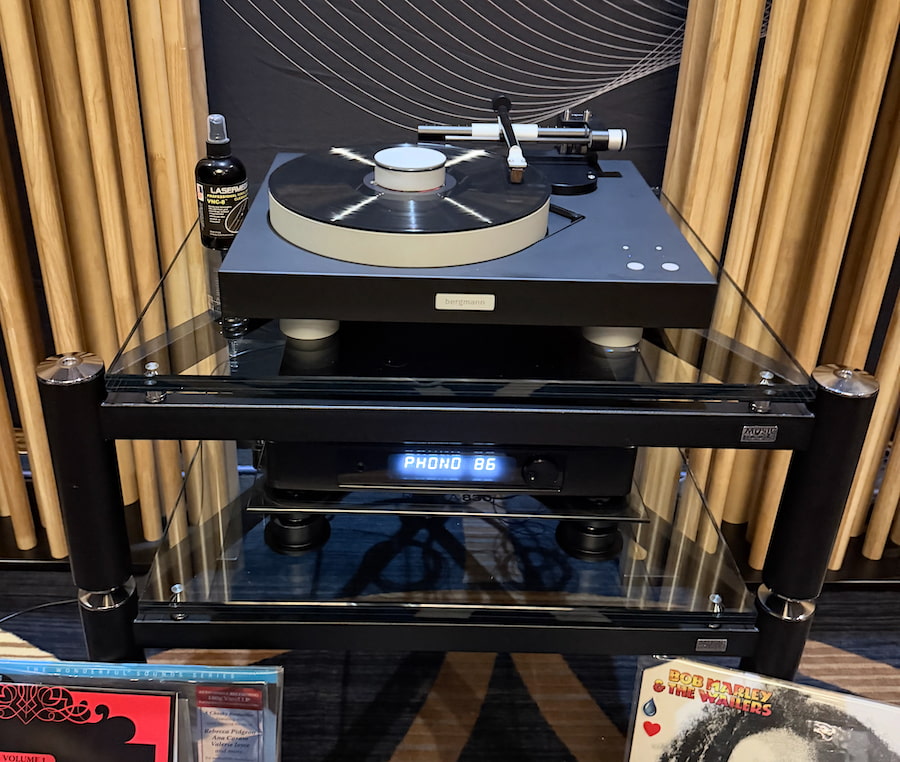
I’ve heard a number of YG Acoustics systems at shows over the years, and they rarely miss. This time, instead of rolling in with something that costs as much as a brownstone, they kept it almost reasonable. Almost. The Vegas system (presented by Supreme Acoustic Systems) came in around $100K and centered on the Vantage 3 Live active towers at $73K per pair, paired with a Bergmann Magne Airbearing Turntable at $12K, all sitting on a Music Tools ISOstatic rack at $1,495 per level.
The setup was refreshingly clean. No spaghetti pile of cables, no rack full of separates. Just two power cords and a pair of optical cables, one feeding each speaker. That alone tells you this is not your typical active speaker. The Vantage 3 Live uses a fully integrated DSP architecture with an external control unit that handles preamp duties and includes a phono stage. Everything is managed upstream, then sent digitally to the speakers.
The key here is that the signal stays in the digital domain all the way to the speakers, or is converted to digital before it gets there. That is why YG uses optical connections instead of traditional speaker cables. It is a different way of thinking about system design, and it cuts out a lot of variables.
There is no Bluetooth or Wi-Fi, but Ethernet based network streaming is built in, with support for TIDAL Connect and Qobuz Connect, and optional Roon integration. Use your phone or tablet, hit play, and let the system do the rest. No clutter, no guesswork, and very little standing between you and the music.
Advertisement
Bergmann Magne Airbearing Turntable with YG Acoustics Vantage 3 Live preamp/control unit.
Additional elements rounded out the system, including AGS Diffusors (Acoustic Groove System) from Nihon Onkyo Engineering, which could easily add another $20K to the total. No, I didn’t A/B test them like a lab experiment, but patterns matter. Two of the best sounding rooms at the show used AGS, and that’s not a coincidence. In addition, power conditioning was handled by the AudioQuest Niagara 5000 at $6,900, delivering clean and stable current to the entire system.
Advertisement. Scroll to continue reading.
The Vantage 3 Live is not shy about muscle. Each speaker packs 2,100 watts of amplification, with 700 watts dedicated to each driver. That kind of headroom is not just for bragging rights. It shows up immediately in control, dynamics, and composure, regardless of source.
“Is This Love” by Bob Marley and the Wailers on vinyl was captivating. The soundstage stretched wide without losing focus, and Marley’s voice stayed locked dead center. It had the kind of precision you expect from a mastering studio, pulling every last bit of information out of the grooves without sounding clinical.
Switching to digital via Roon and Anette Askvik’s “Liberty” didn’t feel like a compromise. Nothing collapsed, nothing softened. The presentation remained spacious, detailed, and controlled, with a level of consistency between analog and digital that most systems struggle to achieve. This is what YG does when everything lines up.
Best Under $50K: Atlantis Lab / Neoson / Audiobyte
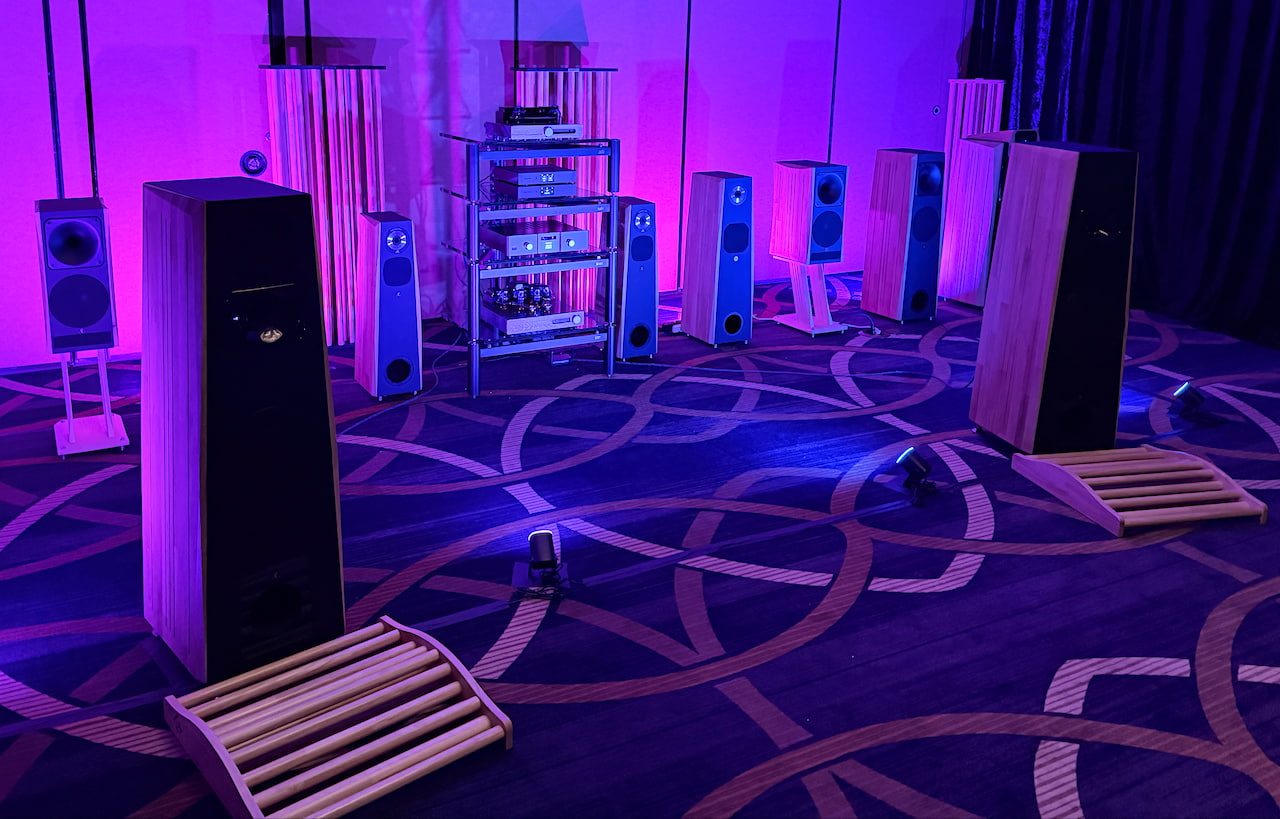
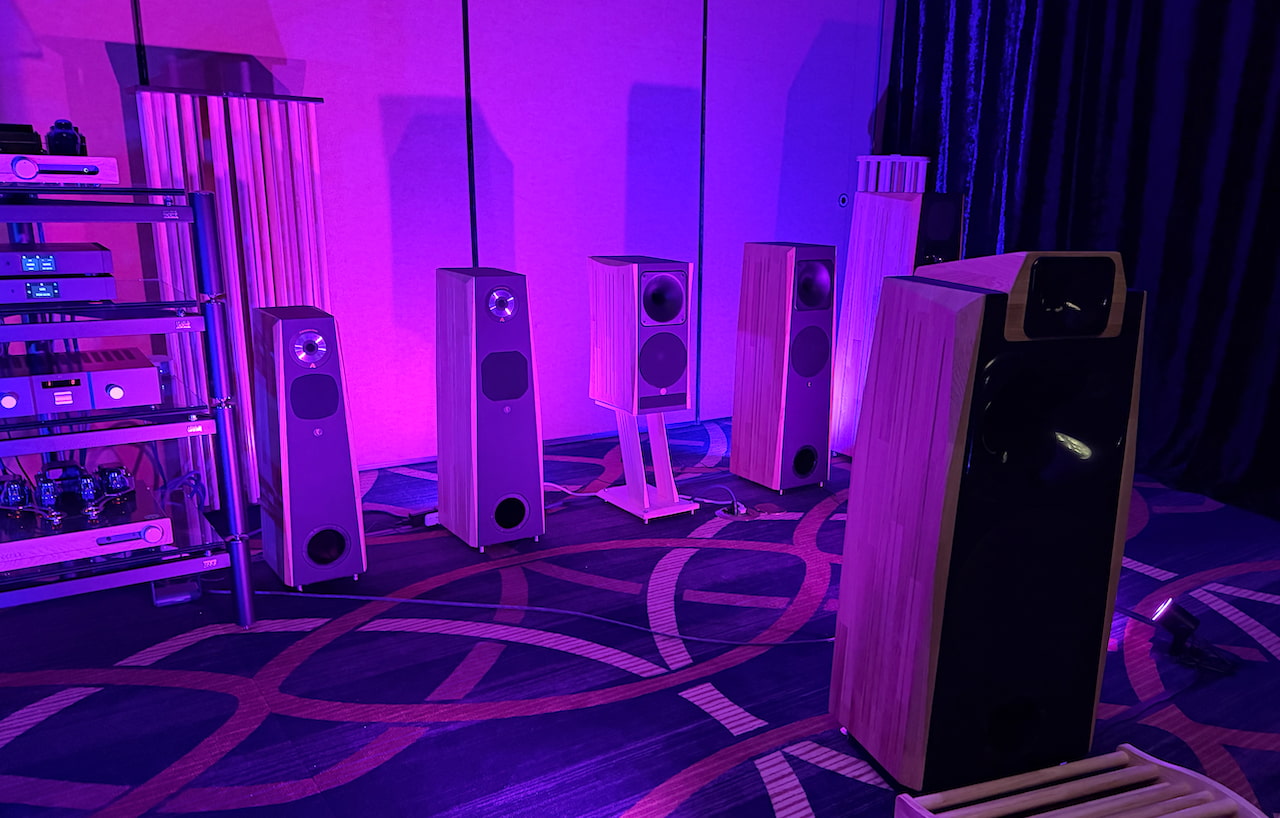
Atlantis Lab A31 Pro Loudspeakers in foreground.
Interestingly, just a few rooms over, the Atlantis Lab speaker system (presented by U.S. distributor Decibel+) went in the exact opposite direction of the YG setup. Where YG leaned on brute force and digital control, this one stripped things down to something far more old school. We’re talking roughly 1/100th the power, less than half the price, and yet it delivered a wildly intoxicating tube driven presentation that pulled you in just as quickly, if not faster.
The system was built around three brands that, frankly, were not on my radar before this show. Atlantis Lab handled loudspeakers, Neoson provided amplification, and Audiobyte (new company out of Romania) rounded things out with a streamer and DAC.
It should not have worked as well as it did on paper, especially in a show environment. But sometimes the rooms that make the least sense end up being the ones you remember. This was one of them.
Neoson Evolution Tube Amplifier
Atlantis Lab brought its high efficiency loudspeaker lineup, with models ranging from just over $3K to roughly $24K. The system was driven by the Neoson Evolution Tube Amplifier at $11,828, delivering 20 watts per channel of pure Class A power. Digital duties were handled by Audiobyte with the SuperHub streamer ($4K) and SuperVOX multibit DSD DAC ($4,500).
Advertisement
What made this setup more than just another good room was the backstory. We were told that each of the French brands was founded by two friends who intentionally designed their products with the other in mind. That kind of collaboration usually sounds like marketing copy. Here, it translated into real system synergy.
Background (left to right): Atlantis Lab A16 Pro ($3,218) Atlantis Lab A18 Pro ($4,960) Atlantis Lab A21 Pro ($4,196) Atlantis Lab A23 Pro ($6,466) Atlantis Lab A31 Pro ($14,194) Foreground: Atlantis Lab A38 Pro ($23,939)
I spent time with the three largest Atlantis Lab floorstanding models, all paired with the same Neoson Evolution Tube Amplifier and Audiobyte front end. The A23 Pro ($6,466 per pair) did not quite deliver the same level of impact, but that felt more like a room mismatch than a flaw. Large hotel ballrooms are not forgiving, and if you are not sitting in the right spot, even good speakers can sound a bit restrained.
The two larger models stepped up in a meaningful way. They filled the room with more depth, width, and texture, the kind of presentation you usually do not hear until prices climb into far more uncomfortable territory. Comparing the A31 Pro and A38 Pro, which are separated by roughly $10K, was less straightforward. The flagship may have offered a bit more bass weight and scale, but the difference was not night and day. Some of that could have been expectation bias creeping in.
What stood out with both was their ability to throw a wide, stable soundstage while maintaining composure off axis. They did not collapse the moment you shifted in your seat. More importantly, they had a knack for uncovering layers of detail without sounding analytical, pulling you deeper into the performance rather than pushing it at you.
Advertisement
Advertisement. Scroll to continue reading.
These are not brands most people walk into a show expecting to hear. That should change.
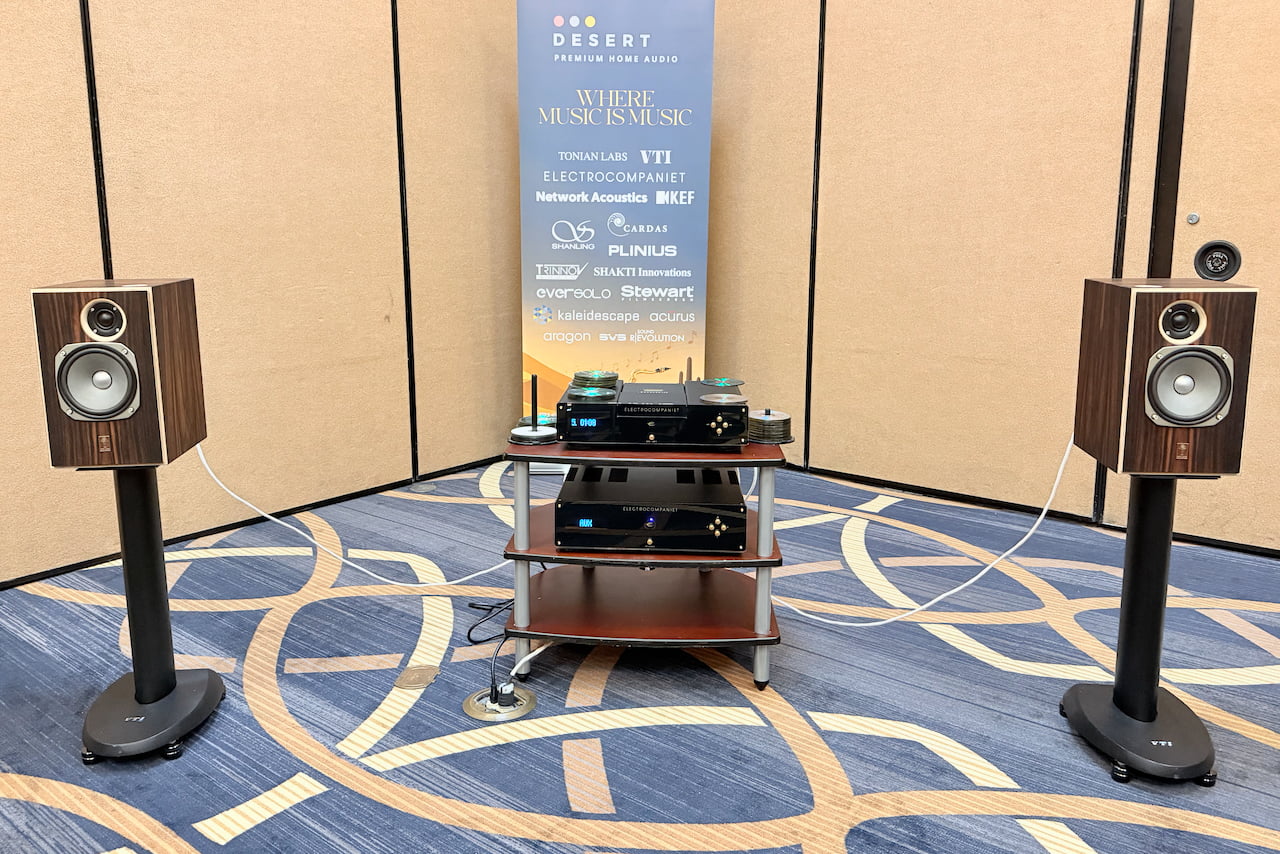
Tony Minasian’s custom built loudspeakers remain one of those under the radar discoveries you tend to only encounter at T.H.E. Show. He is not chasing mass market appeal. He builds each pair by hand using the best parts he can source, and prices them accordingly. At $4,500 per pair, his bookshelf models are not entry level, but they are clearly aimed at listeners who care more about nuance than brute force, especially those drawn to acoustic, unamplified music.
The Oriaco G6 is the standout. It has an uncanny ability to expose the small things that most speakers gloss over. The pluck of a guitar string, the decay of a piano note, the snap of a snare drum. Nothing feels exaggerated, just revealed with a level of clarity that pulls you in rather than pushing detail at you.
Advertisement
Tony usually keeps things grounded with a Denon integrated amp and a vintage Marantz CD player, but this year he stepped it up with Electrocompaniet electronics. The system included the ECI 6 MKII integrated amplifier ($6,500) and EMC 1 MKV CD player ($7,200), bringing the total system north of $20K. He even supplied a full loom of his own hand crafted cables, adding another $2,300 to the tally.
It is a complete system with very little left to chance, but the real story is the speaker which features an extra up-firing tweeter for spaciousness. If you are in the market for a high-end bookshelf and live anywhere near Southern California, it is worth reaching out for an audition. Or wait for T.H.E. Show SoCal, where there is a good chance you will find Tony set up again, quietly reminding people what a well voiced speaker can do.
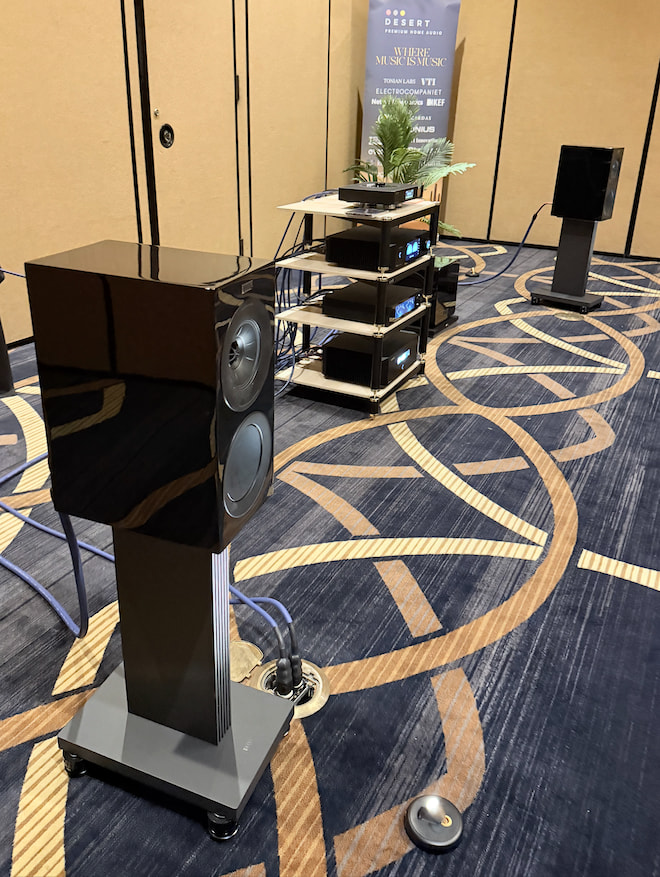
Stepping down to something far more attainable, Desert Premium Audio demonstrated a KEF and Eversolo system that landed just north of $16K and made a strong case for smart system building over brute force spending.
At the core were the R3 Meta bookshelf speakers ($2,500 per pair), supported by dual KEF KC92 subwoofers ($2,500 each), creating a full range foundation that punched well beyond what most would expect from standmounts. Amplification came from the Eversolo AMP-F10 ($2,480), while the DMP-A10 ($4,000) handled preamp duties and streaming. Rounding things out, the Onix XST20 SACD/CD transport ($2,399) added a physical media option for those not ready to abandon discs entirely.
Advertisement
It is a thoughtfully assembled system that balances modern streaming convenience with old school sources, and more importantly, shows how far careful matching can take you without chasing six figure territory.
German Physiks
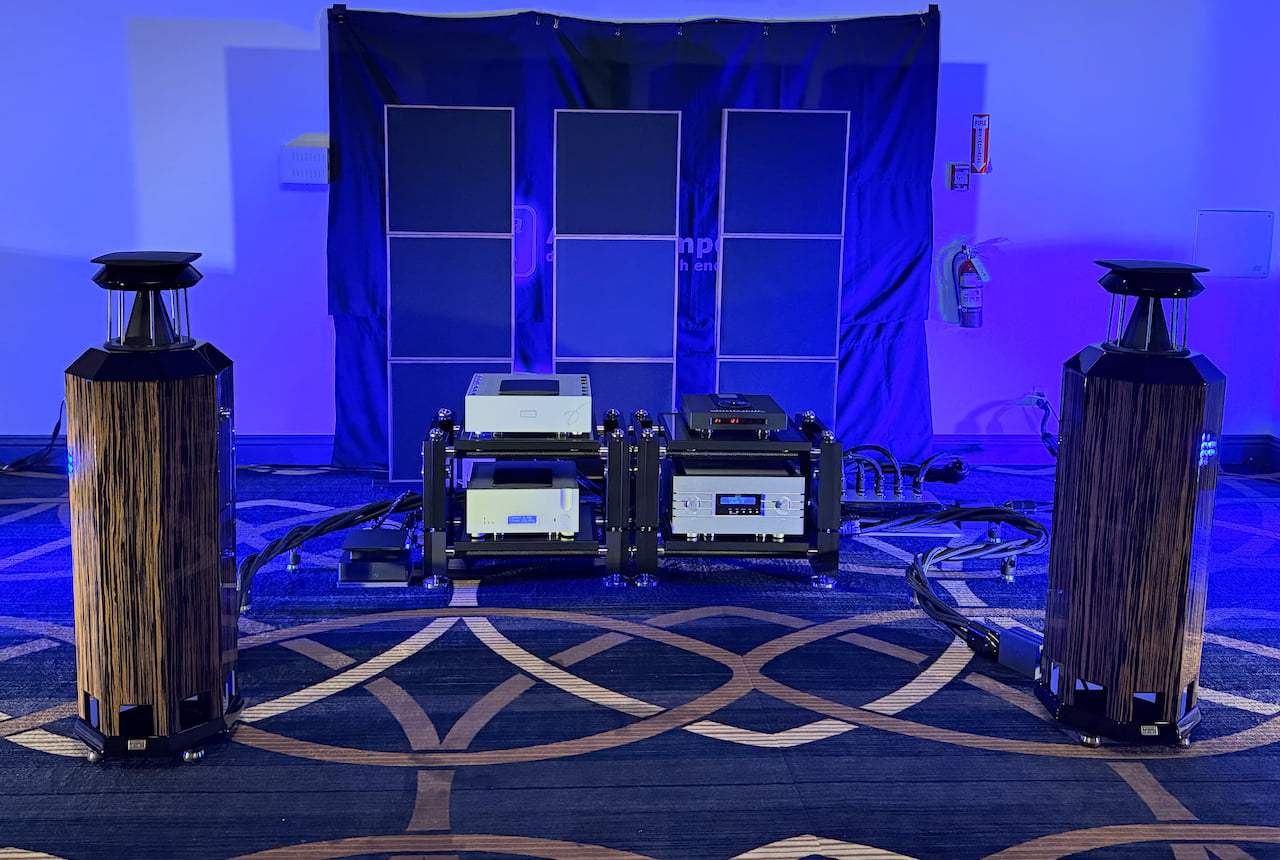
The most expensive system at T.H.E. Vegas came courtesy of Aaudio Imports, and it did not hold back. Priced just shy of $400K, the setup centered on the distinctive Borderland MK II omnidirectional loudspeakers from German Physiks ($54K per pair), driven by the Emperor Extreme solid state integrated amplifier ($60K). Cabling alone, from Stage III, accounted for well over $100K, which tells you exactly where this system was aimed.
The source chain was equally ambitious. A Pink Faun 2.16 Ultra music server and streamer ($43K) fed the system alongside the Ancient Audio Lector Joy CD player ($26K). Digital conversion was handled by the Ypsilon DAC 1000 SE ($50K), supported by a SIN PSD 10 power distributor ($25K), Reiki network switches ($10K), and ART electromagnetic treatment ($18K) to address every possible variable in the signal chain.
Advertisement. Scroll to continue reading.
On paper, it is the kind of system that should stop you in your tracks. In practice, I wanted to be convinced. Here’s a sound clip on Instagram.
Advertisement
T10 Bespoke
Bear Clark, better known as “Hi-Fi Bear,” was on hand showing the T10 Bespoke wireless earbuds that we named Best in Show at CES 2026 just a few months ago. Starting at $3,000, each pair is hand built and fully customizable, along with its matching pendant charging case. And when we say customizable, we mean it. Snakeskin, gemstones, even diamonds. If you can imagine it, he can probably make it.
Or you can skip the subtlety entirely and go straight for The BillionEAR Attaché Smoker’s Edition at $14,500, which bundles the earbuds in an attaché case with cigars, a smoking pipe, and a few other indulgences thrown in for good measure.
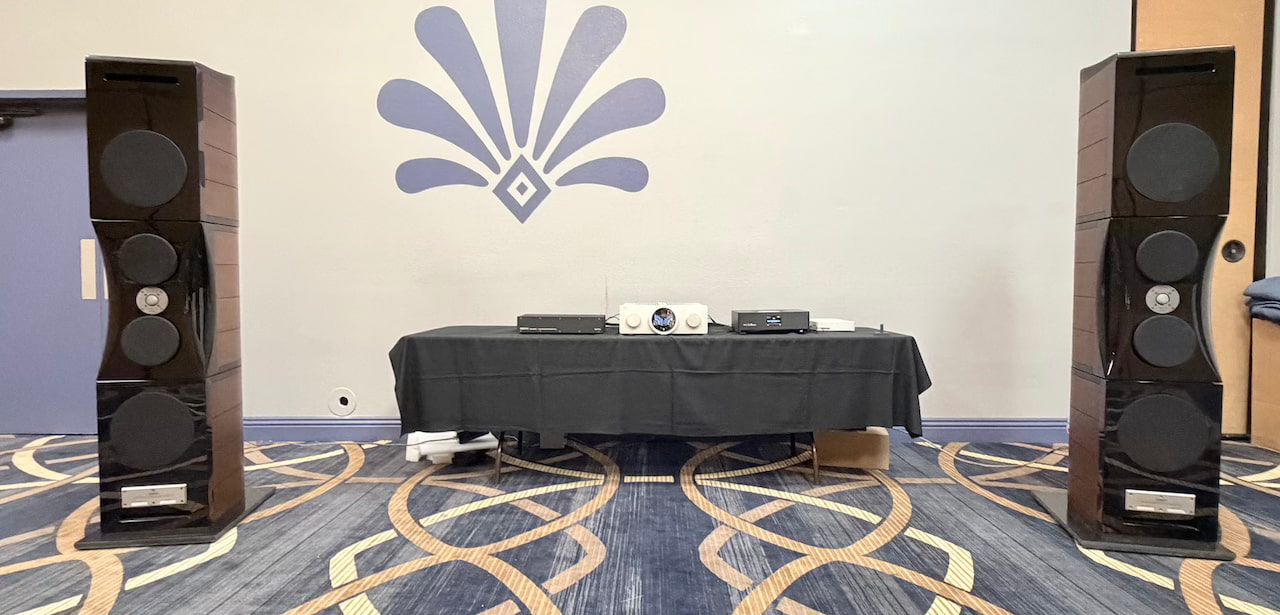
The largest loudspeakers at T.H.E. Vegas came from Usher Audio with the Grand Tower ($42,000 per pair), driven by the BMC Audio CS3 integrated amplifier (around $10K). On paper, 200 watts per channel should have been more than enough to get them moving.
In reality, the room won. Inside a massive untreated ballroom, the Grand Towers struggled to pressurize the space and never quite locked in. It was less about the speakers and more about the environment. Even big systems can feel small when the room refuses to cooperate.
Island Router
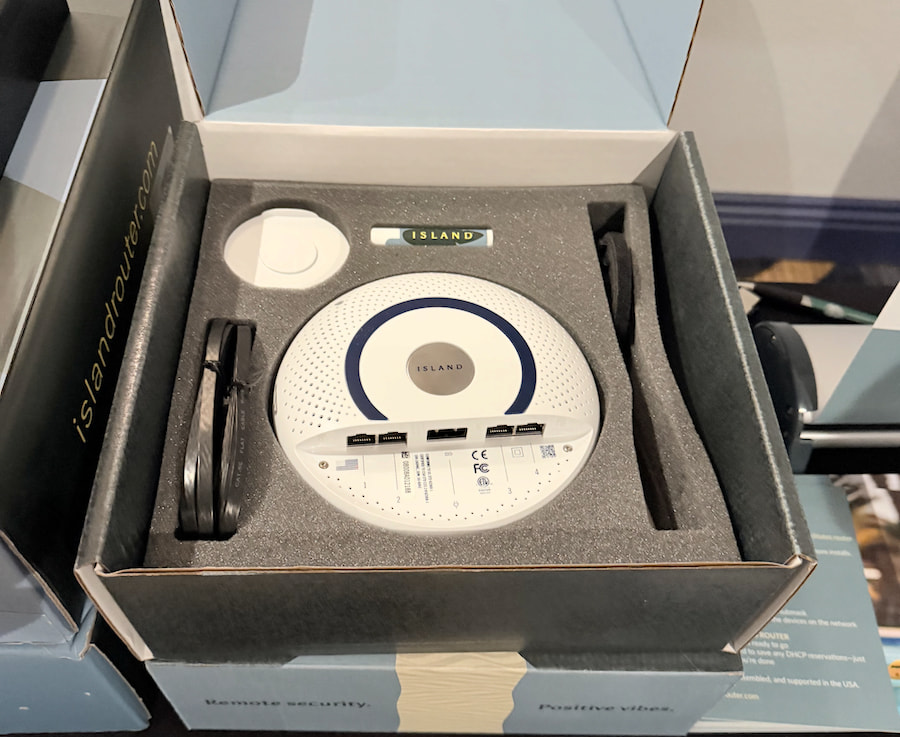
The Island Router is aimed at listeners who take their network as seriously as their system. Priced at $499, it brings enterprise grade routing and firewall capability into the home, with features like fault tolerant failover when two internet lines are connected, straightforward app based setup, and optimization designed to squeeze the most out of whatever bandwidth your ISP delivers.
There is a catch. No built in Wi-Fi. You will need to connect a separate wireless access point or hotspot if you want coverage throughout the house. It is not designed to be an all-in-one solution. It is designed to be stable, secure, and out of the way.
Advertisement
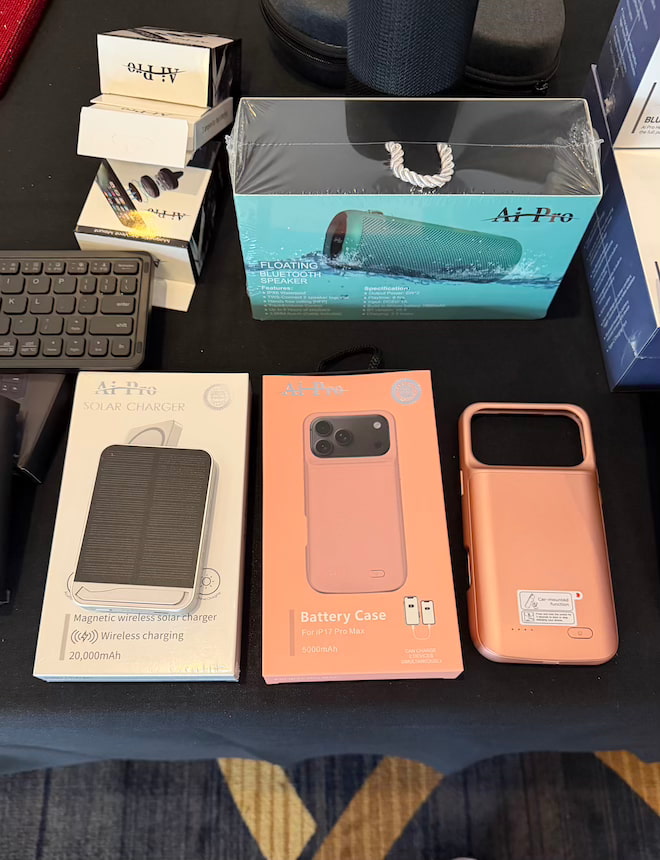
Ai Pro
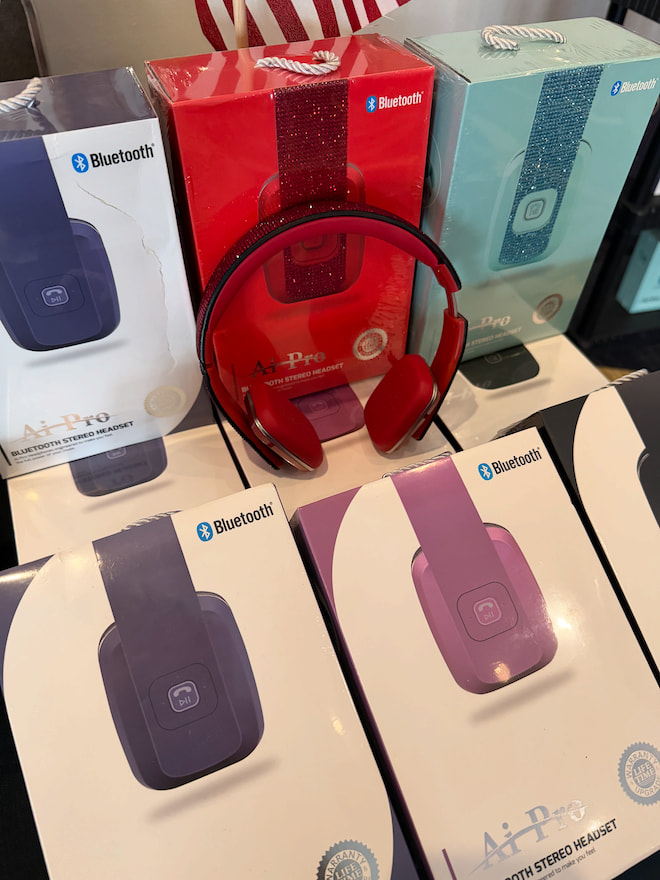
Ai Pro offered up a range of affordable fashion headphones, charging cases, and solar charger.
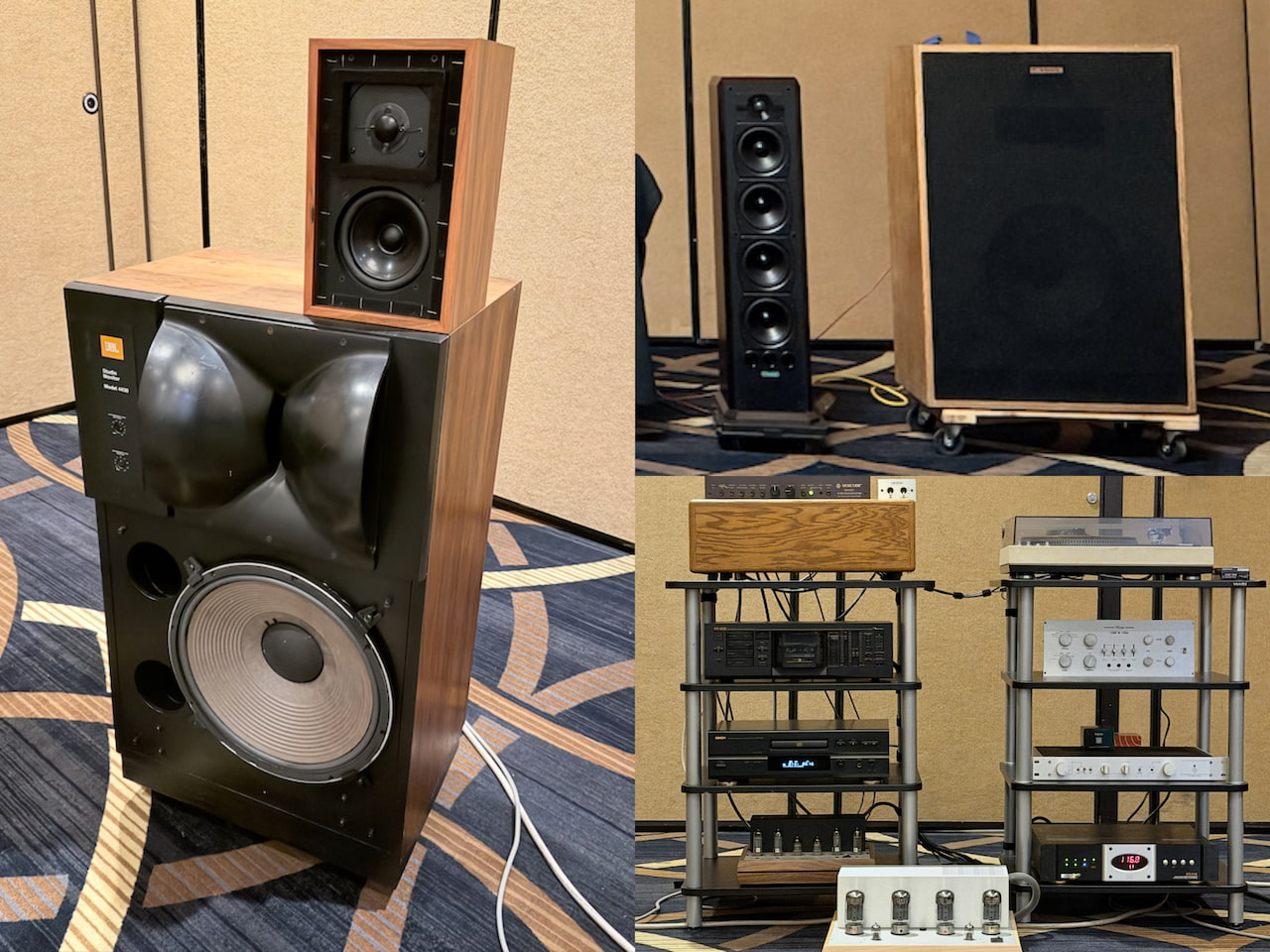
T.H.E. Vintage Lounge
A solid selection of vintage gear was also in active rotation, not just sitting there for nostalgia points. Highlights included the original Klipsch Cornwall, JBL 4430, and Falcon Acoustics LS3/5a, alongside racks of classic amplification.
The Bottom Line
T.H.E. Vegas 2026 was not the biggest show, and it never really recovered from the last minute venue change or the unfortunate calendar clash with the Montreal Audiofest. The lighter exhibitor list and smaller footprint were noticeable. There is no point pretending otherwise.
But smaller is not always worse. The upside was real. Less crowd noise, more time in the rooms, and actual conversations with designers and distributors that did not feel rushed or transactional. It created space to hear systems more clearly, swap components, and discover brands that might have been lost in a larger, more chaotic show.
Advertisement. Scroll to continue reading.
Credit to the T.H.E. team for getting this event back on its feet under difficult circumstances. That kind of recovery is not easy, especially in a year where the industry calendar is already stretched thin.
Advertisement
Next up, T.H.E. heads to Austin from May 22 to 24, 2026, while AXPONA 2026 is right around the corner. We will be in Chicago next week, where the scale, competition, and expectations all ramp up.
A new NYT Strands puzzle appears at midnight each day for your time zone – which means that some people are always playing ‘today’s game’ while others are playing ‘yesterday’s’. If you’re looking for Sunday’s puzzle instead then click here: NYT Strands hints and answers for Sunday, April 5 (game #763).
Strands is the NYT’s latest word game after the likes of Wordle, Spelling Bee and Connections – and it’s great fun. It can be difficult, though, so read on for my Strands hints.
Want more word-based fun? Then check out my NYT Connections today and Quordle today pages for hints and answers for those games, and Marc’s Wordle today page for the original viral word game.
Advertisement
SPOILER WARNING: Information about NYT Strands today is below, so don’t read on if you don’t want to know the answers.
Article continues below
NYT Strands today (game #764) – hint #1 – today’s theme
What is the theme of today’s NYT Strands?
• Today’s NYT Strands theme is… Fringe group
NYT Strands today (game #764) – hint #2 – clue words
Play any of these words to unlock the in-game hints system.
Advertisement
DARK
GRADE
MEET
TRIM
RING
TEXT
NYT Strands today (game #764) – hint #3 – spangram letters
How many letters are in today’s spangram?
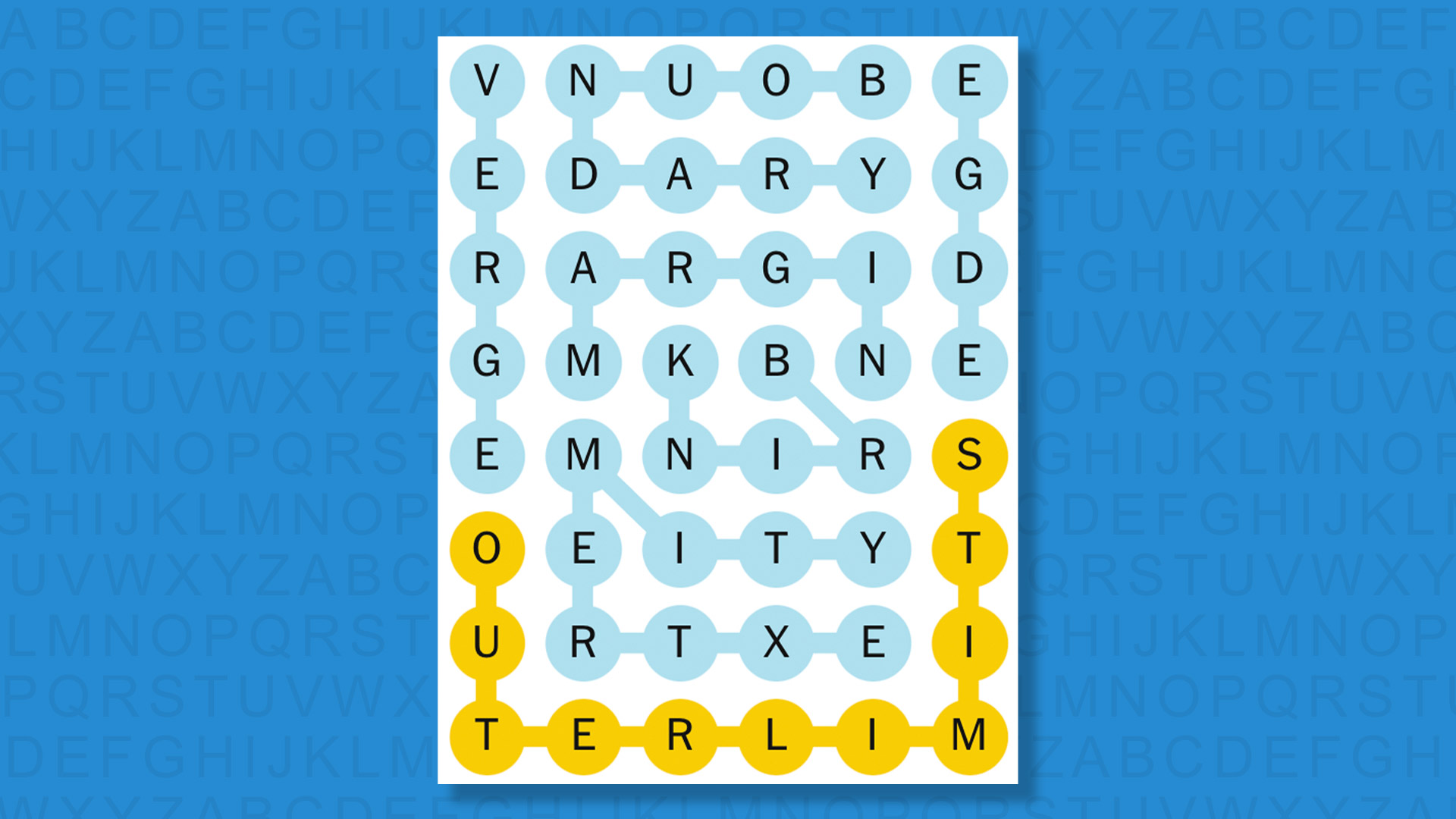
• Spangram has 11 letters
NYT Strands today (game #764) – hint #4 – spangram position
What are two sides of the board that today’s spangram touches?
First side: left, 6th row
Last side: right, 5th row
Advertisement
Right, the answers are below, so DO NOT SCROLL ANY FURTHER IF YOU DON’T WANT TO SEE THEM.
Advertisement
NYT Strands today (game #764) – the answers
(Image credit: New York Times)
The answers to today’s Strands, game #764, are…
EDGE
EXTREMITY
BRINK
VERGE
MARGIN
BOUNDARY
SPANGRAM: OUTERLIMITS
My rating: Hard
My score: 1 hint
Thinking the “fringe group” was some kind of hair-based pun, I was certain that “trim” would be my first word.
Sign up for breaking news, reviews, opinion, top tech deals, and more.
Instead, after getting EDGE following a hint, I soon discovered that the theme was referring to the OUTERLIMITS (also the name of a great 1990s sci-fi series, by the way) of things.
It is so strange with Strands that a little kickstart is all you need to see all the rest of the words you are looking for, a feeling that simultaneously makes you feel smart for seeing them all amid the letter soup and dumb for not spotting them originally.
Advertisement
Yesterday’s NYT Strands answers (Sunday, April 5, game #763)
KANGAROO
BILBY
KOALA
WOMBAT
OPOSSUM
SPANGRAM: MARSUPIALS
What is NYT Strands?
Strands is the NYT’s not-so-new-any-more word game, following Wordle and Connections. It’s now a fully fledged member of the NYT’s games stable that has been running for a year and which can be played on the NYT Games site on desktop or mobile.
I’ve got a full guide to how to play NYT Strands, complete with tips for solving it, so check that out if you’re struggling to beat it each day.
On PlayStation Studios’ official site, Sony has updated the main banner to prominently feature Ghost of Yotei and Intergalactic: The Heretic Prophet, while Demon’s Souls Remake no longer appears in the lineup. Read Entire Article Source link
When a wave of unusual activity swept through Syrian government accounts on X in March, it first looked like pure chaos—trolling, parody names, and even explicit content. But beneath the noise lay something far more telling: a state still struggling with the most basic layer of its cybersecurity.
In early March, several official Syrian government accounts on X—including those linked to the presidency’s General Secretariat, the Central Bank, and multiple ministries—were hacked. The compromised profiles posted “Glory to Israel,” retweeted explicit material, and briefly renamed themselves after Israeli leaders.
Authorities moved to restore control within days, with the Ministry of Communications and Information Technology announcing “urgent steps” to recover the accounts and prevent further breaches. Yet what remained unsettled was the deeper question: How secure is the state’s digital front door?
In a government now dependent on commercial platforms for communication, losing a verified account doesn’t just disrupt messaging—it silences the state’s voice.
Advertisement
When the State Stops Speaking for Itself
At first glance, the breach appeared politically charged. Pro‑Israel messages circulating on verified government accounts during a tense regional moment fueled speculation over motive and attribution. No group claimed responsibility, and officials did not clarify whether internal systems were compromised.
To analysts, the episode pointed less to a geopolitically driven hack and more to a familiar, systemic weakness.
“We still do not know exactly what happened. Whether the accounts were directly hacked or accessed through weak or reused credentials, the conclusion is much the same: very poor digital security practices,” says Noura Aljizawi, a senior researcher at the Citizen Lab, a research organization that monitors threats to civil society in the digital age.
The ministry said it had coordinated with account administrators and X to “restore control and strengthen security,” promising new regulatory measures soon. The perpetrators have not been publicly identified.
Advertisement
One Weak Link, Multiple Accounts
Before the accounts were recovered, several displayed identical pro‑Israel messaging—a detail that suggested shared credentials or centralized access, according to platform monitoring data.
That assessment was echoed across the cybersecurity community.
“The fact that several official X accounts seemed to fall in quick succession suggested some form of centralized control, possibly with the same credentials used across multiple accounts,” says Muhannad Abo Hajia, cybersecurity expert at Damascus-based group Sanad. “That kind of setup is not inherently wrong, but only if proper safeguards are in place.”
Experts say this pattern is consistent with common failures: password reuse, phishing attempts, compromised recovery channels, or the absence of multifactor authentication (MFA). In practice, one careless password or a single compromised recovery email could give outsiders control of multiple institutions.
Advertisement
“Account takeovers of this kind are common enough globally and usually result from familiar vulnerabilities: phishing, password reuse, compromised recovery emails, weak credentials, or the absence of MFA,” says Rinad Bouhadir, a cybersecurity engineer tracking the region.
A System Built on Fragile Foundations
The breach, specialists say, reflects not a targeted cyber‑offensive but deeper structural flaws.
“The current authorities inherited a near-nonexistent cybersecurity system and have yet to treat repairing it as a real priority,” says Dlshad Othman, a Syrian cybersecurity specialist.
He believes the incident likely stemmed from either a centralized unit managing several official accounts or a shared third‑party tool used across ministries—both of which create a single point of failure.
Advertisement
That design makes multiple agencies vulnerable at once. In moments of heightened tension, even one falsified post from a verified government account could stoke panic, misreporting, or escalation before correction.
A verified government account can be weaponized to spread false information in real time, particularly during periods of regional escalation, when confusion carries immediate real-world risk.
The Artemis II crew is almost at the moon, and the astronauts spent this weekend carrying out preparations for their lunar flyby on Monday. That included manual piloting demonstrations, reviewing their science objectives for the six-hour observation period and evaluating their space suits, which are there for life support in the event of an emergency and for their return home. But, they’ve had plenty of time to take in the views, too — and those views sure are spectacular. In the latest series of images shared by the space agency, the astronauts are seen gazing at Earth through the windows of the Orion spacecraft.
Orion will reach the moon’s vicinity shortly after midnight on Monday, April 6. Later that day, the crew is expected to reach a point farther than any humans have traveled from Earth, surpassing the record of 248,655 miles from Earth set by the Apollo 13 astronauts in 1970.
Mission specialist Christina Koch takes in the view. (NASA)
The lunar observation period will start at 2:45PM ET, and a few hours later, they’ll be behind the moon and briefly drop out of communication. The spacecraft’s closest approach to the moon is expected to occur at 7:02PM, when it will be 4,066 miles from the surface. “From that distance, the crew will see the entire disk of the Moon at once, including regions near the north and south poles,” according to NASA. The crew will later get a chance to see a solar eclipse “as Orion, the Moon, and the Sun align in such a way that the astronauts will see our star disappear behind the Moon for about an hour.” NASA will have coverage of the flyby starting at 1PM ET.
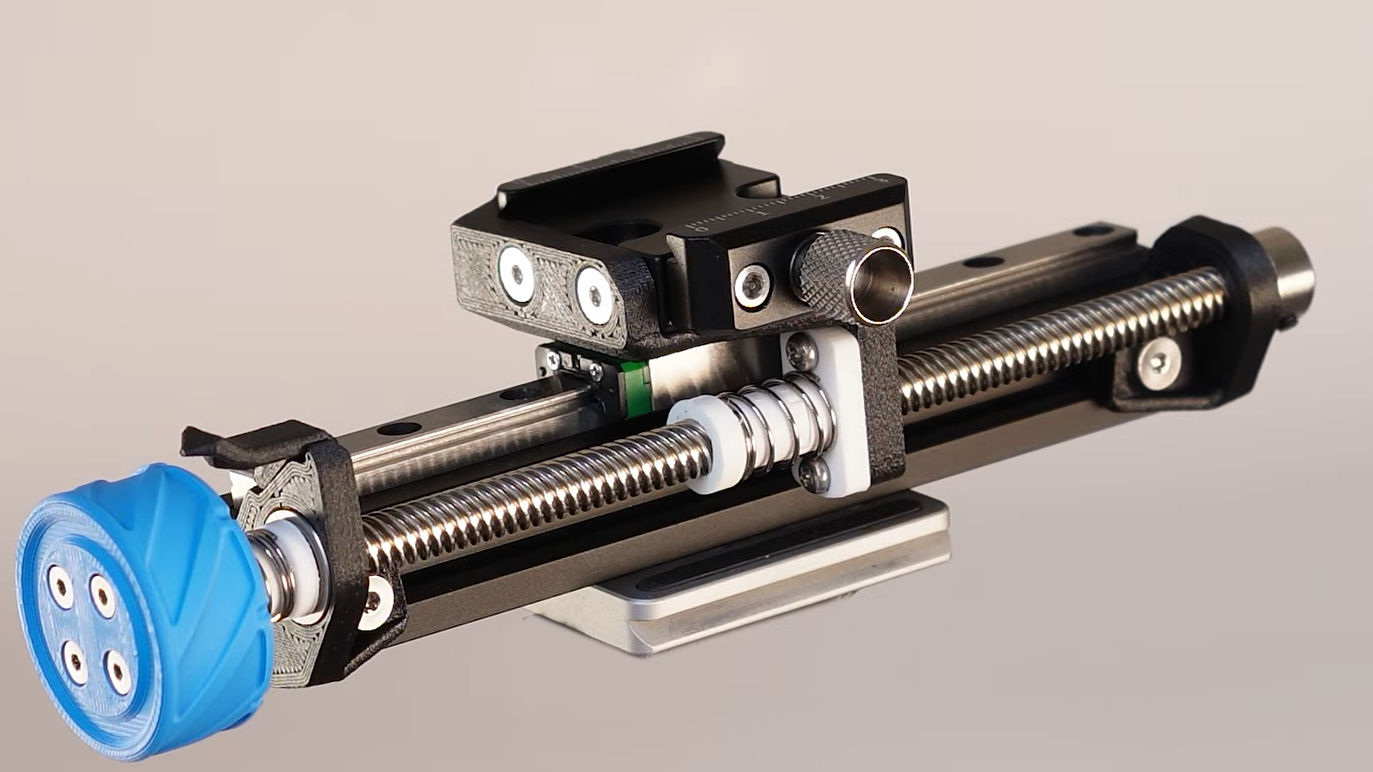
When taking macro photographs, you often need just a tiny bit of controlled motion — so little that it’s tough to pull off by hand. To address this, [Salveo] designed a small open-source macro photography slider featuring an anti-backlash handle.
Macro photography gives you an extremely shallow field of view, sometimes under 1 mm of depth, in which subjects stay in focus. To combat this, it’s common to capture multiple images while sliding the camera forward or backward, then combine them for a much larger depth of field than a single shot provides. [Salveo]’s slider gives fine control over this focus-stacking process, with the knob even marked to show every 1 mm of linear travel.
The slider is built around a 150 mm linear rail, though it could easily be lengthened or shortened to suit your needs. A T8 leadscrew, paired with anti-backlash nuts, translates the knob’s rotation into smooth linear motion. The knob itself uses a custom-designed anti-backlash mechanism to ensure the slider works cleanly in either direction.
Advertisement
You can grab all the 3D-printable files as well as the full bill of materials from the project page. Be sure to check out [Salveo]’s build video below. Thanks [Tim L.] for sending in this awesome open-source slider. Be sure to check out some of the other macro photography projects we’ve covered, too.
In short:The Court of Rome has ruled that Netflix’s repeated price increases between 2017 and 2024 violated Italian consumer law and EU Directive 93/13/EEC on unfair contract terms. The ruling voids the relevant contract clauses, orders current prices rolled back to 2015 launch levels, and requires Netflix to notify millions of current and former Italian subscribers of their right to a refund, up to €500 for Premium subscribers and up to €250 for Standard subscribers. Netflix has said it will appeal.
A Roman court has given Netflix the bill for nearly a decade of price increases. In a ruling published on 1 April 2026, the Court of Rome found that Netflix had imposed repeated and unjustified price increases on its Italian subscribers in violation of the Italian Consumer Code and EU Directive 93/13/EEC, which prohibits unfair terms in standard consumer contracts. The action was brought by Movimento Consumatori, one of Italy’s largest consumer associations. The ruling, catalogued as sentence 4993/2026, affects up to 5.4 million current Italian subscribers and an unquantified number of former subscribers who cancelled during the relevant period.
Netflix launched in Italy in 2015 with a Premium plan priced at €11.99 per month. It raised prices in 2017, again in 2019, again in 2021, and most recently in November 2024, bringing the Premium plan to €19.99, an increase of €8 per month from its original price. The Standard plan reached €13.99 over the same period. The court found that none of the price changes were accompanied by justified reasons in the contract, and that offering subscribers 30 days’ notice alongside the option to cancel was not a meaningful substitute for genuine consent. Under the directive, contract terms that impose a significant imbalance between a business and a consumer, without the consumer’s substantive agreement, are void from the outset.
What the court has ordered
The ruling imposes several specific obligations on Netflix. The price-hike clauses in its standard contracts are void and unenforceable. Current subscription prices must be reduced: the Premium plan to €11.99 and the Standard plan to €9.99, the levels that applied before the first unlawful increase. Netflix must notify all current and former Italian subscribers, by email, postal mail, its own website, and notices placed in Italian national newspapers, within 90 days of the ruling, or face a daily penalty of €700 for non-compliance. Future contracts must specify the conditions under which prices may change. Eligible subscribers could receive approximately €500 in refunds if they have been on the Premium plan since 2017, and approximately €250 if they have been on the Standard plan.
Advertisement
Not an isolated ruling
The Court of Rome’s decision does not stand alone. In Germany, the federation of consumer organisations vzbv has brought a parallel action against Netflix on the same legal basis, and courts in Berlin and Cologne have already found that Netflix’s price-change clauses are void under German contract law. In Spain, the consumer association FACUA is pursuing a comparable challenge. Each case rests on EU Directive 93/13/EEC as its shared legal foundation, a regulatory tradition that Europe has been strengthening across its digital marketsfor years. A defeat in Germany, where the vzbv case continues, would expose Netflix to liability across a subscriber base considerably larger than Italy’s.
The timing of the Italian ruling adds another layer of complexity. It was published on 1 April 2026, three days after Netflix had announced a global price increase on 26 March 2026, raising subscription costs across every major market. In Italy, that announcement arrived into a legal environment that had just ruled in the opposite direction. Netflix’s revised terms of service, updated in April 2025, already include conditions specifying the grounds on which prices may change, citing technical and regulatory factors as potential justifications. Whether those revised terms arrived in time to limit the company’s exposure, or were drafted in direct anticipation of mounting litigation, is likely to feature prominently in the appeal.
Netflix’s position
Netflix has said it will contest the ruling. The company has not confirmed publicly whether it will comply with the notification and price-reduction obligations while the appeal is pending. Netflix indicated that the revised terms of service introduced in April 2025 already address the transparency concerns the court identified.The expectation that platforms disclose the basis for changes to the terms of a paid serviceis not limited to any single jurisdiction or sector; it has become a baseline assumption in European and increasingly global regulatory frameworks. The counterargument from Movimento Consumatori is that the obligation to provide justified reasons for price changes has existed in EU law since 1993, and that revising a contract after litigation has commenced does not retroactively cure the clauses that applied during the years of the increases.
What it means for streaming in Europe
Italy is Netflix’s fourth-largest market in Europe, with approximately 5.4 million subscribers as of October 2025 and 8 million unique users recorded during 2024.Europe’s digital market has long been the site of the most consequential tests of how much latitude technology platforms have to set their own commercial terms, and the Rome ruling is among the most direct verdicts yet on the specific question of subscription pricing. Every major streaming service operating in the EU, including Disney Plus, Amazon Prime Video, and Apple TV Plus, uses a structurally similar mechanism: notify by email, offer a cancellation option, and proceed. If the Rome court’s interpretation of Directive 93/13/EEC is upheld on appeal or replicated by German and Spanish courts, the commercial model underlying a decade of streaming growth would require fundamental redesign across the sector.
Subscription pricing has been one of the defining revenue levers of the past decade, built on the assumption that inertia, the gap between receiving a price-notification email and actually cancelling, functions, in practice, as consent. European courts are now testing that assumption against the text of a consumer protection directive that has been in force since 1993. Italy’s answer, issued in the first week of April 2026, is that the freedom to cancel is not the same thing as the freedom to agree.The commercial models that scaled through 2025are increasingly arriving in front of courts equipped with three decades of consumer protection law, and the outcomes are starting to accumulate.
Submissions to the App Store have jumped by 84% year-over-year, with the growth of vibe coding believed to be behind the surge.
Vibe coding has led to more apps being submitted to the App Store in 2025
The continuing growth of AI services like ChatGPT and Anthropic’s Claude has helped fuel productivity in many fields, including coding. While developers have been assisted by automated tools before, AI has led to even novice coders to create bigger things beyond their capabilities. It now seems that the increased use of AI in development has resulted in more work for the App Store. Continue Reading on AppleInsider | Discuss on our Forums
It’s a move that breaks with decades of tradition (or at least consumer expectations) and is undoubtedly a blow for anyone hoping for a discount, five years into the current console generation. However, it’s also a sign that the current generation is likely to stick around for a while yet—and that may be a good thing, for the industry and players alike.
Historically, at this point in a console generation, incumbent hardware sees steep discounts. For example, the PS4, which launched for $400 in 2013, was retailing for $300 by 2018, a 25 percent decrease. Even if hardware is loss-leading, it’s a pricing trajectory that’s usually win-win for manufacturers and customers alike. Production and component costs will typically have dropped over that half-decade, allowing companies to drop the retail price, often alongside slimmed-down hardware revisions. At the same time, players who weren’t won over at a console’s launch have a cheaper entry point and years of games to catch up on. But this generation has been anything but typical.
Generational Abnormalities
The AI bubble has seen RAM and SSD storage prices skyrocket in the last few months, impacting the entire global tech sector. Sony as a whole has been hit hard by this, with the recent announcement that it was suspending its memory card business, while the PlayStation corner of the fiefdom just confirmed long-standing rumors of price increases for its console family.
Advertisement
The new MSRPs went into effect on April 2, and there’s no sugarcoating that they mark significant increases. The “entry-level” digital edition PS5 console—the one without a disc drive—is the worst hit, leaping to $600. That’s $100 higher than its previous US retail price (which was already up following an earlier hike back in August 2025, driven by Trump’s tariffs) and a staggering 50 percent higher than its $400 launch price back in 2020.
The base PS5 with a disc drive is up 30 percent on its original $500 price, now costing $650, while the PS5 Pro “only” goes up around 29 percent from its $700 launch price, setting buyers back $900—though it also doesn’t come with a disc drive, so prepare to shell out another $80 to play physical games or Blu-ray movies. Elsewhere, the PlayStation Portal, Sony’s handheld that allows users to stream games from their PS5 or the cloud, has also increased by $50, from $200 to $250.
PlayStation is far from alone in increasing its prices. Xbox increased its hardware and GamePass subscription costs multiple times in 2025, eventually bringing the MSRP of the top-end 2-TB Xbox Series X to its current $800, and is rumored to be considering another hike. The Switch 2 dodged tariff-induced price hikes at launch but is also reportedly “contemplating raising the price of that device in 2026,” per Bloomberg—and the same report suggests Sony may be delaying the inevitable PlayStation 6 to as far off as 2029, all due to the AI-induced parts crisis.
Even Valve’s handheld Steam Deck isn’t immune—while prices have so far only risen in Japan, South Korea, and Taiwan, the manufacturer has announced that the original 256 GB, LCD-screen model (the cheapest) “is no longer in production, and once sold out will no longer be available” while the newer OLED models, available with either 512 GB or 1 TB of storage “may be out-of-stock intermittently in some regions due to memory and storage shortages.”
Meet the “journalist” who “uploads press releases or analyst notes into AI tools and prompts them to spit out articles that he can edit and publish quickly,” according to the Wall Street Journal.
“AI-assisted stories accounted for nearly 20% of Fortune‘s web traffic in the second half of 2025.” And most were written by 42-year-old Nick Lichtenberg, who has now written over 600 AI-assisted stories, producing “more stories in six months than any of his colleagues at Fortune delivered in a year.”
One Wednesday in February, he cranked out seven. “I’m a bit of a freak,” Lichtenberg said… A story by Lichtenberg sometimes starts with a prompt entered into Perplexity or Google’s NotebookLM, asking it to write something based on a headline he comes up with. He moves the AI tools’ initial drafts into a content-management system and edits the stories before publishing them for Fortune’s readers… A piece from earlier that morning about Josh D’Amaro being named Disney CEO took 10 minutes to get online, he said…
Like other journalists, Lichtenberg vets his stories. He refers back to the original documents to confirm the information he’s reporting is correct. He reaches out to companies for comment. But he admits his process isn’t as thorough as that of magazine fact-checkers.
While Lichtenberg started out saying his stories were co-authored with “Fortune Intelligence”, he now typically signs his own name, according to the article, “because he feels the work is mostly his own.” (Though his stories “sometimes” disclose generative AI was used as a research tool…) The article asks with he could be “a bellwether for where much of the media business is headed…”
Advertisement
“Much of the content people now consume online is generated by artificial intelligence, with some 9% of newly published newspaper articles either partially or fully AI-generated, according to a 2025 study led by the University of Maryland. The number of AI-generated articles on the web surpassed human-written ones in late 2024, according to research and marketing agency Graphite.”
Some executives have made full-throated declarations about the threat posed by AI. New York Times publisher A.G. Sulzberger said AI “is almost certainly going to usher in an unprecedented torrent of crap,” referencing deepfakes as an example. The NewsGuild of New York, the union representing Fortune employees and journalists at other media outlets, said the people are what makes journalism so powerful. “You simply can’t replicate lived experiences, human judgment and expertise,” said president Susan DeCarava.
For Chris Quinn, the editor of local publications Cleveland.com and the Plain Dealer, AI tools have helped tame other torrents facing the industry. AI has allowed the outlets to cover counties in Ohio that otherwise might go ignored by scraping information from local websites and sending “tips” to reporters, he said. It has also edited stories and written first drafts so the newsrooms’ journalists can focus on the calls, research and reporting needed for their stories…. Newsrooms from the New York Times to The Wall Street Journal are deploying AI in various ways to help reporters and editors work more efficiently….
Not all newsrooms disclose their use of AI, and in some cases have rolled out new tools that resulted in errors or PR gaffes. An October study from the European Broadcasting Union and the BBC, which relied on professional journalists to evaluate the news integrity of more than 3,000 AI responses, found that almost half of all AI responses had at least one significant issue. Last week the New York Times even issued a correction when a freelance book reviewer using an AI tool unknowingly included “language and details similar to those in a review of the same book published in The Guardian.” But it was actually “the second time in a few days that the Times was called out for potential AI plagiarism,” according to the American journalist writing The Handbasket newsletter. We must stem the idea being pushed by tech companies and their billionaire funders who’ve sunk too much into their products to admit defeat that the infiltration of AI into journalism is inevitable; because from my perch as an independent journalist, it simply is not…
Some AI-loving journalists appear to believe that if they’re clear enough with the AI program they’re using, it will truly understand what they’re seeking and not just do what it’s made to do: steal shit… If you want to work with machines, get a job that requires it. There are a whole lot more of those than there are writing jobs, so free up space for people who actually want to do the work. You’re not doing the world a favor by gifting it your human/AI hybrid. Journalism will not miss you if you leave…
But meanwhile, USA Today recently tried hiring for a new position: AI-Assisted reporter. (The lucky reporter will “support the launch and scaling of AI-assisted local journalism in a major U.S. metro,” working with tools including Copilot and Perplexity, pioneering possible future expansions and “AI-enabled newsroom operations that support and augment human-led journalism.”) And Google is already sponsoring a “publishing innovation award“…
Developed by a consortium including Nextcloud, Ionos, and Proton, Euro-Office builds directly on the open-source OnlyOffice codebase. It offers a word processor, spreadsheet editor, presentation tool, and PDF editor, all supporting Microsoft formats (docx, pptx, xlsx) and open standards such as ODF. Its preview version is already available on GitHub,… Read Entire Article Source link
























































You must be logged in to post a comment Login