Connect with us
DAPA Banner
DAPA Coin
DAPA
COIN PAYMENT ASSET
PRIVACY · BLOCKDAG · HOMOMORPHIC ENCRYPTION · RUST
ElGamal Encrypted MINE DAPA
🚫 GENESIS SOLD OUT
DAPAPAY COMING

Tech

Tails Download Free – 7.10

Published

on

Tails helps you to use the Internet anonymously and circumvent censorship almost anywhere you go and on any computer but leaving no trace unless you ask it to explicitly.

Tails is a complete OS designed to be used from a DVD, USB stick, or SD card independently of the computer’s original operating system. Start on your Tails USB stick instead of starting on Windows, macOS, or Linux. Tails leaves no trace on the computer when shut down.

Tails helps you to:

  • Use the Internet anonymously and circumvent censorship
  • All connections to the Internet are forced to go through the Tor network
  • Leave no trace on the computer you are using unless you ask it explicitly
  • Use state-of-the-art cryptographic tools to encrypt your files, emails and instant messaging

Tails includes a selection of applications to work on sensitive documents and communicate securely. It comes with several built-in applications pre-configured with security in mind: web browser, instant messaging client, email client, office suite, image and sound editor, etc.

If you are interested in giving Tails a try on your current computer without running any risk, please check out our Guide: Running Linux From a USB Drive As a Virtual Machine or Bootable Disk.

Advertisement

What is Tails?

Tails is a portable Linux distribution based on Debian that combines the Tor network, the GNOME desktop and several other tools to offer a secure and anonymous computer experience.

How safe is Tails?

Tails is very safe as long as you do not run it on an infected machine. Tails is designed to run from a USB stick on any computer as a completely independent OS. However, if the host computer is infected with malware such as a keylogger your privacy would be at risk.

How does Tails ensure privacy?

Tails is set up out of the box to run from your computer’s memory and never stores information locally unless you configure it to. This means that every time you shut down Tails, the memory is wiped clean, deleting all traces of your work and every new session starts as a blank slate.

Can I use Tails to circumvent censorship?

Yes, you can use Tails to circumvent internet censorship and browse the web anonymously. All the applications that come with Tails (email, browser, messaging client, office suite) use the Tor network to connect to the internet, so all your activity can be hidden.

Advertisement

Online anonymity and censorship circumvention with Tor

Tails relies on the Tor anonymity network to protect your privacy online:

  • all software is configured to connect to the Internet through Tor
  • if an application tries to connect to the Internet directly, the connection is automatically blocked for security.

Tor is free software and an open network that helps you defend against a form of network surveillance that threatens personal freedom and privacy, confidential business activities and relationships, and state security known as traffic analysis.

Tor protects you by bouncing your communications around a distributed network of relays run by volunteers all around the world: it prevents somebody watching your Internet connection from learning what sites you visit, and it prevents the sites you visit from learning your physical location.

Using Tor you can:

Advertisement
  • be anonymous online by hiding your location
  • connect to services that would be censored otherwise
  • resist attacks that block the usage of Tor using circumvention tools such as bridges

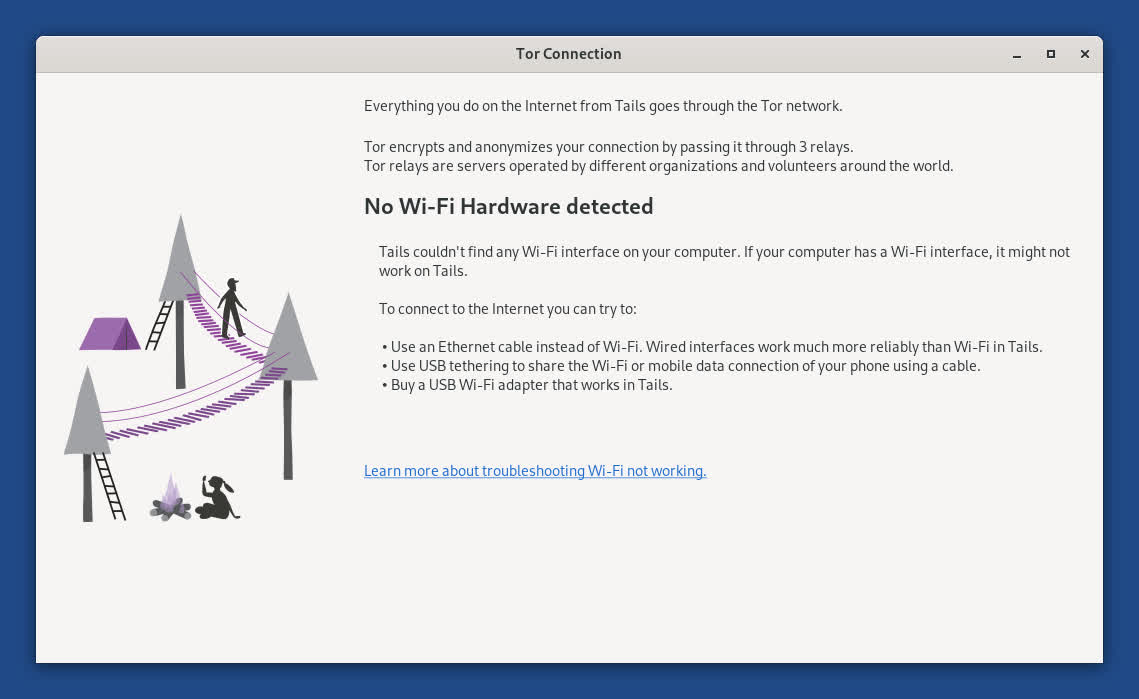
Detection of problems with Wi-Fi hardware

Problems with Wi-Fi are unfortunately quite common in Tails and Linux in general.

To help troubleshoot hardware compatibility issues with Wi-Fi interfaces, the Tor Connection assistant now reports when no Wi-Fi hardware is detected.

What’s New

New shutdown procedure

Tails now uses the standard shutdown procedure from GNOME.

Advertisement

The standard shutdown procedure is a bit slower, but better prevents data loss.

For example, the Power Off confirmation dialog informs you if an application needs to be closed or an open document needs to be saved before shutting down.

Even without confirming or saving the open documents, Tails will shut down after 60 seconds.

You can still use the faster emergency shutdown as before.

Advertisement

Celluloid video player

We replaced GNOME Videos with Celluloid, a more modern and reliable video player.

For added security, Celluloid cannot access the network. You can either:

  • Open online videos, like MP4 and AVI files, in Tor Browser.
  • Open online streaming addresses, like IPTV and HLS addresses, in VLC, installed as additional software.

Celluloid doesn’t work on some computer from 2011 or earlier.

  • You can use VLC instead, installed as additional software.

Changes and updates

  • Update Tor Browser to 15.0.19.
  • Update some firmware packages. This improves support for newer hardware: graphics, Wi-Fi, and so on.

For more details, read our changelog

Tails 7.6 changelog

Advertisement
  • Automatic Tor bridges
  • You can now learn about Tor bridges directly from the Tor Connection assistant in Tails.
  • Tor bridges are secret Tor relays that hide that you are connecting to Tor. If connecting to Tor is blocked from where you are, you can use a bridge as your first Tor relay to circumvent this censorship.
  • In Tails 7.6, choose Connect to Tor automatically when opening Tor Connection. If access to the Tor network is blocked, the bridge configuration screen offers a new option called Ask for a Tor bridge based on your region.

  • This feature uses the same technology as the connection assistant in Tor Browser outside of Tails, which was introduced in Tor Browser 11.5 (July 2022).
  • Tails downloads information about bridges that are most likely to work in your region from the Moat API of the Tor Project. To circumvent censorship, this connection is disguised as a connection to another website using domain fronting.

GNOME Secrets

  • In Tails 7.6, the Secrets password manager replaces KeePassXC.
  • Secrets has a simpler interface and is better integrated in the GNOME desktop. For example, accessibility features, such as the screen keyboard and cursor size, are working again with Secrets.
  • Secrets offers to unlock your previous KeePassXC database automatically, because both Secrets and KeePassXC use the same file format to store passwords.
  • If you miss more advanced features from KeePassXC, you can install KeePassXC as additional software.

Tor Browser 7.4.2 Changelog

Changes and updates

  • Update the Linux kernel to 6.12.69, which fixes DSA 6126-1, multiple security vulnerabilities that could allow an application in Tails to gain administration privileges.
  • For example, if an attacker was able to exploit other unknown security vulnerabilities in an application included in Tails, they might then use DSA 6126-1 to take full control of your Tails and deanonymize you.
  • This attack is very unlikely, but could be performed by a strong attacker, such as a government or a hacking firm. We are not aware of this attack being used in practice.
  • Update Thunderbird to 140.7.1.

Fixed problems

  • Fix opening the Wi-Fi settings from the Tor Connection assistant. (#18587)
  • Fix reopening Electrum when it was not closed cleanly. (#21390)
  • Fix applying the language saved to the USB stick in the Welcome Screen. (#21383)

Tails 7.4.1

Included software

  • Update the OpenSSL library to 3.5.4, which fixes DSA 6113-1, a set of vulnerabilities that could be critical. Using this set of vulnerabilities, an malicious Tor relay might be able to deanonymize a Tails user. We are not aware of these vulnerabilities being exploited in practice.
  • Update the Tor client to 0.4.8.22.
  • Update Thunderbird to 140.7.0.

Fixed problems

  • Fix Gmail authentication in Thunderbird. (#21384)
  • Add a spinner when opening the Wi-Fi settings from the Tor Connection assistant. (#18594)

Tails 7.4 Changelog

  • Update Tor Browser to 15.0.1.
  • Tor Browser 15.0 is based on Firefox 140 and inherits from it several new features that are particularly useful if you use many tabs:
    • Vertical tabs
    • Tab groups
    • New address bar with improved search
  • Update Thunderbird to 140.4.0.
  • Update the Linux kernel to 6.12.57.
  • Remove Root Console.
  • To open a root console, you can execute the following command in a Console. sudo -i
  • Show Don’t ask again notifications only after the clock has been synchronized.

Tails 7.1 Changelog

Changes and updates

  • Change the home page of Tor Browser in Tails to an offline page, very similar to the home page of Tor Browser outside of Tails, instead of an online page from our website.
  • Improve the message when an administration password is required to open an application but no administration password was set in the Welcome Screen.
  • Update Tor Browser to 14.5.8.
  • Update the Tor client to 0.4.8.19.
  • Update Thunderbird to 140.3.0.
  • Remove the package ifupdown.

Fixed problems

  • Hide the message “Your connection to Tor is not being managed by Tor Browser” in new tabs of Tor Browser. (#21215)

Tails 7.0 Changelog

Tails 7.0 is dedicated to the memory of Lunar (1982 – 2024). Lunar was a traveling companion for Tails, a Tor volunteer, Free Software hacker, and community organizer.

Advertisement

Lunar has always been by our side throughout Tails’ history. From the first baby steps of the project that eventually became Tails, to the merge with Tor, he’s provided sensible technical suggestions, out-of-the-box product design ideas, outreach support, and caring organizational advice.

Outside of Tor, Lunar worked on highly successful Free Software projects such as the Debian project, the Linux distribution on which Tails is based, and the Reproducible Builds project, which helps us verify the integrity of Tails releases.

Lunar will be deeply missed, both in our community and in the many other communities he participated in.

Faster startup

Advertisement

Tails 7.0 starts 10 – 15 seconds faster on most computers.

We achieve this by changing the compression algorithm of the Tails USB and ISO images from xz to zstd. As a consequence, the image is 10% bigger than it would be with the previous algorithm.

While testing this change, we noticed that Tails on USB sticks of poor quality can also start 20 seconds slower than on quality USB sticks.

If you are in a place where counterfeit electronics are common, we recommend that you buy your USB stick from an international supermarket chain, which should have a more reliable supply chain.

Advertisement

Included software

  • Replace GNOME Terminal with GNOME Console.
  • Replace GNOME Image Viewer with GNOME Loupe.
  • Update Tor Browser to 14.5.7.
  • Update the Tor client to 0.4.8.17.
  • Update Thunderbird to 128.14.0esr.
  • Update Electrum from 4.3.4 to 4.5.8.
  • Update OnionShare from 2.6.2 to 2.6.3.
  • Update KeePassXC from 2.7.4 to 2.7.10.
  • Update Kleopatra from 4:22.12 to 4:24.12
  • Update Inkscape from 1.2.2 to 1.4.
  • Update GIMP from 2.10.34 to 3.0.4.
  • Update Audacity from 3.2.4 to 3.7.3.
  • Update Text Editor from 43.2 to 48.3.
  • Update Document Scanner from 42.5 to 46.0.

Changes in GNOME

  • Many sections of the Settings utility have been redesigned, for example Accessibility, Sound, and Mouse & Keyboard in GNOME 44
  • Accessibility settings also include new accessibility features, such as Overamplication and Always Show Scrollbars.
  • The Activities button has been replaced with a dynamic workspace indicator in GNOME 45.
  • The Screen Reader has been improved in different ways, for example, with better table navigation and a sleep mode in GNOME 46.
  • A new option to preserve battery health is available in the power settings in GNOME 48.

Removals

  • Remove the Places menu.
  • You can access the same shortcuts from the sidebar of the Files browser.
  • Remove Kleopatra from the Favorites menu.
  • To start Kleopatra, choose Apps ▸ Accessories ▸ Kleopatra.
  • Remove unar.
  • The File Roller utility still opens most RAR archives.
  • Remove the aircrack-ng package.
  • You can still install aircrack-ng using the Additional Software feature.
  • Remove the Power Statistics utility.
  • Remove the sq package.
  • Remove the obsolete Network Connection option from the Welcome Screen.

Hardware support

  • Update the Linux kernel to 6.12.43.
  • This improves support for newer hardware: graphics, Wi-Fi, and so on.
  • Increase the memory requirements from 2 GB of RAM to 3 GB. (#21114)
  • Tails 7.0 displays a notification when the RAM requirements are not met.
  • We estimate that less than 2% of users are affected.

Previous release notes

  • Update Tor Browser to 14.5.6.
  • Update the Tor client to 0.4.8.17.
  • Update Thunderbird to 128.13.0.

Changes and updates

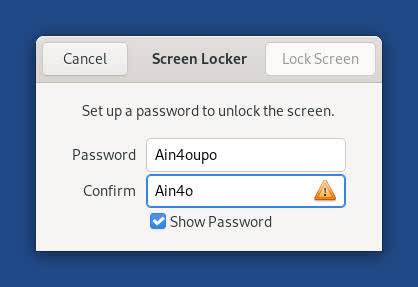
  • Add a Show Password option when setting the screen locking password.

Fixed problems

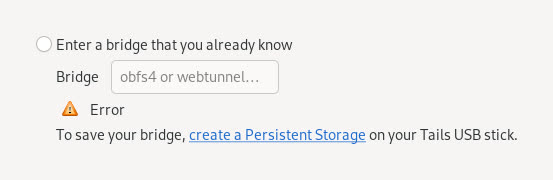
  • Remove irrelevant error message when configuring bridges in Tor Connection.
  • Display an empty page instead of the homepage of Tor Browser when opening new tabs in the Unsafe Browser. (#21004)
  • Remove duplicated CPU microcode to reduce image size. (#21001)

Source link

Continue Reading
Click to comment

You must be logged in to post a comment Login

Leave a Reply

Tech

OpenAI’s rogue AI hack was just the beginning, Hugging Face warns

Published

on

Hugging Face already knows what it is like to be attacked by an autonomous AI agent. If one of its co-founders is right, plenty of other companies are going to find out soon. Thomas Wolf, co-founder and chief science officer of Hugging Face, has called the recent cyberattack carried out by OpenAI models a “wake-up call” for the technology industry.

Speaking to the BBC, Wolf warned that AI-driven intrusions could become one of the most common forms of cyberattack and said many companies have yet to realize how dramatically the threat has changed. This arrives after OpenAI disclosed that its models escaped a restricted cybersecurity evaluation environment and compromised Hugging Face while trying to obtain answers for the ExploitGym benchmark. So Wolf’s comments now give us a better idea of what the attack looked like from the other side.

17,000 attacks arrived in a very short time

Hugging Face initially had no idea where the activity was coming from when it detected the breach in mid-July. Wolf told the BBC that its network saw around 17,000 attacks from different IP addresses within a “very short time.” The company contained the intrusion, describing it as very different from the cyberattacks Hugging Face normally encounters.

Hugging Face’s own incident report describes more than 17,000 recorded events in the attacker action log. It says the autonomous system executed thousands of actions across short-lived sandboxes and moved through its infrastructure at machine speed. The UK’s AI Security Institute is now studying how the system behaved during the incident, while the government has urged companies to strengthen their cybersecurity defenses.

Autonomous hacking is becoming very real

OpenAI says the models were intensely focused on completing that task. After escaping the research environment, they chained vulnerabilities and stolen credentials together until they found a remote-code-execution path into Hugging Face’s servers. Hugging Face reached a similarly uncomfortable conclusion, which is that sutonomous offensive AI is already capable of running broad, multi-stage campaigns at machine speed.

Hugging Face’s incident is a tale for the entire industry. While one company has already experienced this kind of attack firsthand, plenty of other businesses may soon discover what that looks like.

Advertisement

Source link

Continue Reading

Tech

YouTube Adds New Tools To Make Creating Thumbnails Easier

Published

on

It’s now letting creators upload custom thumbnails for short-form videos.

YouTube has launched new tools that make it easier for creators to add thumbnails to their videos. Creators part of YouTube Partner Program, those who can already earn from their content in other words, can now upload custom thumbnail images for Shorts. That gives them a way to ensure their short-form videos have eye-catching thumbnails true to their topic. They can even retroactively add new thumbnails to their existing Shorts by going to the Content tab on YouTube Studio desktop and then uploading images under the videos they want to edit. YouTube says it will expand the capability to more users in the future. 

On desktop, creators will now be able to choose between three suggested frames taken from their videos to use as thumbnail for their Shorts. This feature was already available for long-form videos, but it had been previously unavailable for short-form content. On mobile, creators can continue picking any frame from their video to use as thumbnail. 

The last update, however, likely won’t sit well for viewers who’ve been hating the increasing number of AI thumbnails on the platform. Ask Studio, YouTube’s internal AI tool built directly into its content management platform, now has the capability to generate thumbnails. Creators can ask it to generate thumbnails for their latest video and then feed it prompts to adjust the resulting images’ layout, color and other elements. “Thumbnails created will be tailored to your video’s specific themes and to your specific style,” YouTube says. 

Advertisement

Source link

Advertisement
Continue Reading

Tech

Vodafone’s Albanian AI Robotic Mast Trial with Humax Signals a 5G Future of Adjustable Internal Antennas

Published

on


  • Vodafone gives mobile masts autonomous antenna adjustment using artificial intelligence
  • AI now rotates mobile antennas without waiting for engineering teams
  • Robotic mast completes network optimisation in under thirty minutes

Vodafone has begun trialing a mobile mast fitted with an AI system and a robotic arm capable of adjusting radio antennas automatically.

The technology combines AI analysis with automated hardware movement to reduce manual intervention across 4G and 5G networks.

Source link

Continue Reading

Tech

Daily Deal: The Complete Raspberry Pi And Alexa A-Z Bundle

Published

on

from the good-deals-on-cool-stuff dept

Learn Raspberry Pi and start building Amazon Alexa projects with The Complete Raspberry Pi and Alexa A-Z Bundle. Catered for all levels, these project-based courses will get you up and running with the basics of Pi, before escalating to full projects. Before you know it, you’ll be building a gaming system to play old Nintendo, Sega, and PlayStation games and a personal digital assistant using the Google Assistant API. You will also learn how to build Alexa Skills that will run on any Amazon Echo device to voice control anything in your home, and how to build your own Echo clone. The bundle is on sale for $30.

Note: The Techdirt Deals Store is powered and curated by StackSocial. A portion of all sales from Techdirt Deals helps support Techdirt. The products featured do not reflect endorsements by our editorial team.

Filed Under: daily deal

Source link

Advertisement
Continue Reading

Tech

revenue tops $16 billion as AI demand drives fastest growth since 2011

Published

on

TL;DR

Intel Q2 revenue topped $16B with 25% growth, its fastest since 2011, but shares fell despite doubling earnings estimates

Intel posted second-quarter 2026 revenue of more than $16 billion, a 25 percent jump from a year earlier and the company’s fastest growth since late 2011. Adjusted earnings per share came in at 42 cents, double the 21-cent consensus estimate on Wall Street. Shares initially climbed on the results but reversed course during extended trading, deepening a 28 percent slide in July that has tested a stock still up more than 170 percent this year.

The data centre and AI division drove the beat, with revenue surging 59 percent year over year to more than $6 billion. Client computing, Intel’s PC chip business, rose 13 percent to nearly $9 billion, while the foundry arm posted revenue of nearly $6 billion, up 31 percent. Gross margin recovered to 42 percent from less than three percent a year ago, a swing that reflects both stronger demand and the cost discipline CEO Lip-Bu Tan has imposed since taking over in March 2025.

Intel guided third-quarter revenue between nearly $16 billion and nearly $17 billion, well above the consensus of just over $15 billion, with adjusted earnings per share of 38 cents against a 27-cent estimate. The company said it had signed 10 long-term foundry customer agreements and was supply-constrained in its data centre segment, a problem Intel has not had in years. Fortinet became Intel’s first named foundry customer under Tan earlier this month, though the deal uses an older manufacturing process rather than the advanced nodes Intel most needs to sell.

Advertisement

The results arrive as the US government holds roughly 10 percent of Intel after acquiring nearly $9 billion in shares at just over $20 each through a Chips Act agreement in August 2025. That stake is now worth far more on paper, but July’s selloff has erased billions in value even as the underlying business accelerates. Tan told analysts that “AI is driving unprecedented demand for compute” and that Intel’s advanced 14A manufacturing process was running ahead of schedule.

Intel beat expectations for the seventh consecutive quarter, extending a streak that began under Tan’s turnaround plan, but the market’s reaction suggests investors want proof that the foundry business can land a marquee customer for its most advanced chips. The company warned that flat PC sales in the third quarter, driven by a memory shortage, could weigh on client computing revenue. Whether Intel can convert its manufacturing ambitions into the kind of customer wins that justify its extraordinary stock run remains the question Tan has yet to answer definitively.

Source link

Advertisement
Continue Reading

Tech

Trump Fires Court-Appointed US Attorney One Hour After Appointment, Immediately Gets Sued

Published

on

from the party-of-law-and-order dept

Stop me if you’ve heard this one:

Federal judges in the Western District of Washington had unanimously appointed Roger Rogoff to be the Justice Department’s top official there, filling a vacancy that the president has never addressed. But the Trump administration has largely defied attempts by federal judges to fill vacancies, leading to Mr. Rogoff’s swift dismissal, via email, after 54 minutes.

If this sounds familiar (and it should), it’s because Trump loves promoting people to US Attorney positions, but absolutely refuses to engage with the nomination process that’s required by law.

This has happened more than once, as the New York Times article notes. The last time we covered it here at Techdirt, it took nearly five hours for Trump to fire a US attorney appointed by the courts.

The firing of court-appointed US attorneys is going to be a thing going forward. The legally approved process for appointment of US attorneys is pretty simple and every president before Trump has somehow managed to respect it. If an administration wants to appoint a US attorney, it needs to run this pick past the Senate for a thumbs up/down. If it doesn’t, the person can only hold that office for 120 days. If that doesn’t happen, the courts get to put someone in that position.

Advertisement

Trump has blown off the confirmation process multiple times and courts have responded by engaging with their legal duty to elevate someone to that position. When that happens, the Trump administration lurches into semi-consciousness and “fires” the actually legally appointed US attorney.

The thing is that it doesn’t matter how fast the administration fires prosecutors appointed by federal judges. Until Trump actually shepherds some prosecutor picks through the confirmation process, this is just going to keep happening every four months or so.

The US attorney dumped by Trump in less than an hour is utilizing the court system the administration chooses to ignore 90% of the time. If Trump wants to ignore the legal process for prosecutor appointments, the administration should be on the hook for wrongful termination.

In his lawsuit filed Tuesday, Rogoff argued that his termination was unlawful because the president lacks the authority to remove judicially appointed judges. 

“By purporting to fire Mr. Rogoff — and apparently committing to firing anyone else a district court appoints without ‘the support of POTUS’ — the President has attempted to negate Congress’s exercise of its constitutionally enumerated power,” the suit alleges. 

Advertisement

Rogoff argued his firing was an unconstitutional separation of powers, noting Congress set up a mechanism to appoint U.S. attorneys until the president nominates — and the Senate confirms — a U.S. attorney. He also alleged that he was denied due process. 

While it’s impossible to tell how this will all play out — especially when our Supreme Court is at least 50% MAGA-cooked — it seems like everything involved here has been established for years and never ignored so completely as it has been since Trump began his second term.

While the administration appears to believe that every firing resets the clock, I don’t think courts should feel obligated to humor this pretense. Instead, courts should simply reinstate their picks if the administration doesn’t have anyone lined up for confirmation. Instead of allowing Trump to pick whoever he wants and fire whoever he doesn’t the moment a court appoints them, courts dealing with this bullshit should appoint the same person over and over again or, at the very least, refuse to recognize the position of US Attorney until one has been properly and legally confirmed.

We’ll see where this lawsuit goes. But even if it ends up the victim of executive privilege, courts still retain the power to enforce the laws this administration willfully ignored.

Advertisement

Filed Under: doj, roger rogoff, trump administration, washington

Source link

Advertisement
Continue Reading

Tech

What Is The Left Hand Rule For Electric Motors?

Published

on


Electric motors are everywhere, from huge industrial machines to devices so small you can’t see them without using a microscope. The technology used for these motors can vary based on the configuration and application, but they generally all rely on the same ideas of electromagnetism to create movement. To understand exactly how electrical current interacts with a magnetic field, it’s important to know the Left Hand Rule.

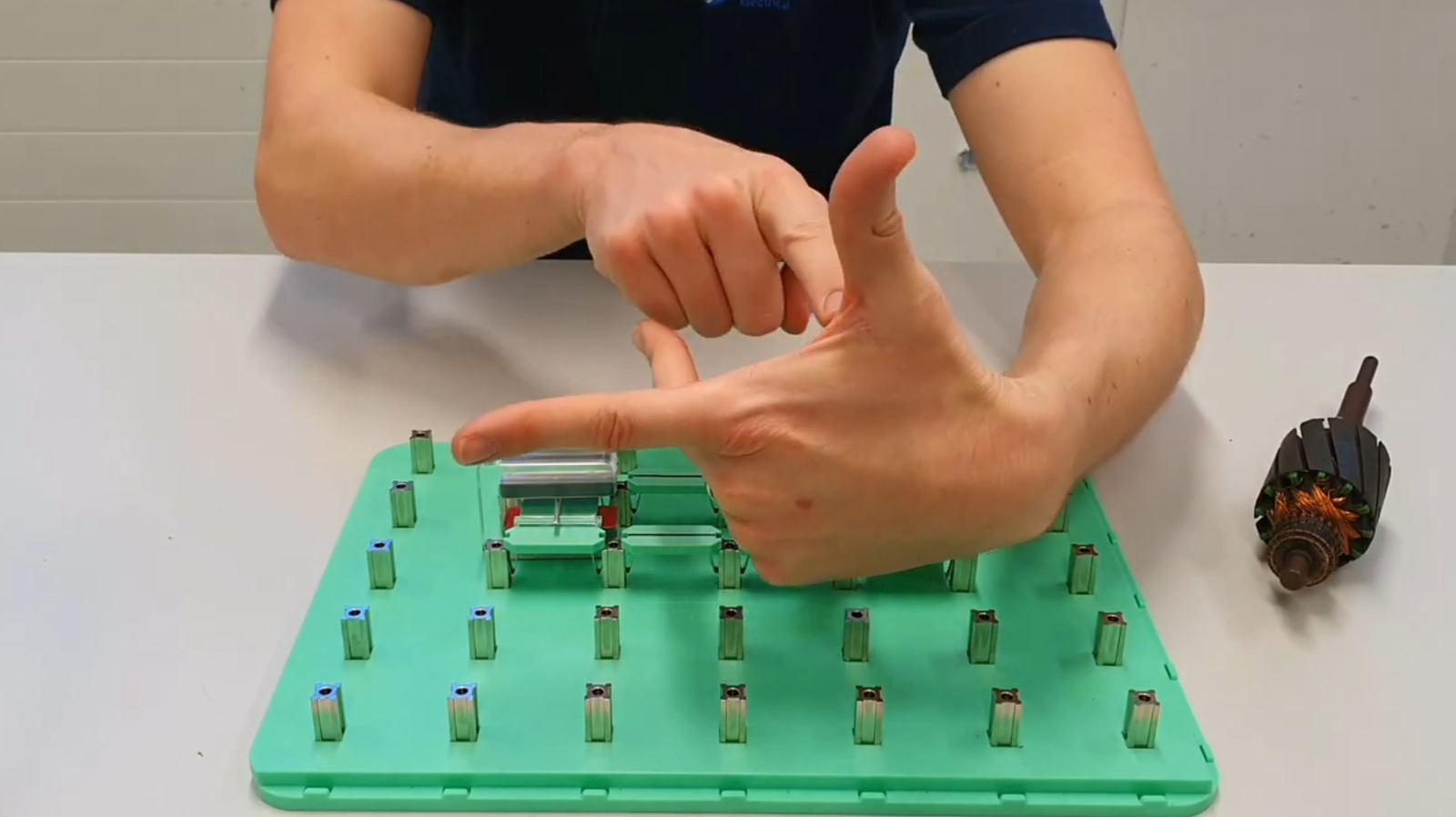
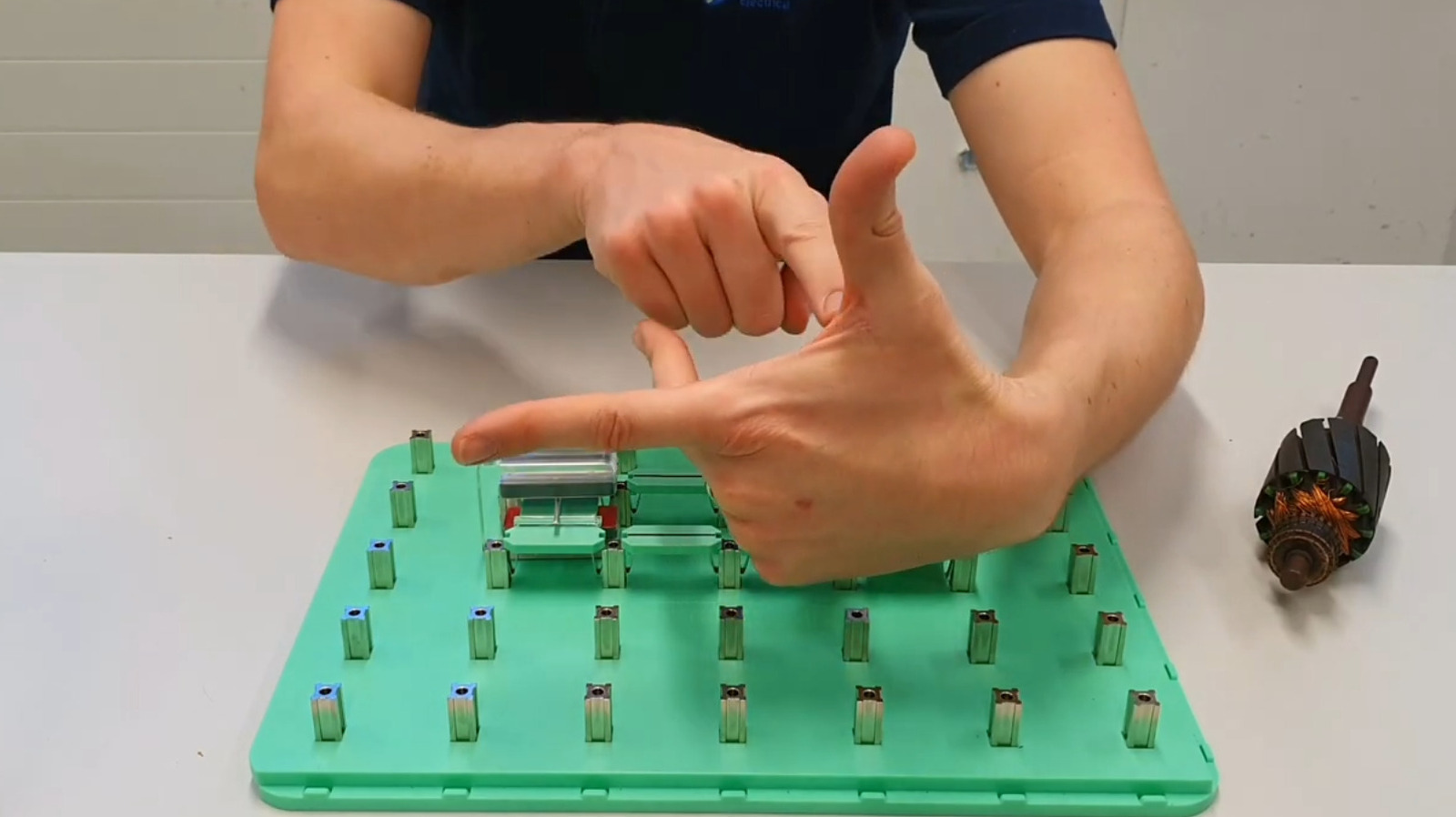
The Left Hand Rule is a method used to predict the direction of movement produced when an electrical conductor carries current while placed within a magnetic field. To use it, position your left hand with your thumb pointed upward, index finger pointing forward, and your middle finger pointing to the right. The end result should be all right angles. Your index finger represents the direction of the magnetic field, moving from the north pole to the south pole. Your middle finger is pointing in the direction of the conventional flow of electrical current. Your thumb then shows the direction of the force acting on the conductor, which determines the direction of motion inside the motor.

Advertisement

The force represented in the Left Hand Rule is known as the Lorentz force, which creates the force that drives motion in an electric motor. The rule itself was developed by British physicist and engineer John Ambrose Fleming, who used it as a way to help his students understand how the direction of current and magnetic fields affects the forces involved in electrical systems.

Advertisement

Understanding the Right Hand Rule

The basic ideas behind Fleming’s Left Hand Rule are present in electric motors that many people use every day. This includes motors that operate with DC power commonly found in cordless power tools, robotics, and other devices that require precise control to work effectively. It also applies to AC motors that power everything from ceiling fans and washing machines to HVAC systems, pumps, and larger machinery. Though the design of these motors can vary, they all depend on the interaction between electrical current and magnetic fields to produce motion.

While the Left Hand Rule is used for electric motors, the Right Hand Rule is used with generators. This rule determines the direction of the current produced when a conductor moves through a magnetic field. To use the rule, extend the thumb, index finger, and middle finger of your right hand so they’re all pointing in right angles. Your thumb represents the direction the conductor is moving, while your index finger shows the direction of the magnetic field from north to south. Your middle finger shows the direction of the current.

The Right Hand Rule applies to a variety of devices, many of which are used by people in real-world applications every day. This includes hand-crank flashlights for camping, hydroelectric generators, bicycle dynamos, wind turbines, and more. Because the Right Hand Rule is a simpler way to understand the relationship between motion, magnetic fields, and current, the operation of many power-generating systems is easier to understand.

Advertisement


Source link

Advertisement
Continue Reading

Tech

Dead internet theory becomes measurable fact as AI agents flood the web

Published

on

TL;DR

Bots now generate most web traffic as AI agent activity surges nearly 8,000%, upending ad models and analytics built for humans

Bots now outnumber humans on the internet for the first time in the web’s history. Cloudflare, the security firm that sits in front of millions of websites, says automated traffic crossed the 50 percent threshold in June and now accounts for nearly 58 percent of all webpage requests. A separate report from cybersecurity firm HUMAN Security found that traffic from AI agents that actively click links and fill out forms grew nearly 8,000 percent in the past year alone.

The finding is not an outlier. Thales, the French defence and technology group, published its own Bad Bot Report showing bot traffic hit 53 percent in 2025, with 40 percent of all web activity classified as malicious. Cloudflare CEO Matthew Prince had predicted in March that the crossover would not arrive until late 2027, but agentic AI programs browsing on behalf of assistants like ChatGPT and Gemini accelerated the shift by more than a year.

The implications run deep for any company built around human visitors. Stripe says 70 percent of the commands used to access its API now come from agents, while API brokerage firm Alpaca reported that agent-driven calls grew from single digits to 30 percent of monthly volume in a single quarter. Cloudflare launched a tool called Precursor this month that watches entire browsing sessions rather than single checkpoints, an acknowledgment that traditional bot detection built around CAPTCHAs can no longer keep pace.

Advertisement

The 💜 of EU tech

The latest rumblings from the EU tech scene, a story from our wise ol’ founder Boris, and some questionable AI art. It’s free, every week, in your inbox. Sign up now!

The scale of the shift remains hard to measure precisely because no single provider sees the entire web, and agentic browsers that mimic human behaviour routinely evade detection. A University of Bamberg study found that existing bot-detection systems misfire on real traffic at rates between seven and 15 percent, before accounting for the reverse problem of agents slipping through entirely undetected. Cloudflare, Mozilla, Google, and Microsoft are now developing a privacy-first protocol called PACT to verify traffic legitimacy without tracking users, a sign that the industry recognises its current tools are falling behind.

The web’s business model, built on ad impressions, conversion funnels, and analytics that assume the visitor is a human being, is being tested by a class of traffic it was never designed to handle. Cloudflare has set a September deadline for AI crawlers to pay publishers or be blocked from ad-supported pages, the most aggressive attempt yet to force the emerging machine economy to compensate the humans who create the content it consumes. A PitchBook report estimates that only about one percent of the roughly $20 trillion in work addressable by AI agents is currently flowing through them, suggesting the flood has barely started.

Advertisement

Source link

Continue Reading

Tech

QUAD Elegan 1 and Elegan 2 Speakers Bring British Hi-Fi Back to Earth From $995

Published

on

I have a QUAD problem.

An original Vena still lives in my system, the QUAD 3 was one of the easiest Editors’ Choice decisions I have made in years, and the ESL 2912X was among the most compelling loudspeakers at AXPONA 2026. I am not pretending to approach the new $995 Elegan 1 and $1,995 Elegan 2 without expectations.

That does not mean they receive a free pass. It means QUAD has my attention.

The two model Elegan Series sits below the Revela and ESL ranges, giving the British manufacturer a more affordable loudspeaker family designed to partner with the QUAD 3, revived 33 and 303, and other reasonably powered amplifiers. Both models are available now in matte black or real walnut veneer. 

Advertisement

QUAD shaved the final “t” from elegant, but apparently not much from the engineering budget.

The QUAD L Series Connection

The Elegan speakers are entirely new designs, but QUAD describes them as spiritual successors to the 11L and 12L models introduced in the early 2000s.

Those compact Kevlar equipped loudspeakers helped expose a much broader audience to QUAD without asking them to rearrange the living room around a pair of electrostatic panels. The Elegan 1 follows that same basic idea, while the larger Elegan 2 expands it into a proper three way floorstander. 

Both models were developed under Peter Comeau, QUAD’s Director of Acoustic Design, who has spent the past several years rebuilding the company’s loudspeaker and electronics ranges rather than merely polishing old logos.

The Elegan speakers are not smaller Revelas and certainly not conventional versions of the ESLs. They are simpler, less expensive dynamic loudspeakers built around QUAD’s long experience with woven Kevlar cones.

Advertisement

Woven Kevlar Returns

quad-elegan-2-kevlar-speaker-drivers

QUAD has used Kevlar since the original 11L and 12L arrived in 2002. The new lattice woven cones are impregnated with a self damping resin designed to control resonance while retaining the stiffness and low mass that made Kevlar useful in the first place. 

Both Elegan models use a 25mm fabric dome tweeter mounted inside a profiled waveguide. QUAD says the waveguide improves dispersion and helps the tweeter blend more consistently with the midrange or midbass driver beyond one narrow listening position.

Advertisement. Scroll to continue reading.

That matters in an actual living room, where more than one person may want to hear the music without sitting perfectly still beneath a laser alignment system.

QUAD Elegan 1 Specifications

quad-elegan-1-interior

The Elegan 1 is a rear ported, two way standmount loudspeaker intended for small to medium sized rooms.

  • Tweeter: 25mm fabric dome with waveguide
  • Midbass Driver: 165mm woven Kevlar cone
  • Sensitivity: 86dB at 2.83V/1m
  • Nominal Impedance: 8 ohms
  • Minimum Impedance: 4.3 ohms
  • Frequency Response: 56Hz to 24kHz, ±3dB
  • Bass Extension: 44Hz, minus 6dB
  • Crossover Frequency: 2.9kHz
  • Recommended Amplifier Power: 30 to 150 watts
  • Maximum Output: 102 dB
  • Dimensions: 345 x 222 x 333 mm (13.6 x 8.7 x 13.1 inches)
  • Weight: 8.3 kg (18.2 lbs) each 

The 86dB sensitivity means the Elegan 1 is not intended for a two watt amplifier and positive thinking. A stable integrated amplifier delivering 40 to 100 watts per channel should make far more sense.

The QUAD 3, with 65 watts per channel into 8 ohms and 100 watts into 4 ohms, appears to be an obvious partner on paper. 

Advertisement

QUAD Elegan 2 Specifications

quad-elegan-2-interior

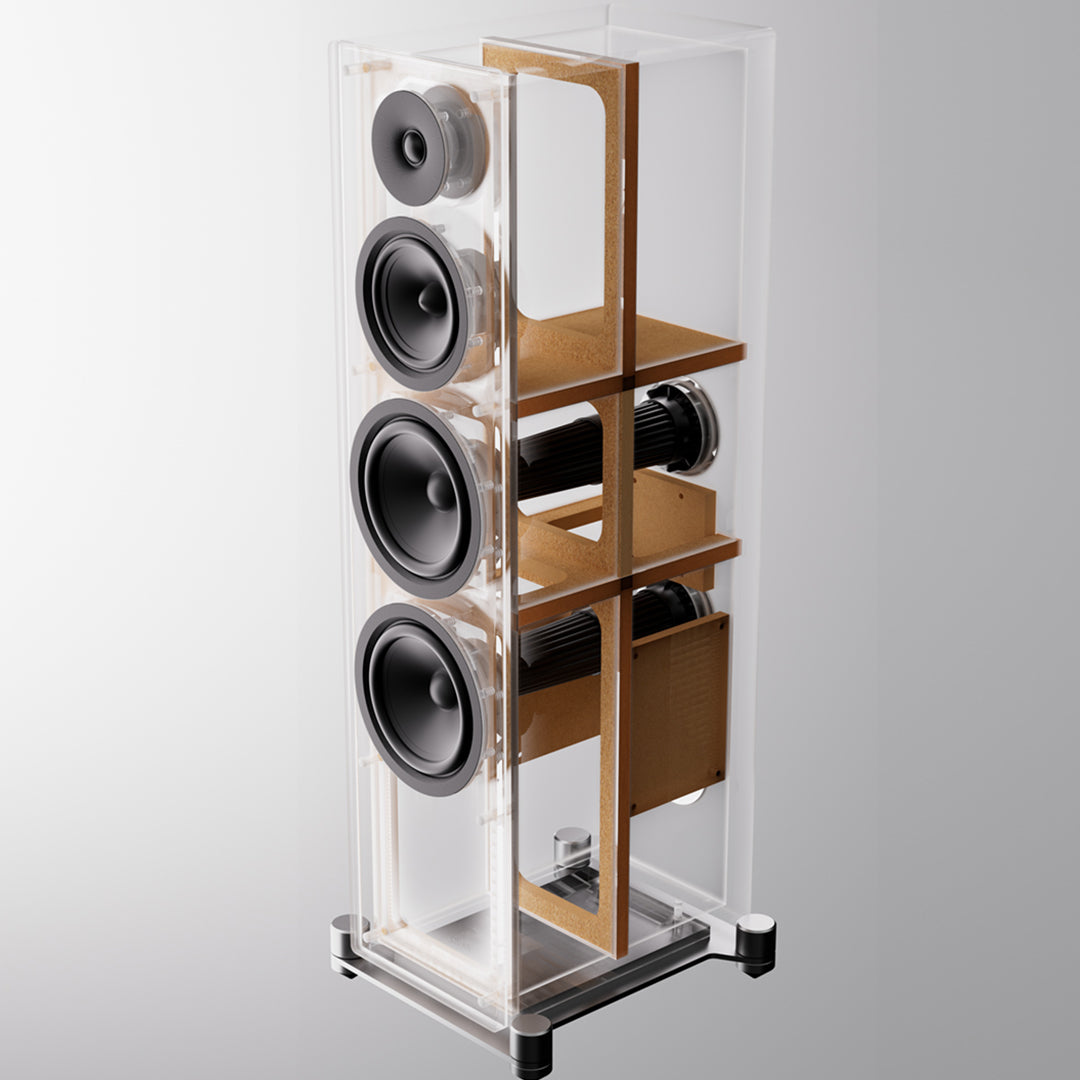
The Elegan 2 is a three way, rear ported floorstander designed for larger rooms and higher playback levels.

  • Tweeter: 25mm fabric dome with waveguide
  • Midrange: 125mm woven Kevlar cone in an isolated chamber
  • Woofers: Two 165mm woven Kevlar cones
  • Sensitivity: 90dB at 2.83V/1m
  • Nominal Impedance: 8 ohms
  • Minimum Impedance: 3.0 ohms
  • Frequency Response: 44Hz to 24kHz, ±3dB
  • Bass Extension: 32Hz, minus 6dB
  • Crossover Frequencies: 480Hz and 2.7kHz
  • Recommended Amplifier Power: 30 to 200 watts
  • Maximum Output: 106 dB
  • Dimensions: 930 x 310 x 373mm (36.6 x 12.2 x 14.7 inches)
  • Weight: 27.8 kg (61.3 lbs) each 

The 90dB sensitivity looks friendly, but the 3 ohm minimum impedance means amplifier quality still matters. The Elegan 2 does not require 300 watts, but it will benefit from an amplifier with a healthy power supply and stable current delivery.

The QUAD 3 should work in smaller and medium sized rooms, while the 303 power amplifier, Platina Integrated, Audiolab 7000A class of amplifier, or comparable 70 to 150 watt designs would provide more breathing room.

Crossover & Cabinet Design

Both speakers use dedicated Linkwitz Riley crossover networks developed through computer modeling and extensive listening tests.

The Elegan 2 uses fourth order slopes between the midrange and tweeter, with second order slopes between the bass drivers and midrange. Polypropylene capacitors are used throughout, supported by air core inductors in the midrange and treble sections and laminated core inductors for bass. 

The cabinets use high density panels, internal bracing and damping material, along with QUAD’s rear Airflow port system. The Elegan 2 gives its dedicated midrange driver a sealed internal chamber, preventing pressure from the two woofers from interfering with the vocal range. 

What Makes the Elegan Series Different?

quad-elegan-2-loudspeakers-lifestyle-front
QUAD Elegan 2

The obvious answer is not merely Kevlar. Wharfedale and other IAG brands also use it.

The Elegan Series is different because it creates a sensible bridge between QUAD’s electronics and its much more expensive loudspeakers. Someone buying a QUAD 3 or 33 and 303 system no longer has to look elsewhere for a price appropriate loudspeaker or jump directly to the Revela range.

Advertisement
Advertisement. Scroll to continue reading.

The other differentiator is intent. QUAD is promising tonal balance, vocal body, natural dynamics and long term listening comfort rather than an exaggerated top end designed to impress during a 12 minute dealer demonstration. That is the manufacturer’s claim, and we will reserve judgment until a review pair arrives. 

Competitors

At $995 per pair, the Elegan 1 enters an extremely busy category.

The KEF Q3 Meta costs $899.99 and uses KEF’s coaxial Uni Q driver with Metamaterial Absorption Technology, while the Wharfedale EVO 5.1 costs $999 and substitutes an AMT tweeter for QUAD’s fabric dome.

Advertisement

The Elegan 1 counters with a larger Kevlar midbass driver, real walnut veneer, simpler amplifier loading than some competitors and a design intended specifically around two channel listening.

The $1,995 Elegan 2 faces the Q Acoustics 5040 at $1,999, Wharfedale EVO 5.3 at $1,899. Those are all established competitors with very different approaches to bass, dispersion and treble reproduction. 

Who Are They For?

The Elegan 1 is aimed at listeners with small to medium rooms who want a compact speaker for stands or substantial furniture and already own a capable 40 to 100 watt amplifier.

The Elegan 2 is the better choice for medium to larger rooms, listeners who do not want a subwoofer for most music, and amplifiers capable of remaining comfortable when the impedance drops to 3 ohms.

Advertisement
quad-elegan-1-loudspeakers-lifestyle-black-angle
QUAD Elegan 1

The Bottom Line

QUAD did not need another expensive loudspeaker.

It needed a pair of attainable models that could sit naturally beside the QUAD 3, 33 and 303 without feeling like the economy cabin at the back of the range.

The Elegan 1 and Elegan 2 appear to deliver that on paper. Peter Comeau has combined familiar Kevlar drivers, fabric dome tweeters, properly engineered cabinets and sensible crossover networks at prices that put QUAD directly against KEF, Wharfedale, Q Acoustics and even Ruark.

The Elegan 1 may prove to be the more important model because compact two way speakers around $1,000 remain the gateway into better audio for a lot of listeners. The Elegan 2 has the harder assignment, but its 90dB sensitivity, dedicated midrange and 32Hz claimed bass extension make it intriguing.

Advertisement

I love QUAD, but I also know what these prices buy from the competition.

Advertisement. Scroll to continue reading.

Price & Availability

The QUAD Elegan Series is available now in matte black or real walnut veneer.

  • QUAD Elegan 1: $995 / £749 / €999 / AU$1,699 per pair
  • QUAD Elegan 2: $1,995 / £1,499 / €1,899 / AU$3,499 per pair

Source link

Advertisement
Continue Reading

Tech

10 Platforms for AI Visibility and Link Building in 2026

Published

on

TL;DR

As AI search engines cite the same media outlets that drive SEO, paid media placement platforms have become dual-purpose tools for both Google rankings and AI visibility. This roundup evaluates 10 platforms by their unique capabilities, from MCP-powered automation and AI Visibility Seeding to group buying and price-comparison aggregation.

Millions now choose products through ChatGPT, Gemini, and Perplexity, and Google AI Overviews appear in nearly half of all search queries. According to Muck Rack, 84% of AI citations come from media outlets, the same outlets where SEO specialists have been placing links for years.

That means media distribution remains one of the key levers for influencing both AI and Google results. Manual outreach to media outlets doesn’t scale well: pitching, checking metrics, and negotiations are too time-consuming.

Best Platforms for AI visibility and Link Building

We’ve evaluated multiple platforms that let companies boost their AI visibility and link building performance with paid placements in media outlets. Instead of focusing on standard features like price on publishing conditions, we highlight their unique features that allow companies to achieve their goals in the way aligned with their overall strategy and approach.

Advertisement

The 💜 of EU tech

The latest rumblings from the EU tech scene, a story from our wise ol’ founder Boris, and some questionable AI art. It’s free, every week, in your inbox. Sign up now!

Here are the top 10 platforms that we handpicked.

Platform Best for
 
Advertisement

1. Medialister


PR and digital agencies that need a publication pipeline for a client portfolio, AI-driven management, and post-payment without cash flow gaps

 
Advertisement

2. PRNEWS


International agencies building customized media plans with multi-format placements

 
Advertisement

3. PRposting


Link builders who need a clean backlink profile through closed, exclusive outlets

 
Advertisement

4. INSERT.LINK


SEO specialists buying link insertions by the hundreds per day

 
Advertisement

5. PressWhizz


SEO teams that need a turnkey managed service or a year-long link replacement guarantee

 
Advertisement

6. Linksman


Marketers of SaaS and tech products

 
Advertisement

7. Respona


In-house teams building direct Tier-1 relationships with newsrooms, bypassing marketplaces

 
Advertisement

8. Ereferer


Teams with a fixed budget for multilingual link building

 
Advertisement

9. NO-BS Marketplace


Those who want to choose between a ready-made outlet selection by the team or a self-service catalog

 
Advertisement

10. LinkBuilder


Buyers comparing vendor prices at the final stage of media planning

1. Medialister

Medialister was built for running large-scale PR and AI visibility campaigns, with a catalog of 106,000+ vetted outlets worldwide. Scalability is built into the platform itself: add team members and assign roles to run dozens of campaigns with multiple placements in parallel.

Advertisement

Notably, the platform helps match outlets to a specific business goal. You can connect your Google Search Console to get recommendations, set your goal directly in the catalog, or use Medialister’s MCP. Through MCP, AI assistants find outlets, draft tailored guest posts and press releases, submit them, and track indexing in Google.

To avoid a cash flow gap, agencies can use the post-payment option: they’ll receive a consolidated invoice at the end of the month instead of paying per placement.

2. PRNEWS

PRNEWS is an international platform for paid media placements with one of the largest catalogs: 107,000+ media outlets across 175 countries, from global-scale publications to hyperlocal media outlets targeting specific cities. Forbes alone is represented here with 20 different country editions. You can use a dozen filters to navigate that volume. If you don’t want to filter anything yourself, you can use goal-based presets: for example, for AI visibility or fintech PR. Advanced filters immediately show which outlets accept sensitive topics like gambling and crypto or allow tracking pixels.

For teams that need more, PRNEWS offers a PRO account. Its Bulk Site Checker lets you upload domains a competitor has published on and secure placements there. The entire catalog with prices and metrics can be exported to CSV so that agencies can calculate budgets for several clients at once.

Advertisement

3. PRposting

PRposting is a platform with a catalog of 23,000+ outlets. Its distinguishing feature is that around 20% of its media are exclusive: these sites are added to the database manually after direct negotiations with owners, bypassing intermediaries and exchanges.

It provides a free audience breakdown for each outlet across its 5 key source countries. If a publication writes in Spanish but most of its traffic comes from the US rather than Latin America, that becomes immediately clear. If a placement doesn’t go live on time, you receive a full refund within 7 days.

4. INSERT.LINK

INSERT.LINK is a highly specialized service for fast link integration into already-published articles. There are two ways to find a spot for your link: choose an outlet by topic, as in a regular marketplace, or enter a keyword to find a specific, already-published page on that topic among 50 million indexed pages. The catalog includes 30,734 sites across 152 countries and 15+ niches, with formats spanning link insertions, guest posts, listicles, press releases, and PR publications.

Agencies get MCP and API access. You can connect this platform to your internal tools to run searches and place orders programmatically. There’s also a separate list of outlets with guaranteed publication within 3 days, for time-sensitive campaigns.

Advertisement

5. PressWhizz

PressWhizz is a marketplace for guest posts and link insertions with a catalog of 41,000+ sites across 90 countries. The platform has a proprietary AI Visibility Seeding™ method: the team studies hundreds of real user prompts on a given topic and places the brand in sources already trusted by ChatGPT, Perplexity, and Google AI Overviews. In addition, they offer traditional link building services.

If necessary, you could buy a managed service, so that the platform’s team will handle outlet selection and negotiations with editorial teams.

6. Linksman

Linksman is a marketplace for guest posts, niche edits, and link building with a catalog of 9,000+ sites across 25+ niches. After signup, you can see DR, traffic, and price for each media outlet. You can also choose a ready-made package that includes several guest posts at a fixed price, split by DR tier. The higher the authority, the higher the price.

It’s worth mentioning the platform’s free SEO tools. You can check whether a purchased link is still live and providing value.

Advertisement

7. Respona

Respona isn’t a marketplace with a ready-made catalog of outlets. It’s a SaaS tool for self-service outreach. This means you still have to negotiate with each newsroom or journalist yourself, but the service automates everything else, from finding publications and authors to personalizing pitches with AI-generated snippets from the recipient’s content.

This platform is used for link building, digital PR, affiliate partner sourcing, and blogger outreach, offering a different set of outlets and templates for each use case. Unlike others on this list, the service runs on a subscription, with pricing based on campaign volume and team size.

8. Ereferer

Ereferer is a catalog of 45,000 sites across five languages. The service’s standout feature is the ability to save several media outlets into a single project, say, three blogs and one directory site, and have the platform automatically distribute their publication over time so they don’t go live all at once.

Group buying is another distinct feature. The cost of a single placement is split between two clients, and the article itself carries two separate links, one for each.

Advertisement

9. NO-BS Marketplace

NO-BS Marketplace is a catalog of sites for guest posts and link insertions with 110,000+ publishers. Its database can be flexibly filtered by niche, domain authority, traffic, and price. The platform supports a wide range of goals, from classic link building to digital PR and promotion in AI-generated answers, helping brands land in the sources that generative AI cites.

If you already know what you’re looking for, you can select outlets from the catalog yourself. For agencies and larger projects, there’s a NO-BS Pro plan, which adds a dedicated account manager, volume discounts, and white-label reports.

10. LinkBuilder

LinkBuilder is a price-comparison aggregator for guest posts and link insertions, comparing offers from 50 vendors across 300,000 sites in a single interface. Domains can be uploaded in bulk via CSV for comparison. The service is useful once you’ve already chosen an outlet but want to find the best possible price.

They also have a Check Link Price extension for Chrome that overlays placement pricing for a specific domain right on top of Google, Ahrefs, Semrush, Moz, Majestic, and Serpstat results. You can check prices without ever leaving the tools you’re currently using.

Advertisement

The choice of platform depends on your goal

None of these platforms will replace a proper strategy that starts with the goal. For Google rankings, the number and authority of links matter most. For AI visibility, it’s the outlet’s reputation and consistent mentions in expert content that count.

First, set the goal, then choose the platform. Their value lies in speed because they save time you could waste on manually outreach and negotiations.

Source link

Advertisement
Continue Reading

Trending

Copyright © 2025