Connect with us

Tech

Target appoints its first chief AI officer as retailers scale up AI spending

Published

on

Target has named Lowe’s executive Chandhu Nair as its first chief AI officer, starting August 24. IBM research puts the share of organisations with a chief AI officer at 76% this year, up from 26% in 2025.

Target has appointed its first chief AI officer. Chandhu Nair joins from Lowe’s on August 24 as senior vice president and chief AI officer. The retailer also named Purvi Shah senior vice president of user experience.

Nair was senior vice president of stores, data, AI and innovation at Lowe’s, and has previously worked at Staples and Gap. He said his focus at Target is a “more coordinated approach” to the technology, covering inventory management and faster decision-making.

The most meaningful AI stories won’t be about what happens in a lab,” Nair said in a statement. “They’ll be about what happens on the front line, how we make shopping easier for a guest, give a team member a better tool, make a business decision with more confidence or bring a new idea to market faster.

Advertisement

Target is not early to this. IBM’s Institute for Business Value found that 76% of organisations it surveyed had a chief AI officer in 2026, up from 26% a year earlier, and that those with one reported 5% higher returns on their AI spending. The job is now close to standard, and one of the job titles AI created.

The hire lands while Target is trying to win back shoppers and investors. It has been putting money into generative AI, including a tool called Target Trend Brain that forecasts the styles, colours and materials customers will search for. Last holiday season it launched a conversational feature to help shoppers pick gifts.

Its rivals have moved on similar lines. Walmart has been rolling out AI tools and agents across its stores and supply chains, Gap struck a partnership with Google’s Gemini this year, and Best Buy has arrangements with both OpenAI and Google.

The pressure has reached the top job. Former Walmart chief executive Douglas McMillon told CNBC in December that he handed over to someone “faster” who could use AI to accelerate the business, and John Furner took the role in February.

Advertisement

About a year ago, I really started feeling like this next run, you could see what agentic commerce was going to look like, the vision for AI shopping, and I started thinking about everything that needs to happen over the next few years, and it really caused me to think that now was the right time,” McMillon said. Stripe’s John Collison has made a similar argument, that agentic commerce will transform shopping.

That shift is further along elsewhere. Alibaba, Meituan and JD.com are already deploying shopping agents at scale in China, replacing the search bar rather than decorating it.

Source link

Advertisement
Continue Reading
Click to comment

You must be logged in to post a comment Login

Leave a Reply

Tech

SpaceXAI launches Grok Bot as the agent race moves to office work

Published

on

SpaceXAI has launched Grok Bot in beta, AI agents that sign into apps and websites, retain context between tasks and coordinate with each other. Access is limited at first to SuperGrok Heavy, Cursor Ultra and Cursor Teams Premium subscribers, with an enterprise waitlist.

SpaceXAI has released Grok Bot, software that hands work to groups of AI agents running on their own machines. The agents sign into apps and websites, keep context between tasks, and pass work back only when they need a human decision. It went into beta on Tuesday.

Access is restricted at first to SuperGrok Heavy, Cursor Ultra and Cursor Teams Premium subscribers, with a waitlist for enterprise customers. It runs on macOS, Windows, Linux and iOS, with Android to follow.

The selling point is that the agents work through interfaces rather than APIs, signing in the way a person would, and that several can run at once and share what they know. SpaceXAI says it has been using them internally across engineering, growth and marketing, citing overnight sales research, expense receipts pulled out of email, and bug fixes.

Advertisement

TNW reported in July that Cursor was building a general-purpose office agent, codenamed Sand, aimed at Claude Cowork and ChatGPT Work. Grok Bot arrives in that same territory, as SpaceXAI and Cursor merge into a single company.

SpaceX agreed a $60bn all-stock deal for Cursor’s parent Anysphere in June, days after its own listing, in what was reported as the largest startup acquisition on record. Cursor’s coding tools already run inside much of the Fortune 500.

The product is Musk’s answer to having fallen behind in agents. SpaceXAI shipped its first coding agent in May, then followed with Grok 4.5, built with Cursor, in July.

Rivals are circling the same idea. OpenAI’s Sam Altman discussed agents coordinating with one another when he met lawmakers in Washington last month.

Advertisement

Handing sign-in credentials to autonomous software raises an obvious question for this company in particular. Cursor’s Grok Build tool was found to be uploading entire Git repositories, committed secrets included.

The commercial pressure now sits with SpaceX. Musk told investors on last week’s earnings call that AI work was progressing and that Grok 4.6 could ship within days. Grok’s slow adoption in Washington has already weighed on the IPO story.

Source link

Advertisement
Continue Reading

Tech

New Pass-ta-key attack reveals all the things we didn’t know about passkeys

Published

on

Last week, a researcher outlined what he said was a “novel attack surface” in passkeys, the new authentication paradigm that offers a more secure alternative to password-based methods. In fact, the attacks demonstrated in the post are neither novel nor unique to passkeys. This distinction is important because the research has generated confusion among end users and security professionals as they assess whether this new mechanism is truly safe to use.

The attack is called Pass-ta-key—a blending of the word passkey with the phrase “pass the key” and a nod to a plate of pasta. Arie Olshtein, a researcher at security firm Palo Alto Networks, described in a post last week how Pass-ta-key could obtain all passkeys stored in the Google Password Manager app (GPM) for Windows when it’s running on a machine infected with malware.

This came as a surprise to many people because they believed passkeys are stored exclusively in the trusted platform manager (TPM), the locked-down enclave in a hardened silicon chip that’s reserved for storing cryptographic keys and other highly sensitive information on Windows machines. If passkeys are stored in the TPM, then how was Pass-ta-key able to extract the entire set of passkeys stored by the app, they wanted to know.

Local passkey storage is OK, with one exception

The answer is that, contrary to common belief, the FIDO 2 specifications—managed by the industry group FIDO Alliance—don’t mandate that passkeys be kept in TPMs, or any other sort of dedicated piece of hardware (they go by different names, depending on the platform, including secure enclaves, trusted execution environments, and StrongBoxes). In fact, most platforms and third-party software for managing passkeys do not store passkeys in such dedicated hardware. Virtually the lone holdout is Microsoft, which gives users the option to store passkeys in the Windows TPM. The company mainly recommends this choice to enterprises, not consumers.

Advertisement

Source link

Continue Reading

Tech

Apple Executive Who Launched Apple Pay Is Retiring After 25 Years

Published

on

Jennifer Bailey, head of Apple Pay and Wallet since the service launched in 2014, is retiring in October after more than 25 years at Apple. Her exit is one of several senior departures ahead of Tim Cook handing the chief executive job to John Ternus on September 1.

Jennifer Bailey, who has run Apple Pay since the service launched in 2014, is retiring in October after more than 25 years at Apple. Services chief Eddy Cue announced her departure in a staff memo seen by Bloomberg News. A successor will be named before she goes.

Under Jennifer’s leadership, Apple Pay has changed the way hundreds of millions of our users pay,” Cue wrote. Bailey will stay on in an advisory role through the handover. Apple declined to comment.

The division she leaves behind is one of Apple’s most profitable. Apple Pay brings in more than $7.5bn a year on analyst estimates compiled by Bloomberg, and functions as a reason for customers to stay on iPhone. Bailey also built Wallet, which began as a place to store card details and now holds keys for homes, cars and hotels, along with identification.

Advertisement

Apple Card and the company’s recently announced device upgrade subscription both grew out of the same division. Before Apple Pay, Bailey ran Apple’s online store, having joined in the early 2000s from a string of internet companies.

People familiar with the move describe her exit as a significant loss, and as a sign of what is coming. Apple has a demographic problem. A cohort of executives who grew wealthy over decades at the company are reaching retirement age together, and no longer need to work.

General counsel Kate Adams is retiring this year, and environment chief Lisa Jackson left at the start of 2026. Former finance chief Luca Maestri and marketing veteran Phil Schiller have stayed on in smaller roles but are probably near the end. Cue, retail boss Deirdre O’Brien and marketing head Greg Joswiak have each been at Apple for around four decades.

The largest change lands on September 1, when Tim Cook hands the chief executive job to John Ternus and becomes executive chairman. Ternus, 51, who built Apple’s hardware for more than two decades, is expected to make further personnel changes and has already brought a retired hardware leader onto his team.

Advertisement

The drain is not limited to the executive floor. Apple’s design studio has lost nearly every Ive-era designer, a gap Ternus has said he intends to close.

Josh Rosenstock, a senior director of corporate communications, is also leaving, in what Bloomberg reports is an unrelated move.

Source link

Advertisement
Continue Reading

Tech

Simulating Lunar Regolith with COMSOL for Mission Safety and Space Infrastructure

Published

on

Current space exploration aims to establish permanent structures on the Moon, Mars, and eventually other planetary bodies. Successful lunar missions depend on understanding lunar regolith, the granular material covering the Moon’s surface, whose behavior is governed by low gravity, vacuum conditions, particle irregularity, electrostatic effects, and extreme thermal environments. This webinar will focus on two connected modeling problems related to lunar regolith: plume–regolith interaction during lunar landings and induction heating of porous regolith for thermal processing and melting. Together, these problems show how simulation with the COMSOL Multiphysics® software can help engineering and research teams predict, control, and utilize granular lunar material.

The first part of the talk will address plume–regolith interaction. During spacecraft landings, underexpanded rocket exhaust plumes impinge on the surface, producing compressible flow structures, erosion, particle ejection, and possible surface damage. High-speed dust can reduce visibility and threaten astronauts, equipment, and nearby assets. These issues are especially important for Artemis and future missions involving repeated landings and larger spacecraft. Modeling the coupled gas-particle response provides insight into landing-site safety, erosion patterns, ejecta trajectories, and mitigation strategies.

The second part of the webinar will examine induction heating of porous regolith, where electromagnetic energy is converted into heat to raise temperature, drive phase change, and potentially melt lunar soil. The discussion will emphasize temperature-dependent porous media properties, latent heat treatment, melt fraction evolution, and the differences between constant-property and piecewise-property models. By connecting these studies, the webinar will demonstrate how COMSOL-based workflows can quantify flow fields, particle transport, thermal response, and phase-change behavior while supporting safer operations, regolith processing technologies, and the development of future space infrastructure.

Register now for this free webinar!

Advertisement

Source link

Continue Reading

Tech

Why AI-driven purchase intent so rarely becomes a completed sale

Published

on

Presented by Rezolve Ai


When an AI assistant recommends a product or brand, it generates something valuable: a purchase-ready consumer with high intent and low friction in their decision. That consumer has already compared options, asked follow-up questions, and arrived at a conclusion. They want to buy.

What they encounter next is a commerce infrastructure that was not designed for them.

The gap between recommendation and purchase

The typical enterprise commerce stack was built for a specific model: a consumer who arrives at a brand’s website through search or a direct link, navigates product pages, adds to cart, and completes checkout through a multi-step form flow. That model assumed the consumer would do the work of bridging their intent to the transaction. Most commerce systems still assume exactly that.

Advertisement

Agentic commerce breaks that assumption. When intent is generated outside the brand’s owned environment, the handoff to transaction becomes a structural problem. Context doesn’t transfer. Sessions don’t persist. The consumer who asked an AI assistant for a recommendation and received one now faces the same friction-laden checkout process as someone who arrived with no prior intent at all.

Cart abandonment rates have remained stubbornly high for years. Baymard Institute research puts the average at 70%. That figure predates the agentic commerce era. As more purchase intent is generated through AI interfaces, and as the gap between that intent and a brand’s transaction layer widens, the abandonment problem is likely to get structurally worse before it gets better.

What the current stack wasn’t built to handle

The commerce infrastructure most enterprises operate today was assembled over two decades of incremental investment. Each layer added a capability: a search tool, a recommendation engine, a personalization layer, and a checkout system. Each was built to solve a specific problem within a human-initiated shopping journey.

None of it was built to receive intent from an AI agent.

Advertisement

When an AI system generates a purchase recommendation, it needs to do more than surface a product page. It needs to verify real-time inventory. It needs to apply pricing logic and promotional rules. It needs to respect brand policy around which products can be recommended together, which channels apply which discounts, and what the correct fulfillment path looks like for a given consumer. And it needs to do all of that without breaking the conversational context that made the recommendation possible in the first place.

Current commerce stacks can’t do this reliably. The systems that hold the relevant data, inventory, pricing, order management, fulfillment, are not exposed in ways that AI agents can safely and accurately access. The result is a journey that starts with intelligence and ends with a broken experience: a link out to a product page, a generic checkout flow, and a consumer who arrived ready to buy and left without completing the transaction.

The conversion problem is an architecture problem

The industry has treated conversion optimization as a front-end problem for most of its history: better copy, cleaner checkout UX, fewer form fields, smarter retargeting. Those interventions were appropriate for the model they were built to serve.

The agentic commerce era introduces a different kind of conversion failure, one that front-end optimization cannot fix. When intent is generated externally, conversion depends on whether the back-end infrastructure can receive that intent, act on it accurately, and complete the transaction within the guardrails the brand has established. That is not a UX problem. It is an infrastructure problem.

Advertisement

Brands that are investing heavily in AI-powered discovery while leaving their execution layer unchanged are widening the gap between the promise AI makes on their behalf and the experience they can actually deliver. That gap has a cost, measured not just in lost transactions but in consumer trust that erodes each time the promise and the reality don’t match.

Rezolve Ai commissioned research across 1,500 US consumers in January 2025 that found consumers who encounter friction immediately after an AI recommendation are significantly less likely to complete a purchase than those who encounter friction at the top of a traditional funnel. The implication is direct: AI raises the expectation bar at the moment of intent. Brands whose infrastructure cannot clear that bar are paying a conversion penalty they may not even know they’re incurring.

What closing the gap requires

Closing the gap between AI-generated intent and completed transaction requires rethinking which layer of the commerce stack carries the most strategic weight in an agentic world. For most of the past decade, that weight sat with discovery and experience. The brands that invested most in search, personalization, and content won a disproportionate share.

In the agentic era, the weight shifts to execution. The brands that can reliably take AI-generated intent and turn it into a governed, accurate, brand-safe transaction will have a structural advantage over those whose infrastructure stalls at the handoff.

Advertisement

That is a different investment thesis than the industry has operated on. And most enterprise commerce roadmaps have not yet caught up to it.


Sponsored articles are content produced by a company that is either paying for the post or has a business relationship with VentureBeat, and they’re always clearly marked. For more information, contact sales@venturebeat.com.

Source link

Advertisement
Continue Reading

Tech

The best screens from each TV brand

Published

on

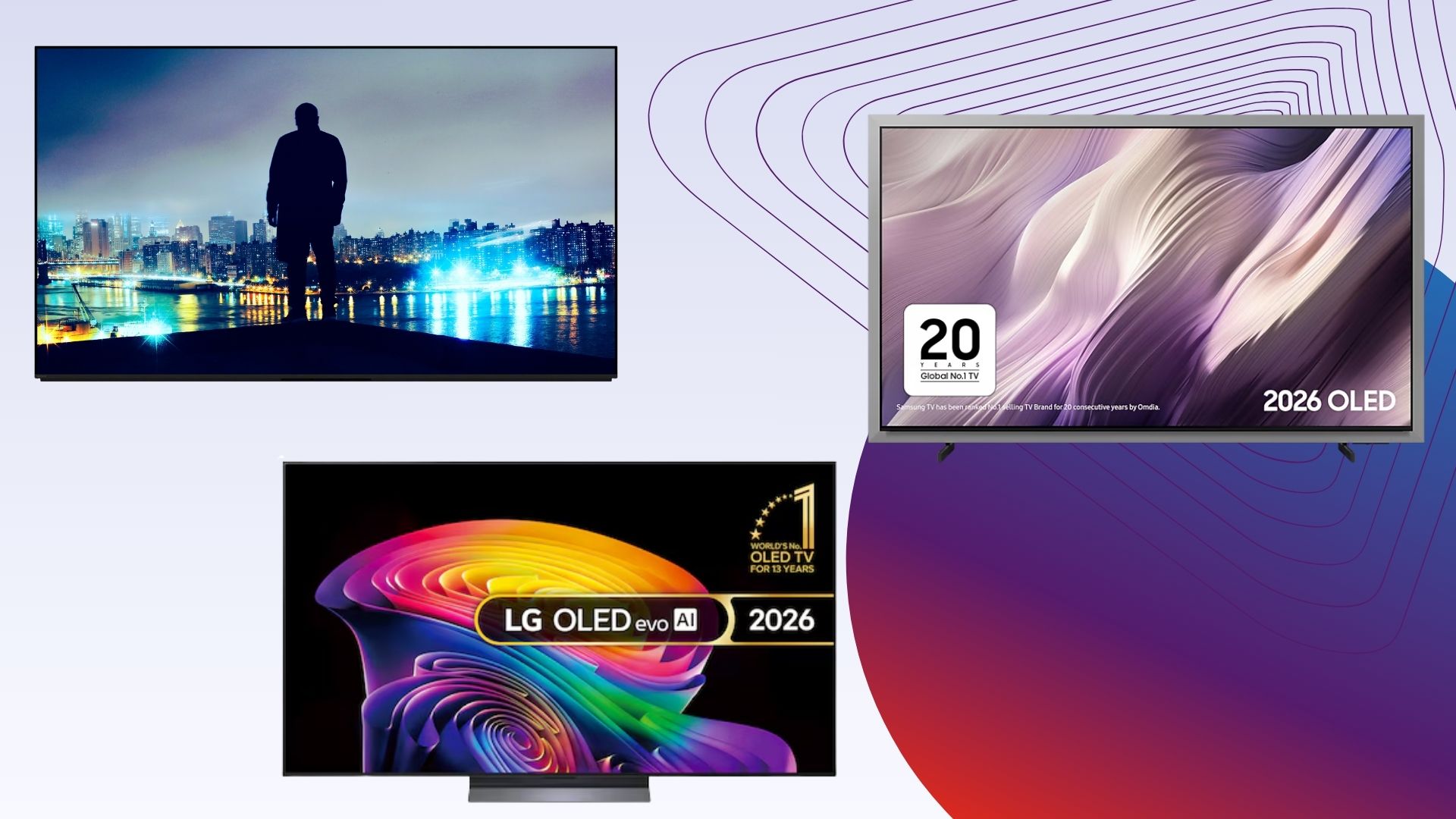
The Samsung S99H, or S95H as it’s also known in the US (the UK also has the S95H but with a different appearance, confusingly), is Samsung’s flagship OLED for 2026. As befitting its flagship status, it pairs vivid colour and picture quality with cinema-accurate reproduction that serious film fans will appreciate, all wrapped in a genuinely distinctive design.

Design-wise, the S99H makes no apologies for its appearance. The screen sits within a metallic frame, kept ultra-slim, with a wider backing panel extending past the edges that houses Samsung’s Object Tracking Sound (OTS+) 4.2.2-channel speaker array.

The effect is that sound comes from the correct part of the screen, delivering a properly precise soundstage. It’s a striking look, and it’s really built for wall mounting. The feet attach near the bottom corners of the screen, so you’ll need a very wide unit if you prefer it freestanding.

The S99H includes an advanced anti-glare filter. You can sit it opposite a window or beneath wall lights and reflections simply aren’t an issue. Connectivity is also generous, with four HDMI 2.1 inputs, two USB ports, Ethernet and an optical digital audio output. The S99H is also compatible with Samsung’s Wireless One Connect boxes, which add four further HDMI inputs, taking the total to eight, and let the TV sit cable-free in a room.

Advertisement

Tizen OS handles the smart side of things, offering pretty much every major streaming app alongside AI-driven search through Copilot and Perplexity. The interface isn’t the cleanest available, but the option to disable adverts helps considerably. There’s a dedicated gaming page, and Galaxy Watch gesture support is a nice touch for basic menu navigation.

At its core, the S99H features a QD OLED panel backed by Samsung’s OLED HDR Pro and OLED Brightness Booster features. The Booster pushes peak brightness into seriously high territory, so the set performs well in a bright living room, while HDR Pro handles upscaling and colour improvements. There’s also support for HDR10+ Advanced, Samsung’s answer to Dolby Vision 2, to deliver brighter images with better local tone mapping, alongside HDR10 and HLG.

Colour and brightness are both spectacular in Standard mode. Bright highlights erupt from inky blacks, and contrast is phenomenal. Switch to Filmmaker Mode and colour accuracy errors sit below the threshold of human visibility. It’s a subtle, immersive image that home cinema fans will genuinely appreciate.

Upscaling is close to masterful too, pulling HD and SD sources cleanly into 4K without smearing, with noise reduction handled before the upscaler does its work.

Advertisement

Gaming is a real highlight. The S99H supports 165Hz with AMD FreeSync Premium and NVIDIA G-Sync, and input lag in Game Mode measures 9.7ms. A dedicated gaming menu offers useful extras such as mini-map zoom and a raised brightness floor for dark areas.

Sound quality is impressive overall. The OTS+ system places effects accurately across the screen and beyond, with a wide dynamic range by TV standards. Very bright treble effects can occasionally sound a little brittle, and deep bass lines can produce some crackling artefacts at higher volumes.

The Samsung S99H delivers spectacular yet carefully judged pictures with standout connectivity options. It’s expensive, but for those seeking Samsung’s most accomplished OLED, this is the one to buy.

Advertisement

Source link

Continue Reading

Tech

Kreios Space’s Satellite Will Scoop Thin Air to Fight the Drag That Kills Low Orbits

Published

on

Kreios Space Kongsberg Nanoavionics Air Breathing VLEO Satellite
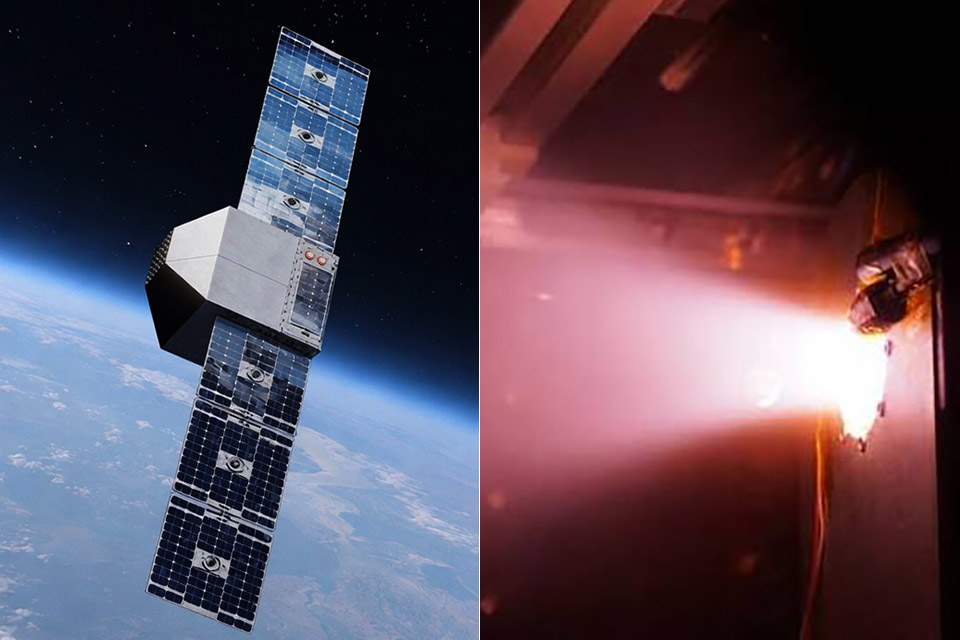
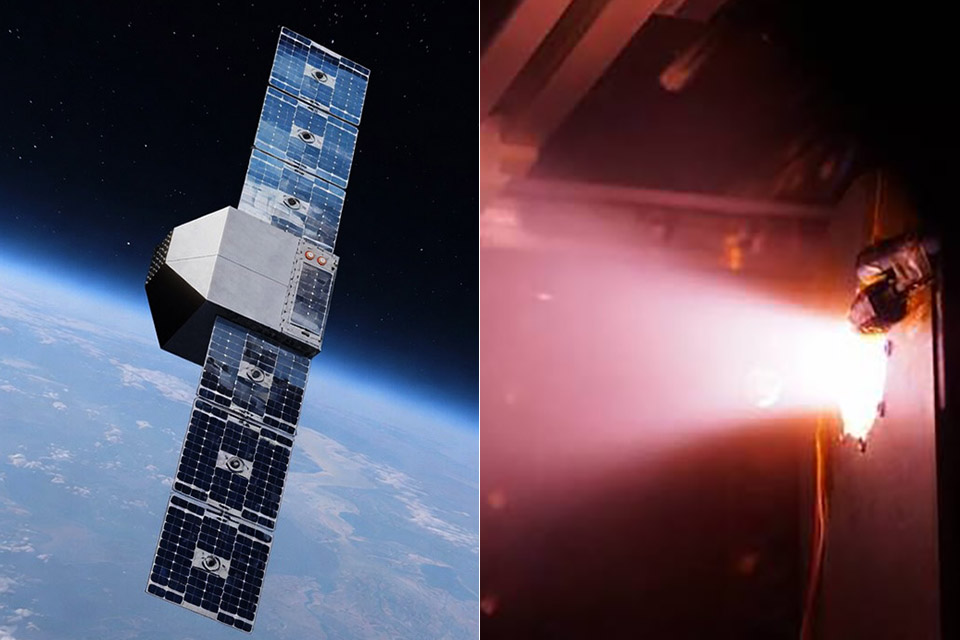
Spanish startup Kreios Space just named Kongsberg NanoAvionics as the builder of the platform that will carry its experimental thruster into space. The goal is straightforward and ambitious: prove that a satellite can collect residual atmospheric gases at extremely low altitudes and turn them into continuous thrust, staying aloft where conventional craft fall quickly.


Kreios Space Kongsberg Nanoavionics Air Breathing VLEO Satellite
Very low earth orbit, particularly the zone between 150 and 300 kilometers up, has certain obvious advantages. Being so close to the surface results in crisper photos, much stronger signals, and much less lag. The catch has always been drag, as the thin air at that altitude acts as a powerful brake. Most satellites in that zone require huge fuel tanks, which add weight and shorten the lifespan, or both. Short-term missions have always been the best we could hope for.


LEGO Icons Hubble Space Telescope 11382
  • EXPLORE THE HUBBLE SPACE TELESCOPE – Celebrate one of humanity’s greatest scientific feats while enjoying a relaxing building experience with the…
  • REPLICA SPACE MODEL – Recreate the legendary space-based telescope with posable solar arrays and antennas, an opening aperture door and a detailed…
  • AUTHENTIC DETAILS – Remove the exterior panels to reveal a detailed instrument bay, which features gyroscopes alongside primary and secondary…

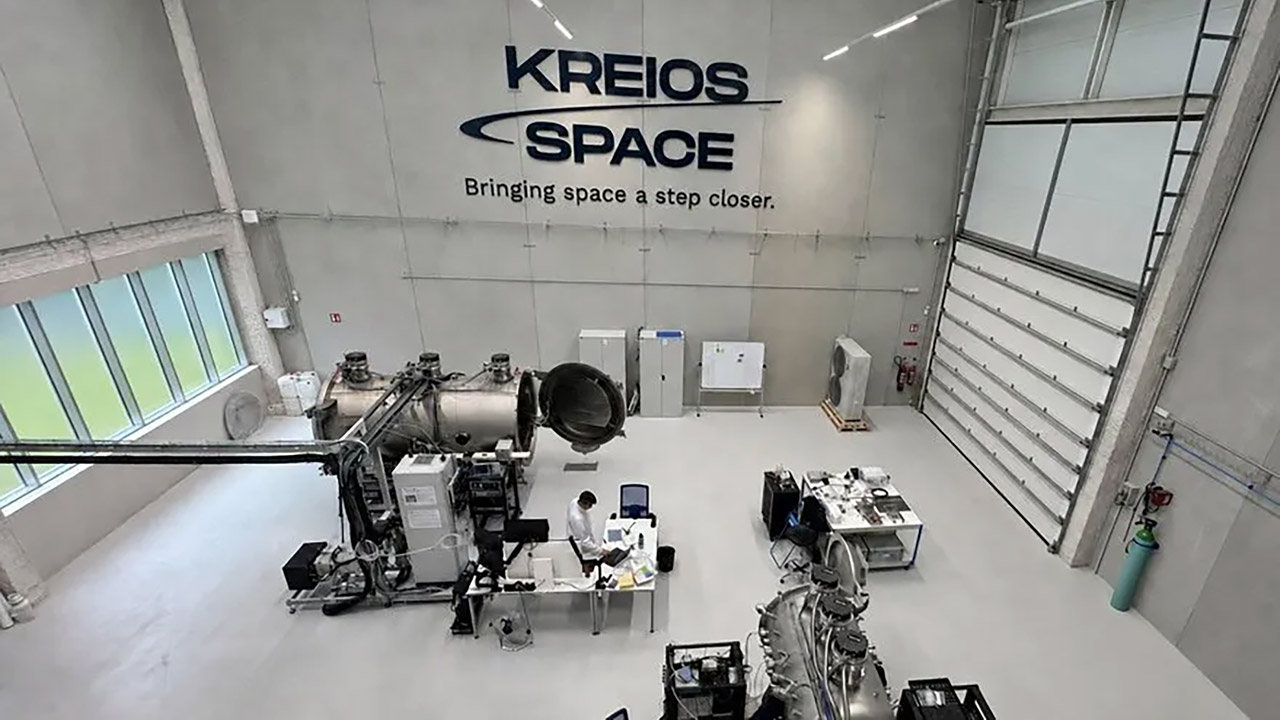
Kreios has developed an air-breathing electric propulsion system that challenges that equation. They’ve devised a system in which oxygen, nitrogen, and other particles are drawn in from the front of the spacecraft. These gases are then fed into a helicon plasma thruster, which converts them into plasma using radio-frequency power before expelling them all. The electricity comes from the sun. The key advantage is that there is no requirement for propellant tanks onboard. Lab versions of this thruster have already gone through several iterations, with the first becoming online in 2021. A second one was more advanced, contained an intake, and worked in a vacuum. A third went even further, testing with various gasses and power sources and achieving the best results yet.

Kreios Space Kongsberg Nanoavionics Air Breathing VLEO Satellite
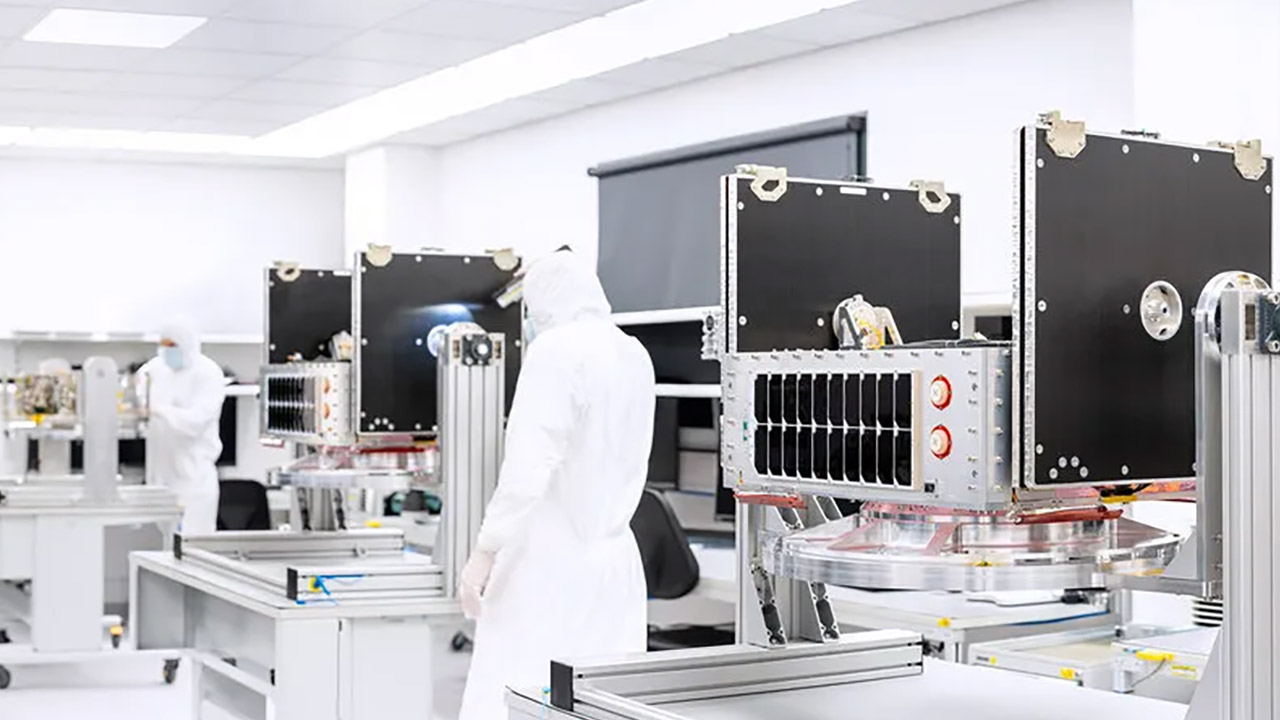
Kreios chose NanoAvionics’ tried-and-true MP42 microsatellite bus for its first orbital mission. Once the optical payload is installed, the entire spacecraft will weigh approximately 200 kg. NanoAvionics will modify the bus, integrate cameras that take photos in visible and near-infrared light with sub-meter resolution, test the entire system, and manage commissioning early in orbit. Once that’s completed, Kreios will take over day-to-day operations. The demonstration will begin higher up, about 300-350 kilometers, and gradually float downward while the thruster fires at various heights. The engineers will be collecting performance data, sampling the local atmosphere, and photographing the entire process.

Kreios Space Kongsberg Nanoavionics Air Breathing VLEO Satellite
The MP42, on the other hand, isn’t exactly meant for drag-free VLEO, so the demo will be finished in about six to ten months, which is just as well, because the actual aim here is simply getting this thruster up and operating so Kreios can refine their future platforms. Their long-term goal is to construct satellites that can operate for seven years or longer below 200 kilometers.
[Source]

Source link

Advertisement
Continue Reading

Tech

Bumble Changes the Feature That Made It Different From Other Dating Apps

Published

on

Launched in 2014, Bumble rose in popularity as a unique alternative among dating apps with a policy requiring women to message first in matches between men and women. With Tuesday’s update, Bumble will let either person in a match send the first message.

The app’s previous requirement that matches must respond within 24 hours, or the match would expire, has been extended to 72 hours. 

“While women making the first move was a radical idea, being women-first was never about prescribing just one way to connect. It was about designing an experience with women’s needs in mind to create better outcomes for everyone,” Bumble CEO Whitney Wolfe Herd said in a statement (PDF).

“Today, our community is asking for more flexibility, less pressure and more opportunities to create real, meaningful connections and that is what this new experience provides. This evolution isn’t a departure from our founding vision, but the realization of it.”

Advertisement

CNET reached out to Bumble for comment on how it plans to stand out from other dating apps, including Hinge, Tinder, Match.com and OkCupid. 

Why is Bumble changing its chat experience?

The company said the changes reflect “member-backed insights around how dating has grown over the past decade.” 

The company said a recent survey of users found that nearly two-thirds (66%) of women preferred that men send the first message, and that more than half of those surveyed said that increasing the reply window from 24 hours would improve their experience. 

The survey also found that expectations in dating are evolving, with 62% of respondents saying they are more confident when given flexibility in how and when to begin a conversation with a match. 

Advertisement

The company says these changes build on other updates “to improve every stage of the dating journey.” For instance, Bumble is one of many dating apps that incorporate AI-powered features such as AI-generated prompts and profile feedback.

Source link

Advertisement
Continue Reading

Tech

Zoom Screen-Sharing Bug Let People Fully Take Over Other Devices On A Call

Published

on

Cybersecurity researchers discovered a fairly insidious bug in Zoom that lets people quite literally take control of someone else’s device. This is done by exploiting a flaw in the screen-sharing function. The vulnerability has been found in the Zoom Workspace app for Windows, Mac, iOS Android and Linux.

Attacks do not require the victim to do anything and there’s no visible warning. When someone launches the annotation tool while sharing the screen, the vulnerability lets bad actors remotely execute malicious code for access.

However, it remains to be seen if this vulnerability has ever been used in the wild. The researchers that found it used AI prompts to develop the screen-sharing exploit in under 24 hours, illustrating how AI could assist in cyberattacks.

Advertisement

“This class of capability would previously have only been available to nation-state threat actors, but the model requiring elite teams, months of effort and weapons-grade budgets has collapsed,” the cybersecurity company wrote in a blog post. “Today, a single researcher was able to develop a nation-state-level exploit in less than a day.”

Zoom was notified about the bug and has deployed various fixes to mitigate the threat. It says “users can help keep themselves secure by applying the latest updates.” The vulnerability exists in all Zoom Workspace versions prior to the latest updates.

Something similar just happened to Apple computers, forcing the company to issue various macOS updates. The newest versions, including Tahoe 26.6.1, Sequoia 15.7.9 and Sonoma 14.8.9 are all safe.

Advertisement

Source link

Continue Reading

Tech

Turning A Toy Game Boy Into A Real Game Boy

Published

on

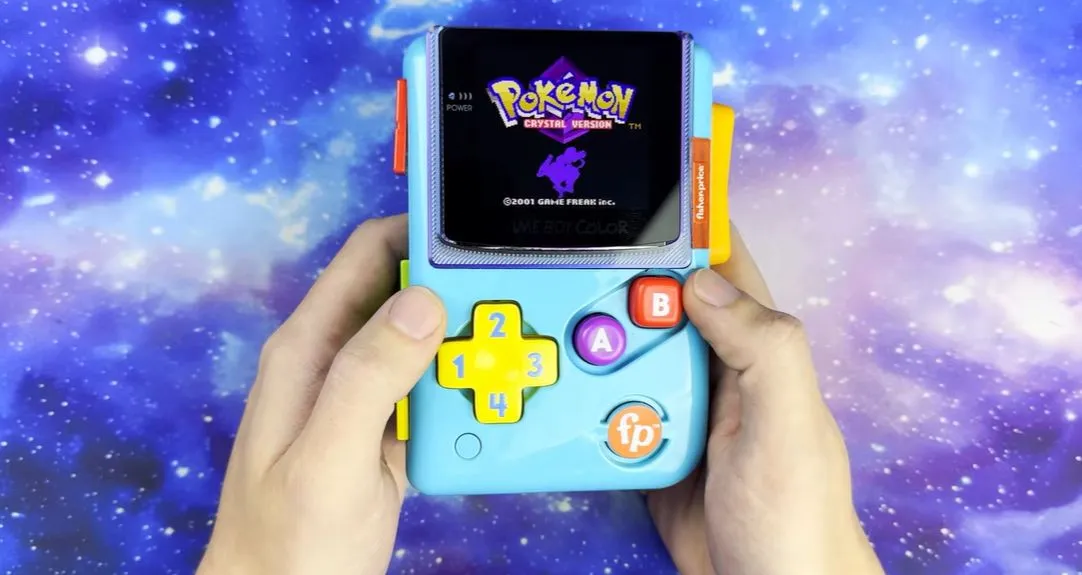
In the world of children’s toys there are many offerings which are meant to look like devices used by older kids or even adults, with the Fisher Price Laugh & Learn Lil’ Gamer toy bearing quite the resemblance to Nintendo’s iconic Game Boy. Although this factoid could be filed away as amusing trivia before passing said toy to a child for its requisite physical abuse by said child, a purported adult can still have a lot of fun with this toy by modding it into a real Game Boy, as [KOUZEX] recently did.

Part of the challenge here is to not just treat it as an unconventional replacement shell for a genuine Game Boy, but to retain as much of the child toy’s look and feel as possible. This includes things like buttons and even the weird sliding blocks on the side.

For the functional components a Game Boy Color with a busted screen was chosen as a donor, with the GBC mainboard fitting almost perfectly inside its new shell. Wires were then soldered to bridge Nintendo’s PCB with the toy’s PCB to make the original buttons and speaker work. After blowing a fuse on the GBC mainboard due to likely some power back feeding, the toy’s PCB had its non-essential parts stripped, but fortunately without further damage to the grafted in electronics.

Advertisement

Most of this mod is quite straightforward, just with some creativity required to add a Select and Start button as these were notably absent from the original. The new, rather large replacement OLED screen is a nice upgrade too and actually fits pretty well with the chunky look of the child’s toy. Even as mostly a joke mod, it seems surprisingly functional.

Advertisement

Source link

Continue Reading

Trending

Copyright © 2025