Tech
TCL QM8L TV Review: SQD Mini-LED For the Masses

The TCL QM8L is the latest offering from the TV brand most closely associated with mini-LED backlighting technology. Yes, every other big TV name now makes mini-LED sets, but TCL has been at it the longest, and it manages to make meaningful improvements to its display panels and processing with each new generation of models.
Last year’s TCL QM8K featured the company’s Halo Control System. This, combined with a 23-bit backlight controller and Dynamic Light Algorithm, upped the level of local dimming precision to the point where backlight blooming effects – a key picture quality drawback with LED-based TVs – were nearly non-existent. For the new QM8L, TCL has made further progress in the battle against blooming by adding a 26-bit backlight controller and up to 4,000 local dimming zones (on the 98-inch model), an increase over the QM8K.
The bigger story with the new QM8L series, however, is SQD Mini-LED. SQD stands for Super Quantum Dots, which is an improved version of the Quantum Dot formulation found in many mini-LED TVs, and one that provides extended color gamut coverage (up to 100% BT.2020, according to TCL). The QM8L also features an Advanced Color Purity algorithm and a new Ultra Color filter which uses 5 nanometer particles compared to the 60 nanometer particles in standard mini-LED TVs, and TCL says this combination provides “more accurate pixel-level color” along with more “consistent color saturation.”
The QM8L series isn’t the first TCL TV with Super Quantum Dots – the X11L series the company introduced at CES holds that distinction. The X11L series goes even further than the QM8L on the local dimming front, offering up to 20,000 dimming zones on the 98-inch model, and it also has a super-thin design. With prices starting at $7,000 (for the 75-inch version), the X11L series is about as pricey as TVs get in 2026. How does the more affordable midrange QM8L ($2,999.99 for the 75-inch model I tested) hold up, both against its flagship big brother and last year’s QM8K? Let’s find out.
What Is It?

The TCL QM8L is the step-down series in the company’s SQD-Mini-LED TV lineup for 2026. Aside from Super Quantum Dots and up to 4,000 backlight local dimming zones (2,584 on the 75-inch model I tested), the QM8L series features a high-contrast WHVA 2.0 Ultra Panel with a wide color viewing angle and an anti-reflective screen filter. A new TSR AI Pro processor provides AI-enhanced contrast, color, motion, and upscaling, and there’s Super Resolution 2.0 processing to enhance detail.
HDR support on the QM8L series includes the Dolby Vision, HDR10+, HDR10, and HLG formats, and Dolby Vision 2 Max will be added to that list in a software update planned for summer 2026. Filmmaker Mode and IMAX Enhanced mode picture presets are provided, and the set also has Intelligent picture and sound modes that make automatic adjustments based on content.
Gaming gets a welcome boost on the QM8L series with four HDMI 2.1 ports instead of the two provided on previous TCL TVs. These all support a 4K/144Hz refresh rate, along with 1080p/288Hz for PC gaming. FreeSync Premium Pro is also supported, and TCL’s Game Bar pop-up menu lets you make quick gaming-related onscreen adjustments while playing. TCL also says that the Xbox Game Pass app should soon be available via a software update in May to allow for cloud-based gaming on the QM8L.
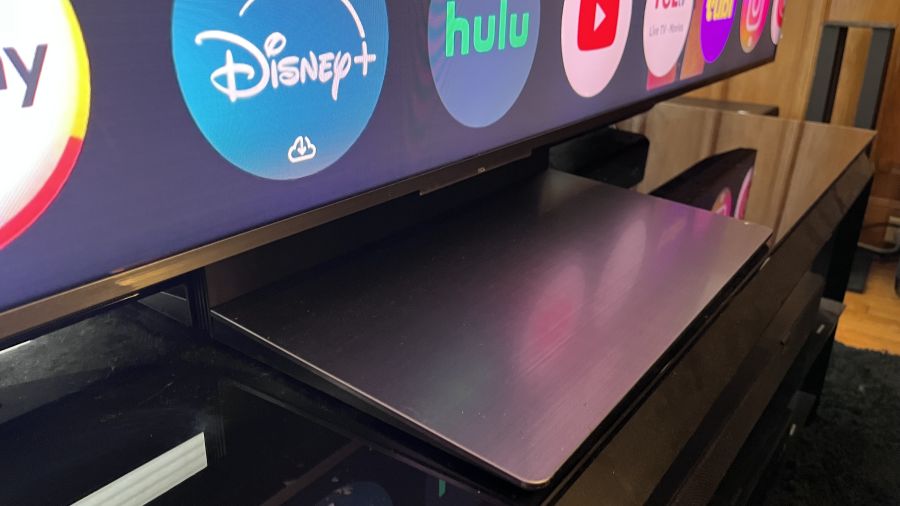
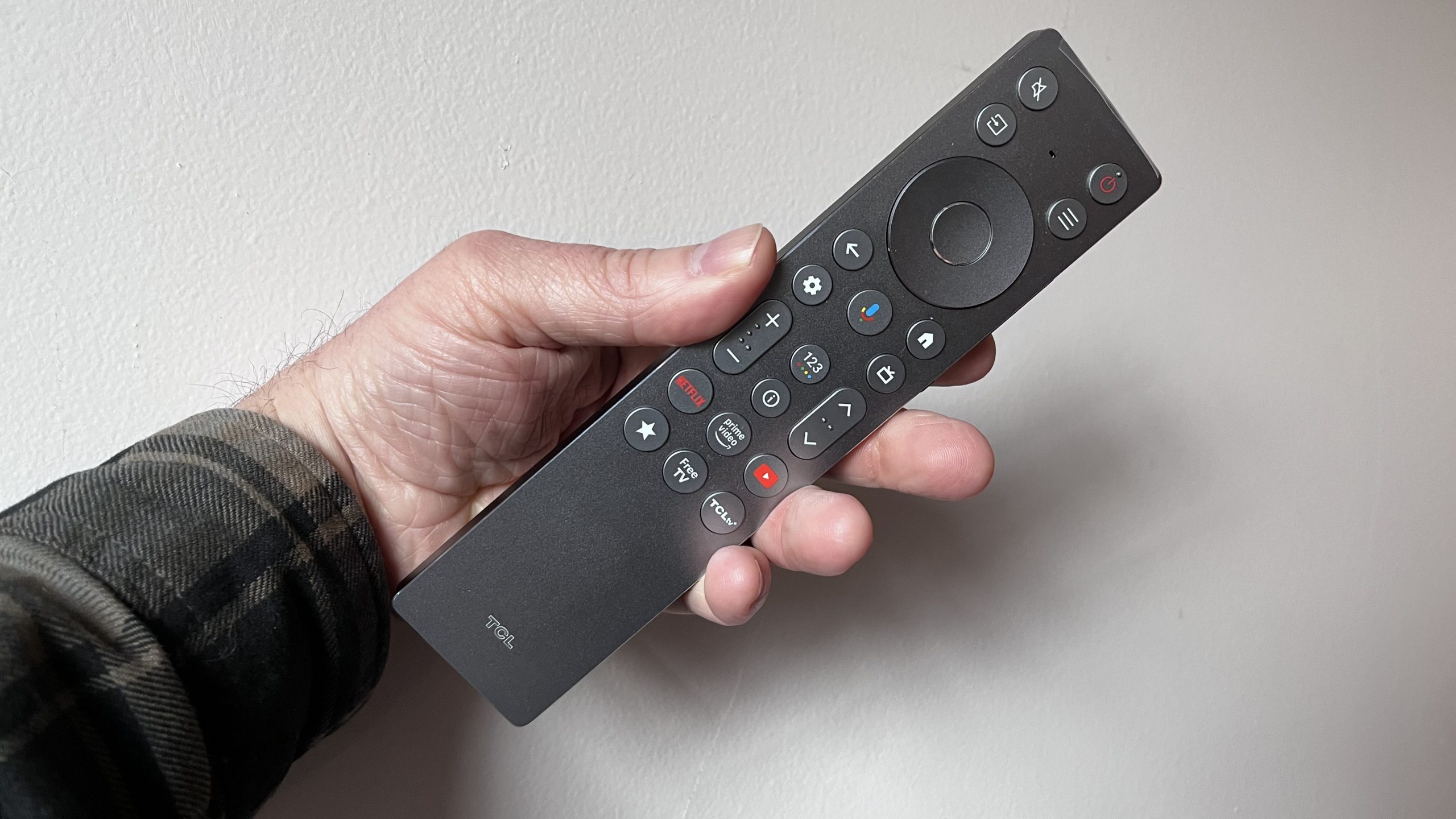
TCL’s ZeroBorder design for the QM8L series gives it an almost bezel-free “all-screen” look. Cabinet depth is two inches, but the TV’s tapered side panels give it a slimmer appearance when viewed from the sides. An adjustable height pedestal stand gives you the option to install the screen either flush with a tabletop or elevated to clear space for a soundbar, and there’s a new remote control design with a backlit keypad and built-in mic.
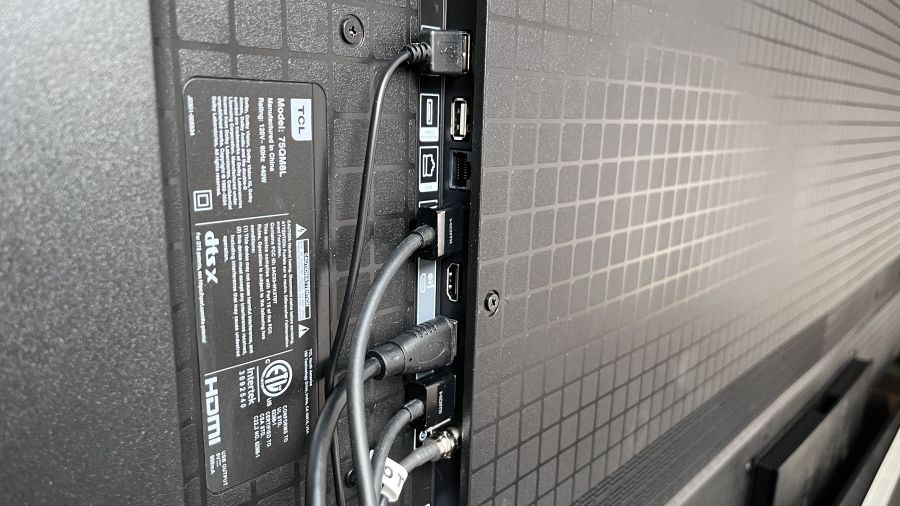
Along with the QM8L’s four HDMI 2.1 ports, there’s an optical digital audio output, USB 2.0 and 3.0 ports, an Ethernet jack and an RF input for an antenna. All connections are located on a side facing panel where they can be easily accessed in a wall-mount installation.
Talking to the TV
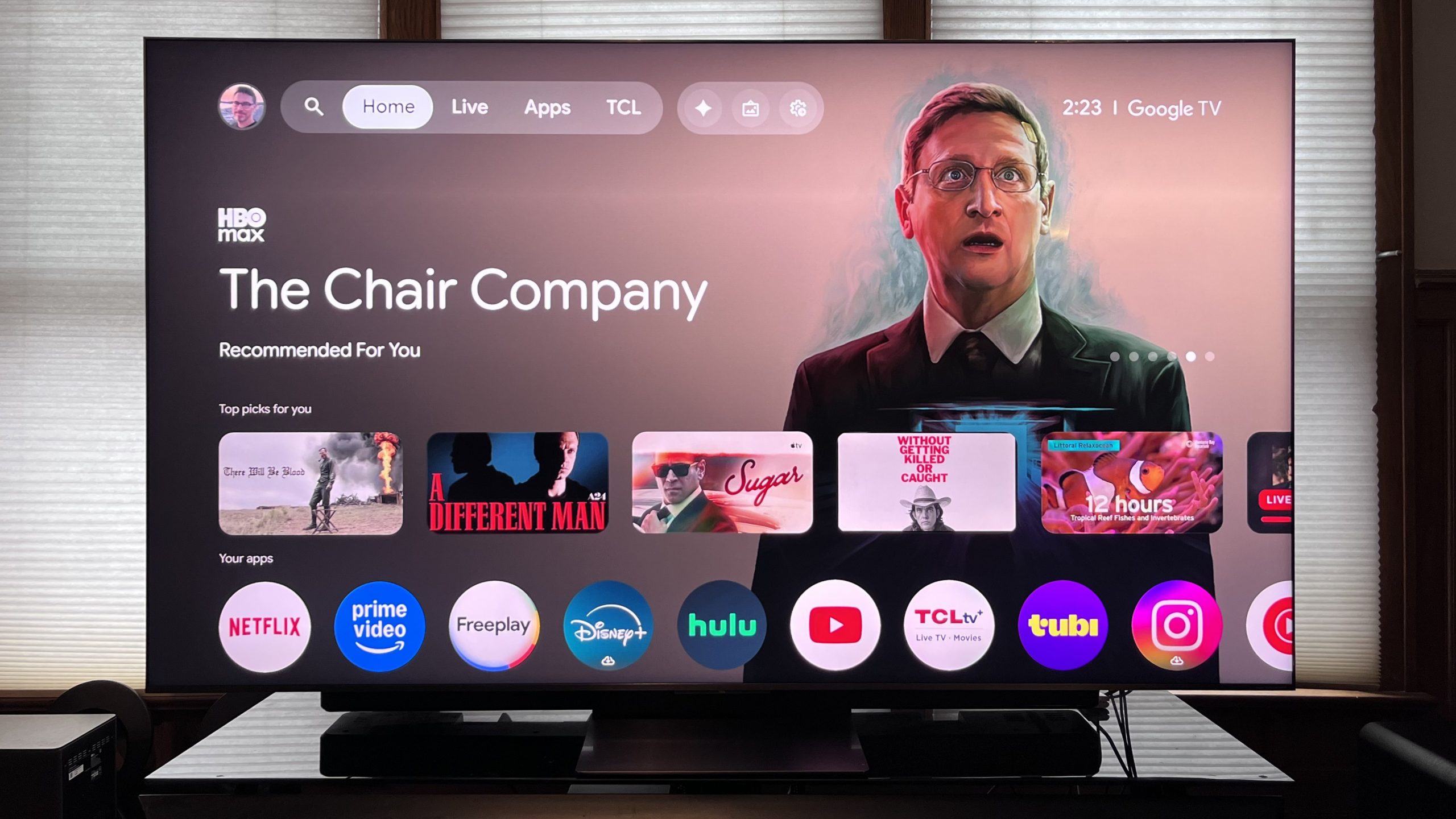
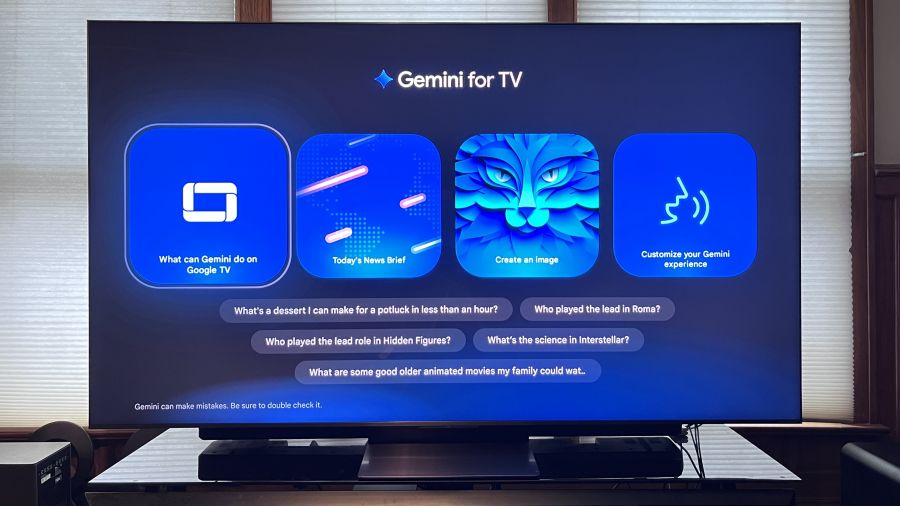
The QM8L uses the Google TV smart platform for content browsing and streaming, but this version is enhanced with Gemini interactive AI. That basically means the standard set of Google TV features including apps, Google TV Freeplay, content recommendations, and Live TV are all provided, but there is an additional tab on the home screen that takes you to the Gemini for TV portal. Here you can customize the “voice” of your AI assistant, as well as get a Today’s News brief, create AI-generated images from voice prompts to use as screensavers, and engage in interactive discussions with Gemini on a wide range of topics.
According to TCL, a future update to Gemini interactive AI on the QM8L will additionally let you adjust picture and sound settings via voice commands, as well as generate custom videos using the Veo on Google TV feature.

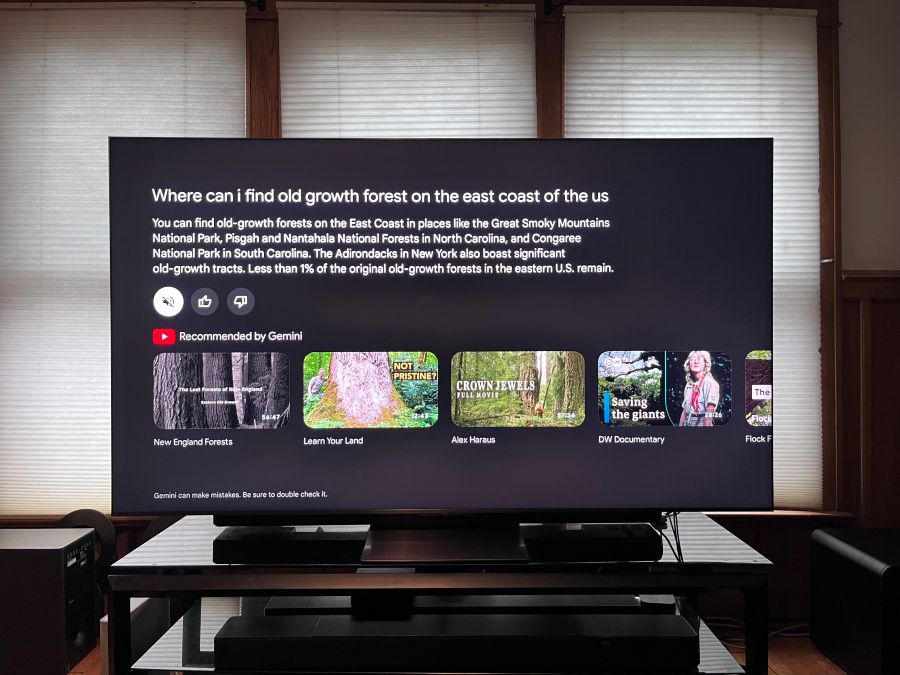
I rarely use voice commands to control my TV or any other device, and I generally don’t bother with AI. To test this feature on the QM8L, however, I asked “Where are old growth forests located on the east coast of the US?” and received a surprisingly detailed list in an AI summary. Gemini is conversational, so I asked further questions about specific locations on the list and even nearby places to stay overnight. This being a Google product, there were of course YouTube videos provided for each listing, and these let me get a better look at the forest sites.
The QM8L features an ATSC 3.0 tuner, and broadcast channels pulled in by a connected antenna can be browsed separately in grid-guide format by selecting the Antenna TV tab in the Live TV portal. This feature lets you easily access your local stations and browse their programming options separately from the national network broadcasts carried by Freeplay.
Audio Unlimited
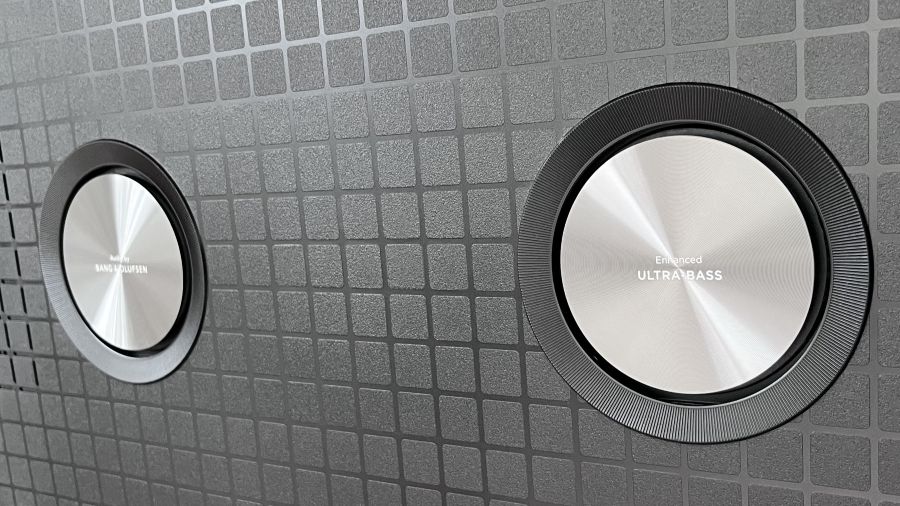
An Audio by Bang & Olufsen speaker array on the QM8L delivers Dolby Atmos soundtracks via down-firing speakers located on the TV’s bottom surface and there are also two “subwoofers” located on the back. The built-in sound quality is good overall, with clear dialogue, clean-sounding bass, and decent enough height effects, especially when the Vertical Sound Field setting in the Acoustics Laboratory menu is set to Medium or higher. Other options here include Auto Volume Control and AI Sonic-Adaption, a feature that emits test tones to analyze your viewing environment and applies room correction EQ. There is also a Bluetooth personal audio option for viewing with wireless headphones.
You’ll of course get better sound by using a soundbar or other external speaker system and TCL provides plenty of options here. At minimum you can buy a subwoofer from TCL and pair it wirelessly with the TV for enhanced bass. The QM8L also supports Dolby Atmos FlexConnect, with the option to pair up to four satellite speakers and a subwoofer for a 4.1.4-channel system. Your options here are limited to TCL’s Z100 wireless speaker and Z100-SW subwoofer, but the simple setup and installation flexibility that FlexConnect provides makes it worth consideration.
Setup & Viewing Impressions
I started out my testing of the QM8L by making measurements using Portrait Display’s Calman Color Calibration software in the set’s default Filmmaker Mode and Standard presets with Adaptive Brightness disabled. Peak HDR brightness measured on a white 10% window pattern in Filmmaker Mode was 1,992 nits and 708 nits on a 100% (fullscreen) white pattern. In Standard, peak HDR brightness was 1,938 and 719 nits, respectively, on 10% and fullscreen patterns.
I should note here that TCL cites up to 6,000 nits peak brightness in its specs for the QM8L series. And while I wasn’t able to duplicate that with any variation of settings, I did measure up to 4,500 nits on initial measurements, though the actual brightness proved to be significantly lower after a few seconds once the display stabilized on the test pattern. The brightness measurements listed above reflect the QM8L’s stabilized brightness levels.
The QM8L’s color gamut coverage in Filmmaker Mode measured 89.3 for BT.2020 and 97.7 for P3. Those results are an improvement on last year’s QM8K, especially for BT.2020, and they only slightly trail what I measured on the Samsung R95H Micro RGB TV.
Delta-E (the margin of error between the test pattern source and what’s displayed on-screen) averaged 4.9 for grayscale and 3.3 for color, both of which are higher than the 3.0 result considered to be the threshold for what’s indistinguishable from perfect to the human eye. To calibrate the TV, I changed the Color Temperature slider in the color menu from its default 5 setting to 4, and then made further adjustments in the TV’s 2-point White Balance menu. Post-calibration, the measured dE averaged 0.7 for grayscale and 1.1 for color.
For gaming, selecting the QM8L’s Game picture preset and turning on the Game Master mode in the System menu settings will result in the lowest input lag. Using a Leo Bodnar input lag meter, I measured 9.8ms for a 4K 60Hz input – a much improved result over previous TCL TVs I’ve tested, all of which averaged in the 13-14ms range.
A look at the demonstration reel and Starfield animations from the Spears & Munsil Ultra HD Benchmark test disc revealed virtually no backlight blooming on the QM8L. Other tests showed that TCL’s TV had very good off-axis uniformity, with colors maintaining saturation even when viewed at a far off-center seat. The set’s contrast-enhancing anti-reflective screen coating also proved effective at reducing screen glare when viewing in a room with bright overhead lighting, though it didn’t fully eliminate reflections.
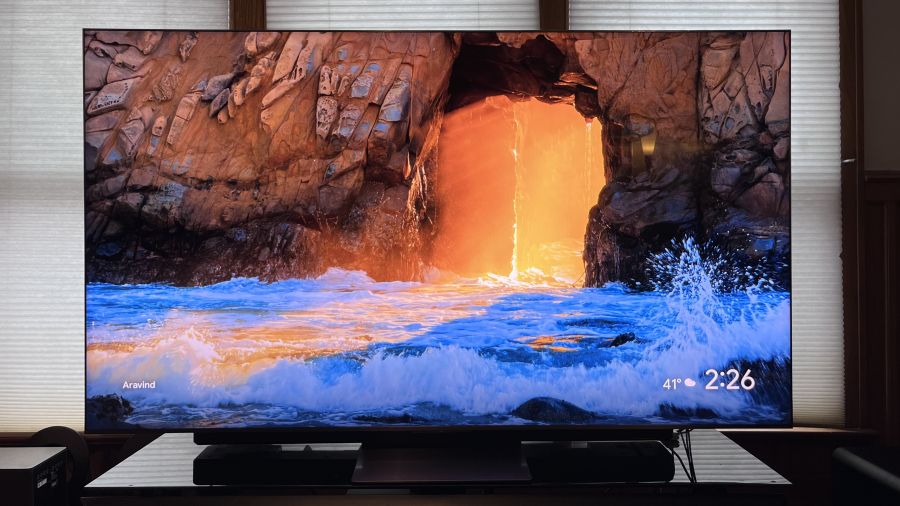
Watching movies and TV, what I found most noteworthy about the QM8L’s picture was that the colors were rich and fully saturated, but not to the point of looking cartoonlike. Playing a 4K Blu-ray of Spider-Man: Into the Spider-verse, the animated movie’s colors in the sequence where Spider-Man battles the Green Goblin looked about as vivid as I can recall ever seeing on a TV. The QM8L’s strong contrast and refined shadow detail also gave the picture a strong sense of depth in this Dolby Vision HDR transfer.
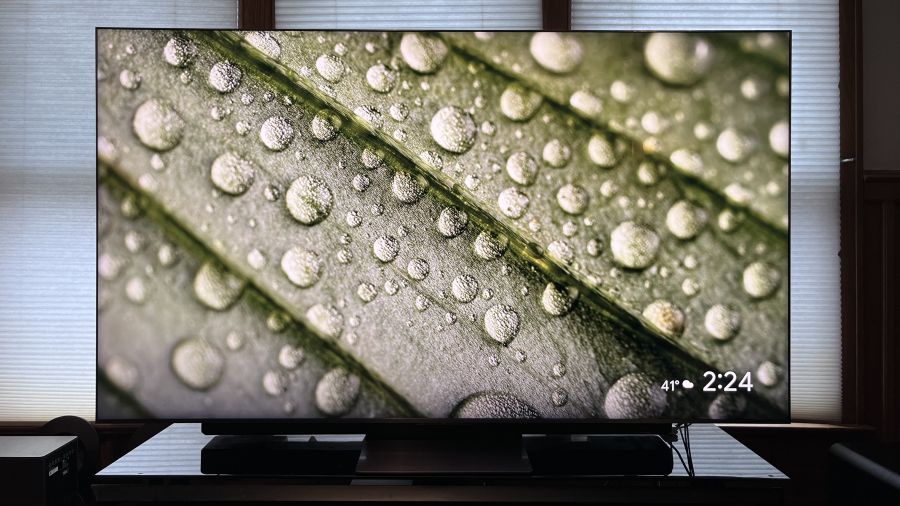
Alien: Earth on Hulu (watched in 4K/HDR10) has impressive visual effects for a TV series, and they give the scenes in the chambers and laboratories of the interplanetary vessels a high level of realism. Same as with Into the Spider-verse, shadows in dark scenes showed a high degree of detail, and bright highlights were also powerful, yet detailed. But it wasn’t just sci-fi dramas that looked great on the QM8L. When I watched medical drama The Pitt in 4K/Dolby Vision on HBO Max, the emergency room scenes had an alluring level of brightness, and the skintones of the multiethnic cast all looked natural.
The QM8L’s motion handling was for the most part good, although I did note a fair amount of judder artifacts when watching a scene in the movie No Time to Die where James Bond traverses a hillside cemetery. Setting both the Judder and Blur settings to 3 in the Custom Motion fixed this, however, and I didn’t note any “soap opera” effect after making those adjustments.
The Bottom Line
TCL’s QM8L offers a marked improvement over last year’s also very impressive QM8K series. It gets a visible, and measurable upgrade in color performance through the introduction of Super Quantum Dots, and its Halo Control System with a 26-bit backlight controller and up to 4,000 local dimming zones mean that backlight blooming artifacts are nearly non-existent. The QM8L series is also a great TV for gaming, with 4K/144Hz support across four HDMI 2.1 ports, ultra-low input lag in Game mode, and soon-to-come Xbox Game Pass cloud gaming support.
The Google TV with Gemini feature is a great addition for this series, and it makes content searches, and also general research on most any topic, a breeze. TCL carries over the QM8K’s sleek design to this series as well, and the TV’s impressive built-in sound is augmented by Dolby Atmos FlexConnect 4.1.4 support.
At $3,000 for the 75-inch model I tested – the same price as last year’s QM8K series TV and $4,000 less than the brighter but otherwise similarly featured X11L flagship – the TCL QM8L is a great value for all that it offers. The high-end TV market in 2026 is going to be dominated by RGB LED and flagship OLED models, and you can bet they will all be pricey. Compared to those, and also to TCL’s own SQD-Mini-LED flagship, the QM8L is a relative bargain.
Pros:
- High brightness
- SQD tech brings extended P3 and BT.2020 color gamut coverage
- Refined local dimming
- Impressive off-axis color uniformity
- Anti-relection screen
- Google TV with Gemini AI assistant
- Audio by Bang & Olufsen speaker array
- Dolby Atmos FlexConnect support
- Wireless subwoofer support
- Four HDMI ports with 144Hz support
- Ultra-low input lag for gaming
- ATSC 3.0 tuner
Cons:
- Slightly high color point and color temperature errors in Filmmaker Mode
You must be logged in to post a comment Login