




Connect with us
DAPA Banner

Tech


Telecom History: From 1G Voices to 6G AI Agents

Published

on

Every generation of mobile networks, from 1G to 5G, has rewritten the rules of how the world lives and works. The coming 6G revolution, by decade’s end, will represent a new direction still, toward a universal data fabric where millions of agents collaborate in real-time across the digital and physical worlds.

The story of wireless connectivity is often told in speeds and standards—megabits per second, latency, and spectrum bands. But these generational shifts in device specs obscure a deeper pattern. Each generation, from 1G to 5G, rewrote the relationships between three elements: the Devices we carry, the Networks that connect them, and the Applications that run on them. We call this connectivity’s DNA. With 6G, that DNA of interconnection is about to change fundamentally.

As with the “7 Phases of the Internet”—an article we published with IEEE Spectrum last October—mobile networks’ 6 generations follow a similar arc toward system-wide intelligence. That arc traces through every generation of wireless, revealing a steady advancement of the reach and scope of connectivity itself.

Beyond Devices, Networks, and Apps

The history of wireless connectivity is a history of Devices, Networks, and Applications. Every generation from 1G through 6G redefined each of those three elements. However, 6G marks a departure point where devices, network elements, and applications begin to lose definition as discrete entities unto themselves. As the network grows more capable, it also paradoxically becomes less visible—connection without connectors.

Advertisement

From 1G’s brick-sized phones to 6G’s digital fabric, wireless has moved from analog voices to autonomous agents—present everywhere, noticed nowhere, continuously interconnecting digital and physical worlds.

From Your Site Articles

Related Articles Around the Web

Advertisement

Source link

Continue Reading
Click to comment

You must be logged in to post a comment Login

Leave a Reply

Tech

A Major Publisher Just Canceled This Book Over AI Writing Concerns

Published

on

Last June, Mia Ballard’s self-published novel Shy Girl took the internet by storm. After winning the hearts of readers and publisher Hachette alike, it was set for a major US debut in the coming months. 

Now, the novel may never become available through any official channel again. Hachette has officially pulled the plug on the novel’s US release following a wave of allegations that generative AI played a role in the manuscript’s creation. 

Originally self-published in February 2025, the horror novel was traditionally released by Hachette’s science fiction and fantasy label Orbit in the UK in November. After The New York Times provided evidence of AI usage in Shy Girl, Hachette canceled the planned spring US release and removed the book from its website completely.

Advertisement

“Hachette remains committed to protecting original creative expression and storytelling,” the publisher said in a statement to the Times. 

Authors are required to disclose to Hachette whether AI was used in the creation of their work. Ballard has denied using AI tools to write the book, claiming an editor was responsible for the portions that appear to be AI-generated.

“My name is ruined for something I didn’t even personally do,” Ballard wrote in an email to the New York Times.

Advertisement
The book cover for Shy Girl by Mia Ballard.

Hachette UK

The cancellation of Shy Girl by Hachette marks the first time a major publisher has publicly pulled an existing title due to suspicions of AI-generated prose.

For the past few months, readers online have raised concerns about the book’s apparent use of AI.

A video from YouTuber frankie’s shelf provides a lengthy analysis of the novel, pointing out linguistic patterns that are characteristic of AI writing. The video also lists words in Shy Girl that are repeated with unusual frequency (“edge” is used 84 times and “sharp” 159 times), often in ways that are abstract and nonsensical.

In January, Max Spero, founder and chief executive of Pangram, ran the text of Shy Girl through his AI detection program. He claimed that the novel was 78% AI-generated.

The rise of AI has caught the publishing industry off guard. Though AI writing has already appeared in many self-published books, traditional publishers like Hachette are more critical of the technology.

Advertisement

Representatives for Hachette didn’t immediately respond to a request for comment.

Source link

Advertisement
Continue Reading

Tech

‘Wood is wood’: WSU research finds Yankees’ viral ‘torpedo’ bats perform the same as traditional bats

Published

on

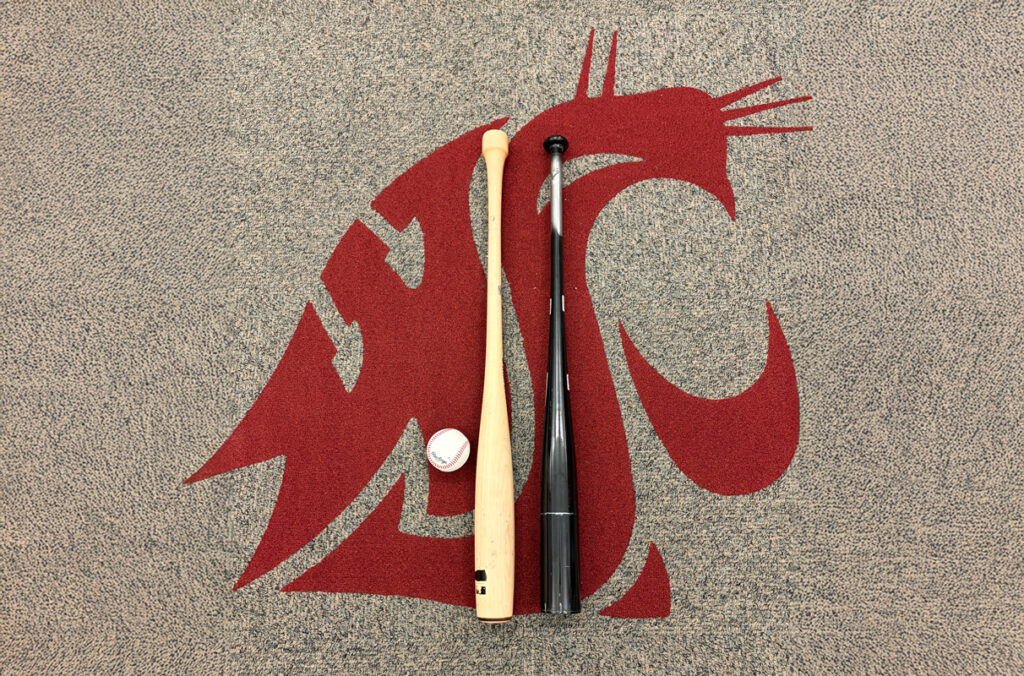
A research team determined that the torpedo bat, left, and traditional bat perform equally well in hitting power with only a slight difference in the location of the bat’s sweet spot (WSU Photo / Voiland College of Engineering and Architecture)

The New York Yankees just cruised through Seattle and won two out of three games against the Mariners. On the other side of Washington state, the Bronx Bombers’ “torpedo bats” were being scientifically scrutinized.

In what Washington State University is calling the first-ever laboratory experiments on the new baseball bat design, researchers found that torpedo bats and traditional bats basically perform the same.

It didn’t look that way last season, when the Yankees hit a franchise-record nine home runs in a game against the Milwaukee Brewers and drew viral attention to the bats that they were swinging.

The torpedo bat design relies on a slightly different shape in which wood is removed from the barrel tip and added to the bat’s sweet spot, so that the diameter tapers down, a little like a bowling pin. But the hype appears overblown.

“Wood is wood,” Lloyd Smith, a professor in WSU’s School of Mechanical and Materials Engineering and director of the university’s Sports Science Laboratory, told WSU Insider. “When it comes to baseball, there’s not a lot you can do with wood. If your goal is to keep the game steady and consistent and not have a lot of change, wood bats are good.”

Advertisement

Smith is part of a research team that includes Alan Nathan from University of Illinois and Daniel Russell from Penn State University. They’ll present their findings at the upcoming International Sports Engineering Association conference, June 1–4 in Pullman, Wash.

According to WSU Insider, the researchers created two maple bats that were duplicates of a standard Major League Baseball bat. Two additional maple bats were made with a torpedo-shaped barrel that gave them the same swing weight as the standard bat.

They measured how much energy the bat returns to the ball by firing baseballs from an air cannon at a stationary bat and using light gates and cameras to measure the speed of the incoming and rebounding ball.

The team found nearly identical performance for the torpedo and standard bats except that the sweet spot for the torpedo bat was a half inch farther from the bat tip than the standard bat.

Advertisement

“It was actually pretty phenomenal how close they were,” said Smith.

While some Yankees players said last year that any little tweak could provide an advantage, the team’s captain wasn’t convinced.

Aaron Judge hit an American League-record 62 homers in 2022, 58 in an MVP season in 2024 and 53 as repeat MVP in 2025. He had three homers using a traditional bat in that much-talked-about rout of the Brewers.

“The past couple of seasons kind of speak for itself,” Judge told ESPN last May. “Why try to change something?”

Advertisement

Source link

Continue Reading

Tech

Xteink’s X3 E-Reader Snaps Onto Your iPhone and Ready for Any Spare Moment

Published

on

Xteink X3 E-Reader
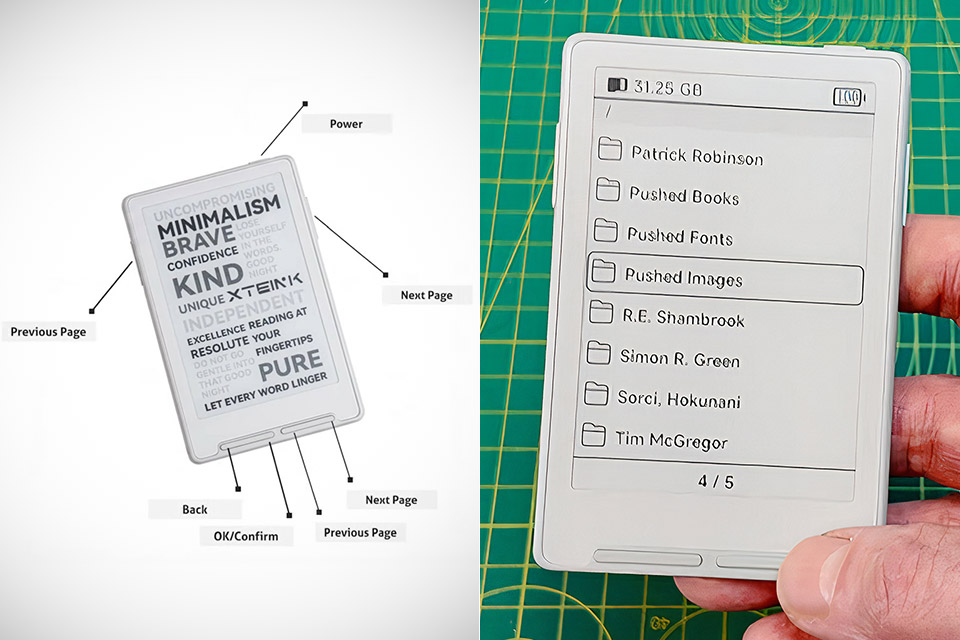
Slapping the Xteink X3 onto an iPhone takes only a few seconds. This is owing in part to its built-in magnets, which exactly align with MagSafe and allow it to be easily snapped into place. You get a thin black or white slab that sits flush against the phone’s back without adding any bulk. Anyone who is continually reaching for their phone dozens of times per day would appreciate having a book right at their fingertips, all from the same move.


At only 58 grams, this device is easy to forget about until you need it, and then, as if by magic, it appears. Its overall size is a modest 100mm long and 60mm wide, so it goes unnoticed in a pocket until reading time beckons. Commuters and individuals waiting in lines can just pull out their phones and start reading a chapter without having to dig through their bags for another device.


XTEINK X4 E-Book Reader, 4.3″ Portable Pocket E-Ink eReader with Physical Page-Turn Buttons, Ultra-Thin…
  • Pocket-Size Mini eReader for Reading Anywhere: Ultra-light at just 0.23 inch and only 2.72 oz, Xteink X4 is designed for true portability. Slip it…
  • 4.3″ Paper-Like E-Ink Display: The 4.3-inch E-Ink screen delivers a natural paper-like reading experience that’s gentle on the eyes. Enjoy clear…
  • Magnetic-Ready Design for Quick Access: Includes magnetic stick-on rings, so you can attach Xteink X4 to the back of your phone or other magnetic…


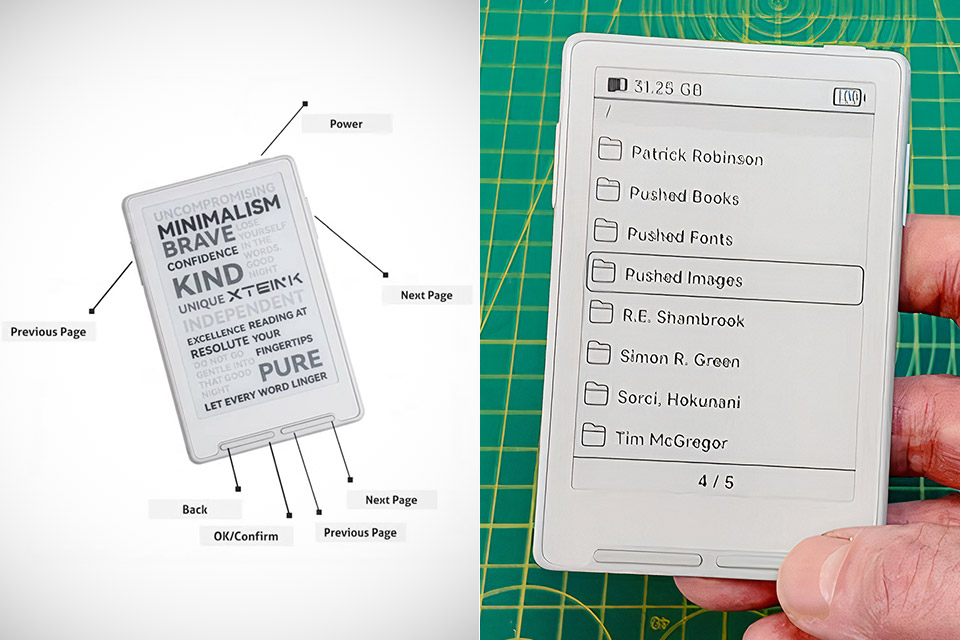
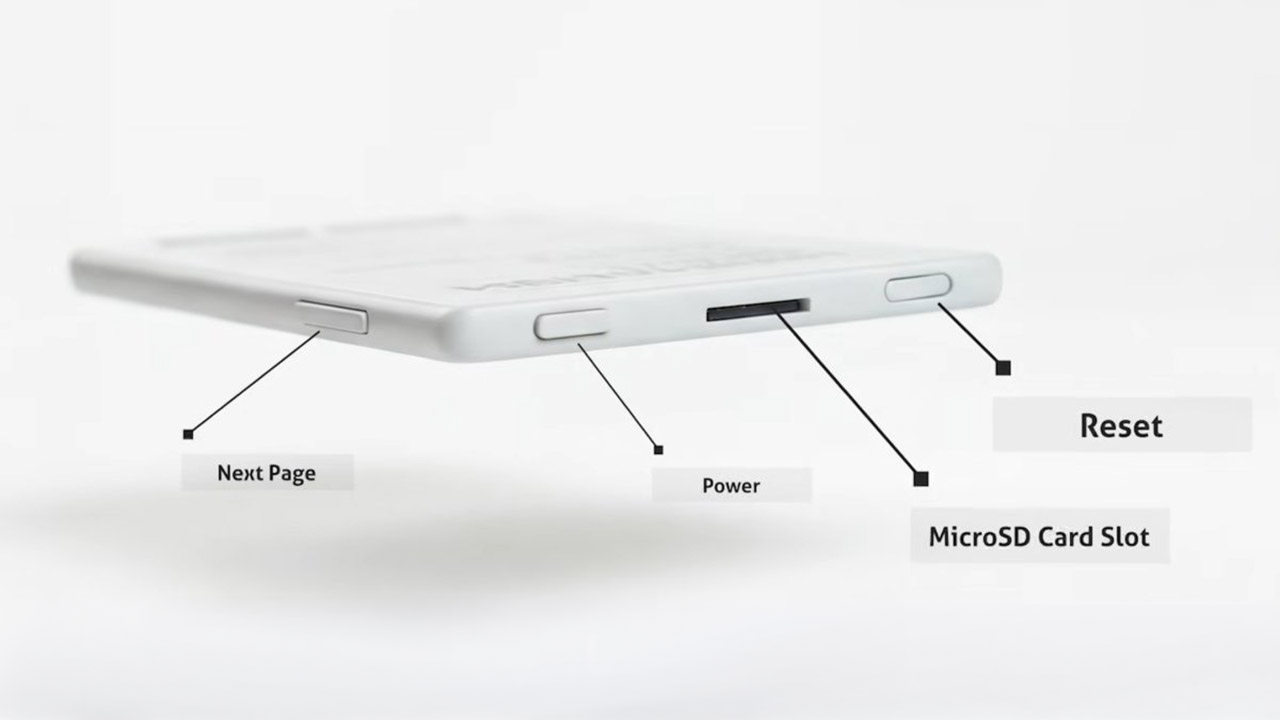
The 3.7-inch E Ink screen displays clear text, with over 250 pixels per inch. You can easily change the font size with a few simple adjustments, so even the smallest pages provide a comfortable reading experience. With adequate lighting, the characters simply pop, and there is no eye strain to contend with, as opposed to phone screens. You also have real buttons on the sides and bottom for turning pages and accessing menus. One-handed operation feels perfectly normal, whether you’re on a train or confined in bed. The gyroscope within detects even the tiniest shake and flips pages forward, allowing you to maintain a solid grip during those rapid reading periods.

Xteink X3 E-Reader
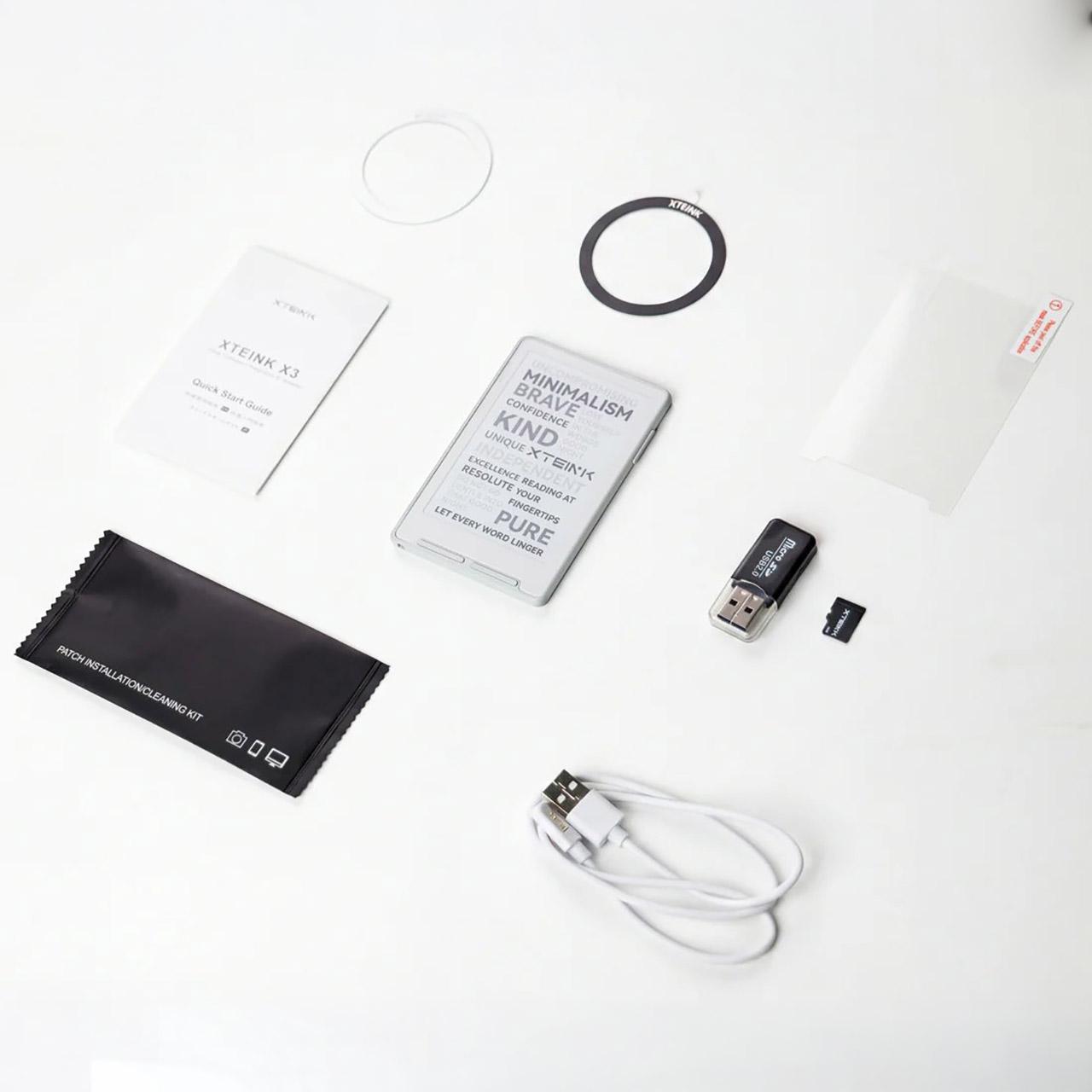
Navigation is straightforward, with a grid of icons instead of swipes or touches. Choose a book or change the settings with a few presses, and it remains dependable even when your fingers are clumsy. The strategy minimizes distractions and allows you to concentrate on the words themselves. You can load books onto the device using either the 16GB microSD card included in the box or a companion app on your phone. Transferring EPUB files is quick and easy over Wi-Fi or by inserting the card into your computer, and storage increases up to 512 gigabytes, allowing you to carry thousands of titles without running out of space.

Xteink X3 E-Reader
The battery will last you 10 to 14 days on a single charge, even if you only read for an hour or two every day, and charging is simple; simply insert the special cable with magnetic pogo pins into the gadget and it will clip right into place. Okay, there is one little flaw: there is no built-in front light (yet), but you can get a separate clip-on version for only $9.99 if you plan on reading late into the evening. If you need more connectivity, there are Bluetooth and NFC connections available, as well as Wi-Fi for the occasional update or transfer. It’s available now on the official Xteink website and can be purchased for $79.
[Source]

Advertisement

Source link

Continue Reading

Tech

'The Bonfire of the Vanities' series headed to Apple TV

Published

on

Maybe the third time is the charm. Writer/producer David E. Kelley is adapting Tom Wolfe’s “The Bonfire of the Vanities” novel into a series for Apple TV, with “The Batman” director Matt Reeves.

Apple logo followed by lowercase letters t and v, all glowing with soft pastel gradient colors on a solid black background
Apple TV is dramatizing “The Bonfire of the Vanities” — image credit: Apple

David E. Kelley is still best known for “The Practice” and “Ally McBeal” shows, but he’s also the writer of Apple TV’s “Presumed Innocent” and “Margo’s Got Money Troubles.” Now according to Deadline, he’s dramatizing Tom Wolfe’s famous 1987 novel of greed and Wall Street money.
Not to spoil the story, but as excellent as it is, Wolfe’s novel feels as if it fades out rather than have a big finish, which has made it difficult to successfully adapt. It was filmed in 1990, with Tom Hanks starring and Brian DePalma directing from a screenplay by Michael Cristofer, but that was a flop.
Continue Reading on AppleInsider | Discuss on our Forums

Source link

Continue Reading

Tech

The leadership dilemma: Governing the “Agentic AI” workforce

Published

on

Artificial intelligence is no longer a back office enabler or a set of isolated automation software tools. It is becoming a core component of how organizations operate, compete, and deliver value.

As businesses accelerate their adoption of increasingly autonomous systems, often referred to as agentic AI, a significant leadership dilemma is emerging. The workforce is no longer exclusively human.

Source link

Continue Reading

Tech

How CIOs can create a strong foundation for an AI-enabled workplace

Published

on

As with any new tech, there’s a scale for AI adoption among businesses leaving some are ahead of the curve and others much further behind as they continue to resist and delay.

But what’s clear is that adoption is happening with or without formal strategy because nearly two-thirds (65%) of employees now say they intentionally use AI for work.

Source link

Continue Reading

Tech

OpenAI purchases online tech talk show TBPN

Published

on

OpenAI said the purchase will be part of its strategy to further the conversation on the changes brought about by artificial intelligence.

OpenAI, in what is being described as an unusual move, is set to purchase the Technology Business Programming Network (TBPN), a daily, live tech talk show hosted by Jordi Hays and John Coogan, that often features high-profile tech leaders and entrepreneurs. OpenAI 

OpenAI’s chief executive officer of applications Fidji Simo said: “As I’ve been thinking about the future of how we communicate at OpenAI, one thing that’s become clear is that the standard communications playbook just doesn’t apply to us. We’re not a typical company.

“We’re driving a really big technological shift. And with our mission to ensure artificial general intelligence benefits all of humanity comes a responsibility to help create a space for a real, constructive conversation about the changes AI creates, with builders and people using the technology at the centre.”

Advertisement

While the full details of the deal have yet to be disclosed, OpenAI said the TBPN team will maintain editorial independence and make decisions on their guests and programming. According to the Wall Street Journal, TBPN stated that it generated $5m in advertising revenue last year and is on track to exceed $30m in revenue in 2026.

However, an OpenAI spokesperson told Bloomberg that the platform is not aiming to make TBPN a money-making enterprise. 

In a statement, Hays expressed excitement at the venture, while making note of the importance of a strong partnership where both parties work as a team to communicate change and innovation in the AI and tech spaces. 

He said: “While we’ve been critical of the industry at times, after getting to know Sam and the OpenAI team, what stood out most was their openness to feedback and commitment to getting this right. Moving from commentary to real impact in how this technology is distributed and understood globally is incredibly important to us.”

Advertisement

Earlier this week OpenAI closed a larger than expected funding round in which it raised $122bn, exceeding the projected figure of $110bn. Part of that funding is expected to be put towards the scale and growth of the platform’s AI technologies and research, in line with current global demands. 

Don’t miss out on the knowledge you need to succeed. Sign up for the Daily Brief, Silicon Republic’s digest of need-to-know sci-tech news.

Source link

Advertisement
Continue Reading

Tech

This State Has Costco’s First Stand Alone Gas Station

Published

on


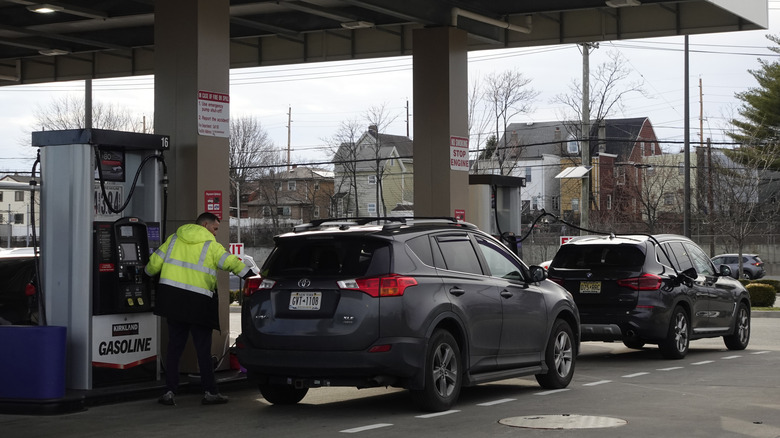
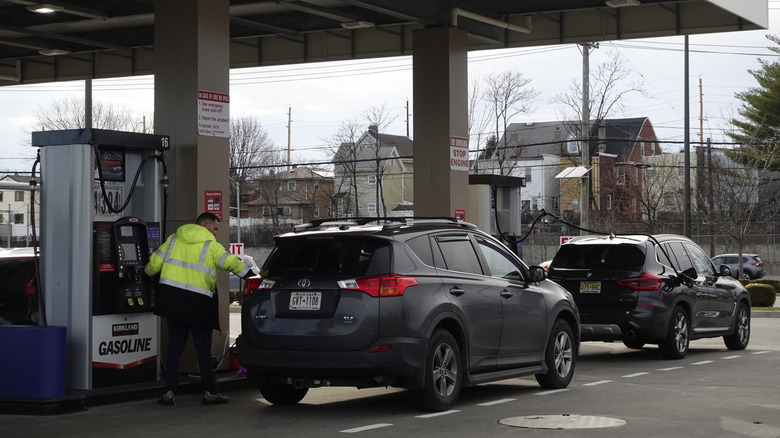
The best thing about retail warehouse stores is obviously the selection. After all, where else can you buy a new T-shirt, birthday cake, and a set of tires on the same day? But the ability to fill up with gas before leaving the parking lot is a plus as well. That’s why stores like Costco, where you can use these tips to save time at the pump, are so convenient. But now the company is moving forward with standalone gas stations, and the company’s first in California is members-only.

Members will need to insert or scan their membership card to refuel, just as they would at Costco’s attached gas stations. However, non-members may be able to access the pumps using a Costco Shop card, as they currently can at on-site locations. Costco’s new gas station is located in Mission Viejo, California, and it’s a 17,000 square foot facility operated by company employees. It has 40 pumps covered by a large canopy, and it will run from 5 a.m. to 10 p.m. daily, Sunday through Saturday.

The station is expected to open by the end of June 2026. But if you don’t live in California, you may not have to wait long. Costco is planning to build more standalone gas stations, beginning in Honolulu, Hawaii. As of this writing, the company hasn’t publicly addressed this new program. But the belief is that stand alone stations can help reduce the heavy traffic flow that currently plagues many on-site locations.

Advertisement

Costco’s gas boom and competitive pricing strategy

Costco’s first standalone gas station (which will also strategically stay cheaper than most) was initially announced in the summer of 2025. The facility is located off Interstate 5 in Mission Viejo, California, at the site where a Bed Bath & Beyond once stood. At the time of the announcement, the company’s gas stations were experiencing a boom in business, thanks mostly to extended operating hours. The decision to move forward with a new test store may have been influenced by this positive reaction.

Costco members get access to gas prices that can often beat other competitors by anywhere from 10 to 25 cents per gallon. This is possible because of the company’s warehouse approach, which includes buying fuel in large quantities. Costco also works directly with suppliers to get the best cost and then passes that savings on to its members. 

Advertisement

Costco’s first gas station opened in 1995 and since then, their fuel business has grown. The company currently has over 700 stations around the world, serving millions of paid members every day. Those members can use the Costco app to check fuel prices in real time, as well as store hours, and locations near them.


Advertisement

Source link

Continue Reading

Tech

How To Know When It’s Time To Turn On Your Lawn Sprinklers This Spring

Published

on


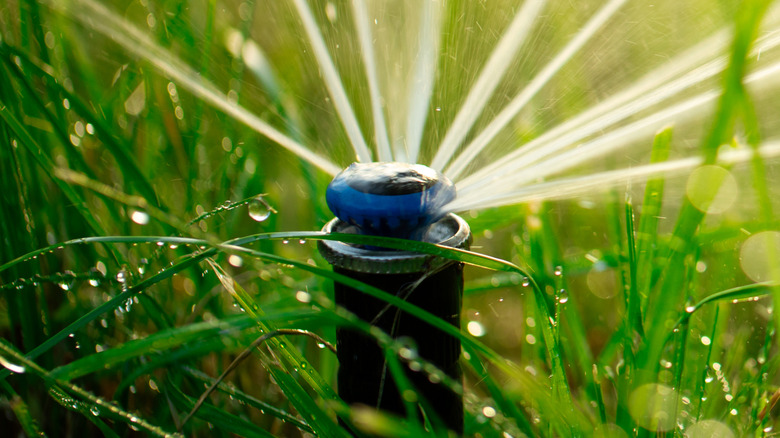
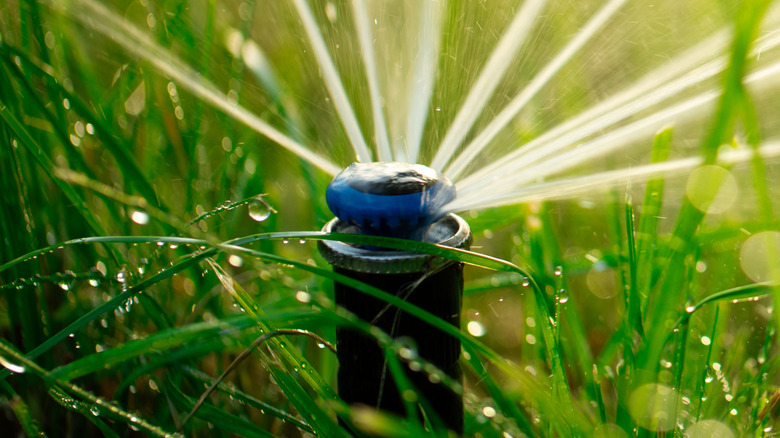
Getting a lush, green lawn sometimes requires a bit of help. This is where a lawn sprinkler system, be it an energy-saving smart sprinkler system or a more traditional setup, comes into the picture by providing a yard with sufficient moisture for sustained growth. Installing such a system is just the start, though, and it’s also crucial to know how to use it to the fullest. That means knowing the right time of year to power it up, which isn’t necessarily a specific day or month. Instead, it’s a decision that’s largely predicated on environmental factors that make it clear winter has come and gone, and that spring is finally in bloom.

First and foremost is the temperature. It’s recommended that a sprinkler system only be activated in spring once daily temperatures are higher than 40 degrees Fahrenheit for 10 days or longer. This way, you know for certain spring is here and you’re not experiencing a random warmer day within an overall cold period. In a similar vein, the ground itself should be completely thawed and free of frost, further indicating that sprinkler season has arrived. No matter where you live, you should also refer to previous years’ weather patterns to get a rough idea of when the final snowfalls and freezes usually happen. Some news outlets may also offer estimated dates for these, so be sure to check around.

If all else fails and you’re unsure whether it’s a good time to turn on your sprinklers, there’s no shame in playing it safe and waiting until temperatures are consistently warm and the last vestiges of winter are long gone. After all, erring on the side of caution is preferred to activating your system too early and suffering the consequences.

Advertisement

Why lawn sprinkler timing is so important

Turning on your lawn sprinkler system is anything but an arbitrary decision. It needs to happen when the environment is just right, or else there could be serious consequences. For one, it’s no secret that running and leaving water through unprepared pipes in freezing conditions can lead to damage. This water freezes, expands, and cracks pipes and fittings. If you manage to avoid pipe or sprinkler damage, you’re still at risk of shortening the lifespan of the system by running it when it’s not necessary. The longer you run your system, the more wear and tear it endures, potentially leading to it failing sooner than it should.


The consequences of activating a sprinkler system early go beyond the health of the system itself. Ice and snow melt takes time to soak into the ground, so any excess water from a sprinkler system may lead to sogginess and puddles at best, or leave your grass susceptible to disease at worst. Not to mention, running your sprinklers more than necessary will, of course, lead to a higher water bill. Thus, don’t be afraid to show some restraint, even if it looks like your lawn is in need of watering right out of winter.

Advertisement

Lawn care can very easily go wrong. There are many mistakes everyone makes with lawn mowers, for instance, and homeowners can also turn on their lawn sprinklers at the wrong time of year. That’s why it’s key to keep an eye on the weather and sustained temperatures before officially beginning your spring watering.


Advertisement

Source link

Continue Reading

Tech

Maker 3D-Prints Shoes Layer by Layer, Successfully Goes from Printer to Pavement

Published

on

3D-Printed Shoes
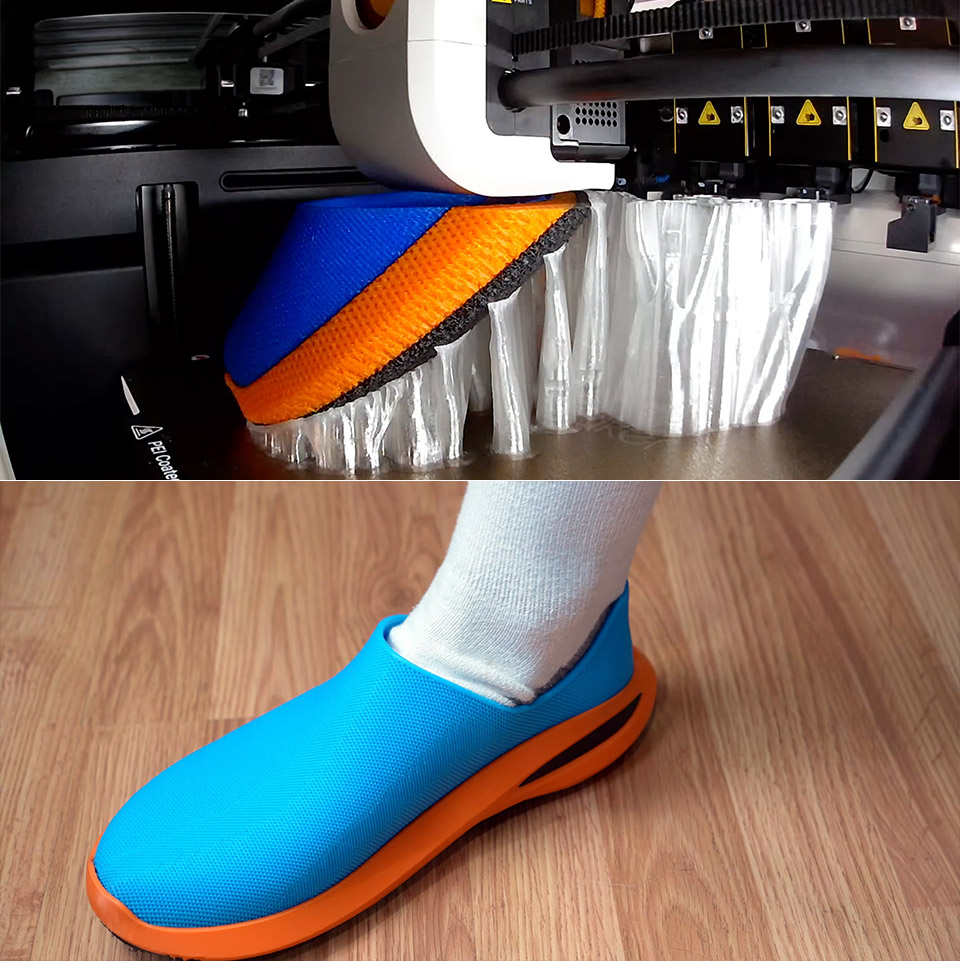
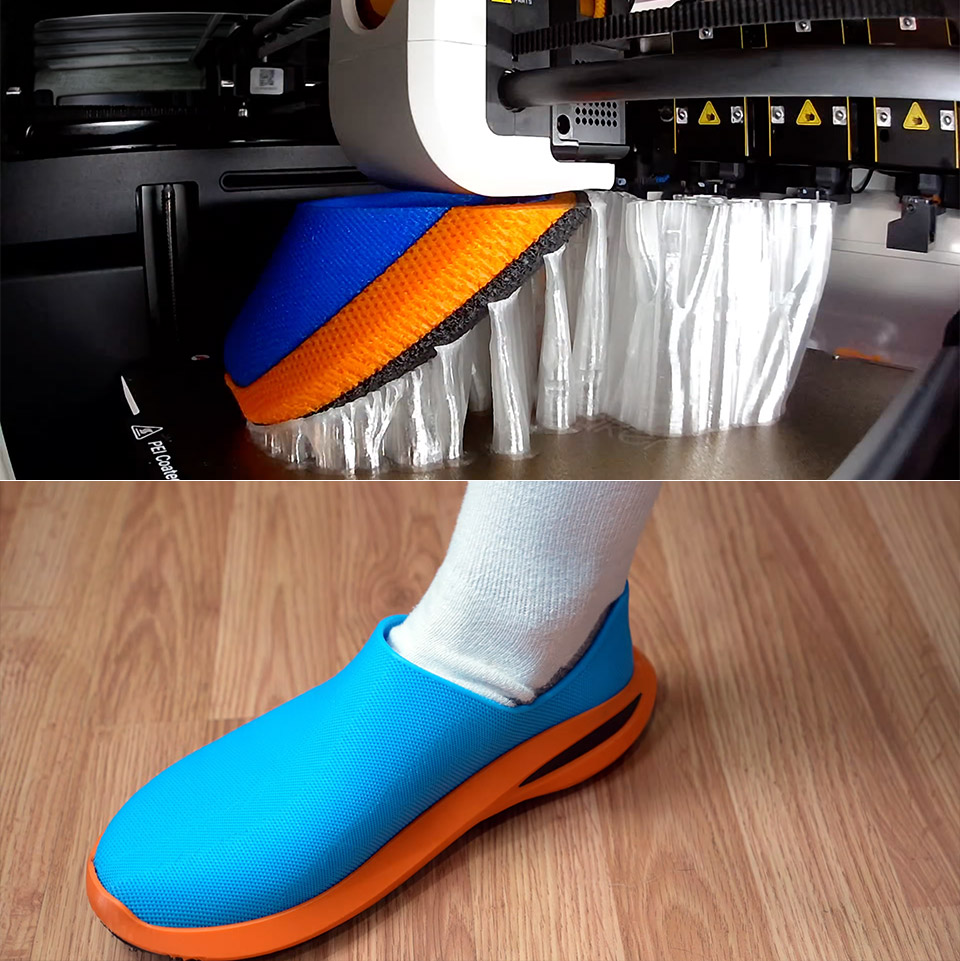
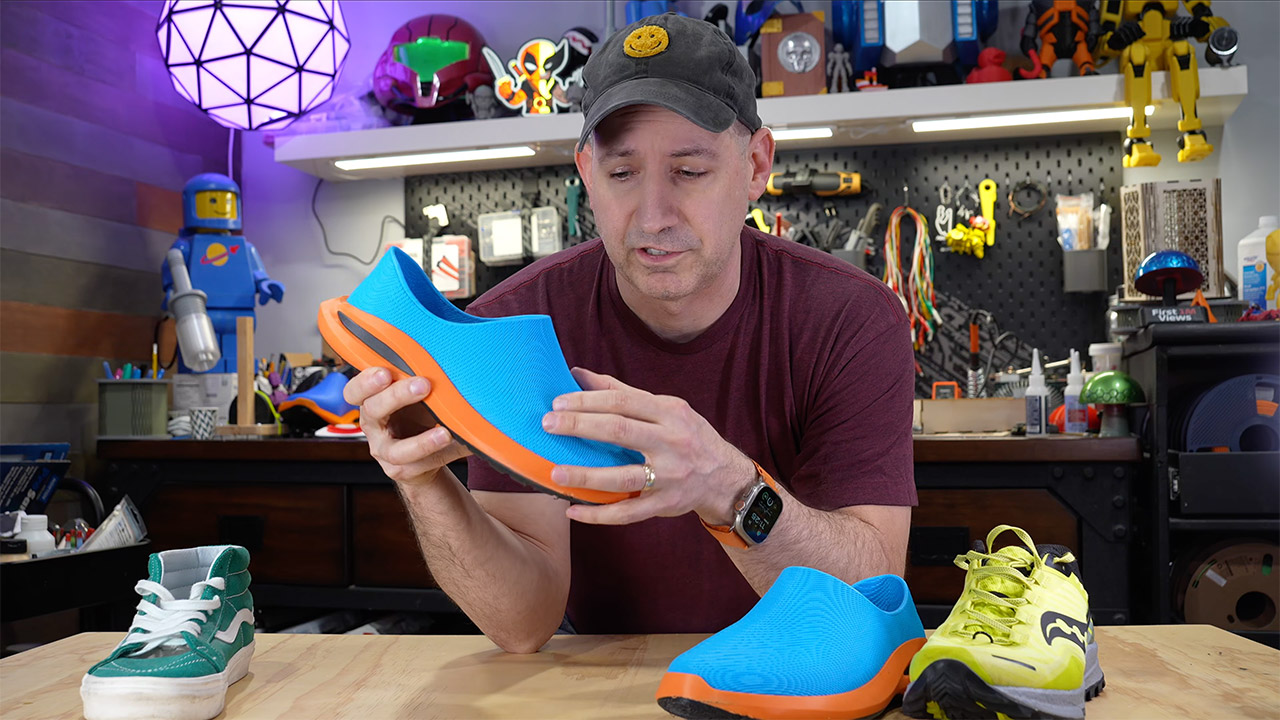
People are constantly pushing the boundaries of 3D printing, but shoes have long been the holy grail, or rather the holy nightmare, of the technology. They must be able to bend with each step, provide traction on a variety of surfaces, and withstand regular use without falling apart at the seams. DaveRig Design took on this exact task in a recent project, resulting in a pair of casual shoes that look and feel right at home on the street.


He started with the CityStep casual everyday sneaker design, which you can get at MakerWorld. This design features a slip-on form with a contoured profile that wraps around your foot snugly at the back and sides, while leaving the top of the shoe open and breathable. The design features a dense infill pattern on top to give it a knit fabric look and feel; there are no separate parts or glue jobs necessary, and the greatest part is that each shoe prints upright in one piece with a tiny heel stand to protect it from tumbling over while printing. Print times on typical machines are roughly sixty-six hours each pair, so you’re looking at around seventy-six hours on some machines due to the fine details and support structures.


Bambu Lab A1 3D Printer, Support Multi-Color 3D Printing, High Speed & Precision, Full-Auto Calibration…
  • High-Speed Precision: Experience unparalleled speed and precision with the Bambu Lab A1 3D Printer. With an impressive acceleration of 10,000 mm/s…
  • Multi-Color Printing with AMS lite: Unlock your creativity with vibrant and multi-colored 3D prints. The Bambu Lab A1 3D printers make multi-color…
  • Full-Auto Calibration: Say goodbye to manual calibration hassles. The A1 3D printer takes care of all the calibration processes automatically…

3D-Printed Shoes
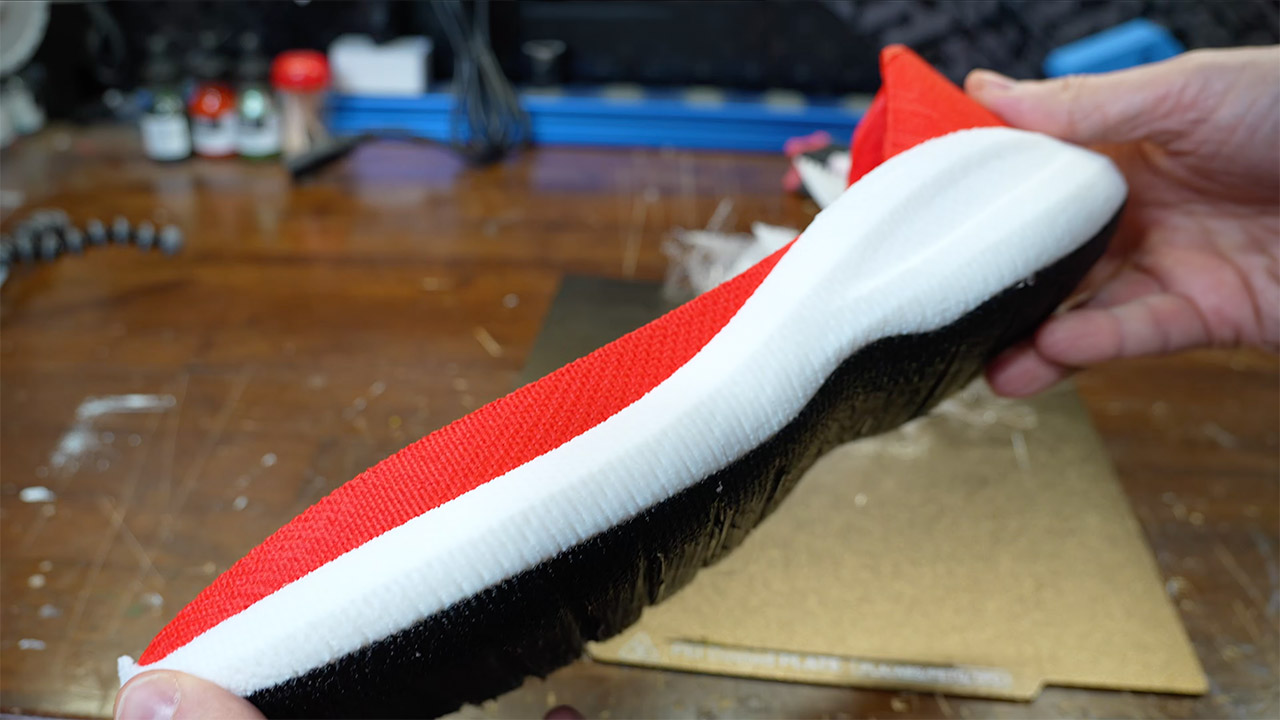
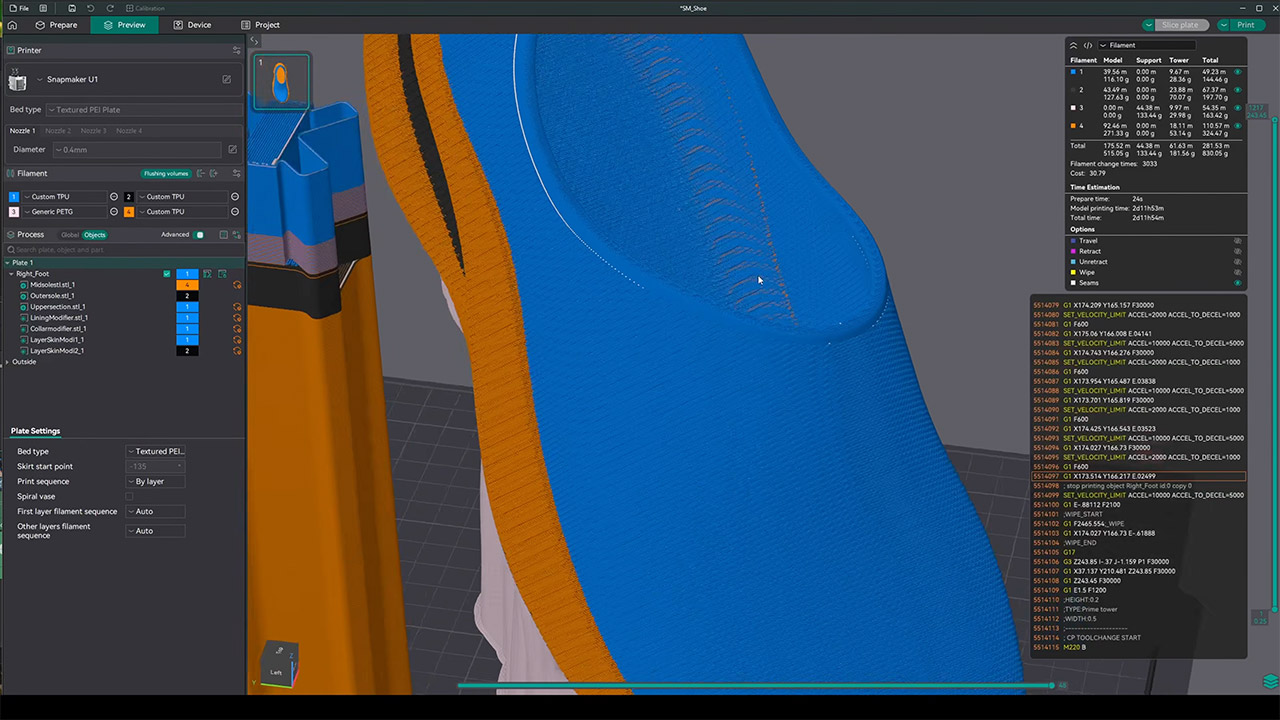
The actual game changer was the material he chose. DaveRig chose BIQU MorPhlex filament, a flexible choice that handles like ordinary TPU out of the spool, with a hardness of roughly 90 A, which is rigid enough to keep the printer from stringing and jamming, which is a common problem with softer filaments. Once the print is completed and the material has cooled, it transitions to a considerably softer seventy-five A rubber-like feel that provides cushioning and traction without the need for any additional post-processing gimmicks. He was using a Snapmaker U1 tool changer, a machine designed to automatically swap between four separate extruders, which came in handy for a project that required over three thousand swaps to blend colors and hardness levels across different parts of the shoe, ensuring that the sole remained grippy, the midsection flexed naturally, and the upper remained light and airy all at once.

3D-Printed Shoes
Before sending it to the printer, he spent some time in Blender fine-tuning the model, making subtle changes to get the layer bonding just perfect so the finished shoes wouldn’t split when stretched over your foot. Supports were made with a combination of flexible filament and conventional PLA to make them easy to remove when the print was completed, and he strengthened them to keep them from shifting around during the long print. To ensure perfect colour consistency, he ran both shoes side by side on the same build plate.

3D-Printed Shoes
When the print was finally completed and the supports were removed without a hitch, the results were a pleasant surprise, nearly factory-fresh polished. The upper has a nice textured surface that smoothes over the layer lines so they are scarcely noticeable, and they appear to have come off a production line rather than a homemade work. The sole provides just enough traction, the MorPhlex’s post-print softness makes it easy to grab surfaces, and the heel cup keeps everything held in place without slipping around during normal walking.

Source link

Advertisement
Continue Reading

Trending

Copyright © 2025