












Tech
Telly’s Plan For ‘Free’ Ad-Based TV Revolution Runs Into Quality Control Problems
from the inescapable-advertisements dept
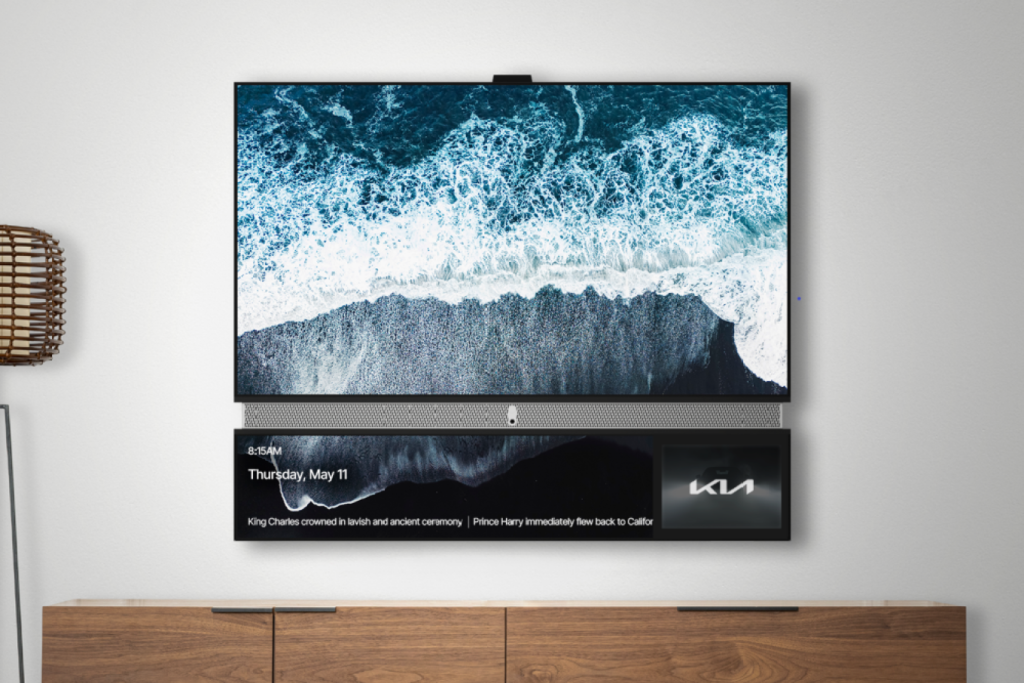
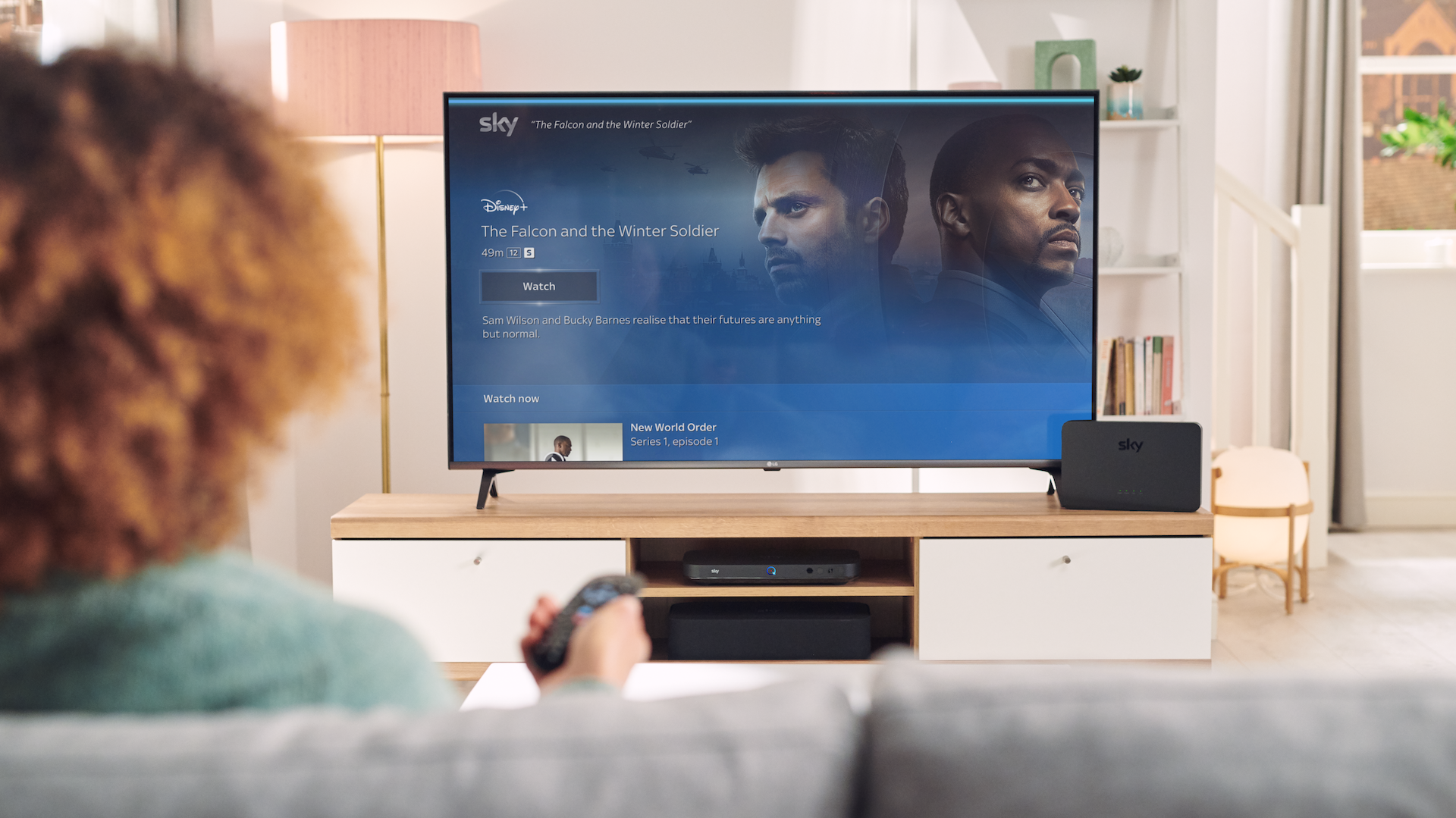
Back in 2023 we noted how a company named Telly proclaimed it had come up with a new idea for a TV: a free TV, with a second small TV below it, that shows users ads pretty much all of the time. While the bottom TV could also be used for useful things (like weather or a stock tracker), the fact it was constantly bombarding you with ads was supposed to offset any need for a retail price.

But apparently there’s been trouble in innovation paradise.
Shortly after launch, Telly proclaimed that it expected to ship more than half a million of the ad-laden sets. Within a few months it had announced it had already received 250,000 pre-orders. But a recent report by Lowpass indicates that only 35,000 of the sets had made it to peoples’ homes.
What was the problem? Ars Technica, Lowpass and The Verge note that the problems began with a substandard shipping process that resulted in a lot of TVs showing up broken to folks who pre-ordered. Reddit is also full of complaints about general quality control issues, like color issues, ads being played too loudly, odd connectivity issues, remote controls randomly unpairing, and more.
Still, there’s evidence that the idea might still have legs, as the premise itself appears profitable:
“The investor update reportedly said Telly made $22 million in annualized revenue in Q3 2025. This could equate to about $52 in advertising revenue per Telly in use per month ($22 million divided by 35,000 TVs divided by 12 months in a year is $52.38).
That’s notably more than what other TV companies report, as Lowpass pointed out. As a comparison to other budget TV brands that rely heavily on ads and user tracking, Roku reported an average revenue per user (ARPU) of $41.49 for 2024. Vizio, meanwhile, reported an ARPU of $37.17 in 2024.”
The TV industry had already realized that they can make more money tracking your viewing and shopping behavior (and selling that information to dodgy data brokers) long term than they do on the retail value of the set. This just appears to be an extension of that concept, and if companies like Telly can get out of their own way on quality control, it’s likely you’ll see more of it.
In one sense that’s great if you can’t afford the newest and greatest TV set. It’s less great given that the United States is too corrupt to pass functional consumer privacy protections or keep its regulators staffed and functional, meaning there are increasingly fewer mechanisms preventing companies like this from exploiting all the microphone, input, and other data collected from users on a day-to-day basis.
I personally want the opposite experience; I’m willing to pay extra for a dumb television that’s little more than a display panel and some HDMI inputs. A device that has no real “smart” internals or bloated, badly designed GUI made by companies more interested in selling ads than quality control. Some business class TVs can sometimes fit the bill, but by and large it’s a segment the industry clearly isn’t interested in, because there’s much, much more money to be made spying on and monetizing your every decision.
Filed Under: ads, data brokers, privacy, security, television, tvs, video
Companies: telly
Tech
Capitol Hill probe spotlights claims Apple and Google were pushed to block ICE-monitoring apps
The removal of an ICE-monitoring app almost a year ago has triggered new questions about whether the US Department of Justice crossed a constitutional line in its dealings with Apple and Google.

How ICEBlock appeared in the App Store before being pulled
On Friday, House Judiciary Committee ranking member Jamie Raskin vowed to investigate the Department of Justice over allegations that it pressured tech giants into removing ICE tracking apps.
In a letter addressed to Attorney General Pam Bondi, Raskin asks, “Why is the Department of Justice (DOJ) violating the First Amendment by coercing big tech to block access to lawful apps that the American people use to record, report, and monitor the actions of our own government officers?”
Continue Reading on AppleInsider | Discuss on our Forums
Tech
The “micro” build: why your next PC should fit in a shoebox
For decades, PC gaming meant owning a monolith: a massive, flashing tower that dominated your floor space. But in 2026, the era of the giant box is over. Components have become efficient enough that you no longer need 60 liters of air to cool them. The “Small Form Factor” (SFF) movement’s gone mainstream, proving that you can fit an RTX 5080 and a top-tier CPU into a case the size of a shoebox.
It’s minimal, it’s sophisticated, and it looks a lot better on a desk than a plastic tower. If you’re ready to downsize without downgrading performance, this is where you should start.
The quick list
The cases
Fractal Design — Terra Jade

The Terra changed the game by proving a PC could look like mid-century furniture. Featuring a genuine walnut wood front panel and anodized aluminum sheets, it’s designed to be seen. The “sandwich” layout puts the GPU on one side and the CPU on the other, allowing it to stay incredibly small (10.4 liters) while still fitting full-sized graphics cards.

While the Terra is rustic, the Era 2 is pure modern elegance. The sculpted silver aluminum exterior feels like high-end audio equipment. It’s optimized for airflow with a unique chimney design, pulling cool air from the bottom and exhausting it out the top. It’s the perfect housing for a professional creative workstation.
Lian Li — A4-H2O

This is the reference standard for water-cooled SFF builds. Collaborating with DAN Cases, Lian Li created a sub-11 liter case that somehow fits a 240mm AIO liquid cooler. It’s an industrial, no-nonsense aluminum box that maximizes every millimeter of internal space. If you want the smallest possible footprint with liquid cooling, this is it.
Cooler Master — NR200P MAX V2

Building in a small case can be intimidating. Cooler Master solves this with the MAX V2. It comes pre-installed with a custom 280mm AIO cooler and an 850W Gold Power supply, with the cables already routed and managed. You just drop in your motherboard and GPU, and you are done. It is designed to handle next-gen power, officially ready for cards like the RTX 5080. It is also 12% off right now.

Power & cooling
ASUS — ROG Loki SFX-L 850W Platinum

Small builds used to mean low power, but not anymore. The Loki pushes 850W of Platinum-rated efficiency, enough to drive top-tier silicon. It uses the slightly longer “SFX-L” standard to fit a larger 120mm fan, making it quieter than standard small power supplies. Plus, it includes an RGB fan if you want a subtle glow.

Ask any SFF builder what PSU to buy, and they’ll say “Corsair SF750.” The 2024 refresh brings ATX 3.1 compliance and native PCIe 5.1 cables for modern GPUs. It is incredibly dense, reliable, and features a zero-RPM mode so the fan doesn’t even spin during light work. You can grab it now for 20% off.
SCYTHE — Big Shuriken 4

In cases like the Fractal Terra, you can’t fit a big liquid cooler. You need high-performance air cooling that stays low. The Big Shuriken 4 is designed exactly for this. At just 67mm tall, it fits where standard coolers can’t, yet it can handle up to 200W of heat thanks to its dense fin stack and high-static pressure fan.
The bottom line
If you want a PC that doubles as home decor, the Fractal Design Terra is the clear winner. For first-time builders who don’t want to stress about cable management or part compatibility, the Cooler Master NR200P MAX V2 is a cheat code that saves hours of frustration. But if you need absolute maximum cooling for high-end components in the smallest possible footprint, the Lian Li A4-H2O remains the gold standard.
Tech
How to watch the Opening Ceremony at the 2026 Milan Cortina Winter Olympics rebroadcast tonight
The 2026 Milan Cortina Winter Olympics Opening Ceremony has concluded. The festivities featured performances from Mariah Carey and Andrea Bocelli, 3,000 athletes walking in the Parade of Nations, and not one but two Olympic cauldrons being lit. (One at Milan’s Arco della Pace, since Milan is serving as the main hub for this year’s Games, and the other in the Alpine city of Cortina d’Ampezzo, where events like skiing are taking place.) If you missed out on watching live, the Opening Ceremony will re-air in primetime tonight on NBC. Here’s what you need to know.
How to watch the Opening Ceremony at the 2026 Winter Olympics
Date: Friday, Feb. 6
Time: primetime re-air from 8-11 PM ET
Location: San Siro Stadium, Milan
TV channels: NBC
Streaming: Peacock, DirecTV, NBC.com, and more
Where can I stream the Opening Ceremony at the 2026 Winter Olympics?
For $11/month, an ad-supported Peacock subscription lets you stream live sports and events airing on NBC, including the 2026 Winter Olympics, Super Bowl LX, and more. Plus, you’ll get access to thousands of hours of shows and movies, including beloved sitcoms such as Parks and Recreation and The Office, every Bravo show and much more.
For $17 monthly you can upgrade to an ad-free subscription which includes live access to your local NBC affiliate (not just during designated sports and events) and the ability to download select titles to watch offline.
How to watch the 2026 Opening Ceremony on TV:
There will be two broadcasts of the 2026 Milan Cortina Winter Olympics Opening Ceremony this Friday. You can tune in live from 2PM – 5PM ET on Friday afternoon, or catch the encore broadcast from 8PM – 11PM ET that night. Both broadcasts will air on NBC, which is available with DirecTV, Hulu + Live TV, and more.
With a live TV streaming service subscription or cable package, you can also catch all of NBC and Peacock’s Olympics coverage on NBC.com and via NBCOlympics.com or the NBC App, just by logging in with your provider.
DirecTV’s Entertainment tier gets you access to loads of channels where you can tune in to college and pro sports, the Winter Olympics, and more. Channels include ESPN, TNT, ACC Network, Big Ten Network, CBS Sports Network, and, depending on where you live, local affiliates for ABC, CBS, Fox and NBC.
Whichever package you choose, you’ll get unlimited Cloud DVR storage and access to ESPN+’s new streaming tier, ESPN Unlimited.
DirecTV’s Entertainment tier package is $49.99 for your first month. But you can currently try all this out for free for 5 days. If you’re interested in trying out a live-TV streaming service for football season but aren’t ready to commit, we recommend starting with DirecTV.
How to watch the Opening Ceremony in Milan without cable:
You can watch the Opening Ceremony live or on-demand on Peacock. If you already subscribe to a live TV streaming service or cable package, you should also be able to catch all of Peacock’s Olympics coverage on NBC.com, NBCOlympics.com and the NBC app.
For $11/month, an ad-supported Peacock subscription lets you stream live sports and events airing on NBC, including the 2026 Winter Olympics, Super Bowl LX and more. Plus, you’ll get access to thousands of hours of shows and movies, including beloved sitcoms such as Parks and Recreation and The Office, every Bravo show and much more.
For $17 monthly you can upgrade to an ad-free subscription which includes live access to your local NBC affiliate (not just during designated sports and events) and the ability to download select titles to watch offline.
Who hosted the Winter Olympics Opening Ceremony?
Sportscaster Terry Gannon hosted coverage of the 2026 Winter Games Opening Ceremony. Former Olympic snowboarder Shaun White also made an appearance. NBC Olympics primetime host Mike Tirico also participated remotely from San Francisco, where he’s pulling double duty covering the Olympics and prepping to call Super Bowl LX.
Who performed at the 2026 Winter Olympics Opening Ceremony?
Mariah Carey, iconic Italian tenor Andrea Bocelli, actress Sabrina Impacciatore (The Paper, The White Lotus) and pianist Lang Lang performed at the Opening Ceremony.
Where is the 2026 Olympics Opening Ceremony being held?
The 2026 Winter Olympics Opening Ceremony was held at Milan’s San Siro Stadium, home to football clubs AC Milan and Inter Milan. The Opening Ceremony will actually be one of the final events held at San Siro Stadium, which is set to be demolished sometime after the Games end.
Tech
Amazon’s Tax Bill Plunges 87% After Tax Cuts
An anonymous reader shares a report: Republicans’ tax cuts shaved billions off Amazon’s tax bill, new government filings show. The company says it ran a $1.2 billion tax bill last year, down from $9 billion the previous year, and even as its profits jumped by 45% to nearly $90 billion.
That’s largely because of the generous new depreciation breaks GOP lawmakers included in their One Big Beautiful Bill, something that’s particularly important to Amazon which — in addition to maintaining a vast infrastructure for its ubiquitous delivery business — has been spending billions to build out artificial intelligence data centers.
Also helping, though less important: The law’s expanded breaks for businesses research and development expenses. The company has long been criticized by Democrats for paying little in tax, and it appeared to be bracing for criticism in the wake of the report to the Securities and Exchange Commission.
Tech
Former Federal Judge: ICE’s Home Raiding Policy Violates A Basic Constitutional Right
from the in-case-it-wasn’t-obvious dept
This article is republished from The Conversation under a Creative Commons license. Read the original article.
As Immigration and Customs Enforcement, or ICE, agents continued to use aggressive and sometimes violent methods to make arrests in its mass deportation campaign, including breaking down doors in Minneapolis homes, a bombshell report from the Associated Press on Jan. 21, 2026, said that an internal ICE memo – acquired via a whistleblower – asserted that immigration officers could enter a home without a judge’s warrant. That policy, the report said, constituted “a sharp reversal of longstanding guidance meant to respect constitutional limits on government searches.”
Those limits have long been found in the Fourth Amendment to the U.S. Constitution. The Conversation’s Politics editor Naomi Schalit interviewed Dickinson College President John E. Jones III, a former federal judge appointed by President George W. Bush and confirmed unanimously by the U.S. Senate in 2002, for a primer on the Fourth Amendment, and what the changes in the ICE memo mean.
Okay, I’m going to read the Fourth Amendment – and then you’re going to explain it to us, please! Here goes:
“The right of the people to be secure in their persons, houses, papers, and effects, against unreasonable searches and seizures, shall not be violated, and no Warrants shall issue, but upon probable cause, supported by Oath or affirmation, and particularly describing the place to be searched, and the persons or things to be seized.” Can you help us understand what that means?
Since the beginning of the republic, it has been uncontested that in order to invade someone’s home, you need to have a warrant that was considered, and signed off on, by a judicial officer. This mandate is right within the Fourth Amendment; it is a core protection.
In addition to that, through jurisprudence that has evolved since the adoption of the Fourth Amendment, it is settled law that it applies to everyone. That would include noncitizens as well.
What I see in this directive that ICE put out, apparently quite some time ago and somewhat secretly, is something that, to my mind, turns the Fourth Amendment on its head.
What does the Fourth Amendment aim to protect someone from?
In the context of the ICE search, it means that a person’s home, as they say, really is their castle. Historically, it was meant to remedy something that was true in England, where the colonists came from, which was that the king or those empowered by the king could invade people’s homes at will. The Fourth Amendment was meant to establish a sort of zone of privacy for people, so that their papers, their property, their persons would be safe from intrusion without cause.
So it’s essentially a protection against abuse of the government’s power.
That’s precisely what it is.
Has the accepted interpretation of the Fourth Amendment changed over the centuries?
It hasn’t. But Fourth Amendment law has evolved because the framers, for example, didn’t envision that there would be cellphones. They couldn’t understand or anticipate that there would be things like cellphones and electronic surveillance. All those modalities have come into the sphere of Fourth Amendment protection. The law has evolved in a way that actually has made Fourth Amendment protections greater and more wide-ranging, simply because of technology and other developments such as the use of automobiles and other means of transportation. So there are greater protected zones of privacy than just a person’s home.
ICE says it only needs an administrative warrant, not a judicial warrant, to enter a home and arrest someone. Can you briefly describe the difference and what it means in this situation?
It’s absolutely central to the question here. In this context, an administrative warrant is nothing more than the folks at ICE headquarters writing something up and directing their agents to go arrest somebody. That’s all. It’s a piece of paper that says ‘We want you arrested because we said so.’ At bottom that’s what an administrative warrant is, and of course it hasn’t been approved by a judge.
This authorized use of administrative warrants to circumvent the Fourth Amendment flies in the face of their limited use prior to the ICE directive.
A judicially approved warrant, on the other hand, has by definition been reviewed by a judge. In this case, it would be either a U.S. magistrate judge or U.S. district judge. That means that it would have to be supported by probable cause to enter someone’s residence to arrest them.
So the key distinction is that there’s a neutral arbiter. In this case, a federal judge who evaluates whether or not there’s sufficient cause to – as is stated clearly in the Fourth Amendment – be empowered to enter someone’s home. An administrative warrant has no such protection. It is not much more than a piece of paper generated in a self-serving way by ICE, free of review to substantiate what is stated in it.
Have there been other kinds of situations, historically, where the government has successfully proposed working around the Fourth Amendment?
There are a few, such as consent searches and exigent circumstances where someone is in danger or evidence is about to be destroyed. But generally it’s really the opposite and cases point to greater protections. For example, in the 1960s the Supreme Court had to confront warrantless wiretapping; it was very difficult for judges in that age who were not tech-savvy to apply the Fourth Amendment to this technology, and they struggled to find a remedy when there was no actual intrusion into a structure. In the end, the court found that intrusion was not necessary and that people’s expectation of privacy included their phone conversations. This of course has been extended to various other means of technology including GPS tracking and cellphone use generally.
What’s the direction this could go in at this point?
What I fear here – and I think ICE probably knows this – is that more often than not, a person who may not have legal standing to be in the country, notwithstanding the fact that there was a Fourth Amendment violation by ICE, may ultimately be out of luck. You could say that the arrest was illegal, and you go back to square one, but at the same time you’ve apprehended the person. So I’m struggling to figure out how you remedy this.
Filed Under: 4th amendment, administrative warrants, ice, privacy, warrants
Tech
New Report Card Grades States on Laws Banning Phones in Schools
As more legislation sweeps the nation limiting children’s phone use in schools, a new report card shows not all laws are created equal.
The “Phone-Free Schools State Report Card,” released late last month, gave only two states “A” grades out of the 40 with phone-free legislation. North Dakota and Rhode Island both received high marks for their stringent laws, dictating that devices be stored in inaccessible spots during the entirety of the school day.
The report card was born after a massive uptick in the number of states tackling potential over-use of personal electronic devices in the classroom. It’s a collaboration between entities advocating for limiting children’s exposure to technology: the Institute for Families and Technology, Smartphone Free Childhood US, the Becca Schmill Foundation and The Anxious Generation, a new nonprofit that emerged out of the best-selling book of the same name.
“There’s been so much movement, which has been very encouraging, however not all laws are created equal,” says Kim Whitman, lead researcher on the report card and co-lead for Smartphone Free Childhood US.
Some states initially adapted more lax laws, namely banning devices during instructional time, but allowing access during lunch or passing periods. The early adopters, including Florida, Louisiana and Indiana, widened the scope to become bell-to-bell banners in recent years, with 17 states adapting bell-to-bell policies straight away, according to Whitman.
From the perspective of the report card authors, the more comprehensive the ban, particularly when it comes to keeping phones inaccessible, the better. In the latest report, a majority of states (17, plus the District of Columbia) received a “B” rating for their “bell-to-bell” mandate, which requires devices to be put away during instructional time, but lost points for keeping phones accessible.
“We know phones are addictive and it’s hard for adults, let alone kids, to resist the ping in their pocket,” Whitman says, pointing toward research that teacher retention goes up when phones are in inaccessible places, since teachers do not have to police students’ usage.
Source: Phone-Free Schools State Report Card, compiled by the Institute for Families and Technology, Smartphone Free Childhood US, the Becca Schmill Foundation and The Anxious Generation

Students themselves support more of a ban in classrooms only (with 41 percent in favor) and are less in favor of an all-day ban (with only 17 percent in favor), according to new data from the Pew Research Center.
Eight states were not judged in the report because they are crafting current legislation. Only two states — South Dakota and Montana — received zero points for not having any legislation, with four states (Wyoming, Mississippi, Connecticut and Maryland) receiving an “F” on the report card after proposed legislation failed to pass.
Safety is the largest argument that opponents to bans make against keeping phones inaccessible, with parents voicing concerns about contacting their child during an emergency, such as a school shooting. Whitman pointed toward research from the National Association of School Resource Officers that states it is actually less safe for students to use cellphones in that scenario, as a phone chirping may alert a shooter to their location; distract students from listening to teachers during an emergency; or cause parents to flock to the school, impeding law enforcement.
“During school emergencies, worried parents understandably want desperately to contact their children and be reassured that the children are safe,” the National Association of School Resource Officers said in a statement. “The risks posed by phone access during school emergencies are even greater, however, than during normal times.”
There are laws that carve out exceptions for students with 504 plans and IEPs, which the report card does not fault, though Whitman says it becomes a slippery slope when the legislation begins to make exceptions for things like “educational purposes,” such as studying social media.
“If all teachers can decide when kids can use their phones for educational purposes, it erodes the policy,” she says.
Brian Jacob, the co-director of University of Michigan’s Youth Policy Lab, previously voiced concerns to EdSurge about legislation placing the onus on teachers.
“I fear a lot of schools will ban them but say ‘Kids have to keep them in their pockets and teachers have to police that,’ and that approach will be really tough to implement in any way,” he says, adding it is best to mandate keeping them in lockers or a centralized location.
As the organizations continue to advocate for phone-free schools, Whitman says there is also a focus on expanding that reach to school-issued technology in general. The Distraction-Free Schools Policy Project is working on introducing “Safe School Technology” legislation, which pushes for eliminating all screen technology in elementary schools, prohibiting sixth through eighth graders from taking their school-issued devices home with them and prohibiting technology that uses generative artificial intelligence across all grade levels.
“A lot of the issues with personal devices can move to the district-issued devices,” Whitman says, explaining if students do not have cellphones, they can still chat on their MacBooks, or through Google Docs. “There are definitely issues with school-issued devices as well. But removing phones is the first step.”
Tech
ICE Agent’s ‘Dragging’ Case May Help Expose Evidence in Renee Good Shooting
Defense attorneys for a Minnesota man convicted in December of assaulting Immigration and Customs Enforcement officer Jonathan Ross are seeking access to investigative files related to the killing of Renee Nicole Good, after learning Ross was the same officer who shot and killed her during a targeted operation in Minneapolis last month.
Attorneys for Roberto Carlos Muñoz-Guatemala asked a federal judge on Friday to order prosecutors to turn over training records as well as investigative files related to Ross, the ICE agent who killed Good on January 7 during Operation Metro Surge and was also injured in a June 2025 incident in which Muñoz-Guatemala dragged him with his car.
A separate post-trial motion by the defense, filed in the US District Court in Minnesota, asks the judge to pause deadlines for a new-trial motion until the discovery motion is resolved.
Muñoz-Guatemala’s attorneys argue that even if the court ultimately decides that any newly discovered evidence doesn’t entitle their client to a new trial, he’s entitled to explore whether there are mitigating factors that could impact the length of his sentence, such as whether Ross’ injuries could have been, to some degree, brought upon him by his own behavior.
A jury convicted Muñoz-Guatemala on December 10 of assault on a federal officer with a dangerous weapon and causing bodily injury.
Court filings say that Ross and other agents were attempting to interview Muñoz-Guatemala last summer, and possibly process him for deportation, because he had an administrative warrant out for being in the country without authorization. They surrounded his Nissan Altima and attempted to remove him from the vehicle. Ross then used a tool to shatter the rear driver’s-side window before reaching inside. When the defendant accelerated away, Ross testified, he was dragged approximately 100 yards, during which time he repeatedly deployed a taser. Muñoz-Guatemala subsequently called 911 to report he’d been the victim of an assault.
During his trial, Muñoz-Guatemala said he didn’t understand that Ross—who according to his own testimony was wearing ranger green and gray and wore his badge on his belt—was a federal agent. (Ross testified that Muñoz-Guatemala had asked to speak to an attorney, which would suggest he knew Ross was acting as law enforcement, but an FBI agent who witnessed the incident said he didn’t hear this. According to court records, this claim did not come up in pretrial interviews, and prosecutors said they had not heard it before he made the claim in court.) Muñoz-Guatemala’s attorneys say now that had he been tried after Good’s killing, his defense may have also asserted that he was justified in resisting Ross, who they claim was the aggressor and used excessive force.
The argument is that the jury instructions essentially contained a two-part decision tree: Jurors could convict Muñoz-Guatemala if they believed he should have known Ross was law enforcement. They could also convict him if they believed driving away was not a reasonable response.
Muñoz-Guatemala’s conviction does not indicate which of these prongs the jury relied on. If it was the latter, the defense argues in the motion, the court should have access to evidence that may have bearing on Ross’ conduct, tactics, and whether he behaved aggressively—information that might indicate whether the agent has a history behaving recklessly in the field or contrary to his training.

Prosecutors have not yet filed a response to the motions. An email to an address associated with Ross in publicly available records did not result in an immediate response. The Department of Justice did not immediately respond to a request for comment. The Department of Homeland Security did not immediately respond to questions about Ross’ current duty status or the status of any departmental review.
Ross has been placed on administrative leave following the January 7 shooting of Good, a 37-year-old Minnesota poet and mother of three, a step DHS officials say is standard protocol after fatal use of force. Ross has not been charged in Good’s killing, and the Justice Department has said it will not pursue criminal charges.
Tech
OpenAI inks huge lease in Bellevue, doubling down on Seattle region near Microsoft and Amazon HQs

OpenAI is placing a bigger bet on the Seattle region, signing a massive new lease in Bellevue as the ChatGPT-maker expands near the headquarters of two key corporate cloud partners.
The company is taking an additional ten floors at City Center Plaza in downtown Bellevue, boosting its footprint to 296,000 square feet, according to sources familiar with the matter. OpenAI previously occupied two floors in the building. It’s one of the largest AI company leases in the region.
The San Francisco-based company now has room for more than 1,000 employees at the office, based on typical commercial real estate standards. OpenAI, which arrived in Bellevue in 2024, currently employs more than 300 people in the Seattle area, according to LinkedIn data — up from around 169 in September.
The office gives OpenAI a large hub just a short drive from Microsoft’s Redmond headquarters campus and within a few blocks of Amazon’s expanding Bellevue towers, tightening its ties with both cloud giants.
Microsoft has invested billions of dollars in OpenAI and serves as its primary strategic partner, providing the Azure cloud infrastructure that underpins many of OpenAI’s models and products.
At the same time, OpenAI has deepened its relationship with Amazon, inking a $38 billion cloud deal in November. Amazon is reportedly in talks to invest up to $50 billion in OpenAI as part of a new investment round.
Microsoft previously occupied a majority of the 26-floor City Center Plaza building but said in 2023 that it would not renew its lease. The building is adjacent to a light rail station that will offer transit connection to Seattle starting in March.
CoStar reported on OpenAI’s expansion earlier this week.
OpenAI recently acquired Seattle startup Statsig for $1 billion. The company is also reportedly gearing up for an IPO.
The Wall Street Journal reported that OpenAI is paying employees “more than any tech startup in recent history,” with the average stock-based compensation set around $1.5 million per person at the company, which has around 4,000 employees.

OpenAI now has one of the largest offices among out-of-town tech companies with satellite engineering centers across the Seattle region. Meta, Google, Apple, and other Silicon Valley giants have substantial footprints in the area, which boasts one of the world’s top technical talent pools. OpenAI rival Anthropic opened an office in Seattle two years ago and is hiring.
Seattle has the most AI engineers in the U.S. behind Silicon Valley, according to a 2024 report from venture capital firm SignalFire.
OpenAI’s new lease also reflects a growing role for the Eastside in the AI boom. Many technology companies have signed new or expanded leases in and around Bellevue recently, including Snap, Anduril, Shopify, Snowflake, Walmart, and Chewy. Uber and Databricks are filling the city’s newest office tower, according to the Puget Sound Business Journal.
Vacancy rates still remain high in downtown Bellevue, reaching 25.4% at the end of last year, according to Broderick Group.
That’s still not as high as downtown Seattle, where vacancy rates hit a record high in Q4, up to 34.7%, according to CBRE.
“Notably, a growing number of new-to-market entrants … are choosing the Eastside over Seattle, drawn by Bellevue’s modern office inventory, business friendly climate and skilled technology workforce,” Broderick noted in its Q4 report.
Tech
Blowout AirTag deals deliver prices as low as $17, discounts up to 41% off
With the release of the AirTag 2, Amazon is clearing out last-gen AirTags with discounts of up to 41% off.

Get an AirTag for just $17 during today’s sale – Image credit: Apple
AirTag deals have dropped prices to as low as $17 heading into the weekend, as retailers clear out last-gen inventory to make way for the 2nd Generation AirTag. You can grab a single pack for $17 at Amazon, with the 4-pack marked down to $64.
Tech
Malicious packages for dYdX cryptocurrency exchange empties user wallets
Open source packages published on the npm and PyPI repositories were laced with code that stole wallet credentials from dYdX developers and backend systems and, in some cases, backdoored devices, researchers said.
“Every application using the compromised npm versions is at risk ….” the researchers, from security firm Socket, said Friday. “Direct impact includes complete wallet compromise and irreversible cryptocurrency theft. The attack scope includes all applications depending on the compromised versions and both developers testing with real credentials and production end-users.”
Packages that were infected were:
npm (@dydxprotocol/v4-client-js):
- 3.4.1
- 1.22.1
- 1.15.2
- 1.0.31
PyPI (dydx-v4-client):
Perpetual trading, perpetual targeting
dYdX is a decentralized derivatives exchange that supports hundreds of markets for “perpetual trading,” or the use of cryptocurrency to bet that the value of a derivative future will rise or fall. Socket said dYdX has processed over $1.5 trillion in trading volume over its lifetime, with an average trading volume of $200 million to $540 million and roughly $175 million in open interest. The exchange provides code libraries that allow third-party apps for trading bots, automated strategies, or backend services, all of which handle mnemonics or private keys for signing.
The npm malware embedded a malicious function in the legitimate package. When a seed phrase that underpins wallet security was processed, the function exfiltrated it, along with a fingerprint of the device running the app. The fingerprint allowed the threat actor to correlate stolen credentials to track victims across multiple compromises. The domain receiving the seed was dydx[.]priceoracle[.]site, which mimics the legitimate dYdX service at dydx[.]xyz through typosquatting.
-
Video4 days agoWhen Money Enters #motivation #mindset #selfimprovement
-
Tech3 days agoWikipedia volunteers spent years cataloging AI tells. Now there’s a plugin to avoid them.
-
Politics5 days agoSky News Presenter Criticises Lord Mandelson As Greedy And Duplicitous
-
Crypto World7 days agoU.S. government enters partial shutdown, here’s how it impacts bitcoin and ether
-
Sports6 days agoSinner battles Australian Open heat to enter last 16, injured Osaka pulls out
-
Crypto World6 days agoBitcoin Drops Below $80K, But New Buyers are Entering the Market
-
Tech7 hours agoFirst multi-coronavirus vaccine enters human testing, built on UW Medicine technology
-
Crypto World5 days agoMarket Analysis: GBP/USD Retreats From Highs As EUR/GBP Enters Holding Pattern
-
Sports16 hours ago
New and Huge Defender Enter Vikings’ Mock Draft Orbit
-
NewsBeat12 hours agoSavannah Guthrie’s mother’s blood was found on porch of home, police confirm as search enters sixth day: Live
-
Business1 day agoQuiz enters administration for third time
-
NewsBeat4 days agoUS-brokered Russia-Ukraine talks are resuming this week
-
Sports5 days agoShannon Birchard enters Canadian curling history with sixth Scotties title
-
NewsBeat5 days agoGAME to close all standalone stores in the UK after it enters administration
-
NewsBeat2 days agoStill time to enter Bolton News’ Best Hairdresser 2026 competition
-
Crypto World3 days agoRussia’s Largest Bitcoin Miner BitRiver Enters Bankruptcy Proceedings: Report
-
Crypto World1 day agoHere’s Why Bitcoin Analysts Say BTC Market Has Entered “Full Capitulation”
-
Crypto World1 day agoWhy Bitcoin Analysts Say BTC Has Entered Full Capitulation
-
NewsBeat4 days agoImages of Mamdani with Epstein are AI-generated. Here’s how we know
-
Tech7 days agoVery first Apple check & early Apple-1 motherboard sold for $5 million combined