


Connect with us

Tech

Temporal is in talks to raise $500mn at a $12bn valuation, double February

Published

on

Temporal Technologies is in talks to raise around $500 million, Bloomberg reported on Tuesday. The round would value the software startup at $12 billion or more before the new money, the news agency said. It cited people familiar with the talks.

The round has not closed, and the amount and terms could change, according to Bloomberg. Temporal did not respond to the news agency’s requests for comment. Temporal did not immediately respond to a request for comment for this story.

The proposed valuation would more than double the $5 billion figure Temporal reached in February. That round raised $300 million and was led by Andreessen Horowitz. If the new round closes at the reported floor, it would mark the second time this year the company’s valuation has doubled.

What Temporal sells

Temporal makes an open-source orchestration platform. The software sits underneath applications and keeps multi-step processes from failing partway through. Founded in 2019, the company releases its core platform under an open-source licence. It sells a managed version called Temporal Cloud.

Advertisement

The idea predates the current wave of AI. Developers write a workflow in an ordinary programming language, and Temporal’s infrastructure records each step. When a service crashes or a connection drops, the workflow can resume from its last saved point. It does not have to start over.

The problem it targets is an old one in software. A program might book a flight, update a database and then email a customer. Each of those steps has to succeed even when a server times out or a process dies midway. Temporal says its system handles that recovery, so developers do not have to build their own timers, queues and retry logic.

That has become more valuable as companies deploy AI agents. Agents carry out long chains of tasks, and can fail silently along the way. Temporal says its customers use the platform to keep agents running over hours or days. It says they also use it to trace where workflows break and to control computing costs. The company does not build or train AI models itself.

Who uses it

Temporal’s biggest customer is OpenAI, according to the people Bloomberg spoke to. The news agency reported that the startup also works with the AI coding company Replit. It named the health-tech firm Abridge as another customer. Temporal has separately named Nordstrom, Block, ADP and The Washington Post among its clients.

Advertisement

The company was founded by Samar Abbas and Maxim Fateev. The pair had worked together on Amazon’s Simple Workflow Service before reuniting at Uber. There they built Cadence, an open-source workflow engine that became Temporal’s technical predecessor. They started Temporal in 2019 to sell a commercial platform around the same approach.

Both founders spent years on the same class of problem before AI made it fashionable. Abbas had led work on Microsoft’s Durable Task Framework, and Fateev had helped design core parts of Amazon’s workflow and queue services. Their pitch is that keeping software running reliably through failures is a general need, not one tied to any single model. Temporal does not compete with the AI labs it counts as customers. Instead it sells a layer that sits beneath them, in the way companies pay for databases or monitoring tools.

A fast sequence of rounds

The proposed financing would follow a rapid run of fundraising. Temporal announced a $146 million Series C at a $1.72 billion valuation in March 2025, led by Tiger Global. The $300 million Series D in February valued it at $5 billion. That round was led by Andreessen Horowitz, with Lightspeed Venture Partners and Sapphire Ventures also taking part. A completed $500 million round would take Temporal’s total announced funding past $1 billion.

Temporal has published strong growth figures alongside those rounds. It said revenue grew more than 380 percent year on year. Its annual recurring revenue passed $100 million as of February, the company said. In earlier updates it reported more than 2,500 cloud customers. By this year, it said, monthly installations of its software had passed 20 million. Those figures are the company’s own, and mix commercial revenue with free open-source usage. Temporal has not publicly attached a current annual revenue figure to the proposed $12 billion valuation.

Advertisement

A crowded category

Temporal is not the only company chasing the market. Cloudflare made its Workflows product generally available in April 2025. Vercel followed with its own durable workflows in April 2026. Both bundle the feature into a wider developer platform. The startup Restate opened a managed cloud service aimed at workflows and agents in September 2025.

The raise would land in a busy stretch for AI infrastructure and application funding. The legal-AI firm Harvey is raising at a $15.5 billion valuation, and the property-management startup EliseAI is in talks for $300 million at $3.7 billion. Investors have poured money into the layer beneath AI models, from data-centre operators to the tools that keep AI agents running.

The Amsterdam-based cloud provider Nebius said on Tuesday that it was raising $4.5 billion through convertible notes to fund data-centre construction, one measure of how much capital is flowing into the plumbing behind the technology.

For Temporal, the round under discussion would set a demanding benchmark. A $12 billion valuation assumes that reliability software becomes a standard part of how companies run AI agents, and that Temporal keeps a large share of the spending that follows. Bloomberg cautioned that the terms are not final.

Advertisement

Source link

Continue Reading
Click to comment

You must be logged in to post a comment Login

Leave a Reply

Tech

Google is giving students a free year of AI Pro and a new Gemini Student Hub

Published

on

Google is currently behind OpenAI and Anthropic at the top end of the frontier-model race. Anthropic’s Claude Opus 5 and OpenAI’s GPT-5.6 Sol both rank ahead of Gemini 3.1 Pro on major independent benchmarks, while Google’s long-awaited Gemini 3.5 Pro remains in testing after reportedly falling short of internal performance targets.

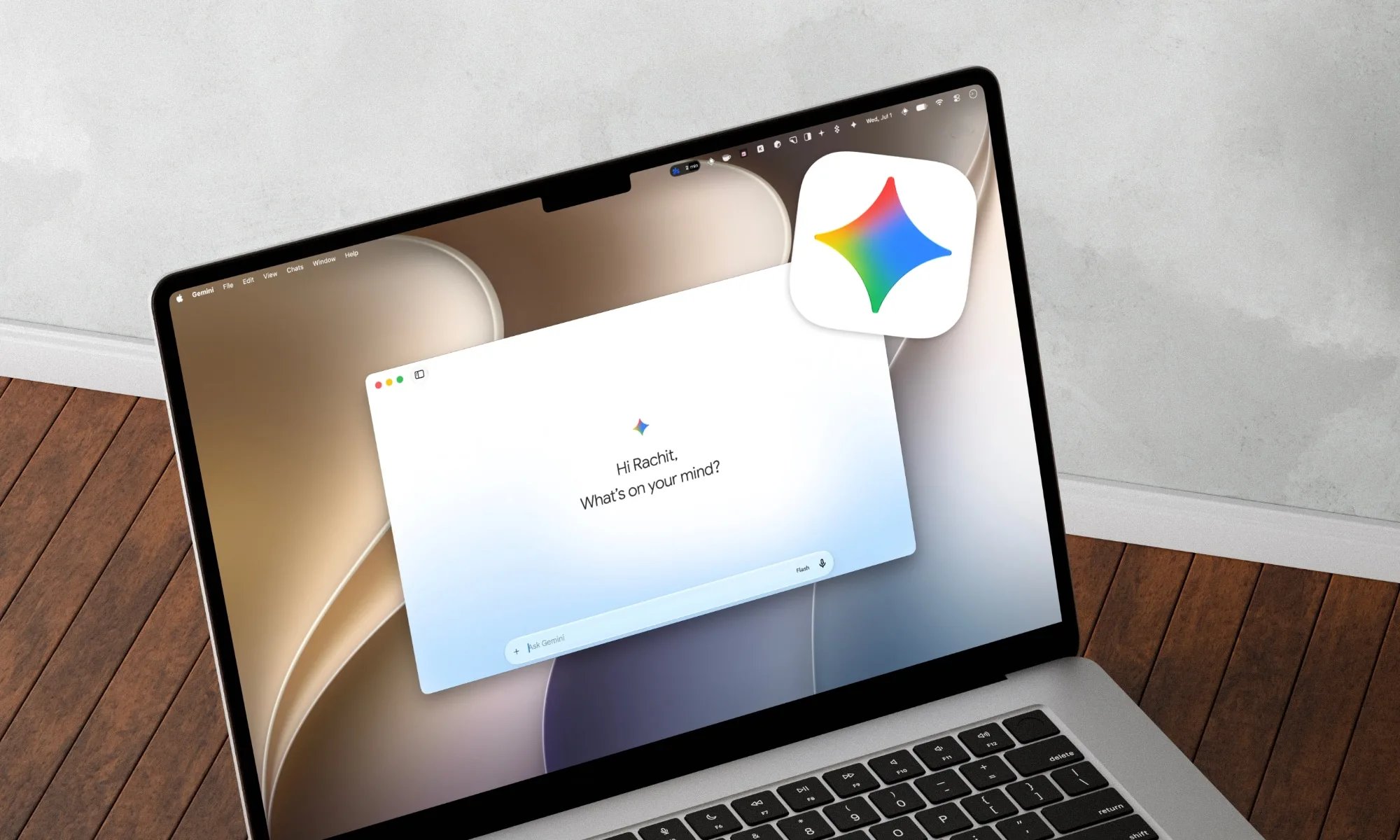
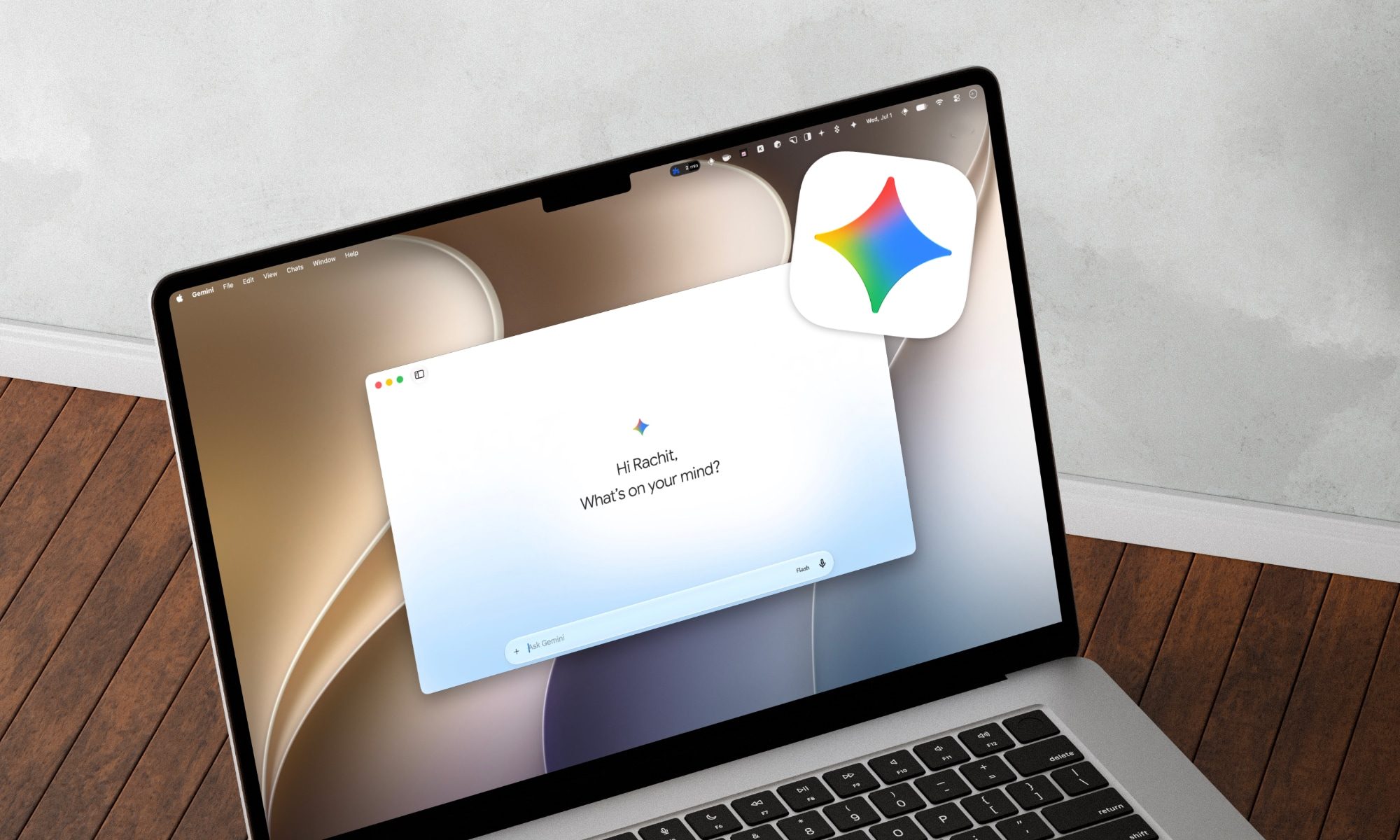
While Google works on closing that gap, it is also pushing Gemini aggressively toward a very different audience. Eligible U.S. college students can now get Google AI Pro free for an entire year, alongside a new Student Hub built specifically around studying, coursework, and research.

What students actually get for free

Eligible college students in the U.S. can claim 12 months of Google AI Pro without paying the usual $19.99 monthly price. That gives them higher Gemini usage limits, access to Gemini Spark, Gemini inside Gmail and Docs, and 5TB of storage. Students outside the U.S. get a slightly different deal. Eligible users can claim one year of Google AI Plus, which includes higher Gemini limits, access to Gemini Omni, and 400GB of storage.

Google is also adding a new Student Hub inside Gemini. Instead of having its growing collection of learning tools scattered around the app, the hub gives students one place to start Study Notebooks, make flashcards, and take practice quizzes.

What the Student Hub can do

Study Notebooks are probably the most useful part of the update. Students can upload lecture notes and other course material, and Gemini can build a study plan around them. They can also take a diagnostic quiz to find out which topics they are struggling with, then work through shorter lessons and quizzes based on those gaps.

Advertisement

There are some useful additions coming soon, too. Gemini will be able to pull exam dates and assignment deadlines from a syllabus and add them to Google Calendar with permission. Study Notebooks are also getting graphs and images, while Gemini can generate interactive tables, grids, and 3D visualizations for topics that are easier to understand visually.

Gemini Live is getting its own study-focused upgrade as well. Deep Research can now be started directly through a voice conversation, left running in the background, and discussed once the report is ready. Users can also move between talking and typing without losing the context of the research

Put together, Google is giving students a lot of reasons to spend the next academic year using Gemini.

Source link

Advertisement
Continue Reading

Tech

Google Goes Back to School With New AI Study Tools

Published

on

It’s back-to-school season, and Google is getting in on the academic action. The company announced on Wednesday that a dedicated student hub, featuring a suite of AI study tools, will now be available on its Gemini AI assistant and through Google Search.

The dedicated study hub can be found within Gemini and contains a suite of tools, including a study notebook, customized flash cards and practice quizzes to help with research and assignments.

A Google spokesperson didn’t immediately respond to a request for comment.

Students will be able to ask Gemini to dig into a topic they’re researching and then switch tasks while the tool compiles the information in the background. When the report is finished, Gemini will send a notification and be available to discuss the report’s details and participate in a question-and-answer session to help the student better understand the findings.

Advertisement

Students will also be able to chat conversationally with Google Live regarding multi-step research papers to better understand the topic in question.

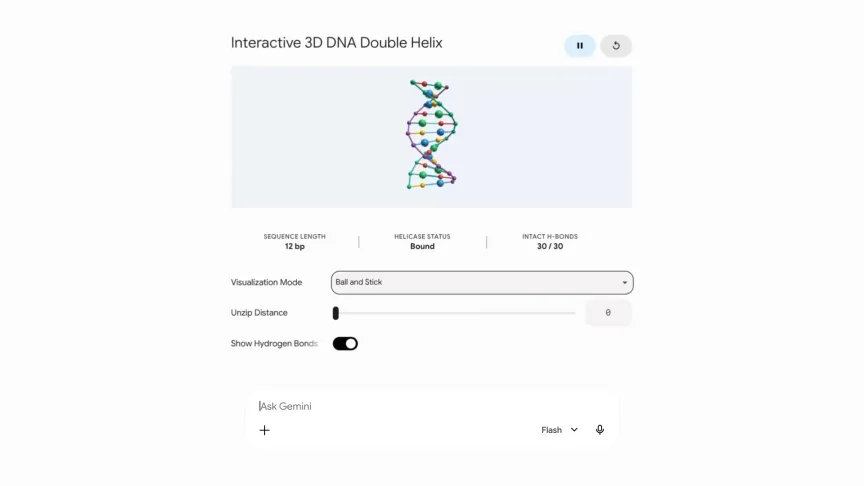
Want to learn more about DNA? Gemini’s got you covered.Google

Other educational features in Gemini include AI-generated 3D simulations, tables and grids, made after the student enters a specific prompt. A student who’s writing a paper on DNA can enter a prompt like “Show me how DNA works in 3D” and be presented with interactive visuals they can use to explore a DNA model.

Students also can generate simulations using Google Search to better understand complex topics. Science students can search for “pH scale” and see visual results in an interactive AI overview.

Stick with AI Mode in Google Search, and you can ask follow-up questions about the topic in question to dig deeper into a subject.

Customized quizzes can now also be created through Search. Students can enter prompts for subjects ranging from science and math to foreign languages. A student preparing for the SAT could ask, “Create a quiz with the most commonly tested vocabulary words to help me prep for the SATs.” Search will then generate a quiz based on the prompt.

Advertisement

Students can upload files like PDFs, images, docs and more to Search, and the platform can create study documents to keep things organized and easy to follow. You can consolidate scribbled notes, ideas from class or feedback from lectures into one-page reports that outline the bullet points.

Google

Google is offering college students in the US a free year of Google AI Pro, which normally costs $20 per month. The plan includes four times higher usage limits in Gemini, access to Gemini Spark, Gemini features in apps such as Google Docs and Gmail, Google Health Premium and 5TB of storage.

Google is also bundling Google AI Pro with YouTube Premium for up to 70% off. For more information on Google’s student deals, head here.

Google’s announcement of its new AI study tools comes one day after OpenAI launched ChatGPT for Teens, a version focused on younger students’ education. As more AI companies enter the education market, Google’s expansion into AI-powered learning could have a significant impact on the space.

The growing use of AI in education has also raised questions about where study help ends and cheating begins. In July, Princeton University began proctoring exams after concerns about the proliferation of AI-related cheating. Many schools have implemented tools for AI detection and imparted strict rules on AI use, while wrestling with how to draw the line between limited use for minor tasks and major ones, such as essay writing. Students seem unlikely to give up AI entirely, and AI companies will continue to encourage it, but schools will continue to face its various challenges.

Advertisement

Source link

Advertisement
Continue Reading

Tech

Comcast Xfinity Wants to Use Your Wi-Fi as a Motion Sensor in Your Home

Published

on

Comcast on Monday announced Xfinity Shield, a home-security platform that taps into Xfinity Wi-Fi in new ways. It adds WiFi Motion, which uses compatible Xfinity Wi-Fi routers to detect movement in the home without cameras or dedicated motion sensors. WiFi Motion and other Shield features are available at no additional cost to eligible Xfinity customers, although compatible equipment and other requirements apply.

I know it sounds eerie to think about a Wi-Fi router that can see you, but I’ve covered this presence-sensing technology before, and the goal is the opposite of invasive surveillance. This kind of technology uses algorithms to monitor changes in Wi-Fi frequencies and identify small patterns of interference, like the kind a person makes when they enter a room.

That means Xfinity Shield can detect people without traditional motion sensors, cameras or video, better preserving privacy while still sending alerts via the Xfinity app if the router notices unexpected human movement. The technology requires not only an Xfinity Gateway device, but also at least one connected Wi-Fi device on the Xfinity platform. I’ve seen it used in standalone sensors, new smart light bulb kits and systems used for aging-in-place arrangements in nursing homes, but never as a free router upgrade.

A representative from Xfinity didn’t immediately respond to a request for comment.

Advertisement

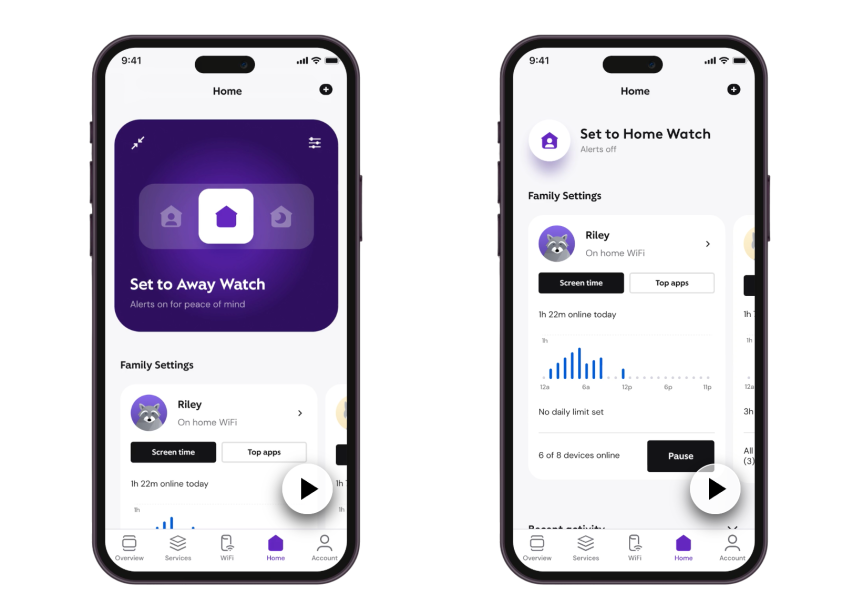
WiFi Motion doesn’t have to stay on all the time. Xfinity Shield includes different security modes to enable or disable features based on activity. Home Watch, Away Watch, and Dark Watch all provide different approaches to alerts and arming systems depending on whether people are at home, at work or school or sleeping.

App alerts showing on Xfinity app on two phones.
New modes and security options come included with the free Xfinity Shield.Comcast

Comcast is combining other security features into Xfinity Shield, too. Its firewalls and router cybersecurity are now under Xfinity Shield, as are parental controls and related app alerts.

For Xfinity users interested in expanding their home security options, Xfinity Shield offers another, more expensive option. Users can now upgrade to a Shield Select plan, starting at $15 per month. That adds one wireless security camera and sensor, plus video cloud storage and a 24/7 emergency contact option. Comcast says the camera is AI-powered, but the only recognition features I can find are for people, packages, vehicles and pets, a capability security cameras have had long before the AI boom.

“We believe the network should do more than connect devices,” Comcast Chief Growth Officer Jon Gieselman said in a statement. “It should help protect the people, their personal information and everything within their homes that depend on our most reliable Wi-Fi every day. That’s the vision behind Shield: advancing the role of Wi-Fi to both connect and protect the home.”

We’ll start testing out these new Xfinity Shield features and let you know what we think, but the free version looks like an interesting option for current users who don’t like the idea of security cameras.

Advertisement

Source link

Advertisement
Continue Reading

Tech

Waymo’s cheaper, next-gen robotaxi is now open to all riders in these three cities

Published

on

Waymo has opened its next-generation robotaxi to all riders in Los Angeles, Phoenix, and San Francisco — a notable milestone for the Alphabet company as it pushes to expand its fleet with vehicles that are cheaper to build, operate, and maintain.

For now, customers in these markets may be matched with the new robotaxi, called the Ojai (pronounced oh-hi) when they hail a ride. Once Waymo has enough Ojais in its fleet, riders will be able to choose between the new vehicle and the older Jaguar I-Pace robotaxi. Waymo has about 300 Ojai robotaxis in its commercial fleet today, according to a company spokesperson.

The company said Wednesday that it plans to roll out the Ojai in Denver, Las Vegas, and San Diego later this year.

For years, Waymo has relied on the all-electric, modified Jaguar I-Pace for its robotaxi fleet, which now operates in 11 U.S. cities. While the white, sensor-laden autonomous hatchback has become ubiquitous in markets such as San Francisco, it has been more of a stopgap in Waymo’s longer-term push toward mass scale, and eventually, profitability.

Advertisement

The Waymo Ojai robotaxi is meant to deliver on that ambition. The Ojai is equipped with Waymo’s sixth-generation self-driving system, which is critical to the company’s commercial strategy because it’s modular and designed to work across multiple vehicles types. The robotaxi also comes with a redesigned user interface and Google’s Gemini AI, which acts as an in-car assistant for riders.

Strip away that technology, though, and the Ojai is a minivan made by Zeekr, a brand owned by China’s Geely Holding Group. Waymo partnered with Zeekr in 2021 and has spent years testing a prototype, and later a production-intent version of the vehicle. It’s built on Zeekr’s SEA-M platform, an updated version of the automaker’s “Sustainable Experience Architecture,” which the company designed for vehicles like robotaxis and delivery vans. The goal was to create a robotaxi that was attractive and easy for riders to access, but also cheap to build and maintain and durable enough to withstand near-constant use.

The Ojai delivers on many of those goals, though tariffs on the imported vehicles have added cost. Under current U.S. trade policy, vehicles built in China face steep import tariffs, which raises Waymo’s costs for every Ojai it brings into the country. The base Zeekr vehicles ship without any Chinese connected-car technology on board. After arriving in the U.S., they’re sent to Waymo’s Arizona factory, where they are outfitted with the self-driving system.

New York-based research firm MoffettNathanson, which tracks Ojai imports by examining detailed receipts of shipped goods, said Waymo is on pace to bring 5,000 Ojai vehicles to the United States by the end of 2026. That would be more than double Waymo’s current Jaguar fleet, according to the firm. In July alone, 725 Ojai vehicles entered the country, underscoring the scale and pace of Waymo’s expansion efforts.

Advertisement

When you purchase through links in our articles, we may earn a small commission. This doesn’t affect our editorial independence.

Source link

Continue Reading

Tech

Why connectivity and cybersecurity can’t be treated separately

Published

on

Magnet Plus’s Patrick Masterson discusses why now is the time to engage in a combined network and security strategy to ensure business continuity and maintain customer trust.

For many organisations, cybersecurity has traditionally focused on protecting data, preventing ransomware and securing endpoints.

But one of the biggest cyberthreats facing businesses today isn’t designed to steal personal data or information at all – it’s designed to grind your business operations to a complete standstill. Known as ‘distributed denial of service’ (DDoS) attacks, they are becoming one of the most disruptive cyberthreats to business continuity today.

According to the European Union Agency for Cybersecurity Threat Landscape 2025, DDoS attacks accounted for 77pc of reported cybersecurity incidents across the EU last year, making them the single most common form of cyberattack.

Advertisement

Rather than stealing sensitive data or deploying ransomware, DDoS attacks overwhelm a company’s internet-facing network infrastructure with excessive traffic, slowing down online services for legitimate customers and employees alike and in severe cases, rendering them partially or completely unavailable. This results in service outages and slow performance; customer portals stop responding, communications become interrupted and employees are unable to access the vital applications they rely on every day.

Even a relatively short period of downtime can have significant operational and financial consequences, affecting revenue, customer confidence and business reputation.

Currently, there is a serious concern that the occurrence of DDoS attacks will increase in Ireland in the coming months due to Ireland’s presidency of the EU. The concerns are based on the fact that there was a rise in DDoS attacks in Denmark in 2025 and in Cyprus earlier this year during their EU presidencies.

The most common attacks are ransom DDoS attacks, whereby attackers launch a DDoS attack against companies, threaten larger attacks and demand payment usually in cryptocurrency. Online retailers, banks, gaming companies, technology companies, cloud and SaaS providers frequently fall into this bracket. Government departments, semi-state organisations and political organisations have also experienced DDoS attacks based on their political nature and the ability for the attack to attract media attention if they succeed. Other high-profile targets include well-known national and international brands or companies listed on the global stock market.

Advertisement

The National Cyber Security Centre has already warned that attacks during the Irish Presidency could result in a disruption to services which could cause severe damage to the reputation of Ireland and the EU.

A fundamental mindset shift in how organisations safeguard their digital infrastructure is now required to mitigate this DDoS risk and ensure systems are continually protected.

With companies depending more and more on AI-powered applications, unified communications, hybrid working and digital customer experiences, the ability to keep critical systems online has become just as important as protecting the data they contain.

As a result, connectivity and cybersecurity shouldn’t be treated as separate conversations. Connectivity is no longer expected simply to deliver faster speeds. Instead, organisations need to ask whether that connectivity can withstand disruption.

Advertisement

Can employees continue working if demand suddenly spikes? Can customer-facing applications remain available during malicious activity? Can critical systems continue operating when the unexpected happens? Increasingly, these are boardroom questions rather than IT questions.

However, resilient connectivity alone is no longer enough. The rise of DDoS attacks shows that network availability itself has become a target. Protecting that availability requires organisations to build cybersecurity into the network rather than treating it as an additional layer added afterwards.

Increasingly, organisations are responding to the heightened risk of DDoS attacks by utilising dedicated internet access (DIA). Unlike shared broadband, DIA provides businesses with a private connection, allowing for uncontended bandwidth, symmetrical speeds and guaranteed performance while giving organisations greater confidence that business-critical applications can continue to perform reliably.

Combining a DIA service with always-on DDoS protection reduces the risk of cyberattacks further by continuously monitoring network traffic, identifying malicious activity in real time and automatically mitigating attacks before they impact services.

Advertisement

Ultimately, this isn’t simply about preventing cyberattacks. It’s about ensuring business continuity, maintaining customer trust, protecting employee productivity and ensuring essential digital services remain available when customers need them most.

As DDoS attacks become more frequent and organisations become increasingly dependent on digital services, resilience can no longer be treated as an IT issue alone. The businesses best prepared for the future will be those that build networks designed not only for performance, but for protection, availability and continuity.

In today’s digital economy, resilience isn’t just an IT objective – it’s fundamental to business success.


Advertisement

By Patrick Masterson

Patrick Masterson is managing director at Irish telecoms and broadband provider Magnet Plus. He has more than 20 years of experience in a range of C Suite roles in Irish companies across the retail, technology and healthcare sectors.

Don’t miss out on the knowledge you need to succeed. Sign up for the Daily Brief, Silicon Republic’s digest of need-to-know sci-tech news.

Advertisement

Source link

Continue Reading

Tech

NCI to launch two bachelor’s courses in AI and cybersecurity

Published

on

The courses are expected to launch in September 2027, subject to approval.

National College of Ireland (NCI) is introducing two new degree programmes to meet the growing demand for skills in AI and cybersecurity.

The proposed Bachelor of Science honours programmes in Cybersecurity & AI, and AI & Psychology are currently being developed by NCI and are expected to welcome their first intake of students in September 2027, subject to programme approval.

The degree programmes are being designed as a response to meet the increasing demand for graduates skilled in AI, digital security and data-driven technologies, as major tech companies continue to settle and grow in the country.

Advertisement

A 2025 report found that since 2023, AI usage and jobs in the field have doubled and there is increasing demand for professionals with skills in AI. Ireland also ranked third in the EU for percentage of people with “basic or above” levels of digital skills – just behind the Netherlands and Finland.

The new programmes are expected to offer an interdisciplinary approach to learning, combining technical expertise with an understanding of human behaviour, ethics and emerging technologies, the Department of Further and Higher Education, Research, Innovation and Science announced in a press release.

“Artificial intelligence is transforming the way we live, work and learn, creating exciting opportunities across every sector of our economy,” said Minister for Further and Higher Education, Research, Innovation and Science James Lawless, TD.

“These innovative programmes demonstrate how Ireland’s higher education sector is responding to the rapid pace of technological change and helping to develop the talent needed for the future.

Advertisement

“By combining AI with cybersecurity and psychology, National College of Ireland is creating new pathways for students into careers that are increasingly important for Ireland’s competitiveness, innovation capacity and digital resilience.”

Prof Gina Quin, president of NCI, commented: “National College of Ireland operates at the leading edge of technology and critical thinking.

“These two programmes place AI in context, delivering knowledge and skills to engage with AI’s implications for cybersecurity and for humanity, anticipating and influencing the impact AI will have on industry, on work and on our personal lives.

“National College of Ireland has a long-standing commitment to widening participation in higher education and serves as an important educational and community resource, particularly in Dublin’s north-east inner city. As a private, not-for-profit higher education institution, NCI provides a range of full-time and part-time programmes from foundation level through to postgraduate study.”

Advertisement

Don’t miss out on the knowledge you need to succeed. Sign up for the Daily Brief, Silicon Republic’s digest of need-to-know sci-tech news.

Source link

Advertisement
Continue Reading

Tech

Japan just launched a U.S. military payload into orbit, giving Washington another set of eyes over the Indo-Pacific

Published

on


  • Japan has now launched the second U.S. surveillance payload under the program
  • The payload will feed near-real-time orbital data to U.S. forces
  • Mission Delta 2 will operate the American payload after deployment

The United States Space Force and Japan have completed a bilateral satellite launch meant to strengthen surveillance capabilities across the Pacific region and beyond.

A US space domain awareness payload was carried aboard Japan’s Quasi-Zenith Satellite 7, launched from Tanegashima Space Center.

Source link

Advertisement
Continue Reading

Tech

Stripe didn’t really buy OpenRouter because of the ‘singularity’

Published

on

Stripe confirmed on Wednesday that it was buying OpenRouter. While the company didn’t disclose the deal price, sources told the New York Times that it paid $7.5 billion.

That’s a huge step up from OpenRouter’s $1.3 billion valuation in May. To put that price in context, the founders alone will reportedly receive $1.5 billion from the sale — more than the startup’s entire valuation just three months ago. Investors will get the remaining $6 billion, according to the NYT. Stripe reportedly had to outbid others interested in the fast-growing startup, including Databricks.

But the question is: what does a payments giant want with a startup that routes prompts between different AI models?

The short and funny answer, according to a leaked letter from Stripe’s founders to its investors about the deal, is: the singularity.
Advertisement

“It’s a fuzzy and perhaps already overworked term but we decided that January 1 marked the beginning of the singularity and we’ve been operating on that basis,” they wrote in the letter, published by Eric Newcomer, and verified by TechCrunch.

The singularity is supposed to mean the point at which humans and the tech we’ve created merge to become a new species. This is obviously a tongue-and-cheek reference (as Patrick Collison admitted when using the term it at his company’s conference in April). We’re fairly certain Stripe’s founders, the brothers Patrick and John Collison, don’t think humanity started turning into The Borg eight months ago.

But they have referred to the economic uptick that AI is bringing to Stripe. With AI, more companies are being launched and more of them are using Stripe’s offerings. Stripe says that 88% of the Forbes AI 50 are using its products, including OpenAI and Anthropic, as do 100% of Brex’s fastest-growing startups. No one knows how AI and agents will change the economy of the future, but everyone is certain it will change it dramatically.

That still doesn’t explain why Stripe wants a company mostly known for helping developers manage their model usage. Stripe’s founders acknowledged that their customer bases overlap.

Advertisement

“OpenRouter is exceptionally useful for any developer and Stripe is one of the world’s largest developer platforms,” the founders write in their letter. No doubt that just using OpenRouter internally will probably offer significant benefits to Stripe and make it easier to roll out future model-agnostic agentic offerings, too.

It seems as if OpenRouter will continue to operate independently after the deal closes in a few weeks, or so the startup promised in its own blog post, saying that its “product, mission, and current commitments remain unchanged.”

Still, until now, most of Stripe’s large acquisitions have been related to helping people collect and manage incoming cash. Buying OpenRouter looks like a move to other side of the ledger, too: expense management, beginning with AI expenses.

This acquisition “is Stripe’s deliberate attempt to embed itself into the middle of capital flows in the AI era,” said PitchBook’s research analyst Franco Granda.

Advertisement

It’s joining an unusual assortment of companies also entering token expense management. Databricks developed its own AI gateway. Rippling just launched one focused on employee AI spend and ROI. Ramp just launched one, also for AI expense management. And the list goes on.

For Stripe, buying the granddaddy of popular AI gateways for developers gives it insight into how coders are using AI. But it also gains a lever on AI demand itself. OpenRouter will grant it “some degree of power over suppliers such as the frontier labs themselves, as well as hyperscalers and neoclouds,” Granda said.

It may not be the Borg, but payments plus token expense management and a model router? That’s a lot of power.

When you purchase through links in our articles, we may earn a small commission. This doesn’t affect our editorial independence.

Advertisement

Source link

Continue Reading

Tech

Gaining Leadership Backing for Your Innovations

Published

on

This article is part of our exclusive career advice series in partnership with the IEEE Technology and Engineering Management Society.

Imagine this: You have a strong idea for a new product for your company. Your coworkers encourage you to move forward because they believe it could be the organization’s next big success. The idea clearly falls outside your department’s responsibilities, however, and you have no role in the product line.

What should you do? Sit and wait for “the right group” to pick it up, or push the idea forward without knowing how or what it might mean for your current position?

Such situations occur frequently. Many end up as missed opportunities, even though they could have significantly advanced the company’s technological or market position.

Advertisement

Some organizations actively support such initiatives, allocating specific periods during the workday for employees to focus on developing their own ideas.

Companies known for that include Google and 3M. They allow employees to pursue projects with a portion of their time, such as one day per week. Research that I conducted indicates it pays off for employee performance.

Bootlegging and skunkworks

At some companies, managers know such projects exist, but they deliberately turn a blind eye, allowing them to continue.

Some employees persist through bootlegging or skunkworks projects.

Advertisement

Bootlegging projects have not been approved by a manager or funded by the company.

Skunkworks projects involve a small team within the company that has been given authority and funding to secretly research and develop potentially groundbreaking innovations during their off-hours. The term comes from Lockheed’s Skunk Works division, set up in 1943 in a rented circus tent to build the P-80 fighter jet in secret. It took just 143 days.

The 3M Post-it Note came out of the company’s “15 percent culture,” described as a permitted bootlegging policy. It gives employees paid time off to pursue their own ideas.

The company traces the philosophy to its longtime president and later chairman William L. McKnight. Company scientist Arthur Fry used the policy in 1974 to turn a colleague’s dormant adhesive into the first Post-it prototypes, after his own bookmarks kept falling out of his hymnal.

Advertisement

There are several examples of high-visibility skunkworks projects. At Apple, Steve Jobs pulled roughly 20 people—pirates, as he called them—out of the company to build the original Macintosh computer in a building nicknamed Texaco Towers. In Walter Isaacson’s biography Steve Jobs, he frames the idea as modeled on the skunkworks approach.

Google’s Gmail system is frequently—and incorrectly—cited as a product of the company’s “20% time” policy. In a 2014 interview with Time magazine, the system’s creator, Paul Buchheit, said Gmail was in fact an official assignment. What the Gmail incubation did share with classic skunkworks projects was secrecy: For much of its three years in development, it was kept hidden from most people inside the company.

If you want to drive change in your organization, build a promoter triad around your idea.

At Alphabet, Google X—now known simply as X—operated as a secretive “moonshot” lab, kept hidden from most Google employees, according to a 2011 article in The New York Times. Google’s self-driving car project graduated from X to become Waymo, and Google Glass was likewise incubated there. The X team is now developing the second edition of Glass Enterprise, a successor aimed at industrial rather than consumer use.

Advertisement

Amazon runs a comparable model through Lab126, which, according to an article in Fast Company, evolved from a small skunkworks Amazon subsidiary into a hardware maker with nearly 3,000 employees. Lab126 delivered the Kindle in 2007 and the Echo in 2015.

Then there are so-called submarine projects, which employees work on without permission and despite explicit disapproval. They can lead to disciplinary action and termination.

Innovation management

Innovation management theory offers a more structured and robust approach. It argues that successful organizational change requires support at several levels, according to “Teamwork for Innovation: The ‘Troika’ of Promoters,” published in R&D Management. The promoter theory, developed around 25 years ago, consistently shows that change projects are far more likely to succeed when they are supported on multiple organizational levels. A good idea alone is not enough; you need a network of technology, process, and power promoters to turn a concept into a fully implemented, scalable solution.

First, you need a technology promoter: the person who has the idea, such as a new product, and possesses technical expertise and specific knowledge about the field or industry. Art Fry at 3M would be such an individual.

Advertisement

How can you put that into practice as an individual? Start by clearly formulating your idea into a concise concept paper or one-page summary including benefits, technical feasibility, and potential business impact.

Identify potential technology promoters (experts who can validate and refine your idea), and approach them early to strengthen the technical foundation.

In parallel, map the relevant stakeholders and decision-makers, and identify process promoters who understand how decisions are made in your company. They could be colleagues in innovation, R&D, or business development who understand your idea and how it can benefit the company.

The second is a process promoter: someone who might not know all the technical details but understands the organization’s formal and informal networks and knows how to navigate its processes, committees, and decision-making paths. This person can ensure the idea reaches the right stakeholders at the right time.

Advertisement

In the 3M case, it would be a person from the organizational management department, often called an innovation manager. The key role here is to connect inventors such as Fry with people from other departments needed for further project development, such as manufacturing, quality control, and sales.

Lastly, there’s the power promoter: a person in a leadership position who might not know the technical details but can allocate resources, eliminate obstacles, and maneuver through the company’s political dynamics. This individual has hierarchical power and acts as a sponsor of the idea or project. In the case of Fry, the person could be, say, the chief technology officer, but it also could be a middle manager who has the power for an individual field of action.

The three-level promoter structure applies regardless of whether the change concerns a new product, new service, or internal process innovation.

Engage potential power promoters by presenting a low-risk, small-scale pilot and a clear value proposition. Leaders are more likely to support ideas that are well prepared, vetted for potential risks, and backed by a small coalition.

Advertisement

Building the promoter triad

In short, don’t work in isolation. Systematically build alliances across expertise, networks, and hierarchical levels to create lasting change. If you want to drive change in your organization, build a promoter triad around your idea.

The tech experts and leadership promoters are easier to identify. Process promoters are often found in corporate innovation management, R&D management, or strategy functions, but they also can emerge in line units with strong internal networks.

Innovation management, as the promoter model describes it, looks nothing like the management structure most engineers are trained to expect. Traditional technical management runs on a single reporting line. With the promoter model, influence is spread across three people—technology, process, and power promoters—who may be in different departments, at different levels of seniority, and who might never share a reporting line.

What holds the trio together isn’t a formal structure; it’s the idea itself, for as long as it takes to move the idea forward.

Advertisement

That makes innovation management closer to networked, matrix-style leadership than to the pyramid most engineers picture when they hear the word management. It’s worth understanding both models before you decide which kind of impact you’re actually optimizing for.

The Institute has covered the tension from the individual’s side in “Tips for How to Think Like an Entrepreneur,” “Management Versus Technical Track,” both published in partnership with the IEEE Technology and Engineering Management Society, and “What to Consider Before You Accept a Management Role” from the IEEE Spectrum Career Alert newsletter. All are worth a look if you’re weighing a formal management track against staying close to the technology itself.

Remember: You don’t have to build your promoter network alone or only inside your own company. IEEE societies, sections and chapters, and technical committees, as well as the networking platform IEEE Collabratec, function as a ready-made cross-company network. They are practical places to find technology promoters with deep expertise in a field you don’t fully own yet, or to meet process and power promoters at other organizations who have built a promoter coalition around a similar idea.

For more tips on how to advance your career, check out our Career Advice for Engineers, From Engineers collection.

Advertisement

From Your Site Articles

Related Articles Around the Web

Source link

Advertisement
Continue Reading

Tech

How Much Did A ’79 Mustang Cost New & What’s One Worth Today?

Published

on


1979 marked a huge year of change for the Mustang. It shrunk considerably in size and was now based on Ford’s “Fox” platform, giving this generation the “Fox-Body” moniker. Today, Fox-bodies fit into the classically “rad” category of late 1970s to 1990s cars and, depending on the spec, can be pretty sought after. 

But what did it cost brand new in a Ford dealership as the 1970s concluded? A base model 1979 Ford Mustang two-door (it was also available with a liftback) started at $4,494. It was equipped with a 2.3-liter naturally aspirated four-cylinder, a far cry from the big displacement V8 from the early 1970s. A V6 and a 302 cubic-inch V8 were also available. Notably, this also marked the first year that Mustangs could be turbocharged from the factory, with a 2.3-liter turbocharged four-banger churning out and impressive (for the time) 147 horsepower. In a brochure from 1979 Ford lists its 0-55 mile per hour time (instead of the more common 0-60) of “eight to nine seconds”). For comparison, a new Toyota Rav4 Plug-In has a 0-60 time of 5.4 seconds. 

Advertisement

Pricing the ’79 pony car in modern dollars

If you want to relive the late 1970s and buy one of the first models of the Fox body for yourself, the prices haven’t gotten super ridiculous (at least compared to other classic cars like a Buick Grand National). Of course, well-kept examples might be much more expensive than something that was used as a daily driver. But what’s the point of buying an older Mustang if you aren’t going to drive it? 

Advertisement

Unfortunately, 1979 Mustangs don’t seem to go up for sale all that often. Online car platform CarGurus puts the price between $27,000 and $29,000based on sales data gathered from March to June of 2026. However, there are outliers like an Indy Pace Car Edition Mustang with a scant 110 miles on the odometer that crossed the auction block at $38,500 on Bring a Trailer. 

The 1979 Ford Mustang was cool, a lot different than the Mustangs before (and after, if we are being honest), and showed the American muscle car world that turbocharging and smaller displacement engines were a viable path forward. Ford even uses a 2.3-liter EcoBoost in the current Mustang, showing how the automaker continues this tradition into the present day

Advertisement


Source link

Continue Reading

Trending

Copyright © 2025