Tech
The Best DACs, Headphone Amps and DAPs from CanJam London 2026

Last year’s trip to CanJam London was something of a nightmare, with lengthy train delays and torrential rain pouring over the London Eye and Westminster Bridge.
This time, the journey into the heart of the city could not have been easier. There were no travel hiccups, and the sun managed to find its way through every available gap between the buildings, buses and cars.
Inside the Park Plaza Hotel, the air conditioning was working overtime, which was just as well. Attendance was clearly up compared with 2025, and there were noticeably more brands and exhibitors. So many, in fact, that I simply could not see everything on offer over the two days.
Following our recent coverage of CanJam NYC 2026, and with the eCoustics team heading to CanJam SoCal at the end of the summer, London offered another useful snapshot of where personal audio is heading. With my trusty Sendy Audio Egret in tow, I focused on the products that stood out most. We begin with my personal highlights among the DACs, headphone amplifiers and DAPs at CanJam London 2026.
Related Reading:
Burson Audio Conductor Stellar

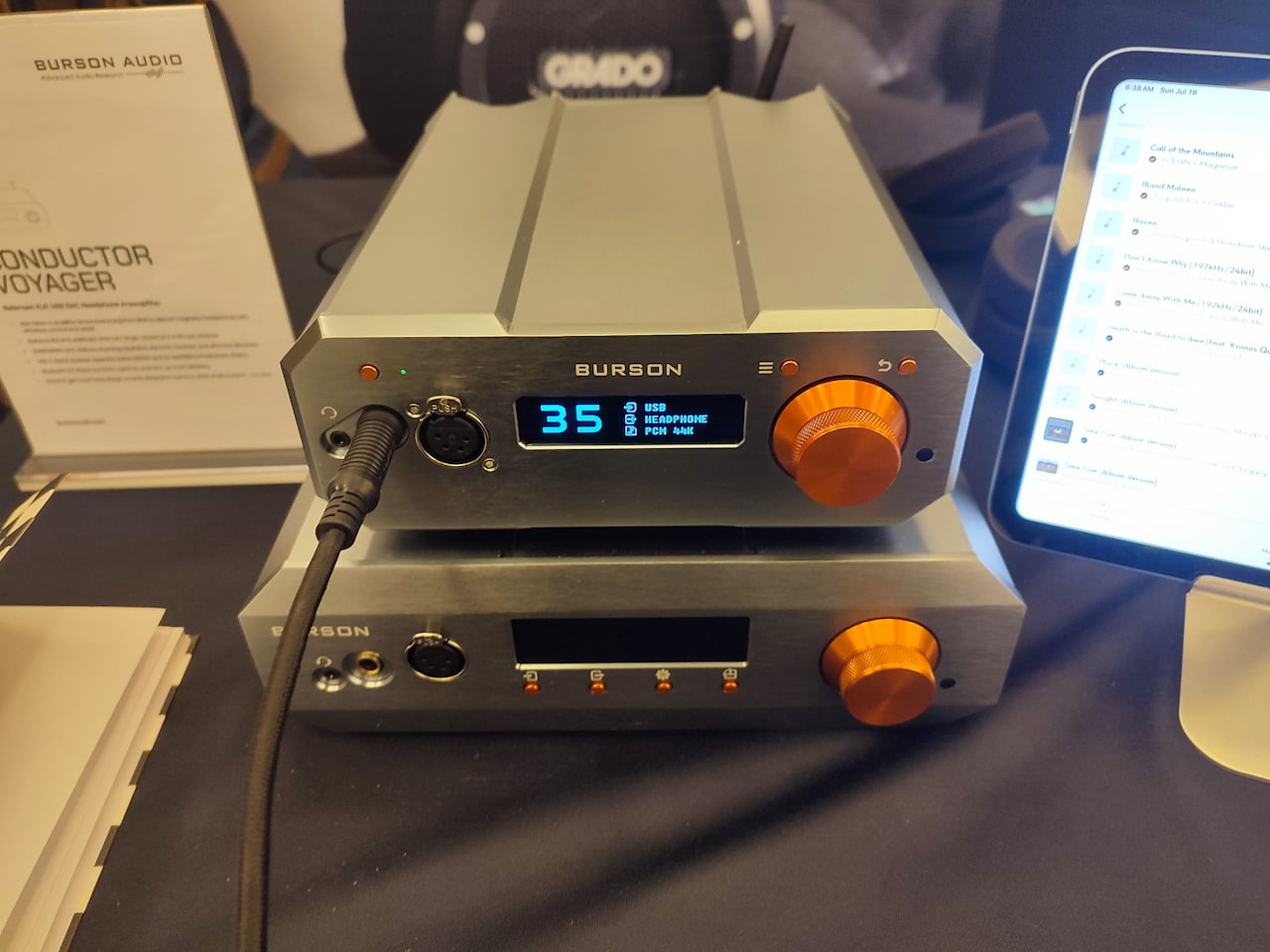
Australian audio brand Burson has seemingly come out with a smaller, more compact Conductor Voyager that costs less and offers almost the same level of performance.
You get two watts less of Class A amplification, at eight watts rather than ten, but you won’t notice that unless you’re using a particularly difficult-to-drive pair of cans. What’s more, the Stellar has a dedicated IEM amplifier stage, so you can drive your sensitive in-ears with ease.
Despite being Class A, I found the Stellar to be wholly neutral, albeit with excellent dynamics and an impactful bass line. As a pure headphone listener, I’d go for this instead of the Voyager unless you need the extra I/O that the latter offers at the back.
Fosi Audio ZH1


I’ve always been a fan of Fosi Audio’s budget-conscious approach to personal audio, and its upcoming ZH1 certainly sticks to that philosophy.
Expected to arrive around September for approximately £130, the ZH1 is a compact desktop DAC and headphone amplifier built around a pair of Cirrus Logic CS43131 DAC chips and Fosi Audio’s own headphone amplifier circuit. Its unusual hexagonal chassis also helps it stand out from the endless procession of small black boxes competing for space on your desk.
That oversized volume knob definitely takes centre stage. It makes quick adjustments easy, while the lighting underneath can be changed to suit your setup. Some audiophiles will undoubtedly switch it off immediately, but I imagine the colourful presentation will make the ZH1 particularly popular with gamers and younger listeners.
This is not merely a piece of affordable desktop decoration, either. With more than one watt of output power available, the ZH1 should have enough muscle for a broad range of headphones rather than being limited to sensitive IEMs and easy-to-drive models. It certainly had no difficulty with my Sendy Audio Egret at the show.
Aune A17
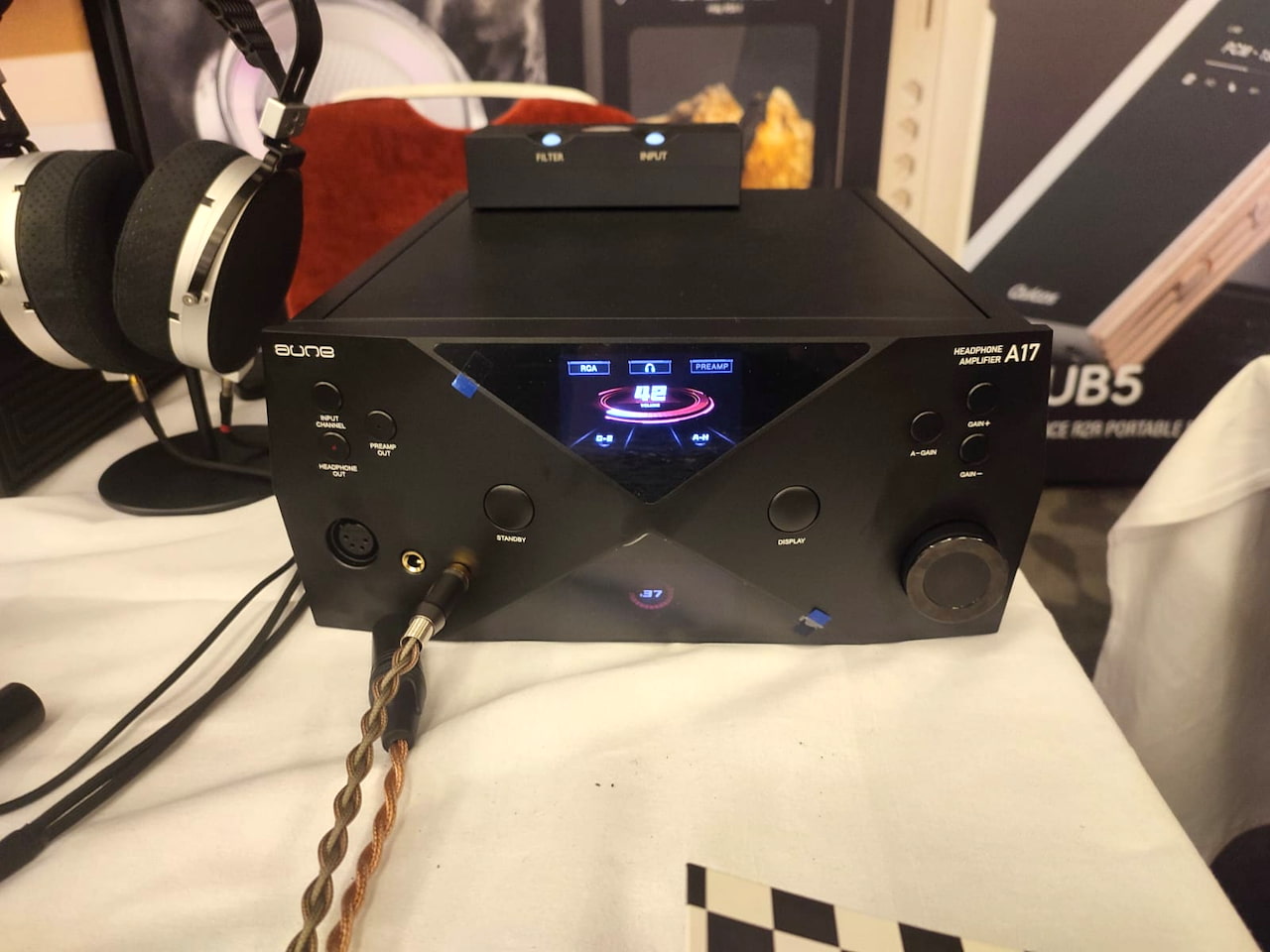
Next up is this absolute behemoth of an amplifier. I’ve reviewed a few of Aune’s products in the past, but nothing has come close to the sheer heft of this beast, which weighs an astonishing 18 kg.
It has the power to back up its size, too, delivering almost 12 watts from its balanced output. That translates rather directly into its sonic performance, as my main takeaway was the exceptionally high level of control it maintained across the entire audible spectrum.
It also costs upwards of £2,000 ($2,399 at Amazon), and while you certainly get a lot of material and componentry for the money, I found the design rather uninspiring and, dare I say it, slightly cheap-looking.
FiiO R7 R2R
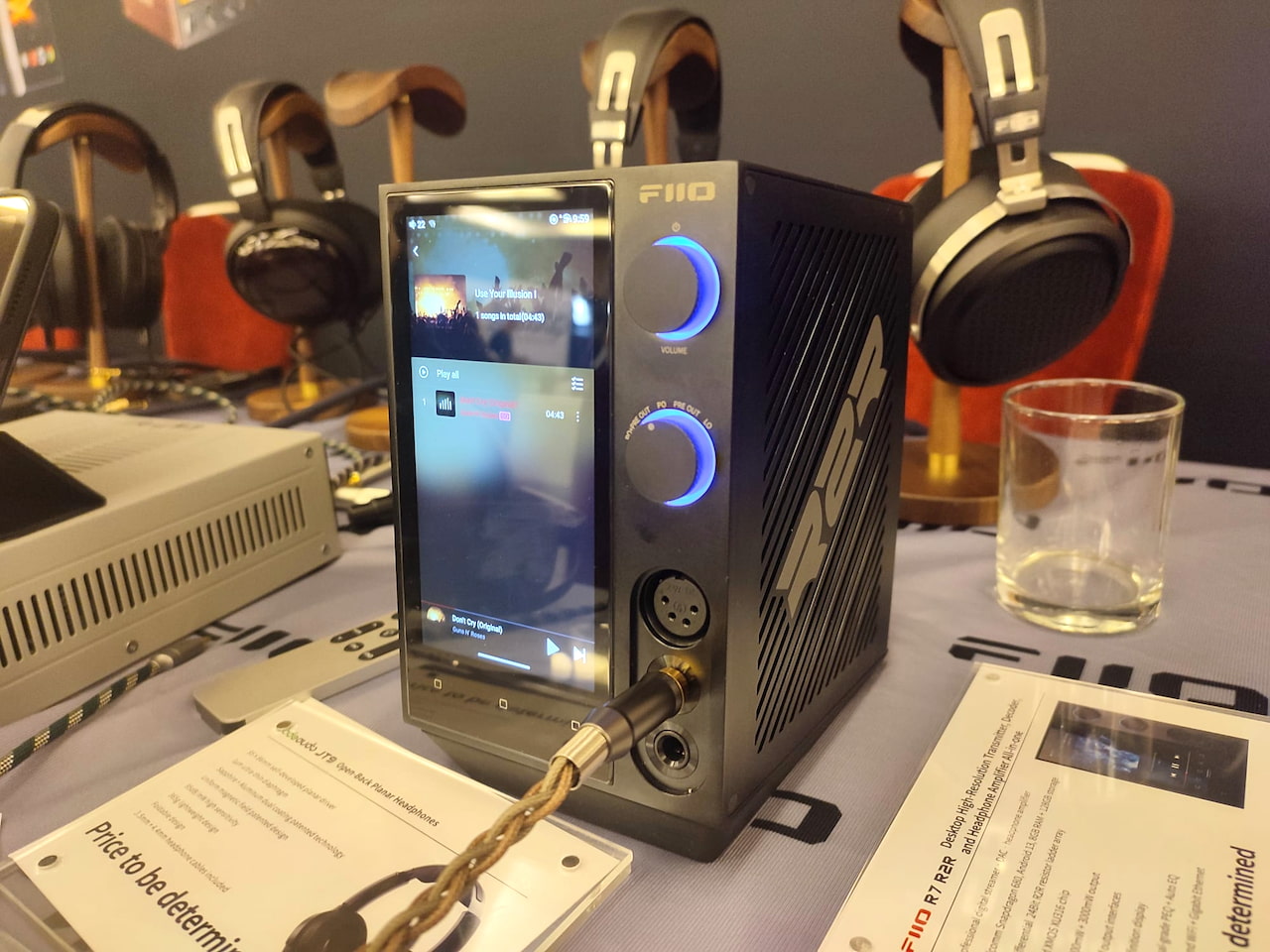
The FiiO R7 R2R is expected to cost the same as its original sibling at around $700, but replaces the standard R7’s ESS ES9068AS delta-sigma DAC architecture with an R2R resistor-ladder conversion stage.
The rest of the formula remains familiar. It is still a compact, all-in-one desktop streamer, DAC, preamplifier and headphone amplifier, with a vertical touchscreen, Android-based access to streaming services and support for local playback. The standard R7 also offers Wi-Fi, Bluetooth, AirPlay and Roon Ready connectivity, alongside balanced 4.4 mm and four-pin XLR headphone outputs and a 6.35 mm single-ended connection.
To me, the move to R2R represents a clear upgrade. I noticed the difference immediately, with greater bass impact, more warmth and a fuller overall presentation than I heard from the standard R7.
I love that FiiO continues to refine and expand its range of all-in-one streamers, DACs and headphone amplifiers rather than abandoning successful products after a single generation. The R7 R2R does not reinvent the original, but it sounds like another worthwhile incremental improvement to one of FiiO’s most versatile desktop components.
FiiO Class A

Shuffling further down the FiiO booth, I spotted another as-yet-unreleased product: a dedicated headphone amplifier called the CLASS A. The name rather gives the game away.
This is a fully discrete, pure Class A design that delivers one watt per channel. That might not sound particularly dramatic on paper, but it sounded considerably more powerful than the figures suggested, driving my headphones with plenty of authority and control.
Inside is a custom 60-watt toroidal transformer and a discrete regulated power supply, while five selectable gain levels should make it suitable for a wide range of headphones. Outputs include 3.5 mm, balanced 4.4 mm and four-pin XLR connections, with both RCA and balanced XLR line-level connectivity also provided.
More importantly, it delivered the warmth and sweetness I tend to associate with Class A amplification without sounding overly soft or sluggish. I was also a fan of the physical bass and treble controls, which make it easy to fine-tune the sound without opening an app or disappearing into a menu. You do not see enough of those nowadays.
FiiO has yet to confirm the final international release date or pricing. I was quoted a provisional Chinese price of approximately 3,000 RMB, which converts to around $450, although taxes, distribution costs and regional pricing will inevitably have their say.
Even allowing for that, the CLASS A looks like excellent value for money.
Sendy Audio Kylin
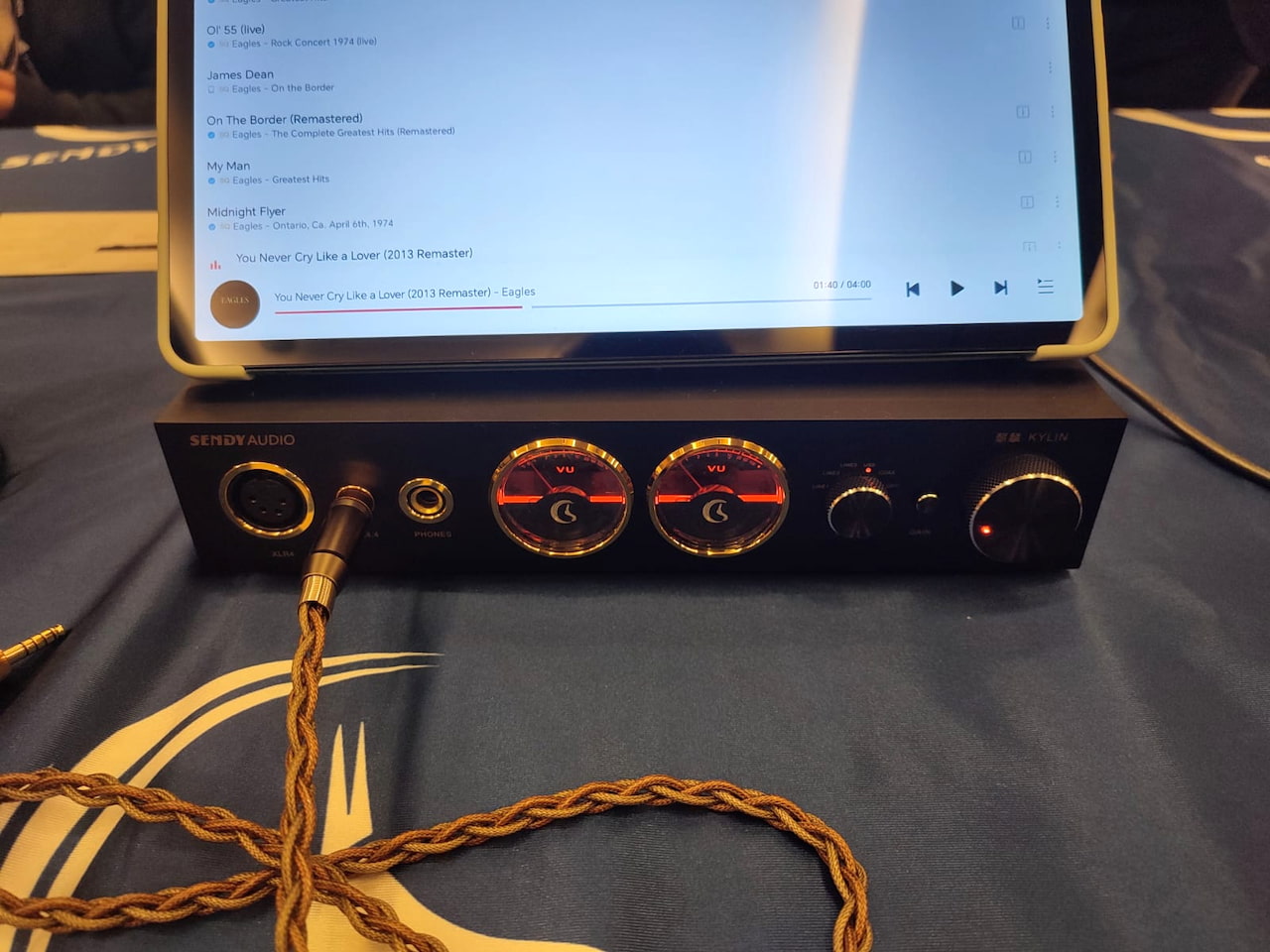
I listened to the Sendy Audio Kylin at last year’s show and was so impressed that I named it Best in Show in the midrange price category.
One year later, my impressions have not changed one jot. Some of its specifications might not look especially impressive on paper, particularly beside amplifiers boasting increasingly ridiculous power figures, but the Kylin sounds absolutely gorgeous.
Vocals and guitars were rich, full-bodied and wonderfully expressive, while the presentation remained spacious, punchy and highly dynamic. There was enough warmth to make everything sound inviting, but not so much that the music became soft or overly relaxed.
Under the bonnet, the Kylin combines an XMOS USB stage with an ESS ES9038Q2M DAC, native DSD512 decoding and a pure Class A headphone amplifier using matched Hitachi transistors. It also offers balanced 4.4 mm and four-pin XLR headphone outputs, alongside a 6.35 mm single-ended connection.
None of that fully explains why I enjoyed listening to it so much, which rather proves the point. Numbers are useful, but they are not everything in the world of audio.
Astell&Kern A&Ultima SP4000T
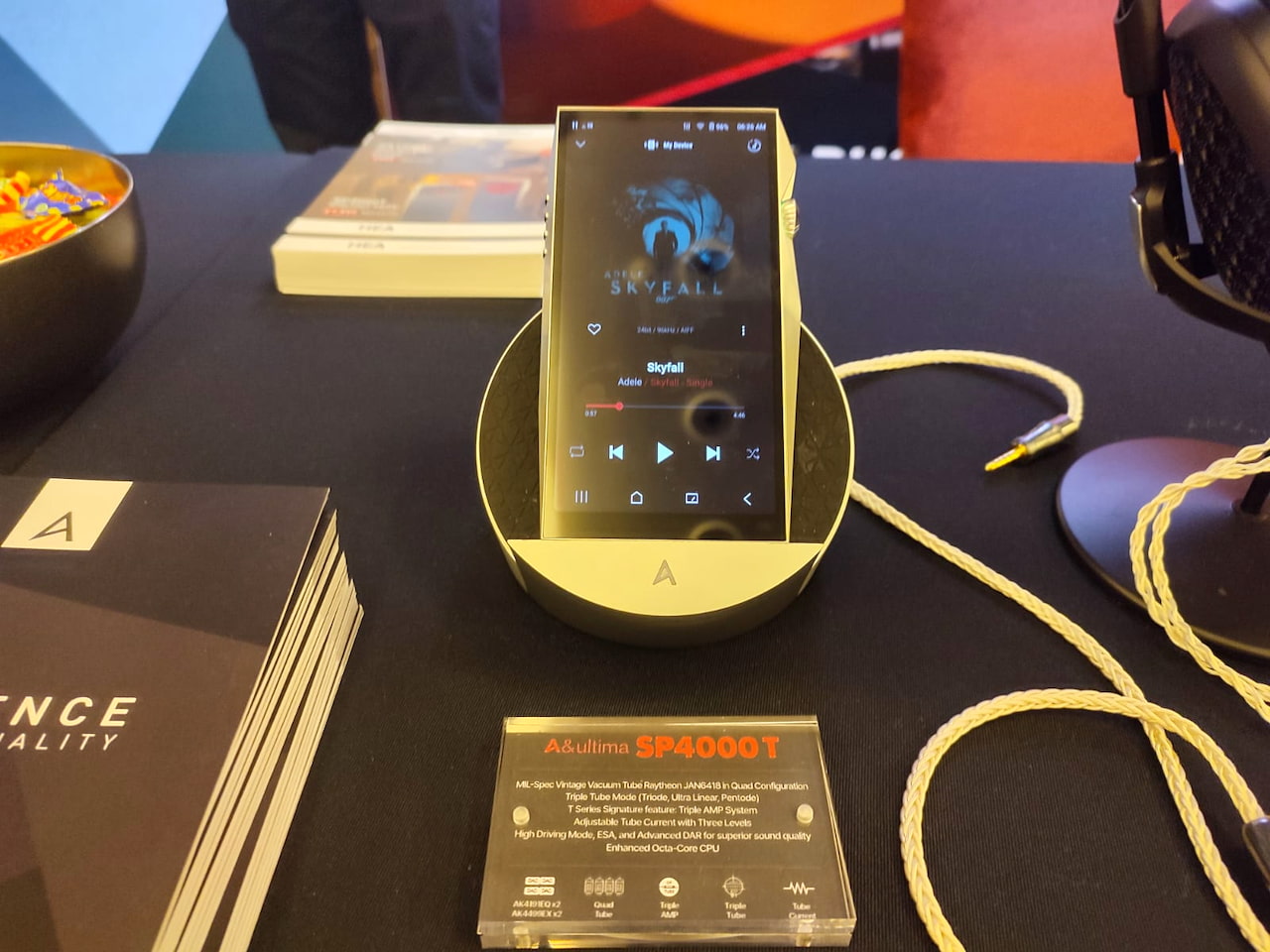
The Astell&Kern SP4000T is, very loosely speaking, an SP4000 with four Raytheon JAN6418 vacuum tubes bolted on. There is rather more going on beneath the surface, but the description gets the general point across.
Those four military-specification tubes are arranged in a differential configuration, with two dedicated to each channel. The SP4000T also lets you choose between Triode, Ultra Linear and Pentode tube modes, along with OP AMP, Tube AMP and adjustable Hybrid amplification. Factor in three selectable tube-current settings, and there are plenty of ways to tailor its presentation.
It costs an eye-watering £3,200 and weighs an equally shocking 565 grams, making the word “portable” feel rather generous. You are not slipping this into the pocket of your jeans unless you would also like to explain the resulting wardrobe malfunction.
You do, however, get your money’s worth sonically. The SP4000T delivered a bombastic, commanding presentation that, to my ears, holds its own against many desktop DAC and headphone amplifier stacks costing similar money. There was plenty of scale and low-end authority, but it never sounded uncontrolled or clumsy.
The rest of the package feels suitably premium, with a smooth interface, responsive touchscreen and full Android support for direct access to streaming apps. Anyone seeking the best of the best in portable DAPs will undoubtedly consider it, although at 565 grams, they may also want to consider a stronger bag.
Fosi Audio DAP Neo
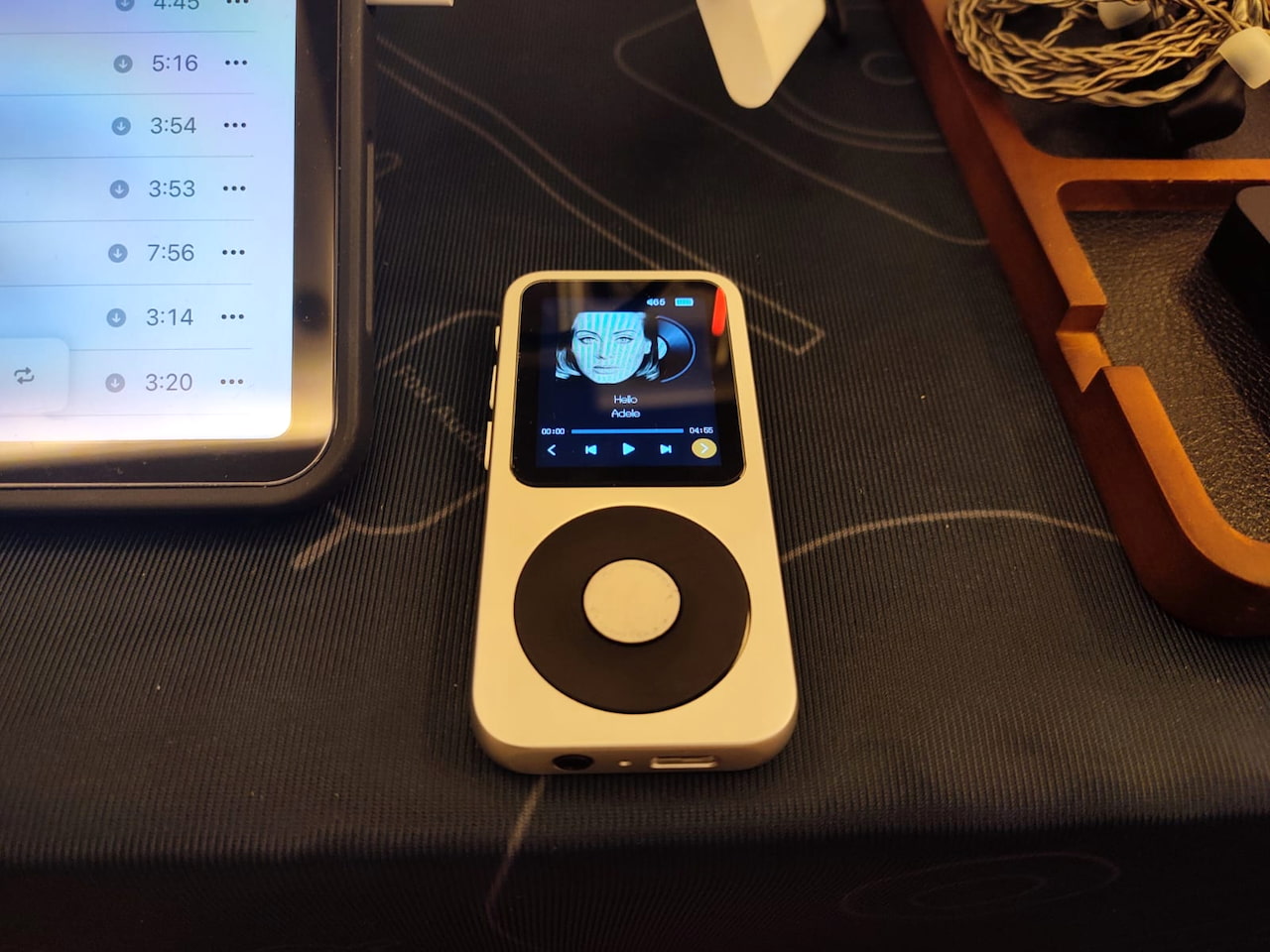
Back at the Fosi Audio booth, I was introduced to another prototype on display: the DAP Neo.
This is a deliberately simple, offline digital audio player. It does not connect to the internet, which means no Spotify, Apple Music, TIDAL or other streaming services. You load your music onto the player and listen to it. That may sound rather old-fashioned in 2026, but sometimes removing notifications, apps and endless choices is exactly the point. It allows you to focus on the music and nothing else.
The compact design looks more than a little like one of Apple’s classic iPods, which is hardly the worst place to draw inspiration from. It felt straightforward to operate and refreshingly uncomplicated beside the increasingly large and expensive Android players found elsewhere at the show.
Fosi expects the DAP Neo to cost less than $100, although the final price and specifications have yet to be confirmed. It sounded solid during my brief demonstration and powered my Sendy Audio Egret comfortably, with enough weight and clarity to make listening enjoyable.
At this price, I am not asking for a desktop-class powerhouse or a miniature smartphone. Give me reliable local playback, a usable interface and enough power for a sensible pair of headphones, and there is not much more I could ask for.
Best Portable DAC/Amp: Audma Brioso PHPA1
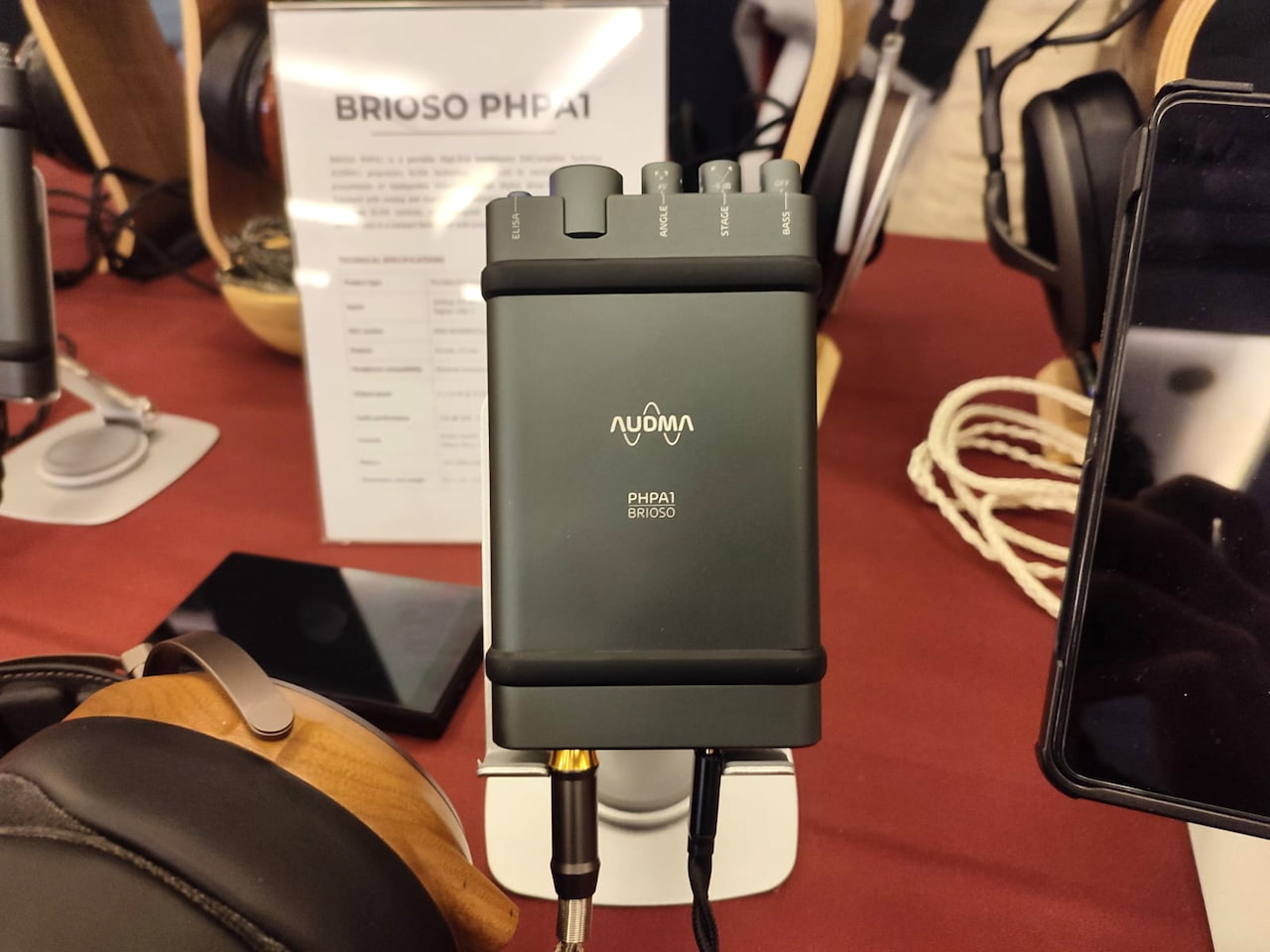
Admittedly, the Audma Brioso PHPA1 was the only portable DAC and headphone amplifier I listened to at CanJam London this year, but that does not make it any less deserving of our Best in Show award.
Audma is based in the same region of Italy that my father comes from, and the company is responsible for developing its patented ELISA circuitry. The technology is designed to recreate some of the spatial characteristics of listening to a pair of loudspeakers, including the small timing differences between the sound reaching each ear.
The Brioso lets you adjust the perceived distance and width of the presentation using its Stage and Angle controls. It is also a serious portable DAC and amplifier in its own right, using AKM’s flagship AK4499EXEQ DAC alongside the AK4191EQ digital filter and modulator. It supports USB-C digital playback, balanced and unbalanced analog inputs and up to five hours of battery-powered listening.
I tried the Brioso with ELISA switched both on and off, and the difference was immediately noticeable. With it engaged, the soundstage appeared to move in front of me rather than extending mainly to either side of my head. The effect was not subtle, and I still find it rather extraordinary that carefully controlled differences in timing and spatial information can change the presentation so convincingly.
The fact that Audma has managed to achieve this inside a genuinely portable device makes the Brioso even more impressive.
Mind you, it costs almost £4,400, so it probably should be.
Best DAP: FiiO M25 R2R

As we recently reported, FiiO brought two forthcoming DAPs to CanJam London: the M25 and M25 R2R. Positioned below the flagship M27 and above the more affordable M33 R2R and M21, the new models should help bridge what has become a rather substantial gap in FiiO’s portable player lineup.
The standard M25 uses AKM’s flagship separated-DAC architecture, combining an AK4191 digital filter with two AK4499EX DACs. The M25 R2R takes a very different approach, replacing those chips with the second generation of FiiO’s proprietary R2R PRO resistor-ladder technology.
Both versions use Qualcomm’s Dragonwing QCS6490 processor, supported by 8GB of RAM and 128GB of internal storage. They also include a 31-band parametric equalizer, Auto EQ and FiiO’s Desktop Mode, which allows the player to draw power from an external supply rather than continually cycling the internal battery.
I listened to the resistor-ladder version, and it struck a fine balance between naturalness and sweetness without sacrificing clarity. Vocals and instruments had a fuller, more organic quality, but the presentation never became overly soft or syrupy.
My only minor gripe was the absence of a physical volume wheel. FiiO has opted for a conventional rocker instead, which works perfectly well, but perhaps I am simply one of those people who still prefers turning a proper dial.
Both M25 models remain unreleased, with final international pricing and availability yet to be confirmed.
Best Budget DAC: Topping E50 II
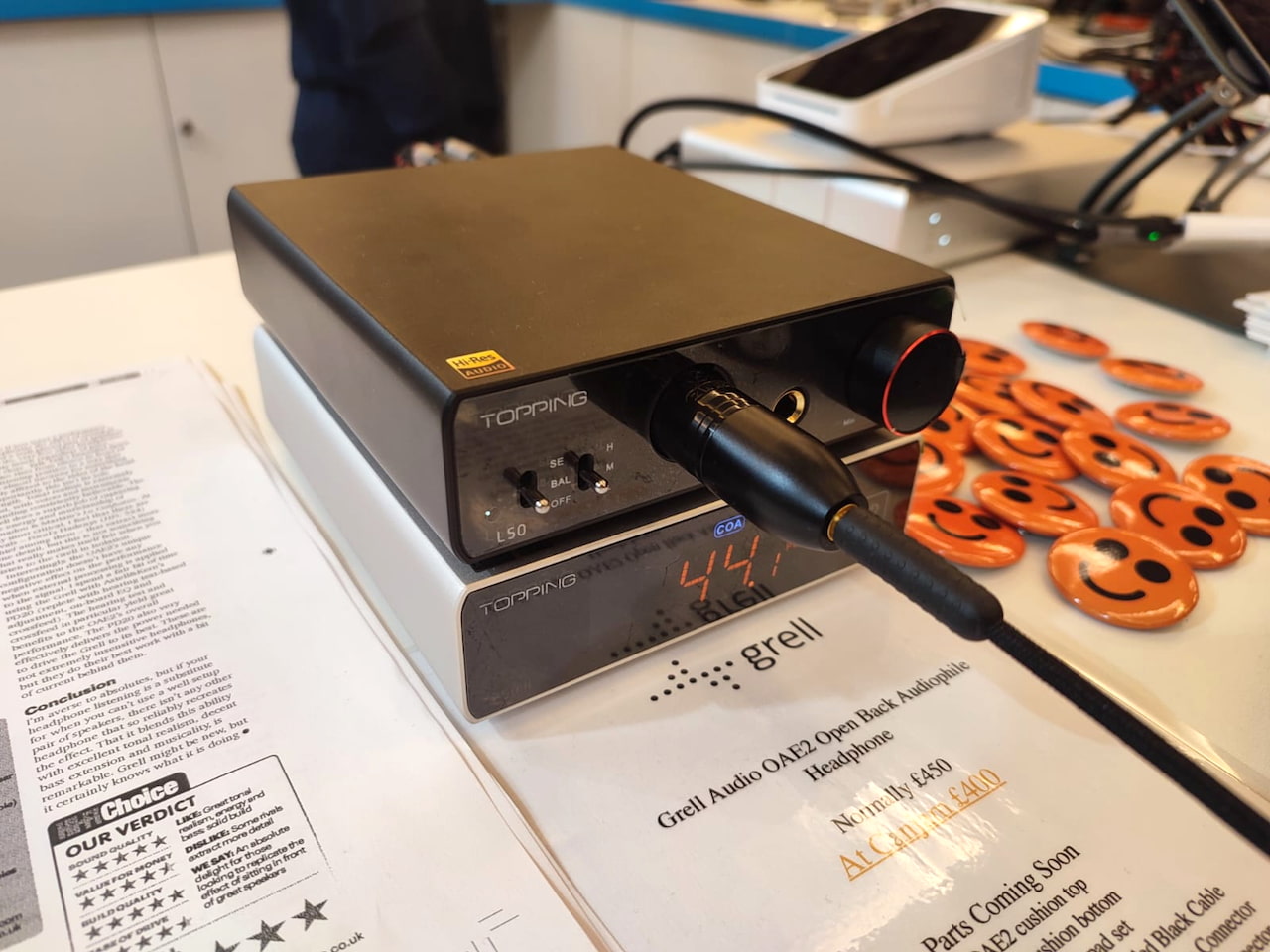
At the Electromod booth was the Topping E50 II, the Chinese manufacturer’s revision of its well-regarded E50 DAC. Priced at $199 at Apos Audio and Amazon ( £199 or €199), depending on the market, I am astounded by how much functionality Topping has squeezed into such a small and affordable unit.
The E50 II uses AKM’s AK4497S DAC chip alongside an XMOS XU316 USB interface, with support for PCM playback up to 32-bit/768kHz and native DSD512. Inputs include USB-C, coaxial, optical and Bluetooth, with LDAC, aptX HD and aptX Adaptive support. It also offers RCA and balanced 6.35 mm TRS outputs, which can operate simultaneously, and can be used as either a fixed-output DAC or a digital preamplifier.
The star of the show is its parametric EQ, which can be configured through the Topping Home app and stored on the unit for offline use. That is a considerable amount of flexibility for a $199 DAC, particularly for listeners who want to correct a headphone’s tonal balance or make smaller adjustments to suit their system and personal preferences.
In terms of listening, the E50 II has a no-nonsense, neutral sound signature, but with just enough musicality to prevent it from sounding flat, sterile or boring. It does not attempt to impose much of its own personality, which is exactly what many listeners will want from an affordable desktop DAC.
For $199, what’s not to like?
Best Midrange DAC/Amp: Luxsin B9
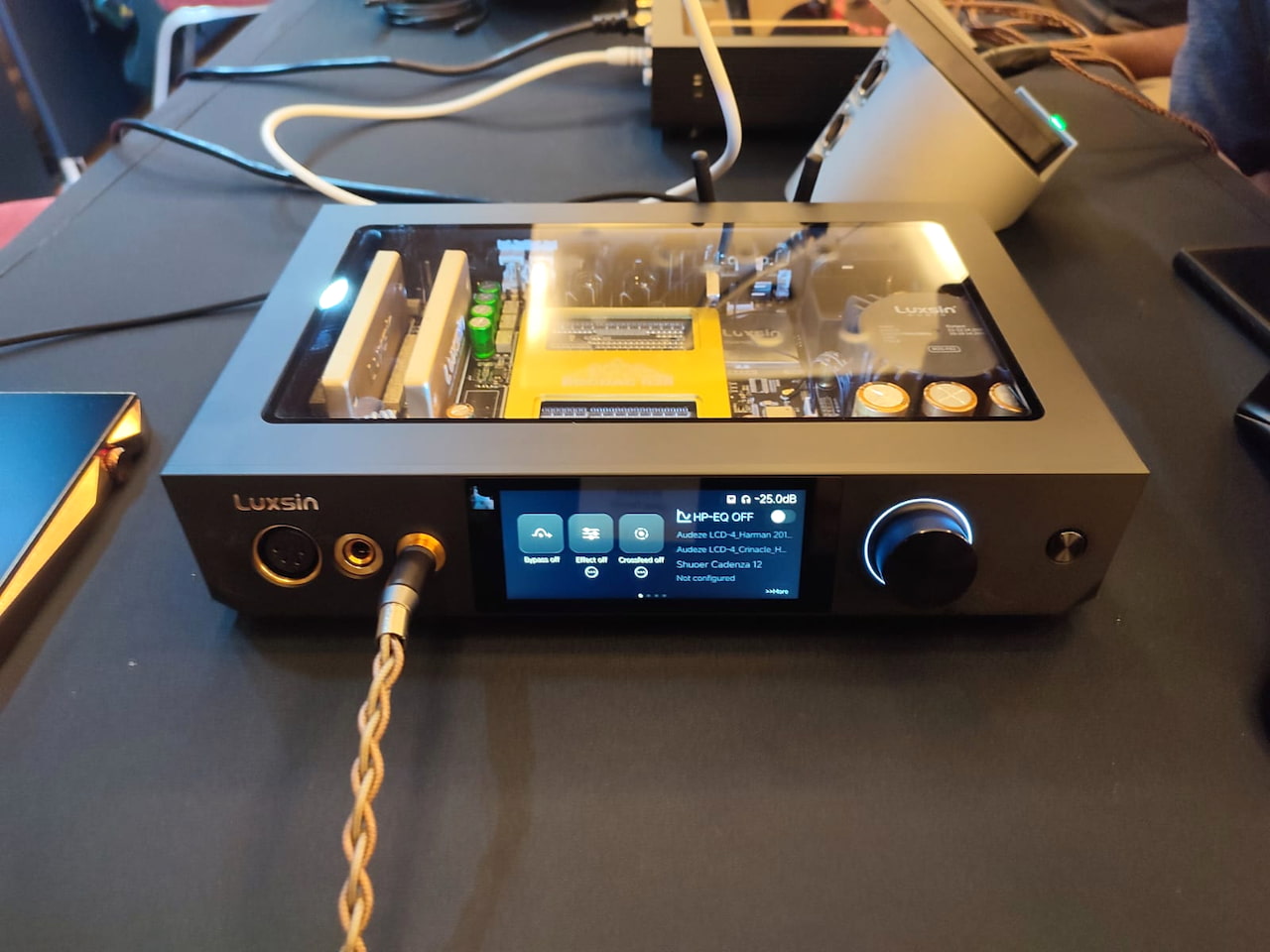
This was one product I was not expecting to see in London. For all intents and purposes, the Luxsin B9 is an R2R interpretation of the X9, although this was my first experience with any of the company’s products.
The engineering sample combines Luxsin’s proprietary discrete R2R DAC architecture with a headphone amplifier and preamplifier in a single desktop unit. Luxsin has not published the complete production specifications yet, but the B9 is expected to deliver up to six watts of headphone output power and cost around $1,500 when it is released.
The prototype also included some genuinely clever features. Luxsin’s HP-EQ system lets you select a correction profile for your headphones, adjust it to suit your own preferences and save the results. There is also a hearing compensation function that tests the sensitivity of each ear across different frequencies before creating separate correction curves for the left and right channels.
I was not able to test either feature properly at the show, but the concept is far more useful than adding another digital filter that most owners will try once and never touch again.
The B9 is also beautifully designed, with sharply angled casework and a bright, vibrant touchscreen that makes most competing desktop DACs look rather ordinary. More importantly, its R2R presentation was exciting and expressive without becoming aggressive or fatiguing. It made a considerable impression on me during a relatively brief listen.
For a product I was not expecting to see, the Luxsin B9 became one of the more memorable electronics demonstrations of the weekend.
Best High-end Amp: MASS-Kobo Model 491
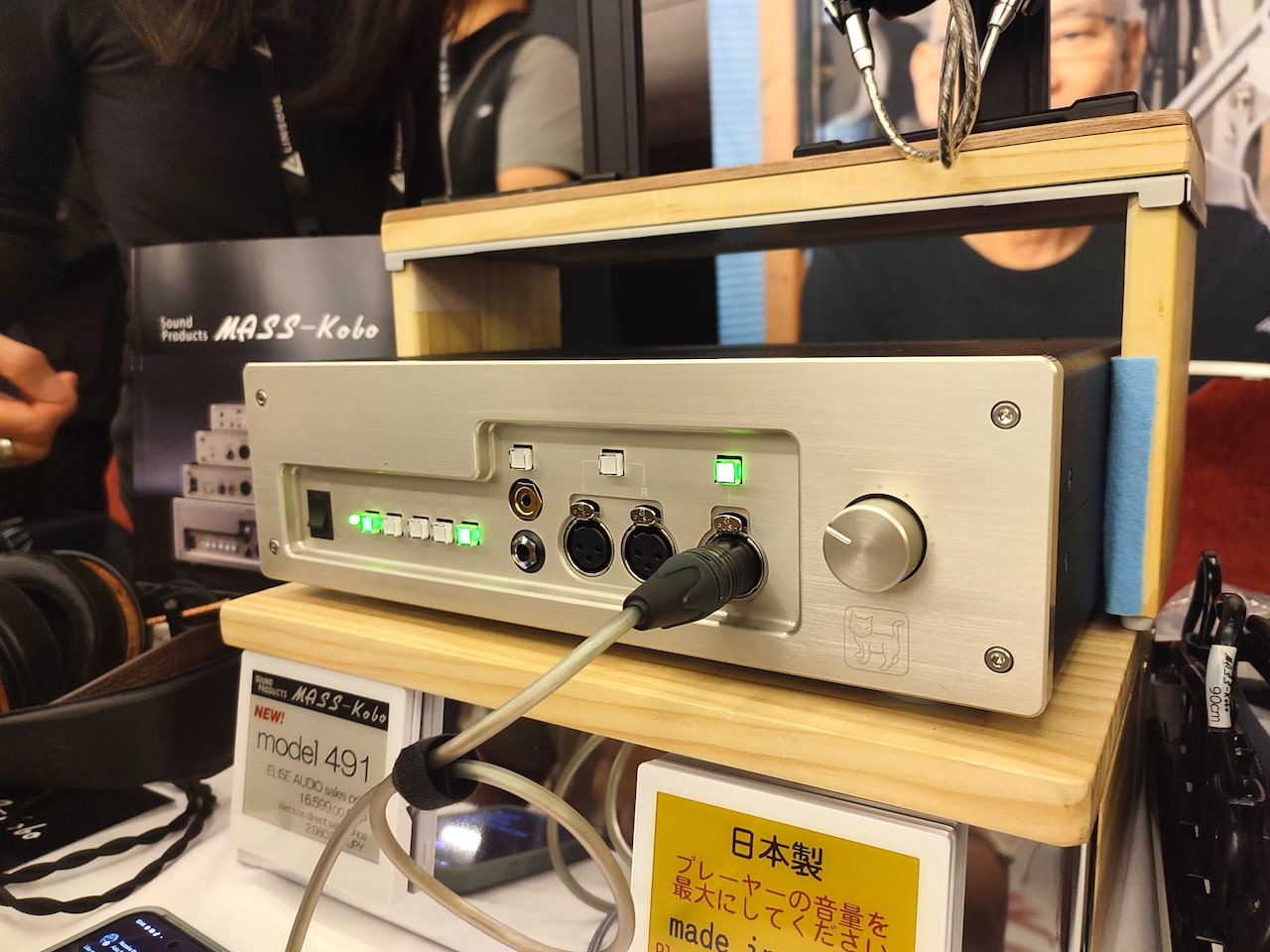
And finally, we come to MASS-Kobo, a Japanese audio brand whose amplifiers are hand-built and assembled to order in Shizuoka under the direction of Masuda-san. I was glad to spend a few minutes brushing up on my Japanese with him and the rest of the team at their booth.
The Model 491 ($20,000 USD) is the successor to the flagship Model 465 ($19,000 USD) and looks very similar at first glance, with the most obvious external change being the addition of a 4.4 mm balanced headphone output. It sits alongside four-pin XLR, separate three-pin XLR outputs for the left and right channels, and a 6.35 mm single-ended connection.
Inside, the 491 uses a twin-balanced monoblock design with four amplifier stages, two for each channel, and fully independent left and right power supplies. It delivers at least 3.5 watts per channel into 32 ohms through its balanced outputs, which should be enough for even the most stubborn planar magnetic headphones.
Being the flagship amplifier from a boutique high-end brand, it costs a barely believable £16,599 through Elise Audio. Most of that money is going into the circuit design, component selection and the highly trained ears of Mr. Masuda, rather than a touchscreen, app support or an unnecessarily complicated menu system. The amplifier itself is sturdily built, but it does not offer much in the way of bells and whistles.
And my goodness, does the 491 sound stunning.
I tend to prefer more neutral-sounding equipment, and the latest MASS-Kobo certainly falls into that category. However, it walks the line between analytical precision and musicality more successfully than almost any headphone amplifier I have heard. Sounds appeared to drift in and out of thin air, as though there were nothing standing between the music and my ears.
It came remarkably close to creating the impression of listening to a live performance rather than a pair of headphones. I arrived with very high expectations, yet the Model 491 managed to exceed them anyway.
The Bottom Line
CanJam London 2026 made one thing very clear: personal audio has never offered more choice. From sub-$100 offline DAPs and $200 DACs to £16,599 hand-built amplifiers, the show covered almost every conceivable use case and price point.
I could not hear everything, but the products above were the ones that made me stop, listen and return for another track. Roll on CanJam London 2027.
You must be logged in to post a comment Login