Tech
The Best Headphones from CanJam London 2026

I returned to central London for the second consecutive year for the tenth edition of CanJam London, with a fairly clear idea of which brands and headphones I wanted to hear.
Those expectations lasted about five minutes. The moment I entered the show, I encountered several headphones I had never heard of, along with just as many that sounded completely different from what I expected.
Unlike last year, there were so many new products on display that I simply ran out of time to hear them all. What follows is only a snapshot of the new releases and standout headphones I tested at CanJam London 2026—although nearly 30 pairs of cans still represents a rather substantial snapshot.
This report follows our look at the best DACs, headphone amplifiers, and DAPs from CanJam London 2026, while building on our extensive CanJam NYC 2026 coverage. We will also be heading west for CanJam SoCal 2026 later this summer, where another wave of new headphones and personal audio products will undoubtedly be waiting.
Related Reading: The Best DACs, Headphone Amps and DAPs from CanJam London 2026
The Headphones That Stood Out at CanJam London 2026
Grell OAE2

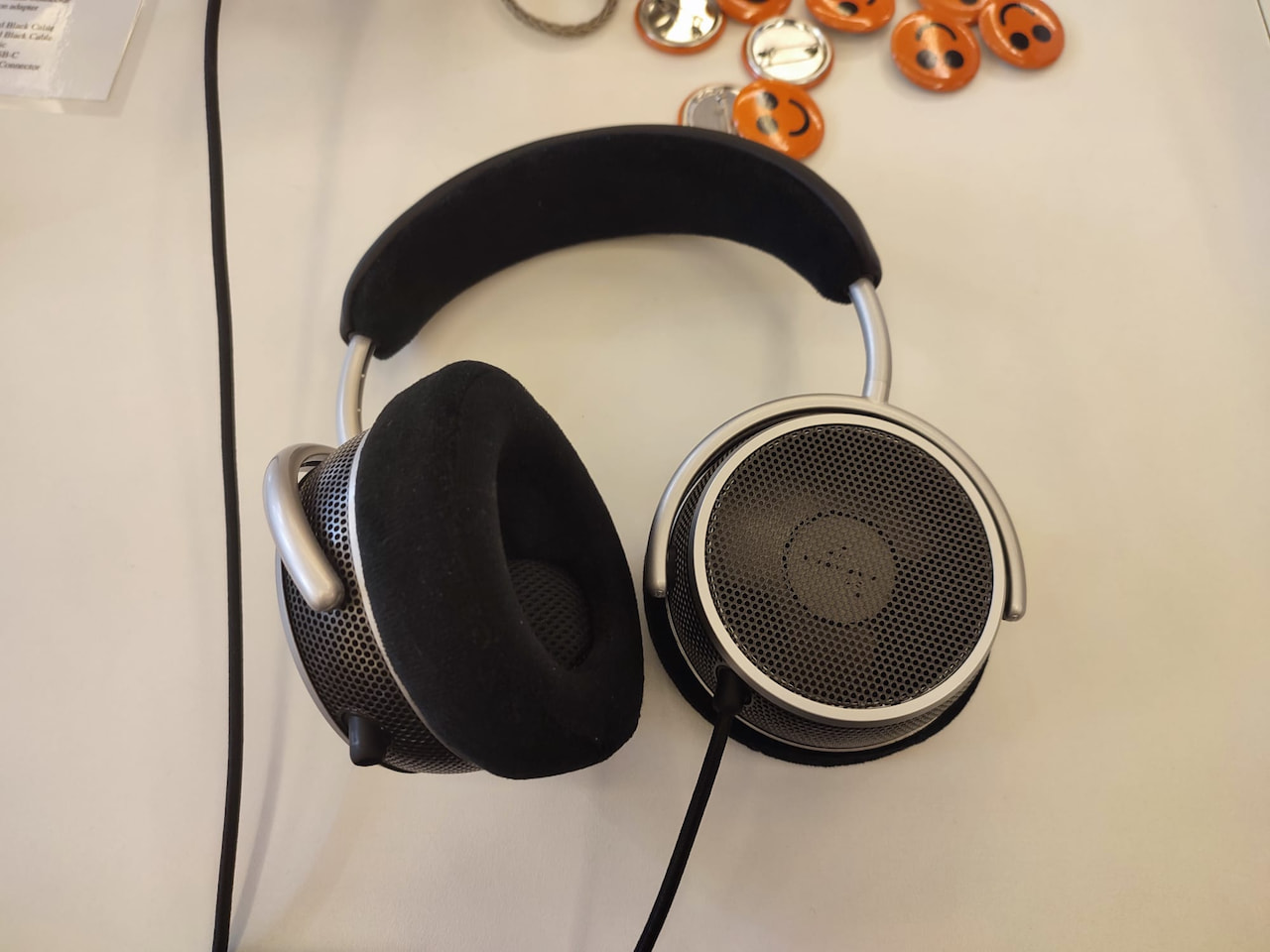
I started at the Electromod booth, conveniently located near the entrance to the show.
The $599 OAE2 is legendary Sennheiser designer Axel Grell’s second attempt at refining his Front-Sided Sound Field Modulation (FSFM) concept. Its 40 mm bio-cellulose dynamic drivers are positioned well forward of the ears, allowing sound to interact more naturally with the outer ear and create a presentation closer to nearfield loudspeakers than conventional headphones. The open-back OAE2 has a 38-ohm impedance, 100 dB sensitivity, a claimed frequency response of 12 Hz to 34 kHz, and weighs 378 grams without its cable.
The original OAE1 received mixed reviews, largely because of its unconventional tonal balance. I did not notice any glaring tonal quirks with the OAE2, although that impression should be taken with a grain of salt because the Electromod booth was hardly a quiet listening environment.
The heavily angled drivers certainly produced the intended forward-facing presentation, which I found pleasant, but the soundstage did not strike my ears as especially wide or expansive. eCoustics Editor-in-Chief Ian White reached a more enthusiastic conclusion during his full review, finding the OAE2 neutral, controlled, and capable of projecting a stable image slightly in front of the listener—although he also noted that the effect varies considerably from one recording to another.
écoute TH2

At the same Electromod booth was one of the more intriguing wireless headphones at CanJam London 2026: the écoute TH2. The closed-back design combines hybrid active noise cancellation and a transparency mode with an eight-band parametric DSP system that allows listeners to make substantial changes to its primary response curve through the accompanying mobile app.
The TH2’s defining feature, however, is its Korg Nutube 6P1 dual-triode vacuum tube in the preamplifier stage, feeding separate Class A/B amplifiers for each channel. It also uses 40 mm titanium-coated Mylar drivers and supports Bluetooth 5.3 with LDAC, AAC, and SBC, along with USB-C digital and 3.5 mm analog connections. Battery life is rated at more than 20 hours.
Sonically, the TH2 delivered prominent midbass with a touch of the harmonic warmth and euphony associated with tube amplification; something rarely experienced from wireless headphones on the move. It was a smooth, relaxed, and thoroughly enjoyable listen. I was told that the TH2 will cost approximately £900 when it goes on sale.
Amoenus Externus

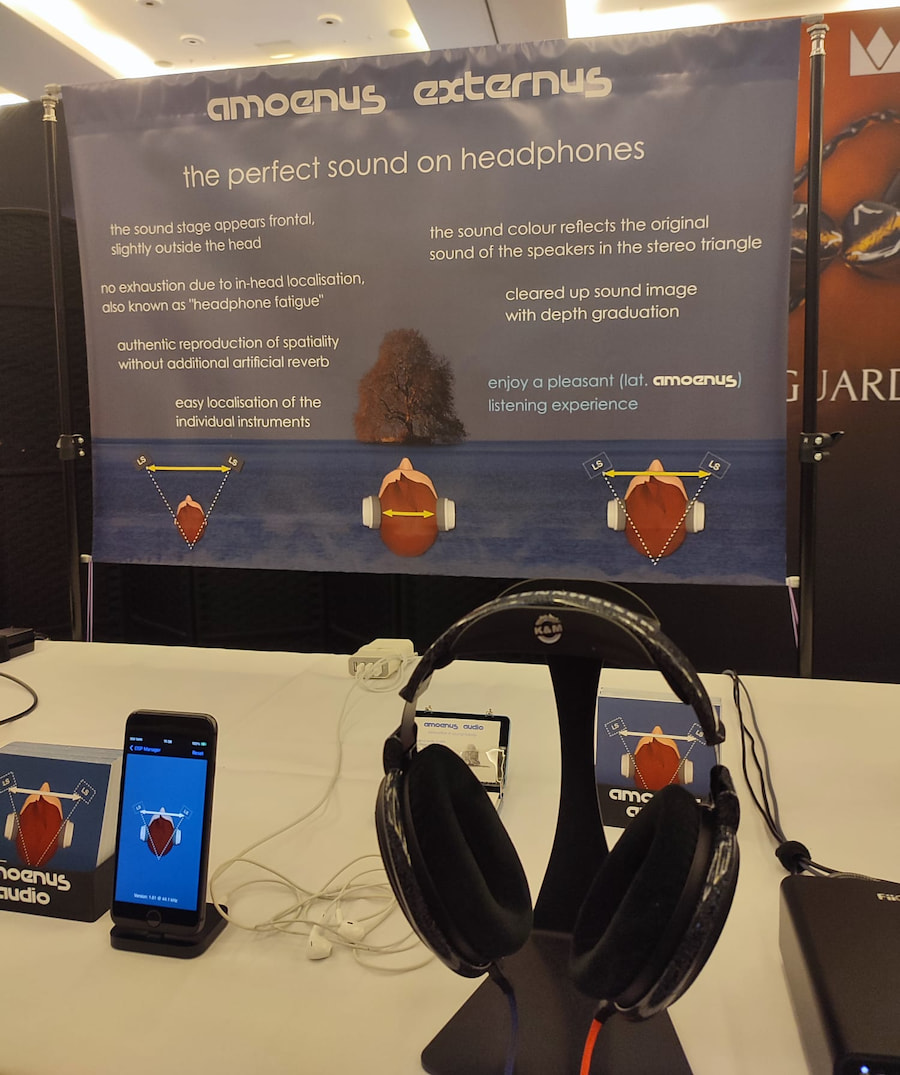
The amoenus externus was the odd one out at CanJam London because it is not a pair of headphones, but rather a software-based spatial-processing system designed specifically for stereo headphone listening.
Instead of adding artificial reverberation or simulating a listening room, the algorithm uses a universal HRTF and an array of nine extremely short delays to reproduce some of the timing cues created by sound interacting with the head, shoulders, and outer ear. The objective is to move the stereo image outside the listener’s head and closer to the presentation of two loudspeakers positioned in front of them. It is available as a stand-alone application or plug-in for 64-bit Windows and Mac systems, along with an AUv3 plug-in for the iPhone.
This was perhaps the most convincing soundstage-enhancement system I have heard thus far. The transformation was not subtle, moving the music away from the sides of my head and placing it significantly farther forward without smothering the recording in artificial ambience. At approximately £20, it is also one of the least expensive products I experienced at CanJam London 2026—and potentially one of the most useful.
FiiO FT15
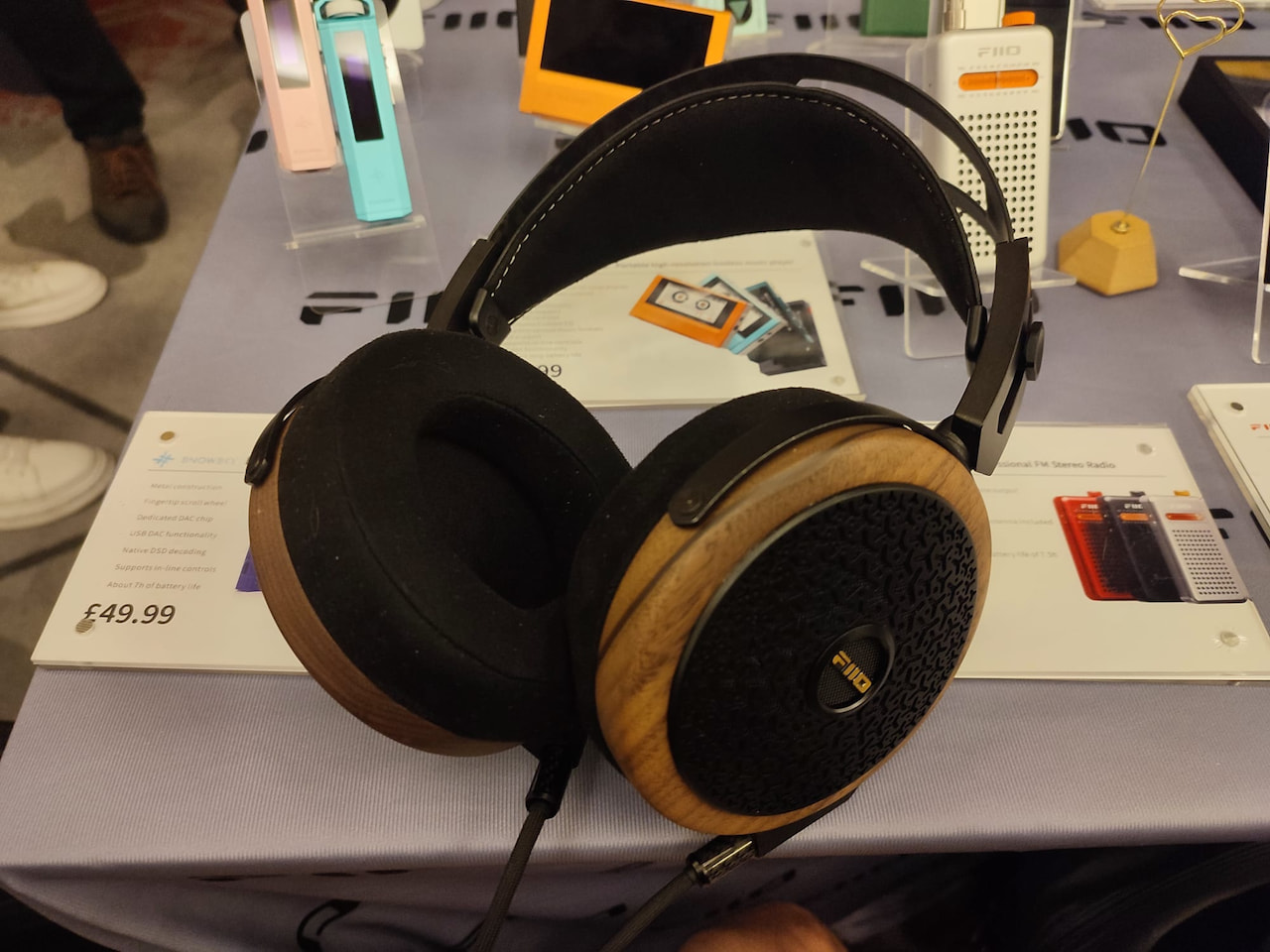
FiiO brought a handful of new and forthcoming products to CanJam London 2026, which should surprise absolutely no one by now.
First up was the FT15, an open-back planar magnetic headphone expected to replace the FT5 while sitting below the flagship FT7 in FiiO’s expanding over-ear lineup. The wood-accented design also continues the visual direction established by several of the company’s recent headphones, with expected pricing of around £499 when it reaches the market. Final specifications and availability have yet to be confirmed.
The FT15 offered a largely balanced tonal presentation, with treble that remained present and airy without becoming immediately aggressive. That openness worked well, but I found its macrodynamic punch and overall sense of contrast somewhat restrained. It was an easy headphone to listen to, although it did not deliver the same dramatic swings or physical energy as some of the stronger planar designs at the show.
FiiO FG3
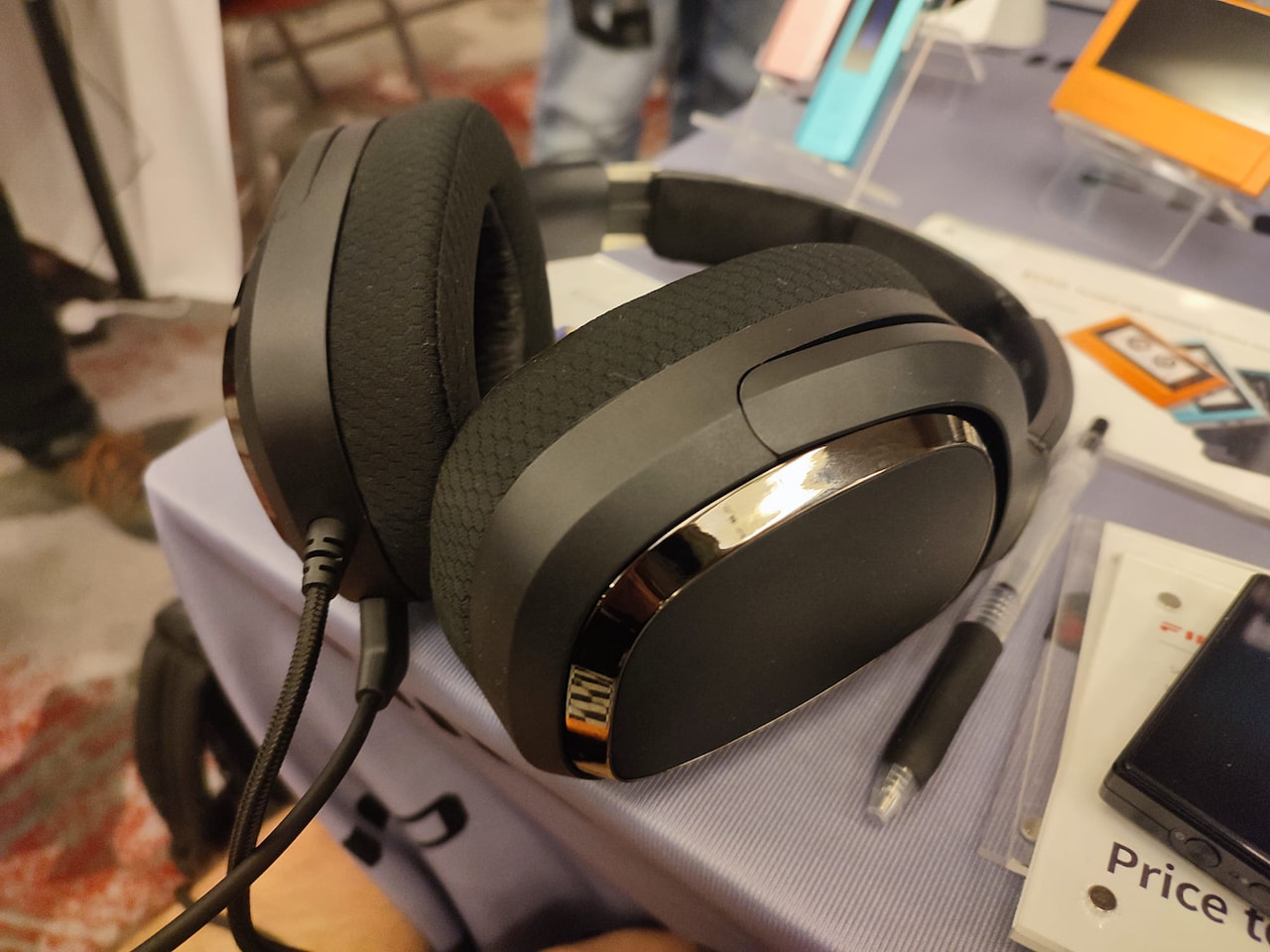
Next was the FG3, FiiO’s first gaming headset and one aimed squarely at the ultra-budget-conscious. Its plastic construction looks and feels every bit of its roughly $70 asking price, but expecting milled aluminum and lambskin at this level would be taking the piss.
The closed-back FG3 uses coaxially mounted 50 mm and 16 mm dynamic drivers with an electronic two-way crossover. It also includes an integrated DAC, headphone amplifier, virtual 7.1 surround processing, five gaming presets, and a 10-band EQ accessible through FiiO Control Web. USB and 3.5 mm connections provide compatibility with computers, consoles, and smartphones, while the detachable microphone uses environmental noise cancellation to reduce background noise.
More importantly, it sounded surprisingly decent for the money. There was some gentle roll-off at both ends of the frequency spectrum, but nothing that undermined the overall presentation during my brief audition. The FG3 is already available internationally for $69.99, and I can imagine it rolling off the shelves rather quickly once UK stock becomes widely available. Pun entirely intended.
Snowsky Nature
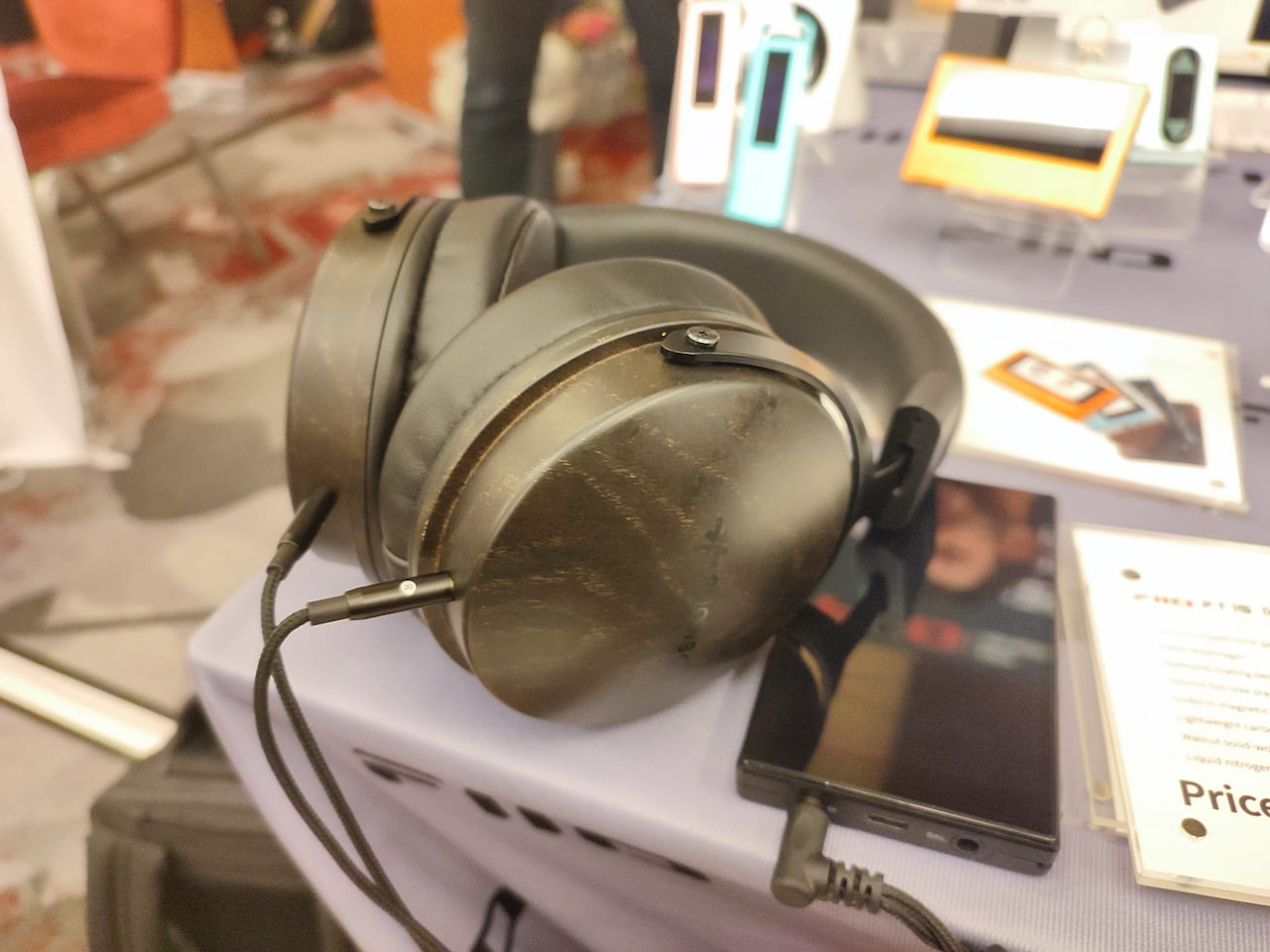
Apparently, FiiO can go even lower in price without the sound falling apart. SNOWSKY is the company’s affordable sub-brand, and the closed-back Nature costs only $40.
The retro-styled over-ear headphone uses 50 mm dynamic drivers with a Japanese carbon-black composite diaphragm, a low 24-ohm impedance, and a sensitivity rating of 101 dB/mW, making it easy to drive from a smartphone, DAP, or inexpensive USB dongle. It also weighs just 280 grams and includes detachable dual 3.5 mm cables, including one with an inline microphone. Despite appearances, the ear cups use a wood-grain water-transfer finish rather than actual wood.
The Nature sounded slightly hollow during my brief audition, but its detail retrieval and generally coherent tonal balance were far better than I expected at this price. For $40, this one is an absolute steal.
Flowztone F-R1
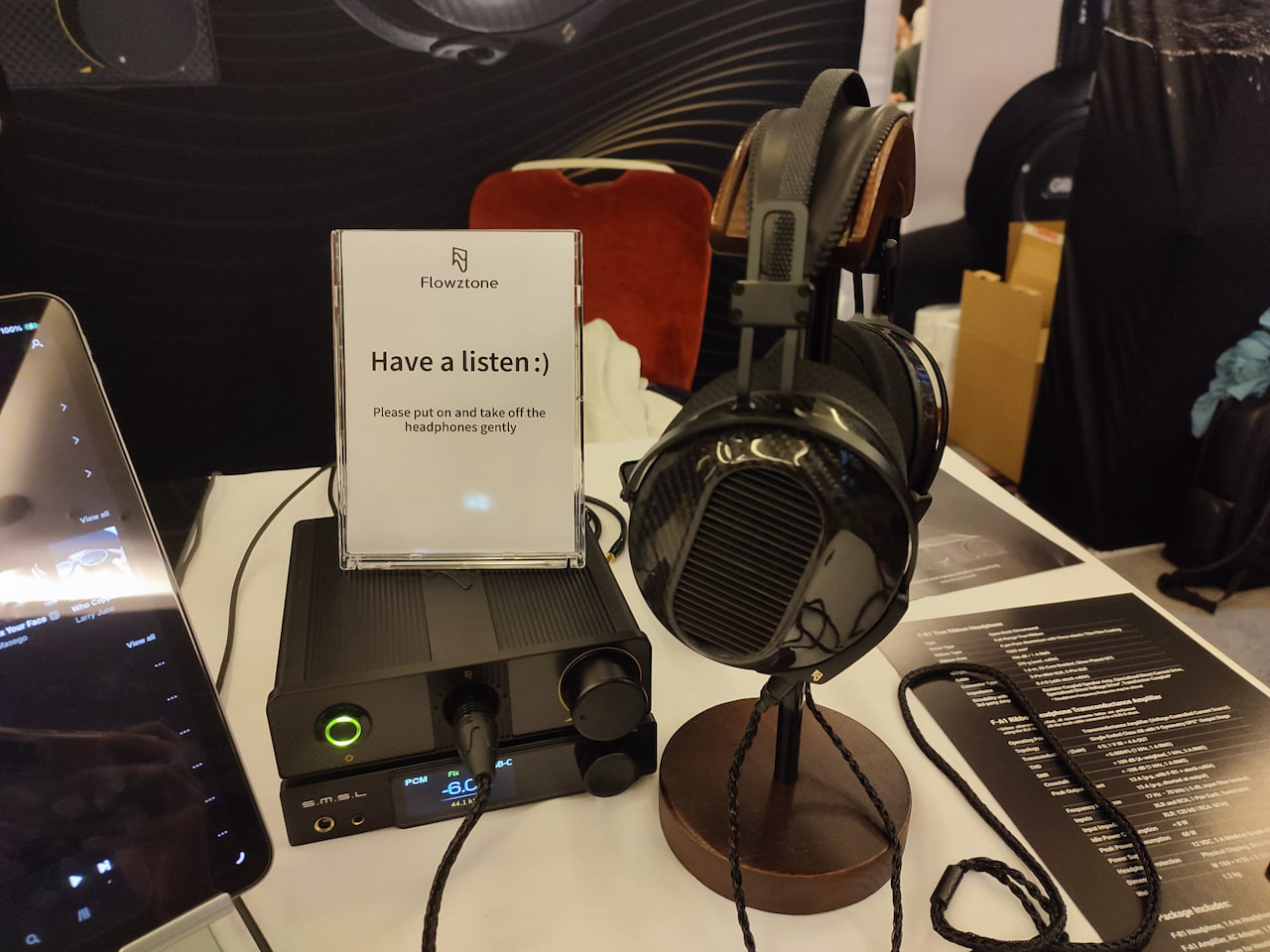
Hong Kong-based Flowztone is preparing to release its first headphone system, and the company has hardly chosen the cautious route. The F-R1 is a true ribbon design expected to cost around $3,000 with its dedicated amplifier.
The open-back F-R1 uses a 4-micron pure-aluminum ribbon diaphragm coated with an ultra-thin viscoelastic polymer layer. Flowztone claims this construction reduces the low-frequency distortion that has traditionally limited true ribbon headphones, with typical bass distortion rated at 0.5% at 94 dB. The 370-gram carbon-fiber headphone also requires Flowztone’s purpose-built transconductance amplifier to drive its exceptionally low 0.4-ohm load.
Right out of the gate, I found the F-R1 slightly sibilant. Inserting the supplied –2 dB tuning filter brought the treble under better control, however, and allowed me to enjoy its Harman-inspired tonal balance. The F-R1 sounded fast, open, and impressively full-bodied for a ribbon design, making this one of the more compelling debuts at CanJam London 2026.
Noble Audio FoKus Artemis
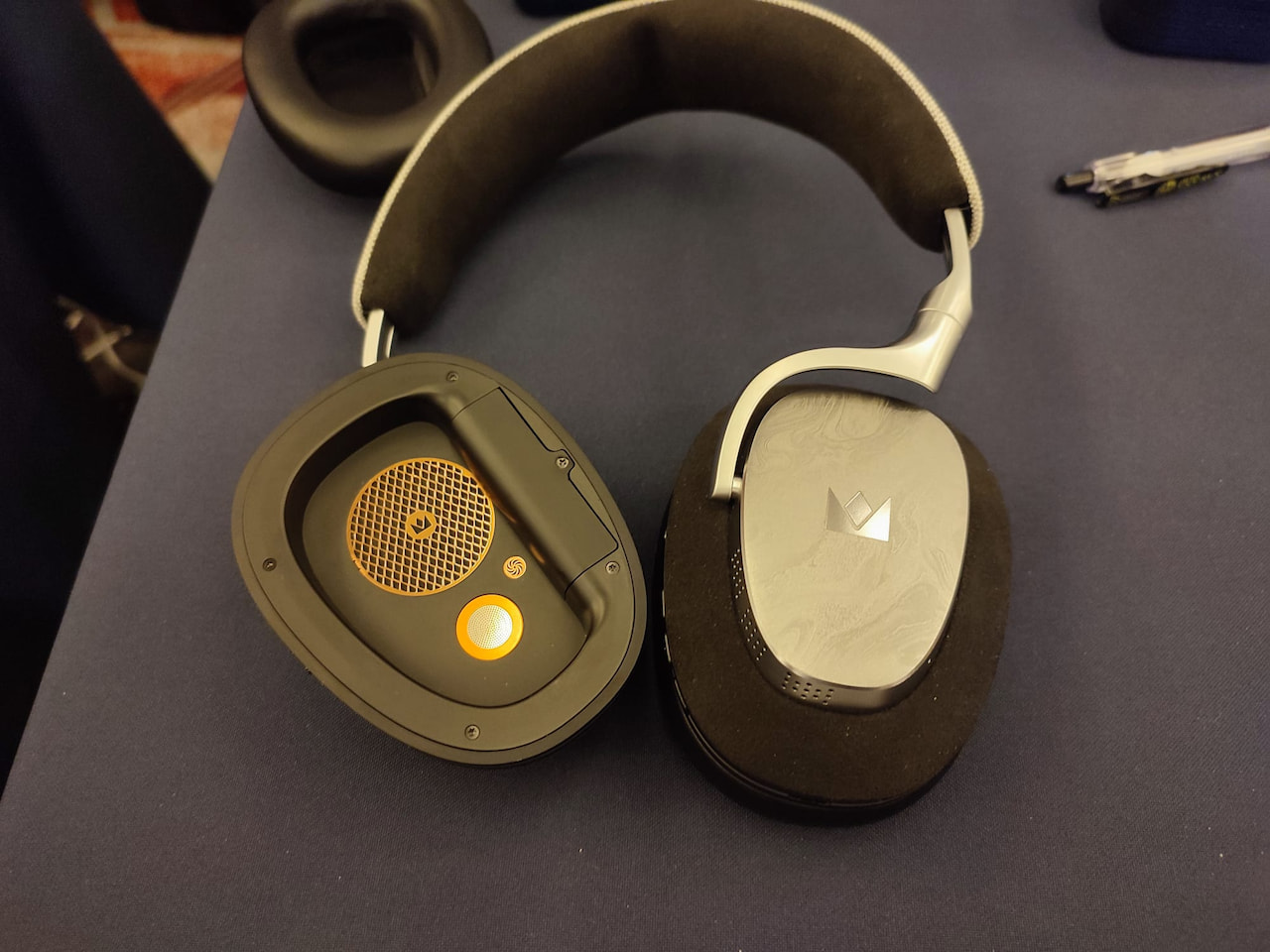
At $899, the Noble Audio FoKus Artemis sits firmly at the upper end of the wireless headphone market, but it certainly looks the part. The sculpted aluminum construction, sleek lines, premium materials, and magnetically attached earpads give it the appearance and feel of a genuine flagship rather than another plastic travel headphone with an inflated price tag.
The Artemis uses an unusual three-driver configuration comprising one dynamic driver, one planar magnetic driver, and one balanced armature driver in each ear cup. It also features adjustable ANC, transparency mode, LDAC, aptX Adaptive and aptX Lossless support, Audiodo hearing personalization, USB-C audio, multipoint connectivity, and a user-replaceable battery rated for more than 40 hours without ANC or 35 hours with it engaged.
Sonically, the Artemis was right up there with the DALI IO-12 that I reviewed previously, delivering excellent detail retrieval, imaging, and overall technical proficiency. Unfortunately, I could not get the earpads to seal properly against the sides of my head. The resulting air gap rendered the ANC almost useless, which was a bit of a disappointment. Fit will clearly vary between listeners, but at this price, prospective buyers should try them before handing over a credit card.
Sendy Audio Apollo Pro

Moving over to the SIVGA and Sendy Audio booth, I listened to the recently released Apollo Pro, a substantially redesigned successor to the original Apollo.
The open-back headphone uses a custom 78 mm planar magnetic driver with a nano-scale composite diaphragm measuring less than 800 nanometers thick. Sendy Audio also employs electron-beam deposition to apply the aluminum conductor layer more uniformly. The 354-gram design combines zebrawood ear cups with CNC-machined aluminum components and includes a detachable 4.4 mm balanced cable with 3.5 mm and 6.35 mm adapters. Impedance is rated at 27 ohms, with a sensitivity of 93 dB.
I have not heard the original Apollo, but I enjoyed the Pro’s particularly intimate and engaging vocal presentation. The trade-off was a soundstage that felt somewhat compact for an open-back planar headphone. Even so, its detail retrieval, separation, and overall technical performance were highly competitive at $494.
ZMF Headphones Tessidera
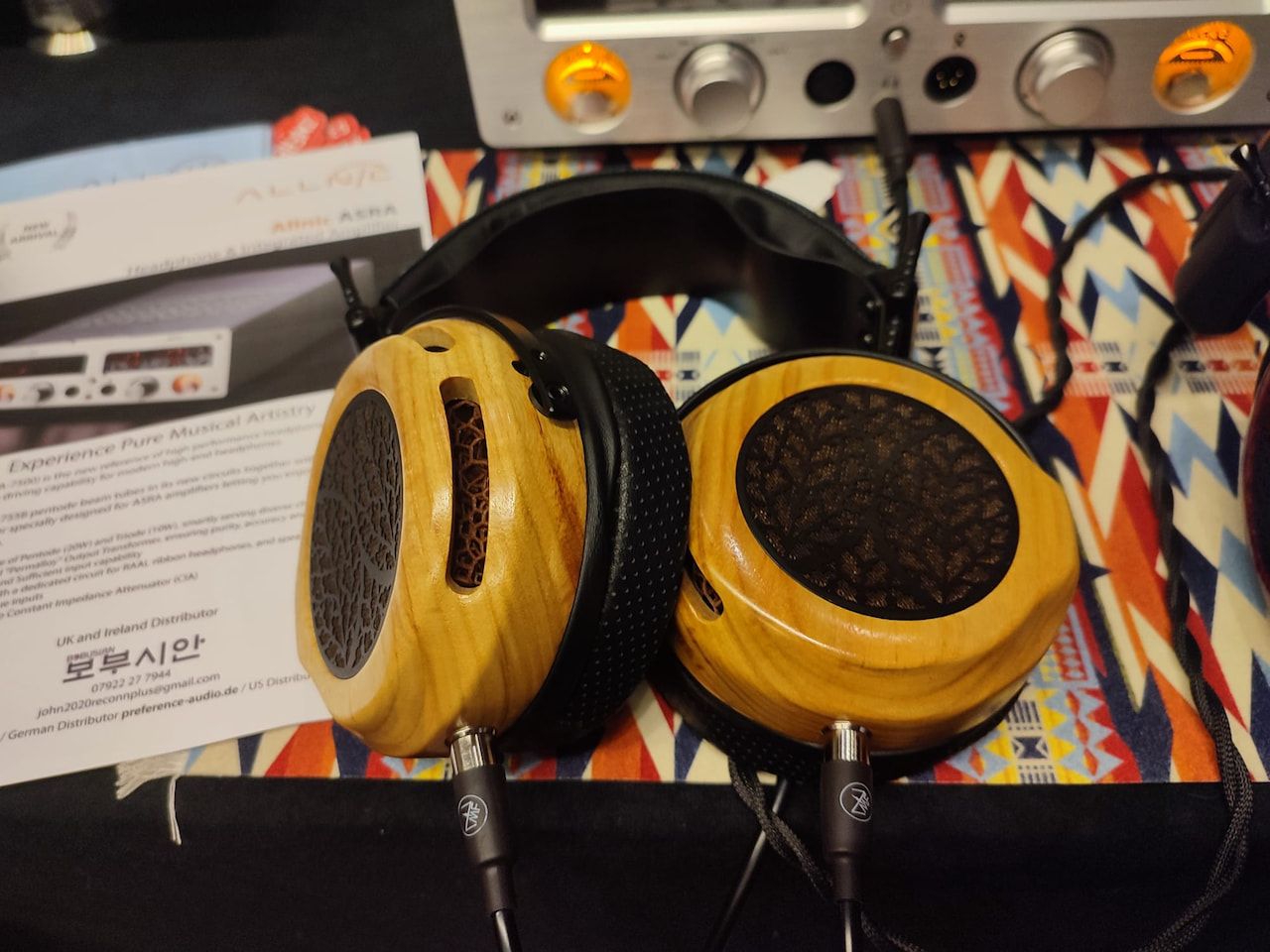
The moment I picked up the $2,499 ZMF Tessidera, I was struck by just how beautiful it looked. ZMF headphones have always resembled works of art, but the angular Canarywood cups and honeycomb-like ZMF Acoustic Matrix visible behind them elevate the design to another level.
The open-back Tessidera uses a newly developed 1-micron planar magnetic driver with a 35-ohm impedance and sensitivity of approximately 92 dB/mW. It combines ZMF’s CAMS magnet structure and Atrium Damping System with the new lattice-style ZMF Acoustic Matrix, designed to reduce standing waves and smooth the treble, and a wooden Soundboard Resonator System intended to improve transient impact and control resonance.
More importantly, how does it sound? To my ears, the Tessidera leaned closer to neutrality than many ZMF headphones, with something of the Auteur’s balance and natural presentation. The treble was smooth and inviting, but dynamics remained strong, while timbre and imaging were as realistic and precise as I have come to expect from ZMF. I have not always connected with the company’s tonal choices, but the Tessidera was right up my alley.
Final Audio Closed-Backs – DX3000CL and DX4000CL
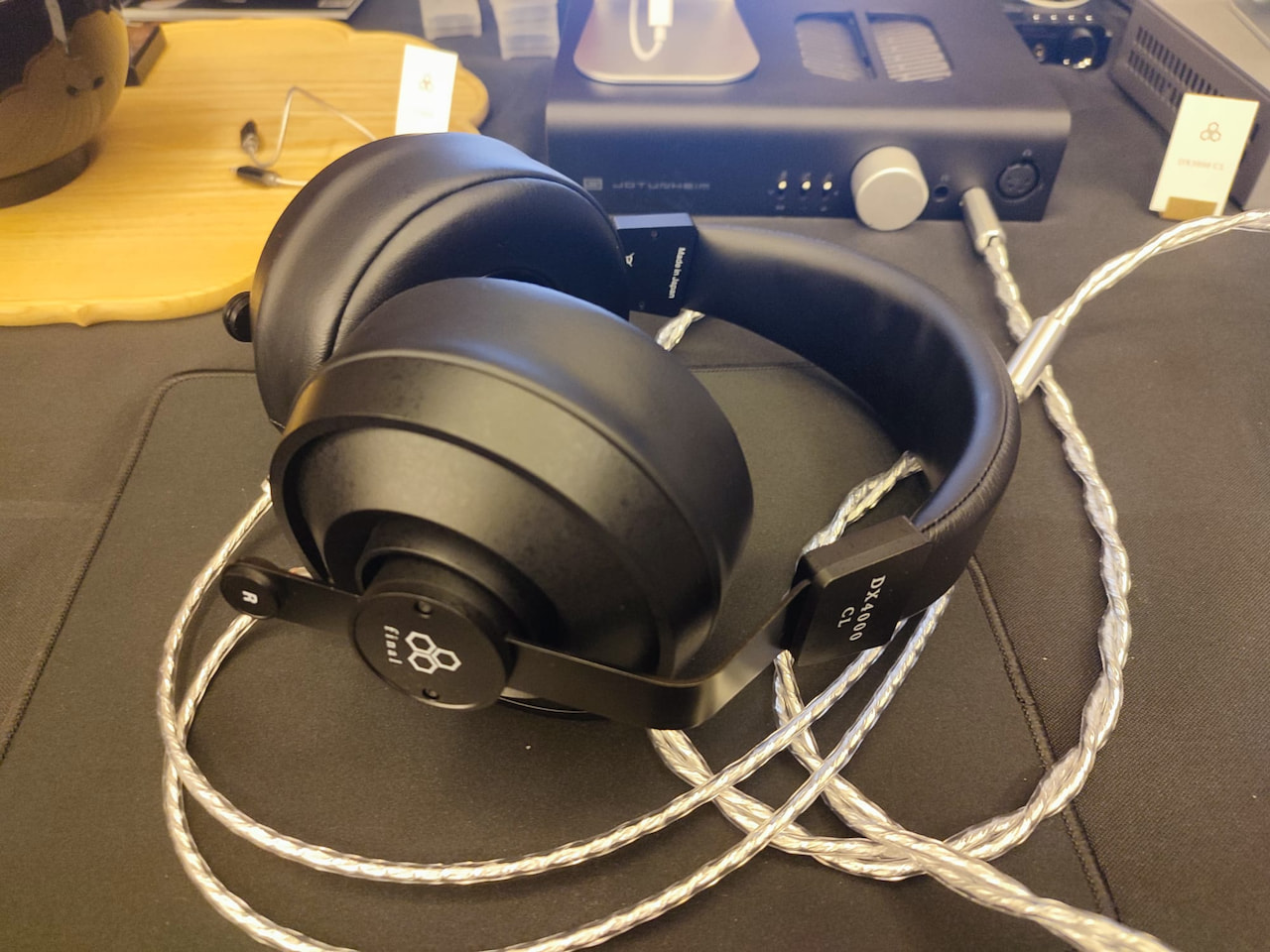
Final recently expanded its premium closed-back headphone range with the DX3000 CL and DX4000 CL. They look almost identical, but the DX3000 CL costs $599, while the DX4000 CL lands just below $1,000.
Both use 40 mm dynamic drivers with lightweight Japanese washi paper and carbon-fiber composite diaphragms, along with thick 30 mm memory-foam earpads and an internal rear-diffuser array designed to suppress unwanted resonances. They also share a 37-ohm impedance and 96 dB/mW sensitivity. The DX4000 CL weighs 375 grams and includes Final’s upgraded silver-coated cable, while the DX3000 CL weighs 410 grams and comes with a standard OFC cable.
In noisy show conditions, I found it difficult to distinguish between their sound signatures. I was told that the more expensive DX4000 CL is slightly more analytical and resolving, while retaining the warmth and generous bass response shared by both models.
Listeners who prefer a warm, full-bodied presentation should find plenty to enjoy here. Unless the DX4000 CL’s lighter construction, added refinement, and upgraded cable are essential, however, I would take the DX3000 CL and pocket the $400 difference.
Final Audio DX10000CL
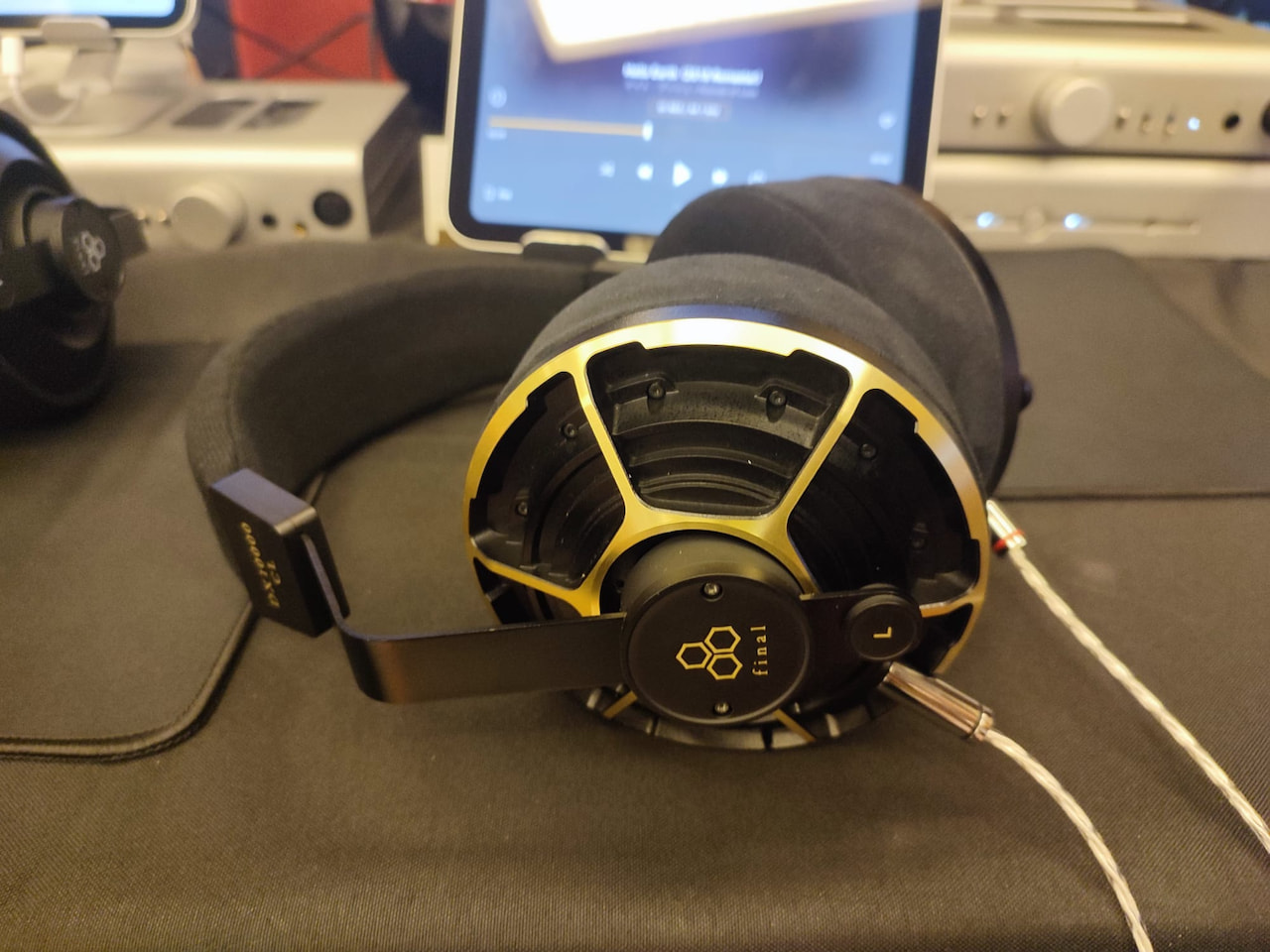
Final had one more new closed-back headphone on display, although the DX10000 CL occupies a very different financial universe from the DX3000 CL and DX4000 CL. The standard model costs a rather unhinged $8,499, while the limited Collector’s Edition adds another $500.
The flagship uses a newly developed 40 mm dynamic driver with a self-supporting True Diamond diaphragm manufactured through chemical vapor deposition. Final claims the material’s extreme rigidity and strong internal damping reduce deformation, resonance, and distortion while improving transient response. The aluminum-magnesium alloy housing has also been engineered to control internal reflections, while the Ultrasuede earpads manage airflow around the ear.
Its subtle steampunk aesthetic looks terrific, but the real surprise came when I listened to it immediately after its two considerably less expensive siblings. The difference was night and day, with substantially greater clarity, perceived detail, and openness owing to its more neutral tonal balance.
I will admit that the DX10000 CL did not tug at my heartstrings quite as strongly as some of the other headphones I heard at the show. Which ones did? I will save those for the Best in Show section.
Audeze Maxwell 2 ANC
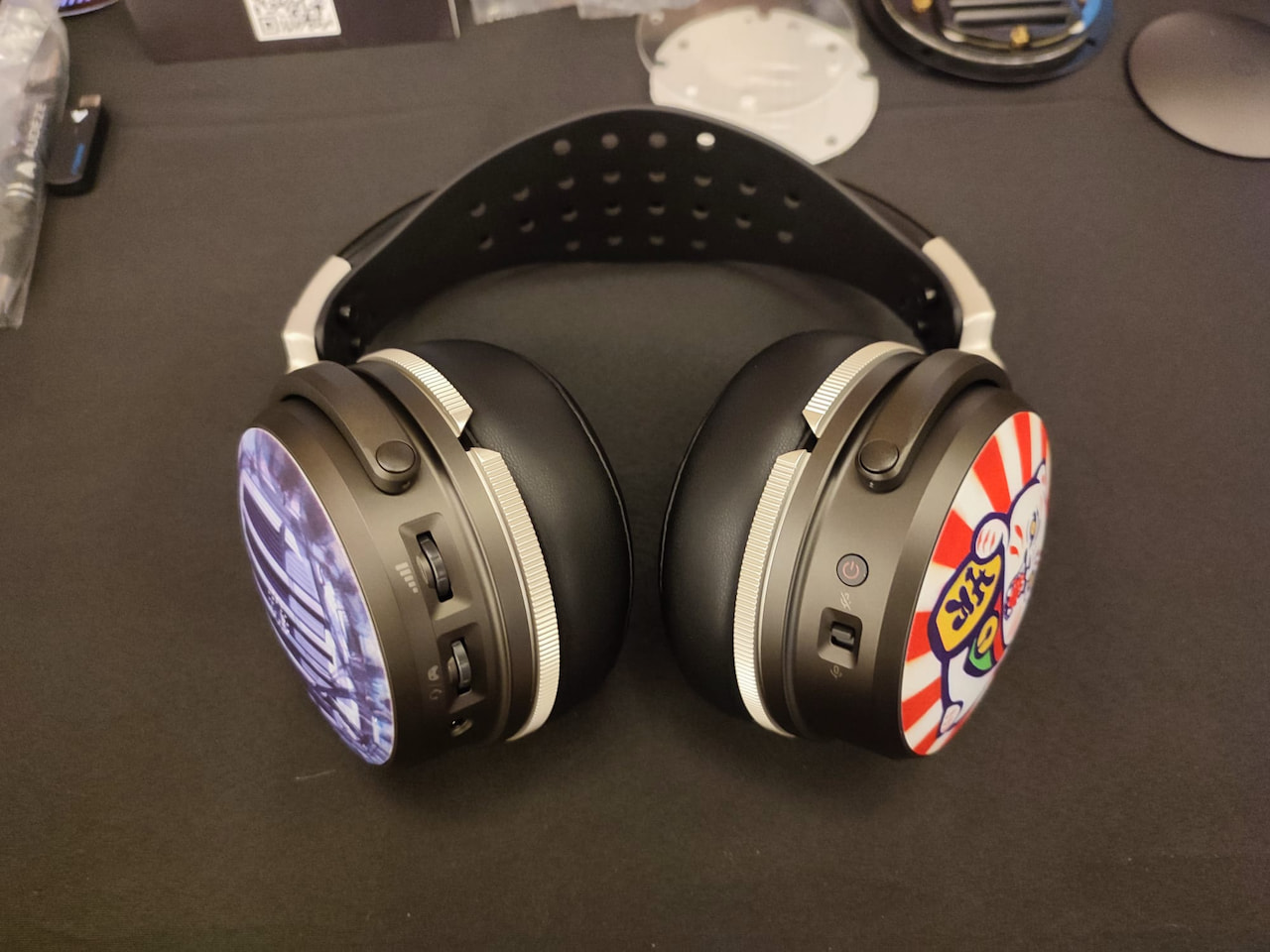
Returning to wireless headphones, I gave the Audeze Maxwell 2 ANC a whirl. As its name suggests, it adds adaptive hybrid noise cancellation and a low-latency transparency mode to the Maxwell 2 platform. It is also the first Audeze headphone of any kind to offer ANC.
The closed-back gaming headset retains Audeze’s 90 mm planar magnetic drivers, Fluxor magnet arrays, Fazor waveguides, and SLAM acoustic technology. Bluetooth 5.3 support includes LDAC, LE Audio, multipoint, and Auracast, which allows a single broadcast source to transmit audio to multiple nearby compatible devices without conventional pairing. Battery life is rated at 40 hours with ANC switched off and 35 hours with it engaged. At 560 grams, however, nobody will mistake it for lightweight travel headphones.
Despite the added weight over the original Maxwell, I preferred the newer model’s sonic balance. Its flatter bass response kept the midrange cleaner without sacrificing impact, while the planar drivers retained the clarity and positional precision that made the Maxwell series stand out in the first place. The PlayStation version costs $429, while Xbox users will pay $449—$100 more than the equivalent Maxwell 2 without ANC.
Audeze MM-520
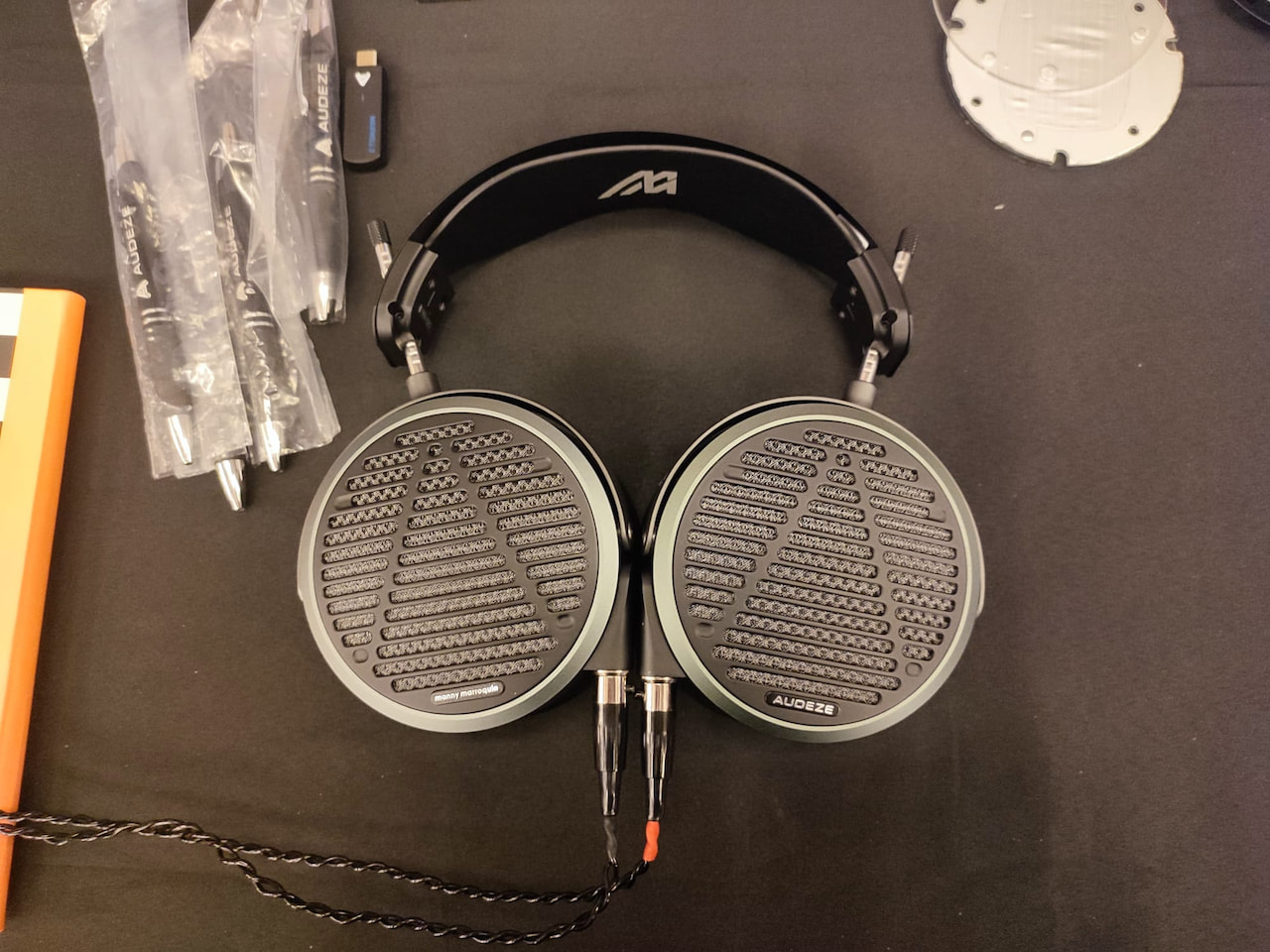
Sticking with Audeze, the $1,699 MM-520 is a studio-focused evolution of the MM-500 developed with 18-time Grammy-winning mixing engineer Manny Marroquin. Its most significant addition is Audeze’s Symmetric Linear Acoustic Modulator, or SLAM, which uses engineered channels to manage airflow and pressure inside the ear cups, improving bass definition and spatial imaging.
The open-back MM-520 uses 90 mm planar magnetic drivers with Ultra-Thin Uniforce diaphragms, Fluxor magnet arrays, and Fazor phase management. It also offers an 18-ohm impedance, 102 dB/mW sensitivity, and a claimed frequency response of 5 Hz to 50 kHz. At 555 grams, however, it remains a substantial piece of studio hardware.
The MM-520 delivered an exceptionally detailed and precise presentation, with the kind of midrange clarity and tonal accuracy expected from Marroquin’s involvement. Even with SLAM, however, I did not find the soundstage especially expansive, and its macrodynamic impact felt somewhat restrained. It is an impressive monitoring tool, but listeners looking for a more physical or emotionally charged presentation may prefer something less analytical.
Moondrop Skyland
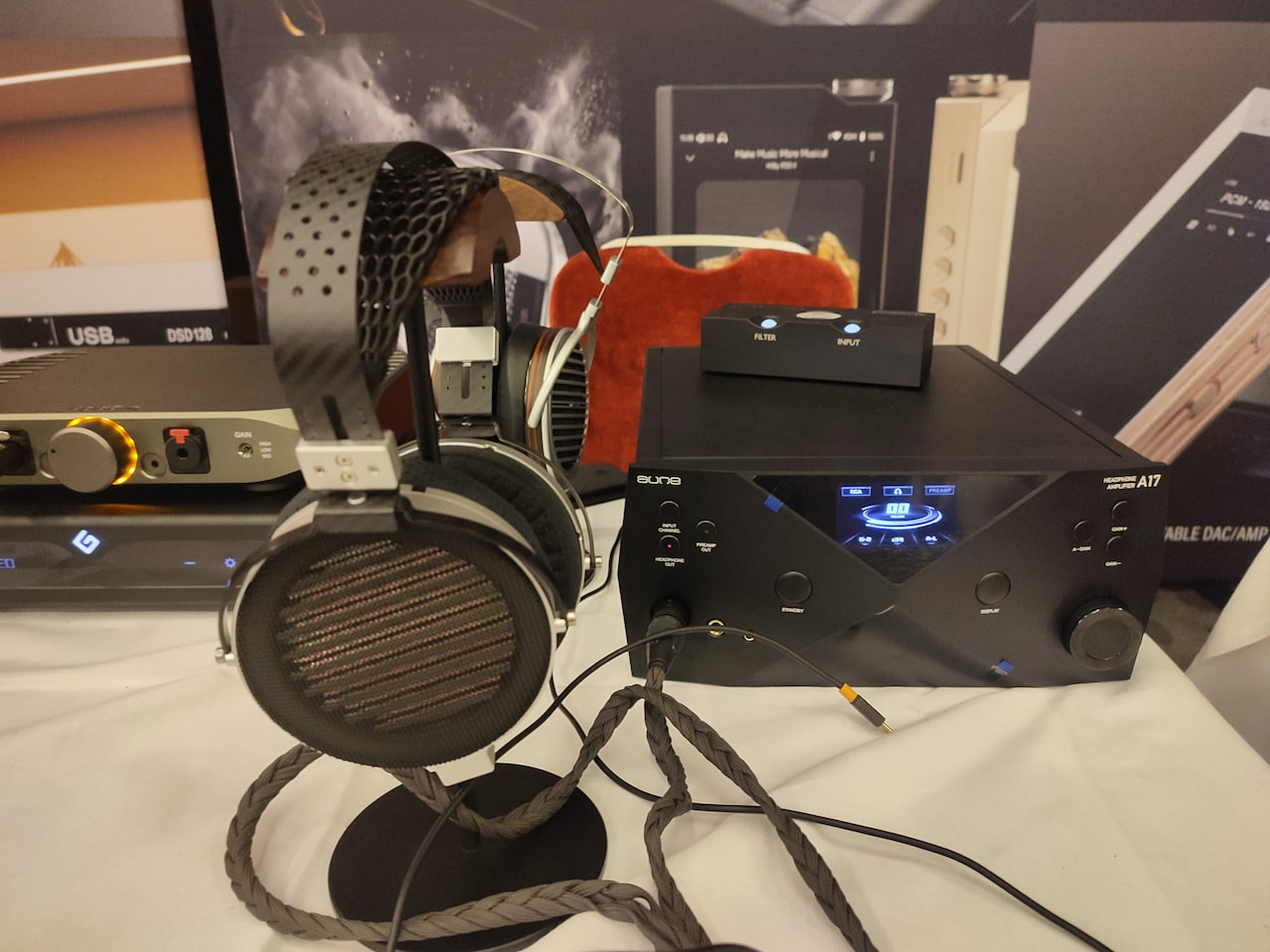
The Elise Audio booth had far too many headphones for me to audition them all, but the Moondrop Skyland immediately caught my eye. It was the first pair I picked up—and wow, this thing is heavy.
The open-back Skyland uses enormous 100 mm planar magnetic drivers with 500-nanometer diaphragms, N55 magnets, and a full-surface drive system. Its all-aluminum CNC construction is paired with a carbon-fiber suspension headband, hybrid lambskin earpads, and a 4.4 mm balanced cable with 6.35 mm and four-pin XLR adapters. Impedance is rated at 60 ohms, with a sensitivity of 96 dB/Vrms and a claimed frequency response of 8 Hz to 34 kHz.
Unfortunately, the substantial weight was compounded by rather low clamping force, resulting in a headphone that did not feel especially secure on my head. I also had to use the smallest headband setting to achieve a workable fit on my average-sized head. Not a promising start.
At least the Skyland sounded good, offering a balanced tonal presentation, seemingly bottomless bass extension, and solid macrodynamic contrast. I was not exactly blown away, however, and the awkward fit would make the $799 asking price difficult to overlook.
Auribus Acoustics Laguna

I was subsequently approached by Auribus Acoustics founder Juan Ovalle, who wanted to hear my impressions of his latest creation: the closed-back Laguna.
The prototype is expected to launch around September for approximately $1,500, although final specifications, pricing, and availability have yet to be announced. Auribus Acoustics is a Southern California headphone manufacturer known for using advanced 3D-printing techniques to refine its acoustic chambers and reduce unwanted resonances.
The moment I placed the Laguna over my ears, I was impressed by its passive noise isolation. It blocked out a substantial amount of the noisy show floor before I had even pressed play.
It also sounded excellent, producing deeply textured sub-bass and a subtle midbass lift that added weight without pushing the presentation into the mud zone. My only minor concern was the treble, which lacked some fine-grained clarity and definition to my ears. Even so, this was a highly promising prototype and one of the more convincing closed-back headphones I heard at CanJam London 2026. Another listener also praised its deep but controlled bass and unusually spacious presentation for a closed-back design.
Viking Audioforge Draupnir
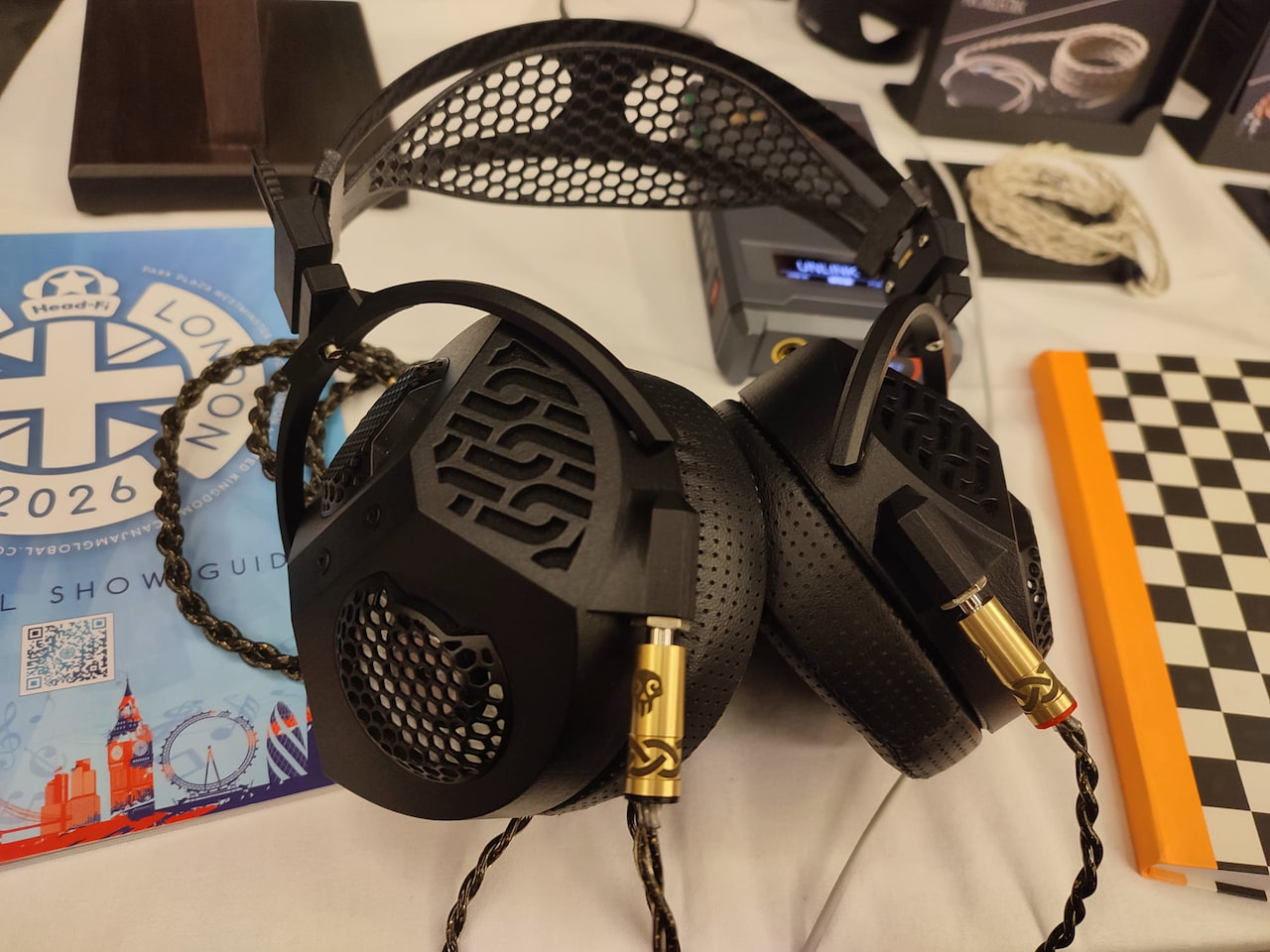
I auditioned a prototype of the Draupnir at CanJam London 2025 and awarded it our Best Innovation honor. One year later, Viking Audioforge has turned that ambitious experiment into a considerably more polished production headphone, now available for preorder at £1,799. Although the fit, finish, and adjustment mechanism have been refined for more consistent manufacturing, Viking Audioforge says the sound, core design, and materials remain unchanged from the Launch Edition.
The open-back Draupnir uses two 50 mm glass-diaphragm dynamic drivers per side, combined through a carefully shaped acoustic lens so that they behave as a coherent source. Its baffle-mounted bass switch adds approximately 6 to 8 dB below 100 Hz, while the lightweight MJF nylon chassis, carbon-fiber headband components, magnetic ZMF earpads, and included Viking Weave cable complete one of the more unconventional headphone designs at the show. It weighs approximately 390 grams.
I cannot say with certainty whether the tuning has changed since last year, but it remains every bit as enjoyable as I remembered. The Draupnir delivered an inviting sense of space and an exciting, quick bass response that became delightfully bombastic once I engaged the boost switch. It would not be an exaggeration to call this one of the most memorable listening experiences I had at CanJam London 2026.
Nur Miah
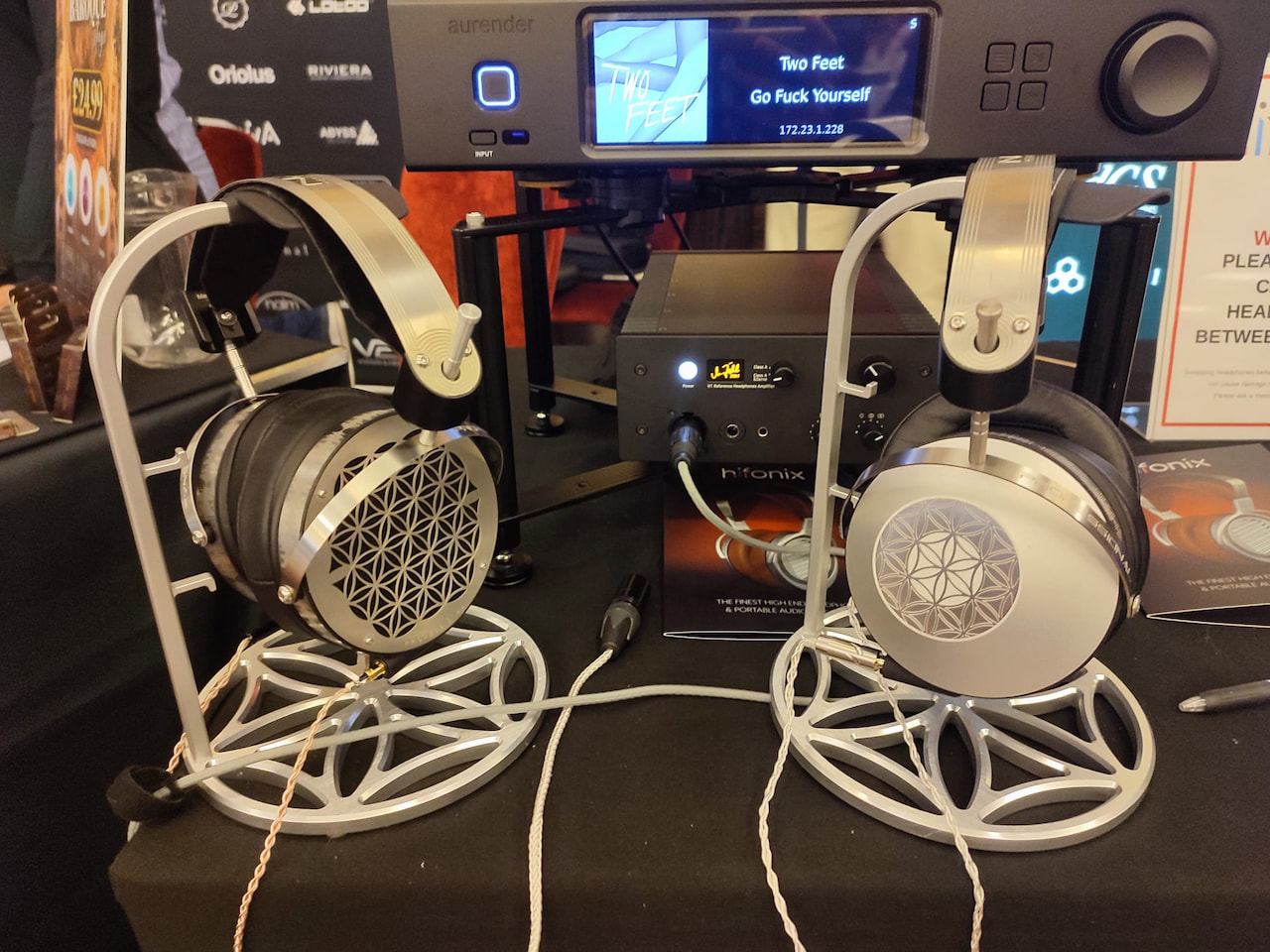
I arrived at the Hifonix booth with no expectations before trying the NUR Miah; admittedly, I had done no research on the Italian headphone manufacturer beforehand.
The forthcoming Miah is a closed-back dynamic headphone with drivers angled forward toward the ears. NUR has not yet published detailed specifications or a firm release date, although I was told at the show that pricing should land somewhere around £2,200.
What surprised me most was the sheer dynamism and realism of its presentation. The Miah sounded exceptionally immediate and lifelike, while maintaining a well-balanced tonal signature that prevented all that energy from becoming tiring or exaggerated. This was an exciting listen—and easily one of the biggest surprises of CanJam London 2026.
Grado Signature S550
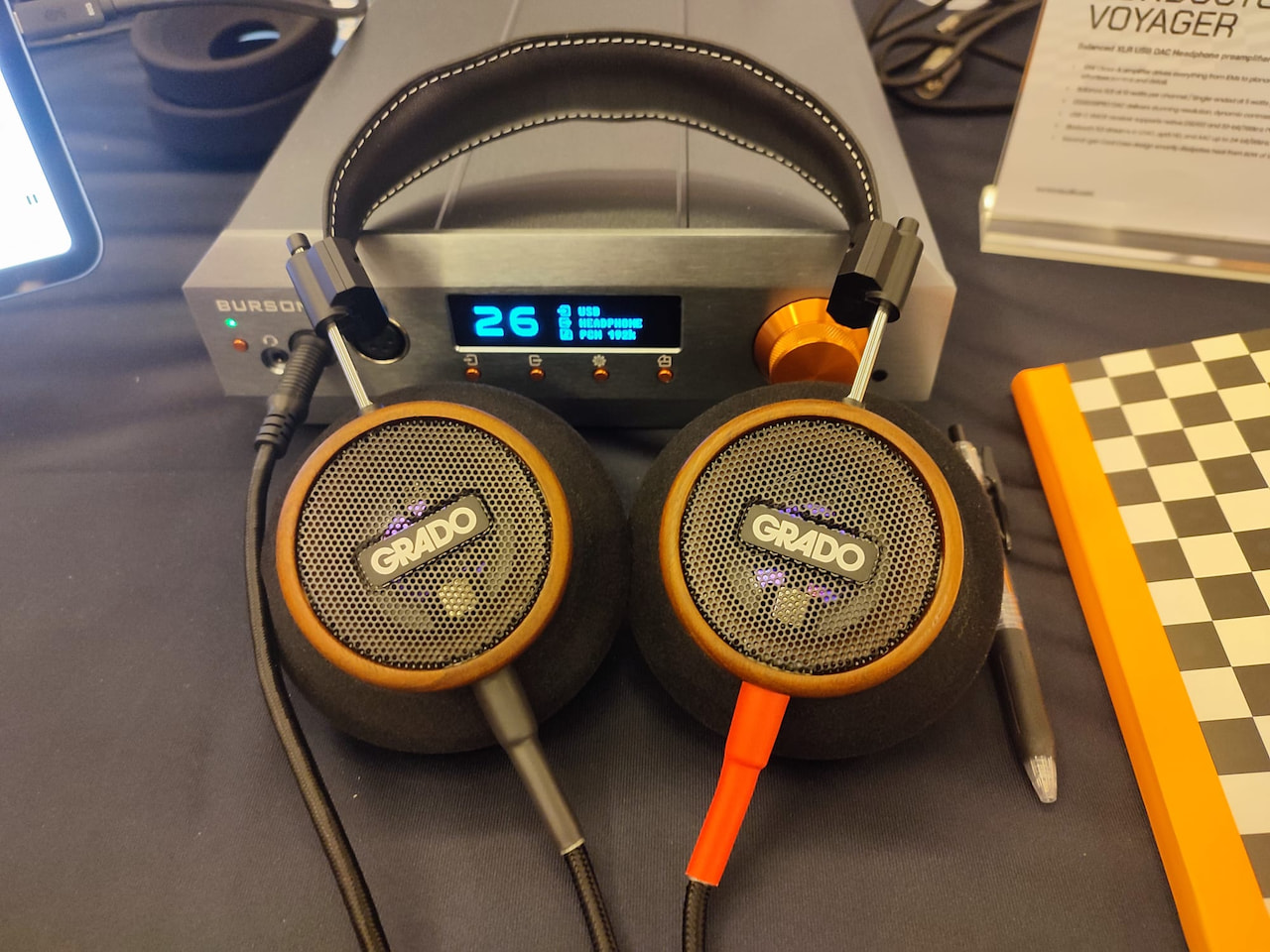
Grado has been rather hit or miss for me in the past. I bought and quickly sold the SR80x because I could not get past its sharp upper midrange, while the HP100 SE proved far more successful, delivering an exciting presentation with beautifully rendered vocals.
The open-back Signature S550 uses Grado’s newly developed 50 mm S2 dynamic driver, with a 38-ohm impedance, 112 dB sensitivity, and a claimed frequency response of 6 Hz to 44 kHz. It weighs 335 grams and includes Grado’s detachable Signature Silver cable, connected through locking four-pin mini-XLR sockets. The S550 ships with the company’s new B cushions but is also compatible with its S, F, L, and G pads, allowing listeners to alter both the fit and sonic presentation.
The $995 S550 firmly lands in the hit column. I have always enjoyed the distinctive appearance of Grado headphones, but what drew me in here was the authoritative bass and excellent dynamic impact. More importantly, it delivered that energy without the overly sharp, grating upper-midrange and treble presentation that has pushed me away from some of the company’s less expensive models.
HiFiMAN HE6 Remastered
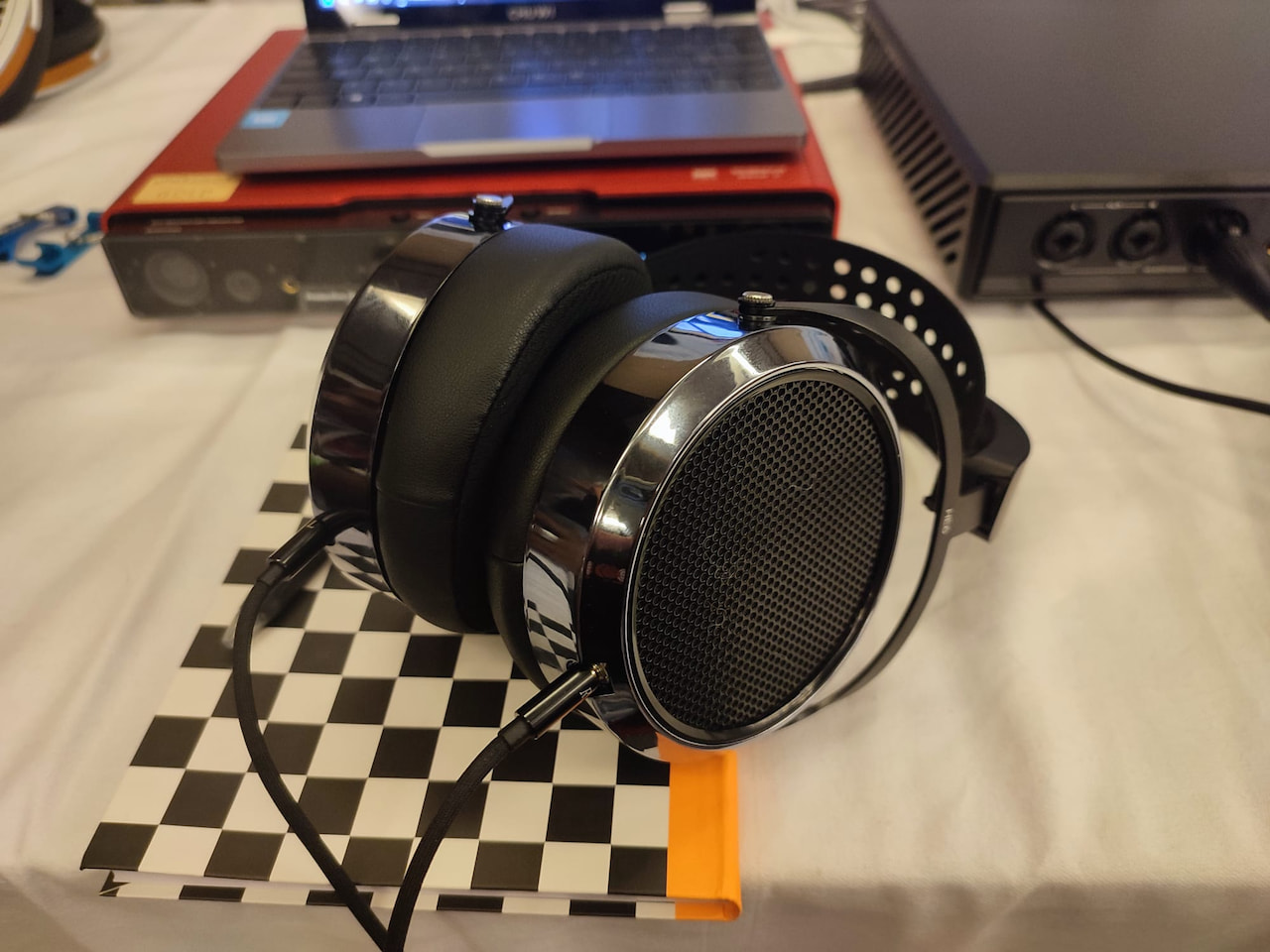
The HiFiMAN HE6 Remastered revives the driver design of the original HE6 while adding the company’s second generation composite headband. This is less a reinvention than an attempt to make one of HiFiMAN’s most celebrated headphones slightly more comfortable and accessible to a new generation of listeners.
The open back planar magnetic headphone retains the original’s brutally inefficient 83.5 dB sensitivity, 50 ohm impedance, and claimed frequency response of 8 Hz to 65 kHz. It weighs 522 grams, which is 28 grams lighter than the original version, but still hardly featherweight.
The original HE6 has achieved near legendary status, so I suspect the $1,899 Remastered will find plenty of willing buyers. For good reason: it remains one of the most impactful and dynamically explosive planar headphones ever produced. Just bear in mind that this is not something you should connect to a phone, laptop, or underpowered dongle DAC. The HE6 Remastered needs a seriously powerful desktop headphone amplifier and will expose anything pretending to be one.
Best in Show
Best Budget Headphones: Hongshu Audio EH-1
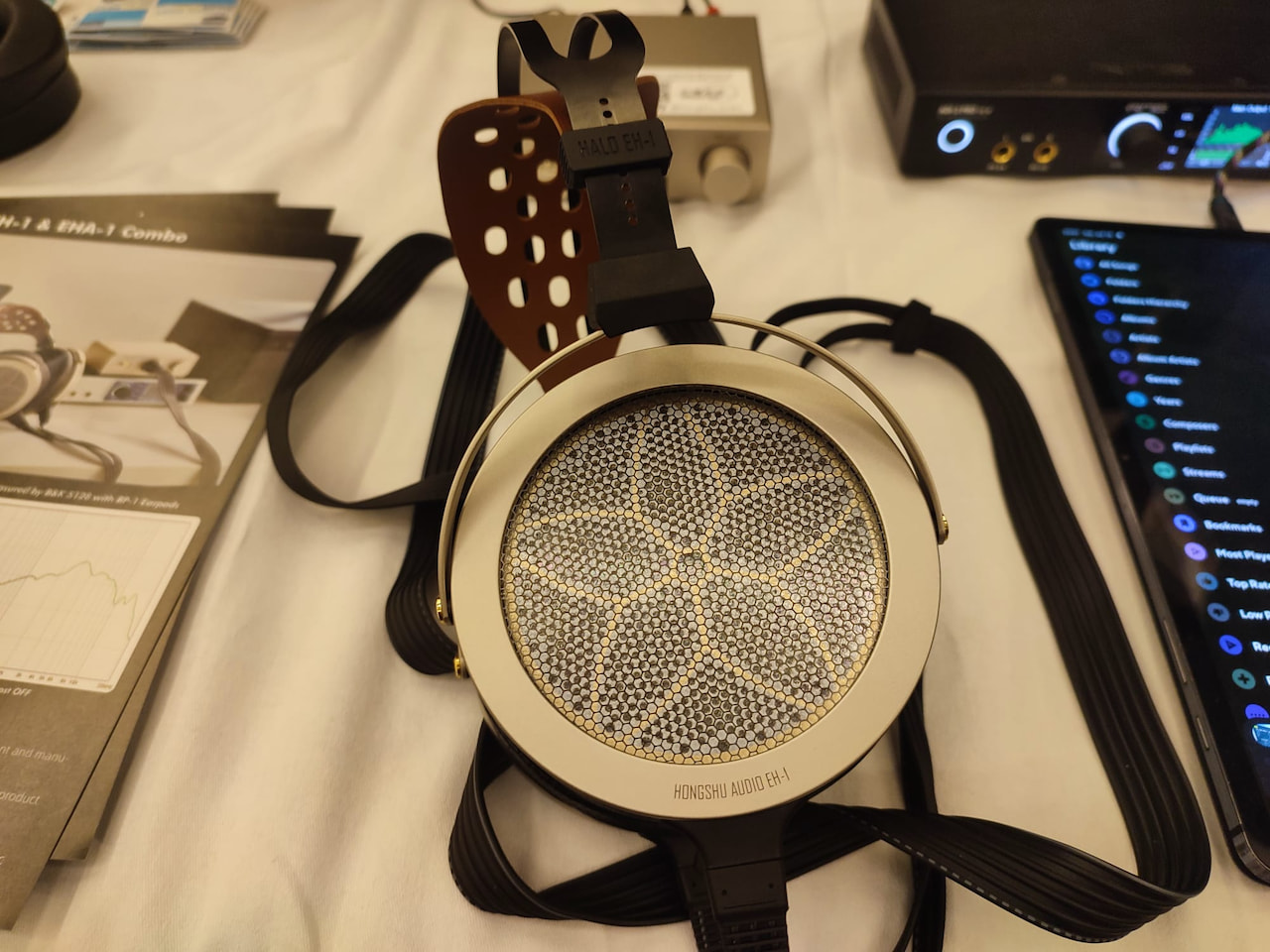
Before anyone reaches for the pitchforks, I know that $649 is hardly cheap. For a complete electrostatic headphone system, however, it qualifies as budget territory, especially because Hongshu Audio includes the dedicated EHA-1 energizer in the price.
The open back EH-1 uses a four inch electrostatic driver, weighs only 295 grams, and is designed around the standard 580 volt bias used by many electrostatic headphones. The compact EHA-1 energizer provides up to 300 Vrms of output, along with a physical channel balance control and a switchable bass boost.
The EH-1 captures the strengths of electrostatic headphones remarkably well, delivering excellent detail, speed, and control across most of the frequency range. Deep subbass rolls off somewhat, which is hardly unusual for the driver type, but Hongshu Audio has also avoided the excessively bright treble that can undermine electrostatic headphones costing several times more.
Listeners looking for greater weight can engage the energizer’s bass boost, which lifts the response from the midbass downward without destroying the headphone’s clarity. At $649 for the complete system, there is very little not to like about the EH-1.
Best Mid-price Headphones: Dan Clark Audio Aeon Core
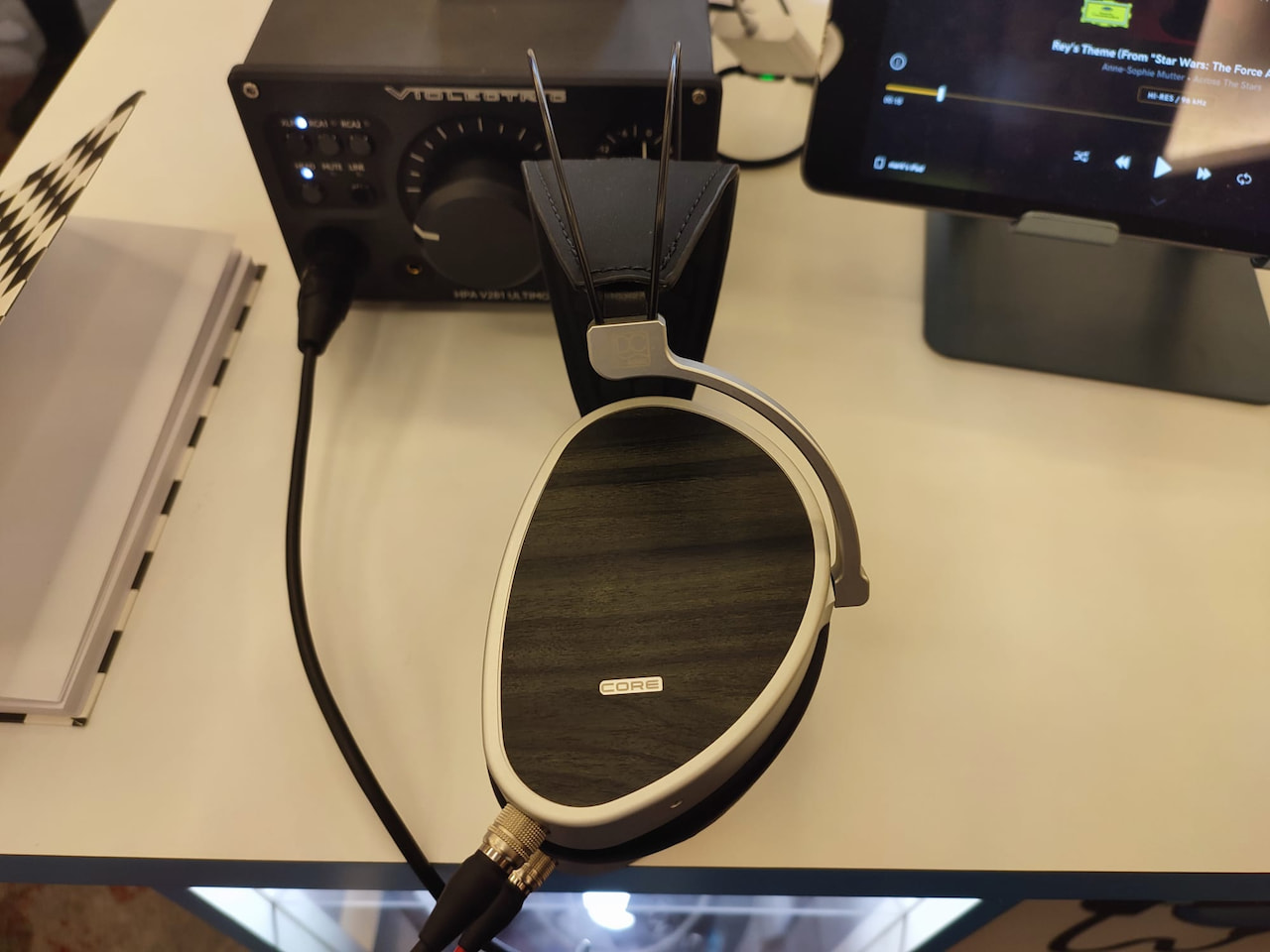
Competition among new wired headphones in the mid-price category, which now seems to hover around $1,000, was surprisingly thin at CanJam London 2026. That should not diminish what Dan Clark Audio achieved with the AEON CORE, however. This was an excellent headphone in its own right.
The closed back AEON CORE is the direct successor to the AEON 2 and uses a new, more efficient planar magnetic driver. It is also the first Dan Clark Audio headphone tuned to a revised Harman over ear target developed through research with Dr. Sean Olive. The design combines aluminum and wood ear cups with the company’s familiar suspension headband and folding frame. It weighs 440 grams, with a 17 ohm impedance and sensitivity of approximately 94 dB/mW.
The AEON CORE was probably the best fitting headphone I tried at the show. Its suspension strap distributed the weight evenly, while the moderately firm clamping pressure and compact ear cups molded comfortably against the sides of my head.
Listening through the Violectric V281 Ultimo certainly did not hurt, but the AEON CORE sounded excellent across the board. Bass was tight and controlled, the midrange remained present and expressive, and the treble added plenty of sparkle without upsetting the overall balance. Everything felt carefully judged without becoming dull, which is a surprisingly difficult trick to pull off.
Best High-End Headphones: Meze Audio ARTA
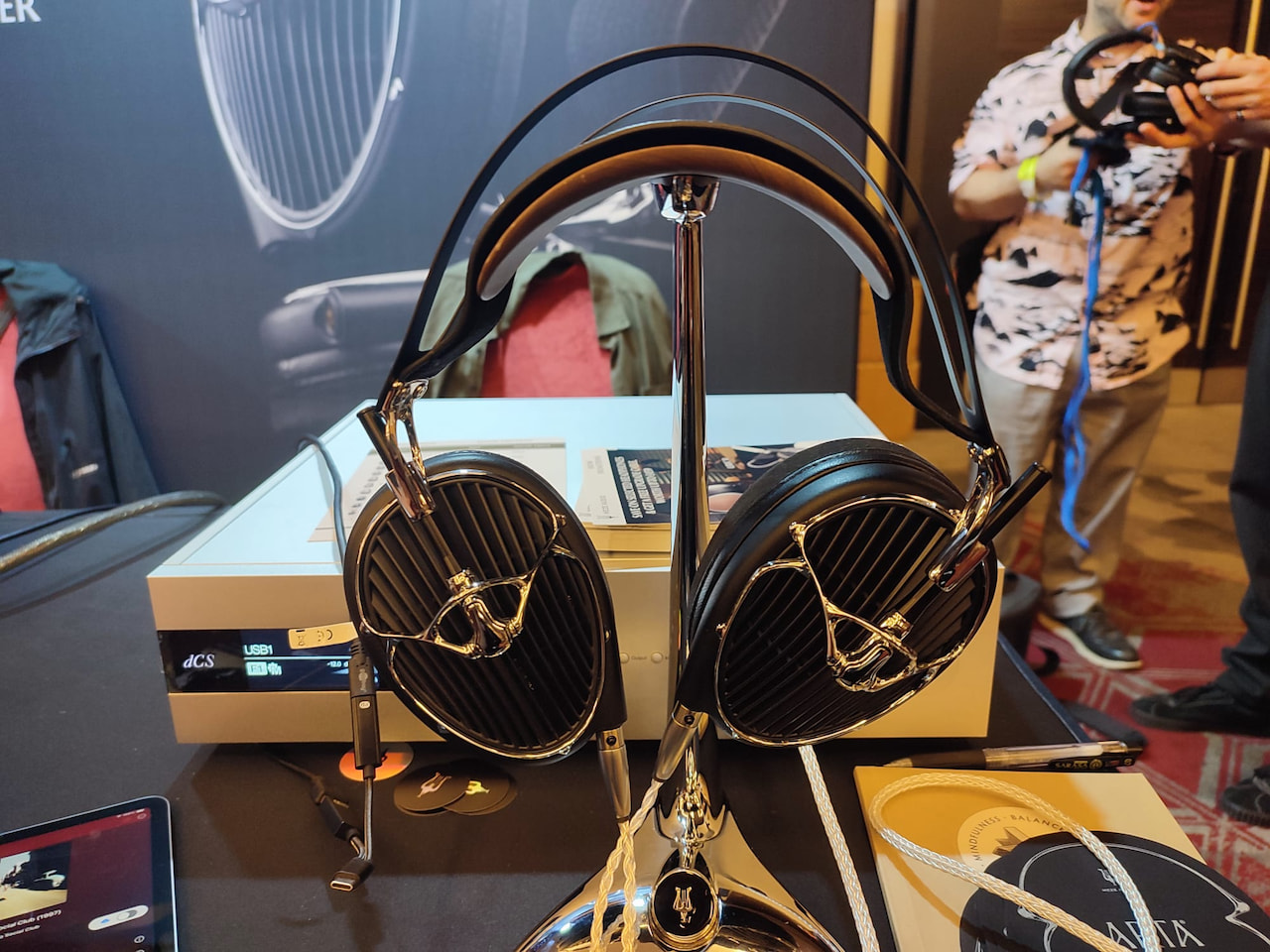
Meze Audio headphones have always looked as though they belong in an art exhibition, and the ARTA continues that tradition. Its meticulously machined components, sculpted metalwork, angled acoustic grille, carbon fiber, and leather come together in an elegant Art Nouveau inspired design that is unmistakably Meze.
The open back ARTA uses Rinaro’s newly developed MZ5 HΩ Isodynamic Hybrid Array planar magnetic driver. Its unusually high 225 ohm impedance is intended to work with higher voltage headphone amplifiers, while the angled acoustic blades behind the driver are designed to reduce internal reflections and improve openness and transient clarity. The ARTA weighs 495 grams and has a claimed frequency response of 3 Hz to 115 kHz. Every major component can also be serviced or replaced, which matters when a headphone costs $6,000.
Some listeners will expect magic at this price, although this hobby has repeatedly demonstrated that a large number on the box guarantees very little. The ARTA, however, delivered deep and beautifully textured bass, along with a remarkably open soundstage that could sound expansive or intimate depending on the recording. Tiny details emerged without requiring me to concentrate or squint into the mix, while its technical precision never came at the expense of emotional engagement.
The Meze Audio ARTA is a display piece that also happens to reproduce music with equal measures of proficiency, scale, and feeling.
Best Wireless Headphones: Noble Audio FoKus Apollo Pro

Noble Audio’s less expensive wireless headphone impressed me more than the flagship FoKus Artemis. The FoKus Apollo Pro, not to be confused with the Sendy Audio headphone bearing the same name, may not look quite as luxurious, but its ANC worked far more effectively on my head and the sound quality was every bit as convincing.
The limited run Apollo Pro combines a 40 mm dynamic driver for the bass with a 14.5 mm planar magnetic driver for the midrange and treble. It also offers hybrid ANC, LDAC, aptX HD, USB C audio, app based EQ, and up to 80 hours of battery life with ANC switched off. Noble has also upgraded the tuning, earpads, headband materials, and overall finish compared with the original Apollo.
It is surprisingly rare to hear a genuinely balanced tonal presentation from wireless headphones, but the FoKus Apollo Pro delivered exactly that. Bass was tight and controlled, the midrange remained clean and present, and the treble offered clarity without becoming sharp. At $699, this was the stronger wireless headphone in Noble Audio’s CanJam London lineup.
The Bottom Line
The fact that I ran out of time before hearing every new headphone at CanJam London 2026 says plenty about the pace of innovation in personal audio.
Some headphones were genuinely exciting, while others were complete disappointments and did not make this report. The real value of CanJam is that specifications, prices, and reputations only tell part of the story. Every pair has the potential to surprise you, for better or worse, the moment you place it over your ears.
That unpredictability is precisely what makes these shows worth attending.
You must be logged in to post a comment Login