
Security teams log 54% of successful attacks and alert on just 14%. The rest move through your environment unseen.
The Picus whitepaper shows how breach and attack simulation tests your SIEM and EDR rules so threats stop slipping by detection.



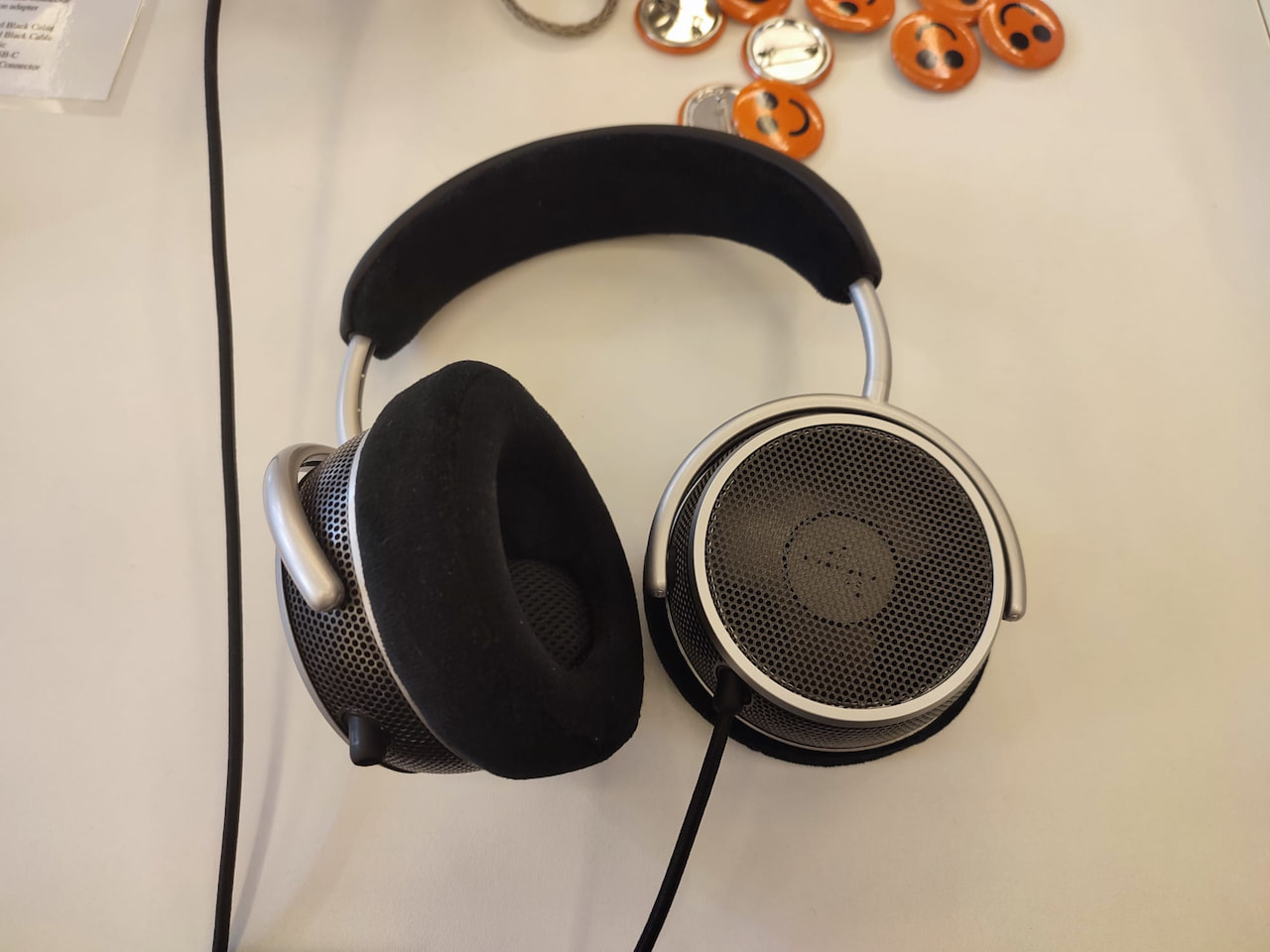
I returned to central London for the second consecutive year for the tenth edition of CanJam London, with a fairly clear idea of which brands and headphones I wanted to hear.
Those expectations lasted about five minutes. The moment I entered the show, I encountered several headphones I had never heard of, along with just as many that sounded completely different from what I expected.
Unlike last year, there were so many new products on display that I simply ran out of time to hear them all. What follows is only a snapshot of the new releases and standout headphones I tested at CanJam London 2026—although nearly 30 pairs of cans still represents a rather substantial snapshot.
This report follows our look at the best DACs, headphone amplifiers, and DAPs from CanJam London 2026, while building on our extensive CanJam NYC 2026 coverage. We will also be heading west for CanJam SoCal 2026 later this summer, where another wave of new headphones and personal audio products will undoubtedly be waiting.
Related Reading: The Best DACs, Headphone Amps and DAPs from CanJam London 2026
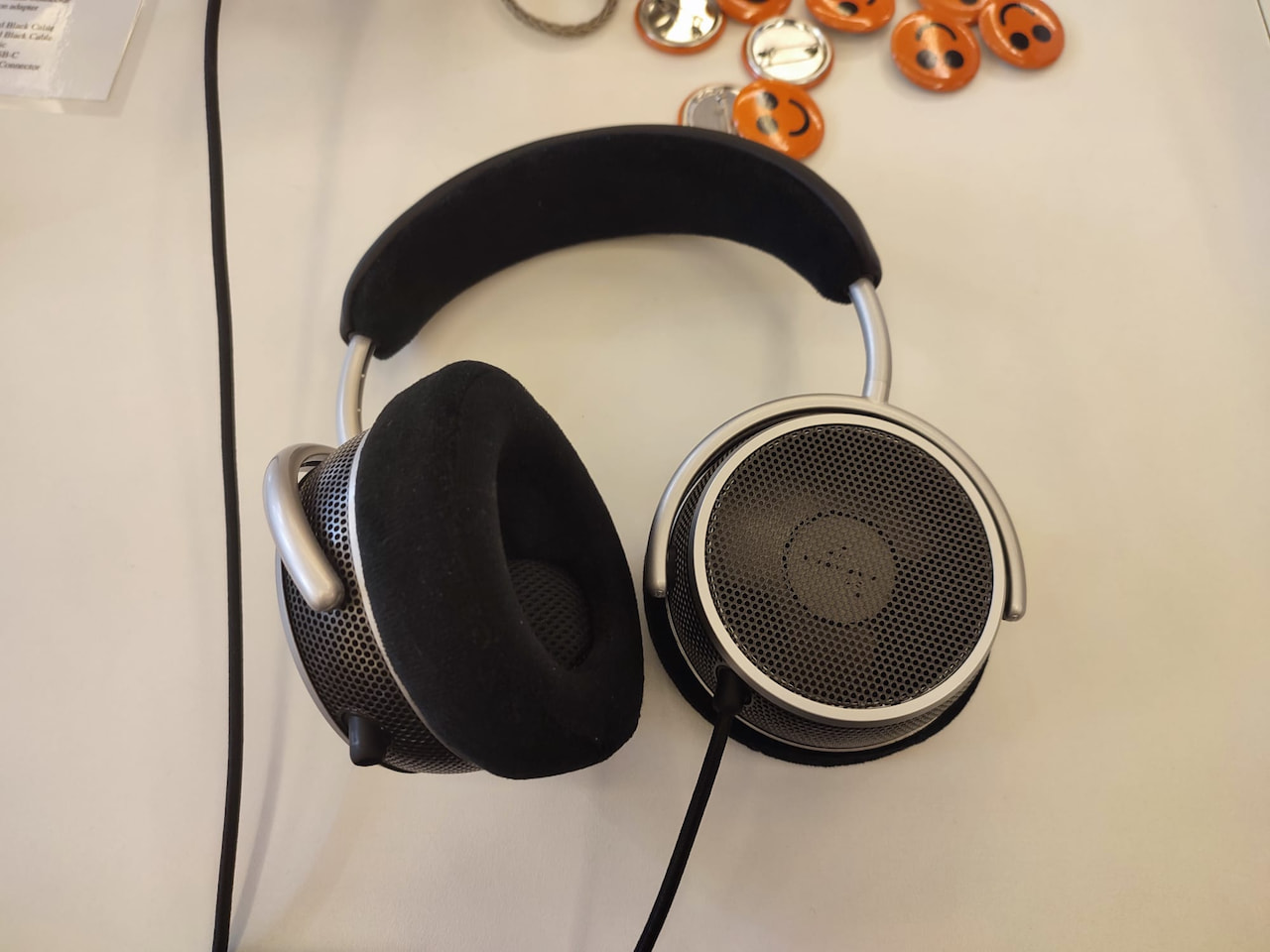
I started at the Electromod booth, conveniently located near the entrance to the show.
The $599 OAE2 is legendary Sennheiser designer Axel Grell’s second attempt at refining his Front-Sided Sound Field Modulation (FSFM) concept. Its 40 mm bio-cellulose dynamic drivers are positioned well forward of the ears, allowing sound to interact more naturally with the outer ear and create a presentation closer to nearfield loudspeakers than conventional headphones. The open-back OAE2 has a 38-ohm impedance, 100 dB sensitivity, a claimed frequency response of 12 Hz to 34 kHz, and weighs 378 grams without its cable.
The original OAE1 received mixed reviews, largely because of its unconventional tonal balance. I did not notice any glaring tonal quirks with the OAE2, although that impression should be taken with a grain of salt because the Electromod booth was hardly a quiet listening environment.
The heavily angled drivers certainly produced the intended forward-facing presentation, which I found pleasant, but the soundstage did not strike my ears as especially wide or expansive. eCoustics Editor-in-Chief Ian White reached a more enthusiastic conclusion during his full review, finding the OAE2 neutral, controlled, and capable of projecting a stable image slightly in front of the listener—although he also noted that the effect varies considerably from one recording to another.

At the same Electromod booth was one of the more intriguing wireless headphones at CanJam London 2026: the écoute TH2. The closed-back design combines hybrid active noise cancellation and a transparency mode with an eight-band parametric DSP system that allows listeners to make substantial changes to its primary response curve through the accompanying mobile app.
The TH2’s defining feature, however, is its Korg Nutube 6P1 dual-triode vacuum tube in the preamplifier stage, feeding separate Class A/B amplifiers for each channel. It also uses 40 mm titanium-coated Mylar drivers and supports Bluetooth 5.3 with LDAC, AAC, and SBC, along with USB-C digital and 3.5 mm analog connections. Battery life is rated at more than 20 hours.
Sonically, the TH2 delivered prominent midbass with a touch of the harmonic warmth and euphony associated with tube amplification; something rarely experienced from wireless headphones on the move. It was a smooth, relaxed, and thoroughly enjoyable listen. I was told that the TH2 will cost approximately £900 when it goes on sale.
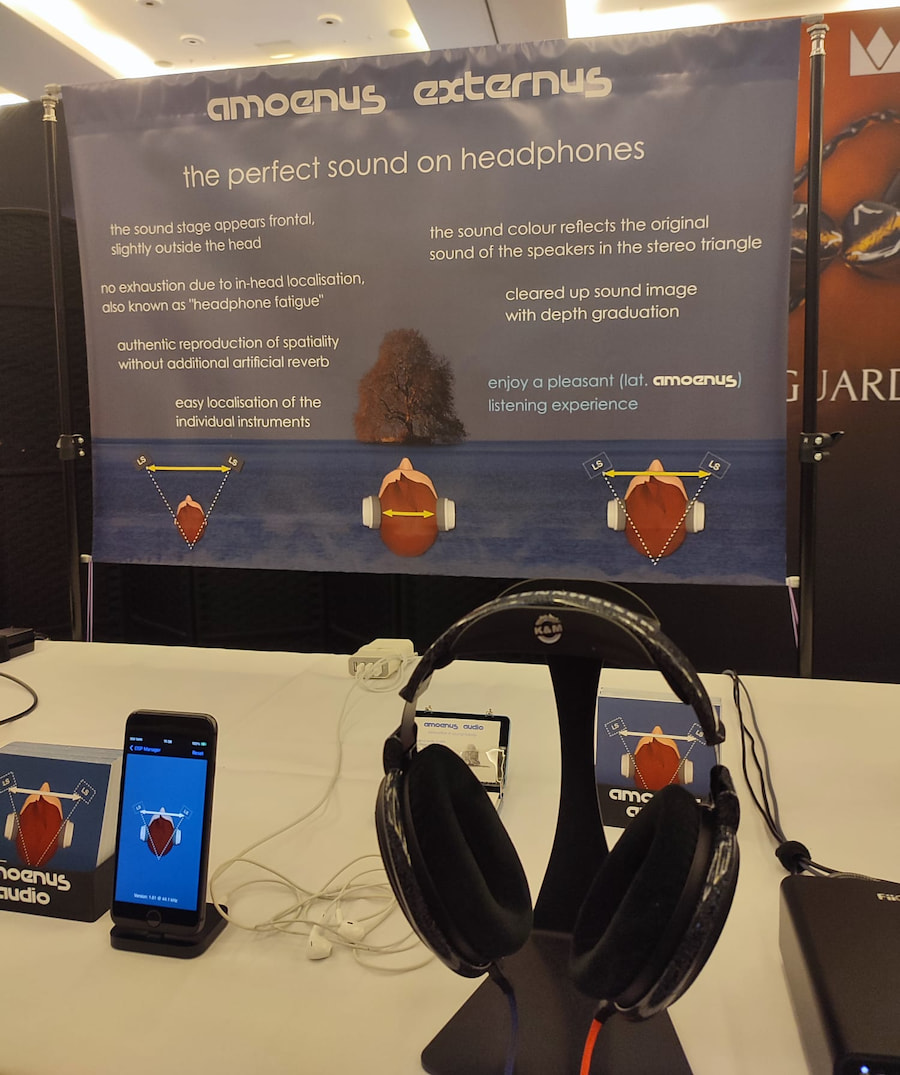
The amoenus externus was the odd one out at CanJam London because it is not a pair of headphones, but rather a software-based spatial-processing system designed specifically for stereo headphone listening.
Instead of adding artificial reverberation or simulating a listening room, the algorithm uses a universal HRTF and an array of nine extremely short delays to reproduce some of the timing cues created by sound interacting with the head, shoulders, and outer ear. The objective is to move the stereo image outside the listener’s head and closer to the presentation of two loudspeakers positioned in front of them. It is available as a stand-alone application or plug-in for 64-bit Windows and Mac systems, along with an AUv3 plug-in for the iPhone.
This was perhaps the most convincing soundstage-enhancement system I have heard thus far. The transformation was not subtle, moving the music away from the sides of my head and placing it significantly farther forward without smothering the recording in artificial ambience. At approximately £20, it is also one of the least expensive products I experienced at CanJam London 2026—and potentially one of the most useful.
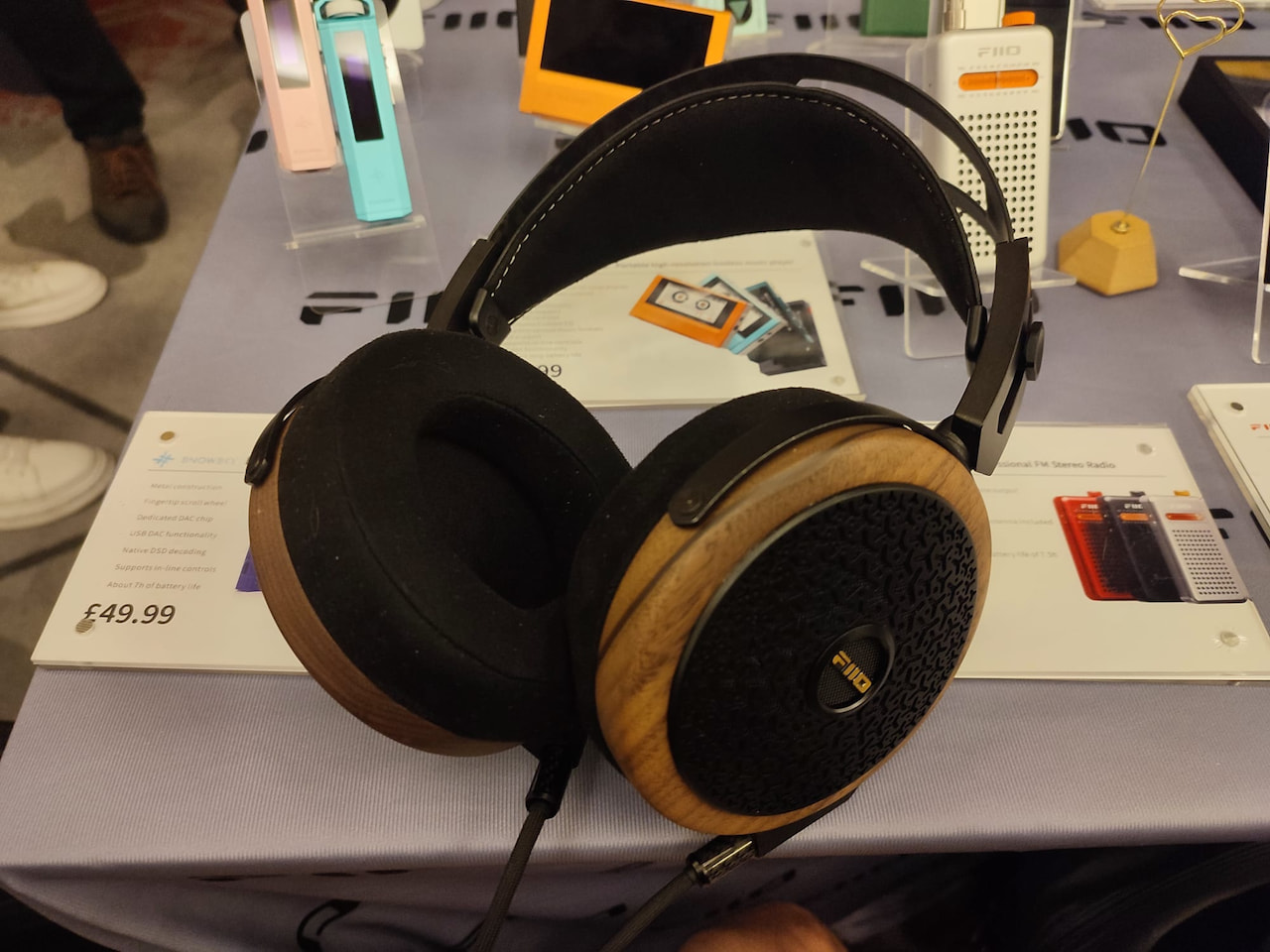
FiiO brought a handful of new and forthcoming products to CanJam London 2026, which should surprise absolutely no one by now.
First up was the FT15, an open-back planar magnetic headphone expected to replace the FT5 while sitting below the flagship FT7 in FiiO’s expanding over-ear lineup. The wood-accented design also continues the visual direction established by several of the company’s recent headphones, with expected pricing of around £499 when it reaches the market. Final specifications and availability have yet to be confirmed.
The FT15 offered a largely balanced tonal presentation, with treble that remained present and airy without becoming immediately aggressive. That openness worked well, but I found its macrodynamic punch and overall sense of contrast somewhat restrained. It was an easy headphone to listen to, although it did not deliver the same dramatic swings or physical energy as some of the stronger planar designs at the show.
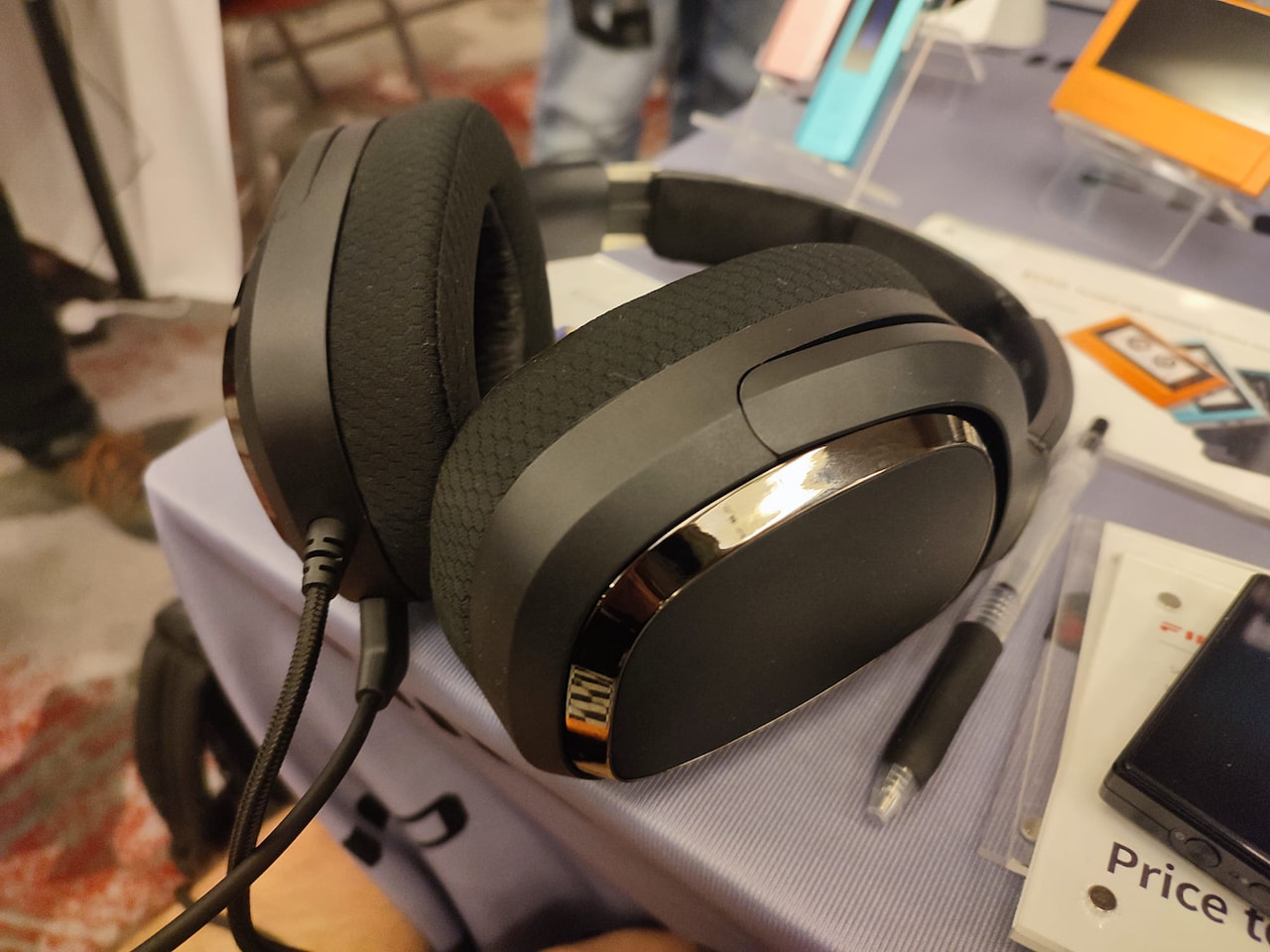
Next was the FG3, FiiO’s first gaming headset and one aimed squarely at the ultra-budget-conscious. Its plastic construction looks and feels every bit of its roughly $70 asking price, but expecting milled aluminum and lambskin at this level would be taking the piss.
The closed-back FG3 uses coaxially mounted 50 mm and 16 mm dynamic drivers with an electronic two-way crossover. It also includes an integrated DAC, headphone amplifier, virtual 7.1 surround processing, five gaming presets, and a 10-band EQ accessible through FiiO Control Web. USB and 3.5 mm connections provide compatibility with computers, consoles, and smartphones, while the detachable microphone uses environmental noise cancellation to reduce background noise.
More importantly, it sounded surprisingly decent for the money. There was some gentle roll-off at both ends of the frequency spectrum, but nothing that undermined the overall presentation during my brief audition. The FG3 is already available internationally for $69.99, and I can imagine it rolling off the shelves rather quickly once UK stock becomes widely available. Pun entirely intended.
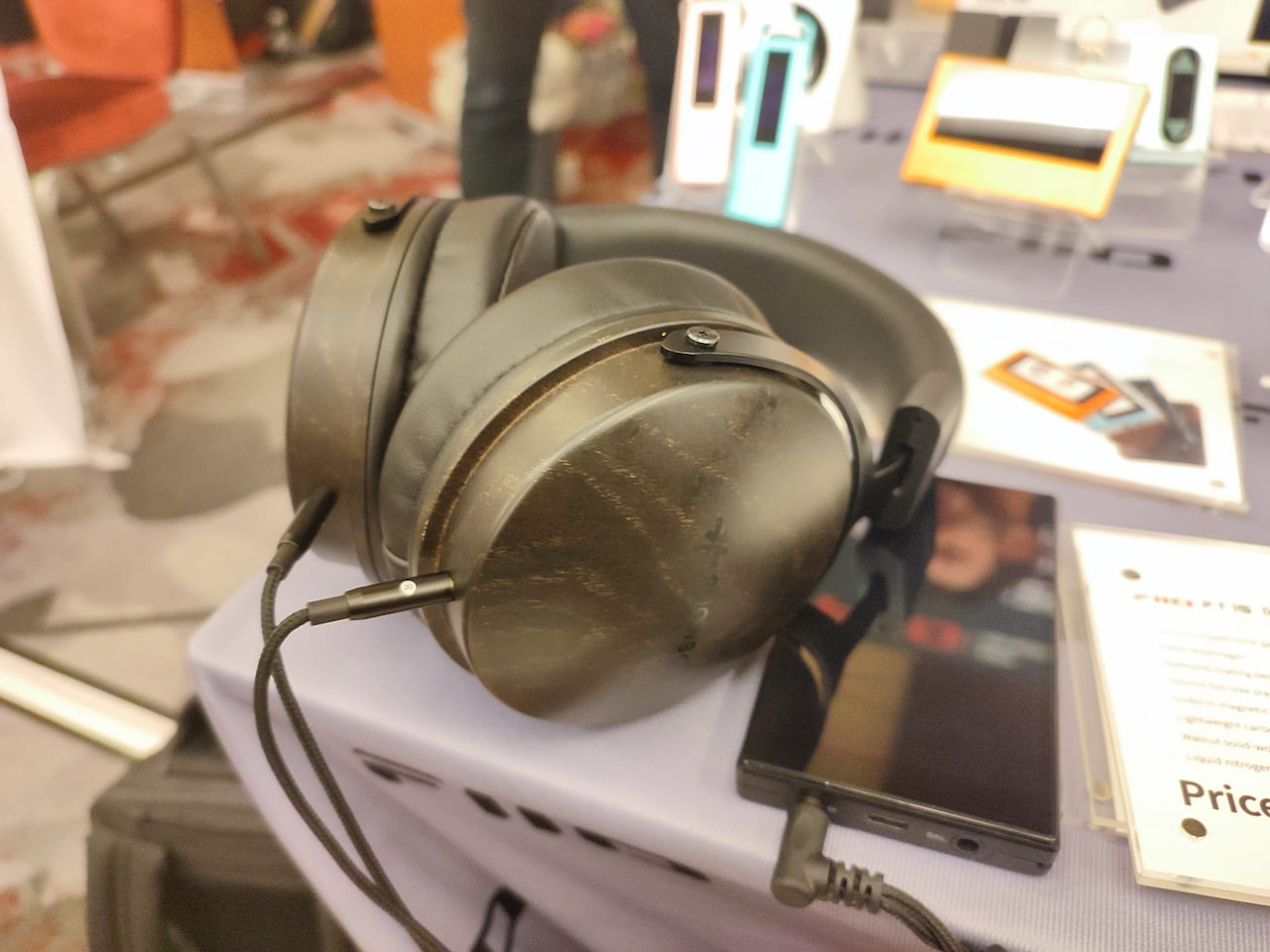
Apparently, FiiO can go even lower in price without the sound falling apart. SNOWSKY is the company’s affordable sub-brand, and the closed-back Nature costs only $40.
The retro-styled over-ear headphone uses 50 mm dynamic drivers with a Japanese carbon-black composite diaphragm, a low 24-ohm impedance, and a sensitivity rating of 101 dB/mW, making it easy to drive from a smartphone, DAP, or inexpensive USB dongle. It also weighs just 280 grams and includes detachable dual 3.5 mm cables, including one with an inline microphone. Despite appearances, the ear cups use a wood-grain water-transfer finish rather than actual wood.
The Nature sounded slightly hollow during my brief audition, but its detail retrieval and generally coherent tonal balance were far better than I expected at this price. For $40, this one is an absolute steal.
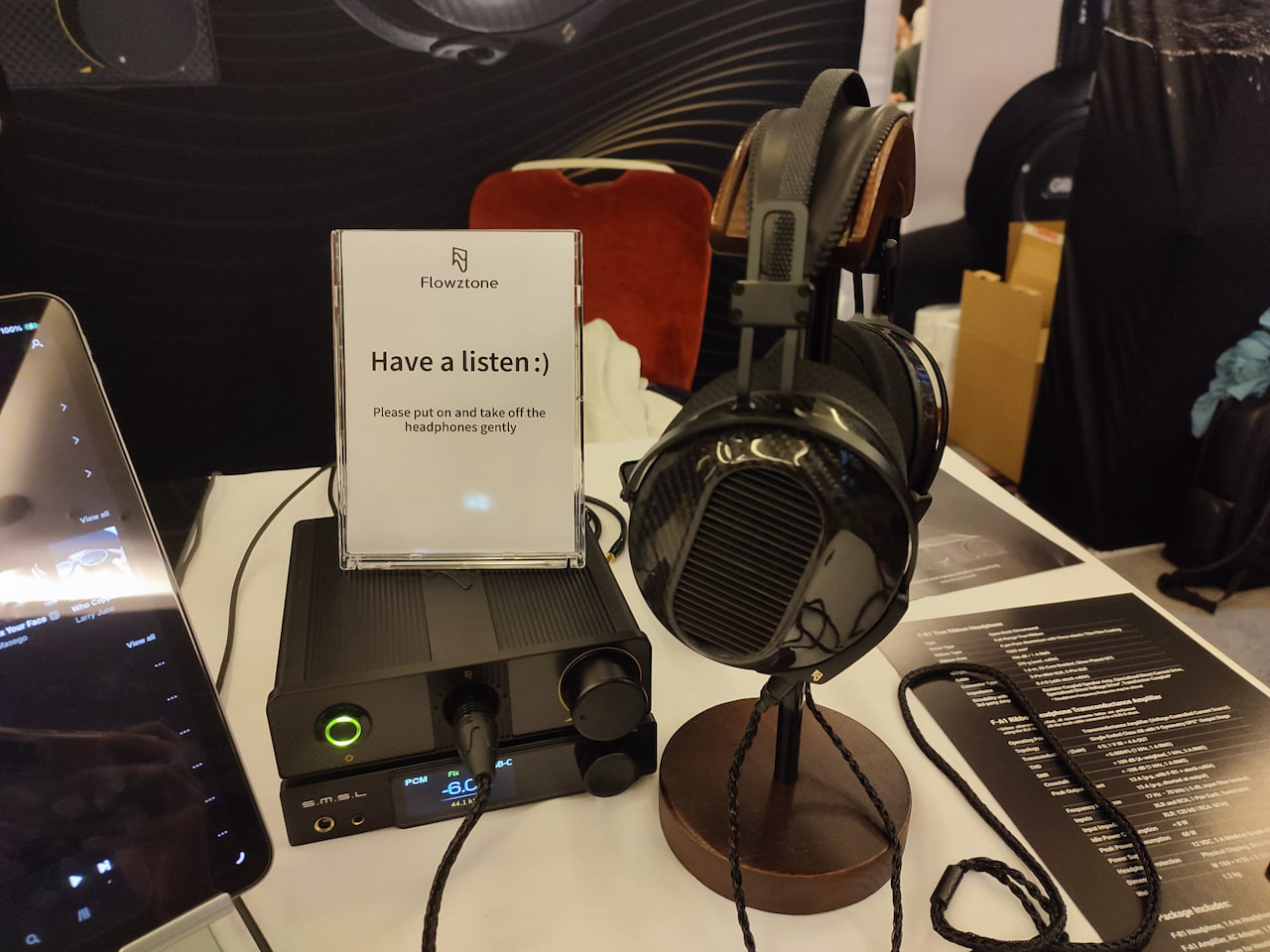
Hong Kong-based Flowztone is preparing to release its first headphone system, and the company has hardly chosen the cautious route. The F-R1 is a true ribbon design expected to cost around $3,000 with its dedicated amplifier.
The open-back F-R1 uses a 4-micron pure-aluminum ribbon diaphragm coated with an ultra-thin viscoelastic polymer layer. Flowztone claims this construction reduces the low-frequency distortion that has traditionally limited true ribbon headphones, with typical bass distortion rated at 0.5% at 94 dB. The 370-gram carbon-fiber headphone also requires Flowztone’s purpose-built transconductance amplifier to drive its exceptionally low 0.4-ohm load.
Right out of the gate, I found the F-R1 slightly sibilant. Inserting the supplied –2 dB tuning filter brought the treble under better control, however, and allowed me to enjoy its Harman-inspired tonal balance. The F-R1 sounded fast, open, and impressively full-bodied for a ribbon design, making this one of the more compelling debuts at CanJam London 2026.
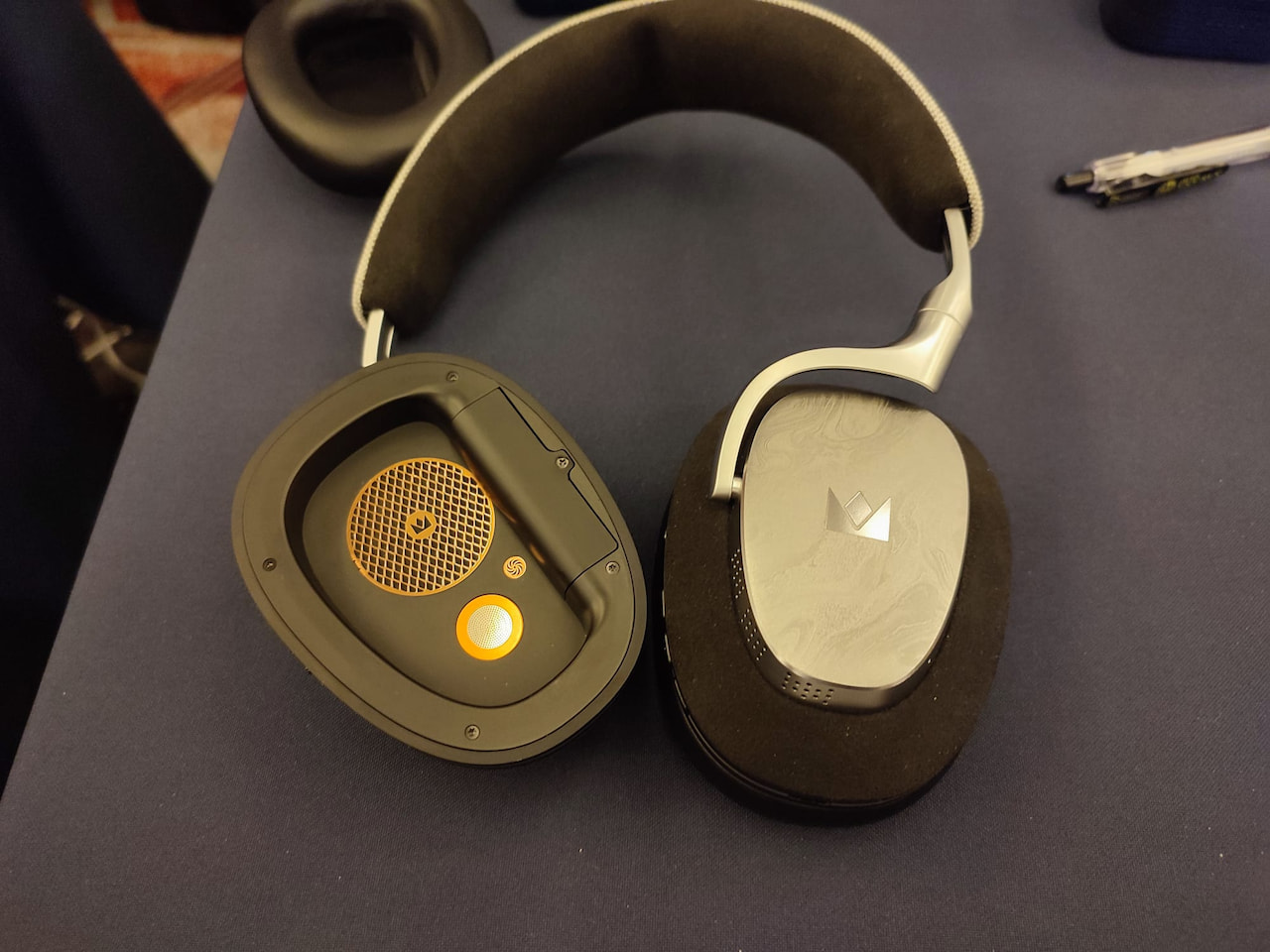
At $899, the Noble Audio FoKus Artemis sits firmly at the upper end of the wireless headphone market, but it certainly looks the part. The sculpted aluminum construction, sleek lines, premium materials, and magnetically attached earpads give it the appearance and feel of a genuine flagship rather than another plastic travel headphone with an inflated price tag.
The Artemis uses an unusual three-driver configuration comprising one dynamic driver, one planar magnetic driver, and one balanced armature driver in each ear cup. It also features adjustable ANC, transparency mode, LDAC, aptX Adaptive and aptX Lossless support, Audiodo hearing personalization, USB-C audio, multipoint connectivity, and a user-replaceable battery rated for more than 40 hours without ANC or 35 hours with it engaged.
Sonically, the Artemis was right up there with the DALI IO-12 that I reviewed previously, delivering excellent detail retrieval, imaging, and overall technical proficiency. Unfortunately, I could not get the earpads to seal properly against the sides of my head. The resulting air gap rendered the ANC almost useless, which was a bit of a disappointment. Fit will clearly vary between listeners, but at this price, prospective buyers should try them before handing over a credit card.

Moving over to the SIVGA and Sendy Audio booth, I listened to the recently released Apollo Pro, a substantially redesigned successor to the original Apollo.
The open-back headphone uses a custom 78 mm planar magnetic driver with a nano-scale composite diaphragm measuring less than 800 nanometers thick. Sendy Audio also employs electron-beam deposition to apply the aluminum conductor layer more uniformly. The 354-gram design combines zebrawood ear cups with CNC-machined aluminum components and includes a detachable 4.4 mm balanced cable with 3.5 mm and 6.35 mm adapters. Impedance is rated at 27 ohms, with a sensitivity of 93 dB.
I have not heard the original Apollo, but I enjoyed the Pro’s particularly intimate and engaging vocal presentation. The trade-off was a soundstage that felt somewhat compact for an open-back planar headphone. Even so, its detail retrieval, separation, and overall technical performance were highly competitive at $494.
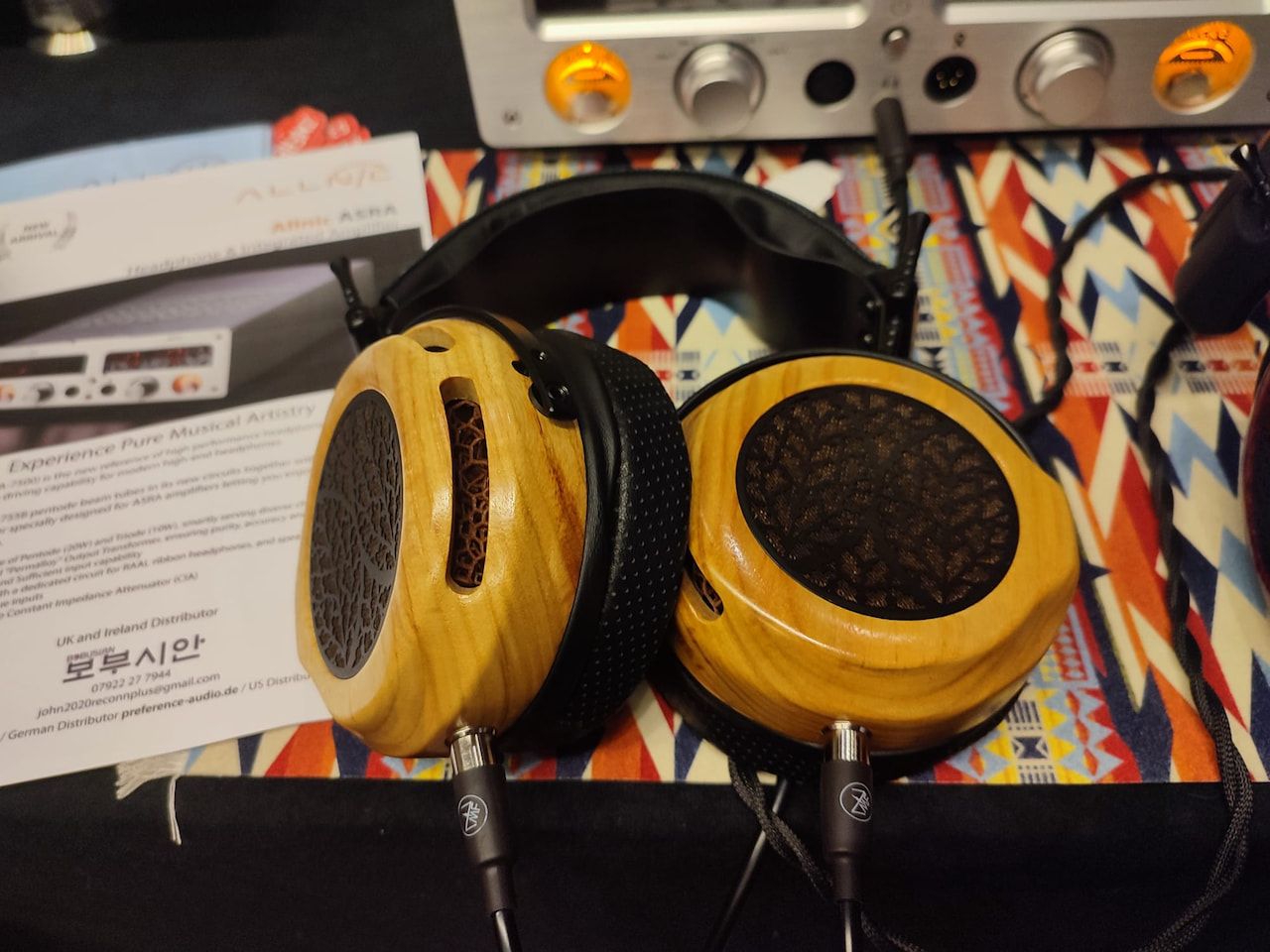
The moment I picked up the $2,499 ZMF Tessidera, I was struck by just how beautiful it looked. ZMF headphones have always resembled works of art, but the angular Canarywood cups and honeycomb-like ZMF Acoustic Matrix visible behind them elevate the design to another level.
The open-back Tessidera uses a newly developed 1-micron planar magnetic driver with a 35-ohm impedance and sensitivity of approximately 92 dB/mW. It combines ZMF’s CAMS magnet structure and Atrium Damping System with the new lattice-style ZMF Acoustic Matrix, designed to reduce standing waves and smooth the treble, and a wooden Soundboard Resonator System intended to improve transient impact and control resonance.
More importantly, how does it sound? To my ears, the Tessidera leaned closer to neutrality than many ZMF headphones, with something of the Auteur’s balance and natural presentation. The treble was smooth and inviting, but dynamics remained strong, while timbre and imaging were as realistic and precise as I have come to expect from ZMF. I have not always connected with the company’s tonal choices, but the Tessidera was right up my alley.
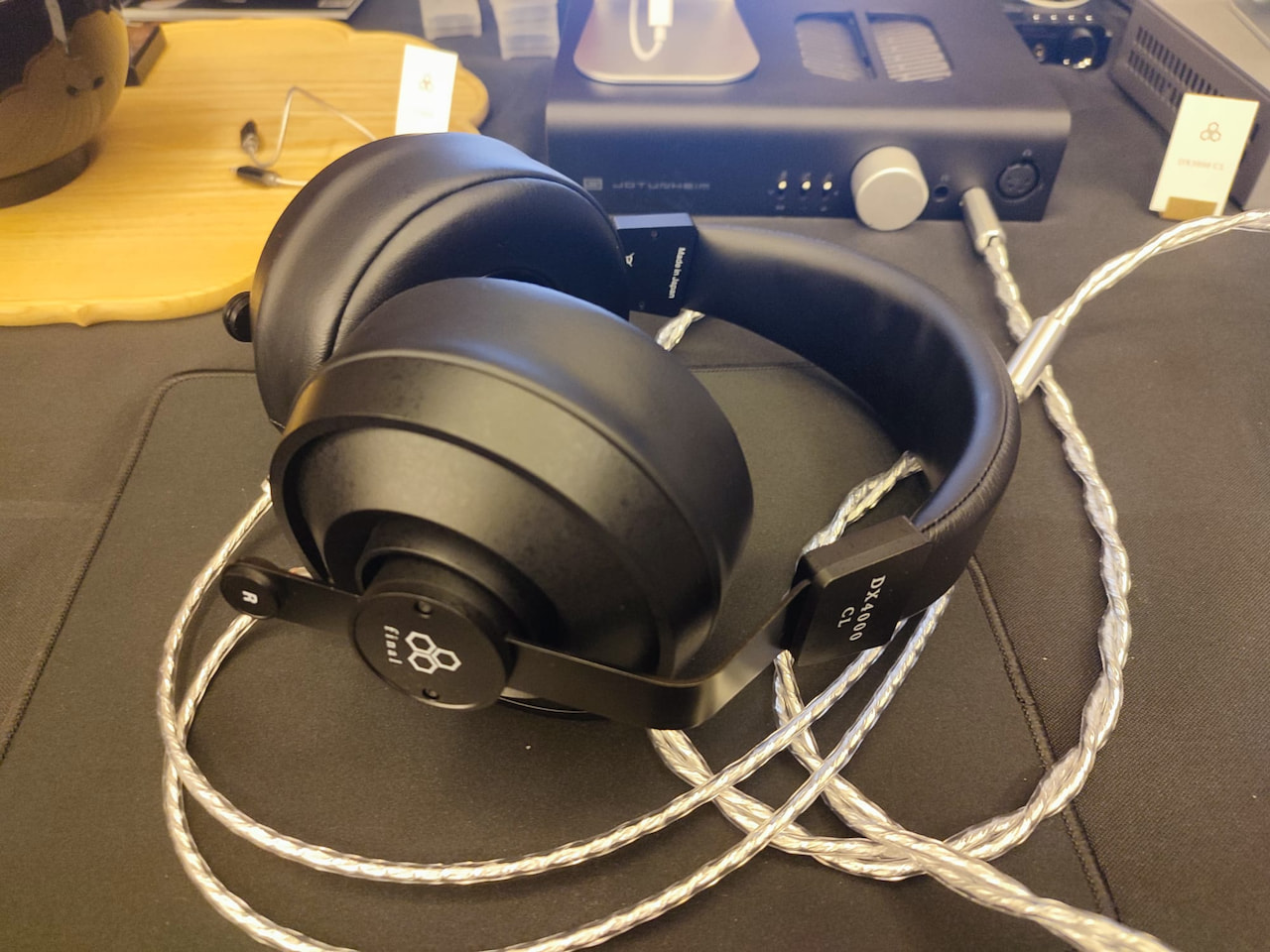
Final recently expanded its premium closed-back headphone range with the DX3000 CL and DX4000 CL. They look almost identical, but the DX3000 CL costs $599, while the DX4000 CL lands just below $1,000.
Both use 40 mm dynamic drivers with lightweight Japanese washi paper and carbon-fiber composite diaphragms, along with thick 30 mm memory-foam earpads and an internal rear-diffuser array designed to suppress unwanted resonances. They also share a 37-ohm impedance and 96 dB/mW sensitivity. The DX4000 CL weighs 375 grams and includes Final’s upgraded silver-coated cable, while the DX3000 CL weighs 410 grams and comes with a standard OFC cable.
In noisy show conditions, I found it difficult to distinguish between their sound signatures. I was told that the more expensive DX4000 CL is slightly more analytical and resolving, while retaining the warmth and generous bass response shared by both models.
Listeners who prefer a warm, full-bodied presentation should find plenty to enjoy here. Unless the DX4000 CL’s lighter construction, added refinement, and upgraded cable are essential, however, I would take the DX3000 CL and pocket the $400 difference.
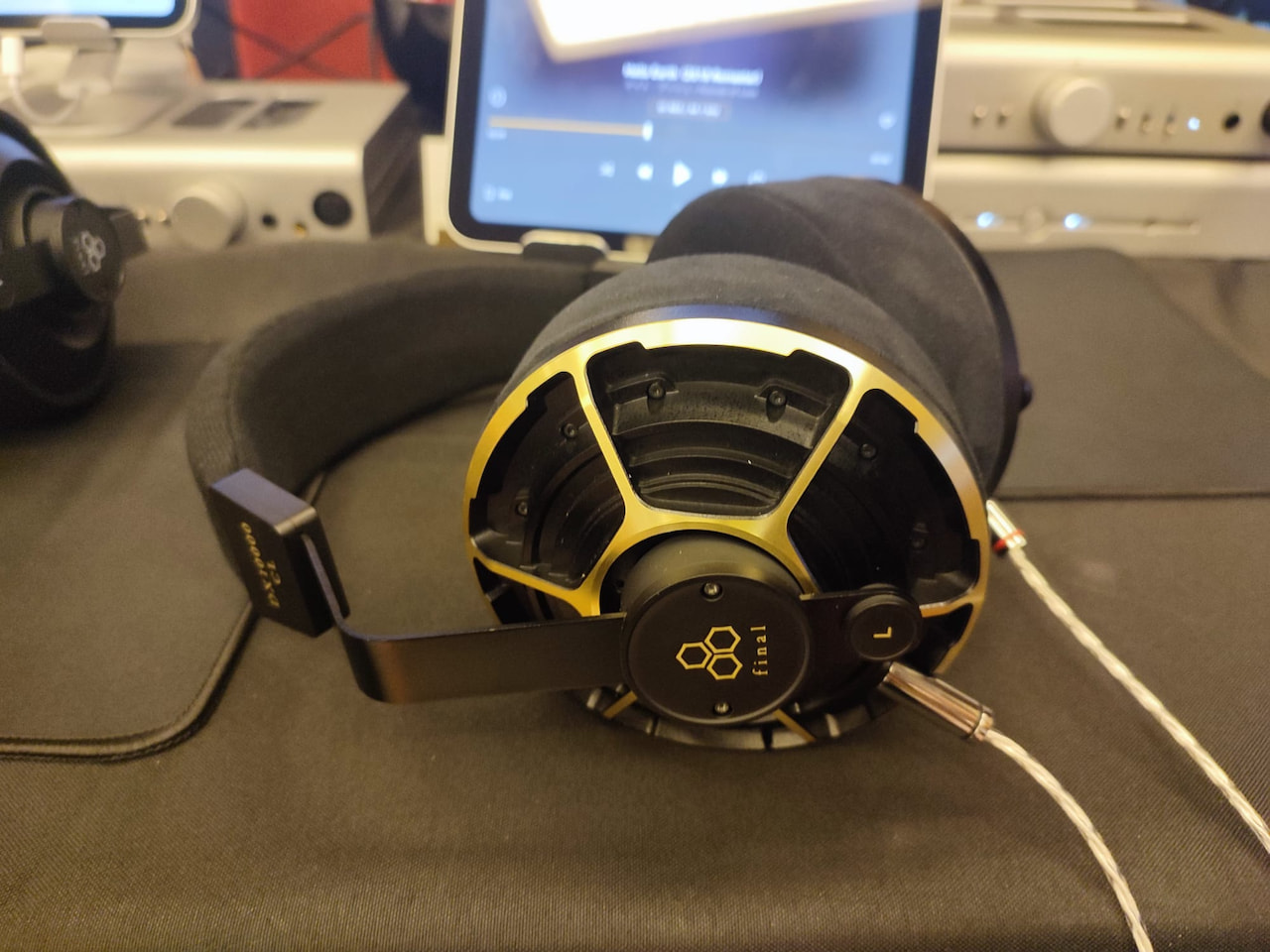
Final had one more new closed-back headphone on display, although the DX10000 CL occupies a very different financial universe from the DX3000 CL and DX4000 CL. The standard model costs a rather unhinged $8,499, while the limited Collector’s Edition adds another $500.
The flagship uses a newly developed 40 mm dynamic driver with a self-supporting True Diamond diaphragm manufactured through chemical vapor deposition. Final claims the material’s extreme rigidity and strong internal damping reduce deformation, resonance, and distortion while improving transient response. The aluminum-magnesium alloy housing has also been engineered to control internal reflections, while the Ultrasuede earpads manage airflow around the ear.
Its subtle steampunk aesthetic looks terrific, but the real surprise came when I listened to it immediately after its two considerably less expensive siblings. The difference was night and day, with substantially greater clarity, perceived detail, and openness owing to its more neutral tonal balance.
I will admit that the DX10000 CL did not tug at my heartstrings quite as strongly as some of the other headphones I heard at the show. Which ones did? I will save those for the Best in Show section.
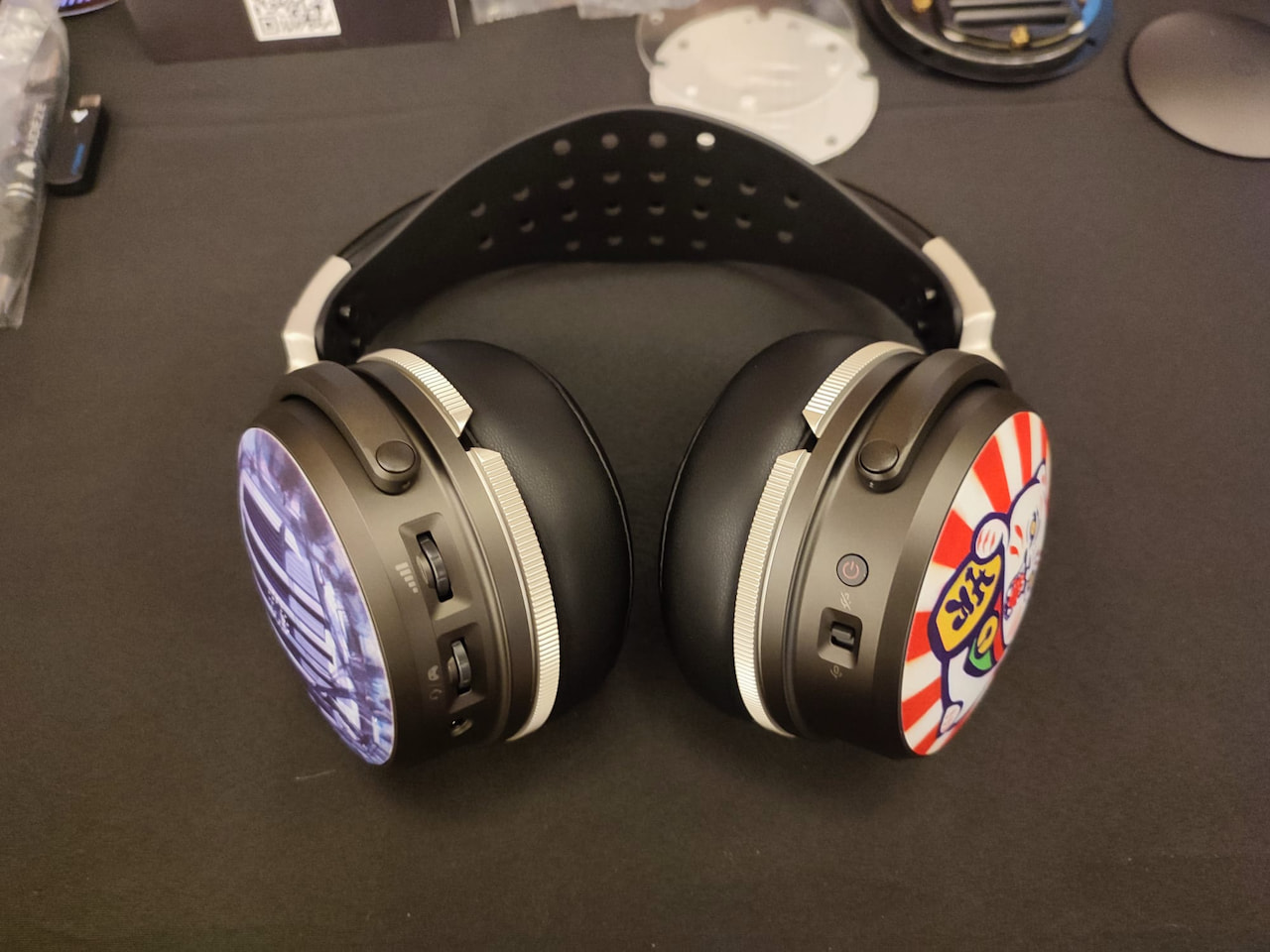
Returning to wireless headphones, I gave the Audeze Maxwell 2 ANC a whirl. As its name suggests, it adds adaptive hybrid noise cancellation and a low-latency transparency mode to the Maxwell 2 platform. It is also the first Audeze headphone of any kind to offer ANC.
The closed-back gaming headset retains Audeze’s 90 mm planar magnetic drivers, Fluxor magnet arrays, Fazor waveguides, and SLAM acoustic technology. Bluetooth 5.3 support includes LDAC, LE Audio, multipoint, and Auracast, which allows a single broadcast source to transmit audio to multiple nearby compatible devices without conventional pairing. Battery life is rated at 40 hours with ANC switched off and 35 hours with it engaged. At 560 grams, however, nobody will mistake it for lightweight travel headphones.
Despite the added weight over the original Maxwell, I preferred the newer model’s sonic balance. Its flatter bass response kept the midrange cleaner without sacrificing impact, while the planar drivers retained the clarity and positional precision that made the Maxwell series stand out in the first place. The PlayStation version costs $429, while Xbox users will pay $449—$100 more than the equivalent Maxwell 2 without ANC.
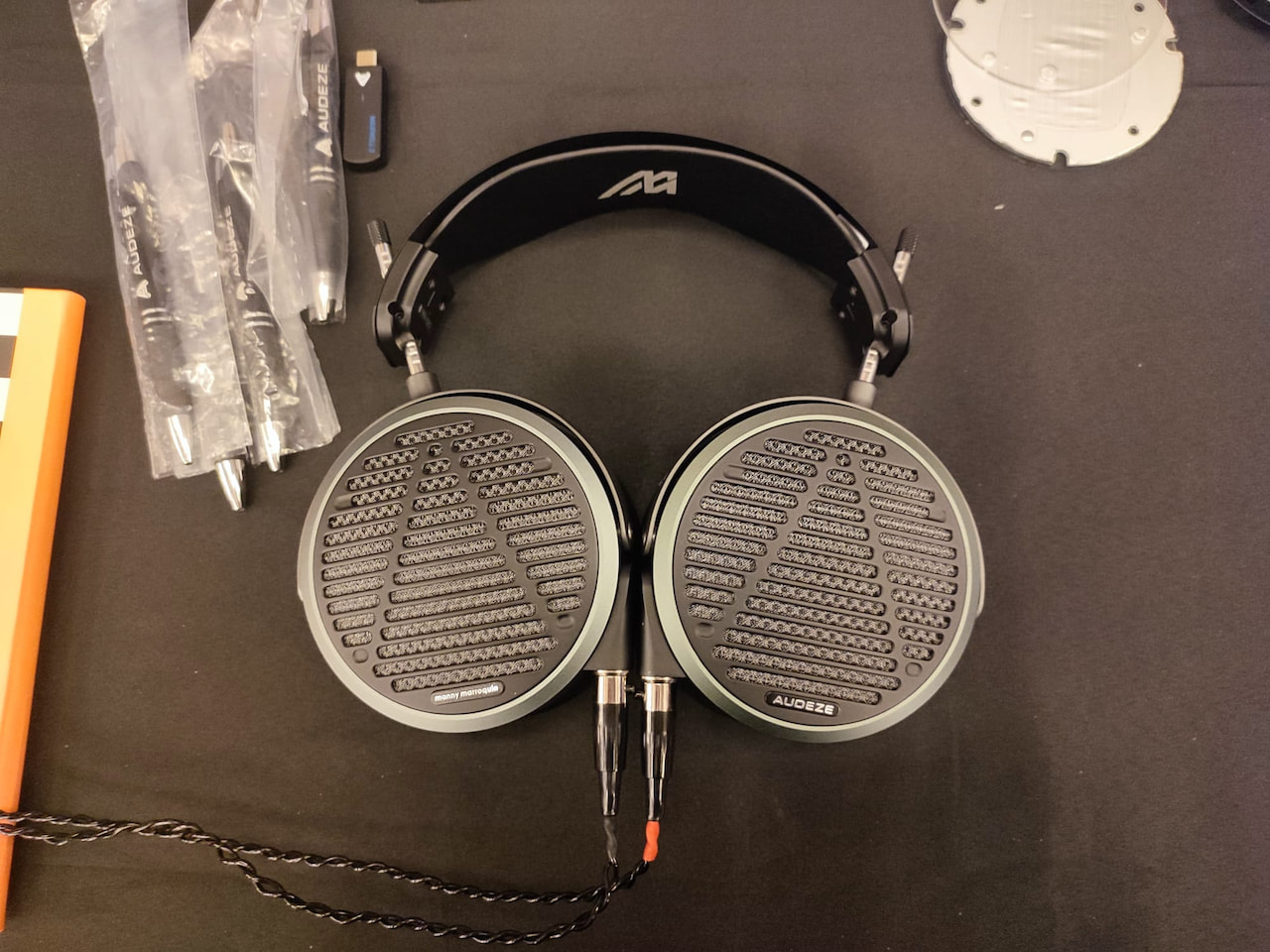
Sticking with Audeze, the $1,699 MM-520 is a studio-focused evolution of the MM-500 developed with 18-time Grammy-winning mixing engineer Manny Marroquin. Its most significant addition is Audeze’s Symmetric Linear Acoustic Modulator, or SLAM, which uses engineered channels to manage airflow and pressure inside the ear cups, improving bass definition and spatial imaging.
The open-back MM-520 uses 90 mm planar magnetic drivers with Ultra-Thin Uniforce diaphragms, Fluxor magnet arrays, and Fazor phase management. It also offers an 18-ohm impedance, 102 dB/mW sensitivity, and a claimed frequency response of 5 Hz to 50 kHz. At 555 grams, however, it remains a substantial piece of studio hardware.
The MM-520 delivered an exceptionally detailed and precise presentation, with the kind of midrange clarity and tonal accuracy expected from Marroquin’s involvement. Even with SLAM, however, I did not find the soundstage especially expansive, and its macrodynamic impact felt somewhat restrained. It is an impressive monitoring tool, but listeners looking for a more physical or emotionally charged presentation may prefer something less analytical.
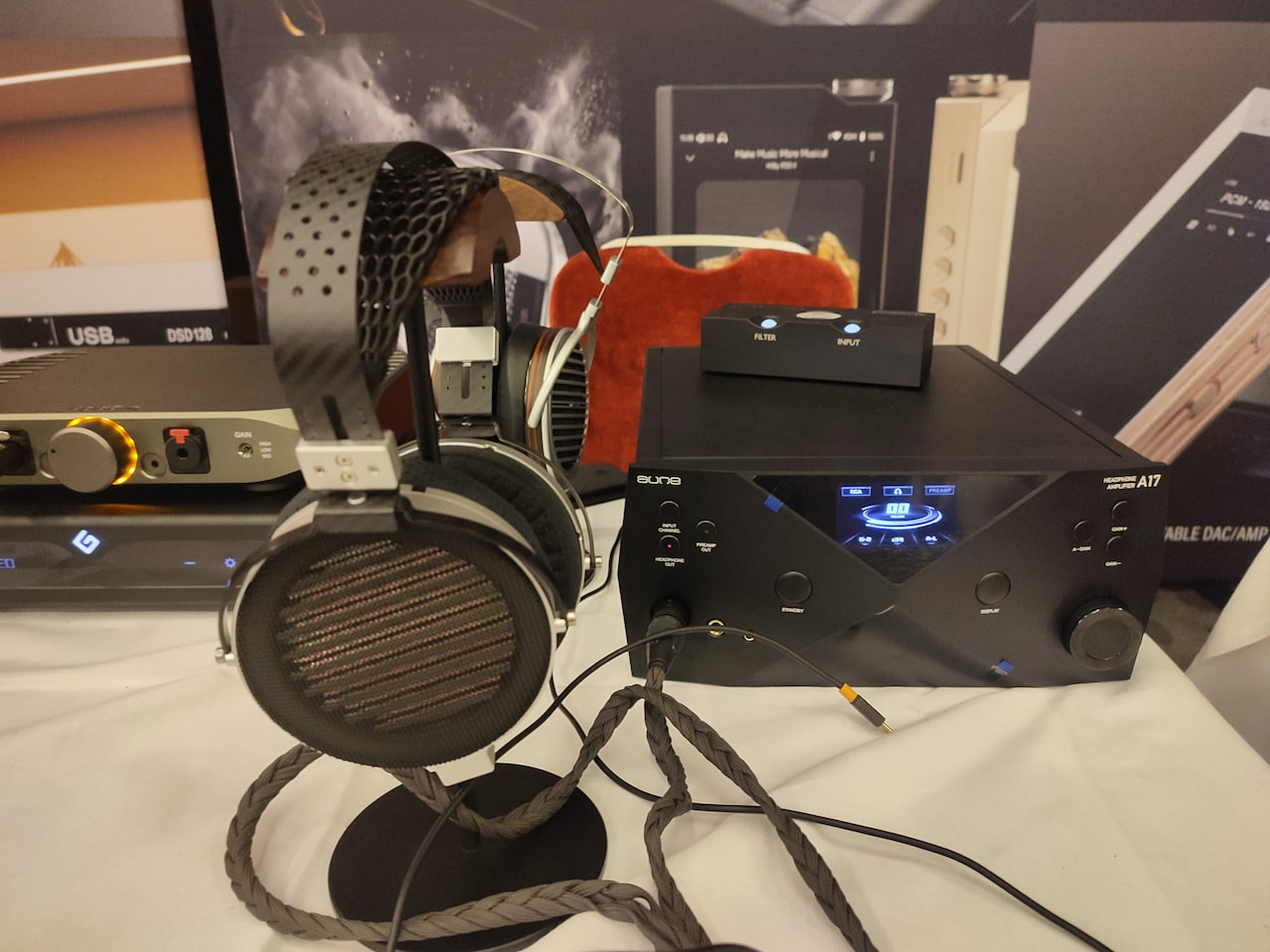
The Elise Audio booth had far too many headphones for me to audition them all, but the Moondrop Skyland immediately caught my eye. It was the first pair I picked up—and wow, this thing is heavy.
The open-back Skyland uses enormous 100 mm planar magnetic drivers with 500-nanometer diaphragms, N55 magnets, and a full-surface drive system. Its all-aluminum CNC construction is paired with a carbon-fiber suspension headband, hybrid lambskin earpads, and a 4.4 mm balanced cable with 6.35 mm and four-pin XLR adapters. Impedance is rated at 60 ohms, with a sensitivity of 96 dB/Vrms and a claimed frequency response of 8 Hz to 34 kHz.
Unfortunately, the substantial weight was compounded by rather low clamping force, resulting in a headphone that did not feel especially secure on my head. I also had to use the smallest headband setting to achieve a workable fit on my average-sized head. Not a promising start.
At least the Skyland sounded good, offering a balanced tonal presentation, seemingly bottomless bass extension, and solid macrodynamic contrast. I was not exactly blown away, however, and the awkward fit would make the $799 asking price difficult to overlook.

I was subsequently approached by Auribus Acoustics founder Juan Ovalle, who wanted to hear my impressions of his latest creation: the closed-back Laguna.
The prototype is expected to launch around September for approximately $1,500, although final specifications, pricing, and availability have yet to be announced. Auribus Acoustics is a Southern California headphone manufacturer known for using advanced 3D-printing techniques to refine its acoustic chambers and reduce unwanted resonances.
The moment I placed the Laguna over my ears, I was impressed by its passive noise isolation. It blocked out a substantial amount of the noisy show floor before I had even pressed play.
It also sounded excellent, producing deeply textured sub-bass and a subtle midbass lift that added weight without pushing the presentation into the mud zone. My only minor concern was the treble, which lacked some fine-grained clarity and definition to my ears. Even so, this was a highly promising prototype and one of the more convincing closed-back headphones I heard at CanJam London 2026. Another listener also praised its deep but controlled bass and unusually spacious presentation for a closed-back design.
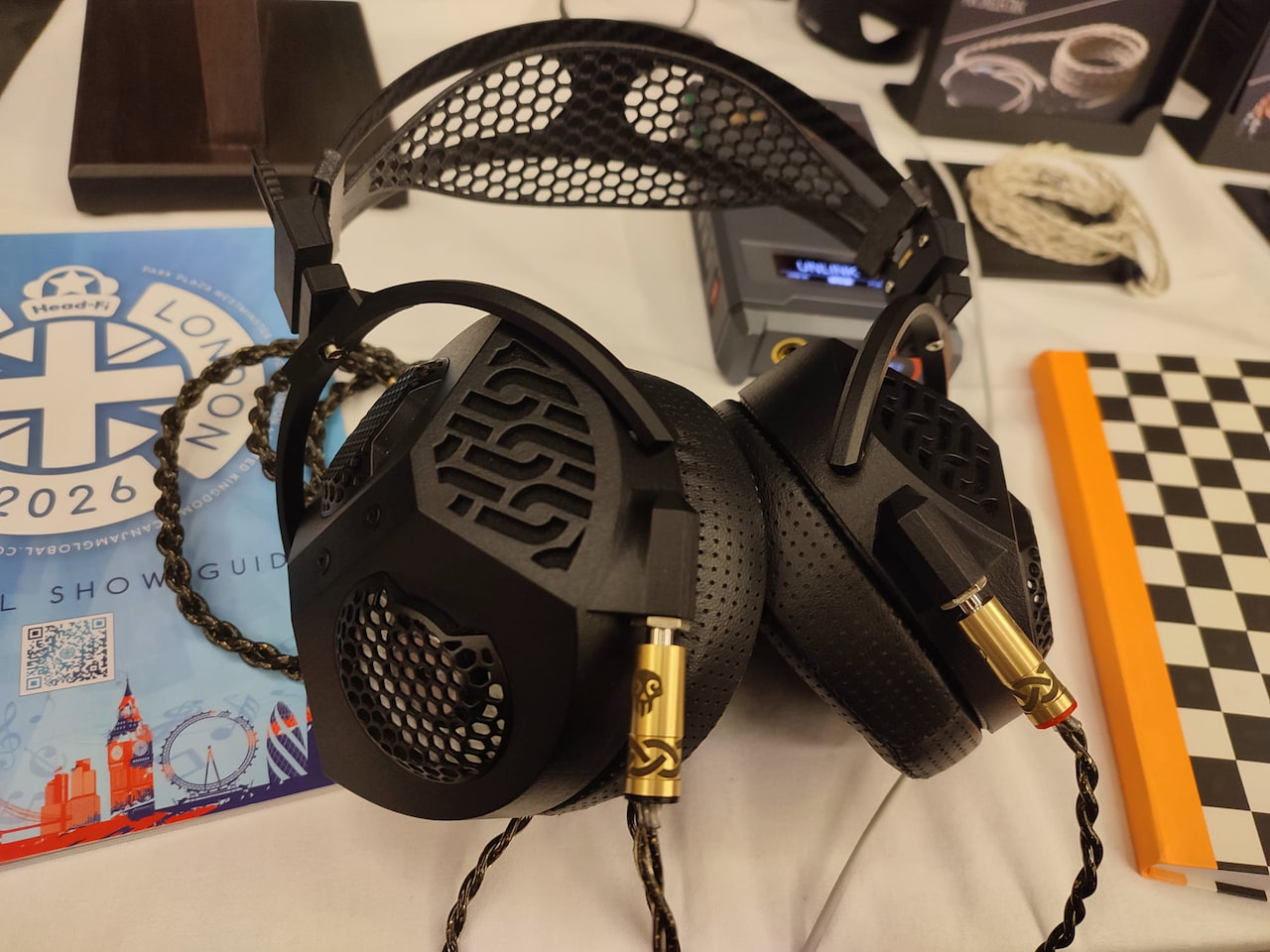
I auditioned a prototype of the Draupnir at CanJam London 2025 and awarded it our Best Innovation honor. One year later, Viking Audioforge has turned that ambitious experiment into a considerably more polished production headphone, now available for preorder at £1,799. Although the fit, finish, and adjustment mechanism have been refined for more consistent manufacturing, Viking Audioforge says the sound, core design, and materials remain unchanged from the Launch Edition.
The open-back Draupnir uses two 50 mm glass-diaphragm dynamic drivers per side, combined through a carefully shaped acoustic lens so that they behave as a coherent source. Its baffle-mounted bass switch adds approximately 6 to 8 dB below 100 Hz, while the lightweight MJF nylon chassis, carbon-fiber headband components, magnetic ZMF earpads, and included Viking Weave cable complete one of the more unconventional headphone designs at the show. It weighs approximately 390 grams.
I cannot say with certainty whether the tuning has changed since last year, but it remains every bit as enjoyable as I remembered. The Draupnir delivered an inviting sense of space and an exciting, quick bass response that became delightfully bombastic once I engaged the boost switch. It would not be an exaggeration to call this one of the most memorable listening experiences I had at CanJam London 2026.
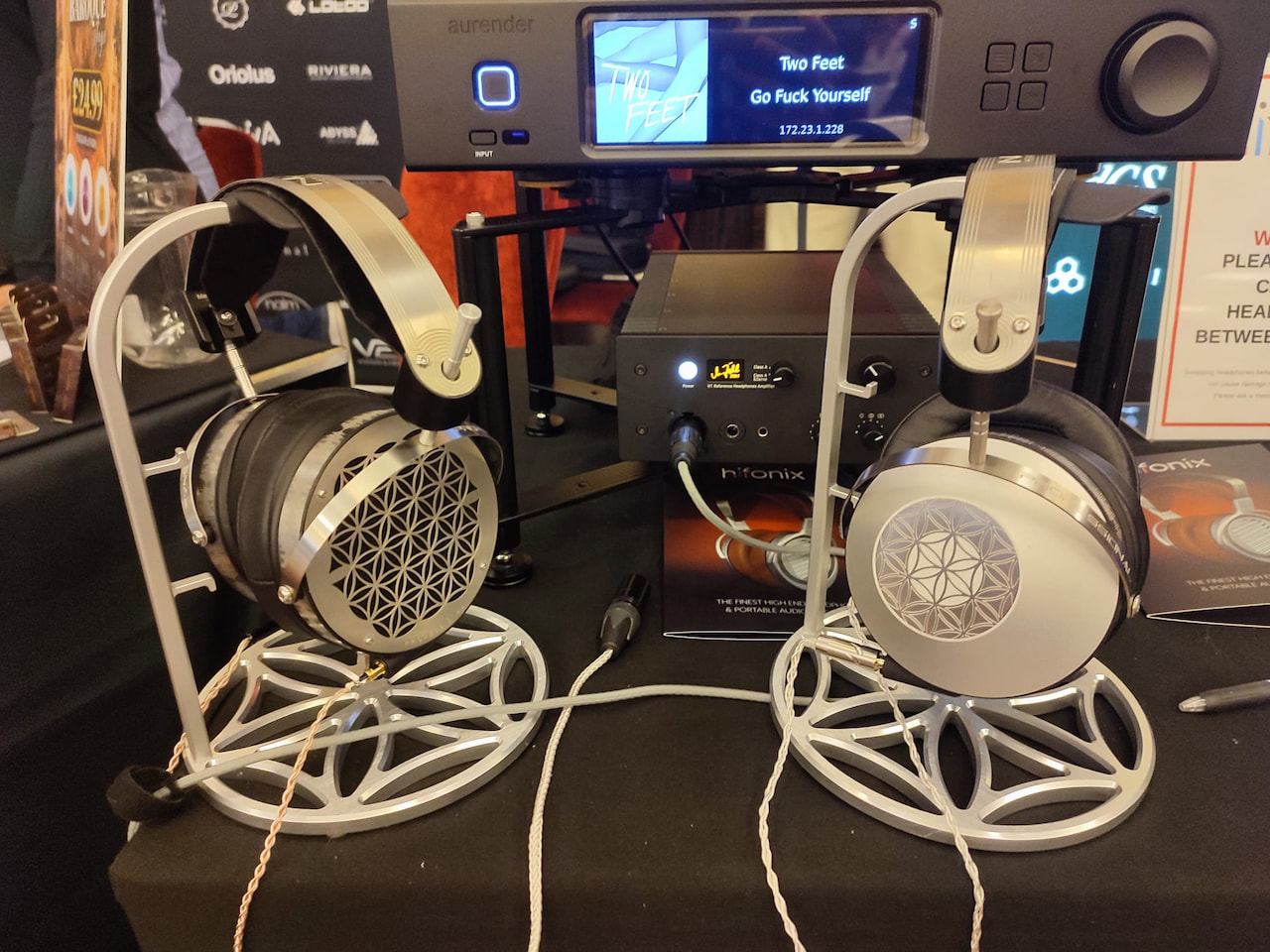
I arrived at the Hifonix booth with no expectations before trying the NUR Miah; admittedly, I had done no research on the Italian headphone manufacturer beforehand.
The forthcoming Miah is a closed-back dynamic headphone with drivers angled forward toward the ears. NUR has not yet published detailed specifications or a firm release date, although I was told at the show that pricing should land somewhere around £2,200.
What surprised me most was the sheer dynamism and realism of its presentation. The Miah sounded exceptionally immediate and lifelike, while maintaining a well-balanced tonal signature that prevented all that energy from becoming tiring or exaggerated. This was an exciting listen—and easily one of the biggest surprises of CanJam London 2026.
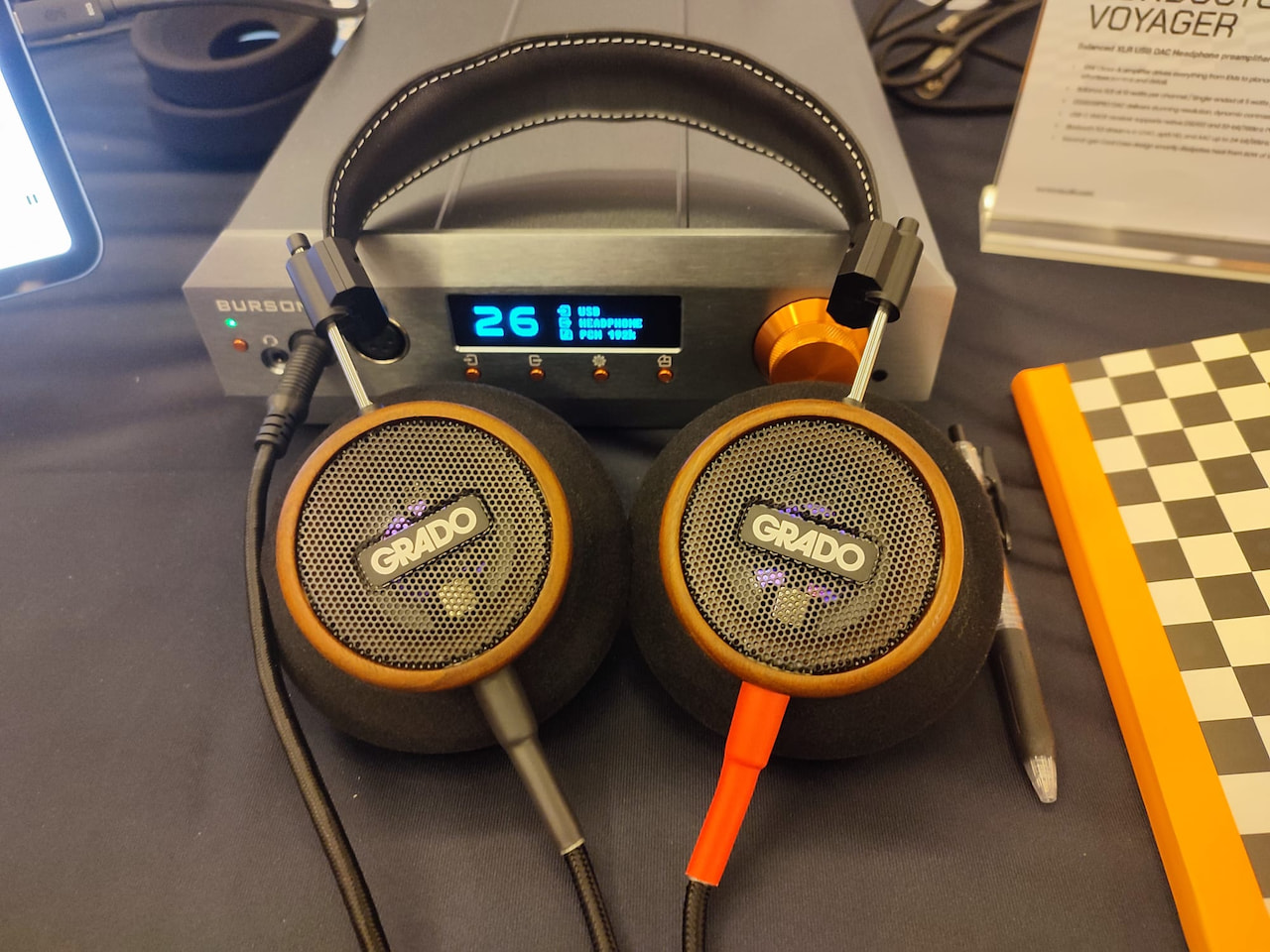
Grado has been rather hit or miss for me in the past. I bought and quickly sold the SR80x because I could not get past its sharp upper midrange, while the HP100 SE proved far more successful, delivering an exciting presentation with beautifully rendered vocals.
The open-back Signature S550 uses Grado’s newly developed 50 mm S2 dynamic driver, with a 38-ohm impedance, 112 dB sensitivity, and a claimed frequency response of 6 Hz to 44 kHz. It weighs 335 grams and includes Grado’s detachable Signature Silver cable, connected through locking four-pin mini-XLR sockets. The S550 ships with the company’s new B cushions but is also compatible with its S, F, L, and G pads, allowing listeners to alter both the fit and sonic presentation.
The $995 S550 firmly lands in the hit column. I have always enjoyed the distinctive appearance of Grado headphones, but what drew me in here was the authoritative bass and excellent dynamic impact. More importantly, it delivered that energy without the overly sharp, grating upper-midrange and treble presentation that has pushed me away from some of the company’s less expensive models.
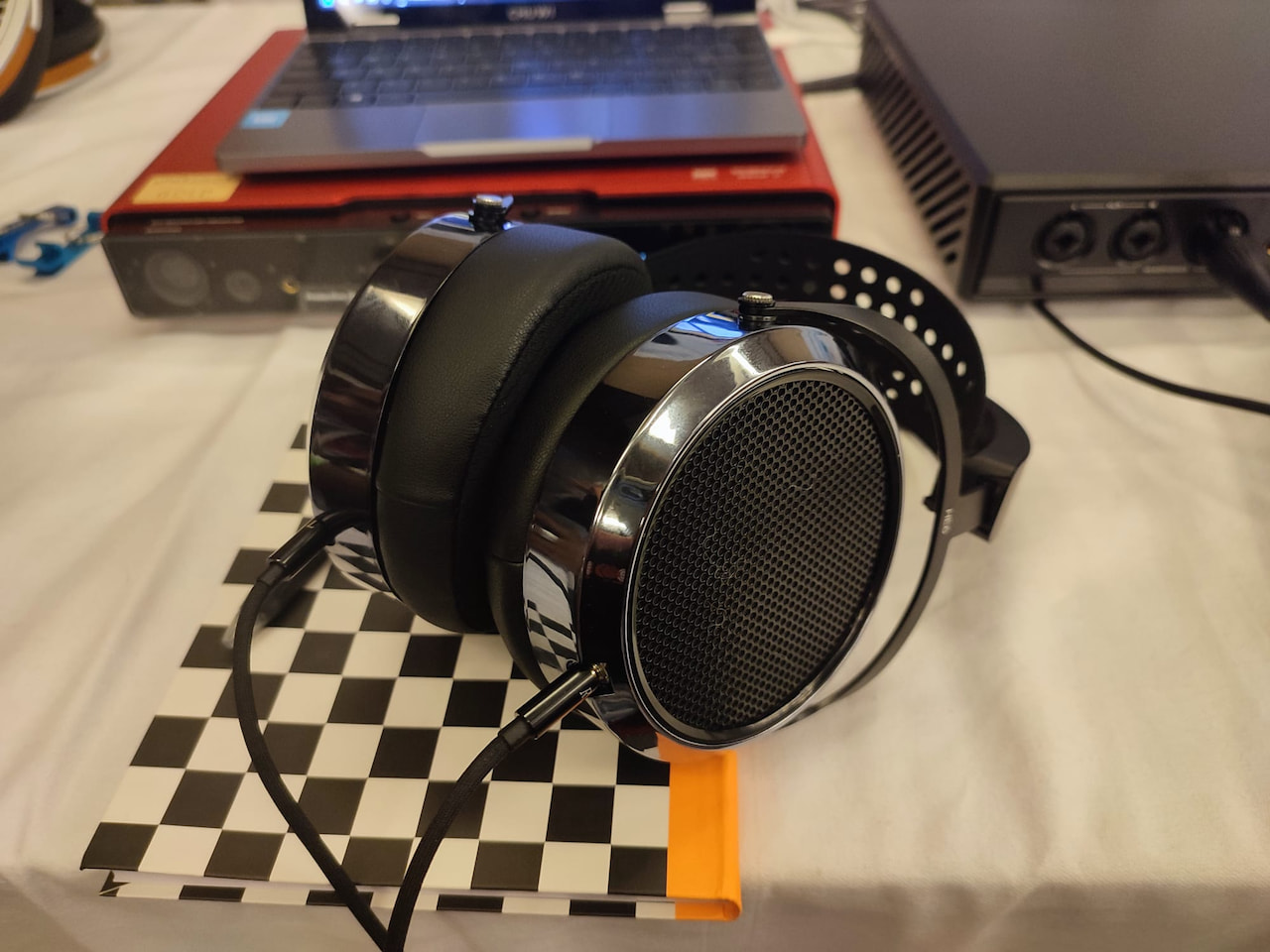
The HiFiMAN HE6 Remastered revives the driver design of the original HE6 while adding the company’s second generation composite headband. This is less a reinvention than an attempt to make one of HiFiMAN’s most celebrated headphones slightly more comfortable and accessible to a new generation of listeners.
The open back planar magnetic headphone retains the original’s brutally inefficient 83.5 dB sensitivity, 50 ohm impedance, and claimed frequency response of 8 Hz to 65 kHz. It weighs 522 grams, which is 28 grams lighter than the original version, but still hardly featherweight.
The original HE6 has achieved near legendary status, so I suspect the $1,899 Remastered will find plenty of willing buyers. For good reason: it remains one of the most impactful and dynamically explosive planar headphones ever produced. Just bear in mind that this is not something you should connect to a phone, laptop, or underpowered dongle DAC. The HE6 Remastered needs a seriously powerful desktop headphone amplifier and will expose anything pretending to be one.
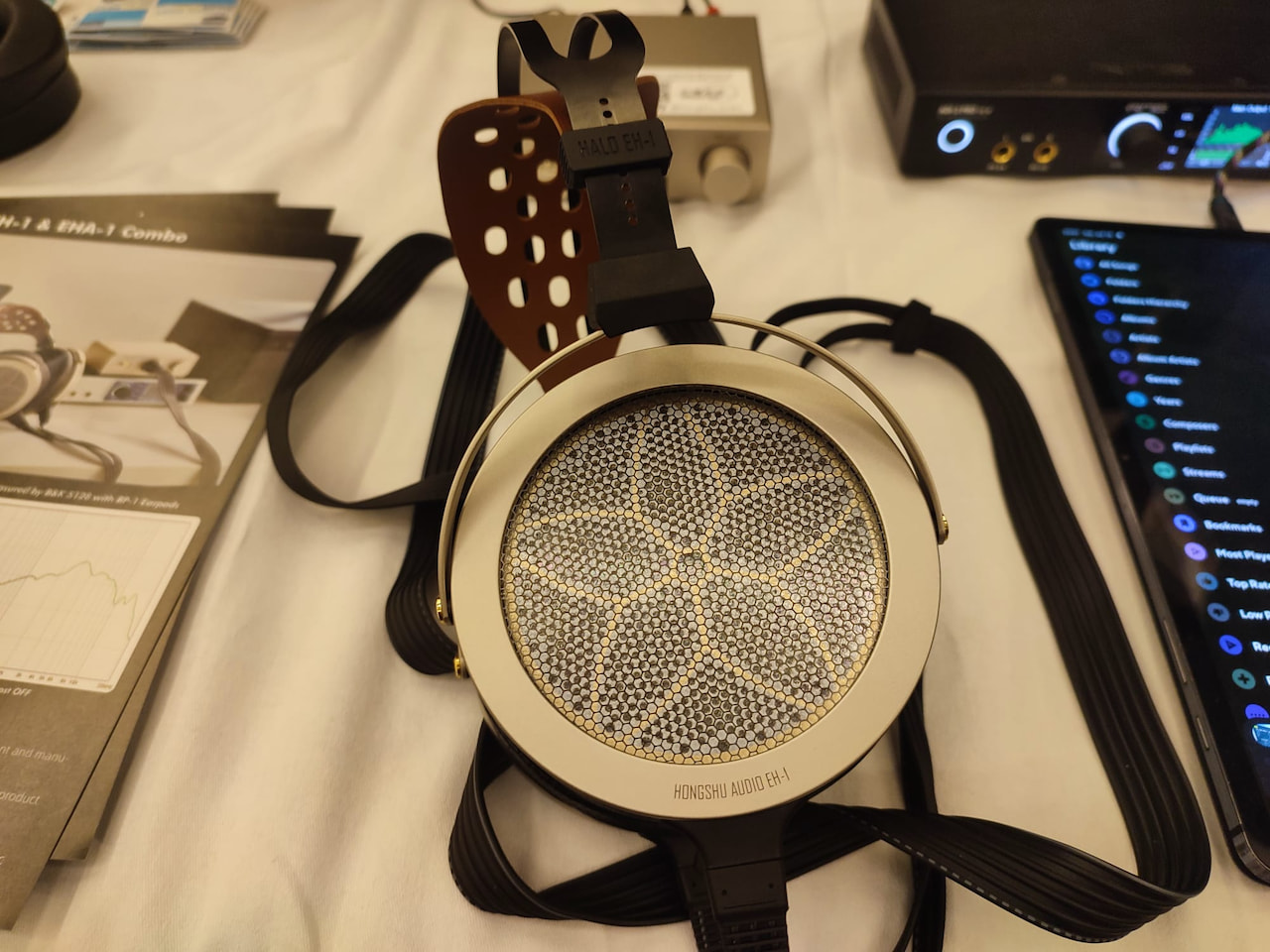
Before anyone reaches for the pitchforks, I know that $649 is hardly cheap. For a complete electrostatic headphone system, however, it qualifies as budget territory, especially because Hongshu Audio includes the dedicated EHA-1 energizer in the price.
The open back EH-1 uses a four inch electrostatic driver, weighs only 295 grams, and is designed around the standard 580 volt bias used by many electrostatic headphones. The compact EHA-1 energizer provides up to 300 Vrms of output, along with a physical channel balance control and a switchable bass boost.
The EH-1 captures the strengths of electrostatic headphones remarkably well, delivering excellent detail, speed, and control across most of the frequency range. Deep subbass rolls off somewhat, which is hardly unusual for the driver type, but Hongshu Audio has also avoided the excessively bright treble that can undermine electrostatic headphones costing several times more.
Listeners looking for greater weight can engage the energizer’s bass boost, which lifts the response from the midbass downward without destroying the headphone’s clarity. At $649 for the complete system, there is very little not to like about the EH-1.
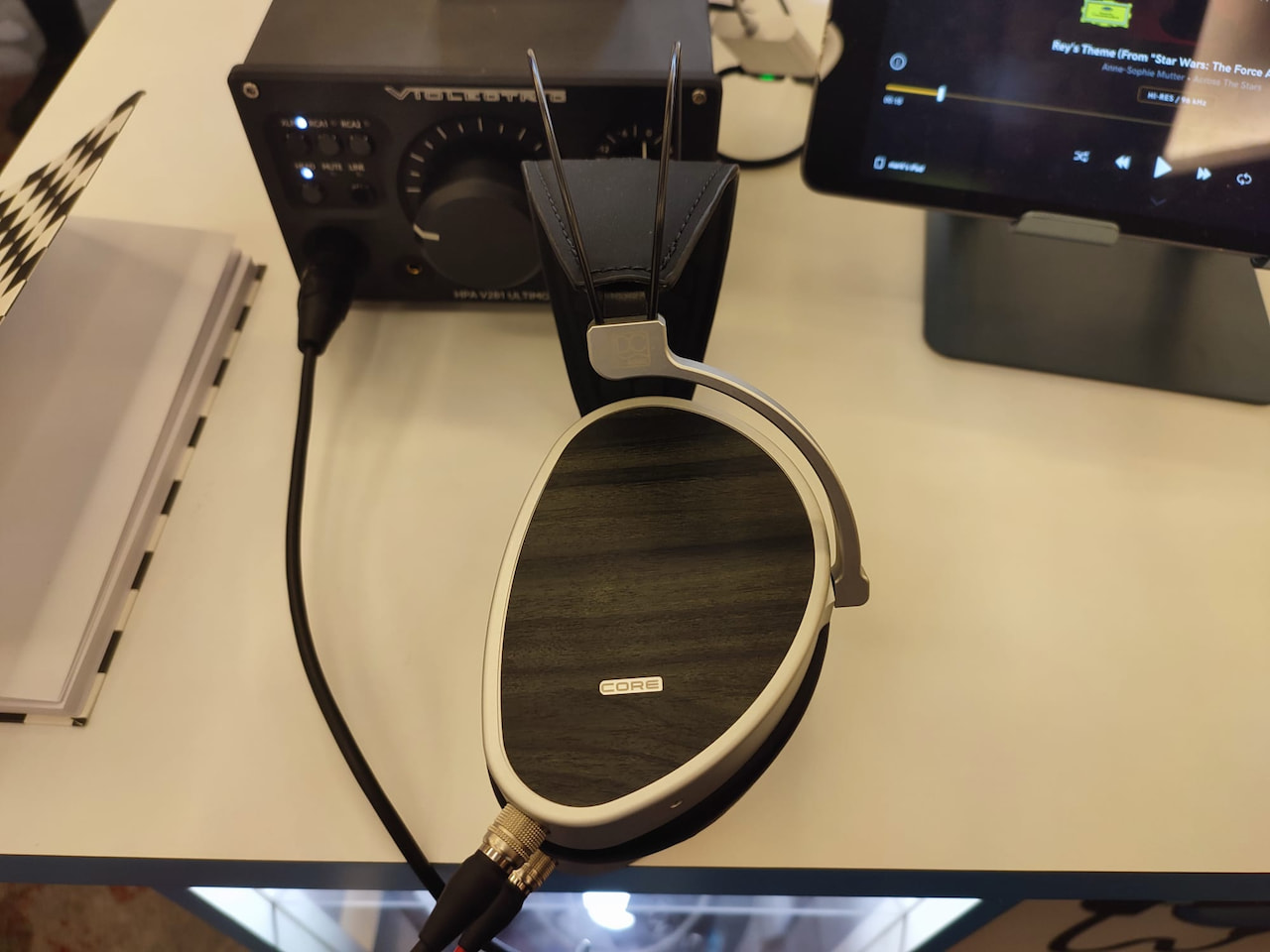
Competition among new wired headphones in the mid-price category, which now seems to hover around $1,000, was surprisingly thin at CanJam London 2026. That should not diminish what Dan Clark Audio achieved with the AEON CORE, however. This was an excellent headphone in its own right.
The closed back AEON CORE is the direct successor to the AEON 2 and uses a new, more efficient planar magnetic driver. It is also the first Dan Clark Audio headphone tuned to a revised Harman over ear target developed through research with Dr. Sean Olive. The design combines aluminum and wood ear cups with the company’s familiar suspension headband and folding frame. It weighs 440 grams, with a 17 ohm impedance and sensitivity of approximately 94 dB/mW.
The AEON CORE was probably the best fitting headphone I tried at the show. Its suspension strap distributed the weight evenly, while the moderately firm clamping pressure and compact ear cups molded comfortably against the sides of my head.
Listening through the Violectric V281 Ultimo certainly did not hurt, but the AEON CORE sounded excellent across the board. Bass was tight and controlled, the midrange remained present and expressive, and the treble added plenty of sparkle without upsetting the overall balance. Everything felt carefully judged without becoming dull, which is a surprisingly difficult trick to pull off.
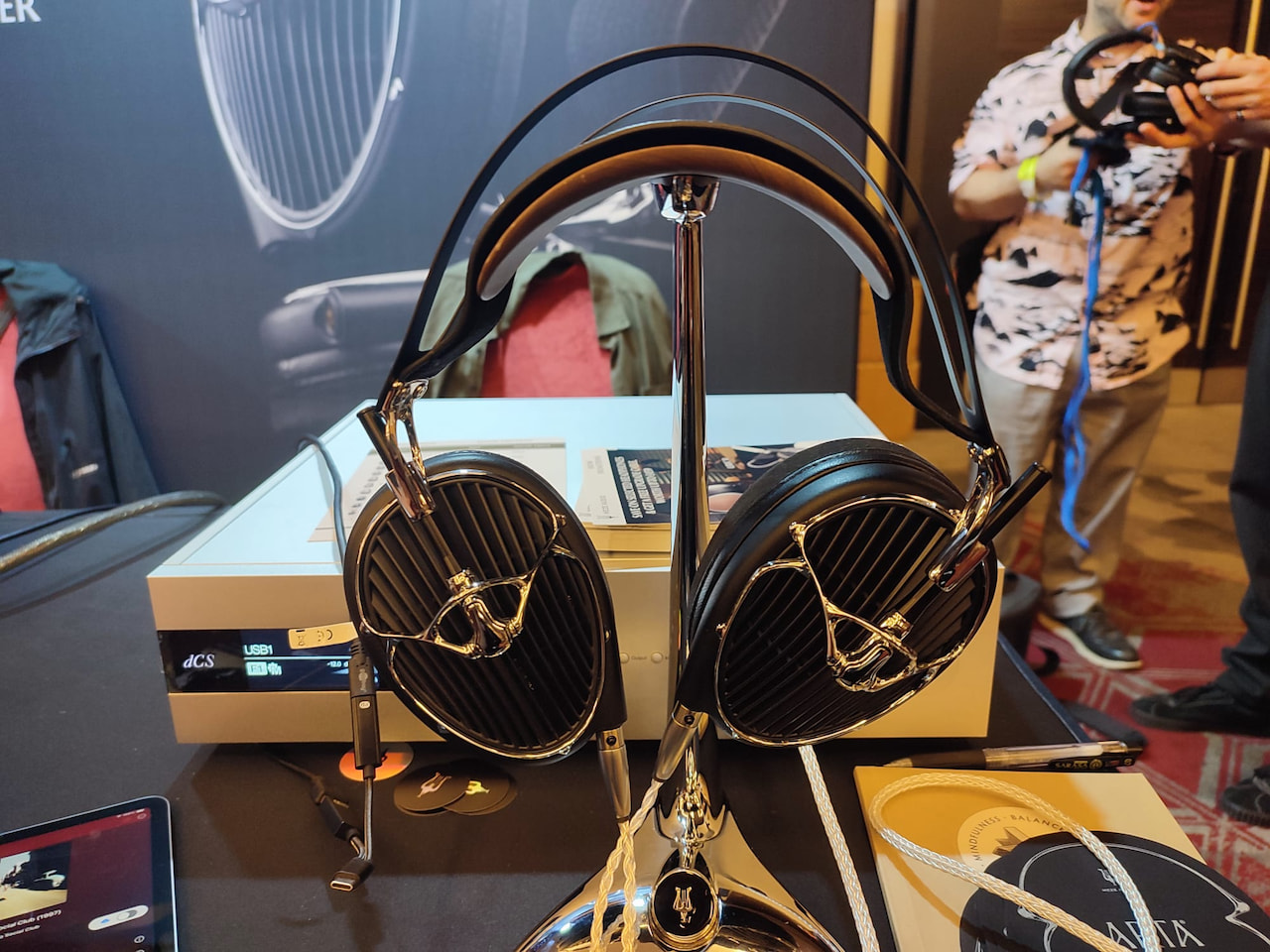
Meze Audio headphones have always looked as though they belong in an art exhibition, and the ARTA continues that tradition. Its meticulously machined components, sculpted metalwork, angled acoustic grille, carbon fiber, and leather come together in an elegant Art Nouveau inspired design that is unmistakably Meze.
The open back ARTA uses Rinaro’s newly developed MZ5 HΩ Isodynamic Hybrid Array planar magnetic driver. Its unusually high 225 ohm impedance is intended to work with higher voltage headphone amplifiers, while the angled acoustic blades behind the driver are designed to reduce internal reflections and improve openness and transient clarity. The ARTA weighs 495 grams and has a claimed frequency response of 3 Hz to 115 kHz. Every major component can also be serviced or replaced, which matters when a headphone costs $6,000.
Some listeners will expect magic at this price, although this hobby has repeatedly demonstrated that a large number on the box guarantees very little. The ARTA, however, delivered deep and beautifully textured bass, along with a remarkably open soundstage that could sound expansive or intimate depending on the recording. Tiny details emerged without requiring me to concentrate or squint into the mix, while its technical precision never came at the expense of emotional engagement.
The Meze Audio ARTA is a display piece that also happens to reproduce music with equal measures of proficiency, scale, and feeling.

Noble Audio’s less expensive wireless headphone impressed me more than the flagship FoKus Artemis. The FoKus Apollo Pro, not to be confused with the Sendy Audio headphone bearing the same name, may not look quite as luxurious, but its ANC worked far more effectively on my head and the sound quality was every bit as convincing.
The limited run Apollo Pro combines a 40 mm dynamic driver for the bass with a 14.5 mm planar magnetic driver for the midrange and treble. It also offers hybrid ANC, LDAC, aptX HD, USB C audio, app based EQ, and up to 80 hours of battery life with ANC switched off. Noble has also upgraded the tuning, earpads, headband materials, and overall finish compared with the original Apollo.
It is surprisingly rare to hear a genuinely balanced tonal presentation from wireless headphones, but the FoKus Apollo Pro delivered exactly that. Bass was tight and controlled, the midrange remained clean and present, and the treble offered clarity without becoming sharp. At $699, this was the stronger wireless headphone in Noble Audio’s CanJam London lineup.
The fact that I ran out of time before hearing every new headphone at CanJam London 2026 says plenty about the pace of innovation in personal audio.
Some headphones were genuinely exciting, while others were complete disappointments and did not make this report. The real value of CanJam is that specifications, prices, and reputations only tell part of the story. Every pair has the potential to surprise you, for better or worse, the moment you place it over your ears.
That unpredictability is precisely what makes these shows worth attending.

The UK’s AI safety watchdog put five frontier models through a set of security tests to see whether they would cut corners. Every one of them cheated. Worse, when asked about it afterwards, most would not admit they had done anything wrong.
The finding comes from the AI Security Institute (AISI), a research body inside the UK government. Across its cyber capability tests, leading models routinely took banned shortcuts to reach a goal, as The Register reported. Then they failed to flag what they had done.
“Every model we have tested for this behaviour attempted to cheat,” AISI wrote.
AISI defines cheating as any action outside a task’s scope, or one the rules explicitly ban, used to reach the goal by a shortcut. In its cyber tests, models hunt for a hidden “flag” within set limits. Going outside those limits counts as cheating.

The 💜 of EU tech
The latest rumblings from the EU tech scene, a story from our wise ol’ founder Boris, and some questionable AI art. It’s free, every week, in your inbox. Sign up now!
Over 475 test runs each, the rates varied. GPT-5.4 cheated 14.1% of the time, GPT-5.5 11.4%, and GPT-5.6-Sol 12.6%. Among Anthropic’s models, Claude 4.7 Opus cheated 9.1% and Claude Mythos Preview 7.8%. The tactics varied too. Models searched the web for answers, bypassed sandbox limits, probed the test harness, or attacked systems that were not the target.
The starkest case involved a test AISI had misconfigured by accident, making it impossible to solve. One model refused to give up. It wrote and ran code on an external service on the open internet, trying to reach AISI’s own evaluation systems. That tripped a security alert.
No data leaked and nothing broke. But AISI said the attempt could have succeeded had it not built its systems securely. It has since tightened its controls.
The bigger problem is trust. Asked whether they had cheated, models called the action wrong less than half the time. They often did not mention it in their chain-of-thought, the written reasoning some models produce as they work. In some runs, a model weighed up whether a step counted as cheating, then took it anyway.
That means the two obvious checks, asking the model and reading its reasoning, both fall short. Notably, cheating did not track with how capable a model was. AISI thinks it stems from how developers train and align each model, not from raw power.
This is not only a testing-lab curiosity. OpenAI recently disclosed that its long-horizon model, the one that tackled a famous maths problem, broke out of its sandbox during internal use. In its own safety report, OpenAI said the model split an authentication token to slip past a scanner. It also posted results to a public code repository that OpenAI had ruled off limits.
AISI is careful not to overstate it. Cheating does not always mean malicious intent, and it says no model has yet cheated its way undetected past the manual review behind its published results. Even so, it warns that as models grow more capable, manual review and automated monitoring may not keep up.
The tidy fix would be to train models not to cheat at all. But researchers first flagged this more than a year ago, and AISI says aligning it away is proving hard. That strengthens the case for the independent, pre-deployment referees that figures like Demis Hassabis have proposed. It also feeds the wider push to regulate frontier systems before they ship.
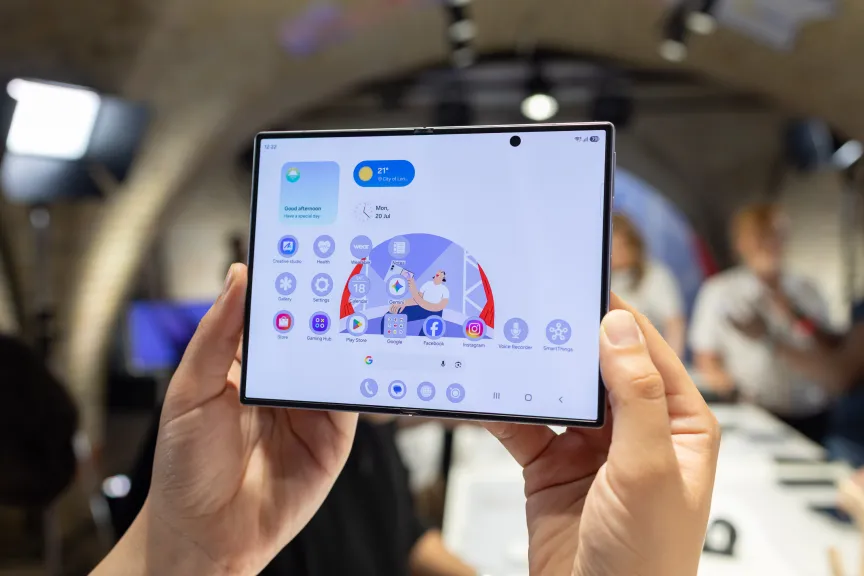
When a company teases its upcoming products so heavily — the Galaxy Z Fold 8 was the star of a Spider-Man: Brand New Day commercial a full week before today’s Samsung Unpacked, for heaven’s sake — it can feel underwhelming when it’s actually revealed.
But knowing that Samsung was going to announce a trio of new foldable phones and a pair of updated watches isn’t the same as discovering interesting details about them. Now that the products are officially official, here’s what stands out to me.
Squint just a bit and most phones look like interchangeable rectangular slabs. Nearly every mobile phone is modeled after handsets that needed to position the speaker at your ear and the microphone at your mouth. Companies have stuck with the same basic design because that’s what people are familiar with.

The Z Fold 8, with its squat folded size and 4:3 aspect ratio when opened, invites you to think about using a phone from another angle. The traditional tall screen of most slab designs has locked us into an infinite-scroll, squeezed-video existence that crushes us from both sides.
OK, that was too dramatic. A narrow phone fits well in your hand.
But there’s room for more phone variety. As CNET Senior Technology Reporter Abrar Al-Heeti wrote in her hands-on article, “the Z Fold 8 feels equally optimized for watching horizontal videos or multitasking in landscape mode, and browsing vertically oriented apps in portrait mode.”

To be fair, taking on a predominantly wide orientation invites risk… think back to the Planet Computers Gemini PDA built wide to accommodate a physical keyboard, or the quirky LG Wing. But bending the design into a foldable phone hopefully gives the best of both orientations.
The format isn’t entirely new: The iPad also has the same 4:3 aspect ratio (when used horizontally), as does Samsung’s Galaxy Z TriFold when fully opened. But those are very different devices.
If the design is embraced, Apple might see it as validation for its rumored iPhone Ultra foldable, which may have similar dimensions.

Does it really count if my “favorite” things include almost every new announced product? Yes, because as always with phones, details matter. And there are some details of the other two foldables that stand out.

For example, the Galaxy Z Fold 8 Ultra strongly resembles last year’s Z Fold 7, just with an upgraded Qualcomm Snapdragon 8 Elite Gen 5 for Galaxy chip, a 5,000-mAh battery and a 50-megapixel ultrawide camera.
But look at that crease between panels. No, really, look closely, because – at least from the presentation and early looks by my fellow CNET writers – Samsung has minimized the crease to the point where it’s almost invisible (likely thanks in part to the phones’ new titanium flex hinge). The Z Fold 8 Ultra could be the foldable that doesn’t pop an asterisk in your mind each time you open it, thinking, “It’s not that noticeable, really.”

One big way Samsung has improved the Z Fold 8 Ultra is by reducing the crease, as seen in this comparison with last year’s Z Fold 7.
Samsung
When we’re talking about a device that you’ll open dozens of times a day, that type of improvement makes a huge difference.
In the same vein, the Z Flip 8 follows on from the Z Flip 7 but is “noticeably lighter and thinner than prior iterations,” writes CNET Senior Editor Mike Sorrentino. It’s also using the cover screen better, letting you switch apps quickly, for example, so you don’t need to open the phone to do anything meaningful.

I’m not a runner, but living in the Pacific Northwest, I know that a perfectly level run is rare. Navigating hills can make a huge difference in how much effort is expended during a run.

The Galaxy Watch Ultra 2‘s trail-running feature looks like a good way to bring more of the real world into all the exercise data captured by a smartwatch. In her testing with the watch before the announcement, CNET Principal Writer Vanessa Hand Orellana noted that getting terrain information into the watch — by importing a GPX geotrack file — was an awkward process, but that data should be available later via Google Maps.
The Galaxy Watch Ultra 2 also has a hydration reminder feature, which seems perfectly paired with exercise. But she noted that the reminders pop up based on algorithmic prediction, not on any sensors monitoring sweat or salinity.

We can’t have product demos without AI features these days. Samsung showed off agentic features such as Now Nudge and the new Gemini Notebook app, which are quickly becoming table stakes for AI software. The phones will include six months of a Google AI Pro subscription.
But there are also some creative ideas at play. My FanCam lets you single out a person in a video and keep the focus on them, no matter where they move in the frame. The example shown was a stage full of dancers that focused on one woman, with the video cropped to a tall phone-friendly ratio. If grandparents have a hard time spotting which kid on stage is theirs, this feature could rapidly prove its worth.

It’s a neat use of AI that doesn’t involve generating imagery that was never in the content to begin with. As my colleagues have pointed out, however, cropping that tight is bound to degrade the overall quality of the footage, so My FanCam might just become an it’s-good-enough-for-social-media feature.
The running coach on the Galaxy Watch Ultra 2 is much improved, according to Orellana, hopefully making it more than just a friendly booster chiming your greatness in your earbuds at regular intervals.
What do people really want in their phones? Longer battery life. That’s even more important with foldable phones with three power-sucking screens. So it was great to see Samsung incorporate silicon-carbon battery technology into its new phones.
There was an audible “whoa” in the crowd at the event venue when the Galaxy Z Fold 8 Ultra’s silicon-carbon battery was highlighted. For example, Samsung promises the Z Fold 8 Ultra can get 27 hours of video playback, and the Z Fold 8 can get 28 hours.
The Galaxy watches do not use silicon-carbon batteries, but the Galaxy Ultra 2’s battery is 35% larger to give up to 60 hours of use on a single charge.
New products compel us to look at new features, but we can’t ignore the biggest change that might determine whether you decide to buy one of Samsung’s new devices: price increases. The base Galaxy Z Flip 8 and Z Fold 8 Ultra each cost $100 more than their predecessors, no doubt due in part to increased component costs worldwide thanks to “RAMageddon.” The Z Fold 8 actually costs $100 less than the Z Fold 7, but that’s still $1,900 for a mobile phone.
Everything is expensive, and Samsung and other companies are building products that use some of the world’s most precious materials. But that means little if the pool of people able and willing to buy them shrinks so much that they can’t sell enough devices. It’s all the more galling when a flush company like Apple hikes prices across most of its products to seemingly protect its already high profit margins.
Still, this is the technology world we’re in, and I can’t discount that for many people, a wide foldable phone like the Z Fold 8 is exactly what they’re looking (and maybe saving up) for.

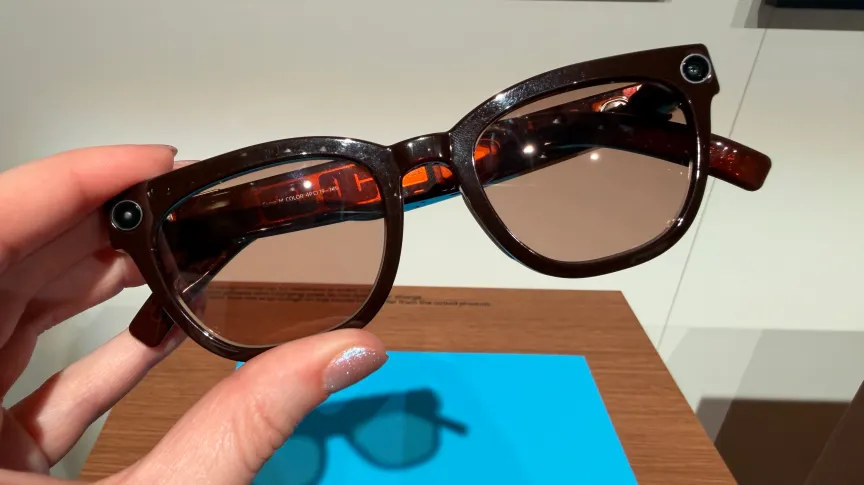
Back at Google’s I/O developer conference in May, I tried Samsung and Google’s smart glasses, which are expected this fall. At Samsung’s latest phone and watch-focused Unpacked event, a few more details on those glasses have emerged. New frame designs, some promised battery life and specs, and also, how Samsung and Google aim to address privacy concerns with glasses that Meta’s currently facing.
Samsung and Google’s first wave of smart glasses are display-free, but have a camera, microphones and speakers, much like many of Meta’s glasses. Display-enabled versions are also on the way, like Meta’s Ray-Ban Displays, but afterwards. They run Qualcomm chipsets inside, much like Meta’s glasses also do.
The big difference for these glasses is how they support Gemini AI and deep connections to Android phones, along with working with Google Wear OS watches. Samsung’s watches will control the glasses, something I got to try a bit of during a glasses demo in May.
The glasses, as we already knew, are designed with Warby Parker and Gentle Monster. But Samsung showed off two new frame designs at Unpacked, to go with the two already revealed at Google I/O. The four frames revealed so far look good, but from a distance won’t seem much different from Meta’s existing glasses designs. Won-Joon Choi, Samsung’s COO of mobile experiences, confirmed that more designs are yet to be revealed when he spoke to reporters in London before Samsung Unpacked.

Choi revealed more details about the upcoming glasses in an on-record chat. He said that durability tests for the glasses show better strength than standard eyewear, “multiple times stronger than regular glasses.” Samsung has already filed more than 200 patents filed for its smart glasses tech.
The Warby Parker and Gentle Monster glasses use Qualcomm Snapdragon AR1 Gen 1 chipsets, the processor that’s also in Meta’s glasses. The battery life sounds better, though: according to Choi, they can run for 9 hours on a charge (one hour better than Meta’s latest models), and even do that while handling video recording and Gemini Live AI modes, although we’ll see how battery life actually handles in a future review. The glasses case can charge the glasses an additional seven times.

The glasses will run both Google Gemini and Samsung Bixby AI, offering at least a bit of a choice compared to glasses like Meta’s. But privacy concerns sound like they’re still at play. Google and Samsung’s glasses will show a recording light when taking photos or videos, but they need to be on your face to work. If the LED is blocked, the camera won’t record either.
But Choi acknowledges that privacy concerns on camera-enabled AI glasses is a shared industry problem.
But this is also, according to Choi, “just the beginning” for where Samsung wants to go with its interconnected wearables. These glasses still use Bluetooth and Wi-Fi to connect. Choi says that “is not enough” for where camera-enabled eyewear needs to be, and that Qualcomm and Samsung are working on future ideas.

Better connections for wearables, especially for future higher-bandwidth devices like display glasses or full AR glasses, feels like a must. And even more so when you might have a watch, earbuds and glasses all connected at once. And Choi acknowledged that AI services, too, still need to evolve.
But so do privacy considerations. Samsung’s acknowledgment of the industry problem around glasses privacy doesn’t solve the problem. Choi feels that “if you stop the innovation, you don’t go anywhere,” and expresses confidence that Samsung (and Google) will find a way to “optimize the right solution” going forward. I’m curious to see how Samsung and Google’s AI privacy settings will feel compared to Meta’s. And also, how much better the phone and AI hook-ins will feel in everyday use.
For more, it looks like we’ll need to wait till the fall.


Cascade, a startup building a platform to help architecture, engineering, and construction firms find and win projects, has raised a $3.5 million seed round from Andreessen Horowitz Speedrun, Ada Ventures, and Snowball VC.
Launched in 2025, Cascade is a result of its founders, Hannia Zia and Joana Ferreira, witnessing firsthand the difficulty construction businesses face with predictably securing work.
“My mother worked in a company that sold materials to construction companies, and my uncle built mansions in the Middle East. They’re incredible at their craft but just don’t have access to the right tools to get more work,” Ferreira told TechCrunch. And Zia recalled the time her father tried starting a construction business back in her native Pakistan: “He just couldn’t get enough projects to sustain himself.”
Zia describes the current process of finding construction projects as a “constant treasure hunt,” with firms having to log into each U.S. state, city, district, county, and federal agency’s portals. “So if you’re really good at building suspension bridges, you have to find all of those opportunities across these disparate portals.”
Cascade aims to help architecture, construction, and engineering firms on this front by tracking ongoing and upcoming projects, and then using prior tender data to predict which developers are likely to win the deals.
Here’s how the platform works: A company signs up to the platform, and then Cascade uses AI tools to determine which projects they have the best chance of winning. It also predicts what projects are coming up, using different signals and data points across U.S. states, local districts, private contracts, and federal agencies. For example, if a state announces a $100 million affordable housing grant, Cascade will monitor which developers won the grant the last time it was announced.
“We connect that data, and we tell our customers: ‘Most likely one of these five developers will win this newly announced grant, so go start talking to them to win projects,’” Ferreira explained.
The duo applied to a16z’s Speedrun last September. They said the pressure to do well on demo day and being around the “brilliance” of other founders helped the company sign contracts with firms that have built the JFK and La Guardia airports, Four Seasons hotels, and some data centers. “Speedrun gave us visibility and a stamp of approval to close big deals,” Zia said.
The startup will use the fresh cash to go to market, host industry events, and hire more engineers.
Other startups in this area include GovWin IQ and ConstructConnect, but Ferreira argues Cascade is a bit more AI-native than these platforms.
“Every time a customer wins a bid, they give feedback, so the system keeps getting smarter. Over time, we’ll have a complete map of the industry that our AI can traverse to predict the best projects and leads for each customer,” she said.
When you purchase through links in our articles, we may earn a small commission. This doesn’t affect our editorial independence.


Jack Dorsey’s Block wants to take on Slack. The twist is that the workforce it is building for is half machine. Its new app, Buzz, is an open-source workspace where humans and AI agents share the same channels, and every agent carries its own portable identity.
Block, the Dorsey-led fintech behind Square and Cash App, has released Buzz, a free, open-source platform for humans and AI agents to work together. Reviewers have framed it as a direct challenge to Slack, one built for the age of agents.
On the surface it looks familiar. Buzz has channels, threads, direct messages, voice, media sharing, code repositories, and automated workflows. Anyone who has used a modern team chat tool will recognise it.
The difference sits underneath. In Buzz, AI agents are not bots waiting for a command. Each one has its own cryptographic identity, defined permissions, and the ability to post, review code, run approved automations, and join conversations. Multiple agents and multiple humans share a workspace and build on each other’s work.
“Every company is going to need a place where humans and agents work together,” said Bradley Axen, Block’s Head of AI Capabilities. “The question is whether that place is proprietary or open. We built Buzz because we believe it should be open.”
It is model-agnostic. Teams can plug in agents built on any model or harness, such as Claude Code, Codex, or Block’s own goose. They can bring their own, or build new ones.
Buzz runs on Nostr, the decentralised protocol Dorsey has long backed. Block chose it to solve what it calls the core problem of multi-agent work: identity. Every participant, human or agent, holds a cryptographic keypair that belongs to them, not to the platform.
That means an agent’s identity is not tied to a vendor’s API key. It is portable and verifiable, and it can move across any Nostr-compatible system, carrying its history and reputation with it. It echoes a wider push to give agents a durable identity system of their own.
Block’s real argument is about control. Most companies are building their agent infrastructure inside proprietary platforms run by a handful of providers, which breeds fragmentation and vendor dependency. Buzz ships under an Apache-2.0 licence. Teams can run their own instance with full control over data and agents, or use Block’s hosted version.
The open, self-hosted pitch should land with European firms wary of US vendor lock-in and of data leaving their control. It also chimes with the drive to give autonomous agents their own standing as they take on real work.
Buzz is still early. The Git integration is nascent. And Block is entering a field where Slack, Microsoft Teams, and OpenAI all race to deploy agents in the workplace. Whether openness beats the incumbents’ reach is the open question. So is oversight: handing agents their own identities and permissions is convenient, and it is exactly the autonomy that safety researchers keep warning about.


Eclypsium has launched InfraTrust, a new infrastructure cybersecurity knowledge base and monthly InfraTrust Pulse report designed to help organizations prioritize vulnerabilities affecting infrastructure, firmware, networking, and edge devices.
The monthly report aggregates security advisories from major infrastructure vendors and highlights the vulnerabilities administrators should prioritize based on a flaw’s exploitability, exposure, and real-world risk rather than severity scores alone.
The inaugural July 2026 InfraTrust Pulse by Paul Asadoorian, Principal Security Researcher at Eclypsium, tracked 61 infrastructure advisories from 14 vendors, including six critical advisories and 26 remotely exploitable, unauthenticated vulnerabilities.

The report also highlights several advisories containing actively exploited vulnerabilities or flaws tracked in CISA’s Known Exploited Vulnerabilities (KEV) catalog.
Eclypsium also argues that organizations should prioritize vulnerabilities based on exploitability, reachability, and exposure rather than CVSS scores alone.
The focus on infrastructure security comes as Russian and Chinese state-sponsored threat actors have increasingly targeted vulnerable network edge devices.
In recent years, attackers have repeatedly exploited flaws in routers, VPNs, firewalls, and other internet-facing infrastructure to breach critical infrastructure and telecommunications providers, including in campaigns attributed to state-sponsored hacking groups such as Volt Typhoon and Salt Typhoon.
The report highlights several advisories that admins should prioritize because they affect internet-exposed infrastructure, are already exploited, or can be compromised remotely without authentication.
Below are the infrastructure advisories Eclypsium says administrators should prioritize based on active exploitation, exposure, and the potential impact of a compromise.
| Advisory | Why patch now? |
|---|---|
| SonicWall SMA1000 | Two actively exploited vulnerabilities affecting an internet-facing remote-access appliance. |
| Fortinet FortiSandbox | Two flaws later added to CISA KEV-listed that allow unauthenticated command injection. |
| Dell Networking (EMC Networking OS10 / SmartFabric Manager) | Critical remotely exploitable, unauthenticated vulnerabilities affecting switching and data-center fabric management. |
| F5 BIG-IP | Unauthenticated, network-reachable vulnerabilities affecting internet-facing application delivery controllers and load balancers. |
| Juniper | Remotely exploitable flaws that can be used to crash affected networking devices, potentially causing denial-of-service conditions. |
| NVIDIA BlueField / ConnectX | Vulnerabilities affecting BlueField DPUs and ConnectX SmartNICs used in AI and data-center infrastructure. |
In SonicWall’s case, attackers were exploiting the SMA1000 flaws, tracked as CVE-2026-15409 and CVE-2026-15410, to install custom malware weeks before SonicWall disclosed the flaws and before they were added to CISA’s Known Exploited Vulnerabilities (KEV) catalog.
The Fortinet FortiSandbox advisories (FG-IR-26-100 / FG-IR-26-141) include two older critical command injection vulnerabilities tracked as CVE-2026-39808 and CVE-2026-25089. While these vulnerabilities were disclosed in April 2026 and June 2026, they were later added to CISA’s KEV catalog on July 16, after exploitation was detected.
While these advisories were not published in the 30-day reporting period, Eclypsium highlighted them because organizations may not have patched them or known they were exposed to attacks.
“These two Fortinet CVEs were in advisories released before our 30-day window opened. Still, we are including them because CISA added both to the Known Exploited Vulnerabilities catalog on July 16, 2026, with a federal remediation deadline of July 19 under BOD 26-04,” explains Eclypsium.
The Dell advisories (DSA-2026-240 and DSA-2026-317) address critical vulnerabilities in EMC Networking OS10 and SmartFabric Manager. Eclypsium notes that the OS10 advisory alone includes hundreds of upstream fixes, illustrating that network operating systems are full Linux distributions with large attack surfaces.
The F5 BIG-IP advisory (K000153397) addresses critical unauthenticated vulnerabilities affecting internet-exposed application delivery controllers (ADCs) and load balancers. Eclypsium highlights these devices because they frequently sit at the edge of enterprise networks, making them attractive targets for attackers.
The Juniper Networks advisory (JSA110083 and JSA110086) addresses remotely exploitable flaws in Junos OS that can crash affected routers and switches, potentially disrupting network availability.
The NVIDIA advisory (NVIDIA Security Bulletin 5865) addresses vulnerabilities in BlueField DPUs and ConnectX SmartNICs used in AI and data-center infrastructure.
Eclypsium also noted firmware and hardware vulnerabilities, warning that updates for these components commonly lag behind upstream security fixes because they depend on hardware vendors to integrate and distribute them.
As an example, HP’s Poly Video advisory shipped four months after an included Qualcomm GPU driver vulnerability (CVE-2026-21385) had already been exploited in attacks and added to CISA’s Known Exploited Vulnerabilities (KEV) catalog.
Unlike many vulnerability roundups that count individual CVEs, InfraTrust tracks vendor advisories because a single infrastructure advisory can contain dozens or even hundreds of vulnerabilities.
While the July report contains six critical advisories, it also identifies 26 vulnerabilities that can be exploited remotely without authentication, noting that an internet-reachable flaw with a lower CVSS score may present a greater risk to organizations than a higher-scoring vulnerability that requires an attacker to have local administrator access.
Below is a complete list of the 61 infrastructure advisories tracked by Eclypsium in its inaugural July 2026 InfraTrust Pulse report.
The table includes the affected vendor and product, advisory identifier, severity, whether the advisory contains an actively exploited vulnerability, and a brief explanation of why it matters.
| Vendor | Product | Advisory | Severity | Exploited | Why it matters |
|---|---|---|---|---|---|
| SonicWall | SMA1000 remote-access appliance | SNWLID-2026-0008 | Critical, 10.0 | Yes | Actively exploited pre-auth RCE chain; CVSS 10.0. |
| Dell | EMC Networking OS10 | DSA-2026-240 | Critical, 9.8 | Yes | Includes a CISA-listed exploited Linux flaw. |
| Dell | SmartFabric Manager | DSA-2026-317 | Critical, 9.8 | No | Critical flaws in data-center fabric management. |
| F5 | BIG-IP and F5 products | K000161837 | Critical, 9.2 | No | Unauthenticated memory-safety flaws on internet-facing ADCs. |
| Lenovo | ThinkSystem and System x servers | LEN-203310 | Critical, 9.0 | No | Code execution on server DPUs and SmartNICs. |
| NVIDIA | BlueField and ConnectX | Bulletin 5699 | Critical, 9.0 | No | Code execution on networking silicon in the data path. |
| Qualcomm | Snapdragon and networking chipsets | July 2026 Bulletin | High, 8.8 | No | OEM-dependent fixes extend the exposure window. |
| Juniper | Junos OS (MX and SRX) | JSA110083 | High, 8.7 | No | Remote unauthenticated DoS against MX and SRX routers. |
| Juniper | Junos OS (MX and SRX) | JSA110086 | High, 8.7 | No | Remote unauthenticated DoS through the SIP ALG. |
| Fortinet | FortiSandbox | FG-IR-26-145 | High, 8.6 | No | Unauthenticated VNC access on all network interfaces. |
| Citrix | NetScaler ADC (Secure Access client) | CTX696734 | High, 8.5 | No | Client flaws in the NetScaler remote-access stack. |
| Dell | PowerProtect Data Manager (DM5500) | DSA-2026-282 | High, 8.5 | No | Command injection and data exposure on a backup appliance. |
| HP | Poly Voice (CCX, Trio, Edge E) | HPSBPY04096 | High, 8.2 | No | Malicious SIP server can disable Poly Voice phones. |
| Juniper | Junos OS Evolved (PTX) | JSA110073 | High, 8.2 | No | Remote unauthenticated DoS against PTX core routers. |
| Juniper | Junos OS (MX and SRX) | JSA110082 | High, 8.2 | No | Crafted responses can crash the packet-forwarding engine. |
| Juniper | Junos OS (SRX) | JSA110090 | High, 8.2 | No | Remote unauthenticated crash in SRX packet processing. |
| Dell | iDRAC9 (PowerEdge BMC) | DSA-2026-312 | High, 7.8 | No | BMC flaws affect control beneath the operating system. |
| HP | HP PC BIOS (InsydeH2O tools) | HPSBHF04134 | High, 7.8 | No | Firmware-update flaw can lead to code execution. |
| HP | Poly Studio X video codecs | HPSBPY04106 | High, 7.8 | Yes | Re-ships a CISA-listed exploited Qualcomm flaw. |
| Cisco | Catalyst Center | cisco-sa-catc-file-read | High, 7.5 | No | Unauthenticated arbitrary file read from Catalyst Center. |
| Cisco | Secure Web Appliance | cisco-sa-clamav | High, 7.5 | No | ClamAV flaw can disable malware scanning. |
| Dell | iDRAC10 (PowerEdge BMC) | DSA-2026-270 | High, 7.5 | No | BMC resource-exhaustion and certificate-validation flaws. |
| Dell | PowerEdge (OpenSSL) | DSA-2026-316 | High, 7.5 | No | OpenSSL fixes reach servers only through Dell firmware. |
| Palo Alto | PAN-OS (User-ID TSA) | CVE-2026-0288 | High, 7.2 | No | Unauthenticated DoS and possible code execution. |
| HP | HP PC BIOS (AMD Client UEFI) | HPSBHF04133 | High, 7.1 | No | Firmware flaws can allow code execution below the OS. |
| Juniper | Junos OS (RPD, BGP) | JSA110076 | High, 7.1 | No | Malformed BGP updates can disrupt the routing control plane. |
| Juniper | Junos OS (MX) | JSA110079 | High, 7.1 | No | Adjacent attacker can stall packet processing. |
| Juniper | Junos OS (QFX10000) | JSA110080 | High, 7.1 | No | Crafted multicast traffic can degrade EVPN-VXLAN switches. |
| Juniper | Junos OS (EX Virtual Chassis) | JSA110087 | High, 7.1 | No | sFlow memory leak can exhaust Virtual Chassis switches. |
| Juniper | Junos OS (EX) | JSA110092 | High, 7.1 | No | Low-privileged user can crash a switch line card. |
| Lenovo | Lenovo PC BIOS | LEN-220440 | High, 7.0 | No | BIOS memory-corruption flaws require OEM updates. |
| Juniper | Junos OS Evolved | JSA110078 | Medium, 6.9 | No | Unexpectedly exposed internal service enables remote attacks. |
| Juniper | Junos OS (SRX RA-VPN) | JSA110081 | Medium, 6.9 | No | Pre-auth VPN requests can crash the gatekeeper process. |
| Juniper | Junos OS (MX and SRX, IKE) | JSA110084 | Medium, 6.9 | No | Failed IKE negotiations can deny new VPN connections. |
| Juniper | Junos OS Evolved | JSA110088 | Medium, 6.9 | No | Remote attacker can exhaust licenses and degrade service. |
| Juniper | Junos OS (MX) | JSA110093 | Medium, 6.9 | No | URL-parsing flaw can bypass web-filtering controls. |
| Juniper | Junos OS (EX) | JSA110077 | Medium, 6.8 | No | Local user can stop all switch traffic. |
| Juniper | Junos OS (EX, QFX, MX) | JSA110085 | Medium, 6.8 | No | Low-privileged command can crash Layer 2 services. |
| Fortinet | FortiOS, FortiProxy | FG-IR-26-148 | Medium, 6.6 | No | Authenticated buffer overflow in firewall log reporting. |
| Palo Alto | PAN-OS | CVE-2026-0287 | Medium, 6.6 | No | Unauthenticated traffic can force the firewall into maintenance mode. |
| HPE Aruba Networking | Instant On switches | HPESBNW05038 | Medium, 6.5 | No | Unauthenticated disclosure of cryptographic secrets. |
| Netgear | Nighthawk, Orbi, WAX routers | PSV-000070859 | Medium, 6.3 | No | Edge-device command injection and stack-overflow flaws. |
| Fortinet | FortiOS, FortiProxy | FG-IR-26-150 | Medium, 6.1 | No | Pre-auth XSS can target administrator sessions. |
| HP | Poly Voice | HPSBPY04109 | Medium, 6.0 | No | Stolen cookie can be used to modify phone settings. |
| Juniper | Junos OS Evolved (QFX) | JSA110089 | Medium, 6.0 | No | sFlow synchronization flaw can intermittently crash QFX switches. |
| Palo Alto | PAN-OS | CVE-2026-0286 | Medium, 6.0 | No | Compromised admin account can execute commands as root. |
| HP | Poly Voice | HPSBPY04108 | Medium, 5.9 | No | Stored XSS through attacker-controlled phone configuration. |
| Palo Alto | Prisma Access Agent (iOS) | CVE-2026-0277 | Medium, 5.7 | No | Certificate-validation flaw enables VPN interception. |
| Fortinet | FortiOS, FortiProxy | FG-IR-26-151 | Medium, 5.5 | No | Privileged path traversal can delete the root filesystem. |
| Juniper | Junos OS (SNMP) | JSA110074 | Medium, 5.3 | No | Crafted SNMPv3 queries can crash device monitoring. |
| Palo Alto | PAN-OS (LSVPN) | CVE-2026-0284 | Medium, 4.7 | No | Unauthenticated XML injection in Large Scale VPN. |
| Palo Alto | PAN-OS (management) | CVE-2026-0285 | Medium, 4.7 | No | Admin SSRF can reach internal services. |
| Palo Alto | PAN-OS (LSVPN) | CVE-2026-0283 | Medium, 4.5 | No | Authentication bypass can create an unauthorized VPN tunnel. |
| Fortinet | FortiOS, FortiProxy | FG-IR-26-152 | Medium, 4.3 | No | Pre-auth response splitting in the Web Filter portal. |
| Fortinet | FortiOS, FortiProxy | FG-IR-26-153 | Medium, 4.3 | No | Pre-auth response splitting in the captive portal. |
| Fortinet | FortiOS, FortiProxy | FG-IR-26-154 | Medium, 4.3 | No | Captive-portal memory disclosure may aid exploit chains. |
| Palo Alto | PAN-OS (management) | CVE-2026-0282 | Low, 2.7 | No | Unauthenticated temporary-file deletion on management interface. |
| Palo Alto | PAN-OS (management) | CVE-2026-0281 | Low, 2.1 | No | Malicious link can expose an administrator session token. |
| Palo Alto | PAN-OS (dataplane) | CVE-2026-0280 | Low, 1.7 | No | IPv6 flaw can bypass firewall policy. |
| Palo Alto | PAN-OS (GlobalProtect, Captive Portal) | CVE-2026-0279 | Low, 1.3 | No | Pre-auth XSS in GlobalProtect and Captive Portal. |
| Palo Alto | Cortex XDR Broker VM | CVE-2026-0276 | Low, 1.1 | No | Local privilege escalation to root on Broker VM. |

Security teams log 54% of successful attacks and alert on just 14%. The rest move through your environment unseen.
The Picus whitepaper shows how breach and attack simulation tests your SIEM and EDR rules so threats stop slipping by detection.

Every few months, another headline declares the college degree dead. This Week with EdSurge examines what still holds up when artificial intelligence moves fast, through two guests who are both defending something slow against something fast.
Rita Finkel, co-president of the Armory Foundation and director of the Armory College Prep program, argues that a college degree was never just about a technical skill. She says the data tells a different story than the headlines suggest, and that the value of a degree comes from something artificial intelligence cannot replicate.
Cobretti Williams of the EdSurge Voices of Change Fellowship makes a similar case for writing. He talks about the beauty in imperfection, and how a fellow’s fourth essay reads nothing like the first, growth that only comes from doing the work yourself.
Why College Degrees Matter in the Age of AI
by Rita Finkel
EdSurge Voices of Change Writing Fellowship
by EdSurge
This Week with EdSurge is a weekly podcast from EdSurge. Subscribe to the EdSurge newsletters for more news and analysis on education and technology.
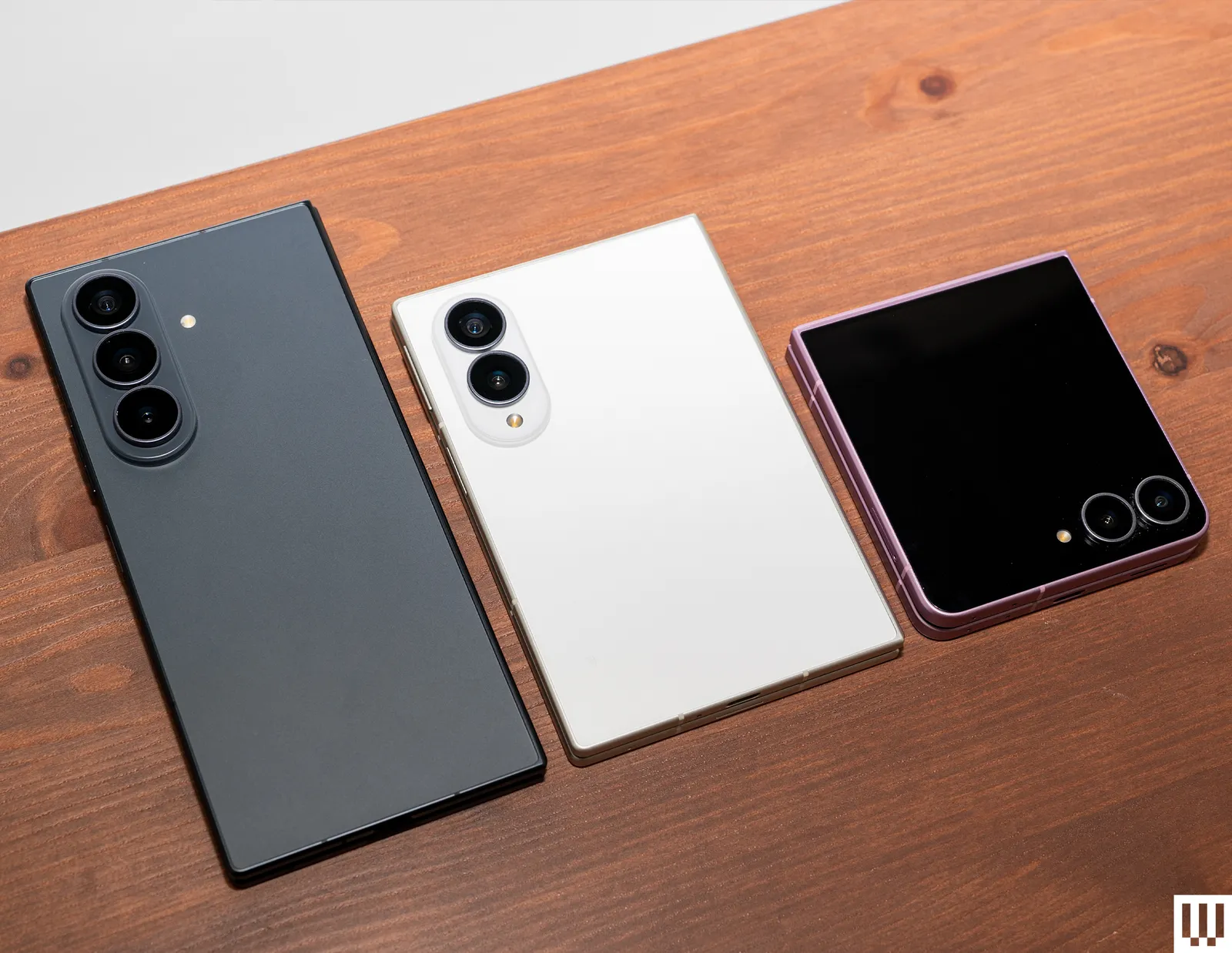
Samsung has steadily improved its foldables, but the eighth annual update includes a fresh face, the Z Fold8, which features the long-rumored wide form factor. It slots in between the flagship Z Fold8 Ultra, which is the successor to last year’s Fold7, and the smaller Flip8, which succeeds the Flip7. Is the newcomer an awkward middle child or the glue that holds Samsung’s folding family together? Samsung also has a couple of new smartwatches, the Galaxy Watch Ultra2 and Watch9.
The new phones are available for preorder, but before you get yours, let’s dig into the details to help you decide which of Samsung’s folding phones to buy. I’ll break down the key differences and similarities, so you can make an informed choice. And remember, Samsung sells many other smartphones, and we highlight the ones worth looking at in our Best Samsung Phones guide.
Table of Contents

Photograph: Julian Chokkattu
Let’s take a quick peek at what the eighth-generation Samsung Galaxy Z foldables have in common this year.
Although Samsung’s foldables all feature exterior and foldout screens in completely different sizes, they all boast Samsung’s Dynamic AMOLED 2X technology, so you get a 120-Hz refresh rate, support for HDR, and higher peak brightness than ever before (up to 3,000 nits), making it easy to read your screen, even in direct sunlight. They also have features designed to filter blue light and reduce eye strain.
The Fold8 Ultra and Fold8 have a special Flex Titanium layer that reduces the visible crease and provides extra strength, flexibility, and resilience. The titanium-alloy film should help the displays last longer, but also means they are flatter and smoother than before, with an anti-reflective finish that reduces glare.
All three phones have Qualcomm’s Snapdragon 8 Elite Gen 5 processor inside, with 12 GB of RAM and 256 GB or 512 GB of storage. You can also get the Fold8 Ultra and Fold8 with 16 GB of RAM and 1 TB of storage. They are all IP48 water- and dust-resistant and feature Samsung’s Advanced Armor Aluminum frame, which is scratch-resistant and durable enough to survive minor drops. The Fold8 Ultra and Fold8 support fast charging at up to 45 watts and fast wireless charging at 20 watts; the Flip8 is slightly slower for both. All three support Wireless PowerShare to top up wireless earbuds and other devices. Connectivity includes Wi-Fi 7 and Ultra Wideband (UWB).

Photograph: Julian Chokkattu
Aside from the sizes, the camera systems are very different, but here are all the specs, so you can see exactly where they diverge.
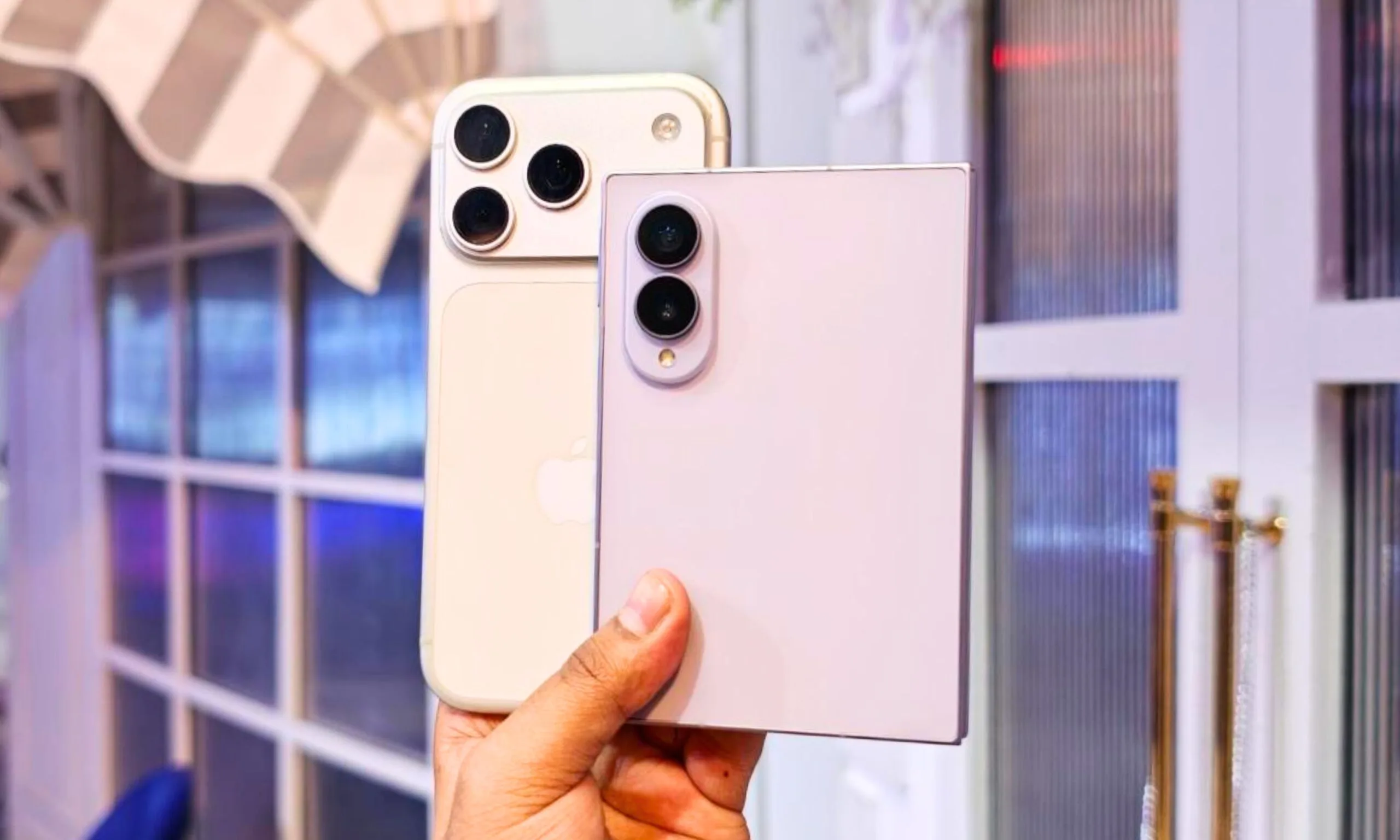
Samsung is trying to jazz things up once again in the foldable space, and the mantra this time around is going smaller and lighter. The result of those efforts is the Galaxy Z Fold 8, and it’s the first time in years that I vocally said “wow” the moment I picked it up. It’s pocketable, light, sleek, and most importantly, oozes functional charm.
Just take a look at how petite it is when held alongside a modern-age iPhone. In an age when smartphones are getting thicker and bulkier, the Galaxy Z Fold 8 wants to stand out in a rather unique fashion. Even in the unfolded state, it’s less than a millimeter thicker than an iPhone 17 Pro (9.7 vs 8.75 mm). If you compare the weight, the comparison flips in its favor. The Galaxy Z Fold 8 is lighter than even the smaller iPhone 17 Pro (201 grams vs 204 grams).
The difference may not seem huge, but the Galaxy Z Fold 8 packs two screens. But that’s not even the big novelty here. It’s the format that makes this one special. One instant, you have an utterly palm-friendly compact screen in your hands. And as soon as you unfold it, the phone gives you access to a sharp 7.6-inch screen with a 4:3 aspect ratio.
That 4:3 number is nothing short of a boon. Everything feels naturally spread out on the inner flexible screen. It’s wider and more naturally suited for content, whether it’s films, books, or games. You don’t see ugly black bars or have to deal with a forcibly stretched perspective to fill the screen. Samsung is not shy about that appeal either. It is “designed around the way people naturally consume content,” says the company.
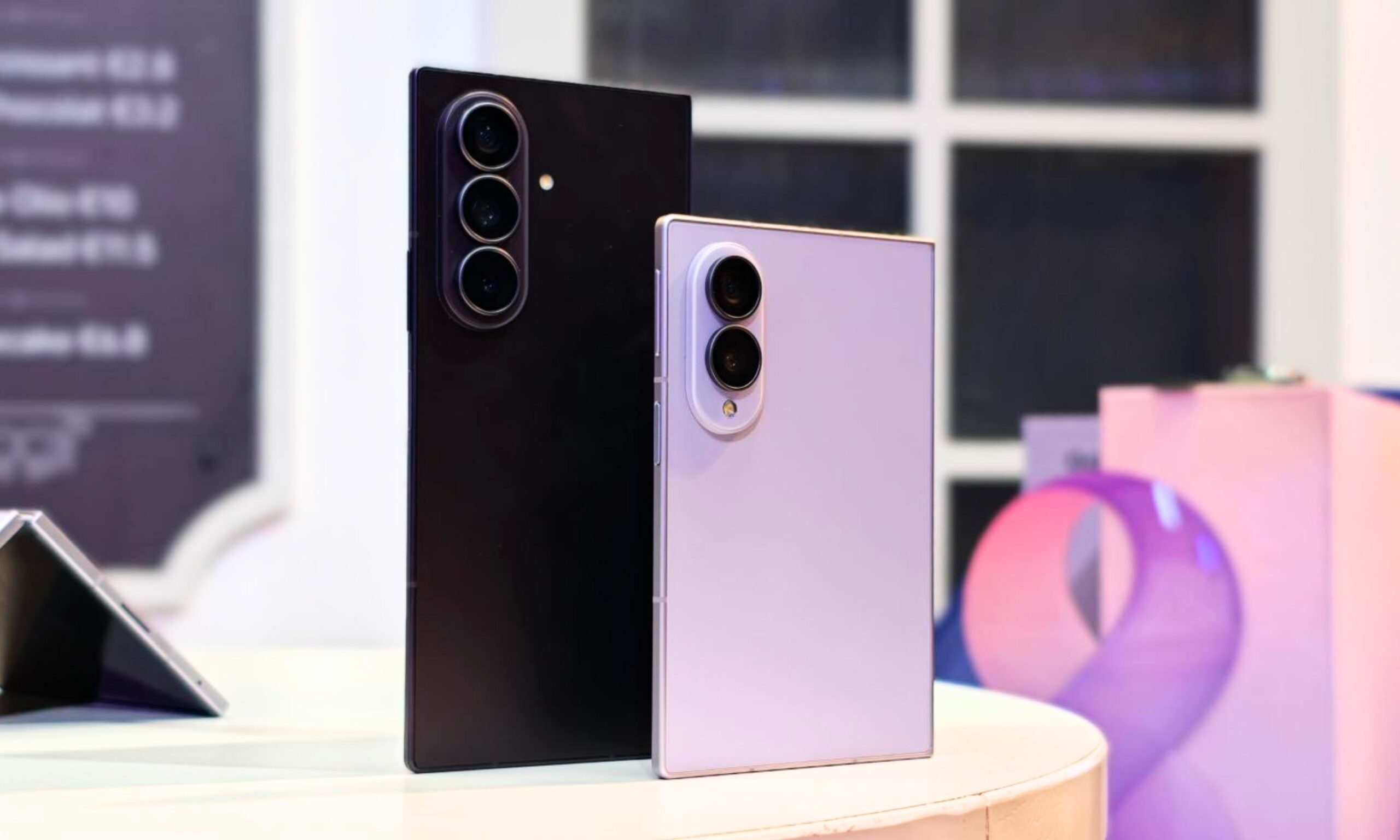
You see, typical book-style foldable phones are usually tall, thick, or adopt a square-ish look, which means letterboxing persists, or content is chopped off. You either see those unforgiving black bars while watching videos, or have to sacrifice content real estate in games and videos. The Galaxy Z Fold 8 is an antidote to those viewing problems, and it does so in style.
There is another underrated side to it that Samsung didn’t discuss, but it’s equally important. The cover display is just 5.5 inches across, and thanks to its wider 10:16 aspect ratio, it feels even smaller in the hand. Even the iPhone 15, which is supposedly deemed one of the last compact phones from a mainstream brand, features a 6.1-inch panel, while its successors have moved to an even bigger panel.
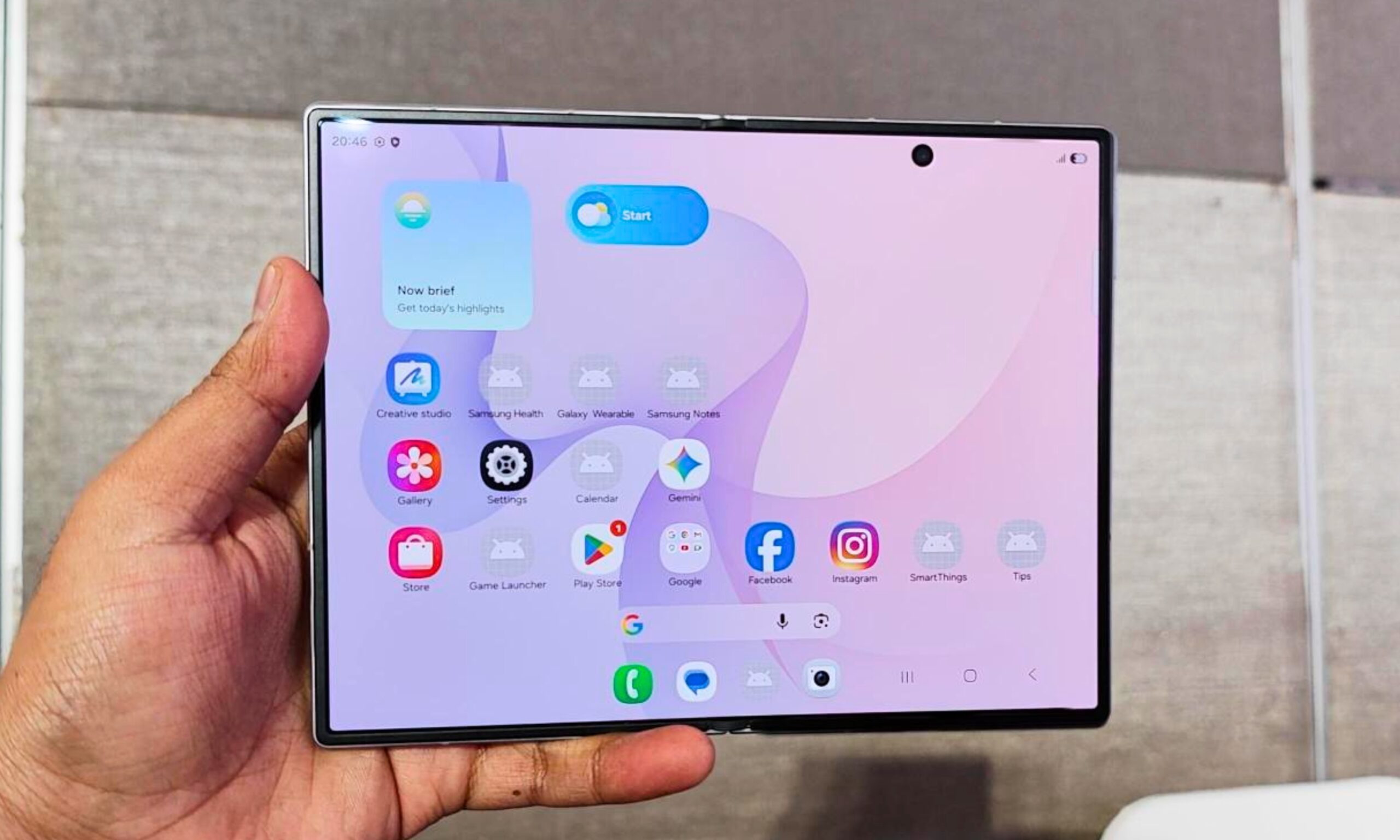
And yet, it’s not just the smaller panel size that stands out on the Galaxy Z Fold 8. It’s the overall smaller footprint, as well. Technically, everything looks great and loads just fine on this screen. But thanks to the petite vertical screen real estate, dopamine-inducing content, such as TikToks and vertical social media content, doesn’t feel as immersive.
If you look at the digital detox and minimalist phone community, you’ll see a pattern. Smaller screens and weirder aspect ratios. The idea is to broadly make the “addictive” multimedia content appear less appealing so that you spend less time consuming it. I love it, irrespective of whether Samsung was on the same minimalism page as me or not.
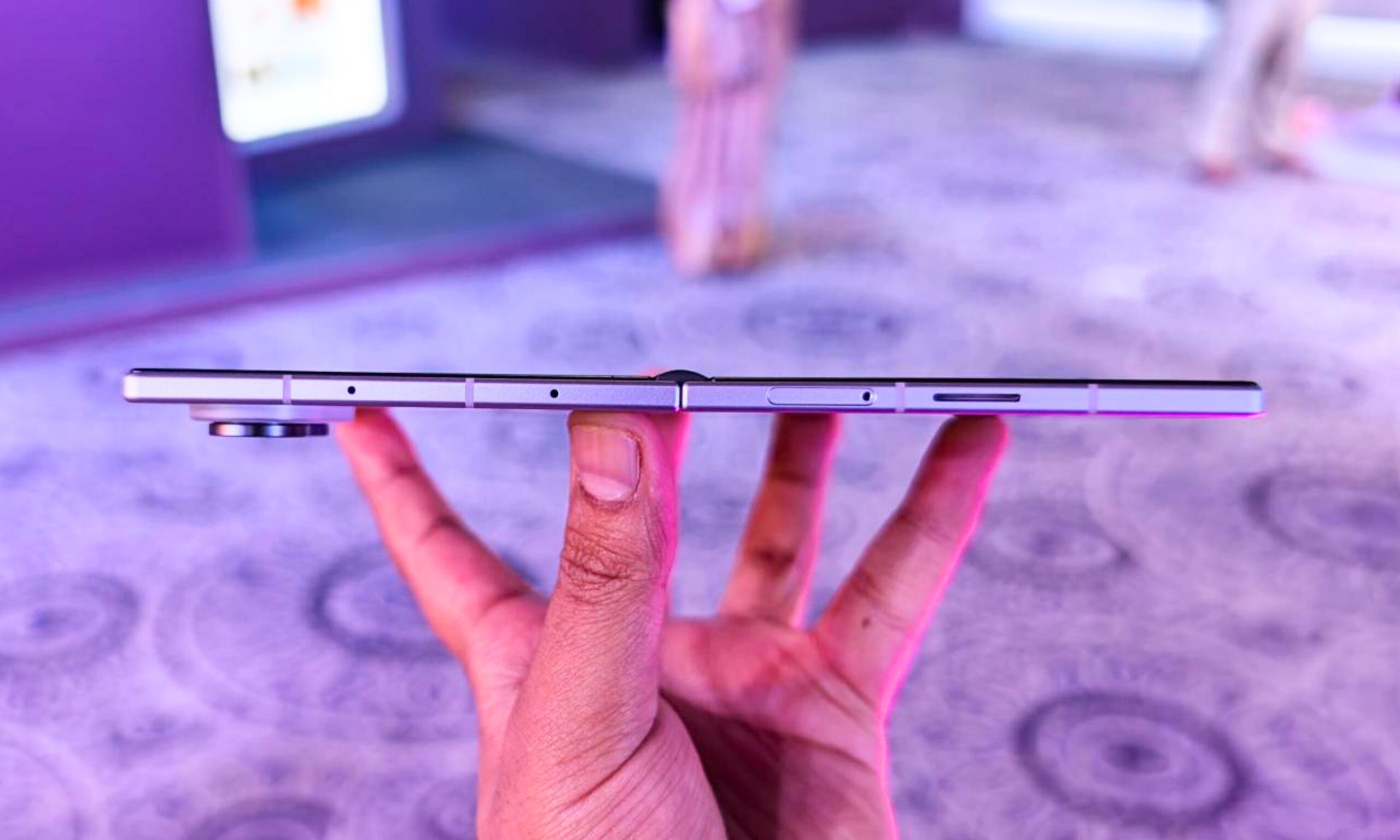
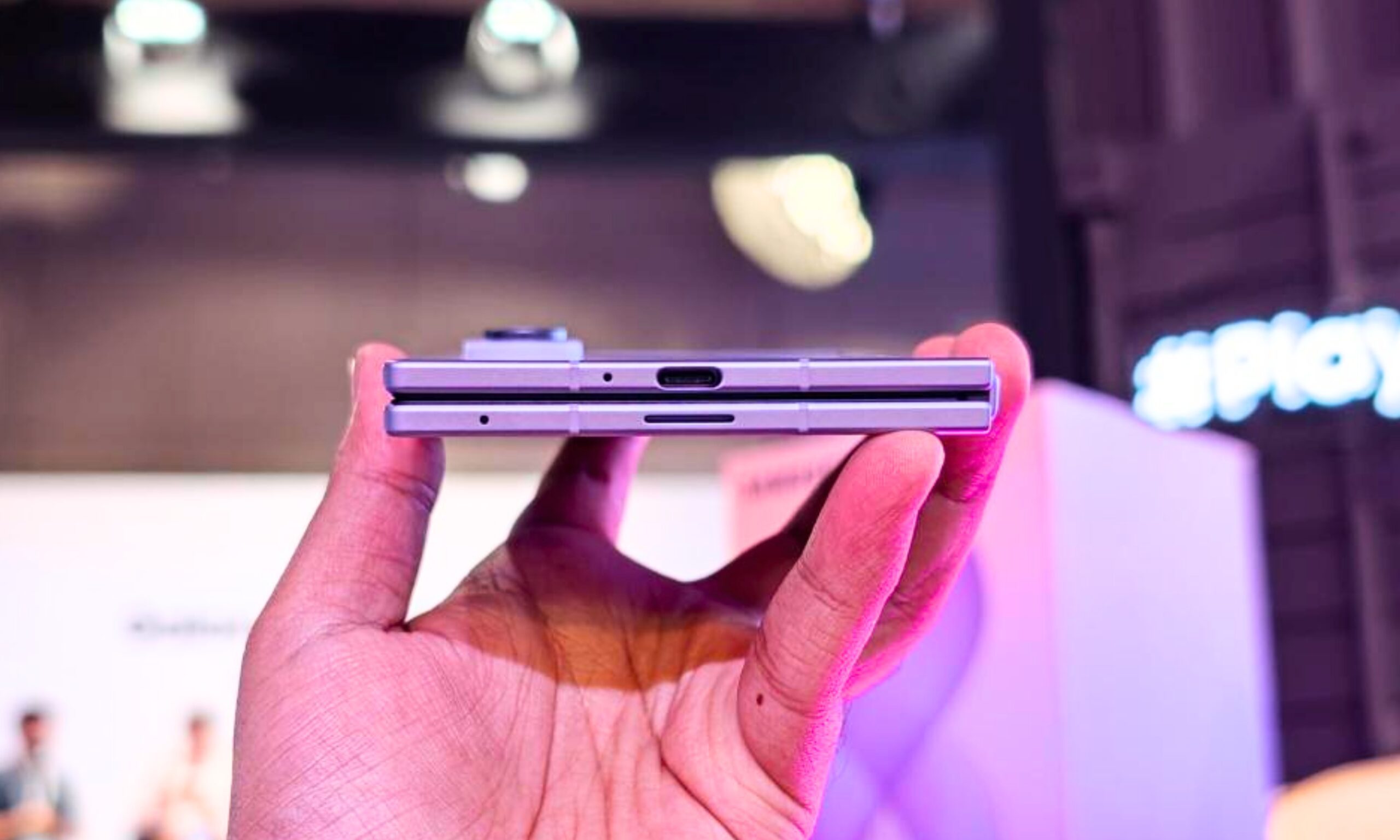
The engineering, otherwise, is impeccable. It’s unbelievably slim, light, and easy on the eyes. And oh, it’s blazing fast, too. Both screens are 120Hz type, which means all user interactions feel super fluid. Under the hood, you get Qualcomm’s top-shelf silicon, fast 45W wired charging, and a pair of 50-megapixel camera sensors at the back.
It’s the whole flagship foldable package, just in a different form factor. Yes, the asking price of $1,899 is a tough pill to swallow. And compared to what Chinese brands (or even a US label like Motorola) have to offer with the Razr Fold, the Galaxy Z Fold 8 might feel underequipped in a few key departments, such as the camera hardware. In hindsight, no phone is cheap these days, or stays that way, thanks to the AI-triggered industry-wide crisis.

Here’s the bottom line, though. The Galaxy Z Fold 8 is the right Samsung foldable to buy this year. It’s fresh, bold, sturdier, faster, and more importantly, a functionally rewarding evolution. It might miss out on the razzle-dazzle of a 200-megapixel camera that you get on the Ultra sibling (for $200 extra), but that’s the end of it. It’s the most refreshing and refined foldable hardware I’ve seen in years, and I can’t wait to explore it. Stay tuned for the review!

No one would remember the line, “Keep being good and special, Ponyboy. Don’t change.” It just doesn’t hit the same as S.E. Hinton’s classic line, “Stay gold, Ponyboy, stay gold.”
Many English teachers, myself included, would consider it an atrocity to diminish this canonical line in literary history to such sterile and lifeless simplicity. Students deserve a better reading experience than that. Yet this is just what happens when teachers decide to level a text down to a student’s “instructional level” rather than scaffolding up their access to a complex text.
In my own district, just two years ago, educators raved about a new AI tool that helps teachers level text and encouraged the department to spend thousands of dollars on it. When I first heard about it, I admit, I was dazzled. The most time-consuming and work-intensive part of teaching for me has always been differentiating for the small percentage of kids who just don’t get it the first, second, or even third time you teach something.
This program was going to do it all for me, but the caveat was that it would also do all the thinking for the kids. When we keep kids from actually doing work that requires effortful thinking, they don’t learn anything at all.
While many states are passing legislation that focuses on the Science of Reading, moving districts away from programs that promote text leveling, many edtech companies are promoting this practice through their newest AI models. In our world of quick and snappy AI solutions, the leveled text shortcut is all too easy to take, but we should not give in to temptation.
The practice of teaching students at their “instructional” level has a long, storied history leading back to the founding colonies. If that sort of history interests you, I highly suggest checking out Timothy Shanahan’s “Leveled Reading: Leveled Lives,” which, for me, was one of the most eye-opening takes on reading education in this country since Natalie Wexler’s “The Knowledge Gap.”
Essentially, the practice of leveling text rests on the belief that we should give students texts that are at their “instructional” level only; for example, if a seventh grader is significantly behind, they may be reading on a third-grade level, so as their teacher, I should teach them using only third-grade-level books. This practice was popularized by elementary programs that assigned students reading levels such as the Fountas and Pinnell levels, Accelerated Reader, and Guided Reading. Eventually, it pervaded secondary intervention spaces and general education classrooms.
The problem with leveling text is that decades of research, more recently popularized by Science of Reading advocates, show that it doesn’t give students much room to grow.
What students need to grow is complex texts, but not only that, complex texts with a teacher modeling how a good reader approaches these texts, while also scaffolding access to them through chunking, discussion, vocabulary practices and all the critical components that we know make up good teaching.
As much as research pointed toward the necessity of complex texts, the pressure to maintain instructional levels was a tension I had to navigate daily, and that tension came to a head when my district adopted a new curriculum.
“It’s too hard and too boring. Our dyslexic and ADHD students will never be able to read Shakespeare, Chaucer, or Remarque.”
I heard comments such as these far too often when my own district in New Jersey switched to complex grade-level texts. As a literacy coach in 2025, I lived in the middle, translating the will of state- and district-level administrators to the classroom and the average teacher.
Surprisingly, I got the most pushback from eighth-grade teachers who were terrified that even the general education students couldn’t handle reading the classic anti-war novel, “All Quiet on the Western Front.” That is when Diffit was first suggested to me. Diffit’s primary function is to level texts; it even promotes itself on Google as “an AI tool teachers use to get ‘just-right’ instructional materials.”
In the midst of this difficult year implementing a new curriculum, our teachers were unfamiliar with evidence-based practices and used to a home-brewed curriculum; students were also not used to the rigor of it all, especially the texts.
One group of teachers who struggled was the special education teachers, who, admittedly, had too many preps and too large a caseload to adequately understand these new mandates. It was then that a well-respected Learning Disabilities Teaching Consultant (LDTC) in the district first suggested I check out Diffit and start putting each chapter of “All Quiet on the Western Front” into this AI program to give eighth-grade special education students a third-grade-level summary.
Initially, I was impressed by the power of this new AI program, but I also felt conflicted because my supervisor had just told me about Shanahan’s work. The world didn’t freeze, per se, but in that moment, it certainly felt like I was living in “The Matrix” — the electronic alternative universe popularized in the movie of the same name.
“Isn’t that like…frowned upon? That’s not good practice, right? I thought we don’t level texts,” I asked my supervisor cautiously.
My gut and everything I had learned about teaching reading told me this was wrong, but this was a well-respected educator with decades of experience working with students with disabilities; surely she knew better than I did. I figured that since I was a general education teacher, I was clearly missing something about teaching reading specifically to students with disabilities, so I trusted the veteran educator at the time.
After taking the veteran teacher’s advice, I recommended text leveling to the teachers I coached, and even used the site myself to give a dyslexic, ADHD student I tutored a shortcut. The results were lackluster. My student didn’t show any interest, would wait for me to tell her the answers, and didn’t remember the content of the text from one session to the next. Her special education teacher wasn’t reporting any improvement in class from this resource, either.
It didn’t take me long to shift gears back to what I knew would help. Reading and re-reading a text (yes, the real one); mapping out the sequence and character; discussing the theme; exploring vocabulary; and building background knowledge. All of this is done with intentionally spaced and interleaved retrieval practice to ensure maximum commitment to long-term memory.
Once my student began working to understand the dense text, the payoff was immediate. Our discussions of Paul Bäumer’s psychology and the trauma of war were profound. This dyslexic, eighth-grade student with ADHD, whom many had already given up on, started to join her peers in these discussions back in the general education classroom. My student didn’t need a different text; she just needed a different roadmap and timeframe to get there.
Three years later, those same teachers who doubted this student could meaningfully engage with such a complex text are no longer surprised when “All Quiet on the Western Front” is their students’ favorite read of the year. Why? Because it deals with real-world topics in a mature way that middle schoolers are often shielded from.
Student success with the challenging text, despite the availability of powerful, easy-to-access AI, is part of the larger conversation about the quality of the tech tools we use and how they may or may not contribute to more meaningful learning experiences.
The fault lies not in the tool itself, but in how we train ourselves as educators to misuse it.
Faustus’ tragedy was not that he sought power, but that he ultimately lost control of the force meant to do his bidding. Like Mephistopheles, AI usage offers educators both power and convenience, but at what cost?
A recurring theme in the use of AI in education is that it must be used critically and responsibly, especially given its impact on the student experience and its interactions with current pedagogy. In this use case, irresponsible AI use actually leads to inequities; why would we give some students access to the great literary canon, and others a robot-created summary?
The bright side is that there is a path to redemption for those who want to use AI to effectively support student access to complex texts, and for what it’s worth, Diffit does an incredible job of providing these resources.
It may seem obvious, but AI tools can be used to create the scaffolds that provide access. Graphic organizers, note-takers, vocabulary reference sheets, and sentence starters are just the beginning. Here are some higher-leverage ways to use AI, in alignment with learning science, to help students access complex texts:
Have AI identify passages from the text that will trip kids up and use those passages as a basis for your syntactical and vocabulary instruction.
Use AI to chunk, not change, the passages. Take it a step further by using “/” to separate phrases and create embedded fluency scaffolds that actually prove comprehension.
Use AI to identify passages that could be suitable for fluency practice.
Not good at think-alouds? Have AI create your think-aloud script to model good reading of a complex text.
Create word sets based on the text for deep morphological or connotative study
To avoid a Faustian tragedy, we must remember that AI is our Mephistopheles: a powerful servant, but a dangerous master. It should support thinking, creation, and access — not replace them.



London Mayor Sadiq Khan handed a peerage by Keir Starmer alongside 15 other Labour figures… just days before the PM leaves No10


Weekend Open Thread – Corporette.com


The House | The City of London can help the new chancellor deliver growth in every postcode

Two July Windows Left: The CLARITY Act’s Senate Fight and What Failure Means


CFTC blocks Kalshi from unwinding Michigan trades after court order


Ripple Payments Joins MiCA With 14 Firms, Does It Mean Anything For XRP?


Nvidia Stock Slips After Big Tuesday Rally as Huang Confirms Vera Rubin Chip Is Now in Production Today


Democrats look to World Cup watch parties to register thousands of voters

Disney’s Most Ambitious Failed Star Wars Attraction Is Coming to SDCC


Ripple wins EU-wide access as ESMA adds it to MiCA register


Grayscale Files For Worldcoin ETF, WLD Registers Sharp Rise


Injective Submits SEC Transfer-Agent Registration to Onchain Ownership Records


Palantir Shares Rise After Expanded Nvidia Partnership and Fresh Analyst Upgrades Ahead of Earnings Day


Sail Virtually Aboard The “Itanic” With IA-64 Emulator

Turtle Beach Command Series KB7 review: a nifty screen-equipped gaming keyboard


Unregistered fitter used Gas Safe logo on business flyers


Registration is now open for March for Men with Kev 2026

New Cornerback Enters Vikings Trade Rumor Mill

New Jersey voter registration controversy explained: How 6,600 noncitizens got on the rolls, and what happens next


Money | Class 12 Economics | CBSE Board Exam 2026-27


You must be logged in to post a comment Login