Kini is very reliable. I tested it in a drawer and a cabinet, and it always alerted me when they were opened. It also keeps a log with times listed. While alerts go via the cloud, maker Kinisium says it doesn’t collect data, and you can turn off logging entirely if you prefer. Kini also has a Stasis mode, so you can reverse it and have it alert you when there has been no movement for a set period. This makes it a versatile monitoring device, and you could use this mode to ensure an elderly relative opens their medicine cabinet each day or check what time your dog walker opened a door. Kini is also compatible with IFTTT for automation, and there’s even a webhook integration that can send notifications to a custom URL.
More Motion Sensors
There are loads of other motion sensors that can alert you to motion or presence in an area or room and trigger lighting, but the right one for you depends on your current smart-home setup.
I really like the Eve Motion Sensor, but if you want it to trigger alerts, you need a smart-home hub, and you must set up an automation. It’s a reliable sensor that works indoors or out. I tested it with a Google Home system.
The Aqara FP2 Presence Sensor ($83) has many features, including zonal and multiple person detection, and is compatible with all the major smart-home ecosystems, though it’s not always very accurate at identifying the number of people in the room. The more affordable Aqara FP300 ($50) is a good enough presence detector for most folks and can also track light, temperature, and humidity.
Advertisement
The Switchbot Presence Sensor ($30) is the most affordable sensor I tested and has a similar feature set, but you will need a Switchbot hub if you want alerts, and there’s a lag between it detecting and alerting.
Philips Hue
Outdoor Motion Sensor
The Philips Hue Outdoor Motion Sensor is excellent, but only if you already have a Hue setup, because it needs a Hue Bridge to connect to. I installed the sensor in my backyard and tested it with the Bridge Pro. It reliably detects people with few false positives. I configured my outdoor sensor to turn on a backyard light strip (not Hue) after sunset and send me a notification when triggered between specific hours (midnight and 6 am) using Google Gemini.
Advertisement
There’s also a Philips Hue Indoor Motion Sensor and a Contact Sensor ($40) for doors and windows. Both are very reliable and can be configured to trigger alerts.
Smart Light Sensing
As an interesting alternative to dedicated motion sensors, you can also use some smart lights for detect presence and motion indoors.
Wiz SpaceSense
If you have a few Wiz lights, you can try SpaceSense, which uses Wi-Fi to detect motion in rooms. I wasn’t that impressed when I tried SpaceSense, but how effectively it works depends on how many Wiz lights you have and where they are located. I was also testing it as a way to automatically turn lights on, and there’s some lag that limits its usefulness on that score. But as a security alert that can tell you when there’s motion in your home when you’re away, it could be very useful. If you already have Wiz lights, you may as well try it, as it doesn’t require a subscription.
Advertisement
Philips Hue MotionAware
Signify is the parent company of Wiz and Philips Hue, and MotionAware is very similar to SpaceSense, but it uses Zigbee, rather than Wi-Fi. Again, how well it works depends on the number of Philips Hue lights you have and their layout. Unfortunately, it does require a subscription if you want to receive alerts. MotionAware can trigger lights at no extra cost, but if you want motion alerts, you must pay $1 per month or $10 for the year. It is also included in Hue Secure subscriptions from $4 per month.
More Security System Alternatives
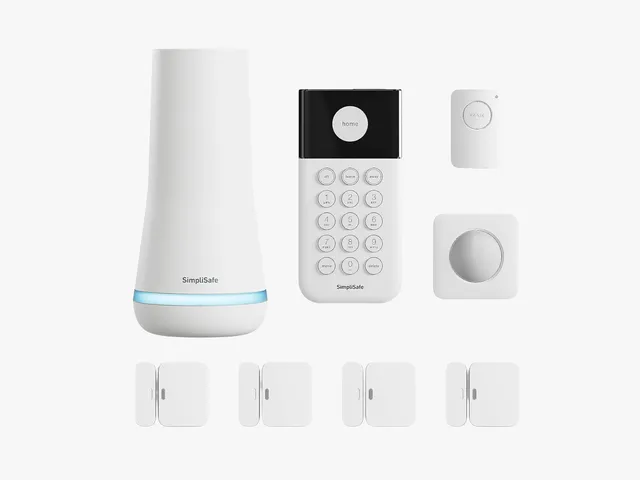
SimpliSafe
8-Piece Wireless Home Security System
You might consider a modular security system. We like the Simplisafe system, which offers a base station, keypad, and a range of sensors. You can also find modular systems from security stalwarts like ADT and Vivint, and security camera makers like Eufy and Arlo.
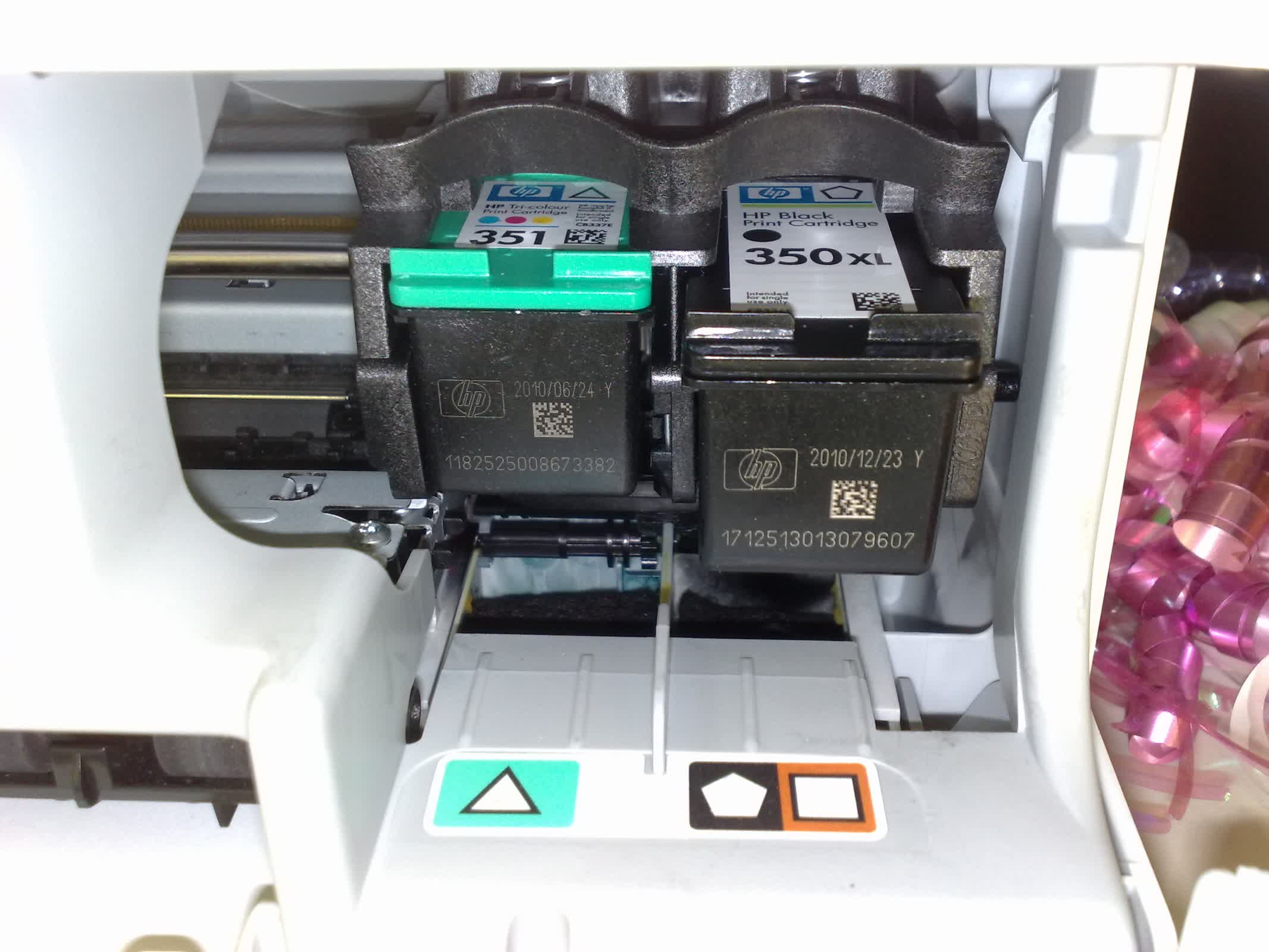
Cutting corners: India’s antitrust regulator has fined HP’s local unit and a group of resellers after finding they coordinated bids and pricing for government technology contracts. The Competition Commission of India said HP India worked with its channel partners to influence bids for computer procurements while controlling prices for ink cartridges, toner, and other printing supplies. The penalties total 1.4 billion rupees, or about $14.4 million.
The case centers on how bids were handled on the Government e-Marketplace, the country’s main public procurement platform. According to the regulator, HP India and five resellers coordinated their bids to increase the likelihood that one of them would win government contracts.
In its order, the commission said, “[C]ertain resellers approached HP India to help facilitate an arrangement that would enhance their chances of securing Government supply contracts against other competing HP India resellers.”
It said those efforts included limiting which resellers could participate in certain tenders, dividing contracts among themselves, and controlling the issuance of manufacturer authorization forms required to submit bids.
Advertisement
The regulator also pointed to practices such as intervening when bids came in below the platform’s pricing guidelines and arranging “cover” bids designed to make a preferred bidder appear more competitive.
The conduct extended beyond hardware. The commission fined HP India 119.8 million rupees for what it described as cartelization in the sale of consumables such as toner and cartridges. Another 21 resellers were fined a combined 35.2 million rupees.
The findings draw in part on WhatsApp messages exchanged between HP India and its Tier-2 reseller partners. In a separate order, the commission said those chats showed the companies operating “in a collusive arrangement” involving “bid rigging, including cover bidding, price fixation, and customer allocation during 2017 – 2020.” It said HP India played a central role in the scheme.
HP India pushed back against that characterization. The order notes that the company “humbly objects to HP India’s role being characterized as a ‘kingpin’ of the entire collusive arrangement.” It also argued that pressure in the printing supplies market played a role, saying high prices led some resellers to consider switching to counterfeit products in order to remain competitive.
Advertisement
“HP India was commercially forced into a position where it had to support the collusive arrangement adopted by the Tier-2 resellers,” the order reads.
The case highlights the economics of the printer business, where hardware sales are closely tied to recurring revenue from proprietary ink and toner. HP has faced criticism for restricting the use of third-party cartridges, including through firmware updates, as part of a strategy designed to keep customers within its ecosystem.
In India, those pressures appear to have extended into the reseller channel, where margins and pricing are closely linked to HP’s supply chain.
The Competition Commission has ordered HP India and its partners to stop the conduct and implement competition compliance programs within 60 days. HP has not publicly commented on the fines.
The country’s gambling authority ordered ISPs to block access to the prediction market’s website.
PJ McDonnell/Shutterstock
France is doubling down on preventative measures for its citizens trying to access Polymarket. The Autorité Nationale Des Jeux (ANJ), the country’s independent regulatory authority in charge of licensed gambling and betting games, announced this week that it ordered internet service providers to block access to Polymarket.
The ANJ’s latest decision follows its previous regulatory action from November 2024 that placed a geoblock on any financial transactions from French residents on the Polymarket website. Despite this ban on transactions, the agency said that the platform continued to grow in France thanks to users circumventing the block. According to ANJ, Polymarket saw 578,751 visits, 205,057 of which were unique visits, in the month of June from French residents. Now the ANJ wants to crack down harder on Polymarket, again emphasizing that the platform is considered an illegal gambling site.
According to the ANJ’s latest move, anyone caught advertising an unauthorized betting or gambling site could be fined up to 100,000 euros, or around $114,000. In the neighboring Spain, the government also ordered to block access to both Polymarket and Kalshi while it investigates if these sites break the country’s gambling laws. In the US, Minnesota passed a bill that bans prediction markets from operating in the state, while other states are filing lawsuits against Polymarket and Kalshi.
The takeaway: Unveiling a long-term roadmap is often seen as a damage-control strategy when a game or franchise is underperforming commercially. Many would likely describe the Fallout franchise’s current position as healthy, with Fallout 76 continuing to receive frequent content updates and the TV series recently earning several Emmy nominations. However, announcing four new games with no confirmed release dates just weeks after significant layoffs could be viewed as a proof-of-life roadmap for the series.
Bethesda has confirmed that Fallout 5, remastered versions of Fallout 3 and Fallout: New Vegas, and a new Fallout title from Obsidian Entertainment are in various stages of development. Further details remain scarce, and at least some of these projects are likely years away, but Microsoft and Bethesda are aiming to reassure fans that more Fallout content is on the way despite thousands of job losses across the Xbox division.
The remasters have been rumored for some time and are expected to follow a similar approach to The Elder Scrolls IV: Oblivion Remastered, which enhanced the 2006 classic with Unreal Engine 5-powered visuals. Meanwhile, rumors about Obsidian’s new Fallout project emerged earlier this month.
– Bethesda Game Studios (@BethesdaStudios) July 17, 2026
Chris Avellone, director of 2010’s Fallout: New Vegas, which remains a fan favorite, is expected to helm the new project. In recent interviews with Bloomberg and Windows Central, Bethesda head Todd Howard said that his studio and Obsidian are collaborating on the game. The involvement of Fallout creator Tim Cain, who recently joined Obsidian, remains uncertain.
Advertisement
Howard also confirmed that Fallout 5 is in pre-production, but Bethesda is currently focused on The Elder Scrolls VI. The next Elder Scrolls entry is arguably the most anticipated game from any Microsoft-owned studio. The sequel to The Elder Scrolls V: Skyrim – one of the best-selling role-playing games of all time – was announced eight years ago and likely remains several years away.
Although it has not reached the popularity of Fallout or Elder Scrolls, Starfield will continue receiving new content this year. Bethesda also hinted at plans for the Fallout franchise’s 30th anniversary, which the company will celebrate in Washington, D.C., next year.
The announcements are among the first signs of new Xbox CEO Asha Sharma’s plan to refocus Microsoft’s gaming division around major franchises, including Fallout and The Elder Scrolls. Fans expressed concerns about the development of ongoing and future projects from Bethesda, Obsidian, and other Microsoft-owned studios after Sharma announced that the Redmond firm would eliminate 3,200 jobs this year.
While acknowledging the difficulties of losing employees, Howard noted that Bethesda has recovered from similar situations in the past. However, an anonymous developer involved with id Software’s Doom franchise, another series Sharma aims to promote, warned that the significant loss of talent could hurt future projects.
Calculators are so ubiquitous and so familiar that they are easy to take for granted in many different ways. [lcamtuf] points out one that has probably never occurred to many of us: the user interface for a calculator is an unexpectedly complex thing.
The internal logic to support sequential inputs and multiple operators in a way that feels intuitive is a complex thing.
Resolving something like 1 + 2 = is pretty straightforward but complexity compounds rapidly after that, with numerous special cases. Let’s imagine one decides to program a simple calculator UI as a weekend project. The development process might look a little like this:
User types in 1 + 2 = and the calculator displays 3. What happens if the user immediately presses -?
No problem, just consider the result of the previous operation as an already-there input. So we’ll have 3 - for this next operation, and wait for more.
Unless we should have treated that - as a negative sign for whatever number is coming next, making it a negative number? No, ignore that. Just treat whatever results from pressing equals as a pre-typed input.
Unless the user hits a number. Because if they hit 2 (for example) then we’ll have a 32 and not a 2 which they probably, definitely don’t expect. So that’s a special case and we should insert a clear if that happens.
Oh, better clear if the user enters a decimal, too.
I’m going to need a coffee…
And that’s just the tip of the iceberg. Imagine trying to figure all this out for the very first time, without the benefits of habit and history to fall back on.
The fact is that supporting the apparently trivial behavior of a simple calculator requires an underlying complex state machine that deals with all kinds of special cases in order to make the UI feel intuitive. And that’s just for a basic four-function calculator; we haven’t even touched on how special keys like % should behave.
We know [lcamtuf] speaks from experience, not just because of their deep knowledge of calculator history but because they rolled their own calculator that uses voltmeters as digit displays and there’s nothing like actually implementing something to make one appreciate it.
More a rewrite really, and of a very early version: Linux 0.11 – in Rust
Earlier this week, Linux project leader Linus Torvalds told AI haters to fork off, and invited anyone who didn’t like his comments to fork the kernel. Well, here you go: linux-0.11-rs, a total reimplementation of the Linux kernel, done in langage de programmation du jour, Rust.
No, this isn’t really a response to the Emperor Penguin’s challenge – for a start, it looks like it was done with AI – but the timing was irresistible.
Advertisement
The new project is by an undergrad student at Beihang University in Beijing, China, under the handle Poseidon.
Never mind not being a fork – Poseidon’s kernel isn’t even really a port of Linux. It’s a rewrite, and a rewrite of a very early version. It’s based on Linux kernel 0.11, whose source code you can peruse on this mirror.
This was an early kernel from December 8, 1991 – just a few months after the initial release, Linux 0.01. Version 0.11 was the last release of that first year of Linux. It was followed by version 0.12 in January 1992, then the version number jumped to 0.95 in March, as the young Torvalds started counting down to kernel 1.0 – which arrived two years later.
If you read the 0.11 release notice, Torvalds said: “Linux-0.11 has a few rather major improvements, but perhaps most notably, is the first kernel where some other people start making real contributions.”
Advertisement
He goes on to say: “This is a major milestone, since it makes the kernel much more powerful than Minix was at the time.” It’s also when “Ted Ts’o shows up as a coder.”
Poseidon’s Rust rewrite is quite a lot bigger than the original. The hackers of the “Orange Site” have been dissecting it with much greater expertise than this vulture can offer. User “dminik” fed it to an automatic code analyzer, and Pajecawav’s Ghloc reckoned that it’s just over 47,000 lines of Rust.
Dminik breaks that down: “It’s about 15k lines of code for the kernel and the rest is various utilities, libraries and programs that can run on the kernel.”
In other words, linux-0.11-rs is more complete than just the kernel. It also includes the core OS as it stood at the end of the year it first appeared.
Advertisement
“Poseidon” also credits a tutorial on writing an OS kernel in Rust, which implies to us that this was not an entirely bot-driven effort. Some work has gone into it. Some of the Hacker News commentators call it a waste of tokens, or more pointedly a waste of water and electricity, but it seems to be a kid having some fun, playing around and experimenting. For us, that’s a good thing. We hope that they found the exercise instructive.
The Reg FOSS desk is not a fan of bot-slop, but we do approve of exploring and learning and having fun. At least for as long as code-generating LLMs are cheap and plentiful, it will be very hard to prevent youngsters and students from playing around and experimenting with them.
Nobody is ever going to deploy anything on a bot-generated rewrite of a prototype kernel from 35 years ago – and don’t forget that the original was itself written by a 22-year-old who was doing it “Just for Fun.” ®
US Air Force drone fires live missile during landmark autonomous aircraft test
Human pilots remain in control despite growing drone autonomy capabilities
YFQ-44A advances America’s plans for future robotic fighter operations
The US Air Force has successfully tested a Collaborative Combat Aircraft firing a live AIM-120 AMRAAM missile, marking a major step for autonomous combat systems.
The YFQ-44A drone, developed by Anduril Industries, launched the weapon against a digital target over the Mojave Desert during the historic test.
The event moves the Air Force closer to deploying unmanned aircraft designed to support human pilots during future air operations.
Latest Videos From
AI wingman drone moves from carrying weapons to firing them
The missile launch followed earlier testing phases where engineers confirmed the aircraft could safely carry the weapon and maintain stable flight.
Advertisement
The drone first carried an inert version of the AMRAAM before validating the communication links required between the aircraft, weapon systems, and human operators.
Air Force officials said the test involved more than simply releasing a missile because the weapon successfully tracked the simulated target during the engagement.
General Ken Wilsbach described the event as an important development toward delivering Collaborative Combat Aircraft capabilities to military operators.
Advertisement
Sign up to the TechRadar Pro newsletter to get all the top news, opinion, features and guidance your business needs to succeed!
“It wasn’t just an AMRAAM that came off, it was tracking the target,” Wilsbach said while discussing the test.
The Air Force has stressed that autonomous systems will not independently decide when to fire weapons, as human authorization remains required before any engagement.
The YFQ-44A, also known internally as Fury, is part of the first CCA development phase alongside General Atomics’ YFQ-42A Dark Merlin.
Advertisement
These aircraft are designed to operate with crewed fighters such as the F-35 and F-22 by providing additional sensors, weapons, and operational support during missions.
The Air Force expects CCA platforms to perform multiple roles beyond missile carriage, including electronic warfare, reconnaissance, and other battlefield tasks.
Officials believe these aircraft could increase combat effectiveness by allowing pilots to manage several unmanned systems during complex operations.
Advertisement
Air Force expands autonomous aircraft program
The successful missile test comes after the Air Force approved both CCA designs to move toward production in June 2026.
Anduril, Shield AI, and Collins Aerospace are competing to provide autonomous software for the aircraft, while the service continues developing future versions through multiple program increments.
Air Force officials have not disclosed total program costs or production numbers for the first manufacturing phase.
Advertisement
However, budget documents show the service requested about $1.4 billion for CCA development and nearly $1 billion for procurement during fiscal 2027.
The Air Force estimates the drones have reached a cost goal of about one-third of an F-35A fighter, which has an average flyaway cost of around $83 million in its current production lot.
Future CCA designs may require greater range, speed, and electrical power, especially for potential operations in regions where long-range weapons threaten U.S. bases.
However, American lawmakers have argued that future systems will need the ability to deploy from the continental United States and reach distant combat areas.
The Trump administration is dictating access to frontier AI models, shifting that decision from Anthropic and OpenAI to the government via the Gold Eagle programme.
The Trump administration is now dictating which companies and entities get access to frontier AI models from Anthropic and OpenAI, CNBC reported on Friday, citing two people familiar with the matter. Until now, the labs made that decision themselves. Anthropic controlled access to its Mythos cybersecurity model through an initiative called Project Glasswing. OpenAI ran a similar programme called Daybreak for its cyber model. Going forward, these partner lists will require explicit government approval.
A White House official told CNBC that the government does not “provide approvals for AI releases” and that company participation is “voluntary.” But the administration blocked Anthropic’s Claude Mythos 5 and Fable 5 last month over national security concerns, reinstating access only after weeks of negotiations. OpenAI said in June it would limit new models to “trusted partners” to comply with government requests. The gap between the official position and the operational reality is the story. The White House launched Gold Eagle this week, an AI clearinghouse for cyber vulnerabilities, and according to CNBC’s source, the programme will put the White House in charge of greenlighting which companies can access new AI models.
The timing is politically uncomfortable. Moonshot AI’s Kimi K3 launched the same day and matched or exceeded Fable and GPT-5.6 on at least one independent benchmark. David Sacks, former White House AI czar, called it “concerning” and wrote: “This is how you lose the AI race. The rest of the world won’t play by our rules if we bog ourselves down.” The administration is trying to secure frontier AI against Chinese exploitation while simultaneously watching Chinese labs close the capability gap in real time.
Advertisement
The shift is structural, not temporary. Trump’s June executive order asked AI companies to give the government early access to models for testing, framed as voluntary. Gold Eagle operationalises that ask into something closer to a gating mechanism. If Anthropic and OpenAI cannot release their most capable models without government approval of the partner list, then the US government has acquired de facto distribution authority over frontier AI, without legislation, without a regulatory agency, and through a programme the White House insists is optional.
Despite significant external volatility, artificial intelligence continues to be a major driver of Ireland’s economy.
Ibec, the group representing Irish business, has today (16 July) published its latest Quarterly Economic Outlook report, which explores many of the issues impacting Ireland’s economy.
It found that despite significant pressures and global volatility affecting growth, AI-related investment, investment in public infrastructure and resilient consumer spending are all continuing to support the economy.
Gerard Brady, Ibec chief economist and head of national policy, explained that we are seeing early evidence of the impact artificial intelligence is having on the country’s economic figures. He said that total trade in AI-related goods to and from Ireland is on track to double across five years, reaching €56bn annually.
Advertisement
He explained that there has been a significant investment in ICT equipment and software, to the value of almost €6bn in the past year, which is a 50pc increase compared to 2025 and double the amount from 2024. He said that within business, the impact of AI on the competitive environment, investment, trade and the labour market is clear, that these figures will only grow over time.
Commenting on the report, Brady said, “Given that we are only at the foothills of understanding the impact of AI on our economy, the full picture has yet to emerge. We may not be at the forefront of developing new AI models, but early evidence suggests we have an opportunity to be a central node in AI-related supply chains.
“We also have a massive opportunity to be the country with the best-prepared workforce for the generational change in work and skills currently underway. However, our participation in lifelong learning hovers around the EU average, well below where we want to be for an open, global and sophisticated economy.”
He explained that Ireland’s current economic success is firmly rooted in its commitment to investing in a manner that enables the country to be at the forefront of new technological shifts in the global economy.
Advertisement
“We have a tangible opportunity to get ahead of other countries because we have a large training fund, in the form of the National Training Fund, paid for by employers, with a €2bn surplus. This cannot be left idle,” he said. “This fund must be deployed to support the workforce transition, prepare us for change and set Ireland up as a frontrunner in the emerging global economy.”
For Ireland, despite global pressures – such as the US-Iran ceasefire collapse, US tariffs and the uncertainty around the Strait of Hormuz – exports have remained relatively resilient. However, Ibec did find that it will be 2027 and beyond before we can fully understand the true impact of tariffs on Ireland’s exporting sectors.
Brady said, “We expect exports, which grew by around 7.5pc in 2025, to rise only marginally in 2026 as a consequence of this ‘whiplash’ effect. However, exports are projected to resume strong growth at 4pc in 2027. The story within the domestic economy is more prosaic. Consumer spending is holding up, but inflation will dent its trajectory.
“While the labour market is showing signs of softening, investment remains strong. Most of the levers to support long-term economic development, such as infrastructure delivery, skills development, regulation, and supporting innovation and digitalisation, remain firmly within our control.”
Advertisement
Ibec also recently issued a new report exploring the correlation between workplace AI and consistent learning strategies. The ‘Skills for all, skills for life’ report warned that unless there is a deliberate shift in the national approach to lifelong learning, Ireland will fail to capitalise on the long-term economic potential of AI.
Don’t miss out on the knowledge you need to succeed. Sign up for the Daily Brief, Silicon Republic’s digest of need-to-know sci-tech news.
We spend hours testing every product or service we review, so you can be sure you’re buying the best. Find out more about how we test.
Fluance RT87 Turntable review: two minute review
Nothing highlights the highs and lows of vinyl like a proper turn table such as the Fluance RT87. Maybe you’ve been using the same Audio Technica LP-60 or even Crossley or Victrola that proliferates the storefront of every record store you’ve ever been to. No shame, I’ve had each at some point.
But there’s something about a fully manual turntable from assembling and calibrating (and testing one’s patience) to cleaning a record every time you put a new one on. Convenient is not necessarily a word that I would use for this process. But it is a bit meditative. More importantly, the audio quality you get a step above with that analog warmth that the best turntables are known for, while not adding unnecessary distortion that may make your vinyl also sound a bit unintentionally lo-fi.
Advertisement
Of course, spending the $799.99 / £666.33 / AU$1,231.70 is not enough for that immersive listening experience. You should probably get a pair of the best stereo speakers you can afford. And if those speakers don’t have a built-in phono preamp, you’ll have to get one of those too. This turntable does not come with one.
Latest Videos From
Fluance RT87 Turntable review: price and release date
The Fluance RT87 is playing Kacey Musgraves. (Image credit: Future / James Holland)
How much does it cost? $799.99 (around £666 / AU$1,230)
When is it available? Available now (launched in June 2026)
Where can you get it? Available now in the US; UK and Australia coming soon
Newest among Fluance’s offerings with a mid-June 2026 release, the Fluance RT87 is available in the US and will (at the time of writing) be available in the UK,and Australia very soon. And whether you get it in Natural Walnut, Piano Black, or Piano White, the price goes for an only-cheap-to-audiophile price of $799.99 (around £666 / AU$1,230). And that price stays the same regardless of cartridge, of which you can choose from the Ortofon 2M Blue or Audio Technica AT-VM95ML.
Just be aware that the Fluance RT87 does not have a built-in phono preamp, so you’ll need to invest in one. Fluance does sell the PA10 Phono Preamp for $99.99 / £82.99 / AU$154 and can be bundled (though without a discount) on its site.
Advertisement
Fluance RT87 Turntable review: features
The Fluance RT87 has a speed selector, so no need to change the belt. (Image credit: Future / James Holland)
Very light on features and extra perks — the connoisseurs’ choice
No phono preamp or 45 RPM adapter
Does come with a bubble level
If the Fluance RT87 is more for the audio purist and I think that’s who the brand is targeting, then it makes sense that this turntable is pretty light on convenience-focused features. There is no built-in phono preamp — something you can find on much cheaper decks like the Audio-Technica AT-LP70XBT. And, of course, you won’t find Bluetooth connectivity or any other unique types of connectivity.
I don’t say this as a bad thing, either. After all, the Fluance RT87 is meant for someone ready to enter more serious vinyl listening and all those extra accoutrements take away from what’s important and that’s its performance and everything involved in making sure that it performs properly.
Sign up for breaking news, reviews, opinion, top tech deals, and more.
While I’ll cover most of those choices for performance in the next couple sections, it’s worth noting that the Fluance RT87 comes with the option of either the Ortofon 2M Blue or Audio Technica AT-VM95ML cartridge, either of which cost over $150 as just as part ($166.99 and $179.00, respectively). The configuration reviewed here is the Ortofon 2M Blue.
While there are plenty of opinions out there on both cartridges and how they affect the sound and I won’t parse out that whole conversation — people’s opinions of cartridges are as varied as they are on any other piece of audio equipment — other than to say that either cartridge marks an entry point into serious audio quality from more budget cartridges… just like the Fluance RT87 itself.
Advertisement
It’s also worth mentioning that this turntable can play 78, 45, and 33 RPM, via a selector on the lower left corner of the turntable so no need to adjust the belt like some turntables. Unfortunately, it doesn’t come with a 45 RPM adapter. Additionally, it has an Auto-Stop toggle on the back.
Features score: 3 / 5
Fluance RT87 Turntable review: sound quality
The Fluance RT87 being used in a somewhat treated room. (Image credit: Future / James Holland)
Has a sweet, slightly warm sound
Soundstage is immersive
No discernable inner groove distortion
I learned a lot about my records using the Fluance RT87 as my conduit. I learned that I didn’t like the way Fleetwood Mac’s Rumours is mixed. I learned that there’s way too much happening in Kamasi Washington’s Truth. Just to name a few.
You hear something that was there this whole time, but you noticed it on this last listen. And that’s not something that typically happens with entry-level gear. In short, I really enjoyed listening to the Fluance RT87. And while the turn table is a step or two up from entry-level gear (maybe beginner audiophile gear or first serious turntable level), the rest of the chain was more on the budget side — Fluance’s affordable PA10 phono amp and the company’s Ai41 speakers. Solid gear, but not transcendent.
Advertisement
One of the good things about using the Ai41 speakers is its Bluetooth connectivity. I could compare a record to a digital stream of the same music via HiFi through Deezer, which I did in a few cases. Rumours, for instance, got a play through vinyl as well as Kacey Musgrave’s Golden Hour. And the vinyl sounded just a little bit better. Maybe it’s the even-order harmonics. Maybe it’s using physical media over digital zeros and ones. To me, everything through the Fluance RT87 had this little bit of bloom to it. It just sounded a little bit sweeter.
Since I had done my best to properly set up my bookshelf speakers when I did my serious listening, I found the soundstage to be expansive and enveloping during listening sessions. I mentioned Kamasi Washington’s Truth, from his album Harmony of Difference before. When playing that song (really the whole record), not only could I hear his band to the outer reaches of where the speakers were projecting, but I could hear precise placement of various horn parts placed across the sound stage. In the same vein, Radiohead’s Pyramid Song sounded phenomenal on this setup.
As far as frequency response goes, I was pretty pleased. With the obvious caveat that the speakers are going to be the biggest bottleneck in a sound system (a bit of an oversimplification), I found the mid-range to be rich and full. Kacey Musgrave’s voice and guitar on Slow Burn, the opening track from Golden Hour, has weight to it. And the high-end has plenty of detail, while retaining some of the warmth of analog as it’s a tiny bit rolled off in a pleasing kind of way.
Now, the bass response is a bit tighter as opposed to big or woolly. It was still very present. Sure, it has a defined space on an older record like Rumours or Talking Heads’ Remain In The Light, but it’s easily placeable and doesn’t overpower the mix in something like FKA Twigs’ EP1.
Advertisement
Lastly, every record I played had a good amount of headroom so that the music came through clearly and without any real distortion (outside of those even order harmonics). And there wasn’t any discernable inner groove distortion either as the stylus would wind its way to the end of each side.
Sound quality: 5 / 5
Fluance RT87 Turntable review: design
Fluance RT87’s acrylic platter is hefty, weighing about four pounds. (Image credit: Future / James Holland)
Heavy-duty plinth and platter
Belt-driven
Removable cartridge
If you’re just getting into turntables, you might be wondering what puts the Fluance RT87 in a more expensive price bracket compared to a lot of the popular, feature-filled turntables out there, one of which you might be upgrading from.
Obviously the sound quality is a huge part of that, which we’ve already covered, but that sound quality is affected by the build of the Fluance RT87. Of course, it’s worth mentioning that it’s a classy-looking deck with a high-gloss finish, available in Natural Walnut (reviewed here), Piano White, and Piano Black. It is made from MDF, but that’s actually a positive, as it doesn’t create any resonance.
Advertisement
Getting back to that build, the plinth, aka the body or chassis of the turntable, is heavy — the whole thing weighs 21 lb (9.5 kg) — giving the turntable a durable feel. Also, the acrylic platter is hefty in and of itself at 4.1 lb (1.85 kg). Incidental bumping or closing of the dust cover, which is surprisingly easy to scratch, doesn’t skip or affect the sound. And unless your record is warped, it will rotate without any up or down motion.
This is a belt-driven turntable with an adjustable and rigid carbon fiber tonearm (you even get a little hex wrench to adjust it), complete with removable counterweight and tiny anti-skate weight, and replaceable cartridge. I’ve mentioned earlier the two types of cartridges to select from and the fact that the reviewed model here came with the Ortofon 2M Blue. It’s worth noting that this is a moving magnet cartridge with a nude elliptical stylus.
The feet, of which there are three, are adjustable to help level the Fluance RT87. They are basically large, mostly silicon silicon screws.
Control-wise, there’s just the speed selector on the front, left corner of the plinth and the auto-stop toggle on the back. The ports are about as Spartan — just stereo RCA inputs and a ground outlet.
Advertisement
As far as extras go, the turntable comes with a RCA cable, ground cable, hex wrench for adjusting the tone arm, and bubble level, so you can adjust the turntable’s angle accordingly before you end up butchering any records. Brushes and any extras will require an individual purchase.
Design score: 4.5 / 5
Fluance RT87 Turntable review: ease of use and setup
Putting it together takes ten minutes
Not plug-and-play
Fine tuning takes even longer
There’s a bit of assembly required with the Fluance RT87. (Image credit: Future / James Holland)
This should not be your first turntable. There’s ritual to setting up the Fluance RT87, as there is for a lot of turntables once you graduate beyond the three-to-four hundred dollar range. Because of that, it was equal parts frustrating and engaging. So, yes, there is some assembly required.
Advertisement
When first unboxing, I had to remove everything from its plastic wrapping and then spend probably five minutes just getting everything all together. I had to put the platter on the plinth, put the belt around the platter and then on the motor, put the Ortofon cartridge on one end of the tonearm followed by the counterweight on the other end, then on goes the anti-skate weight, and, lastly, I had to add the hinges to the dust cover and then attach it to the plinth.
But wait, we’re not ready to start playing any records. I had to turn the platter a few times with the belt on so that it’s evenly distributed. Since the platter doesn’t have a ridge or indentation for the belt, it has a habit of slipping off (and still does if I’m a bit clumsy removing a record after play) — something you don’t have to deal with on cheaper decks.
I also had to adjust the feet so that the turntable is completely level, making sure records lie flat during play. This takes a bit of time because you have to reach under and turn each foot clockwise to extend (counter-clockwise to shorten) until the bubble level shows its bubble directly in the center. This took me about ten minutes of adjusting initially, though to be fair, I was using a table that wasn’t very level. After moving the Fluance RT87 from the table I first had it set up on to a different, somewhat treated room where I had to put it on the floor, it required much less adjusting.
Adjusting the tonearm’s counterweight took quite a while as I had to be precise in getting it to balance flat instead of flying up and away from the turntable or digging into my records. While it’s par for the course, this probably also took me about ten minutes of adjusting, though that’s partially because I set it up according to the manual and found the tonearm to still not have enough weight from the counterweight.
Advertisement
Similarly, the anti-skate weight here is a bit finicky as well. It’s just a tiny ball on a thread thin enough to thread a needle with a loop on the other end to attach to the tonearm. The tonearm attachment is basically a lever with four notches on it to account for different anti-skate weight needs (for instance, the anti-skate should loop over a different rung when using the Ortofon cartridge versus the Audio-Technica one). Not only did it take some experimentation to find the right setting, but the loop kept slipping off its rung.
If you’re upgrading to your first big-boy or big-girl turntable and considering this one, just be ready to put in some time getting it right before actually using it. Also be aware that some of the required attention to detail during setup is not unique to this turntable, though anti-skate weights aren’t always a tiny ball on a tiny string.
Usability and setup score: 3.5 / 5
Advertisement
Fluance RT87 Turntable review: value
(Image credit: Future / James Holland)
Less features and automation than cheaper turntables
Better sound quality than those cheaper turntables
Some entry-to-premium decks may sound as good, but aren’t as sturdy
It’s interesting that the cheaper decks are the more convenient. It’s almost as if the more money you spend, the less features. Exhibit A, for instance, might be the FiiO TT13. This turntable costs a little over a quarter of the price of the Fluance RT87 ($249 / £239 / AU$249 if you need specifics), while adding in Bluetooth connectivity, a built-in phono amp, a fully automatic tonearm, and, frankly, due to its plug-n-play design requires none of the setup or fine tuning of the record player reviewed here. But I would hazard that the Fluance RT87 sounds quite a bit better since it has a bit more heft to its sound.
If you’ve been looking at upping your vinyl game, you might have already looked at the popular Rega Planar PL1, which at $595 / £299 / AU$645, is probably a more direct comparison. But, while the Rega also has a pretty spacious sound, it’s a bit more workmanlike in construction. It’s more utilitarian in looks and is much more light weight in construction. The Fluance RT87’s acrylic platter alone weighs about half of the Rega Planar PL1, making the Fluance more likely to absorb shocks and bumps without fuss.
Value score: 4 / 5
Should I buy the Fluance RT87 Turntable?
Swipe to scroll horizontally
Attributes
Advertisement
Notes
Rating
Features
While it’s to be expected on more serious turntables, this one is very light on features, though at least one can change from 33 to 45 rpm without having to adjust the belt.
Advertisement
3/5
Sound quality
The Fluance RT87 sounds really good, able to reproduce that analog warmth with body and spaciousness.
5/5
Advertisement
Design
From the removable but capable Ortofon Blue 2M (or AT-VM95ML) cartridge to the heavy acrylic platter and more, this turn table was built for durability and for quality.
4.5/5
ease of use and setup
Advertisement
There’s a lot of fine tuning required to set the RT87 up properly. And it’s probably going to take a little while. This part may exercise your patience.
3.5/5
Value
The Fluance RT87 is not a cheap turntable, but as a turntable for those ready to get serious about their listening experience, it’s appropriately priced.
Advertisement
4/5
Average Rating
Excellent sound, heavy duty build — there’s a lot to love. Too bad it doesn’t have a built-in phono preamp.
4.5/5
Advertisement
Buy it if…
Don’t buy it if…
Fluance RT87 Turntable review:: Also consider
Advertisement
How I tested the Fluance RT87 Turntable
Used regularly for a few weeks
Played through Fluance P10 Phono Preamp and Fluance Ai41
Played at various speeds and different size records
I used the Fluance RT87 for a few weeks, listening to as wide a variety of music from Rock to Jazz to Americana that I could. In so doing, I used the different speeds as well as seeing how it did with different size records. I also used the record player in a couple different rooms and with a couple different speakers, the Fluance Ai41 mentioned above and the Klipsch The Nines II.
I’ve tested a lot of tech gear over the years from laptops to keyboards and speakers, and so have been able to use my expertise towards giving an honest and fair opinion, not to mention a critical eye, to any product I test.
If there is a driving theme to The Java Story documentary, which debuted Friday on YouTube, it would be that even some of the most important and popular technologies come from humble beginnings. In this case, we’re talking about a language that started life as a failed attempt at set-top box dominance and required a massive rewrite just days before its big conference debut.
Today, Java consistently hovers near the top of the TIOBE programming language popularity index and remains widely used for large enterprise applications.
But at one point in 1994, Sun Microsystems was just about to abandon the effort. Tim Lindholm, who was hired to polish up a virtual machine runtime for what would become Java, told The Register,“I was one of the last people hired before the whole thing fell apart.”
Advertisement
It wouldn’t be the last time Java outlived its detractors.
Java chronicled
If the idea of a professionally produced documentary about a programming language sounds familiar, then you’ve probably seen the ones on C++, Python or React. These were the work of tech job site Honeypot.io, which funded the documentaries to build a user base.
In 2019, Honeypot was acquired by XING (which rebranded as New Work SE). However, founder Emma Tracey was more interested in the documentary side of things and bought the production shop back from New Work, reuniting the original gang and rebranding their efforts as Cult.Repo (short for Culture Repository). The Java Story is the first product of the newly liberated media company.
The documentary features many of Java’s prime movers, including creator James Gosling and senior Oracle Java architects Mark Reinhold and Brian Goetz.
Advertisement
While it may have taken a Hollywood-style effort to construct a Hero’s Journey around the plodding progress of Python, Java is a veritable Love Island of dramas, some of which were this documentary captured.
The project that almost wasn’t
Lindholm strayed into the computing field only as a result of the brutally cold winter of Minnesota, where he was living in a tent. He realized he would need someplace warmer and so scored an internship at Argonne National Laboratory in Illinois. There, he gained early experience with virtual machines thanks to the lab’s use of Prolog.
His goal was not to be a programmer, but a mathematician. “Computer science was for people who couldn’t be real mathematicians,” he said.
But he learned the craft of implementing Prolog.
Advertisement
“I learned to write to very high-quality virtual machines with things like garbage collection and embeddability,” he said. The VM experience led him to subsequent jobs at Xerox PARC and eventually Sun.
When Lindholm arrived 1994, it was to work for an experimental “spin-in” subsidiary called FirstPerson. At the time, Sun made bank selling high-end workstations to engineers, but it wanted to build software for devices outside the typical workstation and PC market.
FirstPerson’s chief concern was a bid from Time Warner to provide the interactive video-on-demand software for television set top boxes. Gosling wrote a language and runtime for the project, called Oak.
The contract ultimately went to late bidder Silicon Graphics – a Sun rival commonly known as SGI. In a lesson of not always getting what you want, the Time Warner project struggled for a few years before the plug was pulled in 1997, which didn’t do the already-struggling SGI any financial favors.
Advertisement
But at the time, Sun took the defeat hard, laying off most of the FirstPerson staff. Lindholm had been there for only a month and wasn’t overly invested in the set top box. “I’ll do whatever comes next,” he recalled.
Sun kept only 12 engineers to work on Oak, including Gosling and project manager Kim Polese. But for Lindholm, the future didn’t look promising.
“We were like refugees in a bombed-out bunker,” he said. Those who were laid off tossed their office gear out into the hallways. Lindholm felt like “dead meat” at the Sun office, just waiting to get laid off himself.
Pivot to the Web
It was purely serendipitous that the project moved to the then-nascent web. One of the surviving engineers had been playing with the recently released Mosaic browser and suggested the World Wide Web should be Oak’s next target. This was a year before Windows 95 brought the internet and web browsing to the masses.
Advertisement
The team built a Mosaic clone called WebRunner on Oak that would run animations. It would be the precursor to what would become Java applets.
After that, events moved quickly, Lindholm recalled. Oak was renamed Java in early 1995, supposedly as a nod to the engineering team’s coffee consumption. “It took off like a friggin’ rocket. It was just crazy. We were all stressed,” he said.
An early wave of web developers was rapidly discovering the limits of creating web pages using HTML, which, after all, is a markup language.
Lindholm said that his job, alongside , was
Advertisement
Gosling and the crew had assembled a rough prototype, but it fell to Lindholm, alongside fellow new hire and Lisp expert Frank Yellin “to make this thing actually work.” The pair were in charge of the commercial grade implementation, ensuring that the advanced concepts Gosling had outlined, such as threading and garbage collection, functioned in the real world. Lindholm and Yellin later co-authored the original JVM specification.
Threading at the time was particularly new. There were no libraries they could use to implement the idea, and Lindholm knew relatively little about the concept.
The company planned to introduce Java at the 1995 SunWorld convention, the precursor to JavaOne. But the runtime was crashing badly. After much sleuthing, Lindholm figured out Java’s threading model was “fundamentally broken. It was totally screwed up,” he said.
The problem was that system interrupts were being issued while the SPARC processor was executing an instruction. This proved disastrous because the system could not recover the state that had been flushed from memory and would therefore “die horribly.”
Advertisement
Lindholm realized you could only have the interrupts happen at certain points. So, three days before the conference, he rewrote the entire threads package. At the conference, when then Sun CEO Scott McNealy showed off Java, Lindholm sat in the audience dreading the worst. Thankfully, the rewrite worked.
Before open source
Lindholm was also in charge of the language’s first attempt at open source, years before Eric Raymond made the term common. The company offered the binary Java runtime as a free download, but the company gave away “the sources,” as Lindholm put it, to anyone who requested it. Thousands did.
The documentary retells a story that the Java Internet domain was getting so much traffic – more than Sun.com itself – that the Java team ran a pirate T3 line into the office. Such were the days before the cloud.
At the time, Lindholm viewed giving away the source as a good career move. Should he ever get the ax, perhaps some other company would pick up the code and run with it. They also found outsiders could fix bugs and even extend the software to other platforms.
Advertisement
The “source” program wasn’t formalized, however. Sun did have Richard Stallman come to talk, but he seemed “too radical” for the Sun execs, Lindholm recalled. Sun would not actually decide to officially release Java as open source for another decade.
Ironically enough, Java applets were only modestly adopted for the web, as other technologies such as ColdFusion and Netscape’s JavaScript project ended up doing the heavy lifting for Web programmers. But applets were a gateway to the real action, namely powering the back-end servers.
The evil empire
Then, Microsoft started paying attention. It saw the runtime as a potential threat to Windows itself, particularly for the fledgling Windows NT, which was starting to make headway into the enterprise.
For today’s younger generation of IT pros, it is hard to overstate how aggressive and hyper-competent Microsoft could be at that time. In 1996, the company licensed Java for Windows, but then added some additional APIs and declined to support a few others (Anyone remember Microsoft’s J++?). Sun alleged that Microsoft’s changes were intended to undermine Java’s cross-platform compatibility and steer developers toward Microsoft’s Windows-specific implementation.
Advertisement
The years-long court case zapped the development team’s energy, diverting resources away from Java.
“I spent days in deposition talking about this under oath,” Lindholm recalled. The disputes ended with Microsoft paying Sun nearly $2 billion through a series of settlements. “It was personal for us,” he said.
A wild ride
The documentary goes on to cover the following decades of the language’s growth through to the present day, including the over-engineered era of J2EE and Java EE 5, the glimmer of hope provided by the Spring framework, Sun’s implosion and subsequent acquisition by Oracle, and the flourishing of JVM languages following the release of OpenJDK.
Java continued to be a success for Sun, even as its chief business of selling SPARC-based Internet servers fizzled thanks to the influx of low-cost Linux x86 boxes. Lindholm noted that the Java team grew so large that it took over Sun’s headquarters and eventually had to move into the old Apple headquarters.
Advertisement
But Lindholm’s passion for Java evaporated by the early 2000s, swamped by the increasingly corporate environment, and so he left for Google, where he would spend the next 20 years until his retirement earlier this year.
Looking back to his early involvement, Lindholm admitted “it was kind of a random thing. You can never tell what parts of your life will end up being really significant for whatever reason.”
Others agreed that Java has been a wild ride.
As Java creator James Gosling said in the doc, “What excites me most about the future is the unknown. Lots of things happen, and mostly the interesting ones are the ones you could never predict.” ®





























































You must be logged in to post a comment Login