
Tech
The ideal centrepiece for any party

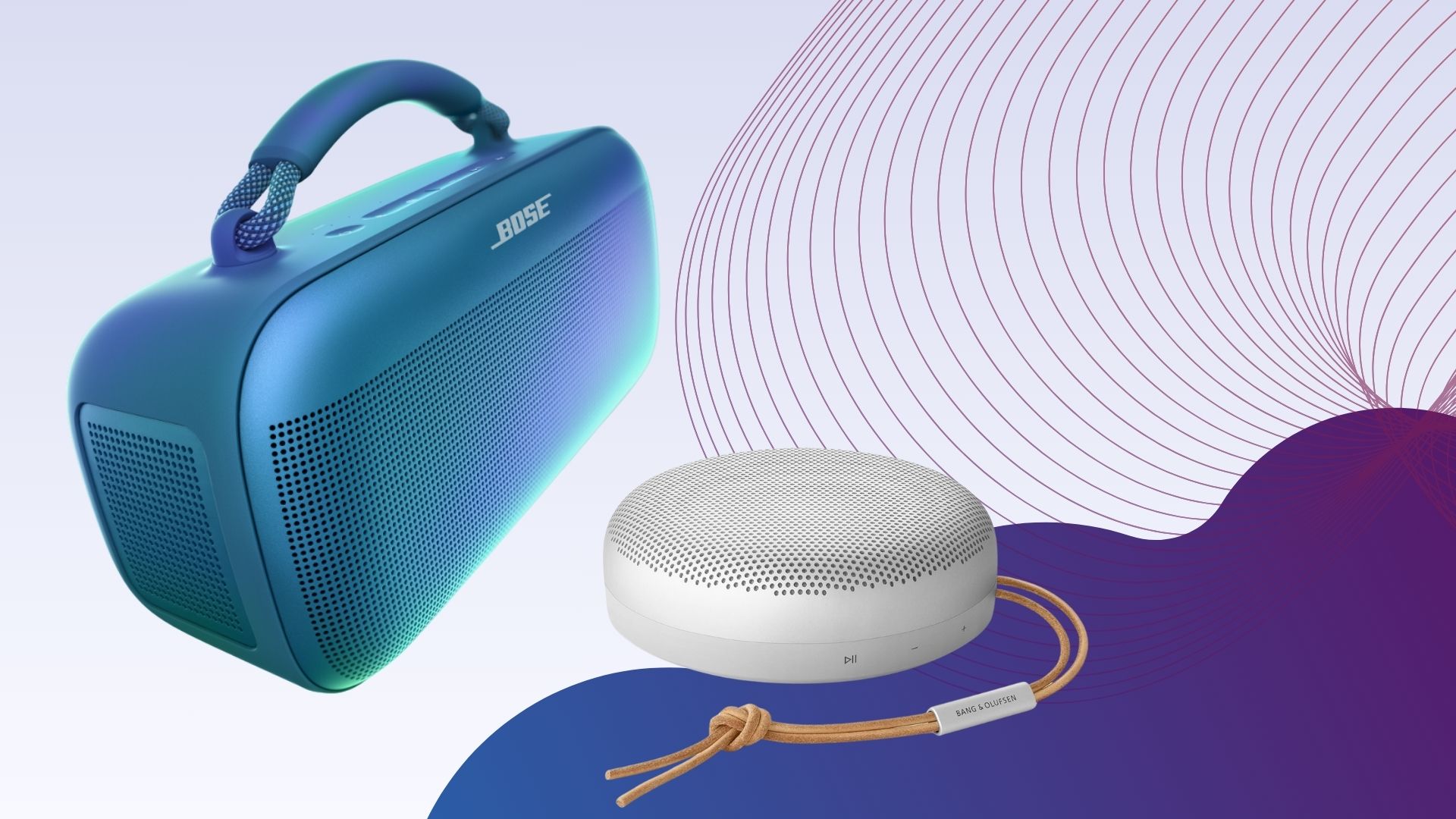
Whether you’re planning a party of one or a larger gathering with friends and family, Bluetooth speakers are a great device to have on hand. They’re far more accessible than larger speaker systems, not to mention more affordable, and while there are some great options to choose from, there are plenty of duds that you’ll want to avoid. Thankfully, with the advice of our expert team, you can discover the best Bluetooth speakers to buy.
While there’s no denying that if you want the true audiophile experience then the best surround sound systems are the way to go, but for most people who just want a simple way of playing their favourite tracks and playlists, Bluetooth speakers are the go-to pick, especially as there are now so many options to choose from, each with unique features.
For instance, speakers from Bang & Olufsen are perfect for high quality sound while Ultimate Ears has durability on lock. You can pick and choose based on the features that you prioritise above all, but to make sure that a speaker is truly as good as the box says it is, you can lean on the expertise of our team.
At this point, we’ve lost track of the number of Bluetooth speakers we’ve reviewed, but it means we know right away if a company is on to something special. With each speaker that gets sent to our offices, it is used for both indoor and outdoor playback to analyse the acoustics, all whilst playing a variety of genres to see how versatile the speaker is in providing a detailed soundscape.
All of this information is then funnelled into our reviews so that you know exactly what each speaker is like to use, before you ever get your hands on them. While Bluetooth speakers are easily the better option for gatherings, when it comes to personal playback you’ll be well suited with checking out the best headphones or the best wireless earbuds.
Best Bluetooth speakers at a glance
SQUIRREL_ANCHOR_LIST
How we test wireless speakers We play a lot of music, and we play it loud. We play it everywhere – in the house, in the garden, and even in the bath if a speaker is waterproof.
We don’t just listen to the speakers; if there are special features then we make sure we fiddle with them until we’re satisfied. Recently, some Bluetooth speakers have begun to get smart functionality with the integration of Amazon Alexa or Google Assistant, and as a result we’ve started speaking to our speakers as well.
Of course, it always comes back to the music. Speakers are tested by reviewers who have a love of music, a knowledge of sound quality, as well as a context of the market. We’ll listen to Bluetooth speakers alongside similarly priced rivals, so when we recommend a particular model, it’s among the best you can buy for the money.
Obviously, we know not everyone has the same taste in music, so we won’t only test with the same perfectly mastered album, but with a variety of genres and file qualities, from MP3 to Hi-Res FLAC. Long time readers of Trusted Reviews will know that the Beosound A1 2nd Gen was our go-to pick as the best Bluetooth speaker for quite a while due to its outstanding sound quality and undeniable sense of style. It only makes sense then that the one speaker that has truly surpassed it is its direct successor. For something truly amazing, the Bang & Olufsen Beosound A1 3rd Gen should be your first pick above all. There are quite a few juicy upgrades in this successor but the one that arguably means the most is the upgraded bass ability. For context, the previous A1 was no slouch in this department but you can hear the weight involved the moment you turn on the newer model, with the type of room filling richness that can really elevate a party to the next level.
Depending on how long you want the part to go on for, it’s far more likely that you’ll run out of energy before the A1 3rd Gen ever does. You can now get a whopping 24 hours of use between charges which is so much more than what you’ll find from most Bluetooth speakers that it almost doesn’t seem fair, but it is why the A1 carries a more premium price.
Another nice touch that we would love to see adopted by more companies in this sector is that the A1 is Cradle to Cradle certified, ensuring that it’s been developed to the highest possible level of sustainability and as such, it can be repaired and recycled with ease at the end of its lifecycle. Given just how much e-waste is discarded each year, these are the design choices we love to see from big brands.
Although Alexa compatibility has been removed this time around, you do get a far superior Bluetooth 5.1 connection to help maintain a stronger connection with your phone when in use. There’s also multipoint pairing so if it’s more convenient to change your music source to a laptop or tablet then you can do so quickly without any hassle. The next time you’re headed out to the beach or a large gathering that requires a bit more power than your average speaker to really deliver on the tunes, you’ll want to have the Bose SoundLink Plus to hand. This is a beefy speaker, but within its sizeable frame, Bose is able to deliver a thumping audio experience that very few Bluetooth speakers can match.
From a design front, you won’t have anything to worry about if the Bose SoundLink Plus is placed on the ground or near a body of water. The body itself is constructed from a mix of silicone and steel, which allows it to take plenty of knocks without it ever affecting performance, and there’s IP67 dust and water resistance, so if there is a bit of splashback from a nearby pool, the SoundLink Plus can keep going completely unscathed. Of course, having that durable build is great but what really matters is the audio quality. Well, with Bluetooth 5.4 and aptX Adaptive codec support, the Bose SoundLink Plus really means business.
Because it’s meant for the outdoors, the SoundLink Plus can project its audio quite a far distance, so even if you’re standing a fair bit away from the speaker itself, you’ll still be able to hear the vocals clearly and dance to the mids as they reach your ears.
If you have a bit more cash to spare and you want to take your next gathering to a whole other level you can easily pair a second SoundLink Plus speaker for stereo sound. Any Bose speaker boasting a shortcut button can be brought into the mix via Party Mode to play the same music in sync.
The SoundLink Max from Bose is premium priced Bluetooth speaker, but it’s also one of the best we’ve tested in recent years.
The sound quality is rich and detailed, the soundstage is wide and has depth to it, giving tracks plenty of space. It’s a well-balanced speaker too, with strong bass, clear highs and a detailed midrange. We also love the energy it provides to music, which makes for an exciting performance.
Given this is a portable speaker, you’ll be using it outside for the most part and the SoundLink Max is a sturdy unit. At 2kg it’s one of the heavier portable speakers we’v tested, but it comes with a handle that makes it useful to carry around, and with its IP67 rating it can handle dust and water easily enough. Battery life is up to 20 hours, though we found that it’s a speaker that can lose its charge when not in use. We’re also not big fans of the way this speaker charges. The USB cable provided needs a consistent delivery of power that not every product (say a laptop) can provide. A plu would help but only the US version of this speaker comes with a plug included. We’d suggest buying one otherwise charging this speaker can take a very long time.
The Bluetooth performance is strong with no break ups during testing, and there’s support for higher quality aptX Adaptive Bluetooth. The Bose app offers come EQ customisation as well as changing some of the settings (such as shortcuts). It’s not the most stable at the best of times, often crashing or losing connection with the SoundLink Max when we’re swapping between apps.
Although it’s since been supplanted by a newer model, the Beosound A1 2nd Gen is still a great Bluetooth speaker that can now be found at a discount.
At the time of launch, it was the world’s first Bluetooth-only speaker to support Alexa, relying on the Bluetooth connection between it and a smartphone to access the Amazon digital assistant. We found it worked pretty well in a local park, Alexa responding quickly to queries unless the smartphone was busy doing another task. We’d suggest not doing too much multitasking with a phone if she proves to be less responsive than usual.
As you’d expect from a Bang & Olufsen product, it ladles on the style with its aluminium top surface and waterproof leather base. Its IP67 rating protects it from water and dust and the 18-hour battery life exceeds the likes of Sonos Roam and Wonderboom 3, so you can listen to music on this speaker for longer.
What impressed us the most during testing was its audio. For a speaker of its size and shape, it produced a detailed, clear sound, and ample amounts of bass. Compared to the portable speakers that feature on this list, it’s the best-sounding effort, and four years after its release, it still rates as one of our favourite Bluetooth speakers. The Charge 5 sits between the Flip series and Xtreme models as a big portable speaker for those who want a loud, dynamic outdoors performance.
It comes in an array of colours and also looks like an American football, though this isn’t a speaker we’d want to throw at someone. Its big and heavy at nearly 1kg and doesn’t come with a handle or strap for carry. The fabric covering is one we found to be quite grippy in the hand though you’ll want to stow it in away in a bag when not in use. Its tough IP67 rating ensures protection against water and dust like the Wonderboom 3 and Beosound A1 2nd Gen that feature on this list. Battery is quoted around 20 hours, which should suffice for a few days use and the speaker can be used as a powerbank to charge mobile devices. There is app support in the form of the JBL Portable app, which we found simple to use. There aren’t many features inside, with just the ability to change the speaker’s EQ, update the firmware (which we did found takes a while) and enable the PartyBoost feature. This allows the Charge 5 to be stereo paired to another speaker or connected to as many JBL compatible speakers as you like.
The sound from the Charge 5 is one our reviewer found to be big, loud and powerful. It can generate satisfying amounts of punchy bass but it doesn’t do so at the expense of overall balance or clarity. The midrange is clear and there’s good separation and definition of voices and instruments to make the listener can hear what’s going on in the track. Raise the volume up and while there’s not as much bass as there is at lower volumes, there’s notable distortion with the Charge 5 sounding louder than the bigger Sony SRS-XG300 when playing The Beatles’ Hey Jude.
The JBL is a fun, energetic-sounding speaker with a sound that’s more balanced than you may expect. It’s available at a reasonably tidy price too, around the same price bracket as the Marshall Emberton II and Sonos Roam. There is an upgrade in the Charge 5 Wi-Fi that adds Spotify Connect, AirPlay 2, and Alexa Multi-Room audio support.
The original Stormbox Micro was a very good portable speaker at an affordable price, and the Stormbox Micro 2 sees Tribit repeating the trick again with an even better performance.
The audio is a step up in virtually all regards. We found that the Micro 2 is louder than the original, the size of the sound was also bigger and projected further away from the speaker’s body and it presented music with much more clarity than the original, too.
Out reviewer felt it achieved a better balance in its sound quality, with bass bigger and better described; treble frequencies sharper and clearer, while more detail is retrieved in the midrange, helping to define instruments with more sharpness and detail. The design has been altered, the buttons coloured white to contrast better against the fabric covering; the speaker is also bigger and can now serve as a powerbank to change any mobile devices you have on your person via USB-C charging. It keeps the useful tear-resistant strap that allows it to be attached to bicycle handlebars or rucksacks to accompany users on their journeys. It also retains its IP67 rating, so it’s insulated against dust and water for those who want to take their speaker on more adventurous outdoor activities.
Battery life has been improved from 8-hours to 12, which puts it among the likes of the Sonos Roam (11) and Ultimate Ears Wonderboom 3 (14). There’s also support for an app that allows for the speaker’s EQ to be adjusted along with enabling updates, which should allow the speaker to last for longer.
The Stormbox Micro 2 is everything a sequel should be, improving on the weaker aspects and making the good parts even better. It does come at a slight increase to £59.99, which puts in the ballpark of speakers such as the Tronsmart T7. The T7 sounds better when dealing with treble and bass, but the convenience and versality of the Tribit gets our vote over the Tronsmart.
Fancy having a party outside? There are plenty of Bluetooth speakers to choose, but our current favourite is Sony’s SRS-XG300.
It comes with retractable handle for carrying the speaker about, which found useful considering this speaker weighs around 3kg. With its IP67 rating it’s good against resisting liquids and particles such as sand and dust when used outside.
It’s not the sharpest or necessarily the clearest-sounding speaker with its warm and rich tone placing an emphasis on bass. However, that does make it a good option for outdoor parties if you like your bass assertively described, and music given plenty of drive and energy then the XG300. B&O’s Beolit 20 can summon even stronger levels of bass but it does also cost twice as much as the Sony does, and there’s also the Soundcore Boom 2 Plus to consider, though it is currently more expensive than the Sony.
Around the edges of the speaker is a Light feature – Sony calls it Ambient Illumination – that emits a halo of light at either end of the speaker that pulses in sync with the beat, although at its default setting we found it wasn’t particularly noticeable, especially during daylight hours.
Other party features include support for Fiestable app, which offers control over DJ effects, light effects and Motion Control, where playback and volume can be controlled by moving a smartphone, although this is a feature that can be hit and miss in terms of accuracy.
In terms of physical connections, the Sony comes with a USB-C for charging another device, and a stereo mini-jack (cable also included) for plugging in an external source (such as a portable music player). Battery life is 25 hours; Google Fast Pair is provided for instant connection to an Android device and there’s LDAC Bluetooth for those that want to play music from a music streaming service that supports higher quality bitrates. In the Q Acoustics M20 HD, you have a Bluetooth speaker that is more fitting for desktop stereo use or even connected to a TV via its other connections.
The M20 HD is an active speaker system, which means there is no need for external amplification/boxes, so you can plug it into the power port and get going with your music. AptX-HD Bluetooth ensures that the system can play files up to 24-bit/48kHz resolution, so you can get some high-fidelity performance from Bluetooth playback. The Bluetooth support matches Edifier’s S2000MKIII, but at 10.6kg the Q Acoustics are a much lighter and smaller proposition, which makes carrying them around and positioning them on speaker stands less of a hassle. The range of connections is also better than the Edifier, so if you’re not listening to them over Bluetooth, there’s scope to connect the M20 HD to a TV or connect a USB stick to play audio files at resolutions of up to 24-bit/192kHz.
And in terms of their sound, we found the system boasted a fun and engaging performance, with a warm and rich mid-range performance, powerful bass and defined top end of the frequency range. They’re great with music, films and games and their price makes them better value than the similarly specified but more expensive Klipsch The Fives.
The HT-AX7 should be considered as a personal Bluetooth sound system that elevates the audio performance from mobile devices such as smartphones and tablets.
It connects via Bluetooth with no Wi-Fi support, so you can only connect to devices over Bluetooth. It’s made up of three elements: two detachable speakers to place around you and the main speaker unit that sits in front.
It features Sony’s 360 Spatial Sound Mapping technology creates a soundstage around your listening position with both physical speakers and virtual ones. We found the performance with movies and TV shows to be quite impressive. There’s a wider, bigger soundstage to enjoy than if you were listening through a pair of headphones or the mobile device.
Synching between what’s on the screen and the speakers is excellent, the rears fill in the space behind you in a way that keeps up the levels of immersion. Sony claims the speaker can produce overhead sounds, but through testing we found those claims to be wide of the mark. We wouldn’t necessarily recommend using the speaker with music. At higher volume levels it can sound thin, and you won’t get much bass either.
Battery is caimed to be around 30+ hours, although like the Bose SoundLink Max, the AX7 consumes energy in its standby mode so that’s something to keep a close eye out for if you don’t use the speaker for a week (or two).
The Majority D80 is a pair of desktop speakers for very reasonable price. The speakers don’t have the most exciting design but they’re well-built, offer clear audio and have a wide range of connectivity options.
The speakers have an understated design, their size and 3.48kg weight puts means they’re more accommodating than bigger music systems that require more space such as the Q Acoustics M20 HD.
There’s a vast range of connectivity options to choose from, including HDMI ARC, optical, line-in, Bluetooth and a USB drive. You can switch modes on the remote control, with the remote also handy for skipping through local files on a USB drive.
The remote itself is big and chunky with reasonably tactile buttons, though you can also use the right speaker to adjust the volume, bass and treble. When it comes to sound quality, we found that the audio remained consistent across wired and wireless connections and via a mix of streamed music and local high-quality MP3/FLAC files.
The speakers present a prominent low end and a great soundstage, as well as generally clear audio. There’s also little to no distortion at higher volumes and the speakers have no trouble filling a small office or bedroom.
If you’re looking for a pair of desktop speakers with an understated design, a clear and impactful audio performance and a varied array of connectivity options, the Majority D80 are a great value pick.
For when you’ve got a weekend camping trip in the diary and you need a tough, portable speaker that can keep up with you for the entire journey, the Tribit Stormbox Lava is by far one of your best options. With a battery life of up to 24-hours, it’s very unlikely that you’ll be left with a dead cell in the middle of one of your favourite camping playlists.
In fact, not only does that battery life mean that you can keep the party going for a lot longer than most of the competition provides, but it also allows the Stormbox Lava to act as a powerbank, with a USB-A port available so you can quickly connect to your smartphone. If you are going to be away from civilisation for a bit but you don’t want to be carrying too much, then this is exactly the type of device that you’ll be glad to have on hand.
The battery life isn’t the only feature that makes the Stormbox Lava suited for a weekend away – there’s also some outstanding durability at play. Just to look at this Bluetooth speaker is to get an understanding of its rough and ready chassis, and that’s backed up by IP67 water resistance so if it does get accidentally dropped into a pool of water, you can fish it out without anticipating the worst. In spite of its portability however, the Stormbox Lava still manages to get incredibly loud when you want it to, so you won’t have any issues with trying to hear your go-to tracks against any background noise. Vocals in particular sound wonderfully crisp on this speaker – perfect for singing along by the campfire.
As a final point, the controls are excellent. It might seem a bit basic but trust us, having large, easy to recognise physical controls is a huge boon, and it just makes the process of using the Stormbox Lava feel so much more intuitive. It means you’re less likely to fiddle with your phone when you can easily tweak the volume and playback right on the device.
Take a quick glance at the Sony ULT Field 1 and you can tell pretty much right away that this is a Bluetooth speaker made for the great outdoors. It’s rugged, with IP67 dust and water resistance and there’s a rubberised control panel that can take a knock or two without any issue. If you’ve got a camping trip coming up, then this is exactly the speaker that you’ll want to have with you.
Despite there being smaller Bluetooth speakers on this list, the ULT Field 1 is wonderfully portable, as the multi-way strap not only allows you to carry it on your person, but also hang it up wherever it’s needed. If you want to hang it off a coat hook to give the audio a bit more height and range, then you can do just that.
Still, the ULT Field 1 doesn’t need much in the way of assistance because it’s able to crank up the volume to quite a high level and still retain audio fidelity. Vocals come through clearly, just as the mids are given enough space to make themselves known, and while the bassline has a great weight to it, you can switch on the bass boost for when you really want to get the party going.
The bass boost mode is great for when you’re outdoors and the lows of a song can sometimes be missed against the ambient noise of your surroundings. If you do need to take a quick call, then the Echo Cancelling feature is able to minimise any background noise so that the person on the other end of the line can hear your voice clearly. For when you’re trying to entertain a larger group, you can bring a second ULT Field 1 into the mix for a surround sound experience. If you are taking the speaker away with you for a weekend then you won’t have to worry about longevity as you can get up to 12 hours of use on a single charge, which is more than enough to get through an afternoon/night of partying.
Marshall has put out no shortage of Bluetooth speakers since the prolific brand hopped into this arena, but the Marshall Emberton III is arguably the company’s best one yet. Even though the Emberton III looks quite similar to its predecessor at first glance, there are actually quite a few meaningful changes that make the speaker much more fun to use on a regular basis. There’s a new silicone texture to the chassis that makes it far more comfortable to hold, and there’s also a loop for a wrist strap to be added, giving you the freedom to attach the Emberton III to a bag or item of clothing. There’s even a separate power button this time around so you can get straight into your favourite tunes more quickly. All of this sits on top of previous durability stats including an official IP67 rating.
The design isn’t the only thing that’s been changed here as Marshall has also seen fit to give the sound profile a tweak. Admittedly, the bass is slightly less prolific than it was on the Emberton II but what you get instead is a fuller soundscape that not only gives greater room to the mid-range, it also boosts the clarity of the vocals. For classic rock tracks (the ones you’d typically hear blasting out of a Marshall amp) you’re getting a great experience.
What’s sure to be the most impressive upgrade to those who value longevity above all, the Emberton III now carries a battery life of over 32 hours, depending on your usage. That’s an absurd amount of playback and far more than what you’ll find with most of the speakers on this list, but it is such a joy to not have yet another device that regularly needs topping up on a somewhat daily basis.
Because of the inclusion of Auracast, you can wirelessly connect the Emberton III to other Bluetooth speakers that also support the software, giving you the chance to build a stereo set up in no time at all. Marshall has gone above and beyond with the Emberton III, and aside from being outdone by the B&O Beosound A1 3rd Gen where the bass is concerned, it’s an absolute winner across the board. Although there’s no shortage of high-end Bluetooth speakers on this list, the kind that are likely to come with a triple-digit price tag, the Tribit PocketGo is exactly the type of device that proves you don’t have to invest a small fortune to get a great-sounding experience in return. Forget just being a great budget option, this is a solid Bluetooth speaker that actually beats the competition in some areas.
Right off the bat, with a cost of only £29.99/$34.99, the Tribit PocketGo is the ideal pick for students on a budget or parents who want to buy a low-cost speaker for their kids. In fact, because the speaker is very compact with larger buttons that are easy to use and very tactile, the PocketGo is great for smaller hands. The built-in loop even makes it simple to attach the speaker to a bag or hook. The lower price tag doesn’t mean that you’re settling for a lesser experience in durability – far from it. Because of its official IP68 rating, the Tribit PocketGo is more than capable of withstanding dust and water, to the point where if it accidentally gets knocked into a swimming pool, you won’t have to worry about it being lost forever – just fish it out and get back to enjoying some tunes.
In terms of sound quality, there’s a surprising amount of bass for such a small speaker, but if you are someone who prefers to sing along with pitch perfect vocals then you can shake things up via the EQ settings in the Tribit app. We actually encourage you to dive into the equaliser as the PocketGo’s sound profile really comes alive once you start changing things away from the default setting.
You’re getting Bluetooth 6.0 on the Tribit PocketGo which is even more advanced than what you’ll find with some pricier options like the Beosound A1 3rd Gen, and it paves the way for a stronger connection to your streaming device. As a final flourish, even though the speaker is compact enough to fit in the palm of your hand, it still boasts a solid 20-hours of battery life so you’ll have more than enough juice to keep a party going through the night.
Although Sony produces some proper hefty speakers that are designed to sit by the side of a stage and not move until they’re taken away at the end of the night, those room-filling devices aren’t exactly ideal when you just have a rucksack to hand in terms of transport. Thankfully, the Sony ULT Field 5 is the perfect middle ground, providing that big sound promise but in a form factor that can actually be carried around with ease.
While the Field 5 could be flung into a reasonably sized bag, there is a helpful shoulder strap included so you can carry it around from one party to another without issue. You’ll be glad to have it with you as well because the moment you pop it down, boot it up and get the tunes going, you’ll sense the party change from something fun to into something epic.
The first thing you’ll notice is just how loud this speaker can be. We were impressed by the Field 5’s scale when the volume was only at 50%, so be prepared to cover your ears if you dare to send it all the way to the max. There are also three presets that are easily accessible in a pinch. ULT 1 really amps up the bass for rap and hip hop, but ULT 2 injects a tangible sense of energy that feels well suited for tracks filled with various instruments. If you prefer having things set to a very specific sound then you can customise the EQ settings to your liking, but in every mode that we tried there was one consistent element: the Field 5 is a lot of fun to listen to. The built-in LED lighting is also a nice touch, particularly in low light settings, although don’t expect it to illuminate an entire party on its lonesome.
As you might expect from a speaker of this size, it is designed to withstand the elements thanks to an official IP67 rating for dust and water resistance. The massive battery onboard is also able to run for up to 25-hours at a time, although you can use the Field 5 to act as a power bank and charge up your other devices like your phone or headphones, so it has additional use when there isn’t a party to attend.
There’s a case to be made that even though it makes some of the best speakers on the market that Ultimate Ears has a just few too many options available to consumers. Well, if you’re a little unsure over which one to go for then the Ultimate Ears Boom 4 represents the best middle ground of what the brand has to offer with a striking design, big sound and a competitive price tag to boot.
Just like every other UE speaker, the Boom 4 is immediately recognisable from its large plus and minus buttons which aren’t just for show, they’re a great way of quickly changing the volume without having to fish around, which can be the case with some smaller buttons on other speakers. Speaking of volume, the Boom 4 is capable of filling an entire room so you can easily enjoy a reasonably sized gathering with just this in tow.
If you are looking to have a ton of people over then you can easily sync up the Boom 4 with other UE speakers via the brand’s PartyUp system. This can be done via the UE app in just a minute, and it means you can have songs follow you from one room to the next without ever missing a beat.
What’s impressive though is that because the Boom 4 isn’t as large as the Megaboom 4, it arguably works better for personal playback at lower volumes than its more expensive sibling, so you can sit at a desk and enjoy a podcast or playlist with good detail at a respectable volume. Crank the volume up though and you’ll hear plenty of bass and energy in pretty much any genre. As you may have already guessed just from looking at it, the Boom 4 has a rough and ready design with an official IP67 rating. If the speaker accidentally takes a dip in the pool then you can just scoop it up and keep the party going without worry. On the battery front you’re looking at up to 15-hours of playback which doesn’t lead the pack compared to some options on this list but it’s still more than enough juice for most situations.
How we test
Pros
Cons
Pros
Cons
Pros
Cons
Pros
Pros
Cons
Pros
Cons
Pros
Cons
Pros
Cons
Pros
Cons
Pros
Cons
Pros
Cons
Pros
Cons
Pros
Cons
Pros
Cons
Pros
Cons
Pros
Cons
Impressive sound for its size
Waterproof and very portable design
Long battery life
Great sense of style
The most expensive entry in the Beosound A1 series
Bass caught out with more demanding tracks
Punchy, informative and open sound
Sturdy and hard-wearing
Plays nicely with other Bose speakers
Low frequencies are short of discipline
Takes forever to charge
Volume eats into battery life
Rich, fun, detailed audio
Impressively spacious performance
aptX Adaptive support
Long battery life for a speaker
Robust-feeling build quality
Charging the speaker is a faff
Excellent sound
Portable
Alexa support
Great style
Waterproof design
Balanced, clear sound over Wi-Fi and Bluetooth
Tough, rugged design
Can be used to charge other devices
Solid battery life
More expensive than before
No PartyBoost feature
No fast charging
Improved sound over original
Boosted battery life
Can charge other devices
Affordable price
Dust and waterproof design
May lack a sense of fun for some
Rich, likable sound
Solid portability
Long battery life
Fun audio effects/customisations
Not the most detailed presentation
A little heavy to carry
Powerful, engaging sound
Versatile feature-set
Affordable asking price
Could benefit from more definition, dynamic agility
Stands add a fair bit to overall cost
Immersive surround sound
Easy to use
Long battery life
Smart design
Battery life depletes in standby mode
Sounds strained at high volumes
Less convincing with music
No Wi-Fi
Clear audio with lots of impact
Well-built and reasonably sized
Oodles of connectivity options
Uninspiring looks
Rear dials can be hard to access
Solid build quality
Good battery life
Generally decent audio
Not as detailed as slightly more expensive rivals
Design may be a little bland to some
Thoughtful ergonomic design
Waterproof IP67 rating
Speakerphone smarts
Sound feels flat
Battery life is mid
No EQ presets
Clearer, more balanced sound
Extended battery life
Strong water resistance
Not the same bass impact
Carry strap not included as standard
Solid build quality
Good battery life
Clean and fun audio, especially with app EQ settings
Soundstage isn’t the widest
Design may be a little bland to some
Mega powerful
Relatively compact
Bassy sound with great vocals
Can sync with other Sony speakers
Bluetooth Fast Pair and Multipoint
Lighting is underwhelming
App layout is confusing
It’s quite heavy
USB-C, finally
Rough and ready design
Long-lasting battery life
No price increase
The upgrades are minimal at best
Fewer colourways than the Boom 3 Test Data
Bang & Olufsen Beosound A1 3rd Gen
Bose SoundLink Plus
Bose SoundLink Max
Bang and Olufsen Beosound A1 2nd Gen
JBL Charge 5 Wi-Fi
Tribit StormBox Micro 2
Sony SRS-XG300
Q Acoustics M20 HD
Sony HT-AX7
Majority D80
Tribit Stormbox Lava
Sony ULT Field 1
Marshall Emberton III
Tribit PocketGo
Sony ULT Field 5
Ultimate Ears Boom 4
Power consumption
–
–
–
5 W
–
–
–
–
51 W
–
–
–
–
–
–
–
Full Specs
Bang & Olufsen Beosound A1 3rd Gen Review
Bose SoundLink Plus Review
Bose SoundLink Max Review
Bang and Olufsen Beosound A1 2nd Gen Review
JBL Charge 5 Wi-Fi Review
Tribit StormBox Micro 2 Review
Sony SRS-XG300 Review
Q Acoustics M20 HD Review
Sony HT-AX7 Review
Majority D80 Review
Tribit Stormbox Lava Review
Sony ULT Field 1 Review
Marshall Emberton III Review
Tribit PocketGo Review
Sony ULT Field 5 Review
Ultimate Ears Boom 4 Review
UK RRP
£299
£249
£399
£200
£229.99
£46.99
£219
£399
£449
£99.95
£127.99
£99.99
£159
£29.99
£199
£129.99
USA RRP
$399
$269
–
$250
–
$59.99
$349.99
$599
$499
–
$126.99
$129.00
$179
$34.99
–
$147.99
EU RRP
€349
€279
–
€250
–
€59.99
€299
€499
€549
–
–
€99
€169
–
–
–
CA RRP
–
CA$349
–
CA$350
–
CA$75.99
CA$449
–
Unavailable
–
–
CA$149
–
–
–
–
AUD RRP
–
AU$429
–
–
–
AU$76.49
AU$398
–
Unavailable
–
–
AU$169
–
–
–
–
Manufacturer
Bang & Olufsen
Bose
Bose
Bang & Olufsen
JBL
Tribit
Sony
Q Acoustics
Sony
Majority
Tribit
Sony
Marshall
Tribit
Sony
Ultimate Ears
IP rating
IP67
IP67
IP67
IP67
IP67
IP67
IP67
No
–
–
IP67
IP67
IP67
IP68
IP67
IP67
Battery Hours
24
20
20
18
20
12
25
–
–
–
24 00
12
32
20 00
25
15
Fast Charging
–
–
–
–
–
–
Yes
–
–
–
–
Yes
Yes
–
–
–
Size (Dimensions)
133 x 133 x 46 MM
231 x 86 x 99 MM
265 x 105 x 120 MM
133 x 133 x 46 MM
223 x 94 x 97 MM
99.8 x 99.8 x 42.9 MM
318 x 136 x 138 MM
170 x 296 x 279 MM
306 x 123 x 97 MM
155 x 155 x 230 MM
147 x 310 x 152 MM
206 x 76 x 77 MM
160 x 76.9 x 68 MM
108 x 81 x 42 MM
320 x 125 x 144 MM
73 x 73 x 184 MM
Weight
576 G
1.45 KG
2.13 KG
558 G
1 KG
315 G
3 KG
10.6 KG
2 KG
3.48 KG
2.3 KG
650 G
670 G
220 G
3.3 KG
620 G
ASIN
B0F3P3BN88
B0F7HZ81YD
B0D1CQGFDR
B085R7TSN6
B0C3VYT6Q6
B09Q59321N
B0B1JCXRLX
B0983MW7YN
B0CC6J8J64
B0CD85VQVN
B0DN5F9BC2
B0CX1WXP8M
B0DDCJMDJC
–
B0DY9X655Q
B0D3WLCJSJ
Release Date
2025
2025
2024
2020
2023
2022
2022
2021
2023
2023
2024
2024
2024
2025
2025
2021
First Reviewed Date
–
–
–
26/08/2020
–
–
–
–
–
03/01/2024
16/04/2025
–
–
14/01/2026
–
09/09/2025
Model Number
–
–
–
1734002
JBLCHARGE5PROBLK
–
–
QA7610
HTAX7.CEL
–
–
–
–
–
–
–
Audio Resolution
AAC, aptX Adaptive
SBC, AAC, aptX Adaptive
SBC, AAC, aptX Adaptive
–
Up to 24-bit/96kHz
–
SBC, AAC, LDAC
24bit/192kHz
SBC, AAC
–
–
SBC, AAC
SBC, AAC, LE Audio
–
SBC, AAC, LDAC
–
Driver (s)
3 1/4-inch woofer, 0.6-inch tweeter
–
–
–
53mm x 93mm woofer, 20mm tweeter
–
two 20mm tweeters, two 61 x 68mm woofers
22mm tweeter, 125mm mid/bass driver
Two X-balanced, two passive radiators
Silk dome tweeter
dual 30W Neodymium Magnet Woofers and dual 10W Silk Dome Tweeters
16 mm tweeter, 83×42 mm woofer
2-inch full range, 2 passive radiators
Single 45mm full-range driver, passive bass radiator
46mm tweeter, 79 x 107mm woofer
2x 40mm active drivers
Surround Sound Systems
–
–
–
–
–
–
–
–
122 x 39 x 122mm
–
–
–
–
–
–
–
Ports
USB-C
USB-C
USB-C, aux
USB-C
USB-C, USB-A
–
USB-C, USB-A, stereo mini line
USB, digital optical, 3.5mm, stereo RCA
–
USB-A, Optical, Line-In, HDMI ARC
USB-C, USB-A, 3.5mm
USB-C
USB-C
USB-C, TF card slot
USB-C, stereo mini-jack
USB-C
Audio (Power output)
60 W
–
–
–
40 W
10 W
–
130 W
–
80 W
80 W
–
–
7 W
–
–
Connectivity
Bluetooth 5.1, Made for iPhone (MFI), Google Fast Pair, Microsoft Swift Pair
Bluetooth 5.4
Bluetooth 5.3
Bluetooth 5.1
Wi-Fi (Spotify Connect, Chromecast, Alexa Multi-Room Audio, AirPlay), Bluetooth 5.3
–
Bluetooth 5.2
Bluetooth 5.0
Bluetooth 5.2
Bluetooth
Bluetooth 5.4
Bluetooth 5.3
Bluetooth 5.3
Bluetooth 6.0
Bluetooth 5.3
–
Colours
Natural Aluminium, Honey Tone, Eucalyptus Green, Warm Granite
Blue, Citrus Yellow, Black
Blue, Black
Black Anthracite, Grey Mist, Pink, Green
Black
Black
Black, Gray
matte black, matte white, walnut veneer
Grey
Black
–
Black, Off White, Orange, Forest Gray
Black & Brass, Cream, Sage, Midnight Blue
Grey
Black, Off White
Active Black, Cobalt Blue, Raspberry Red, Enchanting Lilac
Frequency Range
54 20000 – Hz
– Hz
– Hz
55 20000 – Hz
– Hz
70 20000 – Hz
20 20000 – Hz
55 22000 – Hz
– Hz
– Hz
43 19998 – Hz
20 20000 – Hz
65 20000 – Hz
80 20000 – Hz
20 20000 – Hz
– Hz
Audio Formats
–
–
–
AAC, aptX Adaptive
–
–
–
SBC, AAC, aptX, aptX-HD
–
MP3, WMA, FLAC, MAV, APE
–
–
–
AAC, SBC
–
–
Power Consumption
–
–
–
5 W
–
–
–
–
51 W
–
–
–
–
–
–
–
Speaker Type
Portable Speaker
Portable Speaker
Portable Speaker
Portable Speaker
Portable Speaker
Portable Speaker
Portable Speaker
Active Speaker
Portable Speaker
Active Speaker
Portable Speaker
Portable Speaker
Portable Speaker
Portable Speaker
Portable Speaker
Portable Speaker
Impedance
–
–
–
–
–
–
–
–
–
–
–
–
–
-2 ohms
–
–
Inputs
–
–
–
–
–
–
–
–
USB-C
–
–
–
–
–
–
–
We’d point to the Tribit Stormbox Micro 2. Its design allows for it to be used in many different ways, the sound is much improved over the original and it comes with app support as well as the ability to charge other devices.

Meta released its new Muse Spark AI model on Wednesday as part of a major overhaul of its AI efforts. It’s do-or-die time for Meta — the company cannot afford another billion-dollar investment into something that doesn’t pan out, like the metaverse. Well, maybe they literally can afford it, but it’d be pretty damaging, not to mention embarrassing.
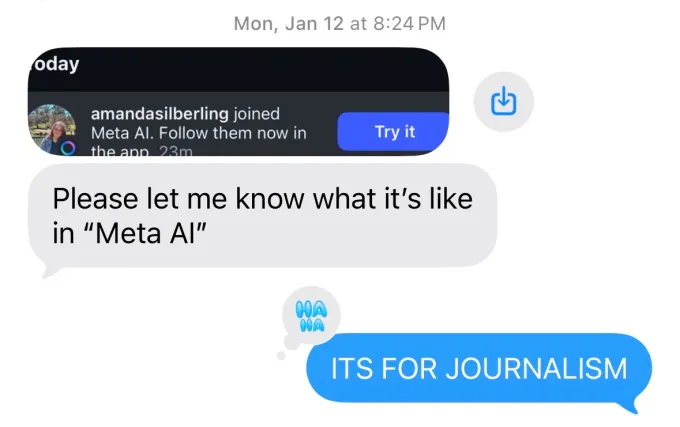
Speaking of embarrassing: imagine a bunch of your friends, family, and strangers you met once in college getting a notification that you use the Meta AI app. I have lived this humiliation, and I am here to warn you that it could happen to you, too.
Meta’s Muse Spark model might be new, but the Meta AI app is not. It came out last April, and at the time, I wrote an article about the app’s launch. As one does when reporting on an app, I downloaded the app. I used it.
At some point, Meta started sending people Instagram notifications about which of their friends were using the Meta AI app, presumably to encourage them to download it. It has been almost a year. I continue to get texts from my friends in which they alert me that Instagram told them I am on the Meta AI app. This is generally considered to be uncool behavior.

In its first month and a half in the App Store, only 6.5 million people had downloaded the app, market intelligence provider Appfigures told us at the time. That’s a lot of people, but not for a company that counts an estimated 42% of the entire world as daily users of at least one of its apps.
Perhaps that’s why in the early days of the Meta AI app, I stuck out on my friends’ Instagram notification feeds. (Yes, your friends will get a whole notification devoted to your use of the app, displayed as prominently as a new follower.)

Things are looking up for the Meta AI app, though. It is seeing a spike in downloads after releasing its revamped chatbot, now charting at No. 5 on the U.S. App Store, up from No. 57, per Appfigures. That’s also why I must warn you now about the horrors you may face if you use this app and Instagram tells your friends.
As much as I don’t want people to know I installed an app with an AI-generated “vibes” feed, this issue runs deeper. Meta’s apps are so interconnected that it’s hard to keep up with what data we’re sharing, where, and with whom. Why would I think that my Instagram mutuals would know I’m on the Meta AI app? (At least X didn’t tell people that I used Grok’s anime waifu — which was also for work.)

In order to access the Meta AI app, you have to log in with a Meta account — so, I joined using the same account I’ve had since I was a teenager, which connects to my Instagram and Facebook. Meta will continue to use whatever I do on Instagram, Facebook, and yes, now even the Meta AI app, to show me targeted ads. So, if I were to confide in Meta AI about an issue with my menstruation, Instagram might show me ads for period panties.
The Meta AI app never asked permission to notify people about my use of the app, nor has it asked if I want my AI chats to be used as advertising fodder. But it doesn’t have to, because I probably implicitly opted into it in some terms of service agreement that I never actually read. I mean, I also learned via Instagram that my brother was weirdly invested in Eurovision last year, since we can all see each other’s liked Reels. We all know too much about each other, and yet, Meta knows even more.
In a sense, I’m lucky that the only thing that people knew about my Meta AI usage was that I was on the app. Some users had unwittingly shared much more incriminating information about themselves: their AI chatlogs.
As a grizzled veteran of the Meta AI app, I can tell you that back in my day (over the summer), Meta experimented with a Discover feed on the app. Meta did not account for the fact that a lot of boomers use its app, and they are sometimes bad at using technology. Combine that with the fact that, since AI is not real, people will use chatbots to discuss things that they find too intimate or embarrassing to share with others. Then, you have a disaster on your hands.
Soon, people like a16z partner Justine Moore began to notice that the Meta AI discover feed was mostly filled with older users who didn’t realize that they were sharing their AI conversations with the world.
Sometimes, these shared conversations were benign: at the time, I encountered a man with a Southern accent who asked, “Hey, Meta, why do some farts stink more than other farts?” In other cases, we saw people share their personal home address, information about medical issues, and intimate concerns about their marriage.
To give Meta some credit, these users did have to manually press publish on these chats. But enough people seemed to accidentally share private information that, clearly, there was a design issue to address. (Meta has since removed this Discover feed.)
At least if using the Meta AI app turns out to be a hot new trend, I will get to rub it in my friends’ faces that I was there first. But I would not bet on that future. There is still that “Vibes” feed, after all.

1: Intelligentsia House Blend
Trendy Intelligentsia coffee isn’t worth the steep price.
Intelligentsia is a Chicago-founded roaster that’s become a widespread specialty coffee brand in grocery stores coast to coast. At $20 for a 12-ounce bag of whole beans at my local Brooklyn grocery store, Intelligentsia House Blend coffee can be considered an investment. The lack of a “roasted by” date on the bag, however, means freshness is a gamble. This tester ended up with a whisper of flavor with three months left on the “best by” date. It lacked any noticeable tasting notes, potentially due to an overstay in the grocery aisle. The Intelligentsia House Blend bag also lacks any tasting note descriptors or instructions whatsoever on the packaging.
Even with low expectations, the beans still produced a bland cup of coffee, firmly placing it in the “low” category. If you’re interested in drinking Intelligentsia coffee, I’d recommend heading to the brand’s coffee shops or purchasing a fresh bag straight from the roaster.
What to try instead: Groundwork
Groundwork’s Organic Bitches Blend was a standout for its deep flavor and notes of dark chocolate and caramel.
For specialty coffee from the grocery store, instead look for brands that include a “roasted by” date, such as Verve or Partners coffee. The closer to the roast date, the better, but because packaging helps protect coffee, it could take three to six months before flavor degradation results in a lackluster brew. Otherwise, Groundwork Organic Bitches Brew was a standout for deep flavor and its notes of dark chocolate and caramel even without a roasted date. It also includes a ratio of coffee to water on the bag for anyone who wants a launching point.
2: Maxwell House House Blend
I’d suggest politely declining your invitation to Maxwell House.
The first sip of Maxwell House House Blend was bitter, and the progressive sips didn’t improve. Like other value-driven blends, this one tastes as if the manufacturer never expected anyone to drink it without copious amounts of cream and sugar. I don’t believe you should need to drown out the notes of burnt beans and organic fillers to make it drinkable.
The Maxwell House instructions recommend only 1 tablespoon for 6 ounces of water. Once the Maxwell House started to cool, the flavor was milder and less offensive, but I didn’t find it more enticing since any true tasting notes fell flat. I also noticed an acidity that made me nervous about a stomachache. For a household brand, I had hoped for a better showing.
What to try instead: Chock Full O’ Nuts Original
Chock Full o’ Nuts’ original blend was a surprise hit among the budget set.
Avoid the kind of coffee that makes people say, “bean juice is not for them.” If you want an affordable, approachable can of coffee, reach for the original Chock Full O’ Nuts for a slightly sweet, mild variety. You could also reach for Lavazza Tierra Organic for a similarly priced medium roast or Café Bustelo for a more robust roast in a familiar canned packaging.
3: Great Value Classic Roast by Walmart
Walmart’s Great Value coffee is cheap for a reason.
The Great Value Classic Roast brand is a generic offering akin to Folgers, where value and quantity are top priorities. I wanted to test this option since Walmart is one of the largest grocery store chains in the US and a staple at my parents’ house. That said, I’d best equate the flavor of this blend with church-basement or airplane coffee. The beans offer a burnt yet bland flavor that begs for extra creamer. Still, the sheer volume is hard to beat at 25.4 ounces per can. When it comes to coffee, I’m a pragmatist, not a purist, so I understand that some of us treat it as fuel rather than a specialty beverage. I’m here to say there’s a better way forward.
What to try instead: Whole Foods Early Bird Blend
Early Bird is one of the best value coffees I tested.
Anyone looking for value should consider subscribing to Whole Foods Market coffee deliveries for an additional discount and savings on both time and gas. Great Value Classic Roast isn’t 100% arabica, so it likely contains cheaper, more caffeinated robusta beans. Another option is Café Bustelo espresso grounds for a rich cup that still packs plenty of kick thanks to its robusta blend.
4: Chock Full o’ Nuts French Roast
Chock Full o’ Nut’s French roast left something to be desired.
Chock Full o’ Nuts is, for many, an iconic grocery store coffee brand, yet it doesn’t have the ubiquity of Folgers or Maxwell House. My taste test revealed a slightly sweet finish and a very mild flavor. I anticipated a more robust cup of coffee; however, that wasn’t the case, despite the French Roast descriptor. The “best by” date on the can I purchased had five months remaining. Based on that alone, I can’t recommend buying this one if you’re expecting something hearty and deep-roasted, as the packaging suggests. The fact that it’s still quite drinkable means it’s a safer option than some others on this list.
What to try instead: Café Bustelo
Café Bustelo is versatile and smooth — a true dark roast.
If you’re looking to try a dark roast, then grab a can of Cafe Bustelo, which I detailed in full in the “best” grocery store coffee list above. It’s versatile, smooth and a true dark roast as an espresso blend. Of course, you can also stick with the original Chock Full O’ Nuts blend for a sweet yet nutty flavor in a canned grocery store coffee, too.
5: Eight O’Clock Original Blend
I found Eight O’clock’s signature blend flat and acidic.
The Eight O’Clock Original blend ground coffee was passable, though uninspired. The medium roast shares a certain sweetness with Chock Full O’ Nuts but offers a more robust finish. I started with a small, half-batch since the bag recommends 2 to 3 tablespoons of coffee to 12 ounces of water. I then tried a full 2.5:12 oz ratio. The resulting brew was somewhat flat and acidic, with a thin body and a flavor profile that was immediately forgettable after each sip. The “best by” date on the bag was eight months out, suggesting that despite the manufacturer’s optimistic shelf-life projection, the quality had not held up.
What to try instead: Lavazza Tierra Organic
Lavazza’s Tierra blend provided a robust flavor without much bitterness.
For something reasonably priced and available at big-box stores, try Lavazza Tierra Organic coffee. A ratio of 1 tablespoon of coffee to 6 ounces of water provided a robust flavor without bitterness, maintaining a heavier roast profile than the light roast, with full-bodied descriptors noted on the bag. Alternatively, you can rely on Caribou Coffee Daybreak Blend in the Midwest or Peet’s Coffee House Blend at most big-box grocery stores.

Meta has started removing ads from law firms seeking clients for social media addiction lawsuits, just weeks after a jury found Meta and YouTube negligent in a landmark case involving harm to a young user. “Lawyers across the country now are seeking new plaintiffs, in the hopes of bringing a class action lawsuit that could result in lucrative verdicts,” reports Axios. From the report: Axios has identified more than a dozen such ads that were deactivated today, some of which came from large national firms like Morgan & Morgan and Sokolove Law. Almost all of them ran on both Facebook and Instagram. Some also appeared on Threads and Messenger, plus Meta’s Audience Network — which distributes ads to thousands of third-party sites.
One such ad read: “Anxiety. Depression. Withdrawal. Self-harm. These aren’t just teenage phases — they’re symptoms linked to social media addiction in children. Platforms knew this and kept targeting kids anyway.” A few of the ads still remain active, including some that were posted earlier today. “We’re actively defending ourselves against these lawsuits and are removing ads that attempt to recruit plaintiffs for them,” a Meta spokesperson said in a statement. “We will not allow trial lawyers to profit from our platforms while simultaneously claiming they are harmful.”


OpenAI is making moves to try and court more developers and vibe coders (those who build software using AI models and natural language) away from rivals like Anthropic.
Today, the firm arguably most synonymous with the generative AI boom announced it will begin offering a new, more mid-range subscription tier — a $100 ChatGPT Pro plan — which joins its free, Go ($8 monthly), Plus ($20 monthly) and existing Pro ($200 monthly) plans for individuals using ChatGPT and related OpenAI products.
OpenAI also currently offers Edu, Business ($25 per user monthly, formerly known as Team) and Enterprise (variably priced) plans for organizations in said sectors.
Why offer a $100 monthly ChatGPT Pro plan?
So why introduce a new $100 ChatGPT Pro plan, then?
The big selling point from OpenAI is that the new plan offers five times greater usage limits on Codex, the company’s agentic vibe coding application/harness (the name is shared by both, as well as a lineup of coding-specific language models), than the existing, $20 monthly Plus plan, which seems fair given the math ($20×5=$100).
As OpenAI co-founder and CEO Sam Altman wrote in a post on X: “It is very nice to see Codex getting so much love. We are launching a $100 ChatGPT Pro tier by very popular demand.”
However, alongside this, OpenAI’s official company account on X noted that “we’re rebalancing Codex usage in [ChatGPT] Plus to support more sessions throughout the week, rather than longer sessions in a single day.”
That sounds a lot like OpenAI is also simultaneously reducing how much ChatGPT Plus users can use its Codex harness and application per day.
What are the new usage limits for the new $100 ChatGPT Pro plan vs. the $20 Plus?
So, what are the current limits on the $20 Plus plan? The new Pro plan gives you 5X greater than…what?
Turns out, this is trickier than you’d think to calculate, because it actually varies depending on which underlying AI model you are using to power the Codex application or harness, and whether you are working on code stored in the cloud or locally on your machine or servers.
OpenAI’s Developer website underwent several updates today, so we’ve only reflected the latest pricing structure and offerings below as of Thursday, April at 10:45 pm ET. It notes that for individual users, Codex usage is categorized by “Local Messages” (tasks run on the user’s machine) and “Cloud Tasks” (tasks run on OpenAI’s infrastructure), and those limits share a five-hour rolling window.
It also says additional weekly limits may apply. The current Codex pricing page now shows lower displayed usage ranges than the older version, and it measures Code Reviews in a five-hour window rather than per week. For Pro 5x specifically, OpenAI says the currently shown limits include a temporary 2x usage boost that ends May 31, 2026.
ChatGPT Plus ($20/month)
-
GPT-5.4: 20–100 local messages every 5 hours.
-
GPT-5.4-mini: 60–350 local messages every 5 hours.
-
GPT-5.3-Codex: 30–150 local messages and 10–60 cloud tasks every 5 hours.
-
Code Reviews: 20–50 every 5 hours.
ChatGPT Pro 5x ($100/month)
-
GPT-5.4: 200–1,000 local messages every 5 hours.
-
GPT-5.4-mini: 600–3,500 local messages every 5 hours.
-
GPT-5.3-Codex: 300–1,500 local messages and 100–600 cloud tasks every 5 hours.
-
Code Reviews: 200–500 every 5 hours.
Note: The limits shown for Pro 5x include a temporary 2x usage boost that ends May 31, 2026.
ChatGPT Pro 20x ($200/month)
-
GPT-5.4: 400–2,000 local messages every 5 hours.
-
GPT-5.4-mini: 1,200–7,000 local messages every 5 hours.
-
GPT-5.3-Codex: 600–3,000 local messages and 200–1,200 cloud tasks every 5 hours.
-
Code Reviews: 400–1,000 every 5 hours.
-
Exclusive access: Includes GPT-5.3-Codex-Spark in research preview for ChatGPT Pro users only. OpenAI says it has its own separate usage limit, which may adjust based on demand.
And as OpenAI’s Help documentation states:
“The number of Codex messages you can send within these limits varies based on the size and complexity of your coding tasks, and where you execute tasks. Small scripts or simple functions may only consume a fraction of your allowance, while larger codebases, long running tasks, or extended sessions that require Codex to hold more context will use significantly more per message.”
The larger strategic implications and context
OpenAI’s sudden move toward the $100 price point and expanded agentic capacity comes amid the unprecedented financial ascent of its chief rival, Anthropic.
Just days ago, Anthropic revealed its annualized run-rate revenue (ARR) has topped $30 billion, surpassing OpenAI’s last reported ARR of approximately $24–$25 billion.
This growth has been fueled by the massive adoption of Claude Code and Claude Cowork, products that have set the benchmark for enterprise-grade autonomous coding.
The competitive friction intensified on April 4, 2026, when Anthropic officially blocked Claude subscriptions from being used to provide the intelligence for third-party agentic AI harnesses like OpenClaw.
To be clear, Anthropic Claude models themselves can still be used with OpenClaw, users just must now pay for access to Claude models through Anthropic’s application programming interface (API) or extra usage credits, rather than as part of the monthly Claude subscription tiers (which some have likened to an “all-you-can eat” buffet, making the economics challenging for Anthropic when power users and third-party harnesses like OpenClaw consume more than the $20 or $200 monthly user spend on the plans in tokens).
OpenClaw’s creator, Peter Steinberger, was notably hired by OpenAI in February 2026 to lead their personal agent strategy, and has, since joining, actively spoken out against Anthropic’s limitations — advising that OpenAI’s Codex and models generally don’t have the same restrictions as Anthropic is now imposing.
By hiring Steinberger and subsequently launching a Pro tier that provides the high-volume capacity Anthropic recently restricted, OpenAI is effectively courting the displaced OpenClaw community to reclaim the professional developer market.

from the dominating-the-skies dept
Elon Musk is desperate to dominate the Low-Earth-Orbit (LEO) satellite broadband market. So is Jeff Bezos. And now the two billionaires are engaged in proxy fights at Trump’s FCC over who’ll get the honor.
Amazon’s LEO offering, Project Leo, is significantly behind Musk’s Starlink, and has been rushing to build out its LEO satellite constellation. To slow down their pace, Musk’s Starlink has started complaining to the FCC, insisting that Amazon violated orbital debris requirements by launching satellites into orbital altitudes that are too high, increasing the risks to other satellites and spacecraft.
Amazon has responded by basically saying Musk’s Starlink is lying to slow the arrival of a competitor to market:
“SpaceX only objected to the launch parameters after moving its Starlink satellites into nearby altitudes, Amazon said. Changing the altitude of a recent Leo launch would have delayed it by months, according to Amazon. Both Amazon and SpaceX have accused each other of using Federal Communications Commission proceedings to delay the other’s satellite launches at various times over the years.”
Hoping to avoid harming “free market innovation,” it took years for the FCC to finally recently implement some bare bones “space junk” LEO collision guidance, though enforcement has been sporadic, and I’m doubtful two billionaire Trump donors will ever see much in the way of accountability.
Both billionaires are hoping to leverage their ongoing support of Trump to their own benefit. Both have already had significant success on that front; Musk and Bezos convinced the Trump administration to redirect billions in infrastructure bill subsidies (earmarked for reliable, faster fiber) over to their LEO satellite broadband businesses for service they already planned to deploy.
I’m not inclined to believe either billionaire or their companies. Nor am I inclined to believe that FCC boss Brendan Carr has the integrity or competence to manage this dispute or to protect the public longer term. Starlink has recently seen several satellites blow up in orbit and has been very murky about the reasons for it. Tens of thousands more LEO satellites are slated for launch in the next few years.
The grand irony is that the mad dash toward LEO satellite broadband doesn’t really deliver on the promise of significantly better broadband. LEO satellite connectivity is great for folks who have no other option, but the technology comes with a long list of caveats.
The resulting networks will be too congested to truly scale or provide real competition for local telecom monopolies. The resulting services are also routinely too expensive for the folks who currently can’t afford access. Then there’s the problem of LEO satellite launches harming astronomy research and the ozone layer, issues I suspect won’t be a priority for Bezos, Musk, or Carr.
I’d expect to see much more orbital (and terrestrial consumer) chaos in the years to come, given absolutely none of these folks tend to think too deeply about the public interest.
Filed Under: brendan carr, elon musk, fcc, jeff bezos, leo, leo satellites
Companies: amazon, project leo, spacex, starlink
Microsoft has rolled out a Notepad update for Windows Insiders that removes the Copilot branding and icon from within the app, Windows Central has reported. The old Copilot menu has been replaced with “writing tools,” but it’s worth noting that the tools are still powered by AI and are pretty much identical to the selection found in the old menu. Microsoft has just replaced the Copilot button with a pen icon. In addition, the company has removed mentions of AI in the Settings menu and has placed the option to disable the AI-powered writing tools within the “Advanced features” section.
The company first announced that it was dialing back its Copilot branding last month, most likely in response to all the criticisms against the AI assistant. It’s not very well-liked, with people complaining that Microsoft is forcing them to use the assistant inside all its apps and that Copilot doesn’t provide a consistent experience across different applications. “You will see us be more intentional about how and where Copilot integrates across Windows,” said Windows and Devices EVP Pavan Davuluri. Microsoft also promised to remove “unnecessary Copilot entry points,” starting with Notepad, Snipping Tool, Photos and Widgets. According to The Verge, Microsoft has already stopped showing the Copilot button when selecting areas to capture with the Snipping Tool, as well. Clearly, the company has been making good progress on yanking at least the visual reminders of Copilot from its apps.

While Aventon is known first and foremost as an ebike brand, the company started by making fixies in 2013. That gives it some bona fides when it comes to making enjoyable rides for experienced cyclists. (In addition to the Current ADV, there’s also a higher-end model, the Current EXP, with a more expensive carbon frame and better components.) Since its first venture into e-MTBs with the Ramblas in 2024, the company has continued to develop very nicely specced electric mountain bikes for the price.
The designers behind the newest iterations did a masterful job. The Current ADV looks 100 percent the part of contemporary mountain bike. With its 6061 aluminum frame, SRAM Eagle groupset, tubeless-ready Maxxis Minion tires wrapping a pair of double-walled 29-inch wheels, a 170-mm X Fusion Manic dropper post, a Rockshox Psylo Gold front suspension that boasts 150 mm of travel, and a Rockshox Deluxe Select+, it’d be easy to confuse the Current ADV for a traditional analog mountain bike.
Photograph: Michael Venutolo-Mantovani

It’s worth noting that while the motor is proprietary to Aventon, the components are not. It might be difficult to get your local bike shop to look at the battery and motor, but assuming those are fine, it won’t be hard to swap anything else out should you need to repair it.
Despite its design and ride feel, all of which can make you easily forget you’re riding electric, the Current ADV is a class 1 e-MTB (which can be toggled to a class 3 via the brand’s app), and one that gives hours and hours of riding on a single charge.
The 800-watt-hour battery is tucked neatly into the bike’s relatively small downtube, giving a claimed range of up to 105 miles. Of course, I didn’t get nearly that, as I was constantly switching through any of the Current ADV’s five power modes (Auto, Eco, Trail, Turbo, and a new, 30-second Boost Mode for extra torque on big hills). Still, the longest day I spent in the bike’s super-comfy Selle Royal SRX saddle was about three hours. In that time, the battery dropped only about 20 percent.
Eyes Up
The biggest flaw I found in the Current is small and seemingly simple, but it nonetheless had a major impact on my rides. That is the fact that, when clicking through power settings, the bike beeps, and all those beeps sound the same.
When I’m mountain biking (and probably when you’re mountain biking, too), the last thing I want to do is to take my eyes off the trail. Having those beeps be the exact same tone meant I instinctively kept looking down at the top-tube-mounted display to see which mode I was in.
Tech
Clarus Concerto MKII Power Conditioner Debuts at AXPONA 2026 With Ultra Premium Design and Price to Match
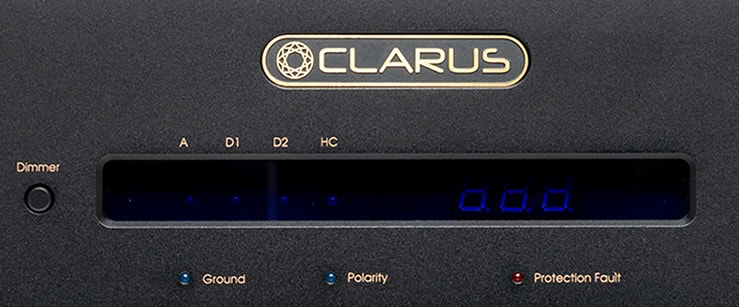
Clarus isn’t chasing the budget crowd at AXPONA 2026, and with the debut of the Concerto MKII power conditioner, it’s making that crystal clear. Clean, stable power isn’t an audiophile myth; it directly impacts noise floor, dynamic range, and the overall coherence of a system. Your AC power isn’t perfectly clean. It can carry noise from other devices on the same circuit; dimmers, refrigerators, and switching power supplies, along with voltage fluctuations, spikes, and grounding issues that can impact how your system performs.
Clarus has built a serious reputation in high-performance audio, particularly with its well-regarded cable lineup, and the Concerto MKII leans into that credibility with a no-compromise approach to power delivery and conditioning. It’s not cheap—far from it. In fact, the price lands well beyond what most people have ever considered spending on an entire hi-fi system. But for those running upper five-figure or six-figure setups, where every upstream variable matters, this is exactly the kind of component that could make sense—and one worth hearing before dismissing outright.
Building on the original Concerto, the MKII increases current capacity, refines the filtering architecture, improves grounding, and optimizes power distribution. The goal is lower noise without restricting current delivery or altering the electrical behavior that high-performance audio systems rely on.
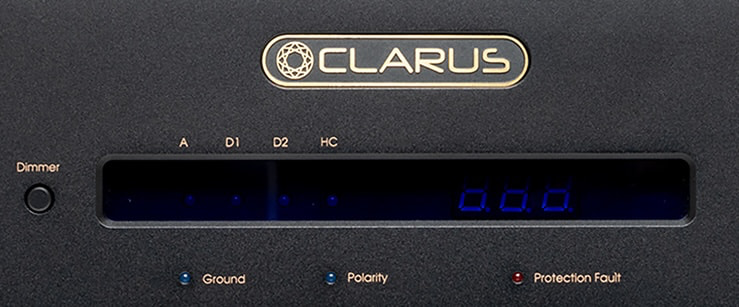
The Concerto MKII is built on the idea that reducing noise should not come at the expense of dynamics or tonal integrity. Rather than chasing maximum attenuation, its design focuses on the types of noise that actually propagate through real-world audio systems, aiming to lower interference while preserving musical coherence and ensuring unrestricted current delivery for analog, digital, and high-current components.
Clarus Repositions the Concerto MKII for a Different Class of System
The original Concerto launched in 2019 at $4,000, but rising material, manufacturing, and development costs would push that same design closer to $8,000 today. Rather than simply reissue it at a higher price, Clarus chose to develop the MKII as a redesigned successor with updated performance goals. The result is a significantly more expensive product at $12,000, positioned not as a direct replacement, but as a step up aimed at higher-end systems where incremental improvements in noise reduction and power delivery are more likely to be realized.
“Many power conditioners reduce noise by constraining current,” says Jay Victor, Concerto MKII power conditioner design engineer. “The MKII takes a different approach by targeting acoustically destructive noise while preserving the dynamics and harmonic structure that make music feel alive.”
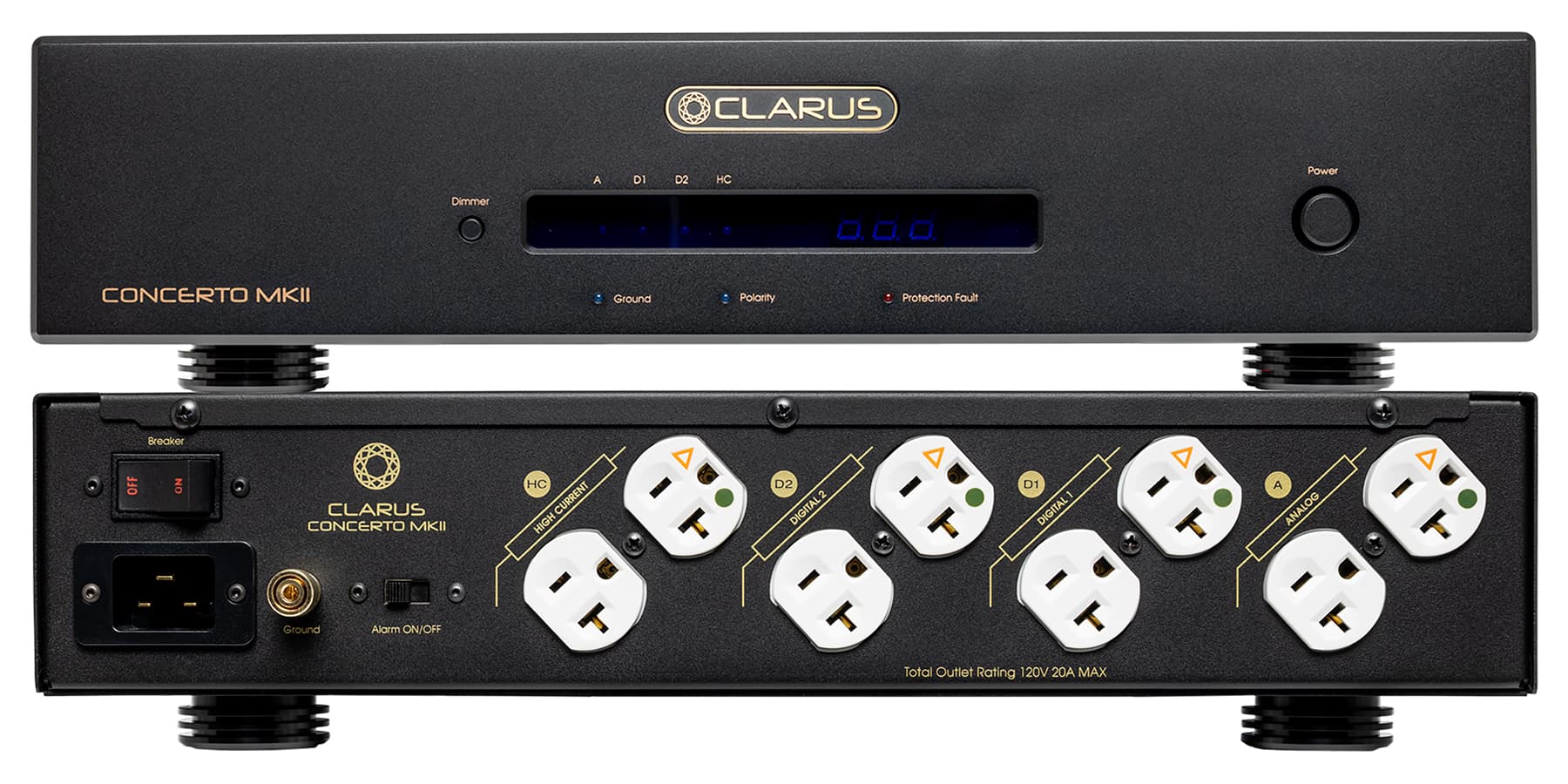
Inside the Concerto MKII
At the core of the Concerto MKII is an application-specific filter architecture that tailors its approach to the electrical demands of connected components. Sensitive analog gear is fed through high-permeability common-mode “Clarus FluxCore” filtering, designed to reduce ground-referenced noise without restricting current or compressing dynamics.
Digital Optimized Power Outlets: Four outlets labeled “Digital” use a combination of differential-mode and common-mode “Clarus FluxCore” filtering to suppress high-frequency noise generated by digital sources.
High Current Power Outlets: Two outlets labeled “High Current” are equipped with “Clarus FluxCore-HC” filtering, engineered to reduce noise while supporting large transient current demands and limiting both conducted and radiated interference.
Analog Power Outlets: Two outlets labeled “Analog” utilize high-permeability “Clarus FluxCore” nanocrystalline inductor technology to deliver low-noise power tailored for sensitive analog components.
FluxCore Filtering: Designed to address common AC line imperfections such as noise and interference, Clarus’ FluxCore filtering aims to stabilize incoming power without restricting current delivery, helping reduce variables that can impact system performance.
Oil-Filled Capacitors: Newly added oil-filled capacitors are used to improve thermal stability and long-term reliability in the analog and high-current sections.
High Current Tolerance: The Concerto MKII features full 20-amp internal circuitry, allowing it to operate on both 15-amp and 20-amp residential lines without introducing current limitations. A star-ground architecture and isolated-ground outlets are employed to reduce ground noise and minimize circulating currents.
Internal Power Distribution: Power is distributed via heavy-gauge copper bus bars to reduce voltage drop and support high transient current demands.
System Protection: Protection is handled by a hydraulic-magnetic circuit breaker designed to tolerate high inrush currents without nuisance tripping. Constrained-layer damping is applied within the chassis to reduce mechanically induced vibration from internal components, helping maintain stable operation.
Low Noise Performance: Together, these design elements aim to provide a stable, low-noise electrical foundation that allows connected components to operate consistently under real-world conditions.
By addressing electrical noise based on its source and how it propagates, and by aligning filtering, grounding, and current delivery with the needs of each connected component, the Concerto MKII is designed to reduce interference without imposing a distinct sonic character. The intended result is lower background noise, improved low-level detail, greater dynamic contrast, and better clarity during complex passages—without restricting system performance.
Clarus Concerto MKII Specifications
| Clarus Model | Concerto MKII |
| Product Type | Power Conditioner |
| Price | $12,000 |
| Applications | High-end audio, home theater, analog and digital systems |
| Power Rating | 1800 Watts / 15 Amps (20 Amps Max) |
| Number of Power Outlets | 8 Outlets Total |
| Power Outlet Zones | 2 High Current Optimized 4 Digital Optimized 2 Analog Optimized |
| Filtering Technology | Clarus-Core C-Core and HC-Core inductors |
| Line Voltage | 120VAC 15A, 50/60 Hz |
| Spike Protection Modes | L-N, N-G, L-G |
| Maximum Surge Current | 80 kA (Line-to-Neutral) |
| Spike Clamping Voltage (VMAX) | 395V |
| Max Spike Energy (Joule) | L-N = 960 Joules |
| Voltage Monitoring | Under/over-voltage shutdown with auto reset |
| Safety Features | TMOV (Thermally Protected Metal Oxide Varistor) surge suppression, thermal breaker, fault indicators |
| Chasis Construction | Vibration-controlled housing with cable support bar |
| RoHS (Restriction of Hazardous Substances) | Yes |
| Dimensions (HWD) | 3.5” X 19” X 12.75” |
| Net Weight | 19 lbs. |
| Warranty | 3 Years (Limited) |
| Package Contents | 1 x CLARUS CONCERTO MKII 1 x Installation & Operation Guide 1 x Rear Cable Support Bracket NOTE: Power Cable not included |
The Bottom Line
Power conditioning sits in that uncomfortable gray area between necessity and obsession, and the Concerto MKII doesn’t try to pretend otherwise. What Clarus is offering here is not a universal upgrade, but a highly targeted solution for systems where power quality is already a known variable and the rest of the chain is resolving enough to expose it.
What makes the Concerto MKII stand out is its application-specific filtering approach, separation of outlet types, and focus on maintaining current delivery rather than restricting it. That’s a meaningful distinction in a category where some designs can choke dynamics in the name of noise reduction. The inclusion of 20-amp internal architecture, star grounding, and heavy-duty power distribution shows that this is built for serious systems, not entry-level setups.
Who is this for? Not the average listener. Not even most enthusiasts. This is aimed squarely at owners of upper five-figure and six-figure systems, in environments where electrical noise, grounding issues, or inconsistent power are real concerns—not theoretical ones.
Is it worth $12,000? For most people, no. For a small group chasing the last few percent of performance and already invested deep enough that power delivery becomes part of system tuning, it might be. The key is knowing which side of that line you’re on before writing the check.
Price & Availability
The Clarus Concerto MKII Power Conditioner has a suggested retail price of $12,000 (not including power cable). It will become available during Q2 2026 through authorized Clarus retailers.
The Clarus Concerto MKII will be debuting at AXPONA 2026, April 10 – 12, in support of the Harman Luxury Group.
Related Reading:
Amazon’s satellite-based internet service, Leo, will enter service by mid-2026, so says company CEO Andy Jassy. Writing in his annual letter, Jassy claimed Leo would offer download speeds of up to 1Gbps, far more than what Starlink presently offers. Sadly, Amazon declined to offer any more details about what that mid-2026 service would look like. But given select partners have already been kicking Leo’s tyres for a while, we can only hope.
The mega-retailer is making some grand promises, including faster up and download speeds, cheaper cost and direct integration with Amazon’s other products. Of course, the company can also sell itself on the fact it’s a satellite internet provider not owned by Elon Musk. But it will have to buck its ideas up fast, given how far behind in its deployment of satellites it is.
— Daniel Cooper
The other big stories this morning
It’s a showcase for the Snapdragon X2 Elite.
Devindra Hardawar for Engadget
ASUS’ ZenBook A16 is a 16-inch ultraportable designed to go toe-to-toe with LG’s Gram Pro 16. It’s equipped with Qualcomm’s Snapdragon X2 Elite and designed to address the flaws Devindra Hardawar found in last year’s ZenBook A14. Did it succeed? You’ll have to read his review to get the full story, but he’s certainly happy to have spent the last week using this thing.
It will begin at the start of 2027.
Greece will ban under 15s from accessing social media, Prime Minister Kyriakos Mitsotakis has announced. Like many nations both in Europe and beyond, officials are concerned about the effect social media is having on children’s mental and physical health. The big platforms will be in charge of enforcing the ban, backed up by the hefty punishments enabled by the Digital Services Act.
Know what doesn’t lose support after a few years? Books.
Amazon
If you’re still using a Kindle or Fire tablet made in 2012 or before, then it’s going to get a little less useful on May 20. Amazon is discontinuing support for those earlier models on that date, removing the ability to purchase, borrow or download new titles. Thankfully, whatever is on the hardware already will remain, so don’t fret if you’re only a third of the way through Remembrance of Things Past.
Fancy, but heavy.
Billy Steele for Engadget
Billy Steele has been putting Fender Audio’s new speakers through their paces to find what can only be described as a mixed bag. Excellent audio quality and a wide variety of inputs get high praise, but the heavy weight, exposed wood and limited battery life all dent the paintwork.
About time too.
WhatsApp’s CarPlay interface isn’t the most elegant or easy way to keep in touch with your friends while driving. Meta has, however, given the UI a little polish to help make it a little easier to get something useful done without pulling your attention from the road.
The creator economy loves a neat little fairy tale: one magnetic person, one camera, one lucky break. It’s a great story. It’s also nonsense.
A lot of so-called organic growth has been industrialized for years. The Hollywood Reporter recently showed how major creators and media companies relied on armies of clippers to carve long videos into viral bait, turning audience growth into a volume game. And that operation never stopped with clippers. It sprawled into a wider layer of digital labor, from editors and thumbnail makers to virtual assistants handling scheduling, posting, inbox cleanup, and brand admin.
Many of those workers sit in the same countries that power global remote services, including the Philippines and India, where outsourcing still employs millions. The Philippines’ IT-BPM sector closed 2024 with 1.82 million jobs and $38 billion in revenue, while India’s tech sector workforce reached 5.43 million in FY24.
The creator economy didn’t invent this setup. It simply borrowed it, gave it ring lights, and called it hustle.

The creator economy built a labor pipeline it could underpay
What looked like spontaneity was often logistics with good lighting. Influencers didn’t just appear everywhere on TikTok, Reels, and Shorts by force of personality. They paid for a production chain that could cut clips, resize videos, write captions, schedule posts, and keep the content conveyor belt moving.
That arrangement worked because the labor was affordable and mostly invisible. Now the same businesses that benefited from it are turning to tools like OpusClip, which promise to turn long videos into short clips and publish them across platforms with a click. The factory floor was always there. AI just wants fewer people on it.

AI usually doesn’t kill the job first. It cheapens it
This is the part the booster crowd likes to skip. A job usually doesn’t disappear in one dramatic moment. It gets stripped for parts first.
The editor becomes the person checking AI cuts, fixing captions, swapping thumbnails, cleaning timestamps, repackaging clips, and posting them across five platforms because the software still does a few things badly enough to be embarrassing. Upwork’s 2026 skills report puts a number on the shift: demand for AI video generation and editing rose 329% year over year.
That doesn’t mean human labor is gone. It means human labor is being pushed into babysitting the machine that’s learning how to absorb more of the work.

The next shock lands in outsourcing hubs, not just creator mansions
The easy version of this story is a rich influencer replacing an editor in Los Angeles. The more honest version reaches much farther. In Latin America, regional platforms such as Workana grew by serving workers shut out by language and market barriers on global platforms, with the World Bank describing Workana as the largest freelance and remote work platform in the region.
So when AI starts squeezing this layer of work, the fallout won’t stop at a few creator agencies or freelance editors in big US cities. It’ll hit the remote workers in outsourcing economies who were told digital work was the safer future. The same system that turned customer support and back-office tasks into globally tradable labor did the same thing to creator work. It chopped the job into repeatable pieces, sent them abroad, and rewarded whoever could do them fastest and cheapest.

That’s why the clipping story matters beyond creator gossip. AI isn’t crashing into some pristine meritocracy. It’s tightening the screws on a system that was already built to make workers interchangeable.
The creator economy was perfectly happy with invisible human labor when it was cheap and easy to ignore. Now it’s discovering that the cleanest version of “organic reach” is one that no longer has to pay the army behind it.

Simplechain lays new rails for Asia’s onchain RWA freight

UK may not be able to deal with Russian ‘threat’ to Scotland, Swinney says

Guess The ICONIC Rom-Com With Halle Bailey And Kat Coiro

Why Israel is blocking foreign journalists from entering

Bitcoin: We’re Entering The Most Dangerous Phase

Alan Cumming Brands Baftas Ceremony A ‘Triggering S**tshow’

Daily Market Coverage Apr. 8, 2026 9AM-11AM (ET) | Yahoo Finance

What is Finance? | Definition Financial Company|Financial Information| Accounts Video #financial

Psalm 23 Prayer for Financial Prosperity and Abundance #Psalm23 #DivineProtection #FaithInGod
-

 Fashion7 days ago
Weekend Open Thread: Spanx – Corporette.com
-

 Business5 days ago
Three Gulf funds agree to back Paramount’s $81 billion takeover of Warner, WSJ reports
-

 Sports6 days ago
India men’s 4x400m and mixed 4x100m relay teams register big progress | Other Sports News
-

 Business6 days ago
Expert Picks for Every Need
-

 Tech3 days ago
How Long Can You Drive With Expired Registration? What Florida Law Says
-

 Business5 days ago
No Jackpot Winner, Prize to Climb to $231 Million
-

 Fashion4 days ago
Massimo Dutti Offers Inspiration for Your Summer Mood Board
-

 Fashion3 days ago
Let’s Discuss: DEI in 2026
-

 Crypto World2 days ago
Bitcoin recovers as US and Iran Agree a Ceasefire Deal
-

 Business6 days ago
Akebia Therapeutics, Inc. (AKBA) Discusses Pipeline Progress and Strategic Focus on Kidney Disease Treatments at R&D Day – Slideshow
-

 Crypto World1 day ago
Canary Capital Files SEC Registration for PEPE ETF
-

 Politics6 days ago
The UK should not pay a penny in slavery reparations
-

 Tech4 days ago
Samsung just gave up on its own Messages app
-

 Tech4 days ago
Haier is betting big that your next TV purchase will be one of these
-

 Tech7 days ago
Flat tire? Dead battery? Speedy’s serves stranded Seattle riders as a quicker e-bike picker-upper
-

 Fashion7 days ago
Weekly News Update, 4.3.26 – Corporette.com
-
Sports7 days ago
A Kevin O’Connell Theory Can Now Be Retired
-

 NewsBeat7 days ago
Kemi Badenoch talks ‘spring cleaning’ Reform defections
-

 Tech4 days ago
Gamer Restores the Original PlayStation Portal From Two Decades Ago
-

 Tech4 days ago
The Xiaomi 17 Ultra has some impressive add-ons that make snapping photos really fun
You must be logged in to post a comment Login