Connect with us
DAPA Banner

Tech

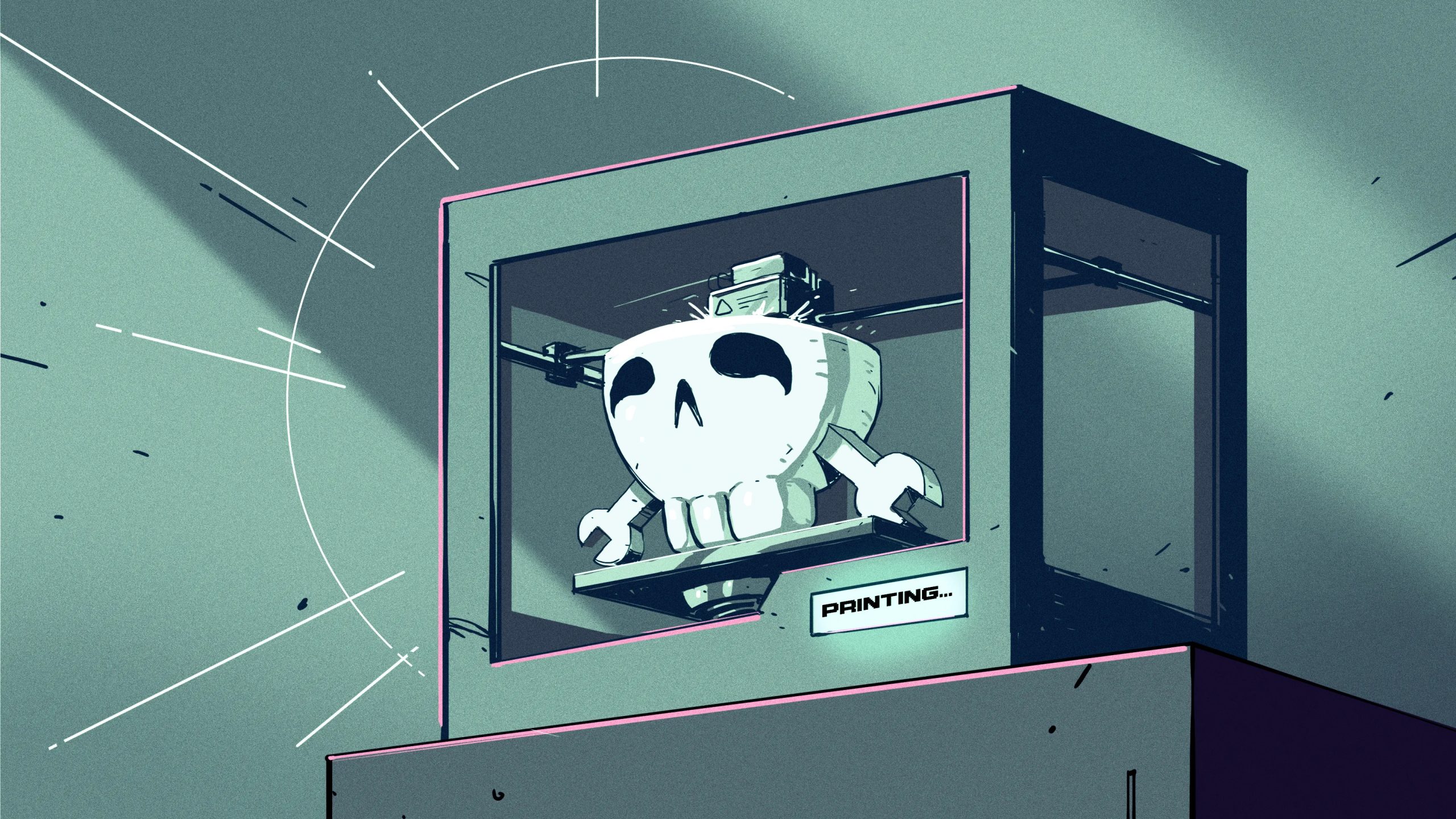
The Joys Of 3D Printing

Published

on

Al and I were talking on the podcast today about a sweet 3D printed wide-format camera build, and we got to musing on why we 3D-print.

For Al, it’s an opportunity to experiment with 3D printing itself: tweaking his machines to get the best performance out of them. Other people make small, functional objects that they need in their daily life, like bag clips or spare parts for broken appliances. Some folks go for the ornamental or the aesthetic. The kids in my son’s class all seem obsessed with sci-fi props and fidget toys. The initial RepRap ideal was to replace all commercial fabrication with machines owned by the individual, rather than by companies – it was going to be Marxist revolutionary.

But there’s another group of 3D printer enthusiasts that I think doesn’t get enough coverage, and I’m going to call them the hobbyist industrial designers. These are the people who design a custom dog-poop-bag holder that exactly fits their extra-wide dog leash, not because they couldn’t find one that fit in the pet store, but because it’s simply fun to design and fabricate things. (OK, that’s literally me.)

It’s fun to learn CAD tools, to learn about how things are designed, how they work, and how to manufacture them at least in quantity one. Dreaming, designing, fabricating, failing, and repeating until you get it right is a great joy. And then you get to use the poop-bag holder every day for a few years, until you decide to refine the design and incorporate the lessons learned on the tough streets of practical use.

Advertisement

Of course none of this is exclusive to 3D printing. There were always people who designed-and-built things in the metal machine shop, or made their creations out of wood. In that sense, the 3D printer is just another tool, and the real fun isn’t in using the 3D printer, but rather in the process of bringing things out of your mind and into the world. So maybe there is nothing new here, but the latitude that 3D printing affords the hobby designer is amazing, and that makes it all the more fun, and challenging.

So do you 3D print for necessity, to stick it to the man, to pimp your printer, for the mini-figs, or simply for the joy of the process of making things? It’s all good. 3D printing is a big tent.

Source link

Advertisement
Continue Reading
Click to comment

You must be logged in to post a comment Login

Leave a Reply

Tech

Sony to phase out "PlayStation Network" branding as early as this fall

Published

on


Sony reportedly sent an email to developers informing them of its decision to phase out the “PlayStation Network” and “PSN” branding across its platform, ostensibly to “properly capture the breadth of our evolving digital services.” The company insists the changes will be “purely visual” and will not introduce any technical…
Read Entire Article
Source link

Continue Reading

Tech

Twitter turned 20 and I feel nothing

Published

on

Twitter is officially 20 years old. In another reality, that might make me kind of nostalgic. I’ve been lurking and scrolling and tweeting for 16 years; most of my adult life. There was a time when Twitter was a place where some internet strangers became my IRL friends, when I was excited to “live-tweet”. When my infinitely more well-adjusted friends would send me memes, I would smugly say “I saw that on Twitter days ago.”

Twitter stopped being that place a long time ago, but I don’t have any nostalgia for it. I don’t really feel anything at all, actually.

Because I can already hear the comments: Yes, I’m still on X. I don’t spend as much time there as I did a decade ago, but it’s still quite a lot of time, an unhealthy amount, if I’m being honest. My job is to report on social media companies, so I keep (doom)scrolling. That’s what I tell myself anyway.

A few of my favorite posters are still around. Dril’s still got it. The memes are still, occasionally, good, even though X’s recommendation algorithm seems to prefer pointing me toward endless AI slop, boring hot takes from thirsty mid-tier tech execs and blatant engagement bait. X’s algorithm — what little we can learn about it, anyway — now relies on Grok’s predictions about what you’ll like.The same Holocaust-loving Grok that has spewed racism and referred to itself as MechaHitler and declared Elon Musk “the single greatest person in modern history.” The same Grok that allegedly generated thousands of images of child abuse material. Hey @grok is that true?

Advertisement

X is not Twitter but it’s also not not-Twitter. Last year, an online marketplace startup bought the 560-pound Twitter bird that once adorned the company’s San Francisco office and blew it up in a Nevada desert surrounded by Tesla CyberTrucks as part of an elaborate publicity stunt. Dumb? Yes. But also a somehow fitting adieu for “Larry.”

It’s been 20 years since Jack Dorsey sent the first-ever tweet, which was never even a good tweet anyway. It’s been five years, by the way, since he turned that tweet into an NFT (remember NFTs??) and auctioned it for nearly $3 million. It’s now functionally worthless. Another chapter in Dorsey’s confusing, complicated legacy.

Source link

Advertisement
Continue Reading

Tech

Sunday Reboot: MotionVFX, celebrations, and questionable updates

Published

on

In this week’s “Sunday Reboot,” AirPods Max 2 stretches the definition of the spec-bump update, the MotionVFX acquisition could benefit Creator Studio, and even more Apple celebrations.

Large headphones layered in pastel colors over an outdoor Apple event with dancers in white costumes and a cheering crowd, plus a bold black circular logo with a white stylized M
MotionVFX, AirPods Max 2, and a performance in China.

Sunday Reboot is a weekly column covering some of the lighter stories within the Apple reality distortion field from the past seven days. All to get the next week underway with a good first step.
This week, Apple lost in court but avoided another Apple Watch ban over blood oxygen patents, was dragged into a legal fight over AI data sourcing, and it came under fire for blocking some vibe coding apps in iOS.
Continue Reading on AppleInsider | Discuss on our Forums

Source link

Continue Reading

Tech

Carjackers Turn VA Man’s Dream Corvette Into A Repair Nightmare

Published

on


Cars have become more than a commuter’s tool. For many, they have sentimental value, hold memories, and create new experiences and connections. When one man’s beloved 2017 C7 Corvette was destroyed by carjackers, his life was turned upside down. 

Virginia outlet ABC 8News first reported on Keith Kunze’s dream car turned nightmare. The Henrico County resident had sold his first C7 Corvette back when his young family was growing. However, he decided to buy another C7 when he came back from Afghanistan as a birthday gift to himself. “This car was exactly what I wanted. It was black inside, black outside, black rims,” Kunze recalled. “And the top came off and it was a manual.” 

On October 19th, 2025, Kunze walked out of his apartment to see that his dream car was missing. He wondered if he parked it in a weird spot, unable to believe it was gone. Unfortunately, the Corvette had been stolen. The Richmond Police Department found it in Scott’s Addition, a neighborhood just under 10 miles away, but it was heavily damaged. The paint was destroyed by raw eggs, the roof was missing, and various parts were destroyed. “I’m still having a hard time wrapping my head around it because it’s…so much damage,” Kunze said.

Advertisement

Can insurance cover damage from a carjacking?

Insurance covers car theft if you have comprehensive coverage, which covers all things non-collision. If your car was carjacked and never recovered, car insurance will pay for the stolen vehicle, and some policies will even cover customization and aftermarket parts if you have additional coverage — like custom parts and equipment (CPE) coverage. 

If you recover the car, like Kunze did, insurance may cover any vandalism. But there’s a limit on how much customization will be covered, especially if you don’t have the CPE. At Progressive, for example, comprehensive coverage insures up to $1,000 in repairs and custom parts, so anything above that would require CPE coverage. Kunze claims that he put $20,000 into his car while he repaired it for three months, something that he stated his insurance won’t cover — so it’s likely he didn’t have more extensive coverage

Advertisement

Various insurance companies likely have their own processes, but in most instances, you’ll need to contact your insurance company immediately upon recovering the car. In Kunze’s case, he had proof of the theft in the form of surveillance footage, which captured two masked suspects abandoning the car. Unfortunately, the thieves have still not been caught. While insurance will help repair the C7 somewhat, the emotional damage of seeing a car you put love, sweat, and tears into get destroyed is not covered so follow these steps to keep your car safe from carjackers.


Advertisement

Source link

Continue Reading

Tech

I Tried DoorDash’s Tasks App and Saw the Bleak Future of AI Gig Work

Published

on

The flash from my iPhone camera illuminates my dirty socks and underwear as I hold each item up for the video recording to capture clearly. As I load my smelly clothes into the washer, I tremble a bit each time the phone loudly beeps, detecting that my hands may be out of frame. Gotta see those fingers! No, I haven’t pivoted to filming some kind of fetish content to make ends meet—I’m trying the latest gig work app from DoorDash, called Tasks.

The new Tasks app from food delivery app DoorDash has nothing to do with delivering food—it’s all about gathering training data from humans, that’s you, for improving generative AI models and humanoid robots. “This data helps AI and robotic systems understand the physical world,” reads DoorDash’s press release. “Pay is shown upfront and determined based on effort and complexity of the activity.” Most of the gigs involve strapping a smartphone to your chest and recording your hands performing specific tasks.

This kind of video data can be used by developers of AI models and robotics to improve performance. For example, thousands of videos of people folding laundry, with their hands clearly visible, could help teach a robot how to do the same task using computer vision.

Image may contain Page and Text

Photograph: Reece Rogers

DoorDash plans to expand this service to include an even wider range of tasks and users in the future. It’s unclear where exactly the app is available for users at launch in the US—residents of California, New York City, Seattle, and Colorado are explicitly blocked from using Tasks. (I was able to use the Tasks app and complete gigs while residing in Kansas.)

Advertisement

Curious about what kinds of tasks DoorDash is offering right now, I signed up to be a “dasher” and downloaded the Tasks app. After logging in, the onboarding quest was to film yourself moving three objects across a table. Easy! I turned the camera on and shifted my coffee cup, pen, and laptop from one side of my desk to the other. My reward for this wasn’t cash—DoorDash shipped a free body-mount for my smartphone camera afterward, so I could complete more gigs in the app.

After that quick onboarding session, I could see the full list of potential jobs and start making some cash. The gigs currently available in the Tasks app mainly fall into five major categories: household chores, handiwork projects, cooking food, location navigation, and foreign language conversations.

The tasks within these categories are fairly broad. The chore list includes everything from making a bed and loading a dishwasher to repotting plants and taking out the trash. The handiwork projects range from simple tasks, like changing a lightbulb, to more complex ones, like pouring cement. The cooking gigs mostly revolve around eggs: frying them, poaching them, scrambling them. Navigation gigs include exploring a museum and walking around an apartment complex. For the language-based tasks, the app requests “natural conversations” in Russian and Mandarin Chinese, as well as other languages.

Source link

Advertisement
Continue Reading

Tech

Police take down 373,000 fake CSAM sites in Operation Alice

Published

on

Police take down 373,000 fake CSAM sites in Operation Alice

An international law enforcement action called Operation Alice has shut down over 373,000 dark web sites that offered fake CSAM packages.

The investigation, led by Germany and supported by Europol, began in mid-2021 and focused on a platform called “Alice with Violence CP,” operated by a 35-year-old suspect based in China.

These sites advertised child sexual abuse material (CSAM) and cybercrime-as-a-service offerings, including stolen credit card data and access to compromised systems.

Seizure banner on one of the scam sites
Source: Europol

According to Europol, the sites used showed previews of claimed CSAM “packages” to trick users into entering their email addresses and paying between EUR 17 and EUR 250 in Bitcoin, receiving nothing in return.

“Each package had an estimated cost of between EUR 17 and EUR 215, and promised data volumes ranging from a few gigabytes to several terabytes of CSAM,” explains Europol.

Advertisement

“However, these were purely fraudulent sites where CSAM was advertised and previewed but never delivered.”

The fraudulent CSAM platform fooled around 10,000 users into paying roughly $400,000 to the operator of the sites. Of those, the authorities have identified 440 users in 23 countries, and are currently investigating 100 of them.

Although these people never received the illegal material, they still tried to purchase CSAM, financially supporting child abuse and demonstrating criminal intent. Even attempting to buy such material is prosecuted in many jurisdictions.

At its peak, the scam network’s infrastructure comprised 287 servers, with a significant portion (105) located in Germany, all of which have now been seized. German authorities have also issued an international arrest warrant for the Chinese operator.

Advertisement

Europol highlights its broader child protection work, including the Help4U support platform launched in November 2025, and its “Stop Child Abuse – Trace an Object” initiative, which invites people to identify the origin of objects seen in CSAM material that may lead to the identification of perpetrators, and the saving of children from abuse.

Malware is getting smarter. The Red Report 2026 reveals how new threats use math to detect sandboxes and hide in plain sight.

Download our analysis of 1.1 million malicious samples to uncover the top 10 techniques and see if your security stack is blinded.

Source link

Advertisement
Continue Reading

Tech

Crimson Desert won't work on Intel Arc GPUs, developer suggests users ask for refunds

Published

on


Following a slew of mostly average to quite good pre-launch reviews for Crimson Desert, Pearl Abyss’ stock price fell almost 30%. It seems many had expected the game to receive Baldur’s Gate 3-level praise.
Read Entire Article
Source link

Continue Reading

Tech

The 3DFX Voodoo Lives Again In An FPGA

Published

on

The 3DFX Voodoo was not the first dedicated 3D graphics chipset by any means, but it became the favourite for gamers among the early mass-market GPUs. It would be found on a 3D-processing-only PCI card that sat on the feature connector of your SVGA card. The Voodoo took any game that supported its Glide API into the world of (for the time) smooth and beautiful 3D. They’re worth a bit now, but if you don’t fancy forking out for mid-’90s silicon in 2026, there’s another option. [Francisco Ayala Le Brun] has implemented the 3DFX Voodoo 1 in SpinalHDL for FPGAs.

The write-up goes into the Voodoo’s architecture. Where the parts of a modern GPU are programmable for the various functions it can do, in this part they are dedicated hardware functions for the various graphics tricks the chip can perform. Implementing such an architecture on an FPGA led to bugs and timing problems, and the write-up deals with that in detail.

The whole thing can be found in a GitHub repository if you’re curious, and is definitely worth a read for anyone interested in 1990s retrocomputing. 3DFX themselves would eventually be swallowed by Nvidia, a rival whose offerings would overtake them at the end of the ’90s, but they still represent a somewhat special moment. Don’t forget, if you have the real thing, you can probably upgrade its memory.

Advertisement

Header image: Konstantin Lanzet, GFDL.

Source link

Advertisement
Continue Reading

Tech

Microsoft Azure Monitor alerts abused for callback phishing attacks

Published

on

Microsoft

Microsoft Azure Monitor alerts are being abused to send callback phishing emails that impersonate warnings from the Microsoft Security Team about unauthorized charges on your account.

Azure Monitor is Microsoft’s cloud-based monitoring service that collects and analyzes data from Azure resources, applications, and infrastructure. It enables users to track performance, notify about billing changes, detect issues, and trigger alerts based on various conditions.

Over the past month, numerous people have reported receiving Azure Monitor alerts warning of suspicious charges or invoice activity on their accounts, urging them to call an enclosed phone number.

“Alert rule description MICROSOFT CORPORATION BILLING AND ACCOUNT SECURITY NOTICE (REF: MS-FRA-6673829-KP). Our system has detected a potentially unauthorized charge on your account. Transaction Details: Merchant: Windows Defender. Transaction ID: PP456-887A-22B. Amount: 389.90 USD. Date: 03/05/2026l,” reads the fake billing alert.

Advertisement

“For your protection, this transaction has been temporarily placed on hold by our Fraud Detection Team. To prevent possible account suspension or additional fees, please verify this transaction immediately. If you did NOT authorize this payment, contact our 24/7 Microsoft Account Security Support at +1 (864) 347-2494 or +1 (864) 347-4846.”

“We apologize for any inconvenience and appreciate your prompt response. Microsoft Account Security Team.”

Microsoft Azure Monitor alert used in a callback phishing scam
Source: BleepingComputer

Unlike other phishing campaigns, these messages are not spoofed, but are sent directly by the Microsoft Azure Monitor platform using the legitimate azure-noreply@microsoft.com email address.

As the emails are sent through Microsoft’s legitimate email platforms, they pass SPF, DKIM, and DMARC email security checks, making them appear more trustworthy.


Authentication-Results: relay.mimecast.com;
	dkim=pass header.d=microsoft.com header.s=s1024-meo header.b=CKfQ8iOB;
	arc=pass ("microsoft.com:s=arcselector10001:i=1");
	dmarc=pass (policy=reject) header.from=microsoft.com;
	spf=pass (relay.mimecast.com: domain of azure-noreply@microsoft.com designates 40.107.200.103 as permitted sender) smtp.mailfrom=azure-noreply@microsoft.com

The threat actors are conducting this campaign by creating alerts in Azure Monitor for easily triggered conditions, such as new orders, payments, generated invoices, and other billing events. 

Advertisement

When creating alerts, you can enter any message you want in the description field, which the attackers use to put their callback phishing message.

Creating an Azure Monitor alert
Description field when creating an Azure Monitor alert
Source: Microsoft

These alerts are then configured to send emails to what is believed to be a mailing list under the attacker’s control, which forwards the email to all the targeted people in the attack.

This also preserves the original Microsoft headers and authentication results, helping the emails bypass spam filters and user suspicion.

BleepingComputer has seen multiple alert categories used in this campaign, mostly using invoice and payment-themed rules designed to resemble automated billing notifications:

  • Azure monitor alert rule order-22455340 was resolved for invoice22455340
  • Azure monitor alert rule Invoice Paid INV-d39f76ef94 was resolved for invd39f76ef94
  • Azure monitor alert rule Payment Reference INV-22073494 was resolved for purchase22073494
  • Azure monitor alert rule Funds Successfully Received-ec5c7acb41 was triggered for subec5c7acb41
  • Azure monitor alert rule MemorySpike-9242403-A4 was triggered
  • Azure monitor alert rule DiskFull-3426456-A6 was triggered for locker3426456

The campaign relies on creating a sense of urgency, which in this case is the unusual $389 Windows Defender charge, to trick the users into calling the listed phone number.

While BleepingComputer did not call the number in this scam, previous callback phishing campaigns led to credential theft, payment fraud, or the installation of remote access software.

Advertisement

As these emails use a more enterprise or corporate theme, they may be intended to gain initial access to corporate networks for follow-on attacks.

Users should treat any Azure or Microsoft alert that includes a phone number or urgent request to resolve billing issues with suspicion.

Malware is getting smarter. The Red Report 2026 reveals how new threats use math to detect sandboxes and hide in plain sight.

Download our analysis of 1.1 million malicious samples to uncover the top 10 techniques and see if your security stack is blinded.

Source link

Advertisement
Continue Reading

Tech

Mexico City’s ‘Xoli’ Chatbot Will Help World Cup Tourists Navigate the City

Published

on

The Government of Mexico City has launched Xoli, a chatbot that will provide information on services, tourism, and cultural offerings. It’s available now via WhatsApp in both English and Spanish.

The platform was designed to meet the demand of the millions of visitors expected to arrive during the 2026 FIFA World Cup. However, the authorities assure that the tool will remain active once the sporting event is over, with the aim of promoting economic activities and facilitating access to public services in the capital.

In a press conference, Clara Brugada, head of the Mexico City government, stated that Xoli “will be the technological instrument that will allow us to link culture, tourism, recreation, and entertainment with the population.”

Chat With Xoli

The tool was developed entirely by the capital’s government, as a result of the collaboration between the Digital Agency for Public Innovation and the local Ministries of Tourism and Culture.

Advertisement

The chatbot is already available on mobile devices and will operate continuously, seven days a week, 24 hours a day. To use it, just open WhatsApp, start a chat with the number 55 6565 9395, and send the word “Hola.”

Xoli (pronounced sho-lee) will immediately ask if you want to continue in English or Spanish. After selecting the preferred language, users will be able to access a menu with various categories of information, including culture, tourism, gastronomy, and mobility, or just ask a question about anything in the city.

In the context of the 2026 World Cup, there will be a specific section with information about the competition, including special events, match details, broadcasts of games in public places, and ticket purchase options.

Xoli chatbot Mundial Mxico

Screenshot of Xoli, Mexico City’s tourist chatbot for the 2026 World Cup.

Advertisement

Cortesía Xoli

The capital’s government highlighted that this technology contributes to the city’s consolidation as “a more innovative and accessible city,” by speeding up access to official information, offering timely responses and strengthening tourism promotion strategies.

Alejandra Frausto, head of Mexico City’s Ministry of Tourism, pointed out that close to 3,000 tourist, recreational, and cultural activities are carried out daily in the capital. In seasons of high demand, this figure can increase to 5,000 events a day. “Translating this data into reliable and accessible information involves a great effort, but it is now possible thanks to this chatbot,” he says.

A Good Sport

The launch of Xoli adds to the technological efforts driven by the federal government to turn the upcoming World Cup into an engine of development for commerce, sports, tourism, and culture throughout the country.

Late last year, Mexican president Claudia Sheinbaum presented the Mexico 2026 Social World Cup plan, which calls for more than 177 festivities and 5,000 activities linked to the tournament, as well as 74 tournaments and soccer cups aimed at students, workers, and the general public. The program also includes around 1,500 actions within the Vive Saludable (Live Healthy) initiative, aimed at promoting healthy lifestyles, as well as the rehabilitation of 4,200 public sports fields and spaces.

Advertisement

Among the actions announced is the creation of the Conoce México app developed jointly by the Agency for Digital Transformation and Telecommunications (ATDT) and the Ministry of Tourism. This app will allow fans, both national and foreign, to get updated information on matches, venues, routes, services, and cultural activities.

Source link

Continue Reading

Trending

Copyright © 2025