

Just over a year ago, OpenAI co-founder Andrej Karpathy coined the term “vibe coding” and it’s exactly what it sounds like. In a post on X, he wrote that it’s where “you fully give in to the vibes, embrace exponentials, and forget that the code even exists.”
Tech
The US bans all new foreign-made network routers


The Federal Communications Commission has released a notice today designating any consumer routers manufactured outside the US as a security risk. The rule states that new foreign-made product models for network routers will land on the Covered List, a set of communications equipment seen as having an unacceptable risk to national security. Previously purchased routers can still be used and retailers can still sell models that were approved by the prior FCC policies. In an exception to the usual rule, routers included on the Covered List can continue to receive updates at least through March 1, 2027, although the date could potentially be extended.
The move stems from a goal in the White House’s 2025 national security strategy that reads: “the United States must never be dependent on any outside power for core components—from raw materials to parts to finished products—necessary to the nation’s defense or economy.” The notice from the FCC states that companies can apply for conditional approval for new products from the Department of War or the Department of Homeland Security. However, that requires the businesses to provide a plan for shifting at least some of their manufacturing to the US in order to receive that conditional approval.
Few, if any, brands known for consumer-grade routers currently build products stateside. It seems likely this sweeping provision could face legal challenges from and cause confusion for the many companies that have production facilities overseas. In addition to Chinese tech giants like TP-Link, US companies will also be affected. NetGear, Eero and Google Nest are all headquartered domestically but have manufacturing in Asia. At least some of that manufacturing activity happens in regions like Taiwan that have historically been on good terms with the US. Until the sector sorts out this new restriction, don’t expect to see any new router models on store shelves.
Continue Reading
Since then, coders from all backgrounds — and folks with zero experience — have tapped into their vibes to make apps and websites. Vibe coding platforms, powered by AI models like Claude, Codex, and Gemini, have gained traction as a way to give normies a toolset to code whatever they want, without writing a single line of script.
Tech behemoths like Amazon and bustling Silicon Valley startups even have their coders using it. It’s doing the grunt work for now, but they say it’s opening up a whole new world of possibilities. One possibility: It takes their job. But it’s a trade-off that some of them are willing to make.
Clive Thompson wrote a book about this and spent time with over 70 vibe coders to understand how the technology is upending the industry and if this is the end of computer programming as we know it. On Today, Explained, co-host Sean Rameswaram dug into these questions and even vibe coded a simple website while doing it.
Below is an excerpt of the conversation, edited for length and clarity. There’s much more in the full podcast, so listen to Today, Explained wherever you get podcasts, including Apple Podcasts, Pandora, and Spotify.
You spent a lot of time hanging out with coders who were vibe coding. And from what I could tell from reading your piece in the New York Times Magazine is that they’re not vibe coding the same way that I was vibe coding.
No, they’re doing something that’s a lot more aggressive and ambitious. What they’re doing is they are using multiple agents, kind of swarms of agents at the same time. If they’re using Claude Code or Codex or Gemini they will have it wired into their laptops. Those agents can create files, destroy files. They can take code that’s been written, they can push it live into production in the world.
And they will also work little teams. So when they want to create a piece of software, sometimes they’ll write, like, a spec, like a page saying, “Here’s what I want to do.” Or sometimes they’ll just talk to the agent. But they’ll be kind of talking to the lead agent that’s going to be the head of the team and they’ll talk to it and say, “Here’s what I want you to do. What do you think? Give me your ideas.” And they’ll sort of go back and forth generating a plan. And when they’re confident that this top agent understands what is to be done, they’ll say, “All right. Go do it.”
And that one will spawn off several subagents. It will have one agent that’s writing code, another one that is testing the code. It’s quite wild to watch them do this. And sometimes if it does something wrong, they’ll have to yell at it. They’ll be like, “This is unacceptable.” Or they’ll say things like, you know, “This is embarrassing. You’re humiliating me.”
And I said to him, “What’s up with that? Does that language improve the sort of output of these agents?” And he was like, “I couldn’t prove it. But generally we find that when we sort of reprimand them a little bit, they become a little more reliable.”
Can you help us understand just how much time, money, human labor is being saved by vibe coding at the level that you observed?
Yeah, it can be really significant. They’re most significant when someone is building something new from scratch. The startup founders, one- or two-person, three-person shops, they’re like, “I need to get to market fast. There might be 10 other people with this idea. I got to beat them.” It’s dizzying. Some of those people were telling me that they were working 20 times faster than they would on their own. Stuff that would normally have taken them a day now takes half an hour.
But at a very large and mature company like Amazon or Google, you’ve got billions of lines of existing code and if one little part of it stops working, that could cascade through everything. So those folks are definitely using the agents, but they are less likely to be pushing stuff rapidly out. They’re more likely to be looking carefully at it and putting it through what’s known as code review, where multiple humans look at it and go, “Oh, okay, does that work?” So for them, basically it’s like a 10 percent improvement in terms of the velocity of productivity of the engineers, how fast they go from having an idea to making it happen.
And what’s really interesting, and you may have discovered this too, in your vibe coding: a lot of engineers told me that it was even less about speed than about the ability to experiment with a bunch of ideas and see which one might really work.
In the before times, you’d have an idea for a feature. Are you really going to spend six weeks developing it just to discover that it’s not really what you thought it was going to be?
Now, well, let’s just do 10 different versions of that over the next week and let’s look at all of them and then we can pick the one we want. You might not necessarily have gone faster, but the feature that you’ve got is exactly the one you wanted and you know because you held it in your hands.
A lot of tech layoffs in the past few years, and now we’re talking about how vibe coding has dramatically overturned the norms in engineering. How are developers feeling about that?
Well, here’s the thing. So there is definitely a civil war insofar as there is the majority of people that I spoke to, and I reached out to a very wide array — I talked to 75 developers.
And I actively wanted to talk to ones that didn’t like AI because I wanted to know their feelings. It’s a minority of people that are really hotly opposed, but they’re very, very strongly opposed. They don’t like the fact that these are trained on stolen materials. They don’t like the fact that it uses tons of energy. They don’t like the fact that they think it’s going to de-skill [people].
Why do you think they’re not the majority, when this is so clearly going to replace so many of them and bypass all of their ethical, moral concerns and objections?
I think it’s because for a lot of developers it’s just such a delightful experience in the short term of going from everything being a slow slog to it being like, “Oh my God, all these ideas and things I wanted to do, I can now try them and do them.”
Because it’s fun, basically.
It’s enormously fun. The pleasure of coding used to be that there were a lot of these little wins when you got something working. Those little wins have gone away because you’re not doing that bug fixing, you’re not doing that line writing.
So the big wins are just coming in avalanches and it’s very intoxicating. Also, there are ones who essentially don’t think that those bad labor things are going to obtain. They think there’s a potential that more [jobs] will get created in areas that they have previously been unable to be created.
Give it five years for us. Does this harken the end of computer programming as we know it?
No, I would not go so far as to say that it ends in five years. I do think it becomes something very different potentially. I still think — everyone told me, and I believe — that you still need some understanding of the way a code base works to do the complicated things.
Weirdly, what you might see is something a little different, which is the explosion of code in areas where there is currently none. There’s a bazillion people out there that are code-adjacent. You work in accounting, you are a wizard at Excel, and you can import data if you’re given the ability now to have an agent say, “Okay, could you bring more data in?”
There is going to be this really weird world where there’s a lot of customized software for an audience of two, three people. We have thought of software historically as something that only exists if 10,000 people or a million people want it because it costs a lot of money to make it.
But if you can now start making it for next to nothing, you can start using it the way that we use Post-it notes. Put it all over the place. I need to jot this idea down. I’m going to make this happen. And maybe this software solves one problem for this afternoon and we never use it again. Software starts becoming almost disposable.
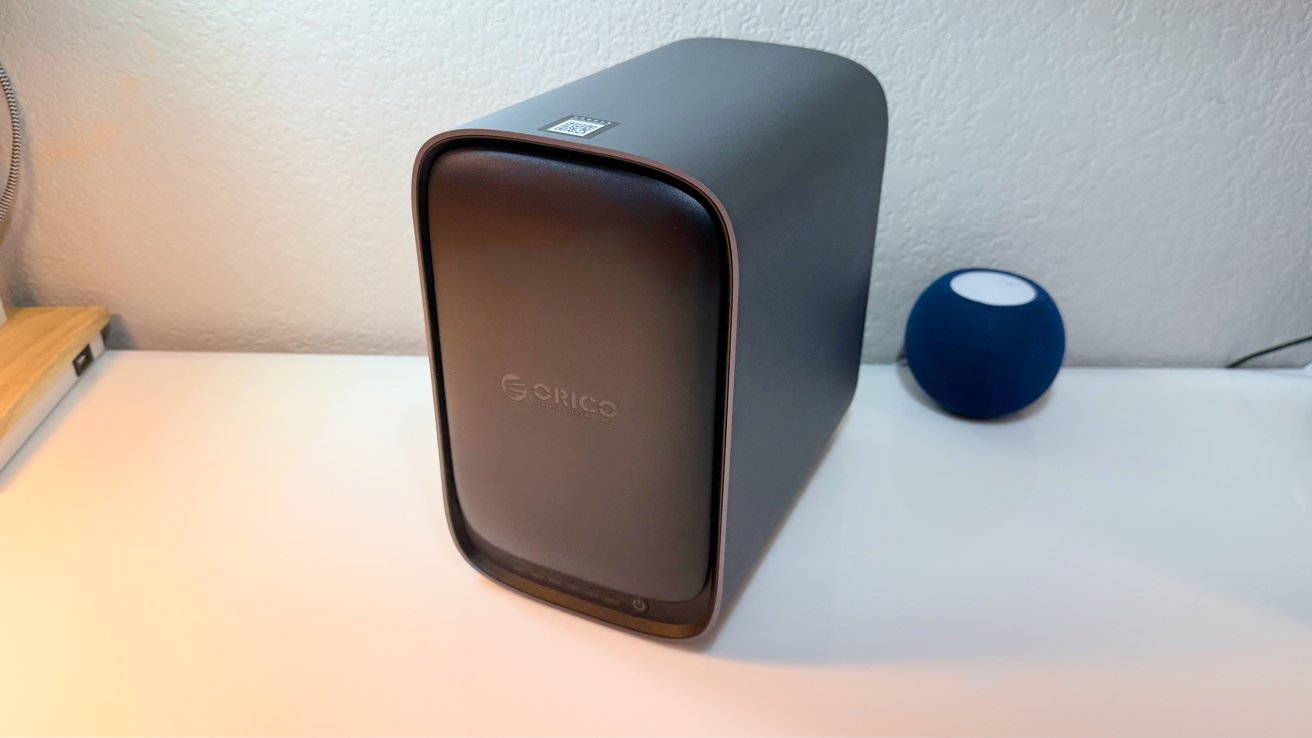
The Orico HS500 MetaBox Pro is a five-bay NAS with good hardware, but unless you like taking apart the hardware to install third-party software, there are better options for Apple owners.
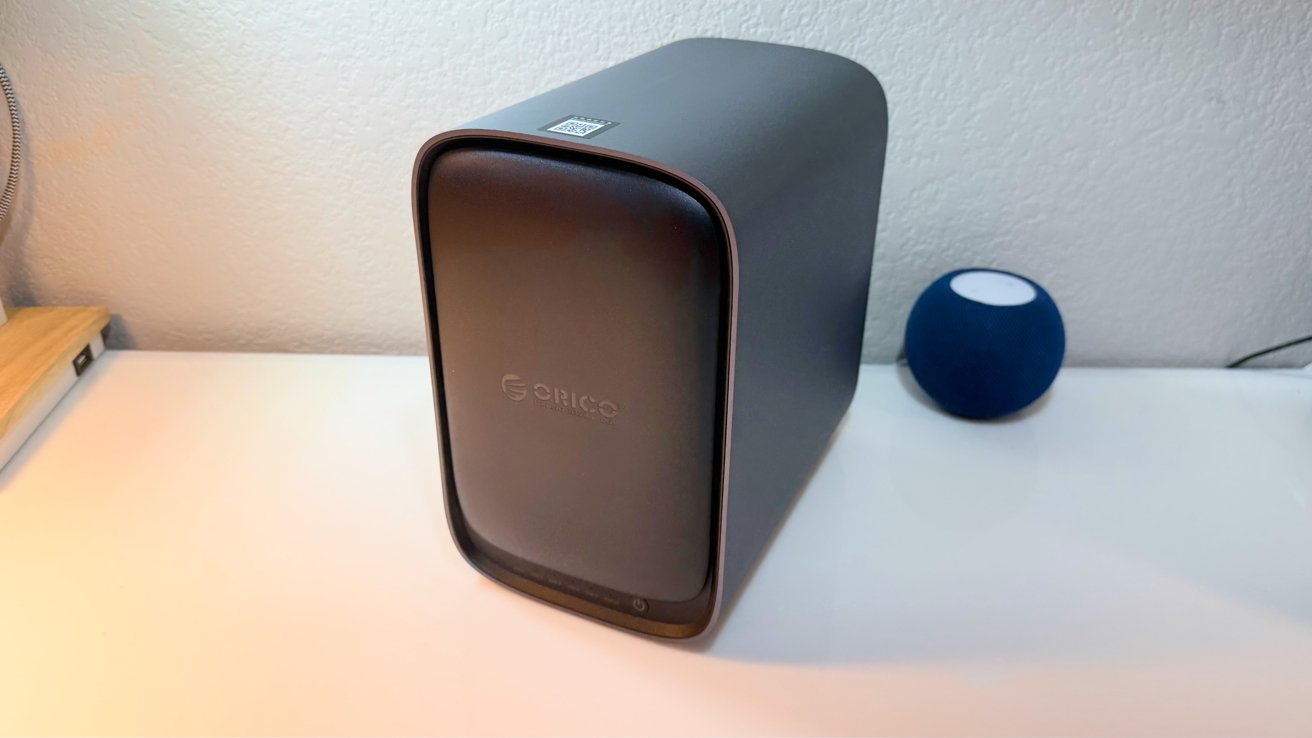
Orico HS500 MetaBox Pro
Network-attached storage (NAS) is more than its hardware, and the number of bays it has. It’s simply not possible for anyone to just buy a NAS without having to check out what other features it can do beyond just storage.
With AI becoming a hot topic in tech, it’s also becoming part of more onboard features.
Continue Reading on AppleInsider | Discuss on our Forums

Looking for an inexpensive pair of earbuds to toss in your gym bag? You can snag our favorite budget wireless earbuds, the JLab Go Pop ANC, for a shockingly low $19 on Amazon, an $11 markdown from their usual price. Don’t let the cost fool you, these earbuds have surprised multiple WIRED writers with their clear sound, water resistance, and ANC performance.


These earbuds have all the features you’d expect from a pair five times the price. They sport IP55 water and dust resistance, perfect for a sweaty trip to the gym or a long run on the beach, and multipoint pairing in case you want to use them for a quick call on your laptop. The included app has an adjustable equalizer, something not even all expensive earbuds can claim, plus programmable controls in case you don’t like the default button layout. Battery life is even pretty decent for the category, with eight hours of juice in the buds and up to 32 hours total with the included charging case.
When you’ve got the tunes going, the JLab Go’s active noise-canceling is surprisingly effective, easily tuning out the hum of an HVAC system and other annoyances. Like other ANC-capable earbuds, they also come equipped with a transparency mode for letting in important sounds, and it works surprisingly well given how little these earbuds cost. You might want to consider something more serious for your next long-haul flight, but these work in a pinch for some yard work or a quick workout.
If you’re sold on a pair of these extra inexpensive earbuds, you can swing over to Amazon to grab the JLab Go Pop ANC in fuchsia for $19. While most of the other colors were listed for their full $30 price, which is still a steal by the way, you can also grab the transparent neon green or transparent teal for just $20, which may be worth the dollar depending on your aesthetic preferences. For more upgraded picks, check out our guide to the best wireless earbuds, with hand-tested picks by WIRED writers.


The London-based platform, which already covers 1.5 million eligible lives across enterprise and healthcare deployments, is using the Series A to accelerate US market entry and deepen its clinical infrastructure, with a new CEO who sold his last company to Adobe.
JAAQ, the London-based digital health engagement platform, has raised $17 million in a Series A round. The investment comes from Meridian Health Ventures, Fuel Ventures, Bolt Angels, and Guinness Ventures, with the capital allocated to scaling enterprise partnerships, deepening clinical infrastructure, and expanding into the United States. Dr. Pooja Sikka, a partner at Meridian Health Ventures, has joined the company’s board as part of the deal.
The company was founded in 2021 with a direct-to-consumer model built around video-based mental health content. It has since pivoted to an enterprise and healthcare focus, embedding that content library, now more than 10,000 clinically reviewed videos, inside the digital products of insurers, employers, and healthcare organisations rather than distributing it to individual users.
The logic is structural: rather than asking people to seek out a mental health platform, JAAQ places its content inside the apps and services they are already using. It currently covers more than 1.5 million eligible lives through active enterprise deployments.
Alex Packham has joined as CEO to lead the company through its next phase. Packham is best known for ContentCal, a social media management SaaS platform he built and sold to Adobe in December 2021, after which he spent three years leading the product’s integration inside Adobe before departing.
The platform’s commercial proposition has two layers. Organisations can license content from JAAQ’s library and integrate it into their own product journeys, or they can licence a bespoke hosted JAAQ experience.
The company is also building infrastructure it describes as a “clinical engagement layer” for AI-native products, designed to let any digital product or team embed governed mental health content into user journeys without building the clinical governance apparatus themselves.
The pitch to enterprises is that this addresses two problems simultaneously: the mental health access gap, and low engagement with wellbeing benefits that organisations invest in but employees rarely use.
The clinical governance framing is central to how JAAQ differentiates itself from generic AI wellness tools. The platform’s content is produced within a defined clinical and creative framework, rather than generated on demand, and Johri’s appointment is intended to signal that the product is being built with clinical credibility embedded rather than bolted on.
Meridian Health Ventures, which focuses specifically on UK health tech with a pathway into the US market, is a natural fit for that positioning: the firm runs the first NHS-anchored venture fund and has a dedicated Innovations in Mental Health Fund.
The US expansion is the strategic priority the funding is designed to unlock. The UK market has provided validation, the company’s website references case studies including a UK bank that saved £896,000 in employee productivity and wellbeing improvements, and an insurer that deflected the equivalent of twelve full-time customer service roles through JAAQ-served content.
Translating that model into the US employer and health insurer market, where mental health benefits are increasingly a board-level priority but engagement remains a persistent problem, is the next test.

Tech
Heat Beneath the Surface: Thermal Metrology for Advanced Semiconductor Materials and Architectures


More Information
As semiconductor architectures evolve beyond classical transistor scaling into heterogeneous integration, chiplet-based design, and true 3D stacking, heat management has shifted from a secondary design consideration to a defining constraint on system performance.
At the same time, power densities continue to rise while materials and device layers become thinner, creating thermal pathways that are increasingly confined and interface-dominated. In these regimes, heat transport depends strongly on thin films, bonded interfaces, and buried layers that control vertical heat flow inside modern electronic systems.
This guide examines how semiconductor scaling, advanced packaging, and emerging materials are reshaping thermal behavior across modern devices. It explores how these architectural changes amplify the importance of thermal conductivity, thermal boundary resistance, and spatial variability, and why accurate thermal measurement is becoming essential for validating models, guiding design decisions, and ensuring reliable system operation.


Earlier this month, BYD revealed that its latest Flash Chargers can deliver up to 1,500 kilowatts – roughly four times the power of the “hyper-fast” 350-kW systems common in the US. In tests, select BYD batteries charged from 10% to 70% in about five minutes and from 10% to 97%…
Read Entire Article
Source link

We don’t usually speculate on the true identity of the hackers behind these projects, but when [TN666]’s accoustic drone-detector crossed our desk with the name “Batear”, we couldn’t help but wonder– is that you, Bruce? On the other hand, with a BOM consisting entirely of one ESP32-S3 and an ICS-43434 I2S microphone, this isn’t exactly going to require the Wayne fortune to pull off. Indeed, [TN666] estimates a project cost of only 15 USD, which really democratizes drone detection.

The key is what you might call ‘retrovation’– innovation by looking backwards. Most drone detection schema are looking to the ways we search for larger aircraft, and use RADAR. Before RADAR there were acoustic detectors, like the famous Japanese “war tubas” that went viral many years ago. RADAR modules aren’t cheap, but MEMS microphones are– and drones, especially quad-copters, aren’t exactly quiet. [TN666] thus made the choice to use acoustic detection in order to democratize drone detection.
Of course that’s not much good if the ESP32 is phoning home to some Azure or AWS server to get the acoustic data processed by some giant machine learning model. That would be the easy thing to do with an ESP32, but if you’re under drone attack or surveillance it’s not likely you want to rely on the cloud. There are always privacy concerns with using other people’s hardware, too. [TN666] again reached backwards to a more traditional algorithmic approach– specifically Goertzel filters to detect the acoustic frequencies used by drones. For analyzing specific frequency buckets, the Goertzel algorithm is as light as they come– which means everything can run local on the ESP32. They call that “edge computing” these days, but we just call it common sense.
The downside is that, since we’re just listening at specific frequencies, environmental noise can be an issue. Calibration for a given environment is suggested, as is a foam sock on the microphone to avoid false positives due to wind noise. It occurs to us the sort physical amplifier used in those ‘war tubas’ would both shelter the microphone from wind, as well as increase range and directionality.
[TN] does intend to explore machine learning models for this hardware as well; he seems to think that an ESP32-NN or small TensorFlow Lite model might outdo the Goertzel algorithm. He might be onto something, but we’re cheering for Goertzel on that one, simply on the basis that it’s a more elegant solution, one we’ve dived into before. It even works on the ATtiny85, which isn’t something you can say about even the lightest TensorFlow model.
Thanks to [TN] for the tip. Playboy billionaire or not, you can send your projects into the tips line to see them some bat-time on this bat-channel.
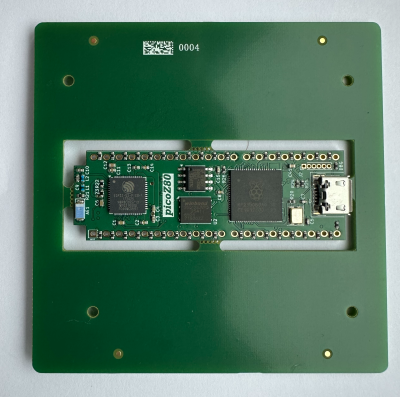
The Z80 has been gone a couple of years now, but it’s very much not forgotten. Still, the day when new-old-stock and salvaged DIP-40 packaged Z80s will be hard to come by is slowly approaching, and [eaw] is going to be ready with the picoZ80 project.
You can probably guess where this is going: an RP2350B on a DIP-40 sized PCB can easily sit on the bus and emulate a Z80. It can do so with only one core, without breaking a sweat. That left [eaw] a second core to play with, allowing the picoZ80 to act as a heck of an accelerator, memory expander, USB host, disk emulator– you name it. He even tossed in an ESP32 co-processor to act as a WiFi, Bluetooth, and SD-card controller to use as a virtual, wirelessly accessible disk drive.
The onboard ram that comes with an RP2350B would be generous by 1980s standards, but [eaw] bumped that up with an 8 MB SPRAM chip–accessed in 64 pages of 64 kB each, naturally. If more RAM than a very pricey hard drive wasn’t luxury enough, there’s also 16 MB of flash memory available. That’s configured to store ROM images that are transferred to the RAM at boot– the virtual Z80 isn’t grabbing from the flash at runtime in [eaw]’s architecture, because apparently there are limits to how much he wants to boost his retro machines.
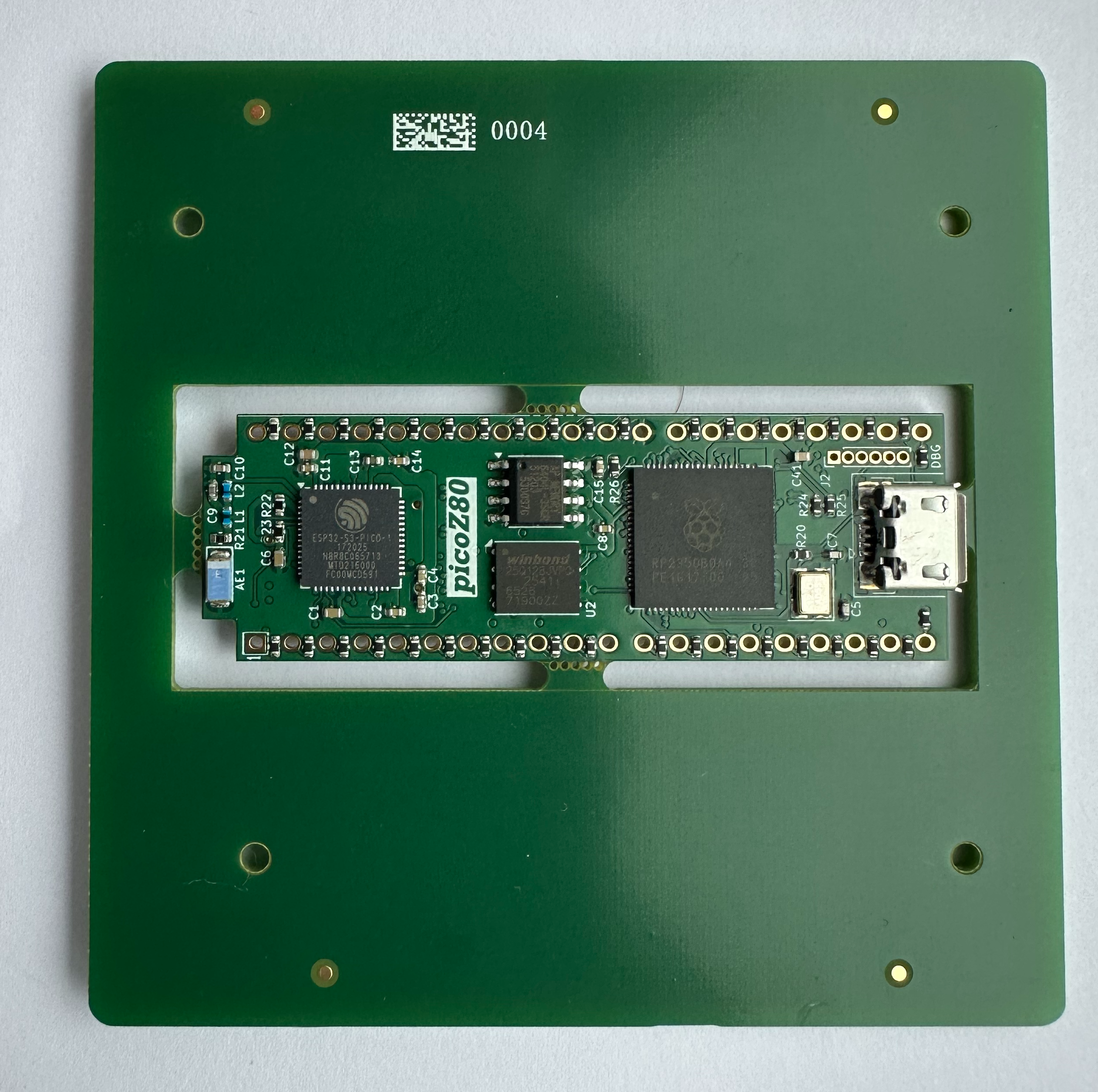
There are already drivers to use in certain Z80 systems. You can of course configure it as a bare Z80 with no machine-specific emulation, or set up the picoZ80 with the “persona” of a classic Z80 machine. So far [eaw] has tried this on an RC2014 homebrew computer, as well as Sharp MZ-80A– which we’ve seen here before, in miniature–and Sharp MZ-700. The Sharp drivers are still works in progress, after which the Amstrad PCW8256/Tatung TC01 is apparently next. We’ve seen Amstrad PCWs here a time or two as well, come to think of it.
If somehow you missed it, the venerable Z80 only hit EOL in 2024, so supplies won’t be drying up any time soon. This hack is really more about the quality-of-life addons this allows. Come back in a decade, and we’ll see if the RP2350 lasts longer than the stack of NOS Z80s.

“Tavajoh! Tavajoh! Tavajoh!” a man’s voice announces, before going on to narrate a string of numbers in no apparent order, slowly and rhythmically. After nearly two hours, the calls of “Attention!” in Persian stop, only to resume again hours later.
The broadcast has been playing twice a day on a shortwave frequency since the start of the US-Israel attack on Iran on February 28.
According to Priyom, an organization which tracks and analyses global military and intelligence use of shortwave radio, using established radio-location techniques, the broadcast was first heard as the US bombing of Iran began. It has since played on the 7910 kHz shortwave frequency like clockwork—at 02.00 UTC and again at 18.00 UTC.
Over the weekend, Priyom said it had identified the likely origin of the broadcast. Using multilateration and triangulation techniques, the group traced the signal to a shortwave transmission facility inside a US military base in Böblingen, southwest of Stuttgart, Germany.
The site lies within a restricted training area between Panzer Kaserne and Patch Barracks, with technical operations possibly linked to the US army’s 52nd Strategic Signal Battalion, headquartered nearby.
That identification narrows the field, but it does not reveal who is behind the transmissions or who they are meant for.
The two-hour-long transmission is divided into five to six segments, each lasting up to 20 minutes. Each opens with “Tavajoh!” before shifting into a string of numbers in Persian, sometimes punctuated with an English word or two. Five days into the broadcast, radio jammers were heard attempting to block the frequency. The following day, the transmission shifted to a different frequency—7842 kHz.
Radio communication experts believe the broadcast is likely part of a Cold War–era system known as number stations.
The Return of the Numbers
Number stations are shortwave radio broadcasts that play strings of numbers or codes that sound random—like the one now heard in Iran. “It is an encrypted radio message used by foreign intelligence services, often as part of a complex operation by intelligence agencies and militaries,” says Maris Goldmanis, a Latvian historian and avid numbers stations researcher.
Number stations are most commonly associated with espionage. “For intelligence agencies, it is important to communicate with their spies to gather intelligence,” says John Sipher, a former US intelligence officer who served 28 years in the CIA’s National Clandestine Service. “This is not always possible in person due to political constraints or conflict. This is where number stations come in.”
While the use of number stations can be traced back to the First World War, they gained prominence during the US-Soviet Cold War. As espionage grew more sophisticated, governments used automated voice transmissions of coded numbers to communicate with agents, Goldmanis says. Citing declassified KGB and CIA documents, he adds that number stations were widely used during this period, often as Morse code transmissions and, in many cases, as two-way communications, with agents reporting back using their own shortwave transmitters.
“Nowadays, you have various satellite and encrypted communications technologies,” Sipher says. “But during the Cold War and even before that, governments had to find ways to do this without being noticed, and broadcasting coded messages was one way to communicate with your assets discreetly.”
The apparent randomness of the numbers means they can be understood only with a codebook, Sipher adds. “Nobody can make heads or tails of it or understand what it says unless you have the codebook that can give you hints to decrypt the code,” he says, noting that such systems must be set up and coordinated in advance.
A Signal Without a Sender
While the likely origin of the signal may now be clearer, its purpose and intended recipient remain unknown.
Because the broadcasts are encrypted and designed to be covert, those details may remain unclear for years, Goldmanis says. The structured nature of the transmission—its fixed schedule and consistent use of frequencies—further suggests it is part of a planned operation.

News Videos23 seconds ago
Balance Sheet in Nepali || Financial Statements (Modern Method) Class 12 || NEB || BBS 1st year

NewsBeat1 minute ago
Corrie fans issue same ‘plea’ in Todd and Theo ‘had enough’ admission

Business2 minutes ago
Why trying products before buying matters in modern retail

Crypto World2 months ago
Smart energy pays enters the US market, targeting scalable financial infrastructure

Politics1 month ago
Why Israel is blocking foreign journalists from entering

News Videos1 month ago
Bitcoin: We’re Entering The Most Dangerous Phase
News Videos24 seconds ago
Balance Sheet in Nepali || Financial Statements (Modern Method) Class 12 || NEB || BBS 1st year

News Videos19 minutes ago
Income Statement in Nepali || Multi Step || Class 12 Account Financial Statement || BBS 1st Year

News Videos25 minutes ago
Money Is Powerful. #viral #status #like #motivation #trending #funny #money #video #havegoals #bhai
-
 Crypto World3 days ago
NIO (NIO) Stock Plunges 6.5% as Shelf Registration Sparks Dilution Worries
-

 Fashion3 days ago
Weekend Open Thread: Adidas – Corporette.com
-

 Politics3 days ago
Jenni Murray, Long-Serving Woman’s Hour Presenter, Dies Aged 75
-
 Tech6 days ago
Are Split Spacebars the Next Big Gaming Keyboard Trend?
-

 Crypto World2 days ago
Best Crypto to Buy Now: Strategy Just Spent $1.57 Billion on Bitcoin During Fear While Early Investors Quietly Enter Pepeto for 150x Potential
-

 News Videos5 days ago
RBA board divided on rate cut, unusually buoyant share market | Finance Report | ABC NEWS
-

 Crypto World2 days ago
Bitcoin Price News: Bhutan Sells $72 Million in BTC Under Fiscal Pressure, but the Smart Money Entering Pepeto Sees What the Market Does Not
-

 Politics6 days ago
The House | The new register to protect children from their abusers shows Parliament at its best
-

 Tech4 days ago
inKONBINI Lets You Spend Summer Days Behind the Register
-
 Politics6 days ago
Real-time pollution monitoring calls after boy nearly dies
-

 Crypto World5 days ago
Canada’s FINTRAC revokes registrations of 23 crypto MSBs in AML crackdown
-

 Sports13 hours ago
Remo Stars and Kano Pillars Strengthen Survival Hopes in NPFL
-
 NewsBeat5 days ago
Residents in North Lanarkshire reminded to register to vote in Scottish Parliament Election
-

 News Videos5 days ago
PARLIAMENT OF MALAWI – PAC MEETING WITH REGISTRAR OF FINANCIAL ON AMARYLLIS HOTEL – INQUIRY LIVE
-

 Politics4 days ago
Gender equality discussions at UN face pushbacks and US resistance
-

 Business1 day ago
No Winner in March 21 Drawing as Prize Rolls to $133 Million for Next
-

 Business5 days ago
Who Was Alex Pretti? 5 Key Facts About the ICU Nurse Killed by Federal Agents in Minneapolis
-

 Sports12 hours ago
Gary Kirsten Accuses Pakistan Cricket Board Of ‘Interference’, Mohsin Naqvi Responds
-

 Tech1 day ago
Give Your Phone a Huge (and Free) Upgrade by Switching to Another Keyboard
-

 Sports3 days ago
2026 Kentucky Derby horses, odds, futures, preview, date: Expert who nailed 12 Derby-Oaks Doubles enters picks
You must be logged in to post a comment Login