

Business
Why trying products before buying matters in modern retail


Shopping has become faster, easier and more convenient than it used to be. A few taps on a phone can bring almost anything to the doorstep, often within days.
That kind of speed matters. So does variety. But convenience alone is no longer enough, especially in product categories where personal experience shapes the final decision.
Beauty and fragrance sit right in that space. People do not choose a perfume the same way they choose batteries. Scent is emotional. It is tied to memory, mood, skin chemistry and plain personal preference. A fragrance that smells refined on one person may feel too sharp or too sweet on someone else. That is why many shoppers want to test the fragrance first, even when they prefer buying online.
The challenge of buying sensory products online
Online retail does a lot well. It gives customers access to more brands, more price points and more reviews than most physical shops ever could. It also lets people take their time. They can read feedback, check ingredients and browse if they want to. Still, for sensory products, a screen can only take the customer so far.
A product page can describe a perfume as woody, powdery, smoky or fresh. It can list bergamot, jasmine, amber or musk. Reviews can help too. Yet none of that fully answers the real question in the buyer’s mind: will I actually like this on me?
That hesitation is understandable. Fragrance is not static. It changes after application. The opening can feel bright and appealing, while the dry-down tells a different story twenty minutes later. Skincare and makeup carry the same uncertainty. Texture, finish, comfort and wear time are personal. What feels light to one person may feel greasy to another. What looks natural in one room can look completely different in daylight.
In a physical store, people deal with this uncertainty casually. They spray a tester, walk around, come back, compare two options, ask a question, then decide. Online shopping removes that in-between stage. It often turns a gradual decision into an immediate one. For some shoppers, that is fine. For others, it creates enough doubt to delay the purchase or skip it altogether.
Sampling as a bridge between discovery and purchase
This is where sampling earns its place. It gives people room to explore without asking them to commit too early. Instead of gambling on a full-size bottle, they can live with a smaller amount for a day or two and see what happens.
Trying a sample at home is also more honest than a rushed store test. People can wear it in normal life, not under shop lighting or around ten other perfumes in the air. They can see how it behaves in the morning, in the evening, outdoors or during a long day. They can notice whether they keep reaching for it or whether it starts to annoy them after an hour.
Preference is rarely instant. Plenty of people have bought fragrances based on first impressions, only to realize later that the scent becomes too heavy, too flat or too loud once it settles. A sample reduces that risk. It gives the customer a better basis for judgment and removes some of the pressure that often comes with beauty purchases.
It also opens the door for curiosity. Someone who would never spend blindly on an unfamiliar perfume may happily try a smaller version first. That makes discovery feel enjoyable rather than expensive. Retailers such as Notino understand that this is not just about selling less before selling more. It is about letting the customer build certainty in a category where certainty matters.
Supporting informed and confident purchasing behaviour
When shoppers feel confident, buying gets easier. Confidence affects satisfaction, trust and the likelihood of coming back. A person who chooses well is less likely to regret the purchase, complain afterwards or send the product back.
This is especially important in online retail, where one poor experience can damage the relationship. If a customer orders a fragrance based on hype, receives it, dislikes it and feels misled, the issue is not only the product. The platform itself loses credibility. When the buying journey feels thoughtful and low-pressure, customers remember that too.
There is a practical side to this. Returns are expensive. Disappointment creates friction. Stronger purchase confidence can reduce both. It can also improve how shoppers view the retailer. Instead of seeing the store as a place that pushes products, they begin to see it as a place that helps them choose properly.
That difference matters more now than it did a few years ago. Consumers are overloaded with options. They are reading reviews, watching videos, checking dupes and comparing prices. They do not just want access. They want clarity. Giving them a chance to test the fragrance first makes the decision feel grounded in their own experience rather than in marketing language.
The psychology behind trying before buying
There is another reason this model works. It matches the way people naturally make decisions when something feels personal. Buyers want convenience, yes, but they also want a sense of control. They want to feel that they arrived at the right choice.
Sampling supports that feeling. It lowers perceived risk and replaces guesswork with evidence. Not hard data, maybe, but personal evidence, which is often more persuasive. Once someone has worn a scent, noticed how it develops and decided it suits them, the purchase becomes much easier to justify.
This also explains why sample-led retail feels modern rather than old-fashioned. It is not a step backward from e-commerce. It is a smarter version of it. Good digital retail is not about forcing every category into the same transaction model. It is about recognizing where customers need a little more reassurance and building that into the journey.
The rise of personal shopping expectations
Retail has become more personal in general. Customers expect recommendations, edits, suggestions and offers that feel relevant to them. They do not want to be treated like everyone else. In fragrance and beauty, that expectation is even stronger because the products themselves are tied to identity and routine.
A sample respects that. It quietly says: you do not have to guess, and you do not have to rush. That can make a brand feel more confident, not less. It shows a willingness to let the product speak for itself. For platforms like Notino, that matters because the online experience can sometimes feel overwhelming when the catalogue is large and the choices are endless. That alone changes behaviour.
Integrating sampling into the online customer journey
From a retail perspective, sampling should not be treated as a side tactic or a throwaway promotion. It works best when it is built into the customer journey naturally. It can help at the discovery stage, when someone is trying a scent family. It can help in comparison, when two or three products look equally promising. It can also help at the decision point, when interest is high but hesitation remains.
What makes this approach effective is that it adds realism to digital commerce. It accepts that not every purchase can be made confidently from a product description alone. In categories driven by feel, scent and personal reaction, that is not a weakness of online retail. It is simply reality.
A model that reinforces trust in digital retail
Providing opportunities to experience products before committing to them reflects a broader effort to build trust in online retail environments. By offering curated selections and sample options, platforms such as Notino demonstrate how e-commerce can accommodate the need for experimentation without sacrificing speed or convenience. This approach aligns with modern consumer behaviour, where discovery, testing and purchasing increasingly form a continuous and integrated journey rather than separate steps.

Business
Urban Company shares tank 9% after Q4 net loss swells to Rs 161 crore despite a sharp revenue uptick

Revenue from operations for Q4FY26 rose 43% year-on-year to Rs 426 crore from Rs 298 crore a year ago. On a sequential basis, revenue grew 11% from Rs 383 crore reported in the October-December quarter of FY26. The company’s losses also widened sharply quarter-on-quarter, increasing nearly eightfold from Rs 21 crore in Q3FY26.
The professional services platform reported a 42% year-on-year rise in net transacting value (NTV) to Rs 1,148 crore during the quarter, the highest level in the last 15 quarters.
Adjusted EBITDA loss for Q4FY26 stood at Rs 98 crore, while adjusted EBITDA excluding InstaHelp came in at Rs 22 crore. The company also reported a 160-basis-point improvement in margins.
For the full financial year, NTV increased 31% year-on-year to Rs 4,290 crore, while revenue from operations rose 36% to Rs 1,556 crore. According to the company’s filing, both NTV and revenue growth accelerated for the second consecutive year.

Among key business segments, India Consumer Services excluding InstaHelp posted 26% year-on-year NTV growth in Q4FY26, marking the strongest growth in 11 quarters. International operations across the UAE and Singapore recorded 84% year-on-year growth in NTV during the quarter.
The company said both India Consumer Services, excluding InstaHelp and the international business remained profitable in Q4FY26 while also improving margins on a yearly basis.Native NTV rose 67% year-on-year in the March quarter, while revenue from the segment increased 75%.
InstaHelp delivered 2.7 million orders and recorded Rs 40 crore in NTV in Q4FY26, compared with 1.6 million orders and Rs 28 crore in NTV in Q3FY26. March alone saw over 1.1 million orders.
Sensex, Nifty today: Catch all the LIVE stock market action here
(Disclaimer: Recommendations, suggestions, views and opinions given by the experts are their own. These do not represent the views of The Economic Times)

Shares in South Perth-based FMR Resources rose by more than 30 per cent early on Monday following news it would expand its presence in Chile.

ESG consultant David Elliott saw a need to provide a software solution for SMEs, due to Australian regulatory changes.
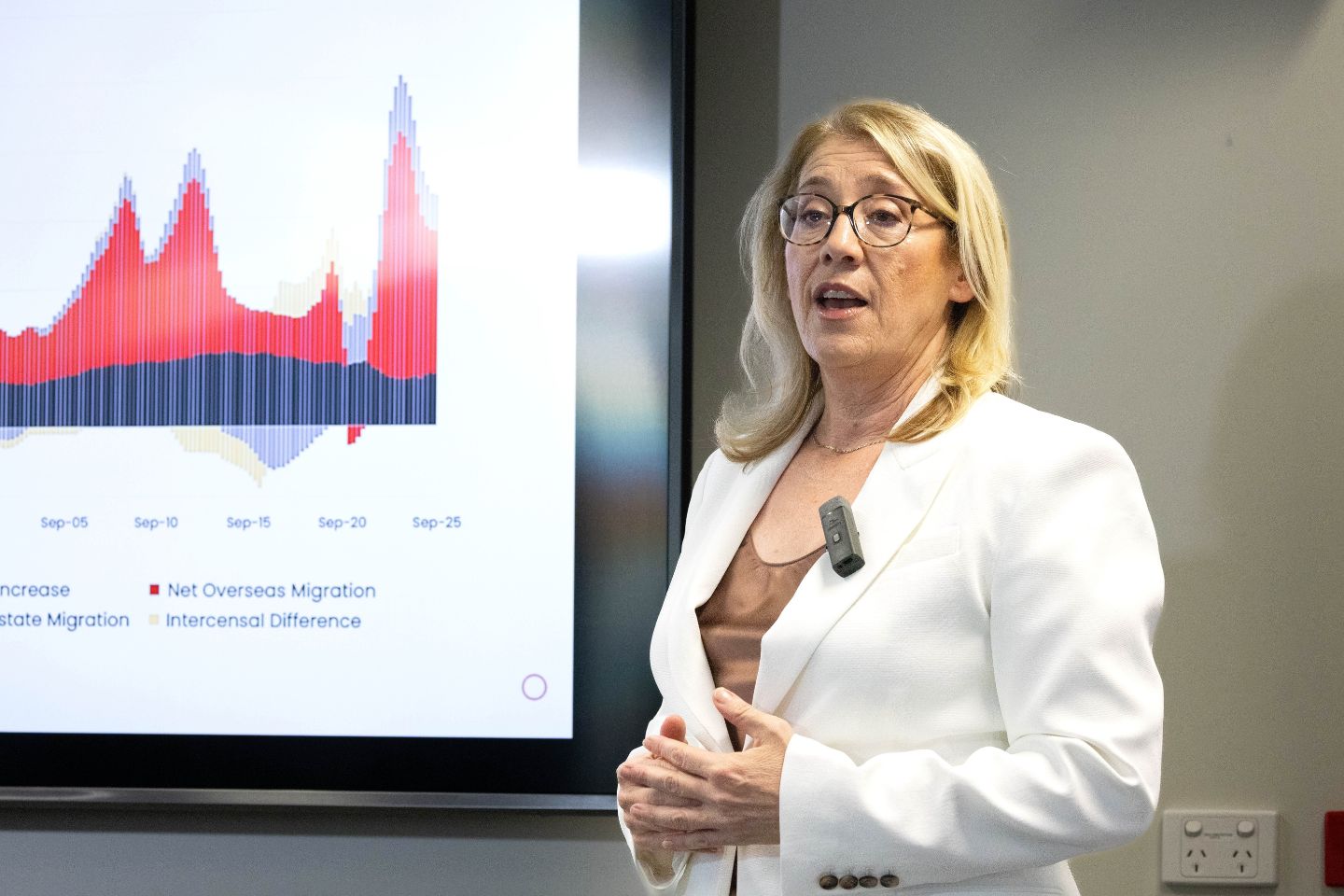
Deputy Premier Rita Saffioti said she hasn’t had an apology from the editor-in-chief of the West Australian newspaper after a post-budget breakfast event was soured.
Business
Titan shares crash 6% after Q4 results. What are Goldman Sachs, Morgan Stanley, Bernstein, other brokerages saying?

The company’s total income in Q4FY26 was up 46% to Rs 20,300 crore versus Rs 13,891 crore in the corresponding quarter of the previous financial year.
The jewellery business recorded another exceptional quarter of 50% growth over the year-ago period. The watch business achieved a total income of Rs 1,222 crores for the quarter, growing 8% over Q4FY25 and achieving an EBIT of Rs 143 crores at 11.7% margin. Domestic eyecare business achieved total income of Rs 227 crores in Q4FY26, growing 17% over Q4FY25 and recording an EBIT of Rs 21 crores at 9.2% margin.
Titan shares: Should you buy, sell or hold?
Morgan Stanley maintained its “Overweight” rating on Titan Company shares and raised its target price to Rs 5,212 from Rs 5,102, an upside of 15.4%. The brokerage said Titan’s jewellery business delivered a top-line and margin performance that exceeded expectations during the March quarter. Morgan Stanley noted that elevated gold prices supported ticket-size expansion and wedding-related purchases.
The brokerage added that the earnings miss at the overall level was largely due to higher losses in emerging and international businesses. Management reiterated its guidance of 15-20% CAGR in jewellery revenue over the next 3-5 years, and Morgan Stanley expects the stock to continue outperforming on the back of strong growth visibility and relatively attractive valuations.
Goldman Sachs maintained its “Buy” rating on Titan Company and kept a target price of Rs 5,400 (20% upside). Management guided for a 15-20% CAGR in jewellery sales over the next 3-5 years, while Titan also estimated a 50-60 basis points gain in jewellery market share during FY26. Goldman Sachs said international jewellery margins were impacted by Damas consolidation and disruptions in the Middle East. The brokerage raised its FY27 and FY28 revenue estimates by 7-8%, driven by a stronger jewellery outlook, although earnings per share upgrades were relatively lower because of higher interest costs and the drag from Damas.
Bernstein retained its “Outperform” rating on Titan Company share price with a target price of Rs 5,000 (11% upside). The brokerage said concerns around growth, buyer demand and margins have now eased meaningfully. However, margins saw some contraction due to a lower studded jewellery mix and the impact of the Damas consolidation. The brokerage also pointed out that CaratLane’s growth moderated to 22% after delivering over 30% growth in previous quarters, while the watches segment reported growth of just 8%, below the expected 15-20% range. Despite these factors, Bernstein said it remains constructive on Titan, citing the company’s ability to navigate uncertain demand cycles effectively.Nuvama retained its “Buy” rating on Titan Company and raised the target price to Rs 5,240, implying an upside potential of 16%. The brokerage said the Indian retail landscape continues to evolve amid the interplay of several demographic and economic factors. According to Nuvama, long-term prospects remain strong as changing consumer behaviour increasingly favours higher discretionary spending, creating a healthy growth runway for the retail sector over the next five years. The brokerage added that the biggest opportunity lies in the rising share of organised retail, supported by consumers allocating a larger portion of income toward consumption alongside gradual lifestyle improvements.
Elara Capital maintained its “Buy” recommendation on Titan Company with a target price of Rs 5,350. The brokerage said the company’s underlying consumer business revenue grew 46% year-on-year, supported by robust jewellery demand. Analysts expect strong momentum to continue in the second half of FY27, supported by elevated gold prices.
(Disclaimer: Recommendations, suggestions, views and opinions given by the experts are their own. These do not represent the views of The Economic Times)

Savannah Guthrie marked a painful first Mother’s Day without her mother Sunday by issuing an emotional public vow: the family will never stop searching for Nancy Guthrie, the 84-year-old who was kidnapped from her Tucson-area home more than three months ago.
The “Today” co-anchor, 54, shared an Instagram Reel filled with cherished family photos and videos of Nancy — as mother, daughter, sister and beloved “Nonie” — alongside a raw caption that captured the family’s ongoing anguish and determination.
“Mother, daughter, sister, Nonie — we miss you with every breath,” Guthrie wrote. “We will never stop looking for you. We will never be at peace until we find you.”
She added a direct appeal for help: “We need help. Someone knows something that can make the difference. Call 1-800-CALL-FBI. You can be anonymous and the reward remains available. Please keep praying. Bring her home.”
Nancy Guthrie vanished from her Catalina Foothills home in the early hours of Feb. 1, 2026. Authorities quickly treated the case as a kidnapping after discovering bloodstains confirmed to be hers, signs of a struggle, and doorbell camera footage showing a masked, armed intruder tampering with the device around 1:47 a.m. Her pacemaker monitor lost connection shortly afterward, and she left behind her phone, medication and other essentials.
Pima County Sheriff Chris Nanos described the scene as highly suspicious for an 84-year-old woman with limited mobility who could not have walked away on her own. The FBI joined the investigation, and the home was declared a crime scene. Multiple ransom notes have surfaced through media outlets, though their authenticity remains under review. No arrests have been made, and Nancy’s whereabouts are still unknown nearly 100 days later.
Family’s relentless public campaign
Guthrie and her siblings, Camron and Annie, have maintained a steady stream of appeals since the first days after Nancy’s disappearance. They offered a $1 million family reward for information leading to her safe recovery and have repeatedly urged anyone with knowledge to come forward anonymously.
In earlier videos, the family addressed Nancy directly and spoke to her possible captor, emphasizing her need for daily medication and fragile health. Savannah has described waking up at night imagining her mother’s terror, calling the uncertainty “unbearable.” Yet she has also vowed not to let the tragedy rob her own children — Vale, 11, and Charley, 9 — of their mother’s presence and joy.
Her husband, Michael Feldman, posted his own tribute Sunday, calling Savannah “the strongest person I know” while surrounding her and their kids with love amid the heartbreak.
Investigation updates and challenges
Recent weeks brought both hope and disappointment. On May 7, authorities investigated human remains found about seven miles from Nancy’s home, only to determine they were prehistoric and unrelated to the case. DNA evidence recovered from the scene continues to be analyzed.
The FBI released enhanced doorbell camera images and video in February showing the suspect — described as roughly 5-foot-9 to 5-foot-10 with a mustache — wearing gloves and carrying a backpack. Tips continue to pour in, but no breakthrough has been announced.
Savannah stepped away from “Today” duties for weeks to focus on the search and family before returning to the anchor desk in April. Colleagues have described her resilience, with Hoda Kotb calling her strength “inspiring” during emotional interviews.
Nancy’s life and the family’s bond
Born Nancy Ellen Long in 1942 in Kentucky, Nancy moved to the Tucson area decades ago. Widowed since 1988 after the death of her husband Charles, she remained independent, sharp-minded and active in her church and community despite mobility challenges. She was a devoted grandmother and the heart of the Guthrie family.
Savannah has often spoken warmly of her mother on air and in personal posts, sharing memories of a woman full of faith, conviction and love. The Mother’s Day Reel captured lighter moments — family gatherings, holidays and everyday joy — underscoring the profound void left by her absence.
Broader impact and calls for awareness
The high-profile case has drawn national and international attention, sparking conversations about elder vulnerability, home security and the power of public appeals in missing persons investigations. Elizabeth Smart, who survived a notorious abduction as a teen, recently expressed belief that Nancy could still be alive, citing her own experience.
Law enforcement continues to stress that anyone with even small details should contact the FBI tip line. The $1 million reward offered by the family remains active.
As Mother’s Day unfolded across the country with brunches, flowers and tributes, the Guthrie family’s message stood apart — a raw reminder that for some, the day brings not celebration but a desperate plea wrapped in love and unwavering hope.
Savannah Guthrie’s words echoed far beyond her Instagram followers: the search continues, prayers persist, and peace remains elusive until Nancy comes home. In a case defined by uncertainty, the family’s commitment stands firm. They will never stop looking.
Business
Why UK SMEs Are Getting Legal Translation Wrong in 2026 (And What AI Consensus Is Changing)

When a contract clause means something different in the target language than it does in the original, nobody knows until it matters. By then, the dispute is already underway.
For UK small and medium-sized businesses operating across borders, whether that means engaging EU suppliers post-Brexit, managing international legal translation is not an optional extra. It is load-bearing infrastructure. And for most SMEs, it is being handled in ways that create far more risk than they realise.
The Real Cost of Getting It Wrong
Legal translation errors are not theoretical. Industry data published by Leaders in Law found that legal translation submissions routinely contain up to 17% grammar errors, 14% vocabulary errors, and a further 7% formatting errors, with formatting problems alone frequently causing document rejection by courts and regulatory bodies. A single rejected clause in a cross-border commercial agreement can mean a delayed transaction, an unenforceable penalty provision, or a governing law dispute that takes months and significant legal spend to resolve.
The exposure is growing. AI-generated legal claims are already adding to the cost burden on British businesses, with more than a third of UK firms reporting a rise in low-merit claims linked to AI tools. As documentation volumes increase and more contracts involve parties operating in different languages, the weak point in many SME operations is not their legal strategy, it is the translation layer sitting underneath it.
Post-Brexit compliance has made this more acute. UK businesses no longer benefit from reciprocal enforcement mechanisms with EU counterparts that were previously standard. The legal enforceability of a translated contract in a French or German court now depends on translation quality in a way it simply did not before 2021. Language differences can lead to misunderstandings with regulatory authorities, contractual disputes, and compliance failures that carry real financial consequences.
Where AI Translation Has Already Entered Legal Work
The legal sector is not waiting for consensus on whether AI belongs in its workflows. It has already arrived. A survey conducted by Business Matters found that 56% of UK adults would trust AI to interpret contracts or terms and condition, and the actual use of AI tools in UK law firms has been tracked by the Solicitors Regulation Authority at over 50% of firms.
That adoption is happening unevenly. Large firms can invest in enterprise-grade legal AI with built-in verification layers. SMEs tend to reach for whatever translation tool is fastest and cheapest, often a single large language model accessed via a browser tab, without considering what they are actually relying on when that output is inserted into a contract or a compliance document.
This is where the risk concentrates. Not in whether AI is used, but in how its output is treated.
The Problem With Single-Engine Translation for Legal Text
Standard AI translation tools work by generating a single output from a single model. That model may be excellent for marketing copy, product descriptions, or customer communications. Legal text is a different class of problem.
Legal language is precise by design. Terms like “indemnification,” “force majeure,” “representations and warranties,” or “entire agreement” do not have clean one-to-one equivalents in every language, and their legal force depends on how they are rendered in the target jurisdiction. A mistranslation that would go unnoticed in a marketing email can produce an unenforceable or ambiguous clause in a binding agreement.
No single AI model produces consistently reliable output across all language pairs for this type of content. They make different errors, carry different training biases, and handle jurisdictional legal terminology with different degrees of precision. Cross-border compliance experts have consistently noted that language barriers in international commerce can lead to misunderstandings with regulatory authorities and compliance failures that prove costly to corre, and relying on a single automated output, without any cross-verification, amplifies that risk.
The practical consequence for an SME is this: a translation that looks fluent and sounds confident may still contain errors that only emerge when tested by a court, a regulator, or an opposing party’s legal team.
Why Testing Multiple Models Changes the Risk Calculation
The more defensible approach is not to choose the “best” AI translation tool and trust it. It is to run multiple AI engines simultaneously and treat disagreement between them as a quality signal.
This is the operating principle behind MachineTranslation.com, an AI translator that runs outputs across 22 AI models in parallel, including DeepL, ChatGPT, Google Translate, and other, and surfaces where they agree and where they diverge. In testing across legal contracts and marketing texts, the platform found that AI models frequently disagree on the same source sentence. When multiple independent models produce identical or near-identical output, that convergence functions as a confidence signal. When they diverge, the divergence flags a term or clause that warrants human review.
For legal teams and in-house counsel at SMEs, this changes the workflow from ‘did we use AI?’ to ‘where does the AI output carry real uncertainty?’ It transforms translation from a black box into an auditable process. The platform also preserves document formatting across DOCX files, maintaining the structural integrity of contracts, signature blocks, and cross-reference numbering, elements that, as noted above, are a documented source of court rejections when mishandled.
The optional human review layer connects users with certified translators who refine AI output to publication-ready standards, which is particularly relevant for documents that will need to satisfy jurisdiction-specific certification requirements in EU member states or in cross-border litigation.
What UK SMEs Should Do Now
The mistake most SMEs make is treating legal translation as a commodity task. Because it is cheap and fast with modern tools, it gets treated as low-stakes. The actual legal exposure tells a different story.
Three practical steps are worth taking now, regardless of which tools an SME currently uses:
First, identify which documents in your current operations carry genuine legal weight in a foreign jurisdiction: supplier contracts, service agreements, regulatory filings, terms and conditions. These are the documents where translation quality has direct legal consequence and where single-engine AI output should not be treated as final.
Second, build cross-verification into your process. Whether that means running the same text through multiple tools and comparing outputs manually, or using a platform that does this automatically, the principle is the same: disagreement between models is information. It tells you where to focus human attention.
Third, understand certification requirements before you need them. Different jurisdictions have different standards for translated documents to be considered legally admissible. EU member states typically require sworn translators for official documents. Knowing this in advance of a transaction, rather than after a court raises the issue, saves significant cost and delay.
The legal function at most SMEs is already stretched. As Business Matters’ legal coverage consistently shows, the regulatory environment facing UK businesses in 2026 is more complex, not less, from the Employment Rights Act to new digital markets rules and cross-border enforcement changes. Translation accuracy sits underneath all of it. It deserves the same scrutiny as any other legal risk.

The company released its results post-market hours on Friday. While net loss contracted, revenue from operations rose 45% year-on-year (YoY) to Rs 6,383 crore in the January-March quarter of FY26.
Swiggy’s food delivery business posted its strongest growth in 15 quarters, with gross order value (GOV) rising 23% YoY to Rs 9,005 crore in the quarter ended March 31, 2026. Monthly transacting users in the food delivery segment grew 21% YoY to 18.3 million.
Adjusted EBITDA for the food delivery business rose 40% to Rs 297 crore, while adjusted EBITDA margin improved to 3.3% of GOV, up 41 basis points YoY and 26 basis points quarter-on-quarter (QoQ).
Instamart, Swiggy’s quick commerce arm, reported a 68.8% YoY increase in gross order value (GOV) to Rs 7,881 crore. The company added seven dark stores during Q4, taking its network to 1,143 stores across 129 cities, covering 4.8 million sq ft. Average order value rose 32.8% YoY to Rs 700, driven by a higher non-grocery mix and larger basket sizes.
“In quick commerce, the next phase will be defined by anticipating consumer needs, not merely fulfilling them. Unit economics continue to improve quarter on quarter, and we remain on track for contribution margin breakeven in line with our guidance,” Swiggy MD and Group CEO Sriharsha Majety said.
Nuvama on SwiggyNuvama maintained its ‘Buy’ rating on Swiggy shares with a target price of Rs 477 apiece, implying an upside potential of more than 70% from the stock’s previous closing price of Rs 280.50 on the NSE.
The brokerage highlighted that Instamart’s growth moderated as management targets contribution margin breakeven in Q1, with a focus on higher-retention cohorts. “We are tweaking FY27E/28E EBITDA by +4.6%/+1.3%, factoring in growth moderation while keeping the margin trajectory unchanged,” Nuvama said.
Nomura on Swiggy
Nomura maintained its ‘Buy’ rating on Swiggy shares, but cut its target price to Rs 473 apiece, implying an upside potential of nearly 69% from the stock’s previous closing price.
The brokerage said the company reported strong earnings growth in the food delivery segment, while quick commerce margins are improving gradually. It added that Swiggy remains well-funded to weather near-term headwinds, according to a CNBC-TV18 report.
Citi on Swiggy
Citi retained its ‘Buy’ call on Swiggy shares with a target price of Rs 415 apiece, implying an upside potential of nearly 48% from the stock’s previous closing price.
While competition in quick commerce remains a major headwind for Swiggy, key operating metrics continue to improve steadily, the brokerage said in the report.
(Disclaimer: Recommendations, suggestions, views and opinions given by the experts are their own. These do not represent the views of The Economic Times)

The Strait of Hormuz waterway remains effectively shut, severely disrupting global energy shipments.
Business
Beyond the Reef – What Komodo’s Diving Economy Teaches Hotels and Resorts About High-Value Hospitality

For hotels, resorts, and hospitality investors across Indonesia, a well-written Komodo Island scuba diving guide is more than a travel resource; it demonstrates how a destination can turn natural beauty, operational discipline, and guest experience into a sustainable business advantage.
Komodo is often described through its dramatic landscapes: dry savannah hills, pink-sand beaches, volcanic islands and, of course, the famous Komodo dragons. Yet beneath the surface lies one of the strongest commercial pillars of the region’s hospitality sector. Diving is not simply an activity offered to guests. It shapes booking patterns, room rates, staffing needs, partnerships, sustainability policies and the overall reputation of hotels and resorts in Labuan Bajo and the wider Komodo National Park area.
Why Diving Matters to Komodo’s Hospitality Market
Scuba diving in Komodo, Indonesia, has become a phrase associated with bucket-list travel, but the business behind it is more complex than many outsiders realise. Divers tend to stay longer, plan earlier, and spend more on accommodation, equipment rental, dining, transfers, and guided experiences.
For resort managers, this creates an opportunity to design services around a guest who values reliability as much as beauty. A diver may be adventurous, but they still expect clear communication, punctual transfers, clean facilities, safe storage and knowledgeable staff.
Key expectations often include:
- Early breakfast options before boat departures
- Reliable transport to harbours and dive centres
- Flexible check-in and check-out arrangements
- Fresh laundry services for wet gear and activewear
- Healthy post-dive dining choices
- Accurate local information from front-desk teams
A comprehensive Komodo Island scuba diving guide can help staff anticipate these needs before guests even ask, setting the standard for service excellence.These details may seem small, but in a diving destination, they influence reviews, repeat bookings and direct referrals.
Understanding the Komodo Diving Guest
The Komodo diving guest is not one single customer type. Some arrive as experienced divers seeking strong currents and pelagic encounters. Others are couples mixing soft adventure with luxury resort stays. Some are underwater photographers, marine biology enthusiasts or digital professionals adding diving days to a wider Indonesia itinerary.
The Commercial Value of Experience-Led Travel
Unlike a conventional beach holiday, a diving trip is structured around a purpose. Guests are not only booking a bed; they are buying access, confidence and memory.
This makes operational trust extremely important. A resort that understands diving schedules, weather conditions and guest preparation can create a smoother stay than one that treats diving as an afterthought.
For hospitality businesses, the lesson is clear: the more specific the guest motivation, the more valuable the supporting service becomes.
Komodo Diving Liveaboard and Resort-Based Stays
A Komodo diving liveaboard offers a different style of experience from staying in a resort or hotel. Liveaboards allow divers to sleep on board, reach remote dive sites early and spend several days immersed in the marine environment. For serious divers, that can be highly attractive.
However, resort-based stays remain equally important to the local economy. Many travellers prefer the comfort of land-based accommodation, especially if they are travelling with non-diving partners, children or mixed-interest groups.
Hotels and resorts can compete effectively by focusing on:
- Comfort before and after diving
- Better dining variety
- Spa and wellness options
- Stronger Wi-Fi and work-friendly spaces
- Local cultural experiences
- Flexible itineraries for mixed groups
The opportunity is not to copy liveaboards, but to complement them. A guest may spend three nights on a boat and then choose a resort for recovery, comfort and a slower pace.
Safety, Service and the Business of Confidence
Komodo’s underwater environment is extraordinary, but it can also be demanding. Currents, tides and changing conditions require careful planning. While dive operators carry the technical responsibility, hotels and resorts still play a role in building guest confidence.
Front-office teams should understand the basics of local diving logistics, even if they are not divers themselves. They do not need to explain decompression theory or current patterns, but they should know how early guests may leave, where boats depart, what items guests commonly forget and how weather can affect schedules.
What Resorts Should Communicate Clearly
Good communication reduces anxiety and improves the guest journey. Useful information includes:
- Departure times and transfer arrangements
- Breakfast availability before early trips
- Drying areas for swimwear and gear
- Medical and emergency contact procedures
- Local conservation expectations
- Realistic travel times around Labuan Bajo
In hospitality, confidence is often built before the main experience begins.
Sustainability Is No Longer Optional
Komodo’s appeal depends on the health of its marine environment. Coral reefs, manta rays, turtles, sharks and fish life are central to the destination’s value. For hotels and resorts, sustainability should not be treated as a decorative message on a bathroom card. It must become part of operations.
That can include reducing single-use plastics, supporting responsible suppliers, training staff on reef-safe guest behaviour and working with dive partners who respect marine park rules.
Practical sustainability measures include:
- Refillable water stations
- Clear waste separation practices
- Reef-safe sunscreen education
- Responsible seafood purchasing
- Support for local conservation initiatives
- Guest briefings on respectful wildlife behaviour
The commercial reason is straightforward: the destination’s natural assets are also its economic assets. Protecting them protects future demand.
How Hotels Can Support the Diving Economy Without Becoming Dive Operators
Not every resort needs to own a dive centre. In many cases, it is better to build strong partnerships with reputable local operators. This allows the hotel to focus on accommodation, service and guest care while specialists manage diving activities.
The best partnerships are based on shared standards. Hotels should know whether the operator has reliable equipment, trained guides, responsible safety procedures and good communication practices.
Partnership Questions Worth Asking
Before recommending a dive partner, hotels should consider:
- Are briefings clear and multilingual where necessary?
- Is the equipment maintained regularly?
- Are group sizes sensible?
- Are guides experienced in Komodo conditions?
- Is marine life approached responsibly?
- Are cancellations and weather changes handled transparently?
A poor third-party experience can still affect the hotel’s reputation. Guests rarely separate the full journey into neat operational categories.
Food, Wellness and the Post-Dive Experience
One overlooked business opportunity in diving destinations is the post-dive period. After a full day at sea, guests often want comfort, nourishment and ease. This is where resorts can create meaningful value.
A strong post-dive offer may include:
- Fresh, light meals with local ingredients
- Hydration-focused drinks and juices
- Massage and recovery treatments
- Relaxed sunset dining
- Gear rinsing or drying support
- Quiet lounge areas for photo editing and rest
These services do not need to feel overly packaged. In fact, the best hospitality often feels natural. The guest simply notices that everything has been considered.
What BM Magazine Readers Can Learn from Komodo
For a business audience, Komodo’s diving market shows how niche tourism can strengthen an entire local economy. A specialist activity can influence property development, employment, supplier networks, transport services, food and beverage strategy, digital marketing and sustainability planning.
The key lesson is that destinations grow stronger when businesses understand why guests are coming. Hotels that align their operations with the guest’s core motivation can create better experiences and better commercial outcomes.
In Komodo, diving is not a side product. It is part of the destination’s identity. Resorts that understand this can serve guests more intelligently, build stronger local partnerships and contribute to a more resilient tourism ecosystem.
Final Thoughts: The Future Is Experience-Led and Responsible
Komodo’s hospitality sector sits at the meeting point of adventure, conservation and premium travel. The opportunity is significant, but it must be managed carefully. Growth without responsibility can damage the very environment that attracts visitors.
For hotels and resorts, success will come from balancing commercial ambition with operational care. Guests want beauty, but they also want safety, comfort, authenticity and trust.
The businesses that thrive will be those that see diving not merely as an excursion, but as a complete guest journey: from the first enquiry to the early-morning transfer, from the reef encounter to the evening meal, and from a memorable stay to a confident recommendation.
Urban Company shares tank 9% after Q4 net loss swells to Rs 161 crore despite a sharp revenue uptick

Takeaways: Ducks impress with bounce-back performance vs. Golden Knights

FMR shares rise following acquisition update

Manchester United reach agreement with Casemiro over contract clause amid transfer speculation

US brings back mandatory military draft registration

Steven Gerrard disagrees with Gary Neville over ‘shock’ Chelsea and Arsenal claim | Football


-
 Crypto World3 days ago
HarrisX Poll Found 52% of Registered Voters Support the CLARITY Act
-

 Crypto World4 days ago
Upbit adds B3 Korean won pair as Base token gains Korea access
-

 Fashion2 days ago
Weekend Open Thread: Marianne Dress
-

 Tech6 days ago
Image AI models now drive app growth, beating chatbot upgrades
-
 NewsBeat4 days ago
NCP car park operator enters administration putting 340 UK sites at risk of closure
-
 Business2 days ago
Ignore market noise, India’s long-term story intact, say D-Street bulls Ramesh Damani and Sunil Singhania
-

 Politics2 days ago
Politics Home Article | Starmer Enters The Danger Zone
-
 Sports7 days ago
2026 NHL playoff picks: Second-round predictions, series odds, Stanley Cup bracket
-

 Crypto World6 days ago
UAE Free Zone Deploys Blockchain IDs to Verify Registered Firms
-

 Crypto World5 days ago
BlackRock CEO Larry Fink Discusses a New Asset Class
-

 Crypto World4 days ago
Robinhood says Wall Street is building onchain
-

 Tech5 days ago
Apple and Samsung are dominating smartphone sales so thoroughly that only one other company makes the top 10
-
Entertainment6 days ago
Serena Williams hits Met Gala in metallic dress after GLP-1 reveal
-

 Fashion4 days ago
The Best Work Pants for Women in 2026
-
 Sports7 days ago
Hearts v Rangers LIVE: Prediction, team news and line-ups as Scottish Premiership title rivals meet at Tynecastle
-

 Politics6 days ago
Met Gala 2026: Madonna’s Dramatic Red Carpet Look Steals The Show
-

 Tech5 days ago
I tested the Xiaomi 17 Ultra’s camera and I don’t think I’ll ever go back to an iPhone
-

 Entertainment7 days ago
Skai Jackson Responds To AI Baklash After Viral Snapchat Photos
-
Crypto World4 days ago
The FOMO Is Back: Why Bitcoin’s Latest Rally Has Analysts Flashing Warning Signs
-
 Tech4 days ago
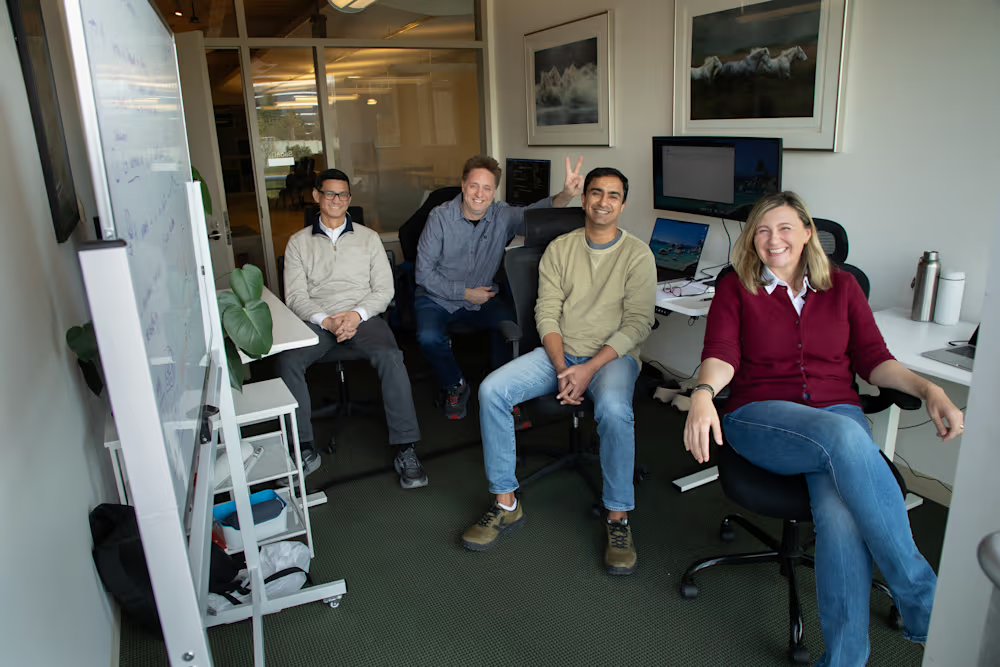
AI agents are missing all the discussions your team is having. SageOX has an answer: agentic context infrastructure
You must be logged in to post a comment Login