Tech
The US Military Just Made History With A C-17 Plane & A Nuclear Reactor

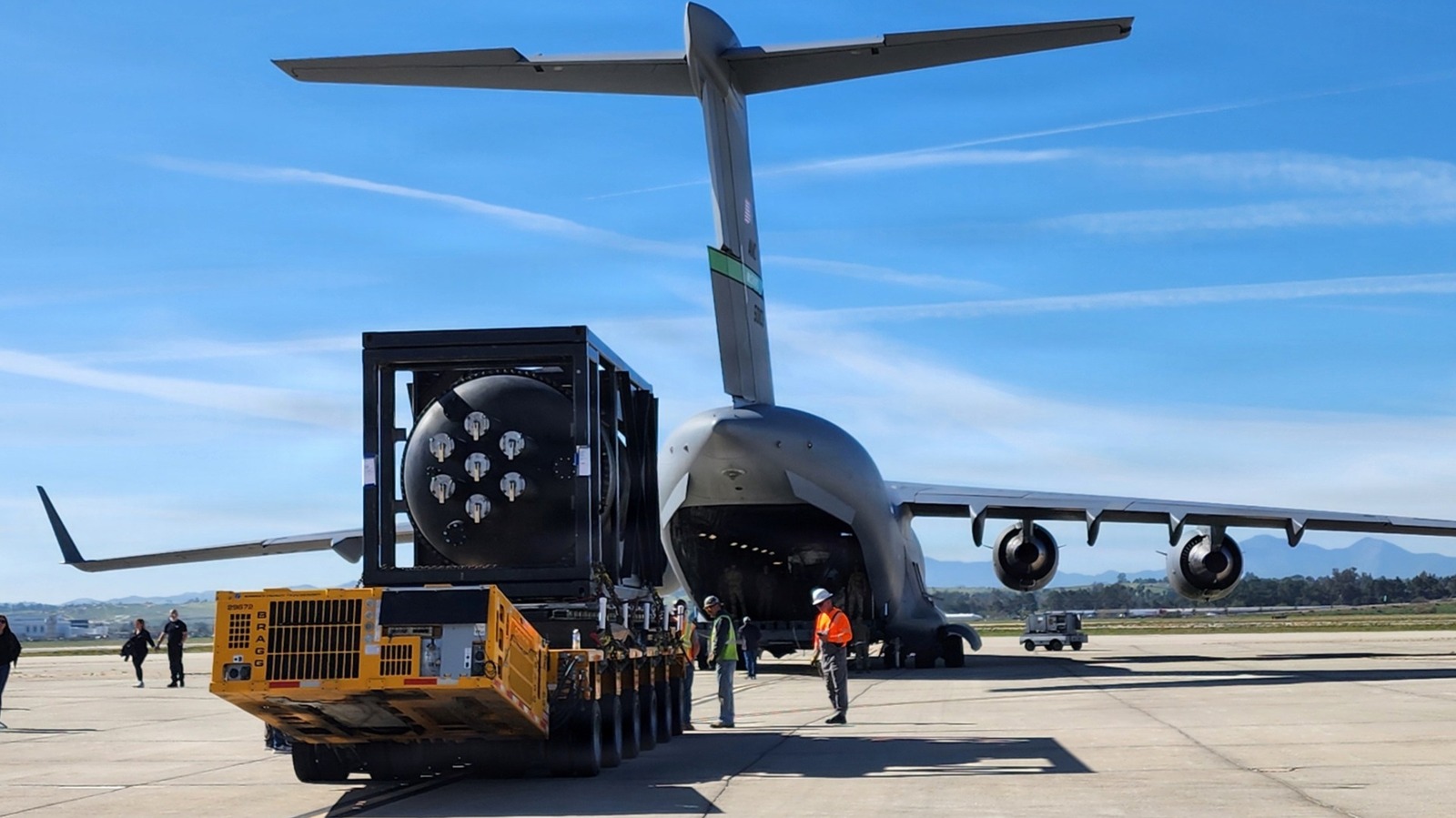

February 15, 2026 was a historic day for the United States military and the future of nuclear reactors in the United States. That’s the day United States Air Force personnel and civilian contractors worked together to load a 5-megawatt nuclear reactor onto a USAF C-17 Globemaster III, an airplane some call the Moose. It was the first time a nuclear reactor was airlifted by a C-17. The March Air Reserve Base, located about 60 miles east of Los Angeles, is home to the 452d Air Mobility Wing, operating a squadron of C-17s among other weapons.
The nuclear reactor, a Ward 250 micro-reactor, fits neatly into the back of the plane, making it easily transportable. The history-making flight saw the Ward 250 transported from March to Utah’s Hill Air Force Base, about 30 miles north of Salt Lake City. From there, it’ll make its way to the Utah San Rafael Energy Lab where it will undergo more testing and evaluation, according to a press release issued by the U.S. Department of War.
More about the Ward 250 microreactor
On August 12, 2025, just six months before the historic flight aboard the C-17 Globemaster III, Isaiah Taylor issued a press release announcing his company, Valar Atomics, had been selected to participate in “the President’s accelerated nuclear program.” The nation’s renewed interest in nuclear energy led to a May 23, 2025 Executive Order directing the US Army to build a nuclear microreactor and provide nuclear energy to a domestic military installation by September 30, 2028, and private-sector programs such as the Ward 250.
Valar Atomics developed its WardZero prototype in Los Angeles months before Executive Order 14301 was signed in May of 2025. The US Department of Energy selected the Valar Atomics Ward 250 as one of the projects poised to “achieve criticality on American soil by July 4th, 2026,” as directed by section five of EO 14301.
The 5-megawatt Ward 250 nuclear microreactor is about the size of a large van. The power generated by the small package is enough power to service an estimated 5,000 homes or a sizable military installation. With the rapid-deployment capability demonstrated by the February 15th flight, the Ward 250 will eliminate the need for military operations to rely on civilian power grids or diesel-powered generators anywhere in the world.
Why was the C-17 Globemaster III used to carry the Ward 250 microreactor?
The USAF Boeing C-17 Globemaster III is a capable aircraft designed to safely transport cargo and military personnel. While the C-5 Galaxy is larger, the C-17 squadron located at March Air Reserve Base offered close proximity to Valar Atomics where the Ward 250 was built and its capabilities closely matching the payload requirements.
The United States Air Force credits the C-17 Globemaster III with being “the most flexible cargo aircraft to enter the airlift force.” The C-17 is renowned for its ability to swiftly deliver cargo and personnel to forward bases within deployment zones around the world. Overall, the C-17 Globemaster III is 174 feet from nose to tail and a 169.8-foot wingspan from winglet to winglet. Its four Pratt & Whitney F117-PW-100 turbofan engines provide up to 40,400 pounds of thrust each for a cruising speed of around 450 knots, or 0.74 Mach. In reverse, the engines can generate enough thrust to taxi the aircraft backwards on the ground, giving it the ability to make un-assisted 3-point turns on runways as narrow as 90 feet.
That strong reverse-thrust and high-lift wing design contribute to the large aircraft’s agility, allowing the use of runways as short as 3,500 feet while carrying large payloads. With a maximum payload of up to 170,900 pounds, the C-17 has a max gross takeoff weight of 585,000 pounds, or over 292 tons.