Tech
The Wichita Lineman Walks Out of The Hidden Fortress, Dodges Godzilla, Grabs a Dog at Rutt’s Hut, and Ends Up in the Cuckoo’s Nest: Editor’s Round-Up

AXPONA is over. Passover is done. The Stanley Cup Playoffs are underway, which is always a beautiful time of year unless you’re a Toronto Maple Leafs fan, in which case it’s just another annual reminder that hope is a renewable resource and results are not.
So I did what any rational person does. I got in the car and tried to drive.
Three hours later I was still in New Jersey, locked in traffic like it was a civic duty, leaning on Qobuz and the NHL Network to keep me from turning the steering wheel into modern art. The stereo in my Toyota SUV did not help. It is not just bad. It is hostile. Flat, lifeless, and oddly aggressive in how it strips the soul out of anything you feed it. I have heard better sound quality from hold music and from relatives calling to critique my life choices. At least they bring some midrange.
Which is why the arrival of the 2026 Mazda CX-5 Premium cannot come soon enough. The Bose system alone is reason to celebrate. Clarity. Separation. Actual bass that does not feel like a rumor. A car where music sounds like music and not a compressed apology for itself.
Because music matters. Especially when you are stuck and have no escape.

Country is also where things fall apart. What passes for country today feels like it was assembled by committee in a conference room with a whiteboard and no sense of shame. I cannot do it. I will not do it. There are exceptions. Orville Peck gets a pass. Dolly Parton from an earlier era still hits. Tom Russell knows how to tell a story without sounding like he is selling me a truck.
And while we are clearing the table, let’s deal with the sacred cows. Eagles. I do not get it. Never have. Polished to the point of anesthesia. Give me Led Zeppelin, The Cure, or Guns N’ Roses any day.

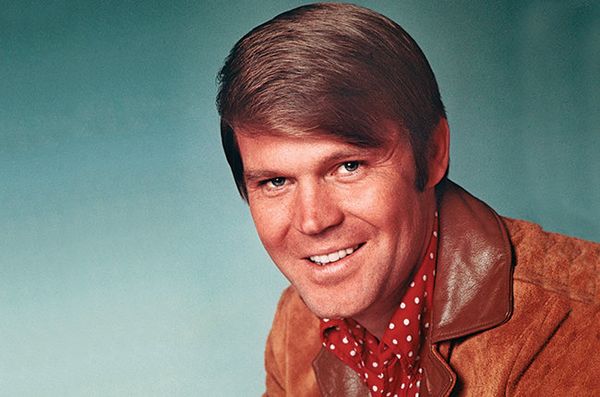
And then there is Glen Campbell, who was not just good, he was essential. You can roll your eyes at “Rhinestone Cowboy,” fine, but “Wichita Lineman” is something else entirely. “I need you more than want you” is not just a lyric, it is a confession. Every word lands. It does not matter if you have never set foot in Kansas, although I have. The song pulls you there anyway. It makes you feel distance, longing, and the quiet weight of holding on to something that might already be gone, but hopefully isn’t.
That is what music is supposed to do. It reaches across time and geography and lands somewhere personal. Somewhere you do not always expect. In my case, it took me halfway across the world for a few minutes. Tokyo. A Japanese egg salad sandwich from 7-Eleven. Blonde hair. A mind that can navigate the dark side of the forest moon and come back with answers. Present without being present.
And it is also why, when you start looking at where some of our favorite stories really came from, you have to be willing to follow that thread wherever it leads.
The Kurosawa Blueprint That Built Star Wars

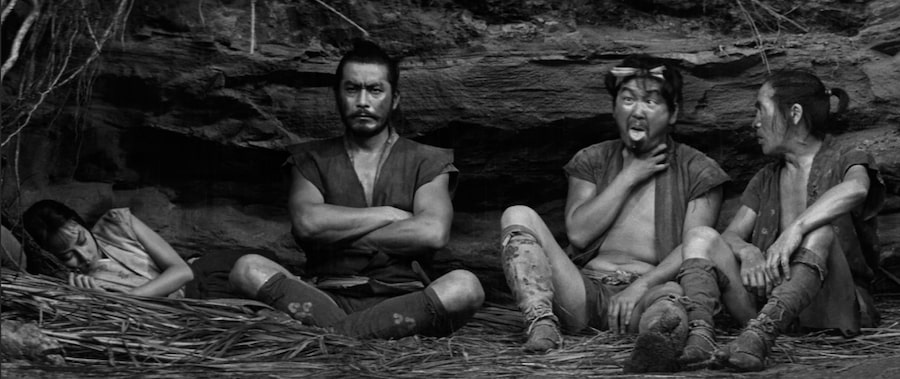
A long time ago, in a galaxy not so far away, Japan, a director named Akira Kurosawa made a film in 1958 that quietly rewrote the playbook. The Hidden Fortress did not need a marketing machine or a line of action figures. It just told a story with precision, perspective, and a structure that would echo a lot louder years later.
Fast forward to 1977. I am seven years old, sitting in a theater in Toronto, watching Star Wars with my friend Andrew Temes, completely unaware that my cinematic worldview was about to be rearranged. Like a lot of people, I did not just like it, I went all in. Thousands of dollars on memorabilia over the years. Stood in line, in the rain, to be the first one through the door in Canada for Return of the Jedi in 1983. Fast forward again and there I was in my late twenties, back on line for The Phantom Menace, which felt less like a return and more like a warning shot. Outside of Andor, Star Wars: The Clone Wars, Rogue One, and maybe Solo: A Star Wars Story, it has been a long stretch of Bantha-level disappointment since.
Then I found Kurosawa.
Throne of Blood. Seven Samurai. Yojimbo. High and Low. The Bad Sleep Well. One by one, they chipped away at that original belief. I own them all now, in more formats than I care to admit. But it was not until my twenties, sitting down with The Hidden Fortress, that the illusion finally cracked.
Because this is not subtle.
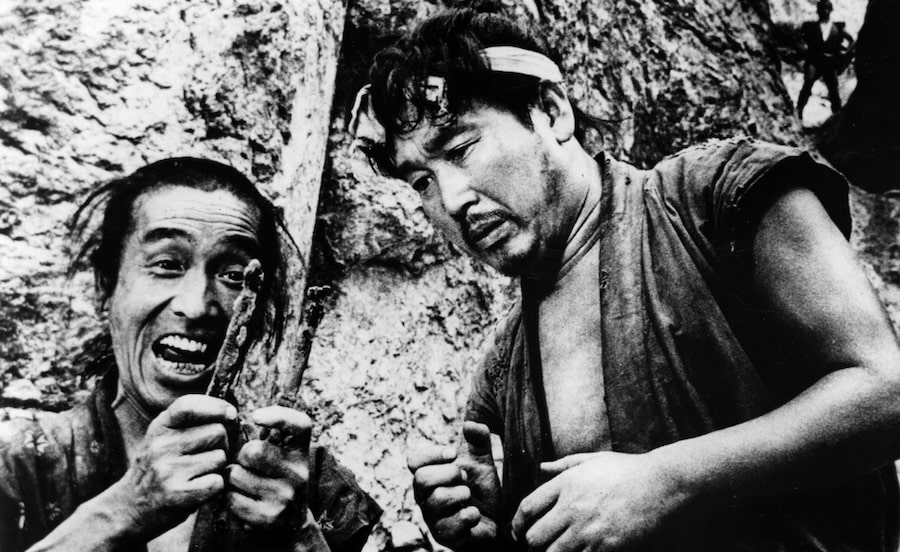

The two bickering peasants framing the story? They are not just an influence — they are the blueprint for C3PO and R2-D2. The hidden princess, the reluctant general, the journey through enemy territory, the tonal shifts between danger and dark humor, it is all there. And visually, it is even harder to ignore. The samurai swords, katanas, are not just cousins to lightsabers, they are the DNA. The code of the samurai maps cleanly onto the Jedi. The warlord’s soldiers, with their helmets and rigid formations, look a little too familiar. Strip away the desert, add black armor, and you are staring at the Empire before it learned how to breathe through a mask.
Look, every director borrows. That is part of the job. Influence is how the medium evolves. But this goes further than influence. This is Imperial level theft.
It does not take anything away from what Star Wars became. It changed cinema. It changed my life. But it did not come from nowhere. And once you see where it came from, you cannot unsee it.
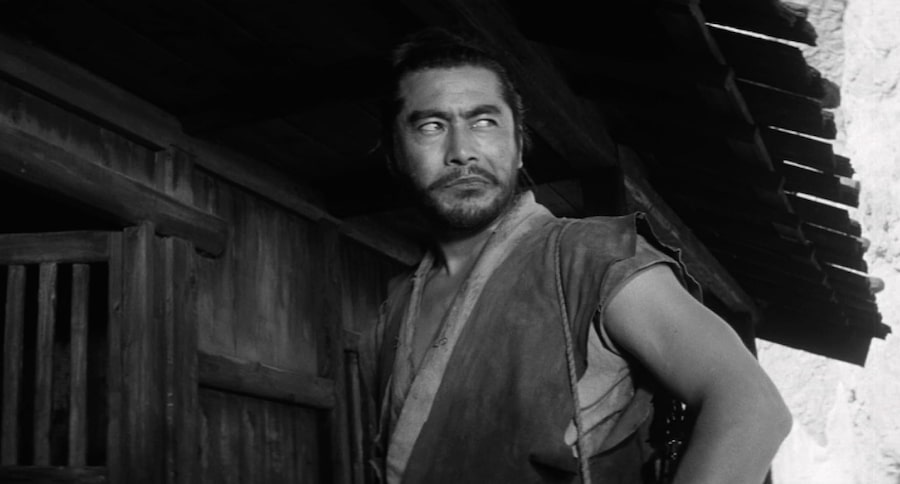
And here is where it gets uncomfortable. Han Solo suddenly feels a lot less original and a lot more like every reluctant hero Toshiro Mifune ever played. From the early postwar Kurosawa films to the sprawling samurai epics to even Red Beard, that swagger, that resistance, that eventual turn toward doing the right thing, it is all there.
Which raises the obvious question. What exactly did George Lucas bring to the table beyond scale and spectacle?

And while we are asking questions, let’s talk about endings. Kurosawa knew how to stage a death. Watch Throne of Blood. Arrows flying, body breaking down in real time, a human pin cushion before the term even existed. It is brutal, precise, unforgettable.
Lucas? Not exactly his strength.
Grief, Guilt, and the Monster We Deserved

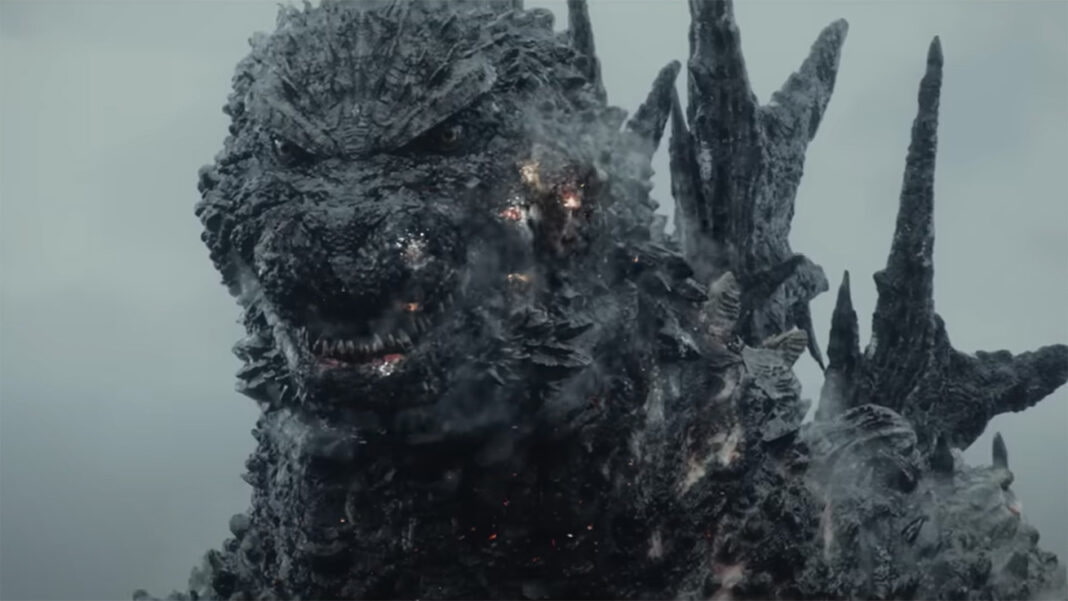
Sitting down for Godzilla Minus One, I expected another traditional monster movie. I could not have been more wrong.
Set in the final days of World War II and the fragile years that follow, the film strips the franchise down to something far more uncomfortable than spectacle. This isn’t about cities getting flattened for fun. It’s about what’s left standing after everything that matters is already gone.
Kōichi Shikishima isn’t a hero. He’s a failed kamikaze pilot who makes a choice to live and then has to carry the weight of it. When he lands his Mitsubishi Zero on Odo Island claiming mechanical failure, the lie hangs in the air. The mechanic, Sōsaku Tachibana, sees right through him. And when Godzilla attacks that night, Shikishima freezes. He doesn’t fire. He survives. Everyone else doesn’t. That’s the wound the film never lets heal.
When he returns home, Tokyo is gone. His parents are gone. What he builds instead, a fragile, makeshift family with Noriko and the orphaned Akiko, feels less like a new beginning and more like borrowed time. He takes work on a minesweeper, cleaning up the literal leftovers of the war, while internally he’s still stuck in it.
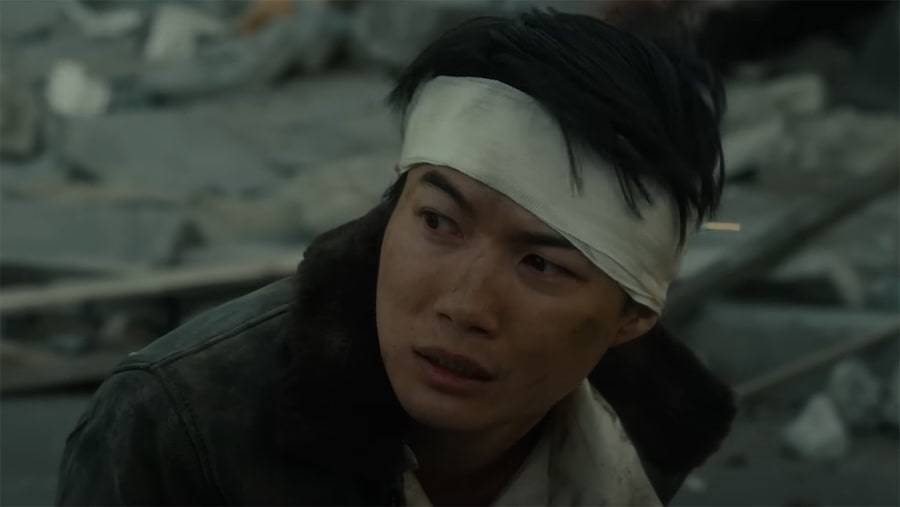

And then Godzilla comes back.
Not as a metaphor, not as a mascot, but as something far worse. Mutated and supercharged by American nuclear testing at Bikini Atoll, this version of Godzilla is a consequence. A continuation. The war didn’t end. It just changed shape. The U.S. steps back because of geopolitical tension. The Japanese government stays quiet to avoid panic. So the people left behind — the same ones already scraping together a life, are the ones who have to deal with it.
That’s the film.
Not the destruction, though there’s plenty of it. The Ginza sequence is devastating, not because of scale, but because of who gets caught in it. Noriko’s death isn’t a plot device. It’s the final break. Shikishima loses the one thing tethering him to something resembling a future, and what’s left is grief with a target.
The plan to stop Godzilla with Freon tanks, pressure, and improvisation feels almost secondary. It’s clever, grounded, and very Japanese in its resourcefulness, but the real story is whether Shikishima can find a reason to live that isn’t tied to dying for something.
That’s why this film works on a level that most Hollywood films do not. Kurosawa would have complained about the lighting in some scenes, but the tone and overall theme would have felt very familiar.
Made for a reported $10 to $15 million, it does more with restraint than the recent Hollywood entries have done with budgets ten times that size. The monster is used sparingly, and every appearance matters. There’s no filler. No winking at the audience. Just tension, consequence, and a very clear understanding of what Godzilla was always supposed to represent.
Seventy years into the franchise, this is the one that finally circles back to the source. Postwar trauma. Nuclear anxiety. Survivor’s guilt. The politics of rebuilding when nobody wants to admit how broken things still are.
I’ve seen almost all of them. Own more than I probably should.
This is the one that broke me in the theater after a year of personal upheaval and more than a few moments where doubt, loss, and betrayal had the upper hand.
Not handing it the Oscar was all you need to know about Hollywood.
The Last Honest Meal in a Crooked Economy
You know what’s actually life-affirming in the way Godzilla Minus One sneaks up on you? Not the destruction, but the rebuild. The small, human stuff that still works when everything else feels broken.
A good hot dog.

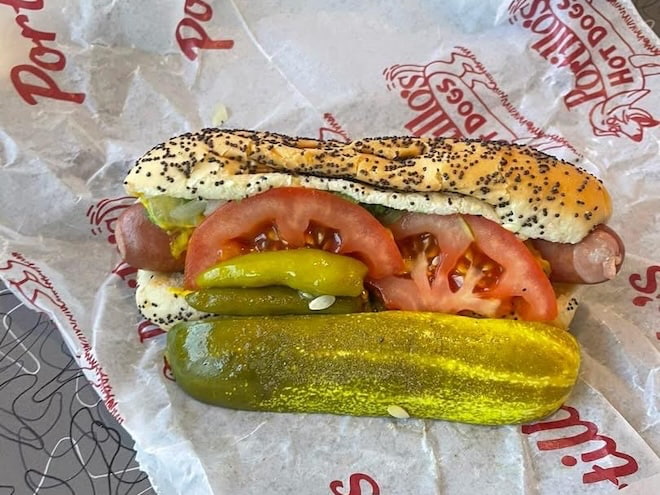
And here’s the part nobody wants to say out loud: hot dogs are coming back because everything else got stupid expensive. Pizza pushing $30 a pie isn’t a luxury anymore — it’s a bad habit with a pocket full of receipts. Meanwhile, the hot dog never left its lane. Still relatively affordable. Still fast. Still satisfying in a way that doesn’t require a loan from your kid with 300,000 Instagram followers or a wine pairing.
AXPONA had rooms that cost more than most people’s homes, but step outside that world and reality looks a lot more like a paper tray and a line out the door. You don’t “elevate” a Chicago hot dog. You respect it. A proper char dog like the ones at Portillo’s, comes loaded the way it’s supposed to: tomato wedge, pickle spear, peppers, celery salt, mustard. No ketchup unless you’re looking to start a fight.
Back home in Jersey, that same no-nonsense energy shows up in different forms. Hiram’s Roadstand is the first stop in Fort Lee, which is better known these days for its Korean BBQ. Some of the greatest jazz musicians of the last century walked out of Van Gelder’s studio, sessions done, ears ringing, and headed straight down Route 9W to Hiram’s for something healthier than a cigarette and bottle of gin.
Flat-top dogs, nothing fancy, no attempt to impress anyone who doesn’t already get it. Hiram’s doesn’t care about your macros or your cleanse. It exists because it works.

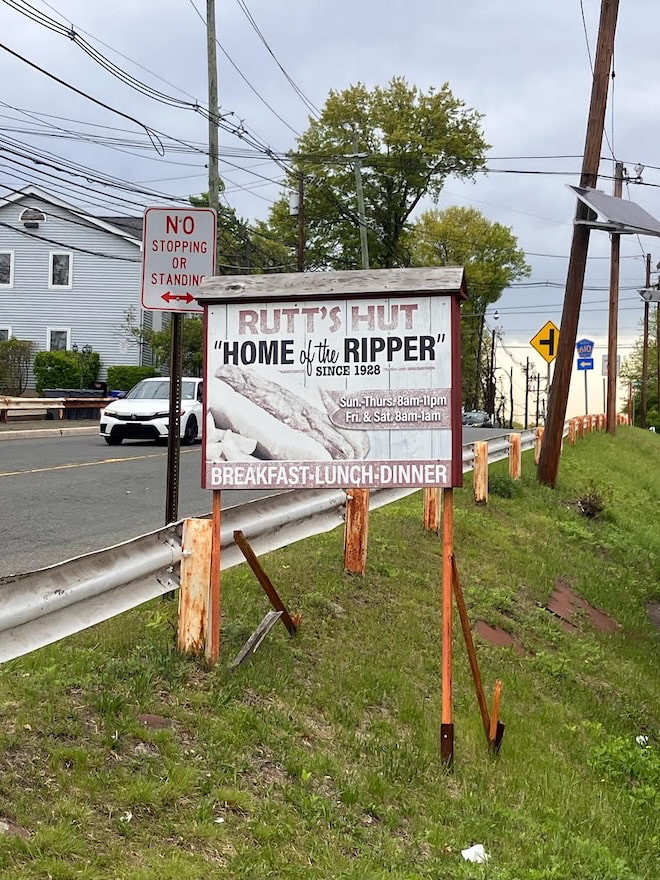
But somewhere along the way, curiosity or maybe poor judgment, pulls you deeper into North Jersey’s hot dog hierarchy. That’s how you end up at Rutt’s Hut.
Rutt’s isn’t just a stand. It’s a Jersey institution. The deep-fried “ripper” doesn’t try to charm you. The casing splits, the edges land at that exact point between crisp and snap, and suddenly you understand why people make the drive. For years, I kept my distance. Fried? Messy? Felt like a late-night decision best avoided. Turns out, I was late to the party.
The first bite resets expectations. Not refined. Not chasing any TikTok trends. The kind of food that doesn’t need explaining because it’s been right for decades.
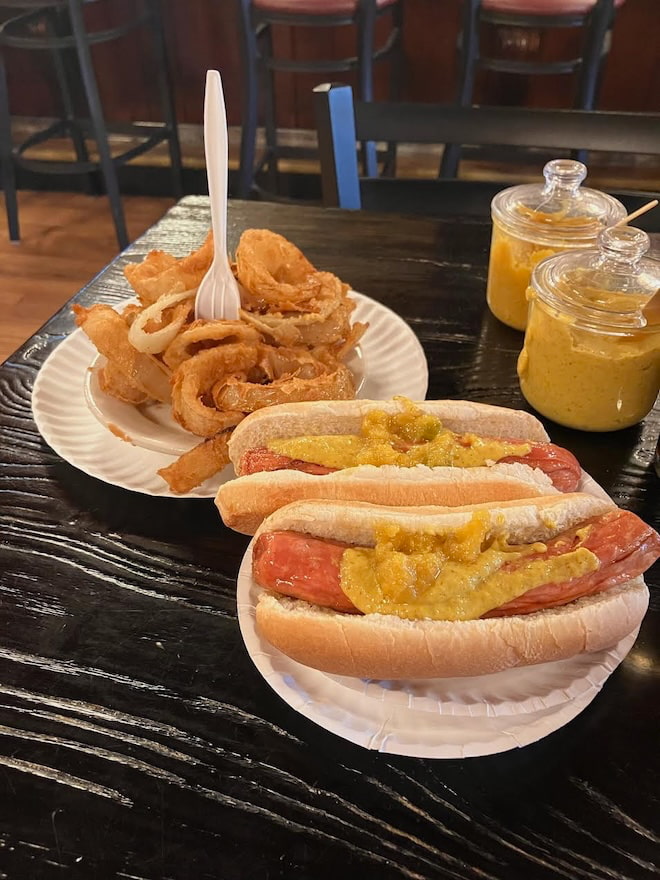
And then the supporting cast shows up. Onion rings done the way they should be — no gimmicks, just the right amount of crisp. Add their homemade relish and mustard, and now you’re in deeper than you planned. It’s the kind of combination that makes everything else on the table feel optional. Better than Coke, honestly. And not the kind you drink sitting on the hood of your car in the parking lot of a 7-Eleven in Long Branch.
Now I understand why the wise guys made the detour to Clifton on their way to the Bing.
The System Says Sit Down. Mr. McMurphy Says Not Today
Driving home from Rutt’s Hutt takes patience these days because New Jersey is having a moment. Call it Hollywood East if you want. I live less than two miles from the new Netflix Studios Fort Monmouth, a $900 million project that’s already changing the rhythm of the Shore. Ten thousand people are expected to land here over the next couple of years, and some days it feels like half of Brooklyn beat them to it. The quiet streets by the ocean are not so quiet anymore. Sure, the house is worth a lot more now. So are the property taxes.
And when Hollywood comes knocking, waving $25,000 for two months of rent for some B-list actor you’ve never heard of, you don’t overthink it. You smile, take the check, and hope he doesn’t spiral into some performative meltdown after noticing the thirteen mezuzahs and the IDF Six Day War flag sitting behind glass in the office.

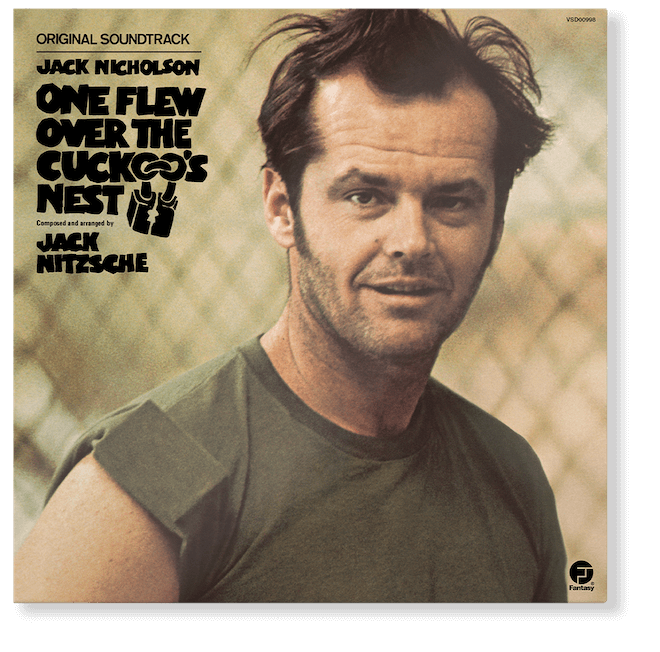
Part of that drive home from North Jersey takes me past a hospital where I spent time as a patient. Not visiting. Staying. Which is why One Flew Over the Cuckoo’s Nest never felt like fiction to me. It felt familiar. The nurse who made my life a misery. The routines. The slow grind of being told who you are supposed to be. I’ve talked about it publicly. No secrets left to protect.
At 56, I’m not interested in pretending that those chapters didn’t happen. They did. And it taught me something useful. You either let that kind of experience flatten you, or you learn how to direct it. I chose the second option. The energy that used to work against me now has a job. As Emperor Palpatine would say, it gives me “focus” and a very different perspective.
That doesn’t always sit well with people. I’m not built to fall in line or nod along when something doesn’t pass the smell test. I’m not interested in selling the idea that six figure systems are normal, or that spending more on cables than a car is a rational decision for most people.


I’m not here to play Westeros court politics or nod along while the room pretends everything makes sense. I’m closer to Han Solo than anything polished and obedient — shoot first, deal with the fallout later. And there’s a little Arya Stark in there too. I keep a list.
Driving past that hospital, thinking about where I’ve been and where I just was—rooms at AXPONA stacked with mid six figure systems, cables dressed like they have their own security detail — it starts making sense.
Maybe we’ve got the labels wrong.
Because if “normal” now means telling people this is the entry point, that this is what it takes to belong, then maybe the problem isn’t the audience.
We’ve spent too much time talking at people like they showed up without the right jacket and pair of white leather sneakers, pricing them out before they’ve heard a single note, and wrapping it all in language that sounds more like a late night pitch than anything connected to music. That’s not passion. That’s insulation.
And here’s the part that should make people a little uncomfortable. Not everyone is willing to take the little white pill with the cup of water anymore and nod along.
Some of us remember what this is supposed to be. Sanity isn’t just a state of being. It has an address.
And more people in this industry need to start finding it.
You must be logged in to post a comment Login