
Tech
There Are No Trans Women in the WNBA, so Right-Wingers Are Making Some Up


“Look, I’m not trying to do a conspiracy here,” wrote right-wing commentator Sydney Watson in an X post on Monday, before proceeding to implicitly endorse one.
The Australian YouTuber, who has more than a million followers on that platform, had shared a 2024 video of Brittney Griner, center for the WNBA’s Connecticut Sun, admiring a new basketball arena at Baylor University, where she was a legendary powerhouse NCAA player between 2009 and 2013. Watson speculated in her post that “maybe the reason the WNBA refuses to define ‘woman’ and definitively say that men can’t play in the league is because there is already a man … in the league.”
The baseless and inflammatory remark (Griner is a cisgender woman) came amid an ongoing moral panic about transgender women in sports, which has been ginned up by MAGA world and Donald Trump with help from a handful of female athletes. The most outspoken of these is Riley Gaines, a former collegiate swimmer for the University of Kentucky; she tied for fifth in a 2022 NCAA championship event with Lia Thomas, a transgender competitor, and soon rocketed to fame as an anti-transgender activist thanks to the grievance-industrial complex of the far right.
In the WNBA, Sophie Cunningham, a shooting guard and small forward for the Indiana Fever, has likewise begun to embrace a role as spokeswoman for this rancorous movement.
Cunningham made waves with a July ESPN profile that quoted her opposition to allowing trans women in leagues such as the WNBA, becoming an icon of transphobic fear-mongering overnight. She explained in the interview that she wanted to “protect young girls in a locker room, or young girls in sport who shouldn’t have to go against biological men.” In subsequent comments, Cunningham reaffirmed her stance: “I think it’s kind of common sense,” she told members of the press before a game. “I think it’s really important to protect children, and that’s little girls who are also involved in that category. I stand on what I said.”
But the uproar over the WNBA not expressly forbidding the inclusion of trans athletes is much ado about nothing. No transgender women have ever played in the league, which noted in a statement this month that there are also “no immediate eligibility matters” for it to address. League commissioner Cathy Engelbert has dismissed the anti-trans online vitriol and tiny protests outside stadiums as the work of “haters.”
To keep their non-controversy alive, then, culture warriors have been forced to get creative. As former NBA players Enes Kanter Freedom and Royce White, both cisgender men, fight to prove that identifying as women makes them eligible for the 2027 WNBA draft in April (it doesn’t), Watson and others in her orbit are seeding the lie that active players such as Griner are secretly transgender. It’s a development that validates years of warnings from activists that the right’s campaign to allegedly “save women’s sports” harms cisgender women as well as transgender athletes, leading to dangerous harassment across the board.
Another MAGA influencer with nearly 400,000 followers on X, for example, on Tuesday went far beyond demands that the WNBA bar trans players, calling for cheek swabs to determine the sex chromosomes of active players. That Tuesday post included a photo of Griner on the court. “Women’s sports exist because men and women are different,” the user wrote. “If the league is terrified of a cheek swab, that tells you everything you need to know.”


Gregg Phillips, an election denier who once claimed he teleported to a Waffle House, says he is still working in the Trump administration, after he was reportedly removed from his influential role overseeing the Federal Emergency Management Agency’s emergency response efforts in June.
While it remains unclear what Phillips has been working on in the administration since stepping away as head of the Office of Response and Recovery, on Sunday he wrote on Truth Social, “I have been in the admin since last year. I’ll be leaving soon to rejoin the fight.”
One day later, he was pictured at a Department of Justice building alongside Ed Martin, the former US pardon attorney whom President Donald Trump last week announced would be departing the administration to “fight legal battles for the upcoming midterm election.”
“Enjoyed the visit with our friend Ed Martin today in DC,” Phillips wrote on Truth Social. “Haters are gonna hate this.”
Martin and the Department of Justice did not respond to WIRED’s requests for comment about Phillips’ role in the administration. Phillips declined to comment.
A FEMA spokesperson directed WIRED to a statement it issued in June saying Phillips was “taking leave for personal reasons.” When asked if Phillips was still employed by the agency and still on leave, it didn’t respond.
Phillips is on administrative leave, according to the White House, which also confirmed that Martin is still working in the administration until September 4. Federal employees on administrative leave are entitled to full pay and benefits.
Phillips has long promoted baseless allegations of widespread voter fraud, claiming in 2016 that more than 3 million non-citizens voted in the presidential election, robbing Trump of winning the popular vote. Days after taking office in 2017, Trump promoted Phillips’ false claims. In the wake of the 2020 presidential election, Phillips gained further notoriety when the group he was involved with, True the Vote, provided the data that underpinned the debunked film 2000 Mules, which falsely alleged that a network of individuals was paid to illegally collect and deposit ballots in drop boxes.
A 2022 investigation by the Center for Investigative Reporting found that True the Vote has raised millions of dollars from donors by repeatedly promising to uncover evidence of election fraud but failing to do so. Much of that money, CIR reported, went to companies controlled by Phillips and in loans to True the Vote’s founder Catherine Engelbrecht.
Phillips was appointed last December to head up FEMA’s Office of Response and Recovery despite no past experience working in emergency response. In June, following his departure, the agency thanked Phillips for his “his service, dedication, and leadership,” adding that “he has played a pivotal role in stabilizing the Office of Response and Recovery and advancing key reforms to strengthen our mission delivery.”
Three sources at FEMA, who were granted anonymity due to fears of recrimination by the administration, tell WIRED that Phillips has not been seen at FEMA’s headquarters since June.
When Phillips posted on Truth Social this week about his decision to “rejoin the fight” he was once again discussing “illegals on the voter rolls” and the work he and Engelbrecht had done almost a decade ago to address the perceived issue—which is so rare that even a third-party analysis of a database maintained by the right-wing Heritage Foundation shows it contains fewer than 100 examples. When asked if Phillips’ comment meant he would be working with True the Vote again, Engelbrecht said, “I’m sure Gregg will be involved in a number of projects in the future, and we at TTV think very highly of him, but in an effort to set the record straight, he is not part of the True the Vote team. He previously assisted TTV as a contractor on research projects from 2020–2023.”
When asked about Phillips’ role as a board member of True the Vote, as revealed by the CIR report, Engelbrecht did not respond.
WIRED recently revealed that ahead of the midterms, True the Vote will release another documentary, entitled Trapped, which again makes allegations about widespread and systemic voter fraud.
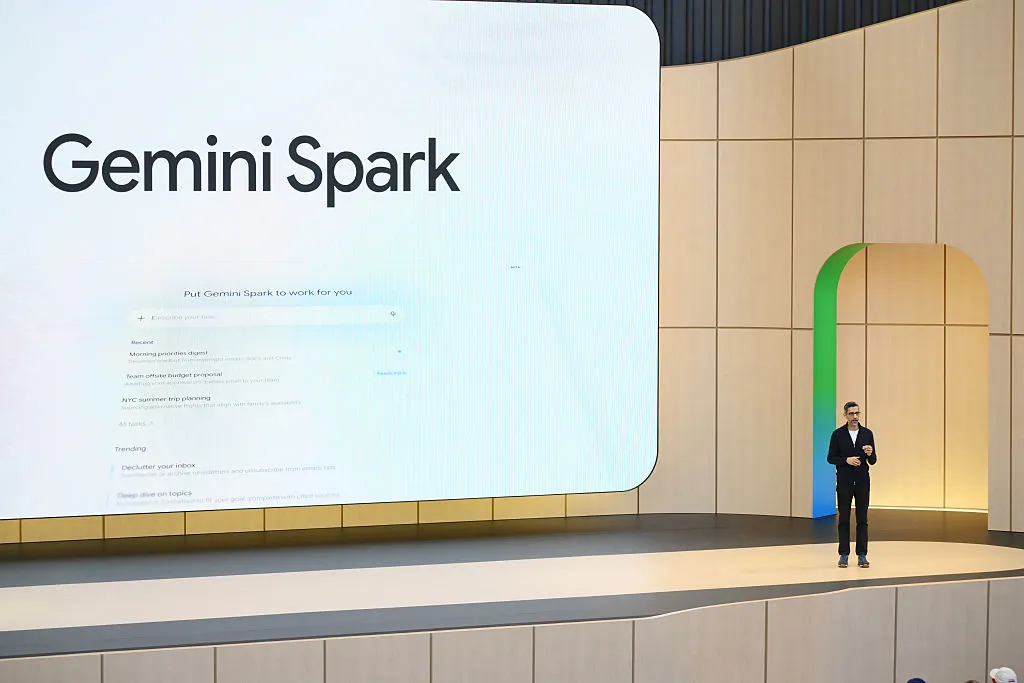
Google gets something right in its Wednesday announcement about new Gemini Live voice features when it says, “You shouldn’t have to guess whether a task requires Spark, a Daily Brief, or a quick inbox search.” Google means that as a promise — that the updated Gemini app can handle a variety of tasks via voice commands. But there’s a ridiculousness here: Google has given every Gemini AI feature under the sun its own branding, which undercuts that very message.
In the Gemini app, users can switch between chat, Spark, and Daily Brief — three separate features, each with its own icon and place in the app’s navigation. This clutters up what could otherwise be a more straightforward consumer experience, and it suggests that Gemini is still struggling to find a killer feature.
Take Daily Brief, for example. The feature comes across as the kind of thing an AI engineer, not an everyday user, would think is clever. It’s essentially an AI-enabled agenda that offers “proactive, personalized updates” using data pulled from Google’s apps, like Gmail and Calendar. In practice, though, the Brief can’t tell the difference between information that’s urgent or actionable and unsolicited nudges to follow up on other things — like prompting you to continue research you started in the chatbot, or worse, resurfacing your prior Google searches.
That second part doesn’t feel useful; it feels creepy. So what if I had been researching college scholarships or animal rescues on Google? That doesn’t mean I want an AI tapping me on the shoulder about them later.
Spark has the opposite problem. It’s one of the more useful aspects of Gemini’s app — an AI agent that can take action on your behalf — but Google has packaged it as its own standalone brand, which it doesn’t need to be. Sure, internally, Google engineers may want to be on the Spark team, and that’s fine — but a mainstream AI app user definitely does not need to think about which “side” of the AI app they need to be in for a given task. They should just be able to type their request, and the AI figures out how to handle it, spinning up an agent if the task calls for one.
In fairness, the problem isn’t limited to Gemini. The AI industry at large seems to expose its internal architecture directly to consumers rather than hiding it behind a simpler interface.
Today, people have to think about whether they want to “chat” with Anthropic’s Claude or “Cowork” with its help. (Until this week, those two modes inside the Claude app didn’t even share a memory of past conversations.) ChatGPT is the same, requiring you to swap between “Chat” and “Work.” This is the kind of engineering-minded design that makes engaging with AI feel unnatural. Consumers are being asked to learn the brand names for what are essentially interaction modes or surfaces, powered by a company’s AI model.
This may be why Apple’s somewhat anticlimactic approach to Siri could ultimately win over consumers. iPhone and Apple device owners don’t have to change any of their existing behavior to take advantage of it. Apple simply makes the apps and features that people already use — like Spotlight Search, the Photos app, the iPhone’s Camera, and Siri voice requests — smarter without asking users to learn a new interface.
This same principle may explain the rise of text-based AI services, where users simply text a chatbot — like Poke, Ollie, Lindy, Orchid, Lucas, Folk, Tomo, Instinct, or others — and the assistant just does what’s asked.
Text messaging is a clean and simple, well-understood user interface, and it doesn’t require extra mental effort to figure out which feature or product inside a larger app you’re supposed to use.
As a16z investment partner Justine Moore recently wrote, “People don’t want to open an app every time they need help – they want a contact they can text like a friend. And the gold standard is iMessage.”
When you purchase through links in our articles, we may earn a small commission. This doesn’t affect our editorial independence.

ASUS has introduced its latest TUF Gaming laptops in India, built around its Game, Study & Multitask approach. The new lineup includes the TUF Gaming 16 as its key launch, along with Made in India configurations of the TUF Gaming A15 and refreshed TUF Gaming models. The laptops focus on strong performance, durability, flexible upgrades, and cooling. They are aimed at users who need a single device for gaming, studying, projects, entertainment, and daily multitasking.
ASUS TUF Gaming 16 Specifications

The ASUS TUF Gaming 16 (FX610) is the headline launch of the refreshed series. It is powered by up to an Intel Core i7-14650HX processor paired with an NVIDIA GeForce RTX 5060 Laptop GPU, making it suitable for AAA gaming, content creation, and demanding multitasking.
ASUS has equipped the laptop with MIL-STD-810H military-grade durability and support for up to 64GB of RAM and a 2TB PCIe SSD, allowing users to upgrade the system as their needs grow. The dual-fan cooling system, combined with a large rear exhaust vent, is designed to keep temperatures under control while maintaining relatively quiet operation at around 40dB.
The laptop also features a 180-degree hinge for easier screen sharing, an anti-smudge coating on both the lid and keyboard deck, and a generous selection of ports, including USB-C with Power Delivery, HDMI 2.1, LAN, and USB Type-A. The TUF Gaming 16 starts at ₹1,79,990.
Made in India TUF Gaming A15 and Other Refreshed Models

ASUS is also expanding its locally manufactured gaming portfolio with the Made-in-India TUF Gaming A15 (FA506NCQ). The laptop combines an AMD Ryzen 7 170 processor with NVIDIA GeForce RTX 3050 graphics and retains the same MIL-STD-810H durability certification found across the TUF lineup.
It supports up to 32GB RAM and 2TB SSD storage, while dual-fan cooling and larger rear vents help improve sustained performance during longer gaming sessions. Connectivity includes dual USB Type-C ports alongside HDMI 2.1, and the laptop starts at ₹1,24,990.
ASUS has also refreshed the TUF Gaming A16, F16, and another A15 configuration with newer hardware. The TUF Gaming A16 now supports up to 64GB RAM, 4TB SSD storage, and RTX 5060 graphics, with prices starting at ₹1,99,990. Meanwhile, the TUF Gaming F16 pairs an Intel Core 5 210H processor with upgrade support for up to 64GB RAM and 4TB SSD, starting at ₹1,35,990. The refreshed TUF Gaming A15 (FA506NCG) features a Ryzen 7 155 processor, RTX 3050 graphics, and starts at ₹1,15,990.
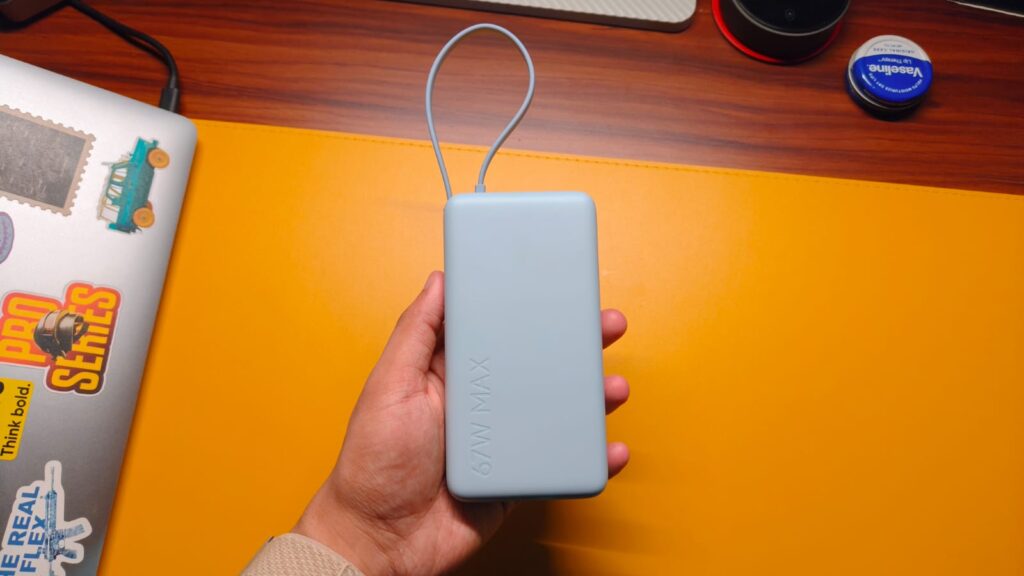
Power banks come in all shapes and sizes. Depending on your needs, you can choose either an ultra-slim device that attaches to the back of your phone or a large power bank that can charge your laptop and phone simultaneously at full speed. I, however, think differently. An ideal power bank for me should be somewhere in the middle. Something that can charge my laptop but is small enough to fit inside a backpack. Xiaomi seems to have listened to the demand and launched its new 67W 20,000 mAh Power Bank in India. I took it on a trip to Delhi to test whether you should spend ₹3,499 on it.
Design & Charging

The Xiaomi 67W power bank is more of a travel accessory. It’s made from plastic, of course, but it doesn’t feel cheap. The blue color feels like a breath of fresh air in a stale, black power bank world. The design is rectangular, so it’s easy to hold in your hand, and the dimensions are decent. I wouldn’t call it compact, but it fits in a bag pretty easily without taking up much space. On the side, you get a small display with a button directly underneath it. You press it to see the remaining charge, which is a nice touch. The front is where all the ports are. The most important one is the integrated Type-C cable, which doubles as a carrying strap and supports 67W of fast charging. You also get a USB-A port and another Type-C port to connect longer cables.
My experience with the power bank was pretty good. I was invited to an event in Delhi, which meant catching the morning flight, attending the event, and then coming back the same day in the evening. I carried my MacBook Air M1, whose battery health has seen better days, so I knew I’d need to charge it somewhere. The first leg of the journey went well, but by the time the event ended, my laptop was down to around 30%.

Since I can’t be bothered to look for a charging socket, I connected it to the Xiaomi power bank. With a fast cable, it charged my laptop from 30% to 60% in about 30 minutes. As for my OPPO Find X8, the power bank supports SuperVOOC, so it can fully recharge my phone in about 40-50 minutes.
The Xiaomi power bank is rated at 20,000 mAh, though the usable capacity is naturally lower due to voltage conversion losses. For context, it can charge my MacBook from zero to full just over one time, while phones can typically be charged more than twice. That estimate assumes a phone with a battery of around 5,500 mAh and not for ridiculous battery phones like the Redmi Note 17. If you use an iPad, you’d be able to charge it 1.5 times before the power bank needs to be plugged in. Speaking of that, the Xiaomi power bank supports fast 65W charging. You can charge it from 0% to 100% in about 2.5 hours.
Verdict

At ₹3,499, Xiaomi has made one of the easiest power banks to recommend in this price segment. It strikes the balance I was looking for: powerful enough to charge a 67W laptop, yet compact enough to fit in a backpack without feeling like you’re carrying a brick. The built-in USB-C cable is more useful than I expected. The display makes checking the remaining battery effortless, and the charging speeds held up well during a full day of travel. Sure, it isn’t the smallest 20,000mAh power bank around, but that’s a compromise I’m happy to make for the extra versatility.
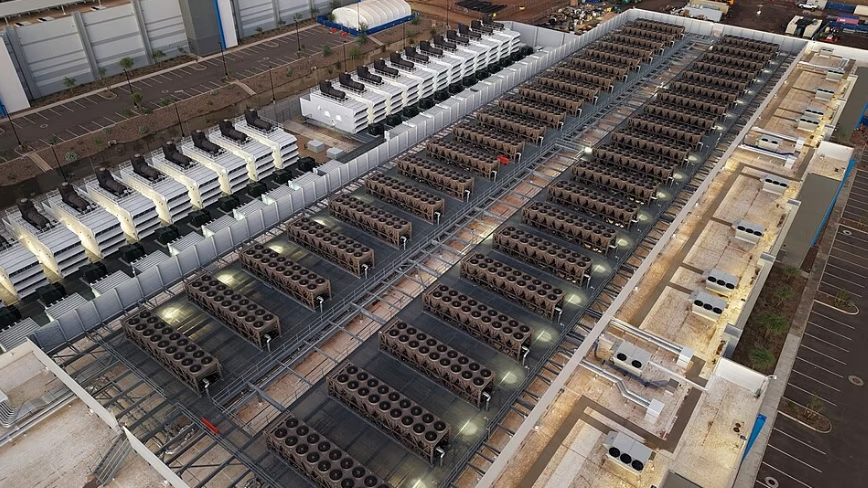
Investment firm Kimmeridge says as many as half of the data centres proposed in the United States are at risk of delay or cancellation because of political backlash and the difficulty of building physical infrastructure. It expects that to cut forecasts for US gas demand, most of which Europe now buys.
As many as half of the data centres proposed in the United States are at risk of delay or cancellation, according to Kimmeridge Energy Management. The investment firm blames political backlash and the ordinary difficulty of building physical infrastructure.
“The sort of Silicon Valley model is running into a real-world infrastructure constraint,” said Ben Dell, the firm’s managing partner and co-founder, speaking at Bloomberg’s New York headquarters.
Where the estimate comes from is worth noting. Kimmeridge holds stakes in gas producers and in a Louisiana export terminal, and Dell says delays would force cuts to US gas demand forecasts, which makes this a warning against his own book.
He put figures on it. Of roughly 30 billion cubic feet a day of expected US gas demand growth, most of it from LNG exports, Dell said data centres might account for 5 billion to 10 billion, with delays pushing that towards the lower end.
The backlash he describes is now measurable. TNW reported this month that more than 500 US jurisdictions restrict data centres, with New York freezing environmental permits and Texas halting approvals pending audits.
Dell says the opposition has turned bipartisan. Pennsylvania, Texas and Ohio, once considered friendlier to these projects, are producing pushback and litigation, and the issue is heading into the midterm elections.
Europe has the same problem for a different reason. The obstacle here is rarely the neighbours and usually the grid, as Nscale found when National Grid could not connect its £2B Essex site in time to open next year.
The two continents are joined by the fuel. Kimmeridge’s Commonwealth LNG took a final investment decision in May on a $13B terminal in Cameron Parish, Louisiana, shipping 9.5 million tonnes a year from around 2030.
Europe is the customer for that gas. IEEFA expects the United States to supply two-thirds of European LNG imports this year, rising towards 80% by 2028, into terminals it projects will be three times larger than European demand by 2030.
So an American delay becomes a European supply question. Gas that does not burn in Ohio can be liquefied and sold to a continent that keeps telling Big Tech to align its data centres with climate targets.
Dell’s ideal proposal, he said, would be “zero impact,” with no net effect on water use, land, emissions or power prices. Nobody has built one of those yet, on either continent.

Jetterz Incz services over 500 outlets for brands like Starbucks & KFC
For most 17-year-olds, a first job might mean a weekend shift at a café or retail store. For Shaik Nifael, it meant earning S$23 a day cleaning grease traps—a far cry from an easy first job. While his friends were still in school and spending their evenings playing computer games, Shaik was working long days cleaning the greasy interceptors that catch waste oil before it enters the sewage system.
School was never going to be his path. He failed his O-Level maths and combined science, and dropped out of Millennia Institute after his first year. His father, then a general manager at a waste management company with 40 years in the trade, gave 17-year-old Shaik a choice: go back to school, or come earn his keep at his waste management company. Shaik chose the latter.
I wanted to prove myself to him, so I took up the challenge. I went to my father’s office for the interview the very next day.
Nine years later, in 2015, he struck out on his own and set up Jetters Incz. Today, the 37-year-old’s waste management company services over 500 outlets for brands like Starbucks, KFC, Pizza Hut, Coffee Bean, Sushi Express, and Shake Shack, pulling in close to S$3 million in revenue a year.
The $200,000 handshake

From cleaning grease traps at 17, Shaik eventually worked his way into management. In 2011, five years later, he joined a company in the same industry, run by a friend of his father’s as a management trainee.
He learned the trade from the ground up: how to read a blockage, open a pipe and clear a choke. But he also proved himself on the business side.
Over the next four years, Shaik helped grow the company and its fleet from three vehicles to 17, eventually working his way up to operations manager.
In late 2014, an acquaintance, Kelvin Neo, who ran landscaping company Ho Eng Huat Construction, casually floated the idea of backing Shaik if he ever decided to strike out on his own. Shaik turned him down at first—he liked his job and saw no reason to leave.
That changed when his father and his friend had a falling out. Within eight or nine months, Shaik was out too, so he called Kelvin back.
But Shaik didn’t dive into the venture blindly.
He walked into Kelvin’s office with a detailed financial breakdown covering everything from vehicles and licences to tanker fabrication, and asked for S$200,000 in funding. Kelvin trusted him enough to barely look at the paperwork before putting the cash on the table.
That handshake marked the start of Jetters Incz in August 2015.
Learning to run a business from zero

Having worked in waste management companies for years, Shaik knew the technical side cold. However, running an actual company was a whole different ballgame entirely.
To save money, he furnished his first office with furniture he found on Carousell—secondhand chairs, desks, whatever he could find. “It was a Frankenstein office,” he said, “cut and paste, enough to get it going.”
His wife, Dania, joined him since the start of the business, handling sales while raising their children.
In its first year, Jetters made an impressive S$600,000 in sales, carried largely by clients who followed Shaik over from his previous company on trust alone.
Whenever asked about what Jetters does, Shaik is unabashed in sharing what his company is about.
With its highly specialised equipment, Jetters is typically called in to maintain pipes and fix complicated, stubborn chokes that most plumbers do not have the capacity to clear. It’s a work that most people never see, and even fewer understand.
Shaik likens a building to a body: its pipes are arteries that need steady blood flow, and Jetters is the doctor who clears the blockages before things escalate into a heart attack—or in drainage terms, a burst pipe.
Same concept. We go in and take a look at the pipe, and once we find the problem, we take the choke out.
A typical day at Jetters

Most of Jetters’ work is scheduled. Teams visit every outlet under contract on a rotation, checking and servicing pipes before anything goes wrong, which Shaik jokes is the “protection money” clients pay for.
There’s also the emergency side of the business, with calls coming in at any hour for burst pipes, sudden blockages or flooded kitchen lines.
Two or three men go in, assess it on the spot (pricing is done job-by-job through a site survey, since no two blockages are the same), clear it, and leave. It’s not unusual for a team to be on site until 3AM and have another crew out again by morning.
Around the clock, Shaik and his wife Dania take turns manning the hotline for emergency requests, day and night, so Jetters can deploy a team the moment something comes in.
Currently, the business runs on a lean team of 12 with seven vehicles made up of tankers, high-pressure water jetting trucks, lorries and vans.
Key pivots that reinforced Jetters’ relevance

Most small operators in Shaik’s industry lost ground during the COVID-19 pandemic. Instead, Jetters grew further.
Just before Singapore’s lockdown hit, Shaik moved his foreign workers out of dormitory housing, a decision that let Jetters keep operating and take on additional work while competitors, whose workers were confined to dorms under quarantine, simply couldn’t.
Jetters also became an early adopter of digitalisation in an industry Shaik describes as otherwise almost untouched by new technology in decades.
Moreover, in its early business years, Jetters used to compete for building maintenance tenders like everyone else in the industry, a market that, Shaik found, rewards the cheapest bid over the best service. As a new player up against operators with over 15 years of reputation, he realised he couldn’t win on price alone.
So he pivoted towards offering his services to chain outlets instead—brands with multiple locations that needed consistent, standards-driven maintenance rather than the lowest quote.
Today, Jetters maintains drainage for all 164 Starbucks outlets, 72 KFCs, and 56-and-growing Pizza Huts in Singapore, alongside Coffee Bean, Sushi Express, and a whole roster of international names, even in the hospitality scene.
“When you can maintain chain outlets well, they stay with you without even doubting you,” he says, “that’s the epitome of your service quality.”
The risk nobody warns you about in a business like Jetters

Running a service business on a minimum of 60 days’ payment terms (sometimes stretching to as long as 200 days) poses a huge risk to a company like Jetters.
When a client collapses, the money doesn’t just get delayed, and there is a high chance it disappears.
There were instances when Jetters lost outstanding payments from large names, including US fast-food chain Fatburger and Sentosa Beach Club Tipsy Unicorn, which folded in 2023 and 2026, respectively.
Shaik shared that payments for services done for these companies still have yet to be recovered after years of rendering his services.
Moreover, taking into account that the running cost of his businesses comes to around S$200,000 a month.
Another concerning cost is diesel. Due to the recent Middle East Conflict, tanker fuel costs have roughly doubled or tripled in recent years, and Shaik says Jetters mostly absorbs the increase rather than passing it on to long-term clients because Shaik values relationships with clients more than the rising costs.
Then there’s the cost of hiring that Shaik shared puts a significant strain on local businesses. Foreign worker levies run S$600 to S$950 a month per worker, in an industry that struggles to attract local hires for physically demanding, unglamorous work.
“Who really wants to clean longkang?” Shaik said bluntly.
Building industry knowledge himself

Since Mar this year, Shaik has been teaching himself to build an internal AI tool named Shika.
Shaik aims to capture the decades of undocumented knowledge and practices for various situations held by ageing veterans in Singapore’s urban drainage industry, a sector he said has essentially zero centralised databases, and the only ones with such knowledge are those who have physically worked in the job.
Shaik has been talking to industry veterans directly to document their know-how by hand, feeding it into the AI himself.
Over the years, the entrepreneur also shared that he had turned down repeated approaches from venture capitalists, private equity firms, and even an offer to relocate the business to the US, preferring to keep the company Singaporean and independent.
Beyond his own AI database, Shaik is currently in early conversations with institutional partners, including GIC, about scaling Jetters’ technology arm and turning Jetters into a holistic technology-driven company, rather than a traditional waste management company.
Where Jetters is headed
In 2025, Jetters came in just under its S$3 million revenue target.
Shaik joked that he “aimed for the moon and landed on the stars.”
The entrepreneur is optimistic about 2026’s revenue beating that S$3 million figure.
His advice to anyone eyeing a similarly unglamorous trade is the same lesson his own experience taught him: the work nobody wants to do is often the work nobody else can do either—and that, more than any diploma, is what actually built the business.
- Find out more about Jetters Incz here.
- Read other articles we’ve written on Singaporean businesses here.
Featured Image Credit: Jetters Incz
We may receive a commission on purchases made from links.
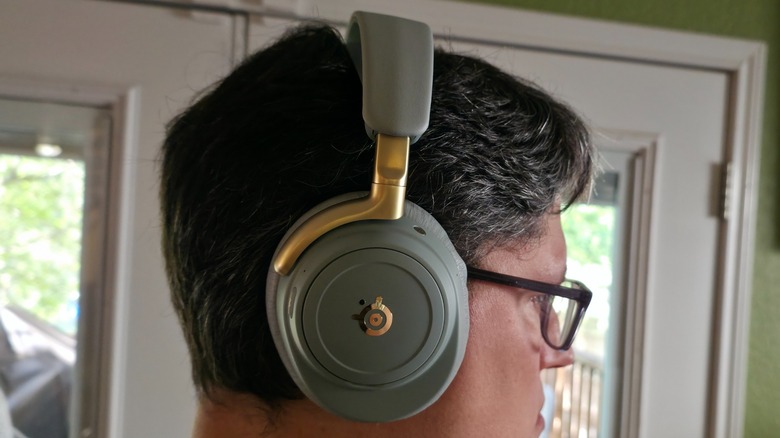
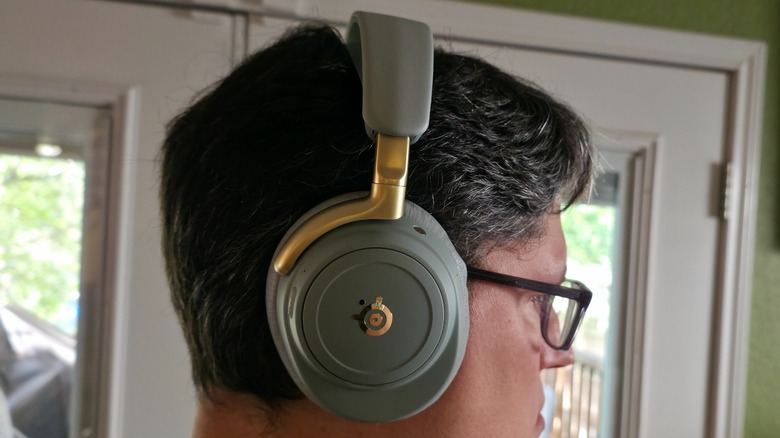
If you’re familiar with SteelSeries, you’re aware of the company’s products and their overall quality. The company’s line of gaming headsets is particularly well-designed and favored by gamers worldwide, with the Arctis Nova 7 series being of a reliable sort of high quality over the past half-decade at least. Those headsets are fine for your average gamer, but if you’re the type of person who dives deep into a game and enjoys egging on the competition, the Arctis Nova Elite is something you should consider adding to your gaming setup.
SteelSeries has a wide range of gaming headsets, and they typically range from the low end of around $49.99 to as much as $349.99, which is in the mid-upper price range for these kinds of products. The Arctis Nova Elite doesn’t come close to those numbers, as it’s a high-end headset meant for serious gamers who aren’t only willing but able to spend $599.99 to significantly boost their audio experience
 Jonathan H. Kantor/SlashGear
That price places the Nova Elite outside the price range of most gamers, but there’s definitely a market for this headset. I’ve used dozens of gaming headsets over the years, and the Nova Elite is most certainly outside my price range, so I was excited to experience using them. The Nova Elite is jam-packed with features; they look incredible, and they’re worth every penny for those looking to significantly upgrade their headset gaming experience.
SteelSeries provided SlashGear with a pair of SteelSeries Arctis Nova Elite headphones for the purpose of this review.
Exceptional connectivity right out of the box
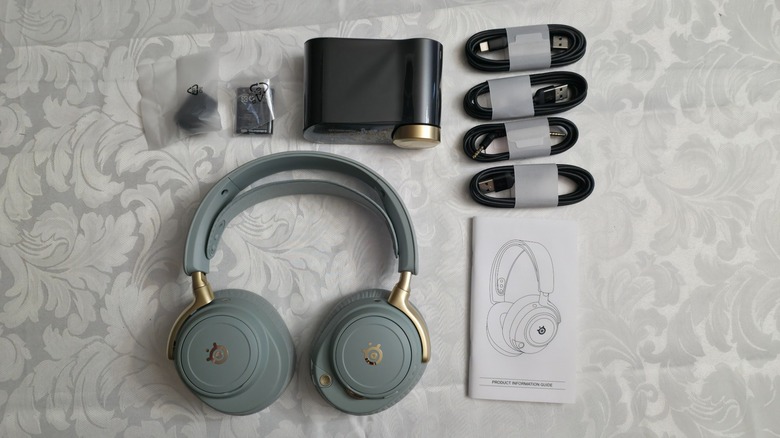
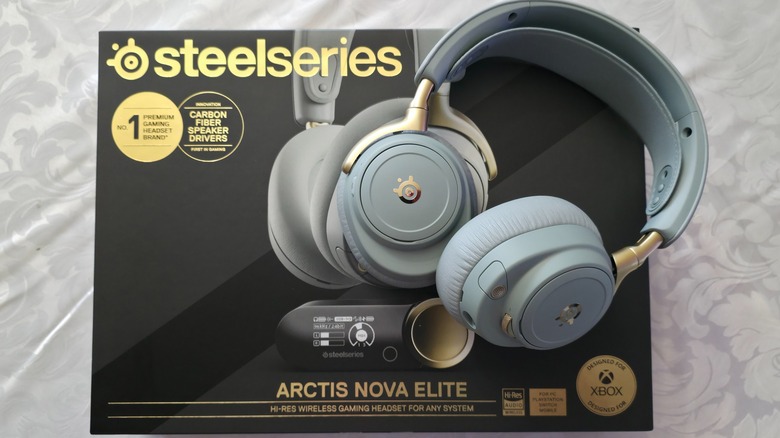
When I received my review headset from SteelSeries, I was immediately impressed with the packaging, which looks almost as good as the headset inside. The packaging makes it clear that the Arctis Nova Elite is designed for use with Xbox consoles, but it’s not limited to them. One of the headset’s best features is its compatibility with other modern consoles, PC, Mac, and phone you could use a headset with. It supports the Xbox Series X|S, Xbox One, PC, PlayStation 4, PlayStation 5, Nintendo Switch, and Mac through the wireless GameHub.
The headset might be geared towards the Xbox line of consoles, but it performs as well on every other major console on the market today. I tested it on the PS5, Xbox Series X, Switch, my gaming PC, and my Android phone, and at no time did I find that the headset’s audio had any problems or latency issues. The box comes with the headset, GameHub, an extra battery, a wind muff for the microphone, a carrying bag, and all the cables that you’ll need to get it set up.
 Jonathan H. Kantor/SlashGear
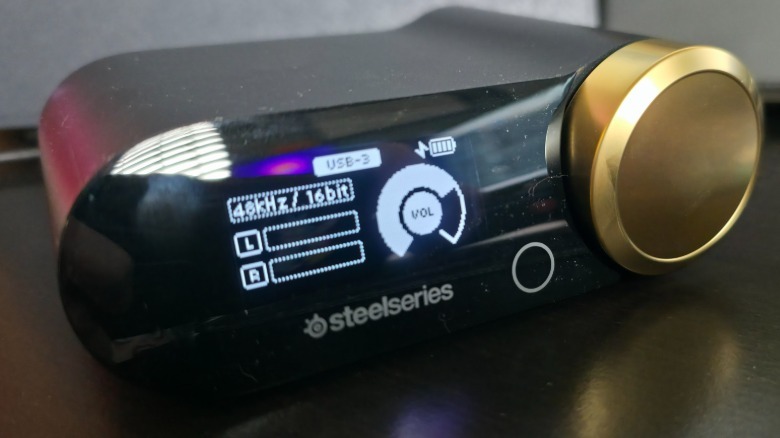
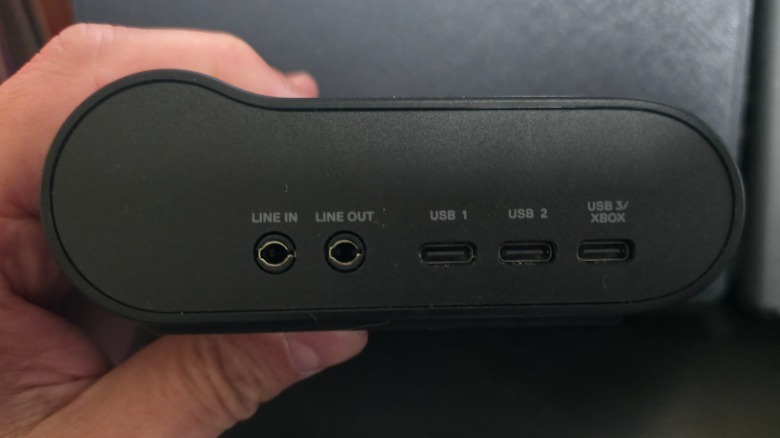
What makes the system’s compatibility exceptional is the GameHub, which enables connection to five connected devices, two of which can be live at the same time. The GameHub automatically switches to the correct one based on activity, providing full-fat digital connections to all of the major consoles, PC, Mac, and more simultaneously.
 Jonathan H. Kantor/SlashGear
The GameHub is upgraded from the one included in the Arctis Nova Pro Wireless via its third USB-C input. Other upgrades over previous models include a 2.4GHz wireless or LC3+ Bluetooth codec with 96KHz/24-bit Hi-Res audio.
Calling this headset elite almost doesn’t do it justice
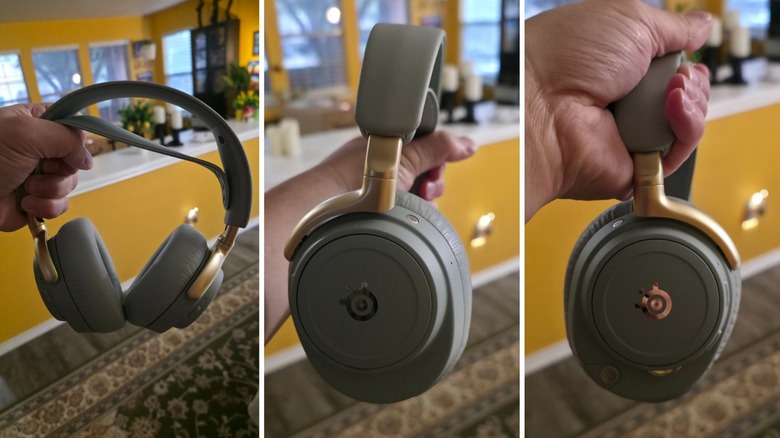
SteelSeries didn’t slap the word “Elite” on its packaging and call it a day — the Arctis Nova Elite is a complete overhaul of the line’s design. The redesign includes upping the components to carbon fiber drivers, an improved base station, hi-res wireless audio, and more. Most notable is the headset’s look, which features sage gold and obsidian colors with golden accents. It includes a fabric suspension headband that feels comfortable through several hours of use. The frame’s design includes steel and aluminum, hinting at the enhanced nature of the headset.
My primary concern outside of functionality with any headset is comfort because the last thing you want to do is adjust your gear mid-deathmatch in the latest “Call of Duty” game while you’re communicating with teammates or dissing opponents. The Nova Elite’s memory foam ear cushions are, in my experience, the most comfortable I’ve used. They also help to moderate the headset’s passive noise cancellation, though it also utilizes active noise canceling (ANC).
 Jonathan H. Kantor
Most headsets I’ve used have a black finish, so the coloration of the Nova Elite offered a unique experience, and they look spectacular without standing out too much, thanks to their muted tones. One of the reasons that this headset stands out in terms of performance is that it’s a gaming headset that functions perfectly on pretty much any device.
Take it on a trip, and the ANC will keep you listening to low-volume dialogue aboard a plane without issue. The same is true for making phone calls, listening to music, or anything you’d use a high-end headset for.
Intuitive controls and easy to jump from one device to the next
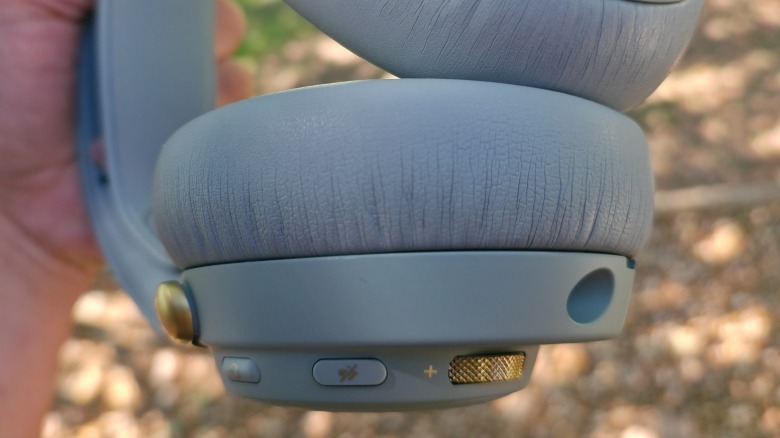
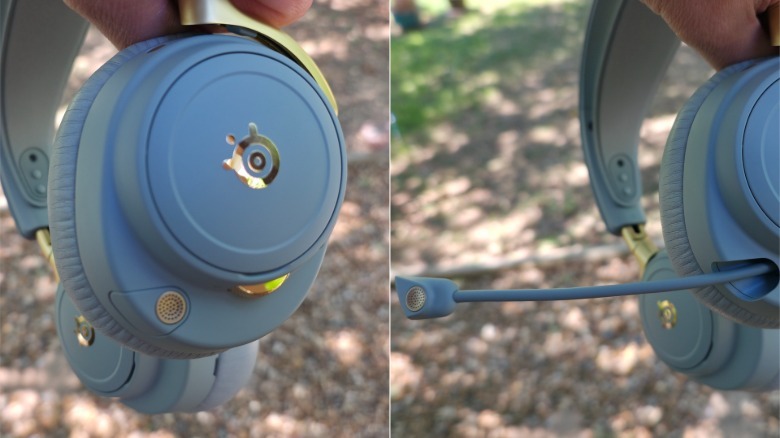
Perhaps the best aspect of the Arctis Nova Elite is how easy it is to use. The headset’s left side features several buttons, a volume dial, and the microphone. This sits inside the headset until you want to pull it out and place it in front of you. It easily slides back into place when not in use, and it’s up to you how you want to use it, as the microphone still picks up your speech whether it’s out or not. The gold volume control knob offers a nice contrast to the steel coloration, and it’s easy to use mid-game.
 Jonathan H. Kantor/SlashGear
The headset’s buttons are just as easy to identify and use. On the left, there’s a power button and a microphone on/off button. The right features a single Bluetooth button, and that’s all you need. One of my favorite features is the inclusion of a second battery. It plugs directly into the GameHub to charge, and when you need to swap one for the other, it’s a simple process that keeps you in the game without having to run around and look for batteries. If you take the headset on a flight or aren’t near the GameHub, it can be charged directly by removing the magnetic cover on the right side and plugging in the USB-C cable. This is somewhat awkward, but it enables continuous usage.
Options galore via the headset’s settings on your phone or PC
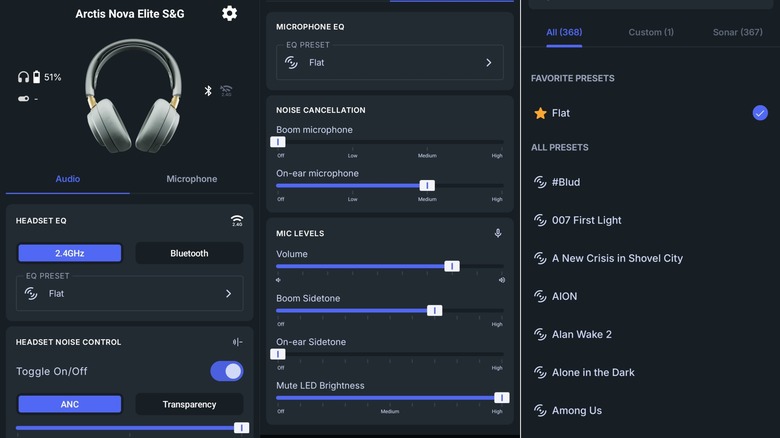
In addition to the GameHub, which is best situated near your consoles, you can modify settings via the Arctis app. Once you download it for your Android or iOS device, it’s easy to use and configure. If you want to adjust the settings, there’s a handy EQ Preset menu that includes game-specific audio choices for “007 First Light,” “Call of Duty: Black Ops 7,” “God of War Ragnarök,” and hundreds more, totaling 368 as of writing.
 SteelSeries
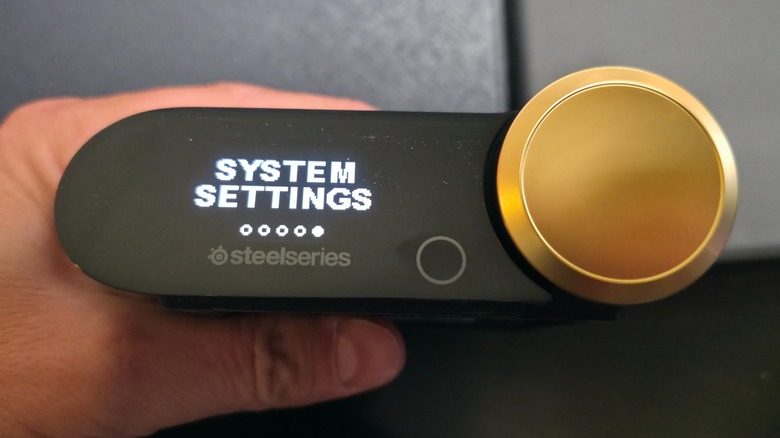
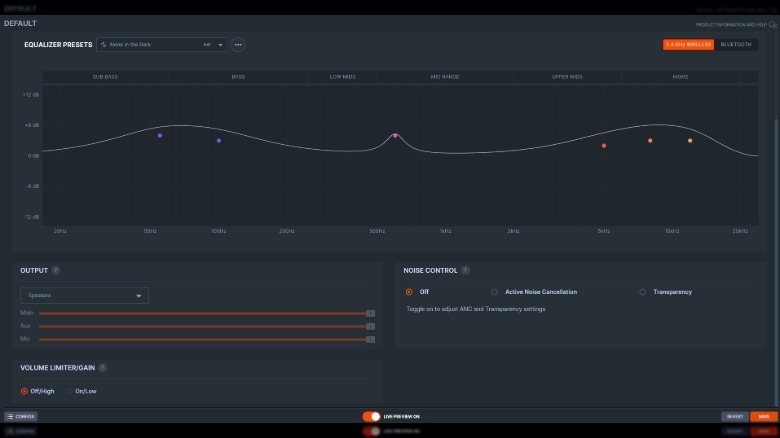
This makes using the headset incredibly simple, though you can also adjust settings via the GameHub’s menu. Each of these elements coalesce into an amazing audio experience, where the system’s ANC keeps you focused on whatever game you’re playing. If you prefer PC gaming, SteelSeries has an app that offers many of the same features, but with more options to adjust your settings manually. This is where the device’s customization comes into play for serious PC gaming. I messed with the settings and used the presets for a few games, and it all sounded spectacular.
The headset’s battery life and sound quality are superb
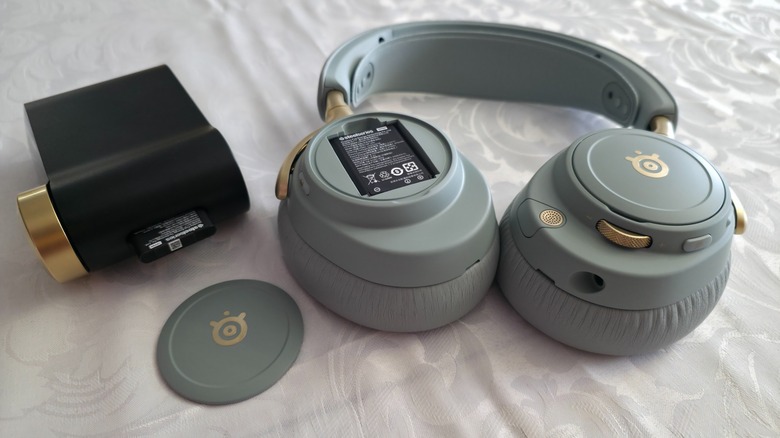
Swapping out the battery is easy to do, but what I didn’t tell you was how efficient the batteries are. They promise 30 hours of usage, so you can get away from the GameHub for an extended period without running it down quickly. Swapping the batteries is intuitive and takes only a few seconds, though you do have to physically remove the charging battery from the GameHub and place it inside the headset while removing the uncharged one to then add to the GameHub.
Without the battery and GameHub, charging it via the USB-C port on the right side offers up to four hours of use after only a 15-minute charge. Through testing, I can confirm that those claims are accurate. I tried running the battery down through several gaming sessions; I watched a movie while wearing them; and I put about 3-5 hours of gaming each day for a week, and I didn’t need to swap out the battery once.
 Jonathan H. Kantor
While the Nova Elite’s features and design are top-tier for this kind of headset, none of it matters if the sound quality isn’t excellent. Fortunately, SteelSeries didn’t skimp on audio components or compatibility with its 40 mm dynamic drivers that offer outstanding spatial cues. The headset supports several modes for whatever platform you connect it to, including Tempest 3D Audio for the PS5, Dolby Atmos and Windows Sonic for the PC and Xbox consoles, and straight stereo mode, all of which offer excellent sound on a comfortable headset.
Designed for gaming — fantastic at everything else
The Arctis Nova Elite was designed for gaming, but it’s hardly limited to that functionality alone. I put this headset through the paces: I listened to music, watched a movie, played several games, and doom-scrolled through YouTube for hours, and I had absolutely no issues whatsoever. SteelSeries seemingly took the Arctis Nova Pro Wireless, which retails for $299, and souped it up past 11, creating the best gaming headset I’ve ever used. My verdict is that the SteelSeries Arctis Nova Elite features notable upgrades over lower-tier SteelSeries headsets, taking an already excellent device and improving it in every way possible.
The microphone quality, ease of connectivity, overall design, software on phones and PC, and overall audio quality are all superb. I tried to come up with a negative aspect of the design, and the only one that I could think of involves the USB-C location on the headset itself. If you need to use it, it is awkward, sticking out at a right angle, but you can get away with charging it like that for 15 minutes, so it barely deserves mention.
When writing reviews, I must always be objective, but I found it difficult not to gush over the Arctis Nova Elite’s features and sound quality. I can objectively say that it’s worth the approximately-$600 cost, though that price limits the consumer audience to professional gamers and those who take gaming seriously. To be clear, this is not the headset for a casual gamer — it’s designed for elite gamers who know the difference superior audio quality makes during gameplay and who have the means to purchase a set.
You can buy your own SteelSeries Arctis Nova Elite headset on the company’s website for $599.99.

Buying a flagship IEM usually means accepting somebody else’s idea of what $4,000 worth of “perfect” should sound like. Want a little more bass or less treble afterward? Welcome to EQ, tip rolling, cable swapping, and the kind of late-night Head-Fi behavior that makes normal people question our priorities.
64 Audio’s new Ocean takes a different approach. The $3,999 universal-fit flagship combines six drivers, dual isobaric dynamic woofers, the company’s tia and apex technologies, and a new Passive Acoustic Control system that offers as many as 32 acoustic configurations without DSP or electronic EQ.
Ocean will be available to audition at CanJam SoCal 2026, August 29–30 at the Irvine Marriott.
Who Is 64 Audio?
Founded by Vitaliy Belonozhko, 64 Audio began life as 1964 Ears and grew from a family-run custom-monitor business into one of the more influential American IEM manufacturers.

Products including the U12t, Nio, Fourté, and A12t helped build the brand, but its real calling card has been proprietary technology. tia removes conventional acoustic tubing from portions of the driver path, apex manages pneumatic pressure inside the ear canal, and LID is designed to minimize frequency-response changes caused by different source impedances.
The Fourté, introduced during 64 Audio’s original tia push in 2016, has remained one of its best-known flagships. Ocean now sits above it in the universal lineup.
Six Drivers, But That Is Not the Main Story

Ocean uses a 6-driver, 4-way architecture:
- Two cone-to-cone isobaric dynamic drivers for bass
- Two balanced-armature midrange drivers
- One balanced-armature high-mid driver
- One tia high-frequency driver
64 Audio specifies a 5Hz-22kHz frequency response, 9.5-ohm impedance, and 103.7dB/mW sensitivity.
The dual dynamic woofers operate in a cone-to-cone isobaric configuration, which 64 Audio says provides powerful low-frequency output while maintaining control and reducing unwanted distortion.
Driver count alone, however, stopped being especially meaningful somewhere around the time manufacturers began treating IEM shells like Manhattan studio apartments.
What makes Ocean more interesting is what surrounds those drivers.
Passive Acoustic Control
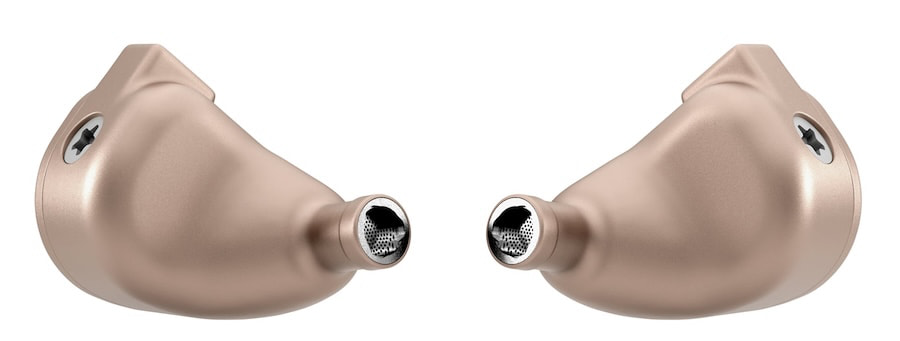
64 Audio’s new Passive Acoustic Control system lets users physically change several aspects of the IEM’s acoustic behavior.
Two interchangeable tia screens adjust high-frequency damping. Four rear vent filters alter the pneumatic loading of the isobaric bass drivers. Four interchangeable apex modules — mX, m12, m15, and m20 — change isolation and pressure relief.
Taken together, those components create up to 32 possible combinations.
Ocean is not magically 32 completely different IEMs, but the system gives owners considerably more control over bass response, upper-frequency energy, isolation, and pressure without depending on an app or digital processing.
For a $3,999 IEM, that flexibility makes considerably more sense than being locked into one tuning and hoping your ears agree with the engineer who designed it.
Design and Accessories
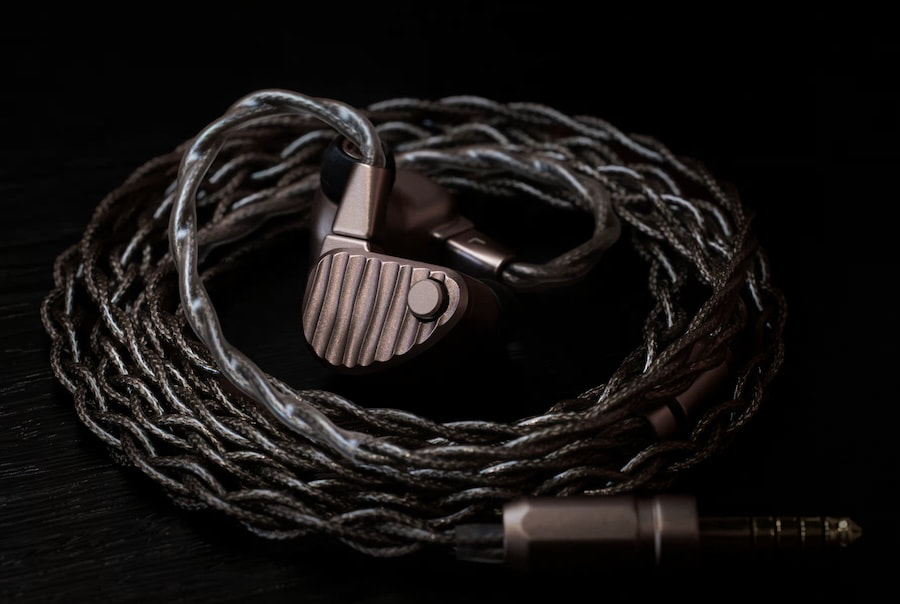
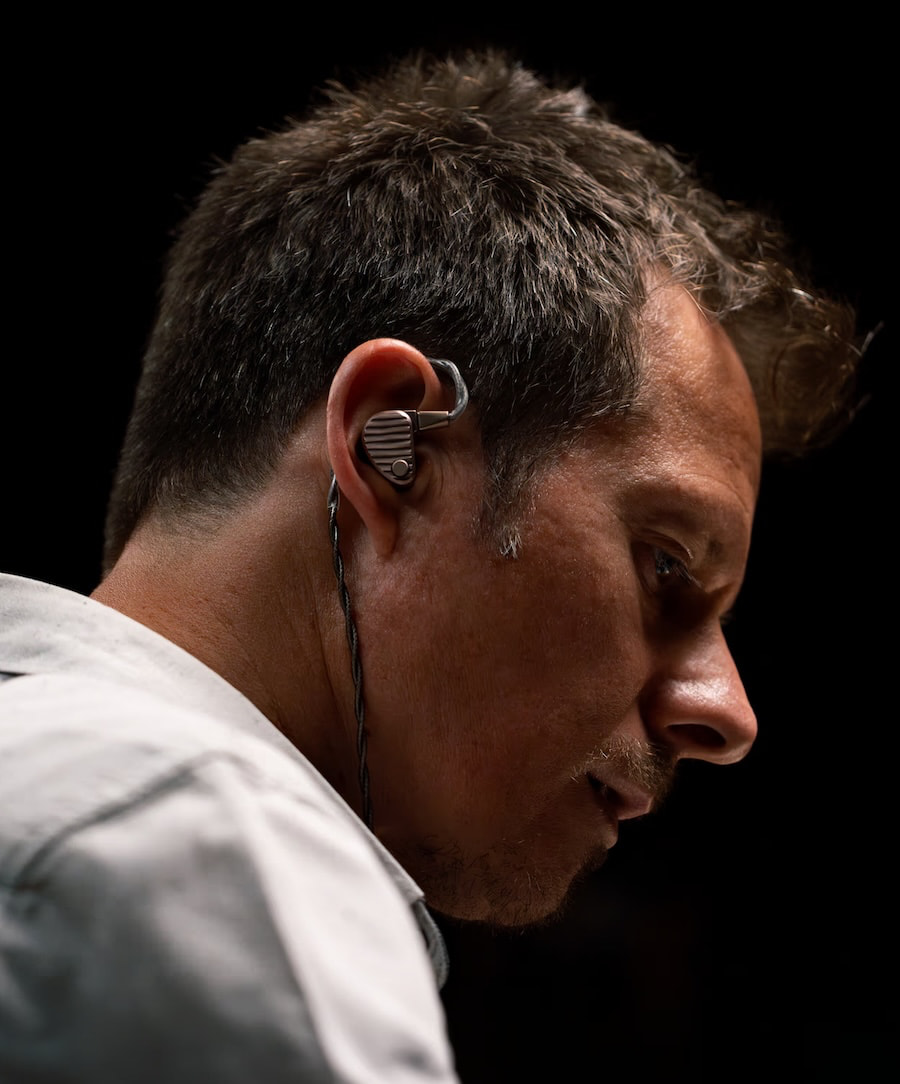
Ocean uses a T6061 aluminum shell with a machined faceplate finished in Champagne Copper. Its pattern is inspired by aeolian ripples formed when wind moves across sand.
Compared with some flagship IEMs covered in gemstones, exotic woods, and enough decorative metal to furnish a casino lobby, the Ocean looks relatively restrained.
It uses standard 0.78mm two-pin connectors and ships with both 3.5mm and 4.4mm balanced cables constructed from silver-plated UP-OCC copper.
The package also includes TrueFidelity foam tips, SpinFit silicone tips, standard silicone tips, a carrying case, cleaning accessories, and all four apex modules.
Specifications
- Model: 64 Audio Ocean
- Type: Universal-fit IEM
- Drivers: 6, four-way architecture
- Bass: Dual isobaric dynamic drivers
- Midrange: 2 balanced-armature drivers
- High-Mid: 1 balanced-armature driver
- Treble: 1 tia driver
- Frequency Response: 5Hz–22kHz
- Impedance: 9.5 ohms at 1kHz
- Sensitivity: 103.7dB/mW at 1kHz
- Isolation: 10-20dB depending on apex module
- Connector: 0.78mm two-pin
- Included Cables: 3.5mm and 4.4mm balanced
- Finish: Champagne Copper
Competition
At $3,999, Ocean swims in very expensive water.
For a thousand dollars less, the UE Premiere feature 21 drivers per earpiece with a five-way crossover, and come in universal and custom fit options.
The Noble Audio Kronos at $4,500 combines dual dynamic woofers with balanced-armature and electrostatic drivers, putting it squarely in the same ultra-premium category.
Ocean also competes with 64 Audio’s own products.
The Astell&Kern x 64 Audio XIO costs $3,000 and uses ten drivers, while the long-running Fourté remains available for $3,599. Anyone already considering either model will need to decide whether Ocean’s adjustable acoustic system is worth moving further up the ladder.
And that is really the point: at this level, counting drivers is pointless. The meaningful difference is what a manufacturer does with them.
The Bottom Line
The 64 Audio Ocean is entering a flagship IEM market where $3,000-plus products have become surprisingly common and manufacturers need more than extravagant materials and large driver counts to stand out.
Ocean’s dual isobaric bass system, tia architecture, apex modules, and LID technology give it serious technical credentials, but Passive Acoustic Control is its most distinctive feature. Being able to tailor the physical acoustic system without DSP gives buyers unusual flexibility at a price where flexibility should probably be expected.
Whether Ocean actually sounds better than the Fourté, XIO, FiR Redux 6, or Noble Viking Prestige will require listening rather than counting acronyms.
Fortunately, CanJam SoCal begins this weekend.
For more information: 64audio.com
Related Reading:


Flipboard has acquired Graze, a Portland startup that lets creators build, tune and monetise custom social feeds without writing code, mainly on Bluesky. Graze says it has delivered more than 41 billion posts to 12 million users since forming 21 months ago.
Flipboard has bought the plumbing for custom social feeds. The company is acquiring Graze, a Portland startup that lets creators and publishers build, tune and monetise their own algorithms without writing code.
The numbers are striking for the size of the team. Graze says it has delivered more than 41 billion posts to 12 million users in the 21 months since it formed, most of that on the newly funded Bluesky.
The team is two people. Co-founder Devin Gaffney and engineer Nick Gerakines both move to Flipboard, after two of the three original founders left last year, and financial terms were not disclosed.
The money behind it was modest. Graze raised a $1mn pre-seed in April 2025 led by Betaworks, with Salesforce Ventures Factorial, Apertu Capital and Skyseed alongside angels from Mozilla and Protocol Labs.
Flipboard has been building toward this for a while. Under chief executive Mike McCue it has invested in AT Protocol, ActivityPub and RSS, and launched Surf, a browser for the open social web.
Gaffney describes the fit as mechanical. “Surf will be the browser for the open social web,” he wrote, while “Graze will be the engine under those feeds.”
His argument is about who curates. As generative AI clogs the legacy platforms, he says a curatorial role in shaping the algorithm is the only sustainable way to run an attention economy.
Europeans already have a thin version of this by law. Article 38 of the Digital Services Act requires very large online platforms to offer at least one recommender option not based on profiling.
The difference is what each is for. The regulation guarantees a way to turn the algorithm off, while Graze exists to let someone build a better one and charge for it.
The open social web’s centre of gravity is partly European in any case. Mastodon is German, moved to a non-profit structure and has kept adding ways for people to follow creators without an account.
What happens next is a business question rather than a protocol one. Two people built a feed engine at that scale on a million dollars, and somebody now has to prove that curating attention pays better than harvesting it.

The biggest threat to any crewed expedition to Mars is time. NASA’s shortest blueprint for sending people to the Red Planet and back requires spending 620 days in space and 30 days on Mars. Even setting aside the compounding challenges of building life-support systems that can operate without resupply for that long, or the fact that longer journeys leave more time for unlucky accidents, life in microgravity and solar and cosmic radiation will inexorably exact their cumulative toll on human bodies.
We want to make it possible to dramatically reduce the length of time crews must spend in space—down to just 335 days in transit or less. This will both simplify many engineering challenges and keep astronauts healthier and safer. We believe the key to this time reduction is a new approach to building a holy grail of space exploration, the bimodal nuclear rocket.
 In the 1960s, U.S. open-air ground tests demonstrated much of the technology needed for nuclear thermal rockets as part of the NERVA and Rover projects.Nevada State Museum, Las Vegas
 Technicians at NASA’s Lewis Research Center test a nozzle design for a nuclear thermal rocket in 1965. GRC/NASA
 The prototype SNAP-10A, orbited in 1965, is to date still the only nuclear reactor launched into space by the United States. George Rinhart/Corbis/Getty Images
We are Kurt Polzin, chief engineer of NASA’s space nuclear propulsion project at the Marshall Space Flight Center, with over two decades of experience in advanced propulsion research, and Robert Schleicher, chief engineer for nuclear technologies and materials at General Atomics. And to explain just what a bimodal nuclear rocket is, and why the new version we have conceived together brings it closer to future reality, we first need to take a quick trip to the past.
As early as 1946, researchers realized that nuclear reactors had the potential to become extremely efficient thermal rocket engines. Most rockets are thermal rockets, and they work by expelling hot gases through a nozzle, thrusting the rocket forward. While there are other factors such as nozzle shape, generally speaking, the hotter and faster you make the rocket’s exhaust gases, the more acceleration the rocket will produce for a given mass of propellant. Because a smaller molecule will move faster than a larger one when heated to a given temperature, the smaller the molecular mass of your propellants, the better. By convention, the efficiency of a rocket engine is measured by how long the engine can exert a thrust equal to the initial weight of its propellant, a quantity known as specific impulse.
In a conventional thermal rocket, such as those used in every launch to orbit since Sputnik, the exhaust temperature and speed—and thus the specific impulse—is dictated by the energy released by a chemical reaction and the mass of the reaction’s by-product. The most efficient chemical rockets today combust hydrogen with oxygen, producing water and a specific impulse that tops out around 450 seconds.
But a nuclear rocket is not limited by chemistry. The heart of a nuclear thermal rocket is a nuclear fission reactor, in which chain reactions in uranium fuel release much more energy per kilogram than is possible with chemical combustion. A turbopump forces liquid hydrogen alone—with its very small molecular mass—through the reactor’s core, heating it to temperatures of at least 2,700 kelvin before expelling it, resulting in a specific impulse of 900 seconds or more.
In the 1950s and 1960s, the Rover and NERVA (Nuclear Engine for Rocket Vehicle Applications) programs ground-tested nuclear thermal rockets. By the early 1970s, the technology had matured to the point where flight tests were being planned. But changing political and budgetary winds led to nuclear thermal development being shut down in 1973.
Another prong of nuclear propulsion that has also demonstrated considerable promise is nuclear electric propulsion. In electric propulsion, instead of creating a stream of hot rocket exhaust through chemical reactions or exposure to the core of a nuclear reactor, electricity is generated and used to create electromagnetic fields that accelerate an ionized propellant such as xenon or lithium.
Various schemes to do this exist, including some that have already seen considerable time in space, such as the ion thrusters used on the Dawn asteroid mission launched in 2007. So far, these electric thrusters have only been powered by solar panels. But with a nuclear reactor as part of a power plant that supplies the juice, more thrust could be produced. And moving beyond solar power is particularly important in missions to the outer solar system where sparse solar photons would require enormous solar arrays.
With electric thrusters, specific impulses in the range of 2,200 to 4,600 seconds are possible, but currently with very low thrust. With the energy available to a nuclear-powered electric propulsion engine, you could have greater acceleration and reduced mission times. The nuclear reactor could also provide electrical power for all the spacecraft systems as well.
The System for Nuclear Auxiliary Power (SNAP) program launched the SNAP-10A in 1965 as a proof of concept, the first—and so far only—U.S. nuclear power reactor in space. It generated about 600 watts of electrical power for 43 days before shutdown and is still in orbit. Subsequent U.S. initiatives for more substantive electric power and nuclear thermal propulsion systems, such as the SP-100, Project Timberwind, and Project Prometheus, along with more recent projects like Demonstration Rocket for Agile Cislunar Operations (DRACO) and Joint Emergent Technology Supplying On-Orbit Nuclear (JETSON), have emerged sporadically over the years. None of these have yet progressed to actual flight.
However, space nuclear power got a huge shot in the arm in March 2026 when NASA Administrator Jared Isaacman announced a new space exploration initiative. As part of that initiative, the agency plans to launch Space Reactor-1 Freedom (SR-1) to deliver a trio of robot-survey helicopters to Mars. Driven by nuclear electric propulsion, SR-1 aims to demonstrate fission technology in deep space and would be the first nuclear-powered interplanetary spacecraft, generating 20 kilowatts of electric power aboard.
This is a bold step for NASA, and brings us up to the present, but the details of the proposed mission also highlight a familiar limitation of nuclear electric propulsion. Even with improved acceleration, electric propulsion still cannot generate the powerful bursts of thrust needed to escape gravity wells, such as those of Earth or Mars, or perform time-critical maneuvers, like course corrections. On the other hand, while not as efficient and unable to supply electrical power for spacecraft systems, nuclear thermal engines are great at delivering high thrust at critical moments.
What is a bimodal nuclear rocket?
Some engineers would suggest we build two separate systems—one reactor for thermal propulsion and another reactor for power and electric propulsion. But since at least the 1990s, it has been the dream of many engineers to combine nuclear thermal and nuclear electric in one package, with one reactor: the bimodal nuclear rocket.
Most previous bimodal proposals depend on complex valve arrangements to integrate the propulsion and power systems. In thermal propulsion mode, the reactor is brought to maximum activity by a set of control drums that ring the core, which is composed of a matrix of long uranium-fuel elements. The drums take the shape of long cylinders made of beryllium, with a 120-degree segment of each cylinder covered with boron carbide. Boron absorbs neutrons, and when that segment faces the reactor, the reactor’s activity is low as neutrons escaping from the core are captured. Rotating the boron segment so that it faces away from the core (leaving only the beryllium exposed) increases nuclear activity as the beryllium reflects escaping neutrons back into the core’s fuel elements, where they can contribute to chain reactions.
 This proposed trajectory, developed at NASA’s Glenn Research Center, shows where high-thrust maneuvers [blue dots] are executed by a nuclear thermal engine and additional low-thrust, high-efficiency acceleration and deceleration is performed by electric propulsion [hashed lines show thrust direction].NASA Glenn Research Center
Once the reactor is generating large amounts of heat, liquid hydrogen is pumped through channels that run the length of the core. Turned into an expanding hot gas, the hydrogen blasts from the other end of the core to form the rocket’s powerful exhaust.
In nuclear power mode, the reactor’s activity is damped. Valves seal the channels and a so-called power-conversion fluid—typically a mixture of helium and xenon gas—circulates through the reactor in a closed loop. The reactor is still hot enough to warm this fluid, which drives a turbine connected to an electrical generator.
The key point here is that a single set of flow channels and nuclear-fuel elements are used for both modes. But the valves used to switch modes face the formidable challenge of enduring months, or even years, in a harsh radiation environment while maintaining leak-tight performance.
 The core’s activity is controlled by the rotating drums surrounding it. Within the core, low-temperature fuel elements [left in blue, and top right] produce electric power by heating a circulating fluid. High-temperature fuel elements [left in red, and bottom right] heat hydrogen as a propellant. (The taper of the HTFE’s exhaust channel is exaggerated for illustrative purposes. Ways of packaging the HTFE’s uranium fuel other than with particles are possible.)John MacNeill
In addition, the nuclear-fuel elements surrounding the channels must be able to operate for short durations at very high temperatures during thermal thrust maneuvers and for long durations at lower temperatures during the rest of the voyage. It is difficult to build one type of element capable of both. Hence, the complexity and demanding engineering requirements of previous bimodal designs has hindered their practical application.
We propose a simplified approach, a hybrid system we call the synchronal bimodal nuclear rocket (S-BNR). The genesis for this design came about when we were attending a conference together in 2025. One of us (Polzin) had an initial idea, and in time-honored tradition, he sketched it out on a napkin to see if the other (Schleicher) thought there was actually a way to do it. We’ve been working on refining the concept ever since.
How the synchronal bimodal nuclear rocket works
Rather than relying on a complex valve system, the S-BNR uses two hydraulically independent loops within a single reactor core, one open loop (for thermal propulsion) and one closed loop (for electrical power). The core is divided into two zones, one per loop, differentiated by the type of fuel elements in each. Several designs for the fuel elements are possible: In our preliminary design, the high-temperature fuel elements (HTFEs) in the thermal propulsion zone consist of a bed of “pebbles”—uranium fuel encased in zirconium carbide—that surround a central tapering channel and operate at greater than 2,700 K. (One possible alternative for the HTFEs would be a solid fuel design, as with NERVA.) The hydrogen propellant passes through the pebble bed, where the pebbles’ large surface area maximizes the transfer of heat needed for efficient high-thrust propulsion.
The other zone has low-temperature fuel elements (LTFEs), optimized for long-term, efficient production of electricity, which can range from tens of kilowatts to several megawatts. In these elements, the uranium fuel in solid form surrounds a double-walled channel: The power-conversion fluid is pumped down the inside and returns along the outside wall, absorbing heat from the fuel and operating at moderate temperatures (at or above 1,200 K).
 The electric-power and nuclear-thrust elements of the core have separate fluid loops, which eliminates the need for valves to switch between closed-loop operation for power generation and open-loop operation for propulsion.John MacNeill
Both the HTFEs and LTFEs contribute the neutrons required to sustain chain reactions. In power-only mode, residual heat moves from the HTFEs into adjoining LTFEs. The physical interface between the elements is designed to moderate this thermal flow to balance two competing needs: It must allow enough heat flow to safely remove the residual heat from the HTFEs, but it must also limit that heat flow so the LTFEs’ temperatures do not go past their allowable limits when the HTFEs operate at high power.
During combined propulsion and power operation, a heat exchanger on the power loop preheats the hydrogen propellant for the thrust loop, aiding the turbopump that feeds the hydrogen through the core. After a propulsion burn is completed and the HTFE chain reactions are damped by the control elements, the power loop removes residual-decay heat coming from the HTFEs as described above, eliminating the requirement in earlier designs for additional propellant flow just to cool down the core while on standby. This dual-loop system also means the engine can produce high thrust whenever needed while allowing the generator to remain active at all times—a significant advantage for crewed missions.
By adopting this dual-loop architecture, the S-BNR removes the need for the problematic mode-switching valves found in earlier concepts. Each fission zone is constructed with materials tailored to its specific temperature and power requirements, ensuring optimal performance and durability. The result is uninterrupted electrical power across all mission stages, making it unnecessary to carry additional liquid hydrogen just to manage decay heat.
The challenges ahead
While significant progress in developing the design of the S-BNR has been made, substantial challenges remain. The reactor must maintain stable control across a wide power range, from modest levels for electricity generation to hundreds of megawatts of thermal power during high-thrust operation. Operating the power-generation loop in close proximity to the HTFEs requires very careful management of both temperature and the neutrons emitted by the fuel elements.
And crucially, demonstrating reliable, long-duration performance is particularly demanding: Missions to Mars may require years of continuous power generation. Outer-planet probes equipped with S-BNR engines could extend that to a decade or longer.
In the past, nuclear thermal propulsion fuel elements were engineered for extremely high temperatures but only brief operational lifetimes (typically hours), whereas proposed nuclear electric propulsion fuel elements are optimized for lower temperatures and intended to last for years. By using two different types of fuel elements in the S-BNR, we can take advantage of the design heritage of both these development tracks. Fortunately, recent NASA-sponsored research has produced several promising candidates that may meet these demanding requirements.
Ground-testing these systems is also a challenge. Early in the Rover and NERVA era, the exhaust from test engines was blasted into the atmosphere, something now unacceptable. Today, any ground test of an engine must completely capture all potentially radioactive exhaust products. Fortunately, a number of approaches have been developed to capture and scrub the exhaust, although these methods currently carry a significant price tag.
Then there is the ultimate test: flying an S-BNR in space. International regulatory and safety protocols for nuclear launches were developed largely in response to the Soviet Union’s launch of dozens of nuclear-powered Radar Ocean Reconnaissance Satellite (RORSAT) radar spy satellites in the 1970s and 1980s. There were a number of incidents, with the most serious leaving radioactive debris strewn across a swath of Canada in 1978. This history led to a consensus in the space community that might be summarized as “Thou shalt not bring a nuclear reactor to criticality in any Earth orbit that decays faster than dangerous isotopes.”
Thus any S-BNR would be launched atop a conventional chemical rocket, with a completely cold reactor and fresh fuel. Fresh uranium fuel is not in fact very radioactive: The potentially larger concern is the chemical toxicity of this heavy metal, but it can easily be handled by wearing light protective suits, respirators, and gloves. Only after the control elements have been adjusted to permit chain reactions to begin within the core are highly radioactive isotopes able to form from fission fragments. There would be even less cause for concern than when launching a radioisotope thermoelectric generator (RTG), such as the sort that are currently powering the Perseverance rover on Mars and the New Horizons mission in the outer solar system.
Even in the most extreme scenario imaginable—the chemical booster explodes and somehow damages the reactor’s control elements in just the right way to initiate a chain reaction—there wouldn’t be time to produce a large amount of toxic isotopes before the reactor broke apart and reactions ceased. (We can be sure of this because Project Rover actually tested this kind of worst-case scenario in 1965 with the Kiwi-TNT test, where an engine prototype was rigged to produce a runaway chain reaction sufficient to vaporize the reactor core due to the immense internal pressure buildup. Negligible radiation spread outside a radius of two miles (3.2 kilometers), well within the range of safe distances for launching any rocket capable of reaching orbit, and site decontamination was possible after only a few days of radioactive decay.)
Despite all these considerable engineering challenges, the foundation laid by decades of investment in nuclear thermal and electric propulsion and terrestrial nuclear power technologies provides a solid platform for continued advancement. Indeed, much of the foundational work is already underway through ongoing NASA and U.S. Space Force efforts.
 The Dawn asteroid mission relied on electric thrusters, demonstrating their utility for long-duration spaceflight.JPL-Caltech/NASA
We envision the following action plan to merge these technology pathways: Modeling must be performed to demonstrate and verify strategies for thermal management and the control of nuclear processes over the full range of operating power levels. Near-term non-nuclear testing will validate fluid loop operation, heat transfer mechanisms, and control strategies. Next, component-level irradiation and thermal trials will qualify new materials. Then, integrated reactor testing will begin, first without nuclear fuel and later with fueled reactors undergoing fission. Finally, initial in-space demonstrations could begin with lower-power systems, eventually scaling up to full bimodal capabilities.
Achieving success will require close collaboration across NASA, the Department of Energy, the Department of Defense, industry partners, and the broader technical community. Progress will depend on advancements in high-temperature fuels and materials, improved systems for power conversion and heat transport, and the adoption of innovative manufacturing techniques and methods to control nuclear fission over a wide range of output power. In particular, integrated system testing will be more complex than previous programs such as NERVA, due to the combined functions and distinct operational regimes for thermal propulsion and power generation. We hope engineers and researchers with relevant expertise will be encouraged to contribute to addressing these challenges, whether in the areas of thermal management, reactor modeling and control, extended-duration testing, or safety analysis.
Past ground tests and limited demonstrations have already established the capabilities of space nuclear systems. With architectures like the synchronal bimodal nuclear rocket, the prospect of integrating high-thrust propulsion and sustained power generation becomes increasingly practical and versatile. The next phase is not simply about traveling fast. It’s about building crewed and uncrewed spacecraft that can reliably travel to destinations throughout the solar system that are currently difficult or impossible to reach, with missions potentially lasting years or even decades.
This article appears in the September 2026 print issue as “A Reimagined Nuclear Rocket.”
From Your Site Articles
Related Articles Around the Web
Skrilla Performs At Birthday Party For Youngest Son

DAN HODGES: What my senior security sources are telling me about Russia’s alarming plans for Britain. Putin is determined to test Burnham… and this is how he’s going to do it

Top 10 Dynamics 365 partners in the UK for 2026





-

 Fashion5 days ago
Weekend Open Thread: Madewell – Corporette.com
-

 Business4 days ago
Musk’s Tesla, SpaceX Confirm $16.8 Billion ‘Terafab’ Chip Plant as World’s Largest Building in Texas
-

 Crypto World21 hours ago
SpaceX stock could rise 75% to $240, JPMorgan says
-

 Crypto World5 days ago
anatomy of crypto’s biggest liquidation event since 2021
-

 Crypto World2 days ago
A $30 Billion AI Fund Implodes, Now the SEC Is Investigating Wall Street’s Role
-

 Politics4 days ago
6 months on, Irish renters crushed by effects of government housing bill
-
 NewsBeat5 days ago
The ‘Lucky Dip Gang’ causing carnage for clicks: After five thugs were killed speeding in the wrong direction on a motorway, GUY ADAMS investigates a sick new trend… and why police aren’t even allowed to pursue them
-

 Business3 days ago
Mystery AI Model ‘Ox Alpha’ Draws Developers With Free Access as Chinese Lab Origins Remain Debated
-

 News Videos7 days ago
Don’t Leave Your Financial Future To Chance | August 19, 2026
-

 Business6 days ago
Five Below: Kids Discount Retailer Reaps Rich Rewards
-

 Business2 days ago
Moderna CEO warns China is pouring state money into mRNA technology
-

 Crypto World18 hours ago
Did Trump Just Move SpaceX Stock With One Truth Social Post?
-

 Business5 days ago
UK firms in critical financial distress rise 9% to 53,756
-

 Business2 days ago
NVIDIA Stock Drops Nearly 2 Percent to $210 on Seventh Losing Day Ahead of Critical AI Earnings
-

 Sports4 days ago
Deshaun Watson fires back at Browns fans after being booed: ‘It’s a disrespectful thing’
-
 Entertainment7 days ago
10 Most Perfect Fantasy Shows of the Last 25 Years
-

 Crypto World6 days ago
Optimism-funded team's deciding vote shifts $49 million in OP tokens away from users
-

 Tech7 days ago
OpenAI confirms ChatGPT is down as logins and signups fail
-
 Crypto World3 days ago
Google Gemini AI Predicts Ethereum Could Become the Trade Retail Misses in 2026
-

 Business7 days ago
PayPal and Venmo now accepted for tuition at several universities
You must be logged in to post a comment Login