Connect with us

Tech

These Beats Headphones We Like Are $150 Off

Published

on

On the hunt for a fresh pair of headphones that stand out in the style department? Until the end of the weekend, Best Buy has the Beats Studio Pro marked down to just $200, a $150 discount from the usual price.

Image may contain: Electronics, and Headphones

While this headset isn’t nearly as fancy as some of our other favorite over-ear headsets, it makes up for it with classic Beats styling and a sound profile that the brand has become known for among its fans. They’re bass-forward and punchy, a fact you’ll just have to live with whether you like it or not, because they lack a dedicated equalizer. Thankfully they aren’t as bold and brash as the Beats of old, but it’s still something to keep in mind if your normal beat isn’t hip-hop or rock.

They’re technically produced by Apple, but the Beats Studio Pro have a feature set that’s decidedly cross-platform, with one-touch pairing for both Apple and Android mobile devices, and an impressively large wireless range in case you like to leave your phone on the porch while working in the yard. If you don’t mind being physically connected to your device, you can even use the USB-C mode to enjoy some high-resolution audio. There’s also head tracking for spatial audio, a trick we’ve seen on some other headsets that sometimes ends up being more of a gimmick, although it is neat to use while watching movies in apps that support it like Disney+ and Netflix.

They get up to 24 hours of battery life with the ANC on, or closer to 40 without, which is fine, but not quite as good as some of its more expensive counterparts. Speaking of active noise-canceling, our reviewer Ryan Waniata said “it holds its own against competitors from Sony and Bose, and outdoes rivals like Sennheiser’s Momentum 4 Wireless.” It works just as well for calling as it does for catching some tunes, and has a microphone that folks on the other hand of the call described as clear and detailed.

If you’re interested in scooping this deal on the Beats Studio Pro, make sure to head over to Best Buy to save $150, or check out our guide to the best wireless headphones we’ve head the pleasure of testing.

Advertisement

Source link

Continue Reading
Click to comment

Leave a Reply

Your email address will not be published. Required fields are marked *

Tech

Reverse Engineering The PROM For The SGI O2

Published

on

The SGI O2 was SGI’s last-ditch attempt at a low-end MIPS-based workstation back in 1996, and correspondingly didn’t use the hottest parts of the time, nor did it offer much of an upgrade path. None of which is a concern to hobbyists who are more than happy to work around any hardware- and software limitations to e.g. install much faster CPUs. While quite a few CPU upgrades were possible with just some BGA chip reworking skills, installing the 900 MHz RM7900 would require some PROM hacking, which [mattst88] recently took a shake at.

The initial work on upgrading SGI O2 systems was done in the early 2000s, with [Joe Page] and [Ian Mapleson] running into the issue that these higher frequency MIPS CPUs required a custom IP32 PROM image, for which they figured that they’d need either SGI’s help or do some tricky reverse-engineering. Since SGI is no longer around, [mattst88] decided to take up the torch.

After downloading a 512 kB binary dump of the last version of the O2’s PROM, he set to work reverse-engineering it, starting by dissembling the file. A big part of understanding MIPS PROM code is understanding how the MIPS architecture works, including its boot process, so much of what followed was a crash-course on the subject.

Advertisement

With that knowledge it was much easier to properly direct the Capstone disassembler and begin the arduous process of making sense of the blob of data and code. The resulting source files now reassemble into bit-identical ROM files, which makes it likely that modifying it to support different CPUs is now possible with just a bit more work.

For those who want to play along, [mattst88] has made his ip32prom-decompiler project available on GitHub.

Thanks to [adistuder] for the tip.


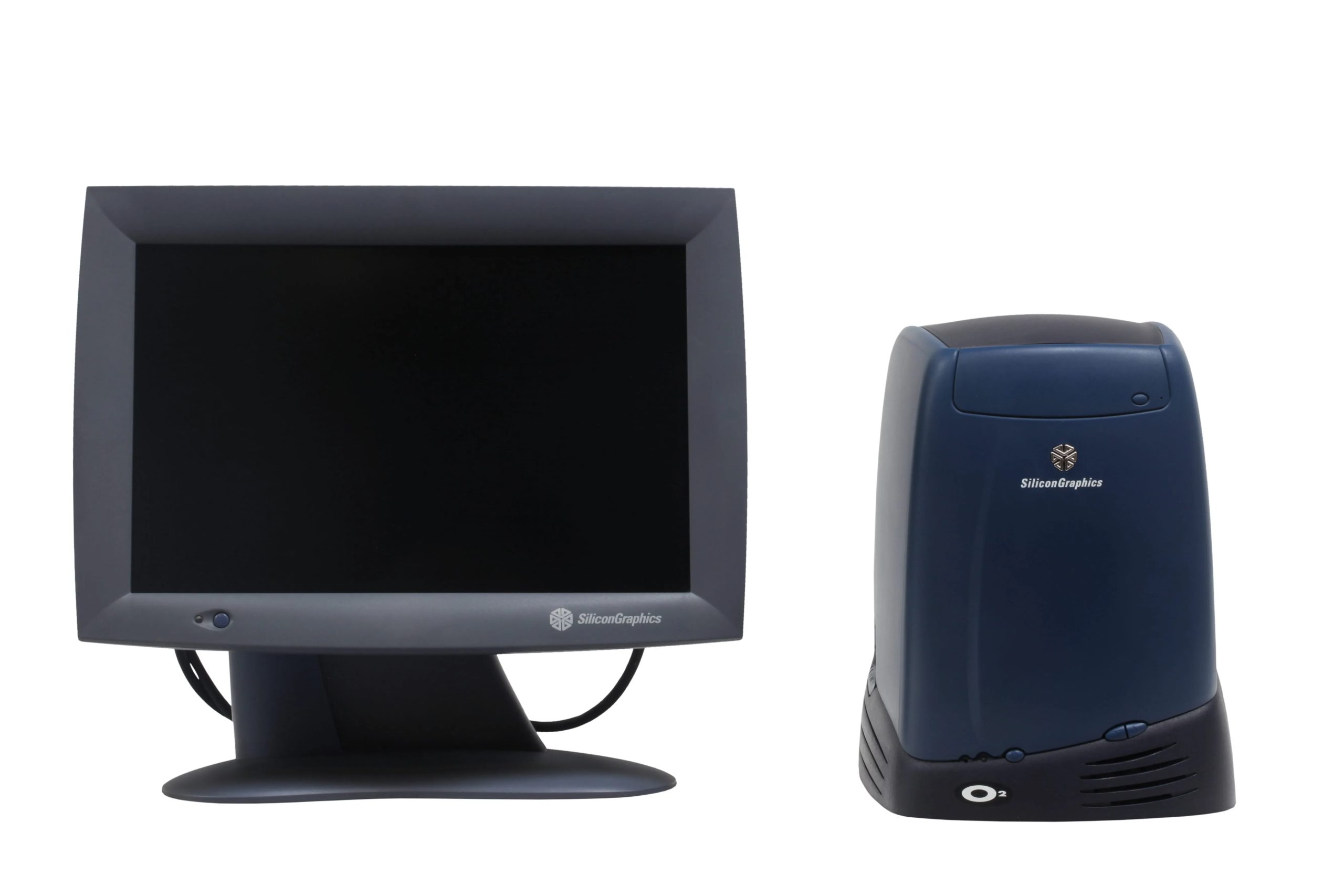
Top image: Silicon Graphics 1600SW LCD display and O2 workstation. (Source: Wikimedia)

Advertisement

Source link

Advertisement
Continue Reading

Tech

Apple is adding a warning against AI music content

Published

on

Apple Music is introducing a new way to flag AI-generated music. However, it’s relying on the music industry itself to disclose it.

As reported by Music Business Worldwide, the streaming service has launched Transparency Tags, a new metadata system that allows record labels and distributors to mark when artificial intelligence has been used in different parts of a release.

The tags can be applied immediately. Eventually, they will become a requirement when partners deliver new content to the platform.

Rather than analysing songs itself, Apple is placing the responsibility on the supply chain. Labels and distributors will decide whether a track or release qualifies as AI-generated. They will apply the tags during the delivery process – this is similar to how genres or credits are currently submitted.

Advertisement

The system covers four areas of a release. Artwork tags flag when AI is used to create album artwork or other visuals. Track tags indicate that AI helped generate the sound recording itself. Composition tags apply when lyrics or other songwriting elements are created using AI. Meanwhile, Music Video tags identify AI-generated visuals tied to releases.

Advertisement

Apple says the goal is to give the industry better visibility into how generative AI is being used in music production. In a note to industry partners, the company described the tags as a “first step”. This is toward building clearer policies and best practices around AI-created content.

The approach stands in contrast to how some rivals are tackling the issue. Streaming platform Deezer, for example, has built its own AI detection system. It scans uploads automatically rather than relying on labels to self-report.

Advertisement

That difference matters given how quickly AI-generated music is growing. Deezer said earlier this year that it now receives more than 60,000 fully AI-generated tracks every day. Synthetic music now accounts for roughly 39% of all uploads to the platform.

The company also claims most of that content is tied to streaming fraud rather than artistic experimentation. According to Deezer, up to 85% of streams on AI-generated tracks were fraudulent in 2025. Those plays were removed from the royalty pool.

Apple’s Transparency Tags don’t currently include a visible enforcement mechanism or verification system. This means the accuracy of the labels will largely depend on the honesty of the distributors supplying the music.

Advertisement

Advertisement

For now, though, Apple’s move signals that AI disclosure is quickly becoming the next battleground for music streaming platforms.

Source link

Advertisement
Continue Reading

Tech

UL and IMR to design Ireland’s first 3D-printed liquid rocket engine

Published

on

The partnership news comes with official acceptance into the prestigious UK-based Race2Space 2026 International Propulsion competition.

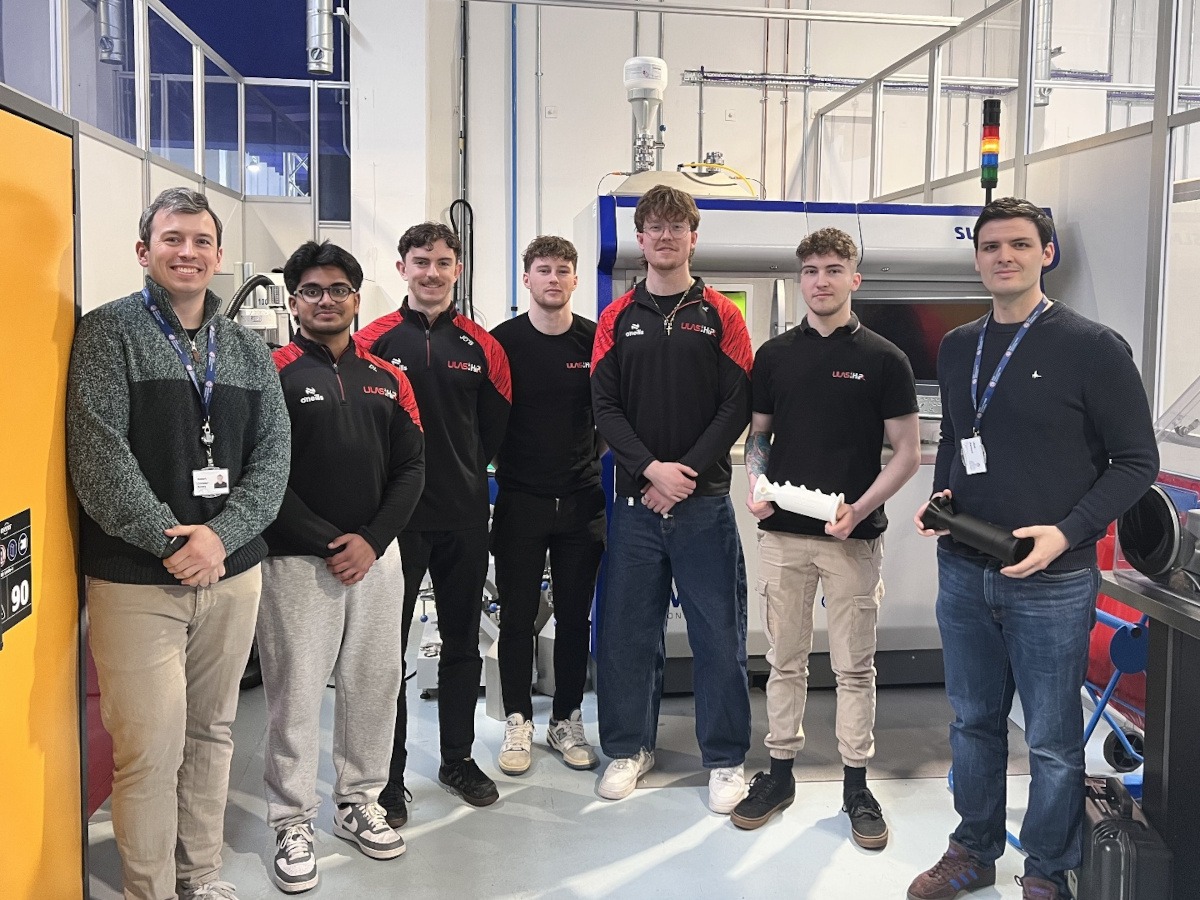
The University of Limerick (UL) Aeronautical Society High-Powered Rocketry Team (ULAS HiPR) has announced a partnership with UL and Irish Manufacturing Research (IMR) to design and produce the first additive manufactured (3D-printed) liquid rocket engine in the Republic of Ireland, called the Lúin of Celtchar.

The engine is a high-performance 2 kilonewton, water-cooled, IPA/nitrous oxide bi-propellant system, which has been designed entirely by the ULAS HiPR student team and is now being manufactured at IMR’s Advanced Manufacturing Lab in Mullingar using metal additive manufacturing. It will be returned to UL for precision machining and assembly. 

Established in 2022, ULAS HiPR has more than 100 members and is a combination of students from a range of disciplines, such as aeronautical, mechanical, software and design engineering – all of whom have an interest in designing, manufacturing and launching powerful rockets. 

Advertisement

The team has enjoyed some success having represented Ireland internationally at prestigious competitions, including Mach-24 and Euroc, the European Rocketry Challenge. Alongside the announcement of the partnership, ULAS HiPR has also officially been accepted into the UK-based Race2Space 2026 International Propulsion competition.

This is, according to ULAS HiPR, “a major milestone in advancing Irish student-led space propulsion capabilities”.

Speaking on the announcement, Jay Looney, the co-head of ULAS HiPR, said: “The acceptance of our project to Race2Space marks a defining moment not only for ULAS HiPR, but for Ireland’s student space community. 

“The selection of the first additively manufactured liquid rocket engine in the Republic of Ireland into the competition validates the technical ambition of our student team, and the strength of collaboration between Irish university students with industry. It demonstrates that world-class propulsion innovation can now be designed, manufactured and tested entirely here in Ireland.”

Advertisement

Mark Hartnett, a design for manufacturing senior technologist at IMR, added: “At IMR, supporting ambitious student teams like ULAS HiPR reflects our commitment to strengthening Ireland’s advanced manufacturing ecosystem and enabling the next generation of aerospace innovators. 

“These are vital platforms for advancing cutting-edge technologies and building Ireland’s future engineering capability, and this ULAS HiPR propulsion project demonstrates how emerging technologies can move rapidly from concept to high-performance hardware.”

In late February, Silicon Republic attended the official launch of Ireland’s first European Space Agency Phi-Lab, which is headquartered at IMR in Mullingar and run in collaboration with the AMBER Centre at Trinity College Dublin.

One of 10 European Phi-Labs, it is designed to be Ireland’s national platform for space technology development and to anchor the country’s ambitions within Europe and the world’s rapidly-expanding space economy.

Advertisement

Don’t miss out on the knowledge you need to succeed. Sign up for the Daily Brief, Silicon Republic’s digest of need-to-know sci-tech news.

Source link

Advertisement
Continue Reading

Tech

Humanity Heating Planet Faster Than Ever Before, Study Finds

Published

on

An anonymous reader The Guardian: Humanity is heating the planet faster than ever before, a study has found. Climate breakdown is occurring more rapidly with the heating rate almost doubling, according to research that excludes the effect of natural factors behind the latest scorching temperatures. It found global heating accelerated from a steady rate of less than 0.2C per decade between 1970 and 2015 to about 0.35C per decade over the past 10 years. The rate is higher than scientists have seen since they started systematically taking the Earth’s temperature in 1880.

“If the warming rate of the past 10 years continues, it would lead to a long-term exceedance of the 1.5C (2.7F) limit of the Paris agreement before 2030,” said Stefan Rahmstorf, a scientist at the Potsdam Institute for Climate Impact Research and co-author of the study. […] The researchers applied a noise-reduction method to filter out the estimated effect of nonhuman factors in five major datasets that scientists have compiled to gauge the Earth’s temperature. In each of them, they found an acceleration in global heating emerged in 2013 or 2014. The findings have been published in the journal Geophysical Research Letters.

Source link

Continue Reading

Tech

X is testing a new ad format that connects posts with products

Published

on

X is testing a new ad format that inserts a recommendation directly underneath a post that references the company or its products. The initial test, spotted by an X user in Europe, displayed a suggestion to “Get Starlink” beneath a post from a user that said Starlink’s satellite service works great in Portugal. The link, when clicked, directed users to Starlink’s website.

X head of product Nikita Bier confirmed the test, responding, “Trying to make an ad product that isn’t an ad.”

The Starlink ad is not visible to all users at this time, but the placeholder where the ad sits is.

If you visit X user @levelsio’s post from March 6 (screenshotted below in case of deletion), you’ll see an outlined box beneath the text of his post. This box currently showcases a random X post, unless you’re in the market where the ad test is live.

In places where the ad displays, several commenters noticed the new addition, with one asking, “lmao, did you add this Starlink button?”

Advertisement

In the thread, Bier also responded to a suggestion that X should allow affiliate links in this ad slot by saying, “No, then people will lie. I want to trust recommendations on here.”

Image Credits:Screenshot from X

X could not be immediately reached for comment. TechCrunch will update the article if the company responds.

The test follows news earlier this week that the company is rolling out “Paid Partnership” labels for creators. The labels can be applied to posts to comply with regulations around social media advertising, instead of requiring creators to use a hashtag like “ad” or “paid partnership.”

If creators’ sponsored posts were to be combined with an embedded link to an advertiser like the one being tested, X could potentially attract more marketers to the platform. That could boost creators’ use of the app, allowing it to better compete against larger social networks favored by creators, like Instagram, YouTube, and TikTok.

X has been chasing creator content for some time — even before it was called “X” and before it was owned by Elon Musk. Yet the app has never quite found its footing in this space. So far, the company has rolled out a number of creator products, including payouts for viral content, ad-revenue sharingcreator subscriptions, and more. 

Advertisement

The company this week also revamped its Creator Subscriptions offering with a number of new features, including the ability to monetize individual threads.

In addition, X announced Friday that the integrated chatbot Grok is now capable of reading X’s long-form content, known as Articles. This feature, too, is underutilized, as creators who publish lengthy written text tend to prefer doing so through their own websites or newsletters.

Source link

Advertisement
Continue Reading

Tech

Haier’s new Couture Care Collection will stop you from going to the dry cleaners

Published

on

Haier has introduced the Couture Care Collection, a two-product premium fabric care range comprising a stacked Laundry Centre and a wardrobe-style Clothes Drying Closet.

It’s a little boujee, but the collection is focused on offering complete fabric care for your clothes, rather than just traditional wash and dry functionality.

That’s because the Couture Care Collection 11 Laundry Centre combines washing and drying in a space-saving stacked format, with AI-powered Smart Link technology automatically syncing wash and dry cycles based on load type and fabric composition. The I-Refresh Pro steam function handles lightly worn garments without running a full wash cycle, while an Ultra Fresh Air system keeps laundry fresh for up to 12 hours after the cycle ends.

The Ultra Reverse Drum and Flexy Air technology apparently reduce tangling and creasing during the drying phase, which honestly sounds like a lifesaver given how crinkled my clothes look when I remove them from dryer at home – although that serves me right for not looking at the best tumble dryers before buying.

Advertisement

Most interestingly of all though, is the Clothes Drying Closet, which looks like a wardrobe, but can dry delicate fabrics shoes, and accessories. If you’re used to running back and forth to the dry cleaners every week, this might be the home gadget you’ve been looking for.

Advertisement

Quick refresh cycles run from around ten minutes for lightly worn clothing, while a combination of steam, UV, and plasma technology sanitises up to 99.99% of bacteria.

Both products connect to Haier’s hOn app for remote control, cycle customisation, and notifications, with pricing and availability for the Couture Care Collection expected to be confirmed closer to the product’s retail launch.

Advertisement

Source link

Continue Reading

Tech

MacBook Neo proves Apple can build a $599 laptop without cheapening the Mac

Published

on

Apple’s industrial design chief says the MacBook Neo was created to bring the Mac into a much lower price tier without sacrificing the materials and design language associated with Apple laptops.

Open laptop on a table displaying colorful app windows, with a light keyboard and trackpad, and another closed laptop in the background on a softly lit surface
MacBook Neo

Apple vice president of industrial design Molly Anderson said in a rare March 6 solo interview that the MacBook Neo retains its MacBook identity despite its $599 starting price. Apple introduced the MacBook Neo on March 4 as its most affordable Mac laptop.
The MacBook Neo uses the A18 Pro processor instead of the Apple Silicon M-series chips found in other Macs. Apple is targeting students and first-time Mac buyers who might otherwise choose inexpensive Windows laptops or Chromebooks.
Continue Reading on AppleInsider | Discuss on our Forums

Source link

Continue Reading

Tech

How An Old Automatic Stoker Was Hacked Onto A Modern Lancashire Boiler

Published

on

Usage of an automatic stoker. (Source: Claymills Pumping Station, YouTube)

Hacks are of all ages, with the Victorian-era Claymills Pumping Station being no exception. When its old Lancashire boilers from the 19th century were  finally replaced with modern 1930s boilers, the 1920s-era automatic stokers were bodged onto the new boilers with a rather ill-fitting adapter plate, as there was no standard Lancashire boiler design. Nearly a hundred years later it was up to the volunteers at this Victorian-era pumping station to inspect and refurbish this solution, before fitting it back onto the boiler.

Lancashire boilers have two flue channels in which the coal is burned, which used to be done purely by hand. The automatic stokers are belt-driven devices that continuously add fresh fuel and massively lighten the workload. The 1920s stokers are still in place at this pumping station and a feature that they would love to retain.

Thus, after previously pressure-testing this #1 boiler to well beyond its operating pressure, the refurbished adapter plate was mounted back on with some percussive persuasion of the ‘very large beam’ variety.

Before the stokers could be mounted again, however, the boiler inspector had to give his OK to put the brickwork around the boiler back in place which helps to insulate it, among other functions. Once this is completed the boiler can finally see a fire again since it was last used in the 1970s. Whether these vintage stokers will work flawlessly will remain a surprise until then, but it’ll be a treat to see them operate.

Advertisement

Source link

Advertisement
Continue Reading

Tech

Robinhood’s startup fund stumbles in NYSE debut

Published

on

Retail investors are famously locked out of the startup world. Robinhood is attempting to change that by allowing the general public to invest in a portfolio of what it calls “some of the most exciting private companies operating today.”

To do this, the company that pioneered the commission-free brokerage model has secured access to eight startups—including Databricks, Stripe, Mercor, and Oura—grouping them into a vehicle called Robinhood Ventures Fund I. The fund, which also includes Ramp, Airwallex, Revolut, and Boom, set out last month with an ambitious $1 billion target, but demand for this novel way of investing in private companies was lower than expected.

On Thursday, Robinhood announced the fund had raised $658.4 million — which could reach $705.7 million if underwriters exercise their full allotment. The shares, priced at $25 in the offering, began trading on Friday and closed the day at $21, a 16% decline.

RVI’s reception on Wall Street stands in stark contrast to another attempt to give individual investors exposure to buzzy startups. When Destiny Tech100 — a publicly traded, closed-end fund holding stakes in 100 venture-backed companies including SpaceX, OpenAI, and Discord — direct-listed on the NYSE in March 2024, its shares surged from a reference price of $4.84 to an opening trade of $8.25, eventually closing its first day at $9.00.

Advertisement

Destiny Tech100 has kept climbing since its public debut. The fund closed trading on Friday at $26.61, a 33% premium to its net asset value of $19.97, meaning its shares trade well above the actual value of its underlying holdings.

So what explains why retail investors aren’t nearly as excited about Robinhood’s fund as they are about Destiny Tech 100? The most likely explanation is RVI’s lack of exposure to the companies widely expected to go public at enormous valuations: OpenAI, Anthropic, and SpaceX.

Robinhood is looking to address this. RVI intends to add more startups to the fund, eventually aiming to hold what Robinhood Ventures President Sarah Pinto described to TechCrunch as “15 to 20 of the best late-stage growth companies out there.”  The company’s CFO, Shiv Verma, told Axios Pro on Friday that Robinhood is eyeing exposure to OpenAI.

Techcrunch event

Advertisement

San Francisco, CA
|
October 13-15, 2026

But securing access to these high-profile companies is far from straightforward. Robinhood is aiming to get directly onto their cap tables directly through primary capital raises or secondary share sales — and that’s difficult even for a firm with deep roots in Silicon Valley.

Advertisement

A cap table — the official record of who owns equity in a company — is closely guarded at most high-profile startups, and winning a spot on one requires either being invited by the company or purchasing shares from existing investors with the company’s blessing.

“It’s very difficult to get into any of these companies, and the investment rounds are very expensive,” acknowledged Pinto.

That is just one of the reasons democratizing private markets is easier said than done, and why the companies most retail investors actually want to own remain, for now, out of reach.

Source link

Advertisement
Continue Reading

Tech

There’s a sneaky way to watch Outlander 2026 for free

Published

on

Outlander season 8 is here! It marks the closing chapter of Claire (Caitriona Balfe) and Jamie’s (Sam Heughan) torrid love story – at least on the small screen. You can watch Outlander free in the UK and US but fans abroad needn’t miss out…

Source link

Continue Reading

Trending

Copyright © 2025