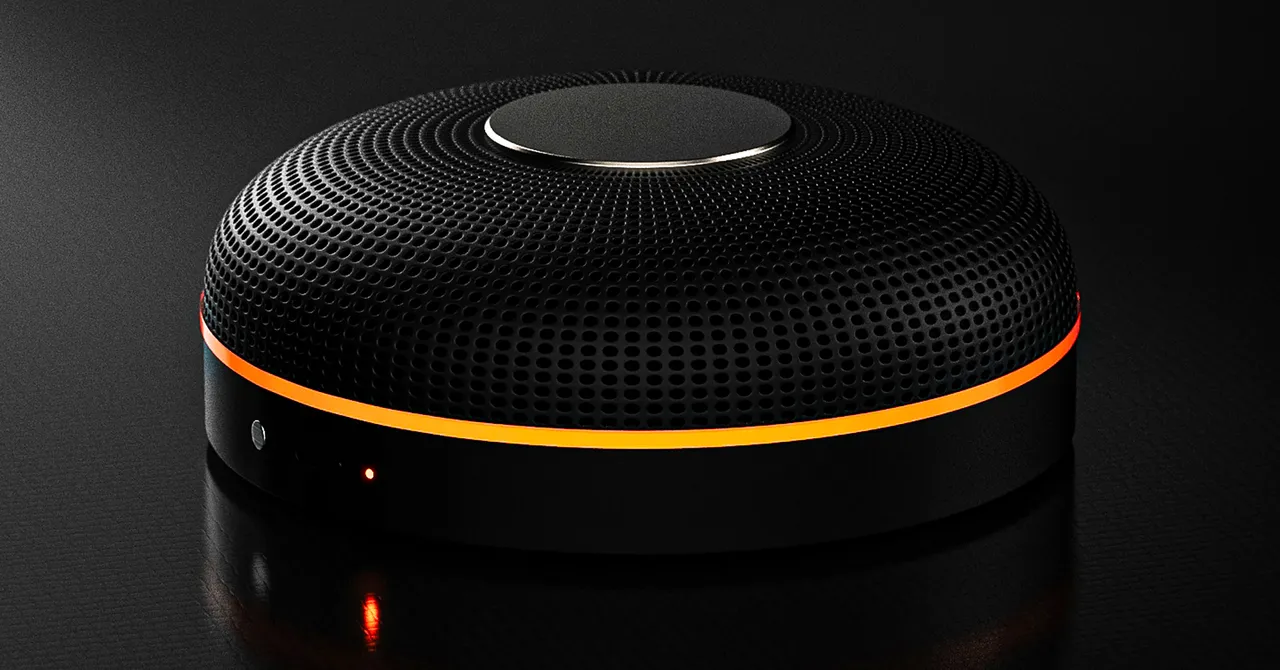
Deveillance also claims the Spectre can find nearby microphones by detecting radio frequencies (RF), but critics say finding a microphone via RF emissions is not effective unless the sensor is immediately beside it.
“If you could detect and recognize components via RF the way Spectre claims to, it would literally be transformative to technology,” Jordan wrote in a text to WIRED after he built a device to test detecting RF signatures in microphones. “You’d be able to do radio astronomy in Manhattan.”
Deveillance is also looking at ways to integrate nonlinear junction detection (NLJD), a very high-frequency radio signal used by security professionals to find hidden mics and bugs. NLJD detectors are expensive and used primarily in professional contexts like military operations.
Even if a device could detect a microphone’s exact location, objects around a room can change how the frequencies spread and interact. The emitted frequencies could also be a problem. There haven’t been adequate studies to show what effects ultrasonic frequencies have on the human ear, but some people and many pets can hear them and find them obnoxious or even painful. Baradari acknowledges that her team needs to do more testing to see how pets are affected.
Advertisement
“They simply cannot do this,” engineer and YouTuber Dave Jones (who runs the channel EEVblog) wrote in an email to WIRED. “They are using the classic trick of using wording to imply that it will detect every type of microphone, when all they are probably doing is scanning for Bluetooth audio devices. It’s totally lame.” Baradari reiterates that the Spectre uses a combination of RF and Bluetooth low energy to detect microphones.
WIRED asked Baradari to share any evidence of the Spectre’s effectiveness at identifying and blocking microphones in a person’s vicinity. Baradari shared a few short videoclips of people putting their phones to their ears listening to audioclips—which were presumably jammed by the Spectre—but these videos do little to prove that the device works.
Future Imperfect
Baradari has taken the critiques in stride, acknowledging that the tech is still in development. “I actually appreciate those comments, because they’re making me think and see more things as well,” Baradari says. “I do believe that with the ideas that we’re having and integrating into one device, these concerns can be addressed.”
People were quick to poke fun at the Spectre I online, calling the technology the cone of silence from Dune. Now, the Deveillance website reads, “Our goal is to make the cone of silence become reality.”
Advertisement
John Scott-Railton, a cybersecurity researcher at Citizen Lab, who is critical of the Spectre I, lauded the device’s virality as an indication of the real hunger for these kinds of gadgets to win back our privacy.
“The silver lining of this blowing up is that it is a Ring-like moment that highlights how quickly and intensely consumer attitudes have shifted around pervasive recording devices,” says Scott-Railton. “We need to be building products that do all the cool things that people want but that don’t have the massive privacy- and consent-violation undertow. You need device-level controls, and you need regulations of the companies that are doing this.”
Cooper Quintin, a senior staff technologist at the Electronic Frontier Foundation, echoed those sentiments, even if critics believe Deveillance’s efforts to be flawed.
“If this technology works, it could be a boon for many,” Quintin wrote in an email to WIRED. “It is nice to see a company creating something to protect privacy instead of working on new and creative ways to extract data from us.”
A case for the Pixel 11 Pro XL has already shown up online
We may get a bigger but thinner camera bar
These handsets could well be launching around August time
The chunky camera bar sitting around the back of Google‘s flagship Pixel phones certainly makes them stand out, but it seems there may be a design tweak on the way with the Pixel 11 series that’s expected later this year.
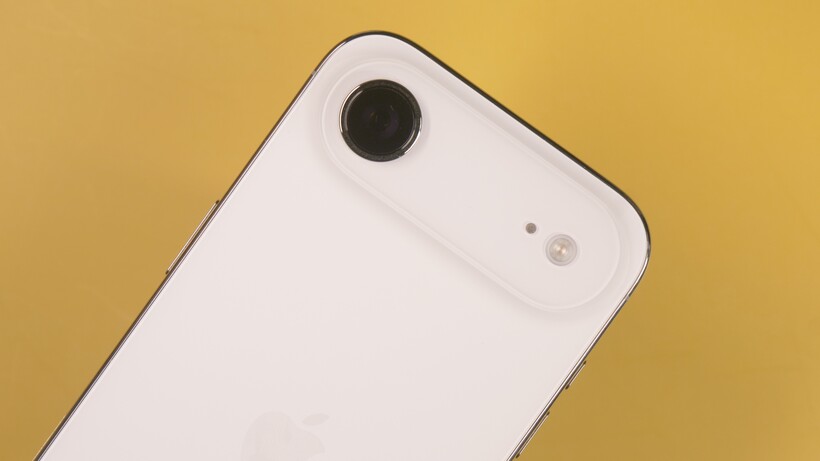
Case maker ThinBorne (via Android Authority) has already posted a listing for a Pixel 11 Pro XL case, which gives us some idea of what might be coming. The case design suggests the phone’s camera bar may cover a slightly larger area, and protrude a little less.
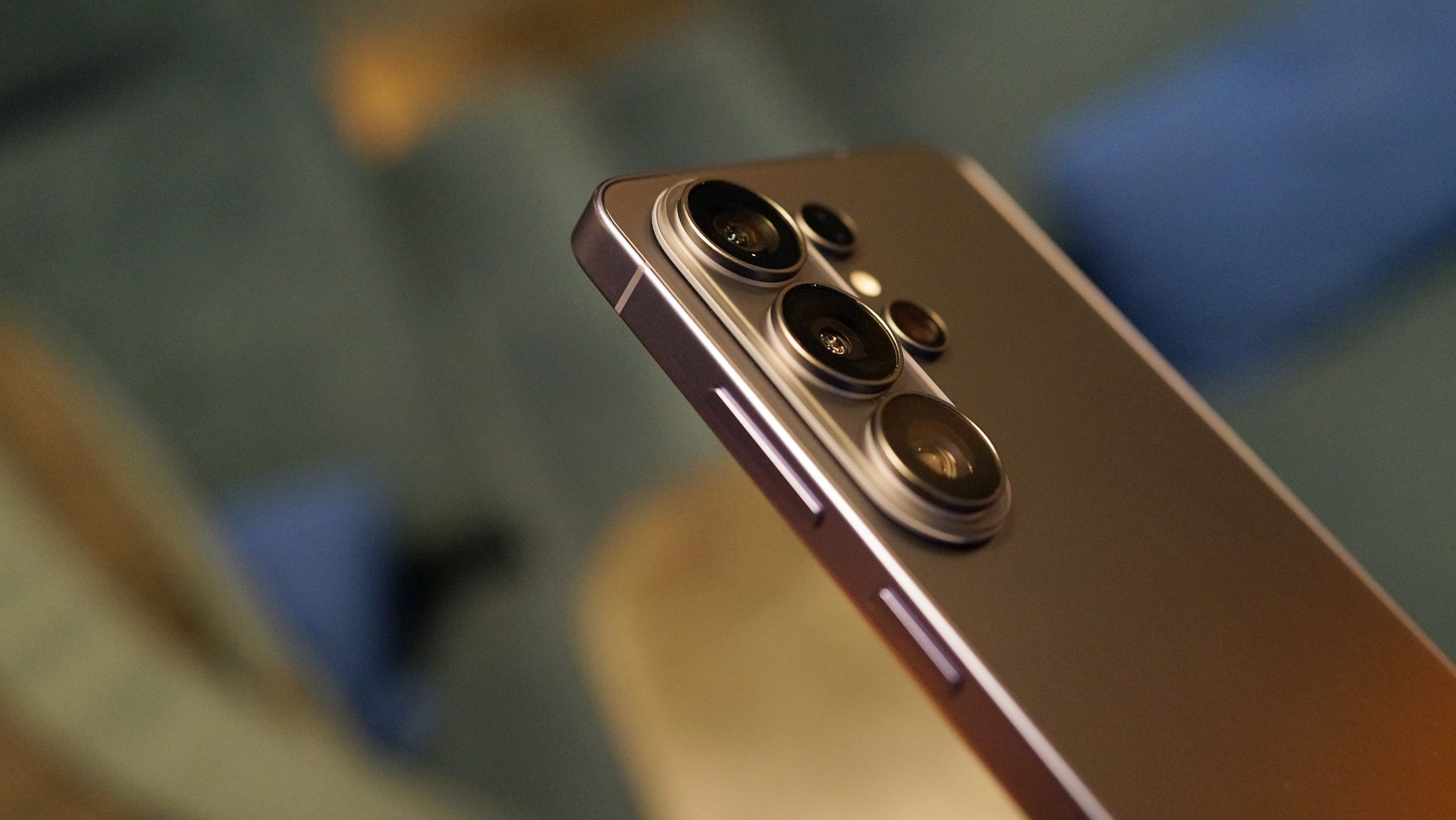
Take a peek at our Pixel 10 Pro XL review, and you’ll see the rear camera island does stick out a fair bit from the phone. That’s partly to enable features like the 5x optical zoom, but the additional thickness isn’t to everyone’s tastes.
In 2026 it appears that Google may have found a way to trim down on this protrusion without affecting the camera specs too much — although of course we don’t know yet which cameras the Pixel 11 handsets are going to be fitted with.
To be confirmed
The Pixel 10a, without a camera bar (Image credit: Google)
Bear in mind that this updated design is far from confirmed, although case makers do often get a heads up from manufacturers about the dimensions of upcoming devices, so that the cases can be ready to go on launch day.
This is almost the first Pixel 11 leak to appear, although there was talk a few months ago about changes that may be coming with the Tensor G6 chipset — the processor that’s expected to be fitted inside all of these phones.
Advertisement
If Google follows the same approach as last year, we’ll get a Pixel 11, a Pixel 11 Pro, a Pixel 11 Pro XL, and a Pixel 11 Pro Fold. The current Pixel 10 flagships were unveiled in August, so their successors are likely to appear around then as well.
Sign up for breaking news, reviews, opinion, top tech deals, and more.
We’ve also just had the launch of the mid-range Google Pixel 10a, which — like the Pixel 9a before it — eschews the classic Pixel camera bump for a flat back casing. We’ll have to wait and see which direction the Pixel design team goes in next.
Seattle-based Rad Power Bikes went bankrupt and was acquired by Life Electric Vehicles Holdings of Florida. (Rad Power Bikes Photo)
Robert Provost has big plans for Rad Power Bikes, the recently bankrupt Seattle-based electric bike maker that he thinks can reclaim its industry dominance — and grow even larger.
In an interview with GeekWire on Friday, Provost, the CEO of South Florida-based Life Electric Vehicles Holdings, Inc., laid out an ambitious roadmap to overhaul Rad following his company’s acquisition of the startup’s assets, which closed this week.
“It’s not a continuation of Rad Power, more like a phoenix,” Provost said. “The rebirth.”
Under a new corporate entity called Rad Life Mobility, owned by Life EV Holdings, Provost said offers have been extended to re-hire 95% of employees who were laid off as part the bankruptcy process. Many of them are based in the Seattle area where Rad grew over the years.
Provost said about 70 people have accepted so far and he wants to hear from anyone who may have been missed — even former employees who helped build Rad during its heyday before and during the pandemic.
Advertisement
“We acquired all the digital assets, all the tangible assets. It was up to us on the workforce, we could actually hire them or not,” he said. “So we made the decision to go ahead and hire them. They’ve done a really great job.”
Provost said Life EV added another 15 or 20 of its people to Rad Life Mobility, including a new president, Salt Lake City-based Jim Brown, a Life EV investor who has extensive automotive dealership retail experience with Larry H. Miller Automotive Group in Utah.
“Some of the front office will be in person in Utah, but we are maintaining Seattle,” Provost said.
Based in Deerfield Beach, Fla., Life Electric Vehicles Holdings — publicly traded on the OTC market as LFEV — is a micro-mobility platform company focused on acquiring and scaling established e-bike brands. In November 2023, it acquired Serial 1, the in-house electric bicycle company originally started by motorcycle maker Harley-Davidson.
Advertisement
While Rad takes on a new corporate identity, the Rad Power Bikes branding will continue on bikes, products and retail locations. And despite the struggles it encountered, Provost thinks there is still a lot of value in the brand.
“We’re all excited,” Provost said. “It was No. 1. It was the highest-valued electric-bike-only company in the U.S. Our goal is get it back to that value, if not beyond that.”
Speaking during a Zoom call from his Florida office, Provost could hardly slow down while listing all that he and Life EV hope to accomplish with Rad Life Mobility, including:
Bike assembly: Provost plans to shift Rad from a traditional overseas manufacturing model to a “just-in-time” U.S.-based assembly process to lower costs and manage inventory. While parts will still be sourced globally, final assembly will move to a 100,000-square-foot facility in the central U.S. Provost noted the company will utilize a Foreign Trade Zone (FTZ) structure to mitigate the tariff burdens that plagued previous management. “We build only a few weeks out. It’s more of a just-in-time type of production,” he said.
Distribution and logistics: Provost called the reliance on third-party logistics and the associated costs a primary reason for Rad’s previous financial struggles. “We don’t need [3PL] because we’re managing that side of it,” he said. “We clean all that up, Rad becomes immediately profitable.”
Retail stores: Seven Rad stores will remain open in the U.S., including the flagship store in Seattle’s Ballard neighborhood. Provost said he was sad to see stores close in Vancouver, B.C., and St. Petersburg, Fla., earlier this year. Re-opening in Florida is a priority and getting Vancouver back would be nice, he said, adding that opening new Rad stores in at least 24 other key U.S. markets is the goal. Provost also said previous margins “weren’t sufficient” to dealers that carried Rad bikes and a new program “will have pricing that will be very attractive to them.”
Battery replacement program: Provost said the new company will take care of customers with Rad bikes and batteries impacted by the Consumer Product Safety Commission’s warning last fall, about potential fire hazards. “We’re going to put a program in to go ahead and replace those batteries for everyone, at like a 50% discount,” he said. “We will make sure it’s a Safe Shield Battery — the newer product. It’s gonna take us a little time to get that done.”
Another acquisition: “There’s another company we’re looking at that is actually a perfect complement to Rad Power. We’re most likely going to acquire that company, in the next week or so,” Provost said, adding that he couldn’t share a name yet but that he thinks it’s a company everybody knows.
(Rad Power Bikes Photo)
Rad Power Bikes launched in 2015 with a direct-to-consumer model and sub-$2,000 e-bikes aimed at casual riders, and in short time became a high-flying startup in Seattle.
The company saw demand surge nearly 300% during the COVID-19 pandemic. Rad raised more than $300 million in 2021 and branded itself as North America’s largest e-bike seller.
Advertisement
But the momentum faded in 2022 as demand cooled and a series of missteps and macroeconomic challenges led to more than seven rounds of layoffs.
The startup, originally founded by e-bike tinkerer Mike Radenbaugh and longtime friend Ty Collins, filed for Chapter 11 bankruptcy protection in December 2025 following surprising news in November that the company was fighting for survival as it faced “significant financial challenges.”
In its bankruptcy filing, Rad revealed a steady drop in gross revenue — from $129.8 million in 2023 to $103.8 million in 2024, and $63.3 million toward the end of 2025. The company reported total liabilities of nearly $73 million, more than double its assets of $32 million.
Rad’s assets were acquired by Life EV for $13.2 million, which Provost called a deal in relation to its onetime valuation of $1.65 billion. He said that the Life EV ownership group was ready to bid higher — and it’s prepared to spend far more to revitalize the brand.
Advertisement
Backed by a group of over 200 private shareholders and “very significant entrepreneurs,” Provost described the investor group as having “extremely deep pockets.”
The new Rad will still face some of the industry issues that caught up to the old Rad, chiefly that competition is much stiffer now than it was 10 years ago and the market has become saturated with a wide variety of e-bike brands.
But Provost said the company intends to introduce new products, build up sufficient inventory, make the company profitable and get everyone from investors to employees excited again. Not to mention Rad riders.
“The most important part out of this conversation, for me, is to let the Rad community know we are there for them,” Provost said. “We are going to support them 100%.”
Developer Embark Studios has acknowledged that Arc Raiders’ Discord SDK logged more user data than intended and issued a hotfix to address the problem. The studio says Discord logging has now been disabled while the team investigates to ensure no deeper issues remain. Read Entire Article Source link
Gushi Cliff Coffee is located on a cliffside overlooking the surf pounding against the shore of Fuzhou, Fujian, in southern China. Crowds of people sit on small little platforms embedded straight into the side of the cliff, 70 meters above the thundering surf, with a view out over the water to the Taiwan Strait, where the islands of Matsu appear as a distant collection of small little lights in the night sky.
Getting to this secluded location is not easy. First, you must enroll in a guided tour that will lead you through some metal rungs and cables for around 30 minutes until, with a few butterflies in your stomach, you take the plunge and are lowered down into the lounging area via a supervised rappel. The organization will offer you with all of the appropriate equipment, including harnesses, helmets, ropes, and, of course, a safety coach who will accompany you throughout your descent. You should keep in mind that you cannot simply go into this establishment without first booking a reservation.
Gushi was founded by Xue Ke and opened in 2024, but it appears to have existed for much longer. Xue Ke was drawn to the picturesque scenery snuggled between the mountains and the river. What do you get for 398 yuan, or around $58? Well, for that price, you’ll not only get a cup of coffee, which is usually pre-brewed and ready-to-drink, but you’ll also get insurance, all of the equipment rental, a guide to teach you the ropes, and, to top it all off, a photo shoot where you can hang your legs over the edge.
People come here for the excitement and the coffee, with some even calling it a bucket-list experience, while others see it as an excellent opportunity to get the perfect photo for social media. The stats range; on any given day of the week, save for weekends and holidays. The cafe attracts thrill-seekers from all across China and beyond, and what appears to be a simple cup of coffee becomes an unforgettable experience. [Source]
Ultra-thin phones were the thing in 2025. It felt like every big player in the smartphone market wanted to show off just how much engineering wizardry they could cram into something barely thicker than a USB-C port.
But barely a year later, the tides are already shifting. Samsung revealed the S26 range last week without the rumoured upgraded Edge variant, and rumours suggest the iPhone Air won’t get an upgrade this year either (though Apple is still working on an upgrade, apparently).
Honestly, it makes sense. As lovely as these phones are to hold, they come with some very real compromises.
The big problem with ultra-thin phones
Don’t get me wrong, devices like the iPhone Air and Samsung Galaxy S25 Edge are gorgeous bits of kit. Picking one up feels like a throwback to the days when phones felt light and slim, able to slip into a pocket and practically disappear – a stark difference to most 2026 flagships.
Advertisement
In daily use, that slimness is genuinely refreshing, and the novelty never really wore off for me – but then there’s the ugly side of ultra-slims to consider.
Advertisement
Image Credit (Trusted Reviews)
Camera hardware, for one, has generally taken a hit. The iPhone Air’s single rear camera is a perfect example; it’s fine for everyday photos, but it doesn’t exactly scream premium flagship when phones that cost hundreds less – including Apple’s own iPhone 17 – offer a wider selection of lenses.
It’s mainly down to constraints in size; telephoto lenses in particular need space to operate, something that comes at an extreme premium in ultra-thin phones.
Then there’s arguably the bigger problem, battery life. You can only fit so much cell into a wafer-thin chassis, and that results in more charging, more battery anxiety, and less of that all-day flagship confidence we’ve come to expect over the past few years.
Advertisement
Image Credit (Trusted Reviews)
That’s the trade-off; you’re paying top-tier prices for a device that, in some areas, feels like a massive step backwards. It’s a hard sell, and probably the main driver behind Samsung’s apparent abandonment of the Edge brand.
Advertisement
Tecno’s modular tech could be the fix
Then along comes Tecno at MWC 2026 that genuinely made me stop and stare.
The concept Atom device it showed off uses what it calls Modular Magnetic Interconnection tech, and at just 4.99mm thick, it’s thinner than basically anything else on the show floor.
Image Credit (Trusted Reviews)
As you’d expect, it feels stunning in the hand, and almost shockingly light. I actually assumed it was just a dummy model until I flipped the phone around and saw a fully working version of Android running on-screen.
But this isn’t just another thin phone; it’s a thin phone that can bulk up when you need it to.
Advertisement
Image Credit (Trusted Reviews)
Advertisement
Tecno’s idea is so simple that I’m kinda surprised that Samsung and Apple didn’t come up with something similar; keep the device ultra-thin, then let users attach the hardware they need when they need it.
Want a proper zoom for a day of sightseeing? Snap on a telephoto camera module. Heading out and worried about battery? Click on an integrated battery pack. There was even a dedicated microphone module with a wind shield on display, ideal for content creators.
Image Credit (Trusted Reviews)
Some accessories attach directly to the camera housing, while others snap on just below it using hidden magnets, while others utilise the POGO system at the bottom of the device. The stand at MWC had a whole ecosystem of accessories you could snap on and try, and suddenly the concept made a lot of sense.
Instead of permanently compromising the phone’s design for features you’ll only occasionally use, you pick and choose. Slim and minimal most of the time, and more feature-packed when you need it.
Image Credit (Trusted Reviews)
Advertisement
Not quite ready just yet
Of course, there’s a catch – there’s always a catch.
Advertisement
This is still very much just a concept. Tecno hasn’t confirmed any wider release plans, and the magnetic system, while clever, didn’t feel quite as secure as you’d want for everyday, on-the-go use. Stronger magnets and more refined attachments will be crucial if this is going to survive outside of a trade show demo.
Image Credit (Trusted Reviews)
But that’s the thing about concepts; they show the direction that the industry is headed. And right now, modular ultra-thin designs feel like a far more exciting direction than simply shaving off another 0.2mm and pretending the compromises simply don’t exist.
If ultra-thin phones are going to have a true resurgence, they need to stop asking us to give things up. Now we just need someone to bring it to market before the ultra-thin movement disappears entirely.
Filing taxes is painful enough that many people would happily hand the job to a robot. In the age of generative AI, where chatbots can crank out a decent-sounding school essay in under a minute, it’s tempting to think your tax return could be next.
There’s just one small problem. The Internal Revenue Service expects financial data to be accurate, not just “close enough.”
I asked some tax experts whether you should have a general-purpose AI chatbot like ChatGPT, Claude, Gemini or Perplexity do your taxes for you. The answer was clear.
“I don’t recommend that at all,” said Travis Thompson, a tax attorney and director in the business and finance group at the firm Fennemore.
“My advice would be no,” said Sterling Raskie, senior lecturer of finance at the University of Illinois Urbana-Champaign.
Tax season makes everyone look for shortcuts. Federal income tax returns are nightmarish and complicated — and that’s exactly what makes them unsuited for a chatbot. AI is very good at sounding right even when it’s wrong.
Still, if you can’t afford to hire a trusted, trained human to help with your taxes, there are some things generative AI can be useful for during tax season.
Advertisement
You can’t trust AI to be accurate
The capabilities of a generative AI model are impressive. But let’s remember that, at their core, these educated-guess machines are simply finding patterns and offering plausible results. They can’t distinguish approximation from the truth.
The numbers on your tax forms are expected to be correct, not simply ballpark. That’s why doing your taxes is such a pain, and also why we’re not supposed to take shortcuts. Mistakes can be costly to your refund, or you could face expensive repayments and fines, or worse.
“It’s important to keep in mind that if an AI chatbot provides incorrect guidance and a person uses it to file an incorrect tax return, they (the person) are responsible for infractions or violations, which could include penalties, interest, and lost refunds,” said Chris Linderwell, vice president of consumer tax products at H&R Block.
Some tax-specific AI tools are trained on and rely specifically on information about the tax code. But the generic one you use for menu planning or travel research is not one of those.
Chatbots manage data in the cloud, which is just a computer owned by a private company. They have “memory” features that can regurgitate information in unexpected ways. You may find yourself asking a totally unrelated question down the line and get a response that pulls from data in your tax documents. You probably don’t want that.
Be very careful about giving AI anything you want to keep private, like your tax information.
“You don’t want those numbers floating around the internet,” Thompson said.
How AI can help you with your taxes
Though you shouldn’t trust a large language model to fill out your tax forms, you can still use one as a beefed-up search engine for finding information, i.e., for educational purposes. Just make sure you verify its accuracy before relying on it.
I asked a representative from OpenAI, which makes ChatGPT, whether the chatbot is something taxpayers should use for filing. ChatGPT can’t access bank accounts, nor can it act as a licensed financial professional, lawyer, or accountant. “You should always review the ChatGPT output since it is not a replacement for a licensed professional,” the OpenAI rep said.
Advertisement
But it can help with a basic gut-check or can point you in the right direction, like translating tax terms, preparing checklists or providing questions to ask your accountant. (Disclosure: Ziff Davis, CNET’s parent company, in 2025 filed a lawsuit against OpenAI, alleging it infringed Ziff Davis copyrights in training and operating its AI systems.)
For example, AI can help you decide what to discuss with a tax pro, which documents you’ll need to process or even identify tax situations you might not have realized. What should you know if you made money from crypto? What’s the difference between married filing jointly and head of household?
Also, keep in mind that the quality of an AI answer doesn’t depend solely on the model, but also on how you ask the question. And repeating the same question multiple times may generate different answers, especially if you express an opinion or a tilt in how you ask (AI sycophancy is real). If outside links are provided in the results from AI, fact-check the findings against the original source, and make sure that the source is reputable.
Remember: You don’t know what you don’t know.
Advertisement
“The less and less expertise you have in that field, the less and less you can trust those programs,” Thompson said. “It doesn’t just depend on what the program is saying; it depends on what the user is asking the program to say.”
Use a human when doing your taxes
Experts underline the importance of having a “human in the loop” for AI systems, whether they’re writing LinkedIn posts or handling critical personal information. Mistakes are the fault of the person who decided to go with the AI’s work, not the technology itself. Don’t blame the calculator if you did the math wrong.
Someone with judgment and accountability should make the final call. When it comes to a simple tax return, you could be that person.
Raskie said if you have a basic return and you trust yourself to be thorough and double-check the numbers, you should be able to file on your own. “Basic return” generally means you only earn W-2 income and take the standard deduction — no complex investments, itemized deductions or freelance work. You could fill out the forms yourself, following step-by-step instructions through the IRS’s free fillable online forms, or by using a free file software option.
Advertisement
H&R Block online uses AI to help automate your filing by reviewing receipts and uploaded documents to prefill fields on your behalf. AI, in this sense, is a time-saver. But ultimately, you have to make sure the information is accurate.
Many at-home tax software programs offer defense services in the event of an audit or audit risk assessments before you file — but for an extra cost. H&R Block says it will give audit representation and even financial reimbursement (if they made the error).
“If you have any anxiety whatsoever, it’s worth its weight in gold to hire a licensed tax preparer professional to do your returns, primarily a CPA or what’s called an enrolled agent,” Thompson said.
Advertisement
If you solicit the help of a trusted licensed professional, you might be able to turn to them if there’s a mistake on your return. You’ll still be responsible for paying the government what you owe, but you may be able to hold a tax preparer accountable in cases of fraud or some serious mistakes.
If you decide to trust a chatbot to do your tax return, be ready for an IRS audit. And don’t expect to blame AI.
This week we went to MWC and were treated to some major Nothing and Apple launches including the Apple MacBook Neo.
There’s a lot of news coming from the tech world this week, so we’ve had to bump or usual seven-story-long ICYMI to a whole nine articles, so we have no time to dilly-dally in this intro.
Samsung pulled off a neat trick with its Galaxy S26 Ultra. It’s not a reinvention and, at a glance, could be mistaken for the S25 Ultra. However, it made key updates to lenses, image processing, design, materials, and raw power that should please most Galaxy fans (all without raising the price). The new phone is also over-stuffed with AI, but certainly makes some of the best use of on-board Gemini. However, it’s two other bits of innovation that lift the S26 Ultra above all other Androids: Privacy Display and Super Steady Horizontal Hold. The former is the first smartphone hardware-based privacy screen, and the second, well, you have to try this “gimbal in your smartphone” to believe it.
Advertisement
8. ChatGPT was cancelled over its Pentagon deal
(Image credit: Shutterstock)
Could ChatGPT one day power autonomous killing machines? That’s the question many are asking after OpenAI signed a deal with the Pentagon after Anthropic’s Claude was labelled a “supply chain risk” for making that one of two red lines in its rejected version of a similar deal.
OpenAI claims that it shares Anthropic’s belief that AI shouldn’t make the decision to kill a person, or be used for mass surveillance of US citizens, but leaks suggest its deal with the Pentagon is a little looser than Anthropic’s would have been — with OpenAI’s version saying the Pentagon must follow the law and its internal guidance, both of which could be changed by the US government and Pentagon officials in the future.
As a result users have abandoned ChatGPT in droves, and switched over to Anthropic’s AI in what appears to be a ringing endorsement of its AI ethics. Though as Anthropic is reportedly in talks to make a deal with the Pentagon after all we’ll have to wait and see if it too makes compromises.
Sign up for breaking news, reviews, opinion, top tech deals, and more.
Advertisement
7. Somehow Xbox returned
(Image credit: Xbox)
If you told us the Xbox Series X / S was the last proper Xbox console — with future launches merely branded versions of other hardware like with the Xbox Meta Quest 3 and Asus Rog Xbox Ally X — we’d be inclined to believe you, but it seems a new Xbox is in fact in the works.
Three weeks after Asha Sharma replaced Phil Spencer as CEO of Xbox he teased new hardware codenamed Project Helix. He explained “Project Helix will lead in performance and play your Xbox and PC games,” suggesting it’ll be a PC console hybrid similar to Valve’s upcoming Steam Machine. This might also explain why Sony is abandoning its plans to release PlayStation games on PC; Xbox might not mind where you play its titles, but Sony clearly doesn’t want you to enjoy its games on Xbox consoles.
Little else is known about Helix for now, but the fact it’s coming at all is enough for now.
Advertisement
6. Nothing made great sequel headphones
(Image credit: Nothing)
Nothing just unveiled its second pair of headphones, and they’re something of a miracle. The Nothing Headphone (a) are way cheaper than its first pair, the Headphone (1), yet are somehow a better pair of headphones. The sound is more expansive and fun, the battery life is so long that it’s basically the best of any headphones you can buy, and the design is way less divisive.
Despite all the improvements, they’re half the price of the earlier headphones in the UK, and are a third cheaper in the US. They’re the platonic ideal of what you want from the follow-up to a product that was a bit of a miss, and might rank among the best headphones of the year.
Advertisement
5. Nothing released a new budget-phone, and it’s a hit
(Image credit: Nothing)
We reviewed the Nothing Phone (4a), the latest budget-friendly device from one of the most stylish tech brands around. In our four-star review, we raved about the (4a)’s stand-out look, which includes a fancy new Glyph Bar and array of attention-grabbing colorways.
This model’s more than just a pretty face, though. Its Qualcomm Snapdragon 7s Gen 4 processor delivers very solid performance indeed, and its streamlined UI is a joy to use. The (4a) also packs a higher resolution, brighter display, and larger battery than its predecessor. It’s not quite perfect, though – we had a few qualms about camera quality, and it would have been good to see wireless charging on-board.
Advertisement
4. We saw the best of MWC
(Image credit: Xiaomi / MWC / Honor)
Another year, another Mobile World Congress; this year’s MWC was, as always, jam packed with mobile tech and we went through all of it to find the very best in show.
Honor, Nothing and Samsung impressed us with their smartphones, including the Honor Magic V6 — a new thinnest-ever foldable — and the Nothing Phone 4(a), which is still fun and affordable.
There were also some exciting concept designs which may never see the light of day but are award-worthy nonetheless, like the Lenovo ThinkBook Modular PC Concept.
Advertisement
3. The mid-range iPhone 17e arrived to battle the Pixel 10a
(Image credit: Lance Ulanoff / Future)
It might lack the novelty and dazzle of the MacBook Neo, but the iPhone 17e might just be the most spectacularly sensible thing Apple announced this week. The mid-range phone is a modest update, with an A19 chip, new C1X modem and MagSafe charging being the main upgrades from the 16e.
But those quality-of-life upgrades all support the main headline here — the iPhone 17e costs the same as its predecessor, starting at $599 / £599 / AU$999. That’s a pretty good deal for upgraders who don’t mind missing out on an ultra-wide camera, and makes this phone a strong rival for the slightly cheaper Google Pixel 10a.
2. The iPad Air, MacBook Air and MacBook Pro all got refreshes
(Image credit: Lance Ulanoff / Future)
It was a huge week for Apple launches — and while the MacBook Neo was the only truly new release, we did also get spec bumps for three of its most popular products. The iPad Air M4 is effectively last year’s M3 model with a new chip (30% faster, apparently) and more modern connectivity including Wi-Fi 7.
Advertisement
And if you’re in the market for a new MacBook, well done for waiting until March. The MacBook Air M5 now has Apple’s latest base chip, and it might just be the world’s best all-round laptop (if we can forgive it for that small price hike).
Lastly, the MacBook Pro is now available with M5 Pro and M5 Max chips, and even comes with 1TB storage as standard, though you may want to shield your eyes from its price tag. The M5 Max version starts at $3,599 / £3,599 / AU$5,799) — that’s the same as six MacBook Neos.
1. Apple revealed the US$599 MacBook Neo
(Image credit: Jacob Krol/Future)
It had been rumored for months, but it was still a surprise when Apple revealed its cheapest-ever MacBook this week. The MacBook Neo is a fun, colorful Chromebook rival that runs on an A18 Pro chip — and it starts at only $599 / £599 / AU$899.
Advertisement
We haven’t yet fully tested the Neo to see how it performs, but our early impressions were good. In fact, we’ve already branded it “the most important product of 2026” so far, mainly because it’s landed in the context of a RAM price crisis and a dearth of compelling Chromebook rivals. Whether it’s also one of the best products of the year remains to be seen.
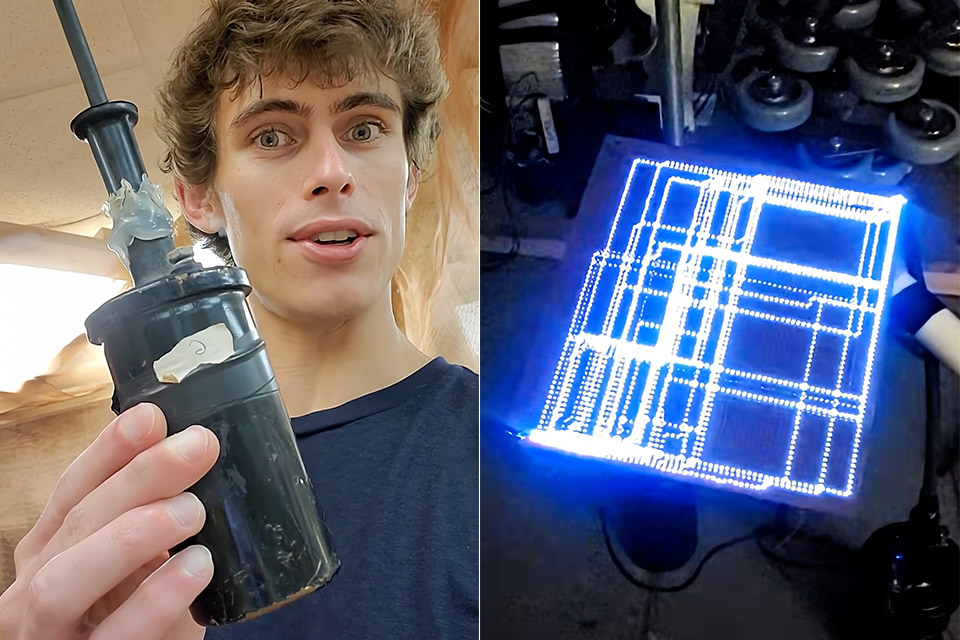
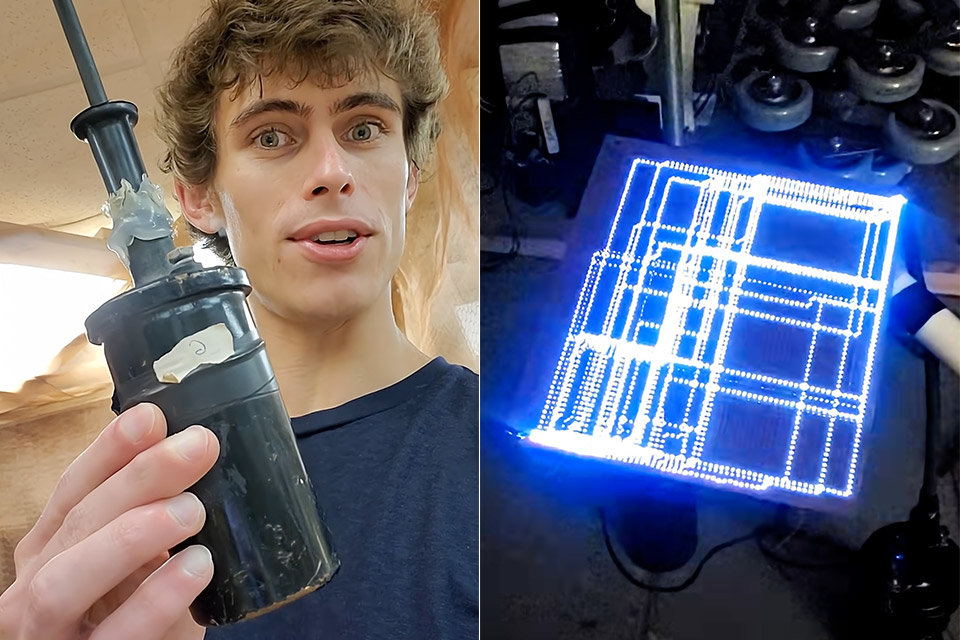
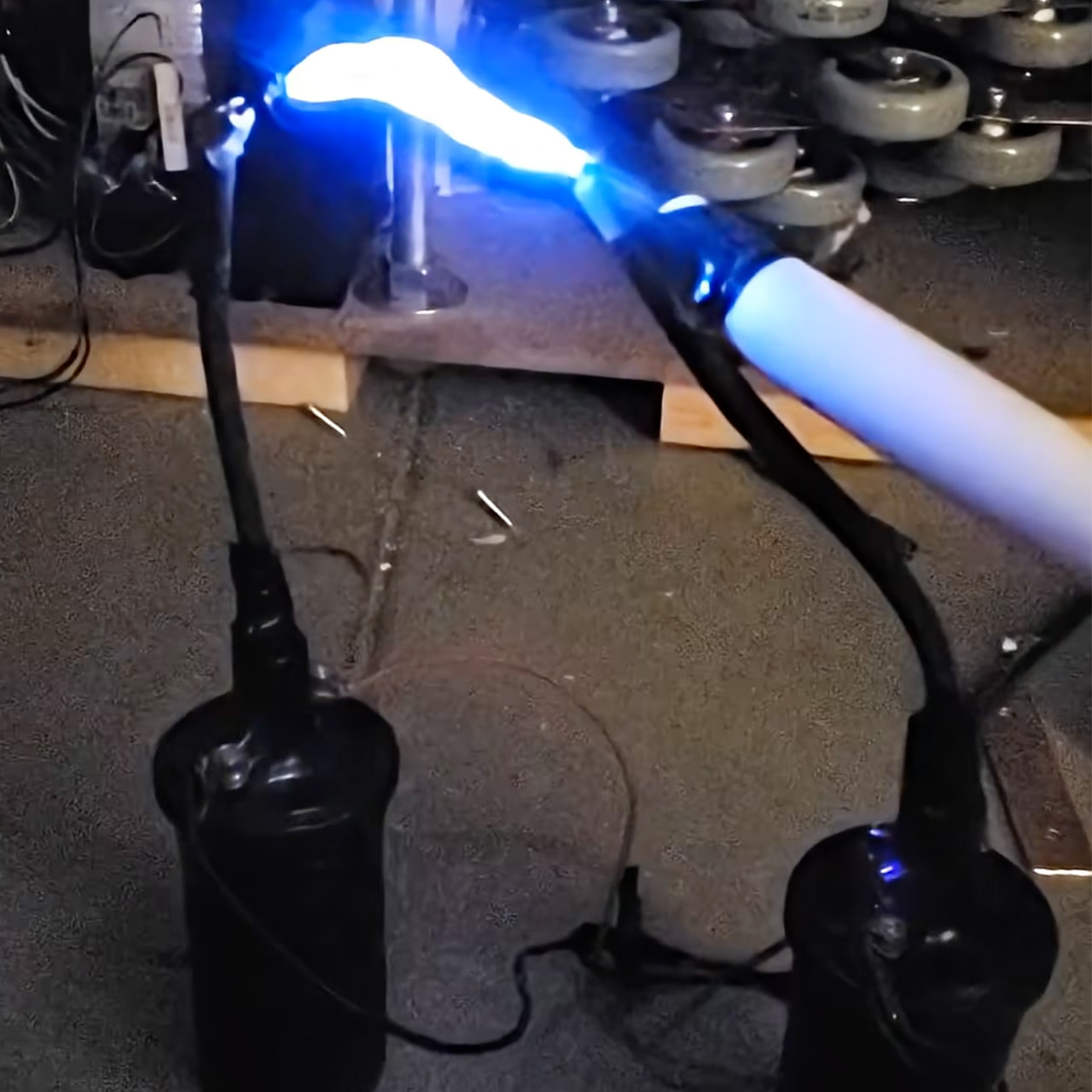
Styropyro has established a name for himself by pushing seemingly ordinary technology to its limits, and in this experiment, he demonstrates some of the fundamental physics at work in its most obvious form. He simply takes car ignition coils, the typical transformers that ignite a spark in your engine, and directs their output to a large blank circuit board.
Those car ignition coils can take a low battery voltage and provide a nice huge kick of tens of thousands of volts, exactly enough to bridge the gap that ignites your fuel in an engine. Styropyro has modified his coils to produce even more voltage than they normally would, and he has connected the high-voltage connections to a perfboard, which is a board with many holes and copper pads in a grid.
GET HANDS ON with Playz V8 engine model kit that works for adults and kids alike. Engage young minds into STEM with a working replica of a classic…
REALISTIC MODEL THAT WORKS: Deliver the action of a classic car engine with powerful pistons and interactive cables! Watch the motor fans turn on with…
FUEL THE FUN: Our complete toy V8 engine assembly kit provides hours of fun as you tinker with cranks, pulleys, belts, and exhaust valves, bringing…
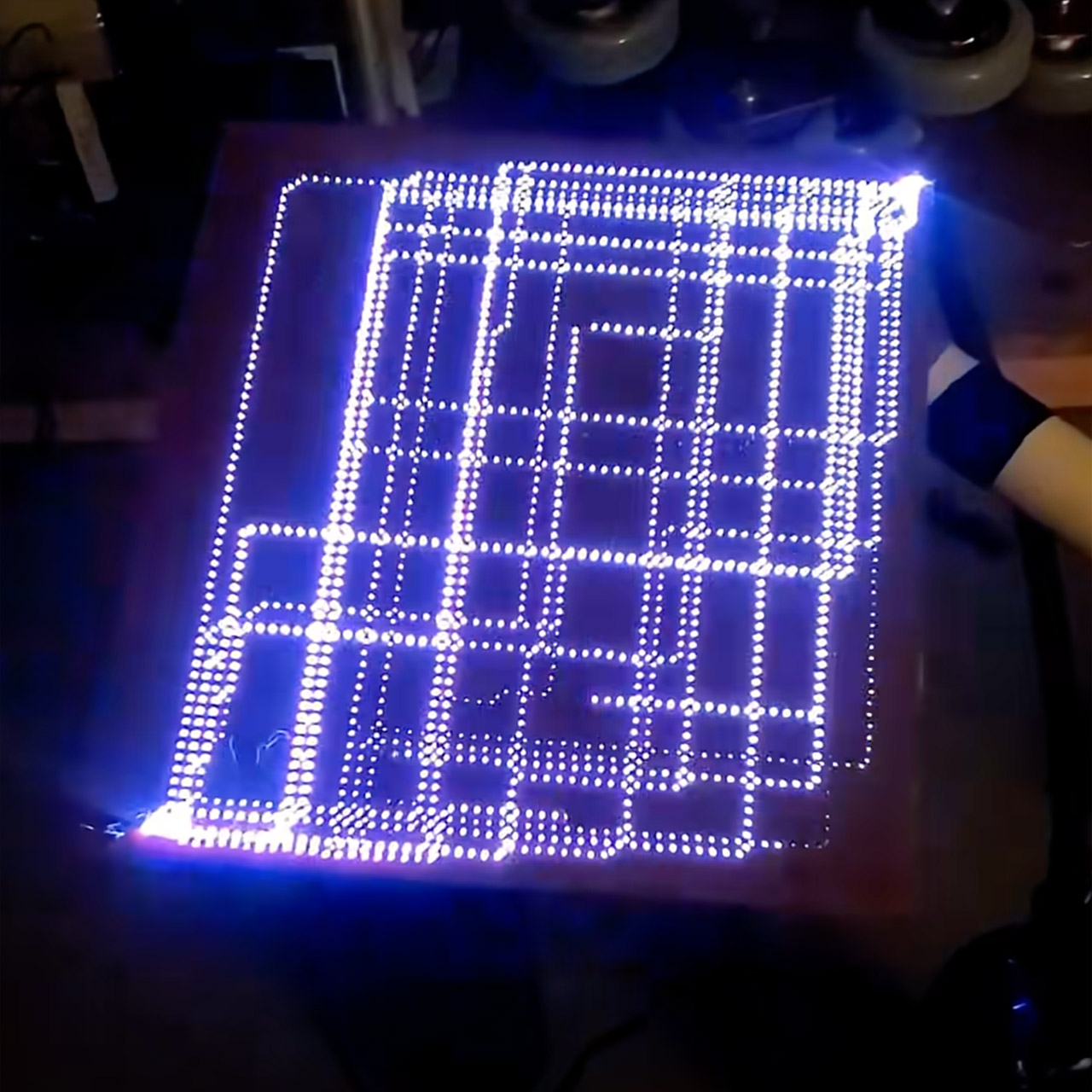
The problem is that electricity prefers the shortest path to ground. If you’re out in the open, just take the shortest straight line and you’ll get a nice clean spark, but with a board like this in the mix, things change. The small copper rings and holes in a grid alter the game completely. Because each ring provides a lower-resistance path for the electricity to follow along the grid lines, which is much easier than jumping across empty space in a straight line. So the arc of electricity begins to spread out, making right-angle turns and following the grid lines as it travels.
Advertisement
Threads of blazing light snaking across the surface form complicated, maze-like patterns. The reason these strange patterns appear is that the electricity is compelled to follow the longer path, which allows it to reach ground with the least amount of air to leap. It lingers like that for quite some time, hypnotizing you with its flashing, branching arcs against the static board.
Styropyro keeps things simple, with no special components on the board and no sophisticated drivers other than what pushes the coils themselves. It’s just a fast clip that highlights the moment when everything comes together rather than fussing with it for hours. The light from the arcs acts like a half-dozen tiny spotlights, illuminating every twist and turn of the paths they traverse, throwing crisp shadows and bringing the entire scene to life.
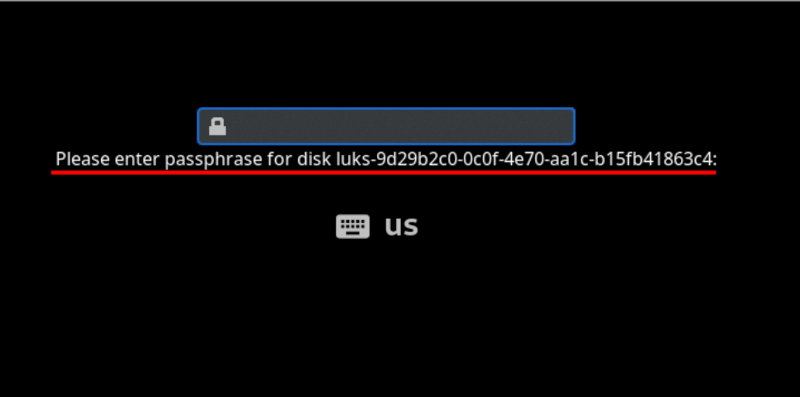
Can you remotely unlock an encrypted hard disk? [Jyn] needed to unlock their home server after it rebooted even if they weren’t home. Normally, they used Tailscale to remote in, but you can’t use tailscale to connect to the machine before the hard drive decrypts, right? Well, you can, sort of, and [Jyn] explains how.
The entertaining post points out something you probably knew, but never thought much about. When your Linux box boots, it starts a very tiny compressed Linux in RAM. On [Jyn’s] machine using Arch, this is the initramfs.
That’s not news, but because it is an actual limited Linux system (including systemd), you can add tools to it. In this case, adding dropbear (an ssh server) and Tailscale to the limited boot-time Linux.
Advertisement
Doing this in the most straightforward way presents several issues related to security. However, using a few configuration items, you can limit it to showing the unlock screen and nothing else.
The only limitation is that the setup, as written, will only work with an Ethernet interface. WiFi should be possible, but getting the wireless network up in this environment would likely be challenging.