Tech
This May Look Like Plastic Rods and a Hand Lever, But It’s Acutally a Digi-Comp 1 Mechanical Computer from 1963

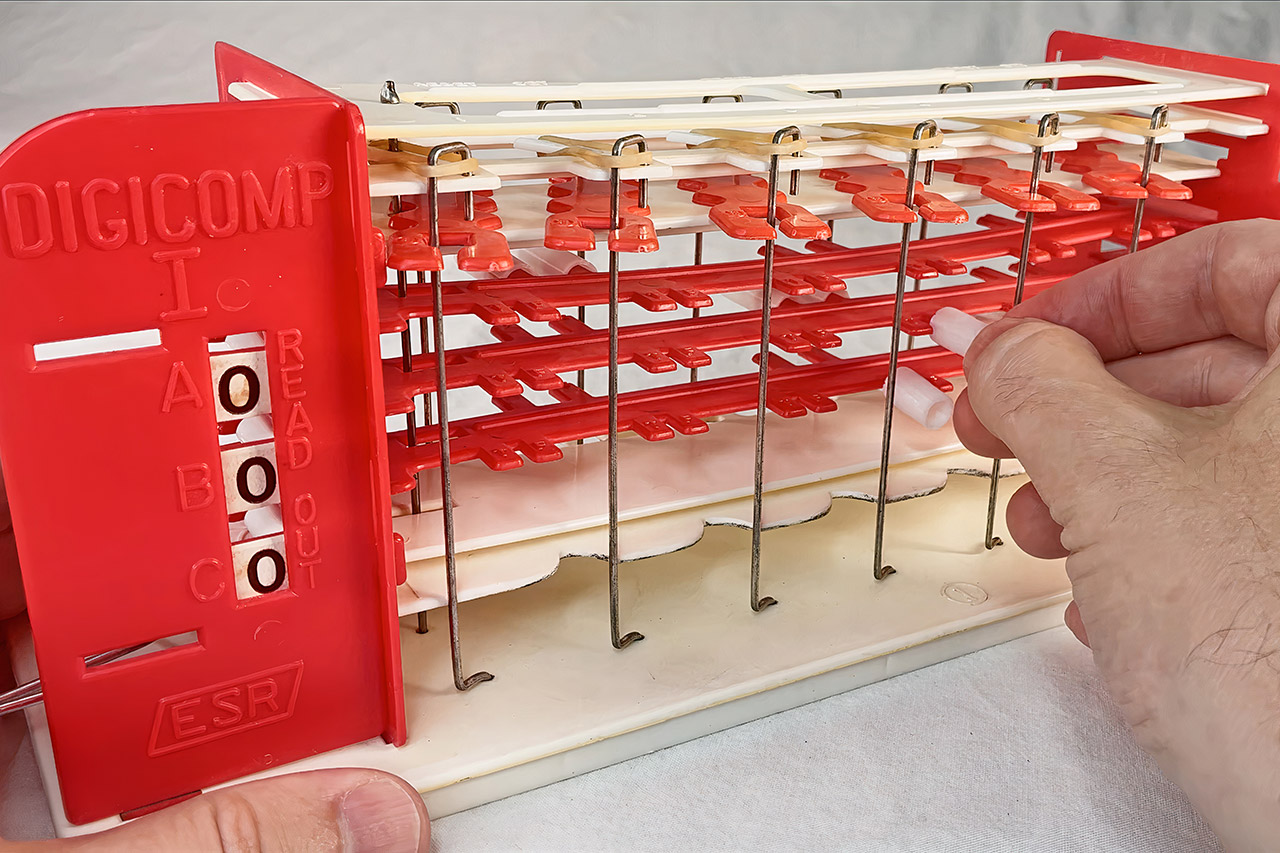
In 1963 a kit of red and white polystyrene plates, stiff metal rods, rubber bands, and short plastic tubes sold for $4.99 ($54.45 today) and assembled into a working digital computer. Three small windows on the front face displayed binary digits as either 0 or 1. A white lever marked “Clock” stuck out from the right side. Pushing that lever fully inward and then drawing it back out advanced every calculation by one step. No batteries or power cord were required. All motion came from the user’s hand and the tension stored in the rubber bands.


E.S.R. Inc., a small company founded by three engineers who originally intended to produce electronic computing equipment, release the kit as a side project to create quick cash. Instead of being a one-hit wonder, the Digi-Comp 1 sold out faster than anyone could keep up. Over 100,000 units were sold, with some estimating it could have been as many as 250,000. For a period, the number of Digi-Comp 1s was actually greater than the number of true electronic computers in use. At least in the middle of the 1960s. Eventually, the business chose to move its focus to more… traditional toys, and Digi-Comp 1 would remain in production for a little longer. It remained in production until the early 1970s.


GEEKOM Air12 Mini PC, Intel 7505(Beats N5095), 8GB Dual-Slot RAM, 256GB SSD
- [Ultra-Compact Mini PC: 25% Faster Single-Core] Measuring just 4.6 x 4.4 x 1.35 inches, this space-saving small pc fits seamlessly into any office…
- [Dual-Channel RAM & NVMe SSD Expandability] Pre-equipped with 8GB DDR4 RAM and a fast 256GB NVMe SSD to supercharge your daily productivity. Unlike…
- [48EU Intel UHD Graphics: Double the EUs of N5095/N95] Features Intel UHD Graphics with 48 Execution Units (EUs)—double the graphics cores of…
You assemble the device by slapping the base plate down and joining the upright supports in one seamless action, with no tools required. Then you add three horizontal bars that can move in any way because they can lock into either of two spots that you’d intuitively associate with binary 0 or binary 1, and those three bars may represent any number between 000 and 111, or, in more common terms, 0 to 7. Six thin rods now run along the front of the machine, with another six going along the back. Along the front, there are little tubes that you put onto tabs, and on the back, there are tubes that you fit onto the appropriate tabs. The arrangement of the back tubes dictates which rods can move and which cannot during a single clock cycle.
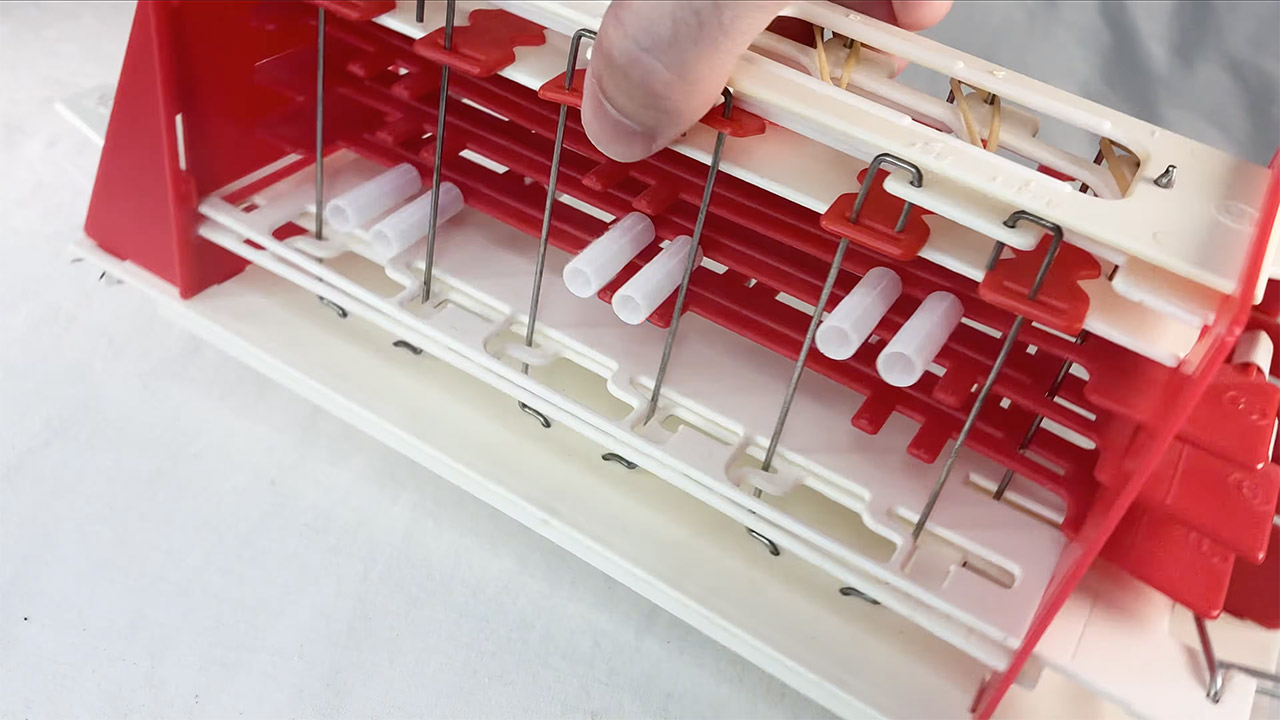
Now, the front rods serve as logic sensors, and depending on the condition of those three sliding bars, they will either drop or remain held up. The back rods are your actuators. So, if a rear rod swings free, it can push the bar from 0 to 1 or 1 to 0, as long as the right tube is in place. The rear rods with odd numbers reset to zero, while those with even numbers reset to one. Rubber bands keep the rods taut, allowing them to snap back into position as soon as an obstructing tube is relocated or a passage opens.

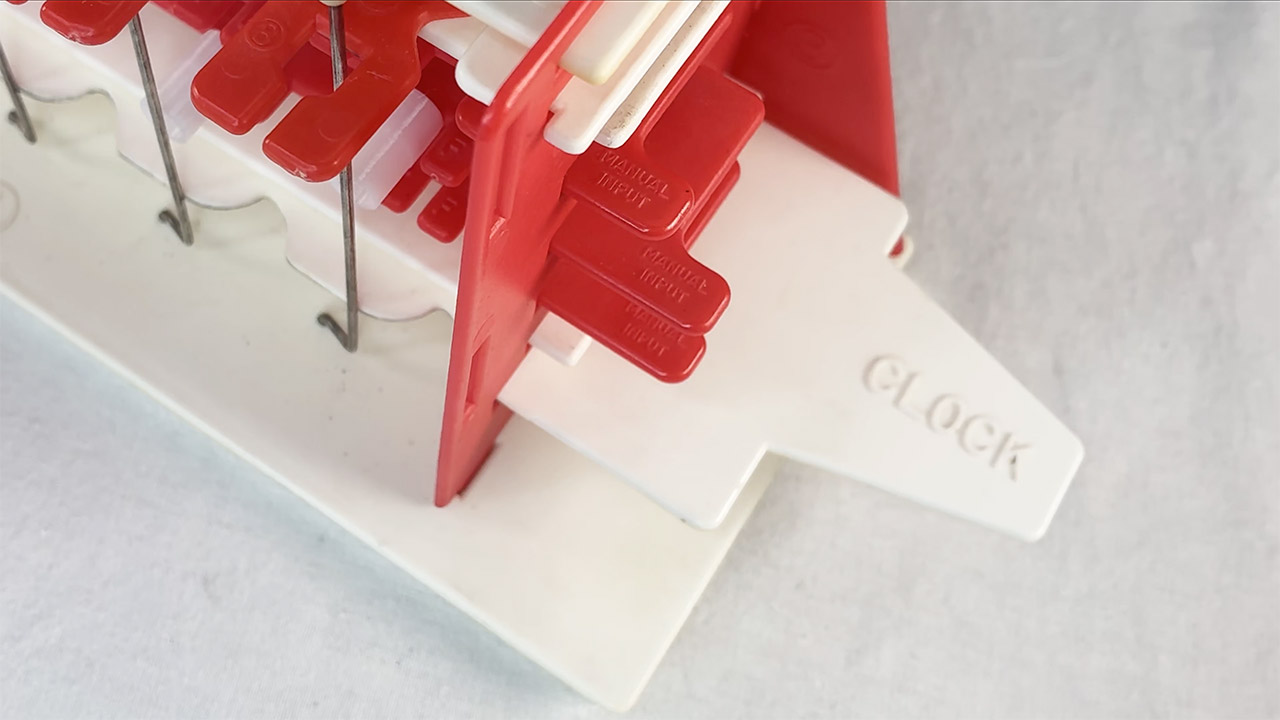
When you draw the lever all the way in and secure the logic rods, you complete a full clock cycle. Any rod that is not blocked by a front tube then connects to the corresponding rod on the back. Then, on the way back out, those free rear rods spring into action, shifting the sliding bars to whatever position is required by where you’ve placed the tubes. By the time the bars have set, the overall pattern of what is blocked and what is not has changed, making it ready for the next cycle. That’s all there is to it, because the machine’s current state totally controls its next state. In other words, it is a three-bit finite-state machine.
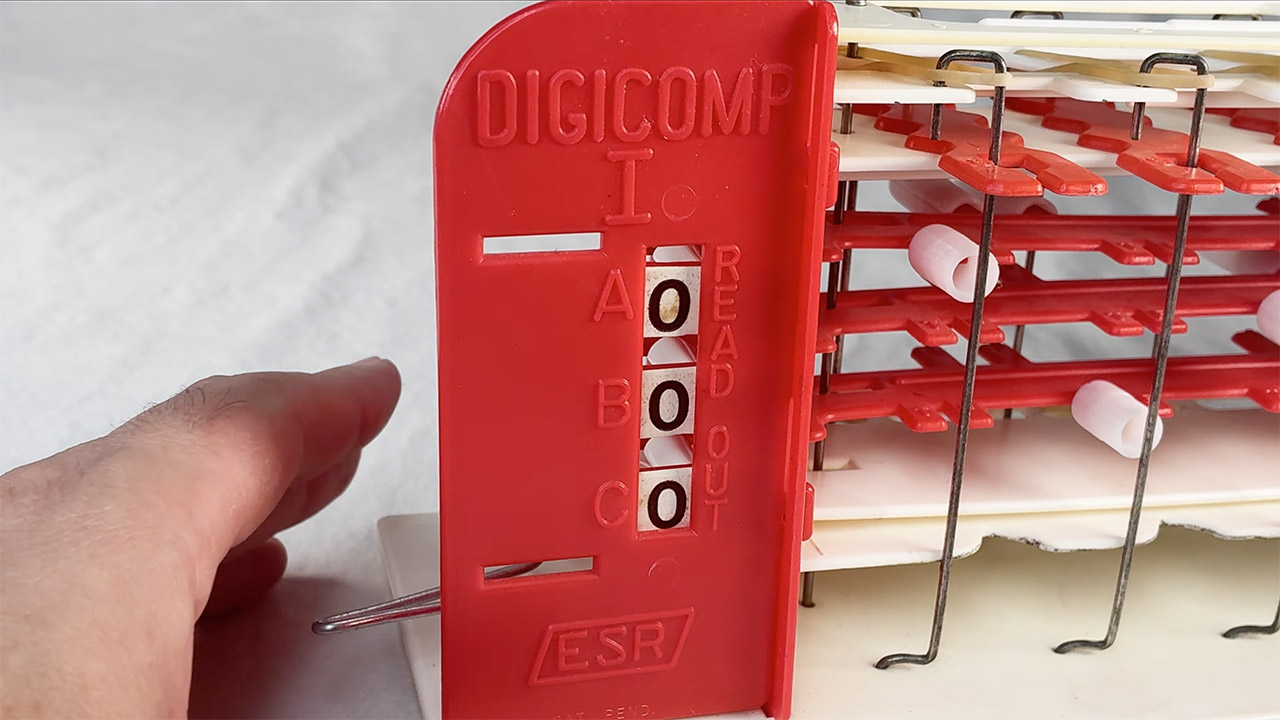
Users rummaged through the large instruction booklet to find tube arrangements that really worked. One fairly conventional configuration transformed the machine into a binary counter that counted up from 000 in a smooth, step-by-step manner, 000 to 001, then 010, 011, and so on all the way up to 111 until eventually counting down to 000 again. Other layouts became more fascinating, as you could combine two numbers, subtract one from another, move bits left or right, or just flip the entire value on its head. You could also use it for simple multiplication and comparisons. The kit featured a clever little plastic bit that allowed you to create “or” situations and solve some interesting challenges. People were able to encode games like Nim so that the machine would enforce the rules and vary the outcome depending on the starting position.
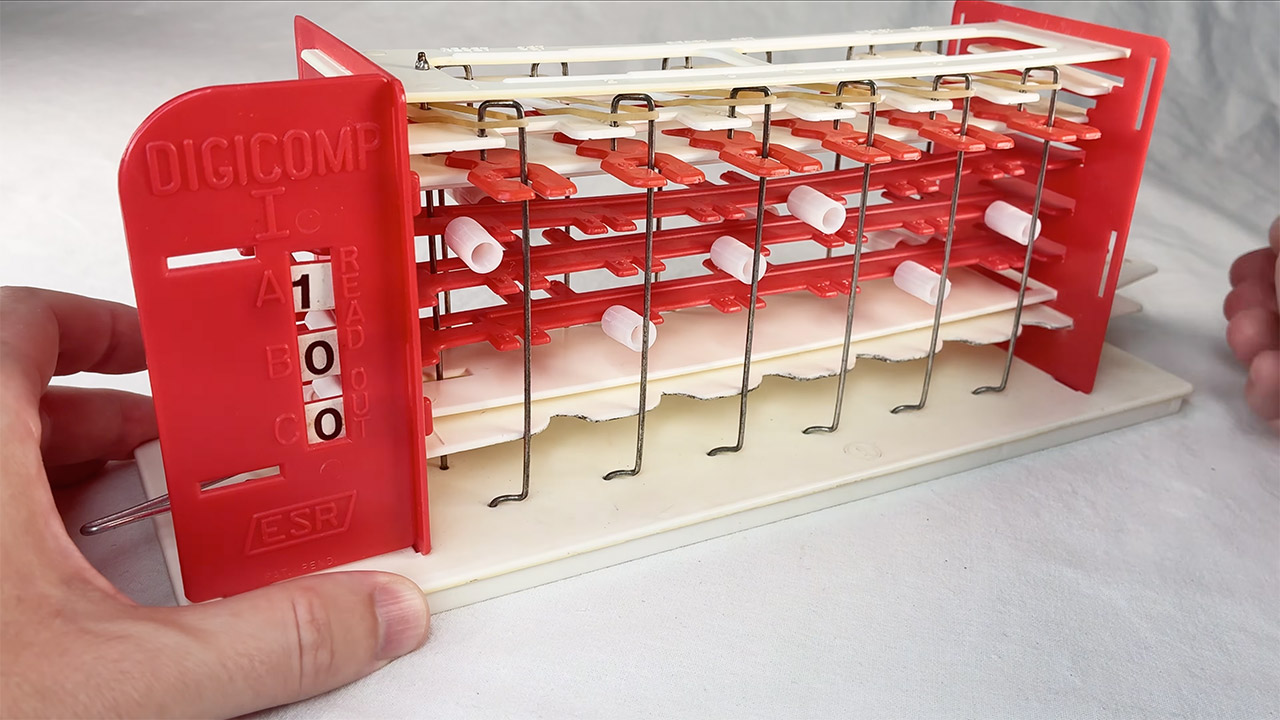
The results appeared immediately in the three front windows when the bars were clicked into place. The documentation that came with the tube layouts included not only the charts for how to set up the tubes, but also the fundamentals of binary counting and Boolean logic, all explained in a way that a 12-year-old could grasp. Many people who received a Digi-Comp 1 as a present later claimed that it was the first gadget to make abstract rules feel real and concrete. The tangible “click” of the bars moving and the rods shifting in front of you was extremely effective in demonstrating cause and consequence in a manner that a simple diagram cannot.
You must be logged in to post a comment Login