Tech
TOPPING MA4 Active Studio Monitors Aim for Accuracy Without DSP

TOPPING has built its reputation on measurement-driven DACs, headphone amplifiers, and desktop audio gear that usually arrive with spec numbers strong enough to make the ASR crowd reach for a sedative before moving on to the next component they may or may not actually listen to. Now the company is moving that philosophy into active speakers with the TOPPING MA4, a compact two-way active studio monitor aimed at desktop listeners, creators, and small-room setups.
TOPPING launched the MA4 Active Studio Monitor globally on July 14, 2026. The company’s professional-audio site now lists the MA4 as an active studio monitor, with the product page and user manual available through TOPPING Professional for anyone in need of some late-night reading.
The timing was also useful. CanJam London 2026 took place July 18-19 at Park Plaza Westminster Bridge, with eCoustics’ London-based Headphone Columnist and Reviewer James Fiorucci covering the show throughout the weekend. TOPPING is usually part of the desktop and headphone conversation, and while the MA4 is not a headphone product, it shows the company trying to extend its measurement-first identity into the powered-speaker market.
Related Reviews:

What Is the TOPPING MA4?
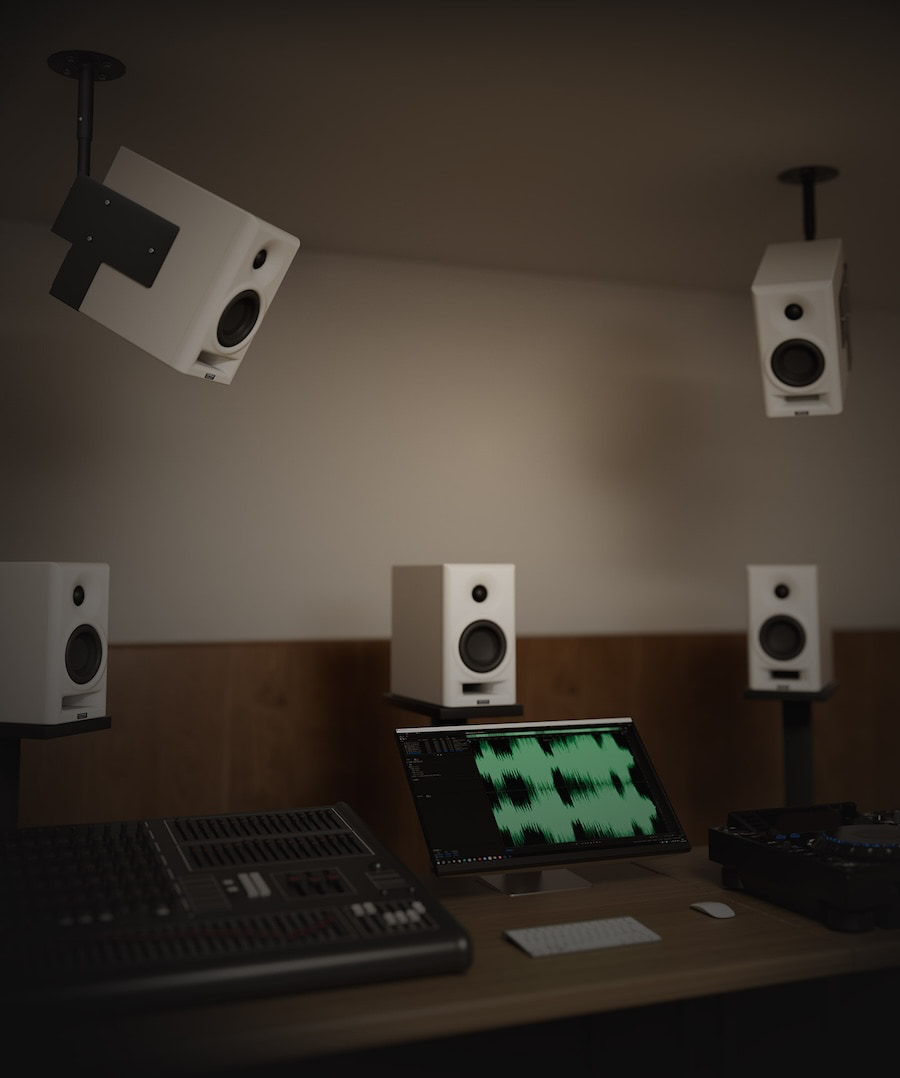
The MA4 is a compact, two-way active monitor sold as a stereo pair. Each speaker uses a 4-inch woofer and 1-inch tweeter, with Class D bi-amplification rated at 50 watts plus 25 watts RMS. The claimed frequency response is 49Hz to 20kHz ±3dB, with a maximum SPL of 105dB at 1 meter.
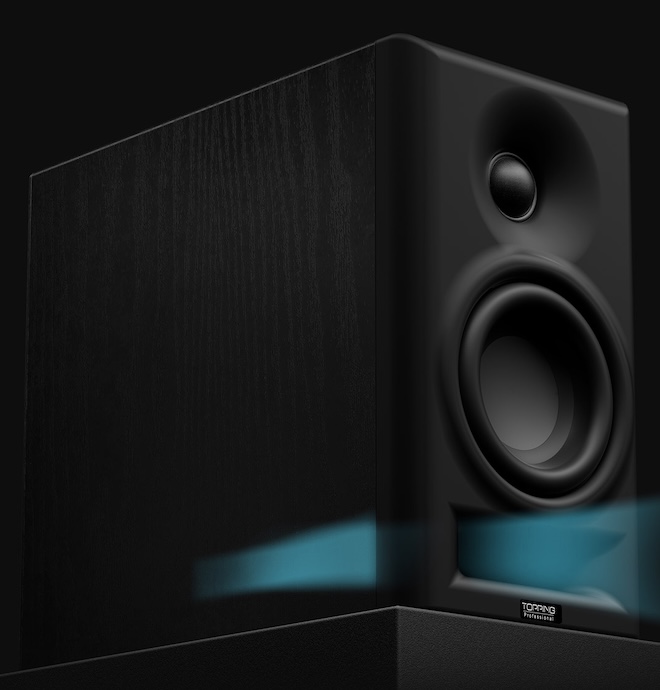
The design is refreshingly direct. The MA4 uses an analog crossover, a front-firing bass reflex port, and TOPPING’s Opti-Wave waveguide for tweeter directivity control. The design architecture avoids digital processing, which makes the MA4 different from many modern desktop monitors that lean on DSP, app control, USB input, Bluetooth, and room compensation to broaden their appeal.
That choice cuts both ways. A simpler analog signal path may appeal to users who want a straightforward balanced monitor connected to an audio interface or DAC. But it also means the MA4 looks more traditional than some of its desktop rivals. No USB-C. No Bluetooth. No app. No HDMI. No “please download our software before the speaker agrees to play a hi-hat.” Depending on the buyer, that is either a relief or a limitation.

Connectivity Is the Big Caveat
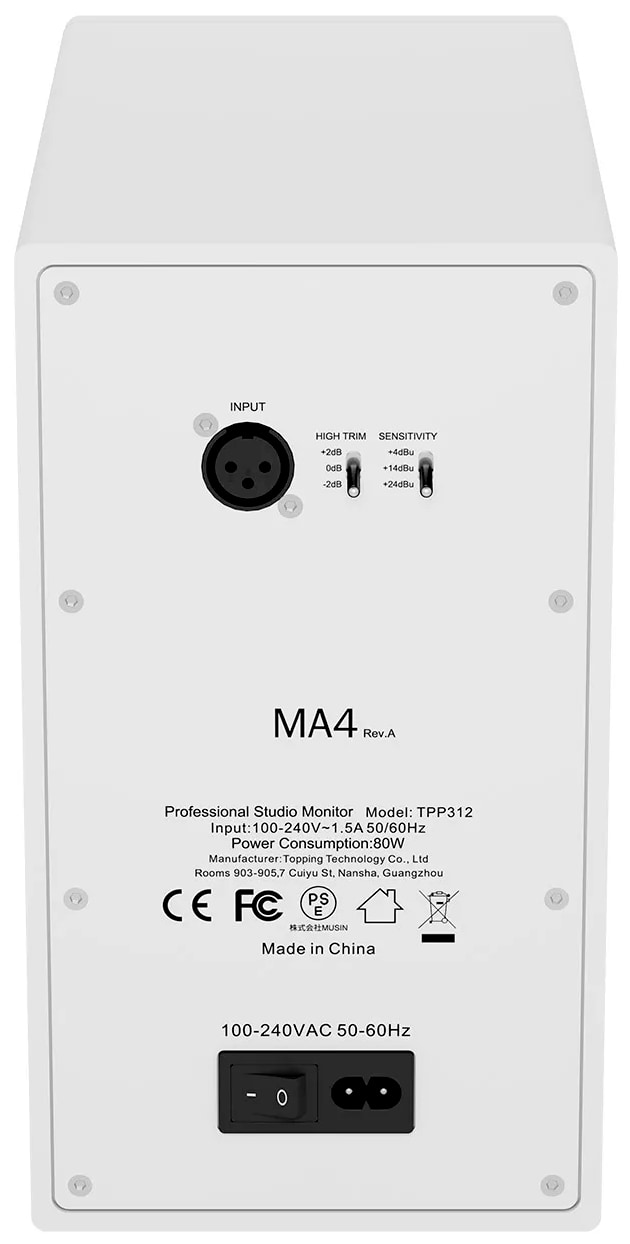
The MA4’s connectivity is narrow: one XLR input. That makes sense for studio and interface-based setups, but it is less flexible for general desktop audio users who may want RCA, TRS, USB-C, Bluetooth, optical, or a front-panel headphone jack.
That also matters because the competition has become much more versatile. Kali Audio’s LP-UNF, for example, includes USB-C, Bluetooth 5.1, RCA, and TRS inputs, while ADAM Audio’s D3V offers USB-C and balanced TRS inputs. Yamaha’s HS3/HS4 compact monitors include combo XLR/TRS, RCA, and stereo mini inputs.
TOPPING appears to be betting that a focused monitor with controlled directivity, balanced input, and measured acoustic behavior will appeal to users who already have the front end sorted. That is a reasonable audience, but it is not the same audience shopping for a plug-and-play powered speaker that can jump between a laptop, phone, turntable, TV, and game console before lunch.
The Competition
The MA4 lands in a crowded category. The most obvious competitors include the Edifier MR5, Edifier MR4, Kali Audio LP-UNF, ADAM Audio D3V, Yamaha HS4, and JBL 305P MkII.
The Edifier comparison is especially relevant for our readers. The Edifier MR5 impressed us because it delivered near-neutral accuracy, deeper bass, LDAC support, and a three-way active design for $350. The older Edifier MR4 remains one of the better entry-level powered monitor options for listeners who want clean, inexpensive desktop sound.
Against those models, the MA4’s strengths appear to be its controlled acoustic design, XLR input, analog crossover, and claimed SPL for its size. Its weakness is obvious: fewer inputs and no modern wireless or digital convenience features. In 2026, that is either admirable focus or a self-inflicted handicap, depending on the desk it lands on.
Why TOPPING Matters Here
TOPPING is not some random speaker brand appearing out of the fog with a white cabinet and a dream. We have covered TOPPING’s desktop electronics for years, including the DX1 II, A90, D30Pro/A30Pro, and D90LE. The recent DX1 II review found that TOPPING is still pushing aggressive value in compact desktop audio, with a $119 DAC/headphone amp offering balanced headphone output, PEQ, optical I/O, headset support, and console compatibility.
That history is why the MA4 is worth attention. TOPPING has spent years selling the idea that clean engineering and strong measurements should not require luxury pricing. Moving into active monitors is a logical step, but loudspeakers are a different kind of problem. A DAC can measure beautifully on a bench. A speaker has to deal with drivers, cabinets, ports, directivity, distortion, placement, reflections, and the charming reality that most desks are acoustic crime scenes with a keyboard in the middle and a plethora of poor food and beverage choices.

The Bottom Line
The TOPPING MA4 is an interesting move from a brand best known for desktop DACs, headphone amplifiers, and measurement-first electronics. Its compact two-way design, Class D bi-amplification, analog crossover, front-firing port, Opti-Wave waveguide, and claimed 105dB output suggest TOPPING is taking the active monitor category seriously.
The questions are just as important. Will the MA4’s acoustic performance be strong enough to overcome its limited connectivity? Will U.S. pricing make sense against Edifier, Kali, Yamaha, ADAM, and JBL? And will TOPPING’s engineering reputation translate from electronics into loudspeakers, where the room and placement get a vote whether anyone invited them or not?
The MA4 is not the most feature-packed desktop speaker of 2026. That may be the point. TOPPING appears to be aiming at users who want a compact, balanced-input monitor built around acoustic fundamentals rather than app-based convenience.
Where to buy: $319.46 at AliExpress
You must be logged in to post a comment Login