Several high-ranking federal election officials attended a summit last week at which prominent figures who worked to overturn Donald Trump’s loss in the 2020 election pressed the president to declare a national emergency to take over this year’s midterms.
Election experts say that the meeting reflects an intensifying push to persuade Trump to take unprecedented actions to affect the vote in November. Courts have largely blocked his efforts to reshape elections through an executive order, and legislation has stalled in Congress that would mandate strict voter ID requirements across the country.
The Washington Post reported Thursday that activists associated with those at the summit have been circulating a draft of an executive order that would ban mail-in ballots and get rid of voting machines as part of a federal takeover. Peter Ticktin, a lawyer who worked on the executive order and had a client at the summit, told ProPublica these actions were “all part of the same effort.”
The summit followed other meetings and discussions between administration officials and activists — many not previously reported — stretching back to at least last fall, according to emails and recordings obtained by ProPublica. The coordination between those inside and outside the government represents a breakdown of crucial guardrails, experts on U.S. elections said.
“The meeting shows that the same people who tried to overturn the 2020 election have only grown better organized and are now embedded in the machinery of government,” said Brendan Fischer, a director at the Campaign Legal Center, a nonpartisan pro-democracy organization. “This creates substantial risk that the administration is laying the groundwork to improperly reshape elections ahead of the midterms or even go against the will of the voters.”
Advertisement
Five of six federal officials who attended the summit didn’t answer questions about the event from ProPublica.
A White House official, speaking on the condition of anonymity, said federal officials’ attendance at the gathering shouldn’t be construed as support for a national emergency declaration and that it was “common practice” for staffers to communicate with outside advocates who want to share policy ideas. The official pointed to comments Trump made to PBS News denying he was considering a national emergency or had read the draft executive order. “Any speculation about policies the administration may or may not undertake is just that — speculation,” the official said.
Mitchell did not respond to questions from ProPublica about the summit. A spokesperson for Flynn responded to detailed questions from ProPublica by disparaging experts who expressed concerns, texting, “LOL ‘EXPERTS.’”
Advertisement
The 30-person roundtable discussion on Feb. 19, at an office building in downtown Washington, D.C., was sponsored by the Gold Institute for International Strategy, a conservative think tank. Afterward, activists and government officials dined together, photos reviewed by ProPublica showed.
Flynn, the institute’s chair, told a social media personality why he’d arranged the event.
“I wanted to bring this group together physically, because most of us have met online” while “fighting battles” in swing states from Arizona to Georgia, Flynn said to Tommy Robinson on the gathering’s sidelines. Robinson posted videos of these interactions online. “The overall theme of this event was to make sure that all of us aren’t operating in our own little bubbles.”
Flynn has repeatedly advocated for Trump to declare a national emergency and posted on social media after the event addressing Trump, “We The People want fair elections and we know there is only one office in the land that can make that happen given the current political environment in the United States.”
Advertisement
In addition to Olsen and Honey, four other federal officials from agencies that will shape the upcoming elections attended the event. At least four of the six attended the dinner.
One is Clay Parikh, a special government employee at the Office of the Director of National Intelligence who’s helping Olsen with the 2020 inquiry. A spokesperson at ODNI said Parikh had attended the summit “in his personal capacity.”
Another, Mac Warner, handled election litigation at the Justice Department. A department spokesperson said that Warner had resigned the day after the event and had not received the required approval from agency ethics officials to participate.
The department “remains committed to upholding the integrity of our electoral system and will continue to prioritize efforts to ensure all elections remain free, fair, and transparent,” the spokesperson said in an email.
Advertisement
A third administration official who attended the summit, Marci McCarthy, directs communications for the nation’s cyber defense agency, which oversees the security of elections infrastructure like voting machines.
Kari Lake, whom Trump appointed as senior adviser to the U.S. Agency for Global Media, was a featured speaker. Lake worked with Olsen and Parikh in her unsuccessful bid to overturn her loss in the 2022 Arizona gubernatorial election.
Lake said in an email that she “showed up to the event, spoke for about 20 minutes about the overall importance of election integrity, a non-partisan issue that matters to all citizens — both in the United States and abroad. I left without listening to any other speeches.”
“Elections should be free from fraud or any other malfeasance that subverts the will of the people,” she added.
Advertisement
At the meeting, activists presented on ways to transform American elections that would help conservatives, according to social media posts and interviews they gave on conservative media, such as LindellTV, a streaming platform created by the pillow mogul Mike Lindell. They said the group broke down into two camps: those who wanted to pursue a more incremental legal and legislative strategy and those who wanted Trump to declare a national emergency.
Multiple activists left the meeting convinced Trump should do the latter, a step they believe would allow the president to get around the Constitution’s directive that elections should be run by states.
Former Overstock.com CEO Patrick Byrne, a prominent funder of efforts to overturn the 2020 election, told LindellTV that Trump has “played nice” so far in not seizing control of American elections. “But at some point,” Byrne said, “he’s got to do something, the muscular thing: declare a national emergency.”
Byrne responded to questions from ProPublica by sending a screenshot of a poll that he said suggested “2/3 of Americans correctly do not trust” voting machines, which the proposed national emergency declaration aims to do away with.
Advertisement
Will Huff, who has advocated for doing away with voting machines, told a conservative vlogger that Olsen, the White House lawyer, and other administration representatives would take the “consensus” from the gathering back to Trump. “It’s got to be a national emergency,” said Huff, the campaign manager for a Republican candidate for Arkansas secretary of state.
In response to questions from ProPublica, Huff said in an email that Olsen and Trump would use their judgment to decide whether to declare a national emergency.
“The President has been briefed on findings of shortcomings in election infrastructure,” Huff wrote. “I believe there are steady hands around the President wanting to ensure that any action taken is, first, constitutional and legal, but also backed by evidence.”
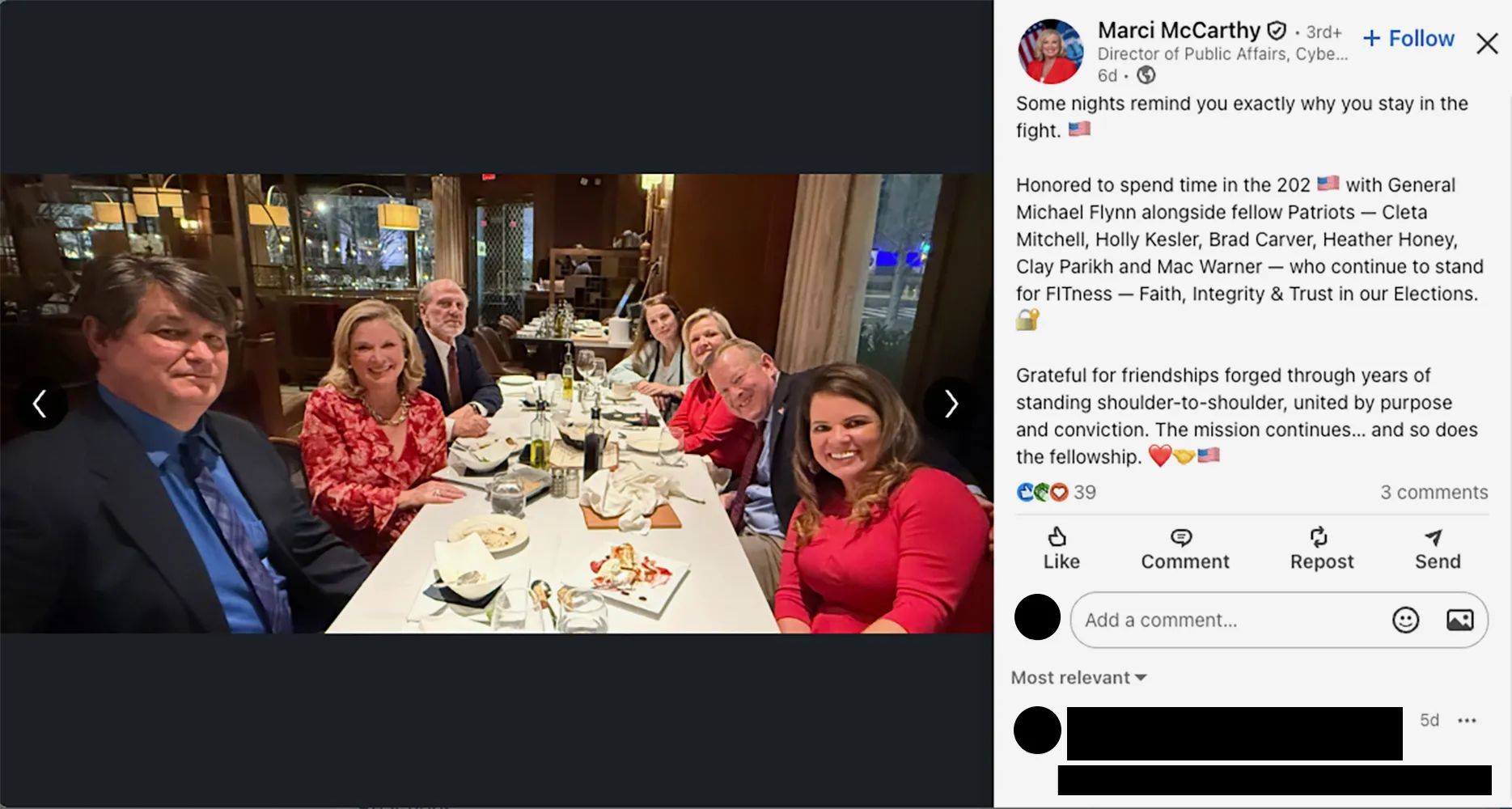
McCarthy, the cybersecurity official, expressed more general solidarity with fellow attendees in a post on social media about the summit. “Grateful for friendships forged through years of standing shoulder-to-shoulder, united by purpose and conviction,” she wrote. “The mission continues… and so does the fellowship.”
Advertisement
Marci McCarthy, second from left, Heather Honey, fourth from right, and Cleta Mitchell, third from right, were among the conservative activists and officials who attended the summit. McCarthy posted about the event on LinkedIn. Screenshot by ProPublica. Redactions by ProPublica.
Last week’s gathering was the latest in a string of private interactions between conservative election activists and administration officials, according to emails, documents and recordings obtained by ProPublica. Many have involved Mitchell’s Election Integrity Network. Before taking her government post, Honey was a leader in the Election Integrity Network, ProPublica has reported, as was McCarthy.
Previously unreported emails obtained by ProPublica show that just weeks after Honey started at the Department of Homeland Security, she briefed election activists, a Republican secretary of state and another federal official on a conference call arranged by her former boss, Mitchell.
“We are excited to welcome her on our call this morning to hear about her work for election integrity inside DHS,” Mitchell wrote in an email introducing presenters on the call.
Honey didn’t respond to questions from ProPublica about the call. Experts said Honey’s briefing gave her former employer access that likely would have violated ethics rules in place under previous administrations, including the first Trump administration — though not this one.
The prior “ethics guardrails would have prevented some of the revolving door issues we’re seeing between the election denial movement and the government officials,” said Fischer, the Campaign Legal Center director. Those prior rules “were supposed to prevent former employers and clients from receiving privileged access.”
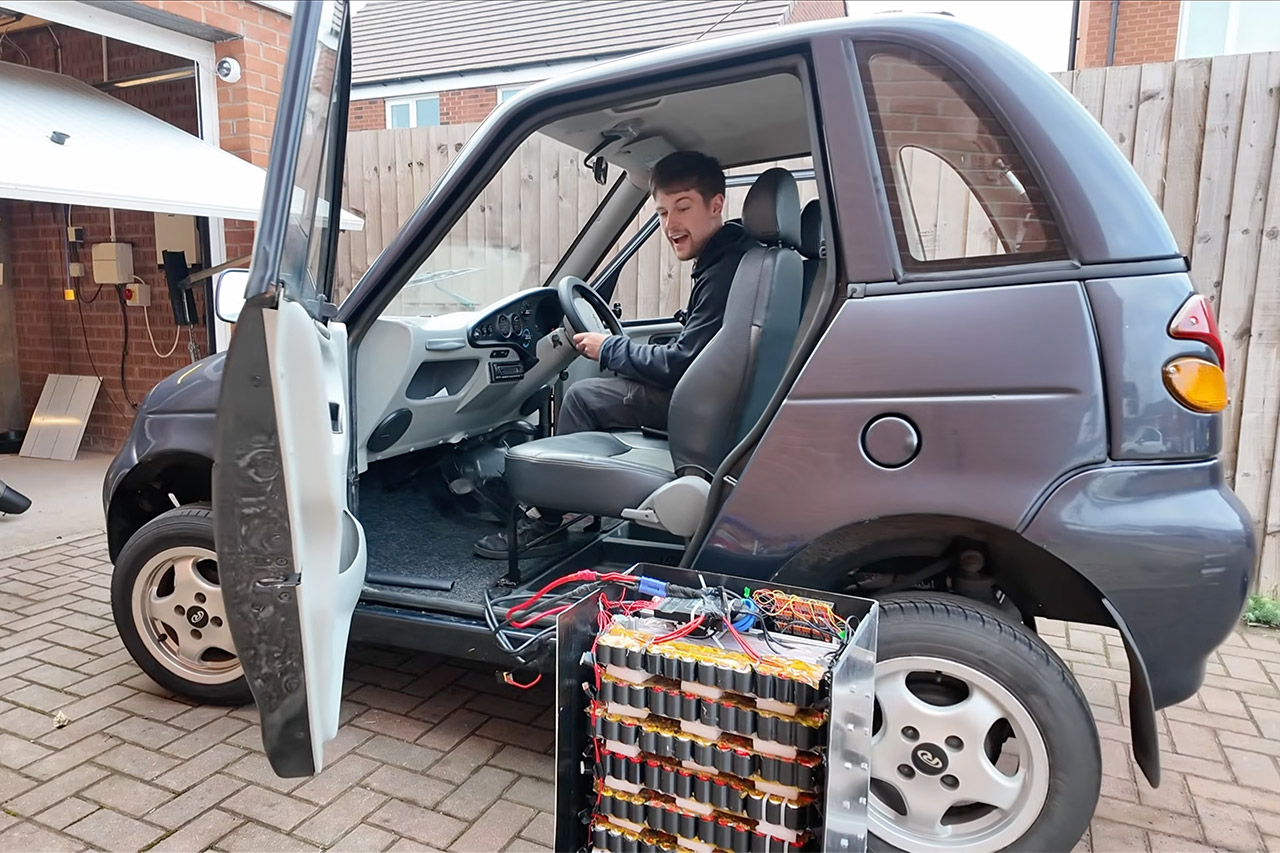
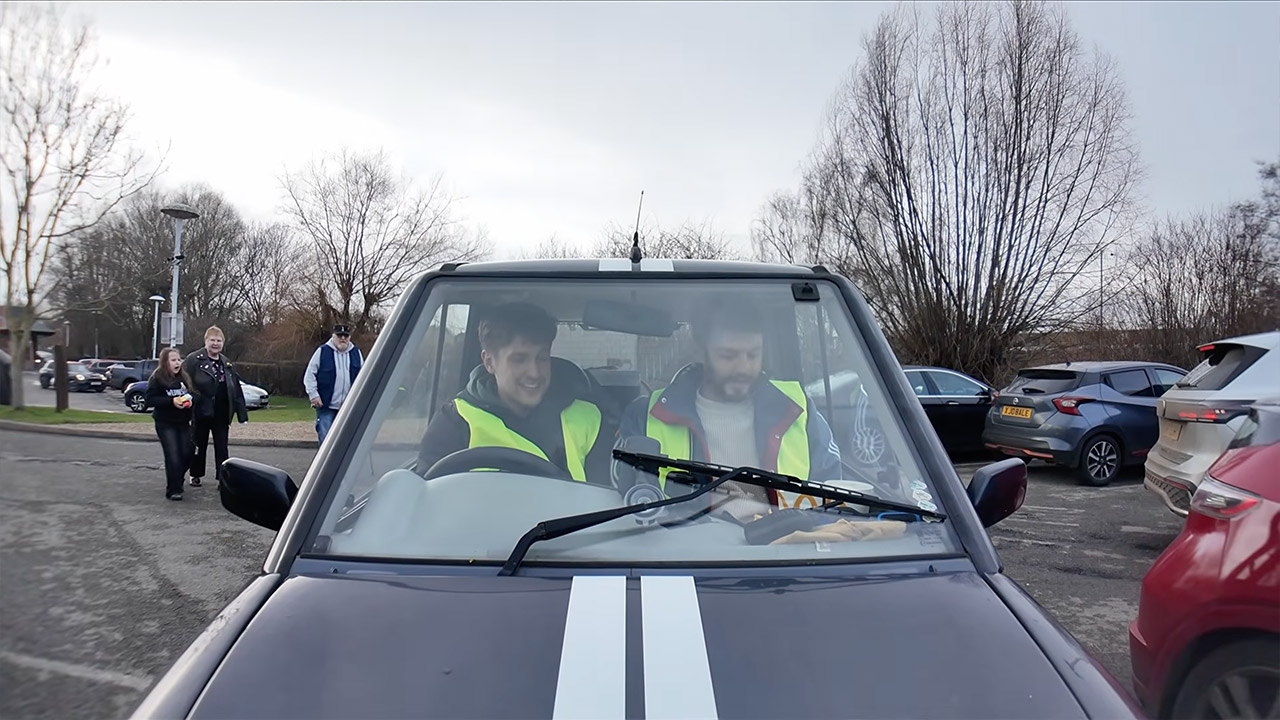
A UK maker has transformed a collection of discarded disposable vapes into a functional car. Chris Doel, the man behind a number of projects that recycle vape batteries, has recently installed his 500-cell lithium pack in a small electric vehicle and driven it on public roads.
He describes the end result as the world’s only vape-powered automobile. The base vehicle is a Reva G-Wiz, a compact four-seater from the early 2000s that is generally dubbed one of the most unimpressive electric automobiles ever built. It weighs a hefty 400kg without batteries and runs on a very primitive 48volt system, as it originally required heavy lead acid batteries to power its tiny 17 horsepower motor, which could only reach barely more than 50 mph on a good day.
Triple 100W USB-C Ports for Multi-Device Charging: Ideal for laptop users, this 25,000mAh power bank features three 100W USB-C ports for simultaneous…
25,000mAh for Long-Haul Power: Tackle week-long trips or extended camping with 25,000mAh capacity and ultra-fast recharging, reaching 30% in just…
Dual Built-In Cables for Travel: Features two USB-C cables, one extendable up to 2.3 ft with 20,000 retractions, and another at 0.98 ft cable that…
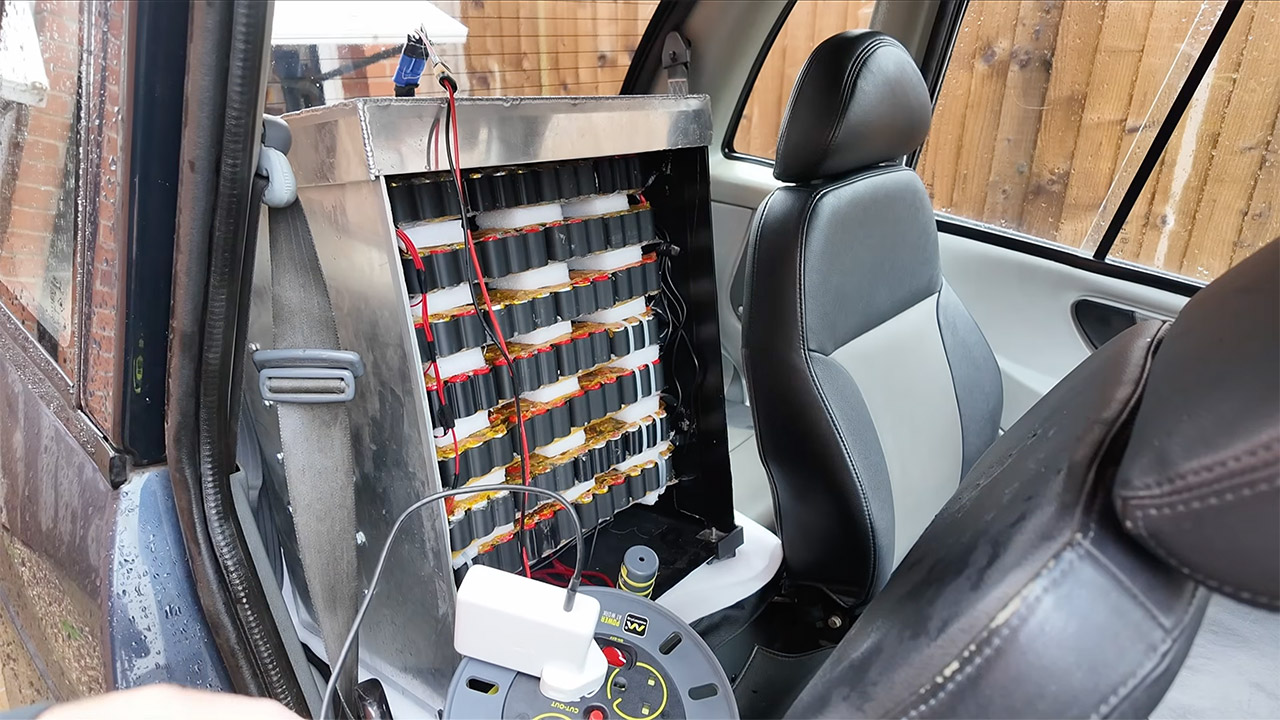
Doel already had the battery pack figured out; he’d taken 500 discarded vapes, ensured that each and every cell was still functional, and assembled them all in 14 little modules connected in series to achieve roughly 50 volts. On paper, that yields approximately 2.5 kilowatt hours, but in fact it is closer to 2.1. The same battery had previously powered his workshop’s tools and lights.
Advertisement
Mounting the lot was a little difficult because he had to fabricate an aluminum box to keep everything in place, add some extra insulation, and regulate the vibrations with thermal pads, foam padding, and silicone dampening. A clever battery management system keeps track of the voltages and currents for each individual cell, and individual fuses keep things from turning pear-shaped. There’s also a temperature probe that sounds a small bell when things get too heated. There is Kapton tape and other safety measures in place to ensure that it does not catch fire. The complete unit bolts nicely into the back seat area, replacing the old lead acids.
Electronics were simple enough, as the G-Wiz just utilizes a contactor to switch electricity to an inverter, which operates the motor with three phase AC. Doel simply added a circuit breaker, reprogrammed the inverter to limit the output slightly, and swapped in a DC-DC converter for the 12volt components such as headlights / wipers, and since charging must be done slowly, he simply used a USB-C adapter plugged into a small 138W laptop charger.
So, what happened on the road? Well, it moved. Initial tests indicated it could travel both forwards and backwards, and a proper drive revealed it was pulling approximately 160 amps at 15 mph, reducing to 90-100 amps at 30-35 mph on flat ground. Hills pushed 130-150 amps, but regenerative braking returned roughly 10 amps, keeping the pack nice and cool, peaking at 29°C. On a casual run that included some shopping and fast food, the range was 17-18 miles. Voltage sag from unequal cells eventually caused a cutoff, but no big crisis happened.
Doel purposefully capped the power so it wouldn’t be able to draw too much, as the car can actually handle a lot more current than it was drawing, but by limiting draw to about 120 amps, he was able to avoid blowing any fuses and giving the old recycled cells some breathing room. [Source]
[Diffraction Limited] has been working on a largely 3D-printed micropositioner for some time now, and previously reached a resolution of about 50 nanometers. There was still room for improvement, though, and his latest iteration improves the linkage arms by embossing tiny ball joints into them.
The micro-manipulator, which we’ve covered before, uses three sets of parallel rod linkages to move a platform. Each end of each rod rotates on a ball joint. In the previous iteration, the parallel rods were made out of hollow brass tubing with internal chamfers on the ends. The small area of contact between the ball and socket created unnecessary friction, and being hollow made the rods less stiff. [Diffraction Limited] wanted to create spherical ball joints, which could retain more lubricant and distribute force more evenly.
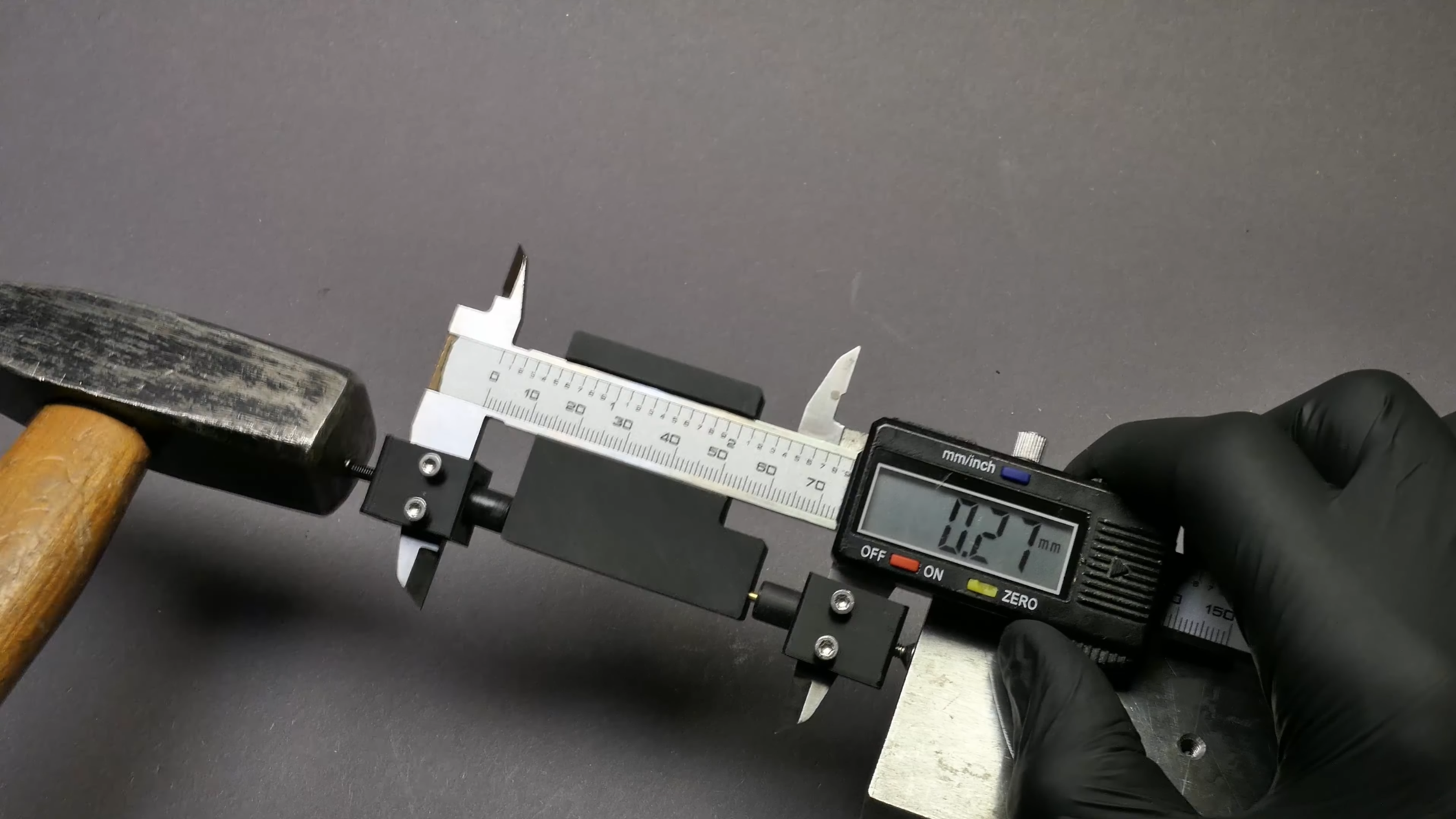
The first step was to cut six lengths of solid two-millimeter brass rod and sand them to equal lengths, then chamfer them with a 3D-printed jig and a utility knife blade. Next, they made two centering sleeves to hold small ball bearings at the ends of the rod being worked on, while an anti-buckling sleeve surrounded the rest of the rod. The whole assembly went between the jaws of a pair of digital calipers, which were zeroed. When one of the jaws was tapped with a hammer, the ball bearings pressed into the ends of the brass rod, creating divots. Since the calipers measured the amount of indentation created, they was able to emboss all six rods equally. The mechanism is designed not to transfer force into the calipers, but he still recommends using a dedicated pair.
In testing, the new ball joints had about a tenth the friction of the old joints. They also switched out the original 3D-printed ball mount for one made out of a circuit board, which was more rigid and precisely manufactured. In the final part of the video, he created an admittedly unnecessary, but useful and fun machine to automatically emboss ball joints with a linear rail, stepper motor, and position sensor.
Advertisement
On such a small scale, a physical ball joint is clearly simpler, but on larger scales it’s also possible to make flexures that mimic a ball joint’s behavior.
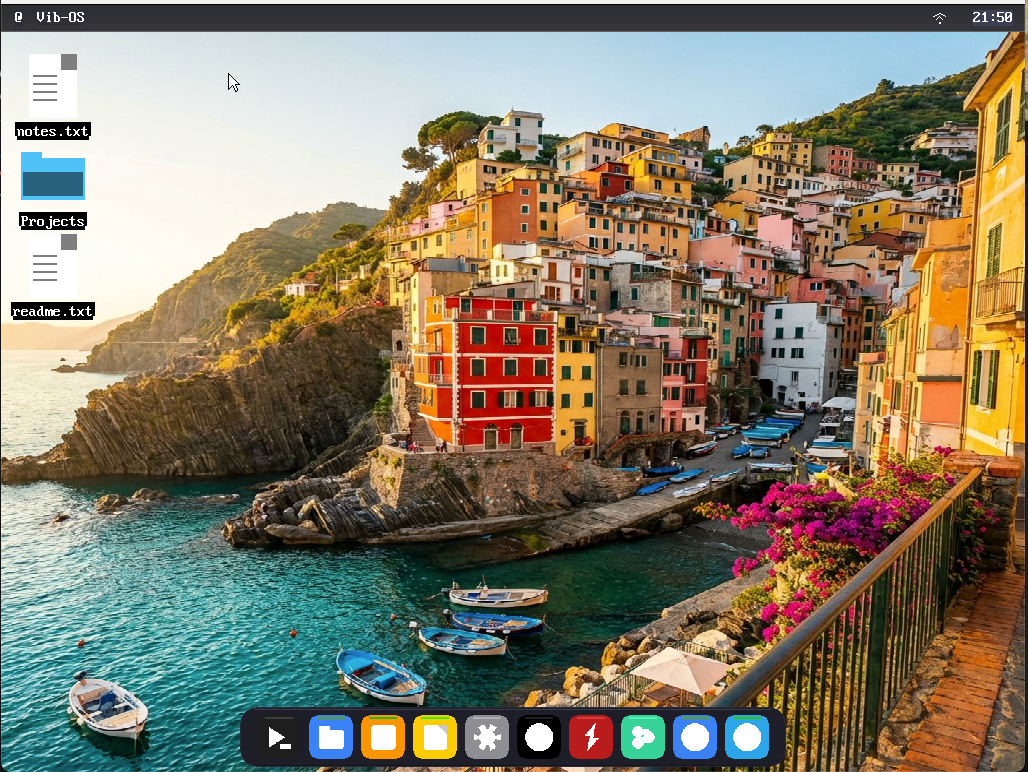
If you were to read the README of the Vib-OS project on GitHub, you’d see it advertised as a Unix-like OS that was written from scratch, runs on ARM64 and x86_64, and comes with a full GUI, networking and even full Doom game support. Unfortunately, what you are seeing there isn’t the beginnings of a new promising OS that might go toe to toe with the likes of Linux or Haiku, but rather a vibe-coded confabulation. Trying to actually use the OS as [tirimid] recently did sends you down a vibe-coded rabbit hole of broken code, more bugs than you can shake a bug zapper at, and most of the promised features being completely absent.
[tirimid] is one of those people who have a bit of a problem, in that they like to try out new OSes, just to see what they’re like. The fun starts with simply making the thing run at all in any virtual machine environment, as apparently the author uses MacOS and there it probably ‘runs fine’.
After this the graphical desktop does in fact load, some applications also open, but it’s not possible to create new folders in the ‘file explorer’, the function keys simply switch between wallpapers, there’s no networking or Doom support despite the promises made, there’s no Python or Nano support at all, and so on.
Advertisement
Clearly it’s still got the hallmarks of a functioning OS, and it’s sort of nice that you don’t need to know what you’re doing to create a sort-of-OS, but it will not appease those who feel that vibe-coding is killing Open Source software.
Today, Apple announcedits new budget MacBook. At $599, it looks seriously impressive. While I haven’t tested its performance, battery life, or display just yet, it may end up being hard to beat at that price based on some of the specs alone.
But that doesn’t mean the competition isn’t there. I want to recommend a couple of Windows laptops deals that offer various advantages over the MacBook Neo, showing where the Neo has both strengths and weaknesses.
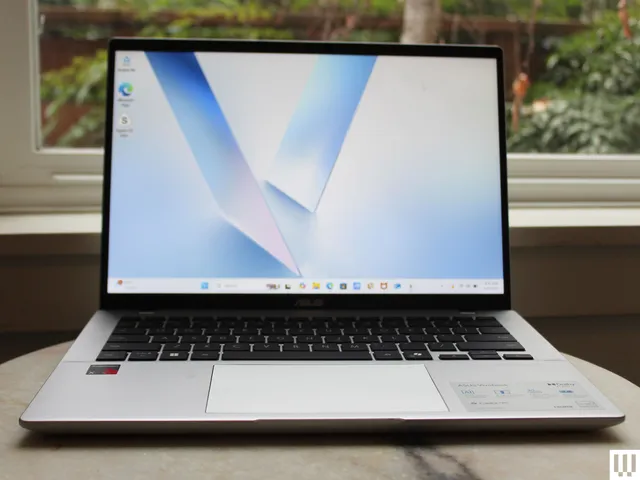
First, check out this Asus Vivobook 14, a laptop I’ve been happy to recommend as a budget computer for the past year. In many ways, this is the Windows version of a laptop like the MacBook Neo. It uses a highly-efficient ARM chip, the Qualcomm Snapdragon X, meaning it gets great battery life and performs admirably in daily tasks. It’s not quite as thin or light as the MacBook Neo, but it’s fairly portable for a laptop at this price.
Asus
Vivobook 14 (X1407QA)
Advertisement
Unlike the MacBook Neo, the Vivobook 14 comes with 16 GB of RAM and 512 GB of storage. That’s twice what you get in the MacBook Neo’s starting configuration. Right now, this configuration of the Vivobook 14 is on sale for $539. That’s a killer deal for those specs. It even comes with a healthier mix of ports, including HDMI, two USB-A, one USB-C, and a headphone jack. That also means it can support two external displays unlike the MacBook Neo, which can only handle just one.
Don’t get me wrong—I’m not at all saying the Vivobook 14 is a slam dunk over the MacBook Neo. Based on specs alone, I know the Vivobook 14 is a serious step down when it comes to the display. It’s less sharp, stretched across a larger screen, and the color performance isn’t so good. The Vivobook 14 maxes out at 280 nits, whereas Apple says the MacBook Neo can go all the way up to 500 nits. I have a hunch that the MacBook Neo will deliver a much better display in just about every regard.
There’s also the touchpad. It’s a little clunky to use, which is typical of budget Windows laptops. This is just a guess—but the touchpad on the MacBook Neo will likely feel smoother. It’s a mechanical trackpad (unlike the MacBook Air’s haptic feedback trackpad), but Apple has almost never made a bad trackpad.
If you’re not convinced by the Asus Vivobook 14, I’d also recommend the HP OmniBook 5, which is currently on sale for $500 and uses the same Snapdragon X chip. While it only has 256 GB of storage, it has a much better screen than the Vivobook 14, using an OLED display. It’s not any brighter than the Vivobook 14, but it gives you far better color performance and contrast. It’s also just 0.50 inches thick, matching the MacBook Neo exactly in portability.
Amid the plans to grow its headcount worldwide, Whoop will also expand its Limerick-based office.
Whoop, the human performance platform with Irish investors that include Rory McIlroy, Niall Horan and Shane Lowry, plans to increase its global headcount by hiring more than 600 new employees.
While new roles will be located primarily at the Boston, US headquarters, there will also be job opportunities in Limerick, with global roles set to be made available across software, research and design, hardware, product and marketing. According to Whoop, the expansion of its teams “reflects a clear strategic priority”.
Whoop was established in 2012 by its current CEO Will Ahmed. The company offers a fitness tracker and wearable membership that enables people to keep track of areas of their lives such as sleep quality, health and fitness.
Advertisement
Commenting on the announcement, Ahmed said: “Right now, companies are debating whether to hire more people or just invest in AI. We are doing both.
“We are doubling down on exceptional talent and doubling down on world-class AI tools because the combination is what wins. Health monitoring is becoming one of the most important platforms in the world and WHOOP intends to own the category.”
Wearable devices are becoming a booming industry globally, with a range of organisations looking to capitalise on their popularity. In January of this year, Galway neurotech Segotia, which specialises in hearables, announced it had been acquired by US-based sleep technology company Ozlo.
In August of 2025, Sports Impact Technologies revealed it had raised €650,000 in a pre-seed round. The company said that the funds would be used to roll out a beta model of its compact, behind-the-ear wearable that aims to detect the severity of a head impact in real time and determine the likelihood of a concussion.
Advertisement
The Irish start-up was established in 2022 by Eóin Tuohy and is headquartered at NovaUCD in Dublin. The funding was led by private investors, with the support of Enterprise Ireland’s High-Potential Start-Up initiative.
Don’t miss out on the knowledge you need to succeed. Sign up for the Daily Brief, Silicon Republic’s digest of need-to-know sci-tech news.
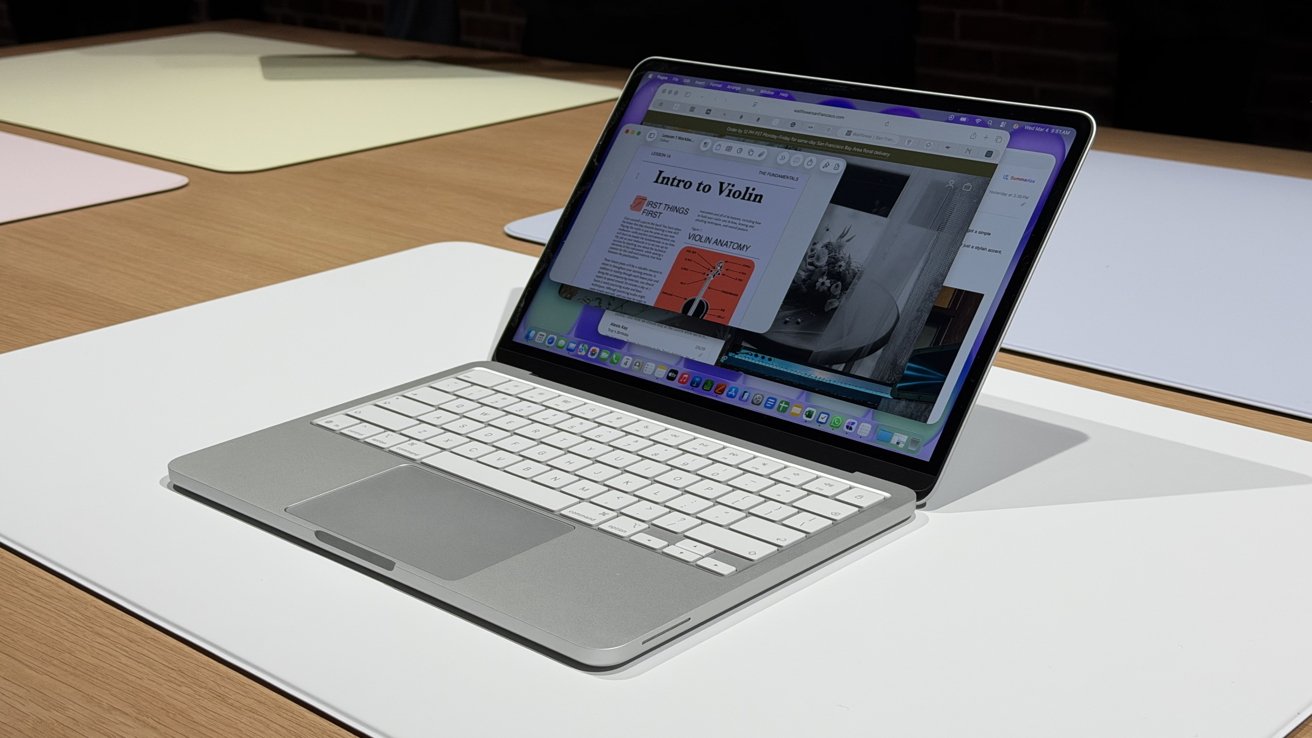
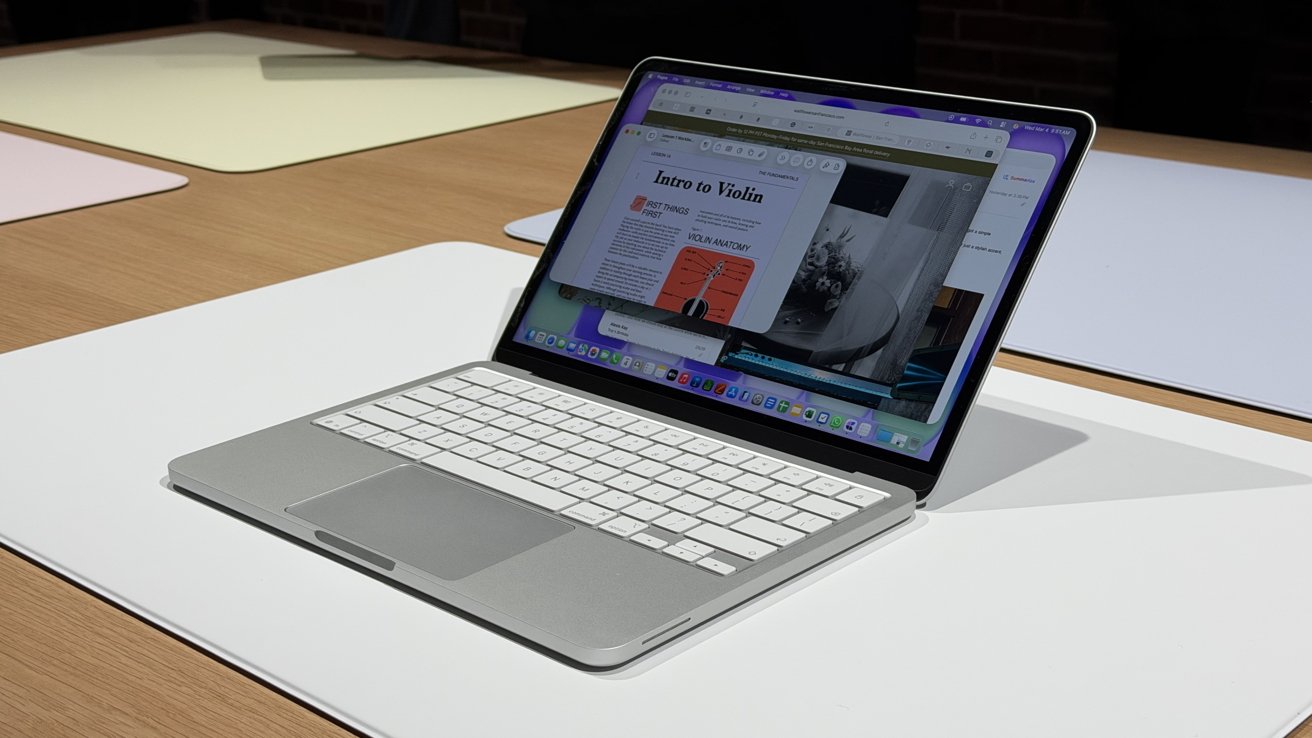
Apple’s budget-focused MacBook Neo borrows the A18 Pro chip from an iPhone 16 Pro. Here’s how the chip compares against other Apple Silicon Macs, and why it’s actually a pretty smart thing for Apple to do.
MacBook Neo has an A18 Pro chip borrowed from the iPhone 16 Pro Max
Apple’s launch of the new MacBook Neo is a fresh salvo into the value computer market, normally dominated by Windows notebooks and Chromebooks. The value end of the market meant Apple had to cut production costs. One of those cuts was the CPU. Continue Reading on AppleInsider | Discuss on our Forums
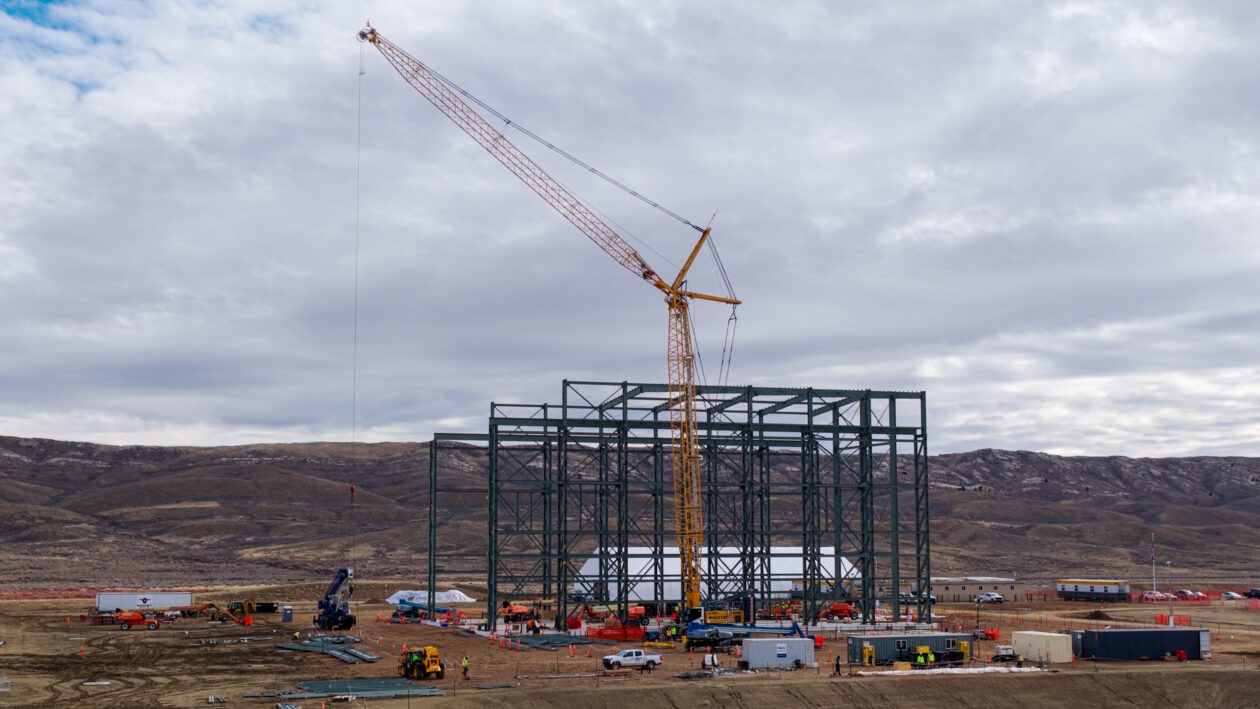
Construction of TerraPower’s full-scale demonstration nuclear plant in Kemmerer, Wyo. (TerraPower Photo)
Bill Gates-backed TerraPower is the first in the nation to receive federal approval to build its next-generation nuclear power plant. The Nuclear Regulatory Commission (NRC) issued its unanimous decision on Wednesday.
TerraPower CEO Chris Levesque has been expecting the NRC’s green light, telling GeekWire in January that the permits will put the company “a year ahead of anyone else” pursuing new nuclear in the U.S.
“Our team has worked relentlessly for over 4 years with the NRC staff to get to this moment,” Levesque said in a statement announcing the decision. “We had extensive pre-application engagement with the NRC; and we submitted a robust and thorough construction permit application almost 2 years ago. We have spent thousands of manpower hours working to achieve this momentous accomplishment.”
After being largely mothballed for decades, America’s nuclear sector has kicked into hyper speed as tech giants scramble to power data centers nationwide and energy demands are spiking for commercial, residential and industrial uses.
TerraPower’s approval unlocks additional nuclear facilities on short timelines.
Advertisement
In January, the company signed a deal with Meta to build up to eight advanced reactors in the U.S. with the first two coming online as soon as 2032. If the full order is fulfilled, all of the reactors aim to be operational by 2035.
The company also has memorandums of understanding with government departments in Utah and Kansas to explore the potential siting of Natrium reactors in those states.
“We plan to build hundreds of Natrium reactors,” Levesque told GeekWire. “We’re very focused on delivering the first one on time,” he added, and then quickly begin scaling.
Bellevue, Wash.-based TerraPower is engineering a new model of smaller, less expensive nuclear reactors that can be produced in three years from fabricated components — instead of the past approach of constructing giant, one-off structures that take a decade to erect.
It broke ground on demonstration plant in Kemmerer, Wyo., in 2024, starting with construction of non-nuclear components of the facility. The goal is to start splitting atoms there by the end of 2030.
National leaders have pushed for federal oversight changes to speed the deployment of new reactors. That includes passage of the Atomic Energy Advancement Act during the Biden administration and executive orders issued by President Trump.
Approval of the application to build a nuclear reactor was granted in 18 months — much faster than the initial estimate of a 27-month review. TerraPower credits the federal support of the sector as well as the company’s responsiveness to NRC questions and efforts by the NRC staff for the quicker turnaround.
From top left, clockwise: Tambo CEO Michael Magán, The Carry CEO Esther Sedgwick; Logcat CEO Varun Chitre; Rockhood CEO Monica Li; Color42 CEO Prince Bajracharya; Tarka CEO Dan Moore.
From fitness equipment to voice AI agents to autonomous debugging, our latest Startup Radar spotlight features Seattle-area founders solving problems across a wide range of use cases.
Read on for brief descriptions of each company — along with pitch assessments from “Mean VC,” a GPT-powered critic offering a mix of encouragement and constructive feedback.
Check out past Startup Radar posts here, and email tips@geekwire.com to flag other companies and startup news.
The business: Strength training company starting with a line of stylish weighted vest tailored to women, and more broadly targeting the fem-tech longevity sector. It is shipping pre-orders to customers this spring, priced at $299, and has raised a friends and family round.
Leadership: CEO Esther Sedgwick spent a decade at Microsoft in marketing leadership roles and was head of B2B marketing for Seattle startups Statsig and Convoy. Co-founder Cortney Bigelow was a marketing manager at TUNE and a marketing planner at Nordstrom.
Advertisement
Mean VC: “Great positioning, but a $299 vest is easy to copy and ‘longevity’ is too vague to anchor repeat demand. Pick one clear customer segment, prove results with a simple program + data, and lock in trainer/clinic partnerships to scale beyond Instagram.”
The business: AI that automatically turns a song into a shareable video. Aimed at musicians, content creators, labels, and creative agencies that need fast, repeatable video content for music marketing. The product soft-launched in November and has more than 1,000 users across free and paid plans.
Leadership: CEO Prince Bajracharya was a product leader at Google and Microsoft. CTO Silviu Andrei spent more than seven years at Amazon working on computer vision.
Mean VC: “Nice wedge, but ‘song to shareable video’ is a crowded feature set. Double down on one buyer (indie artists vs labels/agencies), prove retention with repeat weekly output, and build a differentiated template/style engine plus distribution hooks (TikTok/IG/YouTube) so you’re not just a one-click gimmick.”
The business: Log analysis software for Android and Linux systems that autonomously debugs issues for device manufacturers and enterprise teams managing fleets of devices. The company has more than 200 engineers using its platform and has multiple paying customers.
Leadership:Varun Chitre spent more than eight years in various engineering roles at Seattle-area startup Esper.
Mean VC: “Autonomous debugging for fleets is a real, expensive problem, but ‘we analyze logs’ isn’t defensible unless you’re meaningfully better than existing observability stacks and in-house scripts on the ugliest edge cases. Focus on one high-value fleet use case, prove ROI with a tight pilot-to-expansion playbook, and bake in integrations with existing logging/issue-tracking so adoption doesn’t stall at ‘neat tool.’”
The business: Voice AI agent software for residential real estate. Helps consumers explore buying and selling and matches them with professionals. The software integrates with Multiple Listing Services and is live in Washington and Arizona with hundreds of active users; a consumer iOS app is coming soon.
Leadership: Founder and CEO Monica Li is a real estate broker who previously worked at Flyhomes and LinkedIn. CTO Wei Lu was a senior applied scientist at Meta and Amazon.
Mean VC: “Voice agents for real estate is tempting, but it’s a trust-heavy, commoditizing space where ‘match with pros’ quickly turns into a noisy lead-gen game with ugly unit economics. Nail one side first (buyers or sellers), prove you can drive qualified appointments that close for a small set of broker partners, and lean into MLS-driven accuracy + compliance as your differentiator instead of another chatty app.”
The business: Open-source toolkit positioned for enterprise use cases that lets AI agents respond with interactive charts, calendars, and forms — beyond just text — directly inside a product’s existing interface. It’s being used by developers at companies like Zapier, Rocket Money, and Solink. Investors include The General Partnership, Convoy co-founder Dan Lewis, Dropbox CEO Drew Houston, and VSCO CEO Eric Wittman.
Leadership: Co-founders Michael Magán and Michael Milstead met at an AI Tinkerers event in Seattle. Magán previously worked at Indeed, Convoy, and TaxBit. Milstead worked at Microsoft.
Advertisement
Mean VC: “Strong concept — agents need UI, not just text — but open source alone won’t protect you if this turns into a checkbox feature for bigger platforms. Focus on a managed enterprise layer (security, audit, analytics), pick one workflow to dominate, and turn it into the default ‘agent UI’ integration for a couple major ecosystems.”
The business: “AI-first GTM engineering” for startups aimed at automating manual revenue operations work such as lead routing, follow-ups, and data entry. The software also optimizes CRMs and marketing automation tooling. Tarka is bootstrapped and has seven customers.
Leadership: Founder Dan Moore is a longtime software engineering leader with years of go-to-market experience. He previously helped lead a software development agency called Vaporware and was a venture executive at Mach49.
Mean VC: “This reads like ‘we’ll fix your messy CRM with AI,’ which is common, hard to scale, and easy to get blamed when revenue doesn’t move. Pick one repeatable workflow you can own end-to-end, ship it as a plug-in with clear ROI metrics, and price on usage/outcomes instead of custom revops projects.”
Learn Raspberry Pi and start building Amazon Alexa projects with The Complete Raspberry Pi and Alexa A-Z Bundle. Catered for all levels, these project-based courses will get you up and running with the basics of Pi, before escalating to full projects. Before you know it, you’ll be building a gaming system to play old Nintendo, Sega, and PlayStation games and a personal digital assistant using the Google Assistant API. You will also learn how to build Alexa Skills that will run on any Amazon Echo device to voice control anything in your home, and how to build your own Echo clone. The bundle is on sale for $30.
Note: The Techdirt Deals Store is powered and curated by StackCommerce. A portion of all sales from Techdirt Deals helps support Techdirt. The products featured do not reflect endorsements by our editorial team.
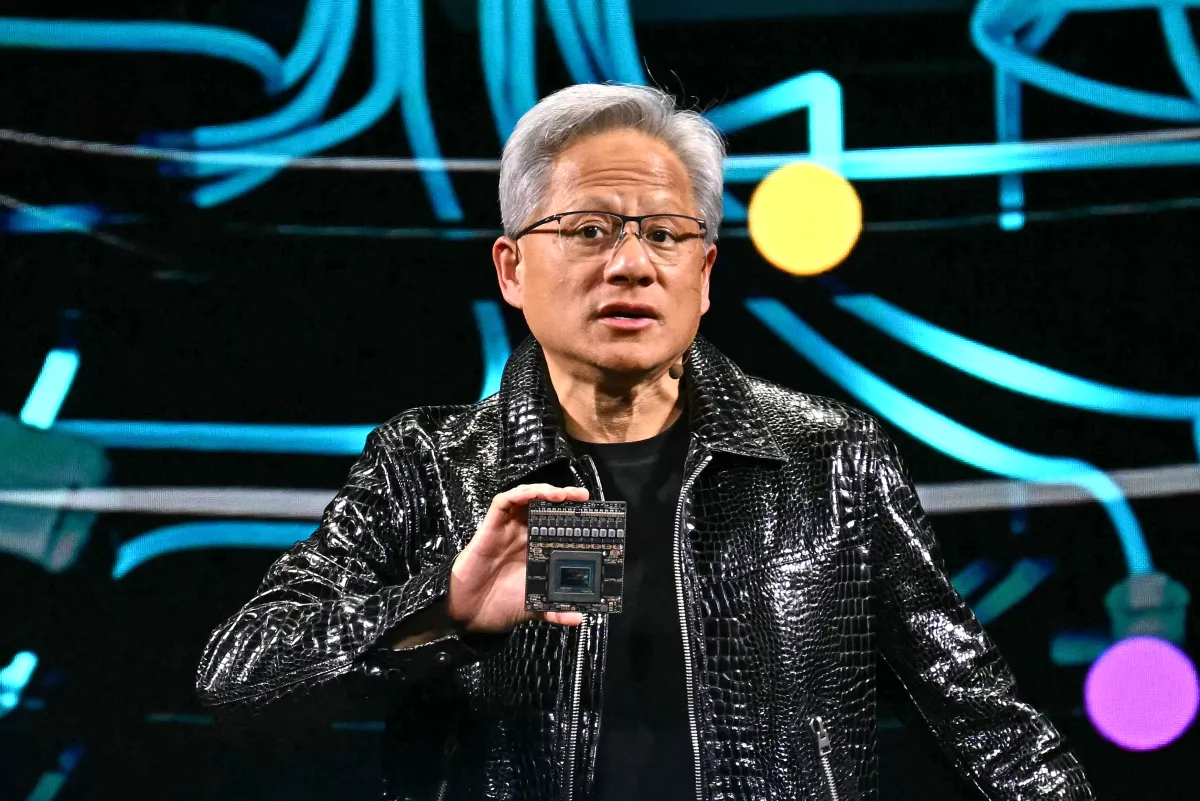
At the Morgan Stanley Technology, Media and Telecom conference in downtown San Francisco Wednesday, Nvidia CEO Jensen Huang said his company’s recent investments in OpenAI and Anthropic are likely to be its last in both, saying that once they go public as anticipated later this year, the opportunity to invest closes.
It could be that simple. While firms sometimes pile into companies until practically the eve of their public debut in search of more upside, Nvidia is minting money selling the chips that power both companies — it’s not like it needs to goose its returns by pouring even more money into either one.
Nvidia, for its part, isn’t offering much elaboration. Asked for comment earlier today following Huang’s remarks, a spokesman pointed TechCrunch to a transcript from the company’s fourth-quarter earnings call, where Huang said all of Nvidia’s investments are “focused very squarely, strategically on expanding and deepening our ecosystem reach,” a goal its earlier stakes in both companies have arguably met.
Still, a few other dynamics might also explain the pullback, including the circular nature of these arrangements themselves, which have raised questions about a potential bubble. When Nvidia first announced it would invest up to $100 billion in OpenAI last September, MIT Sloan professor Michael Cusumano blandly described it to the Financial Times as “kind of a wash,” observing that “Nvidia is investing $100 billion in OpenAI stock, and OpenAI is saying they are going to buy $100 billion or more of Nvidia chips.”
Advertisement
That could explain why the commitment shrank. The investment Nvidia finalized just last week as part of OpenAI’s $110 billion round came in at $30 billion — well short of that earlier pledge. If there is more to the story, Huang isn’t saying, having dismissed suggestions of bad blood between the two companies as “nonsense.”
Meanwhile, Nvidia’s relationship with Anthropic has looked fraught in its own right. Just two months after Nvidia announced a $10 billion investment in November, Anthropic CEO Dario Amodei took the stage at Davos and, without naming Nvidia directly, compared the act of U.S. chip companies selling high-performance AI processors to approved Chinese customers to “selling nuclear weapons to North Korea.” (Ouch.)
In retrospect, a nuclear weapons comparison was the least of it. Just days before Huang appeared at the banking conference, the Trump administration blacklisted Anthropic, barring federal agencies and military contractors from using its tech after the company refused to allow its models to be used for autonomous weapons or mass domestic surveillance.
Techcrunch event
Advertisement
San Francisco, CA | October 13-15, 2026
Within hours of that announcement, OpenAI struck its own deal with the Pentagon — a move Anthropic has called “mendacious” and the public appears to have viewed similarly. Within 24 hours, Claude had shot to the top of Apple’s U.S. App Store, overtaking ChatGPT. (At the end of January, Anthropic was outside the top 100, according to Sensor Tower data.)
Advertisement
Where that leaves Nvidia is holding stakes in two companies that, at this particular moment, are pulling in very different directions, and potentially dragging customers and partners along for the ride.
Whether Huang saw any of this coming, given Nvidia’s web of partnerships, is impossible to know. But his stated reason on Wednesday for likely pulling the plug on future investments — that the IPO window closes the door on this kind of deal — is hard to square with how late-stage private investing actually works. What’s looking more probable is that this is an exit from a situation that has gotten really complicated, really fast.