
Tech
Trump Wants An Airport Renamed After Him While His Company Trademarks Those Same Names

from the the-grift-that-keeps-on-grifting dept
Remember how Donald Trump was going to “drain the swamp” as president? The idea, spilling out from his first campaign for president, was that Washington was horribly corrupt, that politicians and unelected government stooges were making money from their positions of power, and that even politician’s families were in on the grift. The only reason I am aware of a name like Burisma is because Trump and his sycophants screamed about it as an example of how Biden’s family was corruptly making money by utilizing Joe Biden’s time as vice president for influence.
But, if there was a grift going on there, at least the Biden’s had enough shame to try to hide it. The same people who were up in arms over Burisma and other such claims have been remarkably silent on the far more obvious and in your face grifting that Trump is doing. Our president appears to look at the tax coffers as his own personal piggy bank, constantly dreaming up reasons why your tax money should find its way into his pockets. He wanted $10 billion in taxpayer money because his tax returns leaked. He wants $230 million because he was tried for his criminal behavior. He guided billions in taxpayer money to his pet supporter Elon Musk. And, because the corruption must be as naked as possible, agencies under his executive umbrella would be the ones approving all of this redistribution of taxpayer wealth into his own personal bank accounts.
It hasn’t stopped and the latest attempted grift is absolute stunning in how brazen it is. You may have heard that Trump is attempting to strong-arm several local governments into renaming an airport after him. It started with Dulles International Airport outside of Washington DC, with Trump reportedly holding millions in approved federal infrastructure funds hostage if he didn’t get his way. He has no authority to do this with congressionally approved funds, of course, but that isn’t stopping him. The state government in Florida raced to be first in line to lick Trump’s boots, unsurprisingly, with the state House voting to change the Palm Beach International Airport’s name to the President Donald J. Trump International Airport instead. That measure will now go before the state Senate, where it is likely to pass.
And while all of this was going on, an interesting thing happened: a private company that manages Trump’s intellectual property licensing filed for trademarks on the potential names for these airports.
The applications, submitted by DTTM Operations LLC on February 13 and 14, seek federal protection for the names:
All three applications were filed with the United States Patent and Trademark Office on what is known as an “intent to use” basis. This is a filing strategy that allows applicants to stake a claim to a name before it is used in commerce.
As Josh Gerben notes in his post, this has simply never happened before. We’ve never witnessed an American president, while in office, have his private company proactively trademark the very names of a piece of government infrastructure that that same president was attempting to bring about. It’s an incredibly naked grift, in which an American president is clearly, unabashedly seeking to make money on the backs of taxpayers while purporting to do the people’s business.
I should be very clear: these are trademark filings that are completely unprecedented. Airport names almost always originate from the governmental body that owns or manages the facility. They are not owned or licensed by privately held entities.
Here, the filings were made by DTTM Operations LLC, the same entity that protects the Trump brand across hotels, consumer goods, and licensing ventures. That fact alone signals that this is not merely about honorary naming. It is about brand control.
The broader goods listed in the applications, such as clothing, luggage, and watches, are equally telling. Those categories are classic merchandise plays. If an airport were renamed, the trademark filings would allow DTTM Operations to control and monetize branded merchandise associated with the location.
The intent is obvious: create a licensing structure such that the American government will need to pay licensing fees to Trump’s business in perpetuity. There is no other reasonable explanation for this sequence of events. And it appears to be going on without any serious comment from the very same people who whined about what a swamp Washington had become.
Your money is not Trump’s personal piggy bank. Or, rather, it shouldn’t be. Unfortunately, those who ought to be clapping back on all of this are either in on the grift, or perfectly willing to allow it to occur.
Filed Under: airports, corruption, donald trump, dulles, palm beach international, trademark
Companies: dttm operations, trump organization


Infinix has quietly but surely been doing some good work in 2026, especially when every other brand has been hiking prices thanks to RAM shortages. After introducing the super pretty Pininfarina-designed Note 60 Ultra, Infinix is ready to double down on gaming with its next GT-series smartphone. A new leak has revealed details about the upcoming Infinix GT 50 Pro, which is set to feature a redesigned “hypercar-inspired” look and some serious thermal engineering upgrades. Here’s everything we know so far.
All New Design
The GT 50 Pro reportedly builds on Infinix’s signature hypercar aesthetic but refines it with cleaner lines and a more premium finish. Leaked images reveal a new Kevlar-like texture and aerodynamic detailing that give it a more polished look.
However, the real star here is what Infinix calls the “Pipeline Window Display.” It’s essentially a transparent section on the back that visually exposes the cooling system underneath. According to the leak, this creates a live, almost mechanical effect in which the cooling channels appear to be actively flowing, making the phone feel like it’s “breathing” during use.
For all the eSports aficionados, the GT 50 Pro will introduce dual-pressure shoulder triggers. These triggers support pressure sensitivity, multiple mapping points, and even sliding gestures. Latency is kept to just 20ms, and they can also be configured to work with the camera to help zoom in.
Redesigned Thermals

Thermal efficiency is super important for gamers. After all, no one wants their frames dropping as the phone heats up. To tackle this exact problem, the GT 50 Pro will feature what’s being described as the industry’s largest micro-pump HydroFlow liquid-cooling system, with a massive 6437 mm² diaphragm area. With a 100% coverage of the core heat area, the goal is simple: better heat dissipation and more stable performance during long gaming sessions.
Another nice-to-have is the MagCharge Cooler 2.0 (bypass charging). This means the phone can be powered directly without routing energy through the battery, reducing heat buildup during gaming. At the same time, it delivers active cooling using TEC refrigeration, allowing users to charge and cool the device simultaneously.
While there’s no confirmation of the CPU, early reports indicate the MediaTek Dimensity 8400 Ultimate. An India launch is coming soon, so stay tuned for more information.
Tech
Senators Ask Tulsi Gabbard To Tell Americans That VPN Use Might Subject Them To Domestic Surveillance

from the unfun-twist-on-an-old-story dept
This may not be an actual “Wyden siren,” but it still has his name attached to it. What’s being said here isn’t nearly as ominous as this single sentence he sent to CIA leadership earlier this year:
I write to alert you to a classified letter I sent you earlier today in which I express deep concerns about CIA activities.
Few people are capable of saying so much with so little. This one runs a bit longer, but it has implications that likely run deeper than the surface level issue raised by Wyden and others in a recent letter to Trump’s (satire is dead) Director of National Intelligence, Tulsi Gabbard. Here are the details, as reported by Dell Cameron for Wired:
In a letter sent Thursday to Director of National Intelligence Tulsi Gabbard, the lawmakers say that because VPNs obscure a user’s true location, and because intelligence agencies presume that communications of unknown origin are foreign, Americans may be inadvertently waiving the privacy protections they’re entitled to under the law.
Several federal agencies, including the FBI, the National Security Agency, and the Federal Trade Commission, have recommended that consumers use VPNs to protect their privacy. But following that advice may inadvertently cost Americans the very protections they’re seeking.
The letter was signed by members of the Democratic Party’s progressive flank: Senators Ron Wyden, Elizabeth Warren, Edward Markey, and Alex Padilla, along with Representatives Pramila Jayapal and Sara Jacobs.
That’s alarming. It’s also a conundrum. VPN use (often required for remote logins to corporate systems) is a great way to secure connections that are otherwise insecure, like those made originating from people’s homes (to log into their work stuff) or utilizing public Wi-Fi. There are also more off-the-book uses, like circumventing regional content limitations or just ensuring your internet activity can’t be tied to your physical location.
The trade-off depends on the threat you’re trying to mitigate. It’s kind of like the trade-off in cell phone security. Using biometrics markers to unlock your phone might be the best option if what you’re mainly concerned with is theft of your device. A thief might be able to guess a password, but they won’t be able to duplicate an iris or a fingerprint.
But if the threat you’re more worried about is this government, you’ll want the passcode. Courts have generally found that fingerprints and eyeballs aren’t “testimonial,” so if you’re worried about being compelled to unlock your device, the Fifth Amendment tends to favor passwords, at least as far as the courts are concerned.
It’s almost the same thing here. VPNs might protect you against garden-variety criminals, but the intentional commingling of origin/destination points by VPNs could turn purely domestic communications into “foreign” communications the NSA can legally intercept (and the FBI, somewhat less-legally can dip into at will).
That’s the substance of the letter sent to Gabbard, in which the legislators ask the DNI to issue public guidance on VPN usage that makes it clear that doing so might subject users to (somewhat inadvertent) domestic surveillance:
Americans reportedly spend billions of dollars each year on commercial VPN services, many of which are offered by foreign-headquartered companies using servers located overseas. According to the Department of Homeland Security’s Cybersecurity and Infrastructure Security Agency, VPNs have the potential to be vulnerable to surveillance by foreign adversaries. While Americans should be warned of these risks, they should also be told if these VPN services, which are advertised as a privacy protection, including by elements of the federal government, could, in fact, negatively impact their rights against U.S. government surveillance. To that end, we urge you to be more transparent with the American public about whether the use of VPNs can impact their privacy with regard to U.S. government surveillance, and clarify what, if anything, American consumers can do to ensure they receive the privacy protections they are entitled to under the law and Constitution.
I wouldn’t expect a response from ODNI. I mean, I wouldn’t expect one in any case, but I especially don’t expect Tulsi Gabbard to respond to a letter sent by a handful of Democratic Party members.
A warning would be nice, but even an Intelligence Community overseen by competent professionals, rather than loyalists and Fox News commentators would be hard-pressed to present a solution. To be fair, this letter isn’t asking for a fix, but rather telling the Director of National Intelligence to inform the public of the risks of VPN usage, including increasing their odds of being swept up in NSA dragnets.
Certainly the NSA isn’t concerned about “incidental collection.” It’s never been too concerned about its consistent “incidental” collection of US persons’ communications and data in the past and this isn’t going to budge the needle, especially since it means the NSA would have to do more work to filter out domestic communications and the FBI would be less than thrilled with any efforts made to deny it access to communications it doesn’t have the legal right to obtain on its own.
Since the government won’t do this, it’s up to the general public, starting with everyone sharing the contents of this letter with others. VPNs can still offer considerable security benefits. But everyone needs to know that domestic surveillance is one of the possible side effects of utilizing this tech.
Filed Under: alex padilla, domestic surveillance, ed markey, elizabeth warren, executive order 12333, fbi, national security, nsa, odni, pramila jayapal, ron wyden, sara jacobs, section 702, surveillance state, tulsi gabbard, vpn

Amazon is blowing out M4 Pro 14-inch MacBook Pro inventory this weekend, with a staggering $400 discount on the upgraded spec with a 20-core GPU and 1TB SSD.

Save $400 on a blowout 14-inch MacBook Pro with 20-core GPU – Image credit: Apple
Shoppers on the hunt for the greatest MacBook Pro savings can snap up a $400 discount with a closeout deal on the last-gen M4 Pro 14-inch model with multiple upgrades.
Buy 14″ M4 Pro/24GB/1TB for $1,999
Continue Reading on AppleInsider | Discuss on our Forums
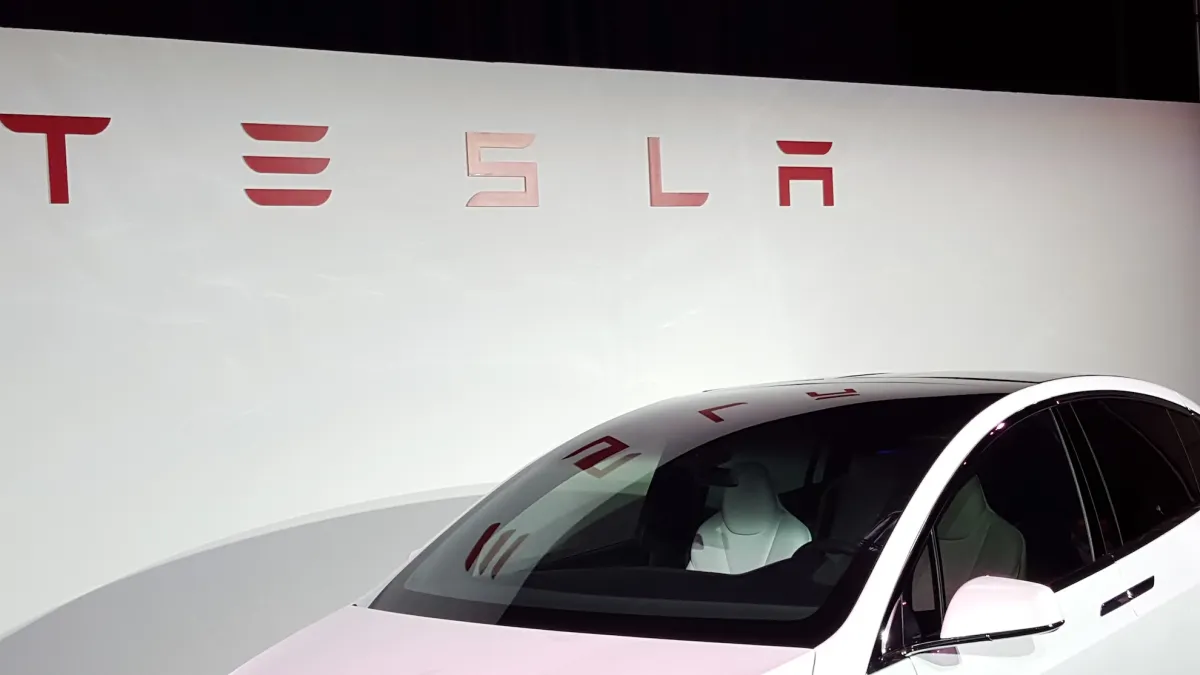
It’s been looming for weeks, but now the end is near: Just a few hundred Tesla Model S and Model X vehicles remain unsold. Tesla CEO Elon Musk confirmed this week in a post on X that custom orders of the Model S sedan and Model X SUV are over. “All that’s left are some in inventory,” he wrote.
Musk first announced Tesla’s plan to end Model S and Model X production back in January. And the data helps explain why.
Sales of the Tesla Model X and Model S have fallen steadily over the years as the company’s high volume and cheaper entries — the Model 3 and Model Y — took over. Tesla doesn’t separate S and X sales, instead combining them under “other models,” a category that now includes the Cybertruck. And those combined figures show S and X sales peaking in 2017 at 101,312 vehicles before declining to 50,850 vehicles (including Cybertruck) in 2025 — a fraction of the 1.63 million vehicles it delivered globally last year.
In other words, their deaths were inevitable. What comes next is a bit more complicated.
Musk isn’t filling the void left by the Model X and Model S with a traditional EV; he ditched plans to produce a lower-cost EV that was expected to be priced around $25,000. Instead, Musk is placing his bets on the Optimus robot, which has yet to go into production, and the Cybercab, an all-electric two-seater autonomous vehicle that was first shown as a concept in 2024.
Tesla plans to build Optimus robots at its Fremont, California, factory once production of the Model S and Model X end, which could be any day now that final orders have been taken. Musk has said Tesla will begin producing the Cybercab this month at its factory in Austin, Texas.
A look back
The Model S and X EVs have taken a backseat to the more affordable Model 3 and Model Y vehicles. But their debuts, and initial sales, marked two critical moments in Tesla’s colorful and often volatile history. The Model S launched in 2012 as its first volume EV. Its popularity not only changed how consumers viewed EVs, it prompted legacy automakers — long dismissive of the value of electric vehicles — to take notice.
Techcrunch event
San Francisco, CA
|
October 13-15, 2026
The Model X followed in fall 2015 and was famously described by Musk as the Fabergé egg of EVs.
“I think we got more carried away with the X,” Musk said in a September 2015 press interview attended by this reporter just an hour before Tesla’s Model X delivery event began. “I’m not sure anyone should make this car.”
The Model X was often delayed, and initially criticized for its complexity. But it ultimately introduced the company to a new market: women.
The Model X raised Tesla’s profile, and it set the company up for its next big move: an affordable mass-produced EV. The Model 3 had a difficult start, but it ended up catapulting Tesla into the mainstream. The Model Y clinched its status, helping Tesla widen the gap as the top-selling EV producer globally until China’s BYD took over that top global EV sales spot in 2025 when it delivered 2.26 million EVs.
Tesla continues to sell thousands of Model 3 and Model Y, but its growth has stalled, and even reversed. The company reported in January that it sold 1.69 million vehicles in 2025, a decrease for the second year in a row. Its efforts to boost sales with cheaper, stripped-down versions of the Model 3 and Model Y that were introduced in October have had a modicum of success, according to first-quarter 2026 figures that were reported April 2.
Tesla delivered 358,023 EVs globally in the first three months of the year, about 6% more than the same period in 2025, which also happened to be the company’s worst quarter in years. The figure was below analysts’ expectations of around 368,000.
But never mind that. In Musk’s view — one which he is well compensated for — Tesla isn’t an automaker or a sustainable energy company, as he has described it before. Tesla is an AI company and his new gambit goes all in on that mission.
Cybercab risks
The Optimus robot is one part of the Tesla AI effort. But it’s perhaps the Cybercab that best embodies, and exposes the risks of, the company’s AI-first campaign.
The Cybercab was designed to be used as an autonomous vehicle without traditional controls like a steering wheel or pedals — meaning once it launches it will be without the initial backup of a human safety operator.
The first Cybercab rolled off the Tesla factory assembly line in February and is supposed to go into mass production this month. Although that date could slip, as so many have in Tesla’s history.
Unlike Tesla’s previous vehicles, the challenges aren’t in its production (who can forget the production hell of the Model 3). Instead, it faces a major regulatory hurdle before it can ever hit the road. Federal motor vehicle safety standards place requirements on vehicles such as having a steering wheel and pedals. There is no evidence that Tesla has applied for an exemption, according to publicly available files with the Federal Register and the National Highway Traffic Safety Administration.
The vehicles will also rely on Tesla’s Full Self-Driving software to navigate public streets and safely shuttle passengers to their destination. Despite improvements to FSD and limited driverless robotaxi tests in Austin, Tesla has not yet demonstrated that its software can operate reliably at scale.
And that piece requires more than technical mastery. Robotaxi operations are also tricky. And in states like California, they also require permits to deploy and charge for rides in driverless vehicles.
Zoox, the autonomous vehicle company owned by Jeff Bezos’ Amazon, may end up clearing a path for Tesla and its Cybercab. Zoox received an exemption from the National Highway Traffic Safety Administration that allows the company to demonstrate its custom-built robotaxis, which lack pedals or a steering wheel, on public roads. Zoox is now going through a public process to have that exemption extended to commercial operations.
Musk tried to sell shareholders on why the risk was worth it during the company’s earnings call in January.
“The vast majority of miles traveled will be autonomous in the future,” Musk said at the time, later noting that the Cybercab is super optimized for minimum cost per mile and also for a much higher-duty cycle. “I would say probably less than, I’m just guessing, but probably less than 5% of miles driven will be where somebody’s actually driving the car themselves in the future, maybe as low as 1%.”
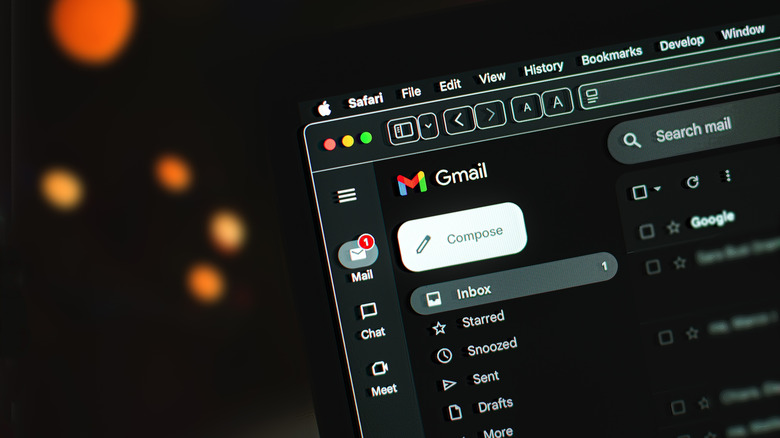
Ready to shed that embarrassing email address you’ve been stuck using for decades? Instead of abandoning it and opening up a fresh new inbox, Google’s now going to let you simply change the address. After years of user frustration and confusing workarounds for forwarding services, just swap out the part before “@gmail.com” and keep all your existing data. You can continue to send and receive emails from the old address, as well.
Now, just because Google announced the update doesn’t mean that you’ll be able to start making changes right this second. The company will be rolling it out slowly over the coming weeks. To see if you’re eligible yet, go to your Google Account, select “Personal info,” then “Email.” If you have it, click the “Google Account email” option to begin the process.
It’s the best of both worlds: Everything from your Drive to your Photos to your YouTube account can stay exactly the same while you get to ditch your humiliating username. It’s a relief for many, but also not too surprising for those who have seen the rumors. Reports back in January found support documentation in select regions, including Hindi-language pages, suggesting that Google had been testing the feature outside the U.S.
What does and doesn’t change for Gmail users
The update does come with some restrictions, of course. For one, you can only change your Gmail username once every 12 months. Newly created addresses cannot be deleted during that time, either. Google’s also limiting the total number of new Gmail addresses a single account can have. (It’s currently capped at four.)
As mentioned above, changing your Gmail address also doesn’t erase the old one. Instead, the previous address is kept as an alternate email tied to the same account. Messages sent to either the old or new address will continue to arrive in the same inbox, and you can sign in using either set of credentials across all Google services.
Google also noted that some app settings may reset with the change in usernames (like they would when you sign in on a new device). Certain recurring features, like calendar invites, may still display your old address. Out of precaution, you may want to back up your data to an external hard drive before making a change.


— Joy Chik announced she will retire from Microsoft in July after nearly three decades. Her eight roles there ranged from software design engineer to her current title: president of identity and network access.
“I’m excited to expand my public company board work while also building new muscles in the startup, angel investing, and venture capital spaces, partnering with founders and leadership teams as they scale,” Chik said on LinkedIn.
She has already launched a podcast called The Knowing Moments in which she shares thoughts on her professional transition “and the start of a new era.”

— Bobby Hollis, Microsoft‘s vice president of energy, has left the company after three years for an undisclosed new role. “Energy and technology have never been at a more important juncture, and it’s so important that we get this right,” Hollis said on LinkedIn. “I won’t be leaving the conversation. I’ll just be doing it with a different hat.”
Before Microsoft, Hollis was at data center company Rowan Digital Infrastructure. Previous roles include head of development at Bill Gates-backed Breakthrough Energy and Facebook’s head of global energy, environment and site selection.

— Robotic ag-tech company TerraClear has named Eric Rombokas as director of robotics and hardware. The startup, based in Issaquah, Wash., and Grangeville, Idaho, builds technology that autonomously identifies and removes rocks and weeds from farmers’ fields. TerraClear is No. 83 on the GeekWire 200 index of top Pacific Northwest startups.
Rombokas comes from Ohio’s Cornerstone Research Group and holds an affiliate professor role at the University of Washington in both mechanical engineering and electrical and computer engineering.
“Eric is a rare talent who bridges the gap between fundamental robotic research and rugged, real-world deployment,” said TerraClear CEO Devin Lammers.
— Neal Gottsacker was named chief technology officer at UserTesting, a Bellevue, Wash.-based company that connects businesses with a global network of testers for on-demand user experience research. Gottsacker, who will work remotely, previously served as chief product officer at the workflow automation company Nintex.
“As AI reshapes how teams build and innovate, the real differentiator will be the ability to connect powerful models with authentic human signals at scale,” he said on LinkedIn.

— EchoMark, a Bellevue startup that uses digital watermarking and forensics to track the source of leaks and data breaches, added two hires to its leadership team:
- Manisha Powar is leading product at the startup. She joins from Qualtrics, where she was VP and head of product for the Customer Experience Suite, the company’s largest business line. Before that, Powar was at Facebook for less than two years and spent nearly 17 years at Microsoft, leaving as principal PM manager for Windows Storefronts in 2017.
- Pete Daderko is leading product marketing. He previously served as a senior director at Microsoft, and earlier was a U.S. Navy submarine officer and engagement manager at McKinsey.

— Matt Gamboa is now a principal product manager for Read AI, the Seattle startup that sells enterprise productivity software tools using generative AI. “After two years of a much-needed reset and exploration, I’m back,” he said on LinkedIn. Gamboa is also co-founder of CertifyIQ, a startup building educational technology for skilled trades. He previously held management roles at Nomad Health, Expedia Group and Rover.
Read AI is No. 16 on the GeekWire 200 index of top Pacific Northwest startups.
— Ken Bowman is now chief revenue officer for FruitScout. The Seattle ag-tech startup uses AI to monitor crop growth, with a current focus on agave — identifying the optimal harvest time for the tequila-producing plant.
“By using the phones already in workers’ pockets to create digital twins of every plant, in combination with drone imaging to drive cost-effective, accountable scale, we are bringing Industry 4.0 to the field,” Bowman said on LinkedIn.
—Luli Chaluleu has transitioned to Amazon‘s vice president of PXT (People eXperience and Technology) for North America operations. Chaluleu has been with the Seattle-area tech giant for nearly 14 years and was previously VP of HR.
— Thomas Dohmke, former CEO of GitHub, has joined the supervisory board for Deutsche Telekom Group, parent company of T-Mobile. Deutsche Telekom has “touched the foundation of my life many times,” Dohmke said on LinkedIn, starting with an internship in Berlin in the 1990s.
Dohmke spent more than three years as a Microsoft principal director before moving into leadership roles at GitHub following Microsoft’s acquisition of the code-hosting and collaboration platform. He served as GitHub’s CEO for nearly four years, stepping down in September.
— Steve Schuster is retiring from Amazon after more than 12 years with the company, most recently as vice president of security response and engineering in the tech giant’s Washington, D.C., offices. He previously served in information security leadership at Cornell University.
— Frazier Healthcare Partners, a Seattle-based healthcare investment firm, announced several promotions and a new hire:
- Andrew Wu was promoted to vice president.
- Daniel Ewnetu and Luke Ostrander were promoted to senior associate on the investment professional team.
- Carol Eckert was promoted to senior VP of investor relations.
- Mike Gawlik joins Frazier as a VP and will be based in the firm’s new New York office.
The Trump administration’s labor board has ordered Amazon to recognize and bargain with the International Brotherhood of Teamsters union, which represents workers at a warehouse in Staten Island. This is just the latest chapter in a multiyear standoff between Staten Island warehouse workers and Amazon, .
The union has been trying to bring Amazon to the bargaining table for years to negotiate pay, benefits and workplace safety. The labor board’s proclamation doesn’t mean that the battle is over. It’s highly likely this will be settled in court.
An Amazon spokesperson maintains that the vote to create the union was “wrong on the facts of the law” and that representatives from the National Labor Relations Board “improperly influenced the election.” The company recently stated it is “confident an unbiased court will overturn the original certification.”
Despite the eventual outcome, Teamsters President Sean O’Brien is lauding the Staten Island workers for becoming “the first group ever to force the company to recognize their union.” Workers at the facility and this was the first union victory for Amazon employees in the US.
It was considered a milestone victory for US workers across the board, given that Amazon is the . That was four years ago and led to a contracted legal battle, as Amazon has refused to recognize the union. Since that original vote, the labor board has repeatedly found that Amazon violated workers’ union rights at the Staten Island warehouse. For instance, the company didn’t pay employees when they were forced to stop working at the tail-end of 2022 and suspended 50 employees for staging a walkout due to unsafe work conditions.
There were also several harrowing incidents leading up to the union vote. It’s been reported that the company illegally fired during the . The NY Attorney General also at the warehouse to be “inadequate.” A recent study , calling out the Staten Island warehouse for dangerous working conditions. The report says that there are 7.2 serious injuries for every 100 workers.
Other US-based Amazon warehouses have yet to follow suit and unionize like Staten Island, but the same isn’t true in Canada. Workers at a warehouse in Quebec in 2024.
Anthropic has acquired Coefficient Bio, a stealth biotech AI startup founded barely eight months ago, in an all-stock deal worth just over $400 million. The acquisition brings a team of fewer than 10 people, nearly all former Genentech computational biology researchers, into Anthropic’s healthcare and life sciences division, and it signals something larger than a talent grab: the maker of Claude is staking real capital on the idea that general-purpose AI can accelerate drug discovery.
The deal, first reported by The Information on Thursday, values a company that had no publicly known product, no disclosed revenue, and no conventional traction metrics. What it did have was a founding team with rare credentials. Samuel Stanton and Nathan C. Frey, Coefficient Bio’s co-founders, both came from Prescient Design, Genentech’s computational drug discovery unit, where Frey led a multidisciplinary group working on biological foundation models and novel machine learning approaches to biomolecule design. Frey’s publication record spans more than 20 papers in journals including Science Advances and Nature Machine Intelligence, and he won an ICLR Outstanding Paper Award in 2024 for work on generative modelling for drug candidate discovery.
The startup’s stated ambition was nothing modest: artificial superintelligence for science. In practice, Coefficient Bio had built a platform enabling AI to draft drug research and development plans, manage clinical regulatory strategies, and identify new drug candidates. It was, by all accounts, a research-heavy operation that never left stealth mode.
Dimension, the New York-based venture firm founded in 2023 by former Lux Capital and Obvious Ventures partners Adam Goulburn, Zavain Dar, and Nan Li, held roughly half the company. The firm, which focuses on companies at the intersection of technology and life sciences, is now reporting a 38,513 per cent internal rate of return on the investment, a figure that says less about Coefficient Bio’s commercial viability than about the speed at which AI valuations are repricing early-stage science bets. Against Anthropic’s $380 billion post-money valuation, set in its $30 billion Series G round in February, the acquisition represents roughly 0.1 per cent dilution.

The 💜 of EU tech
The latest rumblings from the EU tech scene, a story from our wise ol’ founder Boris, and some questionable AI art. It’s free, every week, in your inbox. Sign up now!
The Coefficient Bio team will join Anthropic’s Health Care Life Sciences group, led by Eric Kauderer-Abrams, who was hired in 2025 with an explicit mandate to make Claude the dominant AI model in biology. “We want a meaningful percentage of all of the life science work in the world to run on Claude, in the same way that that happens today with coding,” Kauderer-Abrams told CNBC when Anthropic launched Claude for Life Sciences in October 2025. That platform, which integrates with tools including Benchling, PubMed, and 10x Genomics, was designed to assist researchers across the entire drug discovery pipeline, from literature review and hypothesis generation to data analysis and regulatory submissions.
The acquisition deepens that push considerably. Where Claude for Life Sciences offered a generalised research assistant, Coefficient Bio’s team brings the kind of domain-specific expertise, particularly in protein design and biomolecule modelling, that could help Anthropic build specialised tools for pharmaceutical companies willing to pay enterprise prices for AI that understands their workflows at a molecular level.
Anthropic is not entering a vacuum. Google DeepMind spun off Isomorphic Labs to pursue AI-designed drug candidates now entering clinical trials, and Nvidia announced a five-year, $1 billion partnership with Eli Lilly in January to build an AI co-innovation lab for accelerated drug discovery. OpenAI, meanwhile, has been working with Moderna to speed the development of personalised cancer vaccines. The competitive logic is straightforward: whichever foundation model becomes embedded in biopharma R&D workflows will capture an enormous and recurring revenue stream in a market where a single approved drug can generate billions.
The venture capital appetite for AI-biology crossovers is reflecting this calculus. Breakout Ventures closed a $114 million fund in March explicitly targeting early-stage biotechs that treat AI and biology as inseparable. Dimension itself is reportedly raising a $700 million third fund to double down on the same thesis. The investor conviction is that the agentic AI wave will hit life sciences as forcefully as it has hit software engineering, and the acqui-hire economics of deals like Coefficient Bio suggest the large model builders agree.
For Anthropic, the strategic arithmetic is clear enough. The company’s run-rate revenue has reached $14 billion, growing more than tenfold annually for three consecutive years, and the customer base spending over $100,000 a year on Claude has grown sevenfold. But that growth is overwhelmingly concentrated in coding, enterprise search, and general productivity. Healthcare and life sciences represent a vast adjacent market where Anthropic has laid the groundwork with Claude for Life Sciences but has not yet achieved the kind of deep integration that generates sticky, high-margin revenue.
Paying $400 million in stock for a pre-revenue team of fewer than 10 people will, understandably, invite scepticism. The price looks less like a valuation of what Coefficient Bio had built and more like a statement about what Anthropic believes it can build with the right researchers on the payroll. Whether that bet pays off depends on something the current frenzy of AI startup valuations has not yet been forced to answer: whether frontier AI models can generate genuine scientific breakthroughs, or whether they will remain very expensive literature review assistants that happen to speak the language of molecular biology.


A recent edict from the Federal Communications Commission has security experts bracing for the worst. On March 23, the agency announced a sweeping ban on all new “consumer-grade” routers produced outside the United States. The decision sent shockwaves through boardrooms and living rooms alike: Because no major wireless router brands manufacture in the U.S. – including those headquartered stateside, such as Netgear – a ban on foreign routers is difficult to differentiate from a ban on routers, period.
But while the logistics will likely be worked out, security experts have more concerns. As pointed out in a Technology Policy Institute (TPI) white paper, the ban is ostensibly meant to improve national cybersecurity, preventing incidents such as the Volt Typhoon attack, which saw Chinese state-sponsored threat actors gain access to the networks of U.S. agencies such as the DoE, EPA, and TSA. It’s worth noting that Volt Typhoon primarily targeted routers from Netgear and Cisco, both American companies. Moreover, that attack was made possible not because of any meddling or intentional backdoors, but rather because Netgear and Cisco did not maintain a timely security update schedule for routers they had deprecated.
Wi-Fi is much less secure than many people assume, and a router with known vulnerabilities that have not been patched is like putting a sign on your front door that says, “The spare key is under the mat.” Here’s why the FCC has cyber experts flummoxed, and how these issues might affect your own network security.
The FCC is allowing updates for now, but security could degrade over time

There’s an inherent contradiction in the FCC’s ban on new foreign-made routers. These routers are now on the agency’s Covered List of products and equipment, which allegedly pose severe risks to national security. If it is indeed the case that foreign-made routers pose a clear and present danger to national interests, then why has the FCC stated that existing routers already installed in businesses and homes are exempt? “If the threat were urgent enough to justify bypassing all deliberation, one would expect the FCC to be taking emergency action on the installed base,” wrote the TPI’s Scott Wallsten. Instead, the ban seems set to create a looming cybersecurity catastrophe.
The FCC is currently allowing updates to existing routers for one year, but there’s no telling what will happen when that grace period expires in 2027. As noted above, a lack of security updates creates significant vulnerabilities in a router over time. Thorin Klosowski, a security and privacy expert at the Electronic Frontier Foundation, told Wirecutter, “While it’s true that consumer routers have had some issues in the past, those often proliferate because router manufacturers don’t issue patches or they don’t bother to notify people when their router is end of life and no longer receiving security updates.”
If you’re like the average consumer, you probably use the router that your internet service provider provided, and you’ve likely never thought about voluntarily upgrading it. When the grace period ends, millions of routers will stop receiving updates, and many owners will never notice. That means an untold number of networks will become easy targets for the exact sort of attacks the ban is ostensibly intended to prevent.
Should you worry about the routers in your home and workplace?
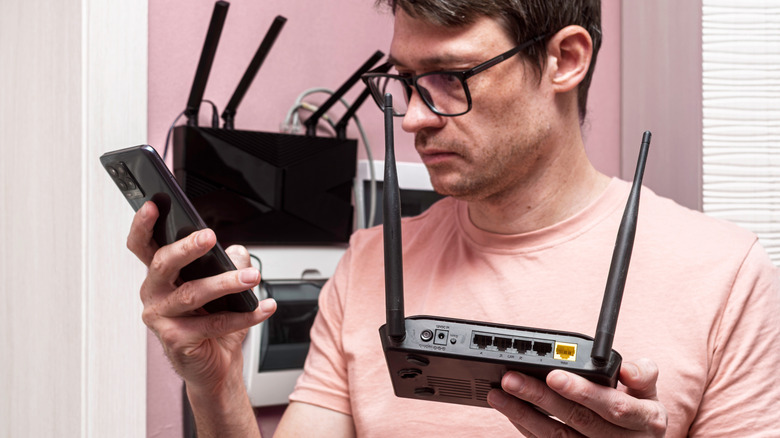
One of the things they don’t teach you about Wi-Fi is that it’s an inherently vulnerable technology, like any wireless standard. For all but the most security-hardened networks, the only thing stopping pretty much anyone with a Raspberry Pi and some free time from hacking your network is the fact that you’re probably not a very tempting target.
In the long term, it’s unclear whether the average internet user will face increased security threats as a result of the FCC’s ban. It is also unclear whether American manufacturing can ramp up to meet the national demand for new routers in time for the FCC’s one-year deadline. Although companies can apply for “Conditional Approval” from the FCC to continue selling routers, it requires companies to disclose manufacturing and financial details to the U.S. government and outline plans to start building routers in the U.S. It would be unsurprising if many router makers declined to participate in such a process. It’s hard to imagine a scenario in which the new policy does not lead to fewer choices and higher prices for American consumers.
Scarcity could compound the security dilemma described above, as noted by antimalware software company Malwarebytes. If American-made routers cannot be produced affordably or at the necessary scale, and if new routers from companies like TP-Link and Asus are not available in the U.S., users could end up holding onto old routers past the end of their support cycles. For now, make sure you’ve secured your network with a unique password and that none of the devices on your network have known vulnerabilities.
Tech
Google Vids Gives Everyone a Straightforward Way to Make and Share Videos, Direct Avatars Included


Video making has long required breaking the bank or devoting hours to learning complex software. Google Vids eliminates all of those hassles at once. If you already have a Google account, you can create, edit, and share videos right from your browser, no downloads or subscriptions required.
Things start when you enter a brief description of what you wan to show. Google Vids creates a storyboard for you, with sequences arranged in order and ready to go. You can add any photographs or documents from your Google Drive to fill out the scenes, or let the service recommend some appropriate stock video. Then it’s just a matter of dragging clips about on a simple timeline to get the timing correct, removing any unnecessary sections, and layering in text to appear at the appropriate time.
Sale

Google Pixel 10 – Unlocked Android Smartphone – Gemini AI Assistant – Advanced Triple Rear Camera…
- Google Pixel 10 is the everyday phone unlike anything else; it has Google Tensor G5, Pixel’s most powerful chip, an incredible camera, and advanced…
- Unlocked Android phone gives you the flexibility to change carriers and choose your own data plan[2]; it works – Google Fi, Verizon, T-Mobile, AT&T…
- The upgraded triple rear camera system has a new 5x telephoto lens – up to 20x Super Res Zoom for stunning detail from far away; Night Sight takes…
Audio work is also rather simple, since you can just record a voiceover using a built-in teleprompter that scrolls along at your desired speed. The editor even has your back when it comes to filler words, detecting them automatically and allowing you to remove them with a single click. Soundtracks and sound effects are simply dropped in from a collection of alternatives that match the mood of each scenario. New video clips can be created directly from a prompt entered into the editor. Veo 3.1 creates eight-second segments with motion and native music; you receive ten of them per month for free, but higher-tier members get far more, up to a thousand per month.
On top of that, avatars add a really personal touch. You choose a character or design one from yourself, and then simply spell out the instructions, such as “take up the product and demonstrate how it works while smiling at the camera.” The avatar then follows those directions, maintaining the same face and attire throughout each shot, and interacting naturally with any accessories or backgrounds you’ve selected. You can alter the entire thing using plain text, so the same character can appear in training videos, product demos, and team updates without ever having to face a real camera.
A new Chrome addon makes screen recording incredibly simple. With one click, whatever is on your desktop, including audio, is recorded and dropped directly into the editor for chopping and assembling. Finished videos export directly to YouTube as private drafts, allowing you to review them before sharing them with the world. Google announced all of these enhancements on April 2, 2026, adding on capabilities previously launched for enterprise users and offering the service accessible to anybody who wants to turn a concept into a shareable film in minutes rather than days.

New Nielsen program delivers data sooner

XRP Price Prediction: Can These 6 Ongoing Developments Save Ripple

CSK vs PBKS Highlights, IPL 2026: Shreyas Iyer Shines With Fifty As PBKS Beat CSK By 5 Wickets

Smart energy pays enters the US market, targeting scalable financial infrastructure

Why Israel is blocking foreign journalists from entering

Bitcoin: We’re Entering The Most Dangerous Phase

Crypto Trading LIVE: BTC Live Trading Bitcoin Analysis | 28 MAR #crypto #bitcoin #btc

Michael Saylor on new STRC stock: Creates an on-ramp for bitcoin believers without the volatility

BITCOIN TO $50K?! Oil Surges as the S&P 500 Hits Make-Or-Break Support
-

 NewsBeat7 days ago
The Story hosts event on Durham’s historic registers
-

 NewsBeat23 hours ago
Steven Gerrard disagrees with Gary Neville over ‘shock’ Chelsea and Arsenal claim | Football
-

 Sports7 days ago
Sweet Sixteen Game Thread: Tide vs Michigan
-
Entertainment4 days ago
Fans slam 'heartbreaking' Barbie Dream Fest convention debacle with 'cardboard cutout' experience
-

 Business18 hours ago
No Jackpot Winner and $194 Million Prize Rolls Over
-

 Crypto World2 days ago
Gold Price Prediction: Worst Month in 17 Years fo Save Haven Rock
-
 Entertainment6 days ago
Lana Del Rey Celebrates Her Husband’s 51st Birthday In New Post
-

 Tech5 days ago
The Pixel 10a doesn’t have a camera bump, and it’s great
-
Crypto World3 days ago
Dems press CFTC, ethics board on prediction-market insider trades
-

 Tech5 days ago
Avatar Legends: The Fighting Game comes out in July and it looks pretty slick
-

 Sports3 days ago
Tallest college basketball player ever, standing at 7-foot-9, entering transfer portal
-

 Tech3 days ago
EE TV is using AI to help you find something to watch
-

 Fashion6 days ago
Amazon Sundays: Soft Spring Layers
-

 Business2 days ago
Login and Checkout Issues Spark Merchant Frustration
-

 Fashion7 days ago
When Evening Dressing Gets Colorful for Spring
-

 Tech5 days ago
Elon Musk’s last co-founder reportedly leaves xAI
-

 Tech3 days ago
How to back up your iPhone & iPad to your Mac before something goes wrong
-

 Tech4 days ago
Apple will hide your email address from apps and websites, but not cops
-

 Politics4 days ago
Should Trump Be Scared Strait?
-

 Crypto World4 days ago
U.S. rule change may open trillions in 401(k) funds to crypto
You must be logged in to post a comment Login