A U.S. federal jury has convicted Linwei Ding, a former software engineer at Google, for stealing AI supercomputer data from his employer and secretly sharing it with Chinese tech firms.
Ding was originally indicted in March 2024 after he lied and didn’t sincerely cooperate with Google’s internal investigation, leading to his arrest in California.
According to the prosecutors, between May 2022 and April 2023, Ding stole over 2,000 pages of confidential AI-related materials from Google and uploaded them to his personal Google Cloud account.
The stolen files contained key information about Google’s AI super-computing infrastructure, proprietary TPU and GPU system technologies, orchestration software for large-scale AI workloads, and SmartNIC networking technology.
Ding, who started at Google in 2019, was also secretly affiliated with two China-based technology companies and even negotiated a role as Chief Technology Officer (CTO) at one of them.
Advertisement
Later, he founded his own AI company in China (Shanghai Zhisuan Technology Co.), serving as its CEO, and told potential investors he could build AI supercomputing infrastructure similar to Google’s.
Evidence showed that Ding sought to aid entities linked to the People’s Republic of China, applied to a Shanghai government-sponsored talent program, and stated his goal was to help China reach international-level computing infrastructure capabilities.
“The jury heard evidence pertaining to the PRC government’s establishment of talent plans to encourage individuals to come to China to contribute to the PRC’s economic and technological growth,” mentions the U.S. DoJ announcement.
“Ding’s application for this talent plan stated that he planned to ‘help China to have computing power infrastructure capabilities that are on par with the international level.’”
Advertisement
“The evidence at trial also showed that Ding intended to benefit two entities controlled by the government of China by assisting with the development of an AI supercomputer and collaborating on the research and development of custom machine learning chips.”
Ding never informed Google about his affiliations with the mentioned firms or disclosed his travels to China, even asking a colleague to periodically scan his entrance badge at his workplace to make it appear as if he was still in the U.S., working.
Following an 11-day trial in San Francisco, Ding was convicted on seven counts of economic espionage and seven counts of trade secret theft, each carrying a maximum imprisonment sentence of 10-15 years. However, no sentences have been announced yet.
Modern IT infrastructure moves faster than manual workflows can handle.
In this new Tines guide, learn how your team can reduce hidden manual delays, improve reliability through automated response, and build and scale intelligent workflows on top of tools you already use.
As child social media bans spread across Europe and beyond, Estonia isn’t having it. On Friday, the country’s education minister said the bans won’t “actually solve problems,” while warning that the kids will find a way regardless.
A growing list of countries looked at the negative data and concluded that the answer was to ban social media altogether for children. Although the age cutoff varies, legislation has been floated or enacted in Australia, Greece, France, Austria, Spain, Indonesia, Malaysia, the UK and Denmark — just to name a few.
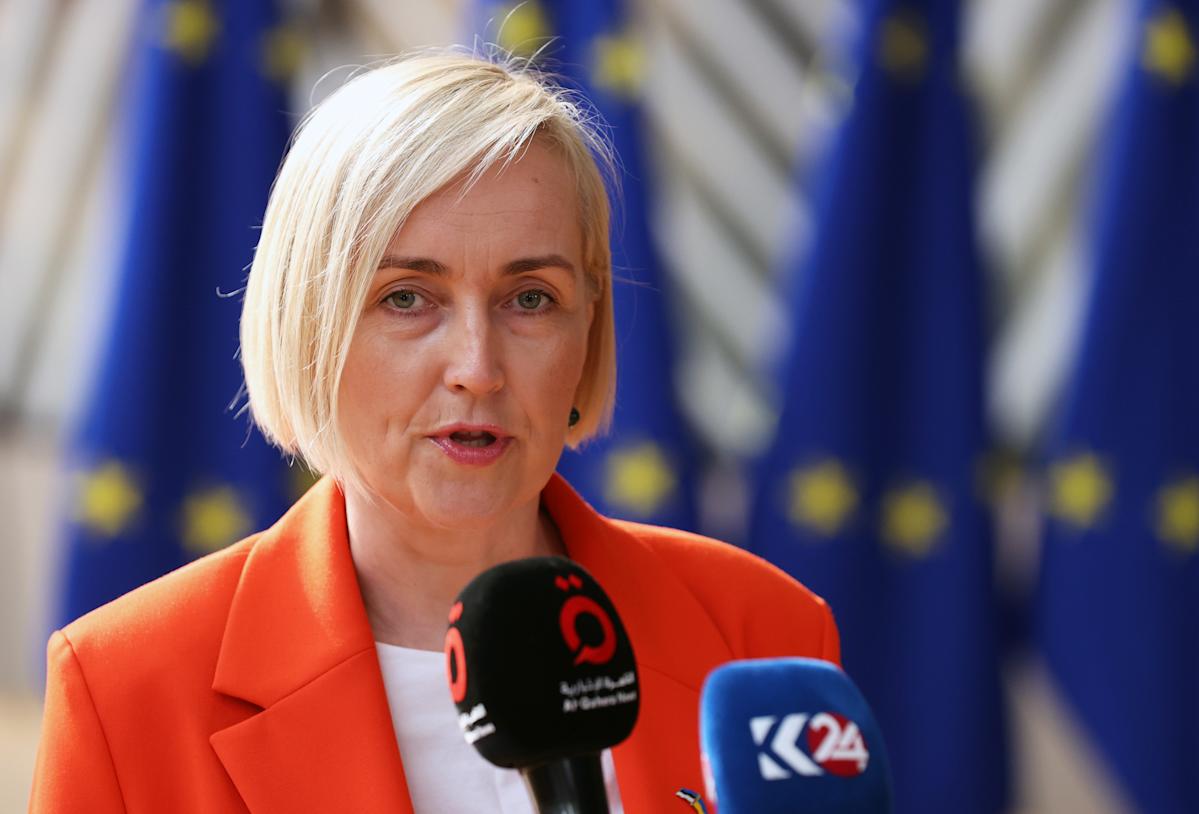
Estonia’s education minister believes these countries are coming at the very real problem from the wrong angle. “The way to approach this, to me, is not to make kids responsible for that harm and start self-regulating,” Kristina Kallas said at a Politico forum in Barcelona. She added that “kids will find very quickly the ways to go around and to still use social media.”
Advertisement
Instead, she said the responsibility lies with governments and corporations. “Europe pretends to be weak when it comes to big American and international corporations,” she added. But she called that a “pretense,” challenging the EU to “actually take this power and start regulating the big American corporations.”
Another argument against the bans is that it’s a short path from the well-meaning to a more sinister erosion of basic freedoms. In February, France suggested that the next logical step after passing an under-15 social media ban would be to go after VPNs. After all, once you pass the ban, you need to enforce it — and that can mean snuffing out the tools children could use to work around it.
Syndio’s new leadership, top row from left: Erik Darby, Shonna Waters, Devin Luquist. Bottom row: Erin McClintock, Elizabeth Temples, Manuj Bahl and Meredith Conroy. (LinkedIn Photos)
— Syndio, a Seattle startup that helps companies analyze and address pay equity, announced seven new additions to its leadership team.
“This next phase of growth requires innovation and velocity,” said Maria Colacurcio, Syndio’s CEO, adding that the new hires bring “proven track records of transforming innovative enterprise solutions into industry-defining brands.”
Several of the new hires come from BetterUp, a professional coaching and training platform. The new leaders include:
Erik Darby, president, previously co-founded Motive Software, a San Francisco Bay Area startup using AI to understand employee and customer experience that was acquired by BetterUp in 2021.
Devin Luquist, senior vice president of product, was previously at BetterUp after holding technology and leadership roles at multiple companies.
Erin McClintock, SVP of marketing, joined from Workhuman and was formerly at BetterUp.
Elizabeth Temples, SVP of revenue, joined from the revenue platform Clari and was previously at BetterUp.
Shonna Waters, SVP of executive engagement and insights, is an organizational psychologist and adjunct professor at Georgetown University, and was at BetterUp.
Manuj Bahl, VP and head of architecture, joined from Talent.com and previously held roles at Seattle-area companies Microsoft, OfferUp, Apptivate.IO and RealNetworks.
Meredith Conroy, VP of account management, joined from Clari.
Rajeev Rajan. (LinkedIn Photo)
— Rajeev Rajan joined Stripe to serve as business lead for the payment company’s Revenue and Financial Automation (RFA) division, in which he will oversee product and engineering.
“I’ve long admired the company’s focus on engineering excellence, developer experience, and its ambition to increase the GDP of the internet,” Rajan said on LinkedIn.
Rajan began his career at Microsoft, where he spent 22 years — starting as a software design engineer in 1994 and rising to corporate VP for Office 365. He went on to serve as VP of engineering at Meta, leading the company’s Pacific Northwest engineering hub, before joining Atlassian as chief technology officer. He stepped down from that role last month amid company layoffs.
Advertisement
Nick Cecil. (LinkedIn Photo)
— Nick Cecilwas promoted to chief technology officer for avante, a Seattle startup whose software helps companies reduce HR administrative workload and provides employees with an AI assistant for benefits guidance.
“What makes Nick unusual as an engineering leader is that he is just as obsessed with the customer as he is with the code. He spends real time understanding the pain our customers feel,” said Rohan D’Souza, avante’s CEO, on LinkedIn.
Cecil joined avante in 2023 as founding head of engineering. Previous roles include leadership positions at Salesforce, Tableau Software and Yapta.
— Levent Besik has joined SailPoint, an Austin-based cybersecurity company, as chief product officer. He comes from Microsoft, where he spent four years as VP of product management for the company’s identity authentication platform, covering both human and agentic AI users.
“With the rapid rise of AI, enterprises are urgently seeking solutions to secure, govern, and protect agents end to end,” Besik said in a statement. “The world demands an identity solution that provides AI security and governance across all clouds and platforms.”
Advertisement
Based in the San Francisco Bay Area, Besik previously held roles at Okta and Google. He also has an earlier chapter at Microsoft, having joined in 2002 as a software engineer working on Internet Explorer — a tenure that lasted nearly a decade.
Hélène Bouffard. (LinkedIn Photo)
— Hélène Bouffardhas left Amazon after more than 17 years, most recently serving as HR director for the Seattle company’s new Artificial General Intelligence division.
She said on LinkedIn that it was “the privilege of a lifetime” to work for the tech giant.
Bouffard is now chief people officer at Circana, a Chicago-based market research and data analytics company. Her role will include aligning employees’ jobs and skills with Circana’s AI-driven efforts.
Chris Atkins. (LinkedIn Photo)
— Chris Atkins, director of Amazon Worldwide Operations Sustainability, has resigned after 15 years with the company. In his most recent role, Atkins helped align Amazon’s fulfillment and transportation operations with its climate goals.
“For me, my time at Amazon was truly transformative,” Atkins said on LinkedIn. “I started as a night shift frontline manager working on the ship dock and finished leading ops sustainability for the world’s largest logistics organization.”
Advertisement
Before joining Amazon, Atkins served as an operations manager in the U.S. Army following his graduation from West Point. He is taking a few weeks off before starting a new role, which he plans to announce at a later date.
Jake Oster. (LinkedIn Photo)
— Jake Oster, Amazon director of energy, environment and sustainability policy, has resigned after nearly a decade. Oster joined the company in 2017, with his tenure including a stint in Belgium leading policy for AWS.
“It was never dull and constantly rewarding. Every project, document, or accomplishment was the result of collaborative work with some of the smartest people that I have known,” he said on LinkedIn. Oster didn’t indicate his next career move, saying he was taking a “quick respite.”
Prior to Amazon, Oster worked at Seattle’s EnergySavvy, a startup that helped utilities manage their relationships with customers and was acquired in 2019.
Carol MacKinlay. (LinkedIn Photo)
— Carol MacKinlay is the new chief people officer for Tanium, a Kirkland, Wash.-based cybersecurity company. MacKinlay, who is based in Carmel, Calif., joins from Pebl where she served for two years.
MacKinlay has worked as a CPO and in other human resource leadership roles for more than 20 years with previous jobs at Binance, UserTesting and Matterport.
Advertisement
— Eric Emansis now chief financial officer for Insurity, a Connecticut startup providing software for insurance carriers and brokers. Emans joins Insurity from the Bellevue, Wash.-based workflow automation company Nintex, where he was CFO for four years. He was previously CFO for Lighthouse and A Place for Mom.
— Seattle’s Remitly appointed Adam Messinger, the former CTO of Twitter (now X), to its board of directors. The global remittance company disclosed the news in an SEC filing. Messinger left Twitter a decade ago.
Stephanie Rogers. (LinkedIn Photo)
— Paper Crane Factory, a Seattle-based creative branding agency that works exclusively with startups, has named Stephanie Rogers as head of communications and public relations. Rogers will lead the agency’s new East Coast expansion and run its operations there. She joins from DataRobot and brings more than 15 years of experience in communications and PR.
“As we continue to grow, bringing in leadership across disciplines allows us to better support founders at the earliest and most critical stages — from defining their story to scaling it in market,” said Cal McAllister, Paper Crane Factory founder and creative director, in a statement.
— Barbara Schmid is leaving Starbucks after nearly 22 years, resigning from the role of Global Coffee and Cocoa Sustainability program manager. Schmid expressed gratitude to the company and colleagues in a LinkedIn in post, adding she is grateful “most of all to the coffee and cocoa producers, without whom none of this would have been possible, and who remain the reason behind it all.”
CoreWeave stocks jumped to around $97 a share yesterday (9 April). Prices have since settled at around $92.
Advertisement
“This is another example that leading companies are choosing CoreWeave’s AI cloud to run their most demanding workloads,” said Michael Intrator, the co-founder, CEO and chairperson of CoreWeave.
The US cloud compute provider is one of the prime beneficiaries of the AI race, having previously inked an expanded $22.4bn deal with OpenAI last year.
Today (10 April), Anthropic has also agreed to rent data centre capacity from CoreWeave to help train its Claude model. The multi-year agreement will bring compute online starting later this year.
Meanwhile, Meta, much like its AI rivals, has been ramping up spending to bolster its position in the race. Earlier this year, the company announced a planned spending of up to $135bn in 2026.
Earlier this week, the company’s Superintelligence Labs launched its debut product Muse Spark, a multimodal, “purpose-built” model for Meta’s own products. The model will be rolled out to several countries via Meta’s Instagram, Facebook and WhatsApp platforms, as well as the company’s AI glasses.
Besides a wealth of Fortnite skins based on Disney IP, it hasn’t really been clear what the entertainment company has gotten in return for its $1.5 billion investment in Epic from 2024. That could change this November, Bloomberg reports, when Epic releases a Disney-themed extraction shooter. The game is one of three Disney projects the publisher is currently working on, and is reportedly expected to be Epic’s comeback after the company laid off 1,000 employees in March due to a “downturn in Fortnite engagement.”
The game is reportedly similar to Arc Raiders, a multiplayer shooter where players fight for resources before escaping through an extraction point, but with Disney characters fighting enemies instead of post-apocalyptic survivors. Bloomberg writes that internal reviewers have worried that the game’s mechanics are “not very original,” but the project is the most promising of the three Epic is developing. The second title received middling internal reviews, according to Bloomberg, and Epic moved resources off the third project “after reports that Disney was disappointed by Epic’s release timeline.”
While details of Epic’s work for Disney are coming into focus, it’s still unclear whether this new extraction shooter will be a standalone game or incorporated as a mode in Fortnite. In its efforts to sell the title as a “multiverse” and a competitor to Roblox, Epic has introduced multiplegames inside Fortnite over the last few years with distinct mechanics. The developer announced that it would shut down three of those titles — Rocket Racing, Ballistic and Fortnite Festival Battle Stage — as part of its recent round of layoffs. According to current and former Epic employees Bloomberg spoke to, several affected employees were also working on these unannounced Disney games.
When it invested in Epic in 2024, Disney suggested it would build an “entertainment universe” with the developer, where players could “play, watch, shop and engage with content, characters and stories from Disney, Pixar, Marvel, Star Wars, Avatar, and more.” Epic’s current plans sound far less ambitious than that, but if they manage to increase engagement with Fortnite and Disney’s brand, that might not matter.
In short:Amazon’s satellite internet service, rebranded from Project Kuiper to Amazon Leo in November 2025, entered enterprise beta on April 8, 2026, with commercial availability targeted for mid-2026 per Andy Jassy’s annual shareholder letter. The service offers three terminal tiers delivering up to 1 Gbps for enterprise users, with Verizon, AT&T, Vodafone, JetBlue, and NASA among the beta partners. Amazon has approximately 210 to 241 satellites in orbit against a Federal Communications Commission requirement of 1,618 by July 30, 2026, has applied for a two-year deadline extension, and has contracted 22 additional launches to close the gap.
From Project Kuiper to Amazon Leo, the rebrand and the beta
Amazon received Federal Communications Commission approval for a 3,236-satellite low-earth-orbit constellation in 2020, then spent five years building the hardware, regulatory infrastructure, and carrier partnerships needed to turn that approval into a commercially viable service. The first production satellites launched in April 2025 aboard an Atlas V rocket operated by United Launch Alliance, and by November 2025 Amazon had enough operational hardware in orbit to retire the Project Kuiper name in favour of Amazon Leo, a rebrand that signals a deliberate shift from development programme to commercial product. A business preview programme opened to select enterprise partners shortly after the rebrand. The full enterprise beta launched on April 8, 2026. The following day,Jassy’s annual letter to shareholdersconfirmed mid-2026 as the commercial launch window, placing Leo alongside Amazon’s $50 billion Trainium chip investment as one of the defining bets in the company’s current capital allocation cycle. Beta customers span Verizon and AT&T in North America, Vodafone and Vodacom across Europe and Africa, JetBlue for in-flight connectivity, NBN Co in Australia, Vrio in Latin America, and NASA, along with enterprise logistics clients Hunt Energy and Crane Worldwide Logistics.
Three terminals, three speed tiers
Amazon has engineered three terminal models to address distinct market segments without forcing a single hardware compromise across all of them. The Leo Nano is the consumer and light-enterprise unit: seven inches square, 2.2 pounds, and rated to 100 Mbps download. The Leo Pro is aimed at small businesses, rural operators, and mobile backhaul deployments: eleven inches square, 5.3 pounds, priced at under $400, and rated to 400 Mbps. The Leo Ultra is the enterprise flagship, a 20-by-30-inch installation weighing 43 pounds and capable of 1 Gbps download with 400 Mbps upload, designed for maritime vessels, commercial aircraft, and large-campus enterprise deployments. Jassy claimed in his shareholder letter that Leo terminals deliver six to eight times better uplink performance and twice the downlink performance compared with the satellite internet alternatives currently available to enterprise customers, a claim that will be scrutinised closely once commercial service begins and independent benchmarks are possible.
The FCC deadline and the launch shortfall
Amazon’s FCC licence for its Generation 1 constellation requires exactly half the planned 3,236 satellites, or 1,618, to be in orbit and operational by July 30, 2026. As of early April 2026, Amazon has between 210 and 241 satellites in orbit, a figure that makes the original deadline effectively unreachable. The company filed a formal request with the FCC in January 2026 for a two-year extension, citing a shortage of available launch vehicles. Alongside the extension filing, Amazon disclosed ten additional Falcon 9 launch contracts with SpaceX and twelve additional New Glenn contracts with Blue Origin.Bezos is betting heavily on orbital infrastructurebeyond Leo itself: Blue Origin separately filed with the FCC for a 51,600-satellite Project Sunrise constellation and a 5,408-satellite TeraWave optical backhaul network, making the New Glenn launch pipeline central to multiple overlapping ambitions simultaneously. The FCC separately approved Amazon’s Generation 2 constellation in February 2026, clearing the path to a potential 7,727-satellite network once the current launch bottleneck is resolved. The contracted vehicle fleet now spans Atlas V and Vulcan Centaur (United Launch Alliance), Falcon 9 (SpaceX), Ariane 6 (Arianespace), and New Glenn (Blue Origin).
Advertisement
Taking on Starlink, and the Globalstar play
The 💜 of EU tech
The latest rumblings from the EU tech scene, a story from our wise ol’ founder Boris, and some questionable AI art. It’s free, every week, in your inbox. Sign up now!
Starlink is not a vulnerable incumbent. SpaceX’s satellite internet service generated $10.6 billion in revenue in 2025 at a 54 per cent EBITDA margin and serves more than 10 million paying subscribers across more than 100 countries, operating a constellation of 7,600 to 8,000-plus satellites.SpaceX has filed for the largest IPO in history, seeking to raise $75 billion at a valuation of up to $1.75 trillion, potentially as early as June 2026, which would cement Starlink’s position as a capital-markets-validated infrastructure business before Amazon Leo has completed its initial rollout. Amazon’s response involves two distinct moves. The first is distribution: Leo is being sold primarily through carrier partners and enterprise integrators in its launch phase, using Verizon’s, AT&T’s, and Delta’s existing customer relationships rather than competing for consumers directly. Delta has contracted Leo for in-flight Wi-Fi across 500 aircraft starting in 2028, with free access available to SkyMiles members. The second move is spectrum acquisition.Amazon is reportedly in talks to acquire Globalstarfor approximately $9 billion, a deal that would give Leo access to L-band spectrum currently anchoring Globalstar’s existing satellite network and Apple’s emergency satellite connectivity service. Apple holds a 20 per cent stake in Globalstar through a $1.5 billion investment, adding complexity to any acquisition. If the deal closes, Amazon would arrive at commercial launch with not just a new constellation but a second frequency band and an established spectrum position.The year 2025 established satellite internetas a serious enterprise infrastructure market rather than a connectivity experiment, and Amazon Leo’s mid-2026 commercial launch arrives precisely as that market enters its most contested phase.
8849 TANK Pad Ultra1080p projector accurately projects clear images from 0.5 to 4 meters
Night vision camera captures usable images even in near-total darkness conditions
Rugged chassis resists drops, dust, and water for harsh environments
The 8849 TANK Pad Ultra is a rugged Android tablet which combines a 10.95 inch FHD 1200 x 1920 display with a built-in 1080p DLP projector rated at 260 lumens.
The projector can auto-focus and project images from 0.5 to 4 meters, supported by a micro-ranging laser which helps fine-tune the focal distance.
The design is intended for outdoor use, temporary presentations, and fieldwork where a separate projector would be impractical or expensive.
Article continues below
Advertisement
Night‑Vision camera and rugged features
The 8849 TANK Pad Ultra features a 10.95 inch FHD panel, flanked by stereo speakers using a smart PA configuration and a waterproof receiver for calls.
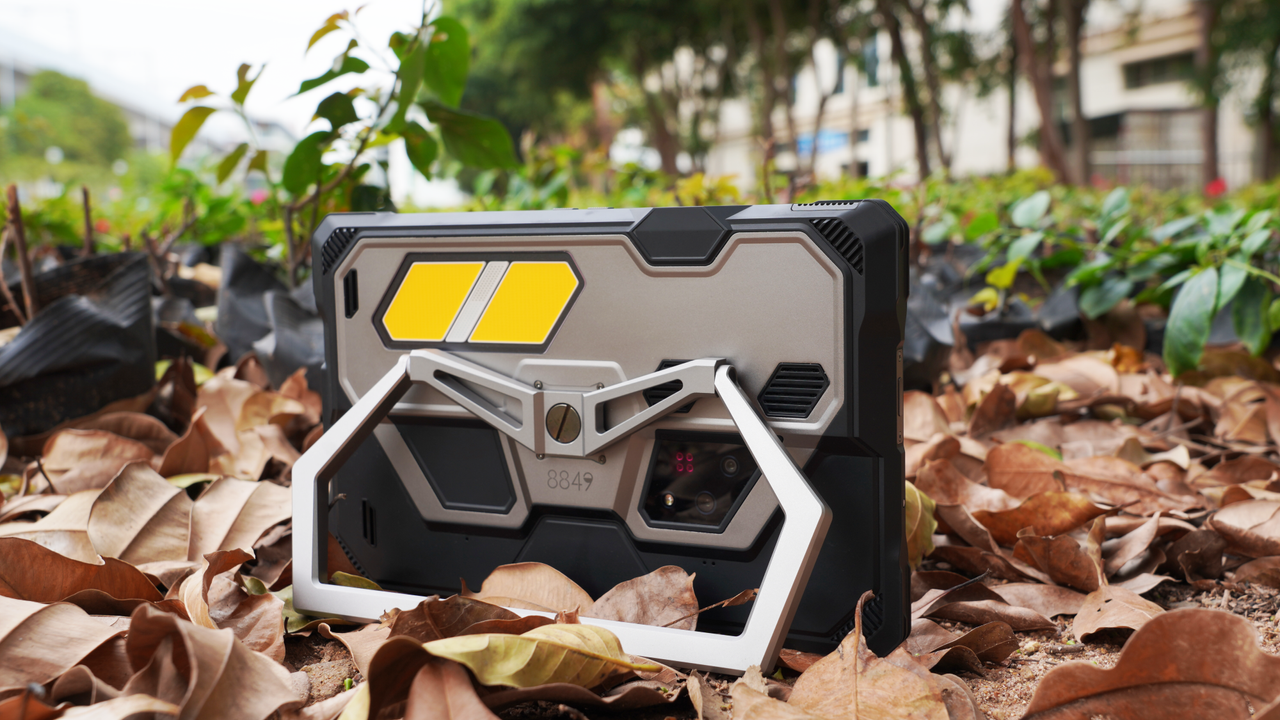
On the rear, it has the projector lens, night vision camera cluster, and a 2.5 inch-style speaker cutout, while the side and bottom edges host the charging port, PTT keys, and waterproof connector caps.
Advertisement
The tablet’s IP-rated, reinforced chassis aims to withstand drops, dust, and moisture, while the projector remains enclosed and protected when not in use.
On the imaging side, the TANK Pad Ultra stacks a 50MP rear main camera with an IMX766 sensor and a 64MP AF night vision camera using an OV64B sensor.
Sign up to the TechRadar Pro newsletter to get all the top news, opinion, features and guidance your business needs to succeed!
The night vision array adds four infrared LEDs that illuminate scenes in near-total darkness, allowing the camera to capture usable images without a visible light flash.
Advertisement
The rugged tablet also includes a camping lamp module with red and blue warning lights, magnetic modular accessories, and a 3.5mm headphone jack.
Buttons for power, volume, and two PTT keys are built into the ruggedized frame, which is designed to work with protective handheld leather covers and waterproof interface plugs.
Under the hood, the tablet runs a MediaTek Dimensity 8200 platform with 16GB of LPDDR5 RAM and 512GB of internal storage.
Advertisement
It supports 5G NR on both FDD and TDD bands, along with LTE Advanced, Wi-Fi 6, and Bluetooth 5.3, enabling fast wireless data and screen mirroring to external displays.
The device includes dual-band GPS, Glonass, Galileo, and Beidou for relatively precise location tracking, as well as NFC for reading and card mode interactions.
A 23,400mAh battery delivers long runtime, replenished over a 66W USB-C fast charging input, with the same port doubling as a reverse charging source for other gadgets.
This device also supports dual nano SIM cards plus a microSD card for additional storage expansion, and it ships with Android 15 out of the box.
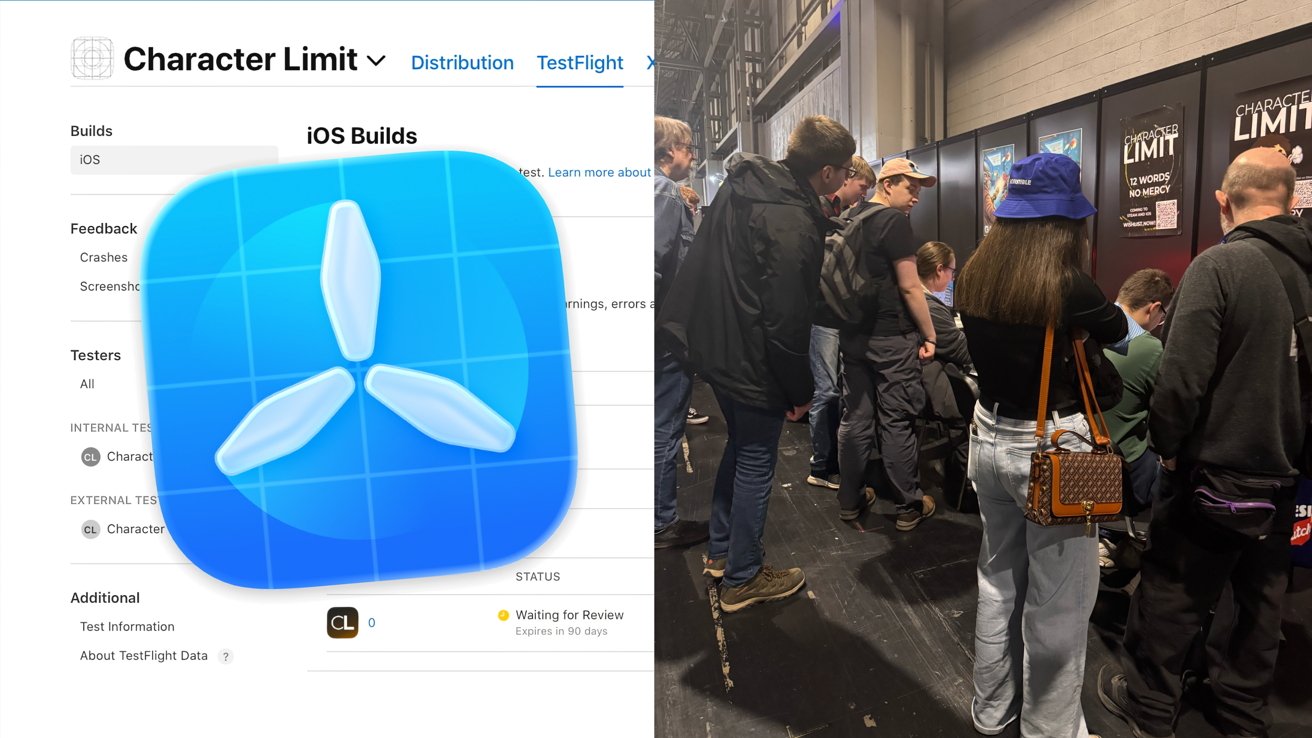
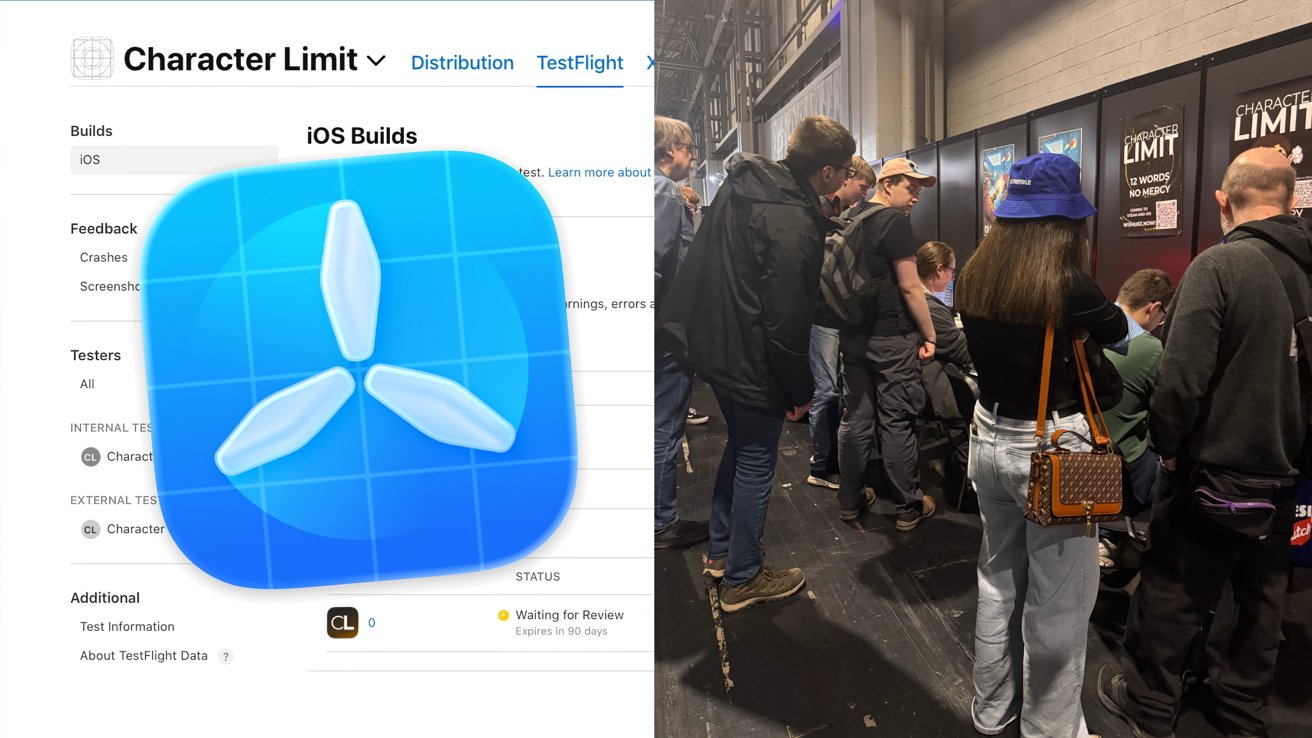
The in-development word game “Character Limit” faced testers in the last two months, but as TestFlight got underway, an unexpected game convention opportunity went especially well.
A tale of two tests: TestFlight and a gaming convention.
Back in early February, Character Limit had reached a good stopping point to get some testing done with real players. A lot of the work had been done, so now it was time to get some bug fixing and polishing done, and to get some real feedback. This previously came in the form of visits to meet other game developers in Cardiff for brief sessions. But you can only go so far in terms of feedback from a kind audience. Continue Reading on AppleInsider | Discuss on our Forums
Words have no meaning when Black Friday falls in April and lasts two weeks. Originally coined to denote the pandemonium and chaos when holiday shopping met football games after Thanksgiving, Black Friday has come to blankly mean “discounts whenever.”
And so when The Home Depot says they’ve got a “Spring Black Friday” sale going, what they seem to be trying to say is that springtime might as well be Christmas for the DIY and backyard set. It’s when you buy stuff. Except probably for yourself.
Anyway, most of this sale is not a barn-burner. But Home Depot loves a BOGO tool sale on the Milwaukee tools used and recommended by WIRED tester Scott Gilbertson. And Weber grills are $50 to $100 off, including a couple of WIRED’s favorite grills on earth.
Here are the deals WIRED is tracking on the Home Depot Black Friday Spring Sale, ending April 22. Or just check out the whole Home Depot Black Friday deals below.
Advertisement
$50 off the Best Gas Grill for Most Families
Weber
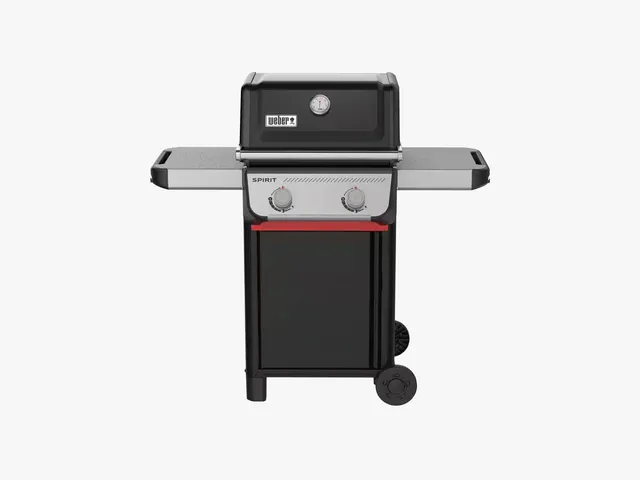
Spirit E-210 Gas Grill
For years, we’ve been recommending Weber’s straightforward 200-series Sprit grills as some of the best grills at the intersection of value and performance. The build quality is good, the cook is even, and the heat on the propane burners is easy to adjust. Like all Webers, you can build your grill’s workspace out with accessories and snap-on options until it’s tong heaven. Spirit already starts out pretty affordable, with a 10-year warranty and porcelain-coated cast iron grill grates that make for easy clean-up and clean cooks. An extra $50 off is a nice cherry on top.
But note that while a Spirit is likely all the grill you’ll ever need for a large family, grill cooks who throw a lot of parties might upgrade to the Genesis E-325 ($849) for the larger searing area and higher BTUs, added storage and prep, and the option on a top grill. That’s also on sale in April, for $100 off list price.
BOGO Deals on Milwaukee, Dewalt, and Ryobi Tools
The other thing The Home Depot likes to do is offer BOGOs on tools—in this case packaging a $200 tool with a free $200 power pack. This is, needless to say, a nice deal.
Advertisement
On the Milwaukee tool ecosystem used by WIRED reviewer and inveterate DIYer Scott Gilbertson—favored for its mix of value, durability and pure power, an assortment of tools come with a free power pack.
But these BOGos can be a bit maddening to sort out on Home Depot’s website. So I’ve done a little legwork for you. Here are the links to the BOGO deals for Milwaukee, Ryobi, and DeWalt. You’re welcome.
Steep Discounts on Ryobi Yard Tools
Longtime WIRED reviewer Parker Hall has long held the belief that Ryobi yard tools are the most most slept-on tool ecosystem for home gardeners and landscapers, from mowers to chain saws to trimmers.
Part of the reason is service: At least in our region (the Pacific Northwest), Ryobi doesn’t make you send in tools to be serviced somewhere else. They instead keep a repairman on retainer, and he comes to you and fixes your mower. This is a wonderful thing. In any case, Hall says that he’s rarely had cause to call on his repairman. He just likes to know he’s there.
A 20-year-old man was arrested by the San Francisco Police Department after allegedly throwing a Molotov cocktail at OpenAI CEO Sam Altman’s house, The New York Times reports.
In a statement shared on X, SFPD wrote that it responded to a request for a fire investigation in the North Beach neighborhood of San Francisco around 7:12 AM ET / 4:12AM PT. “At the scene, officers learned that an unknown male subject threw an incendiary destructive device at a home, causing a fire at an exterior gate.” After the man fled on foot, police found and arrested him around an hour later while responding to a business’ complaint about an “unknown male subject threatening to burn down the building.” That business turned out to be OpenAI’s headquarters and the subject happened to be the same man who threw the Molotov at Altman’s house.
“Early this morning, someone threw a Molotov cocktail at Sam Altman’s home and also made threats at our San Francisco headquarters. Thankfully, no one was hurt,” an OpenAI spokesperson confirmed in a statement to Wired. “We deeply appreciate how quickly SFPD responded and the support from the city in helping keep our employees safe. The individual is in custody, and we’re assisting law enforcement with their investigation.”
As it’s become more commonplace, artificial intelligence has also become more divisive. While more and more people continue to use AI tools, public reaction to the encroachment of the technology, whether in gaming or customer service, is increasingly negative. Altman’s warnings of AI’s impact on employment, and a recent New Yorker investigation digging into his allegedly manipulative leadership style at OpenAI, have also raised questions about the CEO’s prominent role as a steward of the technology.
Microsoft has started stripping Copilot branding out of Notepad in Windows 11, replacing the old Copilot menu with a more generic “writing tools” label. The AI features themselves aren’t going away, but Microsoft seems to be backing off the heavy-handed Copilot branding and extra entry points. Windows Central reports: As promised, Microsoft is now beginning its effort to reduce and remove Copilot branding across Windows 11, with the latest Notepad update for Insiders outright removing the Copilot icon and phrasing. Now, the AI menu is simply called “writing tools,” and maintains the same functionality as before. Additionally, Microsoft has also removed references to AI in the Settings area in Notepad. Now, the ability to turn on or off these AI powered writing tools are now listed under “Advanced features.”
This change is present in the latest preview build of Notepad which is now rolling out to all Windows Insiders. The app version is 11.2512.28.0, and you’ll know you have it if you see the Copilot icon replaced with a pen icon instead. […] For Notepad, it appears Microsoft has opted to replace the Copilot menu with something more generic. It’s still the same functionally, but it’s no longer leaning on the tainted Copilot brand. Of course, you can still easily turn off all AI features in Notepad if you don’t want them. The Verge reports that the “unnecessary Copilot buttons” are also disappearing from the Snipping Tool, Photos, and Widgets.
























































You must be logged in to post a comment Login