Connect with us

Tech

UCD NetsLab founder on the future of network security

Published

on

Its a misconception that cybersecurity can simply be added once a new technology is complete.

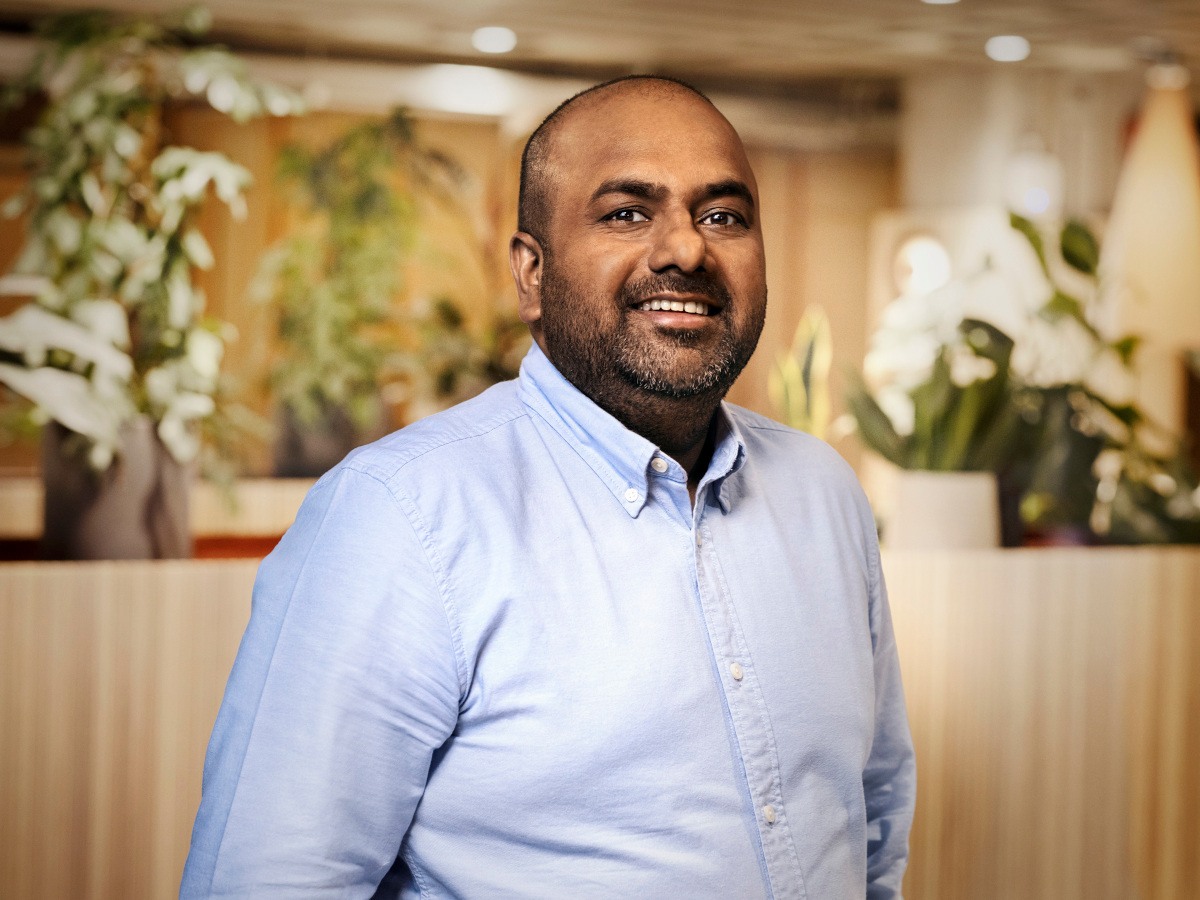
Prof Dr Madhusanka Liyanage’s work at University College Dublin involves researching how future communication networks can be secured and reinforced.

Liyanage’s academic career has taken him across the world, beginning with a degree in electronic and telecommunication engineering at the University of Moratuwa in Sri Lanka, then postgraduate courses in telecommunications engineering at the Asian Institute of Technology in Thailand and ubiquitous networking and computing at Université de Nice Sophia Antipolis in France.

Following this, he completed his Doctor of Science in Technology at the University of Oulu in Finland, focusing on scalable security in communication networks. Today, he works as a professor of network security at UCD and leads the University’s NetsLab – which he founded – where he work across the future network security.

Advertisement

“A major part of my work is also building research communities. I have supervised and mentored researchers at different career stages, contributed to international standardisation and cybersecurity activities, and worked closely with industry,” he says.

“I am particularly interested in ensuring that research does not remain only in academic publications but progresses towards technologies, standards and commercial solutions that can have a real-world impact.”

What inspired you to become a researcher?

I have loved mathematics since childhood. It was something that came naturally to me, and I particularly enjoyed solving difficult problems and finding answers that were not immediately obvious.

One experience that had a strong influence on me was representing Sri Lanka at the International Mathematical Olympiad (IMO) in Athens in 2004. It gave me the opportunity to meet talented young mathematicians from around the world and experience an international scientific community at a very young age. I have also always loved travelling, meeting people and experiencing different cultures, so that experience showed me how science could open doors to the wider world.

Advertisement

Looking back, research fits my personality very naturally. I enjoy discovering new things and working on problems where the answer is not already known. I also value the independence research gives me to choose important problems, develop my own ideas and pursue areas that genuinely interest me.

Research also combines two things I particularly enjoy: travelling with a purpose and collaborating globally. Academic work has allowed me to visit many countries, work with researchers from different cultures and build international collaborations around shared scientific challenges.

Can you tell us about the research you’re currently working on?

My main research focus is the security and privacy of future mobile networks. A significant part of this work is now moving towards AI-native security and autonomous network resilience.

Future networks will increasingly use AI not simply as an application running over the network, but as part of the network itself. AI will help networks optimise resources, detect attacks, make decisions and potentially respond to security incidents automatically.

Advertisement

I currently coordinate ‘Shield-6G’, a major European research project developing security technologies for future 6G networks. One of our ambitions is to move from networks that simply detect cyberattacks towards networks that can understand threats, assess their impact and autonomously adapt their defences.

At the same time, my research is evolving towards what I describe as sustainable security-by-design. Security mechanisms themselves can consume significant computing power and energy. For example, large AI models, continuous cybersecurity monitoring, federated learning and post-quantum cryptography can all impose additional computational and energy costs.

My current research therefore asks a broader question: How do we build 6G systems that are secure, intelligent and resilient, while also being sustainable, explainable, legally compliant and economically practical?

We are investigating areas including energy-efficient AI security, federated and distributed intelligence, explainable cybersecurity, post-quantum security, zero-trust architectures and regulatory compliance.

Advertisement

This work is very interdisciplinary. My team collaborates with researchers in AI, cybersecurity, telecommunications, distributed systems and privacy, as well as telecommunications operators, technology companies, SMEs and international research partners.

In your opinion, why is your research important?

6G is expected to become part of the fundamental digital infrastructure supporting society in the 2030s and beyond.

We are not simply talking about faster mobile phones. Future networks could support autonomous transport, industrial automation, connected healthcare, digital twins, intelligent cities, robotics, immersive applications and enormous numbers of interconnected devices.

That also means that a cybersecurity failure could have consequences far beyond losing access to the internet. A compromised communication network could potentially disrupt transportation, healthcare, energy systems or other critical infrastructure.

Advertisement

At the same time, the nature of cyberattacks is changing. Attackers can also use AI to automate attacks, discover vulnerabilities, manipulate data or target the AI models controlling future networks.

This is why I believe security must be designed into 6G from the beginning, rather than added after the technology has been developed.

There is also a question of trust. If an AI system automatically blocks a service, isolates part of a network or makes another security-critical decision, operators and users need to understand why that decision was made. Security therefore has to include not only protection against attacks but also explainability, privacy, accountability, resilience and regulatory compliance.

Ultimately, my research is about making sure that society can benefit from the enormous opportunities offered by future connectivity without compromising security, privacy or trust.

Advertisement
Tell us about your work as the director of NetsLab

I founded and lead the Network Softwarization and Security Labs (NetsLab) at UCD, with a primary focus on security and privacy for future 5G and 6G communication networks.

One thing I am particularly proud of is that NetsLab has developed into a highly international research environment and one of the world’s leading 5G/6G security research labs. Our researchers span Ireland, Finland, Sri Lanka, India and Belgium, and we work closely with both academic and industrial partners across the globe.

An important aspect of NetsLab is combining theoretical research with real experimentation. We have developed a private mobile network and a 5G/6G AI-RAN research testbed at UCD, which allows researchers to evaluate new cybersecurity and networking technologies under realistic conditions rather than relying entirely on simulations.

We also actively encourage joint experimentation with industry. Companies can work with our researchers to integrate technologies into the testbed, conduct experiments, validate cybersecurity solutions and investigate how new ideas perform in realistic mobile-network environments. This provides an important bridge between academic research and industrial deployment.

Advertisement

I also see my role as Director as being much broader than managing projects. I want NetsLab to be an environment where PhD students and early-career researchers can develop their own ideas, lead research activities, collaborate internationally, work directly with industry and, where appropriate, take their research towards commercialisation. Building researchers is as important to me as building technology.

What commercial applications do you foresee for your research?

Commercialisation is already becoming an important outcome of our research, rather than something I see only as a future possibility. NetsLab has already been the home for several start-ups.

One example is GenShield AI, where research in AI-driven cybersecurity is being translated into practical tools for testing and protecting AI-enabled systems. We are currently progressing the technology and developing products that can move beyond research prototypes towards solutions that organisations can actually deploy.

Another good example is Luxima, which shows how we can take expertise developed in AI, automation, data management and trustworthy digital systems and apply it well beyond our traditional telecommunications and cybersecurity domains. The platform uses AI to automate EU Digital Product Passports, including filling missing product and sustainability information and integrating with existing business systems such as ERP and GS1 platforms.

Advertisement

For me, this is an important example of how research expertise can cross disciplinary boundaries and be transformed into practical solutions for entirely different industries. It also demonstrates how the knowledge we develop through research can create new commercial opportunities in areas such as sustainability, regulatory compliance and digital product traceability..

Looking ahead, I see several particularly strong commercial opportunities. One is AI-based anomaly detection. Future networks will generate enormous amounts of operational and security data, making it increasingly difficult for human teams to manually identify sophisticated attacks or abnormal behaviour.

Intelligent systems capable of continuously learning what constitutes normal behaviour and detecting deviations could become an important component of future telecommunications and critical-infrastructure security.

Another major opportunity is post-quantum cybersecurity testing. Organisations will eventually need to understand whether their existing systems, devices and applications are prepared for the transition to quantum-resistant cryptography.

Advertisement

This creates opportunities for platforms that can test cryptographic readiness, identify vulnerabilities, evaluate post-quantum algorithms and support organisations during the migration towards quantum-safe systems. There are also strong opportunities around AI security testing, explainable cybersecurity, privacy-preserving federated learning, zero-trust architectures and Security-as-a-Service.

Our objective is therefore not simply to publish research. Where appropriate, I want to see our research progress through the entire innovation pipeline – from an academic idea, to an experimental prototype, to testbed validation, intellectual property, a commercial product and ultimately a technology that organisations can use.

What are some of the biggest challenges you face as a researcher in your field?

One of the biggest challenges is that the technology and the threat landscape are developing simultaneously.

We are trying to secure networks that do not fully exist yet. Researchers are currently defining 6G architectures while AI technologies, quantum computing, cloud-edge systems and cybersecurity threats are all evolving at extraordinary speed.

Advertisement

A second challenge is balancing competing requirements. The most secure solution is not necessarily practical if it introduces excessive latency, requires enormous computing resources or consumes too much energy. Future security therefore has to balance protection, performance, scalability, energy consumption and cost.

AI creates another difficult challenge. AI can make cybersecurity significantly more adaptive and autonomous, but AI systems themselves can be attacked, manipulated or deceived. If we allow AI to make security-critical decisions, we also need mechanisms to explain, audit and challenge those decisions.

Post-quantum security presents a similar problem. Moving towards quantum-resistant cryptography is necessary, but introducing new cryptographic mechanisms across billions of devices and complex communication infrastructures will be a major engineering challenge.

Finally, research in this area cannot happen in isolation. Solutions have to work across different vendors, technologies and regulatory environments. That means researchers must increasingly work with industry, standards organisations, policymakers and other disciplines alongside traditional academic research.

Advertisement
You’ve had a wealth of experience studying across universities globally. Has that shaped how you approach your research work? 

Absolutely. I have studied and worked in several countries, including Sri Lanka, Thailand, France, Finland and Ireland, and I have collaborated extensively with universities and researchers across many other parts of the world.

That experience has given me much more than academic knowledge. It has allowed me to experience different cultures, different approaches to research and different ways of working.

Research culture can vary significantly between regions. Expectations around independence, teamwork, communication, supervision, deadlines and research quality are not necessarily identical everywhere. Working in different systems has helped me understand the strengths of these different approaches and, importantly, understand the expectations and working styles of researchers and students coming from different backgrounds.

It has also helped me establish a very strong international network. Many collaborations that started through studying, visiting universities or working with researchers in different countries have developed into long-term research partnerships, joint publications, student exchanges and international research projects.

Advertisement

This experience is particularly valuable when leading a multinational research group. NetsLab includes researchers from many different cultural and educational backgrounds. Understanding these differences helps me create a more balanced team, communicate expectations clearly and provide different researchers with the type of support they need to perform at their best.

I have also learned that there is no single research culture that has all the answers. Different systems have different strengths. I try to combine the best elements I have experienced – strong scientific standards, independence, collaboration, openness, practical experimentation and international engagement.

Ultimately, working across different countries has made me a much more internationally minded researcher and has helped me build the diverse, multinational research environment that we have today.

Are there any common misconceptions about this area of research? How would you address them?

Advertisement

One misconception is that 6G simply means a faster version of 5G.

Speed will be only one aspect of 6G. The bigger transformation is likely to come from intelligence, automation and the integration of communication, sensing, computing and AI. Networks themselves will increasingly make decisions and adapt to their environments.

Another misconception is that cybersecurity can simply be added once a new technology is complete. History repeatedly shows us that this approach is extremely difficult and expensive. Security, privacy and resilience need to be considered during the architectural design process.

There is also sometimes an assumption that AI will solve cybersecurity automatically. AI is extremely powerful, but it introduces its own vulnerabilities. AI models can be poisoned, manipulated, deceived or biased. An intelligent defence system therefore also needs to be secured.

Advertisement

And finally, perfect security does not exist. The objective is not to build a network that can never be attacked. The aim is to build systems that can prevent as many attacks as possible, detect attacks quickly, understand what is happening, limit the damage and recover rapidly.

That idea of resilience will become increasingly important as networks become more autonomous.

What are some of the areas of research you’d like to see tackled in the years ahead?

One of the most important areas for me is resilience and autonomous networks.

Advertisement

Future networks will become too large, dynamic and complex to depend entirely on humans responding manually to every cybersecurity incident. I would like to see networks evolve from systems that simply detect attacks and generate alerts towards systems that can detect, understand, respond to and recover from attacks autonomously.

The important word here is resilience. It may not always be possible to prevent every attack. Future systems therefore need the ability to continue operating during an attack, isolate compromised components, reorganise themselves, recover services and learn from what happened.

This becomes particularly interesting as AI agents become part of network operations. We could eventually have networks in which intelligent agents continuously monitor the infrastructure, analyse threats and coordinate defensive actions. However, those autonomous decisions must themselves be secure, explainable and subject to appropriate human oversight.

The second major area I would like to see accelerated is post-quantum security and crypto-agility.

Advertisement

Many communication systems being designed today may still be operational when sufficiently powerful quantum computers become available. We therefore need to prepare those systems now. The challenge is not simply inventing post-quantum algorithms; it is understanding how to deploy them across enormous, heterogeneous infrastructures containing billions of devices.

Crypto-agility will be particularly important. Future systems should be able to change cryptographic algorithms and security mechanisms without requiring the entire infrastructure to be replaced. Ideally, networks should be capable of identifying cryptographic weaknesses and migrating towards stronger mechanisms in a controlled and increasingly automated way.

Beyond these two areas, I see major opportunities in AI security, privacy-preserving distributed intelligence, explainable cybersecurity, sustainable security and automated regulatory compliance.

My longer-term vision is a future communication network that is not simply fast and intelligent, but secure, resilient, autonomous, quantum-ready and trustworthy by design.

Advertisement

Don’t miss out on the knowledge you need to succeed. Sign up for the Daily Brief, Silicon Republic’s digest of need-to-know sci-tech news.

Source link

Advertisement
Continue Reading
Click to comment

You must be logged in to post a comment Login

Leave a Reply

Tech

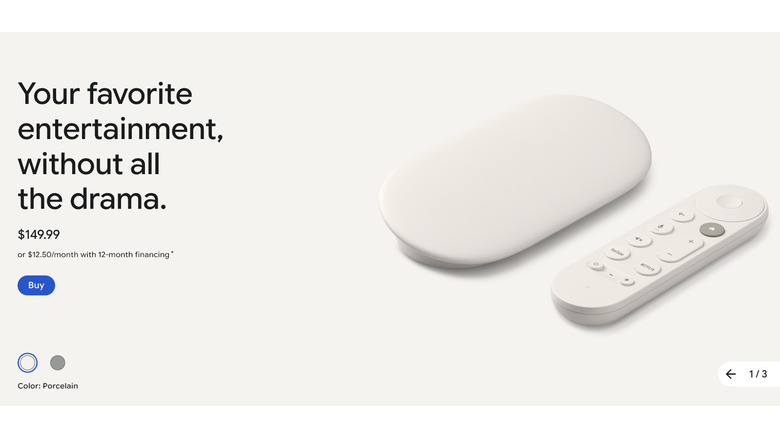
The Google TV Streamer Now Costs $150 After A 50 Percent Price Hike

Published

on

If you were planning to get the streaming device, you may want to head to Amazon right now.

We may receive a commission on purchases made from links.

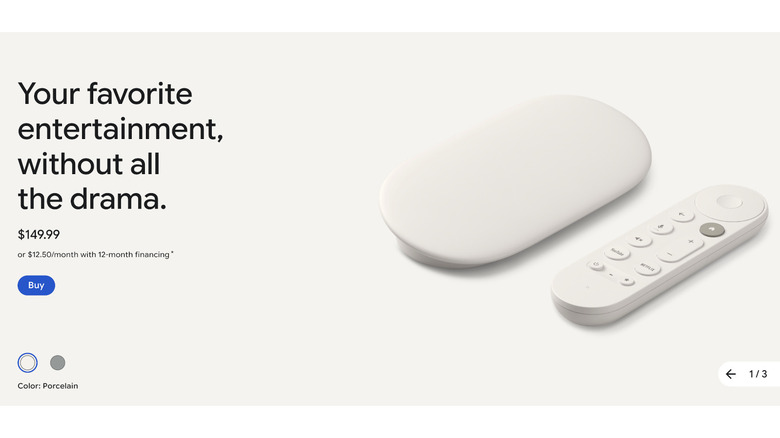
Google is now selling its TV Streamer for $150 on its online store and on retailers like Best Buy. As 9to5Google has noticed, the company has quietly raised the price of the streaming device by 50 percent. 

The Google TV Streamer replaced the Chromecast in 2024 and was sold for $100 at launch, which already cost twice as much as the 4K Chromecast at the time. It’s Engadget’s best all-in-one streaming device for 2026. We found it faster than Chromecast models and praised if for having 32GB in storage, 4GB in memory and support for 4K at 60 fps, HDR, HDR10, HDR10+ and Dolby Vision. It also supports Dolby Digital and Dolby Atmos, as well as spatial audio on the Pixel Buds Pro. 

Advertisement

Seeing as Google didn’t announce the price hike, it also didn’t reveal the reason behind it. Like other price increases across devices recently, however, it could be an effect of rising RAM prices. AI companies have been buying up most of the world’s RAM supplies, leaving manufacturers with little hardware capacity for other customers and devices. 

Of course, we could only speculate unless Google reveals the real reason behind the device’s price hike. You can still get the Google TV Streamer for $100 from Amazon as of this writing, though the website e-commerce website will likely adjust its pricing soon. 

Advertisement

Source link

Continue Reading

Tech

PayPal cuts 164 Irish jobs to ‘simplify’ operations

Published

on

Proposed redundancies are expected to take place between 7 and 21 October.

PayPal is laying off 164 of its Ireland-based workers in a now familiar Big Tech move to “simplify” company operations for long-term growth.

The layoffs represent 11.9pc of PayPal’s total full-time Irish workforce of 1,380 and includes both remote workers and on-site employees.

PayPal told Sinn Féin TD Ruairí Ó Murchú that the job cuts are part of a strategy announced earlier this year that aims to improve company operations by removing duplication and putting in place clearer reporting lines.

Advertisement

News of the redundancies was revealed yesterday (31 August) after 29 senior members of the staff, three team leaders and one manager were told they were being made redundant. The company later said that a further 131 employees, across a range of departments, would be laid off as well.

The Department of Enterprise said it received a collective redundancy notification from PayPal on 28 August, a legal requirement if a big business is considering laying off 30 or more employees. The proposed redundancies are expected to take place between 7 and 21 October, the fintech told Ó Murchú.

The layoffs come just after talks of Stripe jointly acquiring the once fintech giant for $53bn reportedly fell through. According to the tech job cuts tracker Layoffs.fyi, the latest redundancies take PayPal’s total layoffs since 2022 to more than 4,800.

PayPal has struggled in recent years to modernise against emerging rivals in the payments space, including Apple, Google and Stripe.

Advertisement

The fintech brought in HP’s Enrique Lores as its new CEO earlier this year, replacing Alex Chriss, whose work was apparently “not in line” with board expectations. But by June, PayPal had reportedly planned to shut down its venture capital arm.

PayPal’s shares have dropped dramatically over recent years as a result of the turbulent times at the company, but picked up after promising reports of a takeover by Stripe, which took its market capitalisation to $52.5bn just days ago, up from roughly $43bn in February, before dropping down to around $45bn today (1 September).

Last month, payments giant Visa cut roughly 2,600 employees, or about 7pc of its workforce in a pivot towards AI, and Etsy cut 12pc of its workforce for “flatter, faster teams”.

Medtech giant Boston Scientific said it is planning layoffs in Ireland, while 52 Ireland-based positions are expected to be cut at the Dublin-based automotive software provider Cubic3.

Advertisement

Don’t miss out on the knowledge you need to succeed. Sign up for the Daily Brief, Silicon Republic’s digest of need-to-know sci-tech news.
Source link

Advertisement
Continue Reading

Tech

DALI BASIK SUB Brings Bigger Bass to Smaller Music and Home Theater Systems

Published

on

Small loudspeakers have become considerably better at delivering convincing bass, but physics remains undefeated. DALI thinks the answer does not have to involve adding a large black box to the corner of the room.

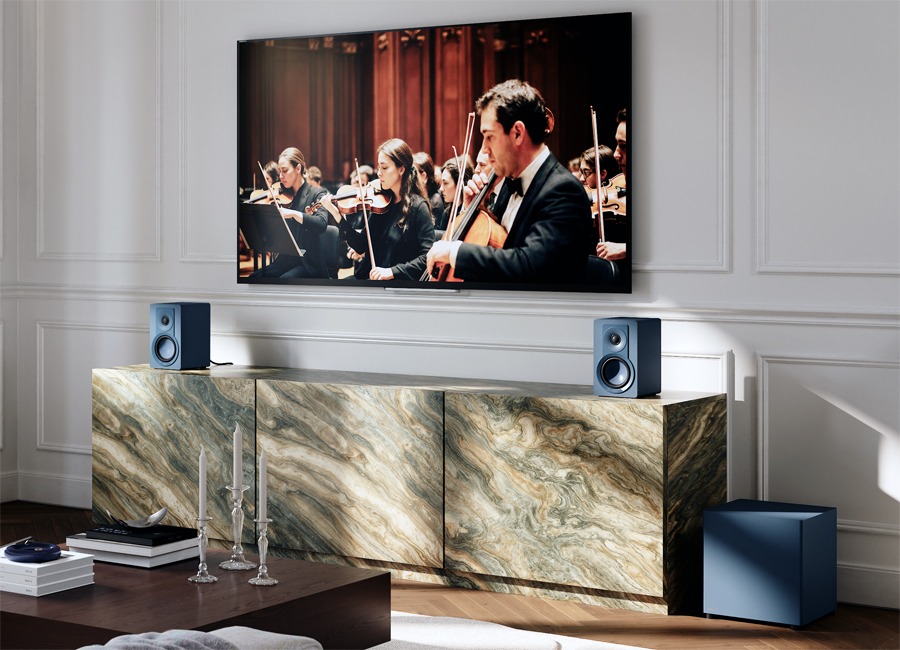
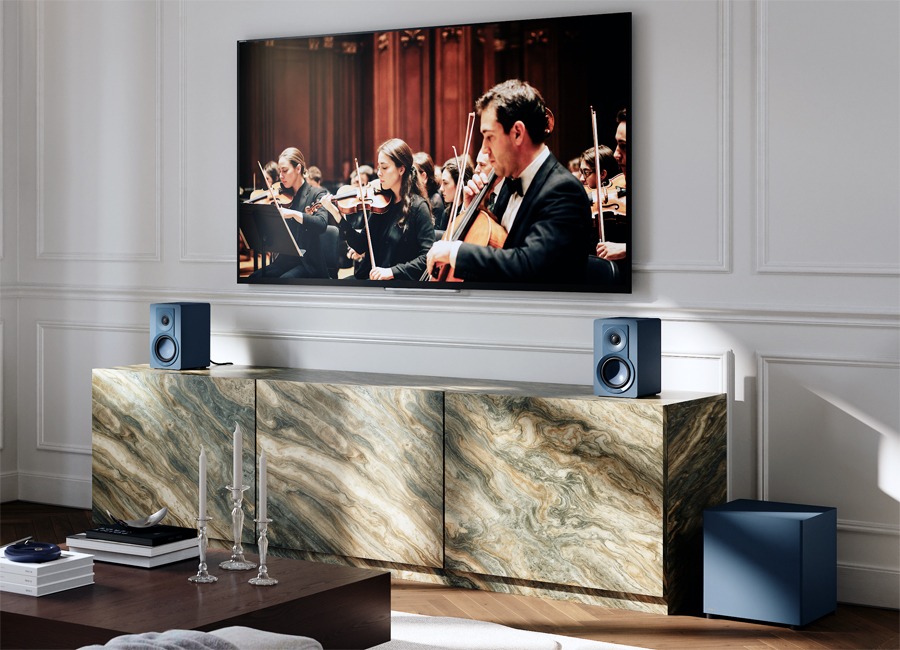
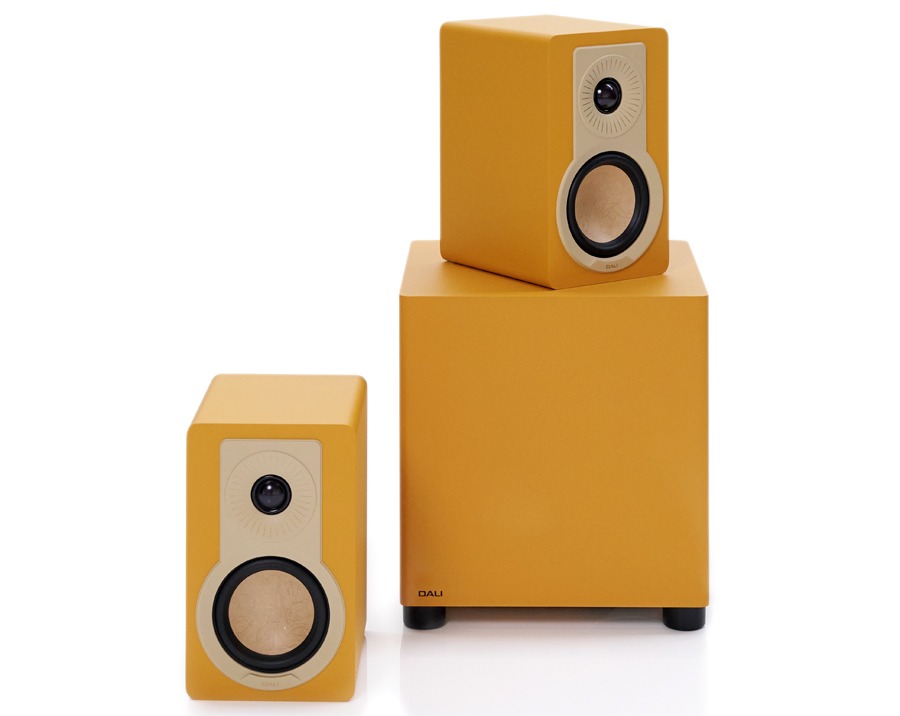
The Danish loudspeaker manufacturer has introduced the DALI BASIK SUB, a compact active subwoofer designed to add greater low-frequency extension, scale, and impact to smaller music and home theater systems. Developed as a natural partner for compact bookshelf loudspeakers including the DALI KUPID and SONIK 1, the BASIK SUB combines an in-house designed 8-inch down-firing long-stroke woofer with Class D amplification, flexible system integration, and five finish options.


DALI is also entering an increasingly competitive part of the subwoofer market. SVS, KEF, Bluesound, REL, and others have been putting considerable engineering effort into extracting deeper and cleaner bass from smaller enclosures, giving apartment dwellers, desktop listeners, and owners of compact two-channel systems far more options than they had even a few years ago.

dali-basik-sub-lifestyle

The BASIK SUB therefore has to do more than simply make a pair of small DALI loudspeakers sound larger. Its compact dimensions, down-firing driver, and unusually broad choice of colors suggest DALI is also targeting listeners who want meaningful bass extension without allowing the subwoofer to become the largest and least attractive piece of furniture in the room.

Advertisement

We’ve seen a rise in popularity of bookshelf speakers with our own award-winning KUPID and SONIK 1 speakers over the last year. This has been fueled by small, affordable streaming amplifiers and turntables which allow consumers to create a custom hi-fi system for the price of a smartphone. BASIK SUB is designed as a natural enhancement for these systems as almost all affordable streaming amplifiers and speakers feature dedicated subwoofer output and bass management features, making it possible to get the full scale and bandwidth from a compact and interior-friendly package,says Krestian Pedersen, Head of Product Management at DALI.

dali-basik-sub-kupid-speaker

8-Inch Woofer and 220 Watts of Class D Power

The BASIK SUB was developed in-house around an 8-inch down-firing, long-stroke woofer with a paper-pulp cone designed to combine low mass with rigidity for detailed low-frequency reproduction. An oversized ferrite magnet and high-flux motor system provide greater driver control, while a long, vented voice coil helps dissipate heat and reduce compression at higher listening levels. The down-firing configuration is also designed to promote more even bass distribution while providing greater flexibility with room placement.

The woofer is powered by an efficient Class D amplifier rated at 170 watts RMS and up to 220 watts peak. A switch-mode power supply helps reduce power consumption and heat generation, while a built-in dual-stage limiter is designed to protect against overload without unnecessarily compromising the signal. Gain, crossover, and phase controls provide the necessary adjustment for integrating the BASIK SUB with a wide range of stereo and home theater systems.

Compact Cabinet With Five Finish Options

The BASIK SUB uses a compact MDF enclosure available in Solid Black, Solid White, Caramel White, Golden Yellow, and Chilly Blue, allowing it to coordinate visually with DALI’s KUPID and SONIK compact loudspeakers.

Advertisement

The MDF construction provides a rigid, acoustically stable foundation for the driver, while four decoupled feet elevate the cabinet by 25 mm. This helps reduce unwanted vibration and provides the necessary clearance for the down-firing woofer.

Its compact footprint makes the BASIK SUB easier to accommodate in smaller living spaces, with placement options alongside a wall or in a corner. It is designed for both two-channel music systems and more modest multi-channel home theater setups where a larger subwoofer may be impractical.

DALI says the BASIK SUB has been engineered according to the company’s established sound-design principles, with an emphasis on clean, low-distortion bass and accurate timing.

Advertisement. Scroll to continue reading.
Advertisement

Flexible Bass Management and System Integration

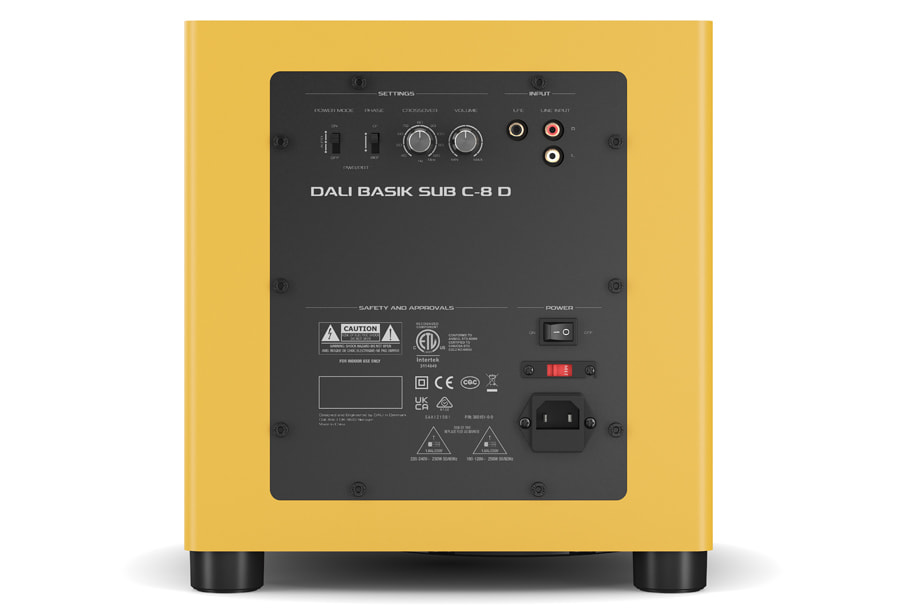
The BASIK SUB provides an adjustable crossover that allows it to be matched to different loudspeaker sizes and room acoustics when the connected amplifier does not provide its own bass management or dedicated subwoofer controls.

A continuously adjustable 0-180° phase control helps align the subwoofer’s low-frequency output with the main loudspeakers, while an independent volume control allows for final level adjustments.

Stereo LINE L/R inputs accommodate conventional two-channel hi-fi systems, while a dedicated mono LFE input provides straightforward connectivity with AV receivers, home theater systems, and streaming amplifiers equipped with a subwoofer output.

dali-basik-sub-rear-golden-yellow

DALI BASIK SUB Specifications

DALI Model  BASIK SUB
Product Type Compact Powered Subwoofer
Price (each) $800 (£429 / €500)
Driver  1 x 8-inch down-firing, long-stroke driver
Diaphragm High-quality paper pulp
Motor system Oversized ferrite magnet with high-flux motor
Voice coil Long, vented voice coil
Enclosure Bass reflex
Cabinet Construction MDF
Amplifier Class-D
Amplifier Power Output 170 W RMS
Amplifier Peak Power Output 220 W
Crossover (adjustable) 40–120 Hz
Phase adjustment 0–180°
Level Control Adjustable Volume
Inputs LINE L/R and mono LFE
Power Modes ON / AUTO / OFF
Auto Power Standby Approximately 20 minutes after signal inactivity
Standby Power Consumption 0.4 W
Power Protection Built-in dual-stage limiter
Feet Four decoupled feet
Cabinet Elevation 25 mm
Finishes Solid Black, Solid White, Caramel White, Golden Yellow and Chilly Blue
Dimensions: (HWD) 319 x 295 x 310 mm
12.56 x 11.61 x 12.20 inches
Weight 9.75 kg, 21.49 lbs

The Bottom Line 

The DALI BASIK SUB is not trying to be the subwoofer that rattles the dishes three rooms away. With an 8-inch down-firing woofer, 170 watts of RMS power, and a published low-frequency response down to 40 Hz, its priorities appear to be integration, musical balance, compact dimensions, and ease of placement.

Advertisement

That makes the BASIK SUB best suited to smaller two-channel systems built around bookshelf loudspeakers, particularly DALI’s own KUPID and SONIK 1, as well as compact streaming amplifiers with proper bass management. It should also make sense in apartments, bedrooms, offices, and modest home theater systems where extending the bottom end is more important than reproducing subterranean movie effects.

The competition at $800 is not exactly asleep. The REL T/5x ($799) also uses an 8-inch down-firing driver and is strongly focused on music systems, while the KEF Kube 8 MIE ($699.99) offers an 8-inch driver, 300-watt Class D amplifier, DSP, and deeper published bass extension for less money.

What makes the BASIK SUB different is its emphasis on design as much as performance. Five color options, compact dimensions, and finishes intended to coordinate with DALI’s smaller loudspeakers make it considerably less anonymous than the black and white boxes that dominate the category.

Whether that is enough to justify $800 will depend on how well it performs, especially with competitors offering deeper published extension at the same price or less. But for listeners assembling a compact 2.1-channel system who want better bass without turning the room into a subwoofer showroom, the BASIK SUB has a clear purpose.

Advertisement

And if Chilly Blue or Golden Yellow finally solves the spousal acceptance problem, DALI may have accomplished something decades of subwoofer engineering could not.

Price & Availability

The DALI BASIK is available through Authorized DALI Dealers for $800 in the U.S. and at £429 and €500 across Europe.

Source link

Advertisement
Continue Reading

Tech

Lachy Groom backs Indian startup aiming to keep aircraft aloft for a year

Published

on

Prominent solo investor Lachy Groom has backed a Bengaluru startup attempting an ambitious feat: keeping an aircraft in the sky for more than a year by harvesting energy from ocean winds.

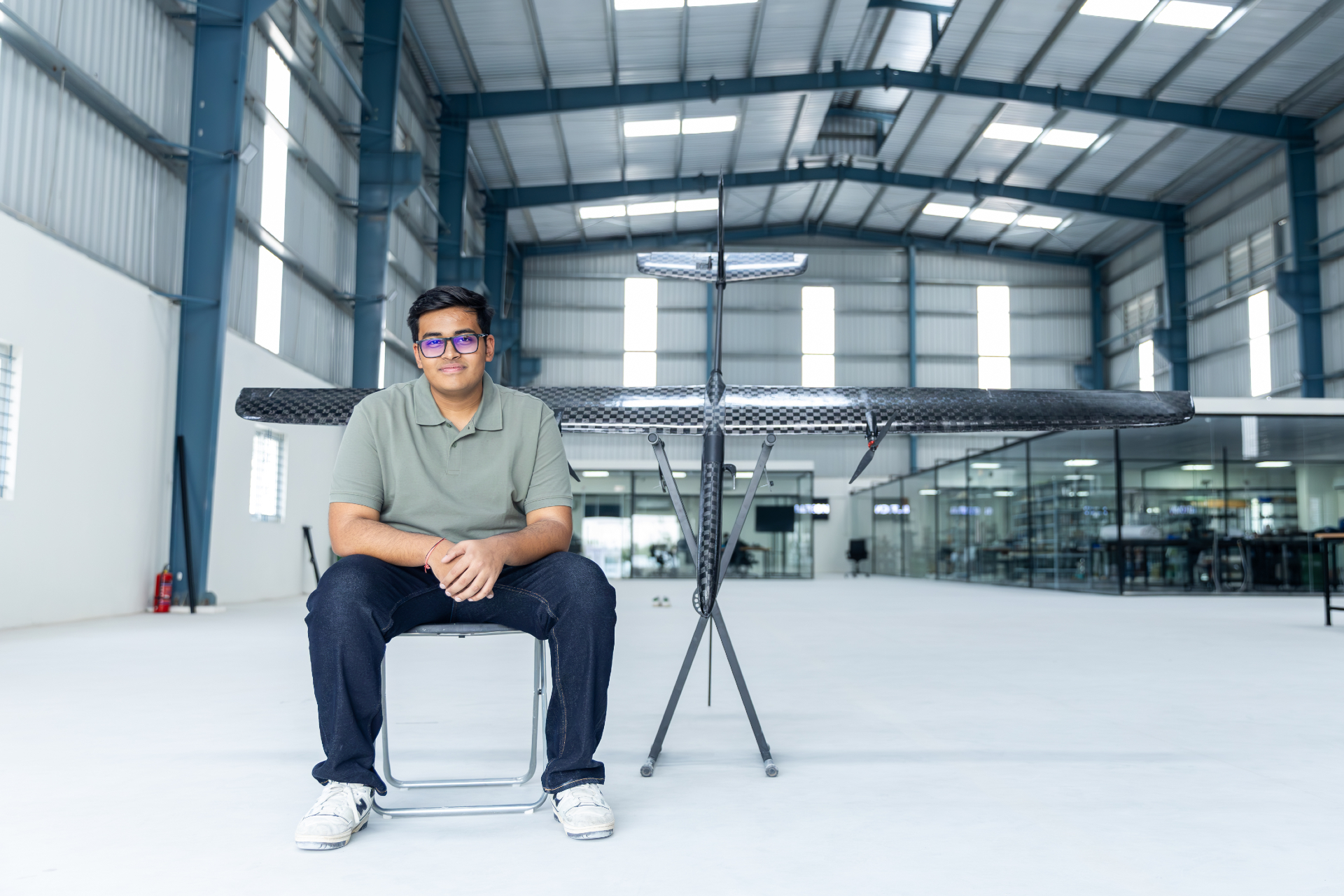
Alteon, founded by 20-year-old Samay Sanghvi, announced Tuesday that it raised $2.5 million in a pre-seed round led by Groom, with participation from Together Fund, to develop autonomous aircraft inspired by dynamic soaring, a technique albatrosses use to extract energy from the wind. Groom decided he wanted to invest within the first 30 minutes of their first meeting, Sanghvi told TechCrunch.

Conventional aircraft need to carry the fuel or battery power required for a flight. Alteon is trying to break that limitation by designing its small, fixed-wing autonomous aircraft that can extract energy from wind shear above the ocean through dynamic soaring — a maneuver in which an aircraft repeatedly moves between layers of air traveling at different speeds.

“Once you build airplanes that can stay in the air for more than a year, there are millions of things you can do with them,” Sanghvi told TechCrunch. Alteon plans to initially use the aircraft for maritime surveillance, giving governments real-time visibility into activity in their waters.

Advertisement

The initial plan is to build an aircraft with around a three-meter-wingspan that will fly close to the ocean’s surface, climb, and turn through faster-moving air, and repeat the cycle to gain energy from the wind. Eventually, Alteon plans to use its propellers as turbines to convert some of that energy into electricity and recharge its onboard batteries, Sanghvi said.

Alteon Founder Samay SanghviImage Credits:Alteon

However, the startup has not yet demonstrated that its aircraft can actually sustain flight using energy harvested through dynamic soaring. It did complete a recent of its test of its autonomous flight system over the Bay of Bengal in which the aircraft autonomously completed seven O-shaped cycles at more than 62 miles per hour, flying within one meter of the water’s surface.

Alteon’s next major milestone will be what Sanghvi calls “energy-neutral dynamic soaring.” This would allow the aircraft to fly continuously with its propulsion switched off, extracting enough energy from the wind to remain aloft.

Dr. Gabriel Bousquet, a Silicon Valley-based aerospace and robotics engineer who researched dynamic soaring during his PhD at MIT, called Alteon’s low-altitude flight over water a “promising first result.” But he noted that the harder challenge will be proving that the aircraft can reliably extract enough energy from real-world winds to sustain flight for extended periods.

Flying low enough to harvest that energy safely is particularly difficult, Bousquet told TechCrunch, as the aircraft would have to contend with turbulence, waves, spray, rain, and changing light conditions while continuously sensing and reacting to a moving ocean surface.

Advertisement

Dr. Bharath Swaminathan, who earned his PhD from IIT Madras studying the stability of dynamic soaring, said the underlying physics is well established and called Alteon’s effort commendable. Keeping an aircraft airborne for several days using dynamic soaring would itself be “a very big step, and a big achievement,” he told TechCrunch.

Swaminathan, however, added that while large-scale wind conditions may be predictable, local wind shear and turbulence can vary substantially, complicating an aircraft’s ability to continuously extract energy from the wind. Some of those challenges, he suggested, may only emerge through real-world flight testing.

Groom acknowledged the technical risk behind the bet. “Ambitious problems are always going to come with risks,” he told TechCrunch. “For me, it came down to believing Samay and the Alteon team are the ones to figure them out.”

Sanghvi began working on what would become Alteon straight out of high school in 2023, learning to build aircraft by making — and crashing — radio-controlled models before developing early prototypes. He formally founded Alteon in 2025 and received early backing from Emergent Ventures and 1517.

Advertisement

Alteon now has a team of 20 in Bengaluru and operates from a 10,000-square-foot facility. The startup is building four to five aircraft a week for testing and has conducted more than 200 test flights in the past 30 days, Sanghvi said.

When you purchase through links in our articles, we may earn a small commission. This doesn’t affect our editorial independence.

Source link

Advertisement
Continue Reading

Tech

GetGo now lets users drive its rental cars from S’pore to M’sia

Published

on

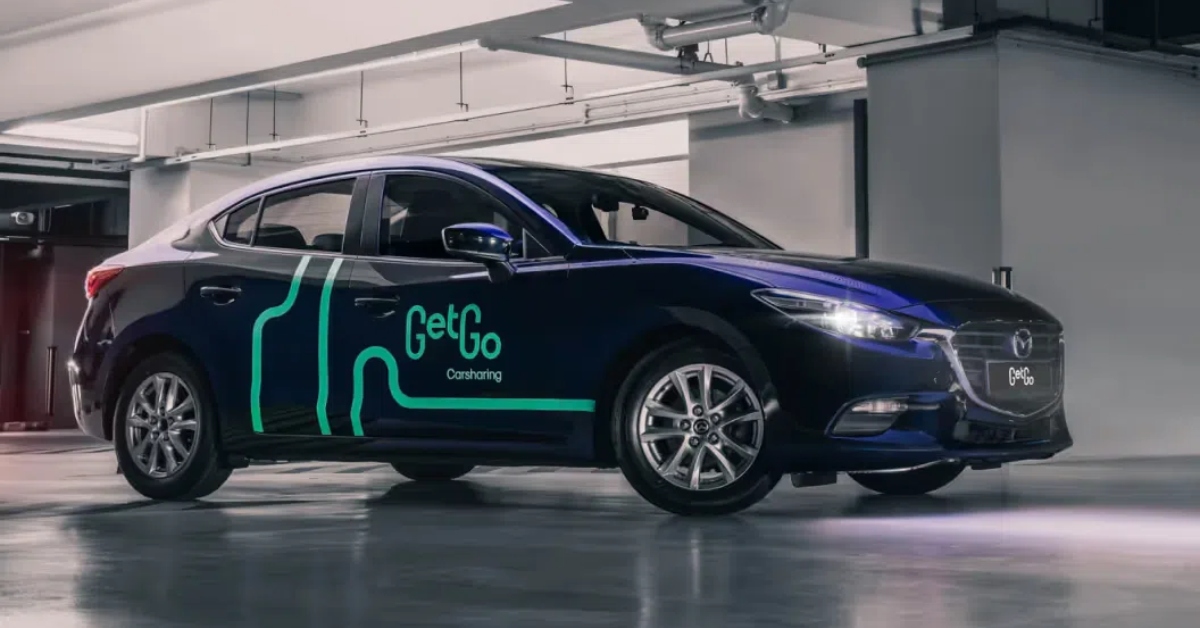
Singapore car-sharing platform GetGo announced today (Sept 1) that it has launched a new feature that lets users rent its vehicles for cross-border trips to Malaysia.

Unlike traditional car rental services, which often require a deposit and vehicle collection and return at designated rental locations, GetGo said users can book a vehicle through its app and pick it up from their nearest carpark.

There are also no mileage charges for driving in Peninsular Malaysia, regardless of the distance travelled. Instead, users will pay a cross-border surcharge that is capped based on the vehicle category and travel day.

GetGo said the total surcharge will be shown in the app before users confirm their booking.

Advertisement

“[This gives] users… visibility of what they will pay before confirming their booking in the GetGo app,” GetGo said.

For additional coverage, users can opt for collision damage waiver (CDW) or enhanced CDW plans for their cross-border trips.

They can also add a pre-registered co-driver to the booking, allowing two insured drivers to share the driving under the same insurance coverage.

The launch comes ahead of the Johor Bahru-Singapore Rapid Transit System (RTS) Link, which is expected to begin operations in January 2027.

Advertisement

GetGo currently operates more than 3,000 vehicles across over 1,700 locations in Singapore.

  • Read other articles we’ve written on Singaporean businesses here.

Featured Image Credit: GetGo

Source link

Advertisement
Continue Reading

Tech

Roland’s New Digital Piano Has Built-In Wi-Fi That Integrates With A Teaching App

Published

on

Roland just unveiled the FP-40 digital piano, which has built-in Wi-Fi. It’s not uncommon to see pianos that connect via Bluetooth, but Wi-Fi is incredibly rare. I’ve seen some instruments that allow for the inclusion of Wi-Fi adapters, but this one goes a step further. It simply connects to a home network, like any other gadget.

The primary use case here is for teaching apps and related software. Pianos with Bluetooth, like the well-regarded Casio PX-S7000, connect to proprietary teaching apps, but Wi-Fi is much faster and should offer a more seamless experience.

To that end, Roland is also releasing a new teaching app called Piano Sphere, which offers “guidance, real-time feedback and a rich library of popular songs and high-quality courses.” Users will need a smartphone or tablet to control many aspects of the app, but the piano will do some stuff all on its own. For instance, it automatically records playing history so users can review what they’ve been practicing. It also notices when a player is struggling and flashes a button to offer assistance.

Advertisement

Once paired with a mobile device, the app offers a nice visual interface in line with Casio’s Music Space. However, using Wi-Fi in place of Bluetooth should reduce lag when practicing.

There’s another benefit to going the Wi-Fi route. Both the app and piano software will update automatically. Roland promises that “new services, feature enhancements and ecosystem integrations that enrich the user’s piano experience over time.”

The piano itself also sounds pretty nifty. It features the company’s proprietary Piano Reality Sound Engine, which “captures the depth, detail and tonal character of an acoustic piano.” It includes fully weighted hammer action keys with a triple-sensor system that provides “exceptional responsiveness and natural expression.” This kind of thing is good for learners and helps eliminate the gap between digital and traditional pianos.

Advertisement

There’s a new speaker system that enhances depth in the low register, which should let people hear what they’re playing in a more natural way. The piano also includes a Bluetooth receiver, which is great for streaming music from an external source to play along with.

The Roland FP-40 is available in both black and white. It costs $750, which is thousands of dollars less than the company’s flagship models. It’s available to purchase right now.

Source link

Advertisement
Continue Reading

Tech

If hardware price squeezes make you sad, VMware says it will all end in tiers

Published

on

virtualization

Virtzilla finding more ways to pull data out of DRAM to enable ‘densification’ and dodge the RAMpocalypse

VMware is working to find new roles for its memory tiering technology, in the expectation that memory and hardware prices will remain high for years and users will therefore look for ways to put off server purchases.

Advertisement

Memory tiering moves data out of DRAM and onto another storage medium that’s fast enough that CPUs can still access info at speeds that don’t slow application performance. VMware’s implementation works by looking for “cold pages” in DRAM – chunks of memory containing data that a CPU hasn’t touched and/or won’t need for a while.

When a CPU can’t find any capacity in DRAM, it can pause operations until memory becomes available. That leaves CPUs and expensive DRAM idling wastefully when they could be churning through work.

To stop the waste, memory tiering looks for cold pages in DRAM and moves them to another storage medium – for VMware that means fast and resilient NVMe drives.

The virtualization pioneer introduced memory tiering last year in version 9 of Cloud Foundation, its bundle of products that allow users to assemble and operate a private cloud.

Advertisement

In this year’s VCF 9.1 update, VMware tweaked it to improve performance when running databases – always a key workload – and added dashboards that show users the extent of tiering activity, plus more management tools.

VMware delivered memory tiering just as the AI boom saw the price of DRAM and solid state storage skyrocket. DRAM now often costs several times more than the servers it lives in.

At the VMware Explore conference on Monday, staff technical marketing architect Dave Morera said VMware plans to support more VM types with the tech.

“We have a two-to-three year roadmap,” he said in a conference session. Some of the items on that roadmap will emerge in the VCF 9.2 release that VMware will likely debut around May 2027.

Advertisement

Morera said VMware’s memory tiering currently supports about 75 percent of workloads and wants to push that number higher by supporting Microsoft’s Radius cloud-native application platform and so-called “monster VMs” that VMware allows to run up to 960 vCPUs and 16TB of memory across several physical hosts.

One of VMware’s crown jewels is vMotion, the tech that moves VMs from one cluster to another with almost no downtime. Memory tiering currently supports vMotion, but Morera said he wants to improve performance by solving some unidentified physics problems.

Memory tiering is built into VMware’s ESX hypervisor. Using it requires NVMe drives capable of at least 100,000 writes per second, and 7,300 TB of writes across their lifetime. Another metric commonly applied to NVMe is Drive Writes Per Day (DWPD) – the number of times it is possible to completely overwrite a drive in a single day, without the device dying before its warranty expires. VMware recommends drives with a DWPD of at least three.

It’s possible to use memory tiering in a 1:4 ratio – 1 GB of DRAM and 4 GB of NVMe. VMware recommends a 1:1 ratio and claims that it can lead to applications consuming 30 percent fewer CPU cycles, and 40 percent lower cost of ownership by allowing users to “densify” their infrastructure into fewer servers. The Broadcom business unit also argues that adopting memory tiering can improve a server’s performance and therefore extend its working life, making it possible to defer hardware purchases.

Advertisement

Company execs argue that’s a win given the long lead times for servers, the high cost of DRAM, and the likelihood that server vendors will need to change quoted prices due to market fluctuations.

Of course VMware would say that, because it wants more people to implement VCF. Yet it seems VMware customers and prospects are very interested in memory tiering, as the two sessions on the topic that The Register to gather info for this story filled 500-seat conference rooms. ®

Source link

Advertisement
Continue Reading

Tech

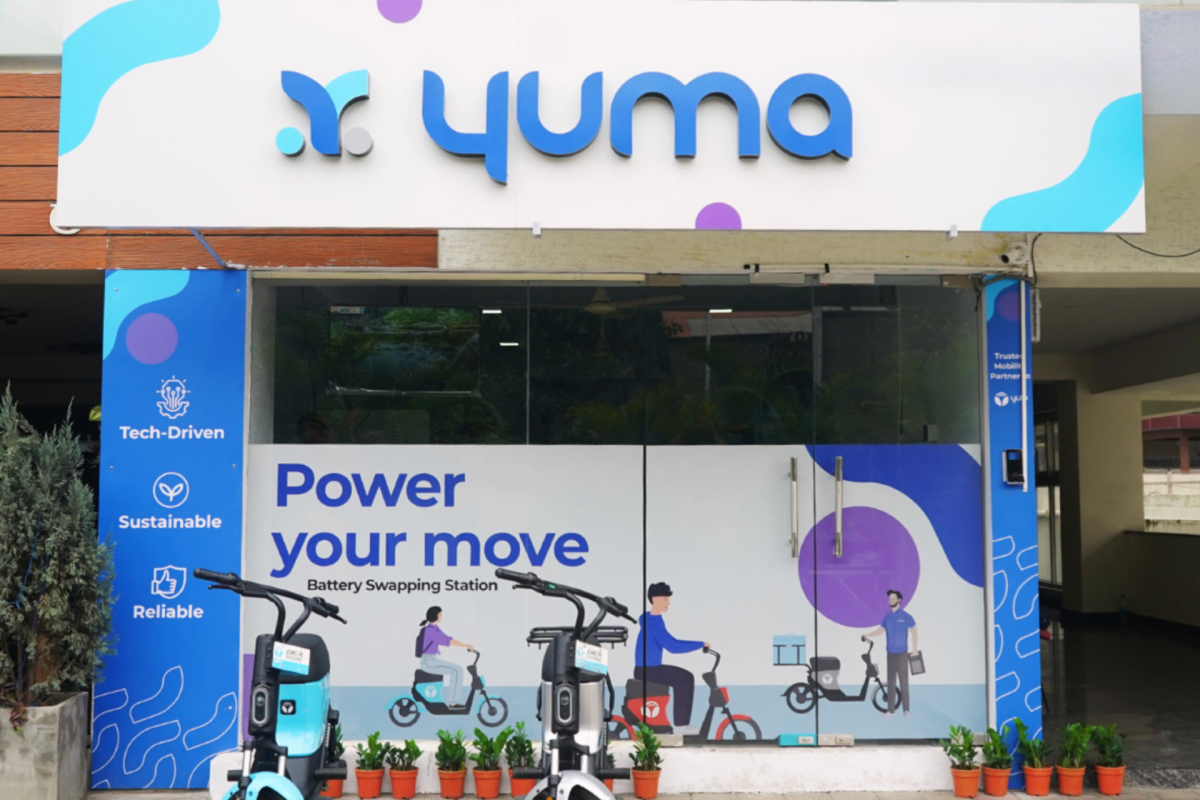
Magna increases bet on battery swapping in India with $35M for Yuma

Published

on

While battery swapping has struggled to take off in much of the world, Canadian auto parts giant Magna International believes the model could work at scale in India, where millions of two- and three-wheelers and a fast-growing delivery economy create a different set of economics.

And it’s placing that bet on Yuma Energy, a Bengaluru-based firm that operates a battery-swapping network for electric two- and three-wheelers. Yuma, which spun out of Indian mobility startup Yulu in early 2023, has completed more than 60 million swaps to date and now has about 100,000 batteries deployed across its network.

Magna is now investing another $35 million in Yuma, increasing the auto supplier’s stake from the 51% it took when the joint venture was formed, Yuma managing director Muthu Subramanian said in an interview. As a result, Yulu’s 49% stake will be diluted. Subramanian declined to disclose the new ownership split.

Yulu and Yuma are Magna’s only startup investments in India, the company confirmed to TechCrunch. In 2022, Magna committed a combined $77 million to the two businesses, with $25 million going to Yulu and $52 million to the battery-swapping joint venture.

Advertisement

Betting on India’s gig economy

Magna’s latest investment hinges in large part on India’s growing gig economy.

Delivery riders can lose valuable time, and revenue, while charging their EVs. Subramanian estimates that only about 10% to 15% of vehicles used by gig workers in India are electric today, leaving considerable room for operators such as Yuma if more of those riders switch from gasoline-powered vehicles.

“With Indian gig workers’ high runtime on a daily basis, an EV makes absolute sense in terms of cost of ownership,” Subramanian told TechCrunch. “Uptime is important.”

Yuma is targeting those high-mileage riders, arguing that swapping is more practical than fast charging. A battery, Subramanian said, can be exchanged in under two minutes, while even a 20- or 30-minute fast charge takes a rider off the road and requires more space and power to serve multiple vehicles at once.

Advertisement

However, building that convenience is expensive, as Yuma has to keep its batteries and swapping infrastructure ready before enough riders arrive to fully utilize them. “It’s a capital-intensive business, and the unit economics will play out at scale,” Subramanian said.

Yuma is not profitable yet, though some of its older swapping stations are already EBITDA-positive, Subramanian said. The firm operates more than 400 stations with over 2,500 charging units and ended the financial year in March 2026 with about ₹1 billion (about $10.5 million) in revenue. It is targeting EBITDA break-even within the next two quarters, Subramanian told TechCrunch.

Getting there will still require Yuma to build ahead of demand. The firm plans to use the bulk of Magna’s investment to expand its swapping infrastructure and double its fleet of about 100,000 batteries over the next 12 to 18 months.

Yulu still accounts for the vast majority of Yuma’s 60 million lifetime swaps, though that dependence has started to ease as about 15% to 20% of swaps in the latest quarter came from customers other than Yulu, Subramanian told TechCrunch.

Advertisement

Beyond Yulu, Yuma now serves more than five fleets and has integrated its batteries with more than 10 vehicle platforms, including models from Kinetic Green, Motovolt, BGauss, and Quantum Energy. The firm expects non-Yulu customers to account for about 25% of its swaps within the next two years, Subramanian said.

Earlier this month, Yulu raised $93 million to grow its electric two-wheeler fleet. Yuma will therefore need to expand its network to keep pace with its largest customer and accommodate newer fleets using its batteries.

Yuma operates its battery-swapping network across 18 Indian cities, including Bengaluru, Hyderabad, Mumbai, and the Delhi region, as well as Jaipur, Lucknow, Indore, Coimbatore, Kochi, and Kolkata. With the fresh capital, the firm plans to expand into Chennai and Pune in the coming quarters while adding more stations in cities where it already operates.

India will remain Yuma’s focus for at least the next 12 to 18 months. However, Subramanian told TechCrunch that the firm plans to take the model overseas as part of its longer-term roadmap. Southeast Asian markets including Vietnam and Thailand, as well as parts of Africa, could be attractive because of their large two-wheeler markets, he said, though Yuma has yet to begin discussions about entering them.

Advertisement

Unlike operators that simply run swapping networks, Yuma designs and manufactures its own battery packs and charging units. The firm makes battery packs at its facility in Chennai and charging units in Bengaluru, giving it control over both the hardware and the network that manages them.

When you purchase through links in our articles, we may earn a small commission. This doesn’t affect our editorial independence.

Source link

Advertisement
Continue Reading

Tech

DuRoBo Krono review: A fresh take on the phone-ish e-reader that aims a tad too high

Published

on

DuRoBo Krono

MSRP $280.00

Advertisement

“A great idea, but wish did more for the price.”

Pros

  • Well built and pocketable
  • Display is good
  • Flexibility of Android
  • Long lasting battery

Cons

  • Missing microSD slot
  • No cellular support
  • Software needs polish
  • A gimmicky dial
  • Bad speaker

Quick summary

Not too long ago, there was a time when Kindles were the default choice for electronic reading devices. Then came Kobo, which became fairly popular. A few upstarts also came along the way, with Onyx Boox being one of the boldest entrants in the segment. Well, Amazon played it safe with Kindle, and so did Kobo. 

These new names began experimenting with the form factor, and it started redefining what it actually means to have a reading gadget in your bag, or pocket. From a mini tablet, we reached massive slates with stylus support. And then, extremely pocketable e-readers that stick to the back of your phone. Somewhere in between, we got a whole class of e-readers that look exactly like your phone.

The DuRoBo Krono is one such device. It looks like a phone, but tries to stand out with a clever scrolling dial on the side. You get minimalist software, but it does not try to restrict you, thanks to full support for Android and the Google Play Store. It also has a few clever tricks that turn it into a neat AI-powered voice note-taker. 

The rest of the package is fine. The screen is decent for reading. The battery life is amazing. You can even look at it as a minimalist music streaming device. And it doesn’t cost an arm and a leg, either. Overall, if you are chasing a versatile device and have been dreaming of an e-reader that looks like a phone, this is a fantastic pick.

Advertisement

DuRoBo Krono design and build quality

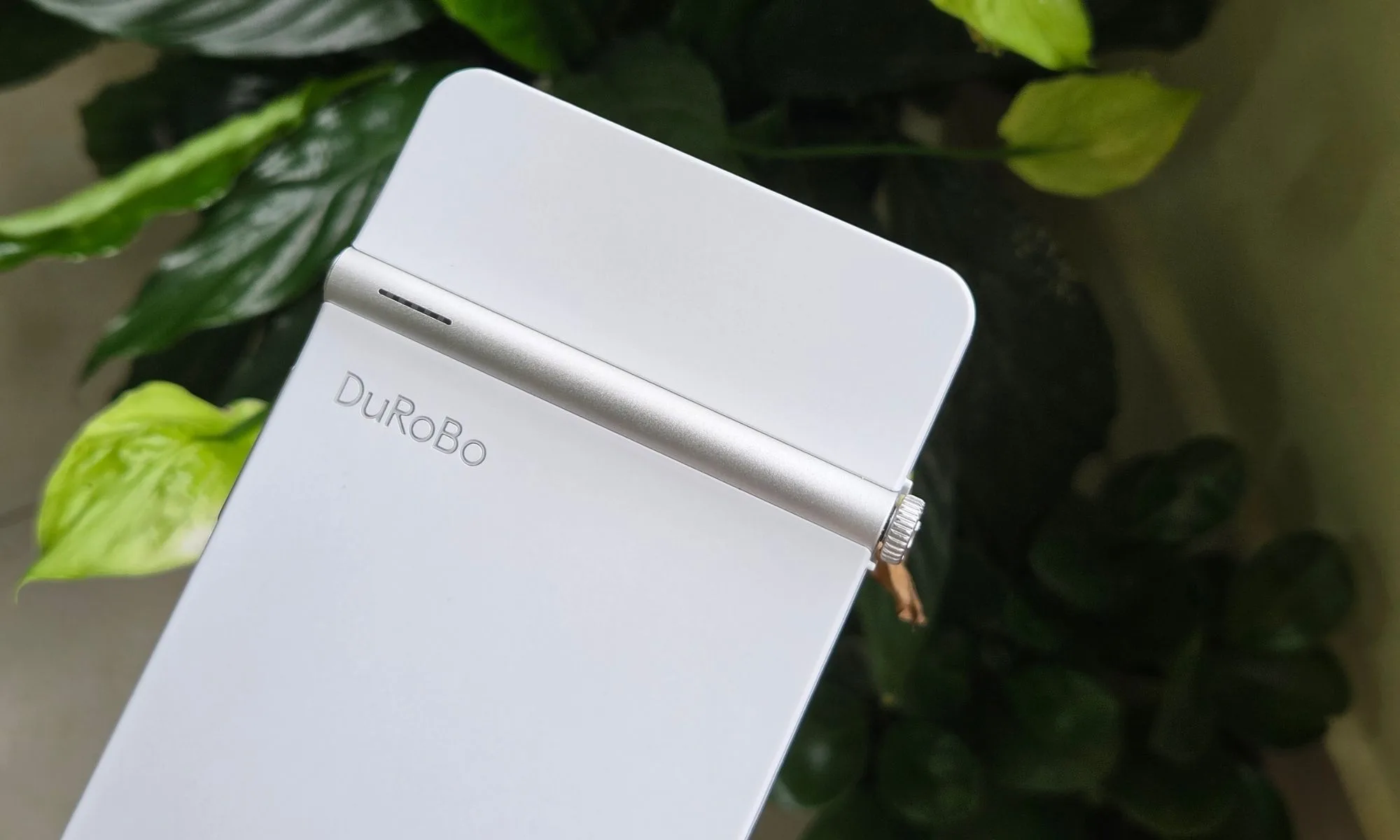
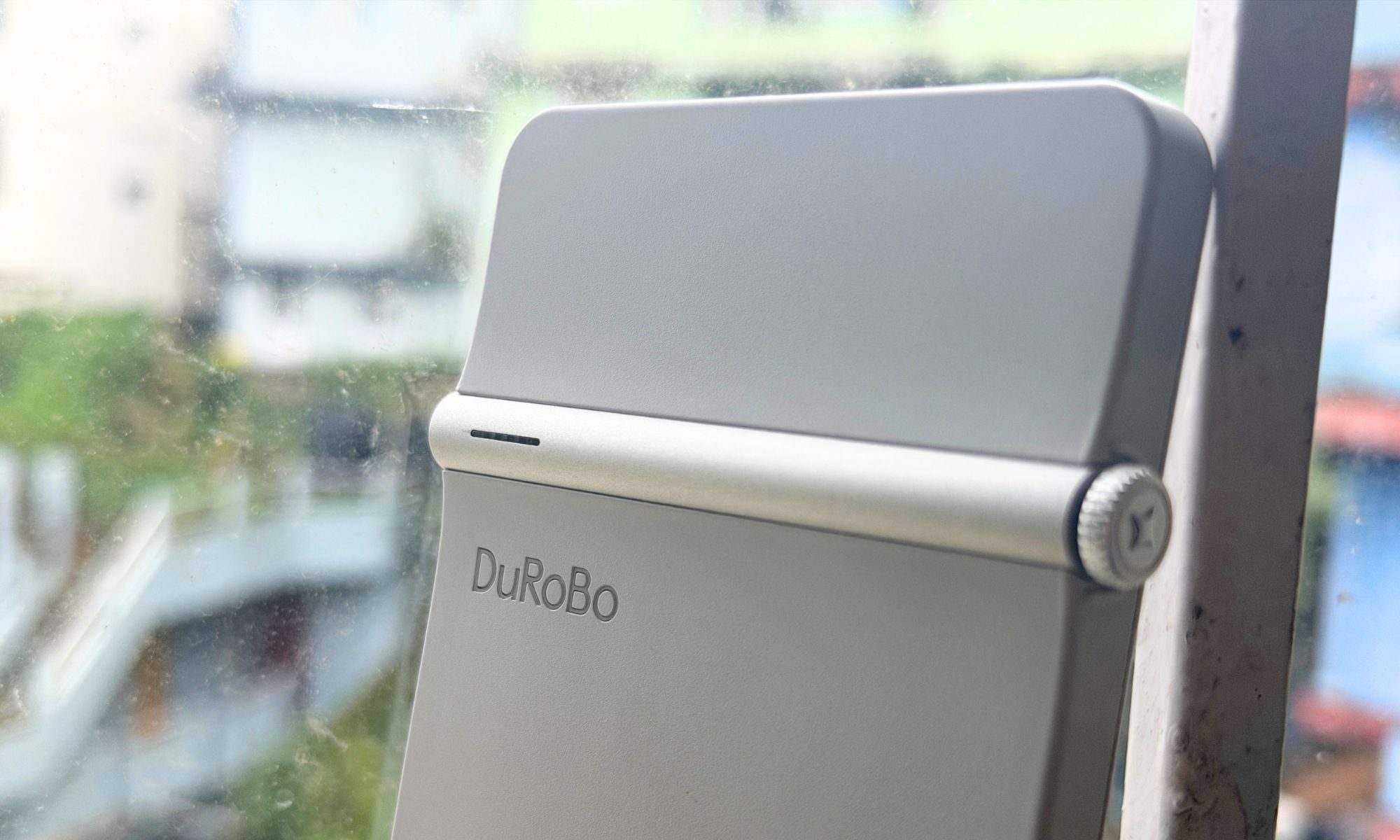
The biggest appeal here is a phone-like form factor. If you’re someone who dreads the idea of carrying a mini slate for reading and wants something that feels natural in your hands, you pick the DuRoBo Krono. It’s almost as thick and tall as my iPhone 17 Pro, but lighter than the Apple flagship.

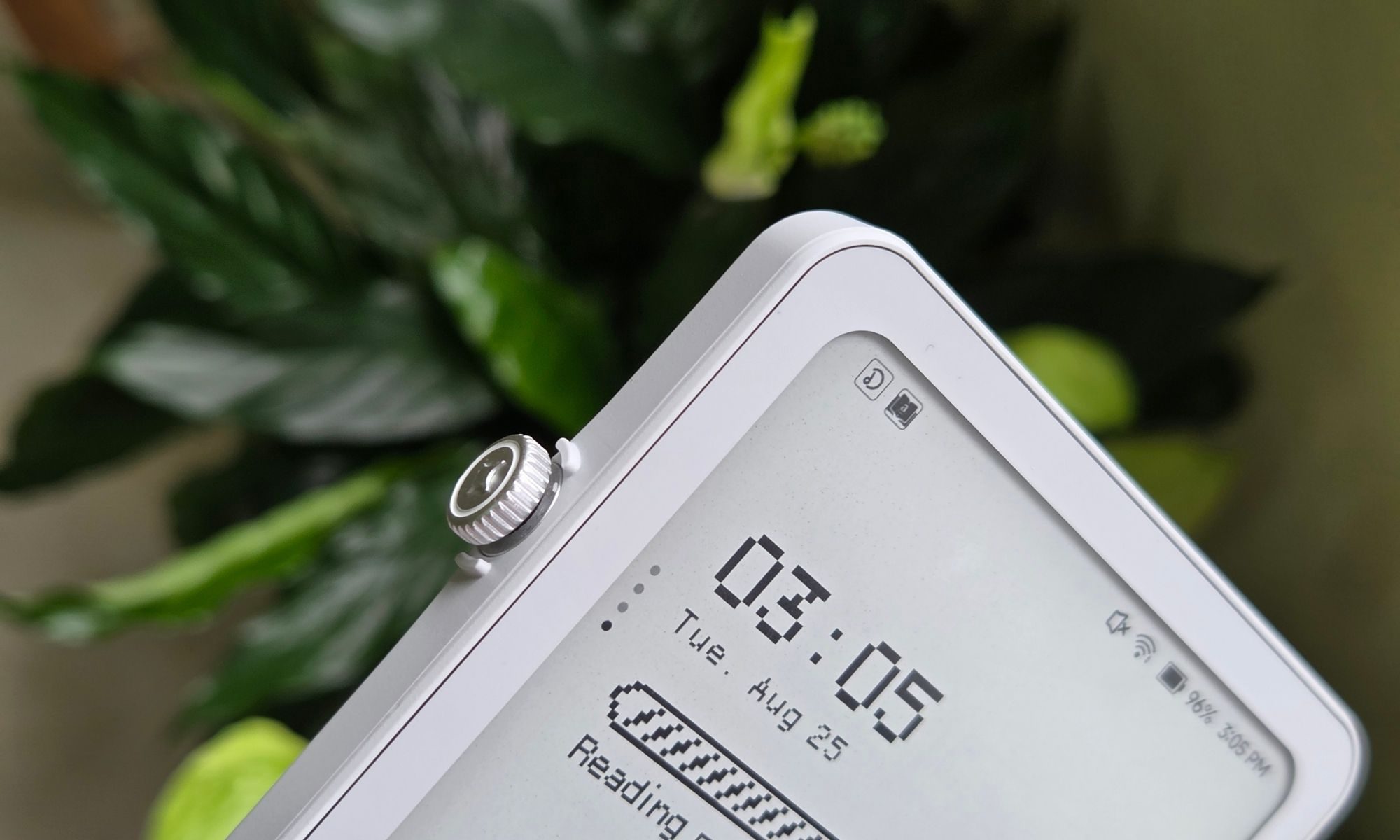
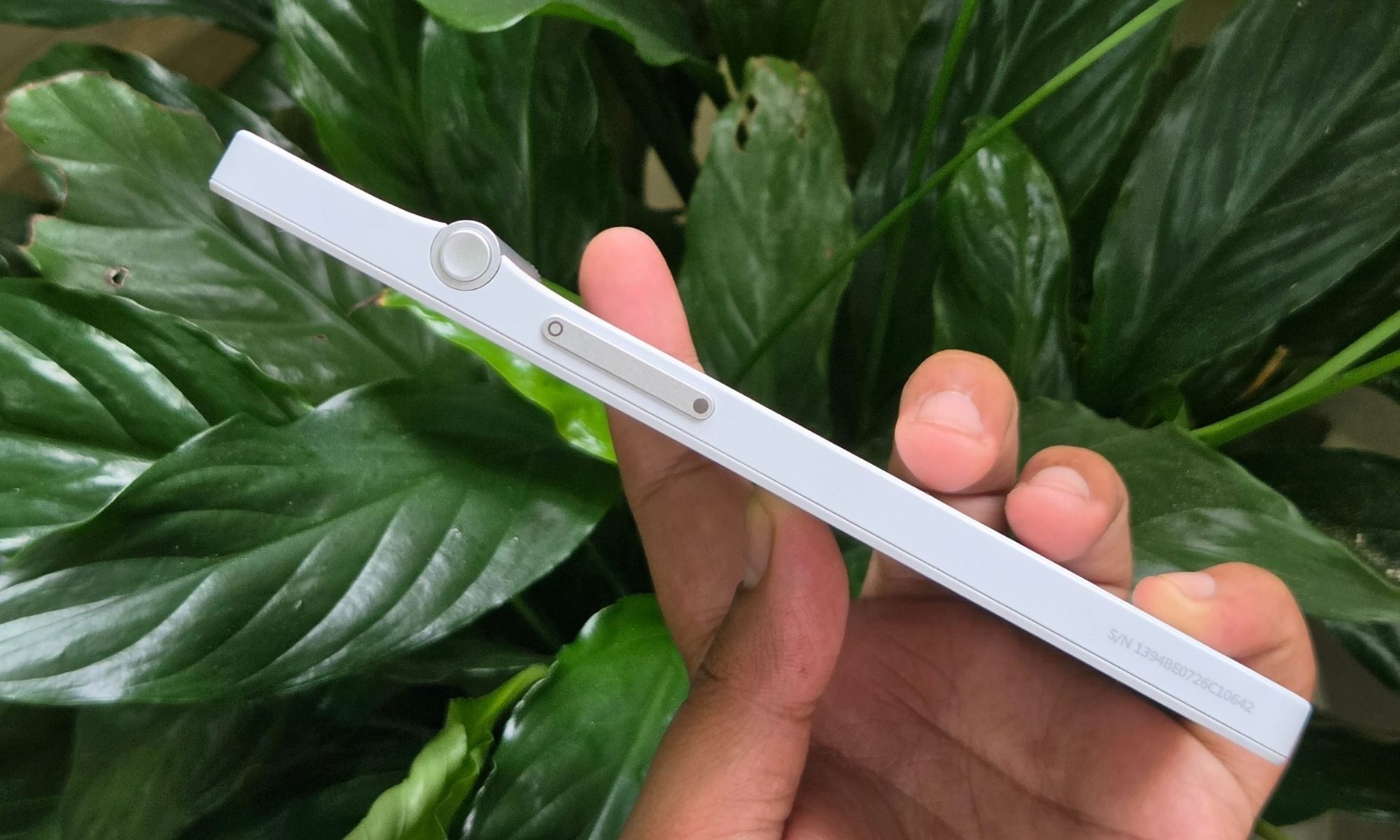
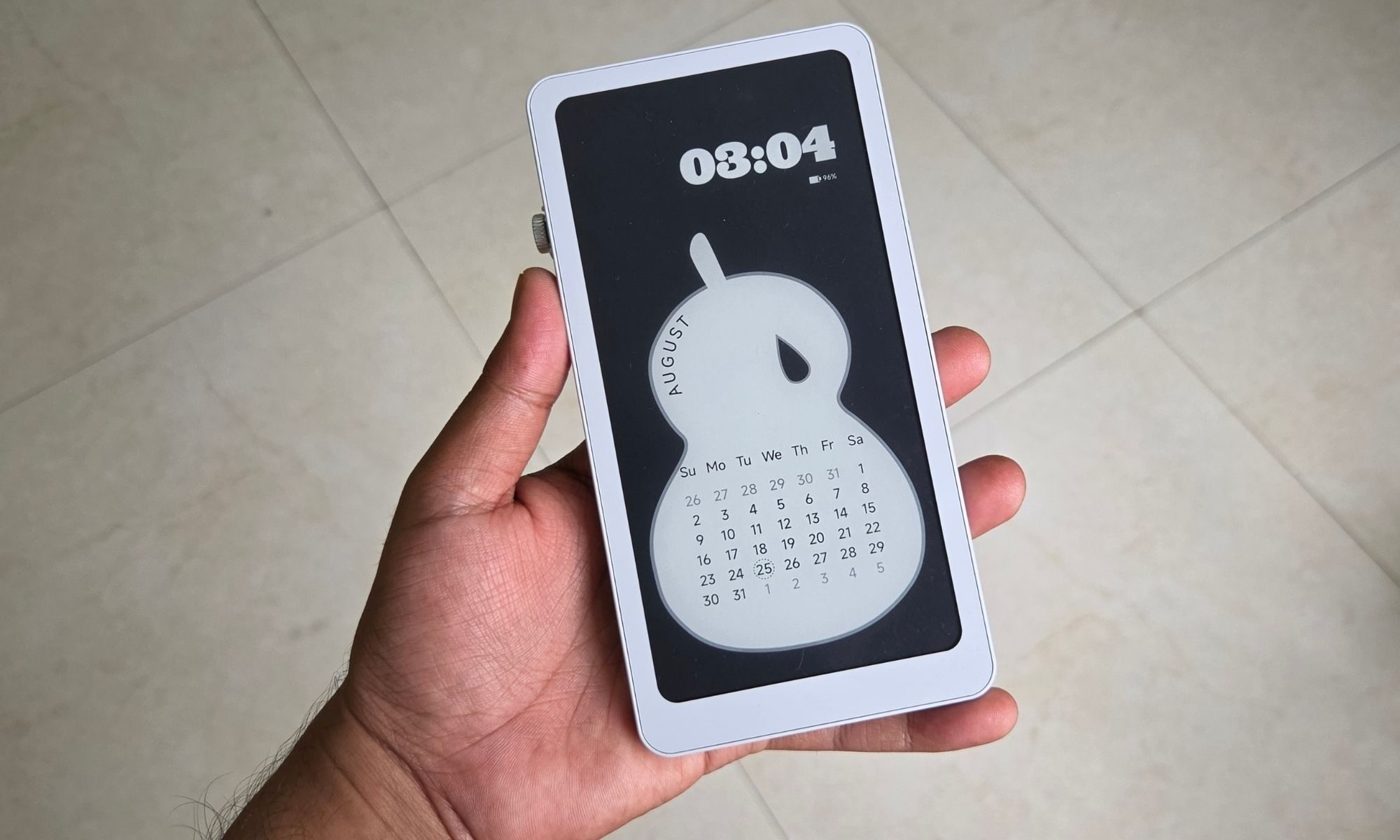
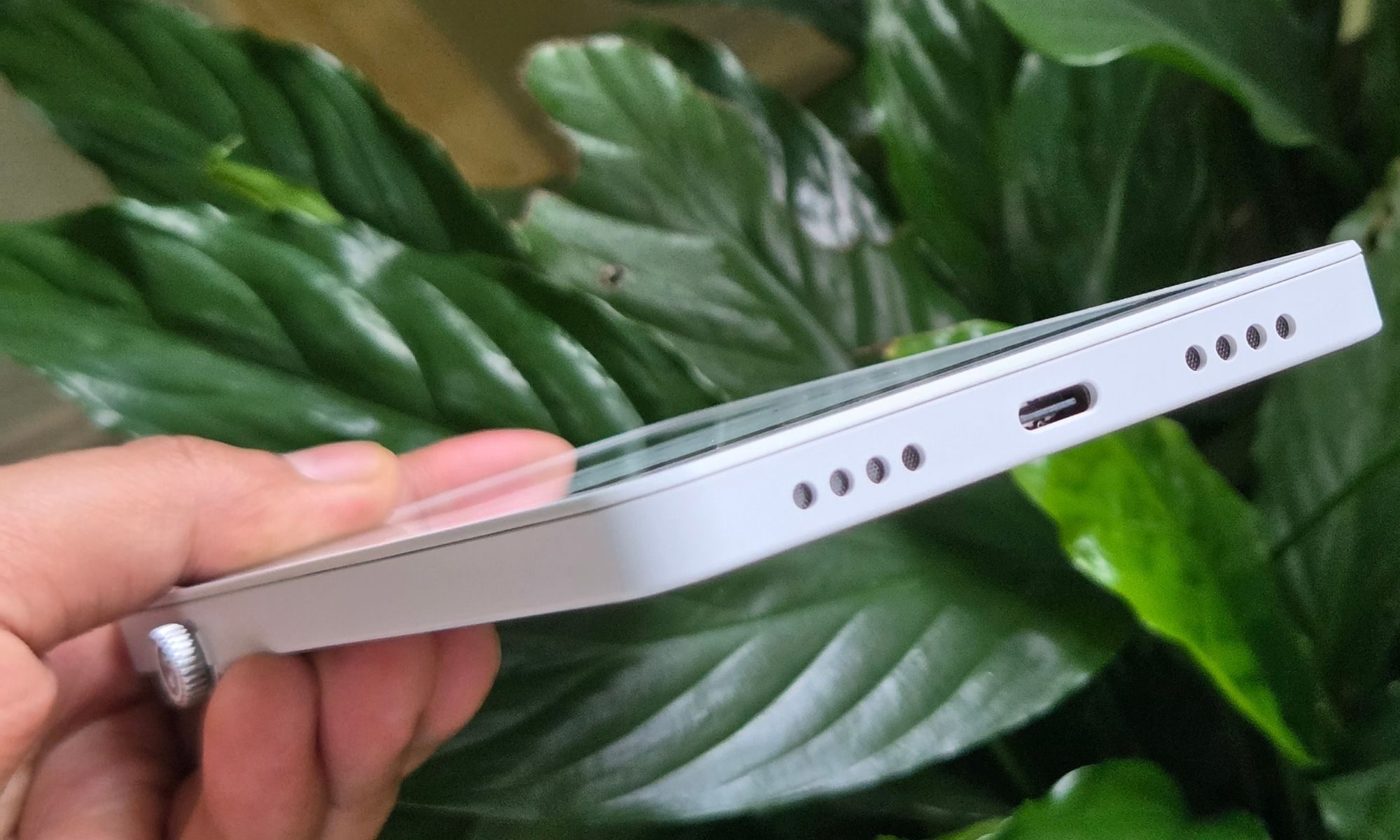
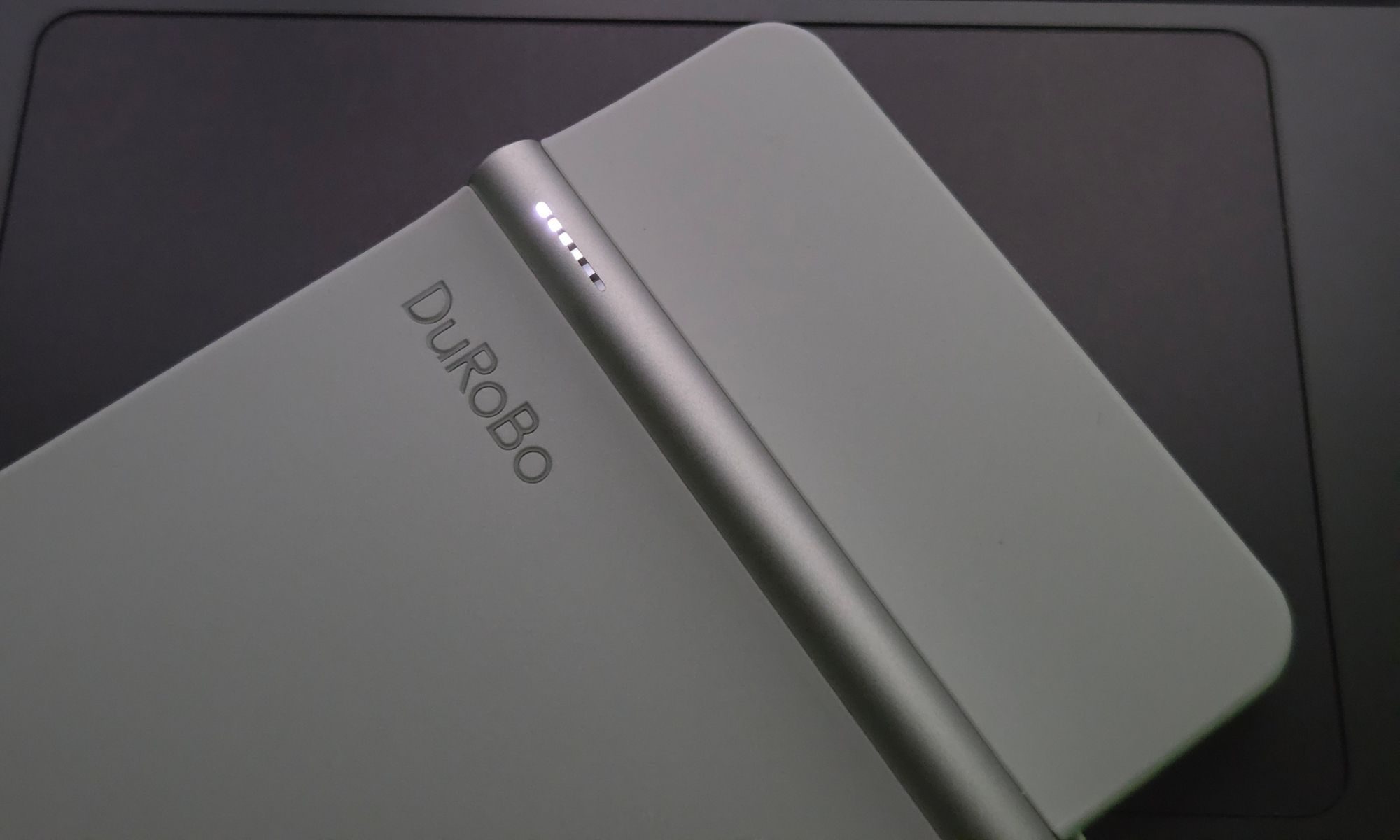
It’s a unibody shell made out of sturdy plastic, with a cylindrical metallic hump running horizontally near the top edge at the back. It looks like a metallic axis. Near the left edge, it has breathing lights, and on either end, you will find the power button and the metallic smart dial that looks like the crown wheel on the Apple Watch.

The Dial, as DuRoBo likes to call it, is pretty smart. Depending on what you are doing, it can handle volume adjustment, brightness levels, and, of course, going up and down the page you are reading. And when you long-press the dial, it enters the voice mode for the Spark AI, where you can instantly record some voice notes, while the AI helps you with transcription and even summarization.

Overall, the build quality is pretty sturdy. It doesn’t feel cheap. The plastic shell has a matte-like finish that makes the device a tad easier to grip, and it doesn’t get smudged either, especially if you have sweaty palms. What really grinds my gears is the thick bezels upfront, but we’ll get into it later. 

The position of the smart dial is also pretty thoughtfully executed. If you’re a right-handed person, depending on the size of your palms, you will have either your middle finger or your index finger within a comfortable reach of the dial for scrolling the page or adjusting the backlighting levels. And if you are left-handed, your thumb is naturally resting on the dial, and you don’t have to readjust the device in your hands.

The big appeal, as I mentioned earlier, is to have a device that is pocketable and doesn’t make you stretch out your palms, or make them hurt after an extended reading period. Nothing feels more natural than a smartphone in your hand, and that’s exactly what the DuRoBo Krono is after. It feels like a secondary phone in your pocket, and to a large extent, also works like it. 

Score: 8/10

Advertisement

DuRoBo Krono display 

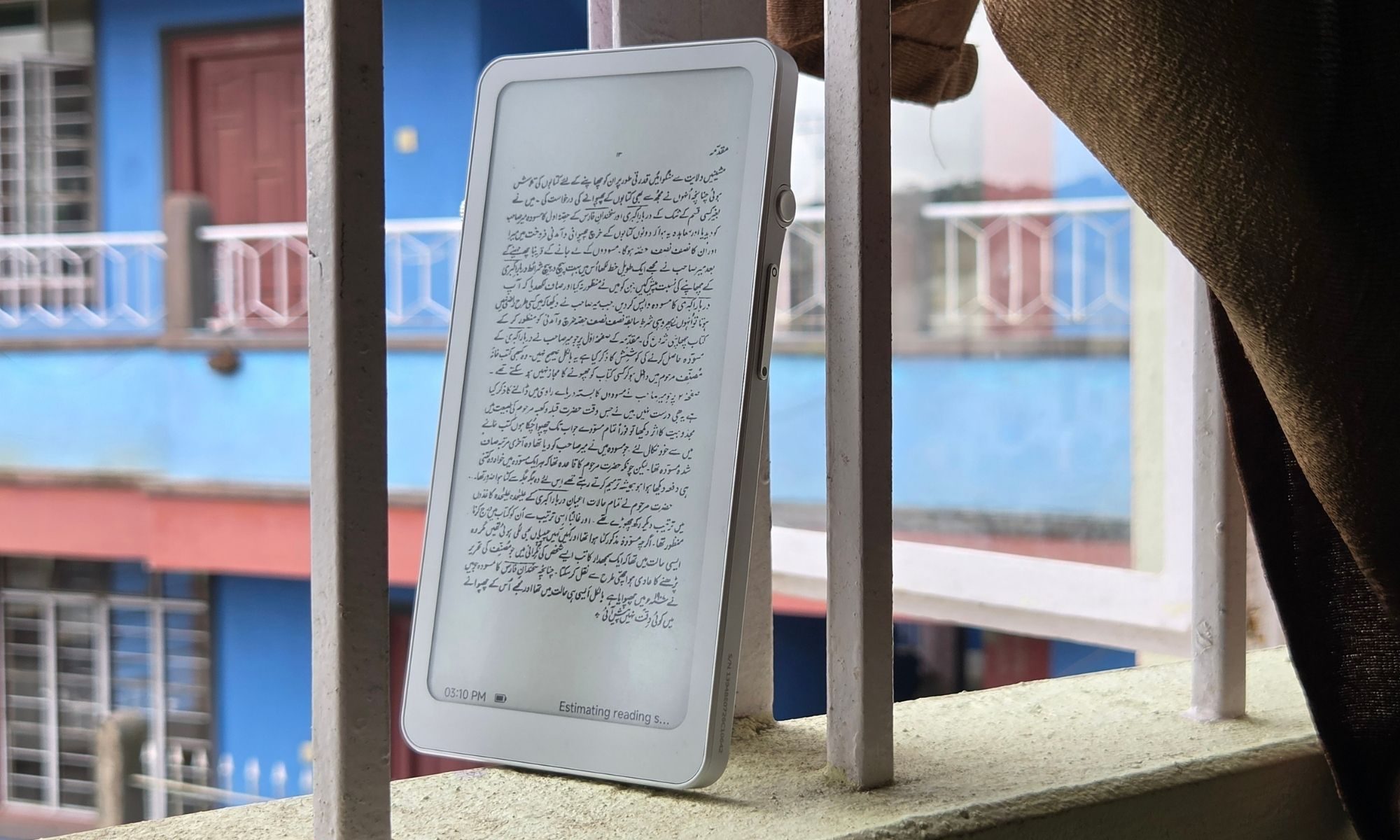
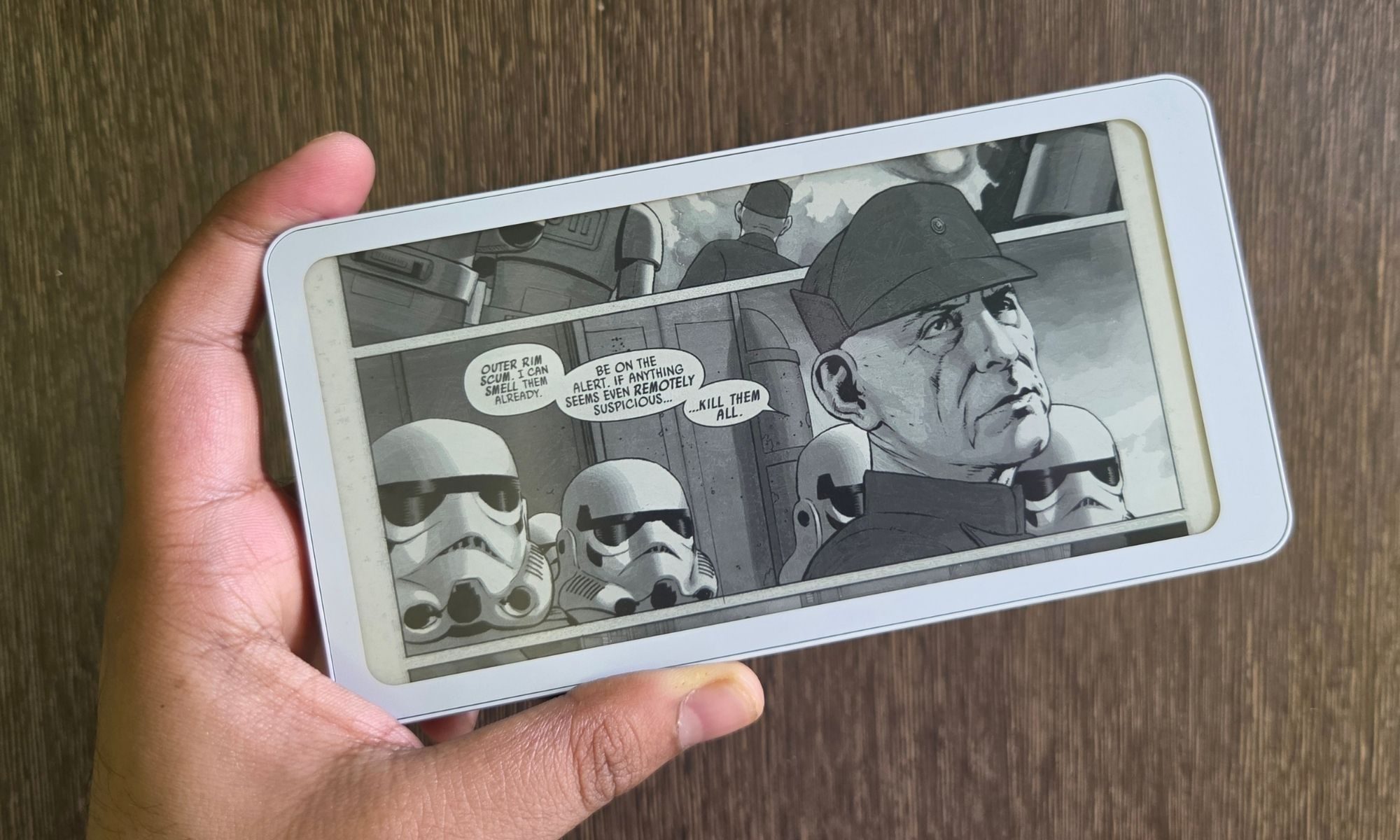
Running the show on the DuRoBo Krono is an E Ink Carta 1200 HD display, which measures 6.13 inches across and offers a resolution of 824 x 1648 pixels, which translates to a pixel density of 300 ppi. That’s plenty of sharpness for reading text. And even if you fire up the occasional picture book and have the display quality set to quality or clarity modes, you won’t struggle with making out what’s on the screen.

As you switch to a new frame or have enabled the speed preset for scrolling pace, the transition will make those images look like a sea of black and gray dots, with plenty of shimmering to go with it. But overall, for reading, I have no complaints. During daytime or even in rooms with dim light, I barely ever felt the need to turn on the front light. With the brightness level set to zero, you get a pristine white canvas that tries to ape the look of real paper.

If you’re a night owl and prefer to read in the dark, the front light comes in handy. What I appreciate the most is that you can adjust the temperature of the screen, taking it from a bright white color to an amber shade that is a lot more comfortable to gaze at for binge reading. The only issue is the refresh rate, which is something no commercially available e-ink device has managed to figure out at the hardware level. 

So, when you’re reading an article or a book, and have shifted the pages to scrolling mode instead of the traditional slide-based page view, the scrolling animations are smooth, but as you try to zoom in and zoom out, you feel that visual jitter very clearly.  There’s no escaping that. 

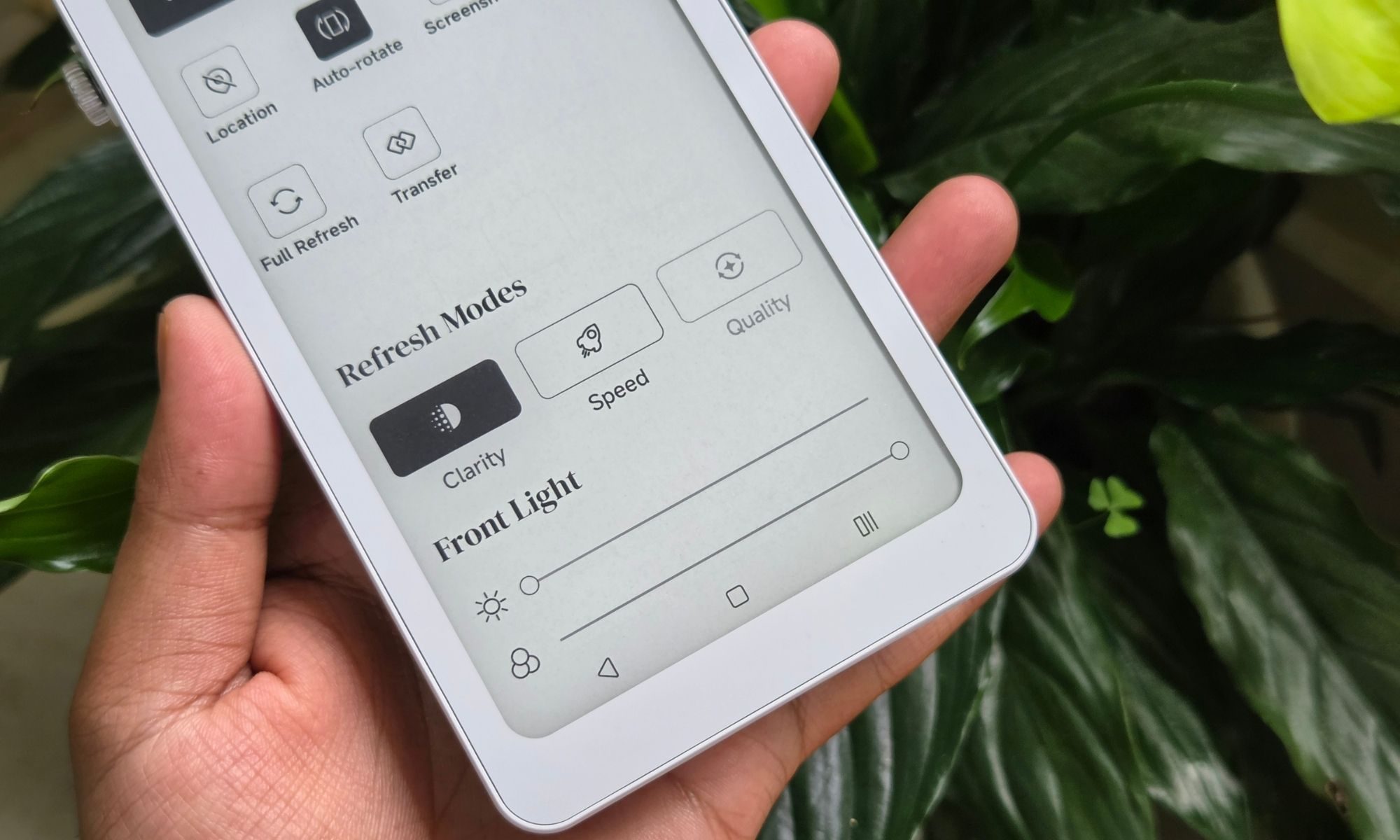
For reading books or any text-first content, I would suggest sticking with the speed preset because the scrolling is a lot smoother, and you don’t see any text shimmer. Furthermore, if you switch to the quality or clarity preset, it doesn’t actually create any difference in the visual quality of the text appearing on the screen. It will only make the interactions feel unnecessarily slow. 

I got the job done by sticking to the speed mode. But there is a bit of an odd hiccup, and I blame it on the software rather than the hardware.

Advertisement

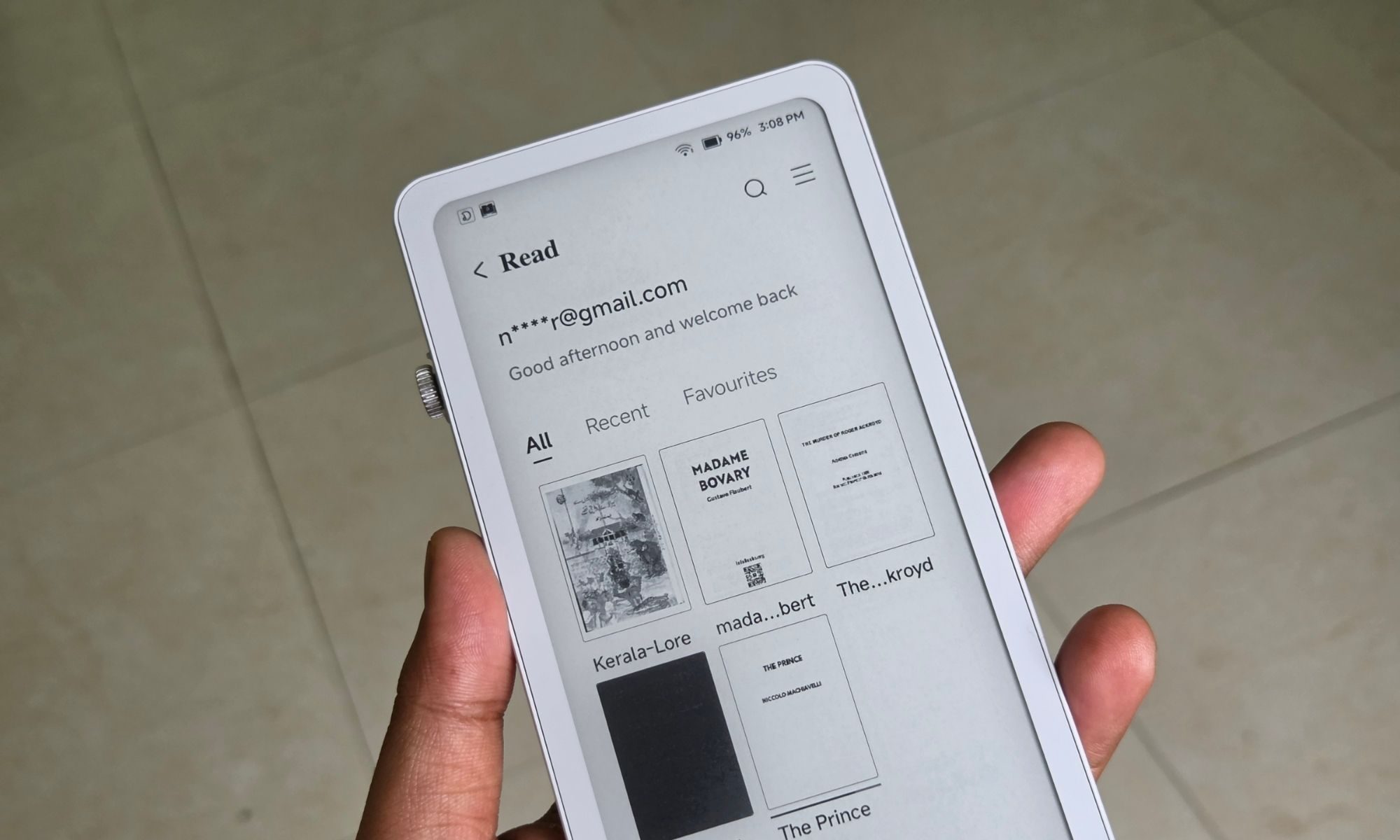
So, when I am using the built-in reader, which is simply named “Read” on the DuRoBo Krono, I cannot access the three-level refresh mode controls. It doesn’t work for the random article PDFs that I have saved on my system, nor does it work for the PDF books that I have downloaded on the device. But as soon as I switch to a third-party app, like the Kindle app downloaded from the Google Play Store, these three controls appear in the quick settings panel. 

I hope DuRoBo fixes this odd problem. But as far as the raw reading pleasure goes, I don’t have any fundamental complaints about it. The display is sharp, bright, and feels easy on the eyes. And if your ultimate goal is a phone-like device to handle your reading habits, you won’t be disappointed by the DuRoBo Krono.

Score: 8/10

DuRoBo Krono Software

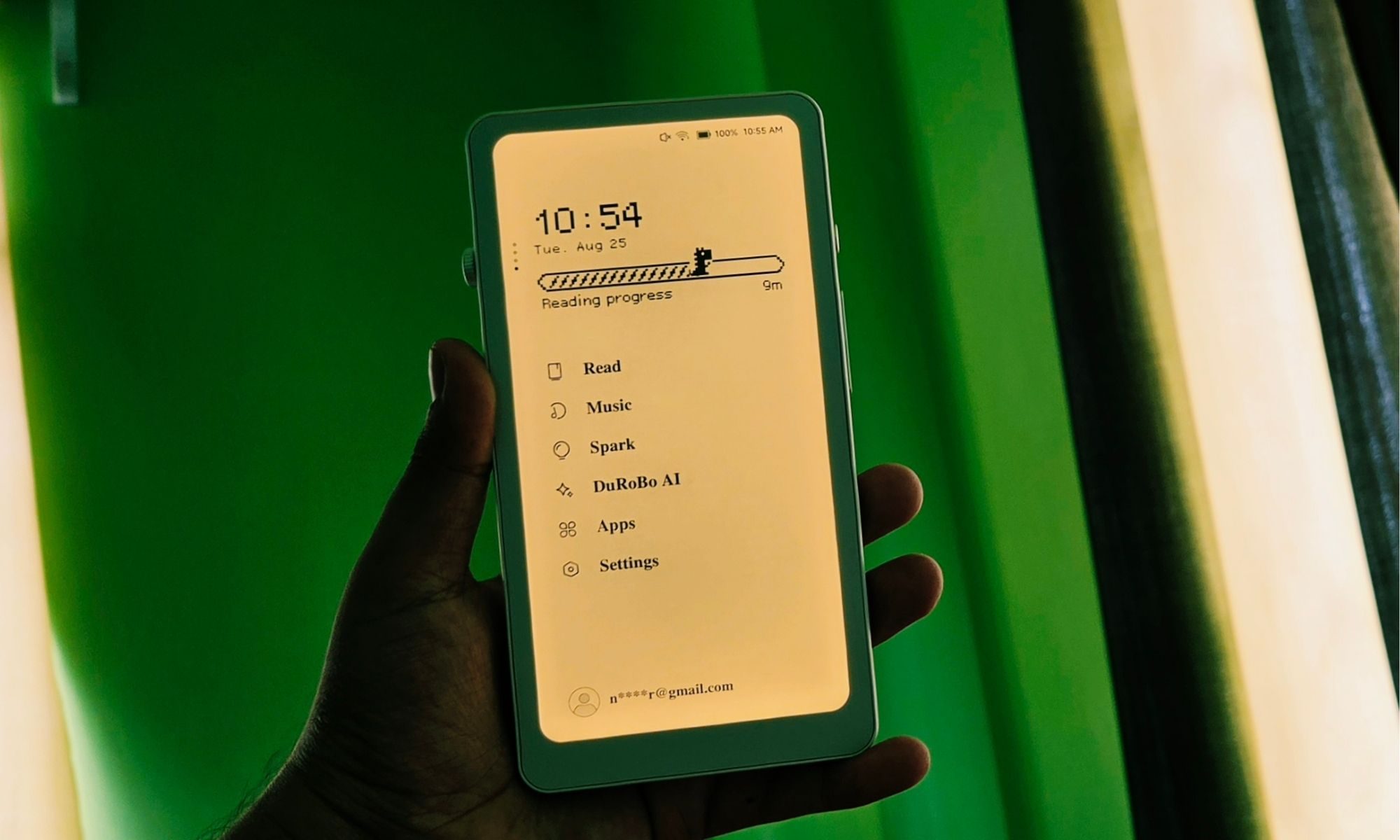
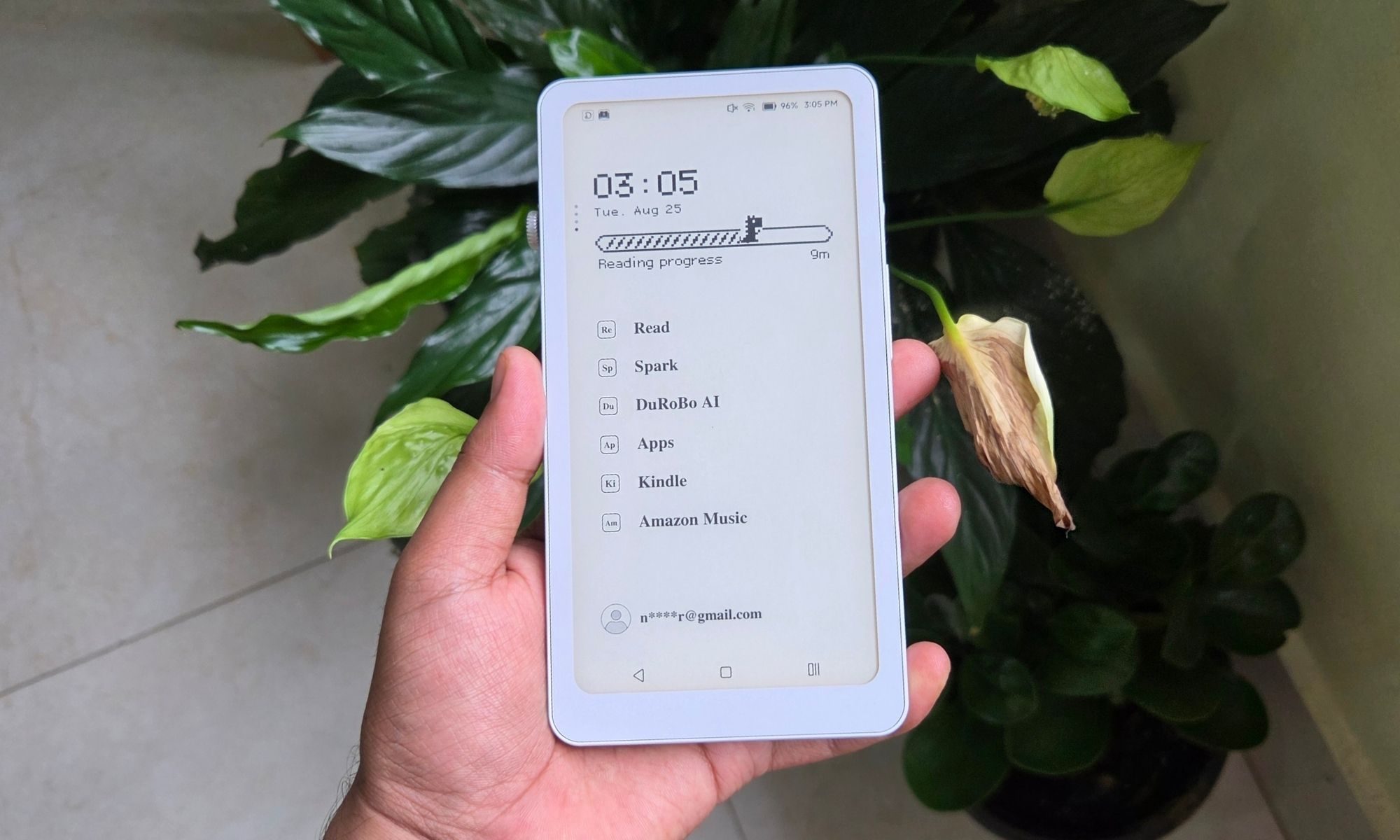
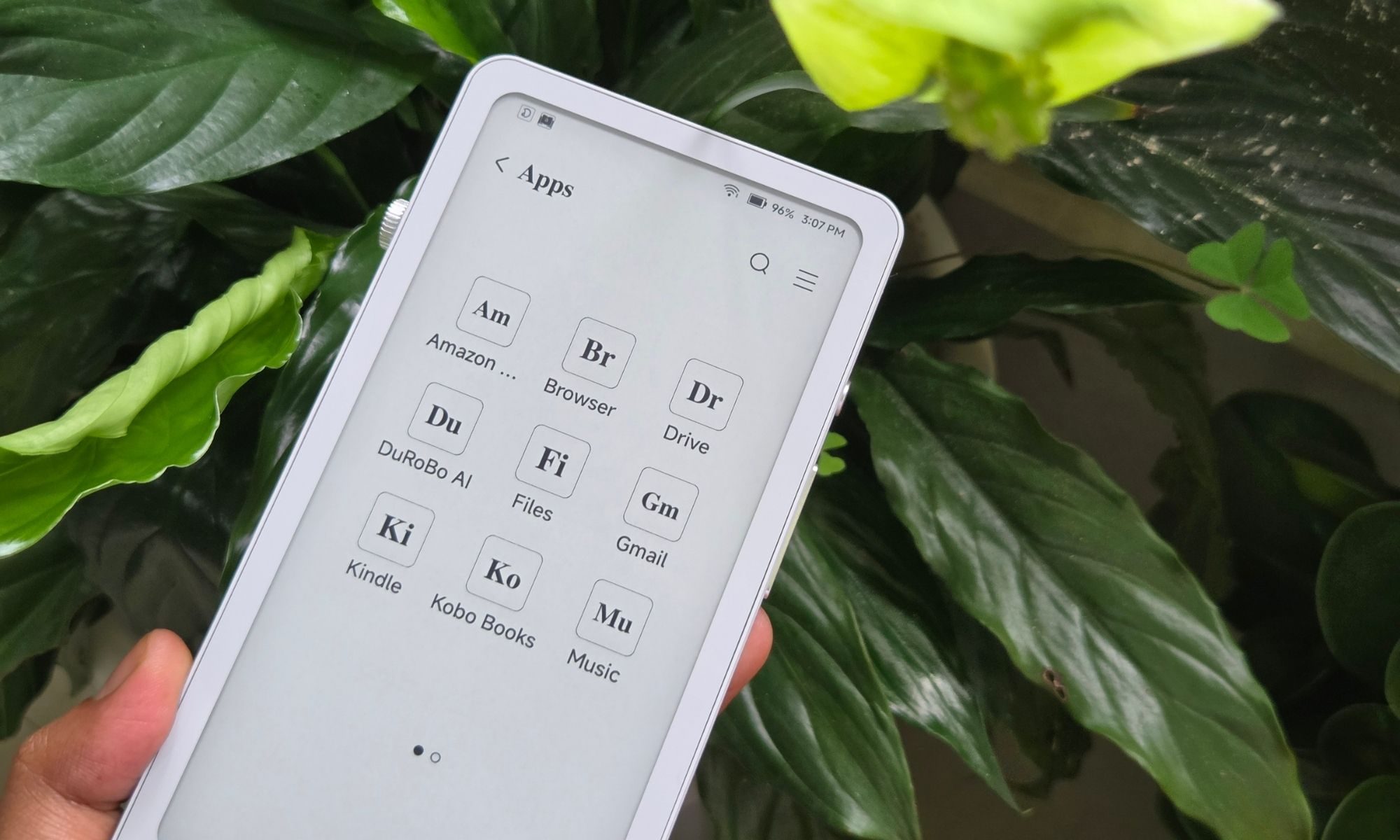
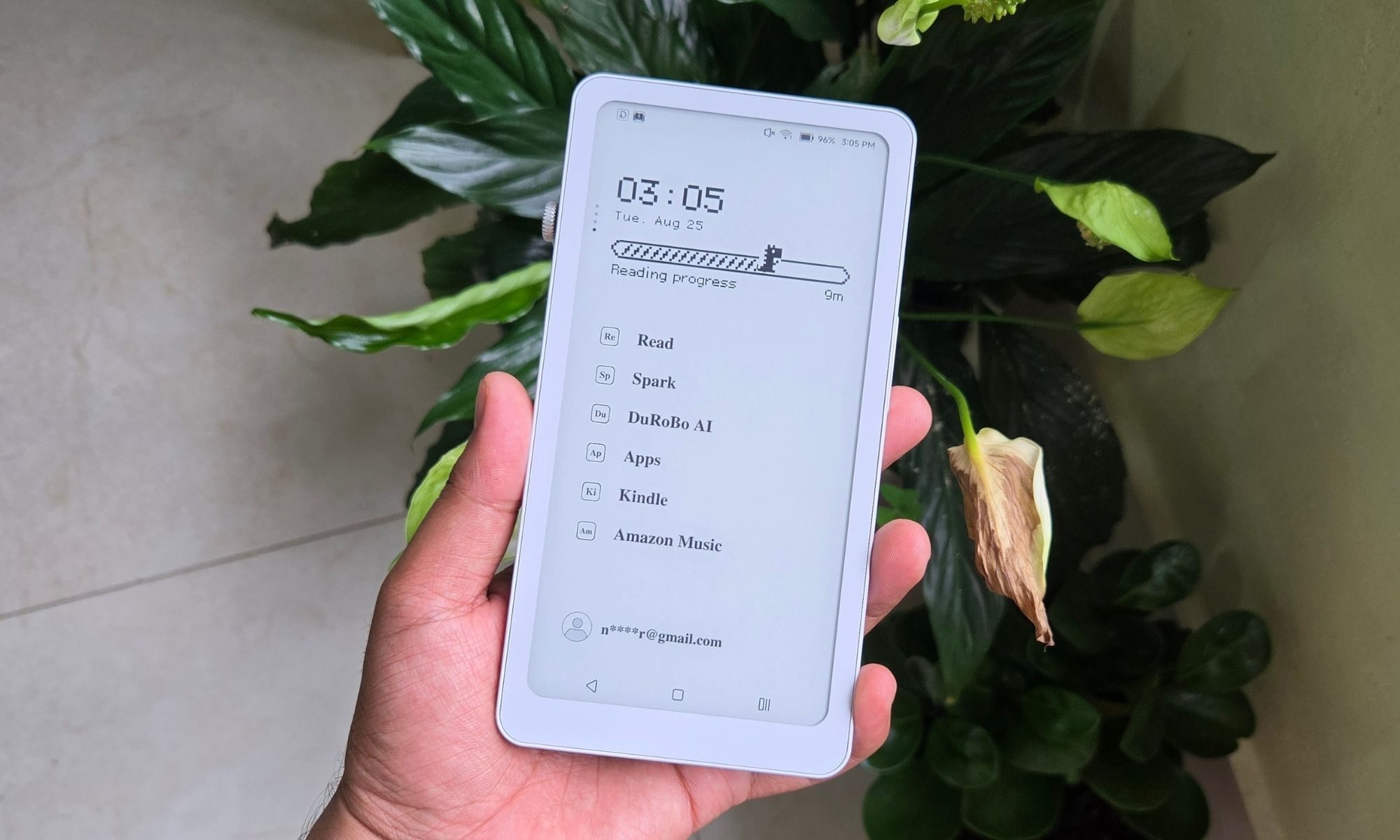
The software is the most controversial part of the DuRoBo Krono experience. The company went with a minimalist UI, which I believe suits the purpose. On the home screen, you just get six core controls. You can customize it and place your most frequently used apps, or stick to the default options. It’s almost identical to what you get with Niagara and Mako launchers on Android.

Personally, I like it a lot. I’ve used a bunch of phone-like e-reader devices, and all of them have the same home screen launcher look as your average Android smartphone or an iPhone. And that familiar look takes away from the inherent appeal of a device that is intended for losing yourself in pages. 

Of course, you have full Google Play support, and you can download whichever app you want and put it right on the main screen for quick access. But this minimalism also comes at a cost. I almost feel like the company didn’t put any effort into creating a standout reading experience on the DuRoBo Krono.

Advertisement

It’s so bare-bones that you often find yourself frustrated by the lack of even the most basic controls and page customization options. For example, when you’re reading a book, the only two controls available on the screen are changing the reading mode and opening the content list. In the top right corner of the screen, you get the bookmark option, and that’s all.

Only when you long-press on a word or passage do you get access to some basic formatting controls like underline, highlight, annotation, and copy.

The only standout tool is the AI explainer, which itself feels pretty slow. I almost never used it after a few attempts at trying to find the meaning or context. Functionally, this AI tool works fine, but it’s just so slow that I forgot its existence. The answers you get after summoning it sound exactly like how ChatGPT or Gemini would tell you the meaning and context of a word or passage. 

There is no option to engage in a back-and-forth chat about it. Visually, when you tap on the expand button of the AI window, it takes you to a page that looks like a combination of a dictionary and thesaurus, with some added context in a conversational tone. It might come in handy from time to time if you’re trying to look up the meaning of a word or seeking background information on a name, location, or event. 

The built-in text-to-speech feature, on the other hand, is also bare-bones. The recitation tone is extremely mechanical, and the only control you get is the speed. That’s all. You can’t even change the voice of the reader. The only occasion where I used the built-in Read app on the DuRoBo Krono is when I just wanted to skim through an article or a research paper. That’s all.

But if you’re someone who is particular about having control over the reading experience, you will want a third-party app.  The Kindle app, for example, will let you play with different fonts, adjust their size, the spacing, the page layout, margins, text alignment, background color, enable page scrolling with the volume button, and pick between a whole bunch of custom themes that will save you plenty of time. 

Advertisement

The Kindle app is not the best reading app out there. But compared to the Read app that ships on the DuRoBo Krono, Amazon’s app feels like a quantum leap in terms of customization options and useful features. But that’s not the only issue I have with the software experience.

As mentioned above, the refresh mode controls are implemented haphazardly. Additionally, beyond brightness and backlight color controls, you don’t get anything else. For comparison, on the Onyx Boox series of e-reader devices, you get at least five levels of display refresh rate, dark color enhancement, and a light color filtering slider. And these are the core controls that are implemented universally across the software experience, not just the built-in reader app.

But I also have a counterargument to make here. Compared to reading on a seven-inch or eight-inch slate, or even a device with a more squarish form factor, you don’t really need as many controls on a smartphone-sized screen. You are predominantly buying the DuRoBo Krono because it looks and feels just like your phone, and you are basically chasing that form factor for reading books.

If that sounds like you, there is not a lot that you’re missing. As I mentioned earlier, you just might like this stripped-down, minimalist, and no-frills software experience. You simply unlock the device, fire up the reading app of your choice, and start scrolling through pages, without even tapping on the screen.

Of course, it runs Android, so there is no hassle when it comes to accessing your books and having to worry about supported formats. You just download the required app or the cloud drive apps like Google Drive or Box, and quickly access all your books and reading material. All you need to do is scan the QR code or type in the IP address in your web browser’s URL field to access the file transfer dashboard.

This is not your typical cloud sync system. Instead, it’s a locaI network that lets you quickly drag and drop the files stored on your laptop and access them on the DuRoBo Krono within a matter of seconds. You can move your local music files, pictures, books, documents, and more without having to worry about any sign-in hassles.

Advertisement

I would go as far as claiming that the DuRoBo Krono is a perfect device for people who are chasing a digital detox. If you’re worried about the constant barrage of notifications, this one offers a respite. You can simply move your music files and the reading material on the DuRoBo Krono and never have to worry about linking it to the internet at all.

Score: 7/10

DuRoBo Krono performance and AI 

The DuRoBo Krono comes equipped with an unspecified octa-core processor, paired with 6 GB of RAM and 128 GB of onboard storage. There is no microSD card slot on this one, which is a shame. You also don’t get a 3.5-amp headphone jack, which leaves the USB-C port as the only hardware-level interface available to you.

Now, for a reading device, the onboard hardware is more than enough. But as you download more Android apps, you might start to see some sluggishness. For example, if you’re trying to switch between different apps that are running simultaneously in the background, the jitters are noticeable. In hindsight, those slow UI interactions also have to do with the fact that this is an inherently slow screen, not even your usual 60Hz panel available on even dirt-cheap phones.

So, what you see in terms of slow transitions and animations can be blamed more on the screen than the processor itself. In general, the durable kernel felt pretty snappy to me, whether it was scrolling the Internet, checking my Feedly lists, reading a book, watching the occasional podcast video on YouTube, or listening to music on Spotify.

Advertisement

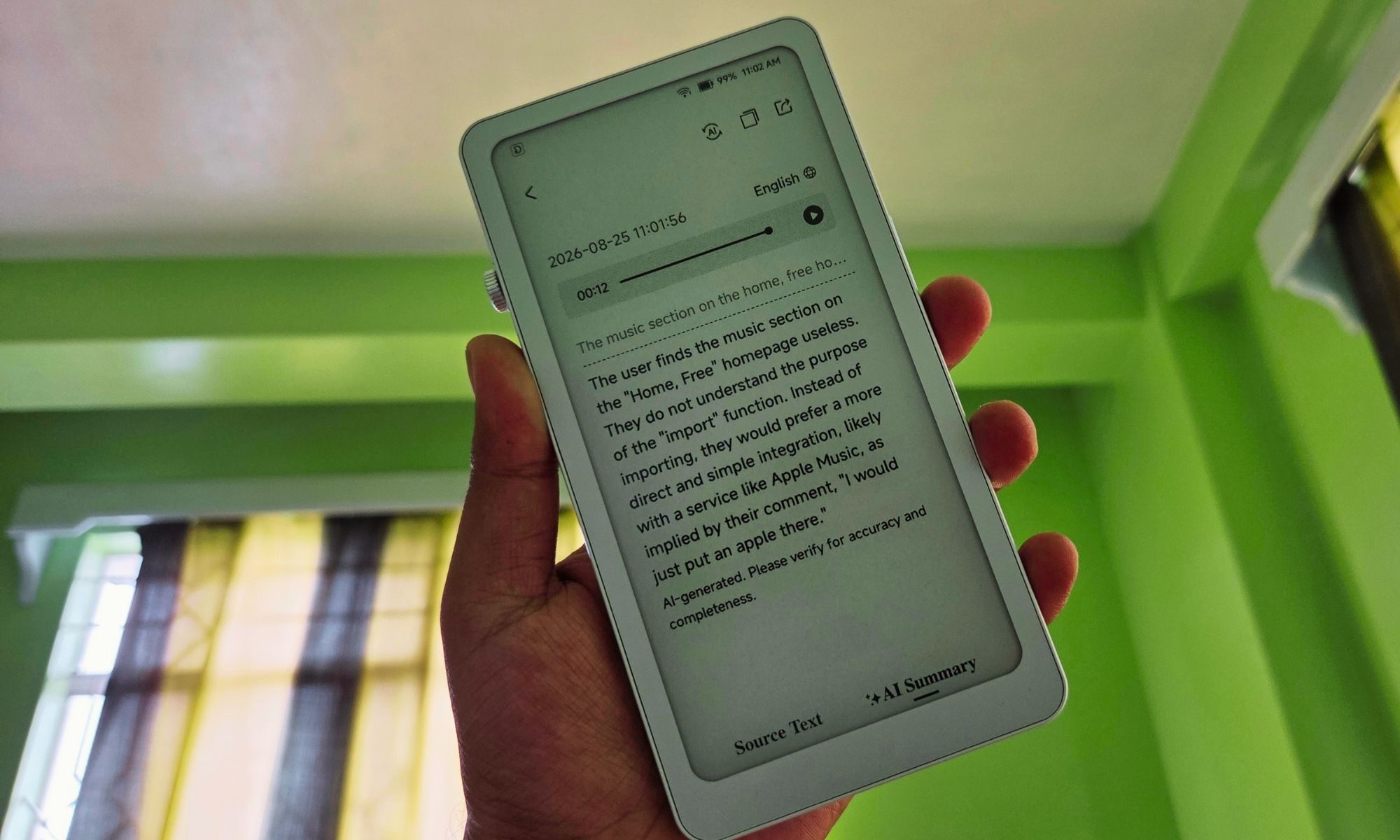
What sets the Turbo Chrono apart from other phone-like e-reader devices is the built-in integration of an AI-powered notetaker. DuRoBo calls it Spark. You can access it by long-pressing the dial. The broad idea is that when you get that creative spark, you don’t have to open a dedicated app or access a device. 

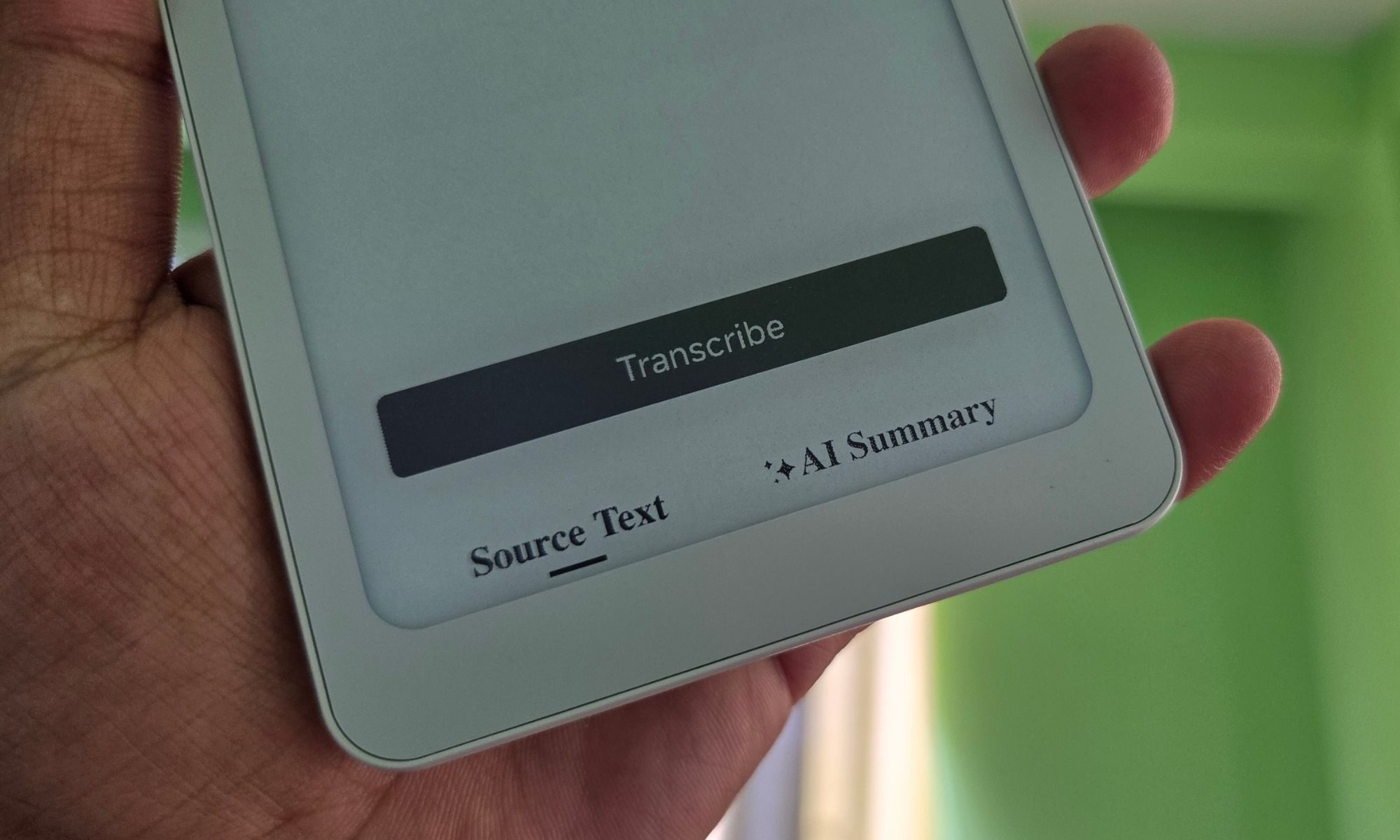
Simply press the button, record your voice note, and save it. The onboard transcription system turns your voice notes into text, and there is also an AI Summarizer at your disposal. As far as transcription accuracy goes, I would say it’s around 90% accurate at identifying the words. It mostly struggles with proper nouns or words that are not inherently a part of the English language lexicon. 

It’s just funny that the Spark AI misread the very name of the device and transcribed it as “durable kernel” in front instead of “DuRoBo Krono.” Would I trust it as a note-taking device for recording my interviews and getting them transcribed? I would say yes. It’s not quite as accurate as a dedicated solution like WisprFlow or Willow Voice, but it more or less gets the job done. 

Besides English, you also get native support for Dutch, German, French, Spanish, Portuguese, Chinese, Japanese, and Korean. Unfortunately, there is no option available in the Spark AI app to add additional language modules. For those that are not available, you can simply install any other third-party transcription app from the Google Play Store and get the job done. 

Score: 7/10

Advertisement

DuRoBo Krono battery life  

The DuRoBo Krono comes equipped with a 3,950 battery. That’s like half of what you get on a modern-age Chinese flagship phone these days. But when you pair this with a monochrome screen and modest processor, the per-charge mileage is downright amazing. 

My reading habits are rather haphazard. Some days I spent only an hour reading a book, while seated in a cafe or just slouching on my sofa. I shifted into binge mode and spent three to four hours reading in one go.

With that kind of use in usage pattern, combined with the occasional 15-30 minute interviews, the DuRoBo Krono went a whole week in my most recent endurance test, and still had about 24% juice left in the tank. 

Now, it’s extremely hard to specify just how many hours this device is going to last, and that’s because that would depend on a number of factors. Do you turn on the screen backlight? What is the brightness level? Do you use the device for listening to music, either offline or streamed through the Internet? How is your daily AI usage and voice note-taking within the Spark app? You get the drift. 

But if you’re solely looking at the DuRoBo Krono from the perspective of a reading device that looks like a phone, this one will easily go beyond a week, and even survive a couple. Even if it lasts one week with mixed usage, I’ll still call it a win.

Score: 8/10

Advertisement

Should you buy? 

The DuRoBo Krono is rather a straightforward pick. If you need a minimalist reading device that looks like your phone, offers a no-frills reading and scrolling experience, and takes you away from the digital noise of a regular smartphone, it’s an easy pick. The battery life is enough to support your marathon reading sessions, lasting days in a row. 

The display is versatile enough to suit daytime readers as well as night owls. On the software side, it takes an utterly minimalist route. But if you find that limiting, you can go ahead and download any app of your choice from the Google Play Store. That’s the flexibility that you don’t get with devices from the likes of Amazon. 

On the flip side, there are still a few rough edges with the software, but nothing that can’t be fixed. And, hey, it can also double as your dedicated AI-powered note-taking and transcription device, without burdening you with any subscription. So there’s that hidden perk. Overall, at its current asking price of $280, the DuRoBo Krono is a meaningful addition to your everyday carry.

Why not try? 

Boox Palma 2 Pro: Boox no longer officially sells the Palma 2, so your only option is either trying to find it from a third-party store or picking the BOOX Palma 2 Pro. Priced at $379.99, this one comes with a color e-ink panel, offers far more rewarding software, and even supports stylus input.

Bigme HiBreak: Priced at $250, the Bigme HiBreak is a full-fledged smartphone, not a dedicated e-reader. The perks of picking this one include a paper-like color display, a built-in camera, a hybrid slot for accommodating a 4G SIM, and a microSD card, alongside a faster screen refresh rate technology.

Advertisement

XTEINK X4: If you are chasing the ultimate minimalist heating device, you should try out the XTEINK X4, which only costs $80 in the US. It’s pretty small, attaches magnetically to the back of your phone, and offers a solid battery life for a device of its size. If you want the warm backlight convenience, the X4 Pro model will serve you well at $99 a pop.

How I tested 

I carried the DuRoBo Krono with me for a spell of four weeks and used it as my primary reading device. In that spell, I paired it with my smartphone via WiFi hotspot to occasionally download Android apps and add books to my library from the Kindle store and Google Drive. 

I also compared it against a bunch of devices from rival brands, including Onyx Boox and XTEINK, to gauge the display quality, reading experience day-to-day, software performance, and reading conveniences. I also tested a variety of files, including PDFs, TIFFs, WAVs, and EPUBs, to consume audio-visual content in different formats.

FAQ (Frequently Asked Questions)

What is the screen size on the durable DuRoBo Krono?

You get a 6.13-inch 300 PPI E Ink Carta 1200 HD panel on the device. 

What operating system does it run? 

The DuRoBo Krono ships with a heavily skinned version of Android 15 out of the box.

Advertisement

What are the key hardware specs?

The device comes equipped with an octa-core processor, 6GB of RAM, and 128GB. 

Is there a microSD card slot on the device?

No, there isn’t. All file transfers either happen in wireless mode or while connected via the USB-C port.

Does it offer cellular connectivity support? 

No. In order to connect the DuRoBo Krono to the Internet, you will have to join a Wi-Fi network or mobile hotspot.

Advertisement

Source link

Continue Reading

Tech

Dark Matter Season 2 is off to a strong start, though I’m left with questions I hope get answered

Published

on

Dark Matter is officially back on Apple TV, and its season 2 premiere picks up seven months after everything fell apart last season. We know Dark Matter Season 1 used up all the material that author Blake Crouch wrote in his original novel. In a way, that story was already over, though it left plenty unfinished for the people who are now displaced in its aftermath.

Had Crouch signed away the rights and walked off, I’d have written off this season as a cash grab riding the first season’s success. Instead, he wrote every new episode alongside Jacquelyn Ben-Zekry, pushing the story somewhere his own book never went.

Episode 1 of Dark Matter season 2 is mostly about the show setting the table. A lot happens as we see where everyone is and how they’re holding up, and the story so far is genuinely engaging. It also left me with a few things I can’t stop turning over.

Questions I’m hoping Season 2 will answer

The episode opens with agent Mitchel MacNamara staring down a pile of genetically identical corpses, confidently assuming it’s cloning. He’s obviously wrong, but watching him chase the truth is going to be one of this season’s ongoing threads.

So the first question is: how did all these other Jasons end up dead? Season 1’s finale gave us a chaotic pileup of doppelgangers converging on the same reality, but the show hasn’t spelled out whether these deaths came from Jasons turning on each other, or something more deliberate, like a version of Jason trying to protect the secret of multiversal travel by eliminating witnesses. It’s the kind of mystery that could go a lot of different directions, and MacNamara’s investigation seems built to drag us through all of them.

Advertisement

If every choice creates a Jason, what about everyone else?

Jason, Daniela, and Charlie have spent seven months building a normal life in the woods, and that doesn’t last long. Another Jason, desperate and unraveling, finds Daniela alone in the house, refuses to leave, and forces her to shoot him. Cleaning up the body drags them back into the box entirely, and once inside, nothing goes smoothly.

Every choice creates a new Jason. That’s the rule this entire multiverse runs on, and it’s why we have so many Jasons cluttering this multiverse in the first place. But Daniela and Charlie have now traveled through that same box too, just far less than Jason has. Does that mean a few other versions of Daniela and Charlie exist somewhere, shaped by choices we’ve never actually seen them make? The show hasn’t touched this yet, and I wonder whether the writers have plans to deal with this or just quietly hope nobody notices.

Here’s what we learned, though

Ryan and Amanda spend most of the episode assuming their box is dead weight. It’s been relocated to a different part of the city, and Amanda’s working theory is that the move itself severed whatever connection powered it in the first place. As far as they know, they’re stranded.

Except they’re not. When Jason briefly steers his family into that same world, the visit ends up creating a new, functional box that Ryan and Amanda can now actually use. I’m guessing the next episode will show whether they can actually put it to use, which would confirm that moving a box doesn’t necessarily kill its connection to a world. As long as someone out there is still thinking about that world, the link holds. That’s bad news for the Dessens, who are hoping to disappear for good by destroying the box once they find their next favorite world.

My thoughts on the Dark Matter season 2 premiere

One episode isn’t much to judge a season on, and I’m not going to pretend I have this show figured out yet. But Episode 1, “A Quiet Life,” did what a premiere is supposed to do: it made me care about where all these scattered pieces are heading. And I’m sticking around to find out what happens next. I just hope the show remembers to actually answer these questions before season 2 runs out of episodes.

Meanwhile, I’ve got one eye on Silo too, its season 3 finale, “Troy,” lands this Friday, September 4, and it’s finally set to reveal how the world actually ended.

Advertisement

Source link

Continue Reading

Trending

Copyright © 2025