If you purchased an E-mu Audity 2000 ROMpler back in 1998, you almost certainly got a rig with the 1.00 firmware. It was fine, if a little limited, particularly where upgradability was concerned. E-mu would later offer firmware upgrades over MIDI with the 2.00 firmware, but to get the 2.00 firmware, you needed to ship the box back to E-mu. Or you did… until now.
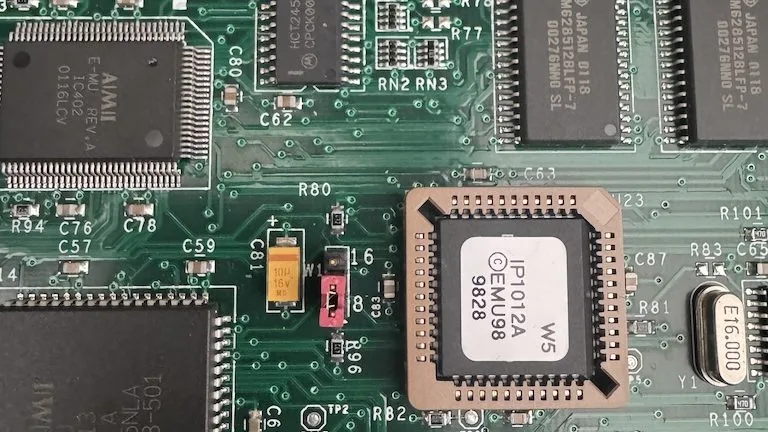
Realizing that E-mu is long gone and they weren’t going to handle any further firmware upgrades, [Ray Bellis] set about finding another way to help aggrieved operators with gear stuck on v1.00. [Ray] had managed to lay hands on a Audity 2000 service manual as well as the official 2.00 upgrade kit in an estate sale, and set about reverse engineering it to help the community. It turned out that upgrading from 1.00 to 2.00 required the use of a special boot ROM and a flash device containing the upgraded firmware image. Booting from the special ROM required the use of a jumper, and when engaged, the ROM would copy the updated image to the device itself.
[Ray] didn’t want to duplicate the standard upgrade device, as that seemed a little difficult what with parts availability in 2026. Instead, he crafted his own ROM that, with compression, contained the necessary firmware upgrade image and could all be stuffed inside a single 512 KB chip. All you need to do is flash the custom upgrade ROM to an AM29F040B PLCC32 NOR flash chip, pop it in the empty PLCC32 socket on the mainboard, and away you go. This will get you a machine upgraded to the final v2.01 firmware delivered by E-mu before its demise.
Advertisement
It’s a finicky bit of work, but it’s a great way to get new functionality out of an old Audity 2000. We’ve featured similar work before regarding aging Yamaha synths, too. If you’ve got your own backdoor methods for giving older music hardware a new lease on life, don’t hesitate to notify the tipsline.
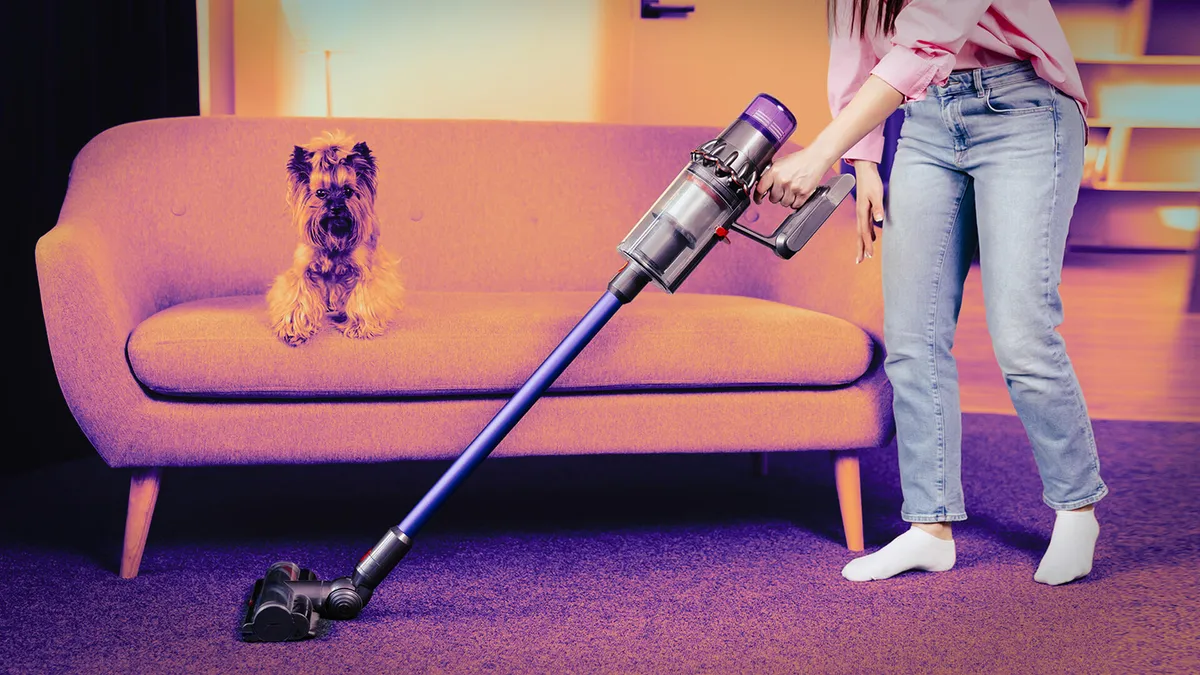
We test all sizes and shapes of vacuums here at CNET. From lightweight cordless alternatives to increasingly advanced robot vacuums, we’ve put hundreds of models across every category through their paces. Our cordless vacuum testing takes place at the CNET test lab in Louisville, Kentucky. Each cordless vacuum goes through a gamut of tests across different flooring types, along with evaluations of features, battery life and overall usability. Here’s how we do it.
How we test cordless vacuum cleaners at CNET
All the vacuums on CNET’s best lists are tested and evaluated in our state-of-the-art test labs. CNET Testing Labs go beyond product specifications to test in real-world conditions with real-life messes. Over the years, our experts have tested 50 cordless vacuums and counting.
We test the vacuums on both hardwood and two diffrent types of carpet.
Getty Images/Amy Kim/CNET
Cordless vacuum scoring methodology
The main test we use on all vacuums is a straight-line test across different flooring types (hardwood floors, low-pile carpet and midpile carpet). The test involves vacuuming at a standard suction level, along with calculations to ensure it’s fair for all the models that pass through our lab.
Our process is closely aligned with the standard established by the International Electrotechnical Commission. The goal of a straight-line test is to measure what percentage of dirt the vacuum is capable of picking up. We use play sand and pet hair as our primary test materials, along with our dust area adjuster to measure how much we disperse on the floor.
Advertisement
undefined
Subrating category
Weight
What we look for
Performance
30%
Performance score extrapolated from the average sand score on hard flooring, low-pile carpets and midpile carpets.
Value/price
25%
Retail price rating considering all other features. Does this price seem fair for the value offered?
Running time
20%
How long does the battery last when cleaning at medium setting? (No ECO, turbo, MAX, etc.)
Features
15%
Overall comfort and handling of the product (e.g. weight, comfortable grip handle).
UX (Comfort, ease of use)
10%
UX – All aspects of comfort. Does it have a good grip/handle? Is it heavy to operate/lift? How easy is the setup? Does it come with smart home functionality? Smartphone app? Voice assist?
Awarding the highest performers
The Eureka ReactiSense 440 costs just $180 but offers the best performance we’ve seen in a cordless vacuum.
Advertisement
Eureka/CNET
After running all the tests below, we award the best cordless vacuums an Editors’ Choice or a lab award in the category where they excel. Most recently, the Eureka ReactiSense 440 earns our lab award for the best suction on carpet at 98.53% sand pickup from low-pile carpet and 92.16% from midpile carpet. It also earns an Editors’ Choice award for its unbeatable value as our best overall cordless vacuum. Similarly, the Dreame Z30 earns not one, but two separate lab awards; it excels in multiple categories across our lab testing. It takes both our lab award for the longest battery life at 110 minutes and the highest suction score on hardwood at 98.77%.
Inside CNET’s Testing Labs: How we test cordless vacuums and why the sand scores matter
Our team of experts and engineers uses play sand to mimic dirt and dust. Each vacuum is tested on a low-pile carpet, midpile carpet and a hard surface with play sand. This test reveals exactly how much physical debris a vacuum is able to pick up off the floor.
Sand pickup
Our rig to distribute soil across the test bed.
Advertisement
Tyler Lizenby/CNET
Using the dust area adjuster (what we use to disperse sand or pet hair onto the floor), we subtract one inch from the measured nozzle width to give the stick vacuum ample coverage and opportunity to pick up all debris on the carpet or hardwood. We use different nozzle widths and amounts of debris based on the floor sample size and square footage.
During testing, we set controls to ensure each vacuum undergoes the same test. For example, each vacuum is set to the same nozzle width, and we measure and lay down the exact same amount of debris each time.
We test on both low-pile and midpile carpet to see how well cordless vacuums are able to remove sand from them.
Advertisement
Ry Crist/CNET
At minimum, we conduct three cleaning runs on each floor type. We rerun test cycles if there’s an obvious outlier among the three tests, such as one result that’s much higher or lower in pickup percentage. We also conduct separate cleaning tests with pet hair (acquired from a nearby groomer) on each surface type, photographing and visually evaluating how much pet hair, if any, remains after running the vacuum over it.
We weigh the dustbin before and after each run. From there, we can calculate the percentage of debris pickup for every cleaning run and the average amount of soil a vacuum manages to remove.
Pet hair
We measure a precise amount of pet hair to evaluate pickup performance, but use before-and-after visuals to assess results instead of weighing the dustbin.
Advertisement
Ajay Kumar/CNET
Our pet hair test is the simplest. We use 2 grams of pet hair sourced from a local groomer, spread across each test bed, and take before-and-after photos for visual comparison.
For pet hair, we don’t weight the pet hair after the test; we use before and after pictures of the cleaning run to subjectively evaluate the effectiveness of the cordless vacuum at picking up pet hair.
Cordless vacuum battery life and running time
We test battery life by running the vacuum on standard suction until it’s drained.
Advertisement
Credit: Cole Kan/CNET/Getty/Dreame, Shark, Levoit
To test battery life, we fully charge the vacuum battery, then run it on the medium setting until it drains, avoiding Max or Eco modes. We repeat the test three times and average the results. The longer the duration, the better the score. Most of the vacuums on our list have a battery life of 25 to 40 minutes before needing another charge, although many models are starting to offer higher-capacity batteries with running times of 60 minutes per charge.
Several of the vacuums we’ve tested can do even better, including the Shark Stratos (80 minutes) and Dreame Z30 (110 minutes). In truth, needing more than 40 minutes for a single vacuuming session is rare, and the prevalence of charging docks makes it easy to recharge between cleaning runs.
With its 110 minutes tested cleaning time, the Dreame Z30 is a great option for large homes.
Advertisement
Jeffrey Hazlewood/CNET
Most cordless vacuums we recommend now feature replaceable batteries, so you can buy an extra if you need more runtime or are concerned about battery degradation over time.
Several of the graphs below show the relationships we discovered in our study between battery life and suction, battery life and price and battery life and weight. A recent lab data study revealed that most cordless vacuums with stronger suction power also have a shorter battery life. Even so, you don’t need to spend a lot to get a high-performing vacuum.
Cordless vacuum warranties
Using the Shark Stratos in the test lab on hardwood flooring gave us impressive scores for sand pickup.
Advertisement
Schylar Breitenstein/CNET
Cordless vacuum warranties vary by manufacturer and model, but the majority of models we’ve tested offer at least a year of coverage, and many offer two years. The best warranty we’ve seen comes from SharkNinja, which offers a five-year limited warranty on its cordless vacuums. A longer warranty period is good because it means your vacuum is covered if a part breaks or something is defective.
Filters and air quality
Most cordless vacuums have a filter that prevents dust from being blown back into the room while you’re vacuuming. Most of the best cordless vacuums come with replaceable HEPA filters (commonly found in air purifiers) that can filter particles as small as 0.3 microns, while cheaper models may have a more basic cloth filter. One recent innovation we’re seeing from SharkNinja is the incorporation of an anti-allergy seal and anti-odor capsules that help keep your vacuum and dustbin from developing odors, though this requires odor-releasing pods that add extra cost.
User experience (ease of use and comfort)
The Aero base station charges the vacuum and self-empties it into a 3.5-liter dust bag.
Advertisement
Ajay Kumar/CNET
While it’s not a primary factor, the ease and comfort of using a cordless vacuum and emptying its dustbin still play a role. We consider this part of the overall user experience. We like cordless vacuums that can stand upright on their own and models with charging docks or self-emptying features, since both reduce the amount of maintenance required. Strong bonus points go to a vacuum docking station that empties dust into a bag rather than a bagless dust canister because it means that dust is less likely to get all over your newly vacuumed floors when you empty it into the trash.
What about handheld vacuums?
I obtained the vacuums in this test through retail purchases and manufacturer samples.
John Carlsen/CNET
Most, if not all, of the cordless vacuums on this list can be broken down into handheld units, making them suitable for cleaning your car or upholstery. However, we use a slightly different testing methodology for handheld vacuums, so we recommend checking our recently updated list of the best handheld vacuums to see our recommendations for use cases ranging from cleaning cars to pet hair. Plus, many handheld vacuums weigh as little as 1.2 pounds, putting them in a different weight category from these cordless vacuums.
Advertisement
Other features
The Shark Stratos has useful LED headlights to help it find dust.
Schylar Breitenstein/CNET
As new cordless stick vacuum models emerge, we’re seeing the ability to detect dirt types and floor types and adjust suction power accordingly. “This means that when a large amount of dirt is detected, suction increases and when less dirt is present, suction decreases,” says CNET’s lab engineer Gianmarco Chumbe. Chumbe, who’s been testing home tech products at CNET labs for eight years, says the latest vacuum tech can sense floor type and adjust suction power accordingly. “The main benefit of this feature is increased battery efficiency, resulting in a more effective and longer-lasting cleaning experience.”
Consumers shopping for vacuums today, Chumbe says, should consider the cost-to-value ratio. “Ask yourself, does the price justify the performance, features and comfort it offers?” CNET writers and editors use price and value in our vacuum scoring precisely for this reason.
Advertisement
Cordless vacuum weight, size and bin capacity
The PencilVac rollers are designed to eject hair to avoid tangling.
Ajay Kumar
Most of the cordless vacuums we tested weigh between 4 and 8 pounds. When a vacuum weighs 10 pounds or more, we consider it unwieldy. Most of the vacuums on this list were also very similar in height and overall size. They also come with accessories that can be attached and detached to give you flexible cleaning options. For instance, a common tool is a crevice-cleaning attachment that lets you fit the vacuum nozzle into tight spaces and corners where a larger brush head can’t reach.
For the dustbin size, we consider anything of 0.6 liters or bigger to be good. Generally, anything less than 0.5 liters will require you to empty it after every cleaning session. A large dustbin means you can go longer without emptying. However, if the cordless vacuum comes with a self-emptying charging dock, it can often store dust and debris for 30 days or more, minimizing the amount of dust you’re faced with when vacuuming.
Nvidia’s recent update to GeForce Now enables a better gaming experience on Apple Vision Pro than any other headset. Here’s what’s changed with the game streaming service.
Apple Vision Pro is compatible with Nvidia GeForce Now
While you can play games on the Apple Vision Pro, it is also possible to play PC games on the headset too. However, with services like Nvidia GeForce Now, you can do it without needing a PC in the first place. In the latest updates to the service, Nvidia has made it better for Apple Vision Pro users to play games piped through their Internet connection from servers. The update added a higher resolution and a much faster refresh rate. Continue Reading on AppleInsider | Discuss on our Forums
Large language models trained on vast datasets could speed genomics research, streamline clinical documentation, improve real-time diagnostics, support clinical decision-making, accelerate drug discovery, and even generate synthetic data to advance experiments.
But their promise to transform biomedical research often runs into a bottleneck: beyond the structured data healthcare relies on, these models struggle in edge cases like rare diseases and unusual conditions, where reliable, representative data is scarce.
New York-based Mantis Biotech claims it’s developing the solution to fill this data availability gap. The company’s platform integrates disparate sources of data to make synthetic datasets that can be used to build so-called “digital twins” of the human body: physics-based, predictive models of anatomy, physiology, and behavior.
The company is pitching these digital twins for use in data aggregation and analysis. These digital twins could be used for studying and testing new medical procedures, training surgical robots, and simulating and predicting medical issues or even patterns of behavior. For example, a sports team could predict the likelihood of a specific NFL player developing an Achilles heel injury based on their recent performance, training load, diet, and how long they’ve been active, Mantis’ founder and CEO Georgia Witchel explained to TechCrunch in a recent interview.
Advertisement
To build these twins, Mantis’ platform first takes data from a variety of sources such as textbooks, motion capture cameras, biometric sensors, training logs and medical imaging. Then, it uses an LLM-based system to route, validate, and synthesize the various data streams, and runs all that information through a physics engine to create high-fidelity renders of that dataset, which can then be used to train predictive models.
“We’re able to take all these disparate data sources and then turn them into predictive models for how people are going to perform. So anytime you want to predict how a human being is going to be performing, that is a really good use case for our technology,” Witchel said.
The physics engine layer is key here, Witchel told TechCrunch, because it helps the platform enhance the available information by grounding the generated synthetic data and realistically modeling the physics of anatomy.
Techcrunch event
Advertisement
San Francisco, CA | October 13-15, 2026
“If I asked you to do hand-pose estimation for someone who is missing a finger, it would be really, really hard, because there are no publicly available datasets of labeled hand positions of someone who is missing a finger. We could generate that dataset really, really easily, because we just take our physics model and we say, remove finger X, regenerate model,” she said.
Advertisement
Since Mantis’ platform fills gaps in data sources, Witchel thinks there’s potential for it to be used widely across the biomedical industry, where information on procedures or patients can be difficult to access, is unstructured or siloed into various sources. She stressed edge cases or rare diseases, where data is hard to obtain since there are often ethical and regulatory constraints around including patients’ data in public datasets, or using it for training AI models.
“You know how when you see a three-year-old running around, and they have a Barbie, and they’re holding it by one leg and smashing it against a table? I want people to have that mindset with our digital twins,” she said. “I think that’s going to open up people to this idea that humans can be tested on when you’re using virtual humans. I feel currently, people operate with the exact opposite mindset, which totally makes sense, because people’s privacy should be respected. In fact, I don’t really think people’s data should be exploited at all, especially when you have these digital twins.”
For now, Mantis has seen success in professional sports, presumably because there is a need to model high-performing athletes. Witchel said one of the startup’s main clients is an NBA team.
“We create these digital representations of the athletes, where it basically shows here’s how this athlete has jumped, not just today, but for every single day in the past year, and here’s how their jumps are changing over time compared to the amount that they’re sleeping, or compared to how many times they lift their arms above their head,” she explained.
Advertisement
The startup recently raised $7.4 million in seed funding led by Decibel VC, with participation from Y Combinator, a few angel investors, and Liquid 2. The funding will be used for hiring, advertising, marketing and go-to-market functions.
The next step for Mantis, Witchel said, is to continue building out the tech, and eventually release the platform to the general public, targeting preventative healthcare. The company is also working to cater to pharmaceutical labs and researchers working on FDA trials, aiming to deliver insights into how patients are responding to treatments.
Apple has provided federal agents with the real identities of at least two customers who used one of the company’s privacy features designed to mask their email addresses from apps and websites.
“Hide My Email” is a feature that allows paying Apple iCloud+ customers to generate anonymous email addresses that forward messages to a person’s private email address. Apple says it does not read messages that are forwarded. But the court documents show that this email privacy feature will not prevent law enforcement from discovering who owns an anonymous iCloud address.
According to court records seen by TechCrunch, the FBI requested records from Apple earlier this month as part of an investigation into an email allegedly threatening Alexis Wilkins, the girlfriend of FBI director Kash Patel, whose relationship with Patel has been widely reported.
“In response to a law enforcement request, Apple provided records indicating that [the Hide My Email address] is an anonymized email account associated with the Target Apple Account,” reads the affidavit for the search warrant, which was first reported by 404 Media (via Court Watch).
Advertisement
Apple provided the account holder’s full name and email address, as well as records for 134 anonymized email accounts created using Hide My Email.
TechCrunch has seen a second search warrant, in which Apple turned over information about another customer in response to a request from federal agents with Homeland Security Investigations, a unit within ICE. The search warrant sought records from Apple during an investigation into an alleged identity fraud scheme. An HSI agent, citing “records received from Apple” in January 2026, noted that the alleged fraudster had created several anonymized email addresses through Hide My Email across multiple Apple accounts.
Apple touts much of its iCloud service as end-to-end encrypted, meaning that nobody other than its customers can access their own data, not even Apple. But not all customer information is beyond law enforcement’s reach, including information Apple stores about its customers, such as their names, where they live, and their billing information, as well as unencrypted information, such as emails.
The ability for law enforcement to access this information also underscores the privacy limitations of emails; the vast majority of emails sent, even today, are not encrypted and contain plaintext information needed to route messages around the world.
Advertisement
As such, demand for end-to-end encrypted messaging apps, like Signal, has ballooned in popularity in an effort to protect private data from both surveillance and malicious hackers.
A spokesperson for Apple did not respond to a request for comment.
An old Macintosh SE motherboard was sitting in a workshop gathering dust when its owner had a change of heart. Flipping through some early 90s magazines and a book that This Does Not Compute had held onto for decades, he found himself reading about mail order Mac builds that hobbyists had been quietly assembling from catalog parts, earning the nickname Cat Macs for exactly that reason. They offered a way to get into Apple hardware without paying full retail, and the idea stuck with him. This time around he would do something similar, but with a 3D printer doing the heavy lifting.
A community designer named GutBomb had already created a compact case designed to fit the SE motherboard, broken into pieces manageable enough for most printers to handle while still fitting everything neatly inside. The timing worked out well, as a new Prusa Core One L printer arrived just when it was needed, with a bed large enough to print the main top and bottom sections in single runs of around ten hours each. Once assembled, the seams all but disappeared and the lines matched the curves and vents of the original Mac with surprising accuracy.
One-Click Automatic Printing: Experience hassle-free 3D printing with the Adventurer 5M Series. Enjoy automatic bed leveling for flawless first…
12X Ultra Fast Printing: Featuring a CoreXY structure with 600mm/s travel speed and 20000mm/s² acceleration, the AD5M maximizes efficiency, reduces…
Smart and Efficient Design: Quick 3-second nozzle changes, a high-flow 32mm³/s nozzle, and fast 35-second warm-up to 200°C deliver stable high-speed…
Getting the color correct matters more than you might think. The idea was to replicate the exact beige of the first Macs, rather than the brilliant white or yellowed tone that can detract from a retro design. A unique provider provided exactly what was needed in the form of Retro Platinum PLA, and the printed surfaces were smooth with cleanly removed supports. Heat set inserts were installed with a soldering iron to give firm threaded points for the screws, keeping everything fastened together without placing any strain on the plastic.
Advertisement
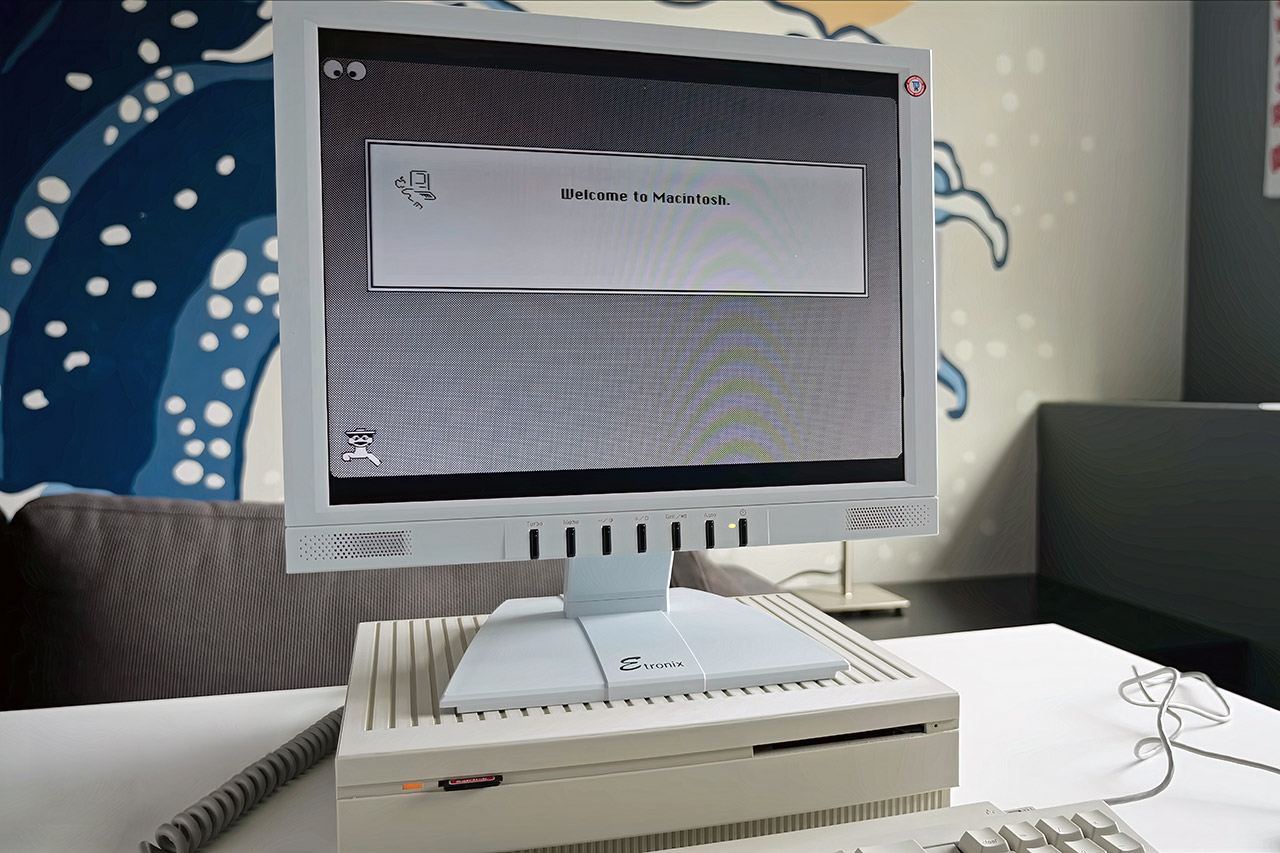
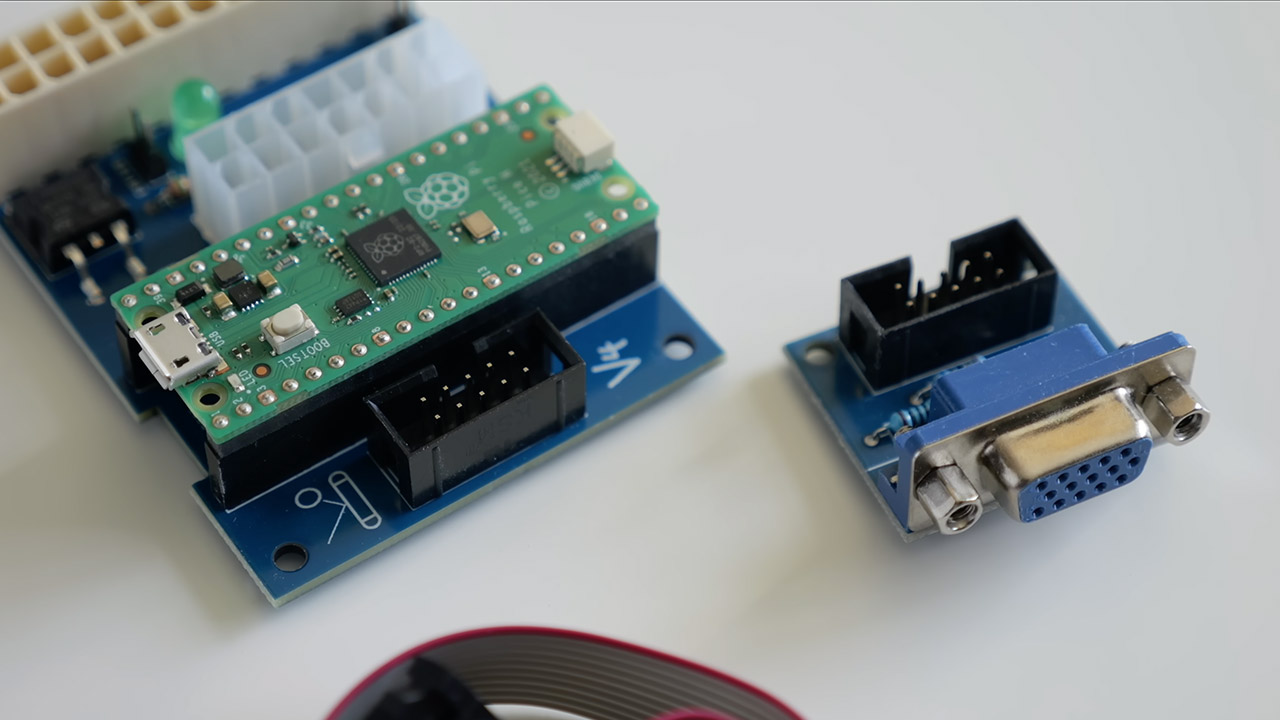
A compact adapter board from Joe’s Computer Museum, built around a Raspberry Pi Pico, handled both power and video in one unit, taking a standard ATX supply and converting the board’s video output to a clean VGA signal without eating up too much internal space. An original floppy drive and a Blue Scuzzy SD card emulator took care of storage, keeping the experience feeling authentic. Everything was cabled neatly behind a custom rear panel with ports for power, video, and the classic reset switch sitting right where you would expect them.
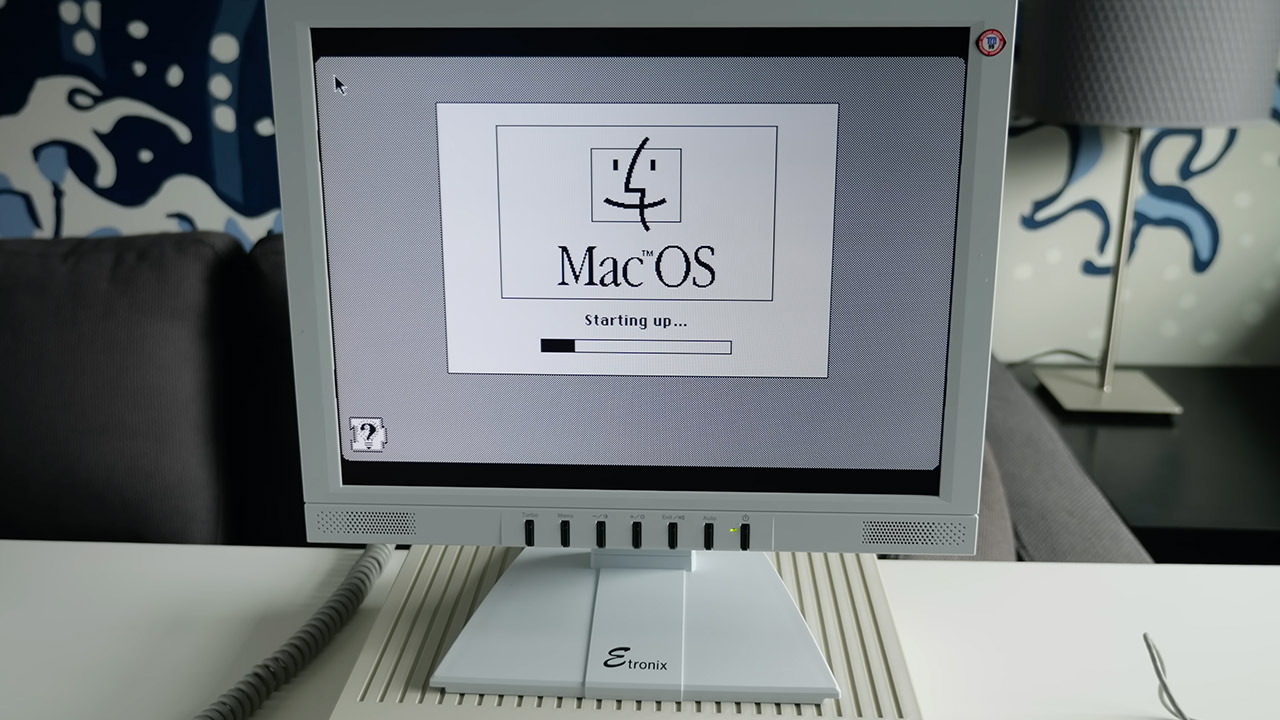
A simple 36-watt adapter provided all of the power required, and the system booted directly into System 7.0.1 after a brief change to the SD card image. Four megabytes of RAM was more than enough to run old games like Shufflepuck Cafe on a 15-inch LCD monitor, and it worked flawlessly. The video output was a pristine 1024 by 768 resolution, double the original Mac’s native output, which kept the interface clear and readable. The beige of the printed shell and the white of the monitor blended in nicely without clashing, which was a relief given how important color balance is on a retro build.
Microsoft has confirmed exactly when this year’s Xbox Games Showcase will take place. It will air at the usual time, 1PM ET on the Sunday (June 7) of Summer Game Fest weekend. In recent years, the company has offered a deeper dive into one particular game straight after the showcase, and it’s sticking to that format this time with a closer look at Gears of War: E-Day.
The showcase and Gears of War: E-Day Direct will be available in more than 40 languages, including American Sign Language and British Sign Language. A stream with English audio descriptions will be available as well. You can watch it on several of Xbox’s various social channels, including YouTube, Twitch and Facebook.
This is typically Xbox’s biggest showcase of the year. It will be the first Xbox Games Showcase with Asha Sharma at the helm of Microsoft’s gaming division. Perhaps we’ll hear some more details on the next Xbox (aka Project Helix), which is confirmed to be a system that will run PC games — much like the upcoming Steam Machine.
Along with more details about a brand-new Gears of War game, it seems likely that we’ll learn the release date for Fable during the Xbox Games Showcase. That game is slated to arrive this fall.
Advertisement
We don’t yet have exact release dates for Minecraft Dungeons 2 or Halo: Campaign Evolved, a remake of the first Halo game’s campaign. Those are scheduled to debut this year as well, so they seem like prime candidates for showcase appearances. Microsoft also has Clockwork Revolution, State of Decay 3, OD (from Kojima Productions) and something new from Toys for Bob in the hopper.
In addition, Microsoft is promising the return of Xbox FanFest, an in-person fan event, to help mark the brand’s 25th anniversary. Sharma confirmed this will take place in Los Angeles, where all of the Summer Game Fest events are going down. “This year’s experience will include a look back at the last 25 years, alongside a forward view of what’s next,” according to an Xbox Wire blog post.
CachyOS is a performance-driven Arch Linux-based distribution that’s been grabbing attention lately as more gamers and power users highlight its speed and polished out-of-the-box experience. As Linux gaming continues to gain momentum and become a bigger talking point, CachyOS is increasingly being mentioned as a go-to choice for users who want cutting-edge software without sacrificing responsiveness or control.
Uber is buying Berlin-based startup Blacklane, which provides on-demand, black-car chauffeur services, as the ride-hail giant expands deeper into luxury and executive travel services.
Uber said the acquisition still needs regulatory approvals, but expects it to close by the end of this year. The two companies didn’t disclose financial terms of the deal.
The acquisition comes just a few weeks after Uber announced the launch of Uber Elite, which combines a chauffeur service with a number of luxury offerings like in-vehicle amenities, airport meet-and-greets, and 24/7 phone support. Uber Elite is starting small, in just Los Angeles and San Francisco, with New York City on the horizon. Blacklane operates in major cities across Europe, the Middle East, Asia, South America, and North America.
The stakes are high because rural residents collectively spend about $1 trillion a year on clothing, electronics, household goods, and other items – roughly 20% of US retail purchases, excluding autos and gasoline, according to Morgan Stanley. Read Entire Article Source link
Making a movie in Singapore sounds glamorous—until you look at the numbers.
Kelvin Tan, better known as Mayiduo, learned this the hard way. In 2023, the 34-year-old businessman and media company founder decided to pursue a childhood dream: making a feature film.
Two years, S$1 million, and countless headaches later, his comedy movie Follow Aunty La premiered in Jun 2025 and was nominated for Best Feature Film at the Golden Petal Award 金海燕奖.
It broke even. That alone makes it an outlier in Singapore.
Advertisement
“Out of 10 films, 9.5 will fail,” Kelvin told us matter-of-factly. “The moment your film doesn’t lose money, it’s considered a success.”
We spoke with the filmmaker about the brutal economics of Singapore’s film industry, why most movies lose money, and how he managed to break even on his first feature film without a single government grant.
Mayiduo (left) at a 2024 lensing ceremony, a traditional pre-production event in Singapore’s film industry, ahead of shooting Follow Aunty La./ Image Credit: mm2 Entertainment
But his love for movies started long before his business ventures. From a young age, he was “very inspired” by Hong Kong filmmaker Stephen Chow and, closer to home, by Jack Neo.
When I was younger, watching their films, I would think, actually, this is something I can do.
Kelvin’s breakthrough into the film industry came through a friend at mm2 Entertainment who managed to schedule a meeting with founder Melvin Ang.
The pitch landed. Melvin liked Kelvin’s vision, and by end-2023, Double Up Media was co-producing Follow Aunty La with mm2.
The film went through at least eight script revisions
Kelvin drew the idea for Follow Aunty La from the life of Double Up co-founder Charlene Huang, an influencer who started comedy content at 35 and weathered vicious online attacks.
Image Credit: Charlene Huang via Facebook
He not only directed the film but also appears in a supporting role as a bad-tempered director of photography who helps Charlene’s protagonist become a successful influencer.
The story originally centred on an auntie chasing celebrity status, but mm2’s team advised a pivot.
Advertisement
They told me, in this age and time, younger people don’t want to be mingren (名人)—they want to be influencers.
The plot was reworked into an older woman pursuing Internet fame, resulting in a final runtime of two hours and eight minutes.
Kelvin said the film also pushed creative boundaries for Singapore cinema. Follow Aunty La is reportedly the first local feature with a cast composed entirely of influencers, and it frequently breaks the fourth wall—a storytelling choice he claims is rarely seen in traditional productions.
His background in social media made the film relatable, but Kelvin acknowledged that without oversight, it could have felt more like a stretched-out TikTok.
“If I didn’t have supervision, it might just feel like a very long TikTok video,” he said. “But with mm2’s experience and what we Double Up have, we put together something different from our predecessors.”
Advertisement
In the end, the film endured at least eight script revisions in mm2’s “writer’s room”—a process where producers, executives, and the director dissect every scene, every dialogue line, every character motivation.
Cold calls, clients, and conviction
Mayiduo and his cast at the lensing ceremony in 2024./Image Credit: mm2 Entertainment
Singapore’s film ecosystem is heavily tied to government funding. Grants can go up to S$300K under IMDA’s Long-Form Content Grant—but that’s still less than a third of a typical film budget.
Most local films cost around S$1 million to produce, though ultra-tight productions can squeeze by at S$400,000.
Kelvin’s initial plan was to shoot three short films and submit them to festivals to qualify for the scheme, hoping to ease some of the financial burden. Unfortunately, none of the films received nominations.
Kelvin directing and memorising his lines for various scenes./ Image Credit: Mayiduo
He could have shelved the project. But Kelvin didn’t because he truly believed in his work—so he took a different route: he bypassed the system entirely. Instead of chasing grants, he chased sponsors, making multiple cold calls to his network.
Out of the S$1M budget, S$700,000 came from brand sponsorships, and S$300K came from private investors.
Advertisement
These weren’t random sponsors. They were existing clients from his content business—brands already familiar with his ability to drive engagement. From independent watch dealer Watch Exchange to robot vacuum brand Dreame, they appear subtly throughout Follow Aunty La, integrated into props, home settings, and outdoor locations.
His pitch was simple: “This is brand elevation, not ROI”. Kelvin explained that movie sponsorships don’t generate instant returns, but position your brand alongside a cultural moment. Moreover, Kelvin offered a safety net no traditional director could match—if the film flopped, he’d create content to make up the value.
Most of these sponsors are online businesses. They’ve seen results from our campaigns. I told them, worst comes to worst, I can still produce content.
The hidden costs that can kill productions
Screengrab of the Follow Aunty La movie, with Mayiduo wearing a watch sponsored by Watch Exchange in the trailer./Image Credit: Mayiduo
Every single cent matters in movie-making.
Kelvin shared that a film crew covering vehicles, manpower, equipment, food, transport, and locations can burn through about S$30,000 a day.
After nearly a year of planning, filming took just 21 days in Nov 2024. That’s S$630,000 gone before post-production even begins. Factor in cast salaries, editing, colour grading, sound design, VFX, and mastering, and the budget quickly climbs to S$1 million.
Advertisement
Mayiduo with his cast and crew members at the lensing ceremony in 2024./ Image Credit: mm2 Entertainment
If there’s one thing that terrifies Singapore filmmakers, it’s overtime.
Production days typically run 10–12 hours, but delays from bad weather to missed lines can easily push shoots beyond schedule. That’s when costs spike, with overtime pay kicking in at 1.5x rates.
“Ten days of overrun and your budget bursts,” Kelvin said. Thankfully, his production only overran for two days, yet it’s still a significant amount.
Then there’s the period of uncertainty that directors will have to deal with.
From concept to cinema release, Follow Aunty La took over two years—a standard timeline in Singapore’s film industry. But that also means capital is tied up the entire time, with no guaranteed returns.
Advertisement
Making a movie is a very risky business model. It’s a very long process, and your returns are always a big question mark.
For a businessman used to monthly campaign turnovers, the wait was brutal.
“Most of my time was spent convincing people,” he admitted. Without formal film training, Kelvin spent months proving he wasn’t just “some guy who got lucky” to his experienced production team, investors and sponsors.
You can make a great film and still never get it screened
Mayiduo, Charlene Huang and Xixi Lim in Follow Aunty La./Image Credit: mm2 Entertainment
Even after making a film, monetisation isn’t straightforward. Kelvin pointed out a harsh reality: you can make a great film and still never get it screened.
Distribution is key. You must have a distributor before you start. Otherwise, you’re just gambling.
This is where mm2, his co-producing partner, became a key collaborator to Kelvin’s movie. Other than providing film production expertise, the company had strong relationships with cinema chains Golden Village, Shaw Theatres, Cathay Cineplexes and Eaglewings Cinematics.
Without those connections, Follow Aunty La would have been another indie film with no screens.
Advertisement
Follow Aunty La can be found on various streaming platforms like Apple TV, CMGO and KrisWorld./ Image Credit: Mayiduo
To recover a S$1 million budget, a film typically needs to generate around S$3 million at the box office. Cinemas and distributors take their cut, leaving producers with roughly a third of ticket sales, explained Kelvin.
That’s why box office alone isn’t enough.
Filmmakers today also rely on secondary revenue streams, from streaming platforms to airline entertainment systems. But these come with their own barriers.
Kelvin managed to secure deals with platforms like KrisWorld and Apple TV, but Netflix turned him down. “Market too small,” they said.
It’s a harsh reality: despite a decent box office showing, Singapore films often struggle to land major streaming deals, as platforms prioritise content from larger markets like the US, UK, and Korea.
Advertisement
In the end, Follow Aunty La brought in about S$500,000 in Singapore and S$250,000 in Malaysia, alongside smaller platform deals—just enough to break even.
Part of the challenge also comes down to local constraints.
As a director, Kelvin had to balance storytelling with regulatory requirements, including classification by IMDA. Ratings play a critical role—moving from PG13 to NC16 can significantly shrink your potential audience in a small market like Singapore.
That influenced how he positioned the film.
Advertisement
Kelvin aimed to appeal to both younger viewers, who already follow him online, and older audiences, maximising reach in an already limited market. As a result, he targeted a PG13 rating to strike the right balance between accessibility and audience size.
“Film is still a business”
Reflecting on the experience, Kelvin admits that creating short-form content is a faster way to make money than putting out a feature film.
Mayiduo plays a short-tempered cinematographer in Follow Aunty La./ Image Credit: mm2 Entertainment
The filmmaking process is gruelling, financial returns are uncertain, and the local industry is contracting—he predicts a decline unless Singapore filmmakers pivot.
He’s also candid about the shifting landscape: public theatres are no longer the default audience, personal streaming at home is taking over, and generative AI is changing how stories are made.
Yet, he doesn’t want to discourage young filmmakers from entering the scene.
Advertisement
“Film is still a business,” he insists. “A lot of great directors fail because they don’t understand the economics.” While passion is crucial, understanding the finances of a film is equally important for a film to succeed.
With the success of his film, Kelvin hopes to inspire more Singaporean filmmakers to carve a space locally and internationally.
Looking ahead, he’s looking to continue making short-form content and also films that make people laugh. He’s currently acting in other productions—”3 Good Guys” and “Kongtao”—films where content creators increasingly populate Singapore film casts.
It’s a significant shift and rejuvenation to Singapore films as influencers bring loyal audiences, reducing marketing costs that traditionally sink local films.
Advertisement
Kelvin is also exploring regional co-productions, starting with Taiwan first, where budgets run slightly larger at around S$2 million, and the market is larger. This could potentially open doors to audiences and collaborations with China, where budgets are much more lenient and can extend to as large as US$25 million budgets.
The economics may be brutal, but as Kelvin proved, they’re not impossible—if you know which rules to bend.
Read other articles we’ve written on Singaporean businesses here.























































You must be logged in to post a comment Login