The most powerful El Niño ever on record is just ramping up, but 2026 can already lay claim to the hottest summer in U.S. history. That’s not good news for some members of its military, however — especially those stationed in San Diego, California. That’s because sailors living in one particular barracks building are no longer allowed to use air conditioning, per an official memo distributed to residents on August 31.
As reported by KPBS, San Diego’s public broadcasting station, barracks Building 635 at Naval Base Point Loma has banned portable AC units. According to Brian O’Rourke, a Navy Region Southwest spokesperson, “Naval Base Point Loma leadership advised sailors and tenant commands on the base that personal portable AC units are prohibited.” Sailors had one week to remove the cooling units, with inspections planned to ensure compliance.
The fact that the ban is starting at the tail end of summer will likely be of little consolation to the sailors, with temperatures in Southern California still creeping into the 90s. One sailor told KPBS that their room is uninhabitable during the day and is still too hot to sleep in at night, even with ceiling and stand-up fans. Even an AC unit the worst air conditioner brands would likely be welcome at this point.
Advertisement
It’s less about security and more about infrastructure
Sandy Huffaker/Getty Images
This isn’t the first time the U.S. military has banned personnel from using certain products. Generally speaking, however, these bans have been prompted by security risks. In 2018, for example, fitness apps were prohibited because soldiers overseas working out on bases were unwittingly giving away vital location data. Even ad trackers have had to be disabled for similar reasons — though that ban was likely better received.
Security concerns, however, aren’t behind the AC ban at Naval Base Point Loma. Instead, it’s because the barracks’ Building 635 is old and its electrical grid can’t handle the power consumption required by the appliances. As the Navy’s Brian O’Rourke told KPBS, the air conditioners “frequently trip circuit breakers and create a safety hazard.” In that case, even the most energy-efficient air conditioners may be too much for the building’s grid.
Advertisement
However, O’Rourke adds that the building, which is designated Unaccompanied Housing, is set to be upgraded, which may or may not include its electrical wiring. In 2025, Congress passed $1 billion in funding for Unaccompanied Housing through the One Big Beautiful Bill Act. The Navy has already committed to upgrading the Point Loma Barracks and is set to begin construction at some unknown point in the future, though It’s unclear how much Building 635 stands to benefit.
At CES 2026, Hisense unveiled the S6 FollowMe, which is company’s response to the growing lifestyle TV category that includes Samsung’s MovingStyle and LG’s StanbyME 2 portable TVs. All are going after users who want screens that follow their daily routines, not dictate them.
Whether it’s streaming, video calls, recipe browsing, casual web use, or light smart-home control, the S6 FollowMe, along with its competitors, is positioned less as a TV replacement and more as a mobile digital hub that fits into real homes without demanding a redesign.
However, since its CES debut, there is a new wrinkle to the story. Hisense has made the strategic move to rename the S6 FollowMe as the RoamView, with the model number 32S6S.
Hisense RoamView vs. LG StanbyME 2 vs. Samsung MovingStyle: What They Have in Common
These TVs, or more accurately smart displays, are built around the idea that screens should adapt to how people use them rather than lock users into one room or one position. Instead of being anchored to a wall or cabinet, these displays are designed to move throughout the home, shifting between entertainment, light productivity, and casual interaction depending on where and how they are being used.
Advertisement
The RoamView
The RoamView features a 32-inch 4K UHD touchscreen mounted on a wheeled stand that supports tilt, rotation, height adjustment, and easy movement around the house.
The display can shift from floor height to table height using the included pedestal base or easel stand, making it practical to use from a couch, desk, kitchen counter, or dining table without forcing awkward viewing angles.
Since the RoamView is designed to be moved around as needed, it incorporates a rechargeable battery with a 10-hour use life. Also, it features an anti-glare, low-reflection screen to accommodate different lighting conditions. Built-in Wi-Fi 6 support provides the bandwidth needed for stable streaming, browsing, and smart-home interaction. The RoamView also provides access to Google Gemini AI Assistant.
Stacking Up Against Samsung and LG
Although the Hisense RoamView, LG StanbyME 2, and Samsung MovingStyle have a lot in common, each offers its own take on this growing TV and smart display category. For a deeper look at all three options, check out our previous article on the Hisense S6 when it was previously announced at CES 2026.
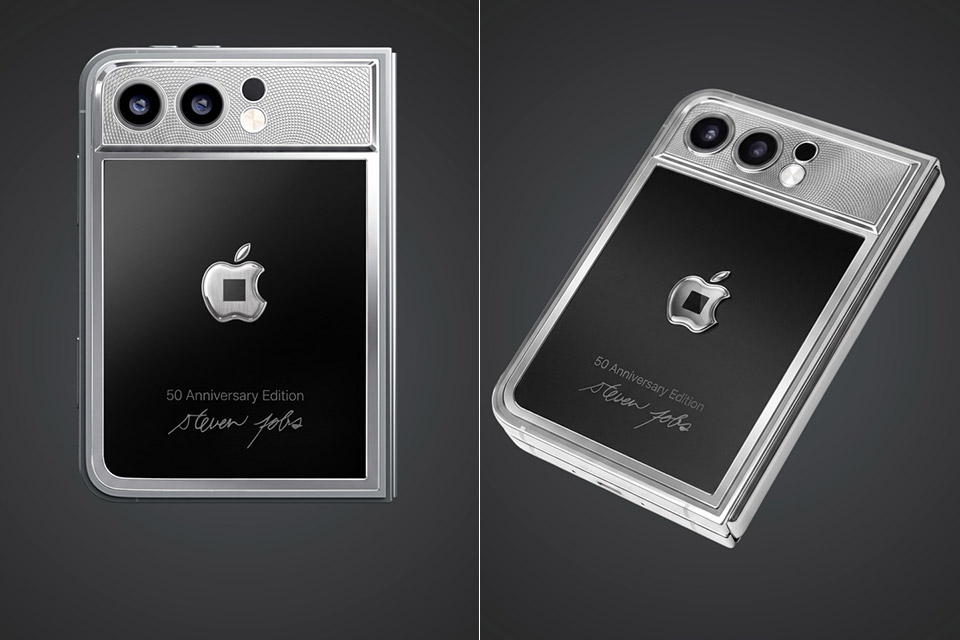
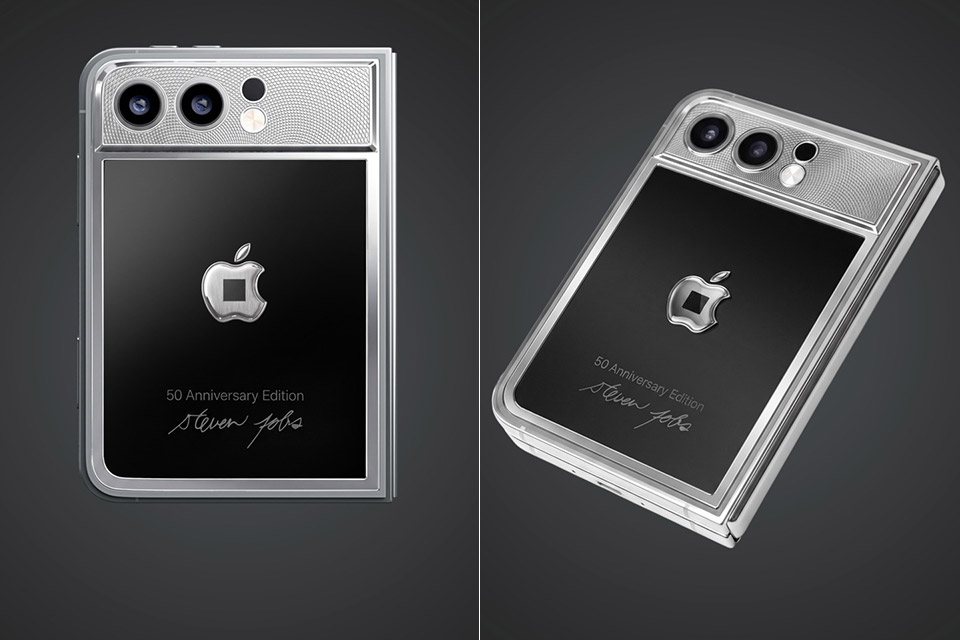
Caviar returned to its favorite Apple relic and sealed a scrap of Steve Jobs’ black turtleneck inside the company’s first foldable phone. Only nine iPhone Duo Jobs Editions will leave the workshop. Each one costs at least $15,990, close to eight times the $1,999 starting price of a regular 256GB Duo.
Apple unveiled the Duo on September 9. When closed, the 5.4-inch outer Super Retina XDR screen conducts ordinary chores. When the 7.6-inch inner display is opened, it becomes the largest screen Apple has ever used on an iPhone. Grade 5 titanium, a precision hinge designed to disguise the crease, two 48-megapixel cameras, the A20 Pro CPU, and Touch ID in the side button remain exactly as Apple designed them. Caviar avoids making contact with the hardware.
CREATED FOR YOUR CONTENT: Any way you turn it, the new Galaxy Z Fold8 gives you a fuller viewing experience. Designed with your content in mind, this…
WORLD’S LIGHTEST FOLD¹: Galaxy Z Fold8 is the newest foldable phone for content on the go. Unfolded, it fits movies and books for an immersive…
THE BRIGHTEST DISPLAY ON A GALAXY PHONE: Our brightest smartphone display² provides you with a comfortable view, whether you’re inside or outside…
Caviar’s treatment includes a raised three-dimensional Apple logo with a verified remnant of the turtleneck Jobs wore during NeXT demonstrations. A PVD-coated titanium central panel rests beneath polished titanium, with guilloché engraving on the upper part and frame. Jobs’ signature is inscribed in the metal. Each unit is accompanied with a multi-level certificate.
Advertisement
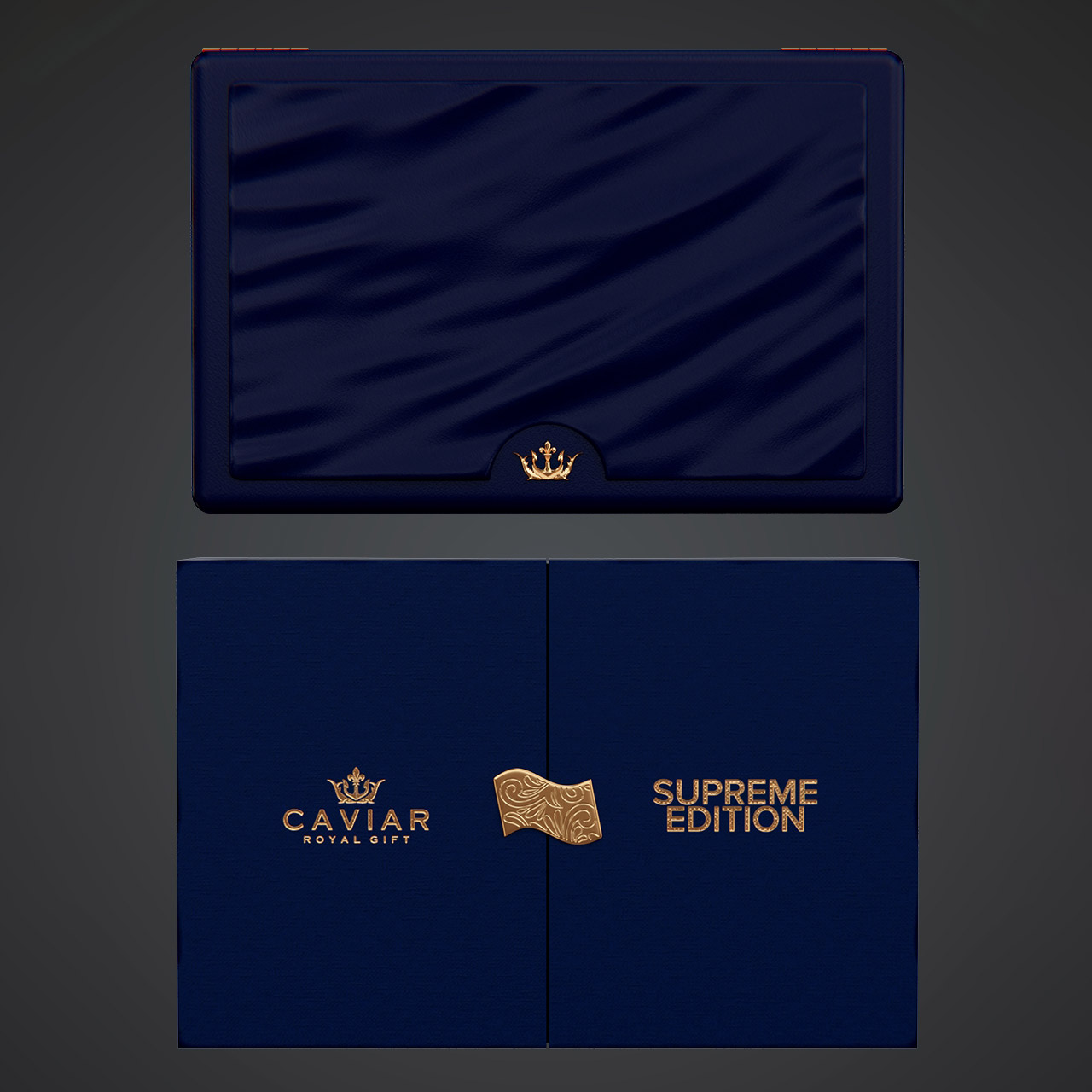
Packaging follows the same collector logic. A locked outer case plated with 24-karat gold houses a wood-and-leather Blue Wave box, a gold-plated Caviar coin, and the standard signature key. Production begins after payment and typically ships within a few business days.
Caviar used the same strategy on the iPhone 17 Pro earlier this year, inserting a near identical scrap of fabric in nine phones that sold for just over $9,600 and immediately sold out. Instead, this version uses Apple’s newest and most expensive form factor. Other Caviar Duo customized use crocodile leather and gold, but the Jobs Edition features a genuine piece of the company’s creator.
Most VPN apps protect only the device they’re installed on, leaving smart TVs, game consoles, and security cameras completely unshielded.
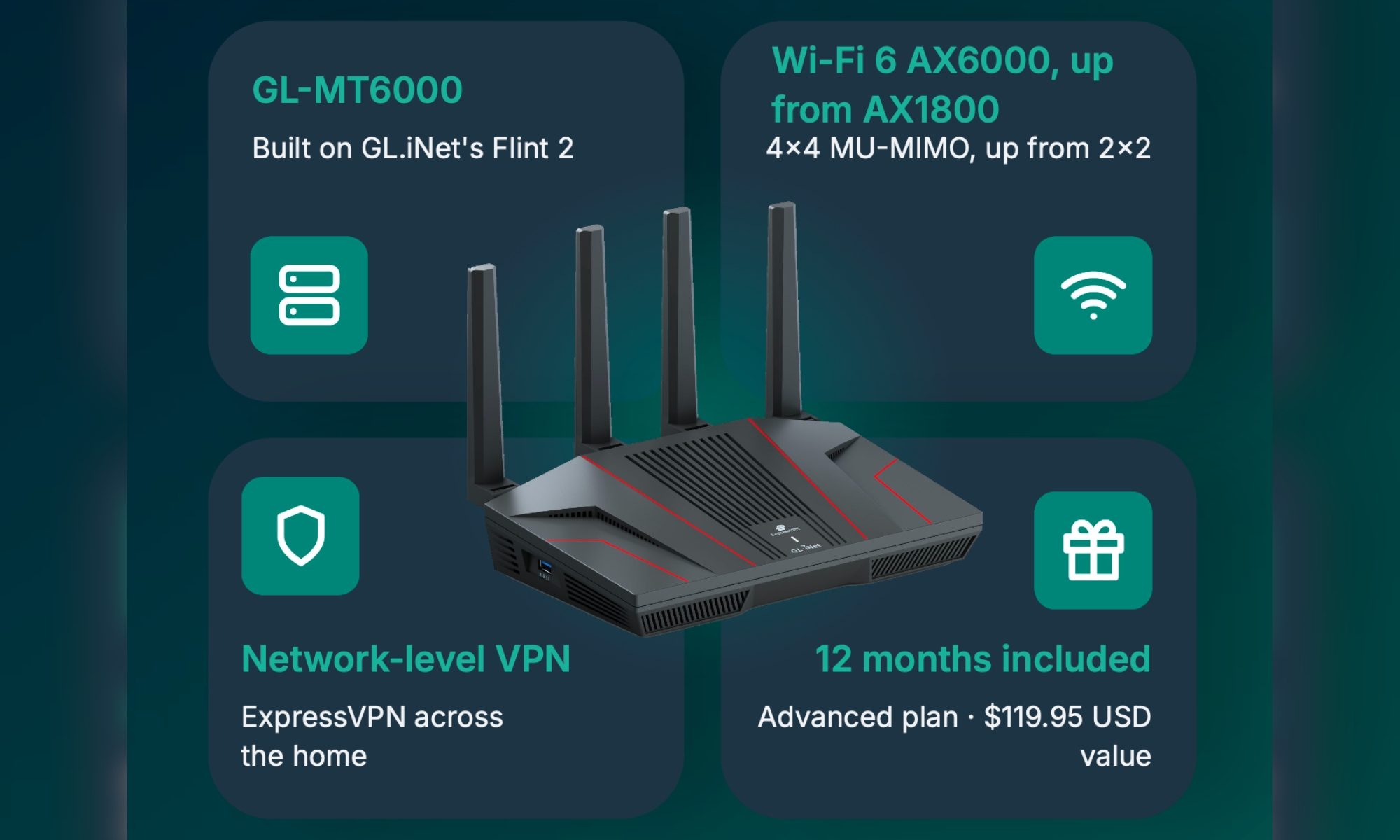
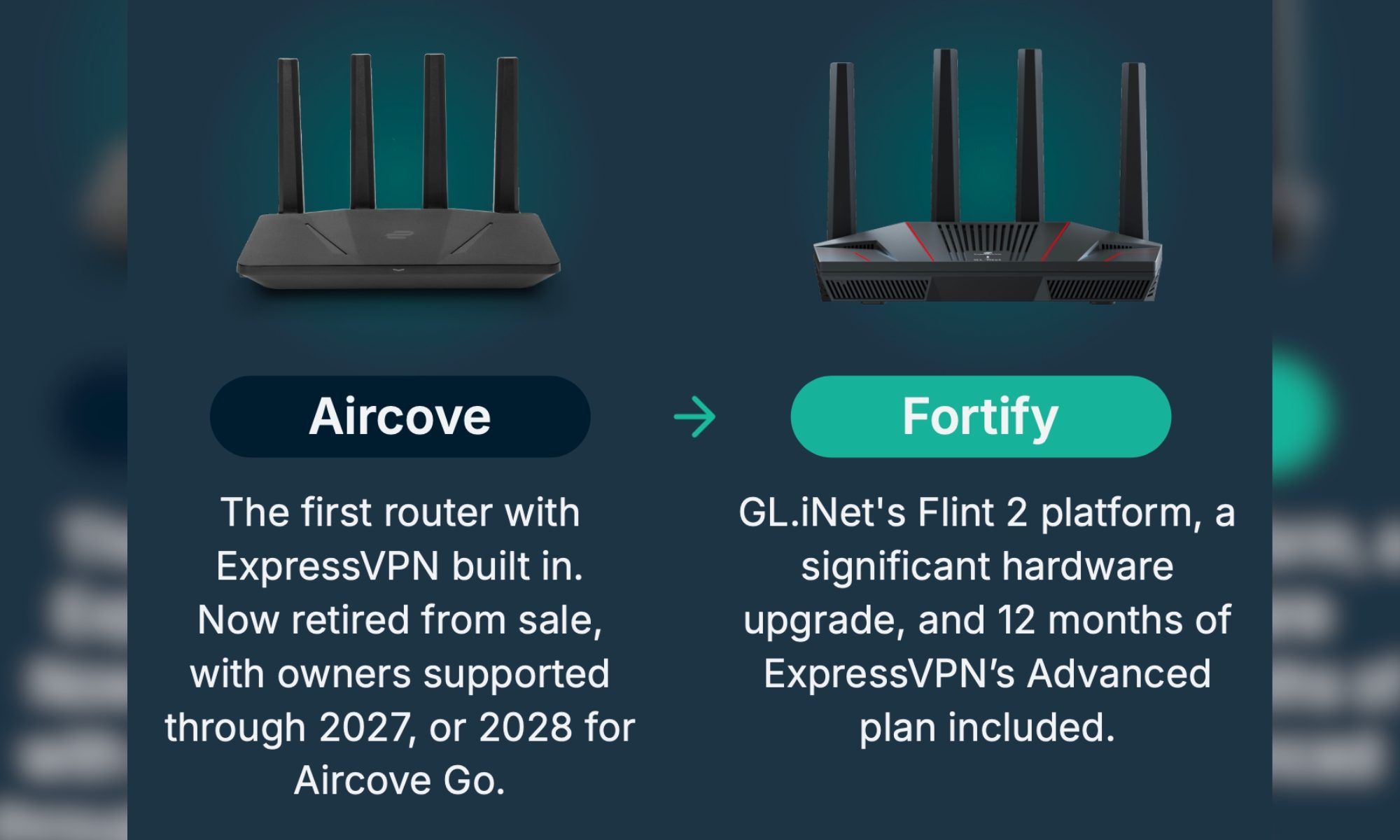
ExpressVPN’s solution has long been network-level encryption via its dedicated routers, but its latest release shifts gears entirely. The newly announced Fortify router replaces the aging Aircove lineup with a substantial hardware upgrade.
ExpressVPN
So what exactly changed with Fortify?
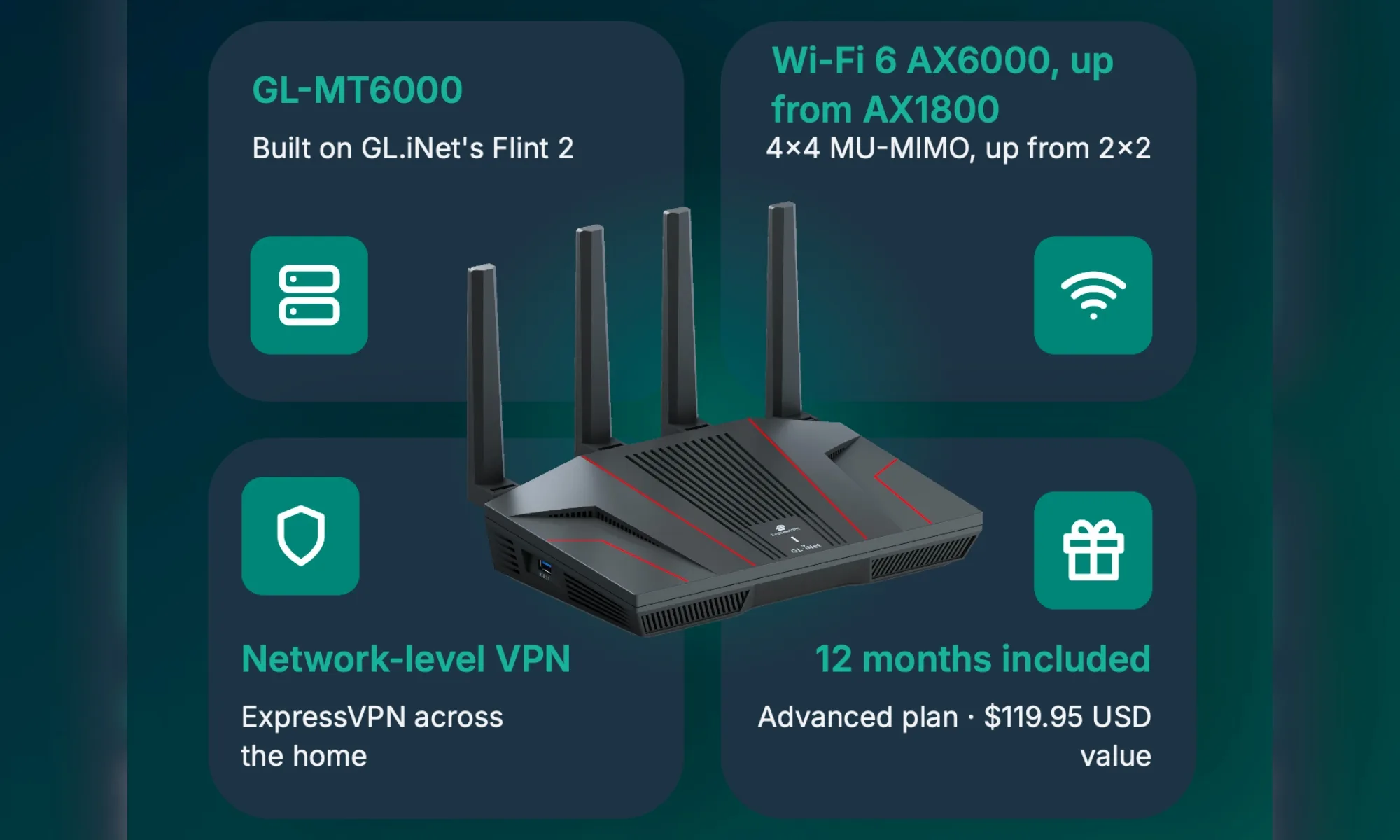
Built in partnership with GL.iNet on its Flint 2 platform, Fortify swaps Aircove’s dated Wi-Fi 5-era hardware for Wi-Fi 6 AX6000 with 4×4 MU-MIMO. That also brings a generational jump in overall VPN throughput.
WireGuard speeds now reach up to 900Mbps, nearly triple Aircove’s 330Mbps ceiling. A quad-core processor and genuine Multi-Gig ports back the speedy, protected connection and keep up with modern fiber connections. The new router has six ports total: two 2.5 Gbps Multi-Gigabit Ethernet ports and four 1 Gbps Gigabit LAN ports.
Whether it’s a multi-device smart home setup, a remote working setup, a small business that’s operating out of a house and its garage, or a multi-cabin office setup that spans across the floor, the Fortify router can not only handle multiple devices at once, but also keep the entire network safe and encrypted.
Advertisement
ExpressVPN
What happens to Aircove?
Aircove and Aircove Go are both being pulled from sale. However, existing owners will still get security updates through 2027 and 2028, respectively. To help with the upgrade, the company is also offering a 20% discount toward Fortify.
Every Fortify purchase also bundles a full year of ExpressVPN’s Advanced plan (around $120 in value), plus a password manager, email privacy tool, and a few days of travel eSIM data. Fortify launches September 16th at $199.99, first through GL.iNet’s own site. Amazon availability will follow shortly after.
Aircove
Fortify
Wi-Fi standard
AX1800, 2×2 MU-MIMO
AX6000, 4×4 MU-MIMO
VPN speed (WireGuard)
Up to 330 Mbps
Up to 900 Mbps
Ethernet ports
Standard Gigabit
Two 2.5 Gbps + four 1 Gbps
Device capacity
Limited
Up to 86 devices, 1,500 sq ft
The real story is partnering with GL.iNet rather than building hardware in-house. It lets ExpressVPN focus on the VPN and privacy software it’s known for, while outsourcing router engineering to a company with a proven platform in the Flint 2.
South Korean memory chip giant SK Hynix is in discussions with Intel to manufacture RAM chips in the U.S. for the first time, Reuters reported, citing anonymous sources.
The companies have reportedly discussed various options, one of which would have SK Hynix leasing space at Intel’s planned factory in Ohio to manufacture the chips. The chipmakers are also said to be considering a joint venture that could include cloud-service providers.
SK told TechCrunch on Wednesday that nothing has been finalized yet. “SK Hynix is exploring various options to strengthen its global competitiveness, but no specific plans or arrangements have been finalized at this time,” the Korean semiconductor company said in a statement. “No decisions have been made regarding the two scenarios mentioned in the article.”
The Korean chip giant, which has benefited massively from skyrocketing demand for high-bandwidth memory RAM chips used in data centers for AI applications, is already building a $3.8 billion advanced packaging and research facility for AI chips in West Lafayette, Indiana, with mass production expected to begin in 2029. The factory will use DRAM wafers made in South Korea and package them into HBM chips.
Advertisement
It remains unclear what types of memory chips the company would produce in Ohio if the deal goes through.
As a global chip shortage worsens, the Trump administration is seeking to expand production on American soil. The White House said in January that it could impose broader tariffs on semiconductor imports while offering tariff relief to companies investing in domestic manufacturing.
SK Group Chairman Chey Tae-won signaled support for U.S. chip production in July, saying the company should build factories in the U.S., if feasible, alongside those in South Korea’s Honam region. That month, the chipmaker listed its American depository receipts on the Nasdaq, broadening its access to American investors.
The potential deal with Intel could face scrutiny at home. Seoul holds that the decision would be up to SK Hynix, but any plan involving strategically important chip technology could trigger a government review under a law designed to prevent sensitive technology from being transferred overseas, according to Reuters.
Advertisement
Intel and SK Hynix have done business before: In 2020, Intel sold its NAND flash-memory business to SK Hynix for $9 billion.
Intel did not immediately respond to TechCrunch’s request for comment outside regular business hours.
When you purchase through links in our articles, we may earn a small commission. This doesn’t affect our editorial independence.
In Huntsville, Alabama, home to one of the nation’s largest cybersecurity hubs, educators and industry professionals are rethinking what cybersecurity education can look like.
Rather than separating classroom instruction from workplace experience, they are co-designing learning environments where students build cyber ranges, develop industry-informed capstone projects and secure internships that connect learning directly to future careers.
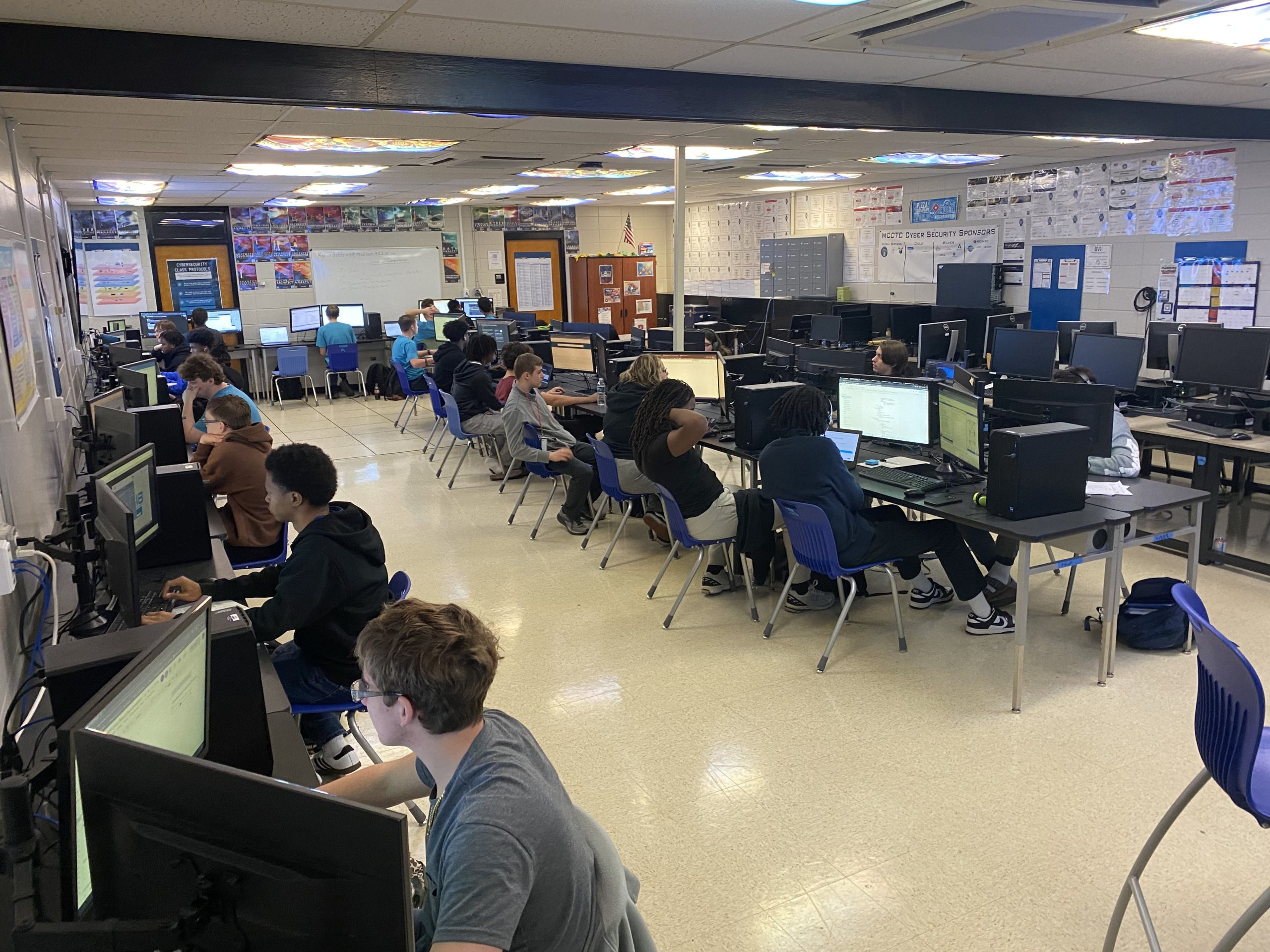
At the Madison County Schools Career Technical Center, cybersecurity instructor Kala Jo Grice-Dobbins is showing what that looks like in practice. Working alongside industry professionals, she is creating a classroom where students learn not only technical skills, but also how cybersecurity professionals think, collaborate and solve problems.
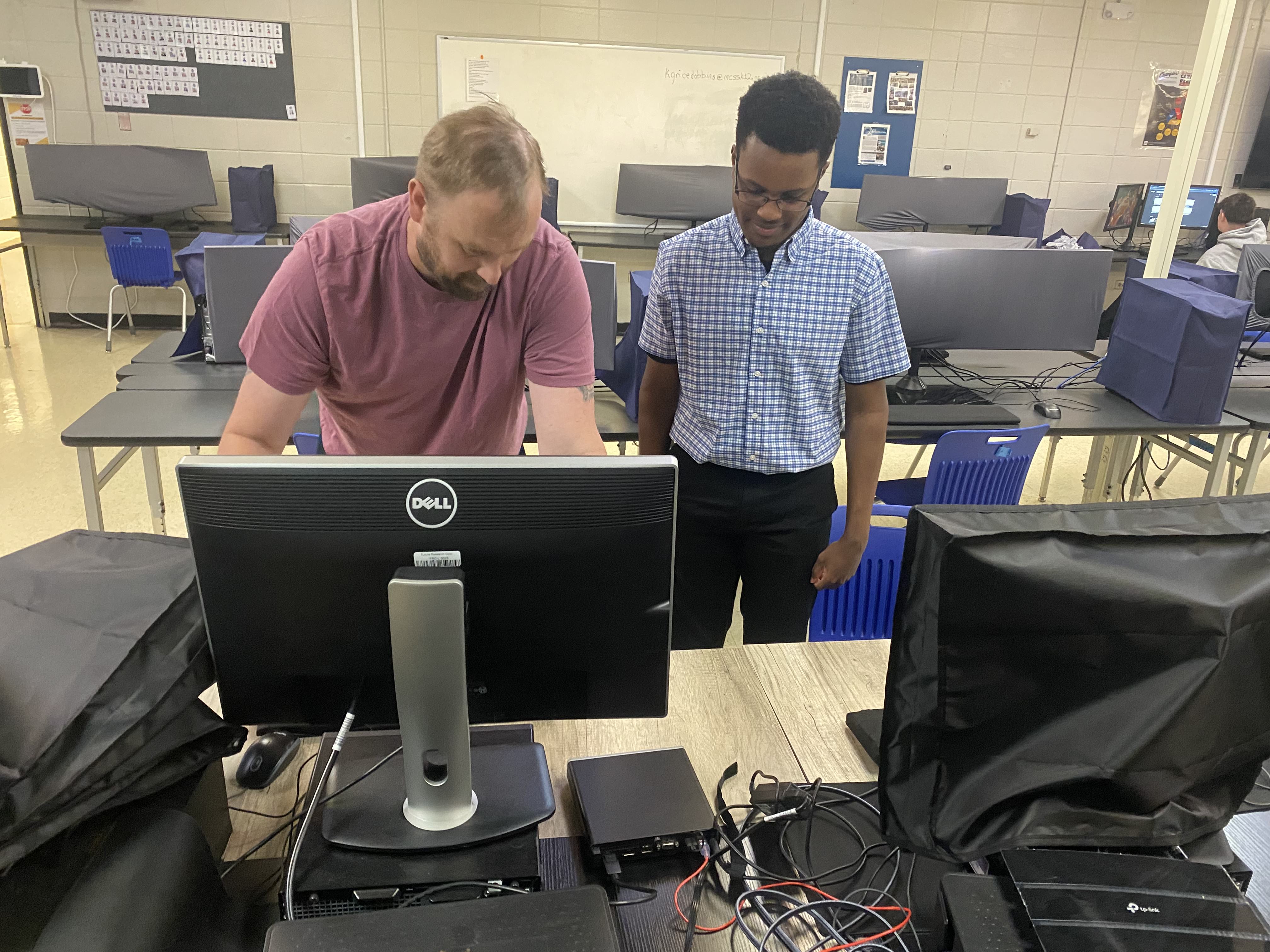
The students of Kala Jo Grice-Dobbins, cybersecurity instructor at Madison County Schools Career Technical Center, participating in the national CyberPatriot competition.
Expanding What is Possible in the Classroom
TheAlabama Technology Education and Career Pathways Accelerator, created by the STEM Foundation with district pathway implementation support from Digital Promise, helps districts ensure technology pathways lead to an industry credential of value by connecting educators with industry partners, work-based learning opportunities and resources aligned with workforce needs. For Grice-Dobbins, participating in the Accelerator became an opportunity to deepen those partnerships and rethink how students experience cybersecurity in the classroom.
Advertisement
Working alongside industry mentors, Grice-Dobbins built a classroom that looks and feels more like the environments students will encounter after graduation. Students work in a private cyber range across Windows and Linux environments, troubleshoot unfamiliar problems and prepare for senior capstone projects modeled after real cybersecurity work.
“Cybersecurity isn’t about memorizing answers,” Grice-Dobbins explained. “It’s about learning how to think through problems.”
Beyond the school year, Grice-Dobbins collaborates with industry partners and students to continue improving the program based on industry needs and learner goals.
During her four years teaching cybersecurity in Madison County, Grice-Dobbins’ students have secured internships with regional defense contractors and accepted positions that require security clearances. Eight students have completed internships through the program, creating a growing network of alums whose success after graduation is showing younger students what is possible.
Advertisement
Industry Brings the Workplace Into the Classroom
For industry professionals, this collaboration is an opportunity to share expertise, shape authentic learning experiences and mentor students at a deeper level.
David Hoover, a customer success manager at Canvas and an active member of Cyber Huntsville, helped design a government-style restricted network that gives students experience working in environments similar to those used by public-sector employers. He also advises senior capstone projects, helping students experience how cybersecurity teams solve problems, collaborate and communicate in professional settings.
Industry partner David Hoover, a Customer Success Manager at Canvas and an active member of Cyber Huntsville, gives a student a demonstration of how to create a private testing and learning environment in Linux.
Dr. Ian Clark, a technology leader at Science Applications International Corporation and cybersecurity mentor, has seen the long-term value of these collaborations throughout his career. Dr. Clark believes a simple shift has fundamentally changed how students learn: “There is no workbook.”
Rather than visiting the classroom for a single presentation, Hoover and Dr. Clark are involved throughout the learning process. They help shape projects, advise students as they work through challenges and provide feedback informed by current industry practice.
Advertisement
That sustained engagement gives students access to technical expertise and to professional expectations, communication styles and problem-solving approaches that are difficult to replicate through curriculum alone.
Seeing a Future in Cybersecurity
Jaxton first discovered cybersecurity during a freshman visit to the Madison County Career Technical Center. His father had sparked his interest in computers, and he immediately knew he wanted to join the program.
Over the next three years, that curiosity became a career path. Through industry-recognized certifications, increasingly complex projects and his senior capstone, Jaxton developed the technical skills and confidence to pursue cybersecurity after graduation. Along the way, he learned to think critically, leverage emerging technology to create solutions and work alongside industry mentors.
Experiences like internships, capstone projects and mentorship do more than build technical skills. They help students begin to imagine themselves as part of the profession. Rather than viewing cybersecurity as an abstract career, students understand where they fit, what they contribute and what opportunities are available after graduation.
Advertisement
Today, Jaxton plans to continue studying cybersecurity after graduation. More importantly, he no longer sees the field as something other people do. He sees himself in it.
Looking Ahead
The work taking shape through Alabama’s Technology Education and Career Pathways Accelerator demonstrates what’s possible when educators and industry professionals co-design learning together. As classrooms evolve alongside one of the nation’s fastest-changing industries, students gain more than technical knowledge. They gain confidence, professional connections and a clearer vision of where they belong.
For school systems looking to strengthen career-connected learning, the lesson extends beyond cybersecurity. When educators, employers and students collaborate to shape authentic learning experiences, classrooms become places where young people go beyond preparing for future careers and begin participating in the work those careers involve.
In context: Remember the recent bizarre case of a man charged with three felonies for destroying a Flock surveillance camera, despite it being a fake decoy? It seems Florida police have had an attack of common sense and reduced the charges to misdemeanors.
It was reported in late August that Evan Meyer, 24, was being charged with counts of criminal mischief causing more than $1,000 in damage, grand theft involving property valued between $750 and $5,000, and damaging or taking a computer, electronic device, or related equipment. All felonies.
Meyer believed he was destroying a Flock camera, a crime that has become increasingly common as anger toward the company intensifies. But in reality, he was destroying a 3D-printed decoy.
To say those charges seemed excessive is an understatement. For a start, a real Flock camera costs only around $800, not including installation fees, so a 3D-printed shell is obviously going to be valued much lower.
Advertisement
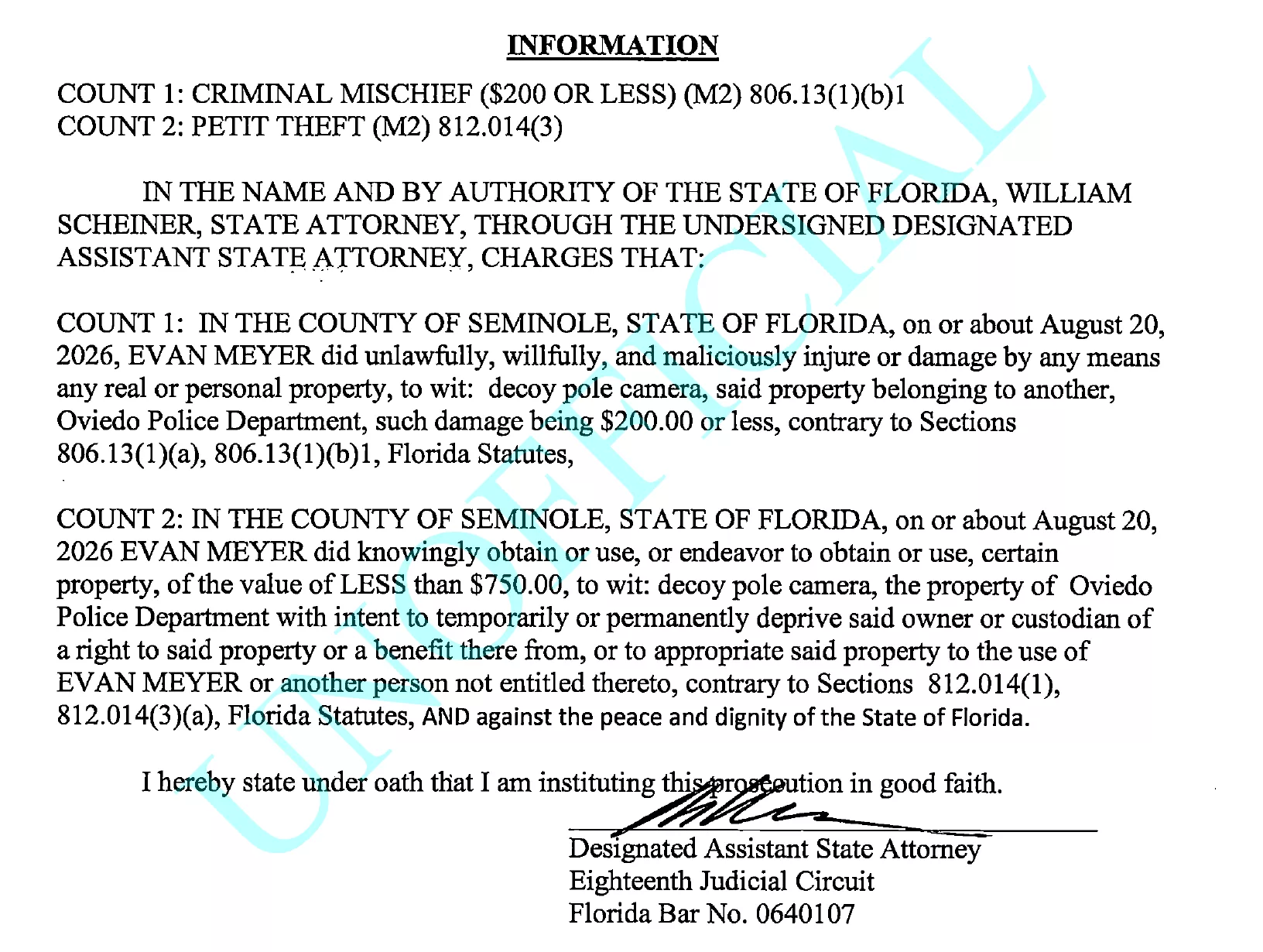
However, 404Media reports that Meyer’s charges were drastically reduced in a filing by an assistant state attorney this week. The felonies have been reduced to two second-degree misdemeanor charges.
The filing reveals that the damage to the camera, which he allegedly inflicted with garden shears after knocking it off a pole, came to $200 or less. He has also been charged with petty theft involving property worth less than $750.
The sting operation was prompted by several of Oviedo’s cameras disappearing. The police department’s solution was to 3D-print the shells, attach them to poles around the city, and then get officers to monitor the poles for multiple nights.
Lessening the severity of the charges isn’t too surprising when even the mayor, who was unaware of the decoy operation before the arrest, admitted that they were controversial.
Advertisement
There’s little doubt that most people have supported Meyer, as Flock has been behind a slew of negative headlines this year.
Those reports have included officers allegedly using Flock cameras to stalk former partners, police justifying database searches with entries such as “LMAO” and “idk”, and the company reinstalling cameras without permission after a California city canceled its contract and removed them.
With cities dropping Flock at a record pace, its reputation has become so toxic that police have even asked rival Axon to redesign its cameras so people stop mistaking them for Flock’s. And let’s not forget that it’s not just license plate readers that are the problem: camera-equipped police drones are the company’s fastest-growing business.
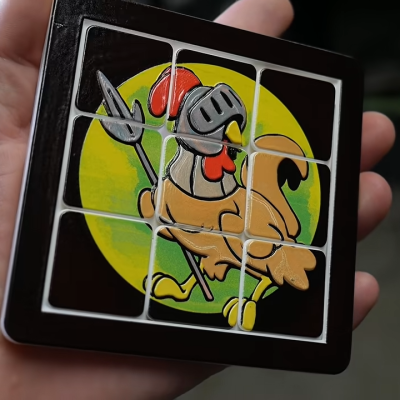
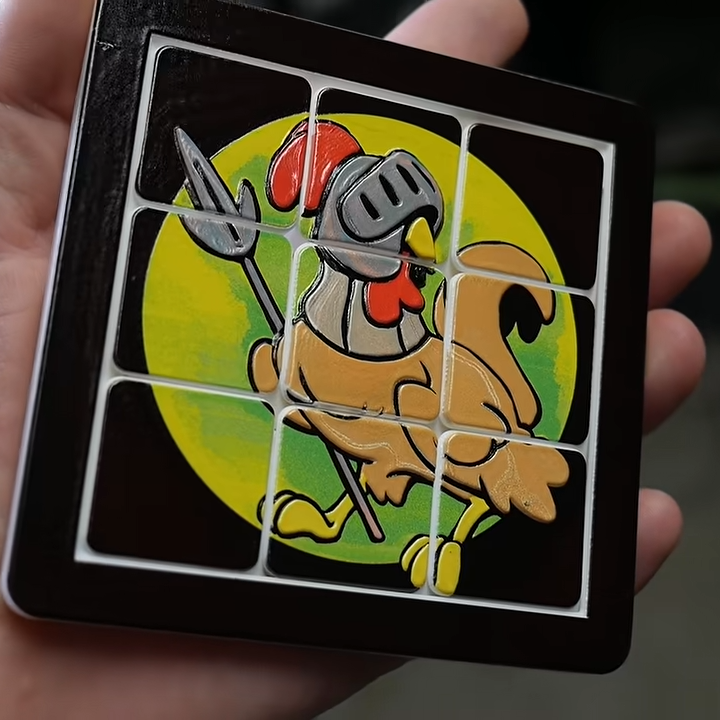
[Angus] of [Maker’s Muse] shows off both a parametric, print-in-place sliding puzzle design he created, and the results of UV printing full-color designs on the same. The results look beautiful, and there was a whole lot of trial and error involved in the process.
The design includes a pop-out tile, which can be re-inserted to a finished puzzle.
Creating a good print-in-place sliding puzzle depends a lot on tolerances. Today’s 3D printers are much more capable in this regard than they were ten or so years ago, but getting the right feel to the pieces was still a long learning process. It’s not at all easy to get all the different characteristics in the right balance. On one hand, if the pieces are too tight they won’t slide easily. But if they are too loose, the puzzle can bind because the pieces have too much play. It may also flex enough to pop apart. And of course, the shape of the pieces and their mating surfaces are constrained to angles and shapes that 3D print reliably. [Angus] persevered and succeeded, and shows off everything from cute 3 x 3 units to a massive scaled-up 11 x 11 puzzle, printed on his Prusa XL.
Getting the color onto the print is the work of a desktop UV ink printer, the same model our own Tom Nardi had a hands-on look at last year. [Angus] shows how printing a single color image onto the puzzle is pretty easy and looks great, but what’s even better is a textured relief image with some real tactile depth to it. Expect a lot more work to do for that, because thick layers of ink gum the puzzle up with overspray unless one avoids printing over the gaps in the tiles.
Watch both the puzzles and the color printing in action in his video, embedded just below.
Battery life has been stellar on the Pro models over the last few years, and that remains true here. The Pro Max is the more notable of the two because it packs a denser battery. With average use (around 5 hours of screen-on time), I hovered around 50 percent by the end of the day, and easily made it through day two on a single charge. I spent a little less time with the smaller Pro, but so far it has also comfortably gotten me through a day with around 40 percent left by bedtime. Safe to say, most people will very much enjoy the battery life, but the update doesn’t feel drastic.
Next, there’s the processor: the A20 Pro chip. I hardly run into problems with Apple’s flagship silicon, and that hasn’t changed. The phones run every app fluidly, and my benchmark tests show a surprisingly sizable leap over the A19 Pro in the 17 series.
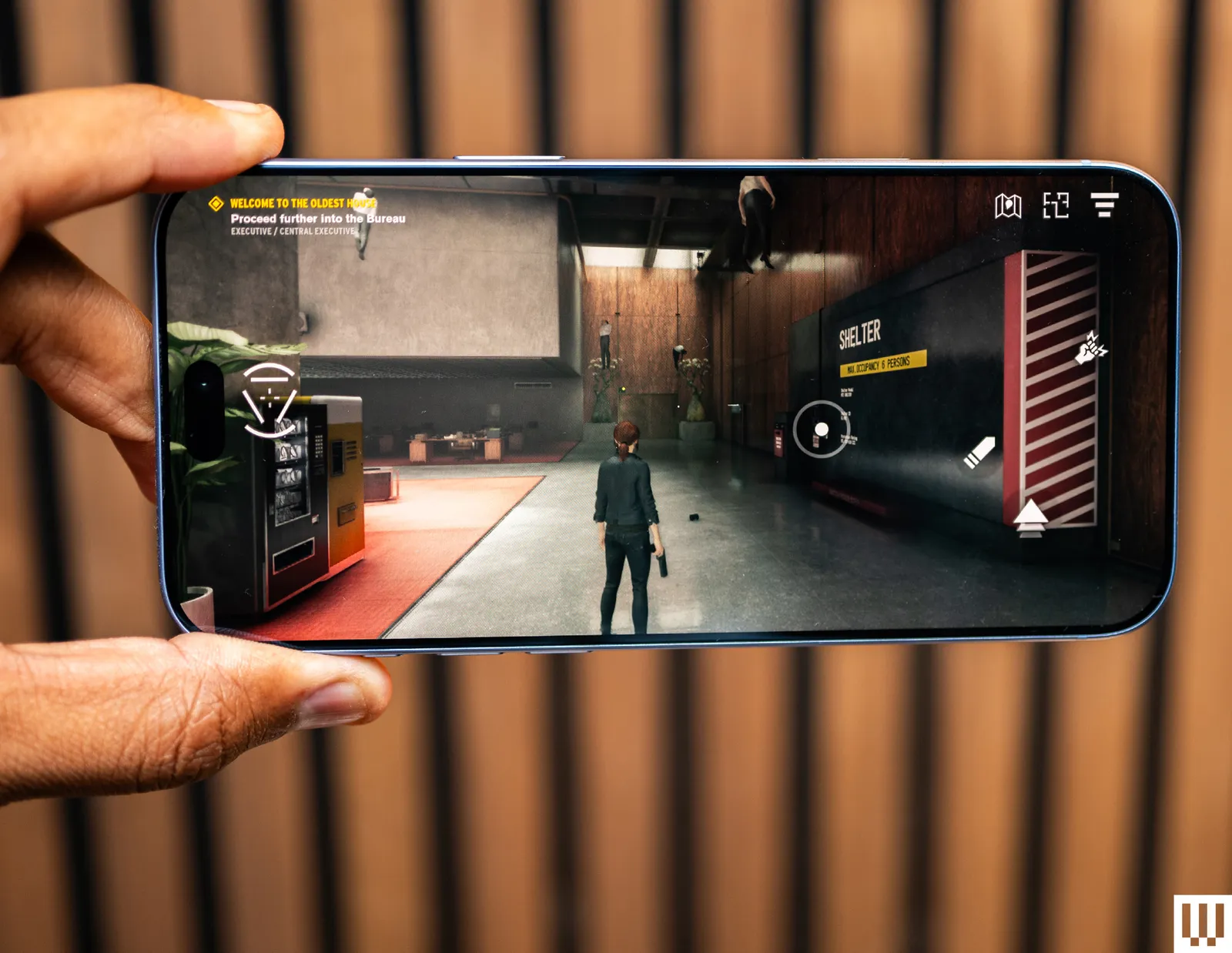
It runs Control—a AAA game from 2019 ported to iOS earlier this year—decently well. However, aggressive upscaling makes the graphics look grainy, and character movements can feel a little sluggish. (I maxed out the graphics settings.) It’s certainly not perfect, but I still can’t believe I’m playing such a demanding title on an iPhone.
Advertisement
Control on the iPhone 18 Pro Max.
Photograph: Julian Chokkattu
More impressive is Apple’s thermal management on these phones. The company has expanded the vapor chamber’s surface area by three times—the phone’s cooling technology that helps spread heat around—meaning the entire phone felt toasty after close to an hour of gameplay in Control, with no uncomfortable localized hot spots. This larger vapor chamber also lets you game longer before phone’s thermal throttling kicks in and slows everything down.
The iPhone 18 Pro models come with iOS 27 out of the box, which features the all-new Siri AI. Yes, Siri AI is infinitely more capable than any version of Siri that Apple has offered before. It still doesn’t quite have the spark or versatility of other AI assistants, but you might be fine with that. If you throw Siri AI a question, there’s a good chance it can actually give you a satisfactory answer now. Remember that Siri AI and other Apple Intelligence features aren’t exclusive to the latest models, though you do need an iPhone 15 Pro or newer to access them.
iOS 27 is now available to install on iPhone 11 and newer, and includes plenty of new features. One that’s particularly caught our eye is found within Safari.
With iOS 27, you can now receive notifications whenever a specific webpage changes within the Safari app. That means you can be notified if a product you’ve had your eye on for ages finally comes back in stock, or if an artist updates touring dates on their website.
It’s easy to set up and could save you from missing out. Follow our steps below to learn how to get notified when a website changes in iOS 27.
Describe what you’d like Safari to look for and when
Tap Next
Allow Notifications
Step 1.
Open Safari
Open the Safari app on your iPhone. Remember to make sure you have iOS 27 installed on your device.
Step 2.
Visit the website page you want to track
Find the exact page of the website you’d like to be notified about. For example, it could be for a product that’s out of stock or for a show you want to get tickets for. In our instance, we’re tracking the best smart rings page to be notified of new entries.
Step 3.
Tap settings
At the bottom of the screen, to the left of the address bar, you’ll see three horizontal lines. Tapping this will open up Safari’s Settings.
Step 4.
Select Notify Me
Tap Notify Me.
Advertisement
Step 5.
Describe what you’d like Safari to look for and when
Here you’ll need to tell Safari what it is you want to be notified of. So, if you want to be told when a product comes back in stock, then simply type this.
You can then tell Safari how often you’d like it to check the website. You can choose either hourly, daily, weekly or monthly, and adjust the time, plus the day of the week (for weekly searches), or the exact date (for monthly searches).
Step 6.
Tap the blue tick
Once you’re happy with your instruction, tap the blue tick button. Just note that you might need to wait for a few moments before the blue tick appears at the top right corner, but it will. If it doesn’t, then try again.
Step 7.
Allow Notifications
You may be prompted to allow notifications from Safari. Tap Allow.
Advertisement
Troubleshooting
Can I cancel a Safari notification?
Yes you can cancel a Safari notification and get it to stop tracking a website. To do this, simply visit the webpage again, open up Safari’s Settings and tap Notify Me. From here, you’ll find your existing notification, and the ability to delete it.
An anonymous reader quotes a report from Space.com: NASA’s Chandra X-ray Observatory has found a brand new type of an otherwise familiar object — compact binary systems that steal gas from other stars, but which do so while emitting very low-energy X-rays but copious amounts of ultraviolet. Chandra spotted 84 suspicious object emitting very low-energy X-rays in six galaxies — four evolved ellipticals and two spirals, namely our near-neighbor the Andromeda Galaxy (M31) and the Pinwheel Galaxy (M101). “We’ve never encountered a group of objects that act like this,” said Mustafa Muhibullah of the University of Alabama in a statement.
Compact objects, in the form of black holes, neutron stars and white dwarfs, are the remains of stars that have died. Their small size and powerful gravity means that they’re adept at getting close to orbiting companion stars and ripping the stars’ outer layers of gas away. The gas swirls around the compact object, falling onto its surface, and this accretionary process usually produces torrents of high-energy X-rays because the stolen gas becomes superheated by the compact object’s gravitational vice-like grip.
Because of their weak X-rays, Muhibullah’s team refer to them as ‘hypersoft X-ray sources’. Since low-energy X-rays and ultraviolet light are next to each other on the electromagnetic spectrum, Muhibullah and his team suspect that the low-energy X-rays are spillover from objects emitting prodigious amounts of ultraviolet. Moreover, they think that these objects are lower-level compact binaries. They’re hard to find though, because the interstellar medium of hydrogen and helium gas between the stars absorbs ultraviolet light. This could be why we have yet to find any hypersoft X-ray sources in our own galaxy, because we have to look through the interstellar medium through the plane of the Milky Way. Consequently, there could be a large population of hypersoft X-ray sources that remain undiscovered and they could have an important effect on the universe around them. The findings have been published in the journal Nature Astronomy.



















































You must be logged in to post a comment Login