
Tech
Visual imitation learning: Guidde trains AI agents on human ‘expert video’ instead of documentation



For years, the “last mile” of digital transformation has been littered with forgotten PDFs and ignored training manuals.
Organizations spend millions on sophisticated software like SAP or Salesforce, only for employees to struggle with basic navigation. Now, as the era of agentic AI arrives, companies face a double-edged sword: they must teach human employees to collaborate with AI, while simultaneously teaching AI agents to navigate the labyrinthine interfaces of the modern enterprise.
One idea that seems to be gaining momentum among AI-forward businesses: using screen recordings and tutorials/walkthroughs of someone performing an enterprise task — be it creating a new ticket or processing an invoice — and training AI to replicate the flow based on the screen capture. Just this week, a startup called Standard Intelligence went viral on X showing an early demo of open-ended version of this for the physical and digital world.
But the truth is, there are already players tackling this problem for the enterprise itself square-on: case-in-point, Guidde, an Israel startup born during the video-centric years of the COVID-19 pandemic, today announced an oversubscribed $50 million Series B funding round led by PSG Equity to address this exact knowledge infrastructure crisis.
Instead of feeding an agent a static PDF manual, Guidde provides high-fidelity “Video Ground Truth”—a rich stream of data captured from real human experts as they navigate complex software.
The investment signals a shift in how the tech industry views documentation—not as a static byproduct of work, but as the critical telemetry needed to train the next generation of autonomous digital agents.
Technology: from video capture to world models
At its core, Guidde is an AI Digital Adoption Platform (ADAP). However, its technological breakthrough lies in what happens behind the scenes during a recording.
Guidde isn’t just recording pixels; it is capturing every click, scroll, and latent interaction with the HTML page—the subtle pauses, the specific scroll depths, and the corrections a human makes when a system lags. This telemetry transforms raw video into a Vision-Language-Action (VLA) training set.
Meanwhile, the platform’s Magic Redaction automatically obscures sensitive data like passwords or credit card numbers during capture, ensuring materials remain secure and HIPAA-aligned.
“Every time you click a button, you drag-and-drop, you scroll, you type, we gather the interaction… all of it, we do cleanse it—there’s no private information,” explained Guidde co-founder and CEO Yoav Einav in an exclusive interview with VentureBeat.
Under the hood, the platform captures the underlying metadata and DOM (Document Object Model) changes synchronized with the video frames. The differentiator is the telemetry hidden beneath the surface.
This rich metadata creates a “digital world model” of enterprise software. And because each enterprise uses its own unique mix of apps and processes, Guidde is creating a data moat that allows enterprise agents to reason through legacy UIs with the same spatial awareness as a human, ensuring that automation actually works in a production environment rather than just a lab demo.
For a human, it’s a tutorial. For an AI agent, it is a high-fidelity map of the interface. This allows agents to “see” and reason through complex UIs the way humans do, solving the “last mile” of automation where agents previously failed due to lack of specific enterprise and in-situ usage context.
In a sense, Guidde is building a “self-driving car” like a Waymo for computer usage.
Product: three pillars of Guidd-ance
The platform has evolved into three distinct products designed to scale with an organization’s maturity:
-
Guidde Create: The engine for subject matter experts to turn workflows into documentation in minutes.
-
Guidde Broadcast: A personalized recommendation engine—often compared to Netflix—that delivers answers inside the tools people actually use. It knows who the user is and what department they are in to surface relevant content exactly when needed.
-
Guidde Discover: The newly launched “agentic” pillar. Like Waze mapping roads by observing drivers, Discover maps software routes by tracking how employees work. It understands the workflow, creates the content, and updates it automatically when the UI changes.
Training humans how to use AI — and AI using humans
The most non-obvious aspect of Guidde’s growth is its dual-purpose mission. “We’re the only platform that trains both humans and agents,” Einav stated.
As companies roll out AI tools like Microsoft 365 Copilot or ServiceNow agents, they hit a proficiency gap. One of Guidde’s largest customers revealed they were paying over $1 million a year for a sophisticated AI tool, yet “nobody knows how to use them because they did like a 30-minute training session, and then that’s it.” Guidde closes this gap by providing “bite-sized” video tutorials in the flow of work.
Simultaneously, these videos train the AI agents themselves. Foundation models like Gemini or GPT-4 often hallucinate when tasked with specific enterprise workflows because they weren’t trained on the highly specific, internal “vanilla workflows” found in private enterprise systems. Guidde provides the “starting point,” the “metadata,” and the “x, y coordinates of the button” that an agent needs to complete an action without getting stuck.
The multimodal advantage
To maintain this level of accuracy, Guidde employs a multimodal infrastructure. The system doesn’t rely on a single model; instead, it uses a “fleet” of models that evaluate one another.
-
Google Gemini: Generally used for visual tasks like analyzing PDFs or PowerPoints.
-
Anthropic Claude: Leveraged for writing the storyline and narrative scripts.
-
Feedback Loops: When a user edits a video, that data is fed back into the model to prevent the same mistakes from occurring in future captures.
This approach allows Guidde to replace a legacy stack of six or seven disconnected tools—Loom for capture, Adobe Premiere for editing, 11Labs for text-to-speech, and Synthesia for avatars—with a single, AI-native platform. “We basically pack everything for you,” Einav says, “and automate the entire process based on your brand guidelines.”
Video-first origin story
The genesis of Guidde lies in a frustration familiar to any product leader. Before founding the company, Einav and co-founder Dan Sahar spent years mastering video traffic at Qwilt, a company they started in 2010 to analyze how people watched Netflix and Disney+.
When COVID-19 hit, they saw a massive opportunity to apply that video expertise to the workplace. They observed that short video explainers could increase free-to-paid account conversions by 30%, but the friction of creating them was unsustainable.
In an interview, Einav recalled the “tedious work” of the old world: “My team in Israel were creating the content, someone in the US with a US accent was doing the narration, someone in the marketing team would write the script… and someone in the enablement team would do the edit.” This fragmented workflow meant a single video took two to three weeks to produce. “And then two weeks later, the product changes, and you need to redo it from scratch,” Einav added.
Guidde was built to collapse this cycle into seconds. By automating the “Magic Capture” of a workflow, the platform generates a structured narrative script and professional AI voiceover instantly. This removes the editing bottleneck, transforming subject matter experts into “training powerhouses.”
Licensing and market impact
Guidde’s pricing structure reflects its transition from a utility to a core piece of enterprise infrastructure:
-
Free: $0 (Up to 25 videos, web-app support).
-
Pro: $18/creator/month (Unlimited videos, brand kits).
-
Business: $39/creator/month (Unlimited text-to-voice, analytics).
-
Enterprise: Custom pricing (Multi-language translation, SSO, Magic Redaction).
The platform’s impact is already visible in the numbers: a 41% reduction in video creation time and 34% fewer inbound support tickets.
For customers like Emerson, this translates to 40–60% quicker guide creation. Support teams, in particular, are finding they can offload 80% of their ticket volume with agents—but only if those agents have the content to be useful.
“The agent without the content is useless,” Einav warns, noting that most enterprise documentation is either years out of date or entirely undocumented.
Community and industry early reception
Guidde already claims 4,500 enterprise customers and seeks to expand this number with its new round of funding. Support and operations leaders have been vocal about the platform’s ease of use. Christopher Cummings, VP of Client Experience at DocNetwork, highlighted its ability to provide “quick, personalized video responses to customer questions.”
Meanwhile, Wren Cotrone, a Director of Customer Support, noted that “Once you set the branding the way you want, you can really zoom through this stuff.”
Ronen Nir, Managing Director at PSG, summarized the investment thesis: “Guidde is solving one of the biggest blockers to successful AI adoption: the knowledge infrastructure.”
Why this matters now
The paradigm shift from text-only LLMs to agentic video intelligence is the defining trend of 2026. Guidde’s Series B signals that the “ground truth” for enterprise agents will come from raw video observation, not static documentation.
By capturing how work gets done across 10s of millions of workflows, Guidde is building a dataset that few others possess.
As Einav put it: “It starts with humans in the loop, and over time moves toward full autonomy.” For the modern enterprise, the map is no longer a static document—it’s a living, breathing video intelligence layer that guides both the workforce and the agents that support them.

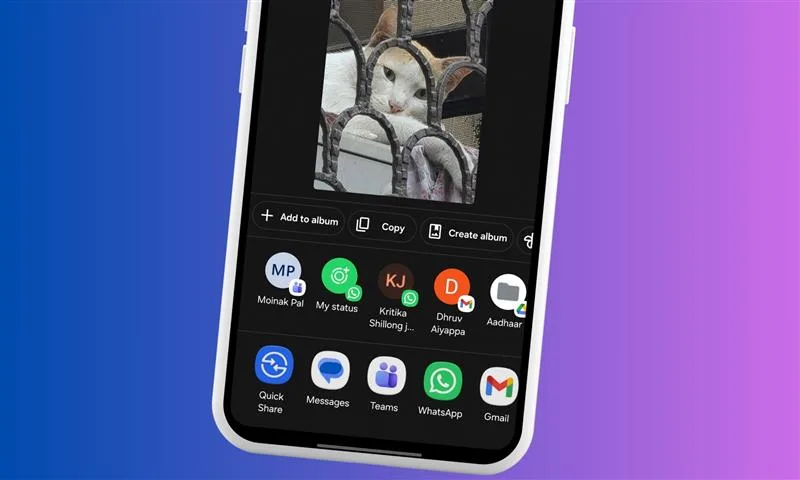
Google Photos has finally caught up with a feature that iOS has had for years. A new Copy button is now rolling out in the Google Photos share sheet. It lets you copy an image straight to the clipboard, without having to download it to your device first (via Android Authority).

What exactly does the new Google Photos feature do?
Until now, sharing a photo from Google Photos wasn’t as straightforward. First, you had to store the picture locally on your phone, which meant waiting for it to download before you could actually send it anywhere.
Now, you can argue that a second of waiting doesn’t sound like much. However, Google Photos users had to go through the same process every single time. That’s a second multiplied by the number of times you try to share a photo each day.
The new Copy button, spotted across multiple devices running the latest Google Photos version (7.71.0.895417930), eliminates that friction. You can simply tap Share on any image, hit the new Copy button, and the photo lands on your phone’s clipboard, good for pasting into a messaging app, a notes app, or wherever you want it to be.

Does the new Google Photos feature have a catch?
Unfortunately, yes, and I’d prefer you know it upfront rather than realizing it later. The copied image isn’t a pixel-perfect copy of the original one. To keep things quick and efficient, Google Photos copies a compressed version of the picture, with a slightly reduced resolution.
So, for casual sharing, the new Copy button does perfectly fine. However, I wouldn’t suggest relying on the feature for professional use or printing something. You’re better off spending those few extra seconds and downloading the entire file.
On the brighter side, the new Google Photos Copy button works for videos too. Furthermore, if you’re using Gboard, copied media appears in the keyboard’s clipboard, remaining there even after you’ve copied something else.
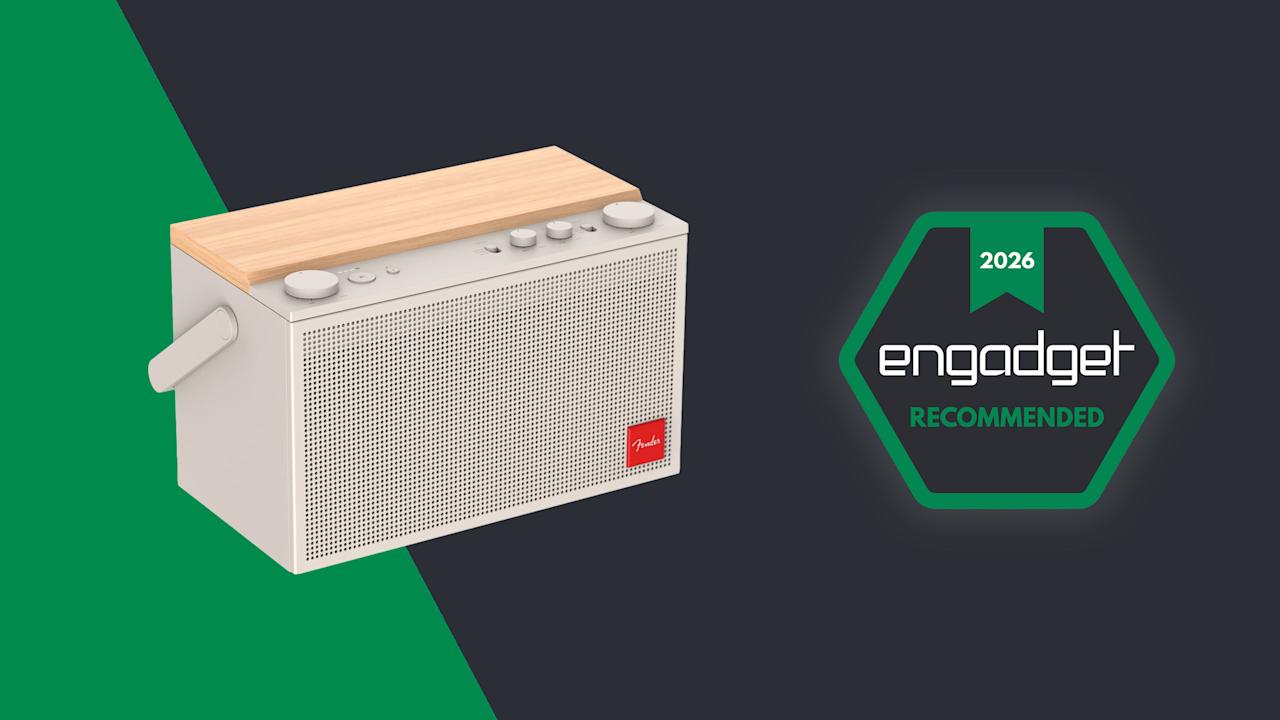
A new company needs to make a strong first impression. For Fender Audio, a new outfit owned by the legendary Fender Musical Instruments Corporation but operated by Riffsound, that introduction comes in the form of two speakers and a set of headphones. The Elie 6 ($300) and Elie 12 ($400) are portable Bluetooth speakers with sophisticated designs and unique features, offering similar functionality in two different sizes. These devices are essentially speaker/amplifier hybrids, since they both have ¼-inch/XLR combo inputs among their connections. Despite the unique mix of connectivity, the speakers still need to sound good and work well to compete with the many excellent portable options available today.

Fender Audio/Engadget
The Elie 12 is a large, powerful portable speaker with plenty of inputs, but weight and battery life could be deal breakers for some.
- Excellent audio clarity
- Four inputs
- Refined design
- IP rated but there’s exposed wood
- Big and heavy
- No app for customization
- Battery life lags behind top competition

Fender Audio
The Elie 6 punches above its size in audio clarity and connectivity, but it’s heavy for such a small speaker and some competitors offer better battery life.
- Excellent audio clarity
- Four inputs
- Refined design
- IP rated but there’s exposed wood
- Limited playback controls
- No app for customization
- Battery life lags behind top competition
The good: Design, inputs and overall clarity
The first time I saw the Elie 6 and Elie 12 in person, my eyes were immediately drawn to the design. These certainly don’t look like your typical Bluetooth speakers. That’s due in large part to the refined, almost retro look that’s consistent across both models. The Elie duo are products you won’t mind showing off, while many portable speakers are too flashy or brightly colored to be kept in a prominent place.
All of the onboard controls are clearly labeled physical buttons or dials, so you’re not left wondering how anything works. Around back, both the Elie 6 and Elie 12 have combo ¼-inch/XLR inputs (with 48V phantom power) as well as buttons for two wireless inputs and a 3.5mm line out. That combo jack means both speakers can double as amps, and the dual wireless connections allow you to sync microphones for karaoke sessions or hosting trivia night. This expanded functionality speaks to Fender’s history as a guitar icon, but it also gives the Elie speakers an upper hand over much of the competition at these sizes. Typically if you want these types of inputs, you’ll need to consider a much larger party box-style speaker to get them.
Before I move on from the controls and inputs, I need to mention the dedicated three-way mode switch for single, stereo and multi-speaker uses. This is so much easier than what’s on most portable speakers, which usually entails some weird dance with Bluetooth pairing or an app to sync multiple units together. Enlisting a physical switch so you know exactly where things stand is a much better and faster experience.
Some of the Elie 12’s controls (Billy Steele for Engadget)

In terms of sound, the best thing the Elie 6 and Elie 12 speakers have going for them is their overall clarity. The crisp, clear quality gives these Fender Audio units an advantage over the competition at these sizes. Throughout a range of genres — including bluegrass, alt-rock and heavy metal — both the Elie 6 and Elie 12 handled the varied styles with ease. The Elie 12 has twice the speakers as the Elie 6 (two full range, two tweeters and two subwoofers) and double the power output at 120 watts. So, of course, there’s more volume and bassy oomph on the larger speaker.
Both the Elie 6 and Elie 12 have a wider soundstage than many speakers of similar sizes. You can really hear this on American Football’s debut album, where the guitars ring clear, interlaced with drums while the vocals float on top. All of the elements stand on their own, but are seamlessly blended throughout every track. The Elie 12 features more bass and volume, but the overall sound quality, and importantly, clarity, is pretty similar for both speakers. I did notice more instrumental separation on the larger model though, so the album is a bit more immersive there.
The not so great: Controls, no app and battery life
While I appreciate the physical controls on the Elie 6 and Elie 12, the playback options are limited, which means you’ll be reaching for your phone often. There’s only a play/pause button on both speakers, and no controls for skipping tracks. And no, you can’t skip forwards or backwards with a double or triple press on the play/pause button. Plus, only the Elie 12 has bass and treble dials, so there’s currently no option for adjusting the sound on the Elie 6.
That’s because Fender Audio is still working on an app for its speakers and headphones. The lack of customization was an issue for me on the Mix headphones, and it continues to be one here. Customers need access to features and settings on devices like this, even if a company decides to offer audio presets instead of a full EQ. Some type of visual interface would also help when you’re using a few of those inputs at once. A basic mult-channel mixer maybe? Hey, a boy can dream.
Going back to the controls, the volume dials on both speakers could use refining. First, a listenable volume doesn’t happen until halfway. Anything below that and that excellent clarity isn’t present, and you can’t really hear the content well at all. There’s plenty of power at 50 percent and above, so that’s not a concern, but the control needs to be recalibrated for more even increases. What’s more, adjustments are slightly delayed: when you turn the dial, it takes a second or two for the speaker to catch up. To me, it feels like that should be instantaneous.
The input panel on the Elie 6 (Billy Steele for Engadget)

When it’s time to venture outdoors, both the Elie 6 and Elie 12 are IP54 rated for dust and water splashes. However, both speakers have a wood panel on top, which certainly won’t withstand much moisture. As such, I find the IP ratings confusing, since it’s obvious the entirety of the designs aren’t up to that task. If you’re careful about water though, both speakers have enough volume for open-air use.
One other consideration for the Elie 6 and 12 is their weight. The smaller speaker weighs just over five pounds, while the larger model is a whopping 8.8 pounds. For comparison, the Sonos Play is just 2.87 pounds and JBL’s Xtreme 4 tips the scales at 4.63 pounds. This means the Elie 6 and 12 are portable options, but they aren’t the grab-and-go type of speakers some of the competition offers — especially when weight matters.
Battery life is one other area the Elie 6 and Elie 12 fall behind some of their competition. The smaller Elie 6 offers 15 hours of use while the larger Elie 12 should last up to 18 hours. That sounds like more than enough since it’s longer than a full day, right? Well, JBL Bluetooth speakers at comparable prices last 24 and 34 hours. The new Sonos Play is rated at 24 hours, and one of my personal favorites, the Bose SoundLink Max, lasts up to 20 hours.
Wrap-up

The Elie 6 (left) and Elie 12 (right) (Billy Steele for Engadget)
There’s no doubt Fender Audio built two versatile, great-looking speakers here. Both the Elie 6 and Elie 12 are capable devices, and you don’t have to sacrifice much if you opt for the smaller of the two. The unique collection of inputs is typically only available on much larger speakers and the overall sound quality is well-suited for a range of genres.
Speakers like these really need an app though, especially when a company offers four inputs to juggle. I’m sure would-be customers would also like to dial in the EQ to their preferences, too. Sure, you can find longer battery life elsewhere, but the blend of design, sound and connectivity stands out at these prices. I’d call that a solid first impression.

A new report claims that Apple has had to agree to a three-year Samsung Display contract because no other firm can make the screens needed for the iPhone Fold.

Render of a possible iPhone Fold design – image credit: AppleInsider
Apple likes having multiple suppliers, both to avoid over-reliance on any one source, and to play them off against each other in order to lower prices. Now a year ago rumor about Samsung Display producing iPhone Fold screens is reportedly confirmed, and the deal favors the supplier.
According to The Elec, Samsung Display proposed a three-year exclusive deal to supply the foldable OLED panels for the iPhone Fold. Reportedly, at present BOE’s foldable panels as used by Huawei are considered inadequate, and Apple’s other main supplier, LG Display, doesn’t yet make folding screens for smartphones.
Continue Reading on AppleInsider | Discuss on our Forums

BrianFagioli writes: Artificial intelligence has now run directly on a satellite in orbit. A spacecraft about 500km above Earth captured an image of an airport and then immediately ran an onboard AI model to detect airplanes in the photo. Instead of acting like a simple camera in space that sends raw data back to Earth for later analysis, the satellite performed the computation itself while still in orbit.
The system used an NVIDIA Jetson Orin module to run the object detection model moments after the image was taken. Traditionally, Earth observation satellites capture images and transmit large datasets to ground stations where computers process them hours later. Running AI directly on the satellite could reduce that delay dramatically, allowing spacecraft to analyze events like disasters, infrastructure changes, or aircraft activity almost immediately. “This success is a glimpse into the future of what we call Planetary Intelligence at scale,” said Kiruthika Devaraj, VP of Avionics & Spacecraft Technology. “By running AI at the edge on the NVIDIA Jetson platform, we can help reduce the time between ‘seeing’ a change on Earth and a customer ‘acting’ on it, while simultaneously minimizing downlink latency and cost. This shift toward integrated AI at the edge is a technological leap that can help differentiate solutions like Planet’s Global Monitoring Service (GMS), providing valuable insights for our customers and enabling rapid response times when it matters most.”


Packaging has shifted from a back-end afterthought to the center of Intel’s manufacturing strategy as AI workloads push designers to stitch together many specialized dies into a single system. At its Rio Rancho, New Mexico, site – once home to a shuttered Fab 9 that sat idle for years –…
Read Entire Article
Source link

Slightly more than 20% remained unemployed
Private institution graduates faced a tight job market in 2025, with fewer than half landing full-time employment. However, median salaries remained steady, according to the latest Private Education Institution (PEI) Graduate Employment Survey released by SkillsFuture Singapore (SSG) on Wednesday (Apr 8).
Only 46.9% of fresh graduates found full-time work, a figure similar to 2024’s 46.4%. At the same time, the median gross monthly wages of those in full-time jobs in 2025 remained the same as in 2024, at S$3,500.
In comparison, of the 83.4% of graduates from autonomous universities who found employment in 2025, 74.4% secured full-time positions, compared to 79.4% in 2024. The median gross monthly salary for graduates who secured jobs within six months remained steady at S$4,500.
The PEI Graduate Employment survey was conducted between Oct 2025 and Jan 2026, across 3,800 participants of the 6,150 fresh graduates of full-time bachelor’s degree programmes across 26 private institutions. This includes the Singapore Institute of Management and PSB Academy.
Overall, among the 2,600 graduates surveyed who were working or seeking employment, 78.9% of them landed a job within six months of graduation, a slight uptick from 78.6% in 2024.
Almost one-fourth of graduates (24%) found part-time or temporary work in 2025, similar to the year before. Those who were doing freelance work grew slightly at 5.1%, up from 4.2% in 2024.
Meanwhile, 21.1% remained unemployed. 2.4% had accepted offers but not yet started, and a small 0.6% were striking out on their own as entrepreneurs.
Not all private university graduates fared the same

Among the surveyed private university graduates, not all fared equally.
Health science graduates led in both employment and pay: 76.5% are in full-time permanent roles, with median salaries at S$3,935. This is followed by the Sciences at 57.5% employment, while engineering trailed at 49.4%. Information and digital technologies tied engineering for the second-highest pay at S$3,900.
When it came to salaries by institution, James Cook University graduates took home the most at S$3,700 a month, followed by those from the Management Development Institute of Singapore at S$3,580.
SSG’s director-general for private education, Angela Tan, struck an optimistic note.
“The employment outcomes for PEI graduates have remained steady, reflecting their adaptability and readiness for the workforce in today’s fast-changing job market,” she said, adding that SSG will continue working with partners to provide skills and career guidance.
- Read other articles we’ve written on Singapore’s current affairs here.
Featured Image Credit: Pexels
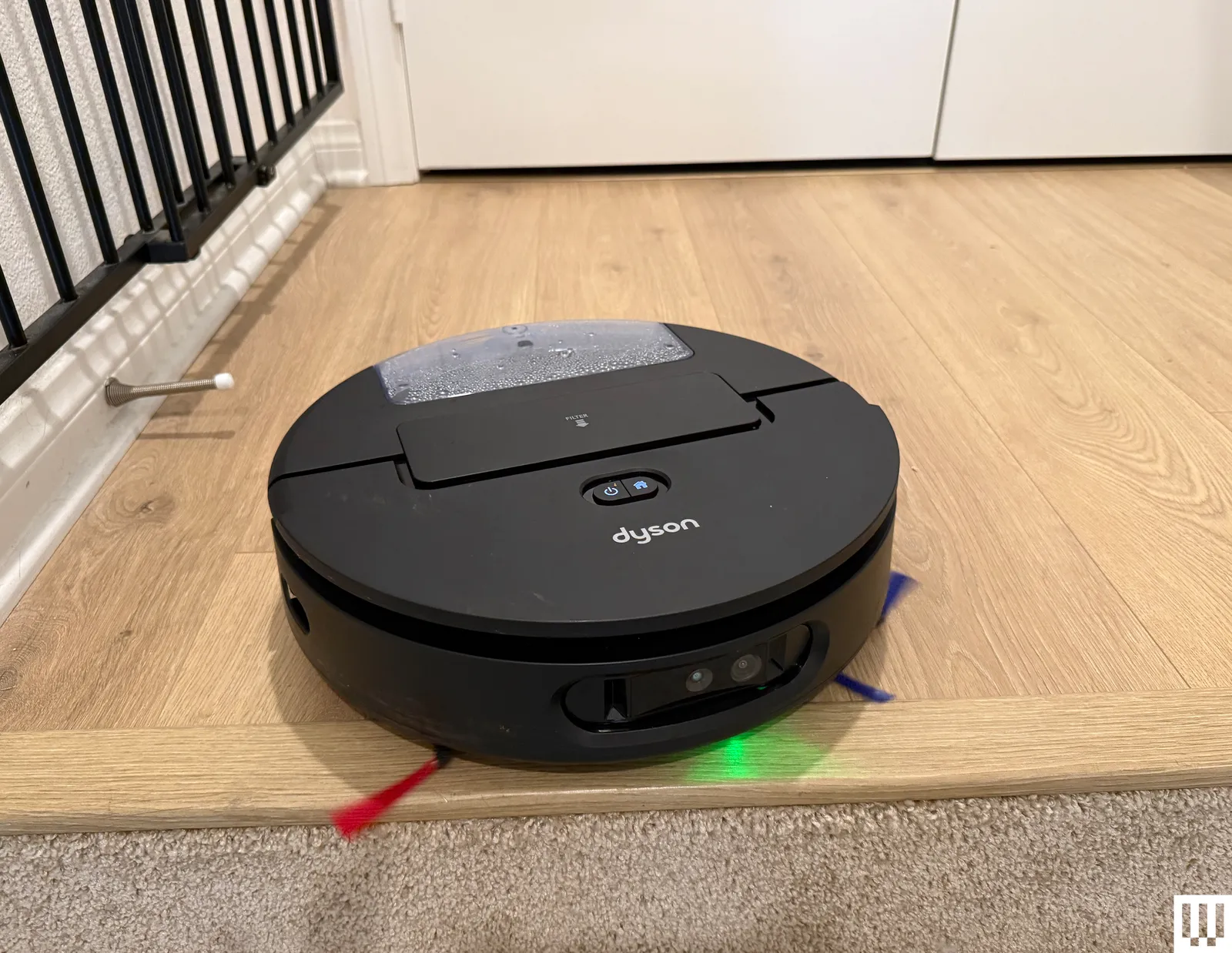
The vacuum failed to clean up two of the three test Cheerios that I strategically placed around my main floor to see which nooks and crannies it could reach. Both had small overhangs (one was an Ikea Billy bookshelf and the other a freestanding cabinet) that the Spot+Scrub couldn’t get under. It doesn’t have an extendable arm to help fix the issue.
I ran into a similar issue upstairs. My bathroom cabinets are the same basic builder-grade set as my downstairs kitchen, but the Spot+Scrub managed to wedge itself underneath my primary bathroom cabinets and then struggled to remove itself. It did the same thing with my low bed frame, forcing itself underneath after many attempts, and then it couldn’t get out. I marked the bed as a no-cleaning zone in the app, but, like the kitchen island, since the Dyson map doesn’t know where my bed is, I had to guesstimate, leaving a good portion of the bedroom without any vacuuming.
Photograph: Nena Farrell

Still, it did a good job of cleaning my upstairs carpet. While this robot vacuum can map multiple floors, the operation wasn’t as completely smooth as I had hoped. When the Spot+Scrub finishes cleaning on a floor without a base station, it’ll return to the starting position. Once you move it to the dock, it’ll just start charging without emptying. That means when it goes to work on my main floor, the mop pad isn’t cleaned, dry debris is still left in the vacuum, and the dirty water chamber isn’t dried. It’s almost like it resets itself, forgetting its last function.
So if you’re using it on multiple floors, save the one with the docking station for last. I ended up having the Spot+Scrub clean my main floor after the upstairs, just to make sure the vacuum would be fully emptied and dried. You also have to activate the cleaning function while the robot is still in its docking station, so it can prep for mopping, then pause the cleaning (you can do this in the Dyson app or on the vacuum itself) once it rolls out of the docking station to then lift and move it to another floor.
AI Wars

Photograph: Nena Farrell
Of course, there’s the feature this vacuum is named for: its built-in AI that spots stains and scrubs them away. The Spot+Scrub uses an HD camera to inspect the floors, then uses AI to analyze what it sees and know when to scrub trouble spots. It’ll go back and forth over those spots, and the AI will calculate how often it needs to do so to remove the stain.

alternative_right quotes a report from the New York Post: The CIA used a futuristic new tool called “Ghost Murmur” to find and rescue the second American airman who was shot down in southern Iran, The Post has learned. The secret technology uses long-range quantum magnetometry to find the electromagnetic fingerprint of a human heartbeat and pairs the data with artificial intelligence software to isolate the signature from background noise, two sources close to the breakthrough said. It was the tool’s first use in the field by the spy agency — and was alluded to Monday afternoon by President Trump and CIA Director John Ratcliffe at a White House briefing. “It’s like hearing a voice in a stadium, except the stadium is a thousand square miles of desert,” a source briefed on the program told The Post. “In the right conditions, if your heart is beating, we will find you.” The relatively barren landscape made for “an ideal first operational use” of Ghost Murmur, the first source noted.
“Normally this signal is so weak that it can only be measured in a hospital setting with sensors pressed nearly against the chest,” the source said. “But advances in a field known as quantum magnetometry — specifically sensors built around microscopic defects in synthetic diamonds — have apparently made it possible to detect these signals at dramatically greater distances.”
“The capability is not omniscient. It works best in remote, low-clutter environments and requires significant processing time,” this person added.
OnePlus has been everywhere in the news lately, and not always for the calmest reasons. Reports recently suggested the brand was pulling back from several major markets, right after the exit of its India CEO, which is a pretty big deal considering how important India is for the company. And yet, here it is, doing the exact opposite of slowing down.
Just this month, OnePlus dropped the Nord 6, and now fresh reports hint that it’s stepping into the handheld gaming space as well. It’s an interesting move, especially in a year that already feels like a turning point for the brand. If anything, this new direction makes it clear that OnePlus isn’t retreating, it’s reshuffling and trying something bold.
OnePlus just teased something that refuses to be boring
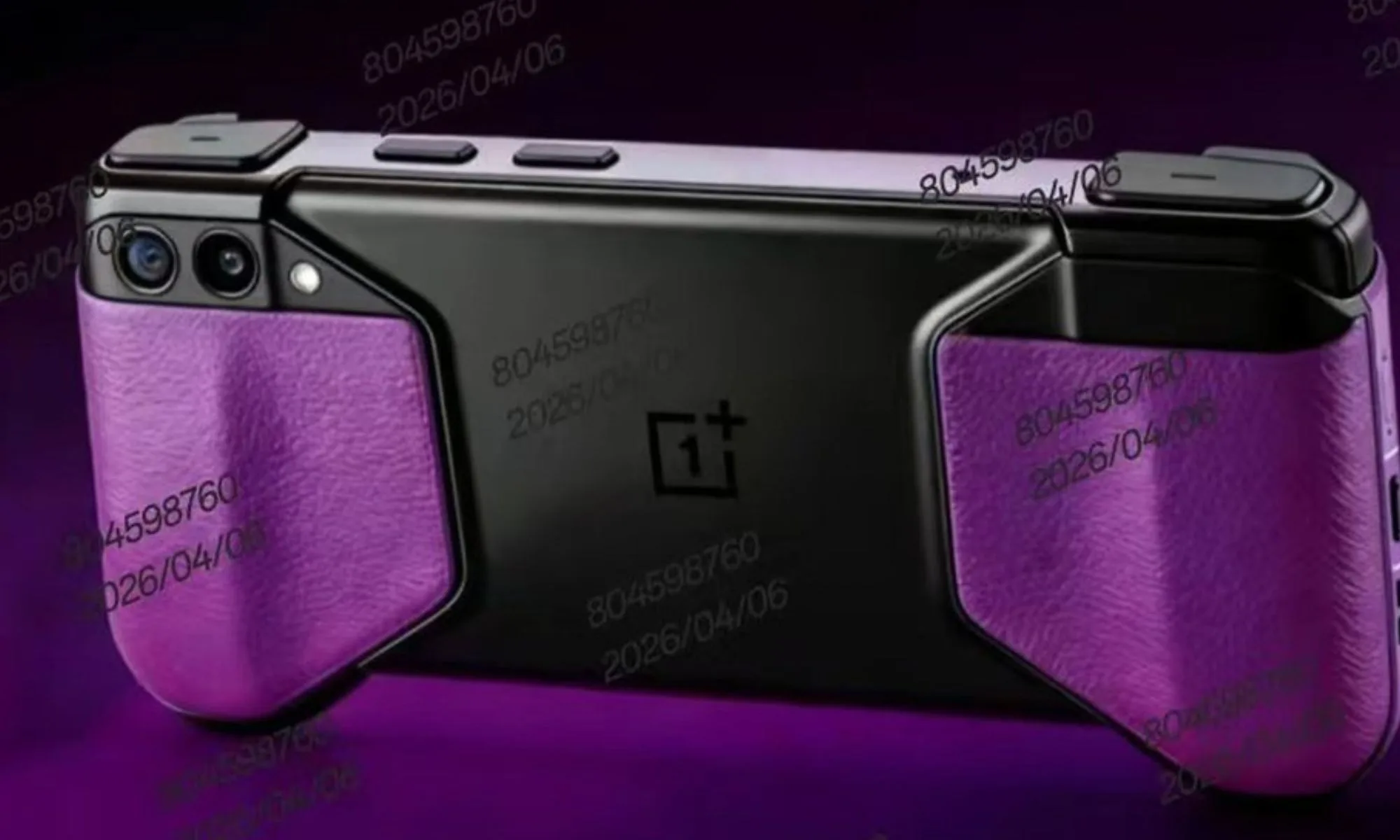
A well-known tipster, Digital Chat Station, has shared what appears to be the first look at OnePlus’s upcoming gaming handheld on Weibo. And from that single image, there’s already quite a bit to unpack. The device seems to lean into a clean, almost boxy design, with a square-ish profile that makes it stand out from the usual rounded handhelds. Interestingly, there’s also a rear camera module on the back panel, which adds a bit of curiosity to the mix.

Another tipster, Bald Panda, also on Weibo, claims the handheld could feature an 8-inch display and run on a MediaTek Dimensity chipset. While the exact processor hasn’t been confirmed yet, all signs point towards MediaTek being the brains behind it. As for the design, it’s got a sleek black finish paired with a contrasting purple hand rest, which honestly sounds like a bit of a flex. It gives the device a premium, slightly playful look, rather than going all-in on the usual serious gamer aesthetic.
I’m genuinely excited to see OnePlus step into a completely new space. It’s not an easy category to crack, and building credibility here will take time. That said, OnePlus doesn’t exactly have a history of doing things halfway. When it commits to something, it usually brings a certain level of polish and thoughtfulness to the table. So while this handheld might be new territory for the brand, there’s a good chance it won’t feel like a first attempt. If anything, this could be OnePlus testing its limits a little, and that’s where things tend to get interesting.
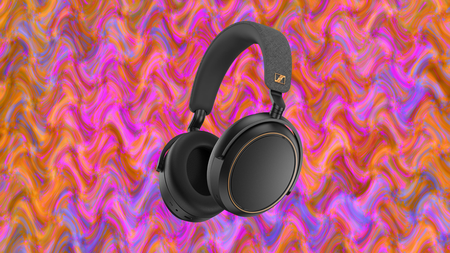
The Sennheiser Momentum 4 has earned a reputation as one of the most capable over-ear headphones at its price point, and this discount makes a strong case for picking one up right now.
A $250 discount makes that case even harder to ignore, bringing the Sennheiser Momentum 4 Wireless down to $199.95 from its original $449.95 on a pair of noise-cancelling headphones that genuinely punch above their discounted price.
Sennheiser’s Momentum 4 stays locked at its Amazon sale price, giving you 56% off high‑end, over‑ear audio
The Sennheiser Momentum 4 has a reputation as one of the most capable headphones at its price point, and this discount makes them even more tempting.
The 42mm dynamic drivers are a meaningful part of that story, delivering a frequency range of 6Hz to 22kHz that captures both the deep sub-bass rumble in electronic music and the fine harmonic detail in acoustic recordings that smaller drivers tend to smear.
AptX Adaptive Bluetooth helps maintain that audio quality wirelessly, adjusting the bitrate dynamically so that the signal holds up even when you are moving through environments with heavy wireless interference, like a crowded commuter train or a busy airport.
Adaptive noise cancellation handles the environmental side of things, and the transparency mode lets you flip back into the world around you without removing the headphones, which matters when you are navigating a city or need to catch a platform announcement.
Four beamforming microphones handle calls with enough directional precision to suppress wind and ambient noise independently, so the person on the other end hears your voice rather than the background of wherever you happen to be.
Battery life is where the 4.5-star Momentum 4 genuinely separates itself from the competition in this category, with 60 hours of playback on a single charge, meaning most users will go weeks between top-ups under realistic daily use patterns.
The foldable design and included carry case make the headphones practical for travel as well, and the package also includes a USB-C cable and a 3.5mm to 2.5mm audio cable for wired listening when Bluetooth is not an option.
Sennheiser’s Smart Control Plus app rounds out the experience, giving you access to a parametric equaliser, preset sound modes, and granular controls over noise cancellation and transparency levels.
For commuters and frequent travellers who will lean on both the ANC and the battery capacity daily, the Momentum 4 at $199.95 represents one of the strongest value propositions currently available in the premium over-ear headphone market.
An excellent pair of wireless headphones that deliver a balanced, neutral presentation, long battery life and very good noise cancellation. The Sennheiser Momentum 4 Wireless all-round performance is excellent though the Sony WH-1000XM5 are better in most respects, and available for similar money
-
Great comfort
-
Clear, musical audio
-
Very good noise cancellation
-
Massive battery life
-
Excellent wireless performance
-
Functional look
-
Not the best ANC at this price
-
Beaten for call quality

The Viral ‘Jessica’ Toddler Tantrum Hack Is Not A Long-Term Parenting Fix

Konnor Griffin extension: Pirates lock up top prospect on nine-year deal

Google Photos now saves you a precious second with a iPhone-like copy trick

Why Israel is blocking foreign journalists from entering

Bitcoin: We’re Entering The Most Dangerous Phase

Alan Cumming Brands Baftas Ceremony A ‘Triggering S**tshow’

These 6 simple rules can change your financial future #MoneyRules #FinancialFreedom #MoneyManagement

FASILITAS NUKLIR IRAN DISERANG! #trading #kriptodump #trader #forex #crypcurrencey #bitcoin #kripto

Rewire Your Happiness – Luke Belmar #motivation #lukebelmar #success
-

 NewsBeat6 days ago
Steven Gerrard disagrees with Gary Neville over ‘shock’ Chelsea and Arsenal claim | Football
-

 Business6 days ago
No Jackpot Winner and $194 Million Prize Rolls Over
-

 Fashion5 days ago
Weekend Open Thread: Spanx – Corporette.com
-

 Crypto World7 days ago
Gold Price Prediction: Worst Month in 17 Years fo Save Haven Rock
-

 Business3 days ago
Three Gulf funds agree to back Paramount’s $81 billion takeover of Warner, WSJ reports
-

 Business4 days ago
Expert Picks for Every Need
-

 Sports4 days ago
India men’s 4x400m and mixed 4x100m relay teams register big progress | Other Sports News
-

 Business6 days ago
Login and Checkout Issues Spark Merchant Frustration
-

 Tech15 hours ago
How Long Can You Drive With Expired Registration? What Florida Law Says
-
Business3 days ago
No Jackpot Winner, Prize to Climb to $231 Million
-

 Tech6 days ago
Commonwealth Fusion Systems leans on magnets for near-term revenue
-

 Fashion2 days ago
Massimo Dutti Offers Inspiration for Your Summer Mood Board
-

 Crypto World7 days ago
Ripple rolls out enterprise crypto treasury platform for corporates
-

 Tech7 days ago
Drawing Tablet Controls Laser In Real-Time
-

 Crypto World7 days ago
Why It’s Partnering, Not Issuing
-
Politics5 days ago
Wings Over Scotland | The quality of mercy
-
 Sports7 days ago
Steal Gary Woodland’s subtle power move for longer drives
-
 Tech7 days ago
Battery Tester Outperforms Cheaper Options
-

 Business4 days ago
Akebia Therapeutics, Inc. (AKBA) Discusses Pipeline Progress and Strategic Focus on Kidney Disease Treatments at R&D Day – Slideshow
-

 Fashion20 hours ago
Let’s Discuss: DEI in 2026
You must be logged in to post a comment Login