Geely, the Chinese automotive giant that owns Volvo, has just unveiled the Boyue EREV in China with a limited-time price of 107,900 Yuan, or roughly about $14,900. This price is worth noting, considering it’s not a stripped-down city car, but an extended-range SUV. It further highlights the value gulf between China and the US looks even wider.
Geely
This isn’t some tiny -range compromise either. Geely says the Boyue EREV offers up to 375 km of CLTC electric range and as much as 1,525 km of combined range, depending on the variant. It uses a 1.5 liter range extender, a 160kW electric motor, and either a 28.3 kWh or 50.4 kWh LFP battery pack. The larger battery also supports 3C fast charging, which claims to hit 80% charge from 30% in just about 15 minutes.
What else does it offer?
The Boyue EREV also doesn’t cut corners for the price, offering a 14.6-inch central display, an 8.8-inch instrument cluster, Flyme Auto, and support for both Carlink and Huawei HiCar. Keeping up with other high-tech Chinese EVs, you also get 50W wireless charging, an optional 16-speaker audio, an optional HUD, and L2-level driver assistance. It is also a real family SUV too, measuring 4,680mm long with a 2,778mm wheelbase.
Volvo’s parent company Geely unveiled the Boyue EREV SUVGeely
Why this is such a big deal
The bigger story here is not just Geely’s new SUV. It is what this kind of product says about the market split. Reuters reported earlier this week on Geely’s broader importance to Volvo as the Swedish brand navigates a tough car market. It also underlines just how central the Chinese parent has become. And despite US buyers wanting to buy Chinese EVs, they remain largely shut out of this kind of value.
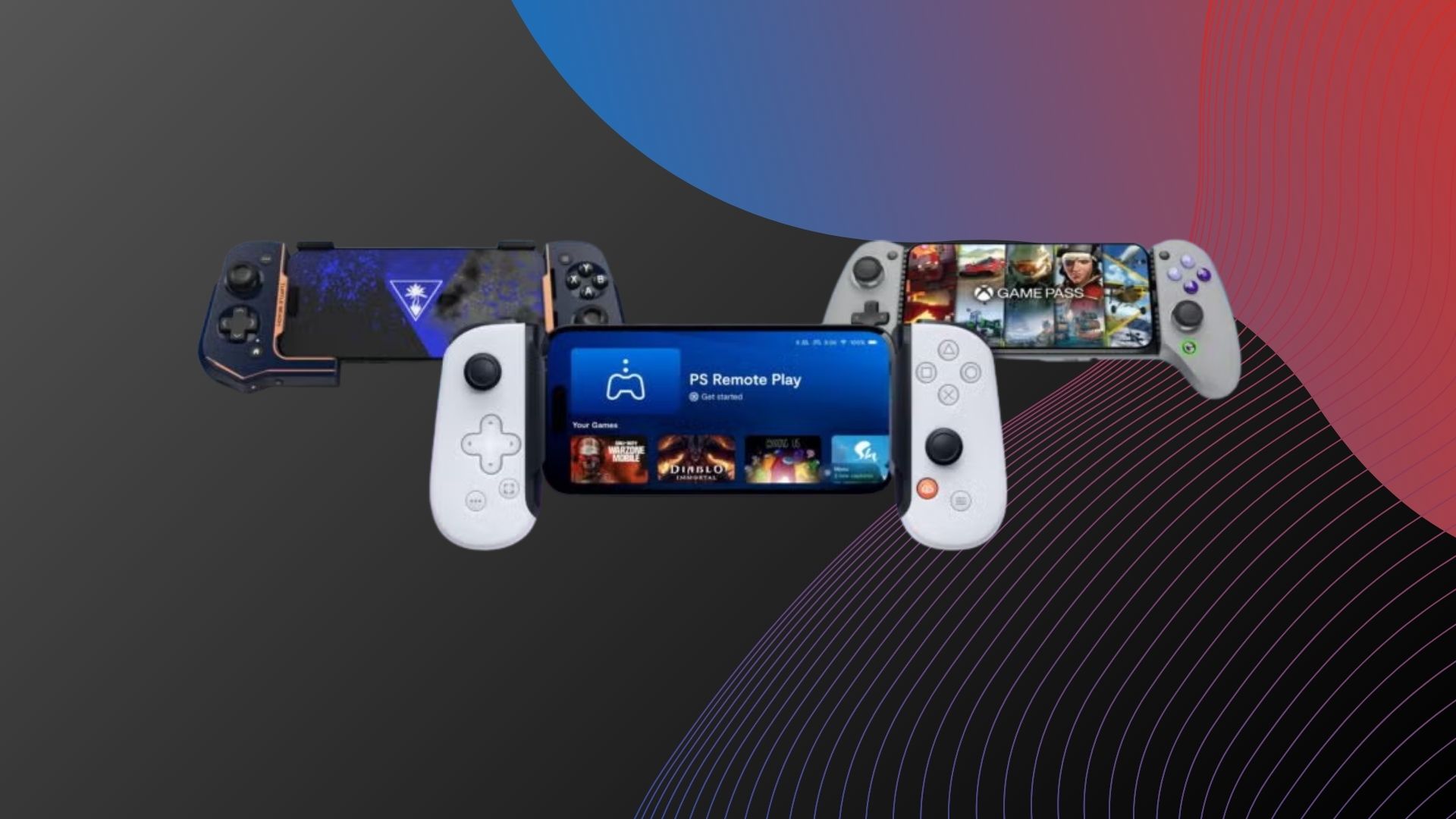
Whether you simply like to keep entertained on your commute or you generally prefer mobile gaming, a decent mobile game controller will significantly level up your experience.
Regardless of whether you favour free-to-play titles or more premium console-level games, you’ll likely agree that playing on a phone isn’t always the most seamless experience. Sure, many of the best gaming phones and best smartphones are powerful enough to run more graphic-hungry titles, tapping away at a touchscreen is certainly not reminiscent of the traditional gaming experience.
And that’s where one of the best mobile game controllers comes in. Essentially, a mobile game controller is a brilliant portable accessory that slots onto your phone and offers you more of that typical game controller experience you’re likely used to.
However, with so many options on the market, it can be difficult to determine which mobile controller is actually worth it. Are some options fitted with more features than others – and if so, how relevant are those additions to your own gaming preferences? Does it matter if you own an iPhone or an Android smartphone?
Advertisement
As not all mobile controllers are built equally, we’re here to help. We’ve reviewed a plethora of mobile controllers, from budget friendly options designed for casual use to the more hefty models for hard-core gamers. Regardless of their price, we put every controller through the same range of strict tests and have handpicked the best performers for this guide.
Read on to see our round-up of the best mobile game controllers we’ve reviewed below. Otherwise, if you’re more of a traditionalist, our list of the best game controllers reveals the best options to enhance your PC and console gameplay. Finally, if you want to enjoy the big-screen gaming experience, visit our best games consoles and best gaming monitors guides instead.
Advertisement
Best mobile controllers at a glance
SQUIRREL_ANCHOR_LIST
Advertisement
Learn more about how we test mobile controllers
Every mobile controller we test is used by the reviewer as their main gamepad for at least a week. During that time, we’ll test it on a variety of mobile games, from FPS shooters to racing games.
We’ll test both wired and wireless connectivity where available to ensure there’s no latency or issues that may impede your gaming experience. In instances where the controller needs power for use, we’ll also check the pad’s battery life, measuring how much playtime it offers before needing to be charged.
Where applicable, we’ll also test how customisable they are and delve into the companion apps to see what they offer.
Advertisement
Pros
Excellent mobile gaming controls
Improved and updated hardware compatibility
Excellent all-encompassing UI
Cons
Still expensive
Can be fiddly to fit your phone
Not very different from the original
Pros
Chunky and comfortable frame
Precise and solid-feeling triggers and thumbsticks
Clever software integration
Pros
Superb build quality and controls
Replaceable Hall Effect analogue sticks
Works with a wide range of phones
Cons
Iffy software, especially for iPhone users
Not the most portable controller of its kind
Not cheap
Pros
Bluetooth connectivity means wider game compatibility
Ergonomic design
Clever portable design
Cons
Clunky sticky pad mounting system
Bluetooth means no pass-through charging or wired headphones
Controls not as premium-feeling as top rivals
Pros
Compact and light
Solid gaming performance
Bonus trigger controls
Cons
Overpriced
HyperSense haptics not entirely successful
Doesn’t feel as premium as BackBone One
Pros
Unique active cooling system
Chunky, comfortable holding position
Flexible control set-ups
Cons
Need to plug in for cooling
Janky, unintuitive software
Controls don’t feel the most premium
Pros
Hall Effect joysticks
Clicky microswitch buttons
Good fit for players and devices
Cons
Passthrough charging port can’t be used to connect to other devices
Not quite as portable as some other mobile controllers
No 3.5mm headphone passthrough
Pros
Superb build quality and controls
Replaceable Hall Effect analogue sticks
Works with virtually everything
Cons
GameSir app needs work
Big and heavy
Requires charging
Pros
Comfortable in-hand
Excellent compatibility
Responsive inputs
Cons
Rivals have more advanced features
No software support
Excellent mobile gaming controls
Improved and updated hardware compatibility
Excellent all-encompassing UI
Still expensive
Can be fiddly to fit your phone
Not very different from the original
The Backbone One (2023) is the best mobile controller for iOS and Android that we’ve tested. It not only looks and feels great, but it offers wide compatibility with both USB-C and Lightning variants, and its companion app is one of the better options around right now.
Advertisement
While the Backbone One might not look all that different from the swathe of clamp-style mobile controllers on the market, small tweaks to its already premium design make it all the more accommodating. These include new swappable magnetic adapters that allow support for phones of all shapes and sizes, along with returning favourites like a 3.5mm headphone jack for wired audio and a USB-C port for passthrough charging.
The Backbone One offers your usual slate of console-esque controls including analogue sticks, a D-pad, buttons and rear triggers, with the company offering both PlayStation and Xbox-specific branding for compatibility with their respective cloud game streaming apps. The quality and build are top-notch, with a tight tolerance on both the buttons and triggers that make them feel ultra-responsive in titles like Resident Evil Village.
The accompanying Backbone app is also polished to a high level, providing shortcuts to installed games on your phone as well as links to cloud gaming services in a PlayStation-esque UI. And for games that don’t offer controller support, Backbone’s clever TouchSync software automatically maps controls.
It might be pricey, but it offers a top-notch gaming experience.
Advertisement
Chunky and comfortable frame
Precise and solid-feeling triggers and thumbsticks
Clever software integration
While there are plenty of options on this list for casual gamers who just like to drop into a bit of Stardew Valley or Balatro when the mood strikes, the Razer Kishi Ultra is for the gamers on the other end of that equation, the ones who simply have to play the latest titles as they launch and are obsessed with having the best input method money can buy.
Advertisement
As you might expect, the Razer Kishi Ultra works with both Android phones and USB-C touting iPhones, but what’s quite surprising is that it also works with the iPad Mini. If you’re a fan of gaming on Apple’s tablet range, this controller will help you to make the most of the form factor, especially if you have access to Apple Arcade.
Having that extra bit of device compatibility is great but what really sets the Razer Kishi Ultra apart is its use of haptic feedback to elevate the gaming experience. Having the sensation of rumble as you play just makes the game at hand feel far more immersive – we delved into a session of Dirty Rally 2.0 via Steam Link and it was incredible to feel the car’s movement over gravel.
Because the Kishia Ultra is large enough to accommodate an iPad Mini, the controller itself is nice and chunky in the best way possible. You can get a comfortable grip on this thing, a feeling that’s only emboldened by the responsive triggers and thumb sticks that really help you to get lost in the enjoyment of whichever game you’re playing.
As if all that wasn’t enough, there’s also RGB lighting on this thing which can be customised via the Razer Nexus app, giving you the chance to add a bit of personal flair to the overall design. For all that you get with the Razer Kishi Ultra, it’s hard to imagine recommending anything else for seasoned gamers who want a console-like experience on their smartphone.
Advertisement
Superb build quality and controls
Replaceable Hall Effect analogue sticks
Works with a wide range of phones
Iffy software, especially for iPhone users
Not the most portable controller of its kind
Not cheap
Advertisement
When it comes to mobile gaming hardware, it’s hard to fault the GameSir G8 Galileo. It’s one of the more premium options from the accessory maker, but it’s well worth the cost.
It sports the same clamp-style design as most other mobile controllers, but the expanding mechanism offers less of a fight to get the phone into place. It features a wide and smooth-sliding bridge, the open rubberised grip system means you don’t need any fiddly adapters to make phones fit into place, and the experience is further improved by a hinged USB-C connector.
The controller is big and heavy at 253g, but that’s because the G8 Galileo adopts a full-size controller shape – like an Xbox controller that has been split in two. It includes the regular combination of buttons and analogue sticks, and you can swap the sticks for Hall Effect alternatives that come in the box to further tailor the experience. There are two remappable controls on the rear too.
With hardware like that, the G8 Galileo was in the running for our ‘best overall’ award – but the GameSir companion app puts a dampener on things compared to the likes of the Backbone One and Razer Kishi V2 Pro.
Advertisement
The app not only lacks the general polish of the competition, but it regularly failed to recognise the controller on iOS (though it still worked fine in games) and even though it provides profiles for games that lack controller support like Call of Duty Mobile, these didn’t work in testing.
Bluetooth connectivity means wider game compatibility
Ergonomic design
Clever portable design
Advertisement
Clunky sticky pad mounting system
Bluetooth means no pass-through charging or wired headphones
Controls not as premium-feeling as top rivals
The Turtle Beach Atom is a rather unique mobile controller as, unlike the majority that are connected by some kind of spring mechanism, the Atom is made of two distinct parts that connect via a proprietary 2.4GHz wireless link. So rather than fiddling with a clamp mechanism, the left and right portions attach snuggly to the sides of your phone using vertical clamps.
The only downside to this approach is how Turtle Beach handles securing phones into place, providing a couple of sizes of sticky pads that stick on each side of controller. It feels comparatively cheap compared to the magnetic alternative from Backbone, and the spongey texture will likely flatten and become less useful over time.
Fit niggles aside, the Atom’s design allows for it to be impressively portable, with magnets holding the two halves together when not in active use. The use of Bluetooth instead of USB-C also allows for wider compatibility with both Lightning and USB-C devices, though as a result, you’ll have to charge the controller separately to use it.
Advertisement
Importantly, the gaming experience from the full-size controls is solid, if not quite as premium as other options in our chart. The accompanying Turtle Beach Atom app not only provides shortcuts to games, but allows you to customise elements like analogue dead zones and responsiveness to get the best performance possible from the accessory.
Compact and light
Solid gaming performance
Bonus trigger controls
Advertisement
Overpriced
HyperSense haptics not entirely successful
Doesn’t feel as premium as BackBone One
The Razer Kishi V2 Pro started life as a dedicated controller for the Razer Edge gaming tablet, but the company has since started offering the controller separately – and with its USP, it’s not hard to see why.
You see, unlike most mobile controllers on the market, the Razer Kishi V2 Pro actually offers haptic feedback in the form of the company’s HyperSense system. It might seem odd, but iOS and Android don’t officially offer haptic feedback for controllers – it’s one of the biggest disparities between mobile gaming and PC/console gaming.
Razer got around this issue by taking audio input as a cue to generate rumbling haptic feedback to explosions, gunshots, and the like. The downside is that the rumble sometimes kicks in at odd times. It’s not explicitly programmed, as would be the case with PC and console gaming, but it does help bridge the gap somewhat.
Advertisement
Elsewhere, the Razer Kishi V2 Pro is a familiar device with the same expanding design as most other options in our chart. It’s complete with the usual smattering of controls and triggers, though there are additional digital buttons on the top edge to help give you an edge in online games. The performance is refreshingly solid, too, with clicky responsive feedback that translates well to games like Dead Cells.
The big issue right now is compatibility; even with a USB-C connection suited to the iPhone 15 range, the controller doesn’t currently work with iOS devices. Razer claims a fix is on the way, but for now, this one is for Android gamers only. It’s also very expensive compared to other options in our chart, so be sure you’ll make the most of the haptics before investing.
Advertisement
Unique active cooling system
Chunky, comfortable holding position
Flexible control set-ups
Need to plug in for cooling
Janky, unintuitive software
Controls don’t feel the most premium
The GameSir X3 may not achieve the same lofty heights as the company’s own Galileo G8, but it does offer something that most competitors don’t: active cooling.
You don’t need us to explain that smartphones can get pretty hot when playing games, especially over longer periods, but you might not know that this can have a negative impact on performance as phones essentially throttle performance to keep things cool. The GameSir X3 helps negate this issue with the use of a Peltier cooling system that draws heat away from your phone’s body using a combination of silicone plates and a big old fan.
Advertisement
This does mean that the USB-C-enabled GameSir X3 is a chunky, hefty controller that, at 292g, is a whopping 40g heavier than the already-cumbersome G8 Galileo. You do get a carry case with the controller, but it doesn’t really make it that much more portable.
The bigger downside is that the controller needs to be plugged into a wall outlet to be powered, which pretty much makes the X3 an at-home device. And that’s a bit of a shame, considering the Nintendo Switch-esque design and digital triggers for fast response times deliver a pretty solid gaming experience, improved by the active cooling of the controller.
Advertisement
Hall Effect joysticks
Clicky microswitch buttons
Good fit for players and devices
Passthrough charging port can’t be used to connect to other devices
Not quite as portable as some other mobile controllers
No 3.5mm headphone passthrough
You’ll have already spotted from the contenders on this list that GameSir has given some of the more widely known brands a run for their money, and that continues to be the case when shopping for more budget friendly mobile controllers.
At just £49.99/$46.99, it’d be easy to assume that the GameSir X2s would offer a serviceable, albeit compromised gaming experience in order to meet its budget price but in spite of those assumptions, it actually offers up some premium specs in a few areas – most notably in its joysticks.
Advertisement
The GameSir X2s utilises Hall Effect joysticks which don’t rely on friction in order to register an input, meaning that they won’t develop any issues with joystick drift. This design also makes the joysticks more durable in the longrun, which is great to see.
The shoulder buttons also feel incredibly tactile thanks to their use of microswitches to register trigger-finger inputs. For fast paced games like Dead Cells, these types of buttons can make all the difference.
The GameSir X2s itself features a more playful aesthetic than some of its competitors, making it feel more accessible from the jump. In fact GameSir has supposedly taken some design cues from the Nintendo 2DS of all things for the development of this device.
It’s certainly an impressive package for the price, but the GameSir X2s isn’t completely without fault. One of the biggest omissions is the lack of a 3.5mm headphone jack, which many mobile game controllers tend to have. If you use Bluetooth headphones then this won’t be a dealbreaker, but it’s sure to put off those who prefer using a wired connection for high fidelity audio.
Advertisement
The X2s is also a bit chunkier than other controllers when not in use. There’s a sizeable bit of a space between each end of the controller when it’s retracted, so it won’t fit into a pocket quite in the same way that the Turtle Beach Atom can.
Superb build quality and controls
Replaceable Hall Effect analogue sticks
Works with virtually everything
Advertisement
GameSir app needs work
Big and heavy
Requires charging
While there are plenty of great games to play on mobile, if you have another portable console like the Nintendo Switch, it may be a better shout to pick up a controller that works across your main devices. With that in mind, the GameSir G8 Plus is the perfect pick.
Because this controller uses Bluetooth instead of a direct connection via USB-C or Lightning, it is able to pair wirelessly with your smartphone, Nintendo Switch and PC/laptop. That level of versatility is a rare thing to come by, but it means that you can jump from one device to another without ever feeling like you need to downgrade your control set-up in the process.
Just like many of GameSir’s other products, the G8 Plus utilises Hall Effect analogue sticks that prevents them from succumbing to the ‘drift’ problem that plagues other controllers, which in turn makes the accessory a better alternative to the problematic Joy-Cons that come with the Nintendo Switch.
Advertisement
Even though there isn’t a physical connector to keep devices in place, the G8 Plus uses a rubberised grip in its interior, alongside a tight clasp to make sure that everything stays where it needs to be during gaming. Our reviewer never had an issue during testing wherein they felt that a device could have been at risk of falling out of the controller.
Because of the lack of a physical port however, this does mean that the G8 Plus also ships without a 3.5mm headphone jack. While that’s unlikely to be a dealbreaker for most people, it will be an annoyance to anyone who swears by wired headphones for their audio fidelity.
In order to fit larger devices like the Nintendo Switch, the G8 Plus isn’t the most pocketable controller that GameSir has ever made either, although it’s still small enough to be transported in a backpack.
A great controller that goes well beyond the realm of mobile gaming, there’s a lot to like about the GameSir G8 Plus.
Advertisement
Comfortable in-hand
Excellent compatibility
Responsive inputs
Rivals have more advanced features
No software support
Advertisement
If you’ve invested in a budget gaming phone and you don’t have too much cash left over for picking up accessories, then you might want to check out the Acer Nitro Mobile Gaming Controller. Despite having a big name brand like Acer on the box, this controller still packs an affordable price point of £69.99 which is brilliant for all the features you get with it.
For starters, you don’t have to worry about compatibility as this controller thankfully works with both Android phones and iPhones that use USB-C, so if you do ever swap from one ecosystem to another then you’ll still be able to use the controller to enjoy your favourite games.
When it comes to the design, Acer has done an excellent job here. The buttons are wonderfully tactile and responsive, and we found the performance to be up to scratch when delving into a bit of Forza Horizon 5 and EA FC 24 via the Games Pass cloud service. When you’re done, the Nitro is also collapsible, so it can easily fit into a small back after the fact, making for a more portable experience than some of the larger gaming handhelds provide nowadays.
It’s also worth mentioning that the controller just feels great in the hand, and is very comfortable to hold for long periods of time. It can be easy to overlook comfort when you’re distracted by software features, but as far as we’re concerned, this is a crucial part of any mobile gaming controller that’s worth investing in, as the last thing you’d ever want is to buy a controller and then discover that it cramps your hand after just a short while of use.
Advertisement
As a final note, the Nitro is also plug-and-play so you don’t have to waste any valuable time with a laborious set-up process. Just attach the controller to your phone and you’re away. There’s even a USB-C slot to allow for up to 18W of charging as you play, keeping any pangs of battery anxiety at bay.
FAQs
Do all USB-C controllers work with the iPhone 16?
Advertisement
They should, but we’ve mentioned specific cases above (like the Razer Kishi V2 Pro) where support is not yet available.
Should I buy a wired or wireless controller?
It depends on your use case. Wired controllers deliver lower latency and potentially features like passthrough charging and a 3.5mm headphone jack, but you’ll also be tied to whatever connector is used. Wireless Bluetooth controllers, on the other hand, are compatible with a wider range of devices, though they’ll need charging separately.
Australian clothing brand Cotton On has no plans to exit Asia, nor close any operations in the region, said the retail store giant in a statement on Tuesday (Mar 31).
The statement came after media reports suggested that Cotton On stores in Asia were shutting down, citing a Government Gazette notice on Monday (Mar 30).
The notice referred to the winding up of Cotton On Asia and an extraordinary general meeting held via video call last Wednesday (Mar 25), during which PwC Singapore was appointed as liquidator to wind up the business. A separate notice also called on creditors to submit details of outstanding debts or claims.
“There have been misleading media reports suggesting that Cotton On stores operating in Asia are being closed, this information is incorrect and we have no plans to exit the Asia region,” the company said.
Advertisement
Cotton On clarified that Cotton On Asia, the liquidated entity, never operated any stores or employed staff. “It was an inactive holding company that was no longer required. This has no impact on customers, team members, stores, suppliers, or operations within the Asia region,” the statement added.
Cotton On Singapore, a second entity, continues operating as a retail business.
Cotton On was first started by Nigel Austin in Australia back in 1991. It opened its first Singapore store at Wisma Atria in 2007 and later established its Asia headquarters here in 2014, employing more than 90 staff. As of Mar 31, the Cotton On website listed over 30 stores in Singapore.
According to the group’s website, it operates eight brands across 20 countries and 1,300 stores, employing about 20,000 people.
Advertisement
Read other articles we’ve written on Singaporean businesses here.
The exposure traces back to version 2.1.88 of the @anthropic-ai/claude-code package on npm, which was published with a 59.8MB JavaScript source map intended only for internal debugging. The map file enabled the reconstruction of roughly 512,000 lines of TypeScript code powering Claude Code’s orchestration layer and CLI. Within hours of… Read Entire Article Source link
Nothing ever made is truly perfect and indeed, CPU architectures like x86, RISC-V, ARM, and PowerPC all have their own upsides and downsides. Today, I aim to make an architecture that learns from all these mistakes and improves architecture design for everyone.
I’ve consulted with many people opinionated on the matter, both from a software perspective, and from a hardware perspective. I have taken all their feedback in mind while creating this initial draft of the WheatForce architecture (PDF). It is inspired by pieces from many architectures: segmentation inspired by x86, hash table-like paging from PowerPC, dynamic endianness control from RISC-V and PowerPC, and more. Let’s look into each feature in a little bit more detail.
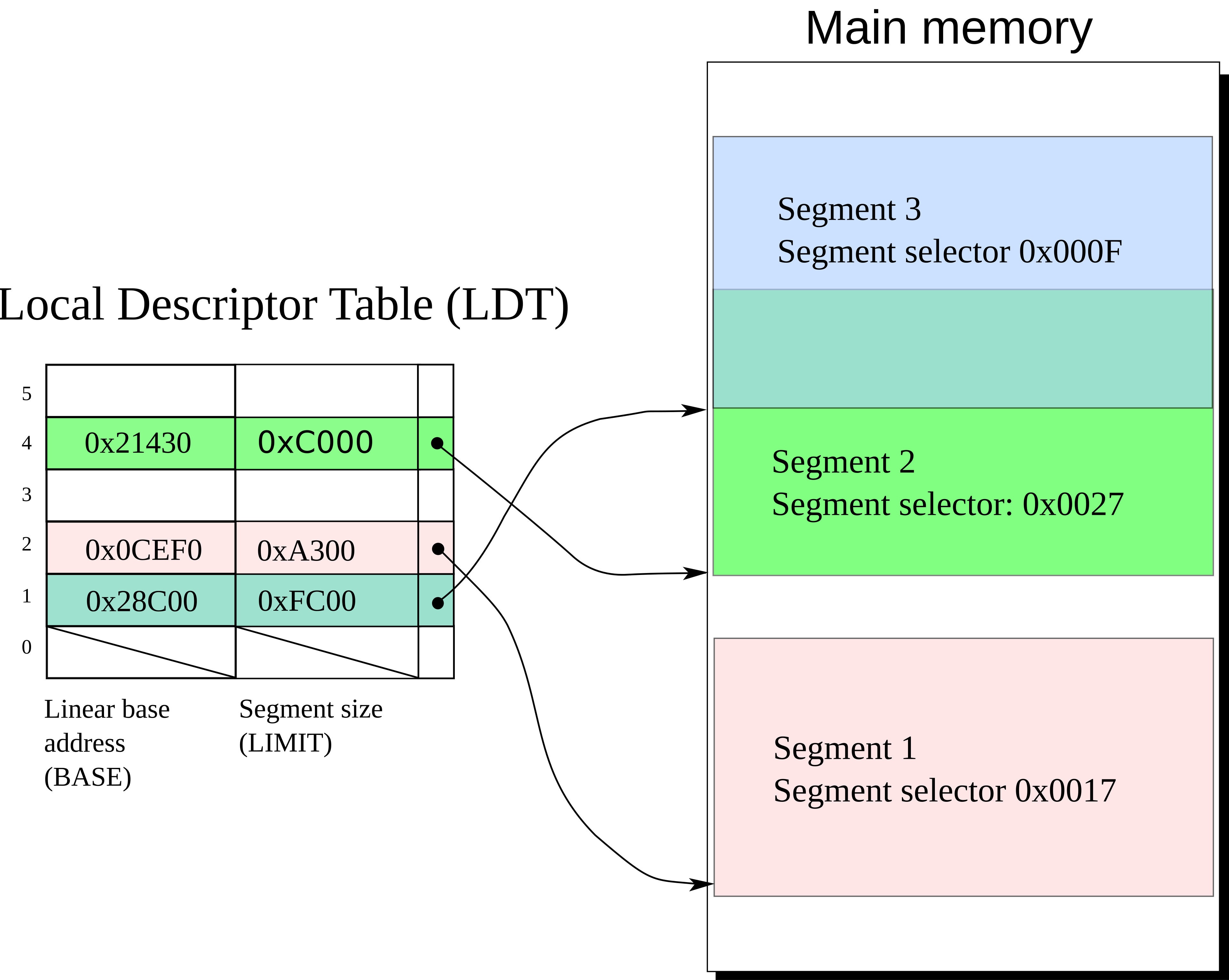
Segmentation is a powerful virtual-memory feature that is tragically underused today. I believe this is due to limited flexibility, so I have added an improvement above the model that x86 had used: every single register can now use its own segment selector. With this added flexibility, one can surely make better use of the address translation powers of segmentation with minimal extra overhead.
Hash Table-Like Paging
PowerPC’s hash table-like paging makes its paging vastly superior to the likes of x86, RISC-V and ARM by decreasing the number of required cache line fetches drastically. Much like a true hash table, the keys (or input addresses) are hashed and then used as an index into the table. From there, that row of the table is searched for a cell with a matching virtual address, which can be accelerated greatly due to superior cache locality of the entries in this row.
Dynamic Endianness Control
A diagram of PowerPC’s paging structures from the PowerPC manual
RISC-V and PowerPC both have some real potential for better compatibility with their dynamic endianness control. However, both these architectures can only change the endiannes from a privileged context. To make this more flexible, WheatForce can change the data endianness at any time with a simple instruction. Now, user software can directly interoperate between big-endian and little-endian data structures, eliminating the need for a costly byte-swap sequence that would need many instructions. Finally, you can have your cake and eat it to!
Conclusion
WheatForce has observed the mistakes of all architectures before it, and integrates parts of all its predecessors. You can read the full specification on GitHub. After you’ve read it, do let me know what you think of it.
In a new interview, Apple CEO Tim Cook talks about how the company’s 50th anniversary is making him remember Steve Jobs, and insists that working with Trump doesn’t mean its values are changing.
Tim Cook (left) with Steve Jobs — image credit: Apple
Before Apple’s birthday celebrations began, and even before Tim Cook wrote an open letter about the anniversary, he spoke to Esquire magazine about planning for the 50th — and thinking back to Steve Jobs. “I think about him often — and in the last few months, thinking about the fiftieth anniversary, even more so, honestly,” said Cook. “You think about the things he believed in.” Continue Reading on AppleInsider | Discuss on our Forums
The 400 new jobs are understood to break down as 300 in Ireland and 100 in the US, bringing total headcount to more than 570.
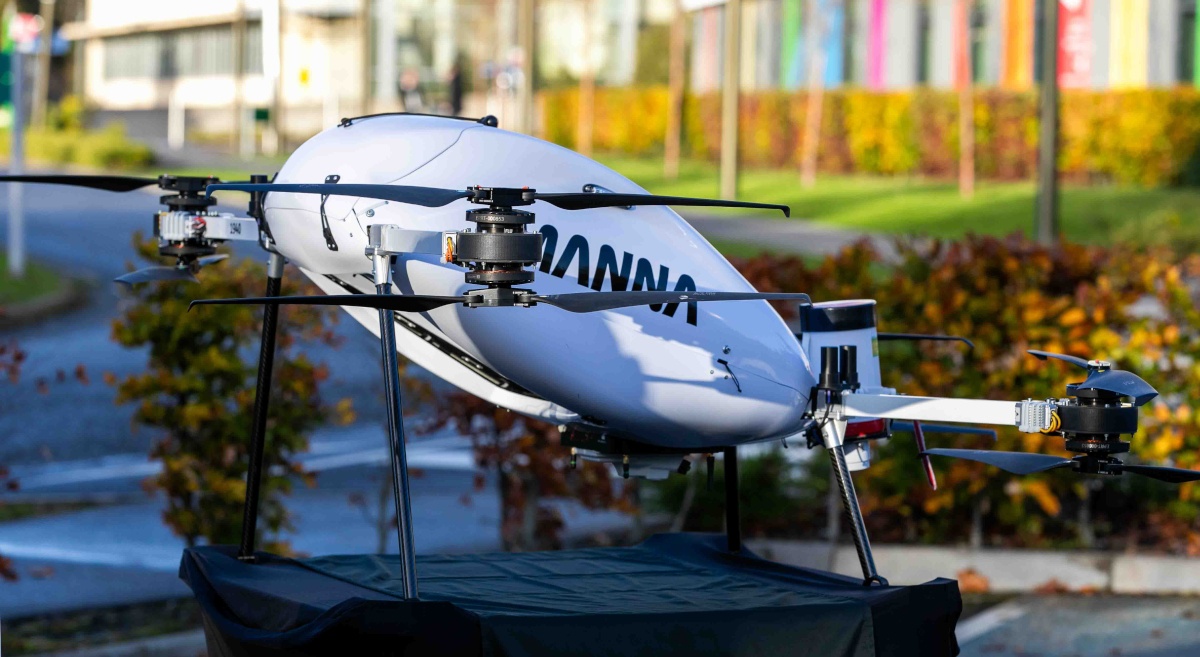
Dublin’s Manna Air Delivery, Bobby Healy’s drone delivery company, has officially confirmed a $50m Series B funding round and announced plans to create 400 new jobs across Ireland and the US.
The round, which brings total investment in the company to $110m, sees funding from ARK Invest -the fund known for backing OpenAI, Anthropic, Tesla and SpaceX – Boston-based Schooner Capital and the Ireland Strategic Investment Fund (ISIF), alongside existing investors Enterprise Ireland, Coca-Cola HBC and Molten Ventures.
Today’s (1 April) announcement confirms details first reported last week by Sky News City editor Mark Kleinman, who said that Manna was close to finalising the round, with ISIF, ARK Invest and Schooner Capital among the backers.
Advertisement
The 400 new roles will span robotics, software engineering, mechanical engineering, aviation operations, ground operations and regulatory functions, with a strong focus on STEM disciplines. The positions will be spread across Manna’s Irish operational hubs and its expanding US operations, bringing the company’s total headcount from 170 to more than 570.
The Irish roles are understood to number some 300, with 100 in the US. In Ireland, roles are expected to be split between those working on manufacturing and developing drones, and aviation personnel at operational bases.
“Ireland is the foundation of everything we do. We design and build our drones here, develop our software here, and have spent seven years refining our operations in communities across the country,” said Bobby Healy, CEO and founder of Manna. “These 400 new roles are high-quality STEM positions and we’re competing with some of the largest companies in the world and winning.”
Manna, which was founded in 2019, designs, builds and operates its drones and software in Ireland. The company says it has completed more than 250,000 regulated drone flights, including 60,000 in Blanchardstown.
Advertisement
It currently operates in Dublin (Blanchardstown), Balbriggan, Moneygall, Oranmore and Cork, as well as internationally in Texas and Finland. The company delivers food, clothing, books and over-the-counter pharmaceuticals, and recently simulated hospital sample transport with The Rotunda Hospital. Its principal competitors include Wing and Zipline.
Visiting Manna’s Dublin headquarters today, where the company designs, builds and flies its drones, Minister for Enterprise, Trade and Employment Peter Burke, TD welcomed the announcement saying it represented “a powerful endorsement of Ireland’s standing as a global centre for innovation and advanced manufacturing”.
“The creation of so many highly-skilled positions across robotics, software engineering, aviation and regulatory disciplines underscores the depth and quality of Ireland’s STEM talent base.”
Rebekah Brady, interim director at ISIF, said the fund is “committed to supporting Manna as part of our mandate to invest commercially in ways that deliver long-term economic impact for Ireland”.
Advertisement
Kevin Sherry, executive director at Enterprise Ireland, described Manna as “a standout example of an Irish company with clear global growth opportunities driven from an Irish headquarters”.
One investor source cited in Kleinman’s original Sky News report suggested that the successful conclusion of this round could herald a further, larger capital injection, so Manna certainly continues to be one to watch.
Don’t miss out on the knowledge you need to succeed. Sign up for the Daily Brief, Silicon Republic’s digest of need-to-know sci-tech news.
Anthropic has accidentally revealed a huge chunk of how its AI coding tool actually works.
A debug file bundled into version 2.1.88 of its Claude Code package briefly exposed a 500,000+ line codebase (via VentureBeat). This gave developers an unusually detailed look at the system behind one of the fastest-growing AI tools right now.
The file was pulled quickly, and Anthropic says no customer data or credentials were exposed. However, the damage, at least from a competitive standpoint, is already done. The code has been widely mirrored and picked apart online.
At a glance, the leak confirms that Claude Code is far more than just a chatbot wrapper. In fact, it’s effectively a multi-layered system for managing long-running AI tasks. There is also a heavy focus on memory, specifically solving the problem of AI “forgetting” or getting confused over time.
Advertisement
Developers analysing the code pointed to a “self-healing memory” system that avoids storing everything at once. Instead, it keeps a lightweight index (called MEMORY.md) and pulls in relevant information only when needed. The idea is simple: less clutter, fewer hallucinations.
Advertisement
Another standout is something called KAIROS, which hints at a shift towards more autonomous AI. Rather than waiting for prompts, Claude Code can run background processes. This includes a feature dubbed autoDream that tidies up its own memory while idle. Consequently, it’s a more proactive approach than most current AI tools.
The leak also reveals internal model codenames and performance struggles. Notably, one newer model variant reportedly shows a higher false-claim rate than earlier versions. This suggests Anthropic is still ironing out reliability issues even as it scales.
Advertisement
There are also signs of more experimental features, including an “undercover” mode designed to let the AI contribute to public codebases without revealing it’s AI-generated.
For users, Anthropic says there’s no immediate risk. However, the company has warned developers to update away from the affected version and avoid npm installs from a specific window tied to a separate supply-chain attack.
For everyone else, this is a rare glimpse behind the curtain, and a reminder that the race to build smarter, more autonomous AI is still very much in progress.
The company declined to comment on the total scope of the layoffs, though some estimates suggest they could affect as many as 20,000 to 30,000 workers. Oracle employed about 162,000 people worldwide as of the end of May. Read Entire Article Source link
S’pore employers are moving towards skills-based hiring
The Ministry of Manpower released its 2025 jobs report on Mar 20, and the numbers tell a story that would have seemed improbable just a decade ago.
Academic qualifications were not the main determinant in hiring for 79.6% of job vacancies last year, up from 78.8% in 2024 and 74.9% in 2023. The movement is slow enough to miss if you’re not looking, but steady enough to reshape who gets hired in Singapore.
Employers who have made the shift to skills-based hiring report faster recruitment, access to a broader talent pool, and improved employee performance.
Specifically, the change is taking hold in software development, data analytics, and AI-enabled roles across technology, finance, and engineering—the very positions where Singapore is concentrating its growth, and can see some of the highest pay.
Advertisement
A shift driven by tech giants
Image Credit: Framalicious via Shutterstock
This movement did not begin with Singaporean startups going out of the ordinary to see beyond academic qualifications. It actually started with multinational corporations that had the data and scale to test what actually predicted job performance.
Between 2017 and 2022, the share of Google job postings requiring a college degree dropped from 93% to 77%, according to analysis by the Burning Glass Institute.
Today, IBM’s share of United States hires without degrees approaches 20%. The company has proven that capability can precede credentials—and that the door opens wider when employers look at what candidates can do, not where they studied.
Firms in S’pore are starting to follow, particularly in the age of AI
Image Credit: Freepik
Now, firms in Singapore across finance, logistics, and retail are starting to follow.
Beyond academic degrees, companies now look for curiosity, problem-solving, and the ability to learn. This is skills-based hiring—and it’s becoming the default, particularly in the age of artificial intelligence.
More companies are adopting AI into digital workflows, and the tech is rewriting what “entry-level” and “job-ready” mean.
A Sept 2025 report from Morgan Stanley predicts that AI could impact 90% of occupations to some extent. This shift means hiring teams must focus on candidates whose skills align with long-term company goals, many of which will increasingly involve AI.
Advertisement
Thus, what matters is not what someone learned five years ago, but their capacity to learn what is needed five years from now.
Singaporeans are increasingly embracing this mindset, with growing numbers tapping into lifelong learning initiatives like SkillsFuture to stay relevant in a rapidly changing job market.
Over 606,000 Singaporeans tapped into SkillsFuture-supported training in 2025, up from 555,000 in 2024. Of these, 458,000 used their SkillsFuture Credits—a sharp increase from 260,000 the year before.
Nearly 123,000 mid-career individuals specifically chose courses designed to boost employability, up from 112,000 in 2024. These are not hobbyists killing time, but workers betting that skills, not credentials, will be the currency of the next decade.
Advertisement
The results suggest they are not wrong. 73% of respondents to SkillsFuture surveys reported that training improved their work performance, up from 69% in 2024. Moreover, two in three respondents attributed career advancements directly to their courses.
The door is still there, but it is no longer the only way in
It’s no longer about where you went to school. The pathway to hiring has become more flexible, as seen from how a portfolio can open doors that a transcript cannot.
2p2play via Shutterstock
But here comes the uncomfortable reality: Singapore’s education system and its labour market are running on slightly different timelines.
The system still sorts students by qualifications. The market increasingly sorts them by capabilities. The firms now following, in finance, logistics, and retail, are playing catch-up in a game where the rules are still being written.
But that doesn’t mean your degree is useless—it’s just insufficient, as nearly 80% of job vacancies don’t consider your educational qualification when hiring.
Advertisement
What you can do is starting to matter more than what you studied. The workers who understand this distinction—and who invest accordingly in skills that demonstrably transfer to the work itself—are the ones who will define the next decade of Singapore’s economy.
The door is still there, but it is no longer the only way in.
Read other articles we’ve written on Singaporean businesses here.
The revelation comes from a March 26 response to Markey’s investigation into how autonomous vehicle companies use remote assistance operators. Read Entire Article Source link






















































You must be logged in to post a comment Login