Connect with us

Tech

Washington state lawmakers target data center sales tax breaks to help plug $2B budget gap

Published

on

Inside an Amazon data center. (AWS Photo / Noah Berger)

Washington lawmakers are considering ending a sales tax break for data center owners when they replace equipment, a move that would take effect July 1, 2026, and apply statewide. While Senate Bill 6231 would retain the sales tax break granted to new data centers, it specifically targets the “refurbishment” cycle of existing facilities.

As the state scrambles to fill a roughly $2 billion budget deficit, the state’s Department of Revenue estimates this change could generate $63.1 million in the current biennium and $143.9 million for the 2027-29 period.

“We have to make a lot of hard choices this year as we try to balance the budget,” said Sen. Noel Frame, D-Seattle, sponsor of the legislation.

SB 6231 was recently approved by the House, with four Democrats joining all of the Republicans in opposing the measure.

During its first Senate committee hearing on Wednesday, a coalition of data center interests, unions, and rural business representatives warned of potential economic fallout. They argued that if data centers avoid or leave the state, local tax coffers and job markets would suffer.

Advertisement

In 2023, data centers directly provided nearly 9,000 jobs, plus 39,000 indirect jobs in Washington, according to a PwC report commissioned by the Data Center Coalition. The sector generated $1.8 billion in state and local tax revenue.

Maintaining those economic contributions, however, depends on a constant cycle of infrastructure investment, industry advocates said. Dan Diorio, vice president of state policy for the Data Center Coalition, testified that the equipment inside these centers is typically replaced every three to five years.

“By taking away the refurbishment exemption, the bill will impair the ability of data center companies and their tenants to upgrade servers and energy infrastructure with the most modern and efficient technology,” Diorio said.

This legislative push comes amid a national surge in data center regulation. Driven by the artificial intelligence boom, elected officials and their communities are increasingly raising concerns over higher electrical bills and strained water supplies due to the facilities’ massive power and cooling needs.

Advertisement

Earlier this week, Microsoft and other industry proponents successfully defeated a high-profile data center bill in Washington that aimed to protect ratepayers from utility hikes and increase environmental transparency.

Governor Bob Ferguson included the elimination of the data center refurbishment tax break in his supplemental budget proposal and SB 6231 was requested by the state’s Office of Financial Management.

With the legislative session nearing its conclusion, the bill faces a March 12 deadline for approval.

Source link

Advertisement
Continue Reading
Click to comment

Leave a Reply

Your email address will not be published. Required fields are marked *

Tech

OpenAI launches GPT-5.4 with native computer use mode, financial plugins for Microsoft Excel, Google Sheets

Published

on

The AI updates aren’t slowing down. Literally two days after OpenAI launched a new underlying AI model for ChatGPT called GPT-5.3 Instant, the company has unveiled another, even more massive upgrade: GPT-5.4.

Actually, GPT-5.4 comes in two varieties: GPT-5.4 Thinking and GPT-5.4 Pro, the latter designed for the most complex tasks.

Both will be available in OpenAI’s paid application programming interface (API) and Codex software development application, while GPT-5.4 Thinking will be available to all paid subscribers of ChatGPT (Plus, the $20-per-month plan, and up) and Pro will be reserved for ChatGPT Pro ($200 monthly) and Enterprise plan users.

ChatGPT Free users will also get a taste of GPT-5.4, but only when their queries are auto-routed to the model, according to an OpenAI spokesperson.

Advertisement

The big headlines on this release are efficiency, with OpenAI reporting that GPT-5.4 uses far fewer tokens (47% fewer on some tasks) than its predecessors, and, arguably even more impressively, a new “native” Computer Use mode available through the API and its Codex that lets GPT-5.4 navigate a users’ computer like a human and work across applications.

The company is also releasing a new suite of ChatGPT integrations allowing GPT-5.4 to be plugged directly into users’ Microsoft Excel and Google Sheets spreadsheets and cells, enabling granular analysis and automated task completion that should speed up work across the enterprise, but may make fears of white collar layoffs even more pronounced on the heels of similar offerings from Anthropic’s Claude and its new Cowork application.

OpenAI says GPT-5.4 supports up to 1 million tokens of context in the API and Codex, enabling agents to plan, execute, and verify tasks across long horizons— however, it charges double the cost per 1 million tokens once the input exceeds 272,000 tokens.

Native computer use: a step toward autonomous workflows

The most consequential capability OpenAI highlights is that GPT-5.4 is its first general-purpose model released with native, state-of-the-art computer-use capabilities in Codex and the API, enabling agents to operate computers and carry out multi-step workflows across applications.

Advertisement

OpenAI says the model can both write code to operate computers via libraries like Playwright and issue mouse and keyboard commands in response to screenshots. OpenAI also claims a jump in agentic web browsing.

Benchmark results are presented as evidence that this is not merely a UI wrapper.

On BrowseComp, which measures how well AI agents can persistently browse the web to find hard-to-locate information, OpenAI reports GPT-5.4 improving by 17% absolute over GPT-5.2, and GPT-5.4 Pro reaching 89.3%, described as a new state of the art.

On OSWorld-Verified, which measures desktop navigation using screenshots plus keyboard and mouse actions, OpenAI reports GPT-5.4 at 75.0% success, compared to 47.3% for GPT-5.2, and notes reported human performance at 72.4%.

Advertisement

On WebArena-Verified, GPT-5.4 reaches 67.3% success using both DOM- and screenshot-driven interaction, compared to 65.4% for GPT-5.2. On Online-Mind2Web, OpenAI reports 92.8% success using screenshot-based observations alone.

OpenAI also links computer use to improvements in vision and document handling. On MMMU-Pro, GPT-5.4 reaches 81.2% success without tool use, compared with 79.5% for GPT-5.2, and OpenAI says it achieves that result using a fraction of the “thinking tokens.”

On OmniDocBench, GPT-5.4’s average error is reported at 0.109, improved from 0.140 for GPT-5.2. The post also describes expanded support for high-fidelity image inputs, including an “original” detail level up to 10.24M pixels.

OpenAI positions GPT-5.4 as built for longer, multi-step workflows—work that increasingly looks like an agent keeping state across many actions rather than a chatbot responding once.

Advertisement

Tool search and improved tool orchestration

As tool ecosystems get larger, OpenAI argues that the naive approach—dumping every tool definition into the prompt—creates a tax paid on every request: cost, latency, and context pollution.

GPT-5.4 introduces tool search in the API as a structural fix. Instead of receiving all tool definitions upfront, the model receives a lightweight list of tools plus a search capability, and it retrieves full tool definitions only when they’re actually needed.

OpenAI describes the efficiency win with a concrete comparison: on 250 tasks from Scale’s MCP Atlas benchmark, running with 36 MCP servers enabled, the tool-search configuration reduced total token usage by 47% while achieving the same accuracy as a configuration that exposed all MCP functions directly in context.

That 47% figure is specifically about the tool-search setup in that evaluation—not a blanket claim that GPT-5.4 uses 47% fewer tokens for every kind of task.

Advertisement

Improvements for developers and coding workflows

OpenAI’s coding pitch is that GPT-5.4 combines the coding strengths of GPT-5.3-Codex with stronger tool and computer-use capabilities that matter when tasks aren’t single-shot.

GPT-5.4 matches or outperforms GPT-5.3-Codex on SWE-Bench Pro while being lower latency across reasoning efforts.

Codex also gets workflow-level knobs. OpenAI says /fast mode delivers up to 1.5× faster performance across supported models, including GPT-5.4, describing it as the same model and intelligence “just faster.”

And it describes releasing an experimental Codex skill, “Playwright (Interactive)”, meant to demonstrate how coding and computer use can work in tandem—visually debugging web and Electron apps and testing an app as it’s being built.

Advertisement

OpenAI for Microsoft Excel and Google Sheets

Alongside GPT-5.4, OpenAI is announcing a suite of secure AI products in ChatGPT built for enterprises and financial institutions, powered by GPT-5.4 for advanced financial reasoning and Excel-based modeling.

The centerpiece is ChatGPT for Excel and Google Sheets (beta), which OpenAI describes as ChatGPT embedded directly in spreadsheets to build, analyze, and update complex financial models using the formulas and structures teams already rely on.

The suite also includes new ChatGPT app integrations intended to unify market, company, and internal data into a single workflow, naming FactSet, MSCI, Third Bridge, and Moody’s.

And it introduces reusable “Skills” for recurring finance work such as earnings previews, comparables analysis, DCF analysis, and investment memo drafting.

Advertisement

OpenAI anchors the finance push with an internal benchmark claim: model performance increased from 43.7% with GPT-5 to 88.0% with GPT-5.4 Thinking on an OpenAI internal investment banking benchmark.

Measuring AI performance against professional work

OpenAI leans on benchmarks intended to resemble real office deliverables, not just puzzle-solving. On GDPval, an evaluation spanning “well-specified knowledge work” across 44 occupations, OpenAI reports that GPT-5.4 matches or exceeds industry professionals in 83.0% of comparisons, compared to 71.0% for GPT-5.2.

The company also highlights specific improvements in the kinds of artifacts that tend to expose model weaknesses: structured tables, formulas, narrative coherence, and design quality.

In an internal benchmark of spreadsheet modeling tasks modeled after what a junior investment banking analyst might do, GPT-5.4 reaches a mean score of 87.5%, compared to 68.4% for GPT-5.2.

Advertisement

And on a set of presentation evaluation prompts, OpenAI says human raters preferred GPT-5.4’s presentations 68.0% of the time over GPT-5.2’s, citing stronger aesthetics, greater visual variety, and more effective use of image generation.

Improving reliability and reducing hallucinations

OpenAI describes GPT-5.4 as its most factual model yet and connects that claim to a practical dataset: de-identified prompts where users previously flagged factual errors. On that set, OpenAI reports GPT-5.4’s individual claims are 33% less likely to be false and its full responses are 18% less likely to contain any errors compared to GPT-5.2.

In statements provided to VentureBeat from OpenAI and attributed early GPT-5.4 testers, Daniel Swiecki of Walleye Capital says that on internal finance and Excel evaluations, GPT-5.4 improved accuracy by 30 percentage points, which he links to expanded automation for model updates and scenario analysis.

Brendan Foody, CEO of Mercor, calls GPT-5.4 the best model the company has tried and says it’s now top of Mercor’s APEX-Agents benchmark for professional services work, emphasizing long-horizon deliverables like slide decks, financial models, and legal analysis.

Advertisement

Pricing and availability

In the API, OpenAI says GPT-5.4 Thinking is available as gpt-5.4 and GPT-5.4 Pro as gpt-5.4-pro. Pricing is as follows:

  • GPT-5.4: $2.50 / 1M input tokens; $15 / 1M output tokens

  • GPT-5.4 Pro: $30 / 1M input tokens; $180 / 1M output tokens

  • Batch + Flex: half-rate; Priority processing: 2× rate

This makes GPT-5.4 among the more expensive models to run over API compared to the entire field, as seen in the table below.

Model

Input

Advertisement

Output

Total Cost

Source

Qwen 3 Turbo

Advertisement

$0.05

$0.20

$0.25

Alibaba Cloud

Advertisement

Qwen3.5-Flash

$0.10

$0.40

$0.50

Advertisement

Alibaba Cloud

deepseek-chat (V3.2-Exp)

$0.28

$0.42

Advertisement

$0.70

DeepSeek

deepseek-reasoner (V3.2-Exp)

$0.28

Advertisement

$0.42

$0.70

DeepSeek

Grok 4.1 Fast (reasoning)

Advertisement

$0.20

$0.50

$0.70

xAI

Advertisement

Grok 4.1 Fast (non-reasoning)

$0.20

$0.50

$0.70

Advertisement

xAI

MiniMax M2.5

$0.15

$1.20

Advertisement

$1.35

MiniMax

Gemini 3.1 Flash-Lite

$0.25

Advertisement

$1.50

$1.75

Google

MiniMax M2.5-Lightning

Advertisement

$0.30

$2.40

$2.70

MiniMax

Advertisement

Gemini 3 Flash Preview

$0.50

$3.00

$3.50

Advertisement

Google

Kimi-k2.5

$0.60

$3.00

Advertisement

$3.60

Moonshot

GLM-5

$1.00

Advertisement

$3.20

$4.20

Z.ai

ERNIE 5.0

Advertisement

$0.85

$3.40

$4.25

Baidu

Advertisement

Claude Haiku 4.5

$1.00

$5.00

$6.00

Advertisement

Anthropic

Qwen3-Max (2026-01-23)

$1.20

$6.00

Advertisement

$7.20

Alibaba Cloud

Gemini 3 Pro (≤200K)

$2.00

Advertisement

$12.00

$14.00

Google

GPT-5.2

Advertisement

$1.75

$14.00

$15.75

OpenAI

Advertisement

Claude Sonnet 4.6

$3.00

$15.00

$18.00

Advertisement

Anthropic

GPT-5.4

$2.50

$15.00

Advertisement

$17.50

OpenAI

Gemini 3 Pro (>200K)

$4.00

Advertisement

$18.00

$22.00

Google

Claude Opus 4.6

Advertisement

$5.00

$25.00

$30.00

Anthropic

Advertisement

GPT-5.2 Pro

$21.00

$168.00

$189.00

Advertisement

OpenAI

GPT-5.4 Pro

$30.00

$180.00

Advertisement

$210.00

OpenAI

Another important note: with GPT-5.4, requests that exceed 272,000 input tokens are billed at 2X the normal rate, reflecting the ability to send prompts larger than earlier models supported.

In Codex, compaction defaults to 272k tokens, and the higher long-context pricing applies only when the input exceeds 272k—meaning developers can keep sending prompts at or under that size without triggering the higher rate, but can opt into larger prompts by raising the compaction limit, with only those larger requests billed differently.

Advertisement

An OpenAI spokesperson said that in the API the maximum output is 128,000 tokens, the same as previous models.

Finally, on why GPT-5.4 is priced higher at baseline, the spokesperson attributed it to three factors: higher capability on complex tasks (including coding, computer use, deep research, advanced document generation, and tool use), major research improvements from OpenAI’s roadmap, and more efficient reasoning that uses fewer reasoning tokens for comparable tasks—adding that OpenAI believes GPT-5.4 remains below comparable frontier models on pricing even with the increase.

The broader shift

Across the release and the follow-up clarifications, GPT-5.4 is positioned as a model meant to move beyond “answer generation” and into sustained professional workflows—ones that require tool orchestration, computer interaction, long context, and outputs that look like the artifacts people actually use at work.

OpenAI’s emphasis on token efficiency, tool search, native computer use, and reduced user-flagged factual errors all point in the same direction: making agentic systems more viable in production by lowering the cost of retries—whether that retry is a human re-prompting, an agent calling another tool, or a workflow re-running because the first pass didn’t stick.

Advertisement

Source link

Continue Reading

Tech

Revolut applies for US banking licence

Published

on

The fintech has also tapped a former Visa and Capital One executive to lead its US operations.

UK fintech giant Revolut has applied for a US banking licence. If successful, Revolut would be able offer services such as personal loans and credit cards to its US-based customers.

The move will give Revolut “the direct control needed to innovate faster and deliver the Revolut experience to millions more Americans as we move toward our goal of 100m customers”, said its founder and CEO Nik Storonsky.

Advertisement

“Filing for a national bank charter is a major milestone toward our vision of building the world’s first truly global banking platform.”

The company was valued at $75bn last November after a major share sale. It had a successful 2024, which saw revenue growing 72pc to $4bn and profit before tax increasing 149pc to $1.4bn. The company said this growth has continued through 2025 with around $1bn in annualised revenue.

The US national bank charter will allow Revolut to operate across all 50 US states, connect directly to services such as Fedwire and ACH, and offer customers insured deposits.

The company has announced Cetin Duransoy as its US CEO. Duransoy previously served as the US CEO of fintech marketplace Raisin, prior to which he held senior leadership banking and payments roles at Capital One and Visa.

Advertisement

Revolut, one of the world’s biggest fintechs, currently operates across 40 markets globally, servicing around 70m customers.

The company recently expanded operations to Mexico, opened a new global headquarters in London and secured a payments licence in India. It hopes that this continued expansion can help it reach 100m customers by mid-2027.

It is also attempting to capitalise on agentic shopping with a Google partnership to make Revolut Pay compatible across the emerging landscape in Europe.

Don’t miss out on the knowledge you need to succeed. Sign up for the Daily Brief, Silicon Republic’s digest of need-to-know sci-tech news.

Advertisement

Source link

Advertisement
Continue Reading

Tech

Hardware testing startup Nominal hits $1B valuation, raises $155M in 10 months

Published

on

Nominal on Thursday announced a fresh $80 million Series B extension round at a $1 billion valuation, led by Founders Fund. This followed the company’s $75 million Series B round led by Sequoia in September.

The company offers software that helps hardware engineers test their designs and began as a picks-and-shovels type of startup for the defense industry. The three-and-a-half-year-old, L.A.-based company says that in the last 10 months, it has landed four of the five largest defense contractors as customers.

CEO and co-founder Cameron McCord (pictured) is a former U.S. Navy submarine officer and an alum of defense tech company Anduril, which is also one of Nominal’s marquee customers. So perhaps it’s no surprise that Anduril co-founder and executive chairman Trae Stephens, who is also a Founders Fund partner, led this as a preemptive deal, McCord told Bloomberg and confirmed to TechCrunch. Sequoia, General Catalyst, Lux Capital, Red Glass, and Lightspeed also participated.

Next up, Nominal plans to expand beyond defense tech and into industrial sectors like automotive, robotics, and other industries. And it’s made a good start. The company tells TechCrunch that some of its other customers include Pratt Miller Motorsports (the Corvette Racing Team) and nuclear energy company Antares.

Advertisement

Source link

Continue Reading

Tech

OpenAI Releases New ChatGPT Model For Working In Excel and Google Sheets

Published

on

OpenAI today released GPT-5.4, an upgraded ChatGPT model designed to be faster, cheaper, and more accurate for workplace tasks. The update also introduces tools that let ChatGPT work directly inside Excel and Google Sheets. Axios reports: GPT-5.4 is designed to be less error-prone, more efficient and better at workplace tasks like drafting documents, OpenAI said. The new model can create files in fewer tries with less back-and-forth than prior models, the company said. GPT-5.4 outperformed office workers 83% of the time on GDPval, an OpenAI benchmark measuring performance on real-world tasks across 44 occupations.

The model can also solve problems using fewer tokens, OpenAI says — which can translate to faster responses and lower costs. The company is also debuting OpenAI for Financial Services, a set of new tools that includes the version of ChatGPT that runs inside spreadsheets and new apps and skills within ChatGPT. Partners include FactSet, MSCI, Third Bridge and Moody’s.

Source link

Continue Reading

Tech

Nvidia reportedly developing RTX 5050 with 9GB VRAM, revised RTX 5060 using GB205 die

Published

on


According to noted tipster MEGAsizeGPU, the new GeForce RTX 5050 variant will feature three 3GB GDDR7 memory modules operating at 28Gbps, instead of the 20Gbps GDDR6 modules used in the original version. The updated configuration will provide a total of 9GB of VRAM across a 96-bit memory interface, delivering up…
Read Entire Article
Source link

Continue Reading

Tech

Tim Sweeney Signed Away His Right To Criticize Google Until 2032

Published

on

As part of Epic’s settlement with Google over the Play Store, Epic CEO Tim Sweeney agreed to stop criticizing Google’s app store practices until 2032 and even publicly support the revised policies. The deal also prohibits Epic from pushing for further changes to Google’s platform rules. The Verge reports: On March 3rd, he not only signed away Epic’s rights to sue and disparage the company, he signed away his right to advocate for any further changes to Google’s app store polices. He can’t criticize Google’s app store practices. In fact, he has to praise them. The contract states that “Epic believes that the Google and Android platform, with the changes in this term sheet, are procompetitive and a model for app store / platform operations, and will make good faith efforts to advocate for the same.”

He may even have to appear in other courts around the world to defend this deal with Google, and Google gets to make sure his public statements are supportive of the deal from here on out. And while Epic can still be part of the “Coalition for App Fairness,” the organization that Epic quietly and solely funded to be its attack dog against Google and Apple, he can only point that organization at Apple now. “Google is opening up Android all the way with robust support for competing stores, competing payments, and a better deal for all developers. So, we’ve settled all of our disputes worldwide. THANKS GOOGLE!,” Sweeney wrote in a post on X on Wednesday.

Source link

Continue Reading

Tech

13 Niche Makita Tools (And What They’re Used For)

Published

on


We may receive a commission on purchases made from links.

Makita equipment is routinely praised for its innovative features and innovative technology. There are some key battery and other capabilities you’ll only find on Makita tools, for instance. The Japanese toolmaker has long been a source of professional-grade solutions covering a wide range of user needs. Even though Makita didn’t come out on top of our head-to-head comparison against Milwaukee and DeWalt, that doesn’t make it a worse brand. In fact, there are plenty of niche tool requirements where Makita equipment offers the best, or even only, option for supporting your work. Some of Makita’s unique products include coffee machines and coolers, alongside material-handling gear that’s distinctly absent from other major manufacturers’ catalogs.

These 13 tools aren’t always Makita-exclusives, but they do provide nuanced functionality in areas outside the typical project scope of a renovator or remodeler. Some are heavy-duty solutions designed to handle concrete and layout work, while others are interesting options within widely known tool categories, like specialist grinding tools. Each one of these has an important place in the collection of certain users, but they’re not typically going to feature prominently (or perhaps at all) in the casual user’s arsenal.

Advertisement

18V LXT Cordless Rebar Cutter

Makita’s 18V LXT Cordless Rebar Cutter is a tool that combines two components. Near the back end of the tool, it looks visually just like any other drill-style piece of equipment, but mounted to the front is a radical departure from the expected. Right away, it’s clear that something is afoot with the added D-handle on top of the tool, and moving down toward the end you’ll find the cutting unit used to shear through dense, steel rebar. It features a cutting capacity ranging from 1/8 to ¾-inch components, and the ability to cut up to 60 grade #6 rebar. The tool features a cutting blade that will chomp through 4,000 cuts before requiring a replacement. The cutting head can also rotate completely around a 360-degree axis.

Advertisement

The tool features an adjustable stopper that holds rebar at a precise, 90-degree angle to the tool. This creates a smooth and precise cutting action that helps keep the tool in good working order and create efficient and smooth cuts in the material. The unit is incredibly expensive, helping to secure its status as a niche tool. It’s listed on Amazon for $2,599, for reference. This piece of equipment — perhaps surprisingly, due to its heavy-duty nature — operates with Makita’s standard 18 volt battery packs, meaning a builder won’t need to invest in additional, specialized batteries to operate the tool.

Advertisement

7-Inch Corded Disc Sander

Home improvers will often be keenly aware of the wide range of sanding tools available to them. Belt, orbital, and detail sanders are among some of the most common finds in this region of any brand’s tool catalog, and Makita is no different. However, many toolmakers, Makita included, offer an even wider array of sanders than most. The 7-Inch Corded Disc Sander is a corded solution that operates with 7-inch discs. It produces a 900 watt output and can be used with abrasive discs, resin pads, and other accessories loaded onto the rotating element. The tool provides constant power, even under load, and features a variable speed control dial ranging from 2,500 to 4,700 RPM.

The tool operates with a soft start function and other advanced electronic controls to help preserve its durability over the long term. It also utilizes a balanced weighting design that places the motor directly behind the pad, for greater stability. The trigger features a lock-on button right next to the control, giving users the ability to control its output directly or leave it in a locked position for lengthy use.

Advertisement

36V LXT 9-Inch Power Cutter

Makita’s 36V LXT 9-Inch Power Cutter operates with two 18V batteries and delivers extreme cutting power with the help of a 9-inch blade. It utilizes an electrical brake for safety, it can be used in indoor and outdoor environments, and doesn’t have issues with maintenance like a typical gas-powered alternative does. The tool can achieve 6,600 RPM blade speeds at maximum velocity and utilizes an integrated watering system to keep the blade cool and operational for longer. Its electronic brake can stop the wheel in 4 seconds or less to add an element of safety to a jobsite and to help with faster adjustments when necessary.

This is a tool designed specifically to shear through concrete and blockwork. Users unfamiliar with the tool might think of it as an analog to the chainsaw. Its body shape is largely similar, but the cutting implement fixed at the end resembles a miter or circular saw rather than the bar and chain used to cut lumber. In addition to the break and other safety features, the tool also features an active feedback-sensing technology that turns the motor off when rotation is forced to a stop. This helps prevent kickback and bind up that can be dangerous.

Advertisement

9-Inch Concrete Surface Planer

The planer is a tool commonly found in woodworking shops and home improvement toolkits. Planners flatten board faces and are a critical asset for anyone working on precision tasks with wooden material. Hand planes and power tools alike feature prominently, but these are not the only kinds of planing tools you’ll find on the market. One supremely niche element that delivers material flattening capabilities is the 9-Inch Concrete Surface Planer. This tool is purpose built to grind down high spots in concrete pours. Makita’s solution features a corded power source to support long-lasting performance without the need to swap out battery packs.

The planer is underpinned by a 15 amp motor that delivers 6,600 RPM. The soft start technology makes initiating the tool’s motor smoother and easier, minimizing the chances that it will jump out of its user’s hands. It also utilizes a dust extraction shroud that helps limit the amount of concrete dust thrust up into the air as it goes about its task. This is an important safety feature, but you should always wear protective equipment when using a tool like this.

Advertisement

5-Inch Tuck Point Angle Grinder

Makita’s 5-Inch Tuck Point Angle Grinder is a specialized grinder featuring a tuck point guard. The tool itself is a corded solution and operates almost entirely unchanged from the typical angle grinder that familiar users know and love. Even if you can often use a different tool instead of an angle grinder, this particular piece of equipment remains a go-to solution for many tasks both in the professional realm and in the hands of a DIY enthusiast.

Advertisement

This tuck point angle grinder is not going to be your typical cutting tool. For one, it’s listed at Amazon for $368. Rather, this is a specialty unit designed for a specific purpose: the removal of mortar from the space between bricks. Old brick constructions can be demolished entirely, but in many cases the building material can be reclaimed. This offers an extended lifetime for the dense construction element and provides cheaper materials for those willing utilize salvaged products instead of new brick. Utilizing reclaimed bricks whenever possible is great for the budget and the environment, but they also add an element of personality to the project.

To remove old brick without damaging it, you’ll need to tear up the elements holding a building, wall, or pathway together. The Makita tool features a 10 amp motor that delivers 11,000 RPM disc speeds, enough to remove this material. Its unique characteristic is the 5-inch tuck point guard that allows for accurate placement of the tool and protection from flying debris while it’s operating.

Advertisement

18V LXT Deep Capacity Rebar Tying Tool

Working with rebar is a complicated and demanding task. When placing it into the support structure ahead of a concrete pour, you’ll need to ensure that the steel beams remain in position as you move on to the next task: Namely, dumping gallons of heavy concrete on top of the rebar. In order to secure these support elements in place, contractors working with concrete often set small seat elements to prop rebar up to the appropriate height and lash perpendicular bars together to ensure as little movement as possible. In a large space, this can be menacingly time-consuming.

The 18V LXT Deep Capacity Rebar Tying Tool is an implement that can speed up this process significantly and save the workers’ backs in the process. The tool features a maximum tying capacity of #8 by #7 rebar and a minimum rated at #4 by #4 bars. It can produce up to 5,000 ties at the lower end of the range using just one 5.0Ah battery.

The tool offers two operating modes, with single or continuous wire tying actuation, and features an easy-load design with an automatic locking mechanisms built into the wire reel component. As is the case with many other niche tools, this is not a unit that the average home improver will ever need to deploy, but it’s an element that can drastically improve the working conditions of some professionals.

Advertisement

36V LXT Material Handling Flat Bucket

Material handling tools make up some of Makita’s unique offerings that many other brands don’t match. The Makita 36V LXT Material Handling Flat Bucket is a great example. It is essentially a flat wheelbarrow that runs on two 18V batteries to make motion an automated process. The tool supports a maximum load of over 660 pounds, with a 295 liter heaped capacity. It can also hold up to four LXT batteries, drawing on two at once in order to provide a continuous runtime of up to 100 minutes, when using two 6Ah batteries.

Advertisement

This material-handling solution offers three forward speeds with an additional reverse gear, controlled by a switch trigger on the handles. The tires are durable and ready to handle material movement needs over rough and uneven terrain. It offers a top speed of 3.1 mph and a reverse speed of 0.63 mph.

Advertisement

18V LXT 8-Foot Concrete Vibrator

The 18V LXT 8-Foot Concrete Vibrator is a specialty tool that is placed into freshly-poured concrete. It sinks into the slurry and is then activated, creating a vibration effect that allows air bubbles trapped within the pour to gradually rise up to the surface and escape. Anyone who’s ever worked with concrete before knows that even a small amount of the stuff is immensely heavy and dense. Air does not easily escape on its own, and too much air in the mixture will introduce extremely slow curing times and threaten the structural integrity of the pour over the long term.

Home improvers working with small amounts of concrete will often account for this by smacking the nearby area with a hammer or mallet, but that’s not enough to allow air to escape from a large concrete installation. The concrete vibrator is therefore an essential tool for operators working in industrial settings and on any other large tasks involving the material. The tool produces 12,500 vibrations per minute and offers a dual directional switch that allows you to hold the tool body either horizontally or vertically. It produces up to a 25-minute runtime while under load with a 3.0Ah LXT battery and comes with an 8-foot tether between the tool body the end of the vibration unit.

Advertisement

18V LXT High Speed Blower/Inflator

Inflation tools are a natural fit in many toolboxes. They’re ideal for use in emergency preparation kits and to support hobby and adventures such as RVing or camping. In this regard, the 18V LXT High Speed Blower/Inflator can be a valuable addition to a standard home improver’s collection, not just as a specialized tool like many of the other niche pieces of equipment on this list. The tool offers four speed settings and comes with five nozzles to support a wide range of inflation and blowing requirements. It produces up to 55 minutes of runtime (when paired with a 6.0Ah LXT battery) and uses an inline fan design, to improve the balance of the tool.

What makes this tool interesting, alongside its usefulness as an inflator, is its capability as a blower, making this two-in-one unit can capable of surface preparation and cleaning. The unit produces blows air at up 447 mph and 69 cfm, a strong performance for its size, and comes with built-in LED lights to make your working area easier to work with.

Advertisement

18V LXT Cordless Grass Shear

The 18V LXT Cordless Grass Shear is a lawn care and maintenance tool that can be used across a range of cutting tasks. The tool features both a hedge trimmer blade and a grass shear attachment, allowing it to be used at ground level near tight corners, edges, and around elements like fences and mailboxes. It can also tackle unruly bush and tree growth, as well as other needs around the yard. The tool delivers over three hours of runtime when paired with a 5.0Ah battery. The 6-5/16 inch shear blade features dual cutting action, for fast and precise cutting that won’t leave your grass in tatters. Both cutting accessories sport non-electrolyzed nickel-plated blades, to resist rust and staining from constant contact with growth around the yard.

This small cutting tool can be used in addition to (or even instead of) bigger tools like a multi-attachment power head or even a string trimmer. You may still want to use both of these tools for larger cutting tasks, but the grass shear offers superior efficiency when dealing with small areas and tight spaces, and better precision when the small details count the most.

Advertisement

18V LXT Cordless 9-Inch Drywall Sander

A drywall sander is a specialized surface preparation tool with a lengthy arm between the control element and the sanding head. The 18V LXT Cordless 9-Inch Drywall Sander features an adjustable extension pipe that reaches up to 16-½ inches, to support sanding all the way up to the ceiling and down to the ground without having to stretch or bend. The swiveling head flexes easily, meaning you won’t have to get yourself into a specific position in order to use the tool. It’s also a cordless model that’s unencumbered by wires.

Advertisement

The variable speed control allows for adjustments between 1,000 and 1,800 RPM, and the tool runs with a 9-inch sanding disc. It features an integrated dust port that allows you to link up with a shop vac for better dust management. It also offers a shroud around the outside of the sanding head to keep some of the debris contained at the point of contact, for better suction through your attached vacuum. This is a surface preparation tool that makes managing the cleanup after a drywall installation easier, allowing you to move onto plastering and other finishing touches sooner.

Advertisement

40V Max XGT 15-Inch Dethatcher/Scarifier

The 40V Max XGT 15-Inch Dethatcher/Scarifier is a severely underappreciated tool which you might not have known existed. It provides the ability to remove overgrown thatch layers from your yard and deliver fresh airflow into the soil layer beneath without damaging the grass above. Many tools of this ilk run on corded power, but this is a cordless unit that provides enhanced mobility for users who have a large plot of land. It features an auto-switching, two-bay battery system that can double the runtime by moving on to the second power pack when the first reaches its limit. As a cordless electric tool, it doesn’t produce exhaust fumes and won’t require oil or gas. It also avoids the use of the infamous pull start system, allowing you to simply initiate the tool and get working.

The unit features an adjustment dial that locks in the working depth and a grass catcher bag that attaches to the back, to hold up to 1.4 bushels of grass. It features a toolless folding handle that allows you to store it neatly in your garage between uses, and offers an IPX4 weather resistant design.

Advertisement

5-Inch Dry Masonry Saw

The 5-Inch Dry Masonry Saw is a heavy duty cutting solution designed to work with the densest materials you’ll encounter on the jobsite. This is a tool purpose-built for cutting stone and tile, including materials like granite. It can also handle brick and concrete, offering a precise cut in any of these demanding materials. The saw works with a 5-inch blade and operates on corded power. It produces 12,200 rpm to shear right through even the densest material and features a transparent upper guard to help improve visibility as you work through a cut.

The saw is also compatible with a guide rail, for even greater precision in your cutting. This makes it an ideal solution when cutting stone for applications like countertops or other similar finish products. This is another tool on this list that can be a valuable addition for some of the more adventurous DIYers, offering support for stone walkway installations, bathroom remodels, stone veneer construction, and more.

Advertisement


Source link

Advertisement
Continue Reading

Tech

Are assumptions creating barriers for women seeking leadership roles?

Published

on

Data from Hogan Assessments explores how falsehoods about women in positions of power can result in missed opportunities for all.

Ahead of International Women’s Day (8 March), Hogan Assessments, a HR consulting platform, released globally sourced data on the personality traits typically linked with effective leadership in the workplace. 

What was discovered is that men and women in executive roles often demonstrate similar personality traits linked to leadership effectiveness, challenging long-standing assumptions about who is best suited to lead. Despite this, Allison Howell, the CEO of Hogan Assessments, noted that women are frequently underrepresented in leadership roles because of assumptions that they lack the ‘necessary’ traits. 

Howell told SiliconRepublic.com: “This assumption stems from outdated models of leadership that equate effectiveness with visible confidence, dominance or self-promotion. These traits have historically been overvalued, shaping perceptions of potential. 

Advertisement

“However, the data shows that men and women demonstrate similar capabilities on the traits that actually predict leadership success, such as judgement, integrity and emotional regulation.”

For Howell, to make an assumption is to give oxygen to unfounded and even harmful ideas. 

“The most effective way to challenge them is through evidence,” she said. “Decades of personality and performance data consistently show no meaningful gender differences in leadership effectiveness. 

“Organisations need to align their definitions of potential with what the science actually supports. That means evaluating people based on how they actually lead teams and deliver results, not on how confidently they present in a meeting.”

Advertisement

Hogan’s research suggests that for many women, the real challenge is less about readiness and more about access. The report stated that “early promotion and development decisions are often shaped by informal judgements that quietly influence who is encouraged, supported and advanced over time, long before leadership roles are formally in sight”.

With that in mind, Howell is of the opinion that to undermine assumptions and challenge falsehoods, a culture of shared responsibility must be created from within the core of an organisation. She explained, companies have to critically evaluate their own systems and criteria, while leaders at every level should question biases in decision-making. 

She believes there should also be room for key mentorship and sponsorship as it often plays a critical role in increasing access and visibility. She said: “Seeing others navigate similar paths can help demystify leadership journeys. At the same time, support networks are most effective when paired with fair and transparent systems.”

Bridging the ambition gap

Hogan’s research also explored the ‘ambition gap’, which Howell explained is the incorrect assumption that women in the working environment sometimes have less ambition than their male co-workers. 

Advertisement

She explained that what is often labelled as a lack of ambition is in fact a reasonable response to structural workplace conditions. She said: “Our data shows that women don’t lack ambition, women show comparable drive and competitiveness. 

“However, ambition may appear differently between men and women because of the need to adapt to the environment. For example, if an organisation rewards men for competing with colleagues but punishes women for the same behaviour, women are more likely to adapt to the environment.”

Noting that structural barriers often shape leadership pipelines long before the C-suite stage, Howell said they can emerge early through informal judgements via hiring, promotion and development opportunities. “These moments influence who gains visibility, support and stretch assignments. Over time, small disparities compound, shaping who ultimately reaches senior leadership.”

For Howell the research makes it clear that the barriers are “real, not imagined”, but knowing that “can be freeing”, as it gives women and indeed those aiming to empower women in the workplace the knowledge needed to break down barriers blocking access to leadership positions.  

Advertisement

She said: “Progress requires both reflection and action. The evidence is clear, leadership effectiveness isn’t defined by gender, but by how well we align potential with performance. 

“Rethinking outdated assumptions is essential to building more inclusive and effective leadership pipelines. The question isn’t whether or not women can lead. It’s whether organisations are willing to recognise leadership when it doesn’t look like what they are used to seeing.”

Don’t miss out on the knowledge you need to succeed. Sign up for the Daily Brief, Silicon Republic’s digest of need-to-know sci-tech news.

Advertisement

Source link

Continue Reading

Tech

From Sailfish OS to Android Apps Jolla Phone Reinvents Mobile Freedom

Published

on

Jolla Phone MWC
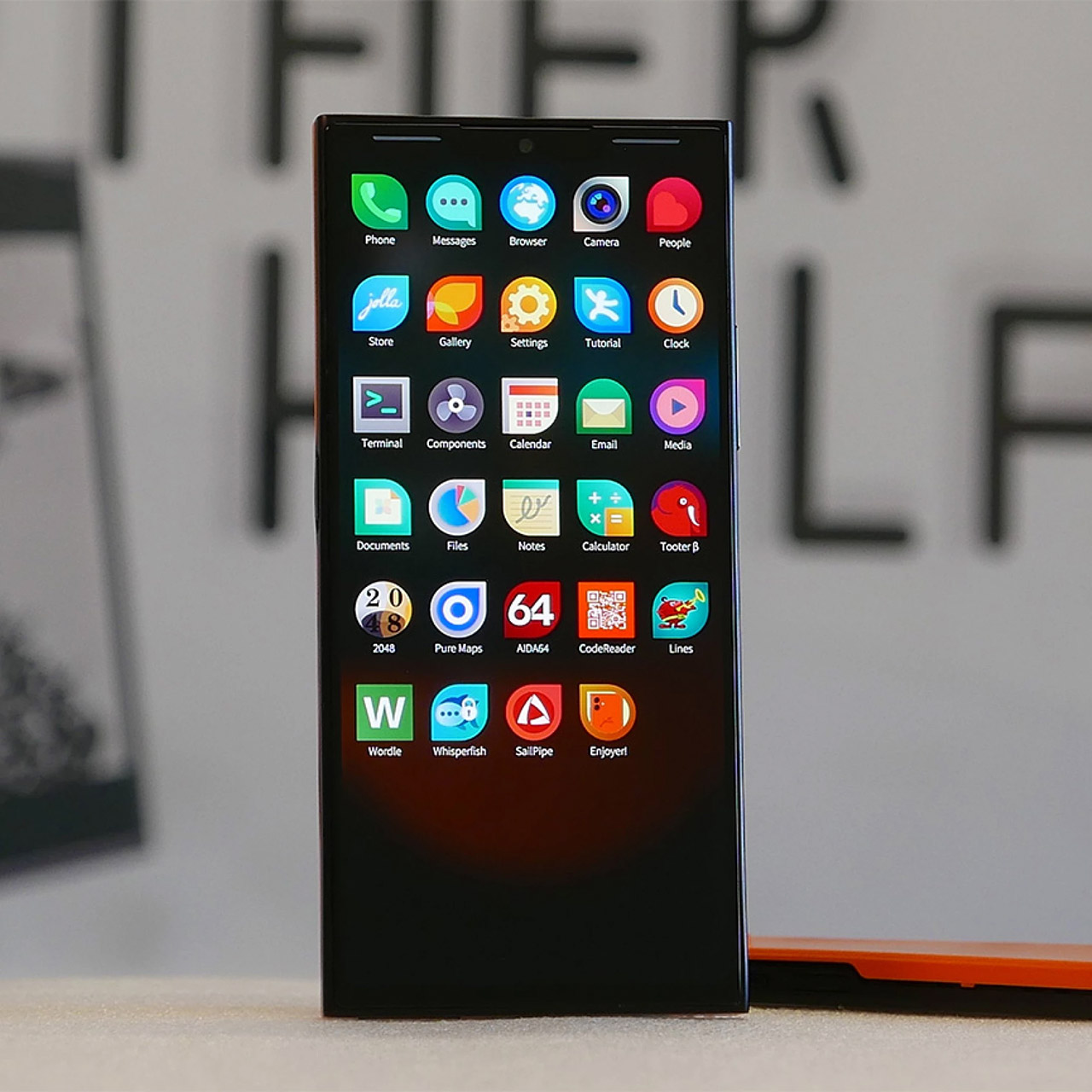
The Jolla Phone makes its grand premiere at MWC 2026 with a calm air of unmistakable Finnish flare, a mobile device that reinvigorates the spirit of freedom in phone manufacturing. However, this is no average smartphone. Jolla has painstakingly designed a cellphone centered on Sailfish OS, its own in-house Linux-based system, and matched it with some strong mid-range components that feel really practical for 2026.


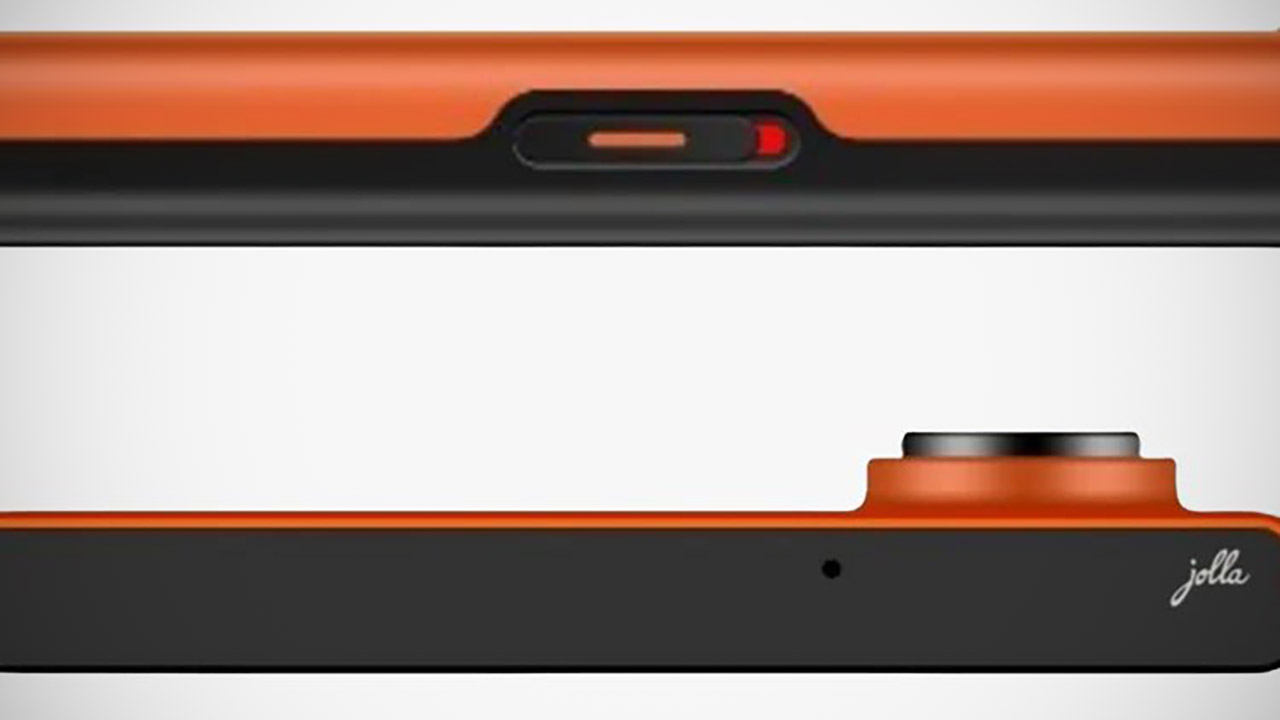
At the center of this is Sailfish OS, specifically version 5, an operating system that can function without the need for a Google account, avoids background data collection that feeds advertising networks, and avoids all of the hidden analytics that assist push adverts. You can’t blame Jolla for repeatedly highlighting this point, because the system only sends data back to headquarters if the user requests it. A tactile switch on the side allows you to turn off the microphone, cameras, Bluetooth, and other sensors instantaneously, which is a wonderful touch. You won’t find that amount of control on many phones in people’s pockets.

Sale


Google Pixel 10a – Obsidian – 128 GB with $100 Amazon Gift Card
  • Order the new Google Pixel 10a today and get an Amazon Gift Card; valid 2/18/2026 until 3/11/2026 at 11:59pm PT, while supplies last and subject to…
  • Return of Pixel 10a without gift card results in charge; offer cannot be combined, is non-transferable and not valid for cash or cash equivalent
  • If a qualifying item in your order is returned, you’ll be reimbursed for what you return, minus the value of the gift card

The hardware selections keep everything in check; there’s no over-the-top flagship stuff here. The phone has a 6.36 Full HD+ AMOLED display, wonderfully covered by Gorilla Glass, with 390 pixels per inch and a stunning 20:9 aspect ratio. MediaTek’s Dimensity 7100 5G chip powers the show, delivering solid performance for daily tasks and connectivity without overheating drama. Configurations offer 8 GB or 12 GB of RAM from SK hynix alongside 256 GB of storage, which expands up to 2 TB via microSD card. Dual nano-SIM slots sit alongside that card slot in the tray.

Advertisement


The cameras use Sony sensors, including a 50-megapixel main snapper and a 13-megapixel ultra-wide on the back, as well as a nice wide-angle front lens (listed as approximately 32 megapixels if you look closely). The results should be adequate for regular usage, however Jolla’s emphasis is on dependability rather than sophisticated camera technology. The 5,450 mAh to 5,500 mAh battery is completely user-replaceable, a deliberate tribute to longevity that some manufacturers have all but abandoned. Swappable back covers are available in Snow White, Kaamos Black, and an attractive orange. These colors mirror the original Jolla Phone’s module concept, and the pogo pins for future accessories designed by the community are a wonderful tribute to the spirit of the original “The Other Half” concept.

Jolla Phone Privacy Smartphone
Connectivity is extensive, including 5G compatibility, Wi-Fi 6, Bluetooth 5.4, NFC, and positioning via GPS, Galileo, GLONASS, and BeiDou. The dimensions are around 158 x 74 x 9 mm, making this phone a good fit in the pocket, with flat corners and minimal bezels.

Jolla Phone Privacy Smartphone
App access bridges the gap that once seemed impossible to bridge, as Jolla’s AppSupport technology now runs a wide range of Android apps with ease, including banking tools and messaging services. Of course, compatibility isn’t flawless, and certain programs behave strangely, but the configuration prevents you from accessing full Google services unless you add MicroG as an optional extra. This allows people to stick to their preferred routines without having to deal with the normal tracking mess.

Jolla Phone Privacy Smartphone
Pre-orders, however, tell a quite different story. This thing debuted in December 2025, and while starting with a modest goal, it quickly grew to over 10,000 in commitments and a tidy €5 million in sales by the end of February 2026. A new batch of 1,000 units arrived at MWC, still available for €649 each, albeit you’d need to put down a €99 deposit to get in on the action, with September deliveries slated for the EU, the UK, Norway, and Switzerland. The first exports are expected at the end of June 2026. Jolla is offering a few signals that they have bigger plans in the future – think ecosystem growth and some extremely fascinating AI capabilities that are tied in with all their work on keeping things private.
[Source]

Source link

Advertisement
Continue Reading

Tech

LG Sound Suite system knows the shape of your room is a bit weird

Published

on

Last week I got to go see some of what LG is bringing to the marj in 2026 with its TVs and sound systems. I’ll talk about the TVs in a later article but what caught my eye (or ears) was its Sound Suite audio system.

You may know that I have a degree of angst about TV sound. More often than not, it’s not very good and isn’t likely to get better in 2026. The best solution is usually to rely on a soundbar or surround sound system and LG’s Sound Suite is, interestingly, both these things.

Flexible and modular

That’s because the Sound Suite system is modular, which I’ll harp on about again because it makes more sense than relying on a single soundbar. As long as you have space.

You can mix and match satellite speakers, subwoofer, soundbar – even your LG TV – and have them work together in concert. Like a sports team, they understand each other’s roles and can intelligently adapt.

Advertisement

There’s quite a number of combinations on offer. You could use the TV and soundbar, the soundbar and subwoofer; the TV and four satellite speakers, or all joined together as one harmonious whole. What if I wanted to take two satellite speakers and play in stereo? I can do that, and then when I’m done, reassign them as part of the group of speakers again.

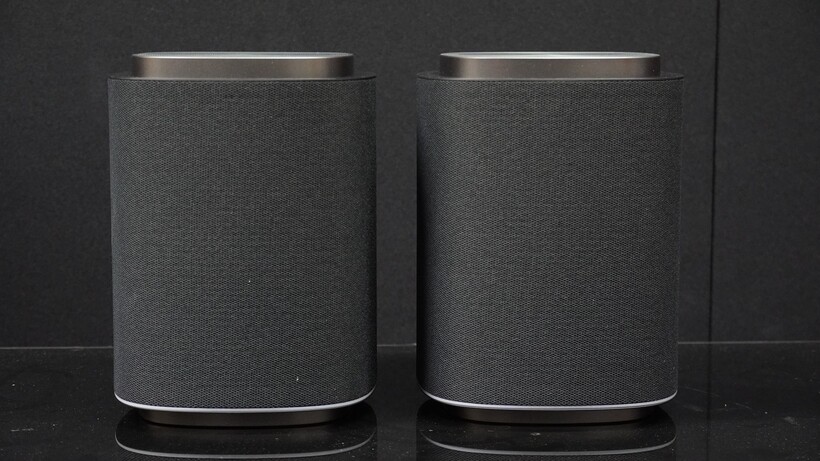
LG Sound Suite M7 speakersLG Sound Suite M7 speakers

Advertisement

There’s flexibility so you can start small and build up, adding speakers when you need (and if you need them). I can place these speakers anywhere I’d like in a room – the speakers can figure out where they are in relation to one another, and expand and contract the soundstage based on their proximity.

Each speaker has a microphone, which allows it to measure the distance from the soundbar (or TV), understand where it is relative to others, and measure the room acoustics. Do I need to worry about reflections in a room affecting the sound? According to Dolby, not really.

If I move a speaker, recalibrate (which takes twenty seconds), I can also see the new position of the speaker on the LG ThinQ app.

Advertisement

And it fixes an issue I’ve long held about Dolby Atmos, which is that in its current incarnation, it’s too front-heavy to be immersive. The idea of selling me a soundbar, and trying to make me believe that it can fling sounds all across the room (including behind me), is a non-starter.

But the ability to add satellite speakers, which some soundbars such as the Marshall Heston 120 or KEF XIO don’t even support, opens it up for a true surround sound experience.

Dolby FlexConnect finally arrives

LG Sound Suite speakersLG Sound Suite speakers
Image Credit (Trusted Reviews)

Advertisement

And this is possible because of Dolby Atmos FlexConnect, which was introduced a few years ago and then put in its best impression of The Fugitive by being elusive and not very easy to track down.

TCL and Hisense announced FlexConnect support when it was first announced and then, if memory serves, neither really mentioned it much afterwards.

Advertisement

So this is, two years later, the first time I’ve actually heard a FlexConnect system in the wild. Instead of this rigidity that traditional 5.1 or 7.1 surround system would enforce on me, I can now place speakers so they match the layout of my room. There’s potential for some good audio Feng Shui here.

And another pet peeve is how brands market surround systems where you’ve got a sofa dead centre in the middle of the room surrounded by plenty of open space. I know not of any living room that is that big or has that much space.

FlexConnect understands that no room is perfect and compensates. It can blend sound across physical speakers to make it sound like it’s coming from a specific area, so there’s no need to position speakers perfectly. What if I rearrange furniture in a room – will that affect the sound? Again, that’s not expected to be an issue.

Advertisement

Advertisement

It’s a clever system but the proof is in the pudding and judging from the time I spent listening to it, the sound depends on the speakers you have involved. I’m still not convinced about the sound from LG’s own TVs, so when partnered with the soundbar, it does sound thin and lacking weight and warmth. It sounded a little too brash.

But with the H7 Soundbar, W7 subwoofer, or the M5 and M7 satellite speakers engaged, and then you have something closer to a ‘proper’ sounding surround system. Poweful, energetic, expansive and immersive. It might be a bit too crisp for some, but this seems to be the tuning that LG is, and has gone for, for quite some time.

The price is… alot

The price though, is paramount. The H7 Soundbar is £899, the M7 satellite speakers are £399 a pop. For well over £1500, you only get a soundbar and two surround speakers. This is premium and compare that to the Samsung HW-Q990H which will have the soundbar, rear speakers and a subwoofer for probably around £1500, and suddenly the LG Sound Suite doesn’t look as good in terms of value.

But if there’s anything that would convince, it’s the ease of having Dolby Atmos FlexConnect. I’ll be looking forward to see how good it sounds, once I’ve got the system set-up.

Advertisement

Source link

Continue Reading

Trending

Copyright © 2025