Waymo says robotaxi service has resumed after it made “temporary adjustments” in San Francisco amidst a power outage that appears to have affected around 7,000 PG&E customers in the city.
According to a screenshot posted on social media, Waymo told SF customers that service was “temporarily paused” and that “freeway routes are unavailable.”
When TechCrunch reached out to the Alphabet-owned company for comment, a spokesperson said in a statement, “We are making temporary adjustments to our service while we monitor local conditions. We know riders depend on us, and we will return to normal operations as soon as possible.”
Following the initial publication of this article, a Waymo spokesperson added that the company “decided to pause service for approx. one hour to assess the scale of the power outage affecting a large portion of San Francisco and coordinate with local officials.”
Advertisement
Power outages have affected Waymo service in the past, for example when a number of Waymo vehicles stalled on city streets during a blackout in December, and when a similar incident paralyzed traffic during a Golden Gate Bridge fireworks show on the Fourth of July.
As a result, San Francisco Mayor Daniel Lurie has called for tougher state regulations to “adequately address how autonomous vehicles operate during major incidents, planned or not.”
This post has been updated with additional comment from Waymo reflecting that service has resumed.
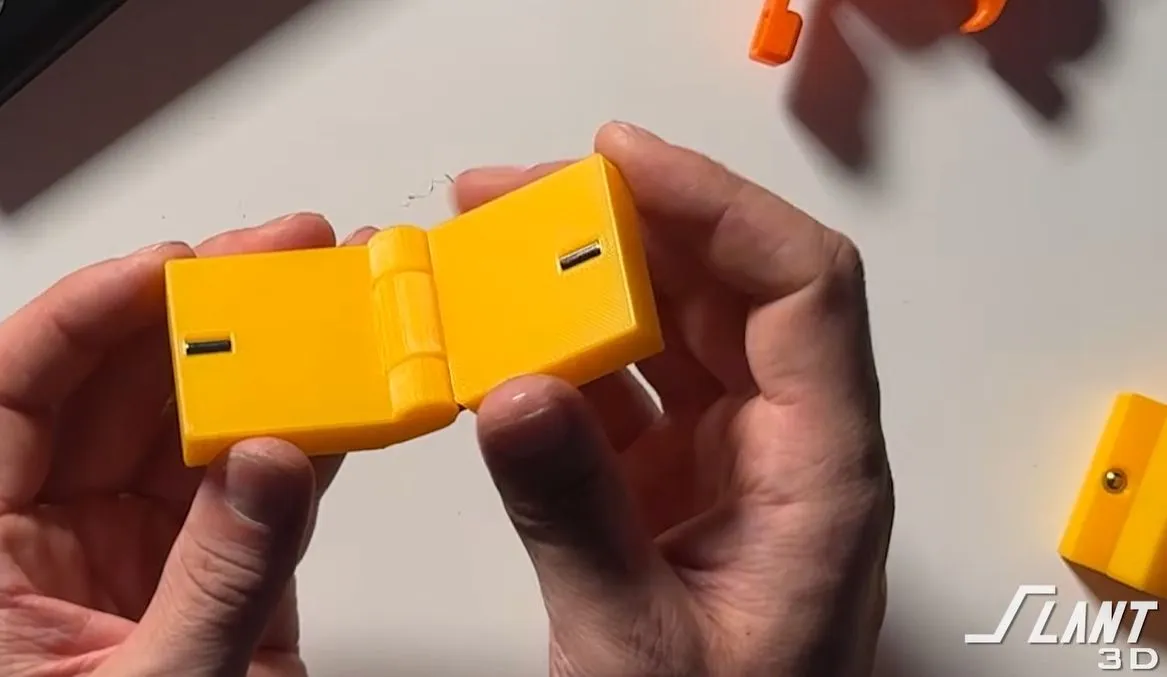
Magnets are awesome, so it’s no wonder we love to add them to our 3D prints. Doing so in a way that will actually last is harder, with thermal creep being one reason a simple friction fit will loosen over time, and using super glue to hold a magnet in place can be messy. In a recent video, [Slant 3D] covers seven ways to install magnets in 3D prints without resorting to glue, along with the advantages and disadvantages of each.
With friction, the argument is that you can still use them, but you’d want to use something like cylindrical magnets rather than flat magnets to increase the friction with the thermoplastic. Using an arbor press rather than human primate hand power is also beneficial.
Rather than installing magnets halfway through a print with all the logistics that entails, you can use side slots to install said magnet into, which is much easier, but as with all embedded magnets, you get that plastic barrier between the magnet and its target.
Other methods involve using a bit of extra material that you need to push the magnet past, using something like an arbor press, so the magnets should never just fall out. A wildcard here: spherical magnets, which can be locked in using a similar method, while automatically orienting themselves to an opposing magnet.
Advertisement
The final tip is to never use two magnets in a magnetic lock. Instead, use a cheaper ball bearing or a similar plain metal part on one side instead. Magnets tend to be much more brittle than whatever stainless steel ball bearing or washer you can use on the other side.
Of course, people will always try to install magnets during an FDM print, but before they try to do that anyway, they really should learn about the fascinating ways in which magnets can ruin print beds, destroy nozzles, and otherwise make a total mess of a print. Magnets seem magical. Maybe they are.
What just happened? Researchers have synchronized 105,000 tiny magnetic oscillators in just 45 nanoseconds, creating the largest network of its kind ever built, and a real sign that this odd corner of computing might actually scale. To put that number into perspective, the previous record was 64 oscillators. This new experiment increased that number to 105,000, more than 1,600 times as many, and the sync time barely moved. With 100 oscillators, synchronization took 10 nanoseconds. With 105,000, it took 45 nanoseconds. That’s the part researchers care about most. Usually, adding more components slows a system down. Here, the system barely slowed down.
Each oscillator is tiny, just 10 to 20 nanometers wide. There’s no external clock running the show. Once the grid gets nudged, the oscillators fall into sync on their own, using nothing but their natural magnetic spin. Think of ripples spreading across a pond until the whole surface moves the same way. And they do it using very little power.
Why does this matter? Because a grid of synchronized oscillators can solve certain problems just by settling into place. Anything involving waves, statistics, approximation, or pattern recognition tends to fit.
Two applications already mentioned in the research are Ising machines, which are used for optimization problems, and reservoir computing, which processes time-based data using the natural behavior of a physical system rather than traditional logic circuits.
Advertisement
The next step is making these grids programmable – adjusting each oscillator’s frequency, phase, and coupling strength so the whole array settles into a specific answer. You’d read the result straight from how the grid synchronizes, no separate decoding required. If that works at scale, people are eyeing applications such as high-speed networking, financial modeling, real-time analytics, and AI acceleration.
Speed is the other draw. The paper says grids like these could run at tens of gigahertz while using comparatively little energy. And that 45-nanosecond settling time for all 105,000 oscillators is roughly the time a regular CPU takes to perform one calculation across a full matrix.
There’s also a clear contrast with quantum computing, which needs heavy error correction just to keep working. This system doesn’t have that problem. Once it settles, the signal it produces is sharp and stable. The quality factor measured in the experiment was over a million, meaning the resulting frequency was about as clean and precise as the tone from a tuning fork.
The study, published in Nature Nanotechnology, was conducted by researchers from the University of Gothenburg, IIT Bhubaneswar, and Tohoku University.
Wind turbines turn flowing air into electricity, but how much can be difficult to predict. A good starting point is to determine a wind turbine’s efficiency by its rated wind speed.
This refers to the wind speed required to generate a wind turbine’s maximum power output without overworking its components, like the blades and generators. Engineers need to understand a wind turbine’s rated wind speed to ensure it is operating as expected without impacting its durability and reliability (they should be able to last 30 years with proper maintenance). On top of ensuring structural integrity, wind turbines should also have the proper rated wind speed to reduce noise.
Rated wind speed also determines if it can consistently produce more electricity, leading to higher revenue. The usual range is between 11 and 15 meters per second, but this is often considered the peak production — you may want to use power curves to estimate a more realistic output, which is how much electricity the wind turbine produces at given wind speeds. You can then calculate how much electricity will be produced at that average wind speed.
Advertisement
What can impact a wind turbine’s rated wind speed?
Dongfang Zhao/Getty Images
The rated wind speed of a wind turbine can be impacted by a lot of factors. First, you should consider the turbine’s size and components. A turbine’s blades will impact the rated wind speed. For example, longer blades can capture more wind energy at lower spinning speeds. The Department of Energy has stated that “the bigger the better” is true for wind turbines, “since they can sweep more area, capture more wind, and produce more electricity.” Some wind turbines are getting quite large.
The wind turbine may also have some technological upgrades. Certain materials and control systems may make a wind turbine more efficient. Different blade designs could be more aerodynamic, allowing the wind to travel over the curved side and then under the flatter side, creating a pressure pattern that creates more lift. The Department of Energy has worked on longer, lighter blades, as well as tall towers and upgraded drivetrains and control systems.
Advertisement
The wind turbine’s location can also impact rated wind speed. Every area has a different average wind speed — and wind turbines should be designed to work with the wind conditions. Naturally, a location with higher wind speeds needs wind turbines with a higher rated wind speed to take create the most electricity possible.
We may receive a commission on purchases made from links.
For many car owners, the garage is the most important area of the home, whether it’s used to keep classic cars safe from the elements, work on project cars, or even store a collection of handy car repair tools. That’s why something like mold can feel like a living nightmare. Unfortunately, dark, damp spaces with little ventilation attract mold quite easily, which is why garages are particularly susceptible.
If you spot mold, you should tackle it with a mold removal product like 30 Seconds’ Pro Mold and Mildew Stain Remover before it spreads. You can also make your own mixture by mixing warm water with distilled white vinegar, detergent, or bleach.
Advertisement
Before you start working, make sure the garage is well-ventilated. Put on gloves, goggles, and a face mask. Spray the area with your solution of choice and let it sit for a while. Then scrub the area with a stiff-bristled brush. Repeat this process until the mold is gone. Then, rinse it and leave the area to dry completely.
Advertisement
How to stop mold from coming back
Damian Pawlos/Shutterstock
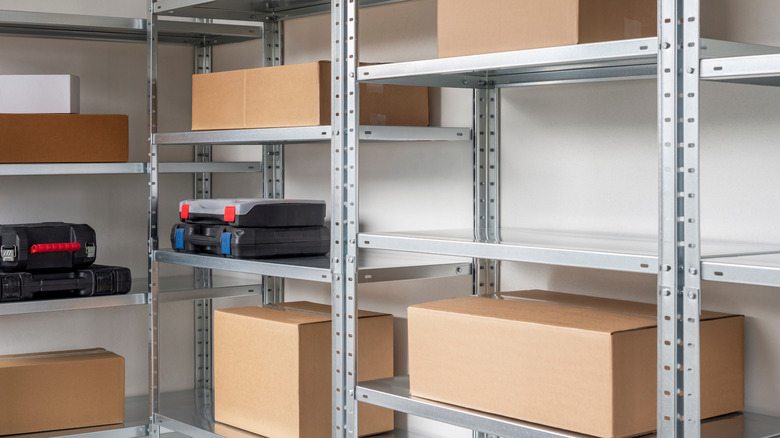
Once the mold is gone, you will want to ensure it stays away for good. Get rid of junk in the garage, like old cardboard boxes or furniture, as mold can grow on these surfaces or hide behind them. Ideally, you should keep your tools organized to reduce clutter. Don’t put anything wet or perishable inside your toolboxes, and make sure nothing leaks. If there is any moisture in the garage, you should address it as well.
If you sense that your garage is on the humid side, you may want to bring in a dehumidifier. Uncertain about spending the money? Aluminum foil can help you check if you need one. A fan could also be useful, as improving the garage’s airflow will help greatly. Better ventilation will be beneficial, as will proper floor drainage. Finally, you can also add more natural light so the garage is less dark and damp — think large windows or a garage door with window panels.
AppleInsider can confirm that it’s pretty easy to get somebody’s real email from Hide My Email, but it’s also not much of a concern. If you’re using the feature as intended as a spam filter, there’s really no issue at all.
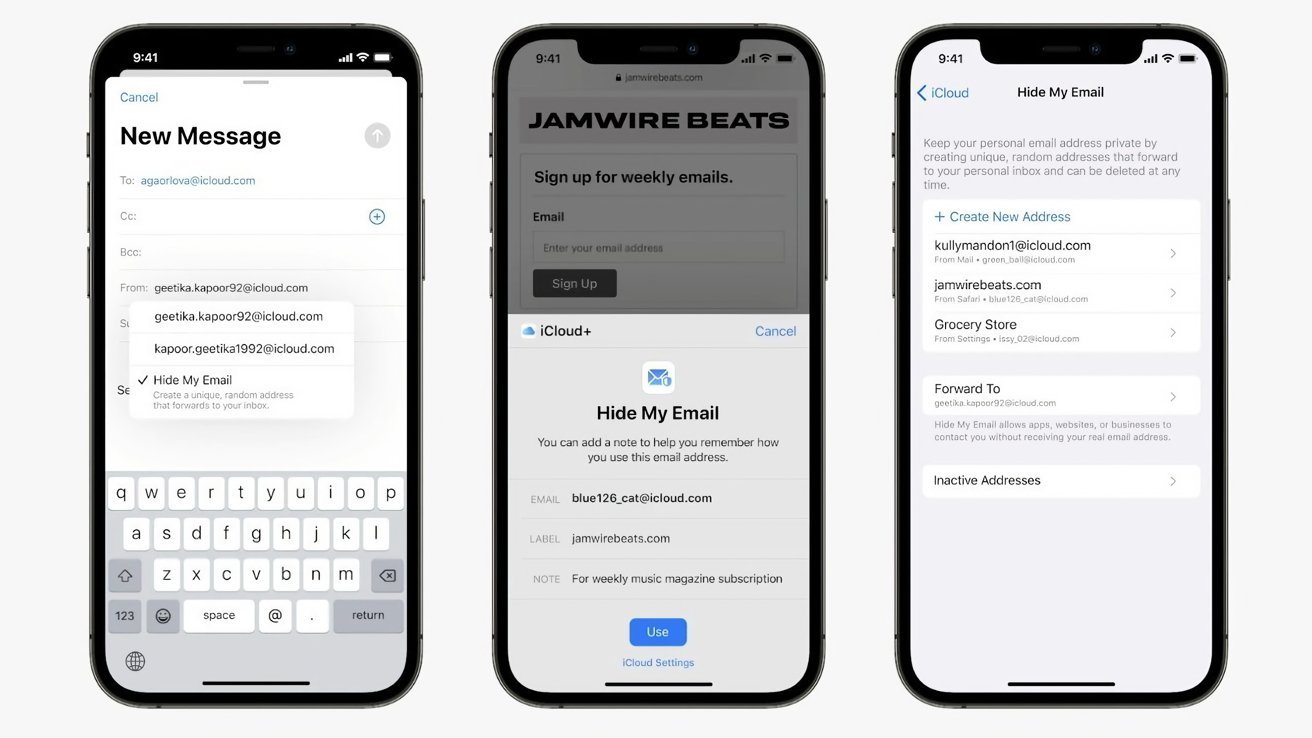
The Hide My Email feature allows iPhone, Mac, and iPad owners to sign up for websites and services using an anonymous email address. All emails sent to that address are then invisibly forwarded to the user’s real email address, preserving their privacy.
However, it has been reported that the feature can be bypassed, allowing someone to see a user’s real address. Apple is yet to fix the issue, despite having known about it for more than a year.
The steps required to bypass Hide My Email have not been made widely available. But we’ve now learned how it works.
Advertisement
A trivial process
We won’t be sharing the steps required to identify the real address behind a Hide My Email one. Given the fact that the exploit is still live and Apple is seemingly unable, or unwilling, to fix it, sharing the details would be problematic for obvious reasons.
However, what we will say is that bypassing Hide My Email is a trivial task. It’s something that anyone would be able to do, assuming that they know the fake address created by the Hide My Email feature.
With that in mind, it’s all the more incredible that the issue is yet to be addressed by Apple.
Apple claimed that it had done just that in March 2026. But testing by Tyler Murphy, the person who originally discovered the flaw, found that not to be the case.
Advertisement
Murphy was also told at the end of May 2026 that a fix was “expected in the coming weeks.” As of July 2026, that fix has yet to arrive.
Limited risk
There is a potential reason that Apple may not be treating this issue as a priority. It’s unclear just how much of a privacy risk this issue is.
Places like grocery delivery venues, media sites, and so forth don’t care that much about your real email, and aren’t going to go diving looking for it with an exploit. You also probably won’t get outside spam from them to the email alias generated, unless you’ve opted in to that.
As mentioned, anyone wishing to gain someone’s real email address must first know the address created by Hide My Email. That’s likely to severely limit the attack vector.
Advertisement
That hasn’t stopped a new lawsuit from being filed, however. The ambulance-chasing complaint accuses the company of false advertising, fraud, breach of contract, and other violations tied to Apple’s marketing of Hide My Email, without any real damage to the filer or class.
Intended use meets privacy confusion
“I signed up with hide my email on my iPhone on my home network after following a link from social media” is like putting a screen door on a submarine, and not really the intent of the feature. It’s also not really intended to impenetrably shield email senders from consequences of their actions or words, sent across the internet.
After all, we already know that Apple surrenders identity of the real sender of an email hidden by Hide My Email with a subpoena.
It’s also vital to remember what the Hide My Email service is for, and how Apple was very clear at release on when and how to use it. It’s unclear whether the filer of the lawsuit is aware of either.
Advertisement
At its core, Hide My Email creates a new email address that Apple device owners can use to sign up for online services and websites. People can use that address rather than give these services and websites their real address.
The use case is simple. If our fictitious Apple customer then receives spam messages to their Hide My Email address, they immediately know. The address was leaked by, sold by, or stolen from, the one website or service that it was given to.
At this point, the user has a choice. They can delete the compromised Hide My Email address and give the website or service a new one. Or, they can ditch it entirely and use a different website or service. They’d also give it a new Hide My Email-created address, too.
Either way, the compromised address would be deleted, stopping any spam emails in their tracks.
Advertisement
The catch? If the spammer is the determined sort, they could use this exploit to learn the user’s real email address. So long as they did it before the compromised Hide My Email address was disabled, of course.
Every year, the top performing TVs are brought together into one room to determine which models offer the best video performance, and which don’t quite measure up. It’s called the “TV Shootout” and it’s hosted by electronics dealer Value Electronics. This year’s event included six of the top performing OLED and RGB backlit LCD TVs from Sony, LG and Samsung and it was held yesterday (July 18, 2026) at the company’s headquarters in Scarsdale, NY.
Value Electronics hosted its 25th annual TV Shootout at its headquarters in Scarsdale, NY.
The Competitors
With Panasonic effectively dropping back out of the high end TV market in the United States (at least for now), and with TCL and Hisense choosing not to participate, just three manufacturers were represented this year: LG, Samsung and Sony. Each manufacturer was represented by one OLED TV and one RGB-lit LCD TV in the fight, for a total of six models.
OLED TV Models Competing in the 2026 TV Shootout (65-inch):
RGB-Backlit LCD TV Models Competing in the 2026 TV Shootout (75-inch):
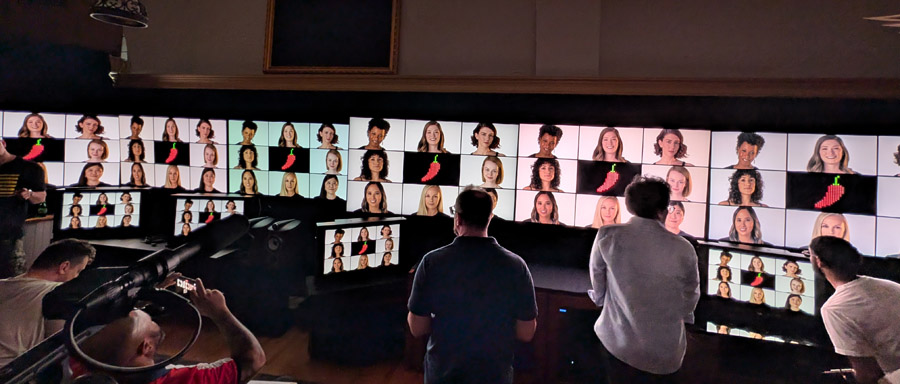
Although all six TVs were installed in the same room, along with four professional Sony broadcast monitors to use as reference displays, the competition was actually split into two groups: OLED on the left (all in 65-inch sizes) and RGB-lit LED/LCD TVs on the right (all in 75-inch sizes). Unlike in previous years, the judges were split into two groups as well: one group to judge the OLED TVs and one group to judge the RGB LCD TVs.
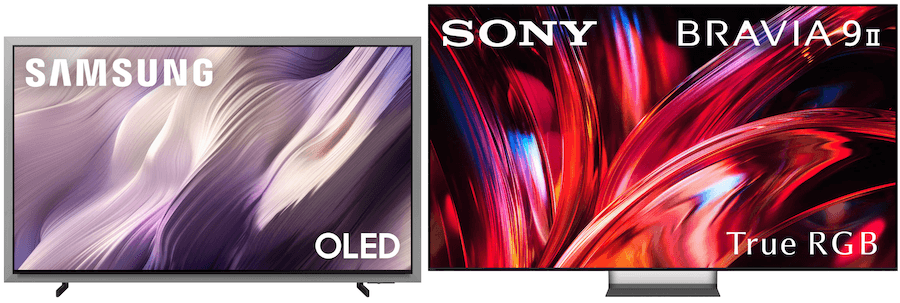
The 2026 TV Shootout featured three OLED and three RGB-lit LCD TVs. Models included (from left to right): Samsung S95H OLED, Sony BRAVIA 8 II OLED, LG G6 OLED, Sony BRAVIA 9 II True RGB, Samsung R95H Micro RGB and LG MRGB95 Micro RGB EVO TVs.
OLED vs. RGB Backlit LCD TV
OLED (Organic Light Emitting Diode) TVs use self-illuminating pixels to create the on-screen image. This allows them to create perfect black levels and outstanding contrast as each individual pixel and be turned fully on or fully off, or anywhere in between. If a star in deep space lights up exactly one pixel and is surrounded by pitch black space, that’s not a problem for an OLED TV.
QD-OLED TVs include a base layer of self-illuminating blue OLED pixels along with a Quantum Dot layer to generate colors.
LG’s G6 OLED TV, the company’s flagship model, uses a quad-stack Tandem RGB OLED (also known as “W-OLED” (White OLED) because it uses a white OLED element. But each white OLED uses red, green, white and blue sub-pixels for color reproduction. Meanwhile Samsung’s S95H and Sony’s BRAVIA 8 II OLED TVs use QD-OLED (Quantum Dot Organic Light Emitting Diode) technology in order to create the image. QD-OLED uses a blue OLED pixel combined with quantum dot technology to create the on-screen image and colors. While both technologies are capable of comparable brightness and contrast, QD-OLED TVs typically have slightly wider color gamut, which means they can reproduce a wider range of colors than W-OLED TVs.
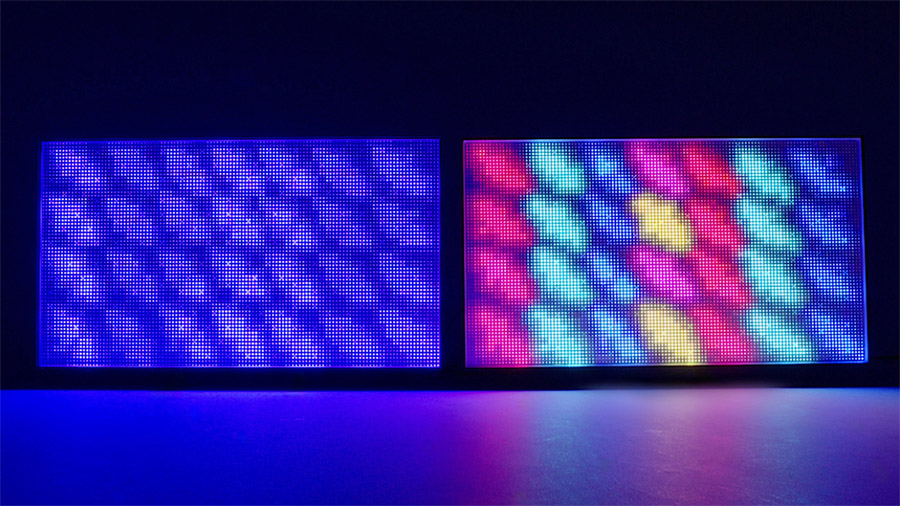
RGB backlit TVs, sometimes known as “Micro RGB” TVs, differ from traditional LCD TVs in that they use multi-color red, green and blue LED backlight elements instead of a single color blue or white backlight. This allows RGB-lit TVs to offer higher efficiency, higher brightness and wider color gamut reproduction. But because RGB lit LCD TVs are still actually LCD TVs, there is no one-to-one match from lighting zone to each pixel. One RGB backline “zone” may serve hundreds or even thousands of individual pixels, so RGB-lit LCD TVs can have issues with uniformity, elevated black levels, blooming and haloing. When viewing a single-pixel star against a black space background, you will normally see a faint glow around the lit up pixel, due to the backlight bleeding through the LCD shutters. And that’s very difficult (if not impossible) to completely fix. But you can make it better by including a large number of backlight zones and use local dimming to control how these lighting zones operate.
All of the RGB-lit LCD TVs in this year’s Shootout include advanced local dimming, with a high number of dimming zones, so many of the traditional drawbacks of LCD TVs are minimized. We also noticed that all three of this year’s RGB-lit TVs offered off-axis viewing that was superior to most other LCD TVs, though still not as good as OLED TVs.
While the Sony BRAVIA 9 Mini LED TV on the left features a single color blue backlight, the Sony BRAVIA 9 II True RGB TV features individual red, green and blue lighting elements for better color reproduction. Note: these TVs are shown with their front LCD panels removed and just the raw backlight unit exposed.
Managing Ambient Lighting
In terms of bright room viewing, four of the TVs in this year’s competition include some form of advanced glare reduction to minimize the reflection of in-room light fixtures or sunlight. The Samsung S95H and R95H use Samsung’s “Glare Free” screen coating, now in its third generation. The Sony BRAVIA 9 II uses Sony’s new “Black Screen Immersive Pro” anti-glare coating. The LG G6 OLED TV uses LG’s new “Reflection Free Premium” coating. All of these are effective at minimizing the direct reflection of ambient light, but they can impact perceived black levels.
Originally, each TV was going to be judged both with its best “out of the box” default video mode selected as well as in bright rooms, but some technical glitches with the peripheral equipment caused delays so those two parts of the testing were omitted. All of the evaluations that we did were done with professionally calibrated TVs in a light-controlled dark room setting. But having seen and experienced all three flavors of glare reduction, we feel that Sony’s Black Screen Immersive Pro coating is most effective at minimizing the reflection of ambient light without excessively washing out colors or changing the hue of black backgrounds.
Advertisement
Judges Assemble
As in previous competitions, all TVs were evaluated by professional judges from within the A/V community: tech journalists (including yours truly), content creators, trained calibrators and creative video content professionals. The pool of ten judges was split with five judging the OLED TVs and five judging the RGB-lit LED LCD TVs.
In addition to the TVs themselves, which were all professionally calibrated by expert ISF calibrator DeWayne “D-Nice” Davis, there were four professional Sony broadcast monitors on hand (BVM-HX3110), which typically sell for around $40,000 each. These are the pro monitors used by studios and mastering houses worldwide when grading and mastering movies and TV shows for home use. Judges were instructed to compare the image on the TVs with those on the broadcast monitors and rank each TV from 1 (not good) to 5 (best) based on how close they came to the reference monitors.
Advertisement. Scroll to continue reading.
Judges evaluate three OLED TVs for skin tone accuracy at the 2026 TV Shootout.
The evaluation featured video test clips, stills and real world movie scenes chosen to highlight specific areas of video performance such as contrast, brightness, color volume, color accuracy, motion reproduction, HDR tone mapping and image uniformity. After the tests, the judges’ scorecards were tabulated in order to crown a new “King of TV” for 2026. To be precise, two kings were crowned: one for OLED and one for RGB-lit LCD TVs.
As they have since the very first TV Shootout in 2004, consumers can use the results of the event and the judges’ scorecards to select the best TV for their own liking and specific use-case. Performance in both bright and light-controlled rooms will be considered.
Advertisement
As in previous years, it “takes a village” to put the event together, with many folks working behind the scenes to prepare for and run the event. It also takes a fair amount of gear. AVPro Global supplied the latest state-of-the-art switching, distribution, and test equipment for the event. Magnetar’s UDP-900MKII flagship 4K universal disc player and Kaleidescape’s Strato K 8K-capable Media Player were the reference sources for content with a Panasonic UHD Blu-ray Player also stepping in when the Magnetar player started misbehaving.
And the Winners Are…
The Winners: 65-inch Samsung S95H QD-OLED TV and 75-inch Sony BRAVIA 9 II True RGB TV
Since the event was effectively separated into two parallel contests, with one set of judges rating the OLED TVs and another set of judges rating the RGB/LCD TVs, two winners were declared for 2026, a “King of OLED TV” and a “King of Micro RGB TV.” The winner in the OLED category, by a pretty healthy margin was the Samsung S95H QD-OLED TV. The winner in the Micro RGB category was the Sony BRAVIA 9 II True RGB TV. And even though they were effectively two different contests, the Samsung S95H had such higher scores overall that it was declared the overall winner of the 2026 TV Shootout.
The final detailed scorecards from the event have not yet been published, but when they are, we will be sure to update this article.
The Bottom Line
Having spent a significant amount of time with both Sony TVs and both Samsung TVs, and also having more limited hands-on time with both LG models, I was not surprised by the results. OLED TVs still have significant advantages over LCD TVs, even advanced RGB-backlit LCD TVs, particularly when it comes to picture uniformity, black levels, contrast and color saturation. I rated the Samsung S95H as the winner in my own judging, but I would personally take any of the OLED TVs over all of the Micro RGB TVs as my personal television.
The LG OLED did have some issues with color reproduction, with cooler whites and slightly muted colors, but these were only noticeable when compared to the reference monitors and to the two other OLED competitors. At home with a single TV on your wall or credenza, you’ll definitely appreciate the OLED TV’s deep inky blacks and outstanding contrast. And even though the Sony BRAVIA 8 II QD-OLED TV won last year’s TV Shootout (and its predecessors won for the prior three years), that TV is starting to show its age in processing, compared to the brand new Samsung S95H and LG G6. In my opinion, the LG G6 had stronger overall performance than the BRAVIA 8 II OLED, and any of the RGB-lit LCD TVs, but the Samsung S95H dominated the event due to its strong overall performance.
Advertisement
But does this mean everyone should go out and buy a Samsung S95H? Not necessarily. Some potential buyers are turned off by the S95H design, which features a large floating metal frame around the outside out the TV (which is not removeable). In my opinion, it makes the TV look more like artwork, particularly when it’s displaying art from the Samsung Art Store, but others prefer a more subtle narrow bezel. Also, the Samsung “Glare Free” matte screen, while extremely effective at reducing reflected light, can raise the black levels and add a subtle hint of purple to those blacks when viewed in a bright room. But if this bothers you, you can always just turn off the lights or draw the curtains.
Meanwhile, for those who are looking for a very large screen TV (above 83 inches), OLED is not really a viable option. Micro RGB TVs like the ones that competed in this year’s TV Shootout are available in sizes up to 115 inches diagonal. With the shift to RGB backlighting, LCD TV continues to improve in picture quality and the benefits of wider color gamut reproduction and higher brightness make them a solid choice if size, bright room viewing and picture performance are important to you.
While there is sure to be some controversy with the results (no one likes when their personal favorite TV doesn’t win), the TV Shootout remains one of the premier TV comparison events as it pits the top performing TVs against each other and hits them with a wide range of content to reveal each of their strengths and weaknesses. The event’s results should help inform TV buyers’ choices through the remainder of 2026 and beyond.
In brief: Remember the teenage GTA 6 hacker who was sentenced to life in a secure hospital facility in 2023? The former Lapsus$ member has been released from the unit and is now in prison awaiting a retrial for his crimes.
Back in September 2022, one of the biggest leaks of all time hit the internet when over 90 videos and screenshots of the still-unreleased GTA 6 were posted to the GTAForums. They originated from a then-18-year-old hacker who also claimed to be behind an Uber breach that occurred a few days earlier.
A couple of days after the leak, the City of London Police arrested the hacker, Arion Kurtaj, thanks to assistance from the FBI and NCCU. He was accused of causing almost $3 million of damage to Uber and accessing around 5,000 Revolut customers’ information. Kurtaj and a 17-year-old were also accused of blackmailing BT Group (Britain’s biggest broadband provider) and mobile operator EE between July and November 2021; they demanded a $4 million ransom. The pair are also alleged to be behind a hack on Nvidia.
In July 2023, Kurtaj was assessed by psychiatrists as unfit to stand trial due to his “acute autism.” That meant a jury could only determine whether he committed the crimes he was accused of, rather than finding him guilty or not guilty.
Advertisement
A mental health assessment also found that he continued to express an intent to return to cybercrime as soon as possible, adding that “he is highly motivated” to engage in more criminal activities.
sentenced in December 2023 the court heard that he will remain at a secure hospital for life unless doctors deem him no longer a danger. But he is now out and will face a conventional criminal trial in November. I have been trying to get this information confirmed with police for weeks after…
Even being under police supervision didn’t stop the hacker. While staying in a hotel under police protection and despite having his laptop confiscated, Kurtaj was able to hack Rockstar using an Amazon Fire TV Stick provided in the room and a newly purchased phone, keyboard, and mouse. He broke into Rockstar’s internal Slack system and threatened to release the source code if the company did not contact him on Telegram.
Kurtaj was ordered to remain in the secure hospital indefinitely, unless doctors determined that he was no longer a danger. BBC correspondent Joe Tidy says he has now been moved out of that facility and into a regular prison awaiting retrial in November. Ironically, it’s the same month GTA 6 finally launches on consoles.
Advertisement
Tidy said it’s unclear why Kurtaj has now been deemed fit to face a conventional criminal trial after spending more than two years of being in a secure hospital.
To celebrate Evil Dead Burn coming out in theaters this month, I’ve put together the ultimate quiz to test fans of the popular horror franchise.
Ever since The Evil Dead was released in 1981, the series has been a favorite among genre fans and is widely recognizable, but have you been paying attention to it? I bet you won’t be able to get a perfect score on my quiz, so now’s your chance to prove me wrong!
Don’t worry if you haven’t seen Evil Dead Burn yet, because this quiz only covers the previous movies, meaning you won’t find any spoilers for the new movie lurking in here.
Advertisement
Latest Videos From
But there’s plenty of trivia about the rest of the franchise, from the original release to the 2013 remake. These horror movies are among the most fascinating, from the scripts all the way to what happened on set.
Feeling brave? Scroll down to try out the quiz now, and see if you can survive to the very end.
How did you do? Let me know your score in the comments below, and if you’re hungry for more horror trivia, why not check out my Resident Evil movie quiz ahead of Zach Cregger’s adaptation, which arrives later this year.
Or we’ve got an ultimate Walking Dead quiz for fans of the hit zombie series. If you think you’re a superfan, join other quizzers and prove your knowledge.
Advertisement
Sign up for breaking news, reviews, opinion, top tech deals, and more.
ASUS has expanded its product lineup in India by introducing the ASUS Pad T3201. The new tablet combines a premium OLED screen, performance, and portability. It has been built using the MediaTek Dimensity 8300 SoC and targets those users who like to stream, game, study, and work while traveling. The tablet’s launch date is set for August 6.
ASUS Pad T3201 Specifications and Features
ASUS has designed the Pad T3201 for both entertainment and productivity. It is equipped with a 12.2-inch dual-layer OLED screen featuring 2.8K resolution and a 144 Hz refresh rate. The display can deliver up to 2,000 nits of brightness and support the 100% DCI-P3 color gamut, making it perfect for entertainment such as watching movies, gaming, and reading. The phone runs on the MediaTek Dimensity 8300 chipset and features 8 GB of LPDDR5X RAM. It runs on Android 16 and ensures efficient use for the user. ASUS has also equipped the device with Wi-Fi 6E, which provides a reliable, fast internet connection. Buyers can choose 128GB or 256GB storage, while a microSD card expands storage up to 1TB.
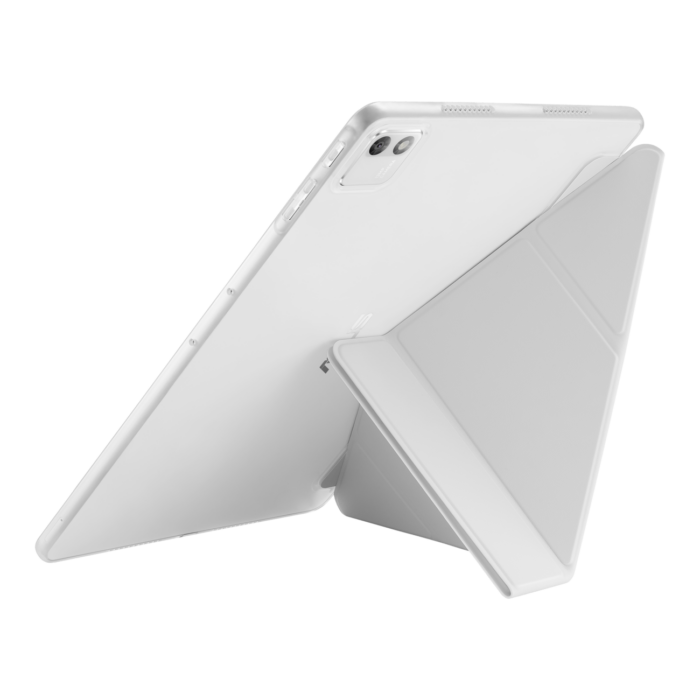
The ASUS Pad T3201 packs a 9,000mAh battery with 45W fast charging support. ASUS says the battery charges from 0 to 50 percent in about 30 minutes. The tablet weighs 523g and measures 6.5mm thin, making it easy to carry. It also includes quad speakers with Dolby Atmos for immersive sound. For photography and communication, the tablet includes a 13MP rear camera and a 5MP front camera. It supports ASUS Pen 2.0, a Bluetooth keyboard, and GlideX for seamless file sharing. ASUS also bundles a protective folio case with the device. Users can also use Google Circle to Search without switching apps.
Launch and Availability
The ASUS Pad T3201 is set to launch in India on August 6 at 12 PM. This product will be sold both online at Flipkart and the ASUS E-Shop website. Offline purchasing is possible at ASUS and ROG stores, as well as Reliance Digital, among others. At the moment, ASUS has not announced the tablet’s price.
Get caught up on the latest technology and startup news from the past week. Here are the most popular stories on GeekWire for the week of July 12, 2026.
Stardew Valley, the blockbuster farming sim from solo Seattle developer Eric “ConcernedApe” Barone, is coming to Magic: The Gathering via a three-part Secret Lair drop from Renton-based Wizards of the Coast — with original pixel art from Barone himself. … Read More
F5 names former Amazon executive as its chief people officer; Rudra Mitra departs as a Microsoft CVP after more than 27 years; and Qualtrics adds leaders. … Read More
The AI-generated video is an interesting study in how technology that’s very much being built and hyped in Seattle can be used to illustrate what the city sort of looked like more than three decades ago. … Read More
Apptio co-founders Sunny Gupta and Kurt Shintaffer launched Thira, a Bellevue-based enterprise AI startup, with $21 million in seed funding led by Madrona. … Read More
JPMorgan Chase is building out a new AI software infrastructure team, with a major presence in Seattle, focused on running AI across its data centers and outside providers in a way that controls costs, protects its intellectual property, and avoids tying its fortunes to any one vendor. … Read More
Rina Hahn leaves role as Remitly’s CMO; Temporal promotes Preeti Somal to EVP amid reorganization; and Veeam and Qualtrics make leadership changes. … Read More
Dave Brown, the senior AWS executive whose departure Amazon announced this week, is joining Meta to work on its data center build-out, according to a Wall Street Journal report. … Read More
General Fusion’s stock is trading up after it became the first fusion energy company to go public on a major exchange, debuting Monday on Nasdaq. … Read More







































































You must be logged in to post a comment Login