Tech
Webb’s Latest Capture Showcases a Glowing Chest of Newborn Stars in the Carina Nebula
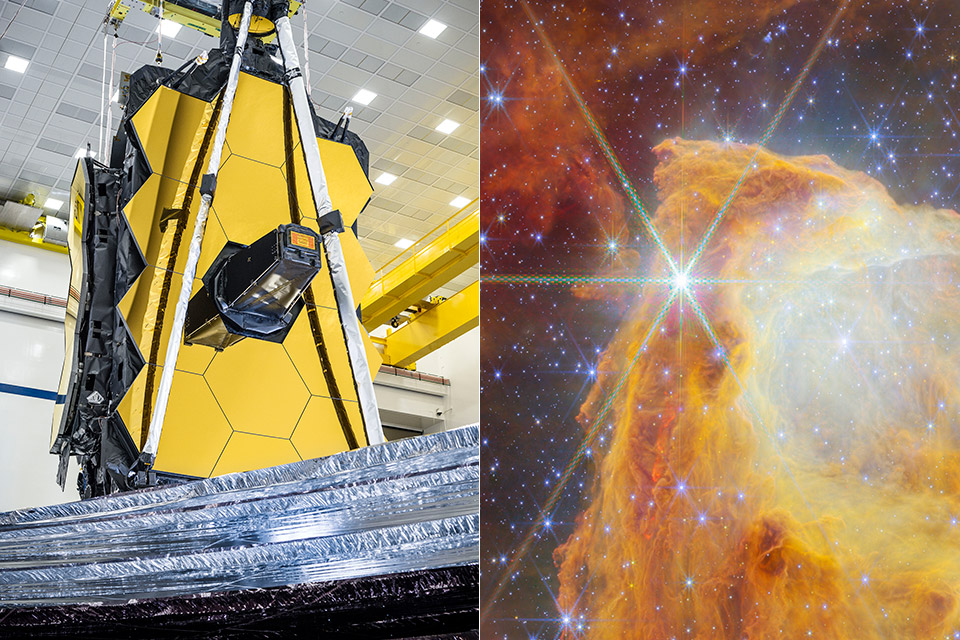
Dense clouds of gas and dust gather into the clear outline of an open chest at the center of this new James Webb Space Telescope view. Light shines from inside the structure while long pillars of thick material trail from its base. Dark orange globules and pale hazes fill the background, and a few bright stars sit in the foreground, one of the largest positioned right in front of the chest’s lid.


This scene is situated in the Carina Nebula, a star-forming region located 7,500 light-years away in the constellation Carina. The nebula is vast, covering approximately 260 light-years and containing some of the Milky Way’s largest stars as well as tens of thousands of protostars. As luck would have it, it is also the closest location where astronomers can obtain a clear view of high-mass star formation in all its magnificence. Not to add, it’s the same location where Webb acquired the iconic Cosmic Cliffs image that helped put the telescope on the map.


LEGO Icons Hubble Space Telescope 11382
- EXPLORE THE HUBBLE SPACE TELESCOPE – Celebrate one of humanity’s greatest scientific feats while enjoying a relaxing building experience with the…
- REPLICA SPACE MODEL – Recreate the legendary space-based telescope with posable solar arrays and antennas, an opening aperture door and a detailed…
- AUTHENTIC DETAILS – Remove the exterior panels to reveal a detailed instrument bay, which features gyroscopes alongside primary and secondary…
The feature we’re looking at is a cometary globule known as the Treasure Chest. These gas and dust clouds typically have a dense center and a long, sweeping tail following after them. In this example, however, the thick material forms a type of body and open lid of a chest, while the tail stretches out in a fairly standard cometary shape. The glow we see is caused by the newborn stars inside and is visible because Webb’s Near-Infrared Camera can see thru the dust.

There are approximately 70 young stars crowded into a small cluster within the chest. The largest of these stars is an O-type star with a mass 19 times that of the Sun. Estimates put the cluster’s age at around 1.3 million years, tho some earlier work suggested it could be as young as 100,000 years. Because the stars are so young, they’re still buried in dusty material, and many of them have circles of gas and dust around them known as circumstellar disks, which are the type of thing from which planets form.
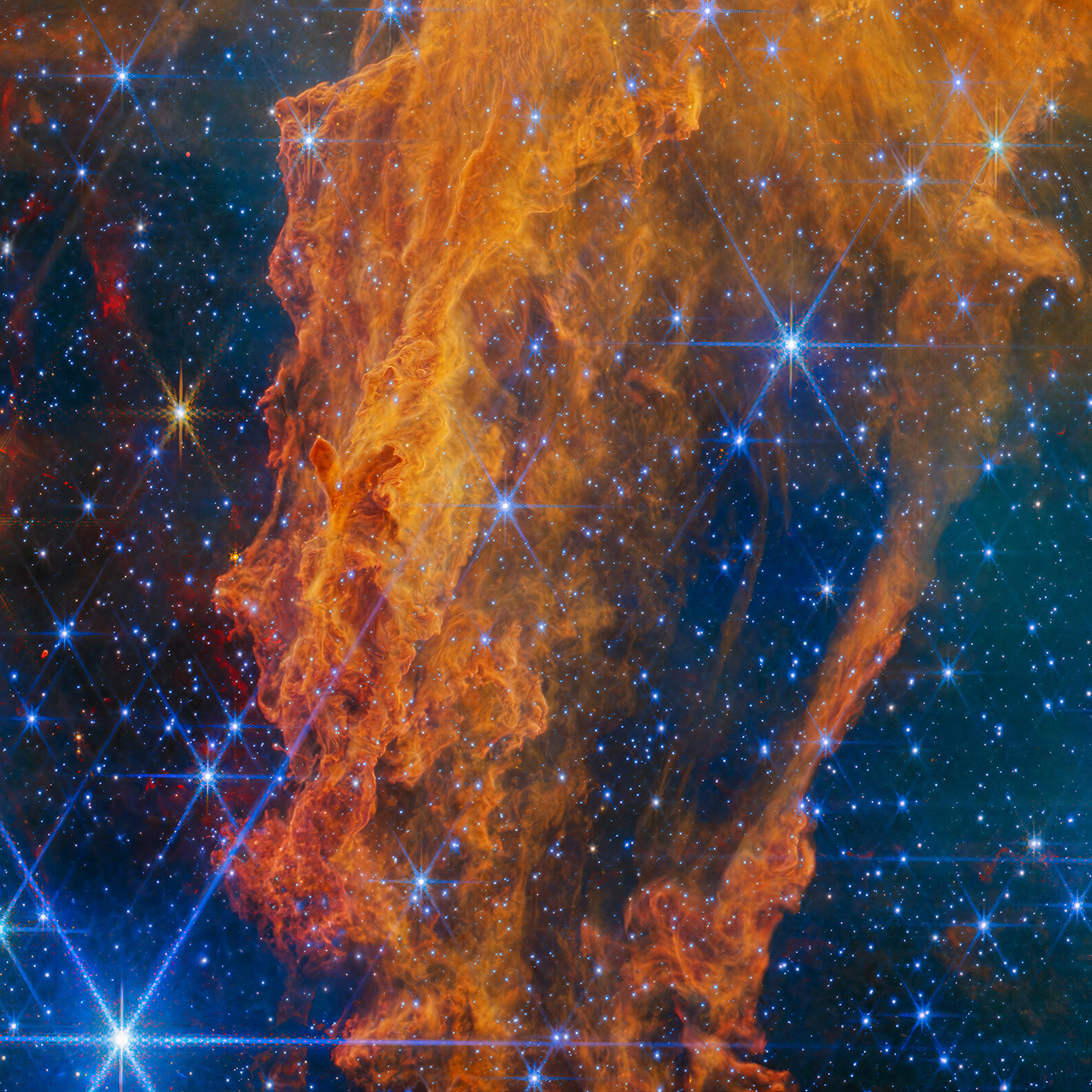
The powerful ultraviolet radiation from outside the chest is already affecting those disks, scorching them and blowing material away. The same force cut the chest into its current shape and continues to work on the disks. Models imply that disk lifetimes in such conditions can be rather low, often less than a million years. Once the remaining dust and debris have cleared, the disks will be exposed to the full force of the radiation, which is likely to be a harsh awakening. By examining the stars in this program, we will be able to determine if they had the opportunity to produce planets or if many of them will remain alone.

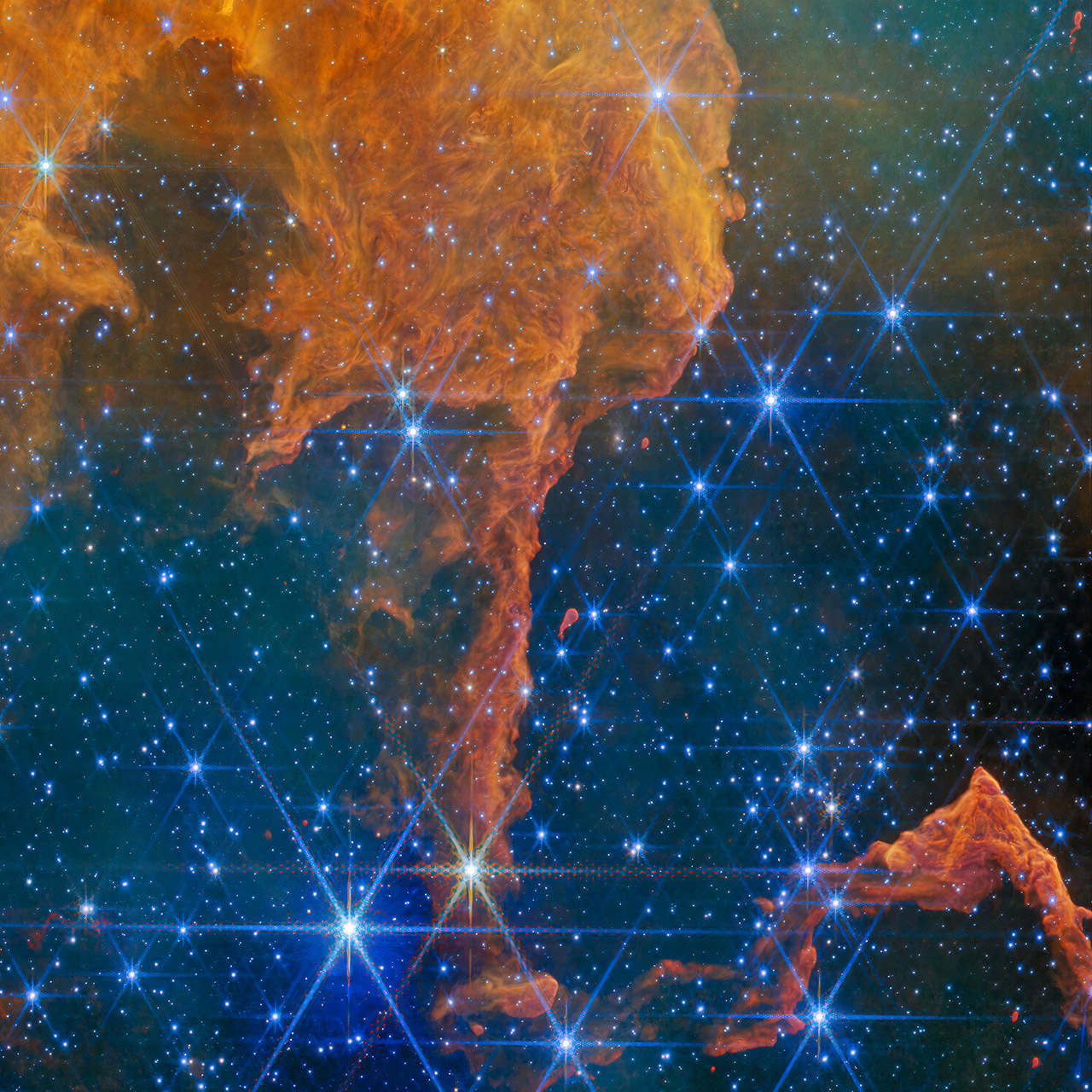
Radiation and wind from large stars nearby are most likely responsible for the chest’s form. Eta Carinae, located 39 light-years to the northwest, is the brightest star in the Carina Nebula. We’re talking about an item that outshines the others, a system that has at least one star that is 100 times the mass of our own sun and emits light that is five million times brighter. There’s also the star cluster Trumpler 16 chipping in with its own dose of energy, which is what stripped away the lower density gas a long time ago, leaving only the denser material that forms the chest today. To add the final nail in the coffin, the stars within the cluster are still slowly chipping away at the cloud from the inside out, so the structure is whittled away from both sides.
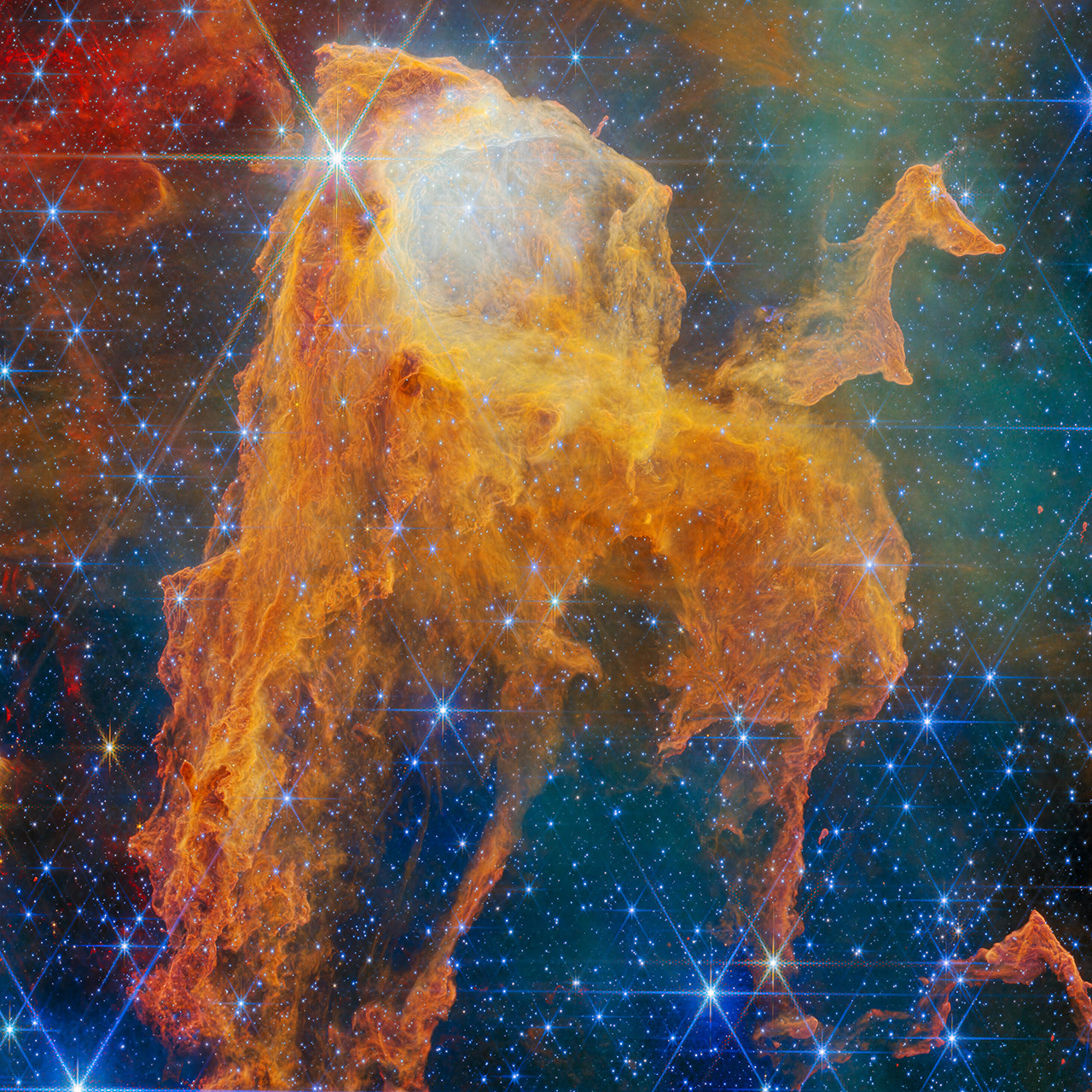
The image was captured with Webb’s Near Infrared Camera utilizing four distinct filters: 1.62 microns, 1.64 microns for iron emission, 4.44 microns for molecular hydrogen, and 4.7 microns. The iron and hydrogen filters identified locations where newborn stars are releasing material in dramatic way, and it’s a wild journey. Megan Reiter of Rice University leads the observing program 5408, which produced this image. That program is working to find out how these young stars collect gas from their surrounds and then blast it out in gigantic outflows, a piece of study that will result in comprehensive maps of over 100 new jets across the Carina region.
You must be logged in to post a comment Login