








Connect with us

Tech

Webb’s Latest Capture Showcases a Glowing Chest of Newborn Stars in the Carina Nebula

Published

on

Webb Telescope Stars Carina Nebula August 2026
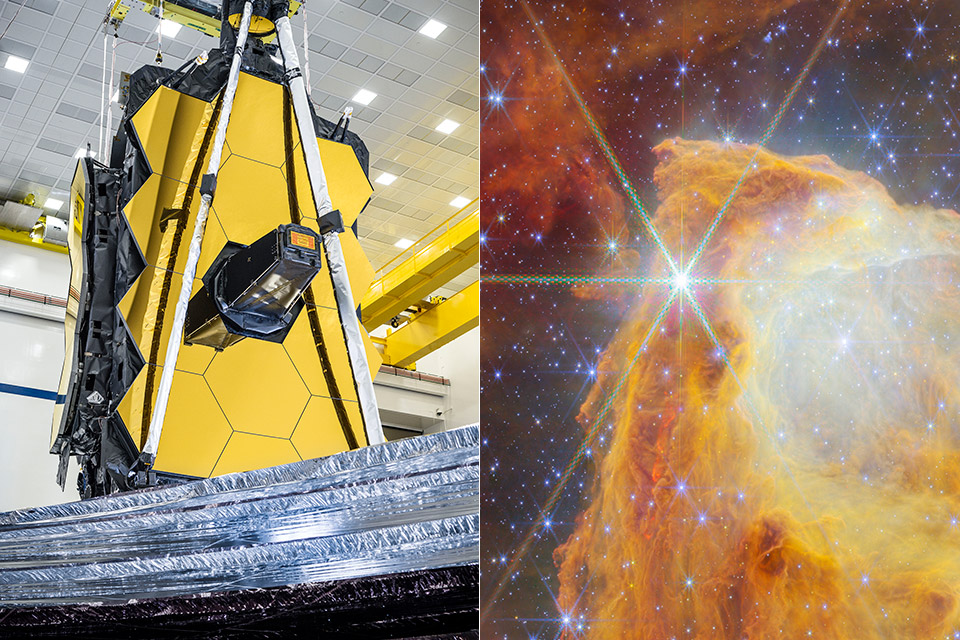
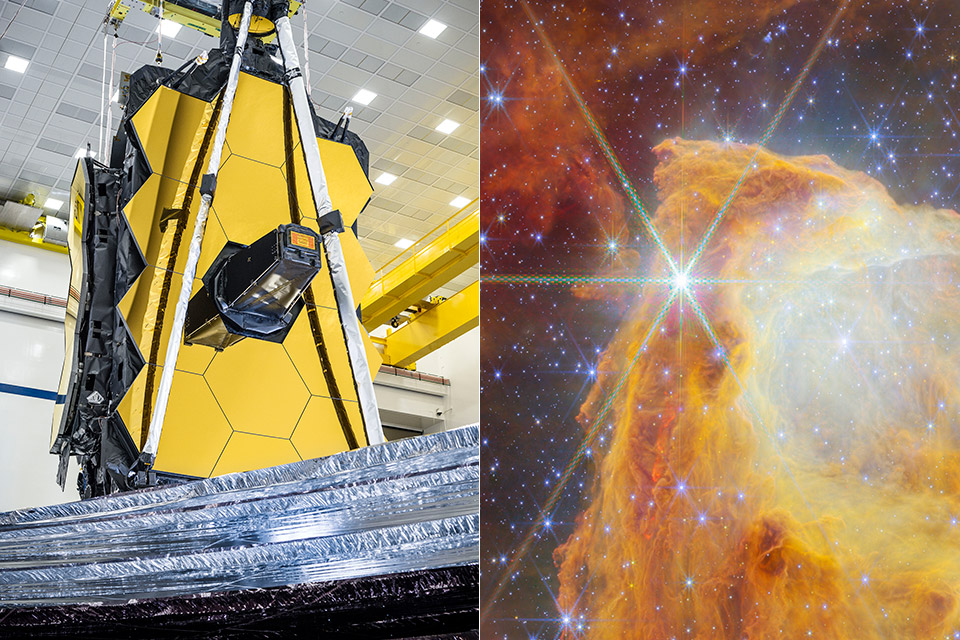
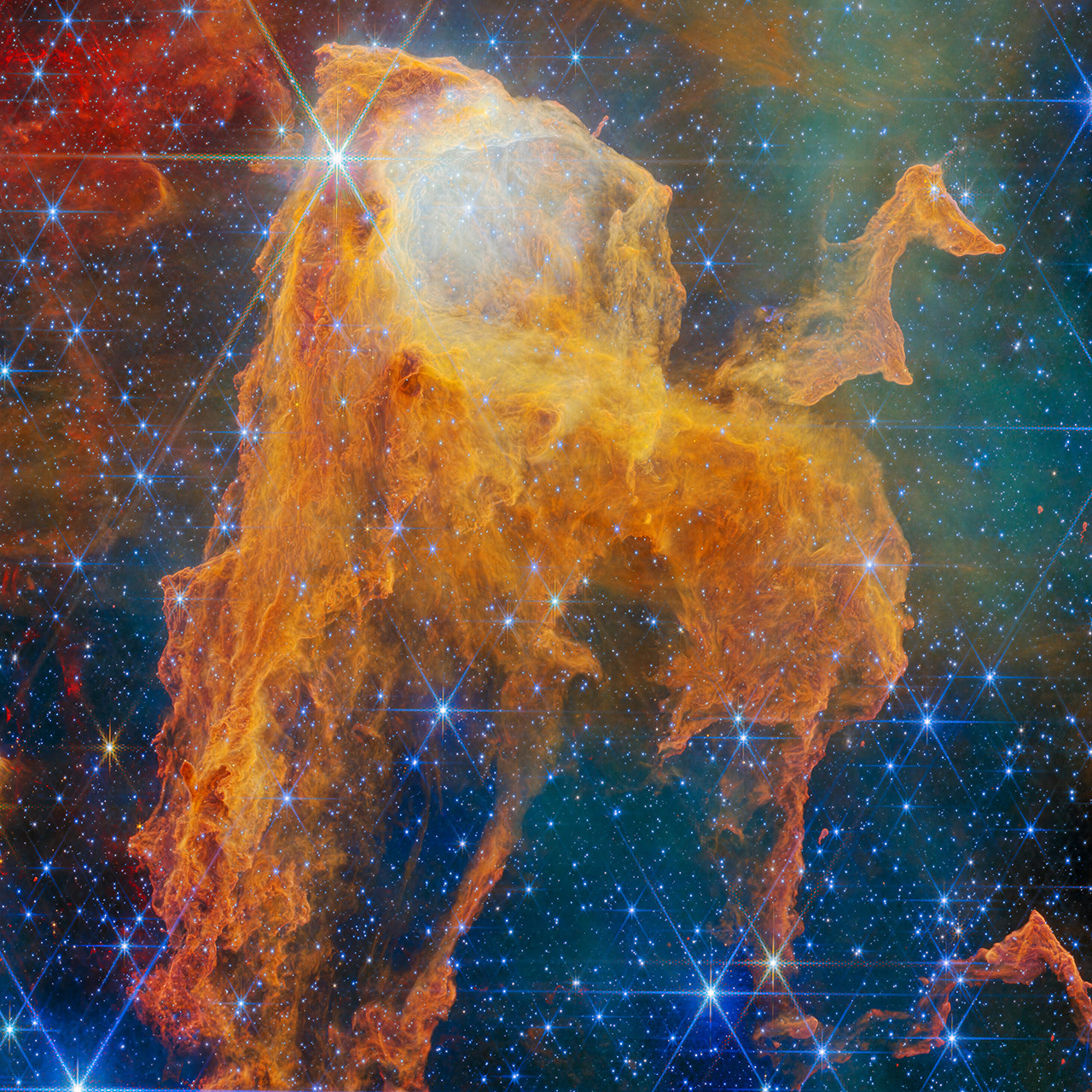
Dense clouds of gas and dust gather into the clear outline of an open chest at the center of this new James Webb Space Telescope view. Light shines from inside the structure while long pillars of thick material trail from its base. Dark orange globules and pale hazes fill the background, and a few bright stars sit in the foreground, one of the largest positioned right in front of the chest’s lid.


This scene is situated in the Carina Nebula, a star-forming region located 7,500 light-years away in the constellation Carina. The nebula is vast, covering approximately 260 light-years and containing some of the Milky Way’s largest stars as well as tens of thousands of protostars. As luck would have it, it is also the closest location where astronomers can obtain a clear view of high-mass star formation in all its magnificence. Not to add, it’s the same location where Webb acquired the iconic Cosmic Cliffs image that helped put the telescope on the map.


LEGO Icons Hubble Space Telescope 11382
  • EXPLORE THE HUBBLE SPACE TELESCOPE – Celebrate one of humanity’s greatest scientific feats while enjoying a relaxing building experience with the…
  • REPLICA SPACE MODEL – Recreate the legendary space-based telescope with posable solar arrays and antennas, an opening aperture door and a detailed…
  • AUTHENTIC DETAILS – Remove the exterior panels to reveal a detailed instrument bay, which features gyroscopes alongside primary and secondary…

The feature we’re looking at is a cometary globule known as the Treasure Chest. These gas and dust clouds typically have a dense center and a long, sweeping tail following after them. In this example, however, the thick material forms a type of body and open lid of a chest, while the tail stretches out in a fairly standard cometary shape. The glow we see is caused by the newborn stars inside and is visible because Webb’s Near-Infrared Camera can see thru the dust.


There are approximately 70 young stars crowded into a small cluster within the chest. The largest of these stars is an O-type star with a mass 19 times that of the Sun. Estimates put the cluster’s age at around 1.3 million years, tho some earlier work suggested it could be as young as 100,000 years. Because the stars are so young, they’re still buried in dusty material, and many of them have circles of gas and dust around them known as circumstellar disks, which are the type of thing from which planets form.

Advertisement

Webb Telescope Stars Carina Nebula August 2026
The powerful ultraviolet radiation from outside the chest is already affecting those disks, scorching them and blowing material away. The same force cut the chest into its current shape and continues to work on the disks. Models imply that disk lifetimes in such conditions can be rather low, often less than a million years. Once the remaining dust and debris have cleared, the disks will be exposed to the full force of the radiation, which is likely to be a harsh awakening. By examining the stars in this program, we will be able to determine if they had the opportunity to produce planets or if many of them will remain alone.

Webb Telescope Stars Carina Nebula August 2026
Radiation and wind from large stars nearby are most likely responsible for the chest’s form. Eta Carinae, located 39 light-years to the northwest, is the brightest star in the Carina Nebula. We’re talking about an item that outshines the others, a system that has at least one star that is 100 times the mass of our own sun and emits light that is five million times brighter. There’s also the star cluster Trumpler 16 chipping in with its own dose of energy, which is what stripped away the lower density gas a long time ago, leaving only the denser material that forms the chest today. To add the final nail in the coffin, the stars within the cluster are still slowly chipping away at the cloud from the inside out, so the structure is whittled away from both sides.

Webb Telescope Stars Carina Nebula August 2026
The image was captured with Webb’s Near Infrared Camera utilizing four distinct filters: 1.62 microns, 1.64 microns for iron emission, 4.44 microns for molecular hydrogen, and 4.7 microns. The iron and hydrogen filters identified locations where newborn stars are releasing material in dramatic way, and it’s a wild journey. Megan Reiter of Rice University leads the observing program 5408, which produced this image. That program is working to find out how these young stars collect gas from their surrounds and then blast it out in gigantic outflows, a piece of study that will result in comprehensive maps of over 100 new jets across the Carina region.

Source link

Continue Reading
Click to comment

You must be logged in to post a comment Login

Leave a Reply

Tech

A Proper Ferrari Testarossa Finally Appears, If Only on Screen

Published

on

Khyzyl Saleem Ferrari Testarossa Concept
Photo credit: Khyzyl Saleem
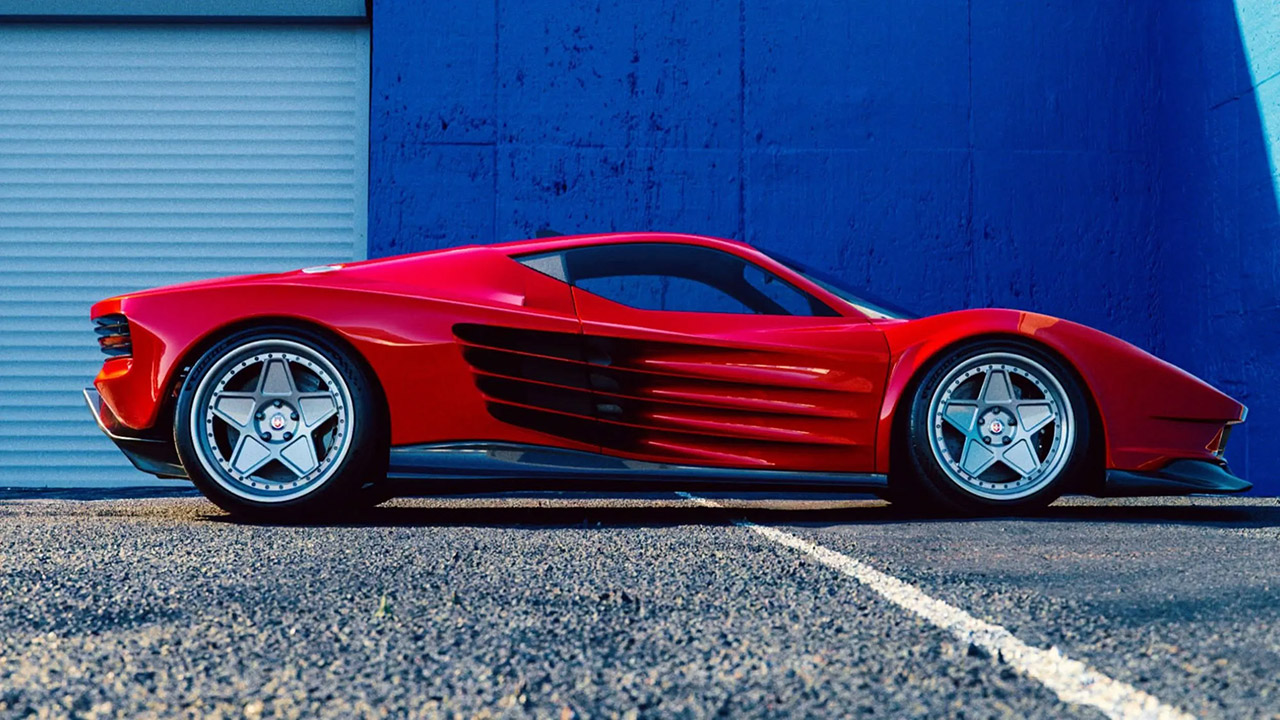
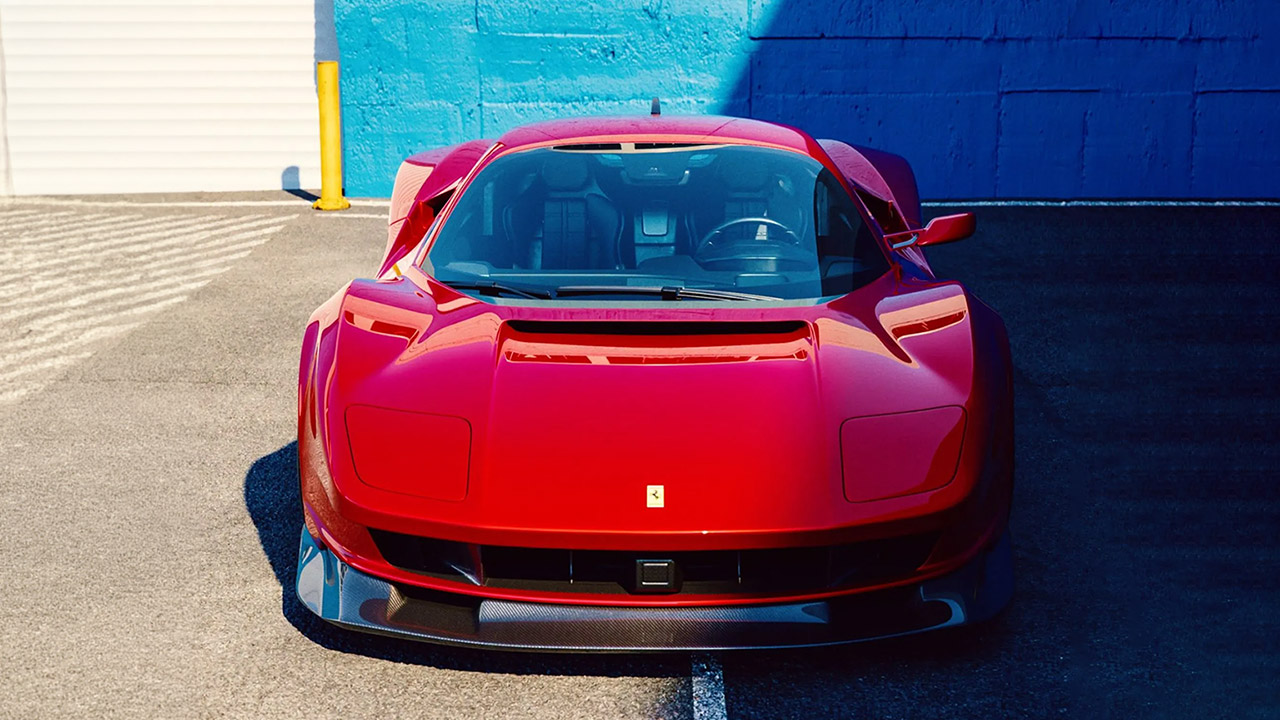
Digital artist Khyzyl Saleem, better known as The Kyza, took Ferrari’s brand-new 849 Testarossa and gave it the 1980s face so many people felt was missing. Ferrari revived the name for the SF90’s replacement, yet the production car’s sharp modern lines left fans wanting stronger ties to the wide, straked icon that defined the decade. Saleem answered that quiet frustration by reskinning nearly every panel while keeping the greenhouse and the rear window that doubles as an engine cover.

Pop-up headlights return up front, a feature that Ferrari’s own designers were infatuated with before homologation laws put an end to the idea. Clean strips carved from the fenders sit on either side of a flat hood with a clean vented mesh. Slim inlets cut across the bumper just above a carbon fiber splitter that’s as prominent as it is aggressive, and the wide, pointed front end settles into a period-appropriate stance.


LEGO Technic Ferrari 488 Pista Car 42235
  • SPORTS CAR BUILDING TOY – Fuel kids’ passion for high-performance vehicles with the LEGO Technic Ferrari 488 PISTA Car (42235) model building kit…
  • TOY CAR WITH REALISTIC DETAILS – Kids can learn new engineering skills as they put together and explore the V8 engine with moving pistons…
  • FORZA HORIZON 6 UNLOCKABLE – Unlock a special LEGO Technic livery in the Forza Horizon 6 video game – please note that a copy of the game is…

Khyzyl Saleem Ferrari Testarossa Concept
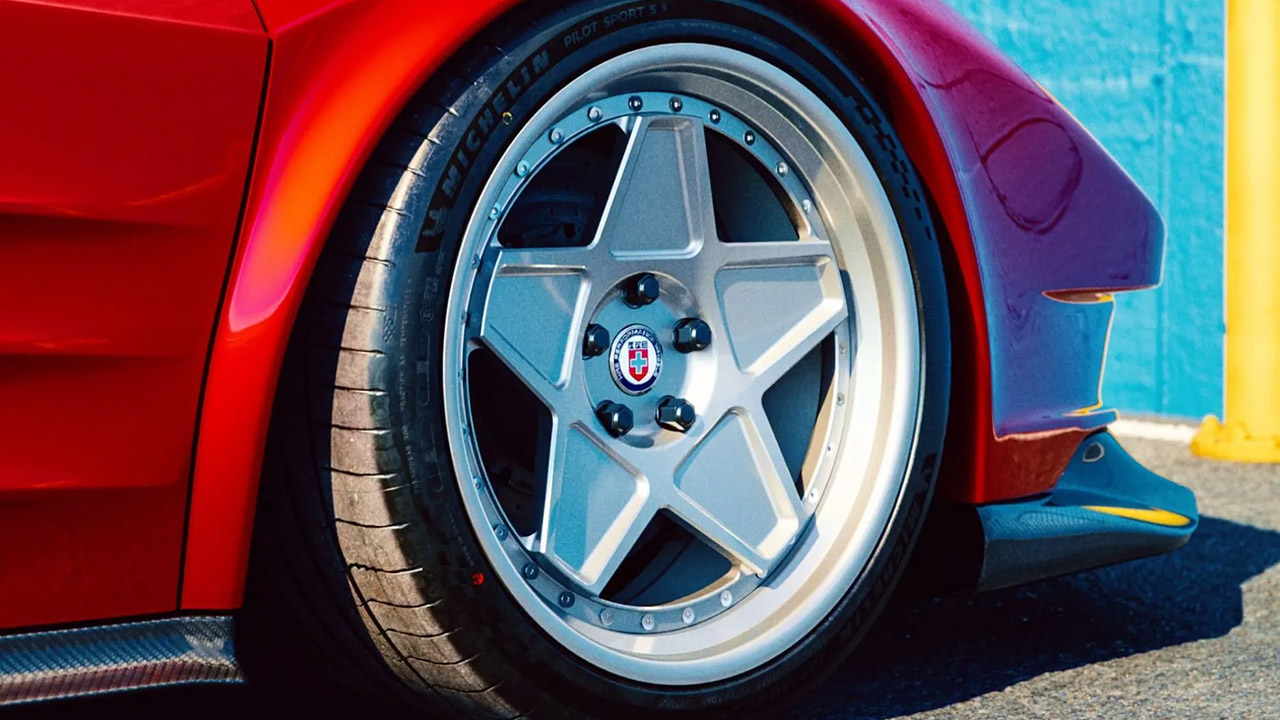
The flanks of the concept reveal the trademark side strakes pushed in deeper and more aggressively than the factory version. They stretch the body out in a clear reference to the original, while a single driver’s side mirror, another chosen historical element that Saleem did not bother to disguise, maintains the overall look authentic. Vintage HRE 505 alloys with a distinctive star-spoke pattern complete the look, sitting perfectly beneath the modified fenders.

Khyzyl Saleem Ferrari Testarossa Concept
The vehicle’s strongest point is most likely its rear end. Tiny LED taillights sit inside full-width black slats, only framed by those ultra-wide shoulders. A large but elegant carbon fiber diffuser wraps around a couple of round exhaust outlets, combining modern hybrid hardware with the historic Testarossa design without feeling forced or manufactured.

Khyzyl Saleem Ferrari Testarossa Concept
Under the hood, the concept car has the same configuration as the road car: a twin-turbo 4.0 liter V8 connected to three electric motors for a total of 1,035 horsepower transmitted to all four wheels. With 849 horsepower, the production car ranks among Ferrari’s most powerful series cars. Saleem concluded that the packaging simply need a body that felt more related to the name it conveys.

Khyzyl Saleem Ferrari Testarossa Concept
He has previously stated that he admires the factory car’s aggressive attitude, but he couldn’t resist bringing the design closer to the car’s own history to see what would happen. The tragic death of electronic music producer Kavinsky served as an emotional catalyst for Saleem to launch his endeavor. The images soon spread on Facebook and Instagram, earning high praise from many who had hoped for this type of reinterpretation – and Saleem’s design delivered in spades.
[Source]

Source link

Advertisement
Continue Reading

Tech

South Korean satellite spots SpaceX lunar impact

Published

on

science

Before and after shots of Elon’s ejecta snapped by Danuri

The race for the first before-and-after images of the spent SpaceX rocket on the Moon has been won by the South Korean space agency.

The Korean Aerospace Administration (KASA) posted imagery from its Danuri lunar orbiter showing the impact site on the Moon on August 6.

Advertisement

The impact was predicted to occur on August 5, and marked a landing on the Moon for SpaceX several years ahead of schedule, just without humans onboard and traveling a good deal faster than planned.

The words “crater” and “SpaceX” are not something investors nervously tracking the company’s stock price following the weeks since its IPO will want to think about.

The impact came on the fourth anniversary of Danuri’s launch, on a SpaceX Falcon 9 rocket. It took a few months for the probe to reach the Moon, and its initial one-year mission has since been extended twice – most recently through 2027. The plan is currently for Danuri to intentionally make its own impact crater in March 2028.

The upper stage of the Falcon 9 is expendable, and this one was used to send Firefly Aerospace’s Blue Ghost Mission 1 and ispace’s RESILIENCE to the Moon in 2025. On most Falcon 9 missions, the upper stage burns up in Earth’s atmosphere, but a lunar transfer orbit like this one made that impossible. In a post, SpaceX stated, “Impacts like this are rare, but they can happen with objects in these types of orbits, and we worked with NASA on the optimal disposal solution,” and wrote, “a controlled disposal maneuver is not always possible.”

NASA boss, Jared Isaacman, noted that NASA intentionally crashed spent stages into the Moon in the name of seismic research, and commented, “The reality is that meteoroids strike the lunar surface hourly, with impacts comparable to this upper stage occurring roughly every six days.”

Advertisement

Humanity has not done a great job of managing space junk around the Earth. While the SpaceX Falcon 9 upper stage did not pose any risk to humans, it highlights the need to devise rules for the use of lunar space rather than risk an uncontrolled buildup of debris.

In June, The Register spoke to Neuraspace boss Chiara Manfletti about how things might be done differently as lunar traffic increases. Neuraspace is all about satellite collision avoidance, and Manfletti’s ideas included requirements from stakeholders to designating dumping grounds on the Moon.

NASA’s veteran Lunar Reconnaissance Orbiter was also attempting to capture the impact, and more images are likely to be released over the coming week.

Now to name the impact site. Elon Crater, anyone? ®

Advertisement

Source link

Continue Reading

Tech

How to watch Argentina vs South Africa for FREE: live stream details

Published

on

South Africa begin their preparations for welcoming New Zealand in Buenos Aires as they face Argentina.

The Springboks finished the summer section of the Nations Championship with three wins from three and have now gone almost a year since their last defeat — a 22-38 loss to Australia. But August brings the Greatest Rivalry Tour, and with it, the chance to beat New Zealand on their own turf.

Source link

Advertisement
Continue Reading

Tech

Seven experts join AI Office of Ireland board

Published

on

Members include distinguished AI researcher Alan Smeaton and Shutterstock AI director Alessandra Sala.

Seven experts across technology, academia and public administration have been appointed to oversee the newly established AI Office of Ireland. Led by Mary Doyle, a former higher-up across Government departments, the board will help the new office implement the EU’s landmark legislation on AI.

Alongside Doyle as chairperson, the board also features two former members of Ireland’s AI Advisory Council, Prof Deirdre Ahern and Prof Alan Smeaton.

Last week, former Medical Council of Ireland executive director of education, innovation and AI Paul Byrne joined AI Office of Ireland as its CEO.

Advertisement

Minister for Enterprise, Tourism and Employment Peter Burke, TD said that the appointments marked another milestone in Ireland’s “ambition to be a leader in trustworthy and human-centric AI”.

“The board will provide leadership and oversight to support the Office in its role as Ireland’s central coordinating authority for AI regulation under the EU AI Act,” the minister said.

“Their collective expertise will help ensure that Ireland develops a robust and innovative framework for the governance of AI while also safeguarding fundamental rights and fostering public trust.”

The Office, which began operations earlier this week, will act as the primary point of contact for the European Commission, national authorities and the public around matters regarding the AI Act.

Advertisement

It is expected to develop a consistent regulatory framework to implement the law, facilitate centralised access to technical expertise, and drive AI innovation and adoption across the country.

The board will comprise:

Mary Doyle, chairperson

Doyle is a former assistant secretary general and deputy secretary general in the departments of the Taoiseach, health and children, and education and skills.

She is also a board member at Ireland’s national association of community organisations – The Wheel – and has previously served as a member of the National Economic and Social Council, on the board of Science Foundation Ireland, with the National Statistics Board, and as a forum member of the Economic and Social Research Institute.

Advertisement

“AI presents enormous opportunities to enhance public services, support economic growth and improve people’s lives. Realising those opportunities requires a governance framework that promotes innovation while maintaining public trust and protecting fundamental rights,” Doyle said.

Deirdre Ahern

Ahern is a professor of law at Trinity College Dublin, where she is also the director of the technologies, law and society research group. Her research focuses on corporate law, corporate governance, and the regulatory challenges presented by AI and other technologies. She is also a principal investigator with Research Ireland’s Rinn AI and Rinn Quantum. Ahern was appointed as a member of the Irish Government’s AI Advisory Council in 2024.

Michelle Kearney

Dr Kearney, who works in the Department of Enterprise, Tourism and Employment, led efforts to establish the AI Office of Ireland. She is currently working on the upcoming International AI Summit in October, a key event in Ireland’s rotational EU presidency this year.

Siobhán Noble

Noble is the chief data and AI officer at Carne Group, an Ireland-based financial services company. She also serves as the vice-chair of the Irish Funds Emerging Technologies and Innovation working group.

Advertisement
Donal Rooney

Rooney is a non-executive director with Enterprise Ireland and Oxfam Ireland. He is a chartered accountant with experience managing finance across multiple roles in private equity, public companies and public sector environments.

Alessandra Sala

Dr Sala is senior director of AI and data science at Shutterstock, the global digital media company. She chairs the AI and Multimedia Authenticity Collaboration, which attempts to unify standards between organisations to foster a unified response to deepfake technology. Sala is also the co-chair of the UNESCO Women for Ethical AI platform.

Alan Smeaton

Prof Smeaton was a board member of the Irish Research Council for seven years before being appointed to the AI Advisory Council in 2024. He is also a founding director of the Insight SFI Research Centre for Data Analytics, and is a well-established name in AI and data analytics research.

Don’t miss out on the knowledge you need to succeed. Sign up for the Daily Brief, Silicon Republic’s digest of need-to-know sci-tech news.

Advertisement

Source link

Continue Reading

Tech

How These AI Assistants Differ

Published

on

For many, there’s a clear winner in this battle of the artificial minds.

ChatGPT was probably most people’s first encounter with an LLM, considering how many users it picked up shortly after its launch in 2022. It also enjoyed the privileged position of having no real competition until Anthropic released Claude a few months later in March 2023. Since then, both companies have constantly improved their models and added new features. But because there’s an overlap in features — both platforms have a coding mode and a dedicated workspace mode — it can be difficult to decide which tool is best for you.

Also, there’s little difference between the two during everyday usage: You can use either of them to code, answer a quick query, summarize documents, organize your files, and, if you’re feeling particularly blasphemous, write thought leadership pieces in the style of Herman Melville.

However, anything beyond that, and you’ll need to start thinking about which LLM fits your use case better.

Advertisement

Is Claude more accurate than ChatGPT?

Measuring accuracy in LLMs can be tricky, as there’s no straight answer. The specific model you’re using and the prompt you feed into it play an important role in the quality of the output.

When it comes to flagship models — Claude Fable 5 (Max) and GPT 5.6 Sol (Max) — Claude is marginally more accurate according to the AA-Omniscience Accuracy benchmark. The scores stand at 61 percent and 59 percent, respectively. Because the difference is so marginal, you’ll rarely notice it in day-to-day usage.

Advertisement

But, unless you’re tokenmaxxing, you’ll be using mid-tier models for most tasks. On Claude, this is Sonnet 5, and on ChatGPT, 5.6 Terra. Here, the scales are tipped in ChatGPT’s favor: ChatGPT 5.6 Terra (Max) scores 46 percent, whereas Claude Sonnet 5 (Max) is significantly lower at 38 percent.

Another important factor when measuring accuracy is the tendency of the model to hallucinate. Ideally, if an LLM doesn’t know the answer to something, it should flat out refuse to answer it instead of making stuff up, i.e., hallucinating. The benchmark for this is AA-Omniscience Hallucination Rate, in which Claude has a significant leg up against ChatGPT. A lower score is better in this benchmark, and Claude’s Fable 5 model scores 55 percent compared to ChatGPT 5.6 Sol’s score of 89 percent. The difference is even more stark in the mid-tier models: Claude Sonnet 5 scores 37 percent, whereas ChatGPT 5.6 Terra scores 85 percent.

Advertisement

What can Claude do that ChatGPT cannot?

There’s a difference in what people use Claude and ChatGPT for. According to the Anthropic Economic Index report from March 2026, 42 percent of Claude conversations revolved around personal usage and 45 percent were related to work (the remainder was coursework). A similar report by OpenAI states that 70 percent of ChatGPT usage is non-work-related.

Claude Cowork, which came out in January 2026, can perform knowledge-based tasks on your behalf: I mostly use it to organize my files. You can also create instruction bundles called skills that can be invoked mid-conversation using the forward slash (/). Additionally, Claude Artifacts can instantly render code snippets, single-page HTML websites, interactive React components and diagrams. You can share and publish Artifacts on the web too.

ChatGPT supports skills too, but the implementation differs from Claude’s. For example, ChatGPT skills can only be used by individual users in Codex and the API, not regular chats. Claude’s skills can be used across chat, Claude Cowork and Claude Code. ChatGPT’s Artifacts equivalent, Sites, is targeted towards businesses for internal use and is only available in Codex. Additionally, ChatGPT Sites can’t pull live data, unlike Claude Artifacts, which can do so using connected apps and Model Context Protocol (MCP) connectors.

There are some features that are better implemented in ChatGPT. Most notably, the voice feature: ChatGPT sounds more natural, and you can interrupt it and talk over it without it losing track of what it was saying earlier. For real-time assistance, you can use the live video feature while in Advanced voice mode and point it at the issue you’re facing. ChatGPT also has an image generation feature that can create photorealistic images, whereas Claude can only build diagrams, charts and interactive visuals using HTML and SVG.

Advertisement

Is ChatGPT getting worse in 2026?

ChatGPT’s new models score better than previous ones on almost all AA-Omniscience benchmarks, yet the overall experience of using the app seems to be getting worse. If you feel this way, you’re not wrong, because there are areas where the previous models performed better than the latest ones.

One such area is hallucinations: The same AA-Omniscience Hallucination Rate benchmark I mentioned earlier states that GPT-4o has a hallucination rate of 38 percent compared to GPT-5.6 Sol’s 89 percent. OpenAI also introduced safeguards to align with the industry’s maturation. Tone shifts, for example, may seem jarringly different with each update.

Additionally, OpenAI began showing ads in the free and ChatGPT Go tiers of the app while Anthropic improved Claude’s free tier by adding more features and skipping ads. Considering the company loses money even on paying customers, and OpenAI CEO Sam Altman once called ads a “Last Resort,” it’s a reasonable assumption that the ChatGPT experience may get even worse for free tier users.

Advertisement

There’s another reason why users left ChatGPT and Claude saw a simultaneous surge in downloads in recent months. Back in February 2026, Anthropic’s deal with the US Department of War fell through, and the company was designated a supply chain risk because it refused to let its models be used for mass domestic surveillance and fully autonomous weapons. Hours later, OpenAI announced that it had signed a similar deal with the US government in place of Anthropic, with certain safeguards in place. This decision caused many people to switch over to Claude because Anthropic was perceived as the more “ethical” AI company.

ChatGPT and Claude are priced similarly

Both Claude and ChatGPT’s free plans only offer you access to their mid-tier models: Sonnet 5 for Claude and GPT-5.5 for ChatGPT. The difference is that there are ads in ChatGPT.

Claude’s paid plans include the $20/month ($17/month if billed annually) Pro plan, the $100/month Max 5x plan (five times the usage limits of Pro) and the $200/month Max 20x plan (20 times the usage limits of Pro). The paid plans let you access the flagship models and Claude Code as well. However, Pro users have token-based billing for Fable 5, while users on the Max 5x or Max 20x plan can use 50 percent of their weekly usage limits on Fable 5. If you hit the limit, you can always purchase more usage credits.

Advertisement

ChatGPT’s pricing is similar. There are $20/month, $100/month and $200/month plans that offer an increase in usage limits and access to flagship models. Access to Codex is free, but the low usage limits practically cancel it out. However, unlike Claude, ChatGPT has an $8/month plan that offers increased usage limits but still shows ads.

Source link

Advertisement
Continue Reading

Tech

One YouTuber’s Bare-Chip Cooling Gamble Pours Water Straight Onto Silicon

Published

on

Pour Water Silicon GPU Cooling
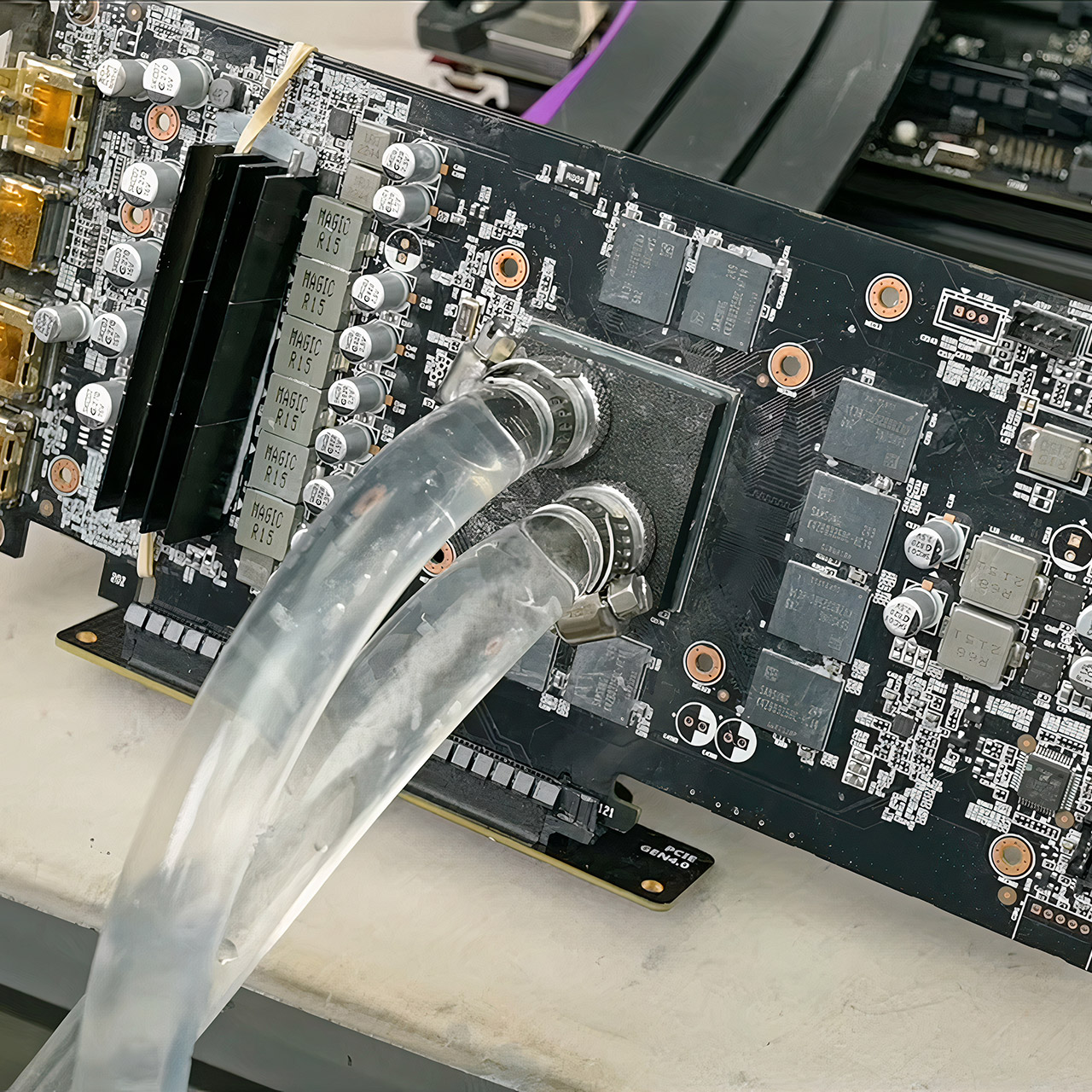
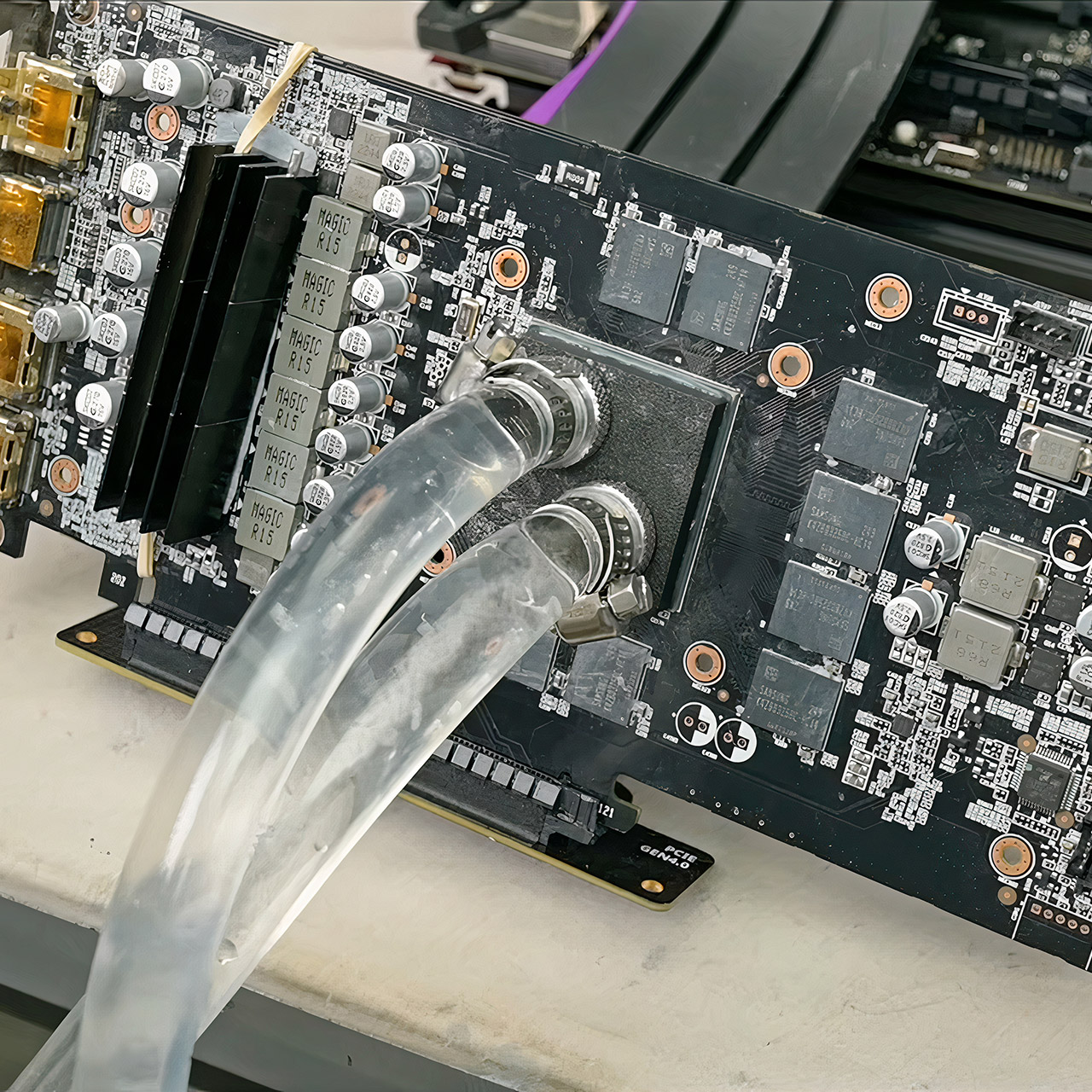
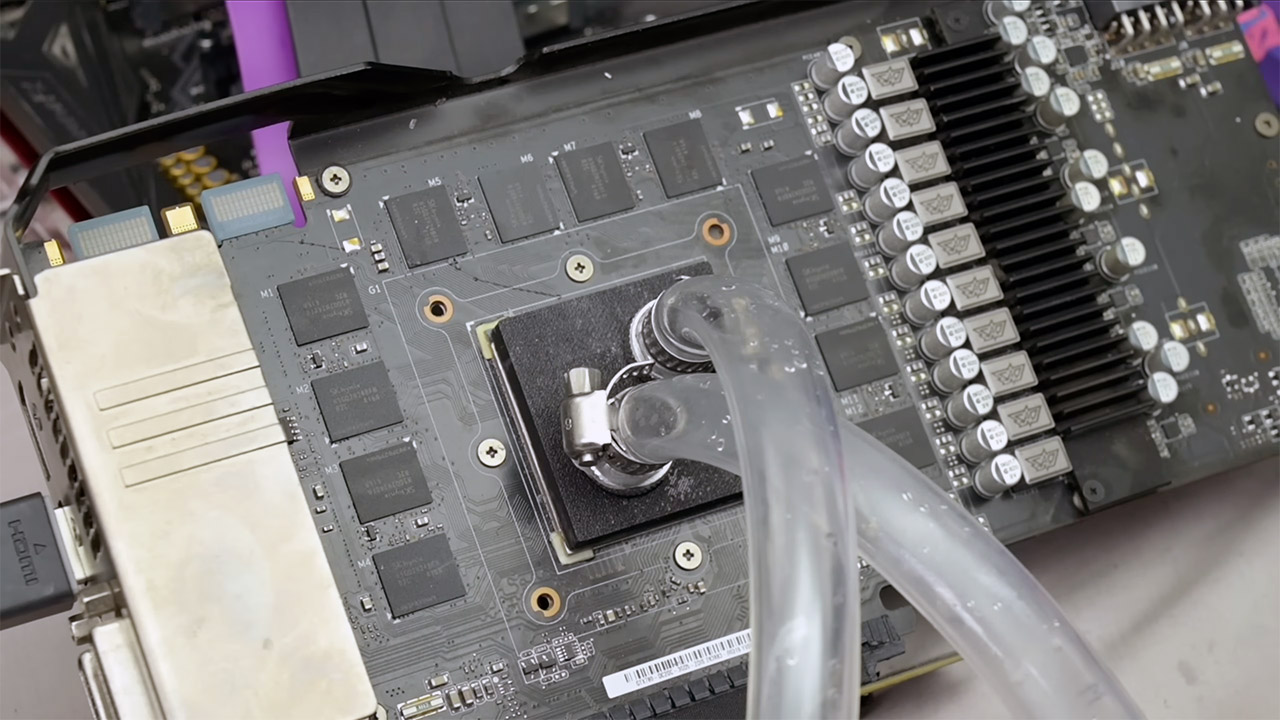
TrashBench decided ordinary water blocks were optional. In a recent experiment the channel stripped everything away and simply pumped water across the exposed dies of a graphics card and a processor. A 3D-printed plastic fitting, some epoxy, and a willingness to risk hardware produced results that surprised even the person running the tests.


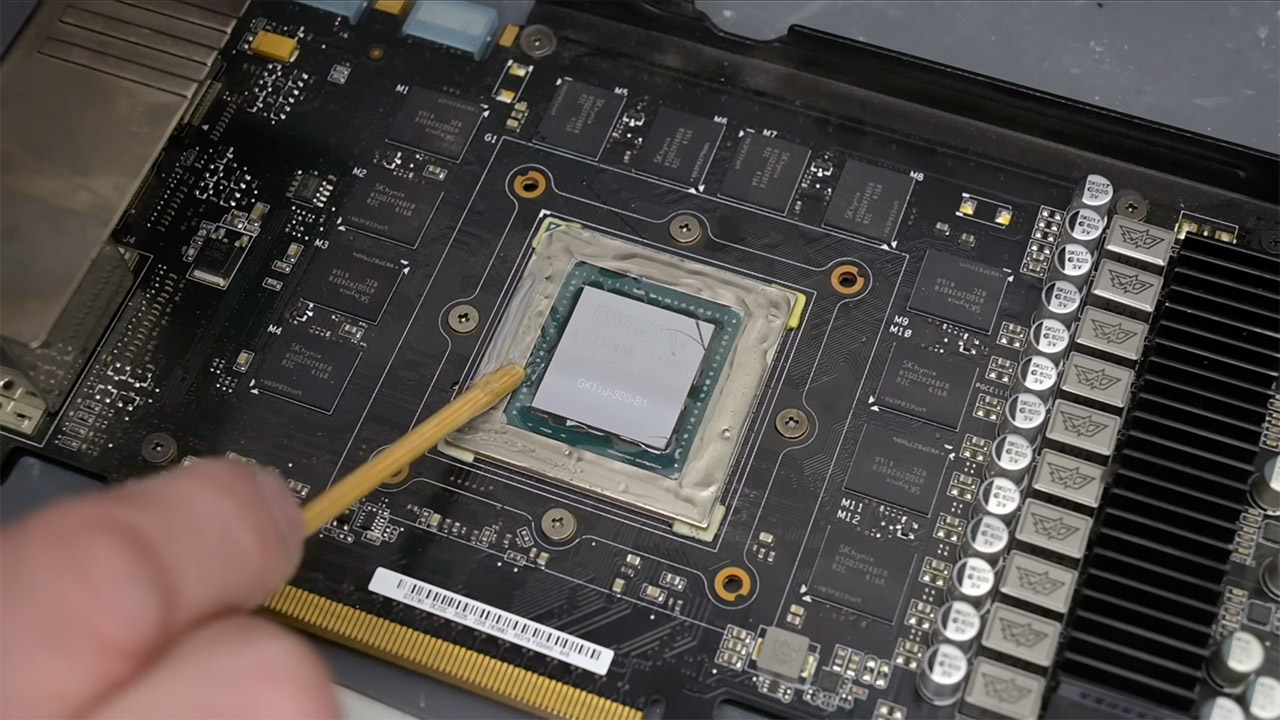
Work began by attempting to seal the leaks on a dead RTX 3060 card. Early attempts to use translucent plastic prints proved ineffective, as water seeped straight thru the layers. Adding some nail polish and epoxy helped, but it wasn’t until he switched to black PETG as well as adjusted the print settings that he was able to get the part to maintain pressure. Once he had the chamber fixed and it wasn’t leaking everyplace, he moved on to a live GTX 980. Water flowed directly over the exposed silicon, but to his surprise, it did not destroy the card. It turned out that the chamber on that older GPU was much larger, which helped keep the temperatures lower than he’d expected for such a basic setup.

Pour Water Silicon GPU Cooling
A fair comparison with an RTX 2060 SUPER was finally possible, and the results were rather interesting. The card operated at a high temperature of 70 °C under load with stock air cooling, but when we installed a standard AIO cooler, it decreased to around 36 °C. Then he installed the 3D printed direct water connection and, well, you could say it blew the competition away in both Unigine Heaven and Cyberpunk 2077, resulting in a decisive victory for the homemade block over the commercial one. Of course, there was no metal in the way, so the heat just passed into the water running past it. It’s worth noting that while the water warmed up over time, the CPU remained cooler than the polished copper block throughout testing.

Pour Water Silicon GPU Cooling
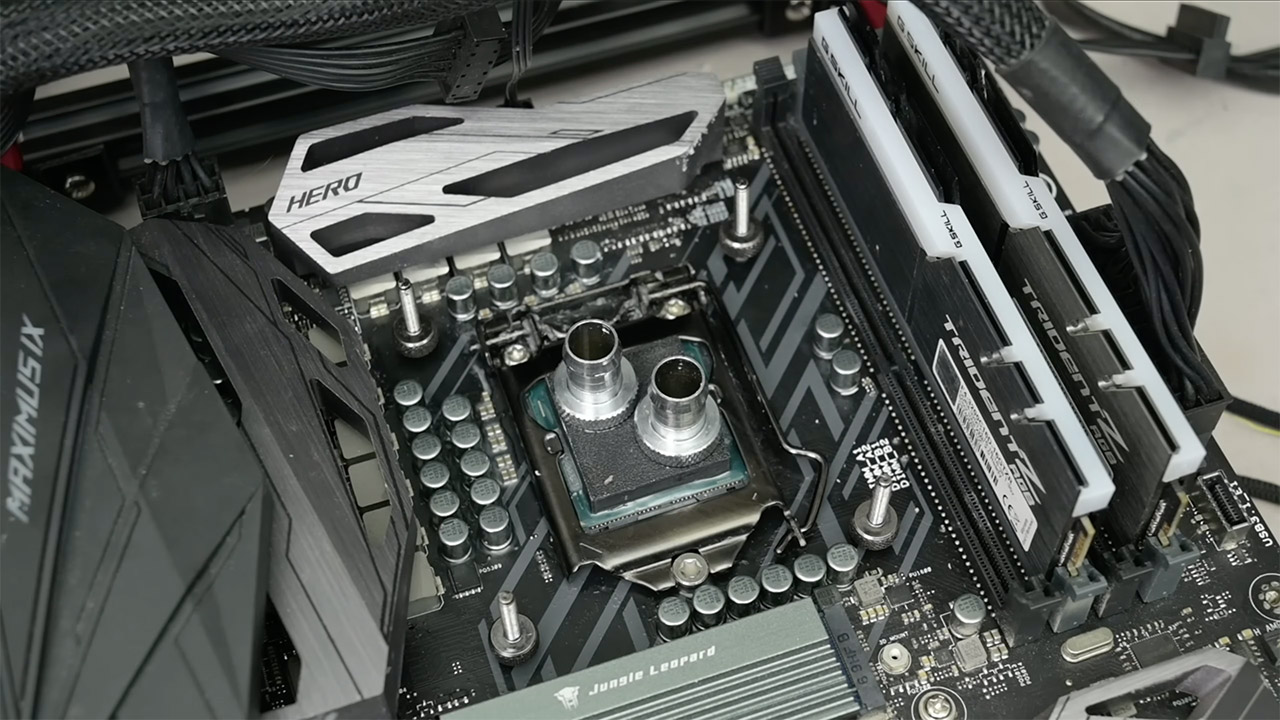
Next, he tried sub-zero coolant, and while temperatures did drop, the difference was not as dramatic as switching from air to room-temperature water. It seems that the size of the chamber and the contact area made a far bigger difference than how cold the liquid was. He was able to adapt the same concept to operate with a delidded Intel i5-7600K, but the small die and limited mounting space made it much more difficult to fit into a smaller chamber. Unfortunately, he realized that the majority of the heat was concentrated in a small area, and the water just couldn’t keep up. The GPU’s huge die was not an issue because the heat was uniformly distributed across it, but the CPU’s dense hotspot proved difficult to keep cool.

Pour Water Silicon GPU Cooling
Leaks continued to appear as water escaped around the fittings, and he came close to losing the hardware several times. Putting extra epoxy on the broken parts helped to patch things up, but the risk was evident. It’s evident that direct liquid contact can work; immersion cooling has been available for years, but the large difference in outcomes between GPU and CPU was surprising. The GPU is a perfect choice for this type of cooling due to its larger surface area and lower heat density, but doing the same method on a compact processor die is difficult to keep cold.
[Source]

Source link

Advertisement
Continue Reading

Tech

Apple’s rumored “Ultra” lineup would include a foldable iPhone, camera AirPods, and a touchscreen MacBook

Published

on

Rumor mill: Apple is expected to roll out three new “Ultra” products over the next several months, starting with a foldable iPhone expected to arrive this September, followed by new AirPods and a redesigned MacBook. The reported lineup would expand Apple’s hardware ambitions into foldable displays, camera-equipped earbuds, and a touchscreen laptop with possible cellular connectivity.

The foldable phone, likely to be called the iPhone Ultra, would be Apple’s most expensive iPhone to date. Reports put its US starting price between $1,999 and $2,499. Apple is expected to introduce it alongside the iPhone 18 Pro and iPhone 18 Pro Max.

The device is rumored to feature a 7.7-inch inner screen and a 5.3-inch outer screen. The larger display would give users more room for video, apps, and multitasking when the phone is unfolded. The phone is also expected to feature two rear cameras and a single front-facing camera.

One notable reported change involves authentication. Instead of Face ID, the iPhone Ultra could use a Touch ID sensor built into the power button. That would mark a departure from Apple’s current flagship iPhones, which rely on facial recognition.

Advertisement

The company may also use the Ultra name for a new version of its wireless earbuds. The AirPods Ultra are expected to resemble the AirPods Pro but add tiny infrared cameras. Those cameras could give Siri more information about the user’s surroundings and expand the capabilities of Visual Intelligence.

Visual Intelligence is available on the iPhone 15 Pro and newer models. In iOS 27, users can access the feature through the Camera app using a new Siri mode. AirPods with cameras could allow users to use Visual Intelligence without having to hold up their phone.

A small LED on the earbuds would indicate when the cameras are in use. Apple code found in the second iOS 27 developer beta last month appeared to reference AirPods with cameras, suggesting that the product could be moving closer to launch. AirPods Ultra could arrive as early as this year, potentially putting them on the same release schedule as the iPhone Ultra.

Apple is also said to be working on a MacBook Ultra for release by early 2027 featuring an OLED touchscreen. Apple has never offered a touchscreen MacBook, making the feature one of the more significant aspects of the report.

Advertisement

Other rumored features include M5 Pro and M5 Max chips, a Dynamic Island, and a thinner design than the latest MacBook Pro models. The company could also include an Apple-designed C2 modem, giving the laptop built-in cellular connectivity.

Source link

Advertisement
Continue Reading

Tech

10 women whose careers are shaping the global financial landscape

Published

on

If you imagine a future in finance, make sure that you are aware of the movers and shakers driving innovation in the space.

The global financial sector is ever-evolving, driven largely by advancements in technology and increased access to financial infrastructure. As a result, there are a wealth (pun intended) of exciting opportunities for professionals looking to excel in this space.

With that in mind, if you want a career in finance or dealing with financial infrastructure, it can be helpful to take a look at some of the people whose insights, decision making, innovations and business manoeuvres are further developing the industry. The following 10 women are among those professionals.

Amy Hood

Amy Hood has been the executive vice-president and chief financial officer at Microsoft since 2013, having first joined its ranks in 2002. Her responsibilities involve leading the company’s worldwide finance organisation through: accounting and reporting; acquisitions; business development and ventures; financial planning and analysis; global real estate; internal audits; investor relations; tax planning; and treasury.

Advertisement

She has advanced Microsoft’s cloud endeavours and navigated growth amid a changing landscape – for example, during the AI boom. 

Andrea Reynolds

The CEO and founder of London-based financial services company Swoop, Andrea Reynolds has years of experience in raising finance for businesses as a chartered accountant and corporate finance advisor. She serves as chair of Berkshire Hathaway International Insurance, and is a non-executive director for both Berkshire Hathaway and Faraday Underwriting.

She is particularly interested in projects in which she can help under-represented founders learn about funding and how to navigate the funding landscape, and also sits on the advisory Ireland for Finance Committee. 

Ciara Walsh

Ciara Walsh is a co-founder and the CMO of Irish start-up JustTip, which is a cashless tipping platform for the hospitality industry. Walsh was previously named on the Sunday Independent’s 30 under 30 list, and she has spoken on the challenges of developing a start-up at a young age, learning from one’s mistakes and becoming resilient. 

Advertisement

Elaine Deehan   

The Ireland country manager for Monzo Bank Europe, Elaine Deehan is also a special projects manager at the organisation. She is at the forefront of developing Monzo’s presence in Ireland and, prior to her role there, worked across banking and fintech at Citi, AIB, Sentenial, CurrencyFair and Starling Bank, where she was also largely responsible for leading Irish expansion. Deehan was also previously named the Business Post’s Business Leader of the Month. 

Ioanna Stanegloudi

Ioanna Stanegloudi is a co-founder and the chief risk officer of fintech start-up Finclude, which was previously Verge Capital. She has been recognised among Fortune’s 40 under 40, was included in the Women in Fintech Powerlist by Innovate Finance, won the NYU Stern Entrepreneurs Challenge, placed second in the PitcHer competition at Grace Hopper Celebration, and had her company recognised by the UN.

Currently, she is focused on the mental health element of working and personal life, addressing issues around anxiety, burnout, perfectionism, career pressure, identity transitions and relationship stress.

Lesley Tully

The founder and CEO of This is Penny, Lesley Tully is redefining how women engage with pension infrastructure. Designed to account for the elements of a woman’s life that can often disrupt her financial goals, such as career breaks or additional care-giving responsibilities, This is Penny aims to enable women to develop a sturdy financial future.

Advertisement

Prior to establishing her own company, Tully was the head of design thinking for the Bank of Ireland Group, as well as the project director for Dublin Contemporary, Ireland’s largest art exhibition. As part of her role there, she drove strategy, finance, fundraising, operations, governance and stakeholder engagement. 

Niamh Cunningham

Niamh Cunningham is the head of corporate FP&A and strategic finance at Barclaycard Payments. Her previous roles include senior director and head of strategic finance for global sales, partnerships and international at Block; head of finance and strategy for international markets at Square; and group internal auditor at CRH.  

Ruth McCarthy

If you are particularly interested in the intersection of finance and compliance, then Ruth McCarthy is undoubtedly one to follow. The head of compliance, risk and policy at Irish fintech company Fexco, McCarthy’s work involves combining legal and regulatory knowledge with commercial awareness to deliver growth within the payments ecosystem. 

She is especially passionate about the Irish payments industry, payment technology, strategy and innovation.

Advertisement

McCarthy is also a member of the Legal Practitioners Disciplinary Tribunal. She is chair of the Fintech and Payments Association of Ireland, a member of the Industry Advisory Group for the Irish government’s Ireland for Finance strategy for financial services, and was a member of the ECB market advisory group on the digital euro.

Sarah Friar

The chief financial officer at OpenAI, Sarah Friar previously served as the CFO of Square, where under her guidance the organisation launched its initial public offering and added $30bn in market capitalisation. Prior to working at Square, she was the senior vice-president of finance and strategy at Salesforce, and she has held executive and leadership roles at Goldman Sachs and McKinsey. 

She is a member of a number of boards, such as the Board of Trustees at Stanford, the Board of Directors at ConsenSys and the Board of Advisors at Operation Hope. The latter is a global provider of financial dignity education and economic empowerment programmes for low- and moderate-income youths, individuals and families in underserved communities.

Friar is also the co-founder of Ladies Who Launch, a network that aims to mentor and inspire women entrepreneurs and business owners. Friar was named among the Time100 2026 most influential people and the 2023 NACD Directorship 100 selection.

Advertisement

Sinead Fitzmaurice

Sinead Fitzmaurice is notable for being the first female CEO in Ireland to scale an Irish tech company to unicorn status. Having since left Transfermate, where she achieved that feat, Fitzmaurice is now an operating partner at Aperture Capital. She is also the founder and CEO of Ryan Capital Group, a collection of investors and mentors whose aim is to help other founders to achieve success. She currently serves as a chair and non-executive director for financial services company Nazaré Point. 

Don’t miss out on the knowledge you need to succeed. Sign up for the Daily Brief, Silicon Republic’s digest of need-to-know sci-tech news.

Source link

Advertisement
Continue Reading

Tech

'Asimov Was Right' About Rules For Robots, Says Ex-US Cyber Director

Published

on

Former U.S. National Cyber Director Chris Inglis says the biggest AI risk isn’t sentience but autonomy. “What I’m worried about is that they get to choose what and where they do something, and under what rules they do it,” he said, citing recent cases of AI agents from OpenAI, Anthropic, and Meta escaping security sandboxes. He argues developers need stronger safeguards, monitoring, and human accountability, invoking Asimov’s idea that protecting humans should come before simply obeying them. The Register reports: “Asimov was right,” he said, referring to science fiction author Isaac Asimov and his three laws that were to be followed by robots — more specifically, AIs, in this case. “The first rule, and we call it the superior role, must be that it’s designed not to hurt humans,” Inglis said. “Second rule: To obey humans, such that it doesn’t achieve agency and aspiration on its own. And the third: To do what humans tell it – and in that order. Instead we’ve designed them in the exact opposite way.”

What this means, he explained, is that AI developers created models to “do what humans tell you, obey the humans until it’s inconvenient, and then the third one is maybe implied – protect humans – but if that’s not built into the DNA, hardwired into it, then we have no right to expect it.” Inglis admits it’s not possible to hardwire rules into models and still keep their non-deterministic nature. “I would offer that you can tease those out in a highly controlled environment, a true sandbox, where you say, ‘Let’s put this thing through its paces, and let’s back away to see what happens,’” he said. “Maybe you get the equivalent of a mini nuclear explosion in that room, and now you know this thing is capable of that.”

Inglis thinks another problem with AI is that it’s become a commodity. “It’s not like you can control it like you can nuclear material,” he said. “You can’t even specify its properties the way you can for an airplane or for an automobile, as diverse as they might be. Its manifestations are so numerous, so diverse, that as a general matter, you can’t actually win by simply saying, “I will design those properties in,’” he added. “You need to do that to some degree, and then make sure that you understand how to watch it, monitor it, make sure you know what it does.”

[…] Ultimately, humans remain accountable for AI models’ actions, according to Inglis. “They remain the source of agency and aspiration. It’s possible for them to give broad authority to an AI model and have it run around for 30 hours without further consultation, but they need to know what they’ve asked it to do, and they need to know what they expect it will deliver in terms of performance on the back end. If they don’t, then they’re going to get what they deserve, which is the very frequent unpleasant surprise.”

Advertisement

Read more of this story at Slashdot.

Source link

Advertisement
Continue Reading

Tech

Suno Plans New Tools to Make AI-Generated Music More Transparent. Is It Enough?

Published

on

The AI song-generation platform Suno plans to make it easier to tell if a tune you hear was made by its tools.

Watermarks and fingerprinting were two items the company suggested in a blog post on Thursday that it intends to implement in a bid to “build the world’s best platform for music creation while contributing to a healthy and growing music ecosystem.”

The watermarking and fingerprinting effort remains vague, and Suno said it also plans to introduce a new downloads policy that limits mass distribution on streaming platforms.

Suno is one of many AI music generators that let you create and download songs using AI models. However, Suno’s source code was hacked in July, and the findings raise eyebrows. The code showed that Suno’s AI was trained by scraping music and lyrics from platforms such as YouTube Music and Genius, according to 404 Media. Suno also recently faced legal troubles from music groups, including Sony and Universal, for mass copyright infringement in 2024. 

Advertisement

Most streaming platforms don’t yet ban AI-generated music outright. But platforms like Spotify are already implementing policies to crack down on deepfakes, require disclosures about AI-generated music and allow artists to file complaints. Apple Music has Transparency Tags to spot and identify AI-generated music. And Deezer doesn’t include AI-generated music in recommendations, and doesn’t pay royalties for AI tracks. But are Suno’s efforts enough for artists, streaming platforms and recording companies?

Representatives for Suno, Deezer and Apple Music did not immediately respond to requests for comment.

In the blog post, Suno outlined a slew of changes to protect artists and their work. It says names aren’t used in training metadata in order to help people create original songs that aren’t inspired by any other artists. Suno also says it doesn’t allow prompts that specify artists or copyrighted songs. Instead, it focuses on musical characteristics. 

This list goes on, like Suno cracking down on any other potential attempts to copy artists by using third-party technology to screen audio files and lyrics for unauthorized use. Updates to its community guidelines clarify which activities are (and aren’t) prohibited on Suno. And its Trust & Safety team will continue to review and investigate reports of violations and take action. 

Advertisement

However, some parts remain vague. The blog post also mentioned new transparency tools to identify a Suno-generated song on other platforms. Then there’s new audio watermarking and fingerprinting technology to flag fraud and misuse, and the company plans to introduce a new downloads policy that limits mass distribution on streaming platforms. Suno has not yet shared any details on the downloads policy, or the watermarking and fingerprinting technology. 

Source link

Advertisement
Continue Reading

Trending

Copyright © 2025