Tech
What Is Presto Music? Focal and Naim Just Gave Audiophiles Another Reason to Find Out

When Focal and Naim announced support for another high-resolution streaming service this week, my first reaction was probably the same as that of a lot of North American audiophiles: What exactly is Presto Music?
I spend an unreasonable amount of time using TIDAL and Qobuz, reviewing network amplifiers and streamers, and wondering why some streaming apps can locate a recording in four seconds while others behave as though you’ve requested the Dead Sea Scrolls. My Bubie could probably find those faster; they’re in the dining room, third drawer down, behind the Chanukah cards from 1983. Somehow, Presto Music had still managed to stay off my radar.
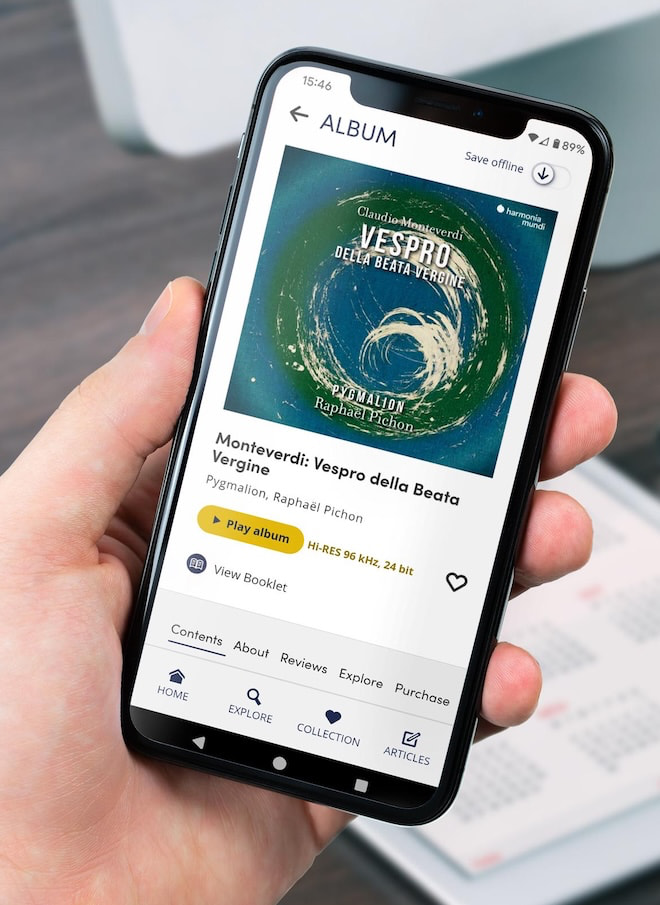
That might be about to change. Focal and Naim have added native Presto Music integration to supported streaming products, giving owners access to a service built specifically around classical music, jazz and audiophile recordings. Presto currently advertises more than 200,000 albums, over 34,000 hi-res releases, more than 70,000 digital booklets and playback up to 24-bit/192kHz.
Those numbers are interesting, but they are not the real reason this announcement deserves attention. Naim already supports the major streaming platforms and has spent years developing one of the better software ecosystems in high-end audio.
Why would Naim bother adding a comparatively obscure British streaming service unless it believed its customers might actually care?
Related Reviews:
What Exactly Is Presto Music?


Presto isn’t a startup that appeared last Tuesday with a logo, an AI recommendation engine and $40 million in venture capital. The company began as a record shop in Royal Leamington Spa, England, in 1986 and eventually developed into a major online retailer specializing in classical and jazz recordings, downloads, sheet music and related products. Its streaming service launched in 2023.
That history helps explain the service.
Spotify, Apple Music and TIDAL are built around enormous catalogs and broad mainstream discovery. Presto concentrates on classical music and jazz, where metadata can matter just as much as the album title. Classical listeners frequently care about the composer, orchestra, conductor, soloist, label, recording date and specific performance, while jazz collectors can be equally particular about personnel, session dates and mastering.
Presto leans heavily into that kind of information, along with reviews, curated editorial content and digital booklets. More than 70,000 albums include booklets, which should immediately make sense to anyone who spent decades buying CDs and actually read the liner notes instead of using the jewel case as a coaster.
Presto Isn’t Trying to Beat TIDAL at Being TIDAL
Presto’s catalog is much smaller than TIDAL or Qobuz, and pretending otherwise would miss the point.
TIDAL offers a massive mainstream catalog, hi-res FLAC and Dolby Atmos, while Qobuz combines more than 100 million tracks with extensive hi-res content, editorial material and broad hardware integration. For someone whose listening jumps from Miles Davis to Radiohead, Mahler and Black Sabbath before lunch, either service remains a far more comprehensive single-subscription option.
Presto’s argument is different: be exceptionally good at classical and jazz rather than merely having them buried inside a gigantic catalog.
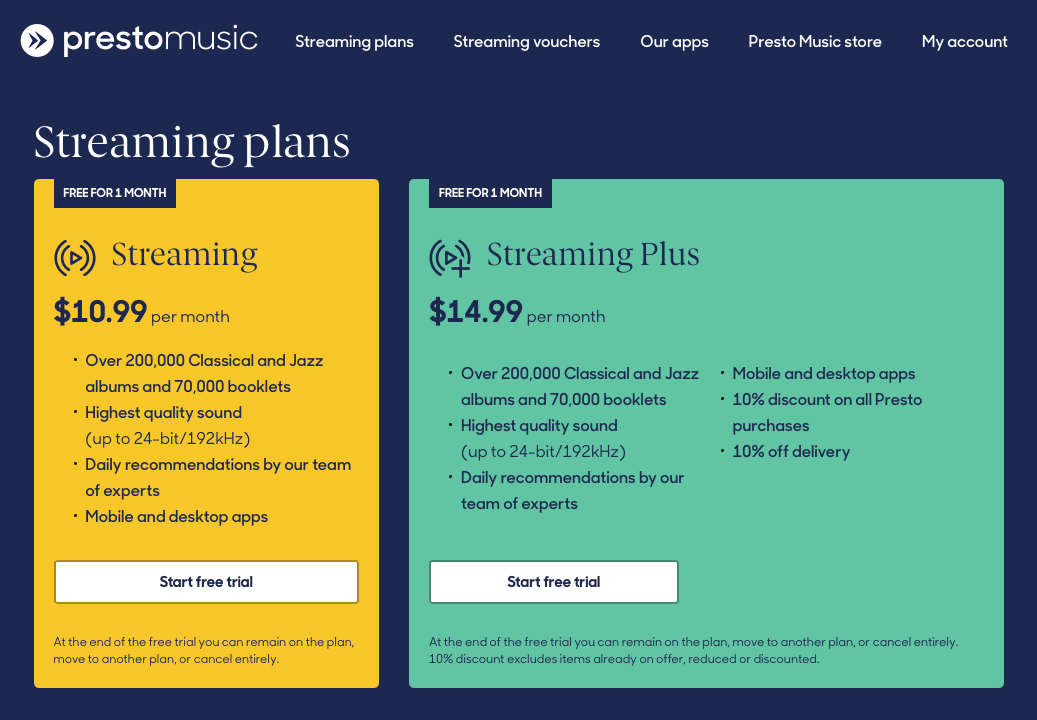
Its standard streaming plan is currently $10.99 per month, while Streaming Plus costs $14.99 and adds discounts on purchases from Presto’s retail business. Both offer the same streaming catalog and audio quality up to 24-bit/192kHz.
The question isn’t whether Presto has more music than Qobuz. It doesn’t. The better question is whether a smaller, more focused service can offer classical and jazz listeners a better experience.
That is a much more credible fight.

It Also Pays Differently
Presto has another unusual distinction: its royalty model.
The company uses what it calls a pay-per-second system rather than treating every stream as an equivalent unit. That matters particularly with classical music, where a single movement can run for 20 or 30 minutes while a pop album might divide the same listening time among numerous tracks.
Presto argues that paying according to listening time avoids penalizing longer works simply because they generate fewer individual track plays. There are important caveats: comparisons with competing services rely partly on industry estimates, and payments still initially go to labels and rights holders before reaching individual performers.
Even so, the logic is easy to understand. A 28-minute symphonic movement shouldn’t be commercially disadvantaged simply because somebody else released 11 songs during the same amount of listening time.

Why Would Naim Bother?
This is the part that interests me most.
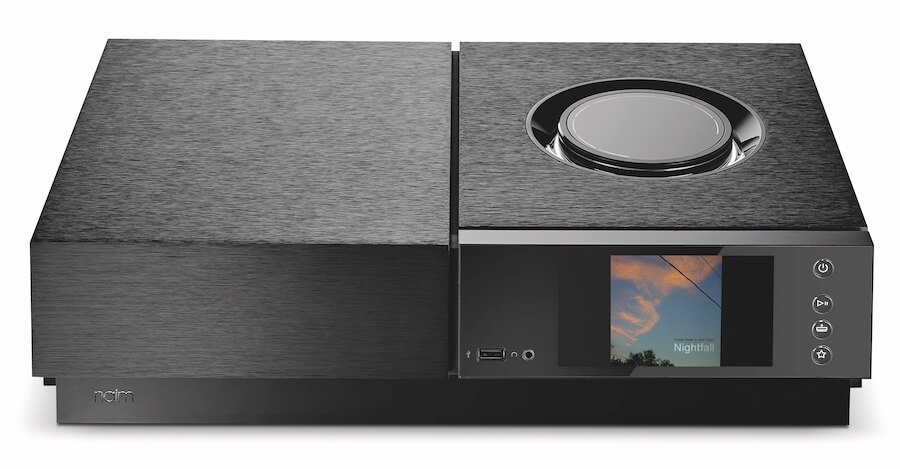
Naim does not need another streaming logo to make its spec sheets look fuller. Streaming integration has been central to the company for years, from the Uniti Atom and Uniti Nova through newer products such as the CI-Uniti 102. Focal, meanwhile, has increasingly moved the same ecosystem into products such as the Mu-so Hekla.
We’ve reviewed enough Naim hardware to know that its customers are not generally buying these products because they were the cheapest boxes on the shelf at Costco.
The decision to integrate Presto therefore feels more meaningful than another routine service announcement. There is an obvious overlap between the people spending real money on Naim hardware and listeners who care about recording provenance, mastering quality, metadata, liner notes and finding a particular performance rather than asking an algorithm to “play some classical.”
That doesn’t mean every Naim owner spends Sunday morning comparing Karajan and Klemperer recordings while drinking Rooibos from a Salisbury-approved mug. But the demographic overlap isn’t exactly difficult to see.
Naim already has access to the big streaming platforms. Adding Presto suggests that the company believes specialist streaming services can have real value when they understand their audience better than the giants do.
How Does It Work?
There is an important technical distinction here.
Focal and Naim have not announced a separate “Presto Connect” protocol equivalent to TIDAL Connect or Qobuz Connect. Instead, Presto is integrated directly into the Focal & Naim ecosystem. Users update the Focal & Naim app and compatible product firmware, sign into Presto, and stream directly through supported hardware.

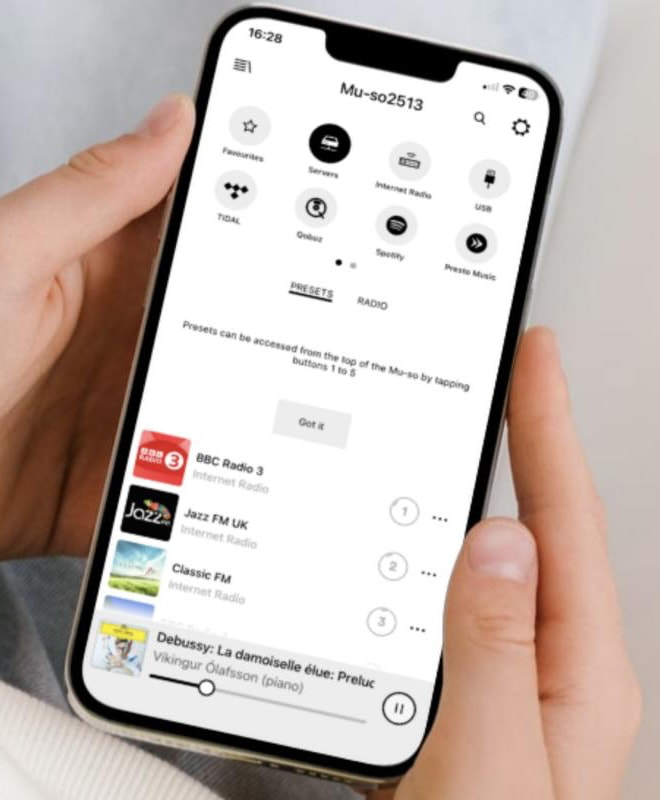
That still provides the important benefit: the streamer receives the service directly rather than relying on Bluetooth or another compromised workaround.
Naim isn’t the first high-end manufacturer to embrace Presto. Eversolo already supports the service, while its integration with BluOS opens it to compatible products from Bluesound, NAD, PSB, DALI, Monitor Audio, Cyrus, Roksan and others. Audirvāna also supports Presto on the software side.
What makes the Focal and Naim announcement interesting is that another major audiophile ecosystem has now decided this specialist classical and jazz service deserves native support. Presto isn’t suddenly arriving because Naim discovered it; it has been quietly building a legitimate hardware footprint while a lot of North American audiophiles still have no idea what it is
There is, however, a firmware wrinkle.
Newer Naim platforms have begun receiving the required updates, but some Uniti and Classic streamers are still waiting for firmware 3.13 as of August 9, 2026. First-generation Naim streamers are excluded from Presto support entirely.
So if your Uniti refuses to display Presto this morning, repeatedly rebooting it while questioning British engineering probably isn’t going to help. The update may simply not be available for your model yet.

Is This Really a Threat to Qobuz?
Not exactly.
Qobuz remains the most obvious comparison because both companies emphasize high-resolution audio, editorial content and listeners who care about sound quality. Qobuz, however, offers a vastly broader catalog and much deeper support across the hi-fi industry.
Presto’s advantage is specialization.
Its classical orientation, jazz focus, digital booklets and more granular metadata give it a distinct identity. There is also something increasingly refreshing about opening a music service that doesn’t immediately attempt to convince you that whatever went viral twelve minutes ago while someone made a sandwich should become the center of your listening universe.
Whether that’s enough to persuade an existing Qobuz subscriber to pay for a second service is the more interesting question.
We’re Going to Find Out
eCoustics has covered Naim and Focal extensively, and we have reviews of the Focal Mu-so Hekla and Naim CI-Uniti 102 coming this month. That gives us an obvious opportunity to do more than repeat the announcement.
We’re going to try Presto on the hardware.
How good is the search function when you’re looking for a specific classical recording? How deep is the jazz catalog? Do the digital booklets materially improve the experience? How reliable is hi-res playback through the Focal & Naim platform? And if you’re already paying for TIDAL or Qobuz, is there enough here to justify another subscription?
Because streaming subscriptions are starting to resemble cable television packages. Everybody promised us freedom from bundles, and somehow we ended up paying six companies every month again.
At least this one comes with Mahler.
The Bottom Line
Presto Music isn’t going to replace Spotify, Apple Music, TIDAL or Qobuz for most listeners, and its smaller catalog makes that fairly obvious. What it offers instead is specialization: classical and jazz, hi-res playback, meaningful metadata, extensive digital booklets, human editorial curation and a royalty model designed around the realities of longer musical works.
The more significant part of this story may be Naim’s decision to integrate it. Naim already supports the major players; it didn’t need Presto simply to make the feature list longer. Adding it suggests that specialist streaming services may have a legitimate place alongside the giants when they understand their audience well enough.
Presto Music has been streaming since 2023. A lot of us are only noticing it now.
For more information: prestomusic.com
You must be logged in to post a comment Login