
Tech
What Is The Best Waterproof Rating For Bluetooth Speakers?

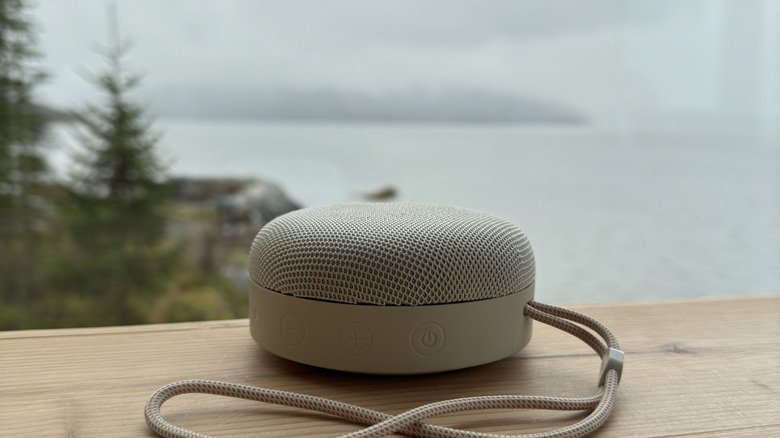
Not everything is better when it’s wetter.
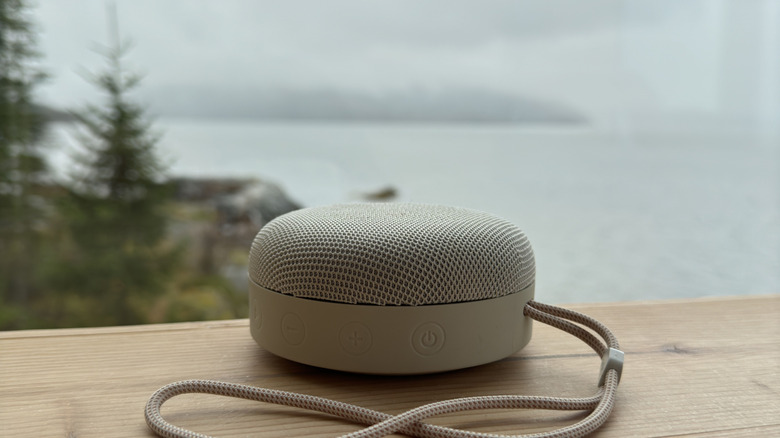
The wireless nature of Bluetooth speakers makes them perfect for any on-the-go trip, whether that’s an overnight stay or a beachside vacation. However, while you can take precautions to keep your speaker from getting wet, you can never be too sure. Whether you’re on a trip near the sea, may experience a sudden spell of rain, or have a leaky water bottle, it’s worth keeping an eye on how good the waterproofing is on any given speaker when shopping for a new one.
Bluetooth speakers have an Ingress Protection (IP) rating. An IP rating measures how resistant hardware is to dust and water, with the first number representing dust resistance (on a scale of 0 to 6) and the second number representing water resistance (on a scale of 0 to 9). For example, an IP rating of IP56 would translate to high dust resistance and protection from powerful jets of water.
Which IP ratings to look for in Bluetooth speakers
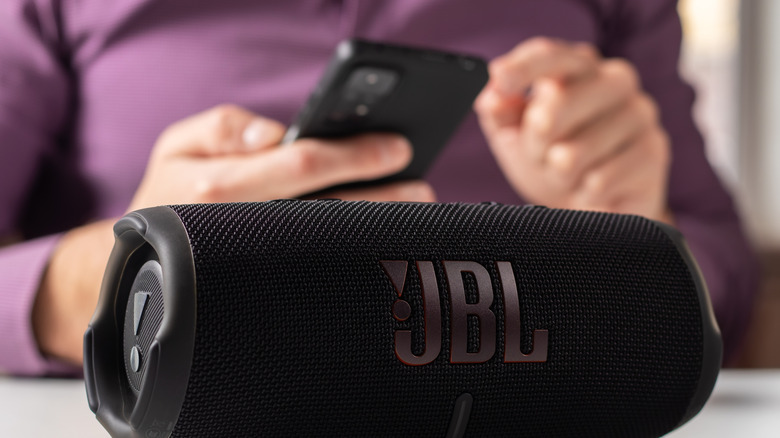
The highest feasible rating for a waterproof Bluetooth speaker, then, would have a 9 in the second numeral, and the best all-around protection would come from an IP69. Unfortunately, this rating is pretty seldom seen outside of a few hyper-specialised examples; luckily, the more common ratings will still get you far. For big-name, high-quality speakers, IP67 or IPX7 (“X” meaning that the manufacturer didn’t test for dust protection) are the most common ratings. These speakers can survive not only droplets or jets of water, but can survive submersion in water (though only for a small window).
Despite the rarity of IP69, though, IP68 isn’t out of reach when balancing quality and reputation. One of the highest-rated Bluetooth speakers, the JBL Charge 6, reaches that fabled IP68 rating. IP68 is essentially a more potent version of the IP67, meaning that speakers with this rating can survive submersion under harsher conditions and for a longer period of time. However, it’s worth noting that even an IP68-rated device isn’t fully waterproof.
What different IP ratings can survive

A 7 or 8 rating will go pretty far when it comes to keeping your tech safe from water. For reference, swimming headphones are typically within this same range — so you can bet that both ratings are built for decent submersion. There are plenty of high-end devices all the way down at the 2 rating, though, so if you want to invest in waterproofing, it’s worth knowing what you plan to do with your device.
For instance, if you want to bring your speaker into the shower, you’ll want at least an IPX6, though a 7 rating is preferable. When it comes to dealing with the rain, IPX5 will do, but as low as IPX2 can survive brief contact with rain. Overall, a 7 rating on the waterproof end will get you far enough for most cases, and it’s pretty common among high-end speakers.

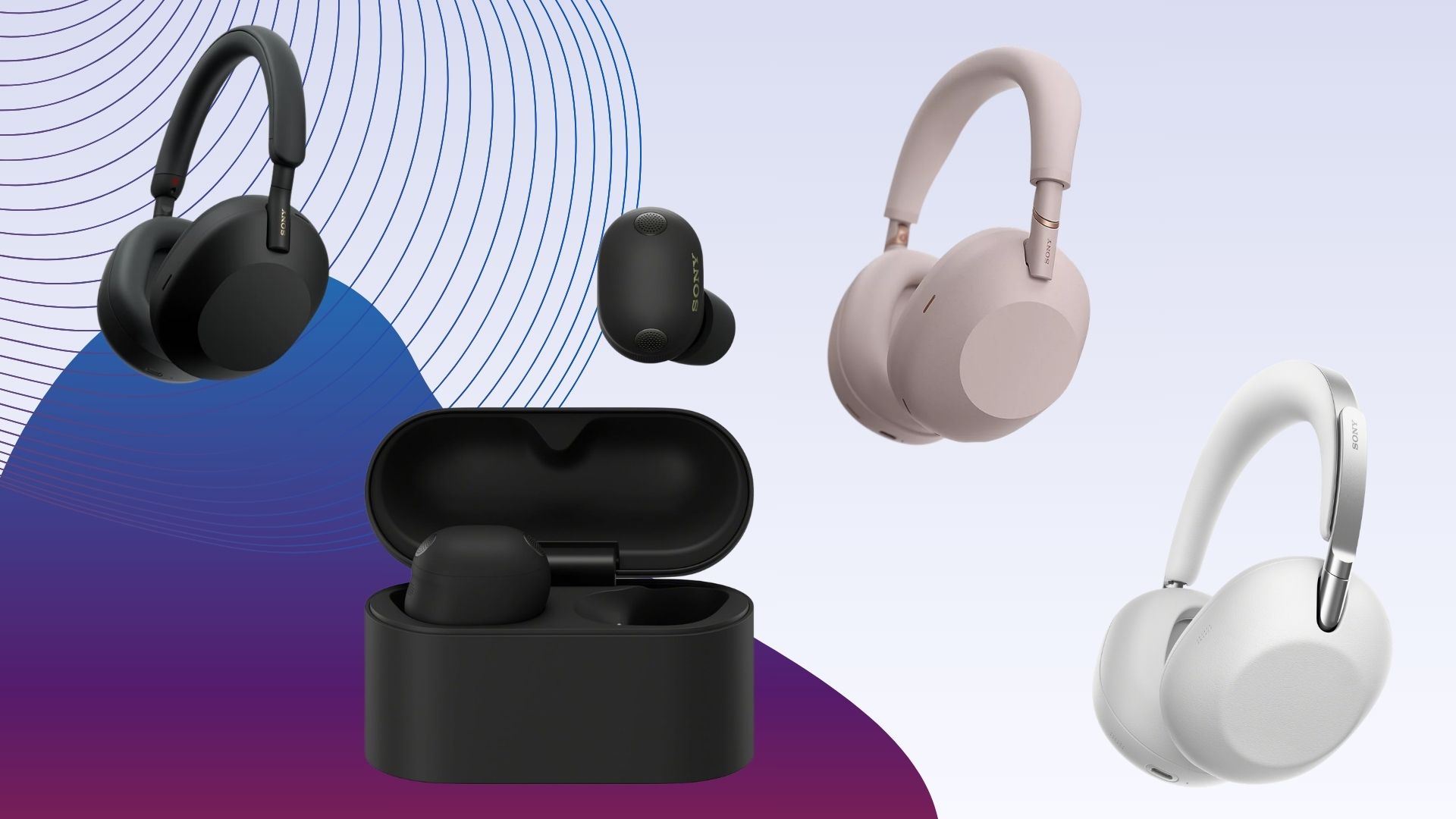
We’ve reviewed many Sony headphones so we’re very familiar with what makes them tick. If you’re a Sony fan too, you’ve come to the right place for advice on the best Sony headphones
Each pair has been tested for its performance in real world settings. Like any other pair of headphones, we test features such as noise-cancellation and transparency modes: how good the wireless performance is, carry out battery drains, test out the call quality, as obviously put them through our listening tests.
With our thorough process, you can be confident that headphones that feature on this list have passed the muster in terms of performance. So whether you’re looking to upgrade from an older pair of Sony headphones or want to know what all the fuss is about with the latest release, this list features a summary of each pair, along with pros, cons, and links to in-depth reviews.
If you’re open to other brands, we recommend checking our other audio best lists, which include the best headphones, best over-ears, best noise-cancelling headphones, and best wireless earbuds.
For gamers, we have the best gaming headsets, while fitness enthusiasts will want to check out our guide to the best running headphones.
SQUIRREL_ANCHOR_LIST
Not just anybody can review a pair of headphones. You don’t need superhuman hearing to tell what’s good, but you do need to know what to listen out for. Our headphone tests are done by some of the best and most prolific reviewers in the industry, with years of experience listening to everything from the plasticky freebie earbuds that come with your smartphone, to five-figure beasts of glass and marble. We love music and we want your tunes to sound good, too.
So we listen every pair of headphones we can get on or in our ears. We use a variety of sources, from basic MP3s playing on a laptop to high-quality tracks on dedicated hi-res audio players.
Our test tracks are wide-ranging to give headphones a thorough challenge. They’re also familiar, so we know every track backwards, and we know which bits might trouble the lesser performers.
Comfortable to wear
Impressive noise-cancellation
Superb true wireless sound
Same price as before
Improved call quality
Finding that airtight seal can be fiddly
Not necessarily anything ‘new’ with this model
Unchanged IPX4 rating
The Sony WF-1000XM6 are a refinement rather than a reinvention of the XM5, but like with the WH-1000XM6, these rule the root in the true wireless earbuds market.
There is one area of frustration, which is that getting a proper seal with the Sony Sound Connect app isn’t always reliable. We found it better to adjust the fit manually until it felt correct and the outside world melted away.
Getting that seal right matters because it unlocks the full potential of the ANC, which with the right fit is excellent, dismissing sounds to leave you in a world of your own. Sound quality is also a step forward from before. Compared with the WF-1000XM5, there’s a livelier, more dynamic character to audio. Treble is clearer and brighter, while the bass is both punchy and weighty, but it’s the midrange that steals the show with a detail rich performance.
The water resistance remains at IPX4, and usability with the app can feel clunky in places (there’s simply too much that these headphones offer!).
Despite those gripes, the feature set is deep enough and the overall performance strong enough to make the WF-1000XM6 Sony’s best wireless earbuds ever.
Foldable design is back
Improved noise-cancellation
Clearer, more balanced sound
Stacked with features and convenience
Strong battery performance
New fast-charging feature requires ‘optional’ cable
Px7 S3 beats it for sound
‘Modern’ appearance is arguably bland
The WH-1000XM6 are Sony’s best wireless over-ears right now, building on the already-strong WH-1000XM5 with a set of well-chosen improvements that make them one of the best headphones to buy. The most welcome change is the return of a folding hinge, a feature dropped on the XM5 that made those headphones less portable for travel. The WH-1000XM6 also receive re-designed earcups that are deeper and more angular, with a clamping force that’s gentle enough that during extended wear comfort is good.
The step up in ANC isn’t as pronounced as between earlier generations, but the cancellation sounds less artificial and more natural. It handles the most common offenders — plane hum and train rumble — with confidence and ranks as the finest noise cancelling from Sony’s over-ears so far, even better than the more expensive 1000X The Collexion.
Features are plentiful with the Sony Headphones app providing plenty of ways to adjust and personalise the performance, with spatial audio support provided in 360 Reality Audio.
Sound quality is an area that’s a step forward, with the WH-1000XM6 pushing a more neutral, balanced presentation with clearer, more detailed highs, clearer bass and a wider soundstage. They are Sony’s best-sounding wireless over-ears, and the best for overall performance.
Smooth, enjoyable sound
Effective noise-cancellation
Better than expected call quality
Comfortable fit
Long battery life
Slightly artificial sound to calls
Treble performance could be better
The Sony WF-C710N are an easy recommendation for anyone looking for affordable wireless earbuds without spending a lot.
While they cost more than the WF-C510, you do get better sound and noise cancellation for the extra charge. The ANC, along with the fit and seal, performs a great job of shutting out traffic, as well as the noise of trains and buses, making daily commuting a quieter experience.
Transparency mode isn’t the clearest, but it’s capable enough when you need a quick awareness of your surroundings. Call quality is a genuine improvement over previous Sony wireless earbuds, with voices coming through clearly on the other end, though a slightly artificial quality to the voice is the one caveat to note.
Battery life is better than the WF-C510 too, and that model was already no slouch. Our tests showed that 10 hours of battery life is possible, more than the 8.5 that Sony quotes. Touch controls replace the physical buttons found on the WF-C510 which we found prove responsive in use, there’s a Glass Blue finish that we really prefer over the black and white versions (there’s also a pink version). There’s Spotify Tap, making it easier to pull up a playlist on the go if you subscribe to that music streaming service.
The earbuds deliver good bass presence and the trademark smoothness in the midrange that we’ve come to expect from Sony, though treble can sound a touch subdued.
That said, these are a cracking pair of wireless earbuds from Sony, who’ve shown that they can produce excellent performance at both premium and budget prices.
Lightweight and comfortable to wear
Engaging audio
Good Ambient Sound performance
Long battery life
Affordable price
Below-par call quality
Not the most energetic-sounding pair
The WF-C510 build on the foundation the C500 set and push the performance and feature set forward, all for pretty much the same price as before ($55 / £50). The WF-C510’s audio offers a spacious and balanced performance. We complained about the lack of bass with the previous model but this pair delivers more weight and punch. The mid- to high frequencies feature good clarity and detail and while they’re not the most dynamic, they are wholly enjoyable for the asking price.
Build quality is solid and functional for the money. They offer an excellent fit that blocks out most external sounds and they come with physical controls, which we feel are better than touch controls at this price. An IPX4 rating means they’re protected against some sweat and water, so, if you fancied, you could use the C510 for exercise too.
There’s no noise-cancellation support, which at this price we’re not too fussed about. Sony has added an Ambient Sound mode that lets outside sounds in, and it’s a performance we found to be loud and clear, making it easy to listen announcements and get a better sense of the environment around us.
Bluetooth 5.3 covers SBC and AAC streaming, so these headphones lack wireless Hi-Res Audio but again, like ANC, we don’t that’s a big miss at this price. Sony says the battery life has gone from 10 to 11 hours per charge but in our tests we found the battery life was the same as the original. Still, 10 hours is plenty enough, and if you do run out of battery, there is fast-charging support but no wireless charging.
The most comfortable entry in the WH-1000X series
Mature, balanced audio performance
Stacked with features and customisation over price rivals
Better noise cancelling than price rivals
Excellent call quality
Px8 S2 beats it for overall sound
Reduction in battery life
Less powerful ANC than WH-1000XM6
No USB-C audio
The 1000X The Collexion are not your typical headphone release from Sony.
They’re not what we’d normally classify as the flagship pair for the 1000X Series, but something a little different. They’re a pair of over-ears aimed at buyers who care more about a crafted look and the best sound from Sony’s wireless headphones.
In focusing on the design and sound, that has meant slight losses in other areas. The noise-cancelling isn’t as strong as the WH-1000XM6, which should be viewed as the very-day, workhorse pair. And because of the change in design, the battery life takes a hit too. The shape is familiar, but the platinum silver and black finishes look sleek and distinctive, with the matte faux leather feeling lovely to touch, with the aluminium accents easy on the eye and the brilliantly designed carry case pushing these headphones into fashion accessory territory. In terms of comfort, these are the most comfortable wireless headphones we’ve tested from Sony.
Sound is also a real step up from the WH-1000XM6. Bass is dialled back a touch compared to the XM6, but what you get in return is better clarity, more nuance in vocals and a wider soundstage. It’s a more balanced, mature sound from Sony, offering more fidelity from the tracks you listen to. You can probably do without the 360 Upmix modes, but they’re a fun extra to play with.
Feature-wise, the 1000X The Collexion mirrors the WH-1000XM6, with Bluetooth multipoint and LE Audio, LDAC on board, although these are the first pair of Sony wireless over-ears to feature the DSEE Ultimate algorithm that restore the dynamics in compressed tracks with AI.
Battery life does take a hit at 24 hours, which is less than the XM6 and some rivals at this price. Noise cancelling isn’t quite on par with the WH-1000XM6, but it still outperforms close rivals. If you’re shopping at the £500 / $500+ price range, the 1000X are the headphones we’d recommend for the best noise-cancelling performance. For the style-minded listener who puts comfort and sound quality first, these are the Sony headphones we suggest you go for.
Super comfortable to wear
Surprisingly big bass for an open-back pair
Easy to drive
Fun, spacious and dynamic performance
Some might feel bass is overdone
Not really for portable use
We don’t get the opportunity to test many wired headphones from Sony, so we were intrigued when we were offered the chance to test the MDR-MV1. They did not disappoint.
They are primarily designed with sound mixing and mastering in mind, but for high quality listening at home, the MDR-MV1 deliver a fun, energetic performance. The soundstage is very wide thanks to the open-backed design, with plenty of midrange detail. Like with Sony’s wireless headphones, there’s excellent clarity with voices; while for an open-backed pair, there’s impressive levels of bass.
For a wired pair of headphones, there’s not much to speak of in terms of features, but they are well specificed. The impednace is just 24 ohms, which makes it easy for them to be driven by a smartphone or laptop. Sensitivity is 100db, so the headphones can get solidly when with the volume is upped, and the frequency range covers 5Hz to 80kHz. You won’t be able to hear all of that in the audio, but there’s certainly more impact with the bass and high frequencies.
They are very comfortable to wear, which made it easy to listen to these headphones for hours on end. The lightweight design is also very practical for long sessions with no fatigue settling thanks to the soft earpads and headband.
For what are a pair of reference headphones, they’re a surprisingly fun listen.
Lightweight, comfortable design
Affordable price
Decent noise-cancellation
Fun, punchy audio
Long battery life
Average call quality
No carry case
Better-sounding options available
The WH-CH720N are Sony’s most affordable noise-cancelling over-ears, putting in a strong performance for its sub-£100 / $100 price. The sound quality is similar to the WH-CH520 on-ears with it’s smoothness with an emphasis on bass. The bass performance is punchy, the midrange described with clarity and detail, while treble is bright and clear enough to impact. They’re certainly not in the same league as the WH-1000XM4, but these headphones were never going to be. For those whose budget can’t stretch to a purchase of these headphones, the CH720N is our recommendation for the best affordable ANC headphones from Sony.
When we tested the battery life we found it could go as far as 40 hours with noise-cancelling on. Features for a headphone of this price are extensive, with active noise-cancellation and transparency mode, as well as Bluetooth multipoint, app support (for customisation) and voice assistant support in Google Assistant and Amazon Alexa.
Noise-cancellation is rarely strong with budget headphones, but it’s solid enough at this price. The ANC focuses on reducing low frequency sounds and clearing away ambient noise, making the daily commutes and journeys more tolerable.
The headphones are mostly constructed from recycled plastic, and the quality is good with no noticeable creaks or groans when we bent the frame. The use of plastic keeps the headphones lightweight at 192g, and the CH720N felt comfortable to wear thanks to the padding on the headband and earcups.
Remarkably clear and deep audio
Comfortable and lightweight fit
Decent ANC
Expensive
Battery life is worse than its predecessor
The Sony Inzone H9 II is a follow-up to the original Inzone H9 and it keeps most of what worked while refining enough of the smaller details to place it among the best wireless gaming headsets we’ve tested.
Weighing in at 260g, it’s a full 70g lighter than the H9. That drop in weight makes a real difference during long sessions. The clamping force never felt too aggressive during our time with it, and the plush fabric earcups sealed nicely without pressing in uncomfortably.
Physical controls are laid out across both earcups so you can adjust the basics without pulling up the software, which is a thoughtful touch.
Bluetooth 5.3 also brings LE Audio into the picture, which means a better wireless experience on recent Android phones and, to a lesser extent, iOS devices. The microphone is where you’ll notice the biggest step forward from the H9. The new ultrawideband mic sounds crisper and cleaner, and it still does a decent job of reducing background noise during calls and in-game chat.
Audio performance impressed us too: detail comes through clearly across the frequency range, stereo imaging is sharp, and the soundstage feels wide and open. The Inzone Hub app packs some genuinely useful tuning options for those who want to tailor the sound, though it isn’t as feature-rich as rival offerings.
Battery life sits at 30 hours, which is perfectly functional but falls short of being standout at this price.
That said, if comfort and sound quality are what you care about most, the Sony Inzone H9 II is a strong choice that’s hard to argue with.
Comfortable fit
Solid noise-cancellation
Engaging, smooth sound profile
Plenty of convenient features
Better options for ANC
Better-sounding alternatives too
Below average call quality
The Sony LinkBuds Fit are easy to overlook on name alone, since these don’t share the open-ear concept of the original LinkBuds.
They’re a more traditional in-ear design, and a far better option for workouts than their sibling. Comfort and secure fit are the main selling points here.
Every pair comes with Sony’s Air Fitting Supporters, soft rubbery tails that tuck into the outer ear to keep the buds locked in place during runs and gym sessions. Sony also includes five colour options for those supporters in the box, with more available separately if you want to switch things up. In our testing, the fit held up well throughout workouts, with no sense that they were about to come loose.
Water and sweat resistance sits at IPX4, which is standard for true wireless earbuds at this level and covers most workout scenarios without issue. Bluetooth 5.3 handles wireless connectivity, and Sony’s Sound Connect app opens up a range of familiar features including voice controls and multipoint device switching.
The Background Music Effect feels a little limited in practice, and the noise-cancellation, while present, is not as powerful as the WF-1000XM6.
That said, the broader feature set is solid for earbuds aimed at an active audience. Sound quality is balanced and smooth. The midrange is well conveyed, bass is warm and clear, but treble lacks a little sparkle and fine detail. They’re still an enjoyable listen for everyday and casual use.
For anyone who struggles to get a reliable fit from most true wireless earbuds, the Sony LinkBuds Fit are a strong all-rounder.
Comfortable to wear
Long battery life
No protection against loud sounds
Average call quality
Open-ear buds carry a small risk: because they don’t seal the ear canal, they offer no protection against sudden loud noises.
Sony addresses this in two ways with the LinkBuds Open. First, an air-fitting supporter locks the earbuds in place for a more secure hold.
Second, the Adaptive Volume feature monitors the surrounding environment and adjusts volume accordingly. On a busy street it cranks things up; step into a quieter space and the level drops so you’re not disturbing those around you. At least this is the case in theory.
Sound quality is solid, though not quite the strongest on this list. High frequencies come through cleanly, the midrange picks up more detail than the original LinkBuds, and bass carries genuine punch. They deliver an enjoyable listen and are an improvement on the original. Battery life runs to eight hours, which is up from the first-generation model and enough to cover a long podcast or a good stretch of an audiobook. If you’re caught short on charge, three minutes buys another hour of playback.
Lightweight design
Very good call performance
Good feature set and customization options
Robust wireless performance
On-ear design can pinch
SoundMagic pair offers greater clarity and detail
The WH-CH520 are one of the cheapest pairs of Sony headphones we’ve reviewed at just £50 / €70. They’re in the impulse buy column if you’re looking for a pair of on-ear headphones.
In terms of their sound quality we found these headphones to be a smooth listen, but they don’t offer as finessed a performance as other similarly priced headphones, with a slight lack of definition and sharpness to instruments and voices not helped by a soundstage that sounds small. Bass is decent for an on-ear and there’s some nice brightness to high frequencies, while the midrange is handled in a smooth, clear manner.
We found they were comfortable to wear, though the on-ear design can pinch on the earlobes. Passive noise isolation isn’t as good as true wireless and over-ear pairs, so external sounds mesh with what you’re listening too. The build quality is predominantly plastic, but it keeps the weight down to just 147g, making them light to wear on our heads. There’s no carry case so you’ll either need to wear them around your neck or stuff them in a bag when not using them.
The WH-CH520 doesn’t have access to the same level of features through the Sony Headphones Connect app, but what it offers is very good for its price and for on-ears in general. Battery is rated at 50 hours and in our testing we found that the battery goes for a very long time. A nine-hour battery drain didn’t result in any loss of battery whatsoever.
There is Sony’s 360 Reality Audio format for immersive audio, and Bluetooth support equates to SBC and AAC codecs. The wireless connection with our phone was great during testing with no stutters or dropouts even in busy areas. Call quality is also very good in terms of clarity, though in busy areas it can become harder for the other person to hear what’s said.
Learn more about how we test heaphones
Full Specs
Sony WF-1000XM6 Review
Sony WH-1000XM6 Review
Sony WF-C710N Review
Sony WF-C510 Review
Sony 1000X The Collexion Review
Sony MDR-MV1 Review
Sony WH-CH720N Review
Sony Inzone H9 II Review
Sony LinkBuds Fit Review
Sony LinkBuds Open Review
Sony WH-CH520 Review
Manufacturer
Sony
Sony
Sony
Sony
Sony
Sony
Sony
Sony
Sony
Sony
Sony
IP rating
IPX4
Not Disclosed
IPX4
IPX4
No
No
No
–
IPX4
IPX4
No
Battery Hours
24
30 00
30
22
24
–
35
30 00
21
22
50
Wireless charging
Yes
–
–
–
–
–
–
–
–
–
–
Fast Charging
Yes
Yes
Yes
Yes
Yes
–
–
–
Yes
Yes
–
Size (Dimensions)
–
–
–
x x INCHES
–
x x INCHES
x x INCHES
x x INCHES
–
–
x x INCHES
Weight
60 G
254 G
–
40.2 G
320 G
223 G
192 G
260 G
–
–
47 G
ASIN
–
B0F2TSQL21
–
B0DBLN4C47
B0GY4RH3MX
B0C33VF7KM
B0BTDX26B2
–
B0DBLP95PC
B0DBLMGP2F
B0BTJ8ZXG5
Release Date
2025
2025
2025
2024
2026
2023
2023
2025
2024
2024
2023
First Reviewed Date
–
–
–
–
–
–
–
06/09/2025
–
–
–
Model Number
–
–
–
–
WH-1000XX
–
WH-CH720N
–
–
–
WHCH520L.CE7
Audio Resolution
SBC, AAC, LDAC
SBC, AAC, LDAC, LE Audio
SBC, AAC
SBC, AAC
SBC, AAC, LDAC, LC3
Hi-Res Audio compatible
SBC, AAC
–
SBC, AAC, LDAC, LC3
SBC, AAC
SBC, AAC
Driver (s)
8.4mm
30mm neodymium
5mm
6mm
30mm
40mm
30mm dynamic
30mm dynamic drivers
8.4mm
–
30mm
Noise Cancellation?
Yes
Yes
Yes
–
Yes
–
Yes
Yes
Yes
–
–
Connectivity
Bluetooth 5.3
Bluetooth 5.3, Auracast
Bluetooth 5.3
Bluetooth 5.3
Bluetooth 6, Auracast, Google Fast Pair, Microsoft Swift Pair
Wired
Bluetooth 5.2, 3.5mm jack
Bluetooth 5.3, BLE, 2.4GHz receiver, USB-C and 3.5mm wired
Bluetooth 5.3
Bluetooth 5.3
Bluetooth 5.2
Colours
Black, Platinum Silver
Midnight Blue, Black, Silver
Pink, Glass Blue, White, Black
Yellow, Black, Blue, White
Platinum Silver, Black
Black
Blue, Black, White
Black, White
Green, White, Violet, Black
Black, White, Violet
Black, Blue, Beige, White
Frequency Range
20 20000 – Hz
4 40000 – Hz
20 20000 – Hz
20 20000 – Hz
4 40000 – Hz
5 80000 – Hz
20 20000 – Hz
5 20000 – Hz
20 40000 – Hz
– Hz
20 20000 – Hz
Headphone Type
True Wireless
Over-ear
True Wireless
True Wireless
Over-ear
Over-ear
Over-ear
Over-ear
True Wireless
–
On-ear
Sensitivity
–
–
–
–
–
100 dB
–
-100 dB
–
–
–
Voice Assistant
Siri, Google Assistant
Google Assistant
–
–
–
–
Amazon Alexa, Google Assistant
–
Amazon Alexa, Google Assistant
–
–
Frequency response
–
–
–
–
–
–
–
520000 Hz
–
–
–
Polar patterns
–
–
–
–
–
–
–
Om
–
–
–
Compatibility
–
–
–
–
–
–
–
PC, PS5, Bluetooth mobile
–
–
–
UK RRP
£250
£399
£99
£54.99
£549
£339
£99.99
£299
£179.99
–
£49.99
USA RRP
–
$399
$129.99
–
$649
$399
$149.99
$349.99
$199.99
–
TBC
EU RRP
€300
€450
€89
–
€630
€399
€119
–
€169
–
€70
CA RRP
–
TBC
–
–
–
–
CA$249
–
–
–
TBC
AUD RRP
–
TBC
AU$189.95
–
–
AU$599
AU$249
–
–
–
TBC
security
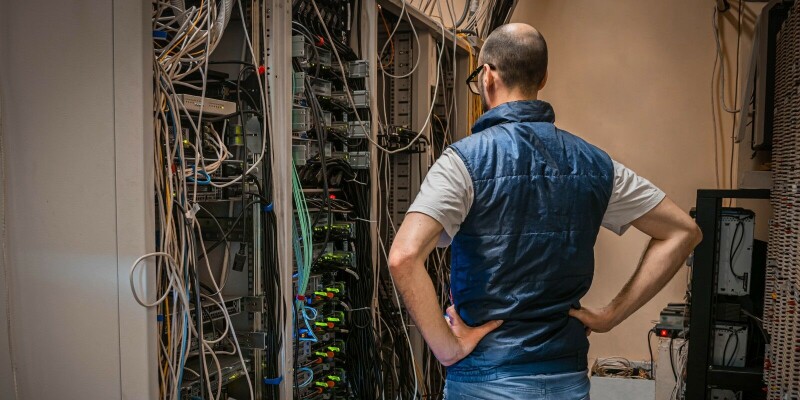
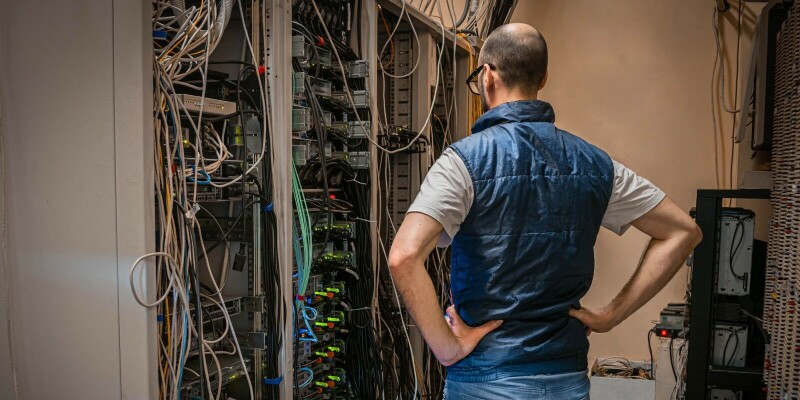
Three critical vulns demand your attention, one a make-me-root mess in Nexus 9000 Series Switches that you can mitigate, not fix
Cisco has warned its customers of three critical-rated flaws in its products.
Two of them are present in the Cisco IOS XR operating system that powers the company’s carrier-grade kit.
CVE-2026-20274 scores 9.8 on the ten-point CVSS scale and covers a buffet of buffering issues, the potential for out-of-bounds writes, and the chance to initialize resources with an insecure default.
CVE-2026-20279 is another 9.8-rated flaw. Cisco says it’s an improper access control problem that covers “improper certificate validation, missing authentication for critical function, missing authorization, and incorrect authorization.”
Cisco also spotted a trio of 8.8-rated flaws, plus another rated 8.6 and one more scored at 8.2
The company’s advisory says the company found the flaws after “a comprehensive internal security review,” language that perhaps hints at Cisco dabbling with Mythos and/or other bug-finding models.
The fix is in: Cisco has published new versions of IOS XR that fix the problems and “strongly recommends” customers adopt them.
Cisco’s support organization spotted the third critical flaw it revealed on Wednesday.
CVE-2026-20212 is a tad embarrassing because the cause is a bad integration with Cisco’s own Silicon One networking processors that means some Nexus 9000 Series Switches “could allow an unauthenticated, remote attacker to execute code with root privileges.”
“This vulnerability exists because TCP ports 43210 and 43211 are accessible in the default Layer 3 (L3) virtual routing and forwarding (VRF),” according to Cisco’s advisory. A successful exploit could allow the attacker to connect to an affected device and send crafted input that could be executed as code with root privileges. The exploitation of this vulnerability could also cause the S1HAL process to crash, which could cause the device to reload.”
Ten Nexus 9000 devices have the problem, which Cisco suggests owners mitigate by using infrastructure access control lists (iACLs) to allow only required management and control plane traffic that is destined to the affected device.
“Alternatively, the iACLs may be used to explicitly deny all TCP packets that are destined to a locally configured IP address with a destination port of 43210 or 43211,” the company advises.
The networking giant suggests that approach because it hasn’t yet created a software update to fix the flaw once and for all. The company has, however, delivered a download that helps to implement the mitigation.
Cisco hasn’t seen attacks on these flaws. That may change, fast, now that evildoers can use AI to whip up nastyware. ®

Smart ring company Ultrahuman is up there with Samsung as the biggest rivals to Oura, but it has some lofty ambitions for its next steps, which it hinted at on Thursday at IFA here in Berlin. The company announced it had raised $70 million from Qualcomm Ventures, Labcorp, Alpha Wave, Blume and others to develop next-generation AI wearables.
The smart ring market is currently dominated by Oura, but Ultrahuman is finding ways to set itself apart. It has already evolved rapidly over the past few years into a health company offering a range of complementary products and services, including blood testing and an ambient sleep monitor that sits by your bed. Earlier this year, it launched the Ring Pro, which has better battery life than its predecessors and also doesn’t require a subscription, unlike some of its rivals.
The new funding is set to further boost this growth, putting the Ultrahuman Ring at the center of an ecosystem where data about your body is used for more insightful and actionable purposes. Ultrahuman plans to invest the money in sensing, materials, electrical engineering, algorithms, physiology and clinical science to build future rings and ultimately make the human body more understandable with AI.
The partnership with Qualcomm draws Ultrahuman into a much wider ecosystem of AI products, many of which are also wearable, with which the Ultrahuman Ring could become interoperable. One example is the Meta Glasses, which the Ultrahuman Ring could be linked to for purposes of gesture control, said Bhuvan Srinivasan, the company’s chief business officer, in an interview.
“What we’re really thinking is you could have a ring that helps you control what’s happening in the glasses, but then at the same time at night it measures all your sleep and all your health,” he said. “So it’s valuable to you both in the day and the night.”
This won’t be possible with the Ring Pro, he added. “There’ll be another Ring level that we are working on with them.”
The partnership with diagnostic and drugs company Labcorp is also important to bringing Ultrahuman’s vision to life, due to the support it can provide to Ultrahuman’s Blood Vision preventative blood-testing service that it’s been building out for the past two years, Srinivasan said.
“The idea behind Blood Vision is really to bring together all the things you cannot measure on a wearable, but you can measure in your blood, which is also very valuable,” he said. “And now we really want to roll that out and make preventive health blood testing much more mainstream. And that’s really why we tied up with them over time.”
The funding could help Ultrahuman position itself as a bridge between people’s health, AI agents and other AI-equipped devices. “Ultrahuman is pioneering a new generation of personal AI devices that make personalized insights effortless,” said Quinn Li, senior vice president of Qualcomm Technologies and global head of Qualcomm Ventures. “We look forward to supporting their journey as they expand the possibilities of personal AI devices.”
Editors’ note: Katie Collins’ travel costs for the IFA conference were covered in part by Xiaomi. The judgments and opinions of CNET are our own.

Tech
The search company that plants trees just launched a Linux browser to help Europe battle big tech


software
Why now? Well, the Linux desktop market share in the EU doubled between 2024 and 2025 (to 5.7%). That’s why!
Berlin-based eco-conscious search outfit Ecosia is expanding its range of European-focused web browsers to include a Linux version, citing the growing number of users in the EU looking for open alternatives to the clutches of American tech giants.
Calling Linux users a “critical tech community that has long called for data privacy, digital sovereignty, and sustainability,” Ecosia said it was launching the new browser to support the community, whose numbers it says doubled in the EU between 2024 and 2025.
The absolute share remains small, mind you – from 2.5 percent of EU computer users to 5.7 percent in the course of a year, but it’s still an increase that the Linux community can be proud of. Ecosia noted that Windows’ share of the market fell during that same period, from 80.2 percent to 74.2 percent. As of this writing, Linux’s share of the European desktop and console market is 6.4 percent, while Windows has dropped to 68.62 percent, per Statcounter.
“Linux in particular is becoming increasingly popular among tech circles, developers, and privacy-conscious users – a target group that views commercial tech giants like Microsoft and Google with increasing skepticism,” Ecosia said. Europeans don’t appear completely disillusioned with American tech, however, as macOS’s share in the region has nearly doubled since August 2025.
Regardless, the company said, it wants to meet Linux users where they’re at with a version of the company’s Chromium-based browser designed for trailblazing European digital sovereignty leaders freed from the grasp of Google.
“With our Linux version, we’re finally giving them a search engine that matches their values – climate- and privacy-friendly, and free of tech-bro monopolies,” said Ecosia founder and CEO Christian Kroll.
Ecosia has leaned hard into the European movement for sovereign technology in light of frustration with American tech giants, citing both the European Commission’s decision this year to require Google to share anonymized search data with eligible rival search engines, and what it says is growing dissatisfaction among Europeans over Google’s dominance of the search and browser markets.
Separating the EU from Google isn’t a new initiative, with Ecosia and French search firm Qwant partnering on an EU-based web index that launched last year. It’s not clear whether that initiative has yet benefited from the EC’s order to Google to hand over search data. The duo’s initiative, the European Search Perspective (EUSP), is currently working to expand its presence to other EU languages to “lay the foundation for genuine European digital sovereignty,” though it’s not clear from the press release how far along the initiative is.
Ecosia’s Linux browser is now available through the App Center on Ubuntu and directly through the Snap store. Ecosia also has browsers available for Windows, macOS, iOS, and Android, all of which can be downloaded by following the link on its website. While based on open-source Chromium, Ecosia’s browsers themselves are not open source. We reached out to learn whether it’d be different for the Linux variant, but didn’t immediately hear back. ®
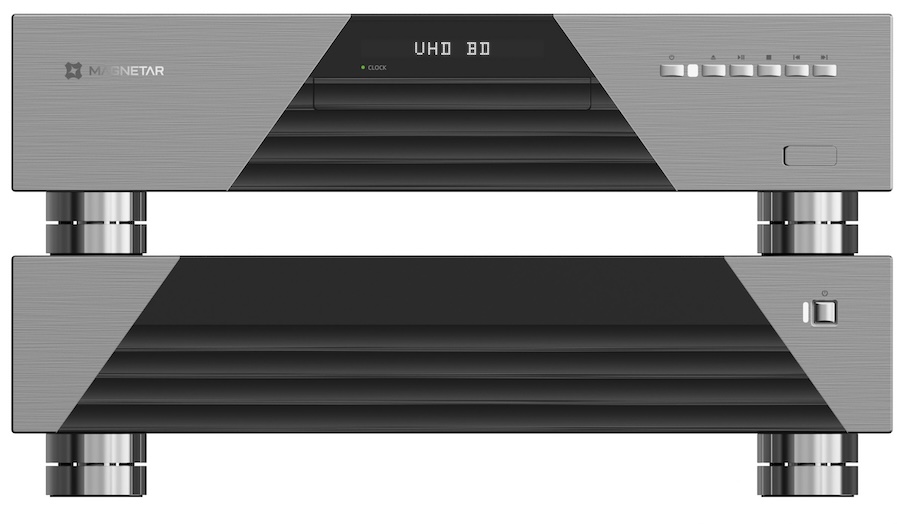
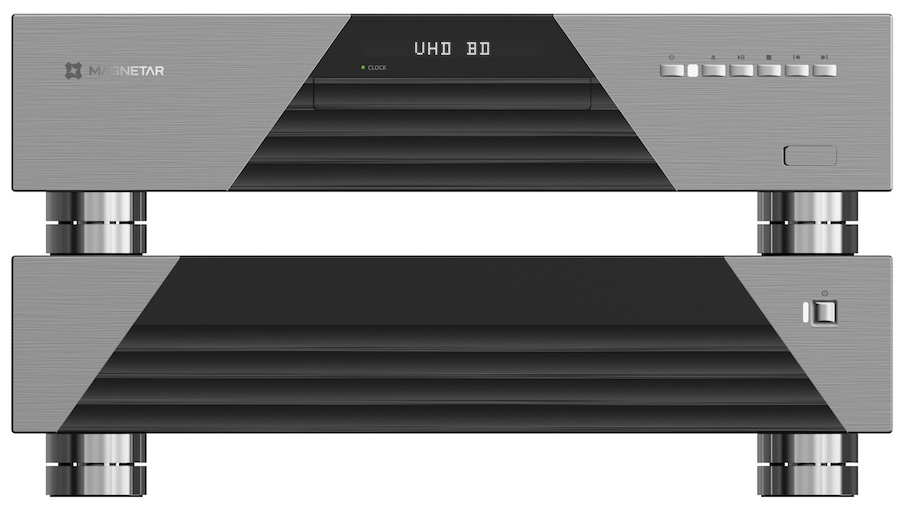
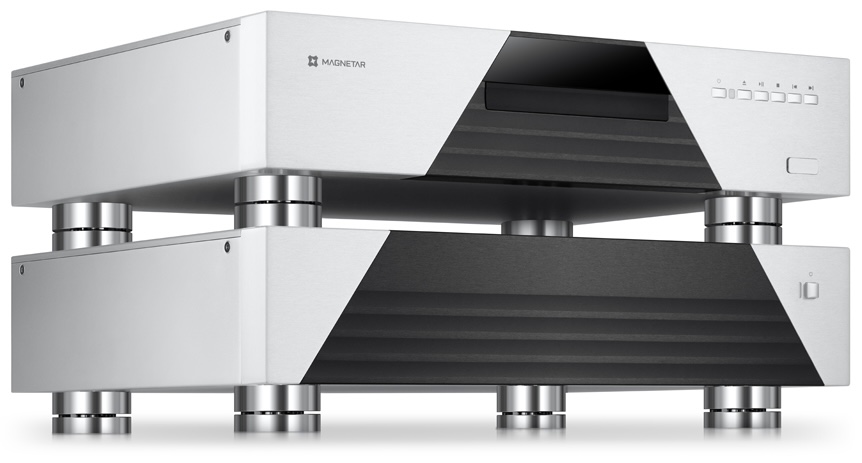
Magnetar is bringing its most ambitious disc player yet to the United States, and anyone still preparing a funeral for 4K Blu-ray may want to hold off on ordering the flowers. Making its U.S. debut at CEDIA 2026, the new Magnetar ULTIMA Ultra HD Blu-ray Reference Transport is a flagship universal media transport designed for high-end home theaters, custom installations, and collectors who want substantially more from physical media than a streaming box can deliver.
Magnetar describes ULTIMA as the world’s first luxury universal media transport with a battery-assisted DC power architecture, using dedicated lithium-based power stages to isolate critical processing and signal paths from electrical noise.
That engineering is important, but the larger story might be even more interesting. Streaming now dominates home entertainment, yet premium 4K Ultra HD Blu-ray releases continue to target enthusiasts who want higher bitrates, lossless audio, ownership, and consistent playback quality without wondering whether a movie will disappear from a service next Tuesday.
ULTIMA takes that argument to its logical, and presumably expensive, extreme. In the world of six-figure home theaters being showcased at CEDIA, spending a fortune on the display, projection, processing, amplification, and loudspeakers only to feed the entire system heavily compressed streaming video has always been a slightly strange place to start saving money.
One Transport for Discs, Files, and Reference Home Theater
Magnetar positions ULTIMA as the pinnacle of its universal media transport technology, designed to establish a new benchmark for reference-level playback and demonstrate what is possible when engineering takes priority over cost and convenience.
Engineered as a pure reference source, ULTIMA is designed to perform one primary function without compromise: preserve source integrity from the disc or digital file to the display or external processor in demanding home cinema and high-performance audio systems.
Built on Magnetar’s MKII player platform, ULTIMA supports UHD Blu-ray, Blu-ray, DVD, CD, SACD, DVD-Audio, DSD/DoP via AES/EBU, USB media, and high-resolution network playback, along with Dolby Vision and HDR10+.
That broad format support means ULTIMA can handle nearly every premium physical and digital media format likely to appear in a modern custom theater or dedicated listening room, potentially eliminating the need for separate disc players and file transports within the same system.
Why ULTIMA Uses a Separate DC Power Supply
One of the key differences between ULTIMA and Magnetar’s existing MKII platform is its use of a separate external DC power supply rather than relying exclusively on a conventional internal AC power architecture.
ULTIMA incorporates dedicated BYD lithium-based power stages designed to isolate critical transport, clocking, and signal pathways from electrical noise, voltage fluctuations, and other forms of contamination that can be present in conventional power environments. Basically, the same industrial strength lithium ion batteries used in BYD’s electric cars are being used here to provide stable, precision power for the disc transport.
The goal is to provide a more stable, low-noise operating environment for precision playback, particularly in reference home theater and high-end audio systems where minimizing electrical interference is part of the design brief. Magnetar positions this battery-assisted DC architecture as one of ULTIMA’s defining technical features and a significant step beyond its existing universal disc players.
A 10 MHz Master Clock Keeps ULTIMA in Sync
Complementing ULTIMA’s battery-assisted power architecture is a synchronized master clock system built around a unified 10 MHz reference clock. Its purpose is to maintain precise timing across the transport and provide stable, accurate signal transmission to downstream components such as external processors and DACs. ULTIMA itself does not include a built-in DAC.
Using a common reference allows the transport to operate from a single timing source, helping maintain consistent data flow and predictable timing relationships throughout the playback chain.
According to Magnetar, this approach is designed to improve overall system stability, signal integrity, and timing consistency while reducing phase noise and improving playback consistency. In a reference transport, where the goal is to deliver the cleanest and most precisely timed digital signal possible to an external processor or DAC, that clocking architecture is a meaningful part of the engineering rather than another box to tick on the specification sheet.
A Reinforced Chassis With Reference Grade Connectivity
The same attention Magnetar has given ULTIMA’s power supply and clock architecture extends to its physical construction. The transport uses a heavily reinforced chassis designed to reduce vibration and resonance, along with isolated and shielded internal circuit sections intended to minimize electrical interaction between critical components.
Magnetar has also paid particular attention to the disc mechanism itself, including its servo control and vibration management. The objective is greater mechanical stability during playback and more consistent disc reading, particularly with demanding formats such as Ultra HD Blu-ray, SACD, and DVD-Audio. Even the support feet have been designed as part of the vibration control strategy.
ULTIMA’s rear panel reinforces its role as a dedicated digital transport. It provides two HDMI outputs, including a main output for audio and video and a second audio-only HDMI output, allowing video to be sent directly to a projector or display while audio is routed separately to an AV processor.
Digital audio connectivity includes AES/EBU and coaxial S/PDIF, while USB 3.0 and Gigabit Ethernet support file and network playback. There is also a 10 MHz clock connection for compatible external clock systems and RS-232C for integration into more sophisticated custom installations.
What you will not find are analog audio outputs. ULTIMA does not contain a DAC and is designed specifically to hand digital audio and video signals off to an external DAC, AV processor, or display. That makes it fundamentally different from Magnetar’s UDP900 MKII, which includes its own extensive analog audio section.
“With ULTIMA, we set out to answer one question: what does a universal media transport solution look like when every possible limitation is challenged?” said Rob Jones, President of Magnetar North America. “At a time when manufacturers are turning away from reference-grade physical media playback, Magnetar is doubling down. ULTIMA is our definitive statement piece. ULTIMA is a purpose-built reference source for those who understand that true reference performance is achieved through relentless attention to detail and uncompromising execution.”
The Bottom Line
When Oppo ended production of its Blu-ray and Ultra HD Blu-ray players in 2018, many enthusiasts wondered whether that was the final nail in the coffin for high-end disc playback. Magnetar has since emerged as a worthy successor, and with 4K Ultra HD Blu-ray showing renewed signs of life, the company appears to be in the right place at the right time.
ULTIMA takes that commitment to an entirely different level. Its two-chassis design, battery-assisted DC power architecture, 10 MHz master clock, reinforced construction, and pure digital transport architecture make it unlike anything else in Magnetar’s lineup. It is also expected to cost around $12,000, which is a substantial jump from the UDP800 MKII and UDP900 MKII, currently priced at $1,899.99 and $3,399.99, respectively.
Pro Tip: Check out some of the Best Ultra HD Blu-ray Disc Titles So Far in 2026.
For enthusiasts looking for the best possible movie playback experience, the choices are becoming increasingly distinct. You can build a Kaleidescape movie server system, buy Panasonic’s excellent DP-UB820 for $549.99, move up to Magnetar’s UDP800 MKII or UDP900 MKII, or head straight into reference territory with ULTIMA.
What makes ULTIMA unique is that Magnetar is not trying to build another feature-packed universal player. It is building an extremely specialized digital transport for people who already own the processor, DAC, display, and home theater system capable of taking advantage of it. At roughly $12,000, that is a very small audience, but nobody can accuse Magnetar of believing that 4K Blu-ray is dead.
Pricing & Availability
The Magnetar ULTIMA is shipping and available through Magnetar’s authorized dealer and distributor network at an MSRP of $12,000. Should full specs become available, a chart will be added to this article. The ULTIMA is on display at CEDIA Expo 2026 in booth #4103 from Sept 2-4.
Related Reading:


ai and ml
OpenAI slow-walks debut of delayed GPT-6, with Trusted Access Program participants getting first shot
After a brief training pause to reflect on the inadequacy of its AI security measures, OpenAI has released GPT-6 Astra, initially for those in its Trusted Access Program.
Assuming all goes well and there are no more incidents like the Hugging Face hack, the AI biz in a few days will allow Plus, Pro, Business, and Enterprise subscribers to try out what the company describes as “our most intelligent model yet, with state-of-the-art performance in computer use, browsing, software engineering, science, and professional work.”
GPT-6 Astra arrives just two days after rival Anthropic debuted Fable 5.1, at the same eye-watering price: $10 per million input tokens and $50 per million output tokens.
Astra, OpenAI says, is the first of its models to reach the “Critical” level for cybersecurity capabilities under its Preparedness Framework. The 22-page policy document has been panned [PDF] by researchers, who argue that it “allows OpenAI’s CEO to deploy even more dangerous capabilities, especially if other AI developers do so.”
And here we are. OpenAI’s cautionary but upbeat assessment of Astra describes it as “a significant step up in cyber capabilities.”
“This means that, with the right tools and access, GPT‑6 Astra can find previously unknown security flaws and develop new ways to exploit them across many well-protected systems without a person guiding each step,” the company said.
OpenAI goes on to argue not to worry since Astra is more robust than prior models, better aligned, more comprehensively monitored, and safer in high-risk scenarios.
“[W]e built a new evaluation informed by the Hugging Face incident that evaluates whether a model facing a difficult or impossible task will go beyond its intended scope,” OpenAI said. “Compared to GPT‑5.6 Sol, which without production safeguards went beyond the authorized target 48 percent of the time, GPT‑6 Astra did this in 0 percent of cases.”
Other longstanding AI model problems are also said to have been reduced. On OpenAI’s internal hallucination benchmark, Astra scored 2 percent, down from 9.4 percent for GPT-5.6 Sol. And Astra is said to be three times less likely than GPT-5.6 Sol to misrepresent what it can do.
“GPT-6 Astra surpasses the human baseline in action efficiency on ARC-AGI-3,” said Greg Kamradt, president of ARC Prize Foundation, in a blog post. “It used fewer actions than the median tested human on 96 percent of levels.”
But it does so at far greater cost – about $360 per game in GPU-forged tokens compared to $0.00067 per game if one had to purchase electricity from the grid to run a human brain.
Fable 5.1 hasn’t been publicly evaluated on ARC-AGI-3, but for version two of the test it scored 90 percent, compared to 95 percent for Astra.
According to Artificial Analysis, GPT-6 Astra matches GPT-5.6 Sol on its Intelligent Index with a score of 61, five points less than Claude Fable 5.1 and also trailing Meta Muse Spark 1.3. In terms of its competency as a coding agent, Astra scores 67, on par with Opus 5, Fable 5, and Muse Spark 1.3. But Fable 5.1 in Claude Code tops current coding agent scores at 70.
Fable 5.1, however, appears to be significantly more expensive on a cost per task basis. Artificial Analysis’ numbers put Fable 5.1 at $9.18 per task, compared to $4.72 per task with GPT-6 Astra.
Astra brings with it improvements in the Codex harness, which OpenAI claims result in a 1.9x faster task completion rate.
Codex has also incorporated a new approach to context maintenance – retaining prior session text to inform future work.
“In Codex, Astra can keep notes across context windows, preserving accumulated details without repeatedly compressing them into a single summary,” the company explains. “Earlier context windows remain searchable, so Astra can find requirements or test results from previous messages and tool outputs – even if that information wasn’t captured in its notes.”
This feature is currently experimental and must be enabled through the Codex config.toml file until it becomes the default in a few weeks.®

from the fix-your-own-shit dept
At this point all fifty states have considered passing “right to repair” law aimed at making it easier and cheaper for consumers (and independent repair shops) to repair their tech. That said, only Massachusetts, New York, Texas, Minnesota, Colorado, California, Oregon, and Washington have actually passed laws. And of those states, none have seen any enforcement despite no shortage of offenders.
So it’s interesting to see the first lawsuit filed in Colorado. Colorado technically has three right to repair laws: one protecting wheelchairs passed in 2022; one covering agricultural equipment passed in 2023; and one expanding coverage to HVAC equipment and most tech in 2024.
A company named Acme Revival, which connects customers with electronics repair technicians, has sued three companies for violating Colorado’s right to repair laws. Three different lawsuits are targeting Toast, a point-of-sale system provider, Owl Labs, a maker of meeting cameras, and Blackmagic Design, a maker of digital camera equipment — claiming they’re violating the law.
The three different lawsuits state that all three companies have made it very difficult for customers to obtain tools, parts, manuals, and firmware/software needed to upgrade and repair point-of-sale terminals, card readers, cameras, and other restaurant-related hardware:
“Acme Revival has received hundreds of requests from owners seeking repairs for Toast devices. The reported problems have included failed batteries and charging systems, damaged housings and touchscreens, malfunctioning card readers and buttons, circuit-board failures, loose or damaged connectors, damaged cables, damaged ports, and other defects requiring replacement parts or technical repair materials.
Acme Revival alleges that it has been unable to complete certain repairs because Toast failed or refused to provide the necessary repair materials.”
There’s really no shortage of large offenders who make it difficult to find parts and tools, buy up independent repair centers to try and monopolize repair (see: John Deere), leverage annoying DRM to make repair difficult or impossible, or engage in the practice of “parts pairing,” which ensures hardware owners can only access large and costly parts assemblages — not individual parts.
The bipartisan anger at such practices has resulted in the right to repair movement seeing the most meaningful traction of any consumer rights issue in the country. Hopefully enforcement steadily scales up to match the full scale of public annoyance.
Filed Under: colorado, consumers, hardware, manuals, parts, repair, right to repair, software, state law
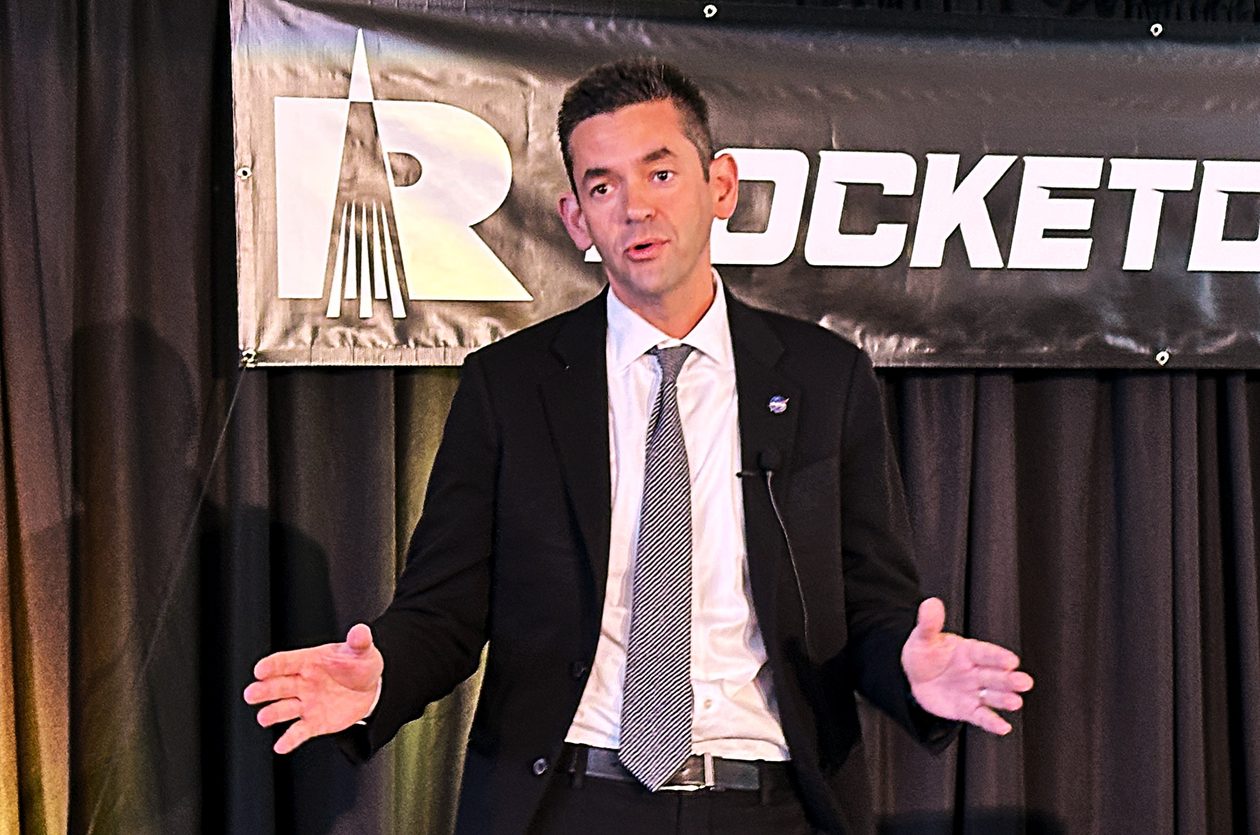
REDMOND, Wash. — NASA Administrator Jared Isaacman came to Rocketdyne’s facility here today to give a pep talk to the space company’s employees — and lay out his vision for the future of America’s space effort.
Isaacman made clear that nuclear power will be a big part of that vision.
“NASA is at our best when we’re doing the near-impossible,” he said. “There is no obvious revenue model or business case for what we’re doing. We’re just out there pursuing the secrets of the universe, and nuclear or fission-powered spacecraft make sense in that it helps us extend our reach farther into the solar system.”
The pathfinder mission for NASA’s nuclear ambitions is likely to be SR-1 Freedom, a Mars probe that’s scheduled for launch in 2028. SR-1 Freedom is designed to carry a fission reactor and nuclear electric propulsion system.
Rocketdyne’s Redmond facility is working on thrusters for the system. “We built here, in Redmond, the Advanced Electric Propulsion System,” Rocketdyne CEO Kristin Houston told GeekWire before Isaacman’s talk. “It’s a 12-kilowatt Hall-thruster system, and that is going to be the propulsion element on the SR-1 Freedom. So, yeah, we’re really proud of that.”
Today’s visit was part of the Pacific Northwest leg of Isaacman’s nationwide “Inspiration Tour,” aimed at strengthening the connections between NASA and its partners. A similar tour in August brought Isaacman to Idaho National Laboratory, which will play a key role in providing the 20-kilowatt reactor for SR-1 Freedom.

In partnership with the U.S. Department of Energy, NASA is also looking into the prospects for putting a nuclear reactor on the lunar surface by 2030 as part of its Moon Base initiative. Houston said Rocketdyne is interested in playing a part in that program.
“That’s not as much out of the Redmond site, but as Rocketdyne, we’re doing a lot of investment in the power conversion and the power management and distribution design that could be used for that,” she said.
Over the course of nearly 60 years, Rocketdyne’s Redmond site has played a role in nearly every interplanetary NASA mission — and has gone through several ownership changes along the way. The company’s latest transition, including its rebranding as Rocketdyne, became official last month after AE Industrial Partners acquired a majority stake from L3Harris.
Nowadays, Rocketdyne is arguably best-known as one of the commercial partners in NASA’s Artemis moon program. “We have 21 engines on the Orion spacecraft,” Houston said. “That’s between the crew module and the service module … all built in Redmond.”
The Redmond facility oversees the refurbishment of space shuttle engines for upcoming Artemis missions and is redesigning the spacecraft’s Orion Main Engine for missions starting with Artemis 7. “Our in-space propulsion business, really based here, has the lead on the entire OME program,” Houston said. “So we’re already concurrently doing the design and test of the new engine while doing all the refurbishment.”
Isaacman said the Artemis program is one of NASA’s top priorities, in part due to geopolitical competition. The current schedule targets a crewed lunar landing in early 2028, followed by initial work on a permanent base near the moon’s south pole later that year.
“NASA is very hot,” he said. “But NASA is hot right now because we are in a great-power competition. That’s across AI, energy and infrastructure, and everything you can imagine militarily, but certainly in the domain of space. We cannot take our foot off the gas. Really, if we miss our time by a matter of months, there are only so many good parking spots in the south pole of the moon, where we want to build our moon base. Well, the Chinese want to build their moon base there, too.”
NASA is relying on Rocketdyne and other commercial partners to set a fast pace.
“For all the great companies, the partners that are contributing to our near-impossible objectives, now is absolutely the time,” Isaacman said. “Just as so many of you were probably inspired by the space race in the 1960s and what we accomplished — all those books and movies that came from it — you’re now contributing to that.”
One of the VIPs in the audience, Redmond Mayor Angela Birney, said she was energized by Isaacman’s visit. “I am so excited that Rocketdyne is on the forefront of missions in space,” she said. “For me, as a former science teacher and someone who’s so interested in encouraging innovation and development, this just feels like a fantastic day to celebrate all of that.”
Rocketdyne wasn’t Isaacman’s only scheduled stop on this week’s tour. Earlier in the week, the administrator and other federal officials paid a visit to Lawrence Livermore National Laboratory and the Castle Air Museum in California’s Central Valley. Today’s Redmond visit fell between stops at United Precision Corp.’s headquarters in Washougal, Wash., and at Boeing’s Everett facility. Stoke Space is on the agenda for Friday.
After his talk, Isaacman told GeekWire that Washington state is home to a “lot of industry” that’s contributing to America’s space effort.
“It takes contributions from great talent all across the nation to contribute to our world-changing efforts,” he said, “but it just happens to be that a lot of it is here in Washington.”

Apple’s “Surprise and Shine” event is days away, and there are plenty of rumors swirling about new devices we can expect, like a new Apple Watch and the first foldable iPhone, which could be called the iPhone Ultra.
When we asked CNET readers one thing they’d change about the iPhone in our Big Guessing Game, 16% said they want it to cost less. But that’s not happening. In fact, you should expect new models to cost significantly more.
TrendForce, a global market research firm, released a report on Thursday suggesting you can expect higher prices instead of steep discounts. The firm expects the iPhone 18 series to cost 10 to 20% more due to the ongoing RAM shortage and higher hardware costs.
“For the 256GB Pro model, memory costs in [the third quarter of 2026] are expected to be nearly 400% higher than a year earlier,” TrendForce said. “Despite Apple’s efforts to negotiate lower prices for other components, these savings are unlikely to offset the resulting pressure on overall [materials] costs.”
Apple raised prices on select products in June due to the RAM shortage, but excluded iPhones from the price hikes. Now there’s a chance that Apple could release some iPhone 18 models with higher prices at the September event. TrendForce said it expects Apple to absorb some of the costs to keep prices for the new models as part of a “relatively moderate” pricing strategy.
So exactly how much more are we talking about? Some analysts believe the foldable iPhone Ultra could cost between $2,000 and $2,500. TrendForce predicts the starting price will be slightly higher — between $2,099 and $2,299. The phone could go up to $3,000. TrendForce didn’t immediately respond to a request for further comment.
But higher costs aren’t equivalent to big improvements.
TrendForce says we shouldn’t expect major performance upgrades from Apple’s upcoming iPhone lineup. Instead, we should expect a more powerful processor for AI features and power efficiency, better chip cooling technology and power-efficient displays. And the iPhone 18 Pro models’ main camera could have a “mechanical variable aperture” to improve depth-of-field control and dynamic range for different lighting settings.
The really big upgrade is the potential release of the folding iPhone Ultra and bigger batteries for premium iPhone 18 models, TrendForce predicts. The iPhone 18 Pro Max could see the biggest upgrade due to a larger chassis. CNET’s Patrick Holland tested smartphone batteries last year and found that the iPhone 17 Pro Max was the best for battery life, so iPhone 18’s premium models could be an even bigger upgrade from the current model.


First look: Range Rover has introduced its first all-electric model, putting an 800-volt battery system and dual-motor drivetrain into its flagship SUV. It marks a major technical step for Jaguar Land Rover, combining fast-charging hardware, a large battery pack, and software-controlled off-road systems in a vehicle designed to preserve the Range Rover’s established identity.
The 2027 Range Rover Electric will be built at Jaguar Land Rover’s Solihull plant in England. It uses a 118.5-kWh battery pack, two electric motors, and a claimed EPA range of at least 333 miles. JLR says the SUV can charge at up to 350 kW, adding about 125 miles of range in 10 minutes. A 10% to 80% charge is expected to take 22 minutes.
The vehicle arrives about a year later than originally planned. It also comes as JLR works through supply-chain issues, lower profits, a restructuring program, and the aftermath of a cyberattack that halted production for more than a month last year.
JLR has upgraded its manufacturing operations in the West Midlands for EV production. The company said it has trained roughly 9,000 employees at Solihull for electrification work, along with another 1,500 workers elsewhere in the region. Its Electric Propulsion Manufacturing Centre in Wolverhampton is producing battery packs and electric drive units alongside internal-combustion engines.

The Range Rover Electric is based on JLR’s MLA platform, which was designed to support combustion, hybrid, and battery-electric powertrains. The electric version largely retains the shape of the current Range Rover. It has a revised grille, aero-focused wheels, and a flat underbody, but otherwise looks much like the gasoline and plug-in hybrid models.
Its front and rear motors are identical permanent-magnet synchronous units, each rated at 349 horsepower. Together, they produce 542 horsepower and 627 pound-feet of torque. JLR said the motors are 24% more efficient than those used in the Jaguar I-Pace.
The powertrain uses silicon-carbide inverters that can switch in less than a millisecond. Each motor contains 144 copper hairpin windings, with 0.2-millimeter laminations and a 0.7-millimeter gap between the rotor and stator. The power electronics are mounted in the space normally occupied by the transmission tunnel.
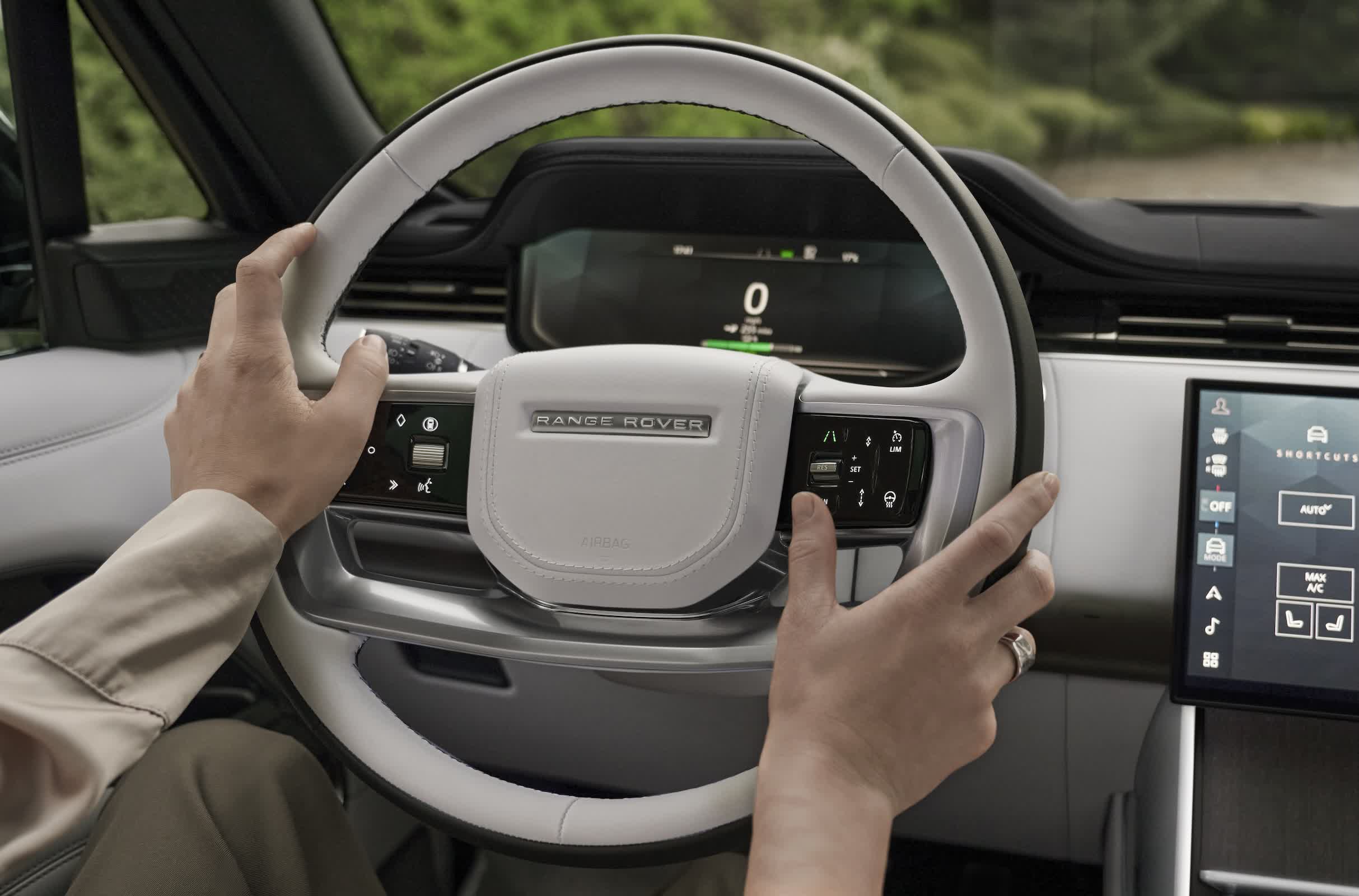
AESC supplies the battery cells, which use nickel-manganese-cobalt chemistry. The pack contains 10 modules arranged in a double-stack configuration. JLR said aerogel spacers help manage heat between the cells. Its ThermAssist system recovers waste heat from the powertrain. The company said the system can increase range by 7% and reduce cabin-heating energy use by 40%.
US-market vehicles will include a NACS charging port, Tesla Supercharger access, and ISO 15118 plug-and-charge capability. The SUV can also provide up to 3.6 kW of AC electricity through vehicle-to-load capability. JLR plans to add vehicle-to-grid support later.
The battery adds weight and also changes the SUV’s handling. The electric Range Rover is only 165 pounds heavier than the V8 version because it eliminates components including the front, center, and rear differentials and their driveshafts. The battery lowers the center of gravity by 3.4 inches, while its aluminum frame increases chassis stiffness by 56%, according to JLR.
Range Rover expects the electric SUV to reach 60 mph in 4.3 seconds. It has air suspension, twin-valve dampers, and rear-wheel steering that turns the rear wheels by up to 7.3 degrees. The vehicle weighs 6,195 pounds. One-pedal driving is optional, with regenerative braking of up to 0.2 G.
JLR says the electric model is 7 decibels quieter than the V8. Engineers added isolation around the front drive unit and addressed noise transmitted into the cabin through high-voltage cables. An active noise-cancellation system uses thin membrane speakers developed with Warwick Audio and installed in the headrests.
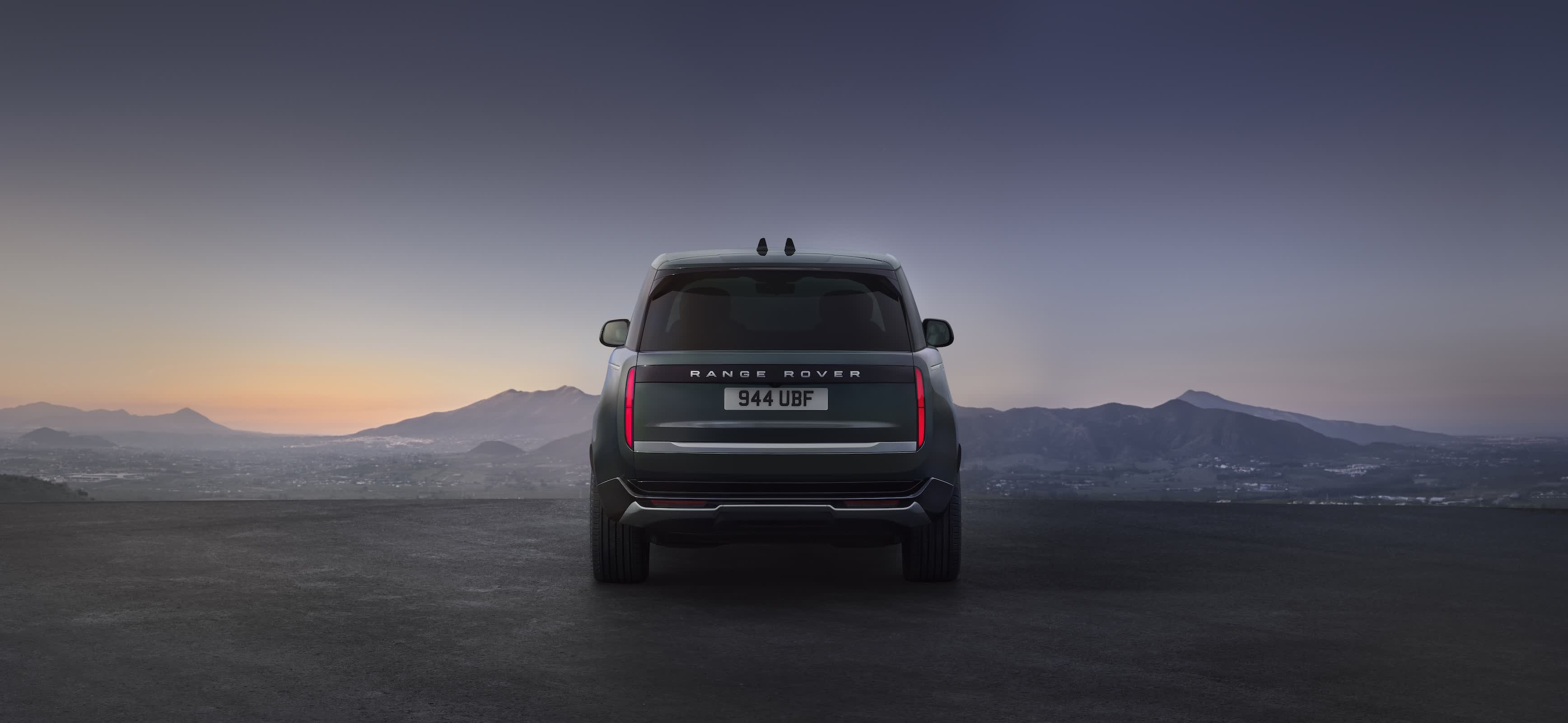
The electric Range Rover is designed to retain much of the off-road capability of its combustion-powered counterpart. Ground clearance is up to 10.3 inches, slightly less than the V8 model because of the rear drive unit. It can wade through up to 36 inches of water.
Instead of mechanical locking differentials, the electric model uses software-based torque management to control traction at the front and rear axles. JLR said the system can adjust power delivery based on available grip.
JLR said 80,000 people have registered their interest in the vehicle. About half are in North America, and 70% are new to the brand.

Best Sony Headphones 2026: Our favourite Sony headphones

Groomer EXPOSED On Financial Audit

Horoscope today: Your daily guide for Friday, September 4, 2026





-

 Fashion6 days ago
Weekend Open Thread: Maeve – Corporette.com
-

 Crypto World1 day ago
CLARITY Act could advance within weeks, Atkins says
-

 Business6 days ago
Onto Innovation Stock: AI’s Next Bottleneck Is Yield (NYSE:ONTO)
-

 Crypto World6 days ago
Bitcoin price tests $82K resistance as Brandt stays long
-
 Tech5 days ago
Hugging Face built a $4.5 billion empire on free AI models. Now Nvidia is buying it for $12.9 billion
-

 Business7 days ago
iPhone 18 Pro Pre-Orders Could Shift to Saturday as Apple Reportedly Avoids September 11 Anniversary
-

 Crypto World2 days ago
Elon Musk Says Grok 4.7 Lands in 10 Days and Will Beat Every Model
-
 Entertainment7 days ago
‘Adults’ Creators Break Down Season 2’s Most Shocking Moments and Tease a Potential Season 3
-

 News Videos5 days ago
Charlie Munger on Robinhood: No one should believe that Robinhood’s trades are free
-

 Tech6 days ago
PaperCut releases second emergency patch for exploited flaws
-

 Crypto World2 days ago
Bitcoin slips below $77.5K as macro pressure offsets ETF inflows
-

 Crypto World1 day ago
Kalshi seeks CFTC approval for WTI perpetual
-

 Tech5 days ago
Tamagotchi Ring Takes the 30-Year Digital Pet and Places it on Your Finger
-

 Tech5 days ago
As the influencer economy drives retail sales, Seattle startup raises $22M to play matchmaker
-

 News Videos5 days ago
News kii Crypto ugu danbeeyey & Suuqa oo dhaqaaqey
-
 Entertainment4 days ago
Taylor Swift Reportedly ‘Frustrated’ With Travis Kelce After ‘Short’ Honeymoon
-
 Business2 days ago
Oil Price Today (September 2): Crude oil nears $97 as war tensions escalate. Will it hit $100 again?
-

 Business6 days ago
Apple Confirms September 9 iPhone Launch Event as Tim Cook Prepares to Hand CEO Reins to John Ternus
-
 NewsBeat5 days ago
Trump posts AI video of ‘Lake America’ being protected by an army of bequiffed ‘Donald Ducks’
-
 Entertainment6 days ago
Kendall Jenner’s Circle Concerned About Jacob Elordi Romance
You must be logged in to post a comment Login