

Tech
What to Do in Houston If You’re Here for Business (2026)

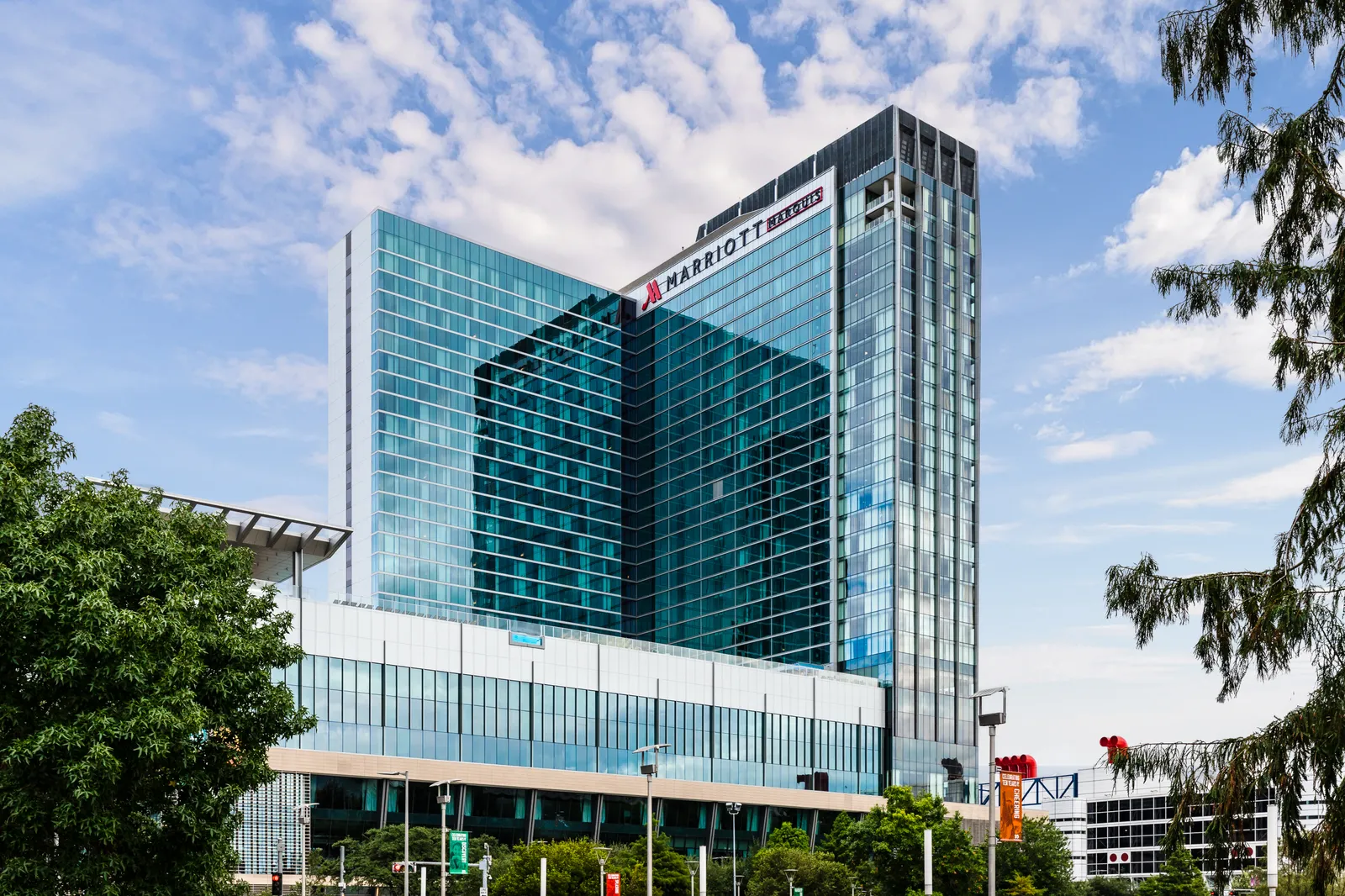

Houston, TX, USA – September 10, 2018: The Marriott Marquis is a Four Diamond hotel located in downtown Houston and features a Texas shaped pool, five restaurants and beautiful views from all angles.Joe Hendrickson
1777 Walker St., (713) 654-1777
Adjacent to the George R. Brown Convention Center downtown, the Marriott Marquis has another 100,000 square feet of meeting space of its own, including Houston’s largest ballroom. Often mentioned as the top hotel in town, it caters to business travelers and pleasure seekers alike, famously featuring the world’s largest Texas-shaped lazy river on its roof. If you don’t think that’s something anyone would brag about then you haven’t spent enough time in the state.
1100 Texas Ave., (713) 221-0011
A more affordable lodging option located in what was formerly Shell Oil’s headquarters, this refurbished downtown hotel offers quick access to the convention center and Daikin Park, which the Astros call home. You may not be able to paddle around in the rooftop plunge pool like you would at the Marquis, but a quick, cooling dip at the end of the day will not disappoint, nor will the free cookies at bedtime.

Courtesy of Bunkhouse Hotels
4110 Loretto Dr., (832) 844-0057
This new, midcentury-inspired gem can be found in the Montrose neighborhood, a block away from the Menil Collection, arguably the best and most eclectic museum in town. The boutique property includes just 71 rooms and is designed to fit in with its surroundings, which are largely residential and very subdued in comparison to the more raucous downtown. Despite its small size, it still has room for a small event space, private pool, and a slick lobby lounge.
111 N Post Oak Ln., (713) 680-2626
The Houstonian occupies a massive 27 acres in Houston’s West Oaks district, just outside the Loop. Despite its central location, the hotel offers a level of seclusion you won’t find anywhere else in town. It’s probably why George H. W. Bush used the hotel as his official residence for years in the 1980s and spent time here for decades after. The 125,000-square-foot spa is also the largest in the state.
2222 W Loop S, (713) 627-7600
Another Galleria-area hotel, this is an all-around good option for business travelers who need executive-focused amenities like 24-hour business and fitness center access, shuttle service, and meeting and event space (all 50,000 square feet of it). With 485 guest rooms on its 23 floors, there’s probably space for your whole organization to find a berth for the week.
Where to Work
Houston has hundreds of coworking spaces, so chances are you’ll be able to find something close to where you’re staying. As with most things in this city, travel time is an essential consideration. These picks may be some of the best options in town, but no sane Houstonian would recommend you spend an hour in traffic to get to one of them if another solid option is closer.

Courtesy of POST
401 Franklin St., (713) 999-2550
Named for the former post office that used to occupy this Museum District space (it was a railroad depot before that), POST was redeveloped in 2019 as a cultural center that includes food-hall-style dining, an art museum, a concert hall, and a rooftop garden. It’s also got loads of workspace options ranging from single desks to full offices, with day passes starting at $25.
4201 Main St.
Rice University helped to develop the Ion District, which occupies 16 acres in Midtown and serves as a technology park and innovation center for tech and energy outfits, and now includes the largest climate and sustainable energy incubator in the country. Coworking passes (starting at $60/day) get you access to the venue’s copious networking events plus snacks and coffee.
1430 Yale St., (832) 203-5115
This boutique office space is ideal for those doing business in the Heights, with amenities including an on-site notary, conference room rentals, and virtual office options for those who need a physical address in town. Plenty of usage options are available from $25 day passes to $359 monthly memberships (which include free conference room access).
Where to Get Coffee
Yes, there are nearly 200 Starbucks in the greater Houston area, and while you’re welcome to visit them or any other corporate chain for your pick-me-up, these spots offer a more refined (and independent) experience that, if nothing else, will help you impress your business colleagues with your sophisticated palate.
3201 Allen Pkwy. Ste. 170
8410 Hwy. 90 ALT, Bldg. B, Sugar Land, (346) 368-2895
Blendin focuses on sourcing coffee from unique locations with a “tree to cup” philosophy, which means your cup (or bag of beans) is likely to hail from a single farm in Panama, Ethiopia, Burundi, or somewhere further afield. Put yourself in the hands of the barista at one of the two locations to help you find the perfect base for your latte.
1018 Westheimer Rd.
At this beloved local coffee shop with a full menu, you’re best off pairing your Vietnamese matcha or Golden Monkey tea with a hearty brunch, like a smoked salmon scramble or scratch biscuits topped with smoked ham. Skip lunch to make room.

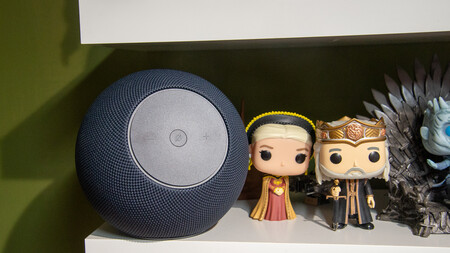
The Echo Studio houses immersive audio, Alexa support and clever sensors for smart home controls, all for an affordable price.
Pick up the Echo Studio for just £166.24 this Prime Day and save over £53 off its usual price. That’s the lowest we’ve seen the smart speaker reach on Amazon since its launch last year.
The Echo Studio is down to its lowest ever price
The Echo Studio houses immersive audio, Alexa support and clever sensors for smart home controls, all for an affordable price.
The Echo Studio is a well-rounded smart speaker that’s designed for use with Alexa+. Once you opt into the service, Alexa+ promises to be a more conversational assistant than the standard Alexa, allowing you to chat naturally between different topics and requests. In fact, we hailed the service as being “light years ahead of the competition” as it’s better at general responses, building smart home routines and able to find information from emails.
The light ring will illuminate once Alexa has heard that all-important wake word, giving you an indication that it’s ready and waiting to answer your question.
Otherwise, the Echo Studio itself is equipped with three 1.5-inch drivers and a 3.75-inch high excursion woofer. What that means is real-world use is that the device is a very competent-sounding speaker for its price. While bass levels aren’t quite as room-shaking as other speakers, overall low frequencies are handled well while sound is well-balanced.
Its design doesn’t stray too far from its predecessors, though now it includes easier-to-operate buttons than the previous Studio iteration, and rids itself of the action button too. That means you’ll have to either actually say “Alexa” to get its attention.
Overall we awarded the Echo Studio with a four-star rating, as Home Technology Editor Dave Ludlow concluded the smart speaker is a “powerful, all-rounder for the voice assistant [Alexa], music and entertainment”.
Whether you’re keen to try Alexa+, want an easy way to control your smart home appliances or need to upgrade an old smart speaker, the Echo Studio is a brilliant option. Not only is Alexa easily one of the best voice assistants around, but its sleek design and brilliant speaker set-up makes it a solid investment.


Netflix is changing how user identities work on its platform, and for many subscribers, the move is showing up in the form of unexpected login prompts and extra steps at sign-in. The company has begun requiring almost every profile on an account to be tied to a unique email address,…
Read Entire Article
Source link
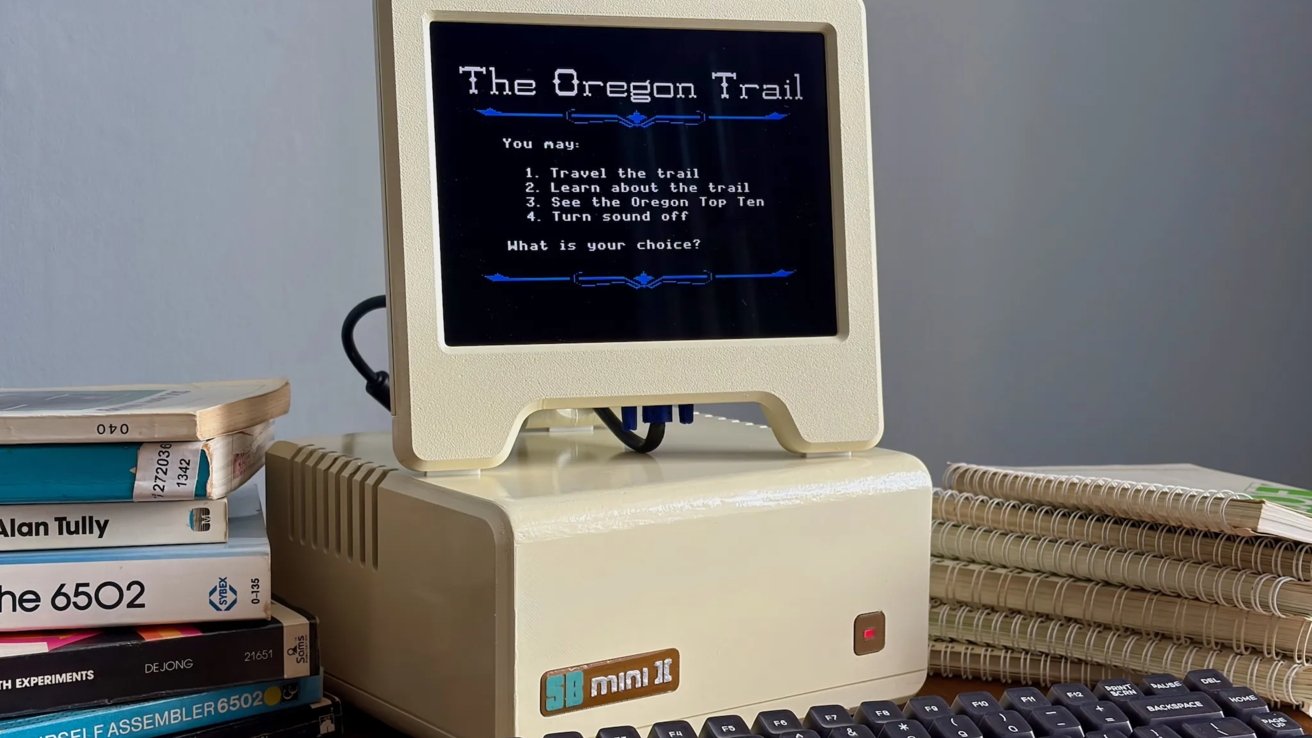
A project has cloned the Apple II Plus, but instead of using emulation, it goes the harder route by rebuilding Apple’s classic computer in hardware.
If someone wants to get the experience of using Apple’s vintage products, they often turn to a software emulator. However, as one project proves, it’s possible to get the same effect by focusing on the hardware side.
Posted on Sunday by Simon Boak, the SB Mini II is referred to as a “Homebrew Apple II Clone.” It is a rebuild of the Apple II Plus from a hardware standpoint, but using modern components.
Boak saw that most of the basic logic chips are still available to consumers, including the 6502 CPU. That, combined with circuit diagrams in the original manual and a library of books on the topic, helped Boak come up with a gameplan and a shopping list of parts.
A modern(ized) marvel
The clone does use modernized alternatives compared to the original design, mostly due to advancements in technology.
A key one is the replacement of the dynamic RAM (DRAM) used in the original Apple II. While the original kept to DRAM to save on cost, Static RAM or SRAM is also cheap enough for the project.
As a result, one and a half 32K SRAM chips are used to get the required 48k the Apple II Plus needs. The change also means there was no need to use circuitry to refresh the DRAM, which allowed the memory to function.
Boak remarks that a lot of the original circuit generated a composite video signal. Instead, using an Apple II VGA card, he was able to get a sharper video output, as well as removing the video generation logic from the circuitry.
In effect, it is a “headless” clone if it is used without the VGA card.
This also helped simplify the clock and timing signals as well. In this project, Boak uses a 4.096 MHz crystal oscillator, divided down to 1.024MHz, which is close to the 1.023MHZ of the original machine.
A Raspberry Pi Pico, which in itself is more powerful than the Apple II Plus, is used as a way to connect a USB keyboard to the Apple II. The Pico does generate the same parallel data signals as the original keyboard, as well as eliminating the need to use voltage level shifters.
Smart case
The project was finished off by being placed in a specially created case, which was 3D printed in parts before being glued and painted together. Those part files have since been released via GitHub.
It’s based on the design of the Apple ProFile hard drive. However, there are extra vents and a rear panel added so that connections could be accessed.
Just as the original was designed for easy access to the internals, the enclosure’s lid clips shut, so it can be opened without tools.
To go with the clone, Boak has also designed a matching Studio II LCD monitor.
This is far from Boak’s first attempt at making clones of Apple products. In June 2024, he created an Apple 1 clone with a printer, which used an SD card for storage.
The Apple II Plus recreation is certainly impressive, since it’s a hardware recreation instead of just using an emulator. But sometimes, even those efforts can be just as astounding.
In 2024, a Hackintosh project aimed to recreate the original Macintosh Plus, using modern components internally. However, the effort used 3D printing to produce a highly-accurate full-scale recreation of Apple’s hardware.

The European Space Agency’s (ESA) Euclid space telescope has captured the largest and most detailed visible-light image ever obtained of the Milky Way’s galactic bulge, the central region of our galaxy.
The image is a mosaic containing more than 60 million stars, as well as nebulae and star clusters. It will allow scientists to confirm the possible presence of exoplanets using a microlensing technique and measure their masses with greater precision.
The Power of Euclid
Although Euclid was designed to observe billions of distant galaxies, its visible-light camera is sensitive enough to resolve individual stars at the center of the Milky Way—a region that is both extremely bright and densely populated—without being overwhelmed by the intense light.
On March 23, 2025, Euclid turned its gaze toward the galactic bulge, capturing this enormous image in just 26 hours of observations. The result was remarkable: a mosaic composed of nine separate “pointings” (exposures) by its visible-light camera, each covering an area of sky larger than the full moon.
While the quality of Euclid’s visible-light images is comparable to that of the Hubble Space Telescope, there is one major difference: Each pointing that Euclid captures in just a few hours covers an area 270 times larger than Hubble’s field of view. It is also much faster. To put this into perspective, the Keck Observatory would require roughly 2,000 hours to observe the same mosaic.
The Image of the Milky Way
The new Euclid image captures more than 60 million stars, along with nebulae and star clusters, in one of the Milky Way’s most crowded regions—a location ideally suited for searching for exoplanets through gravitational microlensing.
“To catch microlensing, you need to observe parts of the sky that are crowded with stars, such as close to the centre of our galaxy,” said Jean-Philippe Beaulieu, who led the observing campaign, in a press release. “During the last 20 years, almost 300 exoplanets have been discovered using this technique, all with ground-based telescopes and all towards the center of our galaxy. This image from Euclid includes 51 known planetary systems—and it will assist in studying many more that will be found.”
Measuring Planetary Masses
Although detecting a microlensing event requires several weeks of observations—meaning Euclid could not identify any new events during its relatively short observational campaign—what makes this image so valuable is that it provides the data needed to measure the masses of already known planets, as well as planets that have yet to be discovered.
“In 24 hours, Euclid has already captured the stars involved in all the future microlensing events that the Roman space telescope will detect, but before the stars and planets involved have aligned,” said Natalia Rektsini, who led the publication of the data, in a press release. (The Nancy Grace Roman space telescope is slated to launch later this year.) “This means that anyone who detects a microlensing event in the same region, for example with Roman, will be able from now on to use Euclid data as a time reference in the past and see how the stars looked before they overlapped.”
In effect, Euclid’s observations will serve as a reference archive for future missions, enabling more detailed studies of exoplanets and more precise measurements of their masses.
“In just 24 hours, Euclid has delivered unique data on the Milky Way’s center, with a large and sharp view of this region,” said Valeria Pettorino, ESA’s Euclid project scientist, in a press release. “This data can also be used for other scientific applications, from brown dwarfs and binary stars to stellar motions and dust across our galaxy.”
This story originally appeared on WIRED Italia and has been translated from Italian.
Tech
Sony is deleting 551 movies and TV shows you bought on PlayStation, because you don't really own your digital purchases


Sony has confirmed that it will remove 551 movies and TV series from the PlayStation Store in the UK on September 1, 2026. The content will also be simultaneously deleted from customers’ libraries who have already purchased it. Sony did not mention anything about refunds, suggesting affected users will not be compensated financially.
Read Entire Article
Source link

Get caught up on the latest technology and startup news from the past week. Here are the most popular stories on GeekWire for the week of June 21, 2026.
Sign up to receive these updates every Sunday in your inbox by subscribing to our GeekWire Weekly email newsletter.
Most popular stories on GeekWire

Tech Moves: Microsoft names exec; Remitly CPO/CTO departs; AWS veteran to head Synthesia in Seattle
Microsoft names chief digital safety officer; Remitly’s chief product and technology officer departs; and an AWS leader joins Synthesia to oversee its new Seattle office. … Read More

Moment of ‘Zen’: Another billionaire’s superyacht turns heads in Seattle
“Zen,” a $200 million, 289-foot yacht reportedly owned by Chinese billionaire Wu Guangming, motored smoothly through the Ballard Locks and out to Puget Sound, drawing onlookers along the railings of the popular Seattle destination. … Read More

After hiring AWS exec and raising $107M seed round, Virginia startup plants flag in Seattle area
Virginia-based AI startup Trase is expanding its presence in the Seattle region, with plans to grow from about 20 employees in the area today to as many as 100 in the coming months. … Read More

Surprise: Valve’s new Steam Machine is here, but the price is the real shocker
Valve Software abruptly opened reservations for its latest Steam Machine on Monday, but due to the ongoing PC component shortage, did so at a significantly higher price than expected. … Read More

Building a ‘digital twin’ 10,000 feet underground: PNNL, Nvidia and Fervo team up on geothermal AI
As tech giants hunt for massive amounts of clean electricity, PNNL, Nvidia and Fervo Energy are partnering to develop a new public tool that aims to eliminate the guesswork of drilling into the Earth’s molten depths. … Read More

Microsoft’s next big thing for the cloud: an agent that keeps its cool when everything falls apart
Microsoft is promising relief to engineers who get woken up at 3 a.m. … Read More

This 3-foot-tall robot wants to be your kid’s classroom buddy and your mom’s new friend
Mind Children Robotics, a Seattle-area startup co-founded by AGI researcher Ben Goertzel, is building Codey — a child-sized social robot priced under $10,000 and aimed at classrooms, hospitals and senior care. … Read More

Amazon MGM Studios drops film about Sam Altman months after tech giant’s $50B OpenAI deal
Amazon MGM Studios has backed away from “Artificial,” a nearly finished film about OpenAI CEO Sam Altman. … Read More

‘Digit’ maker Agility Robotics to go public in $2.5B deal — here’s what the filings say about its finances
Salem, Ore.-based Agility Robotics, whose two-legged Digit robots have been tested inside Amazon warehouses, is set to become the first publicly traded U.S. … Read More

Microsoft says its data centers use 90% less water than its earliest facilities as public concern grows
Microsoft cuts data center water intensity by 90% and hits a major replenishment milestone as tech giants face growing public backlash over resource consumption. … Read More
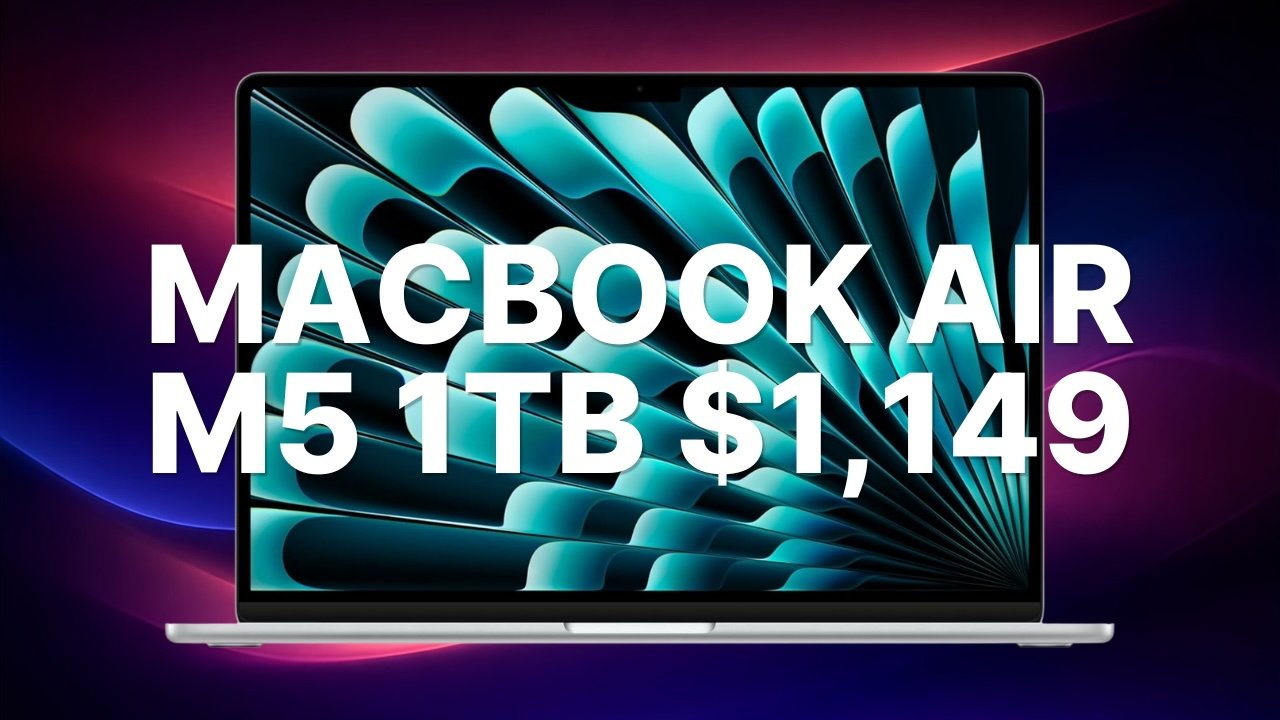
Two of Amazon’s top Prime Day MacBook Air deals have been extended, resulting in discounts of up to $450 off.
After many M5 MacBook Air deals sold out during Prime Day, two of the top choices at Amazon have been extended into the weekend. Save $450 on the 13-inch MacBook Air M5 with 16GB of RAM and 1TB of storage.
On sale for $1,149.99, only select colors are available at press time due to the increased demand after Apple raised prices on Thursday.
Buy 1TB 13″ MacBook Air for $1,149.99
Need additional screen real estate? The standard 15-inch MacBook Air with Apple’s M5 chip, 16GB of memory, and a 512GB SSD is also marked down to $1,149.99, reflecting a $350 price cut off Apple’s new MSRP.
Prime Day MacBook Air deals have been extended
You can compare prices across retailers in our MacBook Air Price Guide for offers on CTO models as well.
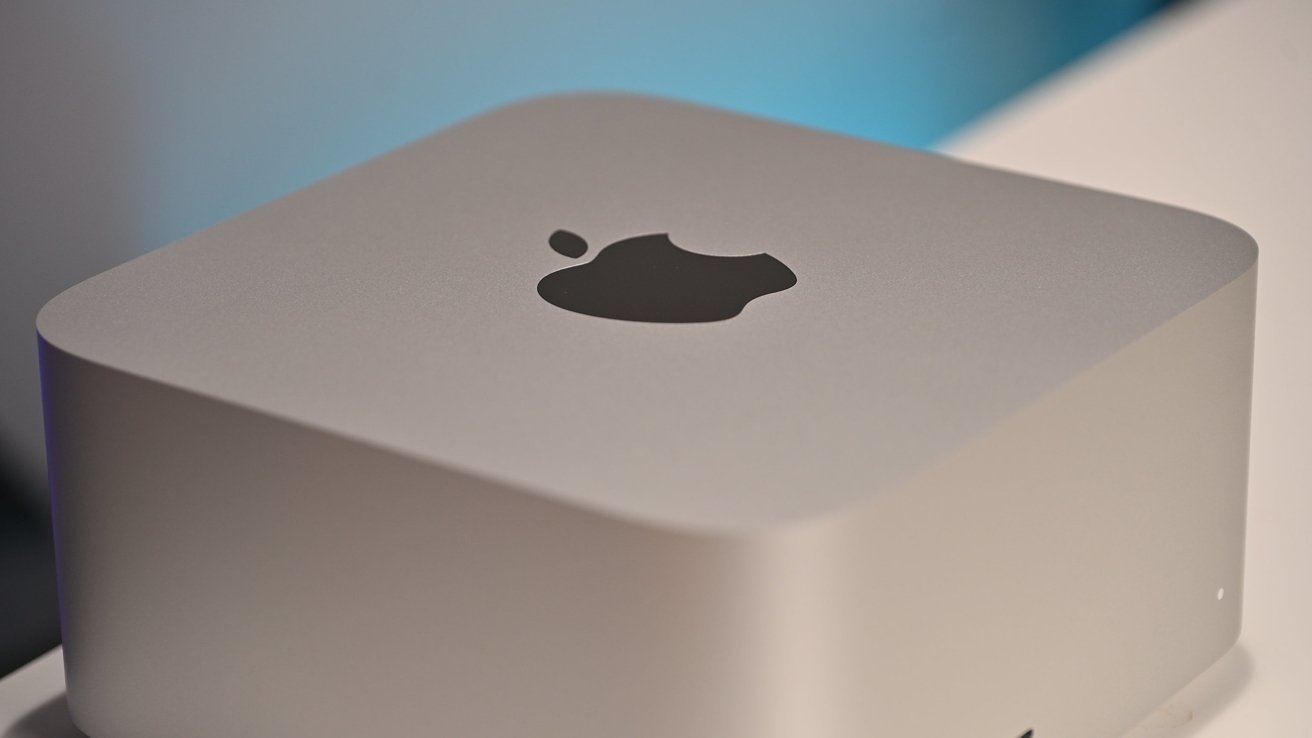
Apple is still expected to update the Mac Studio with the M5 Ultra in 2026 and an M7 Ultra version in 2028, but don’t expect major changes to the form.
The Apple Silicon chip series consists of four tiers, with the standard base model, Pro, and Max variants appearing in every generation. The fourth, the Ultra chip, hasn’t seen a release since the M3 Ultra, with the M4 Ultra skipped entirely.
The Mac Studio is the model of Mac to get if you want the massive number of cores that the Ultra model provides. If Mark Gurman’s “Power On” newsletter for Bloomberg on Sunday is accurate, you won’t have to wait long for the next release.
Gurman writes that there are two updates to the Mac Studio on the way. The near-term model will be the M5 Ultra, which is due to arrive later in 2026.
The second update is further in the future, with an M7 Ultra expected sometime in 2028.
The lack of an M6 Ultra release seems to correlate with another Gurman story from June 25. One that has Apple skipping the higher-end M6 chips in favor of bringing out AI-oriented M7 Pro and Max versions in 2027.
A spec-bump update, again
As for what to expect when those Ultra-equipped models arrive, Gurman provides bad news if you want more than just performance improvements.
He is informed that internal changes have been made to the Mac Studio. Chiefly, this consists of a better heatsink, which will improve thermal performance under heavy loads.
A major redesign is not anticipated for the M5 Ultra model. As for the M7, there’s a slightly better chance, but Apple’s tendency to stick to model designs for long periods of time doesn’t bode well for a revamp.
One curiously absent element from the report is any mention of the M5 Max model. Gurman only talks about the Ultra, and doesn’t refer to any other versions of Mac Studio in the newsletter.
Previously, in March, he did refer to Mac Studio models in plural form for the 2026 launches. The lack of a Max reference in the latest report could simply be a decision made during the writing process, in that he didn’t feel the need to bring it up.
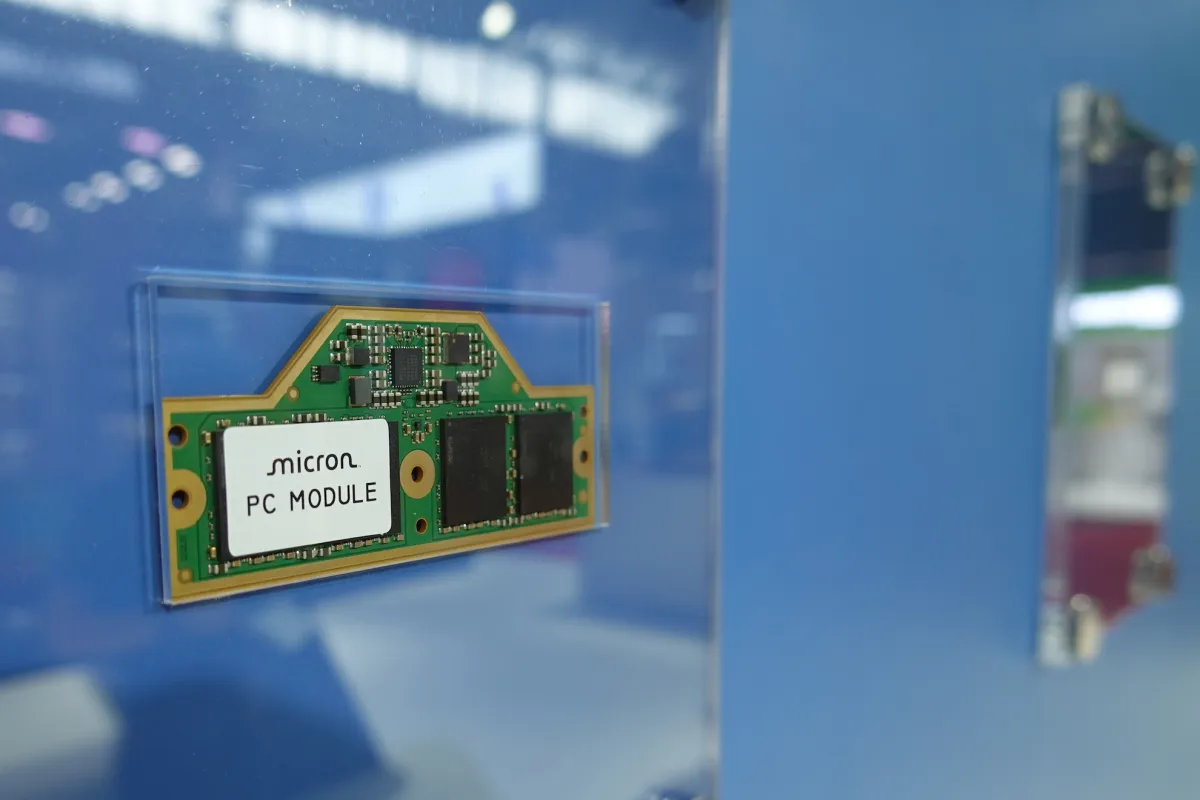
Micron, the Boise, Idaho-based memory chip maker, has captured Wall Street’s heart. Whether the love affair endures will heavily depend on how long the AI-driven supply crunch for memory chips lasts.
Micron promises that it has shored up its position for the long term, which would allow it to withstand a sudden drop in demand or overcapacity of supply. And Wall Street has become a believer, helping Micron briefly surpass the market valuation of Meta and Tesla for the first time on Thursday, though it floated back down by Friday to nearly match them.
Specifically Micron closed Friday’s trading with a market cap close to $1.27 trillion, while Meta was at $1.39 trillion and Tesla was at $1.42 trillion. Micron’s stock has soared over 236% in the past month alone, closing Friday at $1,132 a share. In comparison, it spent years upon years before mid-2025 at below $100 a share.
It’s a dizzying rise for a company that most consumers associated with the tiny memory cards that, back in the day, were commonly needed to boost PCs, smartphones, or other device storage.
Wall Street isn’t sweating over that product line. Micron is benefiting from the AI data center buildout boom that has created a shortage of system memory chips, both DRAM and NAND, which Micron makes, particularly High-Bandwidth Memory (HBM). A single AI server requires magnitudes more memory than a laptop.
AI system makers like Nvidia, as well as the hyperscalers building their own systems, are buying up large quantities of memory, such as Microsoft, Amazon AWS, Google, Meta and Oracle. This is forcing all the other companies who need memory to hoard it as well, from PC makers like Dell and HP, to other kinds of device makers.
This lack of supply, which has been dubbed RAMageddon, is predicted to persist into 2027. And it’s already driving up the price of consumer electronics like Apple products and Xbox consoles.
With the whole tech industry clamoring for more memory, Micron’s delivered blockbuster third-quarter earnings last week. Revenue quadrupled year-over-year to $41.45 billion, and profits skyrocketed from $1.88 billion to $28.2 billion over the same period. Micron also provided a positive outlook, forecasting fourth-quarter revenue of between $49 billion and $51 billion.
And Wall Street, which has been eager to find more public AI-related companies that may do as well as Nvidia, became even more enamored.
The historic problem for memory chip makers like Micron and Samsung is that building out manufacturing facilities to increase capacity is a time-consuming, expensive endeavor. And demand often falls just as companies can increase capacity, creating a glut and subsequent price drop.
Micron got ahead of any AI bust chatter by emphasizing a series of long-term supply agreements, including with Nvidia and AI lab Anthropic, that would presumably protect it. The company said in its earnings presentation that it has signed 16 strategic customer agreements across the data center, consumer, and auto market segments, which it expects to fundamentally transform its business model.
That seemed to convince a number of analysts that this company could be another long-term, profitable investment. In a research note, William Blair tech analyst Sebastien Naji noted demand growth continues to outpace the rate that new cleanroom space can come online.
“Given the strong likelihood of continued ASP growth in the coming quarters and improving revenue visibility thanks to a rapidly expanding set of long-term agreements (SCAs) with key customers, we see potential for more durable earnings growth and reiterate our Outperform rating,” Naji wrote.
Whether Micron really can sustain itself for long-term without a bust cycle remains to be seen. But for a brief moment on Thursday, this U.S. company was more valuable than some of the industry’s giants.
When you purchase through links in our articles, we may earn a small commission. This doesn’t affect our editorial independence.


Riot Games is changing how its Vanguard anti-cheat runs on PCs, pulling back from its always-on behavior and limiting when it’s active on players’ machines. With a new update, Vanguard will no longer automatically start when a PC boots – at least not for everyone. Instead, it can run only…
Read Entire Article
Source link

Amazon’s Echo Studio is down to its lowest ever price for Prime Day

Rescuers issue update on two casualties in plane that ditched into the sea off Wales

Spider-Man: Brand New Day Will Beat Supergirl In Only One Weekend


-
 Sports5 days ago
Two goals and an assist by sheer aura: Cristiano Ronaldo just entered the World Cup chat
-

 Tech6 days ago
Microsoft accidentally kills epic Outlook email threads
-

 Fashion2 days ago
Weekend Open Thread: Staud – Corporette.com
-

 Politics2 days ago
The House | Manchesterism won’t survive the painful trade-offs unless it gets citizens on board
-

 Politics3 days ago
Potential 2028er World Cup attendee leaderboard
-

 Business2 days ago
Asia stock markets slide as tech shares slump
-

 Tech3 days ago
A Look At A Gaggle Of Transputer Boards
-
Crypto World5 days ago
Bitcoin (BTC) Dips Below $62K, Ethereum (ETH) Plunges 6% Daily: Market Watch
-
 Crypto World3 days ago
Dell (DELL) Shares Tumble Over 5% Following Analyst Downgrade to Hold
-

 Crypto World4 days ago
Securitize Wraps Roubini's SEC-Registered ETF as Dubai VARA Digital Security
-
Business5 days ago
Entergy settles forward sale agreements, raises $672 million in cash proceeds
-

 Crypto World2 days ago
Kraken's xStocks Opens Bending Spoons IPO Registration to EEA Retail
-

 Sports2 days ago
FIH Pro League: India defeat Pakistan 7-1, register biggest win of campaign | Other Sports News
-

 Crypto World2 days ago
RTX holders must register wallets before token distribution begins
-
 Crypto World2 days ago
Hyperliquid Named on Singapore MAS Investor Alert Register
-

 Crypto World1 day ago
Coinbase, Circle Deepen Crypto Stock Losses Despite Resilient S&P 500
-

 Sports3 days ago
India vs Bangladesh LIVE Score, Women’s T20 World Cup: Bangladesh Opt To Bat; India Enter ‘Do-Or-Die’ Stage As Semi-Final Race Heats Up
-
Crypto World2 days ago
The DATA Foundation Launches to Tackle AI’s Multi-Billion Dollar Training Data Bottleneck
-

 Crypto World3 days ago
Strategy (MSTR) has a 10-month cash runway for dividends, but retail investors are losing faith
-

 Crypto World3 days ago
21Shares Cuts 2026 Crypto Forecasts as Institutional Demand Rises
You must be logged in to post a comment Login