Tech
Why Do Modern Cars Use Multiple Oxygen Sensors?


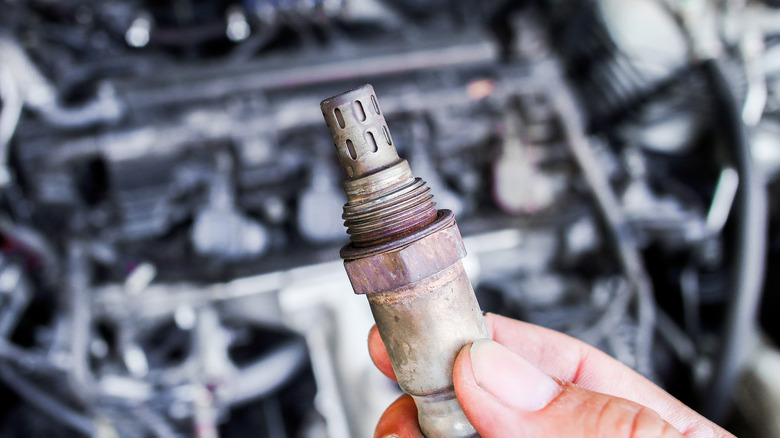
There are numerous sensors installed in your vehicle that measure conditions within the engine and exhaust system. Each sensor plays a role in monitoring a specific process. In the case of oxygen sensors (also known as O2 sensors), they detect how much oxygen is in the exhaust system. Modern vehicles generally have at least two oxygen sensors: one before the catalytic converter and one after. However, with many V6 and V8 engines, which have one exhaust manifold for each set of cylinders, you’ll likely see four oxygen sensors.
Measuring the level of oxygen in the exhaust system helps detect imbalances in the combustion mix and ensure a critical emissions reduction component is doing its job. For a combustion engine to run optimally, it needs the correct mix of air and fuel, which will differ depending on the type of fuel and what the engine’s intended for. Either way, the upstream oxygen sensor(s) before the catalytic converter will catch irregularities in this mixture, so that the vehicle’s ECU (engine control unit) can quickly make the necessary adjustments.
The downstream oxygen sensor(s) lie beyond the catalytic converter. Nearly every car is required to have a catalytic converter, which helps control vehicle emissions. Without that downstream oxygen sensor(s), it may not be clear if the catalytic converter is performing optimally or if there’s a problem.
Upstream and downstream oxygen sensors aren’t interchangeable
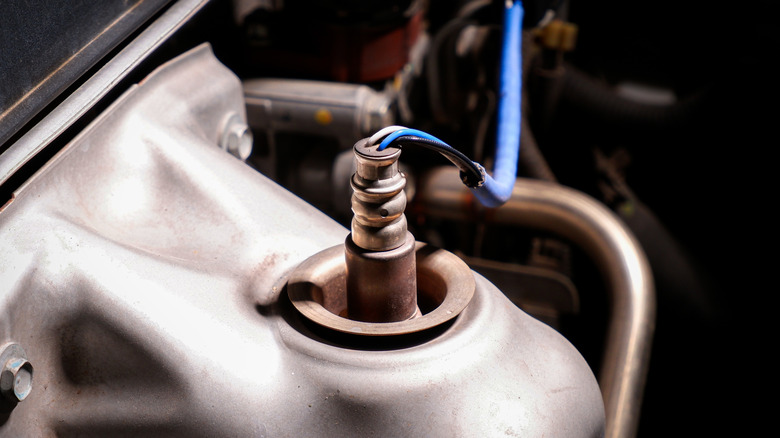
While upstream and downstream O2 sensors basically do the same thing, mixing them up will cause you problems. A downstream oxygen sensor emits a consistent voltage level to the ECU when the catalytic converter is working properly; it isn’t intended to feed the ECU varying voltage levels to help it adjust the fueling. Unlike the upstream sensor, which actively varies voltage to indicate whether your car is running lean or rich, the downstream oxygen sensor should be relatively unchanged in terms of output voltage.
So, if you accidentally install a downstream sensor in the place of an upstream, your ECU will get confused. The consistent voltage from a mistakenly installed downstream sensor will likely result in the car’s computer declaring it a failed sensor. This could also cause the vehicle’s computer to change the combustion mixture in an attempt to correct for the strange readings.
The combustion mixture is important to balance performance with fuel economy. Rich (more fuel and less oxygen) and lean (more oxygen and less fuel) mixtures negatively affect the engine and its emissions. If you run rich, your fuel economy may drop, and your car’s emissions can increase. The excess unburnt fuel may reach the catalytic converter, causing it to overheat and destroy the sensitive internals. Conversely, if you run too lean, you can get engine knock, which may damage it in the long run.
You must be logged in to post a comment Login