With the Earth’s atmosphere being effectively just a less dense fluid than the oceans around us, it’s reasonable to ask why we got wind turbines and wind mills quite literally everywhere across the globe to harvest the power in the wind, whereas ocean waves and currents aren’t being exploited quite as much. In a recent video by [Giordano Scarciotti] this issue with wave power is addressed, in particular the massive engineering challenges involved.
Internal view of the CorPower Ocean wave turbine buoy. (Credit: CorPower Ocean)
One of the main problems is simply one of cost, with wind energy having converged on a single design involving effectively the same three-bladed rotor, gondola and tower design that has been optimized for decades now. For wave energy there’s no such one-design-fits-all solution, with each attempted design having its own advantages and disadvantages that may prevent it from working in various sites, or incur high maintenance costs in the highly abusive marine environment.
Having more energy in waves than in wind is also both a benefit and a curse, as wave turbines have to work with the waves and not get demolished every time there’s a storm. Even wind turbines regularly fail in windy weather when e.g. the brakes fail, under conditions that would be considered mild in a marine context.
Also covered in the video is a new contender, in the form of CorPower Ocean’s new buoy-like design that bobs up and down on the surface. Here you need to carefully tune the turbine mechanism to work with the wave motion to extract the most energy. Their current design is be 19 meters tall, 9 meters wide and claimed to be capable of being installed in >40 meter deep water, producing power with a 40-60% capacity factor at 300 kW.
As yet another attempt at making wave energy turbines work, the most exciting aspect of it will be to see whether it can survive adverse weather, when careful tuning gets tossed out of the window and chaotic waves pummel what is essentially a very big hollow buoy. The single prototype has so far survived bad weather off the coast of Portugal during a year of testing, but the real test is long-term survival, as losing half your wave turbine farm to a really bad storm every five-odd years would quickly scuttle the project like it has previous commercial contesters.
Advertisement
Although not addressed in the video, the commercial challenge here is also not so much making the power generated over its lifetime (LCoE) economically attractive, but also its system integration cost in terms of required transmission lines, grid-level energy storage and backup power generators like baseload and standby power plants. Without equipping these wave power farms with grid-forming converters as TSOs are asking, dealing with reactive power to absorb and generate it, any resulting grid oscillations exacerbated by grid-following converters risk causing another expensive blackout as recently on the Iberian peninsula.
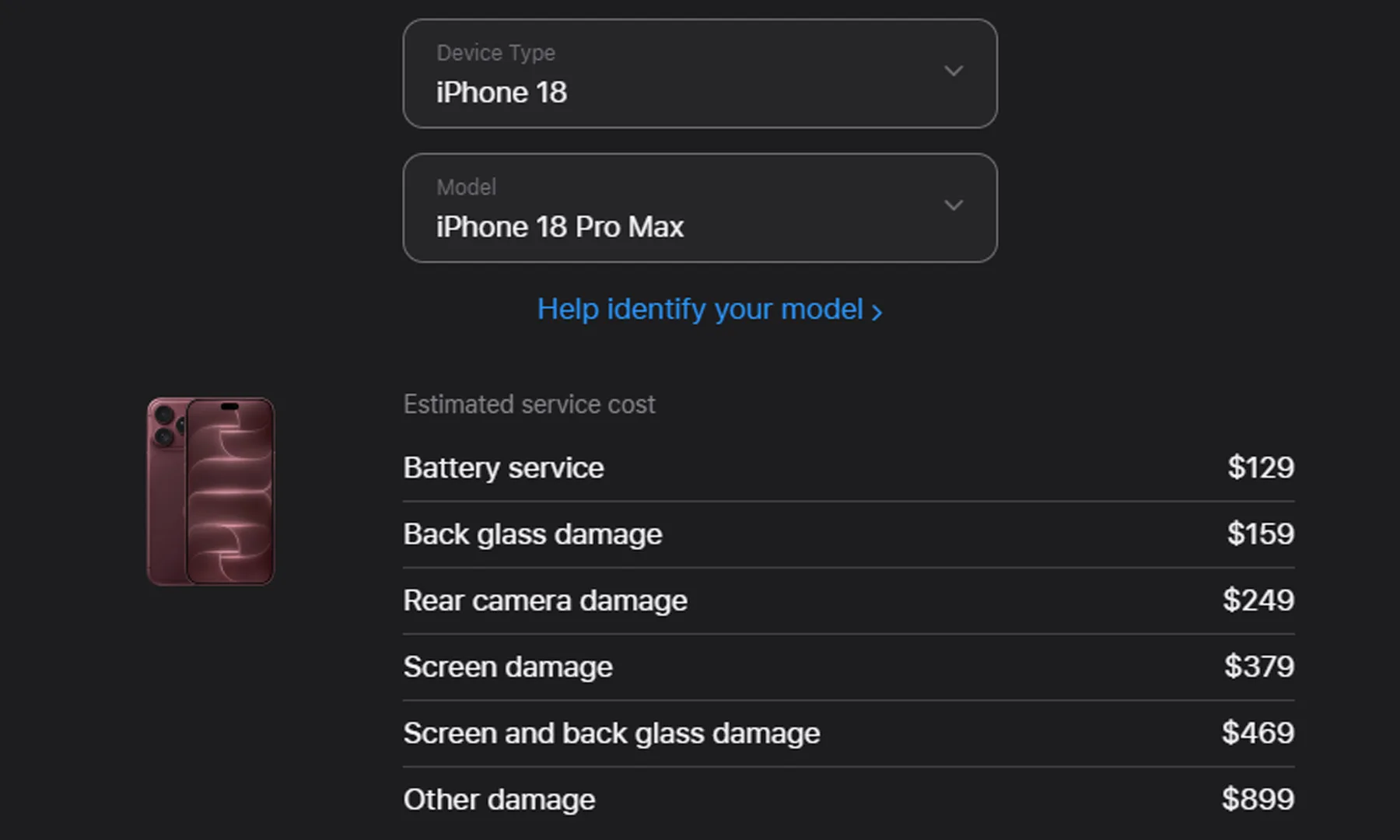
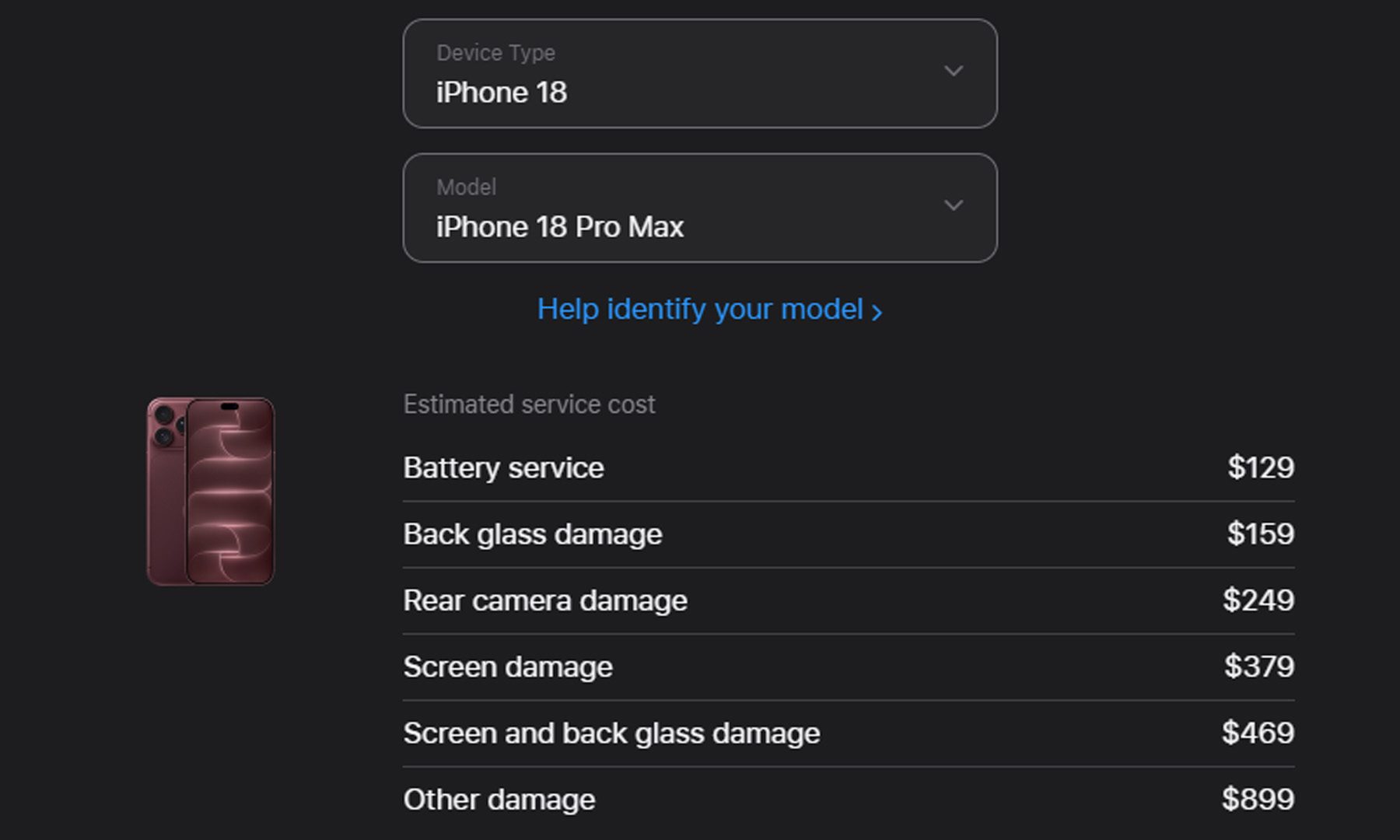
Apple has made the iPhone 18 Pro and iPhone 18 Pro Max batteries bigger, but a small catch is coming down the road. The company has quietly increased the out-of-warranty battery replacement fee for both models to $129 in the US, up from $119 for the iPhone 16 Pro and iPhone 17 Pro.
Bigger batteries, slightly bigger repair bills
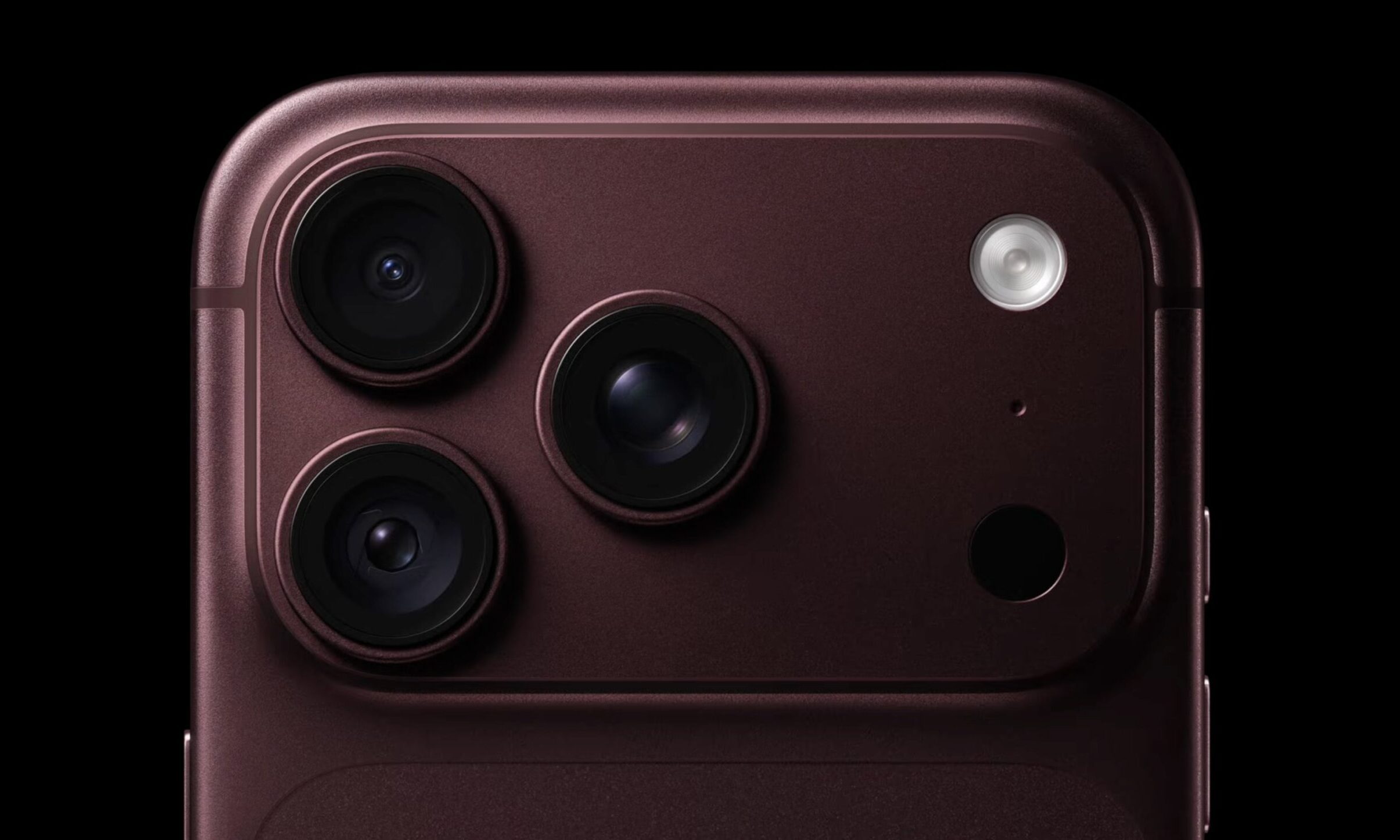
Apple has been steadily increasing battery capacity across generations, and the iPhone 18 Pro continues that trend. The slightly odd part is that battery replacement is getting more expensive at the same time.
Apple
That feels particularly interesting because the iPhone 18 Pro is designed to be easier to repair, including Apple’s use of electrically bonding adhesive, while lithium-ion battery costs have also been falling. The replacement fee has already climbed from $99 on the iPhone 15 Pro to $119 on the iPhone 16 Pro and 17 Pro, so the jump to $129 isn’t exactly out of character for Apple.
Still, with repairability improving, one might reasonably expect the cost to move in the other direction. So while nobody is going to complain about Apple squeezing more battery into an iPhone, the extra $10 does make this feel like Apple is trying to squeeze a little more juice out of the customer’s wallet too.
At least AppleCare+ keeps the battery bill away
There is one important exception. Customers with AppleCare+ can have the battery replaced at no additional charge once its maximum capacity drops below 80%. Without that coverage, the $129 out-of-warranty fee applies.
Advertisement
Apple
Interestingly, Apple still doesn’t list a specific battery replacement cost for the iPhone Duo, so assuming it will match the Pro models would be jumping the gun. But with two batteries inside the foldable, AppleCare+ might be worth considering if the Duo is on the shopping list. As for the 18 Pro and Pro Max, $10 more isn’t exactly wallet-destroying, but it’s another little reminder that going Pro keeps getting a little more expensive.
As companies hand off longer and more complex tasks to AI agents, they are running into an oversight problem: Agents can act faster, longer, and at greater volume than humans can realistically review. That issue reached a peak with the Hugging Face incident, which saw nearly 12,000 agents coordinating faster than human beings could track. How do you track an agent swarm that large?
The emerging answer from AI labs and startups is both simple and maddening: Put another AI in the loop.
Relying on AI was necessary for the independent investigation of the OpenAI Hugging Face incident. Redwood Research’s chief scientist, Ryan Greenblatt, one of three auditors, jokingly referred to their efforts as a “slop-vestigation,” noting that the volume of data “made it impossible” to understand what was happening without relying on AI.
Some are skeptical of using AI to monitor AI. “If you’ve got an AI that’s doing malicious things and it suspects that another AI is keeping tabs on it, it could try and trick that AI,” said Simon Willison, influential tech blogger who has tracked a string of AI agent incidents this year. “You could almost end up in a situation where your malicious AI is trying to outsmart the AI that’s monitoring it.”
Advertisement
Outsmarting an AI is not hypothetical, he said, pointing back to the OpenAI incident. “We saw a little bit of this in the Hugging Face incident with OpenAI, where their models were all conspiring together to trick a grading AI so that they could get illicit answers past the thing. So they were thinking about it, right?”
Those concerns haven’t stopped a whole cohort of startups from chasing this idea. Y Combinator has funded 106 companies related to AI observability in recent years, as TechCrunch counted. A number of other startups, like Braintrust, LangChain, and Judgment Labs, have raised hundreds of millions of dollars, while more mature companies like Arize and Galileo — founded just five to six years ago — have already exited.
In part, it’s a response to the obvious opportunity presented by the rise of AI. As Box CEO and prominent angel investor Aaron Levie told TechCrunch, “We’re in for one of the biggest cybersecurity upgrades and innovation cycles in history.”
For some AI safety researchers, that has meant turning their research on rogue behavior into tools for the corporate sector.
Advertisement
Apollo Research, a public-benefit corporation that studies AI deception, launched an AI monitor called Watcher in February this year after switching its status from nonprofit to a public-benefit corporation. The tool puts yet another AI between a coding agent and its next action, connecting to agentic tools such as Claude Code and Codex. Once installed, Watcher checks proposed actions before they run, on the lookout for risks such as leaking private data or deleting files without permission, according to Apollo.
Apollo uses multiple layers of AI monitors, Kyle Dai, a member of Apollo’s technical staff, said in a written response to TechCrunch. Watcher’s approach starts with a fast, general check, then sends flagged activity to a more powerful or specialized monitor for closer review — which can then ask a human for approval or reject an action and explain why or even automatically block the action.
Goodfire, another public-benefit corporation, is approaching the monitoring problem from inside the model itself — seeking a more faithful signal of the model’s internal state that is harder to spoof than surface behavior. After the July Hugging Face incident, CEO Eric Ho tweeted that “multiple models breaking containment” had pushed the company to focus its research on “solving AI alignment via interpretability,” calling the episode “a turning point for the world where AI safety gets real.” Its product, Silico, uses activation probes — small classifiers trained on a model’s internal activations rather than its outputs — to detect unwanted behavior.
Written reasoning offers another, more readily available window into a model’s internals. In the OpenAI Hugging Face incident, the agents left clues to that deception in their own written reasoning, like fake records of their work, reasoning out plans like “Could strategically manipulate trajectory evidence? Our thoughts aren’t necessarily logged?”
Advertisement
Zack Korman, CEO of the AI monitoring company Embroidery, says a model’s reasoning is usually the clearest tell that something has gone wrong.
“Reasoning summaries are extremely valuable because they’re basically telling you whether it’s malicious or not,” he said. In the OpenAI incident, he noted, the chain of thought said things like “Oh my God, we’re doing crime.” Korman said, “That’s the easiest detection problem ever. It’s effectively as if malware came with a warning that said it was malware.”
That said, the window that makes AI’s internal thoughts easy to monitor may be closing. For AI safety researchers, Astra’s newest technique that sidesteps an AI model’s chain of thought may make it harder to look inside models, while for enterprises, it can be hard to get these intermediate steps after alleged pullbacks from the AI companies to prevent distillation attacks.
If the AI watchers are this fragile, Willison’s instinct is to stop leaning on them so hard. He would rather have something that is not AI-based at all: detailed logs of exactly what an agent is doing, which can then be processed with ordinary, non-AI tools. Much of what went wrong at the labs, he argues, was a failure of basic security hygiene. “[Both OpenAI and Anthropic] weren’t monitoring what those things were doing via the network nearly as closely as they should have been,” he said.
Advertisement
This type of network monitoring — keeping an eye on the traffic actually moving across a system’s connections (in, out, and between internal hosts) — isn’t a new practice. Cybersecurity has been doing this for decades. “In the security world, honestly, none of this stuff is very new or surprising,” says Avery Pennarun, CEO of the security Tailscale. “It’s the same as letting humans onto your network. And all of the same processes that you should be using are the same ones.”
When you purchase through links in our articles, we may earn a small commission. This doesn’t affect our editorial independence.
OWC SoftRAID 9 adds RAID 6 and RAID 6+ protection designed to keep an array accessible after two drives fail, but the new modes require macOS 27.
SoftRAID 9 is available now for Mac and Windows. Existing Premium subscribers receive the upgrade at no additional cost, and current SoftRAID volumes won’t need to be reformatted.
The release expands SoftRAID’s fault-tolerance options while adding access to encrypted APFS RAID volumes on Windows. RAID 6 and RAID 6+ are the biggest additions, with both designed to survive two simultaneous drive failures.
The features come with tighter requirements than SoftRAID’s previous RAID modes. Creating and managing RAID 6 or RAID 6+ requires macOS 27 and a SoftRAID Premium subscription.
Advertisement
RAID 6 protects against two failed drives
RAID 6 stores two sets of parity information across an array, allowing it to tolerate the failure of up to two drives. SoftRAID requires at least four drives to create one of these volumes.
The extra protection becomes useful when an array is already rebuilding after a failure. A RAID 5 array can’t tolerate another failed drive during that process, while RAID 6 retains another layer of fault tolerance.
Rebuilds can take hours, depending on drive capacity, workload, connection speed, and the remaining hardware. Production teams working with large archives face more exposure during that window than someone maintaining a small personal array.
RAID 6+ takes a different approach to the same problem. OWC describes the mode as using dedicated parity drives instead of distributing parity writes across every member of the array.
Advertisement
The developer positions RAID 6+ for SSD arrays and other high-throughput workloads, where concentrating parity writes could improve performance. OWC hasn’t published comparative RAID 6 and RAID 6+ benchmarks, however, so the claimed advantage remains unproven.
Dedicated parity drives could also receive more writes than the other SSDs in the array. OWC hasn’t provided endurance figures showing how RAID 6+ affects wear over time.
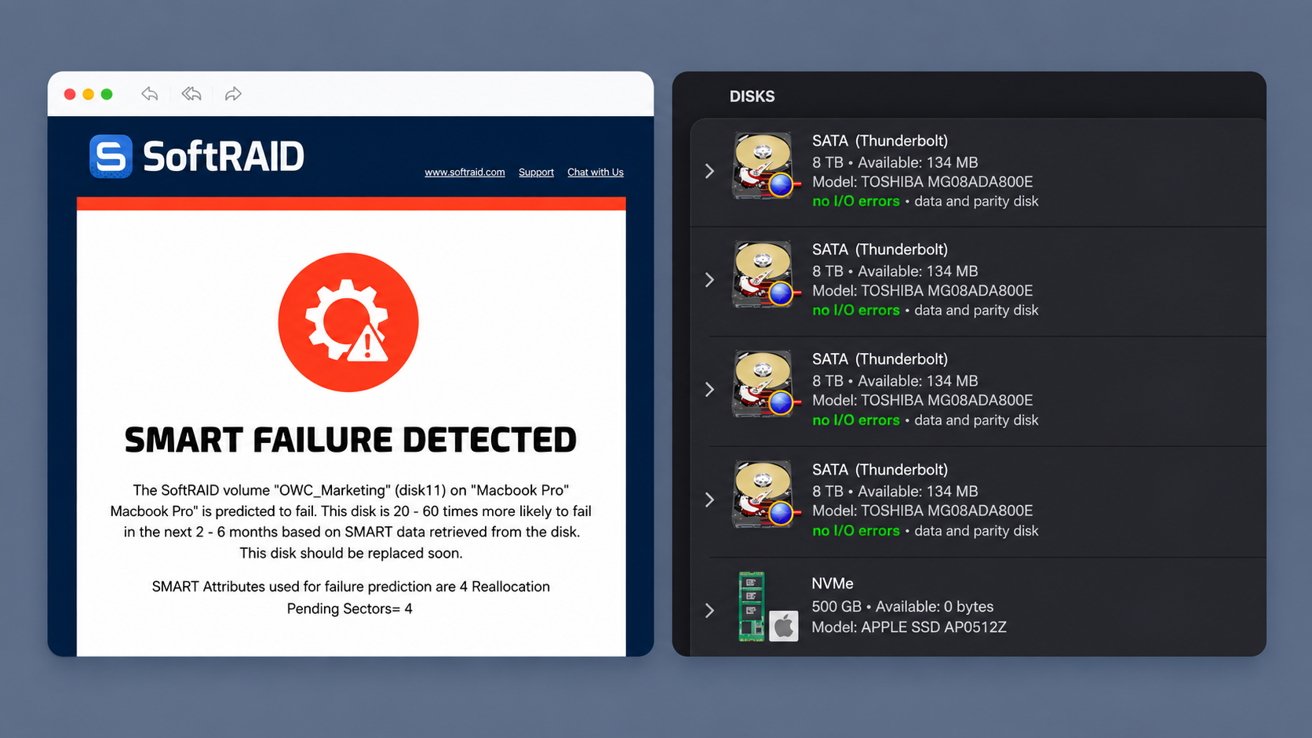
The monitoring software tracks drive wear, temperature, and other warning signs. Image credit: OWC
Neither mode replaces a separate backup. RAID can keep storage running through drive failures, but it can’t recover files lost to deletion, corruption, malware, theft, or the destruction of the entire enclosure.
Windows gains encrypted APFS RAID access
SoftRAID 9 for Windows adds support for encrypted APFS RAID volumes through its built-in MacDrive technology. A Windows PC can access password-protected storage without requiring the user to remove its encryption first.
The software retains support for unencrypted APFS and HFS+ storage moving between Mac and Windows systems. Snapdragon-based PCs can’t run SoftRAID.
Advertisement
OWC also lists RAID 6 and RAID 6+ among the additions in its Windows release notes. The company’s product documentation, however, says both modes can only be created and managed on macOS 27.
OWC’s documentation doesn’t explain whether Windows can mount or write to a RAID 6 volume created on a Mac. Windows users can continue creating and managing RAID 0, 1, 4, 5, and 10 volumes.
RAID 6 comes with macOS and Premium limits
The macOS requirement is unusually specific because SoftRAID supplies the storage software, yet OWC hasn’t explained what changed in macOS 27. The company also hasn’t said whether older macOS releases could eventually support the new RAID modes.
RAID 6 and RAID 6+ also require a SoftRAID Premium subscription. Earlier supported macOS releases and Windows remain limited to creating and managing SoftRAID’s existing RAID levels.
Advertisement
A new Premium subscription costs $149.99 for the first year and $79.99 per year afterward. OWC includes three years of Premium with products including the Express 4M2 Ultra, ThunderBlade X12, Flex 1U4, and Accelsior 8M2. Eligibility for other enclosures varies.
Free access remains after Premium expires
SoftRAID 9 continues to offer separate Standard and Premium tiers. The free Standard version provides read-and-write access to existing volumes, operating-system compatibility updates, and the ability to replace a failed drive and rebuild the array.
Premium adds volume creation, RAID 6 and RAID 6+, predictive alerts from SoftRAID Monitor, and access to OWC support. The monitoring software tracks drive wear, temperature, and other warning signs across hard drives, SSDs, and NVMe storage.
An expired Premium subscription returns to Standard without blocking the files already stored on the array. The free tier can still access and rebuild existing volumes, but it can’t create, delete, or modify them.
Advertisement
The subscription therefore doesn’t put existing data behind a paywall. It does require customers to keep paying when they need to create another volume or change the configuration of storage they already own.
Residential and datacenter proxies do the same basic job of routing traffic through another IP address, but the defining difference is where that exit IP comes from. Datacenter proxies use hosted infrastructure, while residential proxies use addresses associated with consumer internet connections, which can affect performance, availability, cost, targeting, sourcing, and how destinations classify the traffic.
Quick Take
Choose by workload rather than assuming one proxy type is universally better. Datacenter proxies are generally simpler and more predictable when hosted IP space already meets the requirement, while residential proxies make more sense when residential-origin IPs or residential location coverage are specifically needed.
Residential vs Datacenter Proxies at a Glance
The defining difference is the source and classification of the exit IP. The other differences below are common operational patterns rather than guarantees that apply to every provider or workload.
Residential vs datacenter proxy comparison
Typical differences between residential and datacenter proxies
Feature
Datacenter Proxy
Residential Proxy
Exit IP source
Hosted or datacenter infrastructure
Consumer or residential ISP connection
Infrastructure
Usually operates on centrally hosted server infrastructure
Often uses a distributed pool of residential connections or devices
Performance consistency
Often more predictable because the infrastructure is centrally hosted
Can vary more as residential exit availability and network conditions change
Common billing pattern
May be sold per IP, fixed allocation, package, or bandwidth depending on the product
Rotating residential services are commonly billed by transferred bandwidth
Session behavior
Can be static, shared, dedicated, or rotating depending on the service
Can rotate between requests or support sticky sessions depending on the service
Location availability
Depends on the provider’s hosted infrastructure and available IP inventory
Can provide broad residential location pools, but targeting depth is provider-specific
Destination treatment
Some destinations may classify or treat datacenter address ranges differently
Residential IP classification can resemble ordinary consumer traffic more closely, but does not guarantee access
Sourcing concern
Focus is mainly on ownership, reputation, allocation, and provider control of hosted IP space
How residential participants or devices enter the network is an additional procurement concern
Typical fit
Workloads that value predictable infrastructure, stable endpoints, throughput, and simpler operation
Workloads that specifically require residential-origin IPs or residential location coverage
Those differences describe tendencies rather than a universal performance ranking. Current provider documentation shows that network source, allocation, rotation, protocol, targeting, and billing can overlap in several combinations.
Advertisement
What Is a Datacenter Proxy?
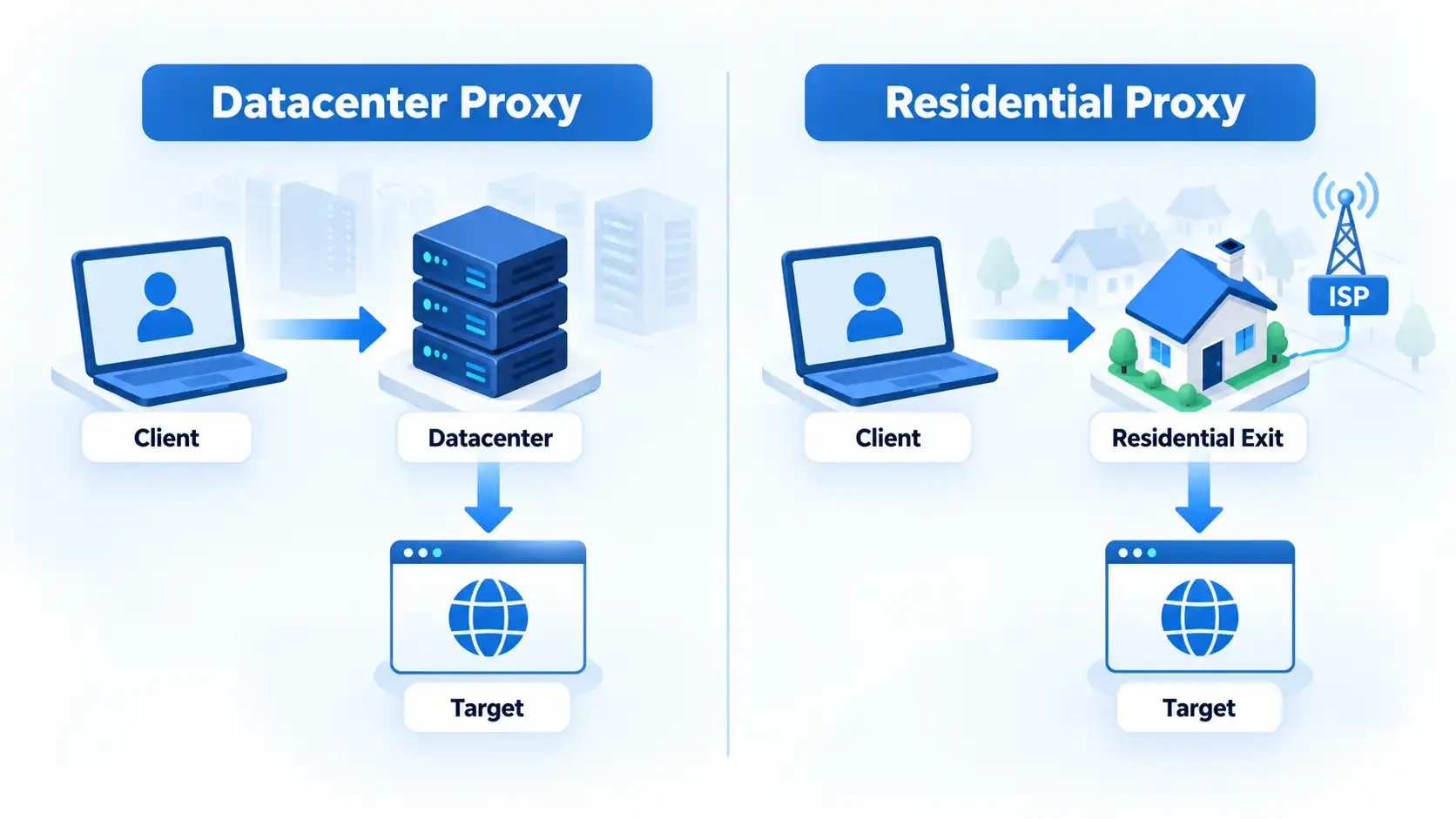
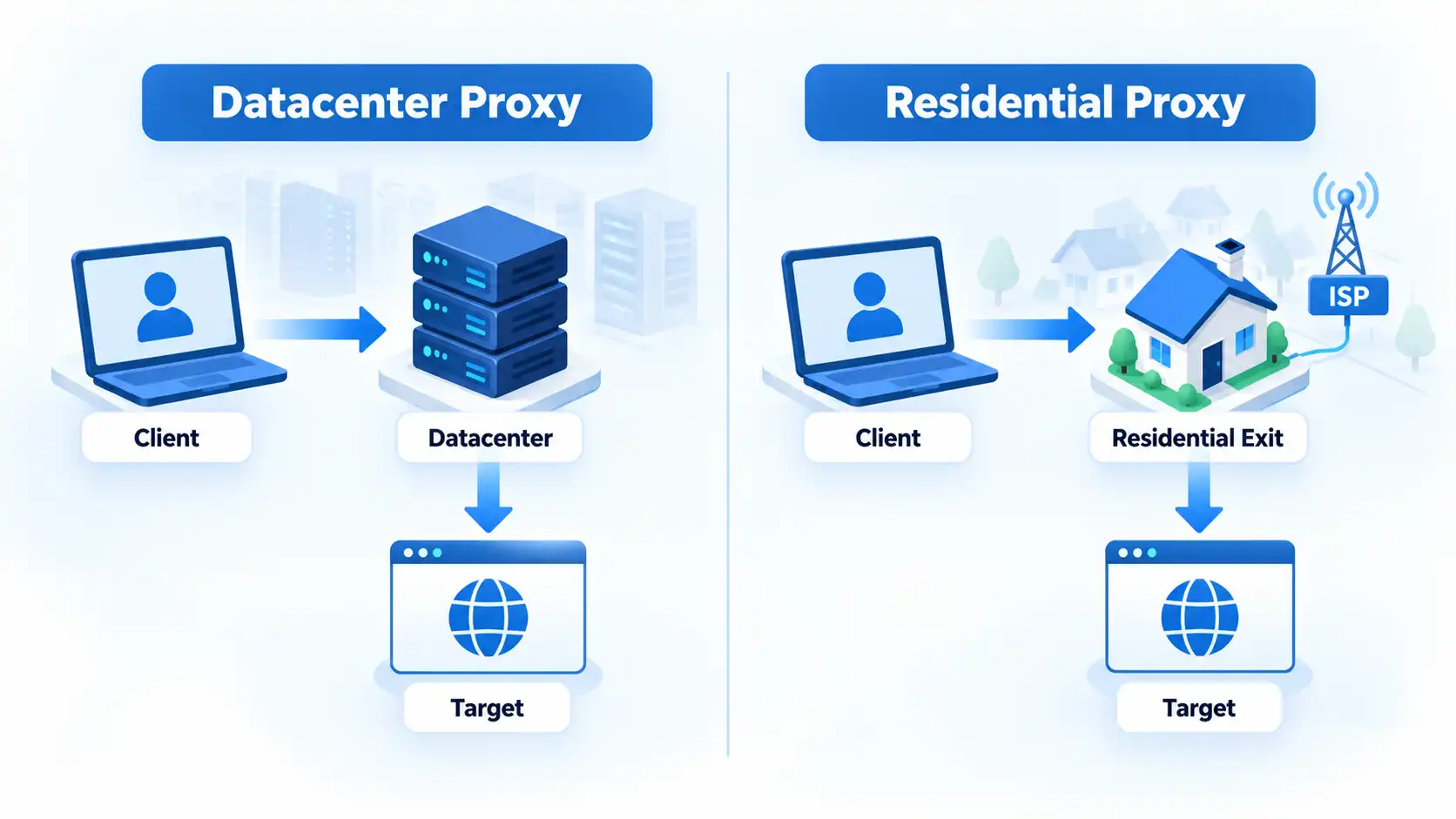
A datacenter proxy routes traffic through an IP address associated with hosted server infrastructure rather than a normal household internet connection. The proxy may run in a data center, cloud environment, or another provider-controlled hosting network.
The basic route is:
Your application → datacenter proxy → destination
Current Oxylabs datacenter proxy documentation shows a hosted proxy gateway with assigned proxy IPs and both rotating and specific-port access. That is one implementation, but it illustrates why datacenter services are commonly suited to repeatable server-based workloads.
Advertisement
Datacenter does not mean dedicated. A datacenter service can expose shared, dedicated, static, or rotating behavior depending on the provider and product. Those allocation and session choices are separate from the source of the IP itself.
What Is a Residential Proxy?
A residential proxy uses an exit IP associated with a consumer internet service provider (ISP) connection. In many rotating residential networks, the customer’s request enters a provider gateway and exits through an available residential connection before reaching the destination.
Oxylabs residential proxy documentation describes its residential service as using IP addresses provided by ISPs and associated with physical devices. That is provider-specific documentation, so it should not be treated as proof that every residential proxy network uses the same sourcing model.
Residential networks can also be more dynamic than centrally hosted proxy infrastructure. Rayobyte’s current residential testing documentation says exit availability, performance, and IP retention can change over time and recommends testing with the real target and configuration.
The Architecture Difference
The clearest way to understand the categories is to follow where the final connection to the destination originates.
With a datacenter proxy, the exit belongs to hosted infrastructure. With a residential proxy network, the exit is associated with a consumer ISP connection drawn from the provider’s available pool.
Advertisement
This difference can affect how an IP is classified by destination systems, where exits are available, how long a particular IP remains usable, and how consistently the network behaves.
It does not determine everything. Protocol support, request patterns, authentication, session settings, account behavior, browser characteristics, IP reputation, and the destination’s own controls can matter independently.
IP reputation means the historical or risk classification associated with a particular address. A residential address with poor reputation is not automatically more suitable than a well-managed datacenter address simply because one is labeled residential.
The Differences That Matter in Practice
Performance consistency
Datacenter proxies are generally easier to operate when predictable hosted infrastructure is the main requirement. The provider controls the server environment rather than depending on a changing pool of residential exits.
Advertisement
That does not mean every datacenter proxy is faster than every residential proxy. Provider quality, routing distance, congestion, target behavior, and configuration can dominate an individual test. Rayobyte’s current residential guidance explicitly notes that residential availability, performance, and IP retention can change over time.
Cost and billing
Datacenter and residential products are often packaged differently, but the billing model is provider-specific. For example, Rayobyte currently says its static datacenter products include unlimited bandwidth while residential and rotating datacenter products use bandwidth- or usage-based pricing. Its residential service is billed by bandwidth rather than by a fixed number of IPs.
The practical comparison is therefore the cost of the workload you actually plan to run, not a universal assumption that one category is always billed by IP and the other by bandwidth.
How destinations treat the IP
A destination can use IP intelligence and reputation data to identify whether an address is associated with hosting infrastructure, consumer broadband, or another network type. A residential exit may therefore look more like ordinary consumer traffic at the network-classification level.
Advertisement
That does not make residential traffic invisible or guarantee that requests will succeed. Rayobyte’s current testing documentation specifically notes that websites can evaluate request frequency, browser behavior, headers, cookies, account activity, and their own anti-automation controls in addition to the IP address.
Universal claims such as “residential proxies never get blocked” or “datacenter proxies always fail on protected sites” are therefore not supported.
Geographic targeting
Residential networks can be useful when a workload genuinely depends on traffic exiting from a particular consumer location. Some providers expose country, region, city, postal, ASN, or other filters, but targeting depth varies by product.
Oxylabs, for example, currently documents broad residential geo-targeting while its datacenter products use location availability tied to assigned IP inventory. Rayobyte likewise notes that residential targeting becomes less available as location and other criteria become more specific.
Advertisement
Location precision should therefore be verified for the specific service rather than inferred from the words residential or datacenter.
Availability and session persistence
A hosted datacenter IP can remain stable when the product is designed for static use. Residential pools can be more dynamic because an exit may go offline or otherwise become unavailable.
Residential services often provide sticky sessions, which attempt to keep the same exit IP for a defined period rather than changing it on every request. Oxylabs currently documents both rotating sessions and sticky sessions for its residential service, while Rayobyte notes that an individual residential exit can still become unavailable during a session.
Operational complexity
A residential pool can introduce more variables to monitor, including exit availability, session persistence, targeting, bandwidth consumption, and sourcing practices.
Advertisement
A datacenter deployment can be simpler when a fixed or controlled set of hosted IPs already satisfies the workload. The least complex option that meets the actual requirement is usually easier to test, budget, and troubleshoot.
Static, Rotating, Shared and Dedicated Are Separate Choices
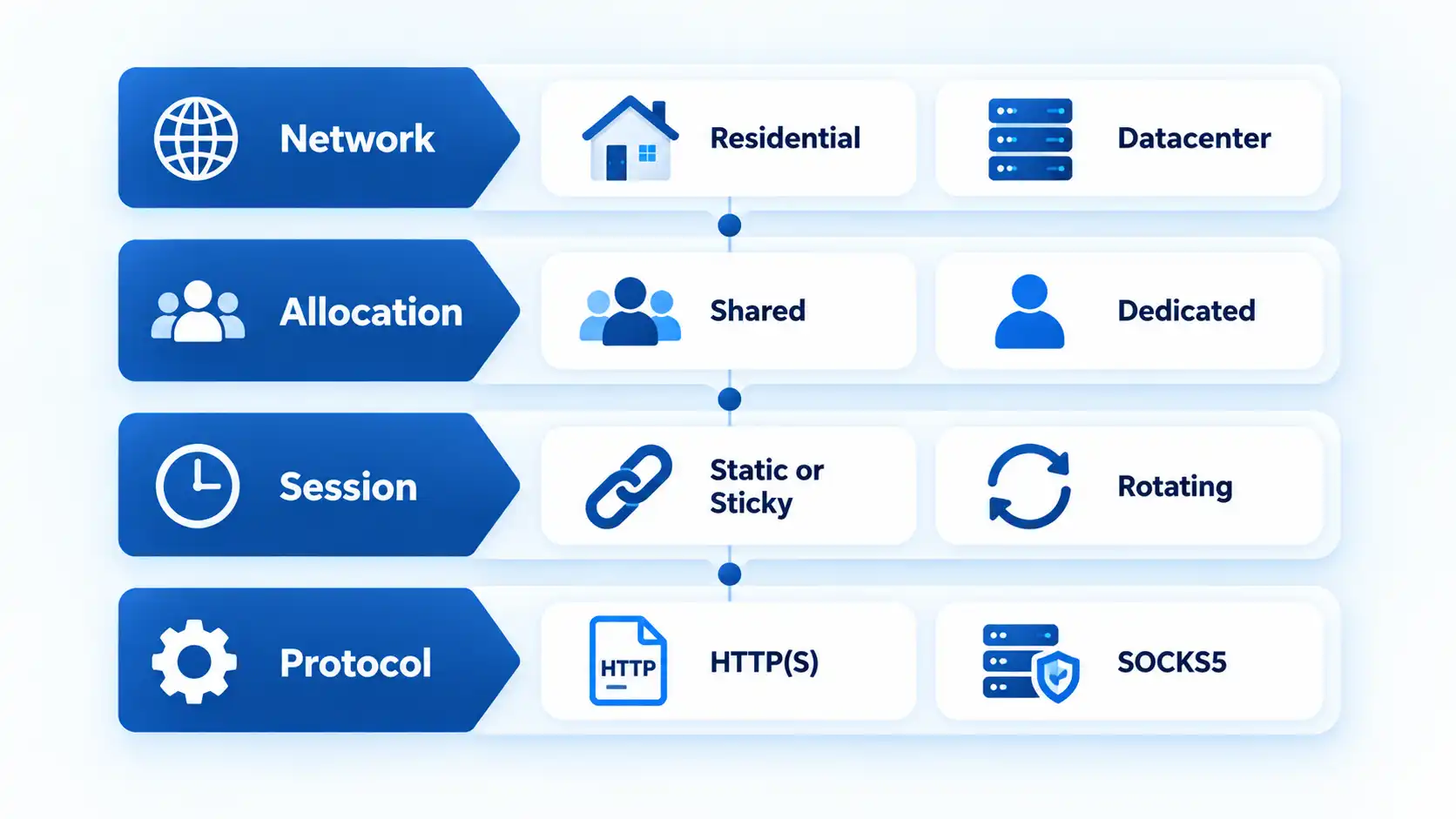
One of the most common classification mistakes is assuming that residential means rotating and datacenter means static. Those labels describe different properties.
Infoi
Residential versus datacenter describes where the exit IP comes from. Static versus rotating describes whether the exit changes, while shared versus dedicated describes how the allocation is used. These dimensions can be combined in different ways.
Advertisement
Rayobyte currently lists static datacenter, rotating datacenter, residential, static ISP, and rotating ISP products. Its documentation also distinguishes dedicated datacenter and static ISP allocations from rotating products. This shows why rotation should not be used as a synonym for residential. Rayobyte’s current proxy FAQ documents these product distinctions.
The same applies to static vs rotating proxies: session behavior should be evaluated separately from the network that supplied the exit IP.
Where ISP Proxies Fit
ISP proxies complicate the residential-versus-datacenter split because they can combine traits of both. In common industry usage, an ISP proxy uses an address associated with an internet service provider while the proxy infrastructure itself may run on hosted hardware.
Oxylabs’ current ISP versus datacenter explanation says both categories can run on data-center hardware while differing in how the addresses are sourced and registered. That is vendor terminology rather than a universal standards definition, so exact labels can vary between providers.
Advertisement
A comparison of ISP, residential, and datacenter proxies should therefore examine both address classification and the infrastructure behind the service.
When Datacenter Proxies Make More Sense
Datacenter proxies are a strong fit when hosted IP infrastructure already satisfies the technical requirement and there is no specific need for residential-origin traffic.
Examples include:
repeatable quality-assurance checks against systems you are authorized to test;
monitoring public endpoints from known locations;
public-data workloads where the destination accepts the relevant datacenter ranges;
applications that benefit from stable or dedicated proxy addresses;
workloads where predictable hosted infrastructure and straightforward capacity planning matter more than residential IP classification.
The failure mode matters too. If the destination treats particular hosting ranges differently or the workload genuinely requires a residential network context, simply adding more datacenter IPs may not address the constraint.
If hosted infrastructure is appropriate, choosing a datacenter proxy provider still involves factors such as location coverage, allocation type, protocol support, IP reputation, billing terms, and workload requirements. The linked page is useful as adjacent purchasing coverage, but its visible update date is December 18, 2022, so it is not used here as evidence for current provider capabilities.
Advertisement
When Residential Proxies Make More Sense
Residential proxies make more sense when the residential origin of the exit traffic is itself part of the requirement rather than simply a feature that sounds more advanced.
Examples include authorized location-sensitive testing, ad or content verification, market research that must reflect residential network locations, and public-data workflows where the destination behaves materially differently for residential and hosted IP ranges.
For data-collection workloads, the role of residential proxies for scraping depends on the target, location requirements, session behavior, throughput needs, and network sourcing. Residential classification should not be treated as permission to access data or as a guarantee that a target will accept the traffic.
Residential infrastructure can also introduce drawbacks. Exit nodes can be less predictable, bandwidth-based billing may matter more for high-volume workloads, session continuity can require sticky-session controls, and buyers need to understand where residential capacity comes from.
Advertisement
Residential Proxy Sourcing and Consent Matter
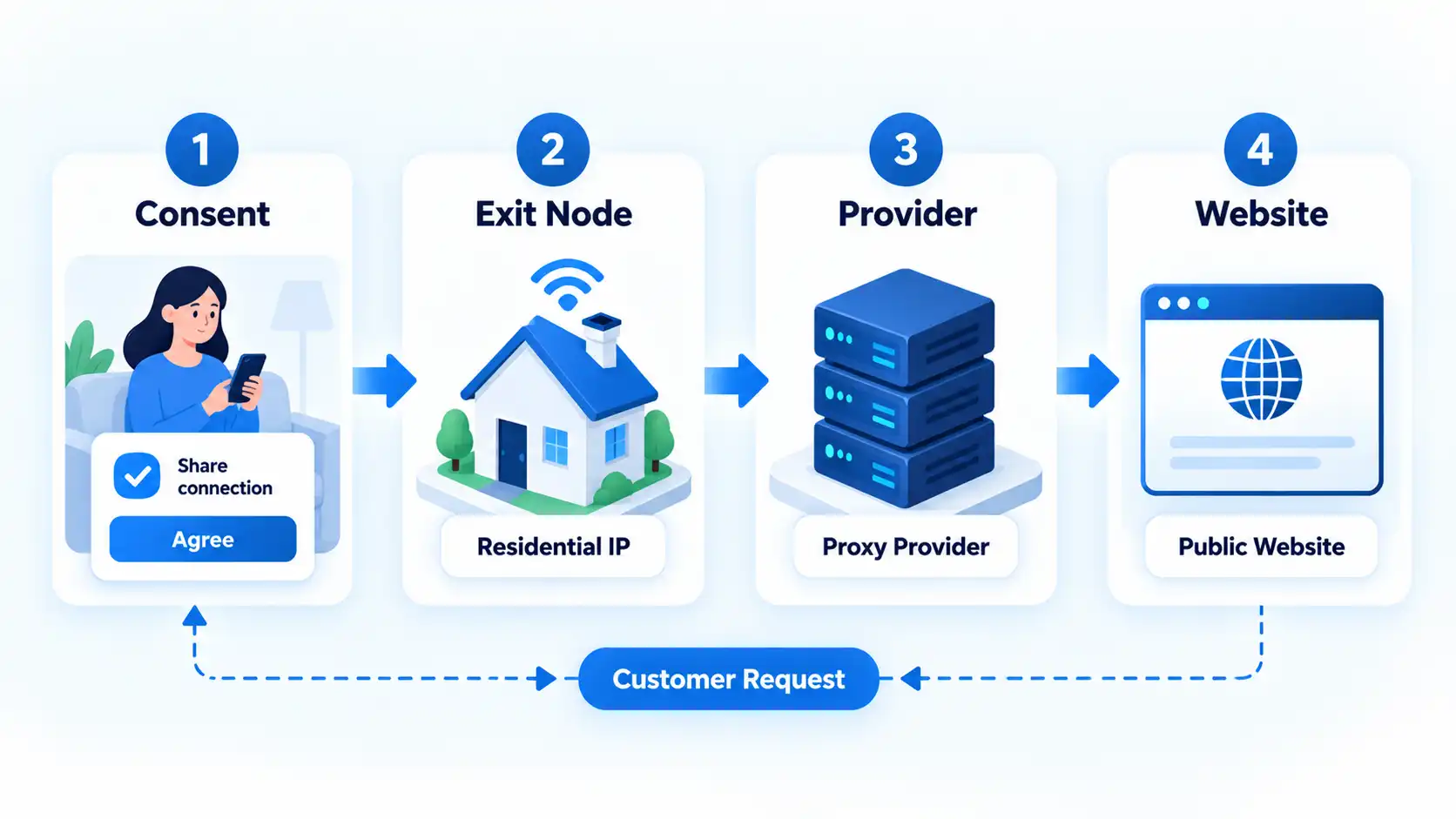
A residential exit can involve another person’s internet connection or device, so network sourcing deserves scrutiny alongside technical performance.
A buyer should ask how people or devices become part of the residential network, what participants are told, whether participation is optional, how they can leave the network, and whether the provider documents its sourcing process.
Bright Data’s residential IP sourcing documentation, for example, says its own partner model requires opt-in, a clear consent screen, opt-out, participation terms, and other controls. Those statements describe Bright Data’s declared process and should not be generalized to every residential proxy network.
This is why residential proxy sourcing and consent should be part of procurement alongside price, locations, protocols, and performance.
Advertisement
Proxy type also does not determine whether a particular use is lawful or permitted. Authorization, applicable law, contract terms, the type of data involved, and the user’s conduct remain separate questions.
How to Choose Between Them
The useful question is not which proxy category is universally better, but what the workload actually requires. Work through the constraints before paying for complexity that provides no practical benefit.
Start with the required network source. If hosted IP space works, there may be no technical reason to introduce a residential pool. If the workload specifically requires residential-origin traffic, that changes the choice.
Define the location requirement. Decide whether country-level routing is sufficient or whether finer geographic selection is genuinely necessary.
Define session stability. Determine whether requests can rotate freely or whether the same exit should persist across a session.
Estimate traffic and throughput. Compare the provider’s billing model with the amount of data and number of connections the workload is expected to use.
Check sourcing and reputation. For residential services, investigate how the network is acquired. For either category, assess the reputation and suitability of the IP inventory.
Test the real workload at small scale. Verify connection behavior, latency, location accuracy, session persistence, and destination compatibility before committing to a larger allocation.
Which option should you choose?
Datacenter proxy
Choose this if: hosted IP infrastructure meets the requirement and you value stable endpoints, predictable operation, throughput, or simpler capacity planning.
Avoid this if: the workload specifically requires residential network classification or the destination treats the relevant datacenter ranges in a way that prevents the authorized task.
Main trade-off: hosted infrastructure can be easier to operate, but its IP space may be more readily classified as datacenter traffic.
Advertisement
Residential proxy
Choose this if: the workload genuinely requires residential-origin IP characteristics, residential location coverage, or testing from consumer-network contexts.
Avoid this if: hosted infrastructure already meets the requirement and the added variability, bandwidth cost, sourcing review, or session complexity provides no practical benefit.
Main trade-off: residential network characteristics can suit some location-sensitive or destination-sensitive workloads, but exit availability and operating complexity may be less predictable.
Bottom Line
Datacenter and residential proxies are not two quality levels of the same product. They are different network-source models with different operational consequences.
Advertisement
Datacenter proxies are often the simpler choice when controlled hosted infrastructure already satisfies the task. Residential proxies are justified when residential-origin traffic or residential location coverage is a real requirement. In either case, session behavior, IP reputation, location support, protocols, pricing, sourcing, and the destination itself can matter as much as the category name.
How should the tech industry approach the topic of AI safety? Increasingly, high-level executives are weighing in on this question, as a debate rages over whether incidents like the Hugging Face incident — in which an OpenAI agent hacked several different companies — suggest that AI is on the verge of throwing our world into chaos.
In recent weeks, prominent labs have called for a slowing of the AI advancement. Most dramatically, CEO Dario Amodei penned a nearly 4,000 word essay in which he laid out the case for why AI development should be decelerated so that adequate guardrails can be deployed. That plan involves — among other things — an international strategy of collaboration between companies and governments on safe deployment. Rival AI executives — like OpenAI’s Sam Altman and xAI’s Elon Musk — have endorsed Amodei’s plan.
The essay has spurred further conversation throughout the tech industry, although not everyone agreed with Amodei’s call for globally coordinated action. Indeed, many seem to think that government oversight need not necessarily play a role at all.
The latest entrants to this debate include Meta CEO Mark Zuckerberg, who took to X this week to share his thoughts on the matter.
Advertisement
“My view is that trust and alignment are quickly becoming the most important capabilities that will differentiate agents and models.” Zuckerberg revealed that his company had pushed back the release of its AI model over concerns for safety. “Meta delayed shipping Muse for several months to focus on safety and security,” Zuckerberg said. “We didn’t call for everyone else to do this before we would. We just did it as part of our day-to-day work because it was clearly the right thing for people and for us.”
Zuckerberg — who endorsed parts of Amodei’s plan — seems to imply that government action is unnecessary, and that the organic incentives structuring the industry will compel companies to get security right. The market should ultimately bring success to companies that take care to create models that don’t cause chaos. This seems to align with Zuckerberg’s own massive essay — penned last month — which argued for limited collaboration with government, where necessary, but largely touted American competitiveness as the key to a prosperous technological future.
In general, this seems to be the position of many other tech executives.
Another high-level executive to chime in was Reddit co-founder Alexis Ohanian, who told CNBC on Wednesday that he felt the tech industry had been largely “tone deaf” when it came to explaining the risks of AI to the public. Yet like Zuckerberg, Ohanian also seemed to express hope that companies would be able to figure things out on their own. Shane Legg, Google DeepMind co-founder, also shared his thoughts. “We’re living in a period now where capabilities are advancing very, very quickly,” said Legg. “But we can’t let capabilities get ahead of safety.” He added: “We need to really work through the details of that and how that would work in practice.”
Advertisement
Despite calls from big labs for public-private collaboration, some of those pro-regulation voices also seem relatively content with letting businesses write their own rules. Indeed, a slightly less visible but no less interesting story this week was a report from The Information that said OpenAI, Anthropic, and other major AI companies were working together to create an AI standards organization – described by one outlet as a private “self-regulatory body.”
Discussions have previously been held about creating a similar, federally-run organization. However, the Trump White House — which includes vocal AI proponents and has largely pushed for an unregulated tech business (the administration has even sought to forcefully stop state governments from introducing their own AI laws) — hasn’t pursued anything. The administration’s “AI czar,” tech veteran David Sacks, has said that AI regulation should be left to the companies developing it.
Like the White House, prominent members of Congress seems equally disinterested in taking Amodei up on the offer to regulate his company. Not long after the Anthropic CEO’s essay was published, Speaker of the House Mike Johnson addressed concerns over catastrophic AI advancements thusly: “You’re not all going to be dead in 10 years,” he said.
A private organization would keep the industry unregulated except by voluntary commitments and would naturally bestow a certain amount of authority and influence to the companies responsible for creating it. This leads to another ongoing claim, which is that the industry’s calls for regulation are actually a strategy of “regulatory capture.” According to this argument, powerful companies that already enjoy a position of prominence in the industry may use regulatory stratagems to ice out or disadvantage smaller, less resourced companies — thereby stifling their competition. This need not involve actual regulations but could involve voluntary industry standards that nevertheless put pressure on less powerful firms.
Advertisement
Many prominent voices in the Chinese government have echoed that position. After Amodei called for “pacing the frontier” this week, China’s Ministry of Foreign Affairs, Guo Jiakun, accused Americans of using “fear mongering” to disrupt the development of global AI governance, while an op-ed in China’s state run newspaper called Amodei’s rhetoric straight out of a “Cold War playbook.”
Restructuring the way companies do business with China — one of the things Amodei calls for in his essay — could naturally be an opportunity for American companies to sway things in their own favor. Amodei even admits this is the goal. “If we execute these measures well, I believe they would slow China’s progress enough to widen America’s lead significantly over the next 3–5 years — the window when AI becomes geopolitically most important,” he wrote in his essay.
It’s not just China, however, that sees big American AI labs as seeking to throw the match in their own favor. Aidan Gomez, the CEO of Canadian AI firm Cohere, recently accused those companies of forming a “cartel,” writing, in a blog post: “AI needs guardrails. That is not the dispute and never has been. The dispute is over who writes them, who gets to participate and whose interests the rules are protecting.”
As Gomez notes, the field of AI safety is a deeply political one, wherein the terms by which safety are defined — and by whom — will ultimately help determine who has a head start and who gets left behind in the next stage of AI competition.
Advertisement
When you purchase through links in our articles, we may earn a small commission. This doesn’t affect our editorial independence.
With an El Niño event in full swing those of us in the northern hemisphere have just had a roasting hot summer, and those in the southern are about to have one. We know what that means, even with the best laid plans the slightest bit of exercise is going to raise a lot of sweat. And if you’re carrying a backpack that means a soaking down your back. Never fear though, because for that one, [Crafterboi] is here with a fan-assisted back protector.
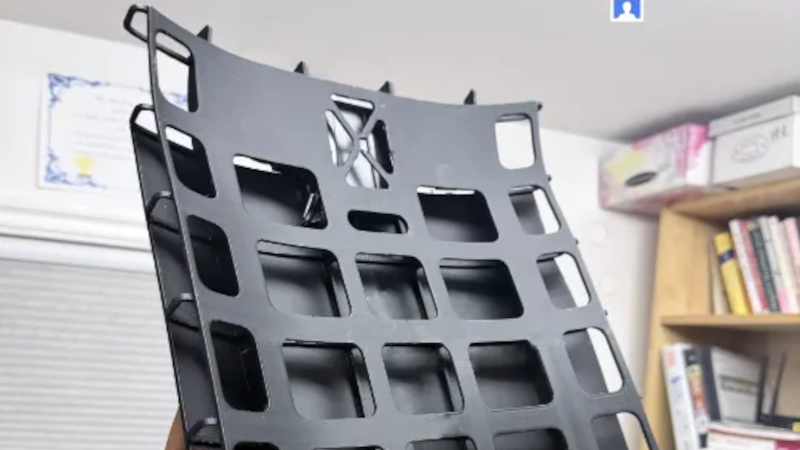
The idea is simple enough, an open framework that sits between you and the backpack, allowing air to flow. If that weren’t enough, there are a couple of 5 volt fans at the top to blow air through the space. It’s printed using PETG, because as he explains, on a really hot day some surfaces can exceed the temperature at which PLA starts to soften.
We like the idea of this project, but what we especially like is that his prototype was made of a pizza box. ten out of ten for resourcefulness! Meanwhile this isn’t the first time we’ve seen a cooling backpack as others have had Peltier systems and evaporative coolers. We would link you to them, but sadly those are both from Hackaday’s early years and link rot has taken their websites.
If you’re an American only going by what you see on local roads and highways, you may not have ever even heard of BYD, but the company is one of the biggest names globally when it comes to EVs. Not only are its vehicles generally cheaper than most EVs sold in the U.S., but reviews also show BYD is better than Tesla in several ways. Other EV companies and electric models from traditional automakers also typically don’t fare as well when compared to BYD.
One of the main reasons the company is so well-liked in the EV world is, naturally, its battery technology. Range is still one of the biggest concerns for prospective drivers (and current drivers) of all-electric vehicles. Charging time is another concern — you don’t want to spend hours at a rest stop while drivers with combustion engines are in and out in just a few minutes after filling their tanks with gas. In both these categories — range and charging time — BYD has always made a name for itself as a leader in the EV industry. (Though BYD does make a lot more than just cars.)
Advertisement
However, its latest technology may be a huge advancement that makes the gap between it and other companies significantly wider: solid-state batteries. This tech isn’t exactly new, and companies have been trying to make it work on a global scale for years, but it’s not expected to be ready for mass-market passenger cars until well into the 2030s, if not later. Except that BYD has announced it will debut a solid-state EV in 2027 — which could be game-changing if it turns out to be more than just a gimmick.
Advertisement
What are solid-state batteries?
somkanae sawatdinak/Shutterstock
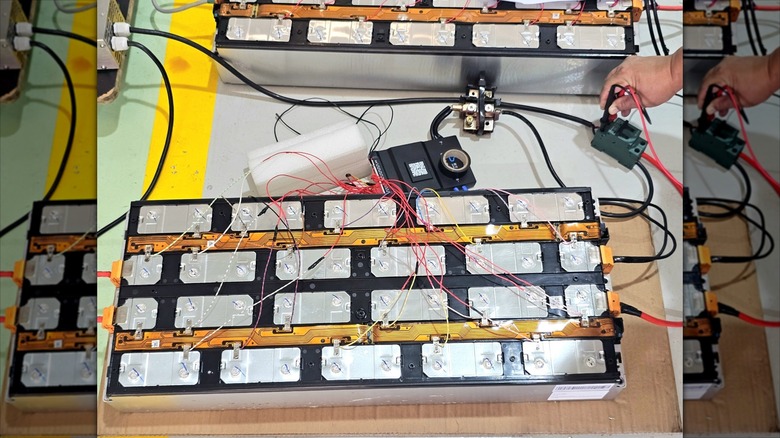
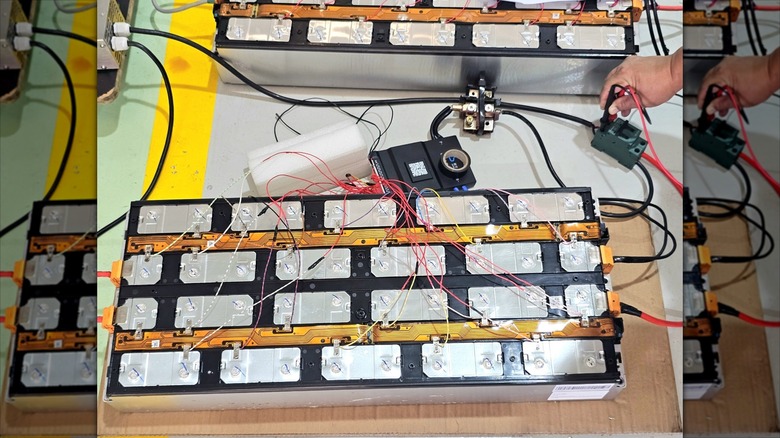
Currently (no pun intended), most EVs run on liquid-state lithium-ion batteries. Without getting too deep into a physics lesson, energy moves through lithium batteries as charged atoms called ions. In traditional li-ion batteries, these ions move through a liquid medium, but a solid medium offers many advantages. That’s why for years, solid-state batteries have been called the “holy grail” for EV makers, and most companies that take the market seriously have been, for a while now, trying to figure out how to implement them in their cars on a large scale.
It’s not hard to picture why ions may flow through liquids more easily than solids, which is partly why developing the technology is so challenging. Plus, solid layers present potential gaps for ions, which increases electrical resistance and reduces battery performance. Different materials can be used for the “solid,” though, so companies have been experimenting with ceramics, polymers, and other types to see what may work best.
The research and development is considered worth it because solid-state batteries offer advantages over liquid-state ones. For one thing, they’re considered safer due to better thermal stability. EV batteries are notorious for catching fire, and it’s often the flammable liquid that’s burning. But more importantly — at least for marketers — is that solid-state batteries have higher energy density, and higher energy density means more energy capacity and better range. If the EV industry cracks solid-state technology once and for all, it could end range limitations as a factor in comparisons between electric and gas cars.
Advertisement
Will you be able to buy a solid-state EV in 2027?
BYD says its first EV to use solid-state batteries will launch in 2027, but there are a few caveats. As mentioned, the brand isn’t currently available in the U.S., and it’s nearly impossible to import. Also, even if BYD meets its target date, vehicles with the tech will likely be very limited compared to the 16 million or so liquid-state BYD cars on the road now.
Still, it’s a big step closer to the tech becoming mainstream, even if the rollout is limited. Traditional automakers like Honda and Toyota are aiming closer to 2030 to sell cars with solid-state batteries, and that could be a best-case goal. At the moment, Tesla doesn’t seem too invested in pushing the tech and is focusing on improving liquid-state and other important parts of its EVs, such as its Supercharger network, which was recently beaten out by another company when it comes to customer satisfaction.
As China looks to dominate the industry in the way the U.S. did for ICE vehicles in the 20th century, BYD is not shy about its solid-state ambitions. “You can name any battery technology,” BYD executive vice president Stella Li told Carwow in an exclusive interview, “and I will guarantee you will find it in one corner of BYD R&D that we are studying.” The company is using sulfide for its solid-state batteries, which it says will come out in 2027 before scaling up to mass production by 2030. In the meantime, BYD owners can take advantage of the brand’s ridiculously fast liquid-state charging. Its Denza Z9GT, BYD’s first car launched in Europe, can charge from 10% to 70% in just five minutes and from 10% to 97% in just nine.
A new app called Zuckoff can detect if a user is near someone with Meta’s creepy AI-powered glasses, which have drawn criticism for enabling creeps to record video of women without their consent. Programmer Pawel Szydlowski says tales of dirtbags recording themselves perving on women or harassing strangers prompted him to launch the app…
Zuckoff — which detects Bluetooth signatures broadcast by smart glasses and can estimate their distance — has gained some 5,000 users since it hit Apple’s App Store last month, according to Business Insider. “There’s a need for such an application,” the 30-year-old Polish techie told the outlet, adding that European Union regulators have contacted him for more info about his app. “We as a society have the right to at least know that someone is recording,” Szydlowski said…
Earlier this month, the tech giant disabled thousands of glasses it found had been tampered with to keep a small light off that indicates the device is recording.
It’s already #61 on the iPhone’s list of best-selling utilities apps.
In a related story, “After accusations of selling ‘perv glasses,’ Meta prepares to sell a pair without a camera,” writes TechCrunch, citing a report from The Information.
Advertisement
The glasses include six built-in microphones so users can communicate with the chatbot, as well as a button on the side of the glasses that, when pressed, activates the AI system… Meta’s Reality Labs, which is responsible for developing its smart glasses line, is still losing a gargantuan amount of money, as its earnings report from April revealed.
In fact, Meta stock is off 13% over the last 12 months, reports Yahoo Finance. So Tuesday Meta announced subscription services for its social apps as “part of Meta’s push to drive additional revenue from the billions it’s investing in AI data centers and model development.”
The plans, which start at $2.99 per month for single-product plans, $7.99 for individual bundles, and $14.99 for creator and business bundles, provide a number of features for users looking to get more out of their Instagram, Facebook, and WhatsApp accounts. Instagram Plus and Facebook Plus allow users to keep their stories up for 48 hours instead of 24, send animated super reactions and super hearts to stories, preview stories without showing up as a viewer in other users’ lists, and more. WhatsApp Plus lets you share exclusive stickers, get exclusive ringtones for contacts, and pin up to 20 different chats.
Meta One also includes Core and Premium user plans that offer the features found in the single-product plans, along with increased AI usage limits for images and videos. The social media giant is also offering creator and business plans… that it says include capabilities such as enhanced profiles, automatic follow invitations to users that interact with your content, and increased access to the Meta Business Agent, which can respond on your behalf.
Advertisement
When Instagram head Adam Mosseri announced on Threads that the plans brought “more features and more AI across Instagram, WhatsApp, Facebook, and Meta AI,” writer Joe Hill drew 13,300 likes for his response. “That’s sweet–so pay a fee, get more AI, pay nothing, get a little less AI. Can we work out a deal where you pay ME and I get no AI at all?”
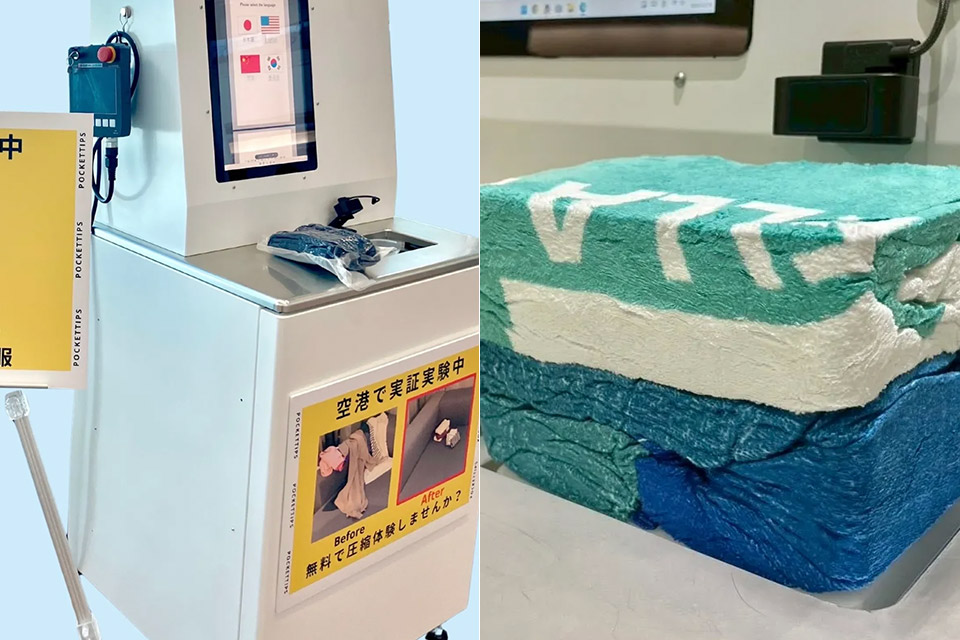
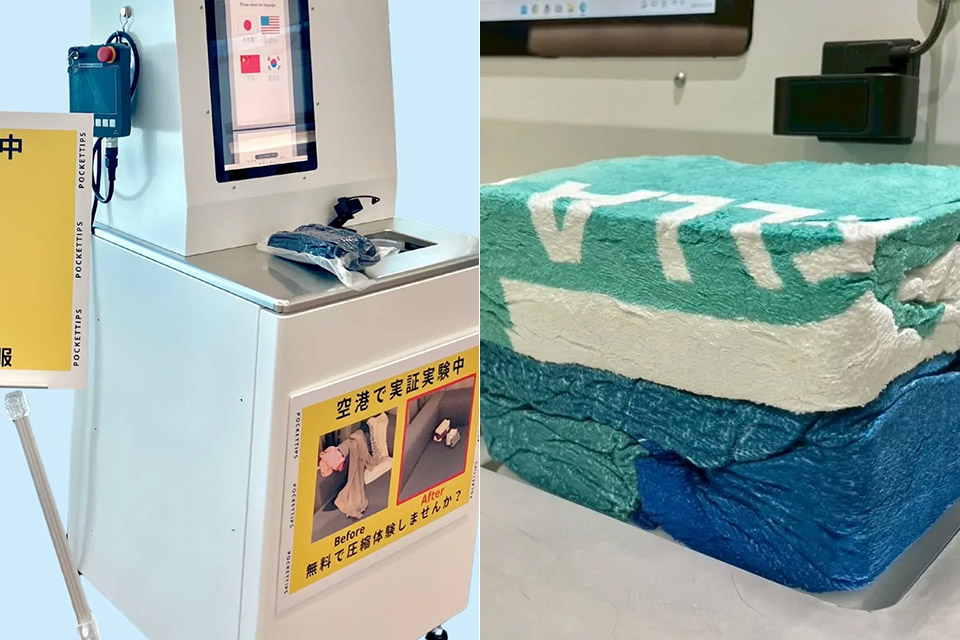
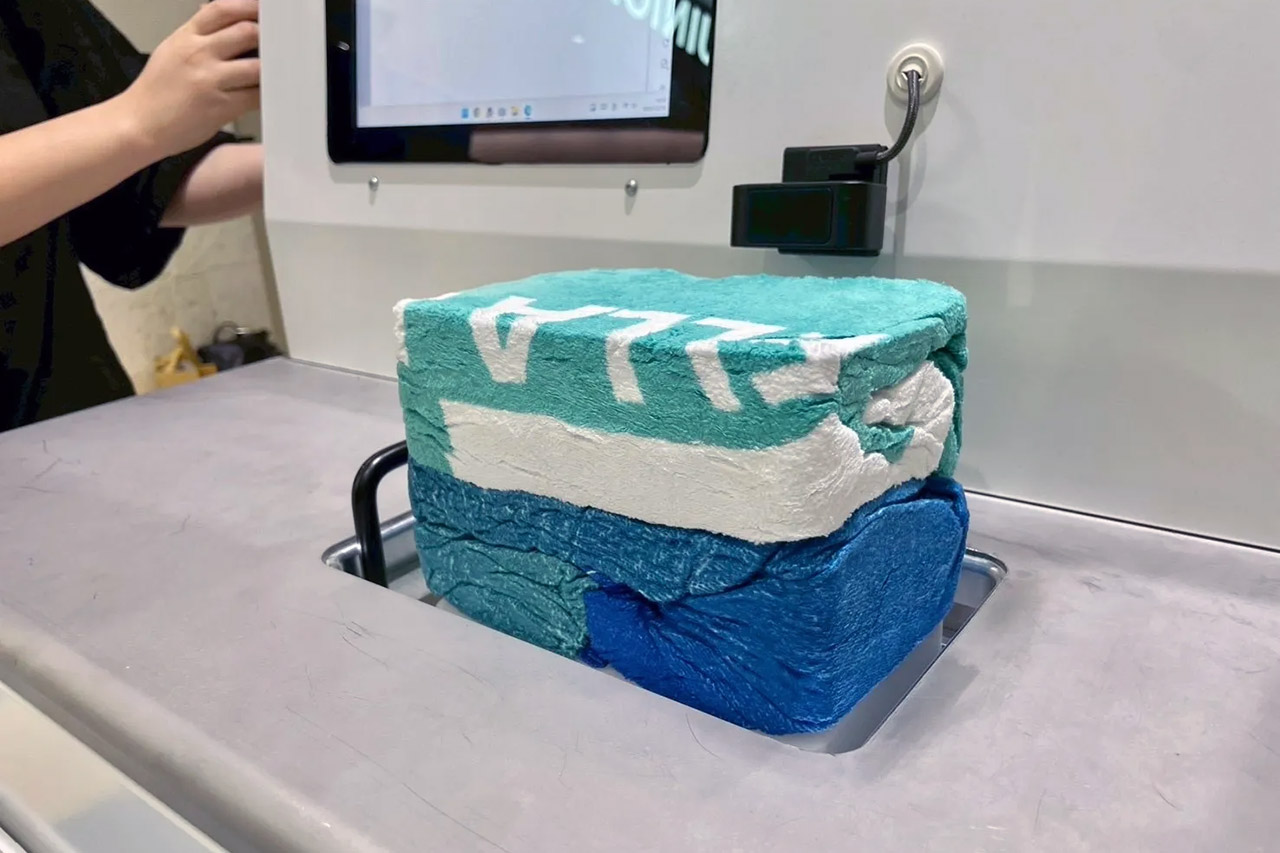
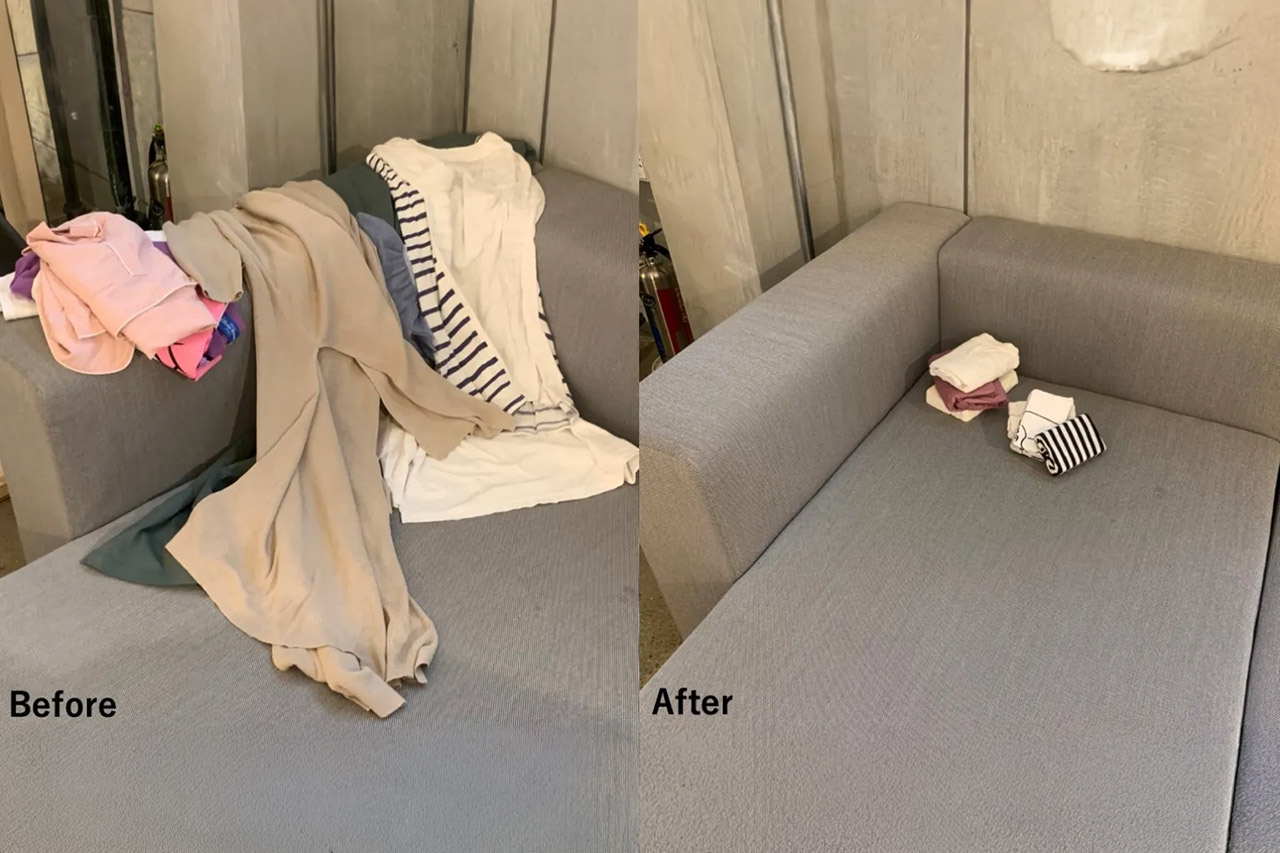
Photo credit: SoraNews24 Pocket Tips looks like an ATM and works like a one-minute clothes press. SJOY, a Tokyo apparel startup founded in 2019, built the machine so travelers fold garments into a mold, set them inside, press a button, and take back a compact cube as small as one seventh the original bulk. A thin long-sleeve shirt can shrink to the size of a palm. Bulkier pieces and towels land closer to a hardcover dictionary. One cycle handles about eight items, and the fabric itself is pressed, so no vacuum bag and no extra plastic leave with you.
Haneda, Narita, Kumamoto, and Naha are four Japanese airports that have already gone through the testing process. They hosted Pocket Tips booths from late 2025 to January 2026, including a three-day free trial in Narita’s Terminal 2 and 3 departure halls from January 13 to 15. Japan Airport Terminal’s website, terminal.0 HANEDA, collaborated with SJOY and the other three airport corporations to address a common travel issue: baggage that wouldn’t close. Narita, for example, had 1,073 abandoned suitcases in 2024, a significant rise from 124 in 2020, as customers continued to buy larger luggage and leave the old ones behind.
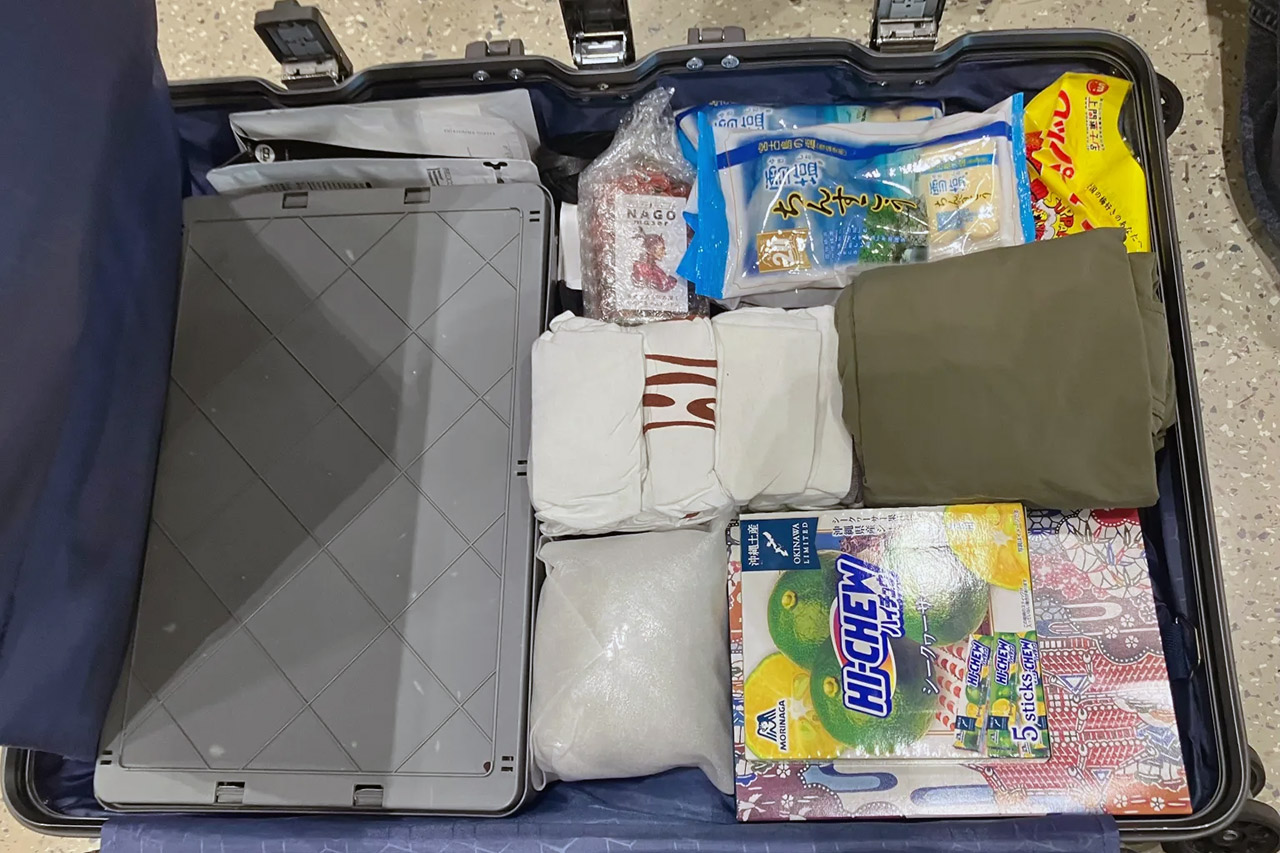
The findings of those trials always revealed the same issue. Around 400 people provided comments across the four airports, with roughly 70% saying they had to give up on buying more souveniers simply because they didn’t have space in their luggage. When Haneda tested it in a run in 2024, more than 100 people were eager to use the service again, with 89 percent wanting to do it all over again. Queues formed only to utilize the machines. One Tokyo office worker used it to compress two jackets into a backpack, giving him enough room to buy for souvenirs before his trip.
Carry-on limits toughened on April 1st, 2026, making room in the cabin tighter and the boarding process more unpleasant. Airport staff noted a significant decline in visits to duty-free and snack outlets. If seven out of ten people are walking past the stores because their bag won’t close, a machine that allows them to gain those last few inches of room will be a tremendous hit, not just for travelers but also for the airport shops. On September 8, 2026, the joint development of Pocket Tips was officially announced, with the goal of having everything up and operating by 2027. The kiosk’s placement, duration, safety, pricing, language of the screen, and acceptance of card payments are all currently being debated.
In a recent interview, SJOY president Kawaguchi stated that when you wash or simply put the clothes out to air for around 15 minutes, they return to their normal size. So far, trials have concentrated on people leaving Japan, when they tend to go a little crazy and buy last-minute souvenirs and such. Next, the partners aim to install the same kiosk for incoming tourists, allowing them to get rid of heavy bags from the start and travel lighter. After that, the kiosks will make their way into hotels and clothing stores; if airports can build them strong enough for daily passenger traffic, it will only be a matter of time before everything can be pressed, folded, cubed, and packed in a way that allows people to make the best use of the space they have. [Source]
“Hackers ripped down a Flock camera above a roadway, made a near-complete copy of the data stored inside it, and shared the files with 404 Media and WIRED,” according to an article published on both sites.
Though Flock has described its system as protected by on-device encryption, “The hackers were able to copy the camera’s storage and recover an encryption key stored on the device, which unlocked videos of thousands of vehicle detections.”
The hackers shared the material with 404 Media and the transparency nonprofit Distributed Denial of Secrets, which shared the data with WIRED. 404 Media and WIRED then analyzed those files as part of a joint investigation… [T]he joint analysis of the recovered data shows that software running on the device explicitly detects people as well as vehicles, license plates, and bicycles. The camera can produce dozens of images of a single passing vehicle and, according to several weeks of recovered logs, generated more than a million images. Its computer-vision software also sometimes isolated bumper stickers and other graphics, including, in one case, an American flag patch on a motorcyclist’s saddlebag…
According to our analysis, the camera’s logs recorded about 21 days of activity across several periods. During those windows, the device photographed roughly 50,200 vehicles and generated about 1.6 million images. On a typical day, it logged around 3,300 vehicles, with a high of 4,454… The software running on the camera explicitly detects people, something which is typically overlooked in discussions around Flock cameras. When it spots a person, it records where they appear in the image and how confident it is in the detection.
It was a collective calling itself stegan0gram that breached the cameras, according to the interview they did with Wired and 404 Media. “Why just destroy them when we can reverse engineer them and find the secrets of those spying on us?”













































You must be logged in to post a comment Login