Connect with us

Tech

Winter Paralympics 2026 Live Streams: Free Channels, Schedule & Preview for Milano Cortina

Published

on

Austria and Norway have historically ruled the roost at the Winter Paralympics, but China dominated their home Games four years ago, and are out to prove that the balance of power has shifted at the 50th anniversary edition at Milano-Cortina.

Advertisement

Source link

Continue Reading
Click to comment

Leave a Reply

Your email address will not be published. Required fields are marked *

Tech

Lawmakers launch probe into hidden "eavesdropping" risks in modern computers

Published

on


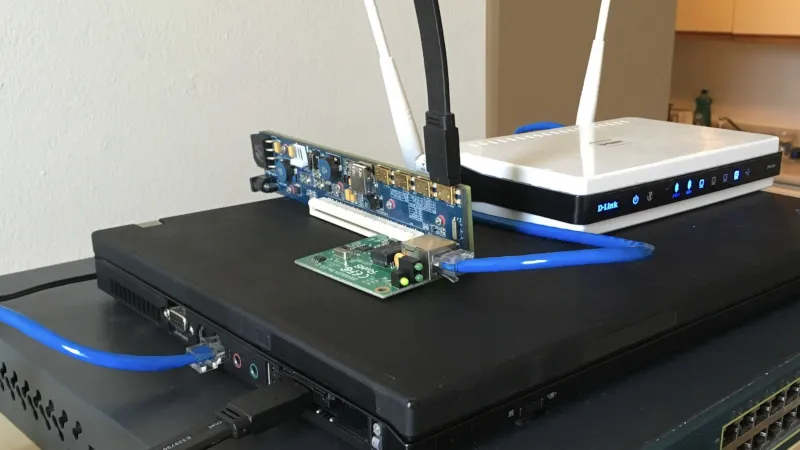
Senator Ron Wyden and Representative Shontel Brown have called on the Government Accountability Office to examine whether modern computers and phones remain vulnerable to what was once known as TEMPEST surveillance.
Read Entire Article
Source link

Continue Reading

Tech

The best iPhone 17e pre-orders and plans in Australia for March 2026

Published

on

Apple has had a big week full of product launches, and while the new MacBook Neo stole the show, the iPhone 17e was the first domino to fall on March 3.

More of the best iPhone plans

Advertisement

The iPhone 17e, however, retains the notch at the top of the display and the camera array from the 16e, giving you just a single 48MP rear shooter and 12MP front-facing lens. It also doesn’t have the ProMotion display from the flagship range, meaning the 17e has the same 60Hz refresh rate as its predecessor.

Vodafone and Optus are offering pre-orders for Apple’s new budget handset, and I’ve perused all the offers from both telcos to find the best plans for different users.

Amazon, JB Hi-Fi and The Good Guys are offering pre-orders for the iPhone 17e, but there are no discounts at this time. As mentioned earlier, however, pairing the phone with one of our best SIM-only plans can save you more money in the long run.

You can find all the retailer offers available below.

  • Apple AU: Trade in an eligible iPhone SE (2nd generation) or higher for credit towards an iPhone 17e, worth from AU$80 to A$540
  • Amazon AU: All three colours in both 256GB and 512GB available at the world’s biggest retailer
  • JB Hi-Fi: Trade in any iPhone 11, 12, 13 and 14 range handset for a bonus gift card worth AU$150 to AU$615 to apply to your iPhone 17e purchase
  • The Good Guys: Purchase the 256GB models in all three colours

Source link

Continue Reading

Tech

Ebike Charges At Car Charging Stations

Published

on

Electric vehicles are everywhere these days, and with them comes along a whole slew of charging infrastructure. The fastest of these are high-power machines that can deliver enough energy to charge a car in well under an hour, but there are plenty of slower chargers available that take much longer. These don’t tend to require any specialized equipment which makes them easier to install in homes and other places where there isn’t as much power available. In fact, these chargers generally amount to fancy extension cords, and [Matt Gray] realized he could use these to do other things like charge his electric bicycle.

To begin the build, [Matt] started with an electric car charging socket and designed a housing for it with CAD software. The housing also holds the actual battery charger for his VanMoof bicycle, connected internally directly to the car charging socket. These lower powered chargers don’t require any communication from the vehicle either, which simplifies the process considerably. They do still need to be turned on via a smartphone app so the energy can be metered and billed, but with all that out of the way [Matt] was able to take his test rig out to a lamppost charger and boil a kettle of water.

After the kettle experiment, he worked on miniaturizing his project so it fits more conveniently inside the 3D-printed enclosure on the rear rack of his bicycle. The only real inconvenience of this project, though, is that since these chargers are meant for passenger vehicles they’re a bit bulky for smaller vehicles like e-bikes. But this will greatly expand [Matt]’s ability to use his ebike for longer trips, and car charging infrastructure like this has started being used in all kinds of other novel ways as well.

Advertisement

Source link

Advertisement
Continue Reading

Tech

Anthropic says it will challenge Defense Department’s supply chain risk designation in court

Published

on

In a new blog post, Anthropic CEO Dario Amodei has admitted that it received a letter from the Defense Department, officially labeling it a supply chain risk. He said he doesn’t “believe this action is legally sound,” and that his company sees “no choice” but to challenge it in court. Hours before Amodei published the post, the Pentagon announced that it notified the company that its “products are deemed a supply chain risk, effective immediately.”

If you’ll recall, the Defense Department (called the Department of War under the current administration) threatened to give the company the designation typically reserved for firms from adversaries like China if it didn’t agree to remove its safeguards over mass surveillance and autonomous weapons. President Trump then ordered federal agencies to stop using Anthropic’s tech.

Amodei explained that the designation has a narrow scope, because it only exists to protect the government. That is why the general public, and even Defense Department contractors, can still use Anthropic’s Claude chatbot and its AI technologies. Microsoft told CNBC that it will continue using Claude after its lawyers had concluded that it can keep on working with Anthropic on non-defense related projects.

The CEO has also admitted that his company had “productive conversations” with the department over the past few days. He said that they were looking at ways to serve the Pentagon that adheres to its two exceptions, namely that its technology not be used for mass surveillance and the development of fully autonomous weapons, and at ways to “ensure a smooth transition if that is not possible.” That confirms reports that Anthropic is back in talks with the agency in an effort to reach a new deal. In addition, he apologized for a leaked internal memo, wherein he reportedly said that OpenAI’s messaging about its own deal with the department is “just straight up lies.”

Advertisement

Source link

Continue Reading

Tech

Apple Launches iPhone 17e at $599: Here’s How You Can Pre-Order It

Published

on

Apple has launched a new budget iPhone called the iPhone 17e. The smartphone focuses on offering key upgrades without increasing the price. It includes the A19 chip, MagSafe charging, and more base storage than before. Pre-orders for the device are already open, and the phone will start reaching stores next week. It offers several core iPhone features while keeping the price lower than flagship models. The smartphone starts with 256GB of storage, doubling the base capacity from the earlier version. The phone is available in black, white, and a new soft pink color.

What’s new with the iPhone 17e?

iPhone 17e charging with magsafe

The iPhone 17e runs on Apple’s A19 chip, the same processor used in the standard iPhone 17. This helps the device deliver faster performance and supports Apple Intelligence features powered by AI. Another major upgrade is MagSafe support. For the first time, Apple’s budget iPhone supports MagSafe wireless charging at up to 15W, faster than the 7.5W charging on the previous model.

Furthermore, Apple has equipped the iPhone 17e with a 6.1-inch Super Retina display and the new Ceramic Shield 2 protection. This upgrade is designed to improve scratch resistance and reduce screen glare. The phone also features a 48MP Fusion camera that supports optical-quality 2x zoom, offering a versatile camera experience from a single lens.

Apple has upgraded connectivity on the iPhone 17e by adding the new C1X cellular modem. According to the company, this modem can be up to twice as fast as the one used in the previous model. The phone offers all-day battery life, runs iOS 26, and is IP68-rated for water and dust protection. It also supports satellite-based services like Emergency SOS, Messages via satellite, Roadside Assistance, and Find My.

Price and Availability

iPhone 17e front and back

The base model of the iPhone 17e starts at $599 and comes with 256GB of internal storage. There is also a 512GB model available. Apple has maintained the base price of the new model even though it has increased the base internal storage. Pre-orders for the new model began on March 4, and shipments will start on March 11. The new model will be available in over 70 countries, including the USA, India, the UK, Japan, Canada, and Australia.

How to Pre-Order the iPhone 17e

Pre-order page

Buyers can pre-order the iPhone 17e on the Apple website or through the Apple Store application. The steps to do so are easy and fast.

  • Visit the Apple website.
  • Select the iPhone 17e model.
  • Choose the color and size of the storage.
  • Confirm the order and choose delivery or collection.

Source link

Advertisement
Continue Reading

Tech

Major phishing operation disrupted in joint Europol action

Published

on

Tycoon 2FA accounted for around 62pc of all phishing attempts blocked by Microsoft by mid-2025.

A joint cybersecurity operation has disrupted one of the world’s largest phishing-as-a-service platforms, called ‘Tycoon 2FA’ and used to bypass multi-factor authentication (MFA) and hack user accounts.

The operation was coordinated by Europol’s European Cybercrime Centre, while technical disruption was led by Microsoft. Participating industry partners also included Cloudflare, Coinbase, Proofpoint and Esentire, among others.

Japanese cybersecurity firm Trend Micro shared intelligence that allowed the investigation to initiate, Europol noted. Law enforcement authorities from several European countries, including Spain and the UK, also participated.

Advertisement

Tycoon 2FA provided cybercriminals with a subscription-based toolkit that intercepted live authentication sessions to gain unauthorised access to online accounts, including those that were protected by additional security layers.

The platform has been active since at least 2023, according to Europol, and enabled “thousands” of cybercriminals to access email and cloud-based service accounts. Experts determined that the platform generated “tens of millions” of phishing emails each month, attempting to gain access to nearly 100,000 organisations globally, including schools, hospitals and public institutions.

“Campaigns leveraging Tycoon 2FA have appeared across nearly all sectors including education, healthcare, finance, non-profit and government,” said Microsoft.

“Its rise in popularity among cybercriminals likely stemmed from disruptions of other popular phishing services”, it noted.

Advertisement

Tycoon 2FA accounted for around 62pc of all phishing attempts blocked by Microsoft by mid-2025. Its platform enabled threat actors to impersonate trusted brands by copying sign-in pages for services including Microsoft’s own 365 and OneDrive, and Gmail. It also allowed criminals to access sensitive information even after passwords were reset.

Targets were lured through phishing emails containing attachments with svg, pdf, html or docx files, often embedded with QR codes or JavaScript. To evade detection, the platform used techniques such as anti-bot screening, browser fingerprinting and self-hosted Captchas.

The joint industry and law enforcement operation led to the disruption of 330 domains that formed the core infrastructure of the criminal service, including phishing pages and control panels.

However, Microsoft pointed out that Tycoon 2FA illustrates the “evolution of phishing kits in response to rising enterprise defences”. The platform shows how cybercriminals adapt lures, infrastructure and evasion techniques to stay ahead of detection.

Advertisement

Recently, Google and iVerify highlighted the existence of a hacking mechanism, with suspected US origins, now used by bad actors to infiltrate outdated iPhones.

Meanwhile, Amazon last month highlighted how commercial AI is being used by less technically savvy cybercriminals to scale cyberattacks on enterprises.

Don’t miss out on the knowledge you need to succeed. Sign up for the Daily Brief, Silicon Republic’s digest of need-to-know sci-tech news.

Advertisement

Source link

Continue Reading

Tech

Incogni Review (2026): Does This Data Removal Service Actually Work?

Published

on

Data removal services claim to remove your details from data broker databases, thereby limiting how often your information is bought and sold. They become increasingly popular as more people start to realize how widely their personal data is shared online. However, uncertainty is common. Do they work? Are they legitimate or just another online scam?

People want to know if these tools are actually effective and how they manage their data. Especially that results aren’t instant, and not every provider offers the same level of automation, coverage, or follow-up.

That brings us to Incogni, one of the most talked-about names in this industry. This in-depth review examines whether Incogni is good, how well it actually works, whether it’s trustworthy, and how it positions itself against the competition in 2026.

Incogni Overview (2026)

Category Details
Pricing From $7.99/month when billed annually or from $15.98/month
Service type Automated personal data removal
Coverage  420+ data brokers (public and private listings)
Removal model Legal opt-out and deletion requests
Follow-ups Recurring cycles (60 days for public and 90 days for private listings)
Availability The US, the UK, Canada, the EU, Switzerland, Norway, Iceland, Liechtenstein, the Isle of Man
Verification and recognition Limited assurance assessment by Deloitte, Editors’ Choice Awards from PCMag and PCWorld
Free plan No, but a 30-day money-back guarantee
Strengths Full automation, broad data broker coverage, recurring removals, third-party verification (Deloitte), affordability
Limitations No screenshots of removals, no exposure scan details, no free trial

What Is Incogni?

Incogni is an automated personal data removal service. It’s designed to reduce your online availability by contacting data brokers and requesting the deletion of your personal information from their databases. This way, you don’t have to chase numerous companies individually. Incogni also keeps track of answers to the requests and sends follow-ups when needed.

Advertisement

Instead of tiresome and never-ending manual opt-outs, Incogni centralizes the process, operating under privacy laws like the GDPR and CCPA

The provider offers the following features:

  • Automated data removals: Incogni sends removal requests on your behalf to over 420 brokers (additional sites in higher-tier plans).
  • Customer data removals: You can submit specific sites or data sources for additional takedown attempts (plan-dependent feature).
  • Recurring removal cycles: Incogni automatically resends removal requests (every 60-90 days) to avoid relistings.
  • Progress reports and tracking dashboard: The service offers real-time tracking of which brokers were contacted and how they responded.
  • Family coverage: Specific plans allow adding multiple household members under one account for wider protection.
  • Ongoing monitoring: Incogni doesn’t stop after one round of requests, maintaining broker coverage over time.

Its focus isn’t a one-time cleanup but ongoing data exposure management.

How Incogni Actually Works

Incogni’s process is built around automation and legal rights.

Step 1: Authorization

After you create an account, you need to verify your identity. This will allow Incogni to legally act on your behalf when contacting data brokers.

Step 2: Broker Outreach

Incogni starts sending deletion requests immediately. Its data broker list includes hundreds of brokers, both public and private listings.

Advertisement

Step 3: Tracking

Incogni’s straightforward dashboard logs all the responses, confirmations, and pending cases, so you can (but you don’t have to) oversee the process.

Step 4: Recurring Removals

As data can easily reappear some time after its removal, Incogni submits requests on a cycle. Usually, it’s every 60 days for public brokers and 90 days for private brokers. This step is essential if you want to achieve long-term effectiveness.

This repeat system is what makes this different from one-time opt-outs.

How Long Do Removals Take?

Sadly, there’s no rule, as it depends on the legal response window and broker processes, and both can be rather lengthy.

Advertisement

Under privacy regulations, e.g., GDPR and CCPA, companies usually have weeks to respond to data removal requests. Some respond quickly; others require follow-ups; some even try to ignore requests. That’s why Incogni uses recurring cycles.

Broker databases refresh on a regular basis, which makes removals an ongoing process. Over time, repeated requests reduce reappearance. According to Deloitte, since 2022, Incogni has processed 245+ million requests.

Pricing

Plan Starting price for a month when billed annually Starting price when paid monthly Includes
Standard $7.99 $15.98 420+ broker removals, recurring cycles, dashboard tracking
Unlimited $14.99 $29.98 Above + priority processing and unlimited custom removals
Family $15.99 $31.98 Standard coverage for multiple household members
Family Unlimited $22.99 $45.98 All features listed above + family coverage

Incogni is also included in broader privacy bundles: Surfshark One+ plan has Incogni alongside Surfshark’s VPN and other security tools. Moreover, there’s a bundle (Data removal & identity-theft protection, all-in-one) with Nord Protect, but it’s for US users only.

Customer Support

Incogni’s customer support is handled by its Help Center and ticket-based system. Users can easily access helpful guides and FAQs as well as submit requests for assistance. Incogni’s customer support team is known to respond quickly and to the point.

Advertisement

Email-style case support is the main channel. Live chat is available, while phone support comes with Unlimited plans only, giving higher-tier subscribers a more direct contact option.

User Experience

Incogni is designed to be low-maintenance, perfect for people who don’t want to bother doing it manually, as it can easily become a full-time job. As such, setup typically takes only minutes, and the service starts operating in the background. The dashboard is the main control center. It shows contacted brokers, confirmations, and pending requests or required follow-ups.

There are no spreadsheets to manage, no legal templates to send manually, and no need to track the deadlines or reappearances. Incogni was built to operate mostly in the background. So the interface focuses on visibility rather than technical complex details.

In short, Incogni provides transparency and visibility without requiring users to actively manage each step of the process.

Is Incogni Legit or a Scam?

Incogni is not a scam. Several verifiable signals from reputable sources confirm Incogni’s legitimacy.

Advertisement

Independent Limited Assessment

A limited assurance report from Deloitte examined Incogni’s removal process and concluded that it works as promised. As of now, this type of third-party assessment is pretty exceptional in the data removal industry, and external validation is essential when you want to entrust a provider with sensitive information.

Scale and Transparency

Deloitte also confirmed that Incogni’s claims that they have already processed hundreds of millions of removal requests for its customers is 100% true. The provider keeps documentation about how each request is sent and tracked. Moreover, its removal model relies on formal privacy-law opt-out requests, not simply informal takedown attempts.

Expert Recognition

Incogni has received Editors’ Choice Awards from both PCMag and PCWorld. Accompanying reviews praise the provider’s reliable performance, strong automation, broad data broker coverage, and transparency. They also highlight the handling of ongoing removal requests that require minimal effort from the user.

Public User Feedback

Incogni holds a rating of 4.4 on Trustpilot based on over 2,400 reviews. Most frequent positive mentions include:

Advertisement
  • easy setup and automation,
  • clear visibility and transparency about the removal progress,
  • noticeable reductions in unsolicited messages and calls over time.

Some critical notes refer to how long it takes to see results and the fact that no service can truly guarantee complete data disappearance. However, that can be expected in this industry, and no provider, including Incogni, promises 100% successful removals.

Overall sentiment confirms that the service works as described, given realistic expectations.

Final Verdict: Incogni Is a Practical Tool for Ongoing Data Exposure Reduction

Incogni is an ongoing data removal service, not a one-time fix solution. It automates legally-backed opt-out requests to 420+ data brokers. Then, it repeats them on a schedule as needed and provides users with clear reports.

Independent assessment, editorial recognition, and positive user feedback confirm that the service works in a structured and reliable way.

Users need to know, though, that the results develop gradually – legal response takes time, and many broker databases constantly refresh. In that context, Incogni appears as an excellent choice, a long-term privacy management tool focused on steadily reducing how broadly your personal data circulates online. 

Advertisement

FAQ

Will using Incogni lead to a measurable drop in unwanted spam?

Yes, users typically report a significant decrease in marketing calls and emails as the service utilizes legal erasure requests to force data brokers to delete your information.

What is the expected timeframe for completing data deletions?
Advertisement

While initial requests are generally dispatched within 24 hours, brokers often take 30 to 45 days to comply. Incogni continues to monitor these brokers and resends requests if they do not respond.

Which personal details do I need to provide during account setup?

To identify your records accurately, Incogni requires your full name, email address, and physical address. You can provide multiple variations of these details to ensure older or alternate profiles are caught.

Advertisement
Can I manage my data removal via a dedicated mobile application?

Yes, Incogni offers an Android app for mobile management, though its full suite of features is primarily accessible through a standard web browser.

Advertisement
What should I know before trying to cancel a bundled subscription?

If your Incogni service is part of a package like Surfshark One+, you must manage the cancellation through that specific provider’s billing department.

Advertisement

Source link

Continue Reading

Tech

Apple's long-awaited HomeHub rumored to launch in fall 2026

Published

on

The mystical, shareable tablet device that will act as the central control unit of your Apple Home could finally arrive in late 2026 if a leaker with a limited history is right.

An iPad superimposed on a HomePod to represent a hybrid home display device
Apple HomeHub could launch in the fall

If you’ve been following AppleInsider long enough, you might have heard of Apple EVT/DVT collector Kosutami. They’re a great social media follow for pictures of products that have never seen the light of day, but occasionally, they share a possible leak.
On Thursday, Kosutami shared that the “HomePad” was coming in fall. They’re a little more old school in their leaking, providing only a cryptic message.
Rumor Score: 🤔 Possible
Continue Reading on AppleInsider | Discuss on our Forums

Source link

Continue Reading

Tech

The MacBook Neo sets a new standard for recycled content

Published

on

Apple’s newly announced MacBook Neo might look like just another addition to the company’s laptop lineup. However, it quietly marks a significant milestone for Apple’s environmental goals.

According to Apple, the MacBook Neo contains 60% recycled content by weight. This is the highest percentage of recycled material used in any Apple product so far.

That figure is largely driven by the laptop’s enclosure. Apple says the MacBook Neo uses 90% recycled aluminium overall, paired with 100% recycled cobalt in the battery.

SQUIRREL_PLAYLIST_10208291

Advertisement

The chassis is also produced using a more material-efficient forming process. This process uses 50% less aluminium compared to traditional machining methods. As a result, it helps push the recycled content figure even higher.

Advertisement

The 60% figure is calculated by weight and refers specifically to the device itself. Apple notes that the milestone doesn’t include packaging or in-box accessories, and it also excludes standalone accessories. Even with those caveats, it’s still the most recycled material Apple has ever used in a single product.

This push is part of Apple’s broader environmental strategy. The company has set a target of becoming fully carbon neutral by 2030. Increasing recycled materials in its devices is a key piece of that plan. Over the past few years Apple has gradually increased recycled aluminium, rare earth elements and battery materials. This has happened across products like the iPhone, Apple Watch and Mac.

Advertisement

The MacBook Neo appears to take that effort further than any previous device in Apple’s lineup. While most buyers will probably focus on the laptop’s specs or design, the materials story is clearly part of the pitch.

Pre-orders for the MacBook Neo are already open. Apple is positioning the device not just as a new laptop, but as another step toward making its hardware significantly more sustainable.

Source link

Advertisement
Continue Reading

Tech

Google Workspace CLI brings Gmail, Docs, Sheets and more into a common interface for AI agents

Published

on

What’s old is new: the command line — the original, clunky non-graphical interface for interacting with and controlling PCs, where the user just typed in raw commands in code — has become one of the most important interfaces in agentic AI.

That shift has been driven in part by the rise of coding-native tools such as Claude Code and Kilo CLI, which have helped establish a model where AI agents do not just answer questions in chat windows but execute real tasks through a shared, scriptable interface already familiar to developers — and which can still be found on virtually all PCs.

For developers, the appeal is practical: the CLI is inspectable, composable and easier to control than a patchwork of custom app integrations.

Now, Google Workspace — the umbrella term for Google’s suite of enterprise cloud apps including Drive, Gmail, Calendar, Sheets, Docs, Chat, Admin — is moving into that pattern with a new CLI that lets them access these applications and the data within them directly, without relying on third-party connectors.

Advertisement

The project, googleworkspace/cli, describes itself as “one CLI for all of Google Workspace — built for humans and AI agents,” with structured JSON output and agent-oriented workflows included.

In an X post yesterday, Google Cloud director Addy Osmani introduced the Google Workspace CLI as “built for humans and agents,” adding that it covers “Google Drive, Gmail, Calendar, and every Workspace API.”

While not officially supported by Google, other posts cast the release as a broader turning point for automation and agent access to enterprise productivity software.

Now, instead of having to set up third-party connectors like Zapier to access data and use AI agents to automate work across the Google Workspace suite of apps, enterprise developers (or indie devs and users, for that matter) can easily install the open source (Apache 2.0) Google Workspace CLI from Github and begin setting up automated agentic workflows directly in terminal, asking their AI model to sort email, respond, edit docs and files, and more.

Advertisement

Why the CLI model is gaining traction

For enterprise developers, the importance of the release is not that Google suddenly made Workspace programmable. Workspace APIs have long been available. What changes here is the interface.

Instead of forcing teams to build and maintain separate wrappers around individual APIs, the CLI offers a unified command surface with structured output.

Installation is straightforward — npm install -g @googleworkspace/cli — and the repo says the package includes prebuilt binaries, with releases also available through GitHub.

The repo also says gws reads Google’s Discovery Service at runtime and dynamically builds its command surface, allowing new Workspace API methods to appear without waiting for a manually maintained static tool definition to catch up.

Advertisement

For teams building agents or internal automation, that is a meaningful operational advantage. It reduces glue code, lowers maintenance overhead and makes Workspace easier to treat as a programmable runtime rather than a collection of separate SaaS applications.

What developers and enterprises actually get

The CLI is designed for both direct human use and agent-driven workflows. For developers working in the terminal, the README highlights features such as per-resource help, dry-run previews, schema inspection and auto-pagination.

For agents, the value is clearer still: structured JSON output, reusable commands and built-in skills that let models interact with Workspace data and actions without a custom integration layer.

That creates immediate utility for internal enterprise workflows. Teams can use the tool to list Drive files, create spreadsheets, inspect request and response schemas, send Chat messages and paginate through large result sets from the terminal. The README also says the repo ships more than 100 agent skills, including helpers and curated recipes for Gmail, Drive, Docs, Calendar and Sheets.

Advertisement

That matters because Workspace remains one of the most common systems of record for day-to-day business work. Email, calendars, internal docs, spreadsheets and shared files are often where operational context lives. A CLI that exposes those surfaces through a common, agent-friendly interface makes it easier to build assistants that retrieve information, trigger actions and automate repetitive processes with less bespoke plumbing.

The important caveat: visible, but not officially supported

The social-media response has been enthusiastic, but enterprises should read the repo carefully before treating the project as a formal Google platform commitment.

The README explicitly says: “This is not an officially supported Google product”. It also says the project is under active development and warns users to expect breaking changes as it moves toward v1.0.

That does not diminish the technical relevance of the release. It does, however, shape how enterprise teams should think about adoption. Today, this looks more like a promising developer tool with strong momentum than a production platform that large organizations should standardize on immediately.

Advertisement

This is a cleaner interface, not a governance bypass

The other key point is that the CLI does not bypass the underlying controls that govern Workspace access.

The documentation says users still need a Google Cloud project for OAuth credentials and a Google account with Workspace access. It also outlines multiple authentication patterns for local development, CI and service accounts, along with instructions for enabling APIs and handling setup issues.

For enterprises, that is the right way to interpret the tool. It is not magic access to Gmail, Docs or Sheets. It is a more usable abstraction over the same permissions, scopes and admin controls companies already manage.

Not a rejection of MCP, but a broader agent interface strategy

Some of the early commentary around the tool frames it as a cleaner alternative to Model Context Protocol (MCP)-heavy setups, arguing that CLI-driven execution can avoid wasting context window on large tool definitions. There is some logic to that argument, especially for agent systems that can call shell commands directly and parse JSON responses.

Advertisement

But the repo itself presents a more nuanced picture. It includes a Gemini CLI extension that gives Gemini agents access to gws commands and Workspace agent skills after terminal authentication. It also includes an MCP server mode through gws mcp, exposing Workspace APIs as structured tools for MCP-compatible clients including Claude Desktop, Gemini CLI and VS Code.

The strategic takeaway is not that Google Workspace is choosing CLI instead of MCP. It is that the CLI is emerging as the base interface, with MCP available where it makes sense.

What enterprises should do now

The right near-term move for enterprises is not broad rollout. It is targeted evaluation.

Developer productivity, platform engineering and IT automation teams should test the tool in a sandboxed Workspace environment and identify a narrow set of high-friction use cases where a CLI-first approach could reduce integration work. File discovery, spreadsheet updates, document generation, calendar operations and internal reporting are natural starting points.

Advertisement

Security and identity teams should review authentication patterns early and determine how tightly permissions, scopes and service-account usage can be constrained and monitored. AI platform teams, meanwhile, should compare direct CLI execution against MCP-based approaches in real workflows, focusing on reliability, prompt overhead and operational simplicity.

The broader trend is clear. As agentic software matures, the command line is becoming a common control plane for both developers and AI systems. Google Workspace’s new CLI does not change enterprise automation overnight. But it does make one of the most widely used productivity stacks easier to access through the interface that agent builders increasingly prefer.

Source link

Advertisement
Continue Reading

Trending

Copyright © 2025