SEGA spent a lot of money and effort trying to convince people the 32X was worth buying in 1995. One of the attractions they brought to E3 that year was an X-Men game that never made it past the booth. More than three decades later, the Video Game History Foundation pulled a short clip from its E3 1995 archives and put it online. The footage lasts about forty seconds and mostly shows Wolverine running through empty rooms.
The video begins on the show floor, where a large yellow 32X banner hangs high above the gigantic X-Men emblem, behind which the entire area is covered in comic art of the characters. There’s a row of monitors down below, one of which is displaying the demo. The camera zooms in on that screen, and we see Wolverine, dressed in his signature yellow and blue, with claws out and tearing down a long blue-lit hallway on the run. The walls are lined with stone columns, and you can see little particles of material floating in the air. He just keeps going, doesn’t even slow down, and the camera is directly behind him, slightly above, giving you a great view of the entire running animation and how quickly the landscape passes by.
MODEL KIT FOR ADULTS – Relive 80s science fiction glory with the LEGO Icons Transformers: Soundwave (10358) building set for adults 18 years old and…
AUTHENTIC TRANSFORMING ACTION – Build Soundwave with his rocket pod, laser blaster, and dart accessories, then transform him from robot and cassette…
INTERACTIVE SOUND EFFECTS – Press Soundwave’s play button to activate specially recorded voice and sound effects that capture the character’s iconic…
A few seconds later, we switch to something fresh. There are enormous stone figurines on either side of the path that resemble guardians or sculptures. Wolverine just runs straight through them as if they weren’t there. The following section opens up into a much larger space with crimson pillars and some decorative screens or panels that appear Asian-inspired. He simply keeps traveling at the same steady pace as before. The camera switches to the side for a moment, then Wolverine rushes past several vertical supports along a wall, and the final scene shows a very gloomy chamber with tall grid-like windows that let in blue light. Just when you think that’s it, the demo fades to the Video Game History Foundation logo.
Advertisement
This demo marked a significant shift from the early prototype released in 2009. That one was actually very limited because you could only play as Bishop and there was just a small selection of temple-style levels with no collision or physics. Back then, they said you could play as Wolverine, Bishop, Rogue, or Iceman, but it appears that Wolverine was already playable by the summer of 1995, at least according to the E3 clip.
The X-Men game was developed by a Danish company called Zyrinx, however they worked under the Scavenger label. We know they were involved because they’ve already created several excellent Genesis games. At the time, they claimed to have SGI-rendered character art and motion-capture animations. The concept was for an action game that combined exploration, battle, and various traps in a pseudo-3D environment. SEGA planned to publish it, however it never appeared on store shelves.
One thing that has come out is that the project was canceled because to contractual concerns between Scavenger and SEGA. Apparently, the latter opted to abandon the game and reassign Scavenger to work on a Batman game, which was also canceled as it became evident that the 32X was not going to take off. In the end, Scavenger was compensated for their services and went on. [Source]
As AI models have become more powerful, the potential for those models to be misused has grown — as has a clamor for safety guardrails that can stop such abuse from happening. AI companies must now walk a delicate tight rope between respecting their enterprise customers’ privacy while also watching usage for possible issues.
Sensing an opportunity to one-up its rival Anthropic, OpenAI just announced a privacy-centric safety approach to monitoring for misuse. The company is previewing a new service to select customers that it calls Private Safety Processing. This is an automated system that watches for potential abuse while simultaneously retaining none of the customer’s data.
This system clearly runs counter to Anthropic’s recently announced data-retention policy. The policy, which has aggravated some customers, enables the AI lab to keep user data (all of their sessions — and the conversations therein) for a period of 30 days, when it comes to “covered models.” Those models include all Mythos-class models and “future models with similar capabilities,” the company says.
This policy, which was announced in July, was designed for the purposes of safety, allowing the lab to sift and analyze potential impropriety. However, it has deeply concerned some enterprises that handle large amounts of sensitive data and don’t want it harbored (or inspected) by the AI lab.
Advertisement
OpenAI — like most other AI companies — already afford customers a relative level of privacy by adhering to a policy known as Zero Data Retention. ZDR uses agents within the OpenAI API to monitor for abuse on a per session basis. In this way, customer data isn’t retained by the company but companies are still able to scan for bad activity without the need for human intervention. It’s worth noting that Anthropic also largely abides by ZDR — except when it comes to “covered models,” like Fable.
OpenAI says that Private Safety Processing is a new technology that widens ZDR’s scope. It describes it as a form of long-horizon safety monitoring that assesses the inputs and outputs of multiple conversations — not just one. Again, the monitoring is conducted by an agent, which, if triggered, catches interactions and analyzes them across sessions for signs of potential misuse.
The new tech helps OpenAI detect malicious use of AI that takes place over multiple sessions, a spokesperson told TechCrunch. A bad actor — hypothetically someone trying to engineer malware for a cyberattack — may spread out their requests to avoid detection. Private Safety Processing can analyze those multiple conversations for signs of abuse without human review of a user’s conversations.
In the case where the system is triggered, it may send a “narrowly defined signal” to OpenAI that warns of a specific type of activity, the company says. Based on that signal, OpenAI can then decide whether “enforcement is necessary,” it says. If so, OpenAI will reach out to the customer for more context or to work with them on the issue and a customer may choose to share data with OpenAI at their discretion, the spokesperson said.
Advertisement
By contrast, Anthropic notes that human review of customer data can occur, but only “through a controlled access path” that involves “a small set of approved reviewers.” Every one of those review sessions is “recorded in a tamper-proof log that reviewers cannot suppress or modify,” the company says.
The corporate competition between OpenAI and Anthropic is tense at the moment, with both companies looking for any opportunity to gain an advantage on the other. A recent report showed that OpenAI’s Q2 grew more slowly than Anthropic. Anthropic’s annualized revenue run rate is now reportedly $65 billion. Anthropic investors have said it could IPO at $2 trillion, while OpenAI is also working on its IPO.
When you purchase through links in our articles, we may earn a small commission. This doesn’t affect our editorial independence.
Elon Musk is expected to spend big to boost Republicans in the midterms this November, according to Trump officials briefed on the matter.
The precise amount could change, but the officials expect Musk to spend around $100 million to $200 million with a focus on voter turnout in key races, including Texas, where the fate of Republican nominee Ken Paxton could determine which party controls the US Senate.
The planned cash injection—or any in-kind contribution relating to voter turnout—would be a boon for Paxton, who has been vastly outraised in contributions. According to the latest FEC filings, James Talarico had raised roughly $69 million compared to Paxton’s $9 million.
While an endorsement from President Donald Trump carried him to victory, Paxton lagged behind in contributions throughout a bruising primary against Senator John Cornyn that resurfaced past scandals, and has fared little better since becoming the nominee.
Advertisement
To date, neither of the two largest national GOP entities have committed to spend on Paxton. The Senate Leadership Fund is run by allies of Senate Majority Leader John Thune, who supported Cornyn, while MAGA Inc has not released its spending plans.
Democrats in close races have generally outraised their Republican counterparts this cycle, so Paxton is not unique in being behind in fundraising. Numerous candidates are relying on national party committees and outside groups to make up the difference.
Musk’s projected spend adds to the Republican National Committee’s $128 million war chest, while the Democratic National Committee is $2 million in debt. The two main GOP super PACs for House and Senate races have $380 million, compared to Democrats’ $116 million. MAGA Inc has about $400 million on hand; there is no Democratic equivalent.
A spokesperson for America PAC declined to comment on the group’s spending plans. The New York Times earlier reported that Musk had authorized his PAC to spend at least $100 million for the 2026 midterms.
Advertisement
But Musk’s track record in setting up voter turnout operations has been mixed.
In the 2024 election, the Trump campaign outsourced its field operations to America PAC, which paid third-party canvassing firms more than $46 million across several battleground states in an attempt to turn out “low propensity” voters, who like Trump but don’t always vote.
In the end, Trump swept all six battleground states, but Trump officials were unconvinced that was a result of America PAC’s work with paid canvassers (who often are not as enthusiastic as in-house canvassers and are known to pretend to hit doors to claim their paychecks), as opposed to Trump’s celebrity appeal and ability to turn out his base.
The 2024 America PAC operation also faced complaints from workers who claimed that they had been tricked, and threatened with having to pay for their own lodging unless they hit massive quotas. (America PAC and Musk did not respond to requests for comment at the time.)
There are some interesting things happening in the PC market these days and, more importantly, the potential for even more impactful changes over the next year or so. At a high level, overall PC shipments were predicted to decline and are indeed starting to do so on a unit basis. Read Entire Article Source link
After the little Mars helicopter Ingenuity blew everyone away with its performance, it was clear that a future Mars mission should involve more helicopters like it, with even more capabilities. The main proposal here is NASA’s SkyFall mission which would involve three autonomous helicopters, capable of searching for resources like water. To this end they would need a ground-penetrating radar system, with the antenna somehow folding away for landings, an idea that JPL is currently testing.
The SkyFall mission is currently penciled in to commence in 2028, following which it will be deployed from the Space Reactor-1 fission reactor-powered spacecraft based around elements of the now discarded Lunar Gateway space station. This obviously poses some uncertainties around when and if this mission will actually take place, but that doesn’t prevent JPL engineers from solving issues with these SkyFall helicopters.
As the antenna for the ground-penetrating radar extends beyond the landing legs, it was crucial that said antenna was flexible enough to simply fold in on itself like fabric. For this they used an existing flexible antenna design called Vivaldi, which was downscaled for the helicopters and subsequently tested to see how many simulated Mars landings it would be able to resist, as well as the effect of the cold nights and warm days.
Advertisement
We’re looking forward to seeing these SkyFall helicopters zip over the Martian surface. Maybe they can even swing by Ingenuity while they’re in the neighborhood.
ChatGPT is experiencing a major outage, and users are unable to sign in, create accounts, or load chats, including previous conversations.
The outage started at approximately 8 PM ET on Wednesday, August 19, and is affecting users worldwide, including those in the US and Europe.
If you are affected, ChatGPT will get stuck at loading animations for the sidebar, and you won’t be able to send messages due to “too many concurrent requests” errors. New signups and logins on chatgpt.com are also failing.
ChatGPT is unable to load chats
Source: BleepingComputer
This outage also affects OpenAI’s coding platform, Codex. Thankfully, OpenAI is aware of these issues and has already acknowledged them on the status page.
OpenAI says it has identified that users are running into login issues across the impacted services, and that it is “working on implementing a mitigation.”
Advertisement
The outage also affects the OpenAI API, with as many as 12 API endpoints listed as having issues on the company’s status page.
Update 1: As of 8:15 PM ET, OpenAI has marked the incident as identified and still ongoing, roughly 14 minutes after it began. We continue to run into issues in our tests.
Overall prevention scores can hide what happens after initial access. Once attackers are using valid credentials, prevention drops sharply.
The Blue Report 2026 measures defenses technique by technique across 338 million simulations run in customer production environments.
Looking ahead: A battery-powered aircraft the size of a regional airliner has completed its first flight, a milestone for Heart Aerospace as it develops technology for a future hybrid-electric passenger plane. The test showcased both the real progress in battery-electric propulsion and the range limits that will keep Heart’s first commercial aircraft dependent on a hybrid system.
Heart’s X1 demonstrator flew for 27 minutes from a regional airport in upstate New York, running on battery power the entire time. The aircraft reached 1,100 feet with one pilot aboard and no passengers. The flight marked the first time the company had put the X1 in the air.
The 30-seat plane is 76 feet long and has a 106-foot wingspan. It weighs more than 25,000 pounds. Heart says it is the largest fully battery-powered aircraft yet flown. “With the first flight of X1, Heart Aerospace has demonstrated electric flight at the scale of a commercial airliner,” Heart Founder and CEO Anders Forslund said in a statement.
The X1 is a test platform, not an aircraft meant for airline service. Heart plans to apply what it learns from the program to the ES-30, a 30-seat hybrid-electric aircraft it hopes to bring into service by 2031. United, Air Canada, and JSX have all expressed interest in the model.
Advertisement
The ES-30’s design reflects a central problem in electric aviation: batteries store far less energy per pound than jet fuel. As aircraft get larger, battery packs have to grow too, leaving less room for passengers, bags, and freight. Batteries also don’t get lighter in flight – a conventional plane sheds weight as it burns fuel, but an electric aircraft carries the same battery mass from departure to arrival.
Heart estimates the design can travel about 125 miles on battery power alone. That’s too short for many regional routes, especially once airlines factor in reserve power. The ES-30 would add a combustion-engine range extender, which Heart says could push maximum range to roughly 500 miles.
The company argues that the hybrid approach also cuts costs. Heart says the ES-30 could be more than 40% cheaper to operate than a comparable conventional regional aircraft, citing lower energy use and maintenance needs – electric motors have fewer moving parts than conventional aircraft engines, which should mean fewer and cheaper repairs.
Advertisement
Heart said the X1 flight used about $5 worth of electricity. That figure covers only the energy consumed during the test, but does not account for labor, airport charges, insurance, maintenance, battery wear, or the other costs of running an actual airline.
Heart moved its headquarters from Gothenburg, Sweden, to Los Angeles in 2025, part of a broader industry push to electrify smaller, shorter-range aircraft rather than long-haul fleets.
Rolls-Royce has tested an electric race plane that hit 387 mph, while Harbour Air has developed a six-seat electric seaplane. Joby Aviation and Archer Aviation, meanwhile, are pursuing electric vertical-takeoff-and-landing aircraft for short trips like airport connections.
Heart’s X1 flight doesn’t resolve the range and weight constraints that have slowed electric aviation. But it does give Heart flight-test data from a larger aircraft as it works toward a hybrid regional plane.
It was late March when Joe Teirab, the second-in-command at Minnesota’s U.S. attorney’s office, received an urgent email from Washington.
The federal government was scrambling to find criminal cases to back up President Donald Trump’s claims that illegal voting by noncitizens was tipping the scales in American elections. Agents from Homeland Security Investigations, a massive federal law enforcement agency, had been dispatched to work leads across the country, including hundreds in Minnesota.
Advertisement
Teirab was already under pressure. In an earlier missive, Nick Davis, a high-ranking Justice Department appointee helping to lead the election fraud crusade, had reminded him the cases were so high priority that Teirab and his staff couldn’t decline to move forward on them without express approval from agency higher-ups. On March 24, Davis demanded a status report — within hours.
Teirab, a former Marine and a Harvard Law graduate who’d run unsuccessfully for Congress as a Republican, responded with a blunt reality check.
“Bottom line up front,” he replied in an email reviewed by ProPublica. After subpoenaing records on about 130 people, only one had been referred for prosecution, his staff had told him. Agents had deluged local election offices with calls and demands for voting histories, demonstrating “a complete lack of understanding” of illegal voting investigations.
“The HSI task force has been disjointed and disorganized,” Teirab wrote. The entire process, he said, had been “dysfunctional.”
Advertisement
Since Trump regained the White House, his administration has launched a series of unprecedented initiatives to find and prosecute voting by noncitizens, which he’s long claimed, without evidence, is rampant.
He’s stepped up this push in recent weeks, saying in a nationally televised speech that the American election system was “so vulnerable that no one can possibly defend it.” To support that assertion, the Department of Homeland Security, HSI’s parent agency, released documents asserting it had found more than 250,000 noncitizens on voter rolls in just four states, all led by Democrats. The documents included no explanation of how that number was calculated.
It’s well known the administration has tasked HSI — a force established to combat drug cartels, terrorism and other cross-border criminal enterprises — with leading the campaign to find election fraud cases in the United States.
But an investigation by ProPublica reveals for the first time how the Trump administration came to harness HSI’s personnel, technology and sweeping legal authority in service of its election agenda — and how meager the results have been, despite the prodigious resources sunk into the effort.
Advertisement
According to interviews and internal emails reviewed by ProPublica, career staffers at the Justice Department warned that transferring voter rolls to HSI to enable it to search for noncitizen voters could violate federal privacy laws. Similarly, longtime HSI insiders cautioned that using the agency’s databases and tools to search these lists would yield mismatches and wildly inflated results.
The administration plowed forward anyway.
HSI’s involvement in the hunt for election fraud traces at least to summer 2025, when agency supervisors embraced a proposal from a midlevel agent who’d publicly echoed Trump’s claims about elections. He argued the agency’s powerful databases and tools could find noncitizens even on the voter lists that states make publicly available, from which the most confidential information has been redacted. Under Trump, the Justice Department had collected many public voter rolls as part of a controversial effort to compel states to turn over the unredacted versions.
Those searches went forward, ProPublica’s reporting shows, helping to generate tens of thousands of leads regarding illegal voting across the country. But when HSI agents were sent to investigate them, the results were similar to what Teirab reported from Minnesota.
Advertisement
Between January 2025 and May 2026, a ProPublica analysis of Justice Department data shows, fewer than 150 alleged noncitizen voters were referred for prosecution. Even fewer — 41 — were charged with voting illegally or other election-related crimes. (More than 150 million people voted in the most recent presidential election.)
In response to questions from ProPublica, administration officials insisted the effort spearheaded by HSI was producing meaningful results.
“President Trump is committed to ensuring that Americans have full confidence in the administration of elections, and that includes totally accurate and up-to-date voter rolls free of errors and unlawfully registered non-citizen voters,” Abigail Jackson, a White House spokesperson, said in response to ProPublica’s request for comment. “Noncitizens voting is a crime. Anyone breaking the law will be held accountable.”
A DHS spokesperson didn’t answer questions about why so few prosecutions have resulted from HSI’s work. The agency wouldn’t specify what tools or techniques HSI had used, but confirmed it had cross-referenced “publicly available data” from state voter rolls with information on “known illegal aliens” in its systems. “It’s not rocket science,” the spokesperson wrote of this initiative in a response to ProPublica’s questions. “It’s an easy step to secure our elections.”
Advertisement
Teirab and the U.S. attorney’s office in Minnesota declined to comment.
There’s an array of reasons why Trump’s campaign to document claims of widespread voter fraud hasn’t succeeded. Most obviously, it’s exceedingly rare, as countlessstudies and state audits have found. Noncitizens often get on voter rolls by accident or when government officials make errors. Last month, New Jersey disclosed that a mistake involving its Motor Vehicle Commission caused 6,600 noncitizens to be registered (fewer than 400 voted).
The administration’s critics say its hunt for noncitizen voters aligns with Trump’s attempts to seek more federal control over elections while stoking doubt and fear about the voting process. Since taking back the Oval Office, Trump has tried to impose new restrictions on voter registration, mail-in ballots and voting machines, though judges have shut down most of these efforts.
Former officials at DHS and the Justice Department called the move to involve HSI a further escalation and questioned the propriety of aiming the agency’s muscle and technology at individual cases of illegal voting.
Advertisement
“It’s one thing if you’re going after Pablo Escobar,” said Steve Bunnell, a former DHS general counsel and senior intelligence adviser who handled voting fraud prosecutions during more than a decade at the Justice Department. “It’s another thing if you’re going after some cleaning lady who’s been working in the United States for 20 years and taking care of her 80-year-old mother and taking her little kids to church.”
“The Swiss Army Knife of Federal Law Enforcement”
Trump’s enlistment of HSI in his election fight is no accident. Cobbled together in the aftermath of 9/11, the agency has 7,100 armed, highly trained agents and another 800 criminal analysts, as well as access to troves of confidential data about hundreds of millions of Americans.
Though part of Immigration and Customs Enforcement, the agency has historically stayed out of immigration cases. During the first Trump administration, leaders of 19 HSI regional offices — virtually its entire top field hierarchy — signed a letter calling for HSI to become a standalone agency, arguing that ICE’s deportation work dissuaded people from cooperating with its investigations. But when Trump returned to the White House, it swiftly became clear that the agency would play a central role in investigations related to the president’s twin obsessions, illegal immigration and noncitizen voting.
Trump picked his field general for repurposing HSI even before taking the oath of office. In December 2024, he named Anthony Salisbury, a 50-year-old career agent who’d run the agency’s Miami office, as a deputy homeland security adviser, reporting to White House policy chief Stephen Miller. He was also given a dual appointment as head of HSI.
Advertisement
Salisbury was colorful: A mixed martial arts enthusiast, he once appeared at the agency’s headquarters with his face bruised and eye blackened from a recent bout. He’d sometimes entertain colleagues by pulling out a bridge that covers his missing front teeth.
To agency veterans, however, he was forever linked to a 2011 operation he’d overseen in Mexico in which one agent was killed and another wounded in a highway ambush by a drug cartel. An agency review submitted to Trump in April 2020 concluded that errors by HSI supervisors, including Salisbury, contributed to the outcome; it urged the administration to consider disciplinary action. None was taken against Salisbury, however.
Salisbury did not respond to requests for comment from ProPublica. A White House official called him “a critical member of the Trump administration” who was “cleared” in every review of the Mexico incident and was subsequently “promoted six times under multiple administrations.”
Once elevated to his new posts, Salisbury took charge of carrying out the second Trump administration’s agenda for HSI, personally issuing staffing directives, reassignments and promotions, current and former agency officials told ProPublica. (A number of them spoke on condition of anonymity out of fear of retribution.)
Advertisement
Starting in early 2025, Salisbury oversaw the unprecedented reassignment of more than 6,000 agents to immigration enforcement, diverting most of the agency from its normal duties. He then also pointed HSI at noncitizen voting, presiding over multiple meetings with officials at DOJ and Homeland Security focused on election fraud, according to emails reviewed by ProPublica and agency supervisors who worked with him.
“Stephen Miller has an HSI deputy for a reason,” said Eric Balliet, a high-level HSI manager who retired in 2024 after 23 years with the agency. (Like many HSI veterans, Balliet has remained in close contact with former colleagues.) “Salisbury is going to salute and execute, and he is going to make sure that from the HSI side, they fall in line, and there’s going to be no resistance or pushback. HSI has been turned into the Swiss Army knife of federal law enforcement.”
In early July 2025, Frank Quiñones, an HSI special agent who’d worked under Salisbury in Florida, approached leaders at the HSI Innovation Lab with an idea for using the agency’s technology to find noncitizen voters on state voter rolls, sources at the agency told ProPublica. Quiñones had been transferred to Washington to oversee a unit that had previously handled cases involving the theft of government benefits but that had been enlisted into voting investigations.
The lab, housed in an unmarked office in a D.C. suburb, had access to the government’s most sensitive databases, from suspicious activity reports to arrest records. Staffed by a combination of HSI experts and outside consultants, it developed software tools to comb the data for information that could help agents pursue criminal suspects.
Advertisement
Quiñones was a true believer in Trump’s claims about election fraud: In multiple Facebookpostsandreposts, ProPublica found, he promoted claims that the 2020 presidential vote had been stolen. At a meeting with the Innovation Lab’s overseers, according to sources who worked in the lab, he pitched using the lab’s technology to identify illegal voters — even though the agency lacked voter rolls that included identifiers such as partial Social Security numbers. (Quiñones did not respond to ProPublica requests for comment.)
For proof of concept, Quiñones proposed using a February 2021 public voter list he’d obtained for New Jersey and running it through HSI’s databases. The lab staff viewed his idea as “a little insane,” one recalled — both unreliable and improper. Since the public rolls don’t include voters’ unique identifiers, people at the lab also knew linking them to HSI’s data would produce mismatches — what the staffer called an “ungodly” number of false positives. The lab team also worried about violating longstanding safeguards limiting use of private citizen data. They “didn’t want to touch this,” the staffer added. Quiñones defended his idea, repeatedly declaring: “The president wants this!”
Tom Hodge, an HSI data analyst at the meeting, proposed running the voter information through the Athena Toolbox, an analytical platform developed by the Sandia National Laboratories that had access to all of HSI’s databases. (Hodge did not respond to ProPublica requests for comment. Sandia referred ProPublica’s questions to the facilities’ parent agencies, including the Department of Energy, which did not respond to our requests.)
Hodge and the Sandia team spent the next six weeks on the project, reporting they’d found large numbers of noncitizens on Quiñones’ 2021 New Jersey list. According to one former HSI official, they said they’d found “5,000 high-confidence illegal voters” in just a single New Jersey county. (Officials at the New Jersey secretary of state’s office, which oversees the state’s voter rolls, declined to comment on the claim. Beth Thompson, head of a group for local New Jersey election officials, called the number impossibly high, even accounting for the mistake disclosed by the state.)
Advertisement
The apparent breakthrough couldn’t have come at a better time.
The Trump administration’s other efforts to identify noncitizens on state voter rolls were running into a variety of roadblocks.
The administration had hoped to persuade states to check their voters’ citizenship status using a system called the Systematic Alien Verification for Entitlements, or SAVE, but many didn’t. Most states also refused the Justice Department’s demands to turn over their unredacted voter rolls, including partial Social Security numbers, which thwarted the agency’s plan to run them through SAVE. Courts have stymied the DOJ’s attempts to sue for the records, citing the Constitution, which gives primary control over elections to the states.
In an Aug. 21 email to a half dozen administration officials, Quiñones touted the solution he’d brought to the HSI Innovation Lab: using HSI’s platform to search voter rolls. The results, Quiñones noted, could fuel both criminal and immigration investigations.
Advertisement
By the end of the month, those in top election-related roles at DHS and the Justice Department were actively promoting what they dubbed the “HSI Tool” as a preferred alternative to SAVE, according to people familiar with the matter. Among them was Heather Honey, the prominent election denier appointed as a senior counselor at DHS, who is helping lead the government’s efforts to identify noncitizens on voter rolls. (Honey did not respond to ProPublica’s requests for comment. In an email responding to questions to her, DHS said Honey’s “expertise in election administration” was “invaluable to the Department’s efforts to protect critical infrastructure.”)
The White House, too, got behind the idea. In a November email, J. Brian Sikma, special assistant to the president, excitedly noted that the New Jersey trial cross-checking voter rolls with DHS data appeared to have identified a “very significant number” of “potential non-citizens.” (Sikma didn’t respond to a request for comment.)
The DOJ, Sikma reported, had already obtained public voter rolls for many other states. He included a list of them, adding: “It is of paramount importance that these also be reviewed expeditiously.”
Running “Roughshod” Over Privacy
As the push to use HSI’s tech to search voter information gained momentum, a new problem emerged.
Advertisement
Career attorneys at the Justice Department, including specialists on privacy law, raised concerns that transferring voter rolls wholesale from the agency to DHS might not be legal, according to internal emails reviewed by ProPublica and interviews with several former officials.
The voter rolls the DOJ had collected contained sensitive information on millions of Americans. Even the public versions, which political parties and candidates routinely obtain to target ads and messages, included voters’ addresses, birth dates and party affiliations. For the 16 states that have agreed to share their unredacted voter lists, the DOJ had citizens’ partial Social Security numbers or driver’s license information, too.
Federal laws, particularly the Privacy Act, dictate what data government agencies can collect, what it can be used for, how it can be shared, and how it must be protected. Agencies have to disclose their plans in advance, gathering public comment. A person’s information can’t be released or shared without their consent, subject to limited exceptions.
From the outset, the Trump administration’s effort to combine data across federal agencies has repeatedly drawn criticism from courts and whistleblowers for failing to adhere to restrictions meant to keep data private and secure. In June, for example, a judge prohibited the government from using SAVE for mass searches, ruling the administration had violated federal privacy laws by giving DHS access to Social Security data to enhance the tool. The administration has appealed that ruling.
Advertisement
In July 2025, as word got around that the DOJ might hand over voter data to DHS, a half dozen career attorneys who had been reassigned into the voting section voiced their unease to supervisors, according to two former DOJ lawyers. Their concerns were disregarded, prompting most to resign.
Instead, the DOJ’s office of legal counsel pushed forward with plans to share the public voter rolls, claiming a Privacy Act exception allowed HSI to receive such data without public notice as long as it was for law enforcement purposes. DHS just needed to submit a letter officially requesting the data for those purposes, an attorney in the legal counsel’s office explained, according to internal emails.
But this exception was meant to be used to get information on individual criminal suspects, not to gain mass access to data on people suspected of no wrongdoing, according to Nikhel Sus, chief counsel for Citizens for Responsibility and Ethics in Washington, which has sued the Trump administration on behalf of voter and pro-privacy groups, filing the case that eventually limited SAVE’s use.
Peter Winn, a 29-year Justice Department veteran who had served as the agency’s acting privacy chief for nearly a decade, drafted a letter to set out the data-sharing agreement between the DOJ and DHS, according to internal documents reviewed by ProPublica.
Advertisement
In a Feb. 12 email to two top DOJ officials, he said he’d rewritten an initial draft memo to “make the information sharing arrangement far easier to defend, if and when it is challenged in court.”
Rather than simply handing over the voter rolls, Winn proposed having DHS request “pertinent and relevant” information about specific people from the DOJ, then having technical staff at Justice and Homeland Security “coordinate” to fulfill the requests.
“Having slept on it,” Winn wrote, “I ended up deciding that our initial idea of sending a huge amount of raw unprocessed voter registration data to DHS, involved taking far too much unnecessary legal risk, given that 99% of the data would implicate the privacy and civil liberties of United States Citizens, and would risk adding to the false narrative in the establishment press of DOJ and DHS being unconcerned with the privacy and civil liberties of Americans.”
Winn attached his proposed letter, to be signed by Todd Lyons, then the acting director of ICE.
Advertisement
Winn’s suggested restrictions were quickly abandoned, however. A second draft of the letter, dated March 4, contained altered language providing that the voter information would be “transferred” to HSI, with one exception: Voters’ party affiliation would be redacted, if possible, it said.
The final letter, signed by Lyons and sent to the DOJ just two days later, abandoned even that limitation. Just three paragraphs long, it permitted HSI to use the voter rolls to pursue any “appropriate investigation of potential violations of federal election law.”
In response to questions from ProPublica, Winn said “I can’t really comment on internal drafts of correspondence.”
A Justice Department spokesperson defended the government’s actions, saying “no one should oppose intergovernmental data sharing and coordination that enable swift investigations and prosecution of illegal alien voting.” DHS echoed the DOJ’s view, calling such information sharing “essential to protecting America’s election process by keeping noncitizens off voter rolls” and “an easy step to secure our elections.”
Advertisement
Sus said that by pooling voters’ sensitive personal identifiers, along with their party and voting histories, the administration has “run roughshod” over privacy laws and is creating a “1984-style database” that could be used to surveil political participation.
Balliet, the former HSI agent, expressed similar concerns, saying that handing over voter rolls to run through DHS’ systems amounted to “a mass data-collection effort by the government against its own citizens in a non-criminal setting.” On a practical level, he added, the data sharing increased the risk of breaches that can open law-abiding citizens up to identity theft.
“As a citizen, I want the government to take seriously the protection of my private data,” he said. “If it falls into the wrong hands, it’s not the government that suffers. It’s me.”
Advertisement
Collapsing Claims
By January 2026, scores of HSI agents were fanning out across the country to investigate thousands of leads about illegal voting.
About 25,000 of them involved people SAVE had identified as potential noncitizens on state voter rolls. Another 15,000 were given to HSI’s cross-border financial crimes unit, which was told to prioritize them over money laundering and fraud cases, a former high-level HSI official said. Quiñones’ unit led a separate effort to find additional cases by reviewing whether people who’d recently become citizens had voted before they were naturalized, then lied about it in naturalization interviews.
Still more leads came from running public voter rolls through the HSI lab’s databases, though it’s not clear how many. Agency sources told ProPublica that the rolls of New Jersey and Pennsylvania were searched using the Athena Toolbox. When DHS announced it had found more than 250,000 noncitizens on the registered voter lists of four Democrat-led states, it said that included “as many as” 35,152 in New Jersey and 14,576 in Pennsylvania. Both states have asked DHS to provide the source of the numbers.
Once federal investigators started digging into these cases, however, they often fell apart.
Advertisement
Through May, prosecutors had charged fewer than four dozen people with crimes related to noncitizen voting, ProPublica’s analysis of DOJ data and federal court filings shows, getting convictions or guilty pleas in 14 cases.
The largest cluster of cases was brought in the Southern District of Florida, headed by Jason Reding Quiñones (no relation to the HSI agent), a staunch Trump ally who has led investigations of the president’s political opponents. Voters have been sentenced in eight of the office’s cases; seven others are pending.
Prosecutors have initiated a total of seven noncitizen voting cases as of May in the four states where DHS claimed to have found more than a quarter million noncitizens on the rolls. Collectively, these states have more than 40 million registered voters.
Overall, the paltry numbers reflect the realities HSI investigators confronted on the ground as they tried to convert leads into cases, a ProPublica review of records obtained by voting-advocacy groups Campaign Legal Center and Democracy Forward shows.
Advertisement
Emails between agents and local election officials in Texas and Ohio indicate much of the federal information on purported noncitizens was inaccurate, the consequence of flawed data matching. When agents demanded voting histories and registration forms, they often discovered people weren’t registered in the counties where HSI thought they were. When voters register, they must attest that they are U.S. citizens; agents found some, however, who’d been put on voter rolls in error after disclosing they weren’t citizens. Many had never voted.
Most HSI agents, steeped in pursuing complex international crimes, had no experience in pursuing voting fraud. In his email to Nick Davis at the Justice Department, Teirab, the top deputy in Minnesota’s U.S. attorney’s office, described the chaos that ensued when the state and at least six counties got subpoenas for voters’ records. The demands “presented a host of issues,” Teirab wrote to Davis. (Davis did not respond to a request for comment.)
“An unknown number of agents are constantly arriving in Minnesota without any knowledge of the investigation, the issues already discussed and decided, and the processes they need to follow,” Teirab complained. “Instead of getting up to speed and learning, they have demanded many calls and subpoenas, most of which demonstrate a complete lack of understanding of the investigation.”
In Stearns County in central Minnesota, HSI agents subpoenaed voting histories on 13 people, county officials told ProPublica. Only six turned out to live there.
Advertisement
Minnesota Secretary of State Steve Simon, a Democrat, said the effort revealed federal investigators’ ignorance about “the nuance of elections administration.” The rate of purposeful election crime is “microscopic,” he said. “The very human errors that can happen are not some sort of plot or scheme to dirty up the voting rolls, but are just everyday human beings making mistakes, not intending at all to violate any law.”
As of May, only one illegal voting case has been referred for prosecution in Minnesota. The state has more than 3.8 million registered voters.
Even Republican-led states like Ohio, which has shared its unredacted voter rolls with the DOJ and run them through the SAVE system, have struggled to meet Trump administration demands to deliver cases.
In October, the Ohio secretary of state referred more than 1,000 voters identified as possible noncitizens to the federal government, claiming 167 had voted at least once since 2018. At least nine HSI agents in Cincinnati and Cleveland began to investigate, emails obtained by Campaign Legal Center and shared with ProPublica show.
Advertisement
The agents bombarded local election officials with requests for voting histories and other records, some dating back decades. “Sorry again for piecemealing these to you,” one agent wrote to an official in Butler County, outside Cincinnati, after making five separate requests over two weeks. Mohamed Al-Hamdani, a Democratic member of Montgomery County’s Board of Elections, which received similar inquiries, said they amounted to “witch hunts” that ate up staff time.
In February, Davis sent an email pressing Ohio’s two U.S. attorneys’ offices for an “election integrity” update, asking: “How close are we to complaints/indictments, how many subjects, what issues you’ve run into, how many referrals have been closed and why, how helpful HSI has been.”
As of May, just two voting cases had been referred for prosecution in Ohio and no one had been charged, federal data shows. The state has nearly 8 million voters.
Now, however, U.S. attorneys’ offices are taking a different approach, pursuing prosecutions that could result in prison terms or deportation.
In May 2025, federal prosecutors in Florida filed illegal voting charges against a mother and daughter, both Ukrainian citizens, who’d registered after becoming permanent U.S. residents, then voted in the 2024 presidential election. They’ve pleaded not guilty, with the mother saying in an interview with investigators that she thought having a green card meant she could vote. They and their attorneys didn’t respond to requests for comment from ProPublica. The prosecutor handling the case for the Southern District of Florida also didn’t respond to questions. The mother and daughter are scheduled to go to trial in September.
“Far-Reaching Consequences”
Experts on both elections and national security warn there may be profound longer-term costs to unleashing the federal government’s investigative and prosecutorial might to try to prove the president’s claims about noncitizen voting.
Current and former HSI agents say critical investigations — including task forces aimed at drug rings, human trafficking and money laundering — have languished as the agency has pivoted to take on noncitizen voting and immigration enforcement.
Advertisement
In February 2026, according to court files and emails reviewed by ProPublica, an HSI agent in Ohio who’d been leading a multistate child sex abuse investigation was abruptly assigned to pursue dozens of leads on suspected noncitizen voters, work that took months. It wasn’t until May that he made an arrest in the other case. Prosecutors have filed child exploitation and pornography charges against the man, 38, in connection with acts involving at least five 14-year-old girls.
Cases like this “don’t just stop,” said Balliet, the 23-year HSI veteran. “When you pull people off them for an extended period of time, those criminal networks will adapt, and people get killed and kidnapped.”
Federal data hints at a broader slowdown in what had been HSI’s most urgent work. According to an annual government report, the number of wiretaps obtained by DHS — often to investigate drug trafficking — plummeted to 23 in 2025, from 133 the previous year. In the report, DHS attributed the decline to several factors, including “changes in administration enforcement and prosecutorial priorities.”
“It’s never been a better time to be involved in transnational organized crime,” said John Tobon, a high-ranking HSI official who retired in early 2025.
Advertisement
In its statement, DHS denied HSI has neglected its core mission, saying the agency has increased its efforts to combat criminal cartels, gangs and drug traffickers in response to multiple Trump executive orders.
Though HSI’s voting-related investigations have yielded only a small number of prosecutions, voter advocacy groups worry the Trump administration will use them to justify more extreme interventions.
“Those concerns are playing out in real time, with far-reaching consequences,” said Dax Goldstein, a director at the States United Democracy Center, a nonprofit group that works to build confidence in elections. “When federal agencies are misused and weaponized, people lose trust in government itself.”
Avec has added a feature that scans an email for a deadline when you swipe left, then resurfaces the message on the relevant day. The $8.4mn startup has published no detail on where that scanning happens.
An email app called Avec now reads your messages to find out when things are due. Swipe left on anything you cannot deal with, and it extracts the deadline and brings the message back on the day it matters.
The company is four months into public life. Avec launched in April with $8.4mn from Lightspeed Venture Partners and Haystack, built by Jonathan Unikowski, previously a product engineer at Replit.
The claim attached to the feature is unusually confident. Unikowski says the team was not sure it could extract due dates reliably and that it now works every time, which is a founder’s assessment rather than a tested one.
Advertisement
What the company has not described is where the reading happens. Pulling a date out of a message means a model parses its contents, and Avec publishes nothing on whether that runs on the phone or on a server, or what is retained afterwards.
Email is the wrong category in which to leave that unanswered. TNW made the same argument about Superhuman years ago, when a tracking pixel turned the best-reviewed email client into a privacy problem.
There is a newer risk too. An assistant that reads incoming mail can be targeted by instructions hidden inside a message, and a user asked Avec about prompt injection publicly at launch.
Europeans largely cannot test any of this. The app is iOS only and Gmail only, and Unikowski has said he cannot guarantee general availability levels of support outside the United States and Canada.
Advertisement
The European product in this space answers the question Avec leaves open. Proton’s writing assistant runs entirely on the device if you want it to, using an open model from Mistral, and the company says it logs nothing either way.
The trade-off there is real and worth stating. Proton’s assistant cannot learn from your inbox, so what it writes is generic, which is exactly the fluency Avec is selling.
The squeeze is coming from the other direction as well. Google is adding agentic features to Gmail, which is the account Avec depends on to work at all.
The feature itself is a good one, and small. The question worth asking of every app like it is not whether the swipe works, but what your mail passes through on its way back to you.
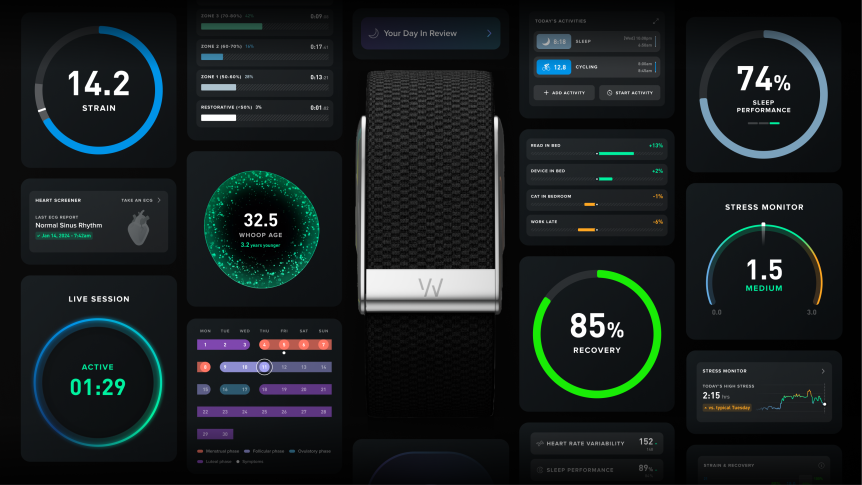
Health-tracking wearables offer insight into what’s going on inside our bodies, and it’s become increasingly common for those details to come at a cost – not just once, at purchase, but as part of a monthly or yearly membership. On Tuesday, Whoop, maker of the screenless Whoop 5.0 fitness tracker, announced that it’s branching beyond that model by offering blood tests with a la carte prices.
For this Advanced Labs initiative, Whoop is working with the US medical lab testing company Quest Diagnostics to test for over 122 biomarkers across heart, metabolic, performance, hormonal health and more.
How Whoop’s blood tests work
For $69 to $299, after you choose your blood work panel, you can schedule a test at a Quest location in the Whoop app, and a doctor will order it for you. You have up to 12 months to schedule your test after the date of purchase, and you may be able to use your HSA or FSA funds, but you should check with your plan provider first to confirm eligibility.
Those fees are separate from Whoop’s membership, which ranges from $199 to $359.
Advertisement
Once your results are in, a doctor will review them and provide you with an action plan, which will also be available in the Whoop app. You’ll also receive personalized AI insights that give “added context to the results and support with building the action plan,” a Whoop representative told CNET via email. No wearable is required for these insights.
Different states, different rules
Currently, Whoop’s Advanced Labs is unavailable in Hawaii, Wyoming, South Dakota and North Dakota.
If you live in New York, New Jersey or Rhode Island, state law requires that you pay an additional fee for each blood panel. According to Whoop, the fee varies by panel and will be collected at your lab appointment once you check in. No information is provided on the exact fee per panel or per state, but your Quest location should be able to provide that information.
Whoop’s blood panels can measure glucose, sodium, calcium and more.Whoop
A new multicancer early detection test
Announced alongside its Advanced Labs expansion, Whoop has added the Galleri multicancer early detection test to its offerings. Created by the Grail clinical laboratory, Galleri is a $799 test designed to detect cancer signals associated with over 50 cancer types. After your blood is drawn at a Quest location, the test is then performed at Grail’s North Carolina lab.
According to Whoop’s July 30 announcement about its Grail collaboration, Galleri isn’t a diagnosis, hasn’t been FDA-approved, doesn’t detect all cancers and shouldn’t be used as a replacement for the routine cancer screenings recommended by your doctor.
Advertisement
Galleri is specifically recommended for adults who have an elevated cancer risk, such as people age 50 or older. It isn’t recommended for pregnant people, individuals age 21 or younger or those actively being treated for cancer. If you’re unsure if this test is right for you, speak with your doctor.
If a cancer signal is detected, follow-up testing will be required for more information. A doctor will reach out about next steps, and you can also contact a Grail patient advocate.
Will other companies follow suit?
New product offerings in the wearables industry often become trends. When one company starts offering a certain feature to its users, others soon follow.
Ultrahuman, maker of the Ultrahuman Ring Pro, already offers blood testing through its Blood Vision platform, while Oura Ring creator Oura provides lab tests with its Health Panels service. However, both Oura and Ultrahuman currently require membership plans for their lab tests.
Advertisement
Whoop’s move away from its membership model, centered on a wearable, toward a broader health platform with lab testing could signal a shift in the industry. Perhaps it’s no longer enough to provide a health-tracking device that comes with recurring payments. For a company to stand out , it may need to become a one-stop shop with one-time prices for a variety of consumers’ health needs.
Anna Gragert
Senior Editor, Health and Home
Anna Gragert (she/her/hers) was previously the lifestyle editor at HelloGiggles, the deputy editor at So Yummy and the senior lifestyle editor at Hunker. Over the past 12 years, Anna has also written for the LA Times, Elle, Bust Magazine, Dazed, Apartment Therapy, Well+Good and more. At CNET, she’s a senior editor on the Healthy Home team, and her coverage includes health, wellness tech, meal kits and home and kitchen tech with a focus on the technology that aims to help us live our healthiest, happiest lives.
See full bio
Google is currently behind OpenAI and Anthropic at the top end of the frontier-model race. Anthropic’s Claude Opus 5 and OpenAI’s GPT-5.6 Sol both rank ahead of Gemini 3.1 Pro on major independent benchmarks, while Google’s long-awaited Gemini 3.5 Pro remains in testing after reportedly falling short of internal performance targets.
While Google works on closing that gap, it is also pushing Gemini aggressively toward a very different audience. Eligible U.S. college students can now get Google AI Pro free for an entire year, alongside a new Student Hub built specifically around studying, coursework, and research.
What students actually get for free
Eligible college students in the U.S. can claim 12 months of Google AI Pro without paying the usual $19.99 monthly price. That gives them higher Gemini usage limits, access to Gemini Spark, Gemini inside Gmail and Docs, and 5TB of storage. Students outside the U.S. get a slightly different deal. Eligible users can claim one year of Google AI Plus, which includes higher Gemini limits, access to Gemini Omni, and 400GB of storage.
Rachit Agarwal / Digital Trends
Google is also adding a new Student Hub inside Gemini. Instead of having its growing collection of learning tools scattered around the app, the hub gives students one place to start Study Notebooks, make flashcards, and take practice quizzes.
What the Student Hub can do
Study Notebooks are probably the most useful part of the update. Students can upload lecture notes and other course material, and Gemini can build a study plan around them. They can also take a diagnostic quiz to find out which topics they are struggling with, then work through shorter lessons and quizzes based on those gaps.
Advertisement
Pranob Mehrotra / Digital Trends
There are some useful additions coming soon, too. Gemini will be able to pull exam dates and assignment deadlines from a syllabus and add them to Google Calendar with permission. Study Notebooks are also getting graphs and images, while Gemini can generate interactive tables, grids, and 3D visualizations for topics that are easier to understand visually.
Gemini Live is getting its own study-focused upgrade as well. Deep Research can now be started directly through a voice conversation, left running in the background, and discussed once the report is ready. Users can also move between talking and typing without losing the context of the research
Put together, Google is giving students a lot of reasons to spend the next academic year using Gemini.




































































You must be logged in to post a comment Login