
Tech
X Open Sources Its Ranking and Filtering Algorithms


An anonymous reader shared this report from TechCrunch:
X is significantly expanding its open source codebase, which includes the app’s “For You” algorithm and its core ranking engine, and adding a feature that will let users see if their account or posts have been impacted by any of its ranking systems, the social network said on Thursday. The company is making the source code for the “For You” timeline, the default feed you see when you open the app, available on GitHub under the Apache v2 license. It’s also expanding its previous efforts to open source parts of its codebase to add more detail, including the model configuration, filter, and core ranking system details. That means it includes the parameters used to weight different signals — key to understanding which posts are actually displayed. This also makes the codebase roughly 10 to 15 times larger than it was before.
“You’ll get the core ranking code that pulls posts and ranks them for any given user and assembles the feed,” X’s VP of Product Keith Coleman told TechCrunch in an interview ahead of the announcement. “You can see the systems that filter out potentially problematic, rule-violating content…And some of those systems, like the ranker and the score, you can even run yourself outside the company.”
“This is the kind of thing that I think people will be fairly shocked that we are releasing,” he added.
In addition to the repository, X is providing tools that will let users see for themselves if and how X’s ranking systems have impacted their account or posts. A new transparency tool is rolling out to an “Under the Hood” page in the app’s settings, which will let users who have posted 10 or more times over the past month download their aggregate stats as a JSON file. The file will show if any labels have been applied to their account or posts over the past calendar month.
X’s VP of Product told TechCrunch that X engineers will consider pull requests. “That would be amazing to have people submitting code that improves the algorithm…I mean, how cool would it be for the X algorithm to be not just visible to the public, but also, like, by the public?”


Read more of this story at Slashdot.



Star Wars is at its best when it doesn’t take itself too seriously, and there’s no greater example of this than Lego Star Wars. The franchise, complete with its own video game on multiple platforms, prides itself on delivering a cute story with loads of laughs and inside jokes just for the biggest fans.
Fast on the heels of The Mandalorian and Grogu leaving theaters and hitting Disney Plus, the duo and a lot of their friends are getting a Lego Star Wars film just about them. And if you happened to be at D23, there was a chance to watch the whole thing early.
Dropping on Disney Plus September 2nd, Lego Star Wars: The Mandalorian is a hilarious trip down memory lane done Lego style. Recaps of the entire Mandalorian story so far, plus or minus some embellishments from the storytellers take up the one hour special in a way that kept me laughing the entire time. Keep an ear out for some of the original actors from the series showing up to voice their Lego counterparts as well as the standard array of Lego hijinks.
This is a cute, family-friendly way to catch up or refresh your memory. It includes sections of The Mandalorian and The Book of Boba Fett, with the story bringing you to just before the start of the film. And since The Mandalorian and Grogu movie will hit Disney Plus the same day as its Lego preview, you can treat yourself to some giggles before locking in and enjoying the action-packed film right after. Just be careful with your wallet after, or you’ll end up with a shopping cart full of your own Star Wars Lego kits.



By Rajan Kapoor, VP Security, Material Security
Over the past two months, I’ve written about the Vercel breach and the Composio breach separately. Both offer lessons to learn on their own. But reading them together, I keep coming back to the same observation: these aren’t isolated incidents
They’re the same attack, run twice, against different targets, where email was not the entry point into the workspace. And once you see the pattern clearly, it changes what you think you need to defend.
It also raises an uncomfortable question that I’ve been sitting with. The pattern I’m describing, where an OAuth grant is used to access an account, read sensitive data from email and Drive, and use that access to move past the workspace, doesn’t only describe what attackers do. It increasingly describes what AI agents do, by design, every day.
Before jumping into that discussion, let’s take a moment to map out the workspace attack chain.
The old mental model: email is where the danger lies
For most of the last decade, the dominant mental model for workspace security looked something like this: email is the dangerous channel, and everything else in Google Workspace is relatively safe.
That model made sense when attackers were primarily trying to steal credentials through phishing. It doesn’t hold anymore because attackers have learned to chain their way through the workspace, not just get in via an inbox.
The model most security teams are familiar with looks something like this:
- Email is the entry point: A malicious email (a phishing link, a weaponized attachment, a convincing pretext, a prompt intended to misdirect an AI agent) is how most attacks begin.
- A credential is stolen: The attack results in a valid credential being stolen and an account takeover happening.
- Sensitive data is accessed in Gmail and Drive: Once the takeover happens, the attacker easily jumps to connected apps within Google Workspace.
- Lateral pivots: An attacker inside an inbox can reset passwords and get into additional apps via magic links.
- Establish persistence: Attackers can sit undetected within accounts for days, weeks, or months, quietly exfiltrating data across systems.
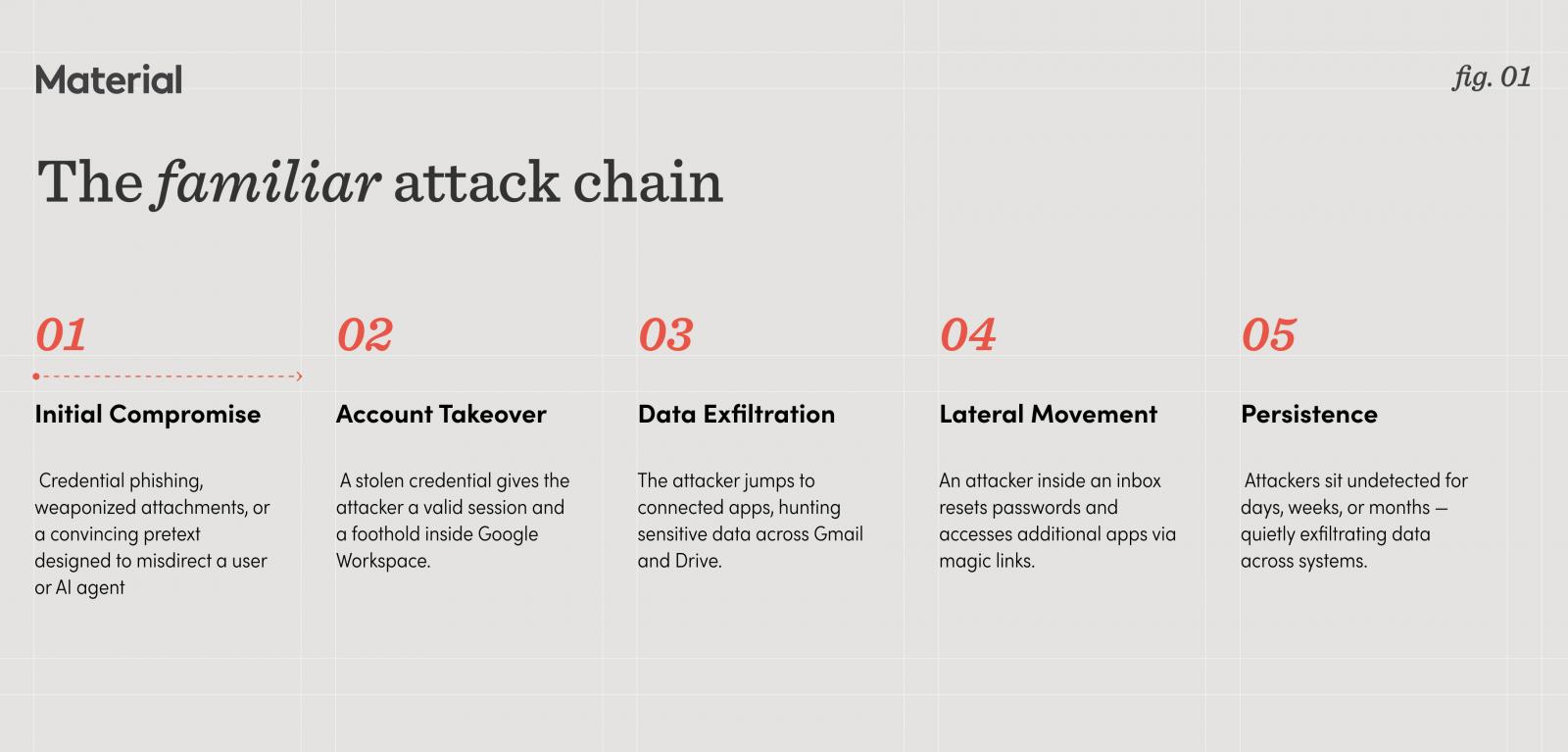
Taken together, this is the nightmare scenario that is widely recognized as the account takeover (ATO). The workspace attack chain begins with an identity compromise via email and expands from there.
The attack chain in this article doesn’t stop at the inbox, and neither should your defenses.
See how Material connects email, OAuth, and Drive security to close the gaps attackers and AI agents both exploit. Book a demo for your Google Workspace.
The evolving attack chain: OAuth is the entry point
The elements of the workspace attack chain attack haven’t changed, but the order in which the attacks unfold has evolved. The sequence I’ve now watched play out across Vercel, Composio, and a growing number of incidents we’re tracking doesn’t start with email at all.
Instead, the script gets flipped and an OAuth token becomes the entryway into email, not the other way around.
Here’s what these attacks looked like:
- OAuth is the entry point: These attacks started by establishing persistence through a stolen OAuth token. These tokens survive password resets, don’t expire, and are hard to observe. They are invisible to users and largely invisible to security teams who aren’t monitoring app behavior. Even scarier, the stolen token is a supply chain attack. A supplier is compromised and the result is access into your environment.
- Sensitive data is accessed: Using the stolen token, the attacker was able to get into data stored in Gmail and Drive.
- Email accounts are taken over: The ATO is initially executed using OAuth, not email. The access to email converts a compromised inbox into a much broader incident.
- Lateral pivots: Using a combination of credentials stored in Drive and password resets or magic links via email,the attacker can then move laterally across connected systems.
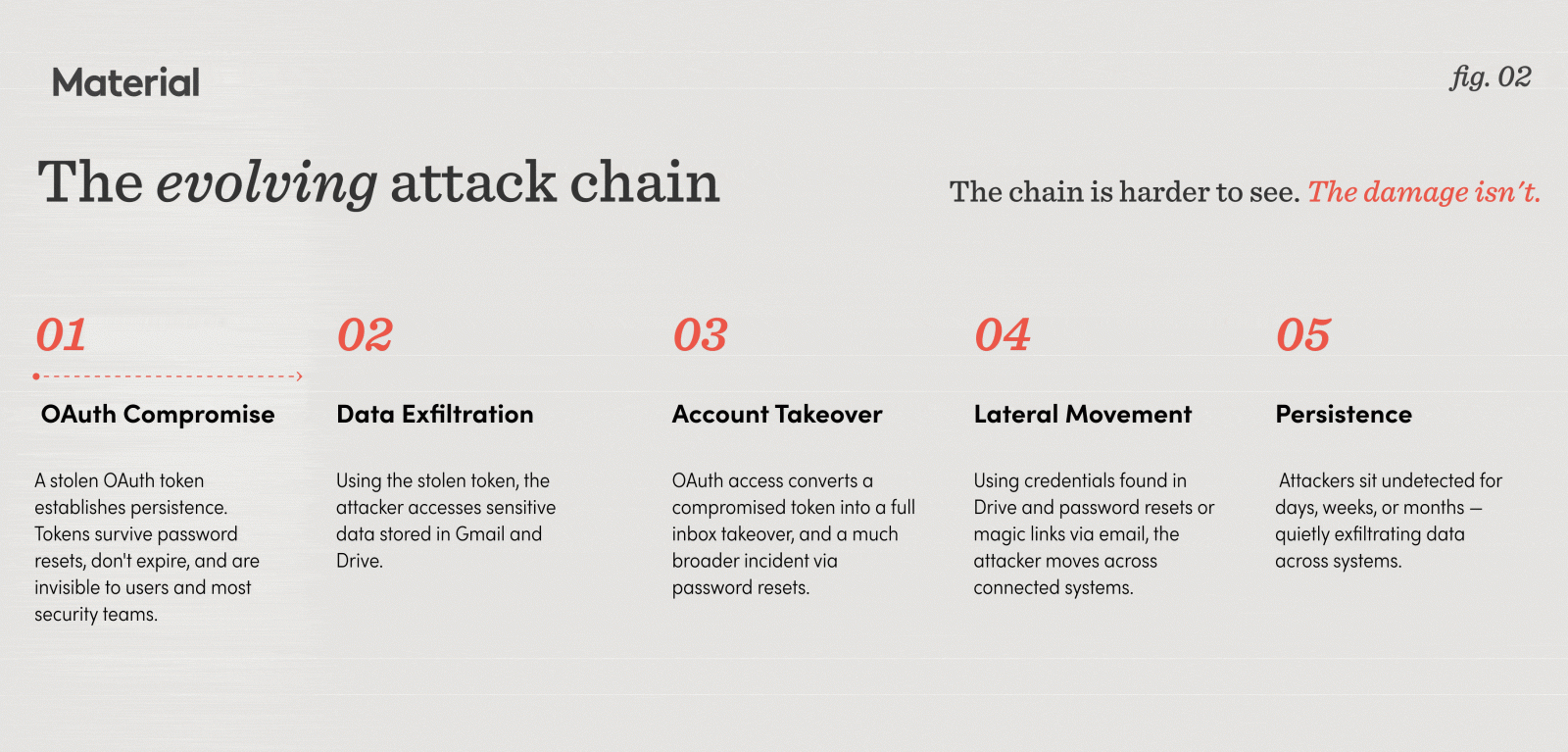
We can anticipate that the building blocks of the workspace attack chain will remain consistent, but that attackers – equipped with AI tools to sniff out vulnerabilities and scale their efforts – will continue to find ways to recombine them.
These OAuth-centric attacks are only one example of this evolution.
The same chains, a different actor
Now let’s shift our thinking, while keeping those four-step sequences I just described in our minds.
Your employees are connecting AI agents to Google Workspace right now. Those agents are authorized. They’re using legitimate OAuth grants. They’re reading email, searching Drive, operating on behalf of real users to do real work. In most organizations, this is happening faster than security teams can track it.
When an AI agent behaves unexpectedly — because its instructions were ambiguous, because it followed a chain of reasoning its developers didn’t anticipate, because it was fed a prompt through content it encountered in the environment — it can walk the same path as an attacker:
- It accesses an inbox or Drive folder it wasn’t explicitly intended to reach, because its scope was broader than its task required.
- It reads sensitive content like credentials in email threads or confidential documents in shared drives and makes use of that information.
- It takes an action downstream from that access: sending a message, following a link, making a request to another service.
- It moves laterally across applications and sensitive information winds up getting exfiltrated to a third party.
No malicious actor. No compromised credential. Just an agent doing something its operator didn’t intend, in an environment that didn’t have the controls to stop it.
Why this matters for how you think about defense
Most conversations about AI agent security are framed around preventing prompt injection, red-teaming agent behavior, or reviewing what apps your employees are connecting. Those are real problems and worth solving.
But the threat I’m describing isn’t about an agent being weaponized. It’s about an agent operating exactly as it was built to operate, in an environment where the guardrails weren’t designed with that kind of actor in mind.
A human operator acting in an environment where they’ve been overpermissioned will generally know how to navigate this situation using a combination of common sense and understanding of company norms and policies.
OAuth tokens granted to an AI agent carry the same access as tokens granted to a person, but the agent won’t understand that it’s been overpermissioned before it acts. It will simply do what it needs to do in order to execute the task.
The controls that matter here aren’t controls on the agent. They’re controls on the environment the agent operates in.
If you know where sensitive data lives across email and Drive, you can enforce policies that restrict access to it before an agent (or an attacker) gets there. If you’re investigating OAuth grants, you can understand and limit exposure to the prying eyes of an attacker or an errant agent.
If you can redact password reset links and require step-up verification before sensitive inbox content is readable, it doesn’t matter whether the entity trying to access that content is an attacker or an agent acting outside its intended scope.
The same coverage that defends against the modern attack chain also defends against the modern agent risk. They’re the same problem, wearing different hats.
What defense looks like across the full chain
I don’t think the answer is to add more point solutions to each stage of this chain. I think the answer is coverage that understands the chain as a chain, that can see what’s happening across email, OAuth, Drive, and account behavior, and connect the dots before things go wrong at step three or four.
That’s what we’ve built at Material. Here’s how our coverage maps to each step:
Blocking the initial email payload. Our email security is designed to catch what native controls miss: sophisticated phishing, payloads that bypass reputation-based filters, attacker-in-the-middle techniques. Stopping the most common attack method before it starts remains the highest-leverage intervention for the malicious threat.
Detecting suspicious OAuth behavior. Material goes beyond cataloging what apps exist and what scopes they hold.
The platform watches what apps actually do: what they read, when they read it, how that behavior changes over time. Whether an OAuth token is being used by an attacker or an AI agent operating outside its intended parameters, anomalous behavior at the activity layer surfaces the danger.
Detecting and protecting sensitive data at rest. You can’t protect what you can’t see, and you can’t design a policy around access you don’t know exists.
Material’s file security gives teams visibility into where sensitive data lives across email and Drive: which shared drives carry broad access, which email threads contain credentials or PII, which Drive folders are exposed beyond their intended audience. This is the foundation for enforcing least-privilege access against any actor, human or automated.
Blocking lateral movement via password resets. Material can redact sensitive message content, including password reset links, and require step-up verification before that content becomes accessible.
An attacker with inbox access can’t use it as a pivot point if the reset links aren’t available in plaintext. An AI agent reaching the inbox looking for something to act on encounters the same restriction.
The pattern is going to repeat
Vercel. Composio. I expect this list will keep growing, and I expect the next entries on it won’t always fit neatly into the category of “external attacker.”
Some of them will involve AI agents doing something unexpected. Some will involve overpermissioned integrations that reach data they were never supposed to see. The mechanism will look familiar even when the story around it doesn’t.
The right response isn’t to be alarmed about AI agents or to slow down adoption. Agents are genuinely useful and the productivity case for them is real.
The right response is to recognize that the workspace those agents operate in needs controls that are appropriate for a world where OAuth-authenticated software (authorized or not) is a first-class actor in your environment.
If your Google Workspace security strategy ends at the inbox, it has a gap. That gap is exactly where the modern attack chain runs, and it’s exactly where an AI agent operating outside its intended scope will run too.
If you want to talk through what full-chain workspace coverage looks like for your environment, reach out to us at Material Security.
Sponsored and written by Material Security.
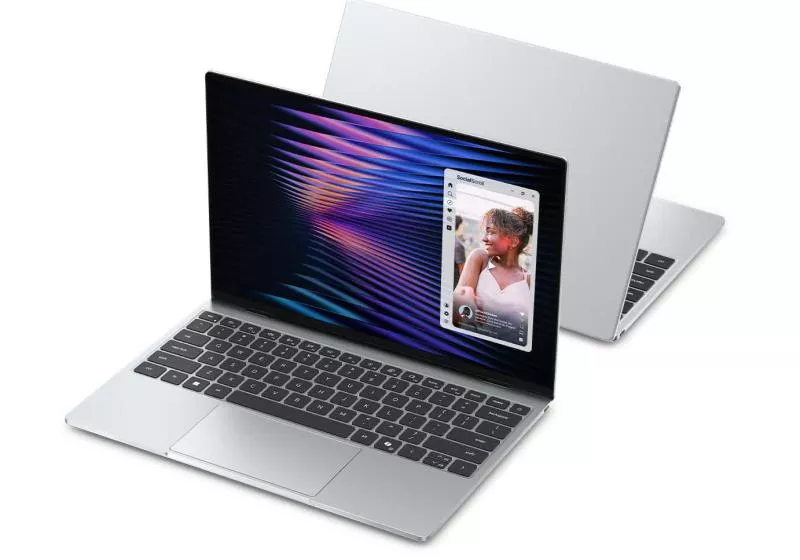
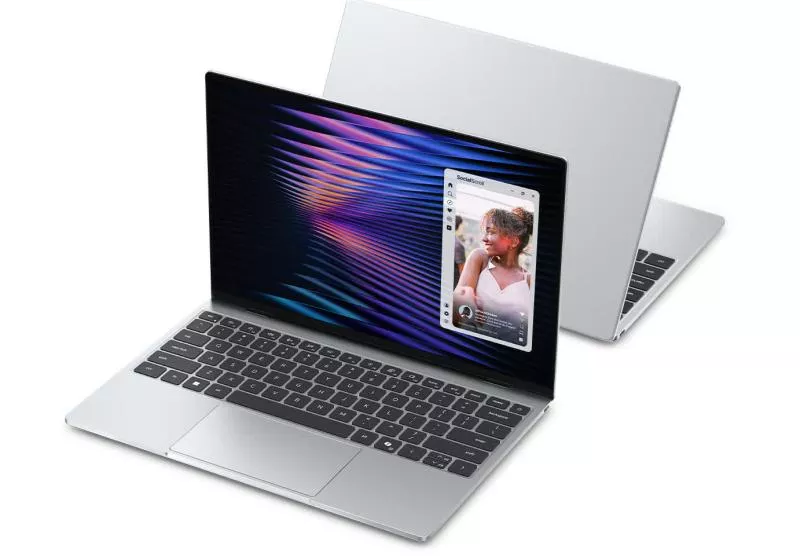
Dell’s 2026 XPS 13 earns praise for its compact aluminum design, 120Hz touch display, and strong battery life at a $699 starting price. The entry-level model’s 8GB of RAM is a compromise, with some reviewers recommending the 16GB upgrade while still keeping the price under $1,000.
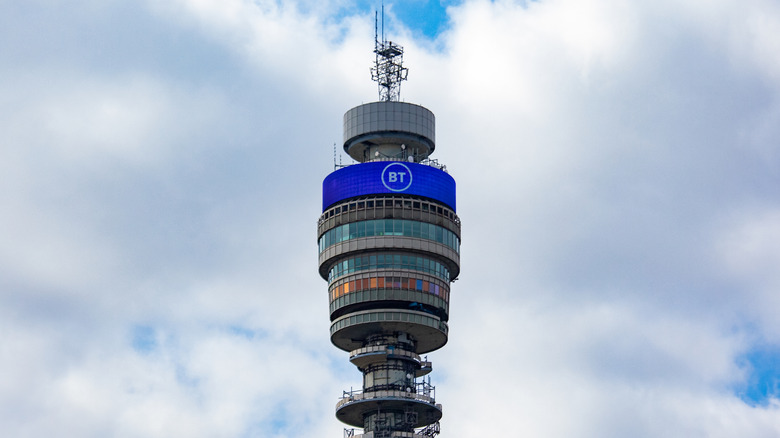
It’s nearly two hundred years old.
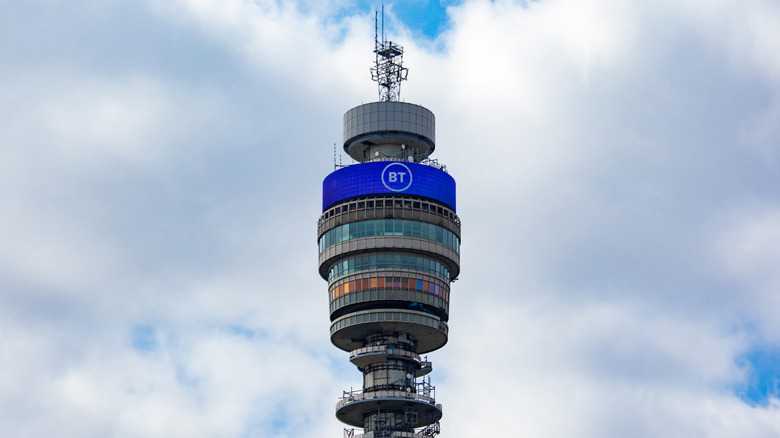
BT Group is best known today for broadband, mobile service and the infrastructure running underneath much of the UK’s communications network. Its history, however, starts long before the telephone was a household fixture. BT’s lineage reaches back to the Electric Telegraph Company, founded by William Fothergill Cooke and businessman John Lewis Ricardo in 1846 to commercialize electric telegraph technology developed by Cooke and Charles Wheatstone.
The Electric Telegraph Company merged with the International Telegraph Company in 1855, forming the Electric and International Telegraph Company, before being taken over by the General Post Office in 1870. So BT’s claim to 1846 comes through its family tree, rather than one company somehow surviving intact for nearly two centuries.
BT isn’t the only telecom company with an impressive pedigree, either. Sweden’s Telia traces its roots to a state telegraph agency founded in 1853, Telecom Egypt points to its first telegraph line in 1854 and Norway’s Telenor dates its beginnings to the Norwegian Telegraph Administration in 1855.
France can go further still, with a state-run optical telegraph network dating to 1794. The catch is that none of these are perfect apples-to-apples comparisons. Like BT, their histories run through government agencies, reorganizations and later commercial companies, which makes crowning a single “world’s oldest” telecom company considerably messier than comparing birthdays.
BT’s 1846 roots took a few detours

The early British telecommunications business had the sort of structure you might expect from a brand-new technology in Victorian Britain. Private companies built competing networks, struck agreements with railways and fought for customers while lawmakers figured out what exactly to do with all these wires suddenly appearing around the country. By the late 1860s, Parliament was debating whether the government should simply buy the telegraph companies and put the network under the Post Office, but not everyone was sold on this idea.
During debate in 1868, MP George Goschen called it “most absurd” to think the Post Office could create a “hunger and thirst … for telegrams” among rural customers who could send much cheaper letters instead. Parliament went ahead anyway. Private telegraph systems were bought and consolidated under state control, with the Electric and International Telegraph Company joining the Post Office network in 1870.
Telephone infrastructure eventually took a similar route. The National Telephone Company was absorbed into the Post Office system in 1912, then Post Office Telecommunications became British Telecom in 1980. British Telecommunications formally took over the Post Office’s telecoms and data-processing operations in 1981, before privatization began in 1984 with the government selling a majority stake in the newly formed BT plc.
So much for a straight line from 1846.
What BT looks like today
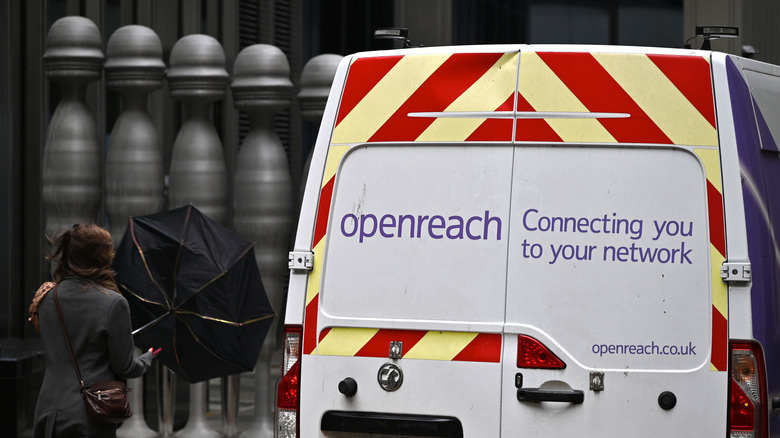
The telegraph machines are long gone, but moving information around Britain is still very much the business. Modern BT operates several familiar consumer brands, including BT itself, EE and Plusnet, alongside its business services operation. It also owns Openreach, the infrastructure company responsible for maintaining and expanding the UK’s main fixed telecom network.
If anything inside modern BT resembles that original telegraph business in spirit, it is probably Openreach. It looks after the copper wires and fiber cables connecting homes and businesses, then provides access to hundreds of communications companies that sell broadband and phone services directly to the people using those lines, rather than serving most households itself.
Openreach has been legally separate from BT since reforms proposed by Ofcom, with its own board, employees, management and strategy. However, BT Group still owns it since Ofcom did not require a full ownership split. Mobile is another major part of what BT became. BT completed its acquisition of EE in 2016, giving the group control of what was then the UK’s largest mobile network, and EE’s 5G+ network now reaches 77 percent of the UK population. BT has also brought BT Mobile back in 2026 for its broadband customers.
William Cooke probably would not recognize much of that, but the cables might look reassuringly familiar. As of June 30, Openreach’s full-fiber footprint covered 23.4 million premises, with 9.4 million connected.
Just like any other online service, hackers can target and break into your accounts on popular AI platforms such as ChatGPT, Claude, and Perplexity.
TechCrunch has created a comprehensive guide to help you protect yourself if you suspect someone has broken into your account on one of the internet’s most popular platforms, social networks, or messaging apps. Now, we’re here to show you how to check whether your accounts on AI platforms have been hacked.
As usual, we recommend using unique passwords stored in a password manager, and turning on multi-factor authentication (MFA), so that even if someone steals your password, they won’t be able to log in without that second piece of information.
ChatGPT and Perplexity offer MFA. Claude doesn’t, because instead of asking for a password, Anthropic’s AI chatbot sends a login link to your email address.
All three of these AI platforms offer similar ways to check if there’s a suspicious device logged into your account. Here’s exactly how each platform works.
ChatGPT
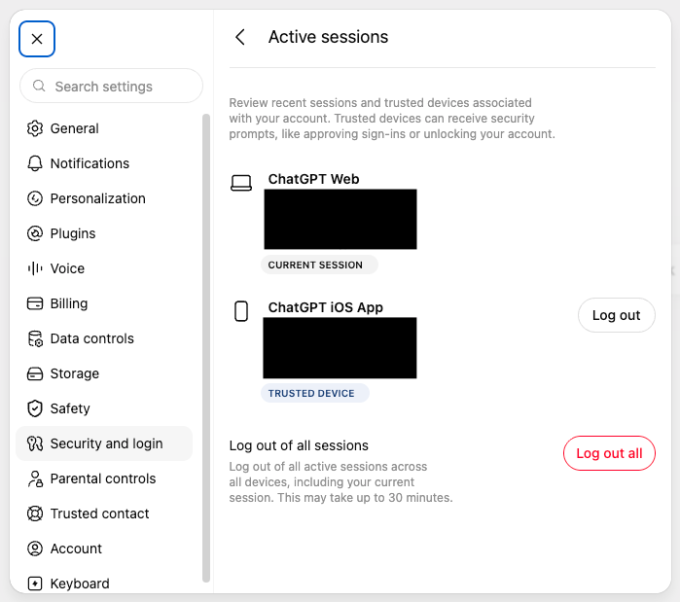
To find out if someone has broken into your ChatGPT account, open it on your computer’s browser, click on your username in the bottom left corner, go to “Settings,” then “Security and Login,” and finally click on “Active Sessions.”
You will see where you are logged into your ChatGPT account. If you see any device you don’t recognize, you can log out of that single device. You can also click on “Log out all.”

At this point, if you want to change your password, you need to log out of your account.
Then, on ChatGPT’s website, click “Log in” located in the bottom-left corner, enter your email address, click on “Forgot password,” and then “Continue.”
ChatGPT will then send you an email containing a six-digit code. Enter the code on the ChatGPT login page, click “Continue,” and then enter a new password.
You can also click “reset your password” in the email you received to see the official instructions on how to do that.
Claude
For Claude, open it in your computer’s browser, click on your username in the bottom-left corner, then “Settings,” and click on “Account.” That’s where you will see your “Active sessions.”
If you don’t recognize one of them, hover over it, click on the three vertical dots that appear on the right, and click “Log out” or “Terminate.”

If you want, you can click on “Log out of all devices.”
At that point, you’ll be able to log back into your account using your email address. You will receive an email with a link to log in. Claude does not allow you to use passwords at all, so there’s no password to change.
Perplexity
In the case of Perplexity, the AI-powered search engine does not show you where you are logged in.
So if you’re worried someone may have broken into your account, go to Perplexity in your browser and click your username in the bottom-left corner, then “All settings.” Finally, click on “Sign out of all sessions,” and then “Confirm.”

At that point, you can log back in by entering your email address. You will then receive an email with a unique six-digit code. Enter the code on the website to log in, or click on the “Sign in” button in the email to log in directly.
When you purchase through links in our articles, we may earn a small commission. This doesn’t affect our editorial independence.
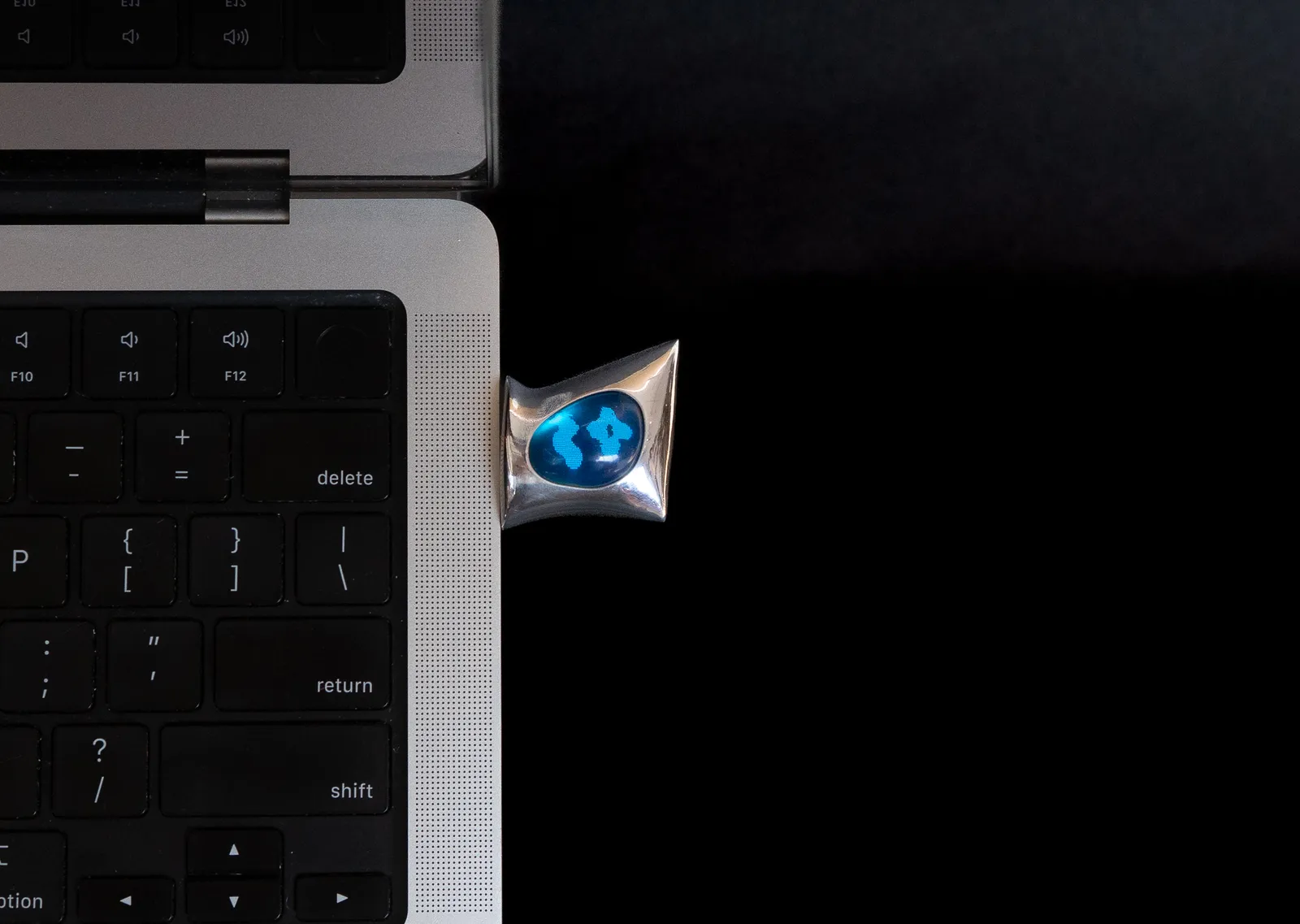
I’m already growing hoarse in Golden Gate Park as Charli XCX takes the stage at a San Francisco music festival. The crowd starts jumping as a guitar hook hits, and I reluctantly comply, bouncing around on these aging knees as my chunky Puff necklace almost flies off the chain.
During a lull in the set, someone next to me compliments the necklace, which has stainless steel swirls and a bulbous orange center. Their eyes grow wide as I flip the cap off and explain that it’s a hidden USB flash drive—I plugged the Puff into my phone to show off the animations.
When Harry Isaac and Sebastian Bidegain, working together under the Noware moniker, posted an early prototype of their retro-futuristic necklace on social media in 2025, it quickly racked up over a million views with thousands of waitlist sign-ups to buy one. The duo has spent the last year attempting to turn the online attention on their prototype into a mass-produced reality. Now, Noware is finally ready to ship units this October.
Photograph: Courtesy of Noware

The pair arrived at the WIRED office wearing Puff necklaces, naturally, that match with their trendy gorpcore outfits. They seem nervous, albeit excited, to show off their creation. Neither has had a wide release for their products before, though both are well-versed in whimsical designs. Isaac previously went viral for making an electric scooter that shoots out bubbles. Bidegain was already sculpturally approaching electronics, with prototypes like a vape camera and lo-fi sampler built into a rock.
The design ethos of the Puff is just as much about aesthetics as it is about usefulness. Noware’s marketing materials show a cool girl with a Puff clipped onto her purse, where a Labubu might have sat last year, as well as styled on her neck with a pile of other silver chains. Bidegain says the “squishy, doughy” textures of food partially inspired Puff’s design, as well as cellular biology and tactile devices, like old phones and radios.
“On one end, I want anyone to be able to wear it, just if they think it’s pretty,” he says. “Though, I also want people who actually find utility in flash drives as part of their workflow: photographers, DJs, IT people.”
The small screen in the middle of the necklace is my favorite aspect. When it’s plugged into my phone or laptop, Puff’s center lights up with a customizable design. The Noware duo showed me goopy animations that reacted to the direction I held the phone as well as an aquarium mode. They even put the WIRED logo on it through custom software anyone can use to craft their own designs. The Puff doesn’t have an internal battery, so the USB drive can live as a piece of jewelry far longer than the expiration date of most electronics.
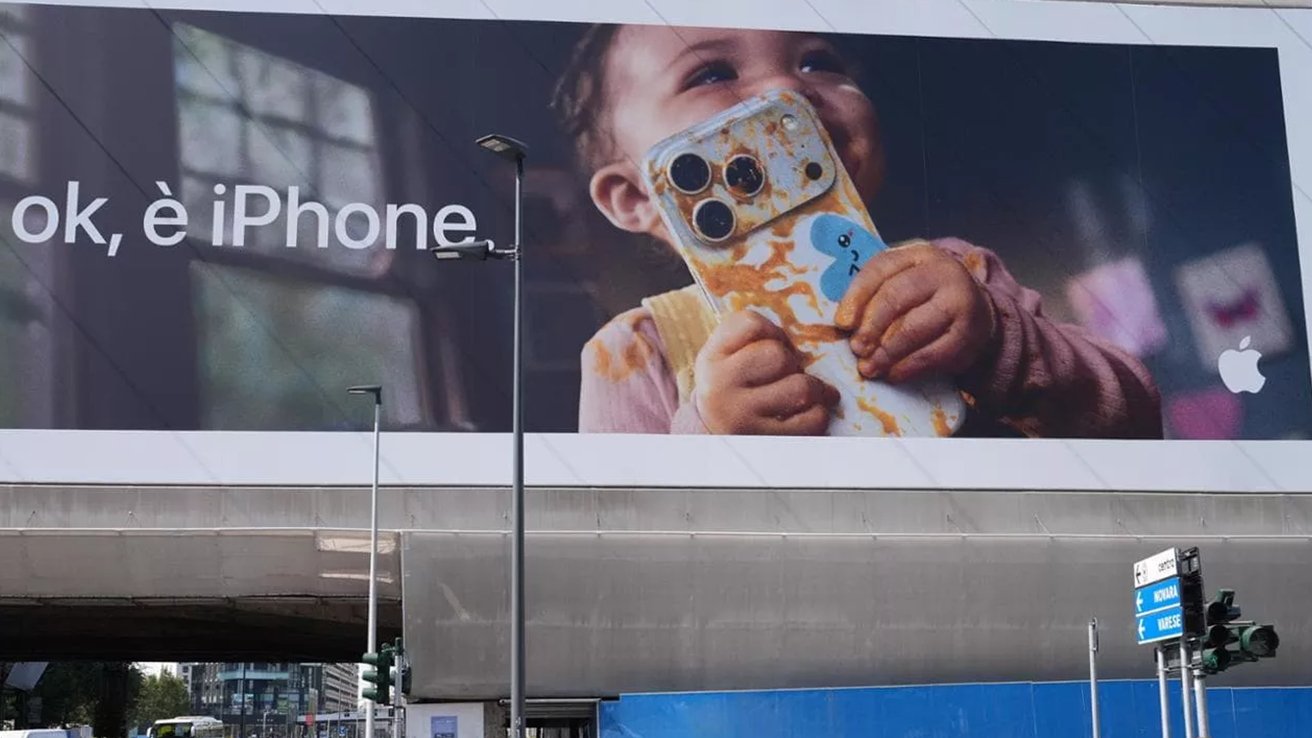
Someone missed the point of an iPhone billboard, prompting Apple to pull the advertisement down after it was accused of normalizing “electronic babysitting.”
Apple has removed one of its billboards in Milan, Italy, after public outcry. The ad in question depicted a toddler holding a food-smeared iPhone paired with the text “Tutto ok, e iPhone,” which translates to “It’s okay, it’s an iPhone.”
Apparently, the Italian children’s rights watchdog Autorita Garante per l’Infanzia e l’Adolescenza (AGIA) had received a call from a concerned citizen. The citizen believed that Apple was normalizing “electronic babysitting,” or the act of placating a child with an electronic device.
So, AGIA wrote a statement, first spotted by 9to5Mac, that accused Apple of not taking the issue seriously. It said that Apple was putting children on the path to digital addiction and was potentially putting children’s psychological and cognitive development at risk.
However, the advertisement campaign wasn’t saying that toddlers should be given iPhones. Instead, it was part of Apple’s larger “Relax, it’s iPhone” campaign designed to promote the device’s durability.
Other images in the campaign included someone using the iPhone in the rain, a dog with an iPhone in its mouth, and an iPhone sitting at the edge of a bathtub. All situations that used to make smartphone owners cringe before companies like Apple made extra efforts to increase device durability.
Yet Apple is still aware of the ad’s optics. So, down it came.
It has since been replaced with an advertisement showcasing the device’s Find My capabilities, as reported by la Repubblica.


channel
70,000 customers will join the collective, whose name and leader remain unknown
TalkTalk Business and UK technology services biz ARO plan to merge, creating what they say will be one of the country’s largest communications and managed services providers.
The pair claim the combined organization will be “uniquely positioned” to serve as a single technology partner for British firms pursuing digital transformation. It will have annual revenue of about £200 million ($270 million) and a combined customer base of more than 70,000 companies.
Analyst firm Megabuyte noted that ARO, formerly known as Arrow, is the larger of the two businesses by earnings.
However, the vast majority of the combined customer base will comprise TalkTalk Business’s small-business clients, with the remainder mainly ARO enterprise customers. Megabuyte expects fixed-line and mobile communications and connectivity to generate most of the combined revenue – about £130 million ($176 million) – with IT and cybersecurity services providing the remainder.
Megabuyte said the immediate priority would be integrating the businesses and finding opportunities to sell their services across the combined customer base.
“One can see why the deal is being sold in terms of cross-sell, with relatively little overlap in terms of customers and products. TalkTalk Business has a large base of small business customers who should be receptive to ARO’s mobile and Microsoft offerings, as well as other IT and cyber services,” says chief analyst Philip Carse.
TalkTalk Business completed its separation from the wider TalkTalk Group earlier this year as it sought to expand as an independent managed network provider. It recently acquired Planet IT, a service desk biz selling IT support and professional services.
ARO provides cloud, cybersecurity, and datacenter services and is a Microsoft Solutions Partner.
The two firms describe their operations as highly complementary.
The deal remains subject to approval under the UK’s National Security and Investment Act (NSIA), apparently because ARO supplies some government customers, and is expected to close by the end of the summer.
Initially, both businesses will retain their existing brands and offices while the companies develop their integration plans.
The implication there is that there could be a shake-out of duplicate products and staff roles coming later, as often happens with corporate mergers.
We asked what the combined business would be called and who would lead it, but the companies declined to answer.
“This is a defining moment for both ARO and TalkTalk Business,” claimed ARO chief Ciaran Rafferty.
“By bringing together our complementary strengths, we are creating a stronger partner with broader capabilities, deeper expertise and greater capacity to invest in innovation, service delivery and long-term customer success.”
TalkTalk Business CEO Ruth Kennedy said it represents a key step in the firm’s ambitions to become a leading managed services provider.
“The market is evolving rapidly, with organizations increasingly seeking technology partners that can combine strategic expertise, operational excellence and broad service capabilities at scale,” she commented. ®

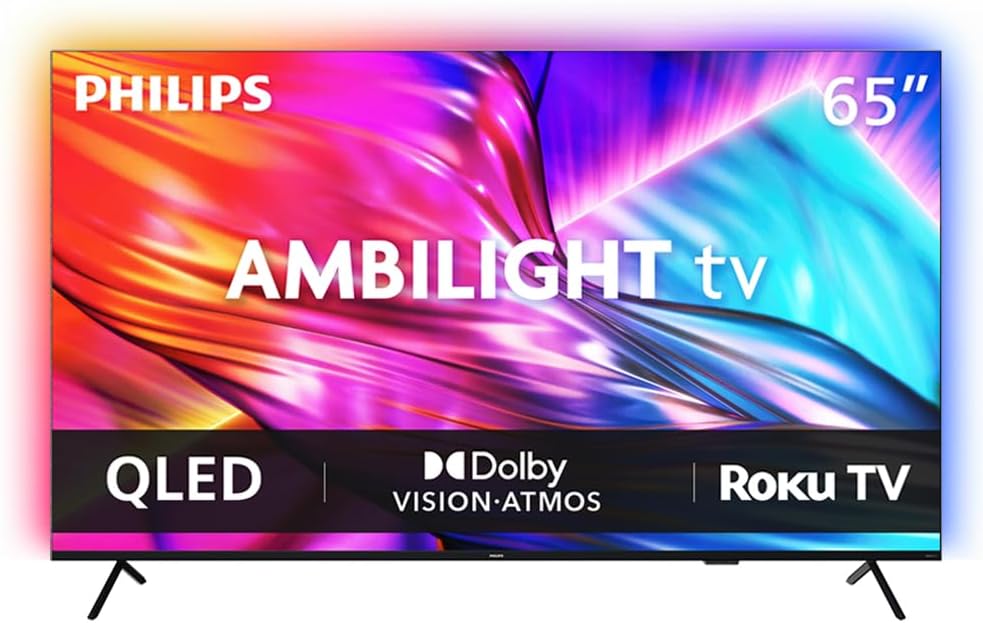
Following the 2025 launch of its 7875 Series LED/LCD TVs with Roku and Ambilight, Philips is expanding the lineup for 2026 with the new 7985 Series. The latest models retain Roku’s smart TV platform and Philips’ signature Ambilight technology, but add Quantum Dot technology for the first time in the series, moving the range into the increasingly competitive QLED TV category.
Philips Ambilight Extends the Picture Beyond the Screen
Ambilight is a lighting technology available on select Philips TVs that projects colored light beyond the borders of the screen, creating a more immersive viewing experience. Small LEDs on the back of the TV cast light onto the wall behind it, matching the colors and action on-screen in real time.
Big game-winning goal? Your living room glows green. Concert blasting through your speakers? The lights pulse with the beat. Romantic movie sunset? The wall behind your TV adds more drama than the plot.
Ambilight effectively takes the TV from “just a screen” to the main attraction in the room by extending the visual experience beyond the display itself and making the wall behind it part of the presentation.

What Is QLED?
A QLED TV is an LCD-based TV that has an LED backlight, and images are still viewed on an LCD display panel. However, it adds another component, a sheet of Quantum Dots (that is where the “Q” comes from). The Quantum Dot sheet is placed between the LED backlight and LCD panel to improve color. Quantum Dots are nano (microscopic) particles that emit color when hit with a light source. For a complete rundown on how the technology works, refer to our companion article.

QLED and Ambilight Create a More Immersive Viewing Experience
The 2026 Philips 7985 Ambilight QLED TV Series uses Quantum Dot technology to expand the available color range, improve color accuracy, and deliver a brighter image compared with conventional LED/LCD displays.
“Ambilight TV has always been about creating a more immersive way to experience television,” said Fangfang Li, CEO, SKYWORTH USA. “With our new QLED Ambilight TV series, we’re expanding that experience with advanced QLED technology that delivers richer colors, enhanced picture quality, and a more immersive way to watch, stream, and play.”
Pro Tip: In 2025, SKYWORTH entered into a trademark licensing agreement (TMLA) that allows it to offer Philips-branded televisions to the North American market.
Philips 7985 Ambilight QLED TV Series Key Features
- Ambilight: Ambilight extends on-screen colors onto the surrounding walls, creating a wider and more immersive viewing experience.
- Follow Audio Mode: This dedicated audio-reactive mode uses Ambilight effects that pulse and move with the beat of the music, adding another visual element to parties and music playback.
- Gaming Excitement: Ambilight reacts to gameplay in real time, providing dynamic lighting effects that complement fast-paced action on the screen.
- Roku Backdrops and Ambient Lighting: Roku Backdrops can display artwork or personal photos, while Ambilight can provide ambient lighting when the TV is not being used for conventional viewing, adding more versatility to the room.
- Eye Comfort: Ambilight can soften the perceived contrast between a bright TV image and a darker surrounding room, potentially making extended viewing more comfortable.
- Seamless Streaming: Built-in Roku OS provides access to thousands of movies and TV shows, Roku Originals, more than 500 live TV channels, and a wide selection of streaming apps.
- HDR Support: Philips 7985 Ambilight QLED models support HDR10, Dolby Vision, and HLG, providing compatibility with major HDR formats for enhanced contrast, color, and highlight detail.
- Dolby Atmos Support: Dolby Atmos compatibility provides support for immersive, multidimensional audio when used with compatible content and audio equipment.
- Roku Smart Picture: Roku Smart Picture automatically adjusts picture settings based on the type of content being displayed to optimize the viewing experience.
- Wireless Connectivity: The TVs support wireless connections with compatible Roku speakers, soundbars, and subwoofers, providing additional options for building an integrated home theater system.
- Apple AirPlay: Apple AirPlay support allows users to stream music, videos, photos, and other compatible content directly from Apple devices to the TV.
- Roku Ecosystem: Integration with the Roku mobile app provides access to voice controls, remote-control functions, and Roku Smart Home notifications for broader system connectivity.

Philips QLED Amblight TVs with Roku OS Specs
| Philips Model | 50PUL7985/F7 | 55PUL7985/F7 | 65PUL7985/F7 |
| Product Type | QLED TV with Ambilight | QLED TV with Ambilight | QLED TV with Ambilight |
| Price | $319.99 | $369.99 | $469.99 |
| Screen Size (Diagonal) | 50-inches | 55-inches | 65-inches |
| Display Panel | LCD | LCD | LCD |
| TV OS | Roku | Roku | Roku |
| Aspect ratio | 16:9 | 16:9 | 16:9 |
| Contrast ratio (typical) | 4000:1 | 4000:1 | 4000:1 |
| Dynamic Contrast | Yes | Yes | Yes |
| Response time (typical) | 8 ms | 8 ms | 8 ms |
| Backlight | Edge Lit LED | Edge Lit LED | Edge Lit LED |
| Panel resolution | 4K UHD (3840x2160p) | 4K UHD (3840x2160p) | 4K UHD (3840x2160p) |
| Motion Processing | 120 PMR (Perfect Motion Rate) | 120 PMR (Perfect Motion Rate) | 120 PMR (Perfect Motion Rate) |
| HDR Support | Dolby Vision, HDR10, HLG |
Dolby Vision, HDR10, HLG |
Dolby Vision, HDR10, HLG |
| Viewing angle | 178º (H) / 178º (V | 178º (H) / 178º (V | 178º (H) / 178º (V |
| Sound System | Dolby Atmos, Stereo, SAP | Dolby Atmos, Stereo, SAP | Dolby Atmos, Stereo, SAP |
| Built-in speakers | 2 | 2 | 2 |
| Child Protection | Yes | Yes | Yes |
| Parental Control | Yes | Yes | Yes |
| Remote Control | Yes | Yes | Yes |
| Guided setup | Yes | Yes | Yes |
| Multimedia | USB media browser | USB media browser | USB media browser |
| Multimedia connections | USB storage device | USB storage device | USB storage device |
| TV system | ATSC 1.0 NTSC |
ATSC 1.0 NTSC |
ATSC 1.0 NTSC |
| Video Playback | ATSC 1.0 NTSC |
ATSC 1.0 NTSC |
ATSC 1.0 NTSC |
| HDMI Connections | 4 | 4 | 4 |
| Wireless connection | WiFi | WiFi | WiFi |
| Other connections | CVBS+Audio L/R in
F-Type (75 ohm) Ethernet Headphone out Digital audio out (optical) |
CVBS+Audio L/R in
F-Type (75 ohm) Ethernet Headphone out Digital audio out (optical) |
CVBS+Audio L/R in
F-Type (75 ohm) Ethernet Headphone out Digital audio out (optical) |
| HDMI features | eARC/ARC (HDMI 1)
EasyLink (HDMI-CEC) System standby One Touch Play Routing Control System info (menu language) System audio control Power status |
eARC/ARC (HDMI 1)
EasyLink (HDMI-CEC) System standby One Touch Play Routing Control System info (menu language) System audio control Power status |
eARC/ARC (HDMI 1)
EasyLink (HDMI-CEC) System standby One Touch Play Routing Control System info (menu language) System audio control Power status |
| USB 2.0 inputs | 1 | 1 | 1 |
| Audio Output | Digital Optical | Digital Optical | Digital Optical |
| Dimensions (WHD without stand) | 43.7 x 25.6 x 3.5 inches | 48.3 x 28.1 x 3.5 inches | 56.9 x 32.9 x 3.5 inches |
| Dimensions (WHD with stand) | 43.7 x 28.3 x 11.0 inches | 48.3 x 30.7 x 10.1 inches | 56.9 x 35.3 x 11.8 inches |
| Weight (without stand) | 17.5 lbs | 22.2 lbs | 31.3 lbs |
| Weight (with stand) | 18.2 lbs | 22.9 lbs | 33.5 lbs |
| Wall Mount Compatibility | 200 x 100 mm | 200 x 100 mm | 400 x 300 mm |
| Included accessories | Batteries for a remote control
Remote Control Stand Feet x 2 Screws Quick install guide Quick start guide |
Batteries for a remote control
Remote Control Stand Feet x 2 Screws Quick install guide Quick start guide |
Batteries for a remote control
Remote Control Stand Feet x 2 Screws Quick install guide Quick start guide |

The Bottom Line
The addition of Quantum Dot technology gives the 2026 Philips 7985 Series a meaningful step up from the earlier 7875 Ambilight Roku TVs, with the potential for a wider color gamut and better overall color performance. But the real differentiator remains Ambilight. The combination of QLED, Roku OS, and Philips’ rear-mounted dynamic lighting system gives the 7985 Series something that most similarly priced TVs simply do not offer.
There are compromises. Philips does not specify full-array local dimming or Mini-LED backlighting, and the company has not provided peak brightness figures, making it difficult to judge how effectively the 7985 Series will reproduce demanding HDR content. Dolby Vision support is welcome, but HDR format compatibility does not guarantee high-impact HDR performance; substantially brighter premium QLED and Mini-LED TVs can deliver considerably more highlight intensity and contrast.
Gaming support also appears fairly basic, with no indication of more advanced features such as 120Hz or 144Hz high-refresh-rate playback or VRR. Dolby Atmos is supported, but the TV’s built-in two-channel speaker system will inevitably limit the immersive effect, making a soundbar or home theater system the better option for movies and television.
For buyers on a tighter budget, however, the equation is more interesting. The 50-, 55-, and 65-inch Philips 7985 models combine QLED color, Dolby Vision, Roku streaming, over-the-air television support, four HDMI inputs, and Ambilight in an affordable package. If you want the strongest HDR performance or a serious gaming display, there are better-equipped options. If you want an inexpensive primary or second-room TV with an easy-to-use Roku interface and a visual feature that genuinely stands apart from the competition, Ambilight remains the reason to look at Philips.
Price & Availability
The Philips 7985 Series Ambilight QLED TVs are available in 50″, 55″, and 65″ screen sizes on Amazon and BJ’s Wholesale Club.
Related Reading:

The next Fortnite tie-in is here, and it’s connected with a real-world experience: jump on the Millennium Falcon: Smugglers Run ride at either Disneyland or Disney World starting from Sunday, Aug. 16, and you’ll earn exclusive in-game extras.
Unveiled by Disney and Epic Games during the annual D23 convention in Anaheim on Saturday night, you’ll be able to use the official Disneyland apps to accept a special mission on the interactive ride to collect crates for your Fortnite account. You can use the crates to earn rewards on a new custom Star Wars island in the game called Smugglers Gambit.
“Smugglers Gambit, built in-house by an incredibly talented team, is an immersive, high-quality game,” said Sean Shoptaw, EVP of Disney Games and Digital Entertainment. “These experiences reflect our ambition to connect stories and worlds across formats into one converged entertainment ecosystem.”
On Smugglers Gambit, you can play as a smuggler from the Outer Rim (the location represented by Galaxy’s Edge at the Disney Parks). You’ll be able to explore the new Star Wars locations of Ord Ryla and Mersa Veta Station on the new island.
It’ll have co-op missions, quests, class choices, leveling up and new gear available to unlock. You’ll be battling pirates, as well as “Imperial remnants and dangerous wildlife.”
The Millennium Falcon ride opened at Disneyland and Disney World with the launch of the Star Wars-themed areas in 2019. It allows six people to ride inside a cockpit replica of Han Solo’s famous spaceship, with two people serving as pilots, two as gunners and two as engineers to steer the ship, blast enemies away and repair any damage received to the ship during the flight, respectively.
It’s a flight simulator, so you watch a screen take you through one of several scenarios (the latest Mandalorian-themed missions just launched to tie in with the release of The Mandalorian and Grogu in cinemas in May) while the ride vehicle moves in tandem, and you use physical controls to interact with and affect the flight.
The cockpit technology was built on Unreal Engine 5 and developed by Walt Disney Imagineering together with Industrial Light & Magic, the famed visual effects studio founded by Star Wars creator George Lucas in the 1970s.
Smugglers Gambit was similarly built with Imagineering, Lucasfilm and Disney Games, expanding the story of Hondo Ohnaka, the pirate, smuggler and eventual Resistance ally based at the Black Spire Outpost on Batuu. Ohnaka first appeared in the Clone Wars TV show, but is best known as a shady ally of the protagonists in the follow-up cartoon series, Rebels.
“Building on Epic’s technology, Disney’s Imagineers are shaping the future of interactive entertainment, where an experience goes from the physical world into Fortnite,” said Epic Games President Adam Sussman.
Millennium Falcon: Smugglers Run | Fortnite costs nothing, other than your pricey theme park entry, and only requires you to accept the special mission via the Disneyland app or My Disney Experience app while you’re waiting in line for the ride. You then need to link your MyDisney account with your Epic Games account to claim your rewards in Fortnite, or use a code to transfer them from the ride to the game.
“The seamless link between Millennium Falcon: Smugglers Run and Smugglers Gambit … (is) a groundbreaking example of how stories can flow across screens, theme park rides and games,” said James Waugh, Senior Vice President, Franchise Story & Creative Strategy, Lucasfilm.
The ride tie-in follows the Star Wars IP Toolkit’s launch in Fortnite in May — which Disney says drew in 8 million players in the first 72 hours — an expansion that allows players to build their own Star Wars-themed games and islands in Fortnite. The game also famously hosted an event back in Dec. 2019 that heralded the return of Emperor Palpatine a week ahead of his appearance in Star Wars: The Rise of Skywalker.
Theme parks have been leaning increasingly into more immersive experiences, with Universal Studios Orlando last year opening Epic Universe, which, among other experiences, lets you use your Super Nintendo World Power-Up bands as Amiibo on your Nintendo Switch. The Smugglers Run Fortnite experience looks to be the first one that gives you in-game rewards back home, depending on how well you play a theme park game.


Mark Cuban tells Rep. Ro Khanna he doesn’t grasp startup business

Tyler Cameron and Girlfriend Tate Madden Are Engaged

Day 2 Finals | 2026 Pan Pacific Championships Presented by OneAmerica Financial


-

 Fashion2 days ago
Weekend Open Thread: Ann Taylor
-

 Business7 days ago
Datadog: Best Of Breed For Multiple Reasons
-
 NewsBeat4 days ago
Communication cards help banking customers access services or report scams
-
 Business5 days ago
Oil Price Today (August 11): Crude oil rises to $88 after Trump’s compensation demand dents Hormuz opening. Here’s why
-

 Fashion7 days ago
Amazon Sundays: Closet Care Before Fall
-

 Crypto World5 days ago
Revolut wins French banking licence, creates second EU banking hub
-
 Crypto World5 days ago
Why Did Nvidia Stock Fall on Monday Despite a $500 Billion Wall Street AI Deal?
-

 Business7 days ago
5 Things You Must Know About Jorge Messi, the Father and Longtime Agent Who Shaped Lionel Messi’s Career
-

 Politics6 days ago
Ben-Gvir’s crocodile project halted but abuses at Ketziot Prison continue
-

 Politics7 days ago
The Church of England’s ruinous reparations racket
-

 Politics6 days ago
Saudi Arabia used 86% of missile stockpile defending Iran attacks
-

 Politics19 hours ago
SEQ Code: The Three Letter Boarding Pass Code That Could Give You The Worst Seat
-
 NewsBeat1 day ago
Myanmar says over 300,000 Rohingya refugees verified for repatriation as exodus enters ninth year
-

 Politics7 days ago
What’s An EDT? The Rise Of ‘Extreme Day Trips’ As A Travel Trend
-
 Crypto World7 days ago
Crypto Made a $9.6 Billion Record, But It’s Hiding a Crucial Truth
-
 Crypto World6 days ago
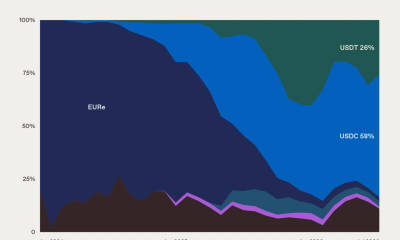
USDC and USDT Now Own 84% of Crypto Card Spend as the Euro Retreats
-

 Fashion6 days ago
Can You Wear Double Cloth Gauze Clothing To Your Office?
-

 Politics7 days ago
The House Article | Burnham still needs to sell devolution to the public
-
Crypto World7 days ago
Analyst Expects XRP’s Strongest Price Reversal Ever, but Polymarket Disagrees
-

 Crypto World6 days ago
Is Clarity's delay a blessing in disguise?: State of Crypto
You must be logged in to post a comment Login