

Connect with us
DAPA Banner
DAPA Coin
DAPA
COIN PAYMENT ASSET
PRIVACY · BLOCKDAG · HOMOMORPHIC ENCRYPTION · RUST
ElGamal Encrypted MINE DAPA
🚫 GENESIS SOLD OUT
DAPAPAY COMING

Tech

Xreal’s New Budget Display Glasses Can Change Their Look on the Fly

Published

on

Xreal makes some of my favorite display glasses around, functioning as wearable USB-C tethered monitors in glasses form. Xreal’s new budget pair of $299 display glasses, called a01, is part of a new sub-brand called X by Xreal. They’re significantly less expensive than Xreal’s other glasses and have some clever features their other glasses lack.

For the most part, the a01 glasses are more feature-limited compared with the Xreal One Pro and 1S. They have a slightly smaller field of view (50 degrees) and lack the dimming lens and chipset that can pin a display in place.

But they also offer notable advantages. The 1,600-nit brightness of these micro OLED displays is far higher than that of previous Xreal glasses, and I’m curious to compare them. They also support HDR10 for video, which TCL’s recent RayNeo Air 4 Pro glasses also have. The glasses are also pretty light, at 62 grams.

Advertisement
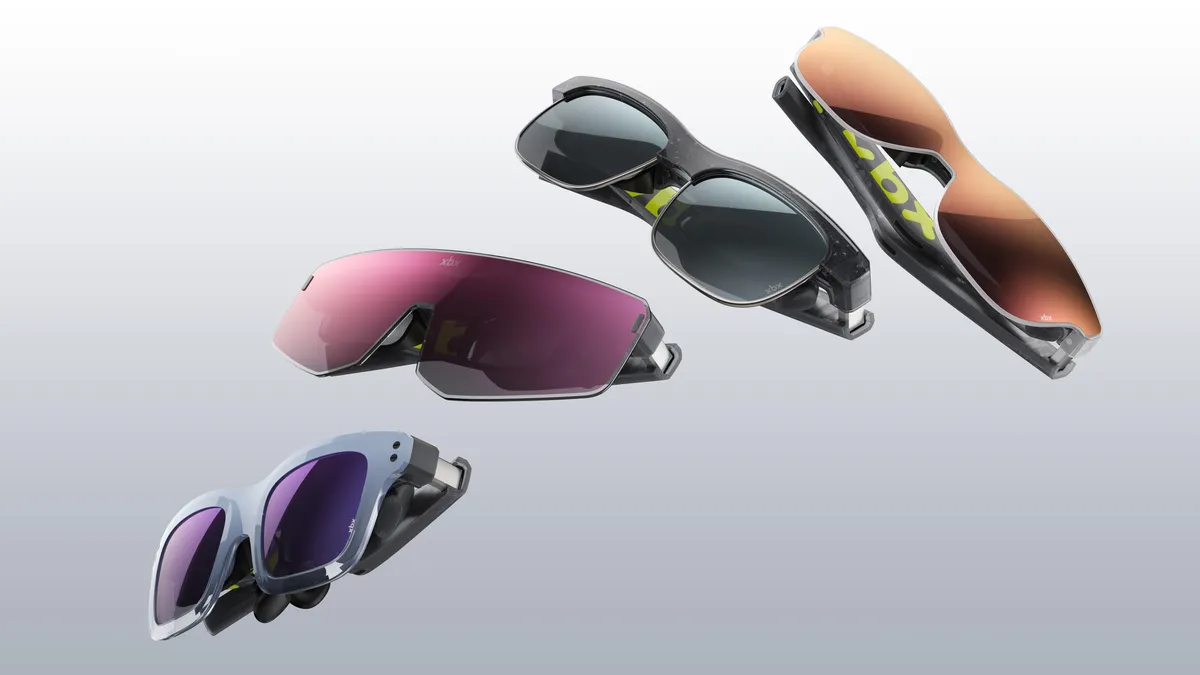
X by Xreal glasses that show a detaching front set of sunglass lenses

The front faceplates can swap out, giving different looks.

Xreal

What interests me most is a new “anti shake” mode that promises more stable video playback while moving, and a series of snap-on, swappable frame fronts that can change the look of the glasses. There are clear and sunglass-lensed options in the mix.

The X by Xreal a01 glasses are arriving in China now, then are available in the US sometime in July. I’ll review them then, and we’ll see if these can beat out the RayNeo Air 4 Pro as the best budget tethered display glasses in a year that’s already overloaded with smart glasses.

Advertisement

Source link

Continue Reading
Click to comment

You must be logged in to post a comment Login

Leave a Reply

Tech

Internet Starts Coming Back In Iran After Months-Long Blackout

Published

on

An anonymous reader quotes a report from the BBC: Internet access has started to be restored in Iran after being cut off almost three months ago, the country’s first vice-president has said. “The first step toward free and regulated access to cyberspace has been taken,” Mohammad Reza Aref wrote on X on Tuesday. Internet monitoring groups Netblocks and Kentik reported “partial” restoration around 13:00 GMT, though the latter warned most networks were still down.

The Iranian government cut internet access following the launch of US and Israeli attacks on February 28. Officials suggested the aim was to prevent surveillance, espionage and cyber-attacks. It is one of the longest-running national internet shutdowns ever recorded worldwide. A content creator from Tehran told the BBC that he had been able to connect to the internet using his home WiFi on Tuesday. “The main point is, some of my income will come back,” he said.

Netblocks said it was unclear whether the internet return would be sustained, and told the BBC it was consistent with what it had seen when previous blackouts were lifted — where restoration could take hours. “Access is not universally back to its original state, with some regional variation,” said the global internet tracker’s research director Isik Mater on Tuesday. She added that there were signs of “more extensive filtering” than prior to January — when a similar blackout was imposed during the regime’s deadly crackdown on anti-government protests — “including additional restrictions to messaging apps like WhatsApp.”

Source link

Advertisement
Continue Reading

Tech

Watch: Zuckerberg’s superyacht arrives in Seattle just as Meta cuts 1,400 local jobs

Published

on

Mark Zuckerberg’s 387-foot superyacht Launchpad passes through Seattle’s Ballard Locks on Tuesday. (GeekWire Photo / Todd Bishop)

Mark Zuckerberg’s $300 million superyacht passed through Seattle’s Ballard Locks on Tuesday, the same day Meta disclosed plans to cut nearly 1,400 jobs in Washington state.

The 387-foot Launchpad, built by Dutch shipbuilder Feadship, traveled from Elliott Bay through the locks toward Lake Union, drawing a crowd along the walkway.

The boat’s arrival and the job cuts do not appear to be related, but the irony was not lost on the crowds that hustled down to the locks to catch a glimpse of the giant yacht after word spread through the neighborhood and online. Some booed from the shore and heckled the crew.

“Superyacht-wise, this is the biggest one I’ve had in 14 years,” said a lock operator who was helping to guide the vessel through the large lock.

Bumpers on the side of the boat were about the size of small SUVs, while the back deck had a covered pool and hot tub. More than a dozen crew members were visible, many enjoying the trip through the channel on a partly sunny evening.

Advertisement
Mark Zuckerberg’s 387-foot superyacht Launchpad in the Hiram M. Chittenden Locks in Seattle’s Ballard neighborhood on Tuesday. (GeekWire Photo / Todd Bishop)

The Meta CEO did not appear to be aboard. A crew member, asked if Zuckerberg was on the yacht, shook his head no. Another said the crew wasn’t in town for the FIFA World Cup, and planned to “come and go.”

Launchpad flies a Marshall Islands flag, a common registry for large yachts. One heckler shouted to “pay some fucking taxes.”

The Launchpad in Elliott Bay before transiting Seattle’s Ballard Locks on Tuesday. (Photo courtesy of a GeekWire reader)

The layoffs will impact about 20% of Meta’s Seattle-area workforce. They are part of a companywide reduction of roughly 8,000 positions as the company accelerates spending on AI infrastructure, including capital expenditures that could reach $145 billion this year.

Thanks to Ed Lazowska for tipping us off to the yacht’s arrival.

Source link

Advertisement
Continue Reading

Tech

Trump administration wants nuclear startups to use plutonium for their reactors

Published

on

For decades, the U.S. has had a plutonium problem. Around 100 tons of the stuff was made during the Cold War to go into powerful atomic bombs. But as nuclear stockpiles were dismantled, the government had to store the radioactive material in high-security facilities.

Now it wants startups to help get rid of some of it.

The Department of Energy said Tuesday it has selected five nuclear startups to enter into negotiations with the government to receive a portion of the plutonium, which could potentially be used to power a new generation of nuclear reactors. The Department of Energy previously identified 34 tons of plutonium for disposal.

The five startups include Oklo, Standard Nuclear, Shine Technologies, Flibe Energy, and Exodys Energy.

Advertisement

Energy Secretary Chris Wright was previously on Oklo’s board, but he resigned when he joined the administration and said he has divested his shares. Sam Altman was Oklo’s board chair following its merger with his acquisition company, AltC; Altman resigned the position last year.

While plutonium does exist in nature, it is more typically a by-product of bombarding non-fissile uranium with neutrons. Once formed, that isotope of plutonium has a half-life of 24,000 years, meaning the government can’t just wait it out.

Oklo is developing a reactor that can run on traditional uranium fuel as well as plutonium. The plutonium would help the company fuel its first reactors. Exodys Energy is also developing a reactor that can operate using some plutonium as part of mixed oxide fuel, or MOX, which blends uranium with plutonium. Flibe Energy is working toward a reactor that would run on plutonium and other by-products of fission reactors.

MOX is currently produced in France, and while the U.S. had plans to make it in South Carolina, the first Trump administration canceled the project after it blew through budgets and timelines. One of Oklo’s partners in the project, U.K.-based Newcleo, said it intends to build its own MOX fuel fabrication facility nearby.

Advertisement

Not everyone is thrilled with the plan, though. Since the plutonium came from nuclear weapons, the security concerns are significant. “Countries have tried this before, and they concluded that, as nice as it would be to use that plutonium as fuel, it’s really just a liability and we need to dispose of it permanently,” Scott Roecker, a vice president at the Nuclear Threat Initiative, told the New York Times.

For the startups, the next step is to enter into advanced negotiations with the government over security and the transportation of the plutonium. 

When you purchase through links in our articles, we may earn a small commission. This doesn’t affect our editorial independence.

Source link

Advertisement
Continue Reading

Tech

What we’re looking for in Startup Battlefield 2026, and how to apply in time for the May 27 deadline

Published

on

Every year I read through thousands of Startup Battlefield applications. And every year, I see the same pattern: The founders who belong on this stage are often the ones who almost didn’t apply.

They think they’re too early. They think they need more traction. They think the program is for companies further along than they are.

So here’s what we’re actually looking for and how to make sure your application reflects it. The deadline to be considered is May 27, which is tomorrow — time is running out for you to apply right here!

And if you’re not up to speed on this year’s Startup Battlefield details, it’s once again a premiere part of TechCrunch Disrupt, which will be in San Francisco from October 13-15 and concludes with the crowning of this year’s future champion. And that list of champions includes some incredible companies, from giants like Cloudflare and Discord, to the most recent crop of winners, who you can learn about in detail right here.

Advertisement

What gets a company selected for Startup Battlefield

Startup Battlefield is not a competition for the most polished companies. It never has been. It’s a competition for the most promising ones.

We’re looking for companies with ideas that feel meaningfully different and category-defining, with the potential to make a major impact in their industry or geography. For every application, the question we ask is simple: Does this change something? Not incrementally. Genuinely.

Product and disruption. What are you building, and does it represent a real shift in how something works? We’re not looking for a better version of what already exists. We’re looking for the thing that makes the existing version feel obsolete.

The founding team. Why you, why now, why this problem? Your origin story is part of the application. The founders who can articulate their conviction clearly, not just their market size, are the ones who stand out.

Advertisement

Industry and geographic diversity. The Startup Battlefield 200 is a global cohort. We actively look for companies from every corner of the world and every vertical in tech. If you’re building something important in a geography or sector that doesn’t often get a spotlight, that matters to us.

What doesn’t disqualify you from Startup Battlefield

Having press coverage. Local coverage is fine. Industry coverage is fine. A few founder profiles are fine. We’re looking for companies whose core technology hasn’t had its moment yet. If you’ve had some coverage but the product hasn’t been showcased, that’s exactly what Disrupt is for. Apply and show us what you have.

Being pre-launch. You need a working MVP, but you don’t need customers. You don’t need revenue. Pre-launch companies are genuinely welcome.

Having applied before. Many Startup Battlefield 200 companies applied more than once before being selected. A previous rejection says nothing about your company’s future or your chances this time.

Advertisement

Raising money. Bootstrapped, pre-seed, and seed companies are all welcome. Series A companies are reviewed on a case-by-case basis, particularly founders building in capital-intensive industries or raising in markets where funding dynamics differ from Silicon Valley norms.

Tips for a strong Startup Battlefield application

Show your product working. This is the single most important thing. Not a mockup. Not a simulation. Not an animated explainer video with upbeat background music. Your MVP in action, in real time. Even if it’s rough, even if it’s a screen recording from your phone. We want to see it work.

Know your competitive landscape. “We have no competitors” is not a credible answer, and it raises questions about how well you understand your market. Name your competitors, acknowledge them honestly, and then explain clearly and specifically why you win. This is one of the most important parts of the application and one of the most commonly underdeveloped.

Tell your story. Why did you start this company? What did you see that others didn’t? What makes you the right person to build it? The founding narrative is a meaningful part of how we evaluate teams and it’s the part most founders underwrite. Don’t skip it.

Advertisement

Don’t overpolish. Write clearly, show the product, tell the truth about where you are. We can see around rough edges. What we struggle to see around is an application that’s been so carefully managed that the actual company is invisible.

Resubmit if you need to. If you submit before you’re ready, don’t panic. You can resubmit until the May 27 deadline. You cannot edit an already submitted application, but you can submit a new one.

Learn what it takes from the founders who’ve done it

Build Mode, TechCrunch’s podcast for early-stage founders, is the best place to start. Hear directly from past Battlefield companies like Forethought AI and Glīd, breakout founders like Artisan and TaskRabbit, and top-tier investors like General Catalyst on what it takes to build a company worth putting on a global stage.

Listen to Build Mode →

Advertisement

The deadline to apply for Startup Battlefield

Applications close May 27, 2026, and you can still apply right here. Selected companies are notified approximately two months before TechCrunch Disrupt.

If you’re on the fence, apply. The worst outcome is you don’t get selected this cycle and you’ll have a stronger application next year for having gone through it.

We built this program to find you before the world does. The application is your first pitch.

Apply for Startup Battlefield 200 →

Advertisement

When you purchase through links in our articles, we may earn a small commission. This doesn’t affect our editorial independence.

Source link

Continue Reading

Tech

Linux On Android Provides Inexpensive, Powerful Computing

Published

on

In some parts of the world it’s common for cell service providers to sell new phones at a price significantly below market value, with the caveat that these phones are locked to that service provider alone. It’s questionable whether this practice is good for consumers, but as [Gabriel Broussard Korr] notes, it’s an opportunity for hackers: since it’s possible to run a Linux environment on these phones, they make an inexpensive source of quite powerful computing hardware.

In this case, [Gabriel] was using the Moto G Power 2024, which has 128 GB of storage, 12 GB of RAM, and costs less than $50 when carrier-locked. Rather than trying to install a mobile-oriented Linux distribution (such as postmarketOS), [Gabriel] installed Termux, a terminal emulator which provides a Linux environment within Android. Before doing this, he set up the phone and configured a number of settings for a better Linux experience. Since automatic updates can interfere with these settings, and since none of the provided settings effectively disable these, he used NetGuard to block Internet access from the updater app and from Google Play services.

The next step was to actually install Termux, as well as an X11 extension and an app which exposes an API for Termux. The desktop environment (XFCE in this case) was installed through Termux, and [Gabriel] wrote a shell script to go through the steps of starting it. XFCE worked well on mobile devices because of its full-desktop zoom capability. Even running Linux indirectly, the experience was smooth; [Gabriel] found that GIMP, Shotcut, and VS Code all performed well.

Advertisement

It’s not quite the same set of software, but we’ve previously featured a guide to setting up a similar Linux environment using Termux and AnLinux. Lindroid provides a similar containerized Linux environment; on the other hand, you can also use postmarketOS to make a server from an old phone.

Source link

Advertisement
Continue Reading

Tech

Trump administration permits Volvo to keep selling connected cars in the US

Published

on

Volvo Cars reached an agreement with the Trump administration that exempts the automaker from a U.S. crackdown on Chinese-connected vehicle technology.

The Swedish automaker, which is majority owned by China’s Geely Holding, said Tuesday that it received specific authorization from the U.S. Department of Commerce to continue importing and selling vehicles with Chinese connected car technology in the United States. Connected car tech involves the software that covers everything from syncing with phones to some automated driving features. Bloomberg was first to report the special authorization.

Volvo was banned under rules finalized by the Biden administration in January 2025 that blocked vehicles equipped with software and hardware developed and maintained by Chinese companies over national security concerns. The rules kicked off with 2027 model-year vehicles equipped with software developed and maintained by Chinese companies. Another ban that prohibits the import of vehicle connected hardware begins with 2030 model-year vehicles.

Volvo vehicles are primarily made in Sweden and imported to the United States, with the exception of the EX90, which is assembled at the company’s factory in South Carolina. But Volvo’s ties to China’s Geely — and its manufacturing operations in the country — meant it would be banned under the new rules.

Advertisement

Volvo said the approval followed “constructive discussions” with the Commerce department and other U.S. officials regarding the company’s governance, technology, and data security. The automaker said it can now move forward with its expansion plans in the United States.

The automaker announced in September 2025 plans to bring two additional vehicles — the  XC60 midsize SUV and a new hybrid vehicle — into production at the South Carolina factory. In March, Volvo said it will also bring all production of the Polestar 3, an EV from its sister company Polestar, to the U.S. factory. The Polestar 3 is currently also produced in Chengdu, China.

The rule, known as “Securing the Information and Communications Technology and Services Supply Chain: Connected Vehicles,” spends considerable time on the threat of vehicles with automated driving systems developed by companies with Chinese ties.

Under the rules, Chinese companies would be prohibited from testing autonomous vehicles in the United States. Today, several of these companies, including Baidu’s Apollo Autonomous Driving LLC, Pony.ai, and WeRide, have permits to test their autonomous vehicle technology (with a human safety operator behind the wheel) in California. TechCrunch has reached out to the Department of Motor Vehicles, the agency that regulates AVs in the state, to learn if these permits will be revoked.

Advertisement

When you purchase through links in our articles, we may earn a small commission. This doesn’t affect our editorial independence.

Source link

Continue Reading

Tech

Netherlands blocks US firm from buying DigiD cloud host

Published

on

TL;DR

The Netherlands blocked IBM spinoff Kyndryl from acquiring Solvinity, the cloud provider that hosts the Dutch digital identity system DigiD. It is the first US acquisition the Dutch Investment Screening Bureau has ever prohibited.

The Dutch government has imposed a “complete prohibition” on the acquisition of Solvinity, a Dutch cloud provider, by Kyndryl, the American IT infrastructure company spun out of IBM in 2021. The deal, valued at roughly €100 million, would have given a US-headquartered firm control over the platform that runs DigiD, the digital identity system used by millions of Dutch residents to access tax, healthcare, pension, and government services.

Advertisement

Willemijn Aerdts, the Dutch minister for the digital economy, announced the decision on Monday in a letter to parliament. The government said the acquisition poses a possible “risk to the public interest” based on the recommendation of the Bureau for Investment Screening, which evaluated the deal under the Netherlands’ foreign investment screening framework.

It is the first time the bureau has blocked a US acquisition since it began operating. The decision was not close. The screening body recommended a full prohibition rather than imposing conditions.

Solvinity does not just host DigiD. The company also operates the infrastructure behind MijnOverheid, the government’s citizen communications portal, and Digipoort, the gateway for business-to-government digital services. Together, these platforms form a core layer of the Netherlands’ public digital infrastructure. Solvinity runs them from a government data centre under strict security requirements.

The concern is the US CLOUD Act. The 2018 law gives American law enforcement and intelligence agencies the authority to compel US-headquartered companies to hand over data stored on their servers anywhere in the world, regardless of the host country’s data protection laws. If Kyndryl owned Solvinity, the Dutch government’s digital identity data would theoretically fall within the reach of US authorities.

Kyndryl told Politico, which first reported the decision, that it was “extremely disappointed.” The company had announced the deal in November 2025 and framed it as a way to expand its sovereign cloud capabilities for regulated European customers. The Dutch competition authority, ACM, cleared the deal on antitrust grounds in February 2026. But the investment screening process, which runs separately, reached a different conclusion.

Advertisement

The decision sits within a broader European push to reduce dependence on American technology providers. Trump-era tariffs and sanctions have accelerated the shift. AWS, Microsoft Azure, and Google Cloud together control more than half of Europe’s cloud market. The European Commission is expected to present its Tech Sovereignty Package on 27 May, a day after the Dutch decision, with proposals that could restrict the use of US cloud platforms for sensitive government data across the EU.

The EU has already begun putting money behind the strategy. Brussels awarded a €180 million sovereign cloud contract to four European provider groups in April, closing a procurement process that will let EU institutions purchase sovereign cloud services for up to six years. One of the four winners, S3NS, is a joint venture between Thales and Google Cloud, underscoring how difficult it is to build genuinely independent infrastructure.

The Netherlands has form on this. In October 2025, the Dutch government invoked a Cold War-era law to seize control of Nexperia, a semiconductor manufacturer owned by China’s Wingtech, citing threats to European economic security. That case involved hardware. The Solvinity block involves data. The principle is the same: the Netherlands is willing to intervene when foreign ownership of critical infrastructure creates a national security risk, regardless of the acquirer’s country of origin.

For Kyndryl, the block is a commercial setback. The company, which reported $15.1 billion in revenue in its most recent fiscal year, has been trying to grow its European cloud and managed services business. Solvinity’s government contracts and security credentials made it an attractive target. Without the deal, Kyndryl loses a foothold in the Dutch public sector.

Advertisement

For the Netherlands, the calculation is that the risk of a US company controlling the platform behind the national digital identity system outweighs the commercial benefits of the acquisition. DigiD is used for everything from filing taxes to accessing medical records. The data it handles is among the most sensitive any government holds. Handing that to a company subject to the CLOUD Act is a risk the Dutch government has decided it will not take.

The decision will be watched across Europe. If the EU’s Tech Sovereignty Package follows through on restricting US cloud platforms for government data, the Dutch block on Kyndryl-Solvinity will look less like an outlier and more like a preview of what is coming for every American technology company doing business with European public institutions.

Source link

Advertisement
Continue Reading

Tech

Today’s NYT Connections: Sports Edition Hints, Answers for May 27 #611

Published

on

Looking for the most recent regular Connections answers? Click here for today’s Connections hints, as well as our daily answers and hints for The New York Times Mini Crossword, Wordle and Strands puzzles.


Today’s Connections: Sports Edition puzzle grid is filled with a bunch of letter groups that don’t really read as words. If you’re struggling with the puzzle but still want to solve it, read on for hints and the answers.

Connections: Sports Edition is published by The Athletic, the subscription-based sports journalism site owned by The Times. It doesn’t appear in the NYT Games app, but it does in The Athletic’s own app. Or you can play it for free online.

Advertisement

Read more: NYT Connections: Sports Edition Puzzle Comes Out of Beta

Hints for today’s Connections: Sports Edition groups

Here are four hints for the groupings in today’s Connections: Sports Edition puzzle, ranked from the easiest yellow group to the tough (and sometimes bizarre) purple group.

Yellow group hint: Change the channel.

Advertisement

Green group hint: Three strikes, you’re out.

Blue group hint: Hut-hut!

Purple group hint: Not Jones.

Answers for today’s Connections: Sports Edition groups

Yellow group: Sports TV networks.

Advertisement

Green group: Baseball positions, abbreviated.

Blue group: Football positions, abbreviated.

Purple group: ____ Smith.

Read more: Wordle Cheat Sheet: Here Are the Most Popular Letters Used in English Words

Advertisement

What are today’s Connections: Sports Edition answers?

completed NYT Connections: Sports Edition puzzle for May 27, 2026

The completed NYT Connections: Sports Edition puzzle for May 27, 2026.

NYT/Screenshot by CNET

The yellow words in today’s Connections

The theme is sports TV networks. The four answers are ESPN, FS1, NBA TV and NBCSN.

The green words in today’s Connections

The theme is baseball positions, abbreviated. The four answers are C, OF, P and SS.

Advertisement

The blue words in today’s Connections

The theme is football positions, abbreviated. The four answers are CB, DT, K and TE.

The purple words in today’s Connections

The theme is ____ Smith. The four answers are JR, Lovie, Ozzie and Stan.

Source link

Advertisement
Continue Reading

Tech

A Fundamental Principle of Aeronautical Engineering Has Been Overturned

Published

on

An anonymous reader quotes a report from Wired: Aerodynamic drag is a major “barrier” in high-speed airplanes, automobiles, and bullet trains. This is because a design with less aerodynamic drag allows the aircraft to move at higher speeds with less energy. When an aircraft or car body moves at high speed, a thin layer of air called the “boundary layer” is formed on its surface. This boundary layer has two states: laminar flow, in which air flows in an orderly fashion, and turbulent flow, which involves turbulence. The longer the air stays in the laminar flow state with low friction, the smaller the air resistance becomes, but as the air speed increases, it transitions to turbulent flow. The key to reducing aerodynamic drag is how to delay this transition to turbulence.

For more than 80 years, the principle of “the surface of an object must be smooth” has been the basic premise of aeronautical engineering throughout the world in order to suppress the transition to turbulence and reduce aerodynamic drag. This premise was based on the results of a 1940 study by Ichiro Tani, a Japanese aerodynamicist who quantitatively demonstrated the relationship between “surface roughness” (an indicator of the state of the machined surface) and turbulent transition, arguing that surface roughness, which was unavoidable with the manufacturing technology of the time, prevented laminar flow from being realized. However, in 1989 Tani reinterpreted the experimental data on rough-surface pipes obtained by fluid engineer Johann Nikulase in the 1930s, bringing a new perspective that “roughness may not necessarily only promote turbulent transition and increase fluid resistance.” Inheriting this idea, a research group led by Yasuaki Kohama of Tohoku University experimentally demonstrated in the 1990s that fibrous rough surfaces, which have fine fibrous irregularities on their surface, have the effect of delaying transition under certain conditions.

The same Tohoku University research team recently announced a discovery that significantly advances this trend. Aiko Yakino, associate professor at Tohoku University’s Institute of Fluid Science, and her research group were the first in the world to demonstrate that aerodynamic drag can be reduced by up to 43.6 percent simply by applying distributed micro-roughness (DMR), a surface roughness so fine and irregular that it cannot be distinguished by the naked eye. This technology is fundamentally different from the “rivulet (shark skin) process,” which is known as a typical aerodynamic drag reduction technology. The rivulet process mimics the fine longitudinal grooves in shark skin, and by carving grooves approximately 0.1 mm wide along the direction of airflow, it aligns the vortices that occur near the wall surface of turbulent airflow areas. DMR, on the other hand, delays the switch from laminar to turbulent flow by means of random and minute irregularities. The flow zones it affects and the mechanisms it employs are based on completely different concepts.

Source link

Advertisement
Continue Reading

Tech

iOS 26.6 alerts you upon running out of blocked contacts limit, and that’s a problem

Published

on

Today, Apple seeded the first beta of iOS 26.6 to developers, and so far, it contains exactly one known feature. It’s an alert that tells you when you’ve run out of space on your blocked contacts list. That’s right, and that’s it.  

The fact that Apple had to ship this new alert at all says something uncomfortable about how the company has handled the spam call problem, along with carriers and regulators. 

What is the blocked contacts limit and why does it matter?

Apple never told us, but iOS has always had a cap on how many numbers you can block. Based on discussions on Apple’s support forums, some users have hit that limit at around 20,000 blocked contacts, while others around 8,000. 

While the exact reason behind different limits for different users isn’t exactly clear, it might have something to do with carriers imposing their own caps. Some users also report hitting the limit with even fewer contacts. 

When the blocked contacts limit was reached, iOS simply stopped blocking new numbers, without any explanation, meaning any subsequent spam calls, from new numbers, will go through. 

Advertisement

And instead of solving that problem and increasing the limit in the new iOS version (either at the carrier or the device level), iOS 26.6 focuses on fixing the communication gap. 

The developer beta of iOS 26.6 contains a new “Blocked Contacts Limit Reached” alert that reads: “You’ve reached the maximum number of blocked contacts.” To block additional callers, you’ll need to remove an existing entry from your blocked contacts list in Settings.

Why is this still a problem in 2026?

Yes, that’s much better than leaving users in the dark, but I wouldn’t call it a solution to a problem that shows up differently for different users. Apple could have either increased the limit for all users or introduced a bulk unblocking tool. 

However, it’s not all Apple. A comment in the MacRumors forum thread, from the user KENESS, with 17 upvotes, points out the issue very well. It’s the carriers and regulators who have the ability to address spam calls at the network level, and yet somehow, it’s users like you and me who have to do things manually on our end. 

Spam calls are profitable for some carriers and wholesale providers, as the termination fees apply to every call that completes, regardless of legitimacy. The financial incentive to kill spam at the network level is weaker than it should be, which is why the problem persists.

Advertisement

On the positive side, iOS 26 offers features like Ask Reason for Calling and Silence Unknown Callers, which are more practical than building a block list with thousands of entries over the years. The new alert sure is a quality-of-life improvement, but it doesn’t address the core issue.

A public release of iOS 26.6 is likely several weeks away.

Source link

Advertisement
Continue Reading

Trending

Copyright © 2025