Tech
Yamaha Targets Budget Home Theater Buyers with RX300A and RX500A A/V Receivers for 2026

Yamaha’s current AVR lineup has been running on 2020 and 2021 hardware, with firmware updates doing the heavy lifting to keep things relevant. That trick only works for so long. At some point, HDMI, processing, wireless features, and home theater expectations move on, and no amount of software fairy dust changes the hardware underneath. For 2026, Yamaha appears ready to turn the page with the new RX300A and RX500A, two entry level A/V receivers aimed at buyers who want a modern home theater upgrade without wandering into flagship pricing territory.
“The RX300A and RX500A close the gap between soundbars and true AV receiver-based home theater,” said Alex Sadeghian, director of marketing for consumer audio at Yamaha. “They include all the essential tech you need to build a modern home theater with phenomenal sound at an accessible price point, while offering simplified setup and operation that will appeal to both first-time AV receiver users and experienced enthusiasts alike.”
A New Look

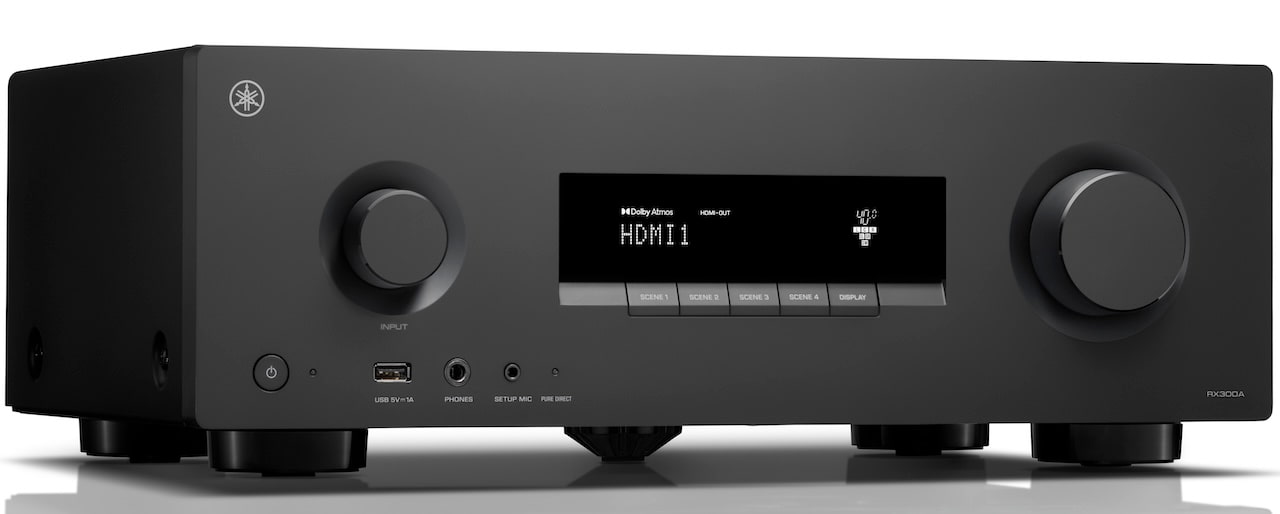
The RX300A and RX500A also give Yamaha’s entry level AVR design a needed visual reset. The front panels look cleaner than the outgoing models, with fewer buttons, simpler labeling, and less of the “command center from a 2004 cable box” energy. The essential controls are still there, but Yamaha has clearly tried to make the layout easier to read and less cluttered. It is not a radical redesign, but it does make the RX300A and RX500A look more current without alienating longtime Yamaha home theater owners.
On The Inside
Yamaha is leaning on more than four decades of AVR development with the RX300A and RX500A, and the engineering story is familiar in the best way. The company’s True Sound philosophy is not just marketing wallpaper here. In practical terms, it points to circuit layout, shorter signal paths, vibration control, and the kind of internal housekeeping that matters when an AVR is being asked to handle movies, music, gaming, and whatever else gets plugged into it before dinner.
Both models also inherit Yamaha’s Anti Resonance Technology Wedge, a center mounted fifth foot borrowed from the company’s flagship AVENTAGE models. The goal is simple: reduce chassis vibration and improve stability. Nobody should expect a $600 receiver to suddenly behave like a five figure separates stack, but better mechanical control is still better mechanical control.
The bigger upgrade for most buyers will be HDMI 2.1 support. The RX300A and RX500A are built for modern video sources with 4K/120Hz and 8K/60Hz pass through, along with Dolby Vision and HDR10+. Gamers also get VRR and ALLM, which should help with smoother motion and lower input lag when used with current consoles.
Room Correction
The RX300A and RX500A include a setup microphone for automatic room correction, allowing the receivers to measure room acoustics and speaker behavior before adjusting performance for the space. Yamaha also includes an on screen setup guide that walks users through connections and configuration step by step, which should make installation less painful for first time AVR owners and anyone who would rather not spend Saturday afternoon decoding a manual like it was recovered from a Cold War dead drop.

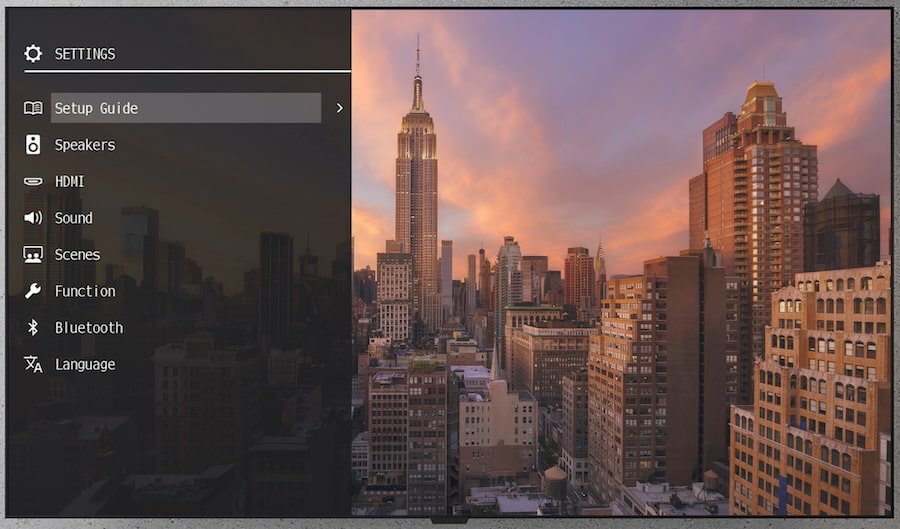
Sound Setting Simplicity
To simplify the listening experience, both AVRs feature Scene buttons. These buttons enable users to recall system settings with a single press.
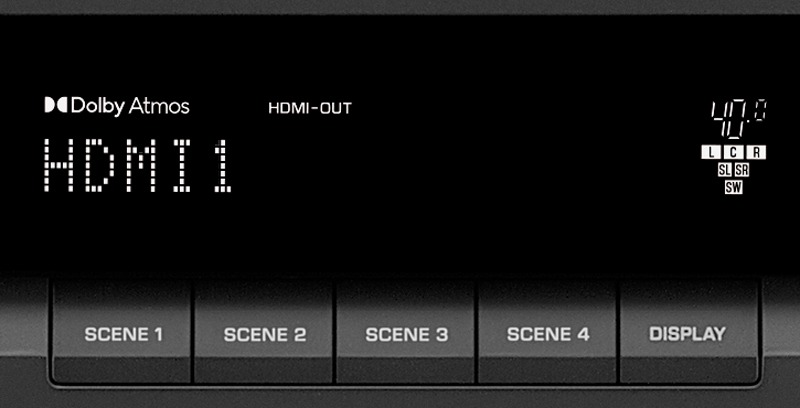

Each Scene button can be programmed to select an input, sound mode, and other key parameters, making it easy to switch seamlessly between activities like watching TV, streaming music, or gaming. The result is a more intuitive experience that keeps the user focused on enjoying content rather than getting distracted fiddling around trying to find the right settings.
RX300A: Great For Beginners

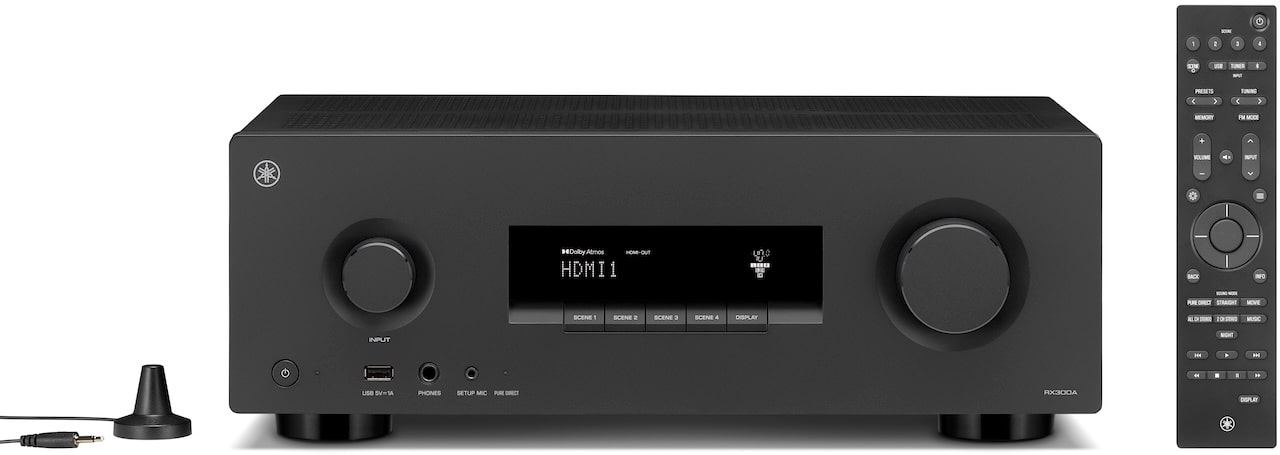
Building on the previous Yamaha RX‑V385, the RX300A is a 5.2 channel AVR designed to meet the needs of those who may be just getting started in home theater, wanting to upgrade from a soundbar or are on a budget with a price ($399.95 MSRP).
New enhancements compared with the RX-V385 include support for Dolby Atmos and DTS Virtual:X, compatibility with 4K/120Hz and 8K/60Hz video, gaming support that includes ALLM and VRR, dual subwoofer outputs, Bluetooth Multipoint, enhanced build quality, and an updated on-screen setup guide with streamlined menus.

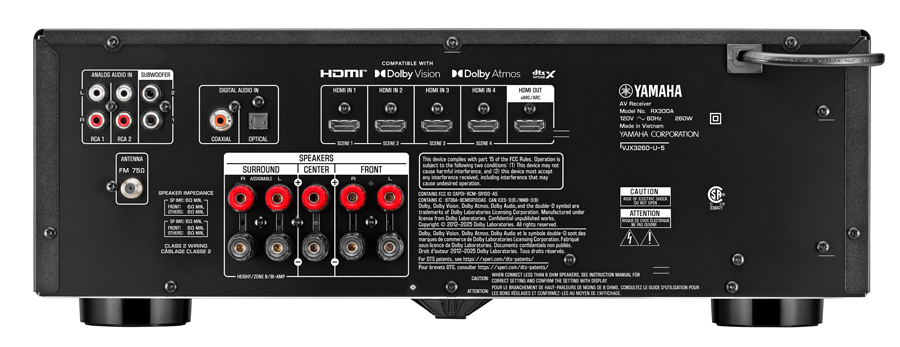
The RX300A supports Dolby Atmos in flexible speaker configurations, including 3.2.2-channel with up-firing or in-ceiling height speakers and virtualized rear channel sound, or with a traditional 5.1 or 5.2-channel setup in combination with virtual height processing to create sound from above without dedicated height speakers.
Bluetooth Multipoint allows two devices to remain paired simultaneously, making it easy to switch between sources without reconnecting.
RX500A: More Channels, Wi-Fi, and Streaming

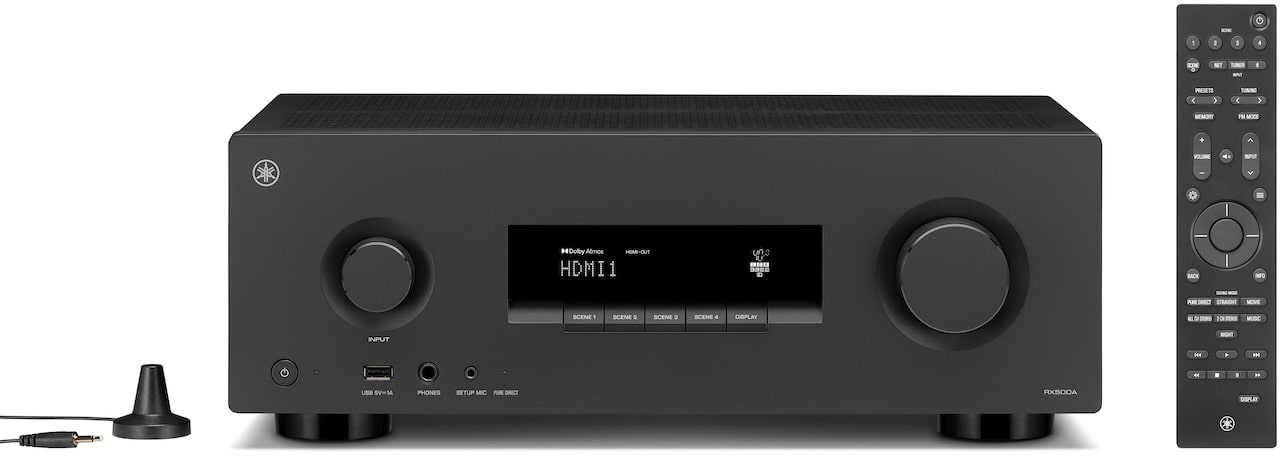
The RX500A builds on the RX300A platform with 7.2 channel amplification and more flexible speaker layout options.
With seven channels of amplification, Dolby Atmos support allows the RX500A to work with real discrete speakers for both the height channels and the surround channels, creating a more convincing immersive sound field than you can get with a 5-channel system. The RX500A supports multiple height speaker configurations, including in ceiling speakers or up-firing height modules. And if you don’t want to bother with height channels, the RX500A can virtualize those with its speaker virtualization technology. This can leave two of your amplifier channels free for speakers in a second room. The RX500A also supports DTS:X, giving users access to the two major immersive audio formats without moving into Yamaha’s more expensive AVR models.
The RX500A also adds stronger network audio support. In addition to Bluetooth Multipoint, it includes built in Wi-Fi and Ethernet for music streaming through Spotify Connect, AirPlay 2, Google Cast, Qobuz Connect, TIDAL Connect, internet radio, and other supported services. That makes it the more complete option for buyers who want both home theater flexibility and everyday music streaming in one box.

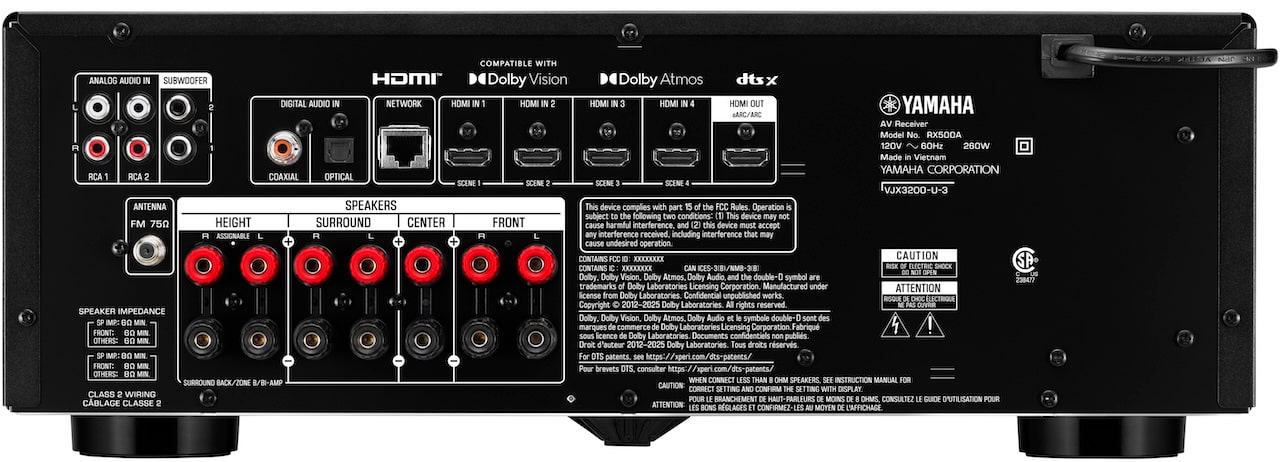
The RX500A is a new model tier in the Yamaha AV receiver lineup, offering a step up from the RX300A for those who want more speaker channels and more advanced music streaming capabilities at an accessible MSRP of $599.95. The current Yamaha RX-V6A 7.2-channel AV receiver remains in the lineup—offering some additional features such as MusicCast capabilities (e.g., full app control and multi-room audio), more connectivity options, Zone 2, increased performance, and other features—at an MSRP of $799.95.
Comparison
| Yamaha Model | RX500A (2026) | RX300A (2026) | RX-V385 (2018) |
| Product Type | AVR | AVR | AVR |
| Price | $599.95 | $399.95 | $379.99 |
| Channels | 7.2 | 5.2 | 5.1 |
| Decodable Channels | 7.1 | 5.1 | 5.1 |
| Amplified Channels | 7 | 5 | 5 |
| Output Power | 70 W (8 ohms, 20 Hz – 20 kHz, 0.09% THD, 2-ch driven),
145 W (6 ohms, 1kHz, 10% THD, 1ch driven) |
70 W (8 ohms, 20 Hz – 20 kHz, 0.09% THD, 2-ch driven),
145 W (6 ohms, 1kHz, 10% THD, 1ch driven) |
70 W (8 ohms, 20 Hz – 20 kHz, 0.09% THD, 2-ch driven), |
| Bi-amp Capable | Yes | Yes | Yes |
| Surround Sound Decoding Formats | Dolby Atmos Dolby True HD Dolby Digital Plus Dolby Digital DTS-HD Master Audio DTS-HD High Resolution DTS-Express DTS DTS-ES Matrix 6.1 DTS-ES Discrete 6.1 DTS 96/24 DTS:X |
Dolby Atmos Dolby True HD Dolby Digital Plus Dolby Digital DTS |
Dolby True HD Dolby Digital Plus Dolby Digital DTS-HD Master Audio DTS- HD High Resolution DTS DTS 96/24 DTS Neo:6 |
| Surround Sound Post Decoding Formats | Dolby Surround DTS Neural:X |
Dolby Surround DTS Virtual:X |
Not Indicated |
| Network Decoding Formats | MP3, MPEG4-AAC, WMA, WAV, FLAC, Apple Lossless, AIFF | No | No |
| USB Decoding Formats | MP3 MPEG4-AAC WMA WAV |
MP3 MPEG4-AAC WMA WAV |
MP3 MPEG4-AAC WMA WAV |
| HDMI Decoding Formats | PCM (8ch max) | PCM (8ch max) | PCM (8ch max) |
| Sound Modes | Pure Direct Straight Movie All Channel Stereo 2 Channel Stereo Music Night |
Pure Direct Straight Movie All Channel Stereo 2 Channel Stereo Music Night |
Direct Straight Enhancer Bass program BD/DVD TV CD Radio |
| Zone B | Yes | Yes | Not Indicated |
| Room Calibration | Room Correction | Room Correction | YPAO |
| Other Features | Dialogue Level Subwoofer Trim Extra Bass Lip Sync |
Dialogue Level Subwoofer Trim Extra Bass Lip Sync |
Dialogue Level Subwoofer Trim Extra Bass Lip Sync |
| HDMI Connections | 4 Inputs / 1 Output | 4 Inputs / 1 Output | 4 Inputs / 1 Output |
| HDMI Features | HDMI 2.1 8K60Hz/4K120Hz eARC, ARC VRR ALLM QMS HDCP 2.3 CEC Auto Lip Sync Deep Color x.v. Color HD audio playback |
HDMI 2.1 8K60Hz/4K120Hz eARC, ARC VRR ALLM QMS HDCP 2.3 CEC Auto Lip Sync Deep Color x.v. Color HD audio playback |
HDMI 2.1 4K60p eARC, ARC HDCP 2.2 CEC Auto Lip Sync Deep Color x.v. Color HD audio playback |
| High Dynamic Range (HDR) Support | HDR10+ HDR10 Dolby Vision Hybrid Log-Gamma |
HDR10+ HDR10 Dolby Vision Hybrid Log-Gamma |
HDR10 Dolby Vision Hybrid Log-Gamma |
| Speaker Output | 7 (binding post terminals) | 5 (binding post terminals) | 5 (binding post terminals) |
| Headphone Output | 1 | 1 | 1 |
| Subwoofer Pre-outs | 2 | 2 | 1 |
| HDMI | 4 Inputs / 1 Output | 4 Inputs / 1 Output | 4 Inputs / 1 Output |
| Analog RCA Inputs | 2 | 2 | 2 |
| Optical Input | 1 | 1 | 1 |
| Coaxial Input | 1 | 1 | 2 |
| USB | 1 (Audio File Playback from a Mass Storage Device, Firmware Updates) | 1 (Audio File Playback from a Mass Storage Device, Firmware Updates) | 1 (Audio File Playback from a Mass Storage Device, Firmware Updates) |
| FM/AM Tuner | Yes / No | Yes / No | Yes/Yes |
| Bluetooth | Yes (Ver. 5.3, Multipoint) | Yes (Ver. 5.3, Multipoint) | Yes (Version 2.1) |
| Streaming | Spotify Connect Qobuz Connect TIDAL Connect Google Cast AirPlay 2 Net Radio Podcasts |
No (Streaming through Bluetooth only) | No (Streaming through Bluetooth only) |
| Wi-Fi / Ethernet Port | Yes / Yes | No | No |
| Power Consumption | 260W | 260W | Not Indicated |
| Standby Power Consumption | ≤0.3W | ≤0.3W | Not Indicated |
| Auto Power Standby | Yes | Yes | Not Indicated |
| Dimensions (WxHxD) |
434 x 157 x 319 mm 17-1/8” x 6-1/8” x 12-1/2” |
434 x 157 x 319 mm 17-1/8” x 6-1/8” x 12-1/2” |
17.13″ x 6.31 x 12.56″ |
| Weight (Unit) | 8.0 kg; 17.6 lbs | 7.6 kg; 16.8 lbs | 17 lbs |
| App | Audio Connect | Not Indicated | Not Indicated |
| Included Accessories | Remote Control Batteries FM Antenna Setup Mic Microphone Stand Quick Guide Safety Guide |
Remote Control Batteries FM Antenna Setup Mic Microphone Stand Quick Guide Safety Guide |
Remote Control Batteries AM/FM Antenna Setup Mic Microphone Stand Quick Guide Safety Guide |
The Bottom Line
Yamaha finally has new entry level AVRs, and the RX300A and RX500A look like practical updates rather than a full reset. That is not a bad thing. HDMI 2.1 support, cleaner industrial design, automatic room correction, better setup tools, and broader gaming and streaming compatibility all matter for buyers moving beyond a soundbar without stepping into flagship AVR pricing.
The RX500A is the more interesting of the two, thanks to 7.2 channel amplification, Dolby Atmos, DTS:X, Wi Fi, Ethernet, and support for Spotify Connect, AirPlay 2, Google Cast, Qobuz Connect, TIDAL Connect, and internet radio. That makes it the better fit for users who want a real home theater foundation and modern music streaming in one box.
What is missing? HDMI 2.2 would have been nice from a future proofing standpoint, but the current ecosystem does not really demand it yet. The bigger question is whether Yamaha follows these models with updated midrange and AVENTAGE AVRs. Denon, Marantz, Onkyo and others are not waiting around politely with tea and biscuits. Yamaha needed fresh hardware. The RX300A and RX500A are a solid first step.
You must be logged in to post a comment Login