Connect with us
DAPA Banner
DAPA Coin
DAPA
COIN PAYMENT ASSET
PRIVACY · BLOCKDAG · HOMOMORPHIC ENCRYPTION · RUST
ElGamal Encrypted MINE DAPA
🚫 GENESIS SOLD OUT
DAPAPAY COMING

Tech

You Can Preorder Slate Auto’s $25K Electric Pickup Now

Published

on

Slate Auto’s much-discussed sub-$25K electric truck is one step closer to reality. It’s now available for preorder on the company’s website. However, it could still be a year or two before drivers who preorder a Slate actually get their vehicles.

The base model of the car is priced at $24,950 and there are a number of color and accessory options available. But Car and Driver points out that it’ll end up costing more than $25,000 after factoring in a destination and delivery fee that the company says will be lower than typical. Even so, that fee could still run $1,200 to $1,500.

Even with that fee, however, Slate’s truck would stand apart in a US car market where SUVs rule the land and the average car price rose above $50,000 earlier this year before settling back down, according to Kelley Blue Book. Electric vehicles are typically priced about $5,000 to $7,000 more, making the Slate even more of an anomaly. 

Advertisement

This week, as it opened up preorders for the electric truck, Slate gave more details about its range and capabilities, which have changed since the truck was announced last year. New battery specs have raised the truck’s range from 150 miles per charge to 205. Slate is also banking on the truck’s custom options to draw customers: It’s offering more than 100 wrap colors and different ways to convert the two-seater truck to other builds, even after the vehicle is purchased.

Preordering the Slate truck costs $300 and is nonrefundable. The company says the 180,000 customers who already placed refundable reservations for $50 can put that $50 toward a preorder.  

According to Slate’s website, the first deliveries of the truck will be later this year. But full production of the Slate truck isn’t expected to ramp up completely until sometime in 2027. Slate has raised $1.3 billion and counts Amazon founder Jeff Bezos as one of its investors.

Reviewers have posted new impressions of the Slate

Not everyone is impressed with the concept, or even the pricing of the Slate, with The Wall Street Journal dismissing the company’s updates with the headline, “Will Anyone Buy This Cheap EV Truck With Hand-Crank Windows and No Radio?

Advertisement

But those who’ve actually seen and ridden in the vehicle are singing its praises. Nick Yekikian at Edmunds wrote that the truck “is cute and has real charm in person” and said it has evolved since the last time he saw it. He wrote, “The build quality is generally more solid, and it looks ready to hit the road.” He also posted a video about his experiences with Slate.

Aaron Gold at MotorTrend wrote, after riding in the Slate, that it’s “pretty much what we were expecting, which is a good thing, as we at MotorTrend have high hopes for this cute, inexpensive electric truck.”

David Tracy at The Autopian called driving the truck “insanely fun.” He wrote, “It’s a simple pickup truck, and it’s reasonably cheap. Is it the cheapest? No. Is it the most practical for families? No. But what the Slate has going for it is this: It is, by far, the most soulful new vehicle an American consumer will be able to buy for $25,000.”

At least one other inexpensive EV is in the pipeline

As far as competition for inexpensive electric vehicles, the closest to Slate’s planned price is likely the Chevrolet Bolt at just under $30,000. But other automakers are working on less expensive electric vehicle models. 

Advertisement

Ford is expected to release a low-cost electric truck in the $30,000 range, due out in 2027. And political changes could open up the possibility of Chinese-built EVs, which have their fans in the US but are not widely available due to tariffs and other factors. As Reuters points out, some Chinese EVs are priced below $12,000; for the average cost of an American car, you could buy three or more of the cheapest EVs in China.

Source link

Advertisement
Continue Reading
Click to comment

You must be logged in to post a comment Login

Leave a Reply

Tech

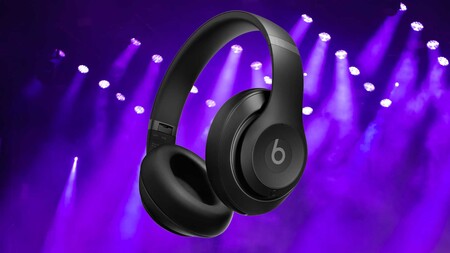
Our readers love the Beats Studio Pro, and they are now even more affordable

Published

on

Whenever we write about deals for these headphones, you guys love them – so here’s another one…

The Beats Studio Pro currently have £47.95 knocked off, to bring them down from £199 to £151.05, which is a further reduction on the £349 RRP.

Deals Beats Studio ProDeals Beats Studio Pro

A reader favourite, the Beats Studio Pro, is currently close to a quarter off

A reader favourite, the Beats Studio Pro, has dropped to just shy of 25% off, making them an even stronger pick.

Advertisement

View Deal

The fully adaptive Active Noise Cancelling monitors ambient noise continuously and updates its filter at 48,000 times per second, which in practice means the ANC adjusts to what is actually happening around you rather than applying a fixed profile and hoping for the best.

Advertisement

Transparency mode sits at the other end of that, letting environmental sound mix into the listening experience when awareness matters more than isolation, and switching between the two takes a single button press on the ear cup.

Plug in via USB-C and the built-in DAC delivers lossless audio alongside three distinct sound profiles, covering the Beats Signature profile for music, an Entertainment profile tuned for films and games, and a Conversation profile optimised for calls and podcasts.

Advertisement

The Whatsapp LogoThe Whatsapp Logo

Get Updates Straight to Your WhatsApp

Advertisement

Join Now

The 40-hour battery life means a full working week of commuting without needing to charge, and the Fast Fuel feature provides four hours of playback from a 10-minute top-up when that figure runs low.

Advertisement

Comfort over long sessions is handled by UltraPlush over-ear cushions in engineered leather, and both Apple and Android users get native compatibility features, including one-touch pairing and Find My support on the Apple side.

For anyone who wants a serious over-ear headphone with ANC, lossless audio, and a 40-hour battery at a price that has just dropped by nearly a quarter, the Beats Studio Pro makes a compelling case, and our best headphones, best wireless headphones, and best noise-cancelling headphones guides are there for anyone still mapping the wider field.

The Beats Studio Pro harness clear, neutral sound quality, strong noise-cancellation, and an excellent wireless performance into their slightly tweaked design. While they impress with good performance across the board, it’s not quite at the level to supplant the likes of Sony.

Advertisement
  • Strong noise-cancelling

  • Neutral, clear presentation

  • Excellent wireless performance

  • Physical controls

  • USB-C audio

  • ANC suffers with wind noise

  • No room for higher quality Bluetooth codecs

  • Design better suited for smaller ears

SQUIRREL_PLAYLIST_10148964

Advertisement

Advertisement

Source link

Continue Reading

Tech

China wants its green power wired straight into the data centre

Published

on

In the desert outside Zhongwei, in the northwestern region of Ningxia, four dedicated power lines now run from a field of solar panels to a cluster of computers.

They do not pass through the public grid. That detail, dull as it sounds, is the whole point.

China is encouraging its sprawling data centre industry to plug directly into wind and solar generation, rather than draw power off a grid still heavily fed by coal. The push is part policy, part demonstration.

Beijing’s 2026 government work report named tighter integration between computing infrastructure and electricity supply as a priority, and a national green-data-centre plan now requires new projects in the country’s designated computing hubs to source most of their power from clean sources.

Advertisement

The 💜 of EU tech

The latest rumblings from the EU tech scene, a story from our wise ol’ founder Boris, and some questionable AI art. It’s free, every week, in your inbox. Sign up now!

The Zhongwei plant is the project everyone points to. China Datang Corp commissioned a 500-megawatt solar farm there, describing it as the country’s first large-scale green-power project built to supply a data centre cluster directly.

It entered formal operation in early May, after green-power direct supply began in February, according to Chinese state media.

Advertisement

What makes it unusual is the delivery. The site uses what Datang calls a dual-track structure: four dedicated 110-kilovolt lines carry electricity straight to the computing facilities, with additional demand covered through bilateral market trades.

Solar output is prioritised during the day, wind is expected to cover the evenings, and storage smooths the gaps.

The solar plant alone should generate around 970 gigawatt-hours a year, roughly half the cloud base’s projected demand.

The numbers grow once the wind component arrives. The 500MW solar array is the first slice of a 2-gigawatt first phase that pairs it with a 1.5GW wind farm and storage, at a planned cost of about 8.7 billion yuan, or some $1.27bn.

Advertisement

The wind build is still under construction, scheduled for full grid connection in September.

Once phase one is complete, annual generation is expected to reach 4.3 terawatt-hours, more than the cloud base’s forecast consumption of 2.29 terawatt-hours. A second phase would push the total to 4.6GW.

The logic sits inside China’s “east data, west computing” strategy, which steers energy-hungry processing toward western regions where wind and solar are plentiful and land is cheap. Demand is the pressure behind all of it.

AI has driven an explosion in computing capacity, and with it electricity use, at exactly the moment Beijing is trying to hit peak carbon emissions by 2030.

Advertisement

The ambition is steep. Authorities want renewables to supply roughly four-fifths of the AI data-centre sector’s power by 2030, up from around a tenth in 2023.

The gap between a single working project in the desert and that national target is the part the policy has not yet closed.

Curtailment, grid bottlenecks, and the intermittency of wind and solar remain real, and China’s green-power goals for AI have already run into the grid before.

For now, Zhongwei is the test case. If desert wind and sun can be matched to digital load without leaning on the conventional grid, the model travels. If they cannot, it stays a handsome demonstration in Ningxia.

Advertisement

The wind turbines are due in September, that is when the figures stop being projections.

Source link

Advertisement
Continue Reading

Tech

New Study Shows That Tall Vehicle Hoods Cause Hundreds More Deaths Per Year

Published

on

joshuark shares a report from Car and Driver: A new study conducted by the New York Times shows that the increase in vehicle hood height seen over the last two and a half decades, mainly due to the rise in popularity of large SUVs and trucks, has resulted in several thousand deaths that otherwise may not have happened. The study shows that while automakers and regulators have focused on occupant safety, they have turned a blind eye to pedestrian safety, which has fallen since around 2009. Researchers looked at four main datasets in their investigation: crash test data from the National Highway Traffic Safety Administration’s (NHTSA) Crash Report Sampling System (CRSS) from 2016 to 2024; NHTSA’s Fatality Analysis Reporting System (FARS); vehicle measurement data from Expert AutoStats; and vehicle registration data from S&P Global from 2002 to 2024. The researchers concluded that the increased danger to pedestrians is caused by two main culprits.

First, large SUVs and trucks have taller hoods, raising the point of impact above most people’s center of gravity and pushing them to the ground, typically hard asphalt, rather than up and onto the hood, which is designed to absorb impacts. Second, with larger A-pillars designed to protect occupants in rollover crashes, modern cars tend to have larger blind spots than cars sold at the turn of the century (presuming the 21st century). The shift toward vehicles with taller hoods led to roughly 3000 deaths between 2016 and 2024. This number is conservative because it does not include crashes that take place in parking lots, driveways, or private roads, which aren’t part of the federal database.

The data also showed an estimated 2.8 percent increase in the odds of a pedestrian fatality for every one-inch increase in vehicle hood height. Between two different scenarios, one decreasing the hood height of every vehicle in the dataset by 3 inches, and the second using a random sampling of hood heights from 2002 across 10,000 simulated crashes, between 2624 (for scenario two) and 3077 (for scenario one) lives could have been saved from 2016 to 2024.

Source link

Advertisement
Continue Reading

Tech

European Commission lines up Amazon and Microsoft for cloud gatekeeper status

Published

on

LEGAL

Preliminary position calls for designation under the Digital Markets Act

The European Commission has reached the preliminary position that Azure and AWS should be designated as gatekeepers under the Digital Markets Act (DMA).

The gatekeeper designation would mean requirements imposed on the cloud giants, with fines of up to 10 percent of worldwide turnover if those requirements are not met.

Advertisement

According to the Commission, AWS and Azure, “the largest and second largest cloud computing services in the EU respectively,” are a gateway between businesses and their customers in the bloc.

“They both have vast and entrenched user bases and appear to benefit from lock-in effects and high switching costs, in addition to a large ecosystem.”

Although the cloud giants did not meet the DMA’s quantitative thresholds for designation (such as user numbers), their market positions have attracted scrutiny. Should the gatekeeper designations stick, obligations regarding interoperability, access to data, and competition would apply.

The view is preliminary at this stage, and Amazon and Microsoft have the opportunity to respond before anything becomes final.

Advertisement

A Microsoft spokesperson told The Register: “We continue to engage constructively with the Commission. The cloud sector in Europe is innovative, highly competitive and an accelerator for growth across the economy.”

The spokesperson added: “We remain concerned that ignoring the growing power of Google Cloud and Gemini will tilt the market in a harmful way.”

AWS also disagreed with the Commission’s preliminary position. A spokesperson told The Register: “The Commission’s preliminary findings disregard the breadth of cloud services available to European customers and risk deterring European investment and innovation. AWS faces healthy competition and customers across Europe have more choice, lower prices, and greater flexibility than ever before.

“The EU already has comprehensive cloud regulation through the Data Act, and adding another heavy layer of overlapping regulation under the DMA undermines European competitiveness and access to cutting-edge information technology. We will continue to engage with the Commission to reach the right outcome for customers and Europe’s digital future.”

Advertisement

Other parties responded more positively. A spokesperson for the Open Cloud Coalition told The Register: “Our members welcome the Commission’s preliminary finding naming Microsoft and AWS as cloud gatekeepers. We particularly note the finding that existing customer lock-in may fuel enterprise AI, a development that mirrors long-standing market concerns over Microsoft’s licensing and ecosystem practices.

“Moving quickly to deliver remedies is now a priority to ensure choice and growth for European cloud customers.”

In 2024, Microsoft described the Open Cloud Coalition as a lobbying group for Google.

Henna Virkkunen, executive vice-president for tech sovereignty, security and democracy, stated: “Cloud services have become a cornerstone of Europe’s economy – and a prerequisite for AI – with over half of EU businesses now relying on them, combined with record investment in public cloud infrastructure.

Advertisement

“Given their central role in Europe’s digital future, these services must operate in fair, open and competitive markets that foster trust and secure Europe’s tech sovereignty.”

Should the preliminary findings be confirmed and Microsoft and Amazon be designated as gatekeepers for their cloud services (they already have gatekeeper status for other services), the pair will have six months to ensure compliance with the DMA’s obligations. ®

Source link

Advertisement
Continue Reading

Tech

Why account takeovers remain one of the hardest threats to stop

Published

on

Account login

Organizations continue to invest in phishing defenses, identity protection, and multi-factor authentication, yet account takeover attacks remain one of the most disruptive security incidents facing enterprises today.

On July 8, 2026, BleepingComputer will host a live webinar titled “Stop chasing alerts: Automating email security with behavioral AI” presented by Dan Nickolaisen, Solutions Architect Manager at Abnormal AI, and Eric Danneker, Director of Cyber Vigilance and Defense at Novant Health.

The webinar will examine how attackers gain access to legitimate accounts, why traditional security controls often struggle to detect account compromise quickly, and how behavioral AI can help security teams accelerate investigations and response.

Modern account takeover attacks frequently rely on trusted identities, legitimate cloud services, and compromised business accounts rather than obviously malicious activity. As a result, attackers can blend into normal business operations while maintaining access to email, collaboration platforms, and corporate resources.

Advertisement

Security teams are often left investigating suspicious messages, unusual login activity, and user reports long after attackers have established a foothold.

Abnormal AI helps organizations identify abnormal account behavior and automate investigation workflows, enabling analysts to detect compromised accounts faster and respond more efficiently.

Attendees will learn practical approaches for identifying account compromise earlier, reducing manual investigation work, and limiting the impact of account takeover attacks.

Abnormal webinar

Compromised accounts are difficult to distinguish from legitimate users

Unlike traditional malware attacks, account takeover incidents often involve legitimate credentials, trusted devices, and normal business communications.

Advertisement

This makes compromised accounts significantly harder to identify using traditional security controls alone.

This webinar will explore how behavioral AI can help security teams identify unusual behavior patterns, investigate suspicious activity automatically, and accelerate remediation before attackers can expand their access.

The upcoming webinar will cover:

  • How phishing, BEC, and account takeover attacks lead to compromised business accounts
  • Why attackers increasingly rely on legitimate identities and trusted services
  • The challenges security teams face when investigating potential account compromise
  • How behavioral AI can automate detection, investigation, and remediation workflows
  • Practical techniques for reducing response times and limiting the impact of account takeovers

Join us to learn how organizations can detect compromised accounts faster and improve their ability to respond before small incidents become major security events.

➡ Register now to secure your spot!

Source link

Advertisement
Continue Reading

Tech

Canadian workers have few defences against workplace surveillance

Published

on

TD’s plan to monitor some staff has exposed a legal gap: in much of Canada, an employer can watch you work and owes you little more than a notice.

Then Toronto-Dominion Bank told some of its staff that software would soon be watching how they worked, the employees did what most people do when handed that news.

They asked what exactly it would track, whether it could be used against them, and whether they had any say. The more uncomfortable answer, in much of Canada, is that the law gives them very little leverage to refuse.

The bank’s move, reported by Reuters in an exclusive earlier this month, applied to employees in its financial-crimes and risk-management functions.

Advertisement

The 💜 of EU tech

The latest rumblings from the EU tech scene, a story from our wise ol’ founder Boris, and some questionable AI art. It’s free, every week, in your inbox. Sign up now!

They were told TD would deploy a tool called WorkiQ to track how they spent their time across web browsers, internal messaging, meeting apps, and other work software.

On the call, staff raised the obvious questions about privacy, about what the tool would capture, and about whether the data could feed into performance reviews.

Advertisement

TD described the deployment as “standard practice across the industry,” and said it uses automated tools in various parts of the business to improve insights and allocate resources.

There was a second, more striking element. According to an internal memo seen by Reuters, TD had initially planned to collect employees’ mouse movements, keystrokes, and other actions to use as training data for artificial intelligence, then scaled that back after weeks of pushback from staff.

The detail rhymes with what has been happening at Meta, which deployed a programme to capture keystrokes and mouse clicks on employee machines, also for AI training, and which paused the tool in June after a data-security scare.

The new frontier of workplace monitoring is not just measuring productivity. It is harvesting the way people work as raw material for models.

Advertisement

What makes the Canadian case distinct is the legal vacuum around it. The country’s federal privacy law, PIPEDA, does not apply to provincially regulated employers in provinces that lack their own substantially similar legislation, which includes Ontario, where much of the financial sector sits.

In those provinces, employee protection is assembled from a patchwork of employment-standards rules, common-law privacy torts, contracts, workplace policies, and, where they exist, collective agreements.

There is no single statute a worker can point to and say the surveillance crosses a line.

Ontario went furthest of any province, and even that is modest. Since October 2022, employers with 25 or more staff must have a written policy stating whether and how they electronically monitor employees.

Advertisement

The catch is in the wording. The law requires disclosure, not restraint. It compels an employer to tell workers what it is doing, but it does not give workers a new right to object, to limit the monitoring, or to keep the data out of a performance file. Telling someone they are being watched is not the same as protecting them.

The contrast with Europe is sharp. Under the EU’s data-protection regime, monitoring of the kind TD described runs into the principle of purpose limitation, the rule that data gathered for one reason cannot be quietly repurposed for another.

Repurposing employees’ everyday digital activity into AI training data is precisely the move that European rules are built to challenge. A Canadian worker in Ontario has no comparable instrument to reach for.

None of this makes TD an outlier. Employee monitoring spread quickly through the remote-work years, and banks, with their compliance obligations, have more reason than most to watch what staff do.

Advertisement

The tools have advanced faster than the rules meant to govern them, and in much of Canada the rules were never strong to begin with.

For the employees on that TD call, the answer to how much of their workday belongs to their employer is, for now, mostly up to the employer.

Source link

Advertisement
Continue Reading

Tech

The Reasons Why There Have Been So Many Recalls On Cars, Trucks And SUVs Lately

Published

on


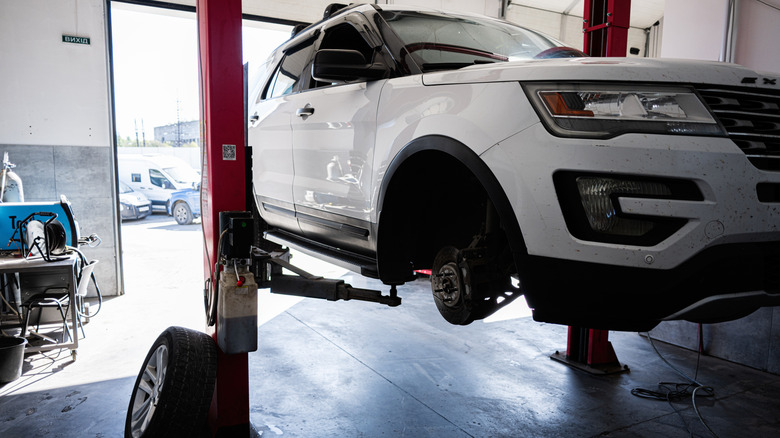
It feels like a different vehicle is getting recalled every other day — and it’s not even that much of an exaggeration. From 2017 to 2022, the United States averaged more than 1,000 recalls every year, based on data from the National Highway Traffic Safety Administration (NHTSA). The number of recalls has continued to climb, but it’s not because vehicles have become more dangerous or unreliable. According to ABC News, the rapid increase in car recalls is due to the complexity of modern vehicles.

There are more electronic components, features, and software in modern cars — and this means a higher chance of things going wrong. “Vehicles have advanced to a degree we’ve never seen before,” said Edmunds Auto Analyst Ivan Drury to ABC News. “It’s such a wide swathe of issues that recalls cover that you’re going to see this more and more.” 

In other words, there are more failure points — not just because there are more components, but even the components themselves are more complex, taking more parts. Some recent examples include Ford recalling over 548,000 Expeditions over the center console’s chrome plating, Subaru recalling the new Forester due to its sunroof glass, and Mercedes-Benz recalling over 144,000 vehicles after customers noticed the digital instrument cluster glitching.

Advertisement

More recalls isn’t necessarily a bad thing

There are so many recalls, it’s pretty difficult to keep track of it all — but not every recall is meant to alarm you. In fact, most are pretty minor. For example, Ford has gotten quite the reputation for its seemingly endless recalls — according to the NHTSA, it has the most recalled models out of every automaker, with 152 recalls in 2025 alone. Some would say Ford’s launches have quality issues, Ford itself has noted it’s just a way to improve quality. Despite its multiple recalls in 2026, Subaru is still considered one of the most reliable automakers. 

Most recalls are considered minor rather than true safety concerns that require you to stop driving your car — although Ford’s Maverick and Bronco Sport have had those recently as well. Instead, automakers are just attempting to avoid issues by remaining within the NHTSA’s safety standards and regulations — which only benefits consumers. 

Advertisement

“Recalls can be inconvenient, but they’re actually a good thing,” said Consumer Reports’ Jennifer Stockburger. “While they can vary in terms of severity, a recall means that a manufacturer will fix or take corrective action to address a safety issue, which is why they should be taken seriously.”



Advertisement

Source link

Continue Reading

Tech

OPPO’s June ColorOS 16 Update Adds Dual Bluetooth Audio Sharing

Published

on

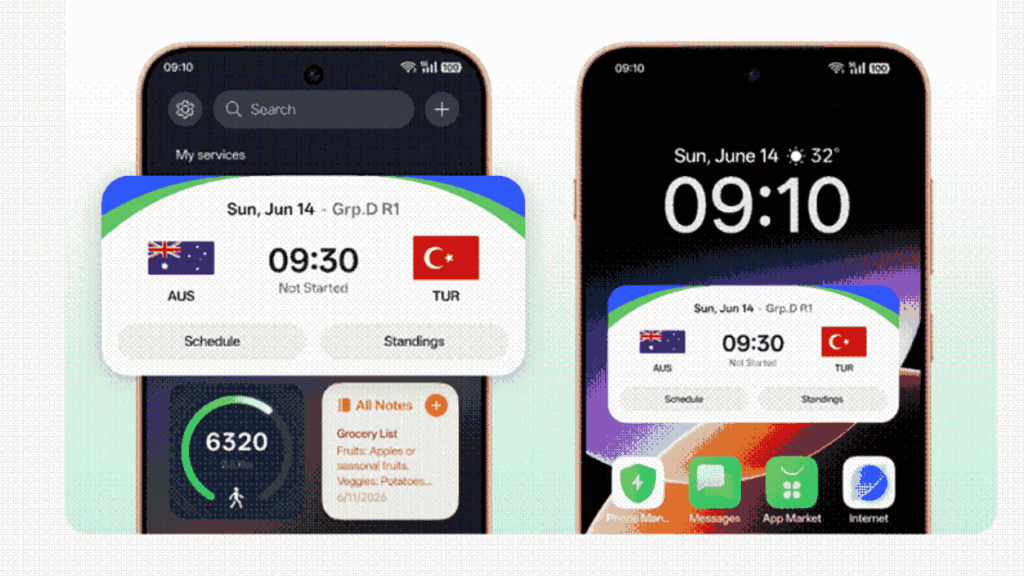
OPPO has started rolling out its June 2026 ColorOS 16 update, bringing a handful of new features to make everyday smartphone use a little more convenient. The update introduces a new Sports Widget for football fans, Bluetooth audio sharing, improved security alerts, and several quality-of-life additions across the system. The rollout is scheduled between June 1 and June 30 for eligible OPPO smartphones, such as the Find X9.

Live Sports Updates and Shared Audio

Sports Widget OPPO June ColorOS 16

One of the biggest additions in this release is the new Sports Widget. Football fans can now follow live scores, match schedules, and tournament updates directly from their home screen without opening a dedicated app. ColorOS 16 also uses AI Suggestions to surface upcoming matches on the Home Screen and Shelf, making it easier to keep tabs on your favorite teams throughout the day.

Another useful addition is Audio Sharing, which allows a single OPPO phone to stream audio to two pairs of Bluetooth earphones simultaneously. Whether you’re watching a movie with a friend or listening to music together, both users can enjoy the same audio without relying on a speaker or wired splitter.

Security and Everyday Features Get Some Attention Too

New Security Alerts OPPO June ColorOS 16

The June update also introduces Accessibility Security Alerts. If an app from an unknown source receives Accessibility Service permissions, a permission commonly abused by malicious apps, ColorOS will immediately notify the user. This makes it easier to review or revoke suspicious permissions before they become a security risk.

OPPO has also refreshed the Weather app with Moon Rise and Moon Set timings, along with live Moon Phase information. While these additions may not appeal to everyone, they can be useful for outdoor enthusiasts, photographers, and anyone planning activities around natural lighting conditions.

Outdoor Mode has also received a small but practical upgrade. Users can now pin up to four frequently used apps for quicker access, while navigation and location awareness have also been improved for people who spend a lot of time outdoors.

Advertisement

Gaming and Personalization Improvements

Outdoor Mode enhancements

Beyond the headline features, OPPO has added a few smaller quality-of-life improvements across the system. Users can now record gameplay more easily, while a new App Suggestions feature in the app drawer recommends frequently used apps based on usage patterns. The idea is to reduce the time spent searching for apps and make everyday navigation feel a little more intuitive.

OPPO says the June ColorOS 16 update will continue rolling out to eligible devices throughout the month.

Source link

Continue Reading

Tech

Amazon beats Currys on Asus Zenbook A14 for Prime Day

Published

on

I’ve been scouting for Prime Day deals, but this one stopped me in my tracks. Currys is running an excellent summer sale on back-to-school and business laptops, but Amazon has absolutely crushed them on the price of the Asus Zenbook A14 for £500 (was £600) for Prime Day.

Shop Amazon’s Prime Day deals

This 14-inch OLED laptop features a Snapdragon X X1-26-100 processor that’s engineered for day-to-day work and study tasks, alongside 16GB LPDDR5X memory, and a well-sized 1TB SSD. For general office and school tasks, that’s pitch-perfect for the price.

Over at Currys, however, the exact same model is priced at £599 (was £999) for the Snapdragon-powered machine with 16GB RAM and – wait for it – 512GB SSD. So, you’re getting twice as much SSD storage from Amazon at an even cheaper price. I wouldn’t even look twice at Currys for this specific model while this Prime Day deal is live.

Advertisement

For more savings, I’m live-tracking all the best Prime Day home office deals.


That’s not to say the Currys summer sale is bad. In fact, having charted all the deals, I found it a treasure trove of well-priced laptops for work and study. You can see my article on the top 4 laptop deals at Currys here.

Advertisement

But considering the massive price difference, and the improved SSD size, I’d go for the Amazon deal all-day long (or while it lasts, which might not be long as Prime Day ends tomorrow).

We were impressed with the A14 when we reviewed this laptop. Scoring it 4 stars and awarding it a TechRadar Recommends badge, we found this ultra-lightweight MacBook Air-style Windows laptop possessed “brilliant design, capable all-round performance, and an impressive battery life.”

As a budget-tier laptop, it’s got it faults, but we loved the “fabulously thin and light” design and performance are impressive. Perfect, then, for campus and the commute.

Source link

Advertisement
Continue Reading

Tech

Nvidia's banned Blackwell AI servers are selling for $1.1 million on China's black market

Published

on


The US has restricted the export of Nvidia’s most powerful AI chips to China since 2022 over fears that they could be used for military purposes.
Read Entire Article
Source link

Continue Reading

Trending

Copyright © 2025