Getting your eyes checked is fairly straightforward when an ophthalmologist is nearby. For millions of people living in rural communities, however, simply reaching one can be the biggest obstacle. Researchers in India think a smartphone could help close that gap. A new study found that eye specialists examining smartphone images remotely made cataract referral decisions that closely matched those of doctors examining the same patients in person.
The setup is surprisingly simple. Researchers developed a portable attachment that clips onto an Android phone and uses a magnifying lens and two small LEDs to capture consistent images of the front of a patient’s eye. A silicone eyepiece blocks outside light and keeps the camera at the correct distance. Better still, the entire setup, including the phone, costs less than £150 (around $200). It also works with a telemedicine app designed for places with limited internet connectivity.
Health workers could bring the eye exam to you
The study involved 1,093 patients across 19 rural eye camps near Pondicherry in southern India. Community health workers received just three hours of training before using the smartphone system, and eventually managed to screen each eye in under two and a half minutes. They then sent the images to ophthalmologists, who decided remotely whether to refer each patient to a hospital. They compared those decisions with assessments made by ophthalmologists who examined the patients in person.
RUNSTUDIO/Getty Images / RUNSTUDIO/Getty Images
The result was a 96% agreement on whether someone needed further treatment. Doctors also showed strong agreement when identifying several lens-related conditions, including mature cataracts and eyes that already contained artificial lens implants. That’s particularly important because cataracts remain a leading cause of blindness globally, while access to specialists can be limited in poorer and more remote communities. Instead of requiring an ophthalmologist to travel to every screening camp, community workers could potentially collect the images locally while specialists review them elsewhere.
This still isn’t replacing your eye doctor
As promising as those numbers sound, this isn’t a pocket-sized replacement for a proper eye examination. The researchers found that the system wasn’t as reliable for some conditions outside the lens, including pterygium, refractive errors, and corneal opacity. The study also noted differences in how patients were examined: some in-person assessments happened after pupil dilation, while smartphone images were captured beforehand.
Advertisement
ChatGPT
The study also wasn’t designed to compare the smartphone system directly against every part of a comprehensive slit-lamp examination, so more testing is needed before the approach could be rolled out widely. Researchers now want to improve the hardware, test it in other regions, and explore AI-assisted cataract grading. Eventually, AI could handle some initial screening before difficult cases reach an ophthalmologist. For now, the most interesting part isn’t that a smartphone can replace an eye specialist; it’s that a relatively inexpensive phone attachment could help bring that specialist’s expertise to people who might otherwise never reach them.
Mullenweg accused the company board of conspiring against him to place him on a paid leave.
For reasons unknown to the public, the founder and CEO of Automattic Matt Mullenweg was briefly ousted from his position last week. He was reinstated a few days later.
Last Wednesday (9 September), Mullenweg posted to a company-wide Slack channel that Automattic’s chief financial officer Mark Davies had “conspired” with other board members, including founding CEO Toni Schneider (who is the current CEO of Bluesky), to put him on a paid leave of absence.
The board voted Davies as interim CEO and told publications that it had full confidence that he would be able to “execute against the company’s priorities”.
Advertisement
However, by Friday (11 September), Mullenweg seemed to be back in his position, according to newer Slack messages verified by company employees.
“A lot happened in the past 48 hours that we need to sort out, and I hope much of it was a misunderstanding, because I have huge respect and regard for those involved,” he wrote on Slack.
And in a statement, Automattic confirmed with the media that Mullenweg is back as the chairperson and CEO of his company “with full support of the board”.
“If you search online you can see many top executives and Automatticians supporting him as well”, the spokesperson added.
Advertisement
Mullenweg, according to his posts on X, seems to be taking his brief ousting in stride. Last Friday, in a series of posts, he seemingly joked that this was the fifth attempt at a coup in his company.
“Founder advice: If you don’t have a coup attempt every few years, you’re not hiring strong enough leaders,” he said. In a separate post, he wrote “Boards are never boring,” with a ‘laughing-crying’ emoji accompanying the statement.
Automattic is best known as the creator behind WordPress.com. It also owns the microblogging platform Tumblr, WooCommerce, a plugin for WordPress, as well as the online survey and quiz conductor PollDaddy, now known as CrowdSignal.
Don’t miss out on the knowledge you need to succeed. Sign up for the Daily Brief, Silicon Republic’s digest of need-to-know sci-tech news.
Microsoft has also been making changes to the console experience itself. Xbox has now released another batch of features for members of the Xbox Insider program, including better Remote Play quality, background downloads during cloud gaming, more personalization options, and improvements to party chat.
Xbox
Remote Play is getting a quality boost
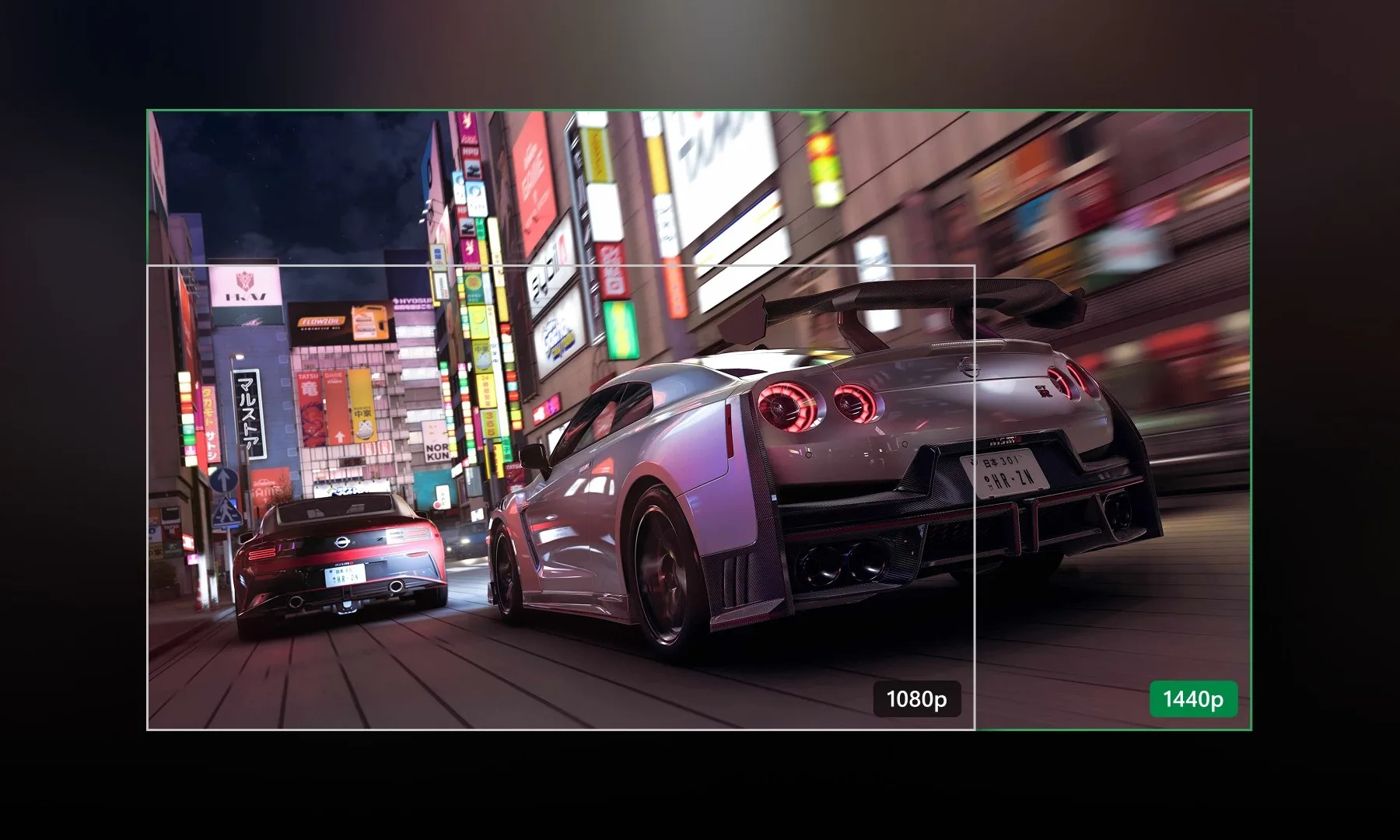
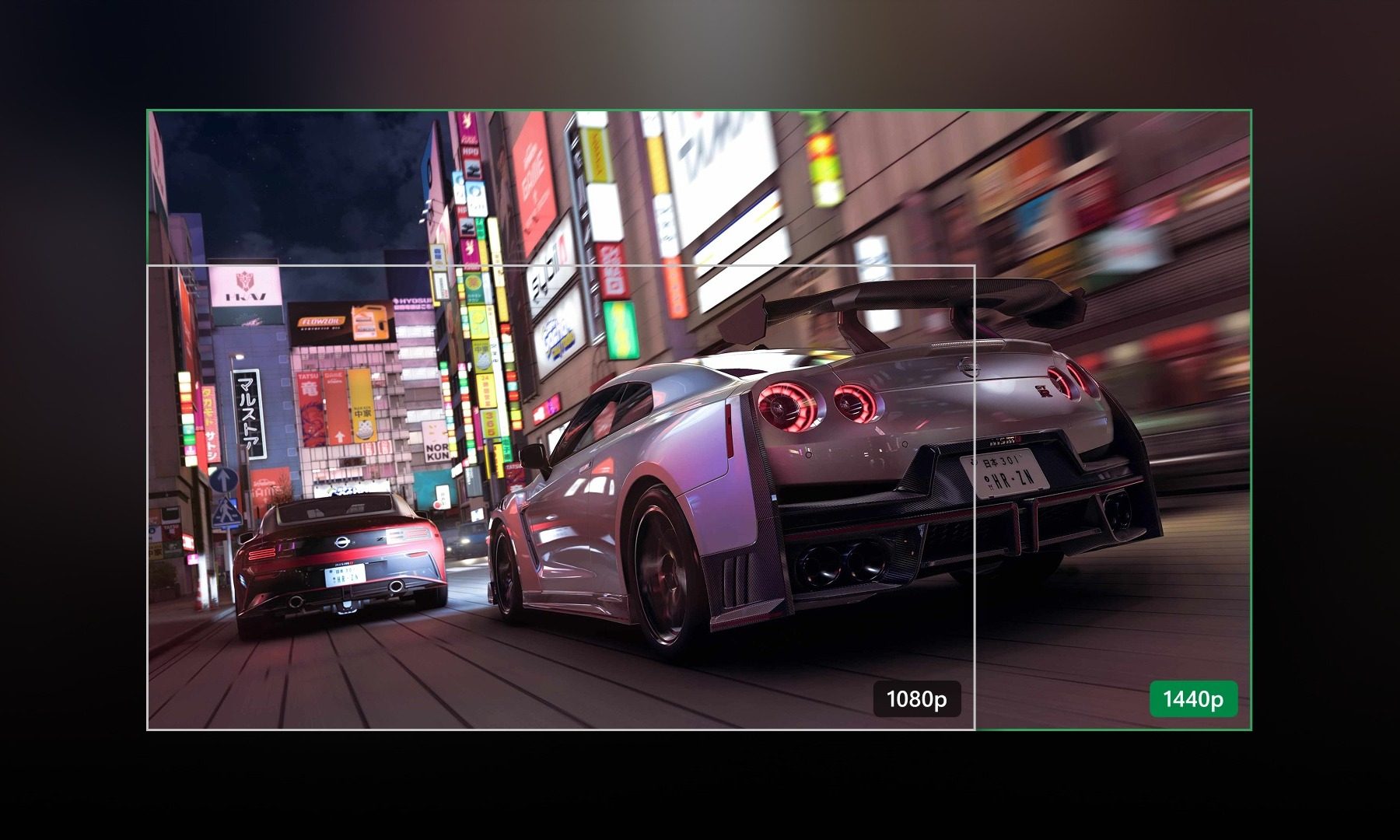
Xbox Series X and Series S owners in the Alpha Skip-Ahead and Alpha Insider rings can now test Remote Play at up to 1440p resolution. Microsoft has also increased video bitrates, which should result in sharper image quality on supported devices and sufficiently fast connections.
Downloads can now continue in the background when a player is streaming a game through Xbox Cloud Gaming, provided network conditions allow it. Microsoft previously let Insiders start streaming games while they were downloading or updating, but downloads would not continue in the background during the cloud session. Xbox Series X and S consoles are expected to see the biggest benefit from the change.
Xbox
Xbox is adding more customization too
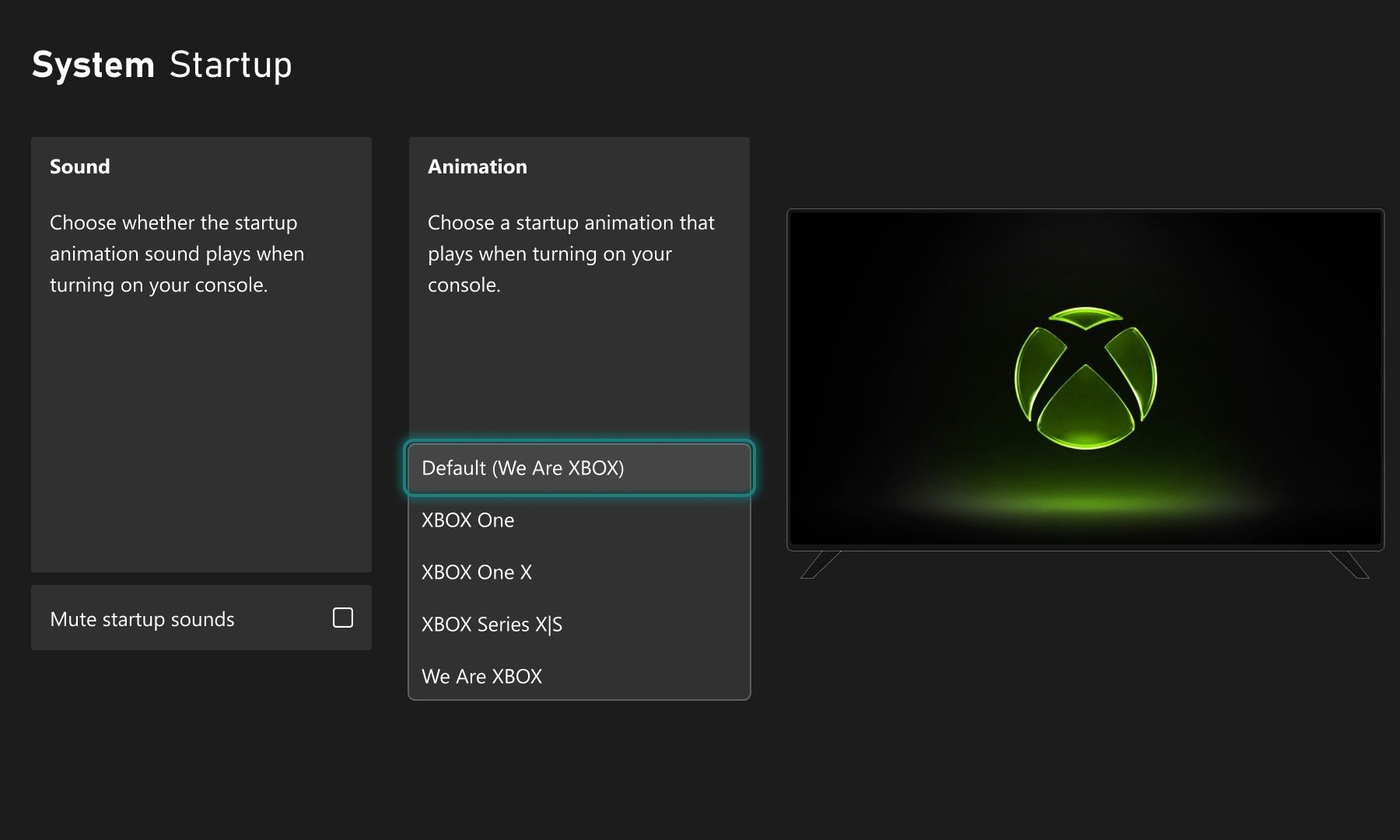
Players can now choose their console startup animation, including options from previous Xbox generations. Profiles can display up to five earned badges, and individual badges can be hidden from public view. A new local search tool also makes it easier to find specific games and achievements inside larger lists.
Voice Clarity is another useful addition. The feature reduces everyday background noise during party chat and is supported by most games released since 2020. Microsoft is also testing behind-the-scenes changes to improve party reliability and security.
Advertisement
These features are currently limited to Xbox Insiders, and Microsoft has not announced when all of them will reach the wider Xbox user base.
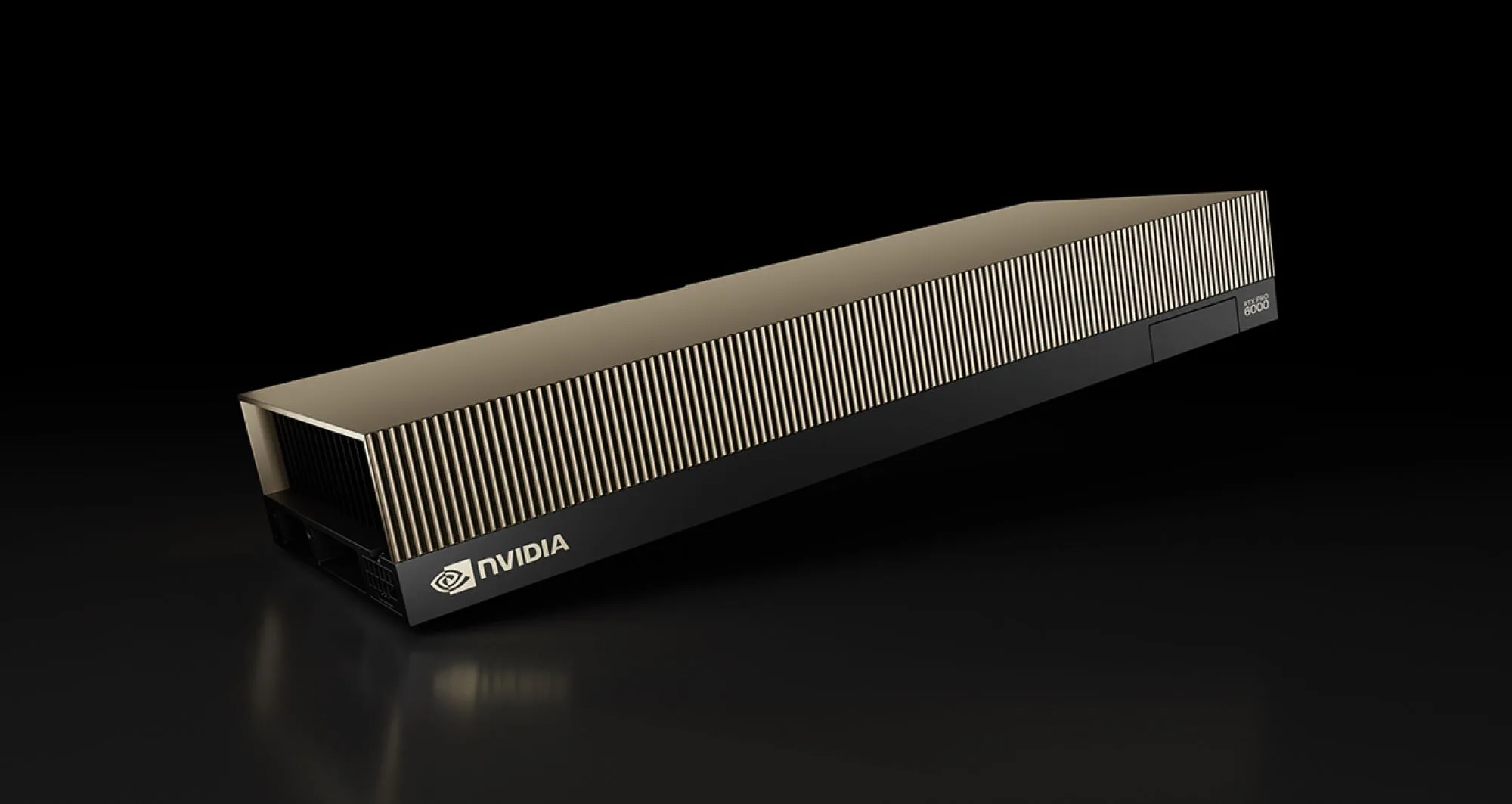
Nvidia has another enormous Blackwell graphics card, and this one isn’t built to run Cyberpunk 2077 a little faster. The new RTX Pro 5500 Blackwell Workstation Edition comes with a whopping 84GB of GDDR7 ECC memory and is designed primarily for rack-mounted professional workstations.
The GPU was built for companies that need to centralize GPU horsepower and share it among teams working on AI models, robotics simulations, rendering, and other workloads that can quickly overwhelm a conventional PC. The new RTX Pro 5500 sits right between Nvidia’s 72GB RTX Pro 5000 configuration and the 96GB RTX Pro 6000 in terms of memory capacity.
Nvidia RTX Pro 6000 Blackwell GPUNvidia
84GB isn’t there just to look impressive
The company has packed the large memory pool for a very specific reason. It allows the RTX Pro 5500 to hold larger AI models, longer context windows, or multiple models simultaneously without having to constantly offload data elsewhere. So the GPU can be very useful for local LLM inference, AI agents, computer vision, and multimodal generative AI. The same capacity can also accommodate enormous 3D scenes and datasets used for engineering or scientific work.
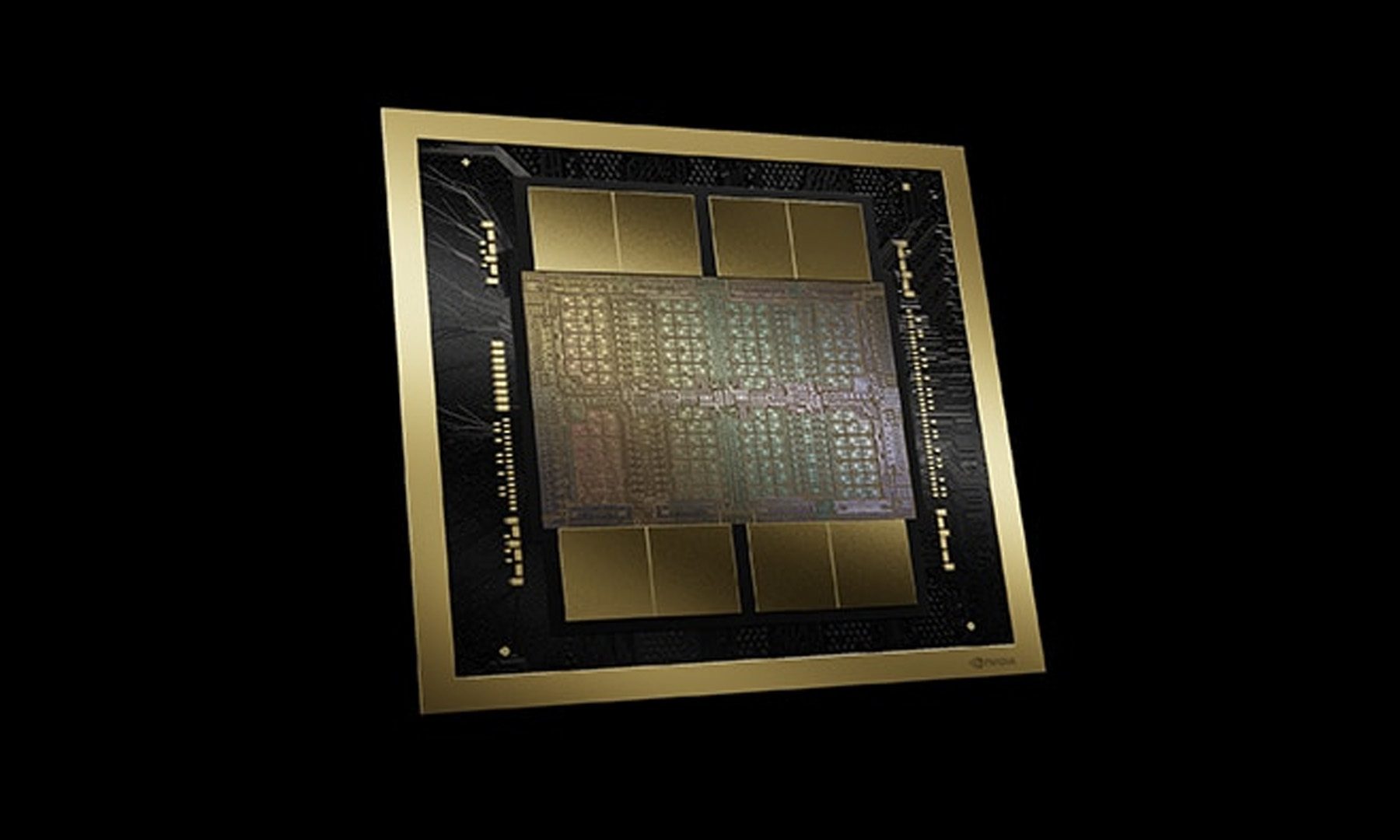
Under the hood is Nvidia’s Blackwell architecture with 21,760 CUDA cores, fifth-generation Tensor Cores, and fourth-generation RT Cores. Memory bandwidth reaches 1,398GB/s, while maximum power consumption can climb all the way to 600 watts. The card uses PCIe 5.0 x16 and supports up to four DisplayPort 2.1b outputs. Nvidia also offers air-cooled and liquid-cooled configurations, which also adds to the fact that this GPU is intended for managed workstation racks rather than the PC sitting beside your feet.
NVIDIA Blackwell ArchitectureNVIDIA
One GPU can become two
One of the coolest features is Multi-Instance GPU, or MIG. The RTX Pro 5500 can operate as one 84GB GPU or divide itself into two isolated 42GB instances. Each gets its own memory, cache, and compute resources, allowing two users or workloads to share the same physical accelerator while maintaining predictable performance.
The RTX Pro 5500 gives enough GPU resources to an organization to distribute. Nvidia hasn’t announced pricing yet and currently lists the RTX Pro 5500 as “coming soon.” Considering the specifications and enterprise focus, I wouldn’t expect GeForce pricing when it eventually arrives.
A new report obviously predicts that Apple wants to replace the iPhone Duo‘s existing Touch ID with Face ID as soon as possible, and suggests that Apple Intelligence might help.
Touch ID is easily the most apparent compromise in the iPhone Duo, and Apple has had to go back it because of that model’s slim chassis. It was not physically possible to fit the usual Face ID components into that space.
Now Bloomberghas made the obvious prediction that Apple will be working to add Face ID to future generations of the iPhone Duo. But it’s also suggested that AI could be part of the solution.
The claim is that Apple Intelligence could ultimately help with not just the iPhone’s computational photography, but also all of its image processing. So Apple could in theory use less sophisticated depth-sensing camera systems and let AI take up more of the processing role.
Advertisement
That would then presumably mean that the physical Face ID components could be smaller. The prediction is that this will not happen until the third generation of the iPhone Duo, by which time the report also expects the model to gain a telephoto camera.
This is also an obvious prediction and the third generation iPhone Duo is sufficiently far off to make it an easy guess. But the suggestion of AI augmenting the hardware components would fit Apple’s unusual ability of entirely controlling its software and hardware together.
Triangle’s independent Cyber Recovery Readiness survey found that prolonged business outages are a major risk for organisations.
According to new research from Triangle’s independent Cyber Recovery Readiness survey, organisations are facing significant challenges in preparing for and recovering from cyberattacks.
The organisation surveyed 130 IT and security decision makers to explore how ready companies are for a cyber threat, but also how they might navigate the aftermath.
What was found is that prolonged business outages are a major risk factor for organisations, particularly as frontier AI accelerates cyber threats.
Advertisement
Of those who participated, 64pc of companies were found to be missing a key risk remediation, 62pc confirmed that their organisation has isolated backups and only 36pc could validate the integrity of that data when needed.
Commenting on the results of the report, Michelle Harris, the director of Cyber Recovery at Triangle Technology Services, said, “Many organisations are investing heavily in AI for prevention of cyber attacks, but far fewer regularly test their ability to recover from a breach.
“Recovery readiness is now a critical business issue, and this survey provides valuable insight into how prepared organisations really are when disruption occurs.”
Key findings
Additional findings indicated that, of the participating organisations, 51pc have a clean recovery environment and 62pc have a dedicated, coordinated recovery team. Almost half of companies have tested or rehearsed their recovery in the last year.
Advertisement
“While threat awareness is real and growing, it has not yet translated into the right kind of action”, said Harris.
“The National Cyber Security Centre in Britain changed their focus from prevention to recovery. They’re saying organisations should assume there will be an event. That hasn’t filtered through to a lot of organisations, where they are still focusing on prevention, which they do still have to do, of course.”
She added, “As cyberattacks become more sophisticated, businesses need to assume breaches will occur and ensure, through regular testing, they can recover operations quickly and securely.
“Organisations that have implemented mature cyber recovery capabilities know in advance of a breach what data they will recover, where they will be recovering to and how long it will take, so there is no guesswork involved when everyone is under pressure.”
It was discovered that the greatest impact is not from large-scale, one-off breaches, but frequent day-to-day cybersecurity-related disruptions that are driving losses for many Irish companies.
Don’t miss out on the knowledge you need to succeed. Sign up for the Daily Brief, Silicon Republic’s digest of need-to-know sci-tech news.
Dario Amodei’s essay on Saturday made the case that the AI industry must slow itself down. It also asked Washington to “not sell powerful AI chips or semiconductor manufacturing equipment to China” and to crack down on smuggling and on remote access to data centres outside the country.
China’s commerce ministry called the essay “further proof that the US is pursuing technological hegemony in AI”, in remarks carried by the Global Times on Monday.
The paper built a full report around the theme, gathering three Chinese researchers to argue that the Anthropic chief wants cooperation and containment at the same time.
Xiang Ligang, a telecoms and technology policy observer, called the proposal inappropriate, groundless and hostile.
Advertisement
He said Amodei accepts that pacing AI would eventually require cooperation with China while advocating restrictions on chips, computing power and models to slow China down, and openly seeking to widen the American lead. Xiao Qian of Tsinghua’s Institute for AI International Governance pointed out that Anthropic competes with Chinese open-source models.
Liu Shaoshan, who directs embodied AI at the Shenzhen Institute, put the sharpest version of the argument. Once AI is described as a technology that settles national security and the future of civilisation, he said, an AI company stops being an ordinary tech company and becomes “strategic infrastructure”.
A separate Global Times commentary, circulated on WeChat under the headline “Targeting China’s AI: America’s ‘tech right’ rolls out a Cold War script”, called the plan a “quiet AI Cold War” and described it as hypocritical and short-sighted.
Amodei’s essay proposes three steps: third-party evaluators with employee-like access, which Anthropic has committed to on its own; common safety standards and capability limits among frontier labs in democracies; and an eventual attempt to coordinate pacing with authoritarian governments.
The two governments have been circling this for weeks. The NSA, FBI and CISA named six Chinese firms over industrial-scale distillation on 9 September, and Beijing called that unfounded the next day.
In June, Wang Yi pitched a global AI cooperation organisation offering cheap models to developing countries while the G7 argued over who should get access to American ones.
A Public First survey of 18,000 people across 15 countries, published days later, found that most already believed China had pulled ahead on capability.
Advertisement
What has changed is who is being argued with. Beijing has spent months contesting export controls as government policy, and the commerce ministry has a standing script for that.
This time it aimed the script at a private company’s chief executive, on the strength of a post he published himself, two days after he asked his own industry to go slower. Trump, for his part, dismissed the slowdown case last week on the grounds that America has to win.
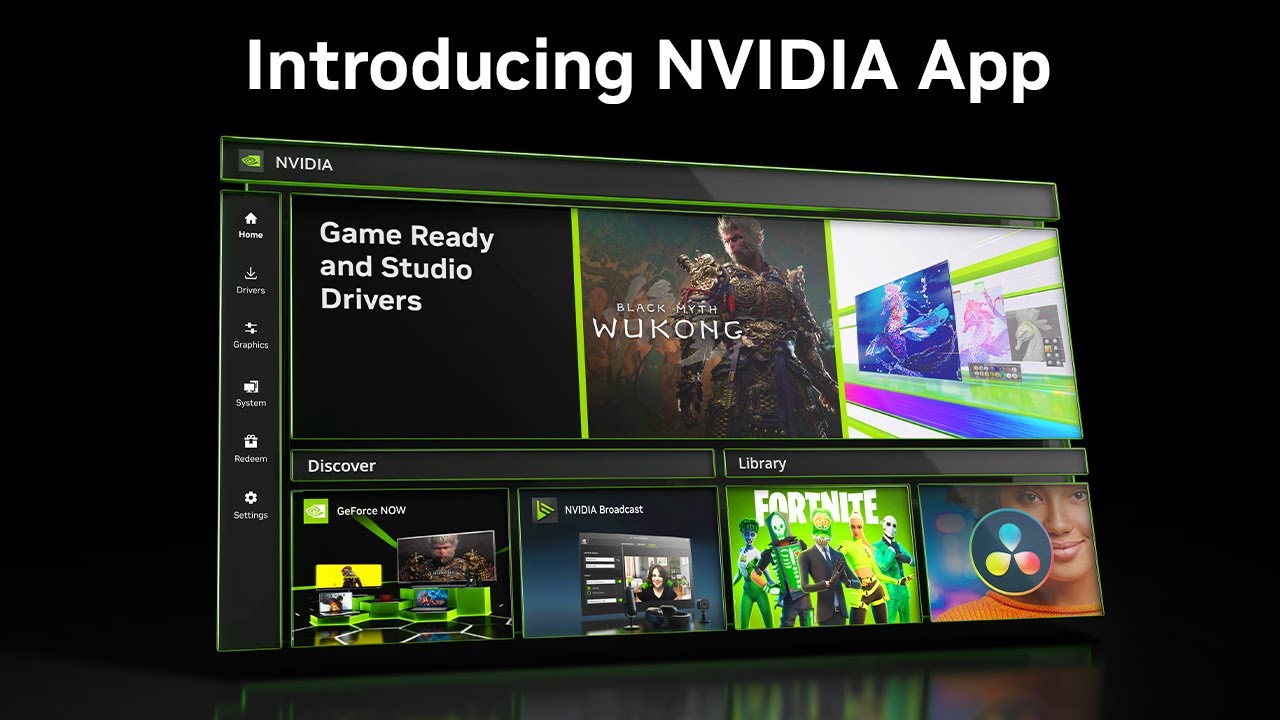
Optimize games and applications with a new unified GPU control center, capture your favorite moments with powerful recording tools through the in-game overlay, and discover the latest Nvidia tools and software.
Features
Unified GPU Control Center
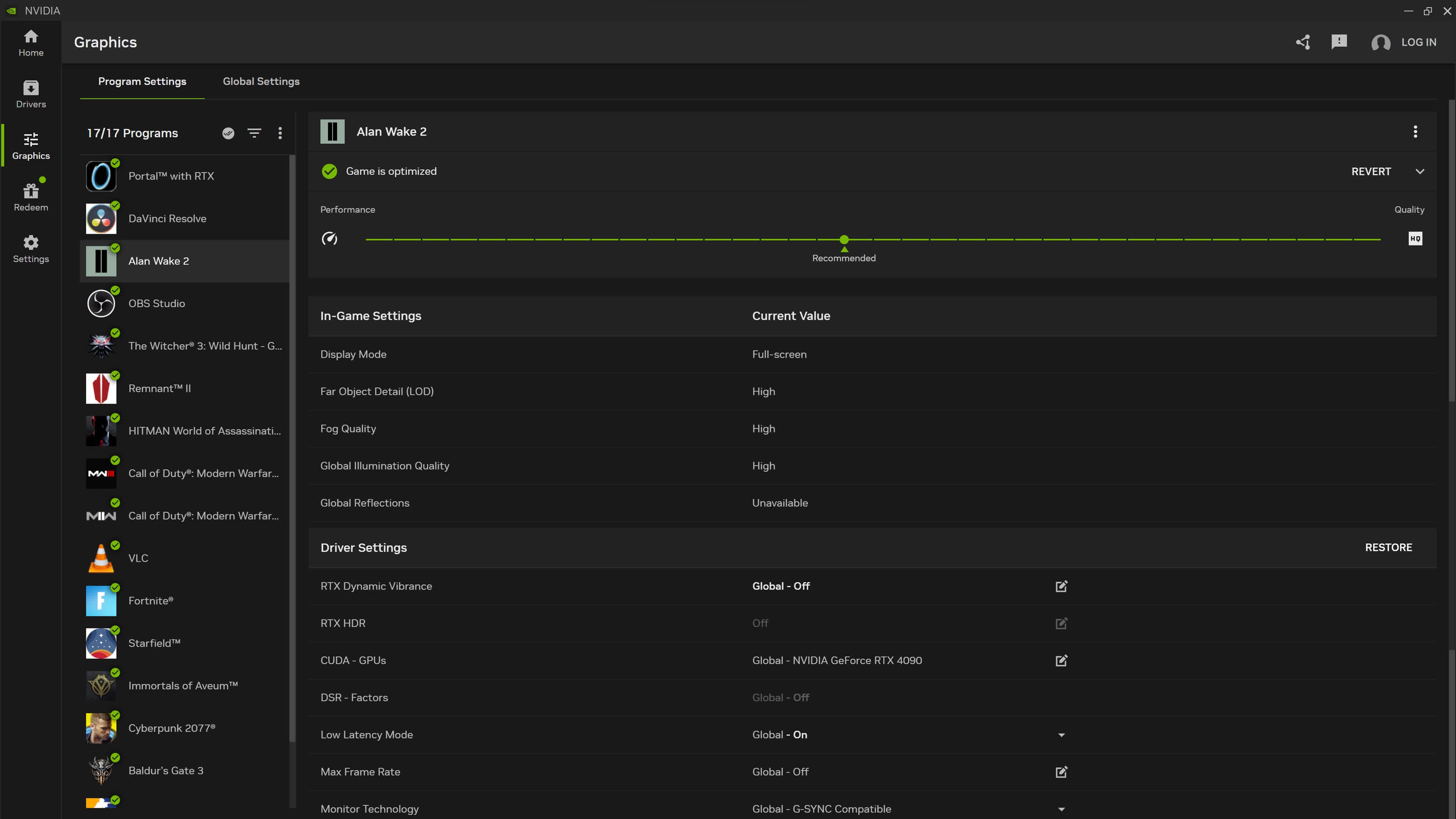
The Nvidia app integrates GeForce Experience’s Optimal Game Settings and Nvidia Control Panel’s 3D Settings into a unified interface. This becomes a centralized place to review or modify optimizations while adjusting driver settings. You can customize it on a per-applications basis, or use a global profile across all games and applications.
Improved Driver Information
When it comes to your favorite games or applications, Game Ready Drivers and Studio Drivers ensure the ultimate experience for gamers and creators. A popular request from GeForce Experience users is for a quicker, more straightforward way to understand what’s included in the latest driver updates.
Advertisement
In the new Driver page, we’ve introduced easy-to-scan bullet points of “what’s new” and “what’s fixed,” alongside quick callouts on game support. All driver related articles are accessible on a single carousel so you can read about game announcements or technologies associated with the driver.
Redesigned In-Game Overlay
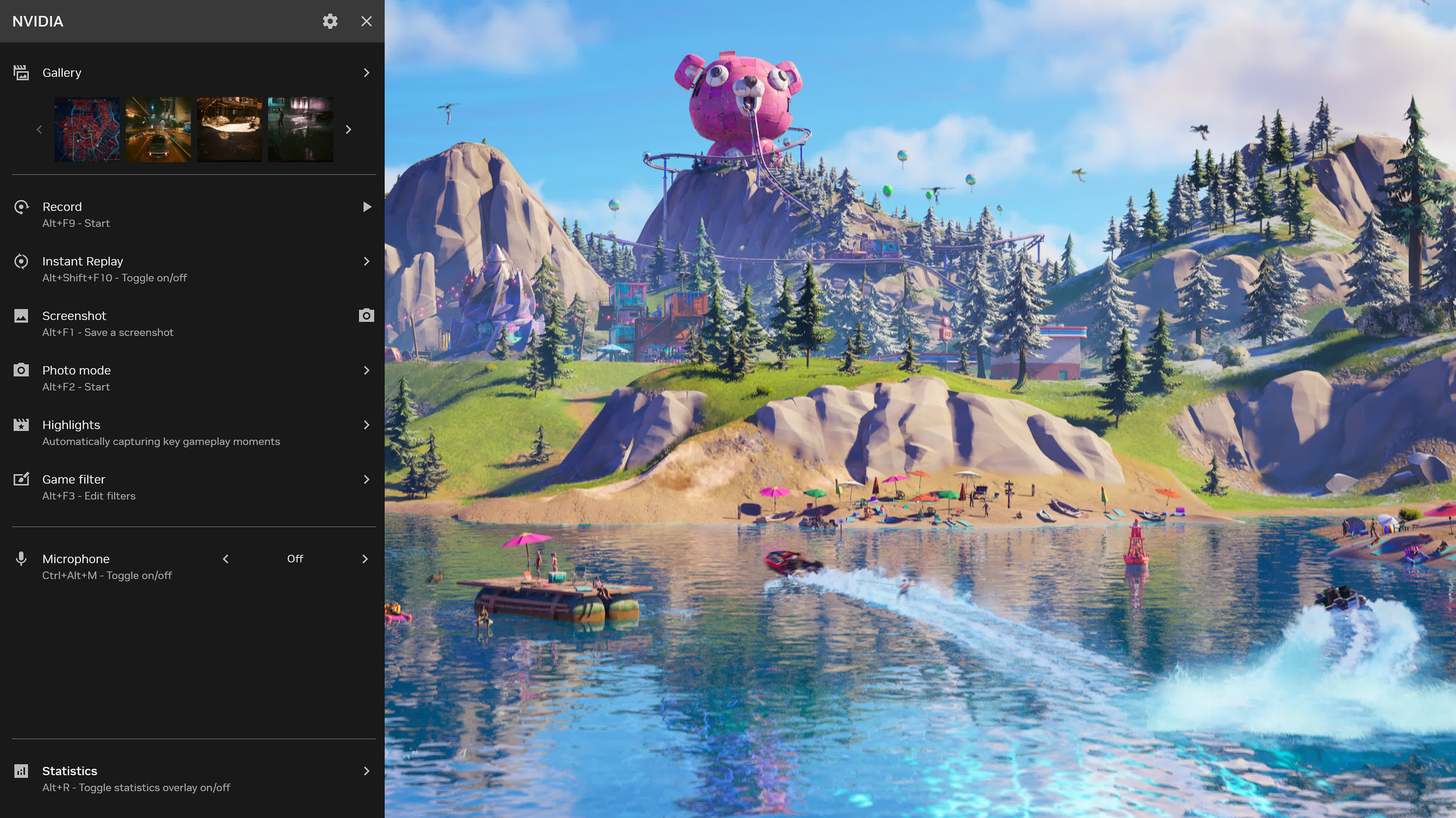
Our In-Game Overlay has undergone a comprehensive redesign. As before, use the convenient “Alt+Z” hotkey to swiftly access Shadowplay recording tools, Freestyle Game Filters, Nvidia Highlights, photo mode, and performance monitoring tools.
In the Nvidia app, we’ve improved the user interface, enabling quick access to features while playing your favorite game or using an application. And your captured content is now readily available in the gallery through user-friendly thumbnails.
Advertisement
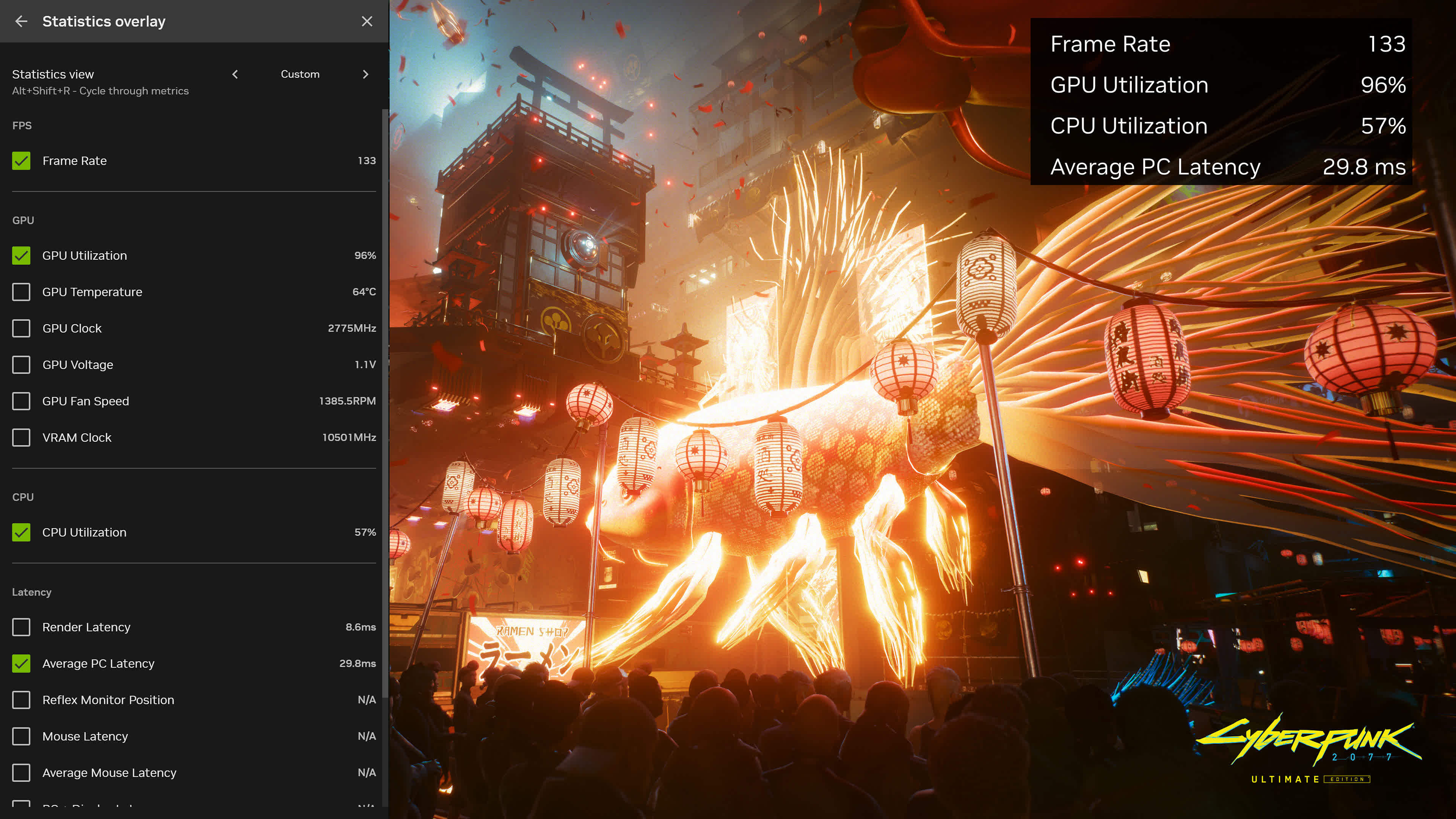
We’ve also enhanced performance monitoring with a new statistics overlay. Gamers can now customize how the performance overlay is displayed during their gaming session with options to minimize the footprint of the HUD.
Additionally, gamers can now customize which performance metrics they would like to see during their gaming session. Simply hit Alt + R to toggle performance monitoring statistics.
Nvidia app also introduces Shadowplay 120 FPS video capture which enables a new level of smoothness in recorded content.
New AI Freestyle Filters
Advertisement
Nvidia Freestyle empowers you to personalize the visual aesthetics of your favorite games through real-time post-processing filters. This feature boasts compatibility with a vast library of more than 1,200 games, and now NVIDIA app offers AI-powered filters, accelerated by Tensor Cores on GeForce RTX GPUs.
RTX Dynamic Vibrance is an AI-powered Freestyle filter that improves upon the beloved Digital Vibrance feature in the Nvidia Control Panel. RTX Dynamic Vibrance enhances visual clarity on a per app basis, providing players with a flexible and convenient way to tune their visual settings for each game. Colors pop more on screen, with perfect balance to minimize color crushing, preserving image quality and immersion.
RTX HDR, a new AI-powered Freestyle filter seamlessly brings the vibrant world of High Dynamic Range (HDR) to games that were not originally equipped with HDR support. Remarkably, only 10 of the top 50 most-played GeForce games offer HDR support and there are thousands of games that only support SDR. However, with the RTX HDR filter, you can now take advantage of your HDR-compatible monitor for a broad spectrum of games running on DX12, DX11, DX9, and Vulkan platforms.
Redeem GeForce Bundles & Rewards
Advertisement
Nvidia app users get access to rewards, such as in-game content, exclusive GeForce Now premium membership offers, and more. Simply start the Nvidia app and visit the Redeem tab to check out the latest rewards.
For a limited time, users of the Nvidia app beta can redeem the GeForce Call of Duty: Modern Warfare III and Call of Duty: Warzone reward. Experience DLSS 3 in either game with a free 1 hour Double XP Boost and 1 hour Double Weapon XP Boost.
Nvidia App System Requirements
Supported Hardware
Advertisement
CPU: Intel Pentium G Series, Core i3, i5, i7, or higher, AMD FX, Ryzen 3, 5, 7, 9, Threadripper or higher
GPU: GeForce RTX 20, 30, 40 and 50 Series GPUs, GeForce GTX 800, 900, 1000, 1600 Series GPUs, GeForce MX100, MX200, MX300, 800M, and 900M GPUs
What’s New
New Updates:
DLSS 4.5 Ray Reconstruction Available Now
Added support for DLSS 4.5 Ray Reconstruction on GeForce RTX Series GPUs. Access these DLSS features under Graphics > Program Settings > Driver Settings > DLSS Override – Model Presets > “Recommended”.
New Graphics Settings
Per-app Resizable BAR controls are now available in the NVIDIA app to help optimize game performance for your specific hardware setup. Access this feature under Graphics > Program Settings > Driver Settings > Resizable BAR.
Additional Updates
Added a green dot notification badge for new features, along with hover-enabled sidebar links for quick access.
Added a toggle for Windows Desktop right-click context menu for the NVIDIA app.
Migrated CUDA System Fallback policy from the NVIDIA Control Panel.
Added Borderless Windowed mode support to Optimal Playable Settings.
DLSS Override Support Added For:
007 First Light
Assassin’s Creed Black Flag Resynced
Beast of Reincarnation
Blades of Fire
Conan Exiles Enhanced
Corsair Cove
Dead as Disco
Deep Rock Galactic: Rogue Core
Directive 8020
Empulse
Fatekeeper
Forza Horizon 6
GOALS
Gothic 1 Remake
Halo: Campaign Evolved
Hell Let Loose: Vietnam
I Am Jesus Christ
LEGO Batman: Legacy of the Dark Knight
Luminary
Luna Abyss
Mistfall Hunter
Mortal Shell II
NBA THE RUN
Reaper Actual
SAND: Raiders of Sophie
Starminer
Subnautica 2
The Mound: Omen of Cthulhu
The Sinking City 2
Tides of Tomorrow
World of Tanks: HEAT
Zenless Zone Zero
STAR WARS Zero Company™
Painkiller RTX
Onimusha: Way of the Sword
NBA 2K27
The Blood of Dawnwalker
Resonance: A Plague Tale Legacy
Optimal Settings Support Added For:
007 First Light
Halo: Campaign Evolved
Mistfall Hunter
Subnautica 2
STAR WARS Zero Company™
Painkiller RTX
Onimusha: Way of the Sword
NBA 2K27
The Blood of Dawnwalker
Resonance: A Plague Tale Legacy
Squashed Bugs:
Fixed an issue where Game filters stopped working in Battlefield 4.
Fixed an compatibility issue with video playback and statistics overlay in multi-GPU configurations.
Fixed an issue where Photo Mode Super Resolution produced incorrect color output.
Fixed an issue where Image Sharpening was not working on a per-app basis.
Fixed an issue where statistic logging failed to start.
Fixed an issue where 10 bpc was unavailable for Output Color Depth on selected displays when YCbCr444 was selected.
Various stability fixes.
Nvidia App Beta 11.0.7:
New Updates
DLSS 4.5 Dynamic Multi Frame Generation Available Now
Update to DLSS 4.5 Dynamic Frame Generation on GeForce RTX 50 Series GPUs. Select “Dynamic” mode to intelligently adjust the number of generated frames during gameplay to a target frame rate, balancing frame rate, image quality, and responsiveness.
New DLSS 4.5 Multi Frame Generation 5X and 6X modes on GeForce RTX 50 Series GPUs increase 4K frame rates in path-traced titles. Paired with NVIDIA Reflex, they generate additional frames with minimal impact on responsiveness.
DLSS 4.5 Frame Generation model update on GeForce RTX 50 Series and GeForce RTX 40 Series GPUs enhances in-game user interfaces by incorporating additional engine data available for some games, improving visual quality and clarity of static UI elements.
For optimal image quality and peak performance when using ShadowPlay, the latest GeForce Game Ready Driver is required.
Access these DLSS features under Graphics > Program Settings > Driver Settings > DLSS Override – Frame Generation mode
Automatic Shader Compilation (Beta)
Rebuilds DirectX 12 shaders while your system is idle, reducing the frequency of game runtime compilation after driver updates
Control Panel Updates
Added Custom Resolution in System > Displays > Display Properties
DLSS Override Support Added For:
Arknights: Endfield
Black One Blood Brothers
Carmageddon: Rogue Shift
CODE VEIN II
Corsairs Legacy
Crimson Desert
DEATH STRANDING 2: ON THE BEACH
Demonologist
For Honor
Grounded 2
Half Sword
High On Life 2
John Carpenter’s Toxic Commando
LET IT DIE: INFERNO
LORT
Marathon
Monster Hunter Stories 3: Twisted Reflection
Nightmare Frontier
Nioh 3
NORSE: Oath of Blood
Of Ash and Steel
Quarantine Zone: The Last Check
REANIMAL
Resident Evil Requiem
Star Trek: Voyager – Across the Unknown
StarRupture
Styx: Blades of Greed
The Gold River Project
The Legend of Heroes: Trails Beyond The Horizon
Vampires: Bloodlord Rising
Yakuza Kiwami 3 & Dark Ties.
Optimal Settings Support Added For:
Arknights: Endfield
Ashes of Creation
Highguard
StarRupture
The Last Caretaker
Squashed Bugs
Overlay
Fixed an issue where Statistics shows N/A after a client update
Fixed an issue where CPU stats could flicker in idle state
Fixed an issue where microphone selections would revert to default after switching devices
Fixed an issue that prevented the use of Numpad keys for overlay shortcuts
Graphics
Fixed an issue where NVIDIA Smooth Motion setting was missing in Global Settings
Fixed an issue where NVIDIA app resolution changes were not occurring in-game
Display
Fixed an issue where changing display modes caused flickering
Installation
Fixed an intermittent issue where NVIDIA app installation did not install if PC was offline
Removed redundant restart prompt after upgrading from GeForce Experience
Various stability fixes to improve overall app reliability
Project G-Assist
Adjusted the voice prompt shortcut to prevent overlapping voice prompts while a response is still processing various UI improvements for G-Assist
Nvidia App 11.0.6.383:
New updates DLSS 4.5 Super Resolution Models Available Now
Advertisement
Update to the latest DLSS 4.5 Super Resolution Models for your RTX Series GPU. Access these DLSS features under Graphics > Program Settings > Driver Settings > DLSS Override – Model Presets > “Recommended.”
Replaces “Latest” with “Recommended” mode to better align with DLSS 4.5’s new models: Model M (optimized for DLSS Performance) and Model L (optimized for 4K DLSS Ultra Performance), and Preset K for remaining DLSS modes.
Control Panel Updates
Added NVIDIA Surround features like Hotkey shortcuts and Bezel correction.
Added Debug Mode, and GPU Performance Counters in System > Advanced tab.
DLSS Override Support Added for 77 DLSS Games:
171
A Difficult Game About ROLLING – ReUpRise
A.I.L.A
AION 2
Anno 117: Pax Romana
Arc Raiders
Ashes of Creation
Assetto Corsa Rally
Astrometica
Automate It: Factory Puzzle
Bastide
Beyond Hanwell
Bum: Revenge
Call of Duty: Black Ops 7
Carpathian Survival
Chernobylite 2: Exclusion Zone
Chip ‘n Clawz vs. The Brainioids
Cursed Deal
DAVY x JONES
DEADCAM | ANALOG • SURVIVAL • HORROR
Deathground
DREADZONE
DUET NIGHT ABYSS
Echoes of the End: Enhanced Edition
Electronic Market Simulator
EMOTIONLESS: The Last Ticket
ENTITY: THE BLACK DAY
Europa Universalis V
FINAL FANTASY VII REBIRTH
Firefighting Simulator: Ignite
Goofy Gorillas
Greedland
Heroic Kingdom: Origins
Infinity Nikki
Jurassic World Evolution 3
Keeper
Legend of Ymir
Little Nightmares III
Mother Machine
Night of the Dead
Night Project
Ninja Gaiden 4
Noble Legacy
Nowhere Near
Otherplane
Outbreak: Shades of Horror
Palworld
Park Studio
PERISH
Pizza Bandit
Project Motor Racing
Prologue: Go Wayback!
Real Life
Renovation Simulator
Rocket Squad: Infinity
RV There Yet?
Seafarer: The Ship Sim
Small Spaces
Sophonce
SpongeBob SquarePants: Titans of the Tide
Storage Hunter Simulator
TEKKEN 8
The Black Pool: Arena Survivors
The Bus
The Last Caretaker
The Outer Worlds 2
Tower of Fantasy
Trench Tales
Vampire: The Masquerade – Bloodlines 2
Violet
Wacky West
Where Winds Meet
Why don’t they laugh?
Winter Survival
Wreckreation
Yakuza Kiwami 2
Zombie City
Optimal Settings Support Added For 10 New Games:
Anno 117: Pax Romana
ARC Raiders
Call of Duty: Black Ops 7
Digimon Story: Time Stranger
Escape From Duckov
Europa Universalis V
Football Manager 26
RV There Yet?
The Outer Worlds 2
Vampire: The Masquerade – Bloodlines 2
Squashed Bugs!
Fixed an issue where NVIDIA app overlay would disappear after changing display resolution.
Fixed an issue where the recording bitrate would incorrectly set to 150 Mbps after a system restart.
Fixed an issue preventing users from changing the destination folder for saved recordings.
Fixed an issue where images captured using Photo Mode > Super Resolution appeared blank for 50 Series GPUs
Previous Release Notes:
New Updates
DLSS Override Support Added for 6 DLSS Games:
FBC: Firebreak
Monster Energy Supercross 25 – The Official Video Game
REMATCH
Strinova
The Alters
Warhammer 40,000: Speed Freeks
Optimal Settings Support Added For 5 New Games:
Dune: Awakening
EA SPORTS F1 25
FBC: Firebreak
REMATCH
Stellar Blade
Squashed Bugs!
Addressed a bug where DLSS Overrides did not appear for manually added games.
Corrected an issue where DLSS Overrides were unavailable for certain supported titles.
Various stability fixes.
Previous Release Notes:
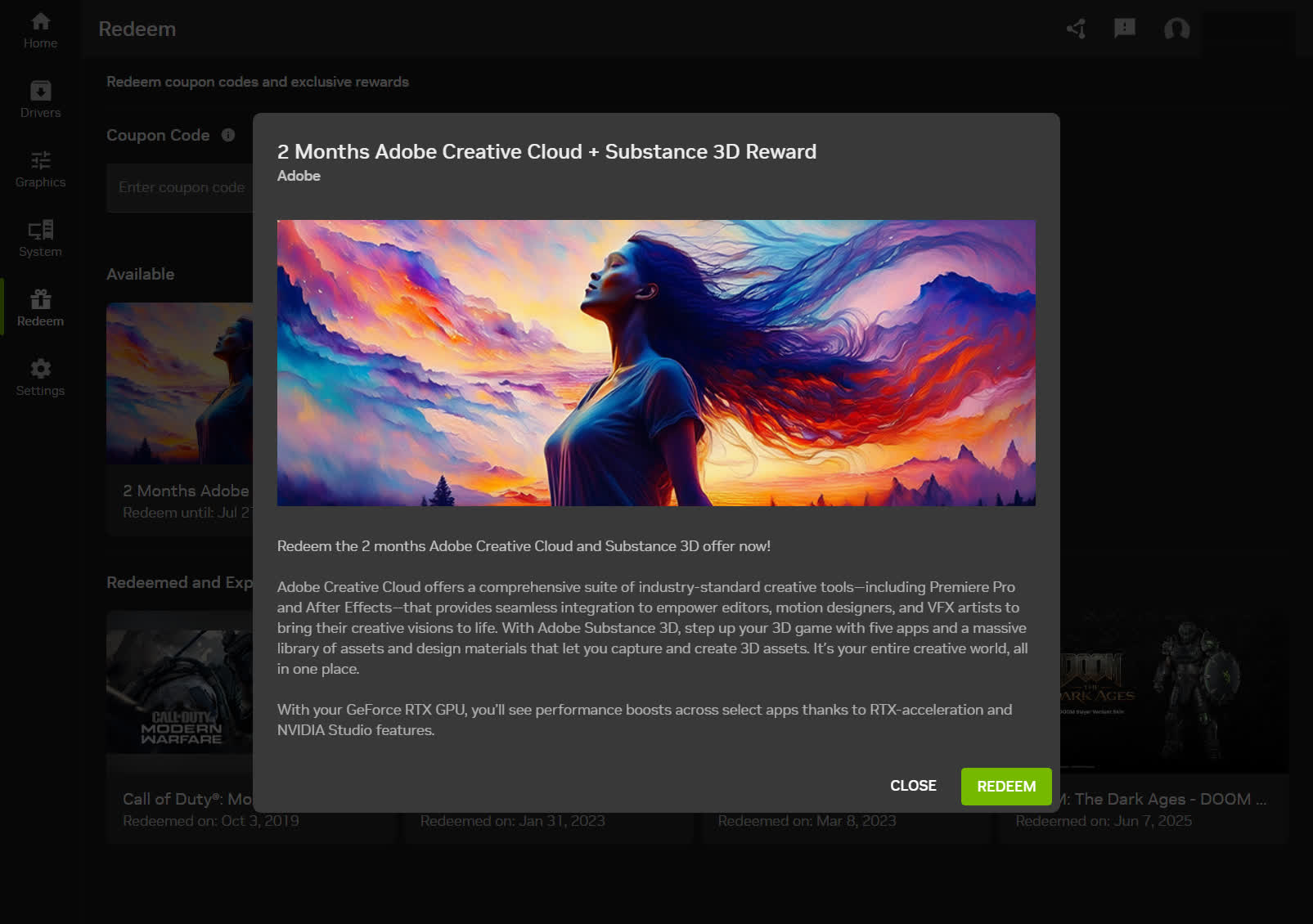
Redeem the 1 or 2 months Adobe Creative Cloud offer now!
Nvidia is currently offering a free Adobe Creative Cloud subscription to users with eligible RTX GPUs via the Nvidia App Rewards system:
Advertisement
Owners of GeForce RTX 30 or 40 series GPUs get 1 free month of Adobe Creative Cloud.
Owners of the newer RTX 50 series get 2 free months-plus access to Adobe Substance 3D apps like Sampler, Designer, and Painter, with a full asset library included
Adobe Creative Cloud offers a comprehensive suite of industry-standard creative tools, including Premiere Pro and After Effects, that provides seamless integration to empower anyone-from hobbyists to professionals–to bring their visions to life. You also get built-in templates to jump-start your designs and step-by-step tutorials to help you get up to speed quickly and sharpen your skills. It’s your entire creative world, all in one place.
With your GeForce RTX GPU, you’ll see performance boosts across select apps thanks to RTX-acceleration and Nvidia Studio features.
Previous Release Notes:
New Updates
Advertisement
User Accessibility Features
Added support for Light and Dark theme modes, with the option to automatically adapt based on Windows settings. Choose your preferred theme in Settings > Features > Theme.
Added support for Windows Narrator, allowing on-screen content to be read aloud for improved accessibility.
Optimal Settings Support Added For 12 New Games:
Assassin’s Creed Shadows
Clair Obscur: Expedition 33
Deadlock
ELDEN RING NIGHTREIGN
Grand Theft Auto V Enhanced
Half-Life 2 with RTX
Indiana Jones And The Great Circle
inZOI
Monster Hunter Wilds
Split Fiction
The Last of Us Part II Remastered
The Elder Scrolls IV: Oblivion Remastered
Squashed Bugs!
Fixed an issue where DLSS-FG defaults to 2x irrespective of in-game setting when DLSS override model is set to “Latest” and Frame generation is set to “Use the 3D application setting”.
Fixed an issue where the driver download could not be completed.
Fixed an issue where the recording bitrate setting was not saved.
Fixed an issue where HDR video colors were not encoded properly for HEVC and AV1 playback.
Fixed a bug where the in-game overlay was not accessible on the GeForce RTX 5070.
Fixed an issue where a PC reboot would reset microphone boost to an incorrect value.
Fixed an issue where Highlights summary window could not be disabled.
When Petra Ferraz de Novaes isn’t at work, she’s probably lost in a fantasy crafted with the help of artificial intelligence.
Novaes, a 36-year-old software engineer from Brazil, has always loved storytelling. But making every little decision that goes into it—from style and syntax to character development—felt impossible. So in 2024 she asked an AI model to bring one of her ideas to life.
Novaes was delighted by the eccentric, sometimes wayward interpretations of her prompts, which carried the narrative in unexpected directions. “What fascinates me is the unpredictability,” Novaes tells WIRED. “People say that AI hallucinates a lot. But in this case, it’s probably what you want.”
These days, Novaes spends hours at a time building stories with AI, using a program called SillyTavern to run open-source models on her computer. She sketches out a concept—an elven warrior battles the queen of the Amazons and seizes her throne, for example—and watches the model fill in the gaps.
Advertisement
In a single session, Novaes switches between multiple fantasy worlds. Some are hers, and others she borrows—she likes Star Wars, Pokémon, and Mass Effect. Sometimes, Novaes works up self-contained stories the length of a small novel, which she might share online. Otherwise, she participates in private role-plays. “It can be never-ending. You find a quest, you complete it, you go for the next one,” says Novaes. “The limit is your imagination.”
According to a recent study, plenty of people share Novaes’ hobby. “They know [the stories are] produced by an AI model, and they don’t care,” says Melanie Walsh, an assistant professor at the University of Washington Information School who coauthored the study. “In fact, that seems to be a big part of the attraction.”
Lately, the publishing industry has suffered a series of scandals involving the suspected use of AI by professional authors. One publisher canceled a $2 million book deal; another withdrew a novel from the shelves; readers alleged that a prize-winning short story was AI-generated. Implicit in all of these incidents is the idea that nobody wants to read stories generated by machine—that using AI to craft fiction devalues the art form.
But the commotion has distracted from the behavior of readers, Walsh and her colleagues argue, and what it might signal about the appetite for AI fiction.
Advertisement
Analyzing more than 500,000 prompts fed into ChatGPT, drawn from a public dataset called WildChat, the researchers found that more than a third of chatbot interactions involve some form of fiction generation, including prose and poetry, fan fiction, erotica, or role-play.
The vast majority of fiction prompts, the researchers found, stem from a small collection of “power users” who generate and tweak stories obsessively. In one case, a single user prompted ChatGPT to generate versions of the same fan-fiction narrative—set in the world of anime video game Doki Doki Literature Club!—thousands of times over the course of several months. But even controlling for heavy use, the researchers estimate that 7 percent of chatbot users engage in fiction generation.
The WildChat dataset has its limitations. Because the prompts are anonymized, it’s impossible to capture any demographic data. Participants also had to agree to make their prompts public, meaning the group may not reflect the population at large; OpenAI told WIRED that “WildChat is not a representative sample of all ChatGPT users.” A 2025 study by OpenAI and the National Bureau of Economic Research suggests that 1.4 percent of ChatGPT prompts are fiction-related, a long way short of the researchers’ estimate. (OpenAI’s figure does not include role-play; the company could not confirm whether it counts erotica.)
A gadget roughly the size of a US quarter can take over the flight computers on Boeing 737. Once in place, it does so quietly, rewriting where the plane is headed while keeping that change off the pilot’s screen. That may sound scary at first, but the thing’s actually been developed by researchers at the University of California San Diego and Oberlin College. They showed off the device – assembled for $100 in parts – in August at an academic security conference.
Specifically, the device slots into a maintenance connector inside a compartment called the Electronics and Equipment bay under a 737’s nose, where most of the plane’s computers sit. The hatch covering that compartment has no lock either and sits low enough for a bad actor to be able to reach it from the tarmac itself, without using a ladder. The whole job would take about 60 seconds, according to the researchers.
The connector itself works by tapping the line between the Flight Management Computer, which plots the route the autopilot follows, and the display unit the pilots type into. It’s able to do this because those two talk over a 1977 wiring standard with no authentication.
Advertisement
Is it really that big of a deal?
For what it’s worth, the researchers have actually never tested any of this on an actual aircraft – gaining access to one simply isn’t easy. Instead, the research was performed by buying used 737 parts and then wiring them together on a bench, following Boeing’s own schematics. Boeing isn’t oblivious to all this. In fact, the company has known about the flaw since 2020. And in 2023, the company even let the team run the attack inside its own test facility, where it worked as well. However, Boeing doesn’t seem too worried. It told Wired that the way planes get operated and the protections built into them make a real attack difficult to succeed.
The attacker would firstly need months of reverse engineering before they’re able to build anything. Even if they’re able to clear that hurdle, they’d have to defeat security by walking up to a parked 737, and then actually opening the hatch without anyone asking why.
Still, even if the device is able to hide from the pilot’s screen, it doesn’t control the rest of the cockpit. If it does manage to turn the plane the wrong way, the change of direction would still show up on other instruments. A crew would catch it and simply turn autopilot off to correct the course.
Another Y Combinator Demo Day took place on Thursday, but this batch looked a little different. While every cohort brings a fresh wave of founders, the startups presenting this week skewed far more toward deep tech than in past years.
As we do every quarter, TechCrunch asked early-stage VCs to name the hottest startups in this batch — both their top picks and the deals everyone was talking about. And as usual, we put together a list of startups flagged by at least two investors as the buzziest in the batch.
The tech in this batch felt “like science fiction,” as one investor put it. But beyond the wild ideas, the consensus was that valuations were far more grounded than in recent cohorts.
What it’s building: Nuclear-powered data centers floating at sea
Why it’s a fav: Power is in short supply and local communities are increasingly opposing the buildout of new data centers. Atomarine — co-founded by an MIT computer science and naval engineer and an MIT PhD in nuclear engineering — wants to solve the compute shortage by putting data centers on barges at sea, where seawater could provide near-free cooling. The startup plans to launch a gas-powered pilot by 2028 and plans to transition to floating nuclear power ships in 2032. Atomarine claims it has already secured over $4 billion in customer interest through letters of intent. That revenue potential has helped make it one of the highest-valued startups in the batch, one VC told TechCrunch.
What it’s building: Effective and energy-efficient high-speed optical networking hardware for AI data centers
Why it’s a fav: The idea is that GPU clusters waste a lot of compute time simply waiting for data to move between each chip. Within the networking layer, data is converted from light to electricity and back again in a process that burns lots of power and yields lots of heat. But Dipole Labs says it built an optical switch that skips the conversion so the data can stay as light and go directly where it needs to go. It’s a timely problem to tackle as GPUs are crazy expensive and data centers want the most out of their compute hardware without leaving any time to spare.
What it’s building: Locally producible, jet-powered strike and counter-drones
Advertisement
Why it’s a fav: Isengard aims to mass-produce jet-powered attack and counter-drones directly within allied countries, at a fraction of what prime contractors charge to build them in the U.S. Co-founded by a former Australian Army officer and a defense entrepreneur who previously scaled another Ukraine-focused drone startup to $60 million in revenue, Isengard is already generating $10 million in revenue itself. The startup has generated strong VC buzz, garnering one of the loftiest valuations in this YC batch, according to two investors.
What it’s building: Custom inference chips with hardcoded AI model weights
Why it’s a fav: Traditional AI chips burn massive amounts of energy during inference, fetching model weights from memory. Co-founded by an Imperial College London AI Ph.D. and an Oxford theoretical physicist, Lamb Labs wants to build ultra-efficient chips by hardcoding AI model weights directly into silicon. Dubbed “Model Processing Units” (MPUs), these custom chips eliminate memory-bandwidth bottlenecks.
What it’s building: Collecting real-world data on which to train robots
Why it’s a fav: This company partners with businesses to collect videos and data of humans doing work, which it then turns into training material for companies building robots. It says it’s already working with publicly traded companies and has captured video data in more than 150 different environments. This company could become important as businesses start experimenting more with which tasks are best for humans — and, as AI continues to refine itself, which tasks are better left to a robot.
What it’s building: Creating affordable robots to handle everyday tasks
Why it’s a fav: Launched just six weeks ago, this company already touts almost half a million in sales. That’s not shocking — it’s a humanoid robot that is promising to help clean and fold clothes. Users can also operate their robot via a laptop app. It’s priced at around $1,600, which is a steal compared to other humanoids like Neo, priced around $20,000. One of the biggest questions in robotics is if it is possible to create an affordable at-home robot that can actually stack a dishwasher and do everyday home tasks. Nori is another swing at taking on the task.
What it’s building: Autonomous robots that can lift heavy objects
Advertisement
Why it’s a fav: The founders of this company want to build a city on Mars. The first step to that? Building robotic technology that performs heavy-duty tasks. It says its tech is already installing solar panels across the U.S. and that it has $25 million in contracts through 2027. The vision is that this technology can help automate construction for colonizing Mars. The startup is racing with SpaceX’s timeline for building on Mars, as it hopes to begin an exploratory mission by 2028.
What it’s building: Training human brain cells to one day power compute
Why it’s a fav: Another company trying to find the best way to tackle how much power and energy is needed to run models. This time, Parasma is looking at using human brain cells as an effective, more energy-efficient alternative to today’s AI computing hardware.
What it’s building: An API layer that writes robot control code
Why it’s a fav: Investors and tech enthusiasts are hoping that the ChatGPT moment for robots is around the corner. That excitement is driving different approaches to creating a general robotics model. Instead of training foundation models on raw video or human teleoperation data, Waddle Labs uses a layer of LLM agents to write code and control robots directly. The startup, founded by Harvard graduates, is positioning itself as “Claude Code for robotics.” The startup claims that by plugging any hardware into Waddle’s API, developers will be able to tell the robot what to do in natural language, and its AI agents will autonomously generate executable control code, check that it worked, and set up the robot in about 20 minutes.
When you purchase through links in our articles, we may earn a small commission. This doesn’t affect our editorial independence.






















































You must be logged in to post a comment Login